







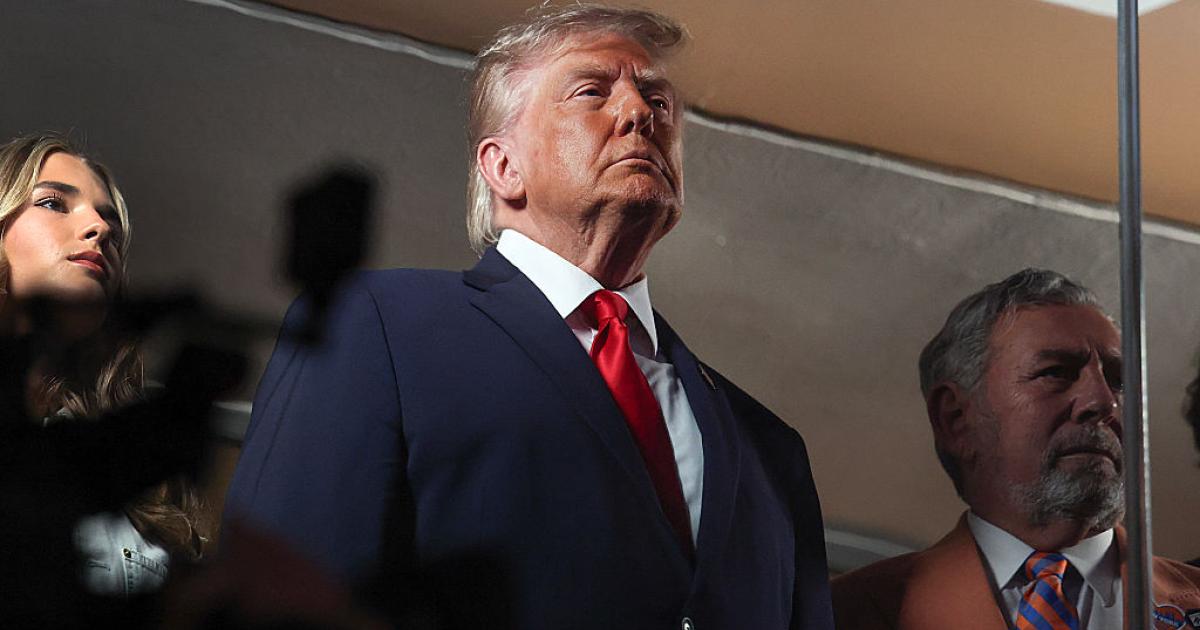
The American President Donald Trump concluded the year 2025 in Palestinian–Israeli policy in the same way he began it: with blatant, overt bias, devoid of any claim to balance or respect for international law. He ended the year by hosting Israeli Prime Minister Benjamin Netanyahu, wanted by the International Criminal Court as a suspect in war crimes, at his private resort in Mar-a-Lago on Monday, December 29, 2025, where he showered him with praise and commended "his leadership" and "military achievements," completely ignoring his government's record of widespread destruction and civilian killings. Most tellingly, Trump did not mention Israel's ongoing violations of the ceasefire in Gaza, nor the devastating human cost of these violations, in a scene that clearly reflected that American policy was not concerned with ending the war, but with protecting those who wage it, no matter the consequences.
Since his return to the White House, Trump has reshaped American policy toward the Palestinian–Israeli conflict on the basis of complete bias toward Israel, not only in its security aspect, but in its broader political and settlement project. This approach reached its peak during Israel's devastating war on the Gaza Strip, where Washington provided unconditional political and military cover, ignoring the unprecedented scale of the humanitarian catastrophe that befell Palestinian civilians.
American support was not limited to supplying Israel with advanced weapons and ammunition, but also included systematic disruption of any international path to accountability, through the use of veto power in the Security Council, rejection of repeated calls for a ceasefire, and questioning the reports of international human rights organizations. This cover turned the war on Gaza into an open-ended operation without temporal or moral limits, contributing to deepening the destruction, rising casualty numbers, and expanding the scope of forced displacement.
In contrast, Palestinians were reduced in American discourse to a "security problem" encapsulated by Hamas, in deliberate disregard for the true roots of the conflict, represented by the prolonged occupation and blockade for years, and the complete blockage of the political horizon. The Trump administration showed no readiness to recognize Palestinian national rights, or even to commit to the minimum standards of international humanitarian law that mandate the protection of civilians during conflicts.
However, focusing solely on Gaza hides another no less dangerous aspect of American policy, manifested in what is happening simultaneously in the occupied West Bank and occupied East Jerusalem. While the world was preoccupied with the war on Gaza, the West Bank witnessed an unprecedented escalation of settler violence, including organized attacks on Palestinian villages, burning of homes and farms, physical assaults and field killings, often under the protection of the Israeli army, and amid total American silence.
This escalation coincided with a remarkable acceleration in the pace of settlement, reaching unprecedented levels, whether through approval of thousands of new settlement units, or through the legalization of random outposts that were previously considered illegal even under Israeli law itself. As for East Jerusalem, the Israeli government continued to impose Judaization policies, from demolishing homes, revoking identities, and expanding settlement around the Al-Aqsa Mosque, in a systematic attempt to change the city's demographic and political reality.
The American position on these developments was characterized by explicit complicity, whether through abstaining from any serious condemnation, or settling for vague statements not followed by practical measures. In fact, Trump's policy provided, practically, a political umbrella for these practices, by treating settlement as a "fait accompli," not a crime under international law, which encouraged the Israeli government and settlers to proceed without fear of accountability.
This American complicity reaches its peak when it comes to the killing of Palestinians holding American citizenship in the occupied West Bank, where facts reveal a recurring pattern of impunity that undermines any American claim to defend its citizens or principles of justice. Several Palestinian Americans have been killed since Trump took office (as in recent years) by Israeli army fire or settlers, under circumstances documented by human rights organizations and eyewitnesses, without any of these crimes leading to real accountability or legal prosecution.
Each time, the American State Department settles for stereotypical statements calling for "investigation" or expressing "concern," then practically closes the files once Israel announces the opening of a formal internal investigation, which often ends in acquitting the killers or blaming the victim. This automatic American acceptance of the Israeli narrative, even when field evidence contradicts it, reflects a conscious political decision to provide diplomatic protection to Israel, even if the price is the blood of American citizens.
More dangerously, this disregard is not limited to individual cases, but reflects a systematic policy that considers the Palestinian American an exception to the concept of "citizenship" that is supposed to enjoy full state protection. While political, media, and legal pressure tools are mobilized when an American is harmed anywhere else in the world, the Palestinian American is treated as a marginal case, whose life is reduced to equations of "Israeli security."
This approach not only encourages the repetition of crimes, but sends a clear message to Israeli settlers and soldiers that killing a Palestinian, even if he holds an American passport, will not entail political or legal consequences. Thus, American citizenship is transformed from a protective shield into a worthless detail, as long as the killer is Israeli and the victim Palestinian.
In this context, the Trump administration presented what was called the "Gaza Plan" as a political exit, but it essentially treated the effects rather than the causes, focusing on disarming Palestinians and re-engineering the administration of the sector, without any commitment to ending the occupation or recognizing Palestinian political rights, whether in Gaza or the West Bank. Thus, it seemed that Washington was dealing with the Palestinian issue as a fragmented security–humanitarian file, not as an integrated national liberation issue.
Regionally, this approach reinforced a growing sense that the United States is no longer a mediator, but a fully biased party. The American bombing of Iranian sites confirmed that the logic of force has become the preferred tool in managing regional files, at the expense of diplomacy and political solutions, while the Palestinian issue is left out of any serious strategic calculations.
The most dangerous aspect of Trump's policy is not only his unconditional support for the Gaza war, but in providing comprehensive cover for a broader Israeli project aimed at liquidating the Palestinian issue, through combining widespread destruction in Gaza, creeping annexation in the West Bank, and Judaization of East Jerusalem. Under this approach, international references erode, and the door is closed to any fair and viable political solution.
Trump's policy toward Gaza and the West Bank reveals a single integrated vision, not separate files. The war in Gaza, settlement expansion in the West Bank, and Judaization of Jerusalem are all links in a single path that enjoyed explicit American support or complicit silence. This approach does not seek to end the conflict, but to manage it by force, imposing permanent facts on the ground.
In the foreseeable future, Trump's policy appears to be a recipe for further explosion. A people being bombed in Gaza, attacked in the West Bank, and uprooted from Jerusalem cannot be subdued by force forever. Without a radical change in the American approach, stability will remain an illusion, peace postponed, and violence likely to recur in harsher forms.



Share your opinion
Trump's Year in Palestine: Unbounded Support for Israel and a Harvest of Destruction in Gaza and the West Bank