PALESTINE

Tue 13 Jan 2026 9:17 am - Jerusalem Time

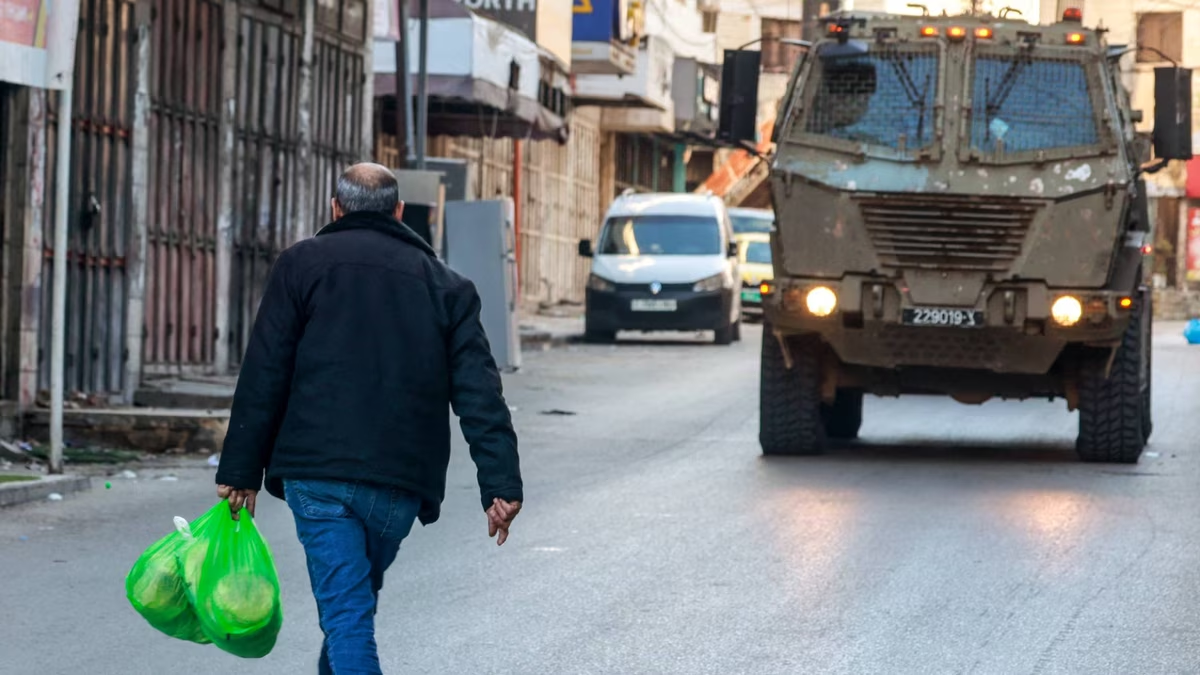
Occupation begins construction of "Rehavam" settlement north of the West Bank as part of the advanced 22 plan

Sources revealed that the Israeli occupation government, led by Benjamin Netanyahu, has begun establishing a new settlement named "Rehavam" in the northern occupied West Bank. This step comes in implementation of a strategic government decision taken in mid-2025, which stipulates the establishment of 22 new settlements in various areas of the West Bank, to enhance the occupation's demographic and security control.

The name of the new settlement, "Rehavam," carries a right-wing political and ideological significance, as it is believed to be named after the late radical minister "Rehavam Ze'evi," the proponent of the "transfer" (forced displacement) theory. Its location in the northern West Bank aims to:

Dismemberment: Separating Palestinian communities in Nablus, Jenin, and Qalqilya governorates from each other, and preventing any future Palestinian geographical connection.

Suffocating urban expansion: Depriving neighboring Palestinian villages of natural expansion areas in their lands, and turning them into "besieged entities."

The start of construction in the "Rehavam" settlement is part of the "onslaught plan" approved by the Netanyahu government, which includes elements from the far-right. This plan operates on several axes:

Legalizing outposts: Converting settlement outposts established by settlers "illegally" (according to the occupation's own law) into official cities and settlements.

Detailed infrastructure: Connecting these settlements with a massive "bypass" road network, which acts as physical barriers isolating Palestinians in isolated "pockets" resembling "Bantustans."

Settlement experts warn that this escalation represents the "death knell" for the two-state solution. Palestinian forces believe that the establishment of "Rehavam" is part of a comprehensive war targeting land and people, especially with the appointment of religious Zionist officials who directly oversee the implementation of these projects.

These developments come at a time when the world is preoccupied with the consequences of storms in Lebanon and war threats in Iran, which allows the Netanyahu government space to impose a "new reality" on the ground that will be difficult to change through any future political path.

OPINIONS

Tue 13 Jan 2026 8:14 am - Jerusalem Time

The Last-Minute Race!

Ibrahim Melhem

Ibrahim Melhem

Opinion Writer

Alongside the clouds and rain, dangerous signs of escalation gather in the region's sky, expressed by the urgent news flashing on screens and visible evidence on the ground, from drills, precautions, and movements on land and in warm waters, in a scene that brings to mind the critical hours that preceded the twelve-day war on Iran last June.


With a stick at times, and a carrot at others, the man infatuated with his narcissism and excess power, who has accustomed us to saying one thing and its opposite, when he speaks of peace, you should know that he is preparing to ignite fires, and when his morals are his standards, you should know that nothing restricts him from achieving his goals, and that "morals" for him are not a constraint but a means, changing with his interests that fiercely clash with international norms and laws.


Yesterday, he "snapped" at a CNN correspondent who was accompanying him on the presidential plane, describing her question as "stupid" when she inquired whether Iran would take his threats seriously. 


He practices politics as an arena for evasion, settling scores, making gains, and multiplying investments, where diplomacy for him is merely a "warrior's rest" where he gathers firewood and pours oil on the stove to ignite the next fire.

ARAB AND WORLD

Tue 13 Jan 2026 8:08 am - Jerusalem Time

Washington threatens force and asks American citizens to leave Iran

Late on Monday, the administration of US President Donald Trump asked American citizens to leave Iran immediately.

The US State Department said in a notice, a copy of which Al-Quds newspaper in Washington received: "Dual American-Iranian citizens should leave Iran using Iranian passports," warning that the Iranian government does not recognize dual nationality, "and will deal with dual American-Iranian citizens exclusively as Iranian citizens," warning that "American citizens in Iran face significant risks including interrogation, arrest, and detention. Displaying an American passport or showing any ties to the United States may be sufficient reason for Iranian authorities to detain a person."


The notice stated: "The US government cannot guarantee your safety if you choose to leave using the following options. You should only leave if you believe it is safe to do so; as of Monday, January 12, the Agarak/Norduz land crossing in Armenia remains open. American citizens entering Armenia from Iran with a valid American passport can stay for up to 180 days without a visa."


It is worth noting that at the peak of escalating popular protests in Iran, the White House reiterated that the option of directing air strikes against Tehran remains on the table, at a time when the administration of US President Donald Trump is trying to balance military pressure with opening a conditional diplomatic window. This dual stance reflects a traditional American strategy based on keeping all options available, in light of a highly sensitive regional scene.


White House spokeswoman Caroline Leavitt stressed on Monday that President Trump "is good at keeping all options on the table," considering that air strikes are only one of the scenarios that the Commander-in-Chief might resort to. However, she affirmed, at the same time, that diplomacy remains the President's first option, despite what she described as the sharp contradiction between the Iranian regime's public rhetoric and the messages sent through back-channel communications.


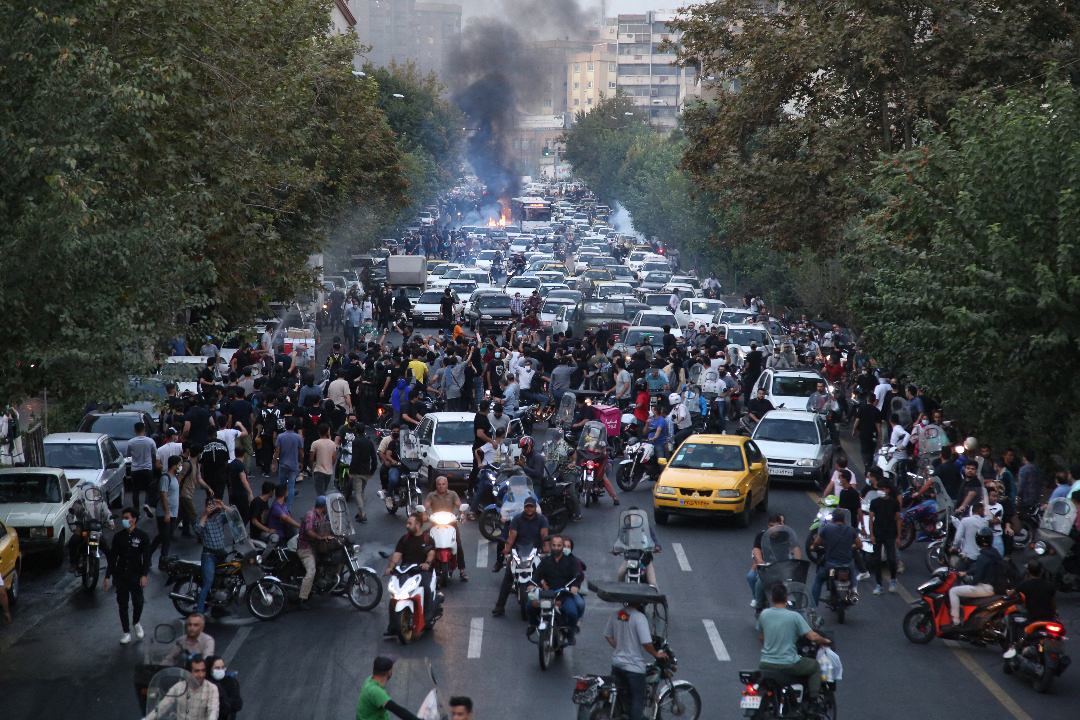
This American verbal escalation comes against the backdrop of human rights reports indicating that about 500 protesters have been killed during the crackdown carried out by Iranian authorities against protests that have been ongoing for more than two weeks. These figures prompted Trump to threaten to cross the "red line," considering that what is happening in the streets of Tehran might warrant a "very strong" response.


In contrast, Tehran announced that it is ready for war and negotiation simultaneously, in a dual message reflecting the nature of Iranian political behavior in major crises. The Iranian Foreign Ministry confirmed the existence of an open communication channel with US Special Envoy Steve Witkoff, indicating that public escalation does not necessarily mean closing the doors to understanding.


The US President, in turn, indicated, during his conversation with journalists on board Air Force One, that Iranian leaders had contacted him directly seeking a negotiating meeting, but he did not rule out military action before any meeting. This contradiction between calling for dialogue and readiness to use force reflects the state of hesitation that characterizes American decision-making in complex Middle East issues.


For his part, Iranian Defense Minister Aziz Nasirzadeh escalated his rhetoric, threatening "painful military surprises" if his country was subjected to any attack. He went further by considering that any country that facilitates or supports an attack on Iran would become a legitimate target, in a deterrent message directed at Washington and its regional allies.


The current American strategy towards Iran reflects an attempt to manage a multi-level crisis: internal protests, regional conflict, and electoral calculations within the United States. According to experts, threatening force gives Washington additional leverage, but it carries the risks of sliding into an open confrontation whose outcomes are not guaranteed. At the same time, maintaining back-channel communications reveals an American understanding that overthrowing the Iranian regime or changing it by force is not a realistic option in the foreseeable future.


As for the Iranian position, it seems governed by a familiar duality: rigidity in external rhetoric to contain any military pressure, and limited openness to negotiation to alleviate international isolation. However, the new factor in this equation is the extent of internal popular anger, which has become an existential threat to the regime, pushing it towards a security escalation that may increase its isolation rather than fortify it.


In conclusion, the crisis seems poised for further verbal escalation without immediate translation into a comprehensive military confrontation. Washington understands the cost of war, and Tehran knows the limits of its endurance. Between these two, the Iranian street remains the weakest link, paying the price for the conflict of wills between a superpower and a beleaguered regime, while human rights become a political bargaining chip rather than a moral priority.

OPINIONS

Tue 13 Jan 2026 8:06 am - Jerusalem Time

Economy Without Outlets: Why Isn't Palestinian Export Becoming a Growth Engine?

Dr. Said Sabri

Dr. Said Sabri

Opinion Writer

 International Economic Advisor, Member of the International Digital Transformation Council

Export is usually invoked as the magic recipe for escaping recession: “Expand markets, increase exports, and the wheel of growth will turn.” But this discourse bypasses the fundamental question in the Palestinian case: Do we even possess the act of exporting? Or are we engaging in a productive activity called exporting, without the tools that make it a sustainable economic policy?

In normal economies, export is a sovereign decision managed by the state through an integrated system: outlets, agreements, export insurance, and a logistical infrastructure that reduces costs and increases certainty. In Palestine, however, export is not just a market issue, but an external control chain that starts at the crossings and doesn't end with specifications, procedures, and time. Here, competition transforms from a productive race into a logistical gamble.

When market access becomes a privilege, not a right

The Palestinian exporter doesn't face the question of “how much can I sell?” as much as they face the question of “will I arrive on time?” Delays, inspections, re-examinations, and uncertainty in transit times add a hidden cost, economically known as the cost of uncertainty. This cost doesn't appear in accounting ledgers, but it is clearly reflected in the final price, in lost contracts, and in the erosion of trust among importers.

And the numbers here are not a detail: according to the latest available data, the value of Palestinian exports in 2023 did not exceed approximately $1.5 billion (goods and services), which is about 8% of the GDP—a modest percentage compared to small open economies where exports exceed 20–40%. More importantly, over 80% of exports go to a single market (Israel), revealing a sharp geographical concentration that reflects access restrictions rather than commercial preference, and transforms “export” from a diversification policy into a highly fragile state of market dependency.

Export sectors… and the most time-sensitive

The Palestinian export structure primarily consists of agriculture and food—olive oil and its derivatives, dates, vegetables and fruits—then stone, marble, and building materials, followed by light and craft industries, leading up to emerging digital services. It is noteworthy that these sectors, despite their local added value and extensive employment, are mostly the most sensitive to time and transit costs. This means that the export structure itself is structurally exposed to what can be called the “cost of uncertainty.” When arrival time becomes unpredictable, the product loses part of its competitiveness before being measured by its quality or price. The irony is that the only sector showing relatively faster growth is digital services—which is the least dependent on physical transit—a clear indication that wherever the burden of time is reduced, performance improves.

Export without policy… an activity, not a path

When we call for increased exports, we assume the existence of a national export policy. But what does this policy practically mean? It usually includes stable transit arrangements, trade agreements that open markets, tools for export insurance and risk sharing, and a logistical system that reduces costs and increases reliability. In the Palestinian case, most of this framework is absent. There is no national umbrella for export insurance, no ability to directly negotiate trade terms for access, and no control over transit time. The result is that export becomes an exceptional activity relying on individual initiatives, not a developmental path led by the state and the private sector within a shared vision.

Export Council… an institution without sovereign tools

It might be said that Palestine has an institutional framework for export through the Palestinian Export Council and the related national strategy. This is true in form. However, the problem is not the absence of institutions, but the limits of their actual ability to manage the “act of exporting” itself. The Council, as a coordinating platform between the public and private sectors, plays an important role in planning, support, and promotion, but it operates within a space that lacks sovereign tools over crossings, direct trade negotiation powers, and national mechanisms for export insurance or reducing the risks of time and uncertainty. The continued concentration of exports in a single market, and the fact that the heaviest sectors remain the most time-sensitive, indicates that the problem is not a lack of strategies, but an absence of control over market access conditions.

Closure of Karamah Crossing… when the eastern lung is cut off

The fragility of the export structure is clearly manifested in the impact of the closure of Karamah Crossing, the main outlet for exports heading east and to Arab markets. The closure does not only mean a delay, but an actual disruption of exports, because the alternatives offered are either unavailable, high-cost, or unsuitable for time-sensitive products—especially agricultural and food products. Here, the question is no longer logistical, but structural: an economy dependent on a single outlet loses its ability to reach its natural markets as soon as this outlet is closed. More importantly, this disruption does not affect a specific shipment, but strikes contractual trust with importers in Arab countries, and excludes the Palestinian product from supply chains that require regularity and predictability in timings.

Financially, no unified official figures are available for the total loss resulting from the closure, but sectoral estimates indicate that the cost of delaying or canceling shipments—especially agricultural and food products—can incur direct losses of thousands of dollars per shipment for exporters (between partial/total spoilage, re-storage, and additional fees), in addition to indirect losses in the form of lost future contracts and eroded trust among importers. With repeated closures or disruptions, losses are not measured by a shipment here or there, but by millions of dollars annually at the sectoral level due to increased logistical costs and the exclusion of Palestinian products from regional supply chains that require strict adherence to schedules.

From a procedural problem to a structural dilemma

The foregoing may seem like procedural obstacles that can be improved by training or simplifying procedures. But the core of the problem is structural: the act of exporting itself is not in the hands of the Palestinian economy. As long as the decision of transit, its timing, and market acceptance criteria are not managed within a sovereign framework, any technical improvement will remain limited in impact. This explains why export does not become a growth engine even when numbers rise in certain periods: growth based on an activity whose tools we do not control remains fragile and quick to decline.

What does building the “act of exporting” practically mean?

If the core of the crisis is structural, then the next question becomes: What does building the “act of exporting” practically mean? One cannot bypass political reality, but one can work on areas that reduce the fragility of export and restore its meaning as economic policy. Building this “act” does not just mean demanding that the product be more competitive, but providing a framework that protects time, insures risks, and makes market access a right, not a gamble. This begins with national tools—even if limited—to share the risks of delay and uncertainty, and with smart investment in logistics that reduce the impact of time, and with selecting markets and routes less sensitive to fluctuations and building long-term relationships with them. It also means redirecting part of the added value towards digital and knowledge services that are less dependent on physical transit, and seeking unconventional regional integration formulas that create “functional outlets” even in the absence of full sovereignty. The conclusion is that competitiveness is not built only inside the factory, but also at the market gate.

Conclusion

Export in Palestine is not a problem of numbers, but a question of sovereignty over economic action. Unless we move from talking about “increasing exports” to building the conditions for “the possibility of exporting,” export will remain a heroic individual activity, not a public policy capable of generating sustainable growth. An economy that produces but does not reach, is an economy operating without outlets. Restoring the meaning of export begins with acknowledging that the market alone is not enough—we need a framework that protects time, insures risks, and grants the product the right of access before demanding it to compete.


OPINIONS

Tue 13 Jan 2026 8:00 am - Jerusalem Time

Jerusalem's National Schools Insist on Resilience

Daoud Kuttab

Daoud Kuttab

Opinion Writer

Amidst the frantic campaign to Judaize or Israelize national institutions in Jerusalem, the challenge resurfaces for private schools, especially those owned by Christian churches, due to arbitrary Israeli policies. The most pressing challenge today is the difficulty for teachers and administrators from outside Jerusalem to reach their schools and educational institutions. It is well-known that a large percentage of school staff in Jerusalem, particularly in Christian schools, relies on male and female teachers and administrators residing in towns and villages adjacent to Jerusalem, especially Bethlehem and Ramallah.

In response to Israeli arbitrariness in allowing educators and administrators to access their workplaces, due to the occupation authorities' refusal to renew travel permits, Christian schools decided to declare a strike last Saturday (1/10/2026), for one day, as part of the first phase of a escalating protest program. The issue of permits is a new-old problem controlled by the occupier, using many baseless justifications that contradict the right to movement and the right to education guaranteed by international law, including the Geneva Conventions regarding the treatment of citizens living under occupation. The issue of movement in the occupied Palestinian territories has seen a tremendous decline since "Al-Aqsa Flood," and the situation has not improved after more than two years and the announcement of a ceasefire in Gaza. The occupation exploited the war on Gaza to establish more than a thousand military checkpoints or iron gates in the West Bank, while the settlement offensive increased, especially in villages and sites near Jerusalem, which made life more difficult. It must be noted that cities near Jerusalem, especially in the Bethlehem governorate, are suffering an additional economic crisis due to the collapse of the tourism economy since "October 7" (2023). Of course, the refusal to grant movement permits to Jerusalem is considered collective punishment, as it does not include specific individuals whom the occupation authorities might claim pose a threat, but the comprehensive ban on an entire segment of Palestinians deprives security arguments of any justification. It is strange that the strike came at the same time that Israeli Prime Minister Netanyahu boasted to Western media and American officials that he and the occupation state are supporters of the Christian component, and that they are more concerned about the Christian community than any country in the Middle East. Church leaders strongly responded to these misleading statements, which were refuted by neutral studies proving that the occupation does not provide the minimum freedom of movement between the two most important cities for the Christian world, Bethlehem and Jerusalem, which are separated by only a few kilometers. All attempts by occupations throughout the ages have failed to create a rift among the population, especially among the Christian component in the vicinity of Jerusalem, hindering social, family, professional, and religious communication. In the absence of permits to work in Israel and the absence of tourism from the governorate, many residents of the Bethlehem governorate to the south and Ramallah and Al-Bireh to the north tried to find any ways to reach Jerusalem to cover the severe shortage faced by most families, including Christian Palestinian families working in Jerusalem's Christian institutions, knowing that Christian institutions in the Holy Land are considered the third largest employer of Palestinians in the occupied territories.

Christian schools have stood firm against challenges and attempts to change their national course through pressure to deal with Israeli curricula, preventing the introduction of Palestinian national education courses, and the occupation's failed attempts to stop this course to no avail. The right of Christian schools in Jerusalem to employ their full teaching and administrative staff from residents of Jerusalem, Ramallah, and Bethlehem cannot be relinquished. Those who have taught and managed schools since 1967 and graduated batches of male and female students cannot be dispensed with due to the difficulty of obtaining travel permits that were available in previous years. Israeli arbitrariness in the educational process in Jerusalem, which is added to the harassment, will not succeed in weakening the policy of resilience or pushing it to retreat, a policy that has become the most appropriate within the Palestinian national struggle.


OPINIONS

Tue 13 Jan 2026 7:58 am - Jerusalem Time

Iran in the Eye of the Storm: Domestic Protests and External Illusions

Consultant Dr. Ahmed Youssef

Consultant Dr. Ahmed Youssef

Opinion Writer

At a time when the world's attention is focused on the scenes of genocide in the Gaza Strip, Iran returns to the forefront of Western media narratives through the amplification of internal protests with economic roots, in a transparent attempt to confuse priorities and divert attention from the larger crime unfolding in Palestine.

While cities around the world are almost overflowing today with widespread waves of protest against what has happened and is happening in the Gaza Strip in a full-fledged war of genocide, the Western media machine, driven by American and Israeli political agendas, is working to shift the compass towards the Iranian interior, by amplifying the protests of an economic and social nature witnessed in some cities, and presenting them as a prelude to the collapse of the regime or the beginning of an imminent “revolution of change.”

There is nothing new in this scene; since the victory of its revolution in 1979, Iran has experienced repeated waves of protest, with varying motives and diverse causes, from student protests in the nineties, to demonstrations after the 2009 elections, then waves of high prices and unemployment in 2017 and 2019, leading to the social protests of 2022. In all those stations, the West bet on the scenario of internal explosion, and each time the bets failed, and the Iranian state remained cohesive, capable of absorbing shocks and readjusting its internal rhythm.

The current protests cannot be understood in isolation from the suffocating economic context that Iran has been experiencing for more than four decades, due to an American and Western economic sanctions regime that began in 1979, during which the Iranian economy was subjected to continuous pressure affecting the national currency, energy, banking, and foreign trade sectors, and restricting the state's ability to import and make financial transfers. This reality was directly reflected in the Iranian interior, in rising inflation and unemployment rates and a decline in the purchasing power of wide segments of society, which provided fertile ground for repeated economic and social protests. Nevertheless, despite the severity and prolonged nature of the sanctions, Iranian society has shown a remarkable ability to adapt and endure, while the state has succeeded in preventing these pressures from turning into a complete collapse or internal disintegration, which explains the repeated failure of Western bets on overthrowing the regime through the weapon of economics.

Despite the clarity of this context, the protests are being transformed into a “regime change project” with a familiar propaganda discourse, which is only invoked when the country concerned is outside of American obedience. The striking paradox is that the same scene is repeated in other countries without the same scenario being proposed; in the United States, major cities are witnessing massive demonstrations against policies supporting Benjamin Netanyahu's government in the war of annihilation in Gaza, as well as protests related to economic and social conditions, yet no one talks about the “fall of the American regime.” The same applies to Israel, where demonstrations against Netanyahu have not subsided due to corruption issues, security failures, and war crimes, without the option of overthrowing the regime being raised. Only when it comes to Iran, are the terms of collapse and chaos invoked.

Recent American history offers a profound lesson in the dangers of misreading Iran. In the late 1970s, during the crisis of the detention of American embassy staff in Tehran, the administration of President Jimmy Carter bet on military intervention to free the hostages in an operation intended to showcase American prestige, but it ended in a dismal failure in the Iranian desert, and became one of the most embarrassing pages in the history of American foreign policy, and directly contributed to the downfall of Carter himself. That experience confirmed that Iran has never been an easy arena for penetration or subjugation.

In the current context, the Israeli bet becomes clearer if Tel Aviv's failure to overthrow the Iranian regime through military option during the last strike, which it intended to send a decisive deterrent message and break existing power equations, is recalled. However, the Iranian response was devastating in its size and implications, revealing the fragility of the Israeli internal front, and inflicting unprecedented political, security, and economic losses, making the results of what was known as the “Twelve-Day War” ominous for Israel. From that moment, it became clear that the cost of direct military confrontation with Iran exceeds Israel's capacity to endure, and that its repetition might open doors that Tel Aviv cannot close.

From here, Netanyahu's government moved to search for less costly and more circuitous alternatives, based on exhausting the Iranian interior, or betting on escalating internal tensions by amplifying protests and mobilizing political, media, and intelligence tools, hoping to achieve what planes and missiles failed to do. In this context, the fundamental question arises as to whether Israel is actually betting on overthrowing the Iranian regime through demonstrations, or is it seeking, in a more dangerous option, to involve the United States in an open war with Iran, in which Israel would be the primary beneficiary without bearing the costs of direct confrontation alone.

In conclusion, the protests in Iran are not an isolated event from a turbulent regional and international context, nor can they be separated from frantic attempts to reshuffle the cards after the failure of the military option to break or subjugate Iran. Just as long-term sanctions failed to bring down the state from within, military strikes failed to impose new equations in favor of Israel, shifting the bets to more circuitous and dangerous paths. However, experience confirms that these bets, like their predecessors, are doomed to failure, and that Iran – despite pressures and challenges – will remain an active regional player, capable of repairing what has been damaged and strengthening its alliances. The clearest truth, which Western propaganda tries to obscure, is that no artificial crisis in Tehran can hide the ongoing genocide against the Palestinian people in Gaza.


PALESTINE

Tue 13 Jan 2026 7:47 am - Jerusalem Time

What's new in the factions' meetings in Cairo? And who will head the Gaza administration committee?

Ramallah - Palestinian factions in Cairo, in coordination with mediators, are preparing to enter the second phase of the ceasefire agreement in Gaza, including the formation of a technocratic committee to administer the Strip. While Fatah has set parameters for any committee formed to administer the Strip, Hamas has expressed its readiness to hand over all administrations and institutions to the newly formed committee and work to ensure its success. Despite Fatah's announcement that it would not attend the factions' meetings in Cairo, mediators, especially Egypt, are making efforts to involve the movement in the ongoing consultations, leading to an agreed-upon committee before the end of the week, according to an analyst.

On November 18th, the UN Security Council adopted a US draft resolution regarding ending the Israeli war in Gaza, among its provisions was the administration of the Strip through a transitional Palestinian technocratic government (competencies), operating under the supervision of an executive "Peace Council" led by US President Donald Trump, according to his plan, announced on September 29th, which entered its first phase of implementation on October 10th, while Israel is procrastinating in moving to its second phase.

Cairo Meetings In a press statement, Hazem Qassem, spokesman for the Islamic Resistance Movement (Hamas), said that the movement presented "advanced positive positions, within the framework of arranging the Palestinian situation," after Egypt invited factions to meet in Cairo to discuss the second phase of the ceasefire agreement in Gaza and the formation of a technocratic committee to administer the Strip.

On Sunday, sources said that a Hamas delegation headed to the Egyptian capital, Cairo, to discuss political and field developments in the Gaza Strip starting Monday. They added that on the delegation's agenda were meetings with Palestinian factions and forces, in addition to meetings with official Egyptian bodies, to discuss a number of files related to the agreement, including the formation of a Palestinian "technocratic" committee to administer the Gaza Strip.

She said that the committee "was agreed upon in principle between the Palestinian factions and the Egyptian authorities, but it faced reservations from the Palestinian Authority and Israel," noting attempts to overcome obstacles to the formation of the committee and to make it purely Palestinian.

In contrast, the Palestinian National Liberation Movement (Fatah) announced on Sunday that any committee to administer the Gaza Strip derives its legitimacy from its connection to the legitimate authority of the sovereign institutions of the State of Palestine, declaring that it would not participate in the factions' meeting and had informed Cairo of its position.

In its statement, through its spokesman Abdel Fattah Doula, it said that "the Gaza Strip is an integral part and cannot be separated from the Palestinian state and its political and legal system in Gaza and the occupied West Bank, including Jerusalem."

Al-Tamimi expects the announcement of the formation of the Gaza administration committee headed by Health Minister Majed Abu Ramadan at the end of the week or early next week (social media) Imminent announcement In the opinion of political analyst Bassem Al-Tamimi - in his speech - there is a red line for the Fatah movement regarding the community support committee, which all factions emphasized its importance and informed the Egyptian sponsor, which is that the head of the committee should be a minister in the government of the State of Palestine.

He added that Fatah's goal is to ensure the unity of the Palestinian territories between the West Bank, including Jerusalem and Gaza, and to ensure the unity of the Palestinian political system and the laws implemented between the West Bank and the Strip.

Sources say that the information available to them indicates that Health Minister Dr. Majed Abu Ramadan is the Palestinian figure nominated to head the committee by the Palestinian National Authority, expecting agreement on him from all parties, including Hamas.

Regarding the reason for Fatah's apology for attending the factions' meetings, the Palestinian analyst said that "contacts are ongoing, mainly through the Egyptian brothers sponsoring the factions' dialogues," adding that he sees no impediment for Fatah to attend the meetings.

He pointed to meetings held weeks ago between leaders of the Hamas movement on the one hand, and Palestinian Vice President Hussein Al-Sheikh and intelligence chief Majed Faraj on the other, confirming the existence of "understandings between all factions, including Fatah and Hamas, and through the Egyptian brothers."

He expressed hope that - soon - a breakthrough would be achieved in the file of comprehensive national reconciliation among all Palestinians, and the announcement of the community support committee from Cairo at the end of this week or next week.

Messages and Promises As for political analyst Alaa Al-Rimawi, he believes that Fatah's absence from the Cairo meetings stems from its reading of the political scene, as Israel does not want an authority in partnership with Hamas, neither in the Palestinian file nor in the Strip, explaining that "the Authority realizes that any approaches with Hamas mean a complete Israeli rejection and a partial American one, and thus the loss of what the Authority aspires to in the Strip."

He continued in his speech that the Fatah movement relies on monopolizing the management of the Palestinian scene, through promises and messages it received about its inevitable role in the Strip without passing through or partnering with Hamas.

However, Al-Rimawi says that Israel's vision in dealing with the Strip - regarding its administration - is for it to be a civil administration affiliated with the Peace Council, isolated from the political relationship with the Authority and Hamas. "In short, it is managed by the United States and Israel together, meaning creating a new political environment and greenhouse outside the Authority's system and outside Hamas."

Nevertheless, he expected an approach to the Palestinian Authority's presence in Gaza, even if in an unapparent way, considering at the same time Fatah's absence from the Cairo meetings as "a reflection of the absence of a collective Palestinian awareness that realizes the dangers of the next stage in the event of forming a political vision specific to the Strip, according to compulsory approaches that will not be in the interest of the Palestinian people, which is the formation of a technocratic committee whose formal reference is the Peace Council, and whose real reference is Israel through the American gateway."

Al-Rimawi warns against the American side going to a composition of the scene according to compulsory approaches as an alternative to Fatah. According to Al-Rimawi's information, there are attempts by Hamas to empower the Palestinian government in the Strip and to have an agreed-upon political reference at the minimum between the factions and the Authority, and for that purpose, it offered facilities.

But he says that Fatah stands at two points: the first is that Fatah or the Authority will not be a gateway to facilitate the retention of weapons by Hamas, but rather to resolve this file completely in line with the American vision, and the second is that Hamas should be far from any composition in the political scene, "whether in the upcoming or local elections or in the political vision."

Nevertheless, Al-Rimawi says that what the factions and mediators in Cairo are working on is finding a formula for Fatah's presence even if it is absent, pointing to strenuous attempts for Fatah figures to attend, without ruling out the possibility of the dismissed leader from the movement, Mohammed Dahlan, benefiting from that absence, especially since there are already voices emerging in the Strip demanding representation for his current if President Mahmoud Abbas turns his back on the dialogues.

PALESTINE

Tue 13 Jan 2026 6:41 am - Jerusalem Time

After 665 days of detention.. A Palestinian doctor's testimony about his shock at the health reality in Gaza

The testimony of a Palestinian doctor who recently returned to the Gaza Strip after more than a year and a half in Israeli prisons reveals the extent of the collapse of the health system in the Strip, in light of widespread destruction, a severe shortage of staff, equipment and medicines, and the continuing repercussions of the war and siege, which puts thousands of patients, including children, at risk of death due to preventable diseases.

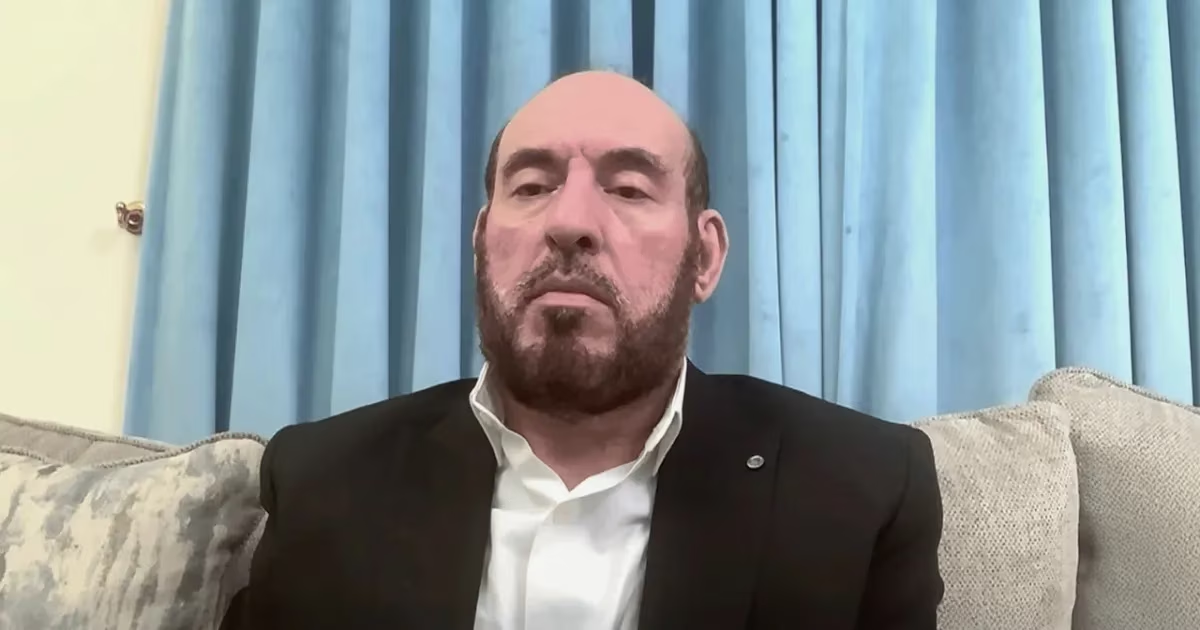
Palestinian doctor Ahmed Muhanna returned to the Gaza Strip after 665 days spent in Israeli prisons and detention centers, to be shocked by the extent of destruction he described as beyond imagination, after he found that everything he clung to in his memory had been completely annihilated.

Muhanna, one of Gaza's most prominent emergency medicine and anesthesia consultants, said in a report that what kept him steadfast throughout 22 months of detention was the dream of returning to his family and to the Strip, adding: "We were completely cut off from the outside world in prison." He explained that after his release, he was transported by car across the border and then inside Gaza to Al-Awda Hospital, where he works, and confirmed that the scenes of destruction made his skin crawl and his chest tighten before his tears flowed.

Israeli occupation forces arrested Muhanna in December 2023 while Al-Awda Hospital was under siege, less than three months after his release.

Despite the official ceasefire, the health sector faces a new attack amid an almost complete inability to deal with a wave of preventable diseases and deaths.

Muhanna explained that he returned to a hospital almost devoid of medical staff, equipment, and medicines, noting that 75 of his colleagues at Al-Awda Hospital were martyred during his detention.

According to the Health Workers Watch organization, since October 7, 2023, about 1,200 Palestinian health workers have been martyred, while 384 others have been detained by the Israeli army.

He said: "I feel great pain and sadness for what we are facing," noting that 77 percent of Gaza's population, including 100,000 children, face high levels of acute food insecurity, according to the World Health Organization, while doctors continue to treat children suffering from severe malnutrition with worsening serious medical complications.

According to international human rights organizations, including a UN committee, the occupying state committed genocide in Gaza, and also prevents the entry of humanitarian aid and the systematic destruction of the health system.

Muhanna said that Gaza today does not have a single working MRI machine, and there is only one CT scanner, adding that the deliberate military targeting of the health system was not limited to destroying infrastructure, but also deprived residents of medical care and raised mortality rates.

The United Nations Office for Human Rights stated that 94 percent of Gaza's hospitals have been damaged or destroyed, leaving patients, including newborns, without essential care, confirming that Israel continued, despite the ceasefire, to prevent the entry of medical supplies and nutrients essential for the survival of civilians.

The situation worsened after the occupation government announced the withdrawal of licenses for 37 international non-governmental organizations operating in Gaza and the occupied West Bank, on the pretext that they did not meet the new registration requirements, including humanitarian medical organizations such as "Doctors Without Borders."

The Palestinian doctor pointed to the suffering of cancer patients from the spread of tumors due to the prevention of available treatments, in addition to the increase in kidney failure cases due to the lack of dialysis machines, saying: "I am a doctor, but I am helpless and unable to do anything to help people," although that pushes him to continue working.

Muhanna spoke about being subjected to torture, humiliation, and deprivation of food and medical treatment during detention, referring to a UN report that confirmed the existence of an "actual state policy" of systematic torture in the occupying state. He mentioned that he was initially transferred to the notorious "Sde Teiman" detention center, where he remained for 24 days blindfolded and handcuffed, before being severely beaten during his transfer to a facility in the Negev, which resulted in a broken rib, without receiving any painkillers or medical care.
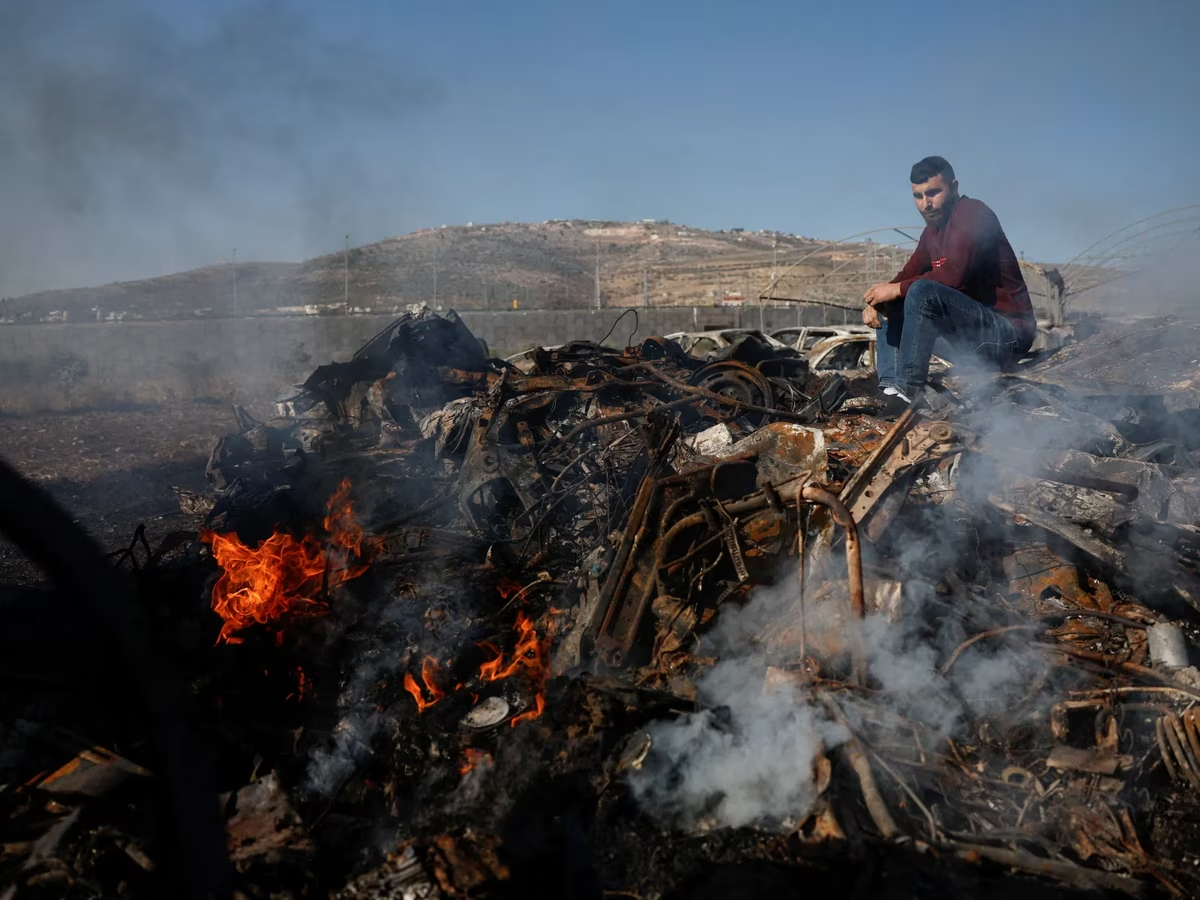
He confirmed that he witnessed two detainees lose their lives due to the absence of treatment, including a 37-year-old man who showed symptoms of intestinal obstruction, adding that he appealed to the guards to urgently transfer him to the clinic without success, until his condition worsened and he died.
Muhanna said that he suffered from constant hunger due to the lack of food, and recounted that he was placed with 40 detainees in a small tent surrounded by a fence without being allowed to use the bathroom from 4 PM until 5 AM, describing it as a tragedy, and confirmed that no charges were brought against him throughout his detention.

At the end of his speech, Muhanna expressed his deep concern for the future of his children, saying that he sees no future for them in Gaza, and that he wishes them safety, education, and work, adding: "When I am not in the hospital, I try to think of a place for us to go together, but there is no place, no green spaces. Gaza was full of life, restaurants and beaches, but now nothing is left."

PALESTINE

Tue 13 Jan 2026 6:40 am - Jerusalem Time

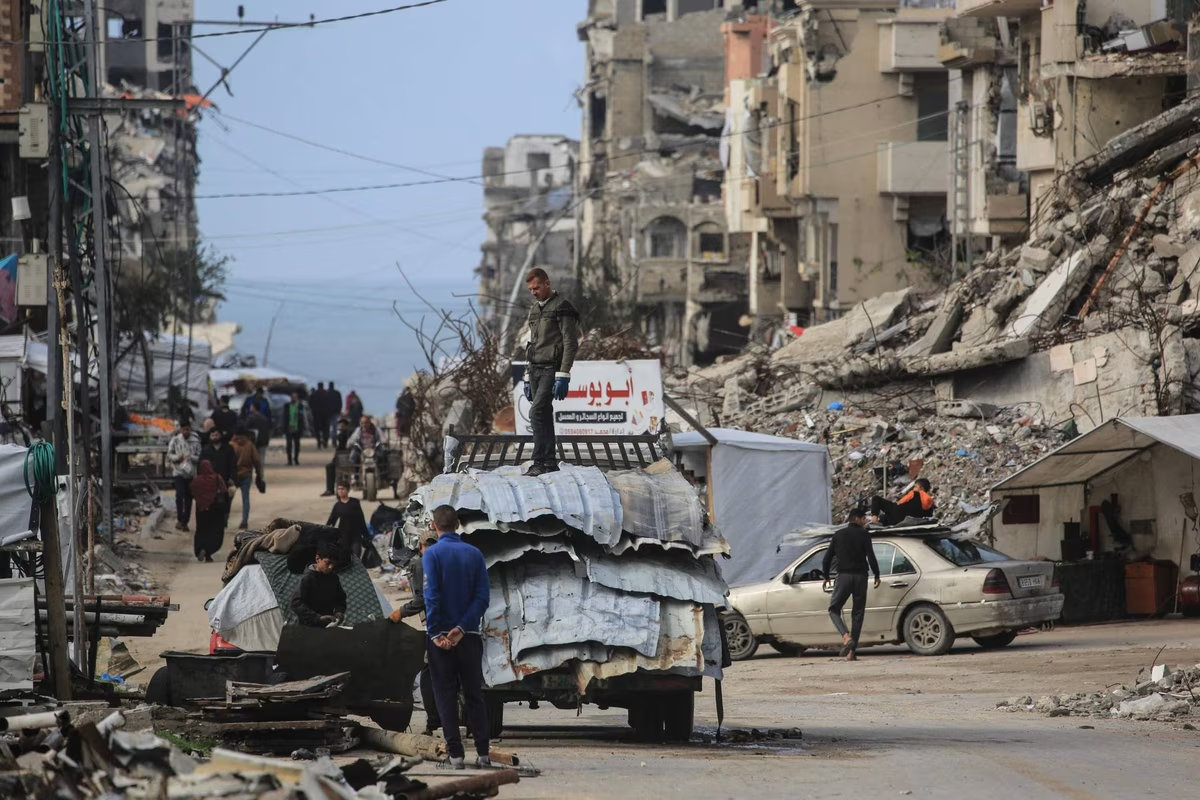
Israel continues to demolish Gaza homes non-stop

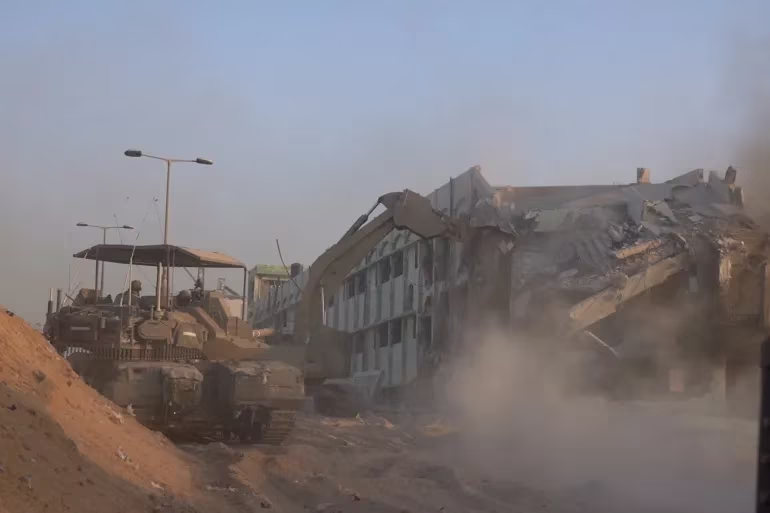
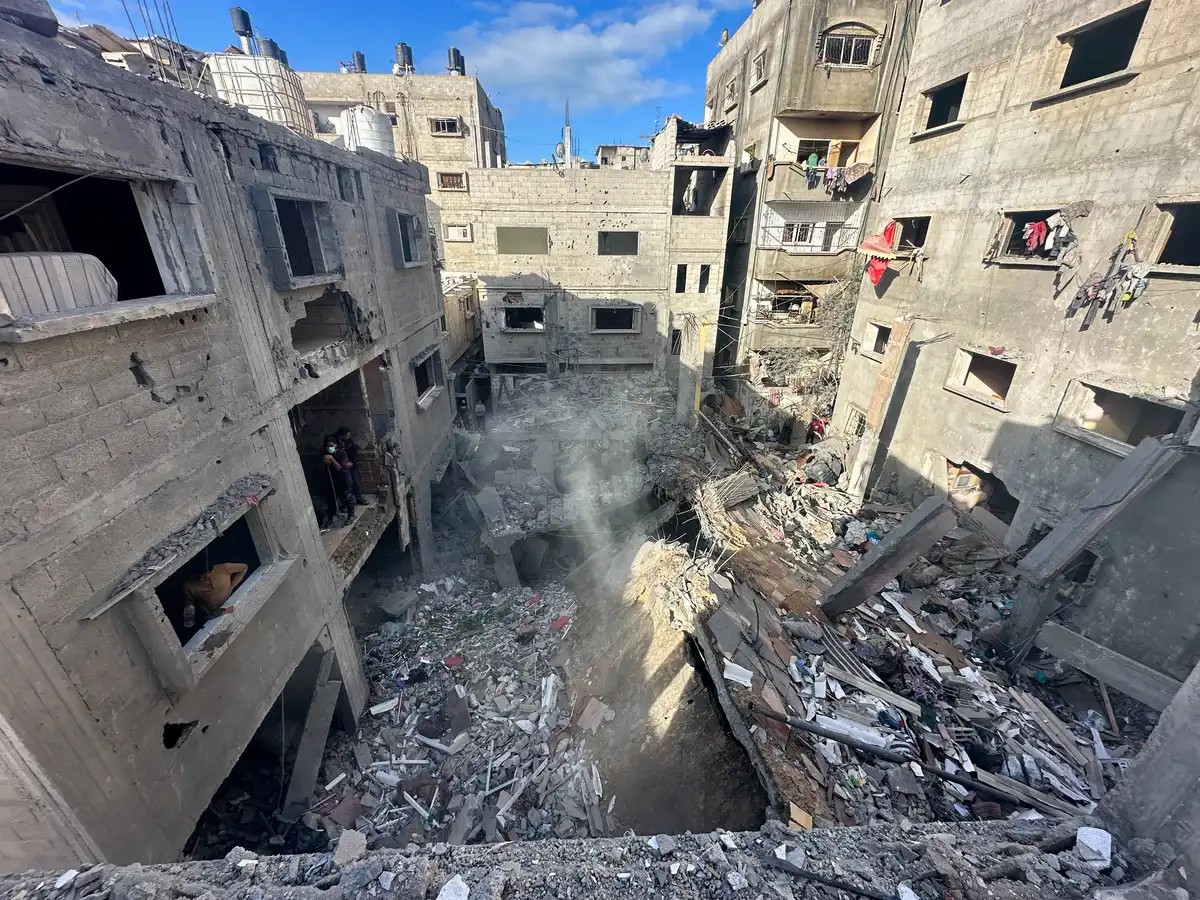
An analysis conducted by an American newspaper, based on recent satellite images from "Planet Labs" company, revealed that Israel has demolished more than 2,500 buildings since the signing of the ceasefire agreement, as part of what it claims are operations aimed at destroying tunnels and booby-trapped houses. The newspaper stated - in a report by Samuel Granados, Adam Rasgon, Iyad Abu Hawila, and Sanghana Varghese - that the agreement, signed after a two-year war that caused immense destruction to the Strip, had raised hopes among Palestinians for a period of calm and a chance to breathe after intense shelling that destroyed a large part of the urban infrastructure. However, field realities indicate - the newspaper continues - that demolition operations are ongoing, especially in areas under Israeli control within Gaza. The Ministry of Health in the Gaza Strip announced today, Monday, that the death toll of Palestinian martyrs due to the Israeli genocide since October 2023 has risen to 71,419, while the number of injured has reached 171,318 to date.

Continuous demolition Under the agreement, Israeli forces withdrew beyond a dividing line within the Strip, known as the "Yellow Line," leaving Israel in control of about half of Gaza's area. The newspaper added that data showed most demolitions occurred within these areas. However, satellite images also revealed the destruction of dozens of buildings outside this line, in areas supposedly under Hamas control, where the Israeli army had pledged to cease its operations. It explained that the Shuja'iyya neighborhood, east of Gaza City, represents a stark example of the extent of destruction, as images taken after the agreement showed remnants of buildings still standing, but subsequent images months later showed that the neighborhood had turned into a semi-empty land, with buildings destroyed even at distant locations outside the dividing line. Estimates indicate that some demolition operations extended about 900 feet outside the declared Israeli control areas.

Israeli officials claim - the newspaper continues - that these operations are part of a plan to "disarm Gaza," pointing to the destruction of an extensive tunnel network used by Hamas to store weapons, hide prisoners, and carry out attacks. The newspaper adds that - in contrast - Palestinians and analysts believe that what is happening goes beyond security necessities. They assert that entire neighborhoods are being razed to the ground without regard for the fate of residents or their properties, especially since the majority of residents have already been displaced due to evacuation orders and fighting. UN estimates indicate that more than 80% of Gaza's buildings were damaged or destroyed by October 11. The newspaper reported that many Palestinians expressed a deep sense of loss, as residents displaced from their neighborhoods say that what remains of their collective memory is gradually being erased.

Hostile acts At the same time, Hamas accuses Israel of a clear violation of the agreement's terms, considering the destruction of homes and properties to be hostile acts not justified by the ceasefire, according to the newspaper. It said that the Israeli army defended its actions, asserting that demolition operations are not random, and some are a result of detonating tunnels extending across withdrawal lines. However, the newspaper, for its part, confirmed that these justifications have not dispelled the controversy, amid warnings that continued destruction could undermine the chances of any future stability in the Strip, and further complicate the post-war path.

PALESTINE

Tue 13 Jan 2026 6:40 am - Jerusalem Time

Resumption of schooling in the Gaza Strip inside tents near the "Yellow Line"

Despite receiving her lessons while sitting on the ground in bitter cold inside a tent crowded with students in the Gaza Strip, interrupted by sounds of gunfire and repeated explosions from areas controlled by Israel less than a thousand meters away, Palestinian child Toleen Al-Hindi feels happy to finally return to school after an interruption of more than two years due to the war.

Toleen (7 years old) is one of about 400 children who are learning in the temporary "North Educational School" established in tents on ruins in Beit Lahia, northern Gaza Strip, and located within sight of the "Yellow Line" controlled by the Israeli army.

More than 12 girls sat on the ground in two rows inside one small tent, wearing puffy jackets for warmth, placing their notebooks in front of them on wooden boxes that replaced tables, and cheerfully repeating what the teacher said as she drew shapes on the blackboard.

Toleen said: "It's true that we don't sit on chairs or anything, but we're finally sitting in school. We've been sitting in war for a long time with no schools, just bored. We want schools like this to read and write in so we can grow up and be smart."

Her mother, Yasmin Al-Ajouri, added that she feels anxious from the moment Toleen goes to school until she returns home.

Yasmin tells her daughter as she heads to school: "Be careful, take cover behind a wall, hurry on your way."

"Safety is in God's hands." Under the ceasefire agreement in effect since October 2025, Israel still occupies more than half of the Gaza Strip, preventing civilians from accessing other areas.

Almost all buildings in areas controlled by Israel have been razed to the ground and their residents expelled.

This leaves the population of over two million people with only about a third of the Gaza Strip's area, most of them in temporary tents and damaged buildings, where some aspects of life are returning under the control of a Hamas-led administration.

Despite the partial cessation of war and intensive bombing operations, Israel has repeatedly opened fire on Palestinians approaching the "Yellow Line," claiming it aims to eliminate threats to its forces.

Israel has killed more than 440 Palestinians since the October agreement came into effect, and Palestinians say Israeli forces are moving some yellow concrete markers westward, beyond areas they are not supposed to control.

Workers at Toleen's school confirm that they hear gunfire daily.

Yara Abu Ghalwa, supervisor at the North Educational School, said: "There is daily gunfire, and if it weren't for God's protection, there would be two or three injuries every day... We taught the children that as soon as we hear and feel the gunfire... we take a prone position."

She added: "This is certainly not safe, and safety is in God's hands alone... but this is what we have."

Health authorities in the Gaza Strip said that the Israeli war on Gaza has resulted in more than 71,000 casualties since October 7, 2023, and hundreds of thousands of Palestinians injured.

PALESTINE

Tue 13 Jan 2026 2:26 am - Jerusalem Time

Hind Rajab Sues "Israeli" Soldier Yonatan Akriv in Austria on Charges of "War Crimes"

This complaint confirms that the occupation is now undergoing an unprecedented phase of legal pursuit in a prominent legal development aimed at breaking the state of "impunity" enjoyed by the occupation forces. The "Hind Rajab Foundation" for victim support announced the submission of a formal criminal complaint to the judicial authorities in Austria against an Israeli occupation army soldier named "Yonatan Akriv."

According to the urgent statement issued by the foundation, the accused soldier belongs to Battalion (8717) "Alon," one of the units of the "Givati Brigade," which is known for its involvement in the most violent military operations within the Gaza Strip. The complaint is based on evidence linking this soldier to field practices that violate all international conventions.

The foundation clarified that the legal file submitted to the Austrian judiciary includes serious charges, most notably: committing war crimes: related to the systematic targeting of civilians and private property. Contributing to acts of genocide: through participation in imposing living conditions aimed at the physical destruction of the population in Gaza. Incitement and documentation: relying on videos or images published by the soldier himself proving his abusive practices during his military intervention.

This step comes within the framework of what is known as "universal jurisdiction," which allows some countries to prosecute perpetrators of major international crimes regardless of their nationality or the place where the crime was committed, especially if the accused is present on their territory or has legal ties there. The "Hind Rajab Foundation" (named after the child Hind who was martyred in her vehicle in Gaza after being surrounded by tanks) seeks to transform the files of soldiers who boast about their crimes on social media into criminal cases that restrict their international movement and put them behind bars of justice.

This complaint confirms that the occupation is now undergoing an unprecedented phase of legal pursuit, where the "field" will no longer be a stage for crime without accountability, and that Palestinian and international human rights organizations have begun documenting every small and large detail to turn them into legal bombshells that will disturb the killers.

PALESTINE

Tue 13 Jan 2026 12:51 am - Jerusalem Time

"The Depression Deepens Gaza's Wounds".. Martyrs and Injuries in Collapses of Buildings Destroyed by "Israeli" Bombing

The strong winds and heavy rains were not just a weather condition in the Gaza Strip; they turned into a new "death machine" that brought down buildings and walls that were already tottering from previous occupation bombing. Monday evening witnessed a series of deadly collapses in various areas west of the city.

Medical and field sources reported the martyrdom of an elderly man and a woman, and the injury of 3 others, due to the collapse of part of the "Organza Hall" building near the chalets west of Gaza City. The martyrs are:

The elderly Muhammad Al-Abd Muhammad Hammouda (72 years old).

Ms. Doaa Mansour Hosni Hammouda (40 years old).

In a related context, citizen Wafaa Sharir (33 years old) died after the collapse of a damaged house wall in the vicinity of "Al-Thawra Street", after the dilapidated columns could not withstand the force of the wind.

A number of citizens were also injured in Al-Shati Camp (west) due to the collapse of another residential building. The injured were transferred to "Al-Shifa Hospital" for treatment, amidst warnings of the danger of remaining inside homes whose walls were cracked by previous raids.

Civil defense teams are issuing distress calls to citizens about the necessity of evacuating damaged buildings, as rainwater increases the weight of dilapidated roofs, while winds act as a catalyst for the collapse of suspended concrete blocks, threatening additional disasters as the depression continues.

PALESTINE

Tue 13 Jan 2026 12:23 am - Jerusalem Time

Deletion of "Palestine" from UNRWA curricula in Lebanon sparks widespread anger

The United Nations Relief and Works Agency for Palestine Refugees (UNRWA) in Lebanon has taken a step that has sparked a wave of public and institutional disapproval and rejection, after it removed the name "Palestine" from parts of the textbooks used in its schools.

The "Palestinian Return Foundation" expressed its deep concern over this measure, considering it to strip the educational process in refugee camps of its national dimension. The foundation emphasized in a statement that:

Education is not just an administrative matter: rather, it is a fundamental pillar in preserving the collective memory of the Palestinian people.

The decision affects identity: as it aims to obscure the Palestinian issue from the awareness of the nascent generations in the diaspora.

Palestinian refugees view these amendments as "attempts to falsify reality" and a prelude to the abrogation of the right of return. Activists affirmed that the deletion of the name "Palestine" represents a denial of the historical link of refugees to their homeland, and comes in the context of international pressure to liquidate the refugee issue.

Calls are currently escalating for Palestinian forces, factions, and popular committees in Lebanon to pressure the UNRWA administration to reverse this decision and ensure that the educational curriculum preserves national constants.

PALESTINE

Mon 12 Jan 2026 8:39 pm - Jerusalem Time

Israeli Minister and MK Call for Permanent Occupation of Gaza Despite Tel Aviv's Approval of Trump Plan

An Israeli minister and a member of Knesset called for the permanent occupation of the Gaza Strip, despite Tel Aviv's approval of US President Donald Trump's plan, which stipulates preventing Israel from occupying or annexing the Strip.

Justice Minister Yariv Levin of the Likud party said during a conference in the Knesset on Monday, "We need to be in Gaza, and throughout the land of Israel, first and foremost, because this is our country," according to reports from far-right sources.

Simcha Rothman, a Knesset member from the far-right Religious Zionist party, also stressed that control over Gaza must remain in Israel's hands.

According to Israeli sources, the conference, titled "Gaza - The Day After," discussed topics such as encouraging the forced migration of Palestinians from the Gaza Strip, Israeli security control, and disarmament of the Strip.

Despite Tel Aviv's announcement of its approval of Trump's ceasefire plan in Gaza, Israeli officials continue to call for its occupation, the displacement of Palestinians from it, and the establishment of settlements on its land.

Last December, Israeli Defense Minister Yisrael Katz made striking statements regarding the future of the Strip, revealing during a conference in the "Beit El" settlement a plan to establish "Nahal cores" (agricultural military bases) in northern Gaza, asserting that Israel "will never withdraw and will not leave Gaza."

Katz considered these bases an alternative to the settlements evacuated in 2005, which drew dissatisfaction from the US administration, which demanded clarifications.

The Israeli army continues its operations of demolishing homes and expanding its control areas in the Gaza Strip within what is known as the Yellow Line, including leveling thousands of dunams and buildings in residential neighborhoods in the Gaza Strip. Israel also continues to violate the ceasefire agreement daily, which has led to the martyrdom of 442 Palestinians and the injury of 1236.

An analysis of satellite images from sources between October 8, 2025, two days before the start of the Gaza ceasefire, and January 10 of the current year, revealed that the occupation army carried out operations to remove rubble from destroyed homes in the city of Beit Hanoun in the northern Strip, a step that raises fundamental questions about the underlying objectives of these operations, and whether they are limited to security reasons or fall within broader intentions and plans.

PALESTINE

Mon 12 Jan 2026 5:58 pm - Jerusalem Time

Israel Plans to Resume Wide-Scale Aggression on Gaza in March

Washington – Said Arikat 


Consistent Western and Israeli media reports indicate that the Israeli occupation army is finalizing new military plans to resume a large-scale offensive on the Gaza Strip next March, despite the ongoing ceasefire agreement. According to documented field data, Israeli occupation forces have killed more than 400 Palestinians since the truce came into effect, reflecting the fragility of the agreement and the absence of any real commitment to its terms, especially from the Israeli side.

The Wall Street Journal quoted informed sources in Tel Aviv as saying that the Israeli army has redrafted ground battle plans that include wide-ranging incursions into the Strip, with a particular focus on Gaza City. These sources indicate that any new ground invasion will practically lead to the collapse of the ceasefire and the undermining of political understandings reached through direct American mediation, in the context of President Donald Trump's administration's efforts to achieve a temporary calm in the region.

Over the past three months, Israel has violated the truce more than a thousand times, according to Palestinian and international human rights estimates, including limited shelling operations, assassinations, and shooting at civilians, in addition to continuing to prevent the entry of humanitarian aid, fuel, and medical supplies into the Strip. Despite the decrease in the pace of killings compared to the period before the ceasefire, the number of deaths during the truce exceeded 425 Palestinians, most of them women and children, which reveals that the truce was closer to an Israeli military repositioning than to an actual cessation of hostilities.

This comes amid continued field escalation, where at least three Palestinians were killed in Israeli raids on Sunday, an additional indication that the Israeli army treats the truce as a temporary arrangement that can be canceled at any moment. On this point, the Times of Israel quoted an Israeli security official confirming that the new operations will begin in March and will start with an invasion of Gaza City as the "political and military center of gravity" for Hamas.

In contrast, an Arab diplomat told the same newspaper that US President Donald Trump has the political ability to pressure Prime Minister Benjamin Netanyahu to prevent a return to war, but he may choose not to use this influence, given the deep overlap between American and Israeli visions regarding the future of Gaza and Hamas.

Both Netanyahu and Trump demand that Hamas relinquish power in Gaza and completely disarm in exchange for the continuation of the ceasefire, which the movement rejects in its current form. However, Hamas has announced its readiness to hand over the administration of the Strip to an independent or consensus Palestinian government, and has shown conditional openness to the issue of weapons in a comprehensive context leading to the establishment of an independent Palestinian state, a proposal that Israel categorically rejects.

Despite the massive destruction inflicted on the Strip and civilian infrastructure, Tel Aviv realizes that any new invasion will not be a military picnic. According to official Israeli estimates, Hamas still possesses at least 20,000 fighters and about 60,000 individual weapons, in addition to a network of tunnels and accumulated combat experience, which means that the Israeli army may face fierce resistance and increasing human losses.

The Israeli plans to resume the war reflect a dismal political failure to translate military superiority into a sustainable strategic achievement. After months of bombing and destruction, Israel has not succeeded in eliminating Hamas or imposing an acceptable political alternative in Gaza. This failure pushes the Israeli security establishment to repeat the military option, despite its awareness that the results will be limited, and that the humanitarian and political costs will double, putting Israel in a renewed confrontation with international public opinion.

The American position, especially President Trump's position, seems to be governed by a dual equation: unconditional support for Israel on the one hand, and the desire to avoid a wide regional explosion on the other. However, refraining from exerting real pressure on Netanyahu practically means giving the green light for the continuation of the war. This American hesitation weakens any negotiation path and reinforces Israel's conviction that military solutions are still internationally acceptable, no matter the extent of the violations.

Experts believe that the core of the conflict in Gaza is not primarily security but political, and that Israel's disregard for Palestinian national demands, and its rejection of any real prospect for the establishment of a Palestinian state, makes every truce merely a temporary respite between rounds of war. Unless the root of the crisis, represented by the occupation and siege, is addressed, the resumption of fighting will remain inevitable, and Gaza will remain an open arena for repeated cycles of violence without a horizon for a solution.

OPINIONS

Mon 12 Jan 2026 5:56 pm - Jerusalem Time

Citizenship begins at the ballot box… How to create electoral awareness

Dr. Sarah Mohammed Al-Shammas

Dr. Sarah Mohammed Al-Shammas

Opinion Writer

Researcher and writer in heritage and educational sciences 

    Municipal elections in Palestine are an essential part of the democratic process at the local level, and represent an opportunity to enhance community participation and understand the citizen's role in managing local affairs. Elections are not just an administrative procedure, but a practical exercise that allows citizens to apply the concepts of citizenship, understand the relationship between rights and duties, and participate in making decisions that affect their daily lives and the community in which they live.

   Citizenship is defined as an individual's awareness of their rights and duties, their belonging to their community, and their ability to participate in local decision-making. Municipal councils represent a key tool for providing basic services and developing local development plans, so participation in elections becomes a practical exercise of citizenship, as every vote contributes to strengthening the council's ability to meet community needs and achieve local development.

   Electoral awareness begins with understanding the mechanisms of the electoral process, including knowing the conditions for candidacy, voting procedures, and counting and sorting rules, but it goes beyond that to understanding the impact of individual participation on society as a whole. Preparing for elections, through awareness campaigns and providing information about candidates and their programs, represents an opportunity to promote the values of integrity, transparency, and accountability, and to encourage citizens to exercise their rights consciously and responsibly. Participation in elections also constitutes a means to enhance an individual's sense of belonging to their community, and to realize the impact of their decisions on the local environment. Municipal councils represent a primary level in local decision-making, and a citizen who participates in elections contributes to determining the direction of local policies, and ensures that decisions are closer to the needs of the community. From this perspective, every vote can be considered a practical lesson in social responsibility and civic participation.

  Electoral participation gains additional importance in societies facing multiple challenges, as it helps build a community more aware of rights and duties, and more prepared to contribute to improving local services and enhancing social stability. Elections can be used as an educational opportunity in schools and community activities, through simulating elections, discussing the role of local councils, and analyzing the impact of decisions on society, which makes the electoral experience tangible and enhances civic awareness from an early age. Here, the educational role of social studies curricula appears, through which students' abilities to understand the practical exercise of citizenship can be developed. Educational activities and electoral simulations help students learn about their rights and duties, and understand the impact of their decisions on society, which enhances civic awareness and instills the values of participation and social responsibility from an early age.

   It is important that electoral awareness is neutral, focusing on providing information and facts, and clarifying the importance of participation without guidance or bias towards any party. Educational and media institutions and civil society have a major role in disseminating information, clarifying procedures, and explaining the importance of every vote, which enhances the citizen's ability to make their decisions independently and responsibly.

 Active citizenship also includes mutual respect, acceptance of pluralism, and constructive dialogue, which are elements that can be enhanced through electoral awareness. Participation is not just a legal duty, but a social practice that reflects the ability to influence local reality and contribute to improving services and achieving sustainable development at the community level.

   Municipal elections in Palestine represent an opportunity to enhance citizenship and community awareness, and to transform the electoral process into a practical experience of learning and participation. A citizen who participates in the ballot box exercises their responsibilities, contributes to improving the level of local services, and promotes a culture of adherence to laws and participation, and thereby participates in building a more aware and stable society, capable of facing challenges and achieving development at the local level.


PALESTINE

Mon 12 Jan 2026 4:14 pm - Jerusalem Time

Director of Al-Shifa Medical Complex reveals the spread of respiratory viruses devastating Palestinians

The director of Al-Shifa Medical Complex in the Gaza Strip, Dr. Muhammad Abu Salmiya, revealed on Monday the spread of respiratory viruses devastating Palestinians; due to the collapse of immunity caused by Israeli starvation, coupled with a severe shortage in the health system.

Sources quoted Abu Salmiya as saying that there is "a spread of respiratory viruses, likely mutated strains of influenza or coronavirus." He added that these are devastating the population due to the complete collapse of the immune system resulting from famine and malnutrition.

He described the conditions in the Gaza Strip as "tragic and bleak"; due to the combined "effects of the war of extermination and the spread of epidemics among displaced populations."

The Gaza Strip has been suffering from a catastrophic health situation since the occupation state began a two-year genocide war in October 2023, which resulted in widespread destruction of hospitals and health facilities, and a severe shortage of medicines and medical equipment.

A large part of Gaza's population suffers from malnutrition and famine due to food insecurity and high poverty rates, leading to weakened immunity and increased susceptibility to infections and epidemics compared to populations in normal circumstances.

Abu Salmiya stressed that "the health system faces a severe deficit due to the restrictions imposed by the occupation, which prevent the entry of medicines, medical supplies, and necessary devices for examination and diagnosis."

He pointed out the death of 4 children due to the bitter cold since the beginning of winter, in the absence of heating means inside the displaced persons' tents.

He said that "the pressure on hospitals has exceeded capacity, with bed occupancy rates reaching 150 percent, and the annual vaccinations for vulnerable groups are still unavailable."

He warned that the continued overcrowding in shelters, with the absence of urgent medical intervention, "will exacerbate the disaster and increase the number of deaths due to diseases and harsh weather conditions."

The occupation state imposes restrictions on the entry of medicines, medical supplies, and examination and diagnostic equipment into the Gaza Strip, which hinders the provision of basic healthcare and affects the ability of hospitals to deal with infectious and emergency diseases.

According to the Ministry of Health in Gaza, the deficit in medicine lists reached 52 percent, while in medical consumables lists it reached about 71 percent.

The ministry previously stated that Israel reduced the entry of medical trucks into the Gaza Strip to less than 30 percent of the monthly need, which resulted in a severe crisis in the availability of medicines and medical supplies.

The Israeli extermination in Gaza has left more than 71,000 martyrs and over 171,000 injured Palestinians, and massive destruction affecting 90 percent of civilian infrastructure at a reconstruction cost estimated by the United Nations at about 70 billion dollars.

ARAB AND WORLD

Mon 12 Jan 2026 12:22 pm - Jerusalem Time

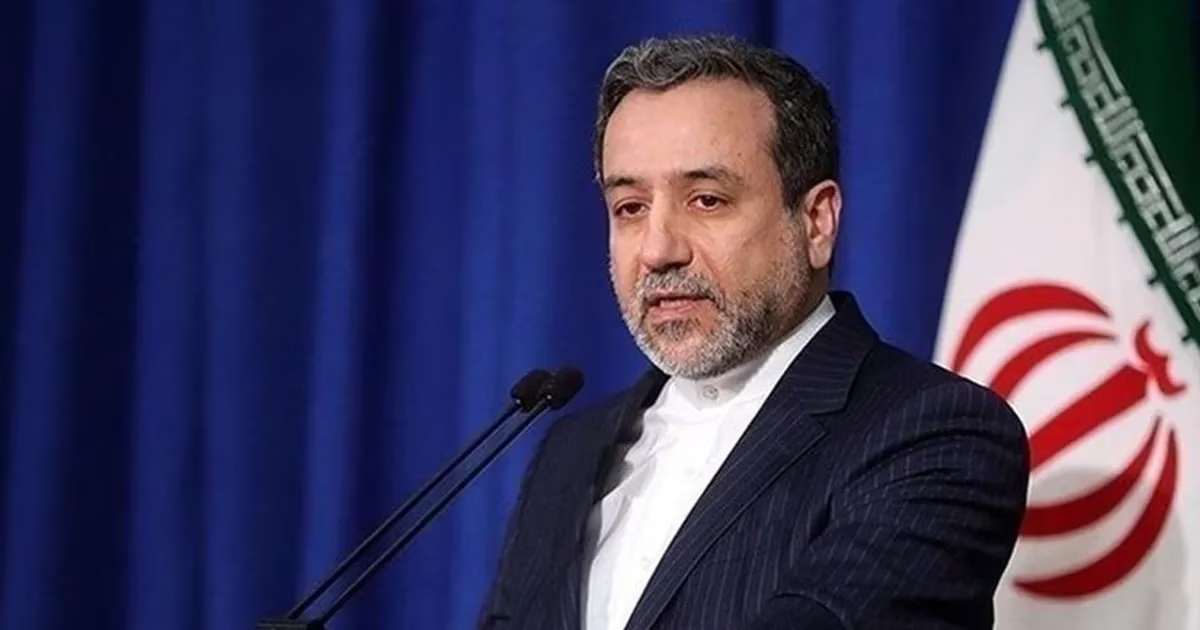
Iranian Foreign Minister: We do not seek war, but we are fully prepared for it and open to fair negotiation

Iranian Foreign Minister Abbas Araghchi said that his country does not seek war, but at the same time is fully prepared for it, stressing that Tehran is open to negotiation provided that it is based on "fair" foundations and mutual respect, amid escalating tensions with the United States and mutual statements regarding the possibilities of escalation.

In a speech delivered during a conference for ambassadors in Tehran, broadcast by Iranian state television, Araghchi stressed that "the Islamic Republic of Iran does not want war, but it is fully prepared for it," adding that his country "is also ready for negotiations, but these negotiations must be fair and based on equality of rights and mutual respect."

The Iranian minister's statements come after US President Donald Trump said that Iran "wants to negotiate," following his threat to launch military strikes against it if it suppressed internal protests. Israel, a strategic ally of the United States, also expressed its concern about tensions in the region, affirming its readiness for any military scenario that might include Iran.

Iran has been witnessing a wave of widespread protests in several cities for months, which began due to economic conditions and worsening inflation and unemployment, but quickly turned into protest demonstrations against internal policies and the political system.

The authorities responded with increasing repression, which prompted American threats of direct intervention or imposing additional sanctions if violations continued. At the same time, Israel maintains a cautious stance but has vowed to take necessary measures to protect its security from any potential Iranian threat, especially with regard to the nuclear program and ballistic missiles.

Araghchi's statements reflect Iran's attempt to combine demonstrating military readiness with leaving an open window for a political solution, at a time when relations between Tehran and Washington are witnessing renewed tension, amid international fears of the situation sliding towards an open confrontation, in contrast to repeated calls to contain the crisis through diplomatic channels.

PALESTINE

Mon 12 Jan 2026 12:22 pm - Jerusalem Time

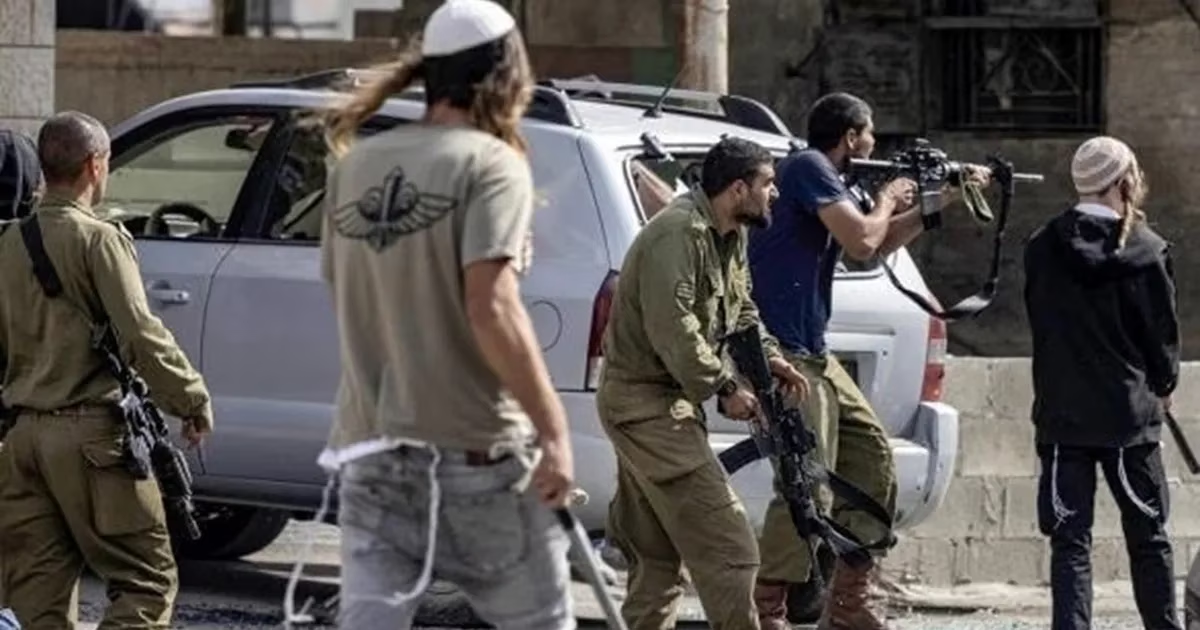
Settler crimes against Palestinians in West Bank up 25% in 2025

The occupied West Bank has witnessed an unprecedented escalation of attacks and violence perpetrated by settlers against Palestinians, under the protection, sponsorship, and incitement of the occupation government and its extremist ministers.

Official Israeli data revealed on Monday a 25 percent increase in crimes of violence by Israeli settlers against Palestinian citizens in the West Bank during 2025.

Haaretz newspaper stated that since October 7, 2023, "there has been a continuous and sharp increase in the number and scope of crimes by Jewish nationalists (settlers) against Palestinians in the West Bank."

It continued: "According to data from the military establishment, 1,720 incidents of violence have been recorded since the outbreak of the war," referring to the two-year Israeli genocide war in the Gaza Strip.

"In 2025, 845 nationalist violence crimes committed by settlers against Palestinians were recorded, resulting in 4 casualties and 200 injured," according to the newspaper.

It added that "these figures indicate an increase of about 25 percent compared to 2024, when 675 incidents of violence were recorded, leading to the killing of 6 Palestinians and the injury of 149."

About 750,000 Israeli settlers live in hundreds of settlements in the West Bank, including 250,000 in Jerusalem, and they commit daily attacks against Palestinian citizens with the aim of forcibly displacing them.

PALESTINE

Mon 12 Jan 2026 11:21 am - Jerusalem Time

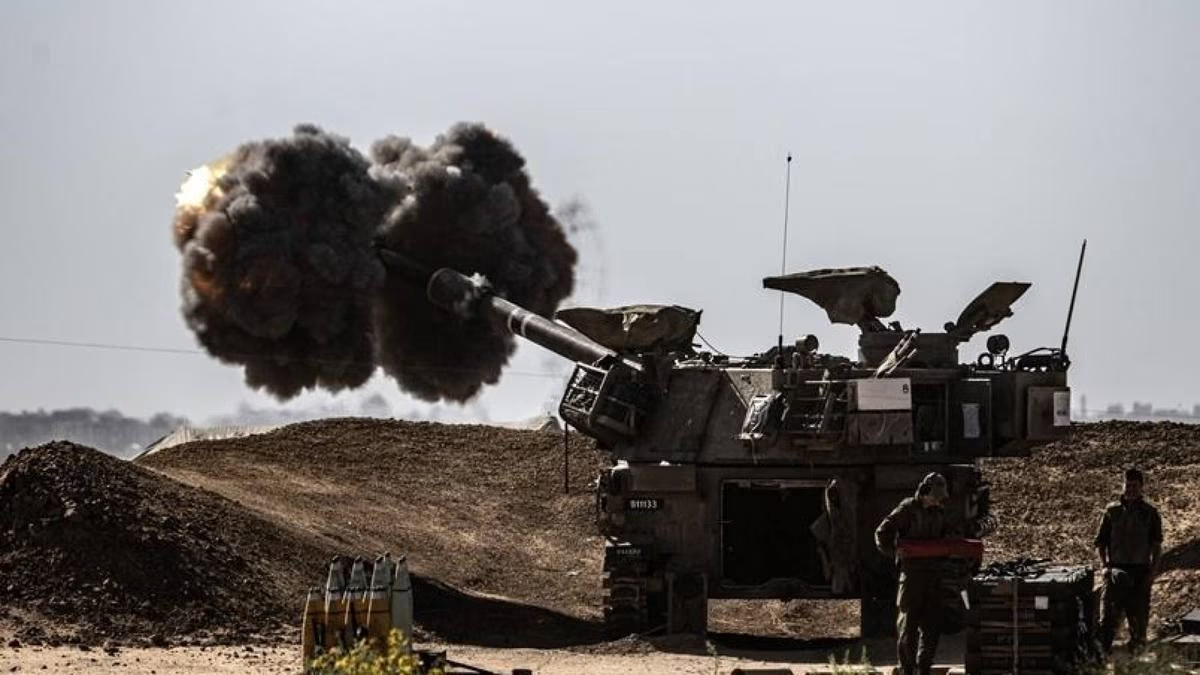
Artillery and aerial bombardment by the occupation targets various areas in the Gaza Strip

On Monday, the occupation army carried out artillery and aerial bombardment targeting various areas in the Gaza Strip, in a new development that constitutes a violation of the ceasefire agreement in effect since October 10th.

Palestinian sources reported that Israeli military vehicles opened fire towards the eastern areas of Khan Yunis city in the southern Strip, while occupation artillery shelled the southern Al-Mawasi area west of Rafah city.

The same sources stated that occupation aircraft carried out an intense raid targeting the eastern areas of Al-Tuffah neighborhood, east of Gaza City, areas where the occupation is still stationed. The artillery shelling also included the eastern areas of Gaza City, coinciding with heavy gunfire from military vehicles towards the east of Al-Maghazi camp in the central Strip.

Since the ceasefire agreement came into effect, 442 Palestinians have been killed and 1236 others injured, in addition to severe restrictions imposed on the entry of food, medical supplies, and shelter materials into the Strip, where approximately 2.4 million Palestinians live in extremely harsh humanitarian conditions.

The war on the Gaza Strip since October 8, 2023, has resulted in more than 71,000 martyrs and about 171,000 injured, the majority of whom are children and women, in addition to widespread destruction affecting nearly 90% of the civilian infrastructure, at a time when the United Nations estimated the cost of reconstruction at approximately 70 billion dollars.

PALESTINE

Mon 12 Jan 2026 10:43 am - Jerusalem Time

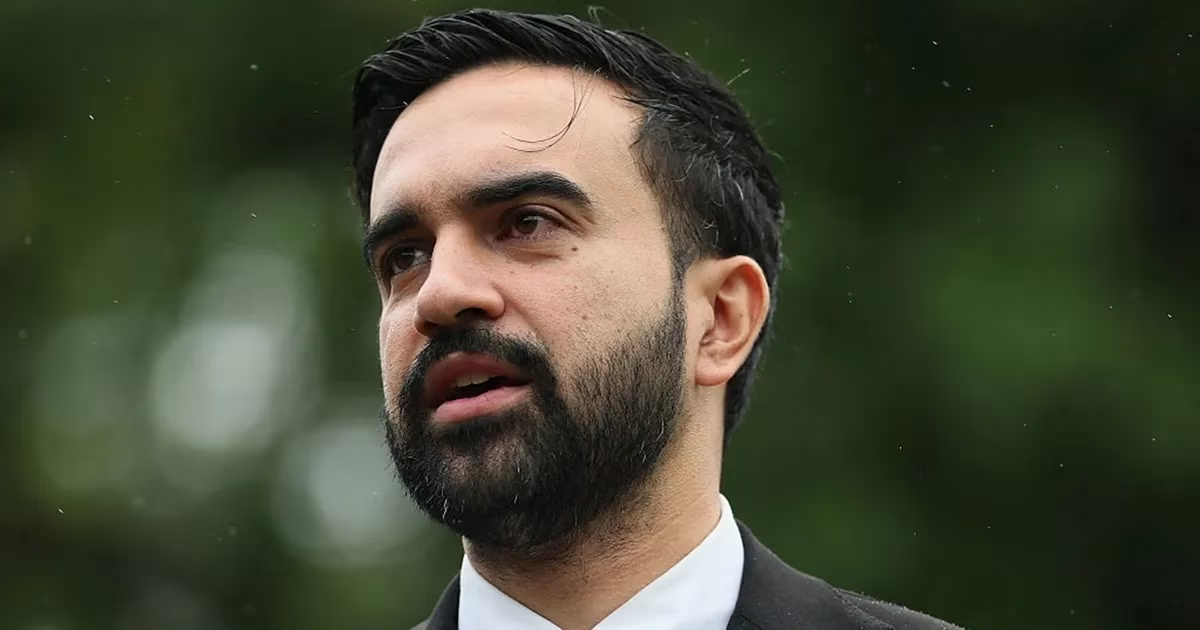
New York Mayor describes Hamas as 'terrorist'... and a Canadian rabbi responds: You are wrong

New York City Mayor Zohran Mamdani's description of the Islamic Resistance Movement Hamas as a "terrorist organization" sparked a wave of sharp criticism, most notably a response from Canadian Rabbi David Mivasair, who accused the mayor of bias towards the Israeli narrative, warning him against making "additional moral and political concessions" in the future.

Mivasair said in a direct response to Mamdani's statements: "Zohran, you are wrong, and you know it. Hamas is a Palestinian resistance movement that arose as a result of the brutal genocide committed by Israel for more than 75 years."

He added that "chanting or raising flags did not make anyone feel unsafe," in reference to the recent pro-Palestinian demonstrations.

The Canadian rabbi's response came after Mamdani, the city's first Muslim mayor, condemned the pro-Hamas chants raised during a demonstration organized in a Jewish neighborhood in New York City, saying: "There is no place for supporting terrorist groups in our city," in a statement issued amid media criticism for his delay in commenting on the event.

Last Thursday night, the Kew Gardens Hills neighborhood in Queens witnessed a protest against an Israeli event held inside a synagogue, where anti-occupation activists chanted slogans including: "We support Hamas," "Death to the Israeli army," and "Intifada... people's war," which sparked widespread controversy in American political and media circles.

Mamdani accompanied his statements with a picture of a headline published by the "New York Times" that addressed his previous positions on the protest, and commented on the incident: "There is no place for chants supporting a terrorist organization in our city. We will continue to ensure the safety of New Yorkers as they enter and exit places of worship, while protecting their constitutional right to protest."

In another statement shared by his spokesperson with the Hebrew newspaper "Times of Israel," Mamdani said that "the rhetoric and actions we saw and heard in Kew Gardens Hills last night are wrong and have no place in our city."

The mayor added that his team is "in close contact with the NYPD regarding protests and counter-protests," noting that a number of political officials condemned what happened, including New York Governor Kathy Hochul, and Democratic Representative Alexandria Ocasio-Cortez, who wrote on the "X" platform: "My God, walking into a predominantly Jewish neighborhood and starting to chant 'We support Hamas' is disgusting and antisemitic."

In contrast, American media reports stated that the protests also witnessed pro-Israel Jewish demonstrators insulting and provoking anti-occupation activists, as they chanted against Palestinians, and chanted slogans supporting the US Immigration and Customs Enforcement (ICE), and also chanted abusive phrases against the mayor himself, including "Fuck Mamdani."

OPINIONS

Mon 12 Jan 2026 10:43 am - Jerusalem Time

Distortions in Palestinian Political Consciousness and Weak Political Performance

Dr. Ibrahim Na'irat

Dr. Ibrahim Na'irat

Opinion Writer

Palestinian political culture is an accurate mirror of the complexities of the national experience, with all its long struggle, repeated interruptions, and unfulfilled hopes. Since the inception of the Palestinian national movement, Palestinian political consciousness has been shaped in an exceptional context imposed by the occupation, where politics became an act of resistance more than an institutional practice, and political affiliation transformed into an expression of identity and steadfastness before becoming a tool for managing public affairs. This context, despite its historical importance, has over time contributed to entrenching an emotional political culture that, in many aspects, lacks self-criticism and strategic planning, which has directly reflected on the weakness of Palestinian political performance at its various stages.

The absence of a state and the continuation of the occupation have contributed to the formation of an ambiguous relationship between the citizen and the political authority, where leadership was treated as a symbol of struggle rather than an accountable body. With the establishment of the Palestinian Authority, the desired transformation in political culture from a revolutionary liberation culture to a culture of good governance did not occur. Instead, the same mentality that conflates militant legitimacy with political legitimacy persisted. This confusion weakened institutions, entrenched the personalization of political decisions, and prioritized factional loyalties over competence and programs, leading to a decline in the effectiveness of political performance and its inability to respond to the challenges of a changing reality.

In light of the political division, the fragility of Palestinian political culture has increased, as political disagreement has turned into a state of sharp polarization, where dissenting opinions are excluded and criticism is viewed as a threat rather than a necessity for reform. This atmosphere has contributed to weakening the public sphere, declining the role of intellectual elites, and shrinking popular political participation, as citizens have lost faith in the utility of organized political action, contenting themselves either with withdrawing from the scene or with angry, politically unframeworked expressions. This decline in conscious participation has deprived the political system of one of its most important sources of strength, which is popular oversight capable of correcting the course.

Furthermore, the role of Palestinian journalism, along with the role of the literary movement, intellectuals, and specialized academics, has not been sufficient to match the weight of the stage and the seriousness of the challenges, even though this role is essential in building a conscious and wise political culture within society. In the Palestinian case, the political scene appears saturated with discourse to the point of inflation, as almost no individual lacks a political stance or a sharp opinion. However, this breadth of interest does not necessarily mean depth of understanding or maturity of consciousness. Everyone is politicized, but the fundamental question remains: Is this politicization based on real knowledge and critical analysis, or is it the result of an accumulation of slogans and emotional reactions perpetuated by the media and public speeches?

Local journalism, along with regional media, has contributed to shaping a confused political consciousness among the Palestinian public, where the reporting of events and the exaggeration of positions prevail over analysis and interpretation, and political narratives are often presented without scrutiny or genuine accountability. With the absence of an effective role for investigative journalism and the weakness of spaces dedicated to sound critical thought, the pulse of the street has become prone to rapid fluctuations, governed by emotion more than understanding, and by reaction more than vision. This distortion in collective consciousness has directly reflected on the nature of political participation, which has often become emotional or seasonal participation, lacking continuity, organization, and the ability to have a real impact.

As for the literary movement, intellectuals, and academics, their presence in the public sphere has declined, or they have been marginalized in favor of a rapidly consumed, mobilizing political discourse. With the exception of limited individual initiatives, intellectual elites have not succeeded in playing their natural role as critical intermediaries between authority and society, capable of deconstructing prevailing political discourse and proposing cognitive alternatives that raise the level of public awareness. This absence has paved the way for the dominance of populist discourse and weakened society's ability to distinguish between a well-considered political stance and an emotional one, ultimately leading to a distortion of both political participation and political representation.

The crisis of Palestinian political performance, in this context, is not just a crisis of leadership or institutions, but also a crisis of consciousness fueled by a superficial media culture, an intellectual vacuum in the public sphere, and a relative reluctance of elites capable of producing critical political knowledge. Without restoring the enlightening role of journalism and reactivating the role of intellectuals and academics in public debate, political consciousness will remain fragile, susceptible to guidance and misinformation, and political participation will remain distorted, reflecting division more than expressing the will of a people conscious of their interests and historical choices.

In conclusion, Palestinian political culture remains one of the fundamental keys to understanding the current crisis of political performance. It is not merely a reflection of reality, but an active element in its production and continuation. Without a radical review of this culture, one that goes beyond slogans and touches the essence of political practice, the Palestinian scene will continue to revolve in a vicious circle, where faces change but crises remain the same.

PALESTINE

Mon 12 Jan 2026 5:37 am - Jerusalem Time

More than 20 Palestinian families flee the village of Ras Ain al-Auja in the West Bank

More than 20 Palestinian families have fled the Bedouin village of Ras Ain al-Auja in the central occupied West Bank due to ongoing settler attacks.

Human rights organizations reported that 26 families have left the village, which was home to about 700 people belonging to more than 100 families, who had lived there for decades.

They explained that the families forced to leave last Thursday dispersed throughout the area in search of a safer place, while several other families were packing their belongings and preparing to leave the village today, Sunday.

Despite what were described as "intolerable" harassments by settlers living in unauthorized outposts around the village, Palestinian residents vowed to stay in their homes and not leave.

Sarit Michaeli, the international director of B'Tselem, said, "This makes them among the last remaining Palestinians in the area," confirming that the escalation of violence by settlers has already led to the emptying of neighboring Palestinian villages in the strip of land extending from Ramallah in the west to Jericho along the Jordanian border in the east.

The concern of residents of Palestinian Bedouin communities in the occupied West Bank is escalating with the increasing attacks by Israeli settlers and their seizure of vital lands and resources as part of what is known as "pastoral settlement," a strategy followed by settler groups by sending groups of settlers to gradually seize land.

It is worth noting that the United Nations stated that settlers launched an average of 8 attacks daily last October, and at least 136 attacks were recorded the following month.

The sanctions announced by America, the European Union, and Britain against settler groups for their violence against Palestinians in the West Bank have not prevented them from continuing their attacks.

The occupation government supports and arms settler militias to attack Palestinians in Bedouin communities and villages, forcing them to migrate after destroying and burning their homes, seizing thousands of dunams of their grazing lands and water springs, and establishing settlements on their land under the pretext of providing grazing areas for settlers' livestock.

PALESTINE

Mon 12 Jan 2026 1:25 am - Jerusalem Time

Israel Imposes its Security Sovereignty over the West Bank.. A Less Costly Alternative to Direct Annexation

Israel no longer needs to declare the annexation of the occupied West Bank to impose its control over it. Away from official laws and decisions, a new equation is forming on the ground that practically ends the conflict by resolving it militarily, based on the concept of "security sovereignty" as a less costly alternative to direct annexation.

This approach formed the core of the discussion in the "Course of Events" program episode, where it became clear that what is happening in the West Bank is not a temporary escalation, but a strategic path that seeks to fundamentally resolve the conflict by dismantling the conditions for the establishment of a Palestinian state, rather than merely managing the conflict with it.

Since the formation of the far-right government at the end of 2022, field transformations in the West Bank have accelerated, suggesting that Israel is exploiting the regional and international moment to impose facts on the ground that are difficult to reverse, benefiting from the world's preoccupation with the Gaza war and Washington's shifting priorities.

In this context, academic and expert in Israeli affairs Dr. Muhannad Mustafa believes that "resolution" is no longer an ideological slogan, but a multi-stage plan that begins with eliminating any political or geographical basis that would allow for the establishment of an independent Palestinian entity, even before reaching annexation.

According to this perception, security control is no longer merely a precautionary measure, but becomes a complete alternative to "legal sovereignty," where Israel imposes its authority over the land, borders, movement, and resources, without bearing the obligations or international legal consequences of an annexing state.

What distinguishes the current stage, as highlighted in the analysis, is the introduction of a new actor into the control system, represented by armed settler militias operating under the umbrella of the occupation authority, performing a dual function: carrying out the "dirty work" on the ground, and providing deniable cover for the official establishment.

This overlap between the army and settlers, as Mustafa explains, cannot be separated from the concept of security sovereignty, as the militias become part of the tools of governance, not outlaw groups, under systematic political, judicial, and security protection.

Pressuring Paths

In contrast, daily life in the West Bank is read as a direct reflection of this policy, where three pressing paths intersect: violent settlement expansion, escalating economic strangulation, and comprehensive movement restrictions, making the very existence of Palestinians constantly tested.

Dr. Ghassan Al-Khatib, Professor of Political Science at Birzeit University, points out that the goal is not limited to control, but extends to making life "unbearable," gradually pushing Palestinians to consider emigration, in what resembles a slow displacement that does not require official decisions.

However, this path, as Al-Khatib explains, has so far clashed with a remarkable social attachment to the land, especially in rural areas surrounding settlements, where family ties and community solidarity play the role of the last line of defense against settlement encroachment.

But this steadfastness, despite its importance, does not change the fact that Israel acts in the West Bank as a region under its full sovereignty, which makes the discussion about "annexation" closer to a verbal debate, as long as the practices on the ground have surpassed its political meaning.

From this perspective, Al-Khatib believes that judging Israeli behavior is more accurate than merely following statements, as the current pattern of control does not differ much – from what it would be under declared annexation – in essence, but only in form.

Notably, this shift is not happening in isolation from the American stance, where a striking distinction emerges between preventing full annexation through legislation and overlooking gradual annexation practices, which opens the door for Israel to proceed with its strategy without a direct clash with Washington.

The American Stance

Former US State Department official Dr. Thomas Warrick describes this approach as an "absence of a red light" rather than an explicit green light, explaining that the Trump administration focuses on preventing one dramatic step, and ignores the accumulation of small steps.

This approach, as Warrick warns, gives Israel ample space to impose daily realities that do not provoke sharp American reactions, especially given the administration's preoccupation with files such as Gaza, Iran, Syria, and Lebanon, which pushes the West Bank down the list of priorities.

In the Palestinian context, Dr. Bilal Al-Shobaki, head of the Political Science Department at Hebron University, believes that relying solely on the American stance involves a great deal of illusion, especially given a long history of statements not translated into actual pressure.

Al-Shobaki believes that Israel is acting out of a conviction in its ability to resolve the conflict, benefiting from the imbalance of power and American support, which necessitates, for Palestinians, the formulation of a counter-goal that is not based on resolution, but on preventing and thwarting it.

This goal, according to his analysis, cannot be achieved without rebuilding the Palestinian internal position, by ending the division, renewing institutions, and activating the Palestine Liberation Organization, as a representative framework that transcends the limitations of the Palestinian Authority and its administrative function.

In contrast, Israel monitors the Palestinian Authority as an entity capable of being marginalized or terminated, with a preference for maintaining it in a depoliticized form, handling civil affairs without serving as a banner for a competing national project.

This scenario, as Mustafa sees it, is entirely consistent with the logic of "security sovereignty," where the lives of Palestinians are managed without recognizing their right to sovereignty, and the Authority is used as a control tool, not as a political partner.

PALESTINE

Mon 12 Jan 2026 1:23 am - Jerusalem Time

Rashida Tlaib reveals details of a congressional resolution describing what is happening in Gaza as genocide

US Representative Rashida Tlaib revealed details of a draft resolution she submitted to Congress that recognizes that what Palestinians in the Gaza Strip are subjected to amounts to genocide, stressing that recognizing this legal description imposes direct obligations on the United States as a signatory to the Convention on the Prevention of the Crime of Genocide.

Tlaib said that the draft resolution is based on clear legal texts, taken verbatim from the international convention to which Washington is a party, adding that this step is not limited to political or moral description only, but obliges the United States to activate its legal obligations towards what is happening in Gaza.

The American representative of Palestinian origin criticized Washington's participation in what she described as genocide, saying that "despite its ability to stop what has been happening for years, our country could have stopped this a long time ago, but that did not happen, and one war crime after another was committed before our eyes."

Tlaib stressed the importance of continuing to call what is happening in Gaza by its legal name, affirming, "I do not want us to stop talking about Gaza, nor to stop calling what is happening by its true name: it is genocide."

Representative Rashida Tlaib explained that the draft resolution, which she submitted concurrently with the anniversary of the adoption of the Genocide Prevention Convention on December 9, aims to emphasize that the United States, despite being one of the signatory states to the convention, is not applying its legal obligations regarding the Israeli government.

She explained that the text of the resolution "does not only provide a political or moral description, but demands the activation of the legal obligations stipulated in the convention."

Tlaib noted that the draft resolution currently enjoys the support of about 21 other representatives in the House of Representatives, stressing that its approval means the United States recognizes that the Israeli government is committing genocide, which legally entails taking specific measures, including stopping military funding and imposing an arms embargo.

The draft resolution states that the Genocide Prevention Convention obliges signatory states to use all available means to prevent genocide and punish its perpetrators, including investigating the potential complicity of individuals and companies, complying with orders of international criminal courts, and imposing targeted legal sanctions.

Tlaib indicated that the draft resolution faces resistance within the American legislative institution, especially from parties seeking to avoid using the term "genocide" due to its legal implications, explaining that "there are groups strongly pushing to prevent the use of the word genocide, because they know that this word activates binding legal agreements in which the United States participates."

The representative explained that the leadership of the US House of Representatives has not yet officially recognized that what is happening in Gaza amounts to genocide, which constitutes a major obstacle to passing the resolution, the date of which has not yet been clarified. However, she stressed that the importance of the project is not limited to the chance of its approval, but also lies in its being a political tool to organize popular pressure and hold legislators accountable, affirming: "We are using this resolution as an educational tool, to remind my colleagues that we are a signatory state to the Genocide Prevention Convention."

Representative Rashida Tlaib said that American public opinion is witnessing rapid shifts towards what is happening in Gaza, explaining that the majority of Americans, both Democrats and Republicans, have come to recognize that what is happening in the Strip is genocide, and emphasize the importance of stopping military funding.

She added that this shift has begun to be reflected politically, as some political figures have begun to lose their elections due to their continued support for what she described as genocide, and confidence in politicians who refuse to acknowledge it has declined.

Tlaib affirmed that popular pressure will continue if the draft resolution is not passed, with escalating demands for sanctions and an arms embargo, noting that this path does not stop at a single vote in Congress.

PALESTINE

Sun 11 Jan 2026 11:38 pm - Jerusalem Time

Hamas delegation heads to Cairo to discuss Gaza developments and consolidate ceasefire

Member of the Political Bureau of the Islamic Resistance Movement (Hamas) Muhammad Nazzal said that a delegation from the movement headed to the Egyptian capital Cairo today, Sunday, to discuss political and field developments in the Gaza Strip starting from tomorrow, Monday, and to follow up on the implementation of the ceasefire agreement, in light of what he described as major difficulties hindering its application, and continued Israeli violations.

Nazzal added, in statements to the Al-Masa'iya program, that the movement's delegation is holding meetings with Palestinian factions and forces, in addition to meetings with official Egyptian bodies, to discuss a number of files related to the agreement, foremost among them ways to consolidate the ceasefire and move to its subsequent stages.

Regarding the nature of the ongoing discussions in Cairo, Nazzal explained that they include several main files, the first of which is the formation of a Palestinian committee of "technocrats" to administer the Gaza Strip, a committee whose principle of formation was agreed upon between Palestinian factions and Egyptian authorities, but it faced reservations from the Palestinian Authority and Israel.

He added that the Hamas delegation is working in coordination with the rest of the Palestinian forces to overcome obstacles to the formation of the committee that will manage the Strip, stressing that it is purely Palestinian, and that its primary reference must be Palestinian, while seeking agreement on its members.

The Hamas leader indicated that the Palestinian factions had previously submitted a list of about 40 names to the Egyptian side, some of which were selected, but some names were met with reservations, explaining that the Palestinian Authority is demanding specific names, and emphasizes the necessity that the committee's reference be to the Palestinian Authority and government, which he said Hamas does not object to in principle, provided that competent and independent personalities from the residents of the Gaza Strip residing therein are agreed upon, and enjoy the trust of Palestinian society.

Nazzal said that the occupation, in turn, expresses reservations about some of the proposed names, stressing that the discussion on this file is taking place through mediators, specifically through the Egyptian authorities, in an effort to prevent Israeli Prime Minister Benjamin Netanyahu from exploiting these differences to evade the agreement or procrastinate its implementation.

He added that the second file on the table in Cairo concerns moving to the second phase of the ceasefire agreement, noting that this phase includes several issues, including the necessity of opening the Rafah crossing in both directions, a clause which he said the occupation has not committed to implementing despite it being stipulated in the first phase of the agreement.

The member of the Political Bureau of Hamas said that the third file concerns the entry of relief materials into the Gaza Strip, including "caravans" (prefabricated houses) and tents suitable for winter, in light of the harsh weather conditions the Strip is experiencing, stressing that these needs constitute an urgent humanitarian priority.

Regarding the discussion about the administration of the Gaza Strip and what is known as the "Global Peace Council," Nazzal said that he cannot specify an exact date for moving to the second phase of the agreement, stressing that the main obstacle is Netanyahu and his government, which sees no interest in this transition, despite regional and international desire, including from the American administration, to end the war file and not return to escalation in Gaza.

He affirmed that Hamas was officially informed of the name of Nikolay Mladenov as a candidate to be part of the proposed administration for the Gaza Strip, noting that his name was put forward as an alternative to former British Prime Minister Tony Blair, who was met with reservations from several parties due to his previous positions and biases.

The Hamas leader explained that the movement has no principled reservation about Mladenov's name, who he said has previous experience in this file, but on the other hand, it believes that the tasks of the "Global Peace Council" and the international force associated with it are still unclear, and are shrouded in many questions that need answers.

Nazzal concluded by saying that the coming weeks may reveal more details about the future of these arrangements, in light of the ambiguity that still surrounds the mechanisms for administering the Gaza Strip and moving to the next phases of the ceasefire agreement.

PALESTINE

Sun 11 Jan 2026 6:41 pm - Jerusalem Time

Occupation's Conditions for Trump's Plan: Gaza "Demilitarized" and Tel Aviv Asks Germany to Classify "Revolutionary Guard" as Terrorist

The Foreign Minister announced Tel Aviv's support for the protests in Iran.

On Sunday, the Israeli occupation's Foreign Minister linked the possibility of moving forward with the implementation of US President Donald Trump's peace plan to imposing "strict conditions" related to the military reality in the Gaza Strip, coinciding with an escalation in rhetoric against the regime in Iran.

The Israeli minister affirmed in press statements that "Hamas must completely disarm, and Gaza must be demilitarized," considering that fulfilling this condition is the main gateway "to proceed with the implementation of Trump's plan," without providing further details on the proposed mechanisms for this.

Regarding the Iranian issue, the Foreign Minister announced Tel Aviv's support for the ongoing protests there, stating: "We support the struggle of the Iranian people for freedom and wish them success," in a clear reference to Israel's desire to see political change in Tehran.

On the diplomatic front, Hebrew media revealed an "Israeli" move towards Europe to tighten the noose on Tehran.

Reports stated that Foreign Minister Gideon Sa'ar officially requested his German counterpart to "classify the Iranian Revolutionary Guard as a terrorist organization," as part of a diplomatic campaign seeking to isolate the Iranian regime internationally.

PALESTINE

Sun 11 Jan 2026 6:29 pm - Jerusalem Time

Martyrdom of a Palestinian prisoner from Gaza in the occupation prisons

A joint statement by the Commission of Detainees and Ex-Detainees Affairs and the Palestinian Prisoner's Society confirmed the martyrdom of prisoner Hamza Abdullah Adwan (67 years old) from the Gaza Strip, who was martyred on September 9, 2025, in Israeli occupation prisons.

Adwan was arrested from Gaza on November 12, 2024. He was married and a father of nine children, two of whom were martyred before the outbreak of the last war on the Gaza Strip on October 7, 2023.

It is worth noting that the Palestinian Prisoner's Society confirmed that the number of Palestinian prisoners and detainees killed in Israeli prisons since 1967 has reached 323 prisoners, including more than 100 martyrs since the start of the genocide in Gaza in October 2023.

The society explained in a statement issued on Wednesday that this figure includes cases that Palestinian human rights, medical, and legal institutions were able to document their killing over the past decades, in light of what it described as Israel's "policy of concealment and obfuscation."

The Palestinian Prisoner's Society stated that the period after the outbreak of the Israeli genocide war on the Gaza Strip constituted "the most dangerous and bloodiest transformation in the history of the prisoner movement, both in terms of the number of martyrs and the nature of the crimes committed within the prison system and detention centers."

It clarified that the identities of 86 martyred prisoners have been announced so far after October 8, and that among them are 50 prisoners from the Gaza Strip. The society considered this a clear indication of the escalation of systematic killing policies, especially against Gaza detainees who are subjected to harsh and inhumane detention conditions.

It affirmed that the announced numbers do not represent the final toll, as documentation operations are still ongoing, at a time when "an integrated system of punitive policies continues, including physical and psychological torture, deliberate starvation, neglect and medical crimes, in addition to organized repression and deprivation of the most basic fundamental rights," according to the statement.

It pointed out that Israeli authorities continue to detain the bodies of 94 martyred prisoners inside their prisons, 83 of whom died after the start of the genocide war in Gaza, which constitutes a blatant violation of international humanitarian law.

It considered that the number of martyred prisoners exceeding the 100 mark in a relatively short period represents a dangerous historical precedent, and "reflects an unprecedented level of violence and savagery, turning Israeli prisons into one of the arenas of ongoing genocide."

The Palestinian Prisoner's Society called on the international community and its human rights and judicial bodies to "assume their responsibilities to act immediately to protect prisoners, hold occupation leaders accountable for these crimes, and put an end to the state of impunity."

It is worth noting that Israel detains more than 9,300 Palestinian prisoners, including children and women, who suffer from torture, starvation, and medical neglect, which has led to the death of many of them, according to Palestinian and Israeli human rights reports.

Palestinian human rights organizations, including the Palestinian Prisoner's Society, Addameer Foundation, and the Commission of Detainees Affairs, documented about 7,000 arrests last year, including 600 children and 200 women, while the number of arrests since October 8, 2023, reached about 21,000, including 1,655 children and 650 women, not counting detainees from Gaza and the occupied interior.

PALESTINE

Sun 11 Jan 2026 6:28 pm - Jerusalem Time

Exclusion of Palestinian academic from Australian festival sparks outrage and resignations

The exclusion of a Palestinian-Australian academic from a cultural festival in Adelaide, Australia, and her replacement with an American commentator supportive of the occupation, has sparked outrage among several members of the festival's board of directors, leading to their resignations and withdrawals from participants.

Sources said that the three resignations followed the withdrawal of 70 participants from the Book Week program after the invitation to academic and writer Randa Abdel-Fattah was rescinded.

Sources added that the Adelaide Festival is facing an unprecedented leadership crisis after the resignation of three of its board members: journalist Daniela Ritorto, businessman Donny Walford, and lawyer Nick Lenk, who decided to resign at a board meeting on Saturday after the decision to exclude Abdel-Fattah from the 2026 Book Week program.

Sources commented that the sudden departure followed the withdrawal of 70 writers from the festival scheduled for next month, and it remains unclear how the festival will achieve a quorum, which could impede its legal authority to make decisions regarding the 2026 event.

Under the Adelaide Festival Centre Trust Act 1998, the board must adhere to strict rules regarding gender balance. With Lenk's departure, only one man remains, Brenton Cox, the managing director of Adelaide Airport.

The law stipulates that there must be at least two men and two women on the board. The board has not issued any public comment since announcing the cancellation of Abdel-Fattah's participation last Thursday.

In a statement regarding the writer's exclusion, it expressed "deep shock and sadness at the tragic events that occurred in Bondi" and "the significant escalation in the intensity of societal tensions and debates."

The statement added: "As the board responsible for organizing the Adelaide Festival and all Adelaide Book Week events, including staff, volunteers, and participants, we informed Dr. Randa Abdel-Fattah today, who was scheduled to participate in next month's Book Week events, that we have decided not to proceed with her scheduled participation."

The board stated that while it did not imply "in any way" any connection between Abdel-Fattah or her writings and what happened in Bondi, the decision was made "given her previous statements." The board added: "We have come to the conviction that it is culturally inappropriate to continue to include her in the festival program at this exceptional time and shortly after the events of Bondi."

Hours after the board's announcement, Abdel-Fattah issued her own statement, accusing the festival board of "blatant and shameful" racism against Palestinians and censorship. She described the board's attempt to link her to the Bondi massacre as "disgraceful."

On Sunday, Mark Lawyers in Sydney, on behalf of Abdel-Fattah, contacted the festival's chair, Tracey Whiting, demanding that she provide all statements made by the academic that played a role in the board's decision to exclude her from the 2026 program.

The letter sent by Mark's managing partner, Michael Bradley, stated: "Your letter informed Dr. Abdel-Fattah of the board's decision to exclude her from participating as a speaker at Adelaide Book Week in 2026." It also stated: "Your letter was the first indication Dr. Abdel-Fattah received that her participation was in doubt; there was no communication or consultation with her prior to the decision to exclude her."

Bradley said that the notification his client received from the board did not state any reason for its decision other than that "proceeding with her scheduled appearance would not be culturally sensitive."

However, Bradley noted that the board, in its public statement issued on Thursday, stated that her previous statements were the basis for its decision that allowing her to participate, shortly after the Bondi terrorist attack, would be culturally insensitive.

The legal letter stated: "As a matter of basic procedural fairness to Dr. Abdel-Fattah, please identify each of her previous statements that the board relied upon in making the decision, with details. She has the right to this information."

The firm gave the board until January 14 to respond, along with a request to Whiting and her sub-board to retain all documents related to the matter, in anticipation of any potential legal action.

Sources revealed on Sunday that the Book Week board had resisted attempts to exclude the pro-occupation New York Times writer, Thomas Friedman, from the 2024 Book Week program after he published a controversial article comparing the Middle East conflict to the animal kingdom. Abdel-Fattah accused the festival of not excluding Friedman from the festival that year, even though she and nine other academics lobbied for his exclusion.

South Australian Premier Peter Malinauskas claimed that the festival excluded Friedman in 2024 and reiterated his support for the festival board's decision on Thursday to remove Abdel-Fattah from this year's program. In statements quoted by sources, he said through a spokesperson: "I note that the Adelaide Festival made a similar decision to exclude a Jewish writer from the 2024 Adelaide Book Week program under very similar circumstances." And "I support this decision, and the consistent application of this principle."

On Saturday, News Corp publications, part of Rupert Murdoch's empire, covered the Premier's statement, noting the apparent contradiction between the public outrage over Abdel-Fattah's exclusion, compared to Friedman's alleged exclusion two years prior, which did not spark the widespread boycott currently being witnessed by Book Week, making the holding of the 2026 events seem increasingly impossible. Contrary to the official's claims, the festival rejected a letter sent by Abdel-Fattah and nine academics on February 6, 2026, to the board demanding the withdrawal of Friedman's invitation due to his controversial article. However, the festival board, in a letter seen by sources, rejected this request to exclude Friedman. The letter stated: "Demanding that the Adelaide Festival and Adelaide Book Week cancel the participation of an artist or writer is a very serious request."

The letter was dated February 9, 2024, and signed by the chair of the Adelaide Festival board, Whiting. It stated: "We have an international reputation for upholding artistic freedom of expression. Thomas L. Friedman was scheduled to participate online from New York. However, I have been informed that due to unforeseen circumstances in his schedule, he will not be participating in this year's program." Sources contacted Friedman in New York for comment. After the announcement of her cancellation on Thursday, Abdel-Fattah accused the board of blatant and shameful racism against Palestinians and censorship.

She stated in remarks that she rejects accusations of "hypocrisy" after she demanded Friedman's exclusion in 2024.

She said in a statement: "Friedman's widely criticized article published in the New York Times compared various Arab and Islamic countries and groups to insects and pests that must be eradicated, at a time when the term 'human animals' was used to justify massacres in Gaza."

She added: "We were concerned about the impact of Friedman's views on socially and historically marginalized groups, who have been dehumanized and discriminated against using such racist stereotypes. In fact, one of the examples we provided was how Jews have historically been likened to vermin." She continued: "In contrast, I was canceled because my presence and identity as a Palestinian were deemed culturally insensitive and linked to the atrocities of Bondi. I was canceled because I am Palestinian and an outspoken advocate against the literal erasure of my people."

Abdel-Fattah pointed out that the festival board was hypocritical, as it had cited its commitment to "artistic freedom of expression" in its response to the Friedman case in 2024. She said: "All these alleged values were abandoned when it came time to cancel my participation."

PALESTINE

Sun 11 Jan 2026 6:26 pm - Jerusalem Time

Hamas postpones election of its political bureau head until further notice

Leading sources within the Hamas movement revealed that the movement decided to postpone the election of its general political bureau head, which was scheduled to take place during the first ten days of January.

Sources said that the postponement of this step was until further notice, explaining that "a new date has not been set, but elections could be held at any moment."

One source attributed the postponement to "security and political circumstances and the movement's current preoccupation with negotiations for the transition to the second phase of the ceasefire, with the accelerating momentum currently underway by mediators and the United States."

However, other sources explained that "there are additional reasons, including the disagreement over the arrangements taking place within the movement in the Gaza Strip, which have increased in recent days, and which efforts are being made to resolve."

Hamas is facing its most severe crisis since its establishment in 1987; Israeli targeting, which began after the October 7, 2023 attack, has affected its various wings and levels, causing several organizational and financial crises.

Sources indicate that the accelerating momentum regarding the possibility of transitioning to the second phase largely overshadows the leadership's attention at present, noting that the process of electing a new head for the political bureau will be an important step in rearranging the movement's internal affairs, but this process may take longer than expected.

Sources had stated days ago that the elections would take place within the first 10 days of the new year, explaining that the goal of these elections was to achieve more stability and reassurance within the movement, and to send a clear message to the outside world that it remains cohesive.

The sources then mentioned that the election of a head for the political bureau would not end the role of the current leadership council, which was formed to lead the movement after the assassinations of Haniyeh and Sinwar, noting that it would be considered an advisory council that follows all Hamas issues internally and externally, and consultations would take place among its members regarding the fate of those issues.

In response to a question about whether there were internal disagreements over the personality of the president to be elected to lead Hamas, one source merely said that "the election process is conducted according to the applicable laws and regulations, and there are no disagreements regarding the personality who will lead the movement."

Estimates indicate that Khaled Meshaal, head of the political bureau abroad, and Khalil al-Hayya, head of the political bureau in Gaza, are the most prominent figures for potentially assuming the presidency of the political bureau.

Some sources say that there is strong support within the movement's leadership abroad and in the West Bank for Meshaal to be the head of the movement, while in the Gaza Strip, the majority prefer al-Hayya to take responsibility for leading the movement.

However, sources did not rule out that "a third, unspecified personality might emerge," and one source said: "Nothing can be predicted at the moment, and what is happening cannot be considered a competition due to disagreements over who will be the head of the movement, but it can be described as a (benign competitive process)."

Regarding the disagreements about what is happening in Gaza, sources explained that there are attempts to resolve them, noting that "there is a great deal of objection from most leadership levels, including administrative bodies and others, to the recent internal arrangements."

Sources from Hamas had said days ago, "that a series of leadership changes occurred in the Gaza Strip, after the assassinations of its leaders during the two-year Israeli war, which led to a greater presence of those close to the former movement leader Yahya Sinwar, who was suddenly killed in clashes with an Israeli force in Rafah in October 2024."

According to those sources, the released prisoner Ali al-Amoudi, a member of the political bureau and responsible for the movement's media department before the war, has become the acting head of its political bureau in the Gaza Strip, after he and many of Sinwar's close associates were tasked with managing the movement in the Strip, most of whom reside in Khan Yunis in the southern part of the Strip.