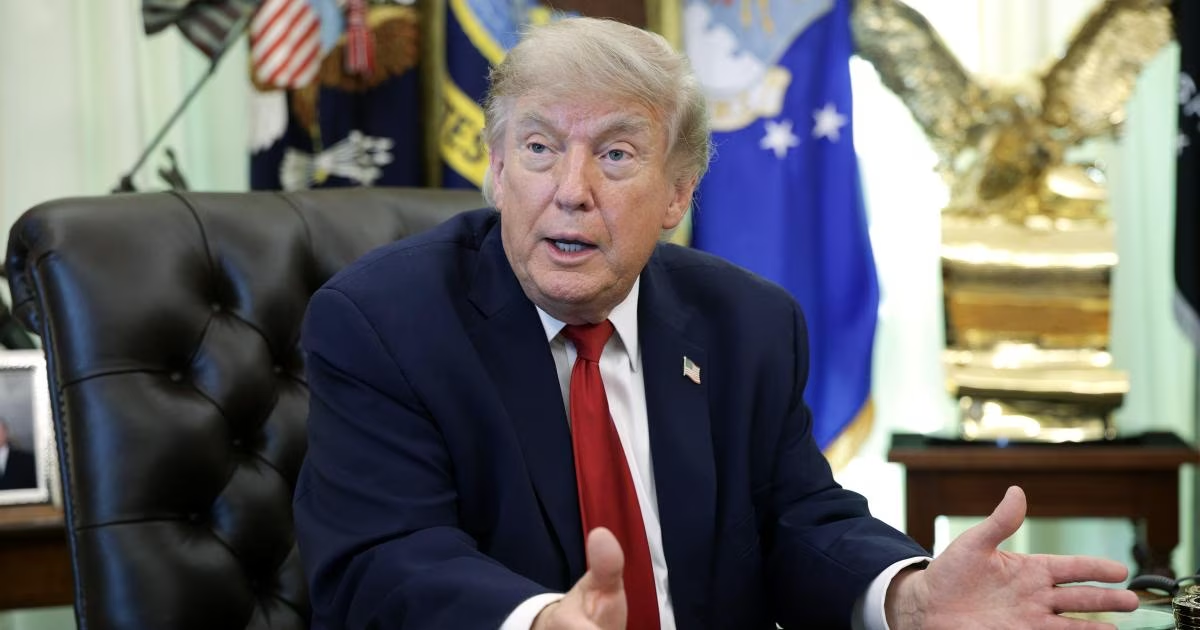







US President Donald Trump revealed arrangements for a diplomatic meeting in the Qatari capital, Doha, bringing together representatives from the United States and the Islamic Republic of Iran. Trump clarified in statements made to reporters from inside the Oval Office that this meeting could hold great importance in the course of strained relations between the two countries, noting that the Iranian side requested this meeting scheduled for Tuesday.
In a post on the 'Truth Social' platform, the US President confirmed that the American delegation would include prominent figures from his inner circle, with Steve Witkoff and Jared Kushner heading to Doha. This mission aims to conduct high-level talks aimed at containing current crises and ensuring regional stability in light of recent developments.
For its part, Tehran presented a different account of the nature of the diplomatic move, as the spokesperson for the Iranian Ministry of Foreign Affairs, Ismail Baghaei, denied any intention to hold direct political negotiations with Washington at present. Baghaei affirmed that the Iranian delegation heading to Qatar is a specialized technical delegation aimed exclusively at following up on the technical aspects of the memorandum of understanding signed between the two parties.
The Iranian Foreign Ministry stressed that the top priority for its delegation is to activate Article 11 of the agreement, which explicitly stipulates the necessity of releasing frozen Iranian assets abroad. Iranian sources indicated that this visit does not mean opening the door to comprehensive negotiations, but rather is a procedural step to ensure Washington's commitment to its previous pledges.
These diplomatic moves come after successful mediation that led to a preliminary agreement to cease mutual attacks that erupted last weekend. Informed sources reported that the current de-escalation allowed the return of maritime navigation to normal in the Strait of Hormuz and its surrounding areas, which eased tensions in one of the world's most important energy corridors.
Earlier, the Sultanate of Oman hosted bilateral talks with the Iranian side focused on the issue of managing the Strait of Hormuz in the post-war phase. These discussions are the first of their kind to address long-term security and navigation arrangements, reflecting a regional desire to avoid any military confrontations that could disrupt global oil supplies.
In a related context, informed diplomats confirmed that back channels of communication between Washington and Tehran remain effective and are working efficiently to contain any field misunderstandings. They explained that technical teams will meet in the coming days to review all provisions of the memorandum of understanding reached on June 18, which established an initial framework for de-escalation.
The aforementioned memorandum of understanding includes 14 basic articles, most notably the cessation of hostilities and the lifting of the naval blockade imposed by the United States on Iranian ports. The agreement also stipulated the full reopening of the Strait of Hormuz to international trade without restrictions, which observers considered a major breakthrough in the existing crisis.
It is worth noting that the first round of these indirect negotiations was held in Switzerland under the joint patronage of Qatar and Pakistan and concluded on the twenty-first of this month. That round resulted in a temporal roadmap aimed at reaching a final and comprehensive agreement to end the state of hostility between the two parties within 60 days.
A joint statement previously issued by the Qatari and Pakistani foreign ministries indicated the formation of a high-level committee to oversee the political tracks of the mediation process. This committee acts as a guarantor for the implementation of mutual commitments and to ensure that no party deviates from the understandings reached under the supervision of international mediators.
Anticipation remains the master of the situation regarding the outcome of the Doha meetings, as analysts believe that the success of the technical teams in resolving the frozen assets file may pave the way for deeper political meetings. In contrast, cautious American statements reflect the magnitude of the challenges facing trust-building between the American administration and the Iranian leadership at this sensitive stage.
The meeting scheduled to be held in Qatar between the United States and Iran this week may be important, or it may not be.
شارك برأيك
Trump announces upcoming meeting with Iran in Doha to discuss implementation of memorandum of understanding