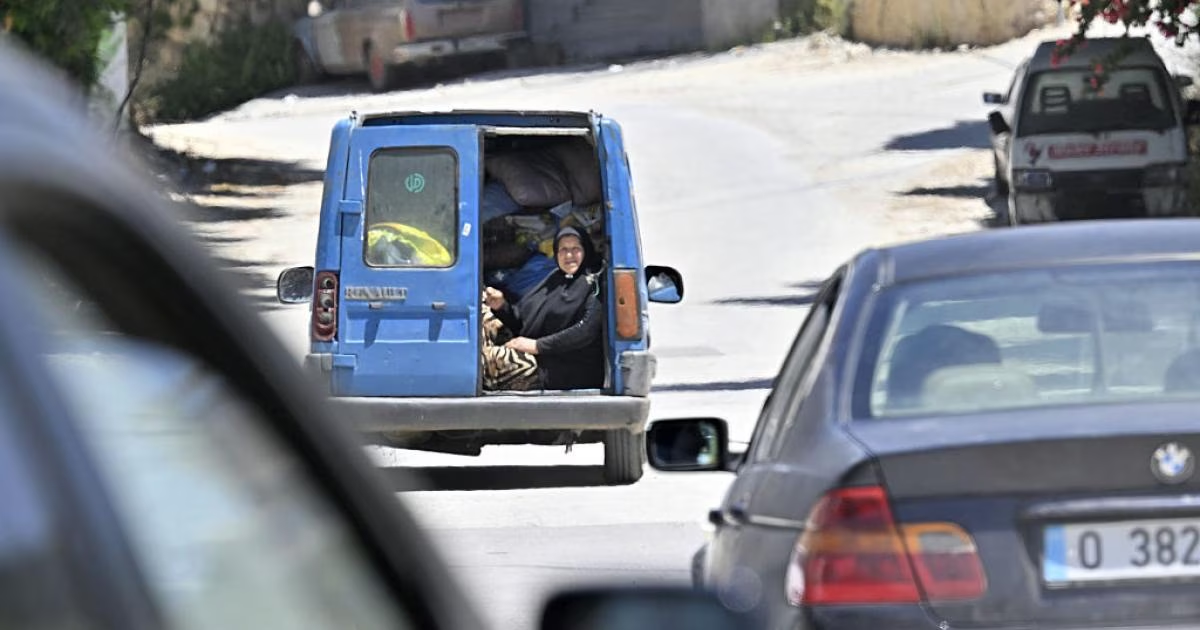







Southern Lebanon witnessed a widespread and intense wave of displacement on Friday, affecting hundreds of families from the Tyre and Bint Jbeil districts, with convoys of displaced people heading towards the cities of Sidon and Beirut. These field developments come after a series of Israeli airstrikes described as the most violent since the announcement of the recent understandings between the United States and Iran.
Local sources reported that the reverse displacement movement began suddenly after thousands of residents had returned to their border villages in recent days. The renewed shelling caused panic among civilians who found themselves forced to leave their homes again in search of safer areas in the north.
On the ground, medical and official sources confirmed the martyrdom of about 30 people and the injury of dozens with varying degrees of severity since dawn on Friday, as a result of the raids that targeted towns and villages in the south and the Bekaa region in the east of the country. Reports indicated that the Israeli shelling focused on residential neighborhoods and inhabited homes, leading to widespread destruction of infrastructure and private property.
For its part, the Israeli army announced the continuation of its military operations and the targeting of what it described as Hezbollah infrastructure in various areas of Lebanon. The army spokesman claimed that these attacks come within the framework of responding to repeated violations of the ceasefire agreement, claiming that the operations aim to ensure the security of the northern border areas.
These tragic scenes recall the major waves of displacement that Lebanon witnessed during the past months, which led to the displacement of more than one million people from their homes. The Lebanese Ministry of Health confirms that the toll of the aggression since the beginning of last March has reached 3,912 martyrs and more than 11,000 injured, in a worsening humanitarian catastrophe.
On the political front, this escalation comes at a sensitive time as Lebanon prepares to participate in an anticipated round of negotiations in the United States of America in the coming days. Through these negotiations, the Lebanese side seeks to raise the issue of a complete Israeli withdrawal from the recently occupied territories, in parallel with a plan for the deployment of the Lebanese army.
Lebanon's vision revolves around the military establishment taking over the areas from which Israeli forces withdraw gradually and systematically, with enhanced official security presence to ensure sovereignty. The proposal also includes technical arrangements related to restricting weapons to specific areas, within what is known as the model areas project that aims to restore stability to the south.
In a related context, the American-Iranian agreement stands out as a pressing element in the scene, as its first clause stipulates the immediate and permanent cessation of all military operations on various fronts. The parties pledge under this agreement not to initiate any direct military confrontations, which places the current escalation in the category of a direct threat to these international understandings.
Field data indicate that Israeli forces are still continuing their incursions into some border points, reaching in some axes a distance exceeding 10 kilometers deep inside Lebanese territory. This incursion is the deepest of its kind since the occupation withdrew from southern Lebanon in 2000, which further complicates diplomatic efforts aimed at a solution.
In light of this explosive reality, Lebanese and international circles are awaiting the results of diplomatic moves in Washington, amidst fears of a complete collapse of the truce agreements. The fate of hundreds of thousands of displaced people remains dependent on the extent to which international pressure succeeds in curbing military operations and ensuring a safe and stable return of residents to their destroyed villages.
The night was described as one of the most difficult nights during the ongoing Israeli aggression since last March, as the shelling targeted inhabited homes and residential areas.
شارك برأيك
Bloody Israeli escalation in southern Lebanon leaves dozens dead and displaces thousands of families