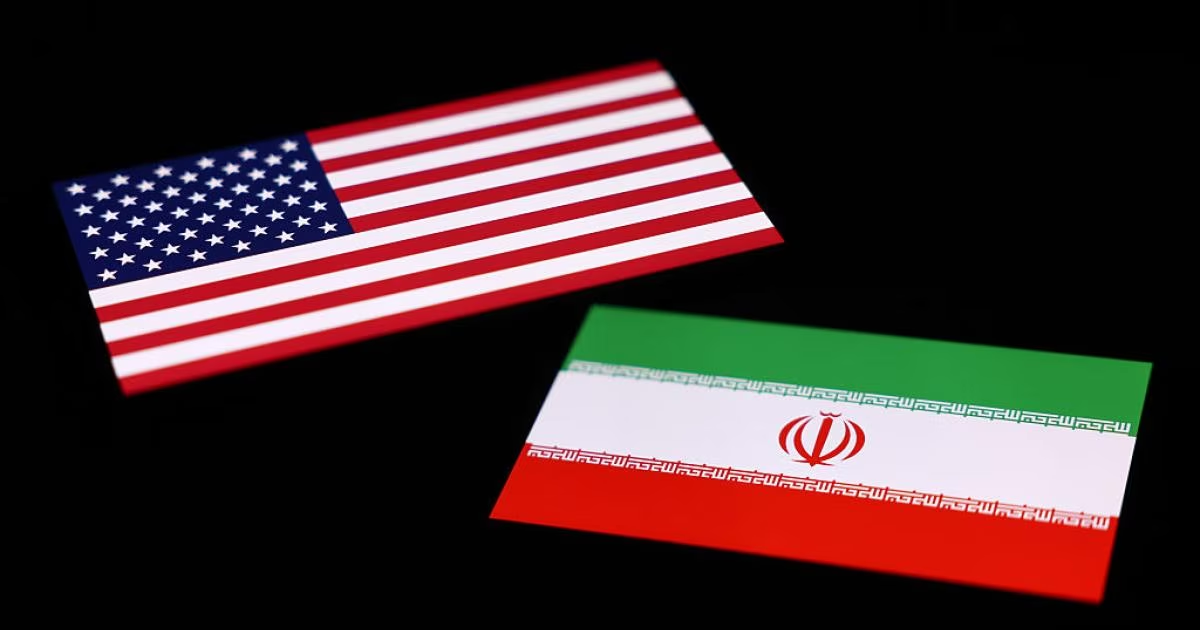







Pakistan officially welcomed the announced understandings between the United States and Iran, describing them as a fundamental step towards strengthening security and stability in the Middle East region. The Pakistani Foreign Ministry affirmed that this diplomatic path opens new horizons for regional cooperation and ends the state of tension that has prevailed for many years.
In a related context, Pakistani Foreign Minister Muhammad Ishaq Dar expressed his country's gratitude to the countries that played a mediating role in bringing the views of the two parties closer. He specifically mentioned the efforts of Saudi Arabia, Qatar, Turkey, and Egypt, noting that the solidarity of these powers contributed to reaching this advanced stage of negotiation.
For its part, informed sources revealed that the Swiss capital, Geneva, will be the scene for the official signing ceremony of the agreement next Friday. JD Vance, the US Vice President, indicated the possibility of President Donald Trump personally attending these ceremonies, reflecting the strategic importance the administration attaches to this file.
Despite the optimistic atmosphere, President Trump described the agreement as a 'historic achievement' that will redraw the political and security map in the region, but he did not overlook the deterrent aspect. He affirmed in press statements that the military option will remain on the table if the diplomatic path fails to prevent Tehran from acquiring nuclear weapons.
The anticipated agreement primarily aims to secure global navigation in the Strait of Hormuz, which is the world's energy lifeline. The provisions include the immediate commencement of naval mine clearance operations and the lifting of restrictions on commercial vessels, ending months of mutual threats and attacks in international waters.
Through this understanding, Washington seeks to establish long-term arrangements that ensure strict oversight of the Iranian nuclear program. According to responsible sources, the agreement will provide international verification mechanisms to prevent any future attempts to develop nuclear military capabilities, in exchange for a gradual easing of some economic pressures.
However, the agreement still faces legal and political challenges, as the final signed document has not been published yet. The absence of the full text raises questions about the nature of mutual commitments and implementation timelines, especially given the slight discrepancies in official narratives issued by Washington and Tehran.
Domestically in the US, the issue of frozen Iranian funds emerged as one of the most controversial points between the administration and the Republican opposition. Sources in the US administration categorically denied reports that Washington intended to immediately release approximately $12 billion to Iran upon signing.
Sources told American media that any financial gains Tehran receives will be conditional on practical verification of its implementation of its commitments. The administration described the circulating information about 'immediate release' as misleading, emphasizing that the process will be subject to strict oversight and precise measurement of the Iranian side's commitment.
For his part, Republican Senator Lindsey Graham led the opposition front within Congress, demanding that the final agreement be presented to lawmakers for review. Graham expressed concern about a gap between what American negotiators announce and what Tehran promotes to its citizens about the benefits of the agreement.
Observers believe that the next few days will witness an escalation in the political debate within the United States as the Geneva date approaches. Opponents of the agreement are trying to pressure the Trump administration to ensure that no extensive economic concessions are made before obtaining tangible and irreversible security guarantees.
On the ground, international shipping companies are awaiting the actual implementation of the agreement's provisions related to the Strait of Hormuz. Securing this waterway is a top priority for the international community to ensure stable energy prices and the unimpeded flow of global trade without military or security obstacles.
Reports indicate that technical teams have already begun preparing logistical plans for naval mine clearance operations in coordination with regional powers. This step is considered an initial test of the seriousness of both parties in transforming political understandings into a tangible reality on the ground that ends the crisis.
The question remains about the ability of this agreement to withstand internal pressures in both countries. While Tehran seeks quick economic relief, Washington seeks to achieve a diplomatic victory that ensures the security of its allies in the region, a delicate balance whose success will become clear after the official document is published in Geneva.
This positive development will pave the way for lasting peace, stability, and shared prosperity for the countries of the region.
شارك برأيك
International anticipation for the signing of the Washington-Tehran agreement in Geneva and American debate over frozen funds