







Human rights and humanitarian warnings are escalating regarding the dangerous repercussions of the proposed law for the execution of Palestinian prisoners, whose effects are not limited to prison cells but extend to strike at the social fabric of the Gaza Strip. This legislative move comes in a complex political context that places the issue of prisoners at the heart of field escalation equations, raising fundamental questions about the transformation in Israeli repressive tools and their repercussions on families living in exceptional circumstances.
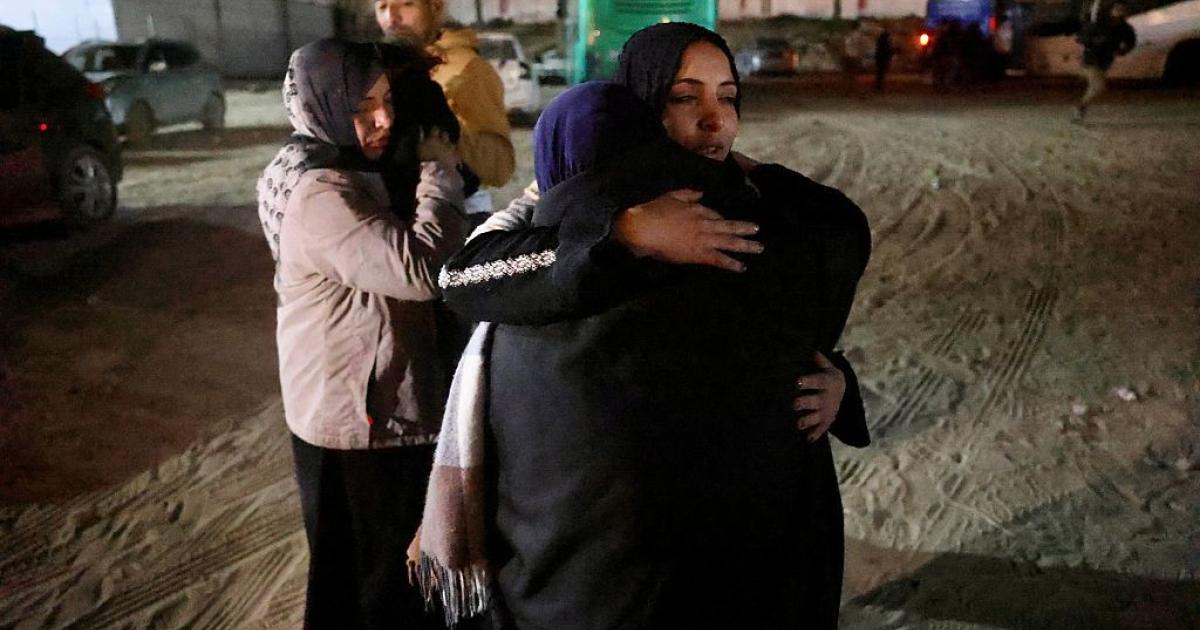
Live testimonies from prisoners' families confirm that their suffering has gone beyond the absence of their children to become a psychological and social siege that pursues them in the details of their daily lives. Prisoners' families see this law as the pinnacle of criminality and injustice, as the relatives of detainees pay a heavy price of isolation and marginalization, in the absence of effective international or local action that places their humanitarian suffering among the priorities of public political debate.
Psychologically, the proposed law has created a rift in the concept of 'waiting,' which for decades represented a fundamental pillar in the experience of Palestinian steadfastness behind bars. After waiting was associated with the hope of release and reunion, it has transformed, due to the threat of execution, into a source of constant anxiety and apprehension tinged with fear of losing children by a politicized judicial decision, thus emptying families' lives of any stable future horizon.
The wife of a prisoner from the Gaza Strip recounts how her life changed after the introduction of this law, as continuous fear became the primary driver of her daily life instead of optimism for freedom. She explains that the absence of legal guarantees and positive indicators has made the psychological state of families a direct target of this legislation, which seeks to undermine the morale of the popular base of prisoners through the threat of deliberate killing.
The suffering is not limited to adults but extends to children who face deep emotional and temporal gaps as a result of long deprivation from their fathers. A Palestinian child expresses this reality in poignant words, noting that her relationship with her imprisoned father has become confined to dreams and distant memories, while the new law threatens to turn these dreams into permanent nightmares that haunt the rising generation of youth.
From the perspective of prisoners inside prisons, former detainees believe that this law falls within a broader system of systematic pressures aimed at breaking the will of detainees. Conditions inside prisons already suffer from a severe shortage of basic needs and strict restrictions on communication, and the threat of execution comes as a direct psychological pressure tool aimed at destabilizing the balance of steadfastness inside detention rooms.
Observers point out that the draft law allows for the issuance of death sentences without the need for a request from the public prosecution, and does not require unanimity in the court panel; a simple majority is sufficient. These broad powers are granted to military courts, with the Minister of Defense having the right to intervene and express an opinion, which transforms the judicial process into a purely political and security tool lacking the minimum standards of international justice.
This legislation directly targets about 117 Palestinian prisoners accused of killing Israelis, placing it in the context of an escalating path that seeks to redefine the rules of engagement with the prisoner movement. This comes at a time when more than 9,500 Palestinians are held in Israeli prisons, including women and children, suffering from harsh detention conditions that lack the minimum human rights guaranteed by international conventions.
These legislative moves coincide with international and local human rights reports documenting serious violations against prisoners, including systematic torture, deliberate medical neglect, and starvation policies. Human rights sources confirm that the approval of the execution law will represent a dangerous precedent that legitimizes extrajudicial killing and further complicates the humanitarian and political scene in the region, portending new waves of popular anger.
The introduction of the execution law reflects great criminality and injustice to the reality of prisoners, whose families live in a state of isolation and daily suffering.
شارك برأيك
The Execution Law for Prisoners: Radical Shifts in the Concept of Waiting and the Suffering of Palestinian Families