







The repercussions of the ongoing war on the Gaza Strip have begun to impose a new political reality within the United States, where absolute support for Tel Aviv is no longer a consensus as it once was. With the clear emergence of genocidal features, the movement has shifted from American streets and student demonstrations to the corridors of decision-making in Washington, creating a deep division within the Democratic Party.
International press reports indicate that the language of Democratic Party leaders in Congress has shifted towards a stricter stance on Israeli policies, particularly regarding settlement expansion and military operations. This change reflects increasing internal pressures demanding an end to political dependency that could drag the United States into broader regional confrontations, especially with Iran.
Notable positions have emerged from influential Democratic figures, including Gavin Newsom, who did not hesitate to describe Israel as an 'apartheid state,' directing sharp criticism at Prime Minister Benjamin Netanyahu. These statements reflect unprecedented boldness in calling things by their names within the American political elite, which had avoided such descriptions for decades.
For his part, Senator Chris Murphy held the Israeli side responsible for attempting to embroil Washington in direct military conflicts in the region, warning of the cost of this entanglement. Observers believe that this discourse represents a growing trend that rejects prioritizing Israeli interests over American national security and the strategic interests of the United States.
The shift was not limited to the progressive wing alone but extended to include prominent Jewish figures who were considered pillars of traditional support, such as Rahm Emanuel and J.B. Pritzker. These individuals announced their distancing from 'AIPAC,' considering that this lobbying group no longer represents the orientations they wish to be associated with under current policies.
In a related context, Representative Alexandria Ocasio-Cortez continues to lead a strong opposition front within Congress, accusing Israel of committing massacres and systematic genocide in Gaza. These accusations resonate widely among the younger generation in the Democratic Party, who now view the Palestinian issue from a human rights and social justice perspective.
Recent opinion polls reinforce this trend, with an NBC News poll revealing shocking figures for the traditional establishment, as 67% of Democrats expressed sympathy for Palestinians. In contrast, the percentage of those who view Israel positively dropped to only 13%, a sharp decline of about 34% compared to last year.
Political analysts believe that this radical change in popular bases will directly affect the electoral map for 2028, where candidates will find themselves forced to balance the legacy of traditional support with the demands of a new generation that rejects funding wars. Blind support has become a 'political trap' threatening the professional future of many aspiring to high office.
At the level of public interaction, questions are increasing about the price the United States pays for this alliance, with sources indicating that the public debate has begun to shift towards financial and moral accountability. Activists believe that continuing this approach could isolate the United States internationally, and they liken the world's view of it to a negative historical view of previous regimes.
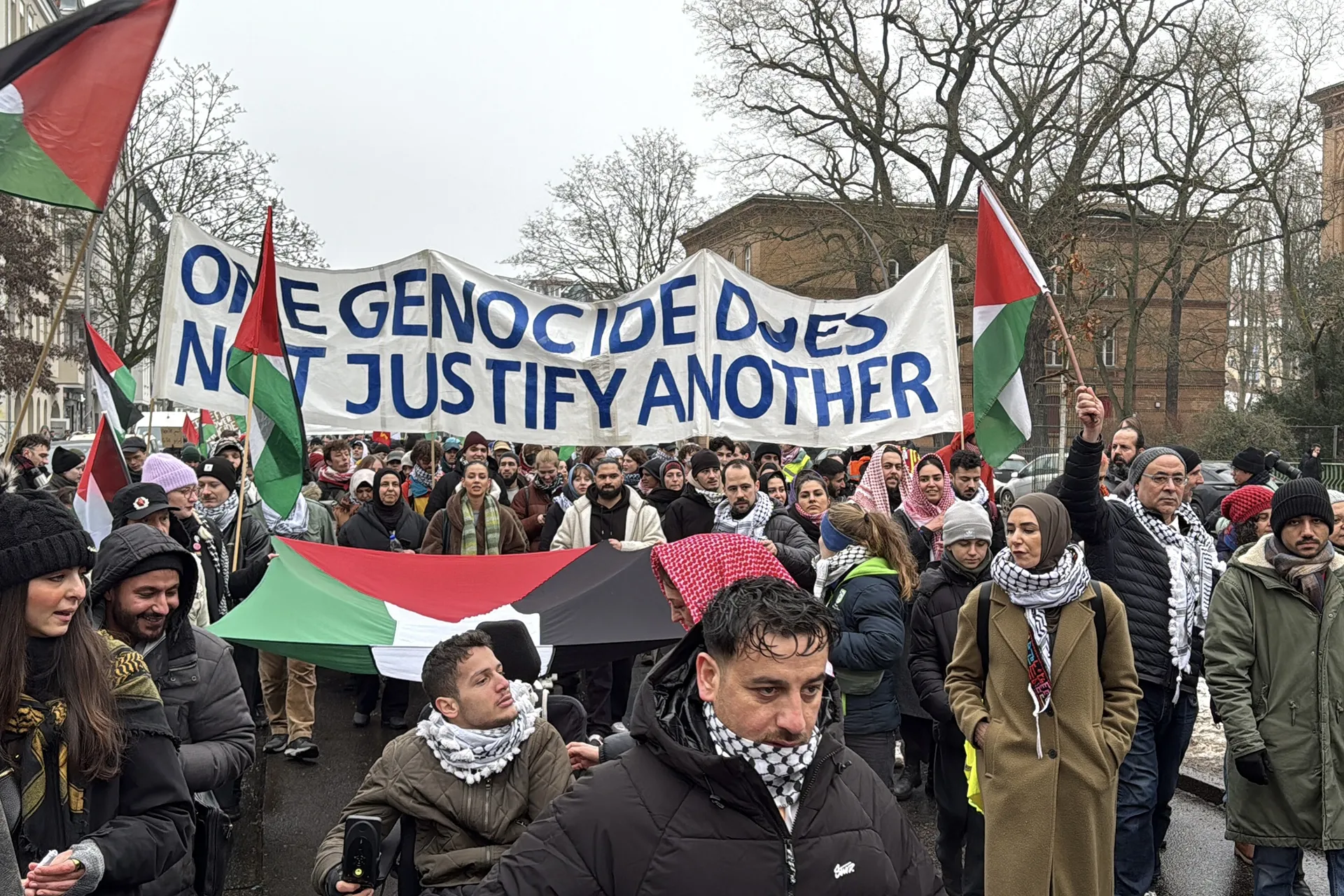
In conclusion, it appears that the American political scene is heading towards redefining its relationship with the Middle East, where Israel is no longer the 'sacred cow' that cannot be touched. The increasing pro-Palestinian demonstrations and the adoption of their slogans within progressive circles confirm that the change is not just a passing wave, but a structural transformation in the identity of the modern Democratic Party.
Support for Israel is now out of the ordinary within the modern Democratic Party, and the political discourse is changing in an unprecedented way.



شارك برأيك
Political Earthquake in Washington: Absolute Support for Israel Becomes an Electoral Burden Within the Democratic Party