






The Middle East is currently at a highly sensitive historical turning point, where the complexities of the current crisis surpass all confrontations the region has witnessed over the past decades. The intense military movements in the Gulf waters indicate that the scene has shifted from traditional pressures to a zero-sum confrontation zone, where diplomatic options narrow and the probabilities of direct conflict emerge.
Sources reported that the negotiation track hosted in Geneva in recent months under Omani patronage faced fundamental obstacles that prevented any real breakthrough. These difficulties stem from the widening gap between the ceiling of American demands and Iranian red lines, making a compromise currently out of reach.
While Tehran has presented proposals including a temporary freeze on some aspects of its nuclear program, Washington maintains a hardline stance demanding a comprehensive dismantling of nuclear capabilities and a reduction of the missile program. The Iranian leadership considers these conditions to target the core of the deterrence system that protects the regime, making any concession an unacceptable existential risk.
Time emerges as a crucial factor in President Donald Trump's strategy, as he seeks to close this thorny file before the midterm elections. The White House believes that procrastination might give Tehran an opportunity to strengthen its positions or await internal political shifts in the United States, thus accelerating the pace of political and military pressure.
Despite the move towards a decisive outcome, Trump's ambition clashes with serious economic concerns regarding the potential for oil prices to jump to record levels, possibly exceeding $150 per barrel. This scenario threatens the return of inflation to American markets, putting the administration in a dilemma between the desire to show strength and the need to maintain global economic stability.
On the other hand, Iran is no longer facing international pressures alone, as reports indicate deepening technical and military cooperation with China and Russia. This coordination, which includes monitoring and navigation systems, sends clear messages to Washington that the major powers in the East will not allow a change in regional power balances by force without a reaction.
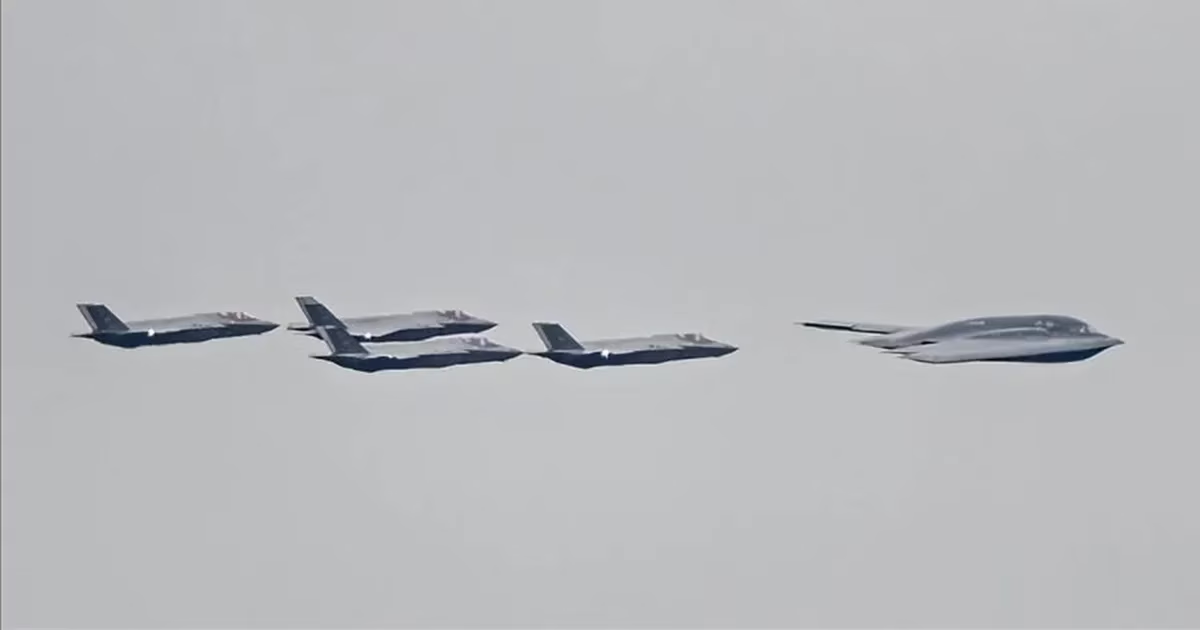
The Gulf and Arabian Sea are witnessing unprecedented American military buildups, primarily aimed at imposing a policy of maximum deterrence on Tehran. However, this military intensity increases the risks of unintended friction that could ignite a widespread confrontation that neither party openly desires.
Tehran relies in its defensive strategy on raising the cost of any potential attack, brandishing sensitive geopolitical cards, foremost among them the closure of the Strait of Hormuz. The mere threat of disrupting navigation in this vital passage puts the international economy on high alert, making any American military decision subject to calculations of economic profit and loss.
In addition to direct threats, Iran practices a policy of strategic ambiguity regarding its missile capabilities and new air defense systems. The aim of this ambiguity is to create a state of doubt among American military planners about the actual outcomes of any military strike, thereby enhancing mutual deterrence between the two parties.
At the core of this crisis, the confrontation is not limited to offensive capabilities alone, but also concerns the ability to endure and manage the brink. The United States seeks to demonstrate its overwhelming superiority, while Iran works to make the cost of war politically and economically prohibitive to the extent that it prevents a decision to attack.
Media sources reported that decision-making circles in major capitals are seriously discussing emergency military plans, indicating that the margin of error has become extremely narrow. Although war is not inevitable, the current situation suggests that a small spark could be enough to overturn the table and change existing diplomatic paths.
The regional street is experiencing a state of cautious anticipation, despite its preoccupation with daily livelihood crises, yet the realization of the seriousness of the moment has begun to permeate everyone. Any military clash in this vital region will not stop its effects at the borders of the warring states, but will extend to include global energy security and the stability of the entire region.
The fundamental question remains about the ability of major players to manage this escalation without sliding into a comprehensive confrontation imposed by miscalculations. History proves that many major conflicts began with moments when everyone thought things were under control, before dramatically spiraling out of control.
In conclusion, the region stands before a fragile equation separating a potential historical settlement and an explosion that redraws political maps. Whether this tension ends with a new agreement or an armed conflict, the results will shape the international order and power relations in the Middle East for decades to come.
The outcome of this confrontation will not only define the future of the Middle East but will also leave its mark on the shape of the international order for decades to come.
شارك برأيك
Zero-Sum Confrontation: Is the Hour of Reckoning Approaching Between the Trump Administration and Iran?