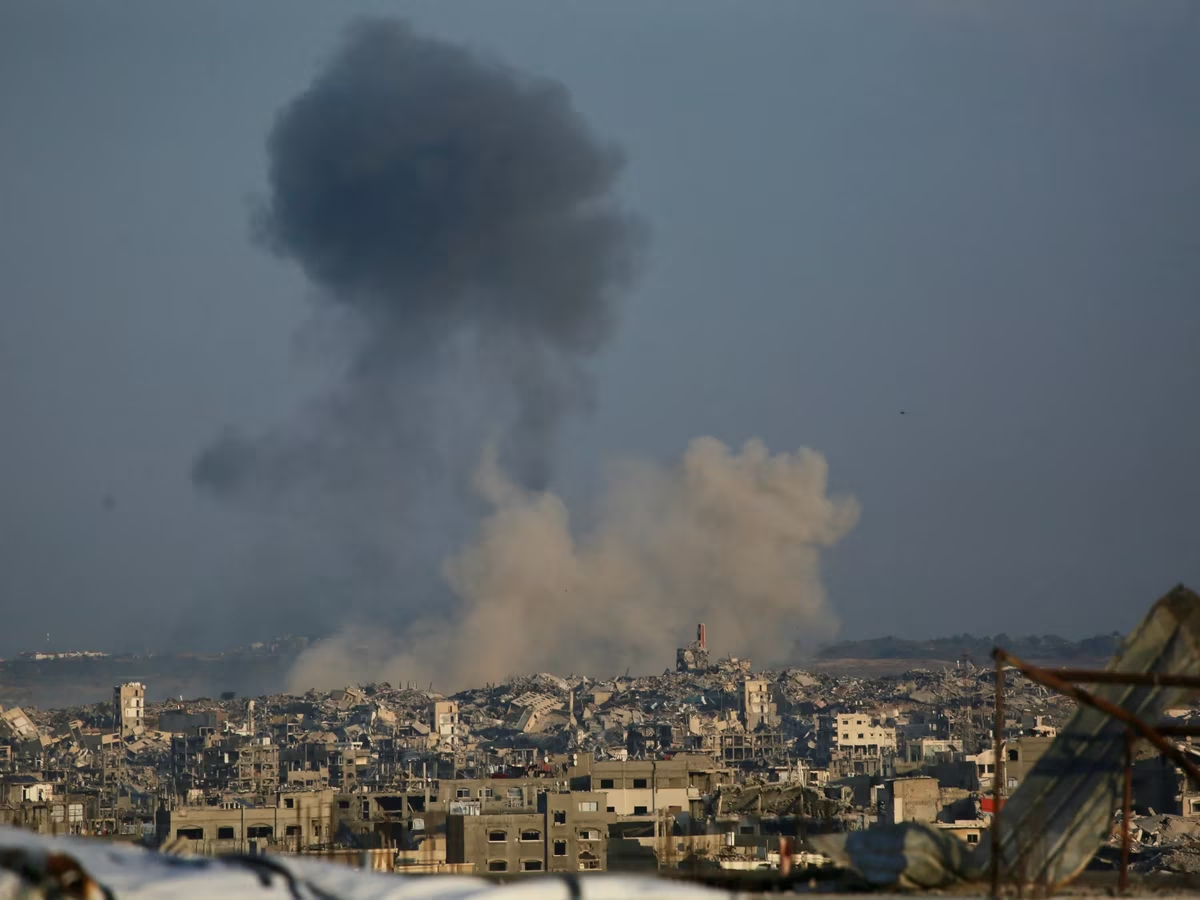







Israeli occupation forces carried out artillery bombardment and tank fire within their deployment areas east of Khan Yunis city. Meanwhile, rains resulting from the weather low caused the flooding of a large number of displaced people's tents in the Al-Mawasi area, which is one of the most densely populated areas with displaced people.
The Murad axis, which separates Rafah city from the rest of Gaza Strip cities, has become a launch point for military operations targeting Rafah city and adjacent areas, such as the southern and eastern borders of Khan Yunis city.
Israeli artillery stationed within this axis fired its shells on the southern and eastern areas of Khan Yunis city, where explosions from these shells were heard.
It also clarified that gunshots fired yesterday from military barracks established inside the remaining residential buildings north of Rafah city led to the injury of 4 residents of adjacent displaced people's tents.
On the other hand, Israeli occupation vehicles carried out incursions in the eastern area of Khan Yunis, which is the hottest front due to the presence of 6 towns occupied by Israel, constituting more than 50% of the city's area and inhabited by about 150,000 people.
Occupation soldiers built earthen barriers and placed yellow cubes east of Salah al-Din Street in an expansion of the blue line.
Flooding of tents
It also reported that rains resulting from the weather low caused the flooding of a large number of displaced people's tents in the Al-Mawasi area, which is one of the most densely populated areas with displaced people.
It explained that the accumulation of large amounts of rainwater led to the formation of pools and swamps, amid the municipalities' inability to provide any services.
Although the current weather low was less severe than previous lows, the abundance of rain was sufficient to flood roads and displaced people's tents, especially in the Al-Mawasi area.
Israel prevents the entry of materials needed by Gaza Strip residents to protect against winter rains or repair their homes that were bombed, amid uncertainty about the timing and mechanism for starting reconstruction.
The Israeli genocide war in Gaza, which began on October 7, 2023, and lasted two years, left more than 71,000 martyrs and more than 171,000 injured Palestinians, mostly children and women, and immense destruction with reconstruction costs estimated by the United Nations at about 70 billion dollars.
Rains resulting from the weather low caused the flooding of a large number of displaced people's tents in the Al-Mawasi area, which is one of the most densely populated areas with displaced people.

شارك برأيك
Israeli artillery bombardment east of Khan Yunis and flooding of displaced people's tents in Al-Mawasi