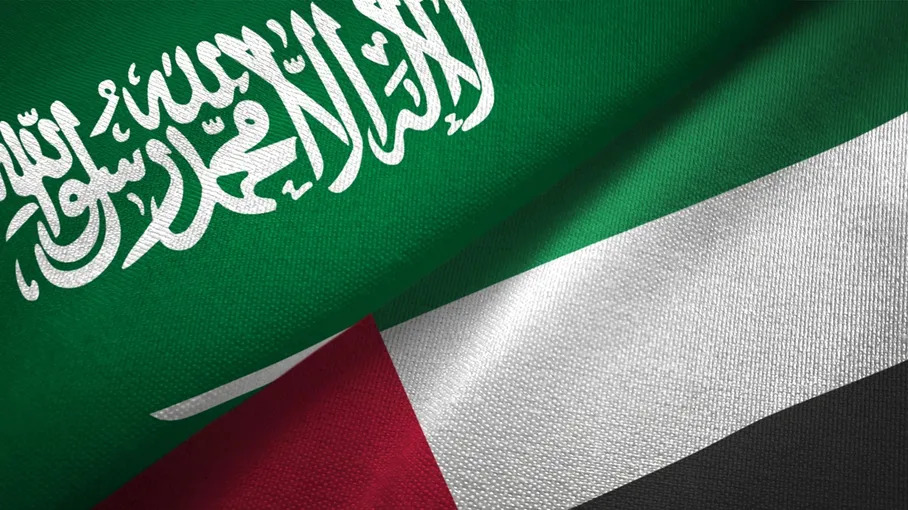







The newspaper considered that the visit of Steve Witkoff, the envoy of U.S. President Donald Trump, and his son-in-law Jared Kushner, to Riyadh and Abu Dhabi did not go as expected in the United States, after the Saudis set two conditions for participating in the reconstruction of the Gaza Strip.
The newspaper quoted a Saudi diplomatic source as saying that the Saudis rejected the U.S. request in a meeting to take a central role in implementing Trump's plan to end the war in Gaza, including participation in security forces, civil administration, and investment in reconstruction.
According to the Saudi source, the response conveyed to the American envoys was clear: Saudi Arabia will not participate as long as two fundamental conditions are not met: the first is the disarmament of Hamas and its handover of authority; the second is the involvement of the Palestinian Authority from an early stage in the reconstruction and taking on governmental responsibilities.
The source added: "The discussion on this topic was brief, and the second issue raised, which is the security agreement between the United States and Saudi Arabia, took up most of the time."
A senior Saudi official added that Gulf countries are very concerned about the comprehensive security agreement signed between the United States and Qatar, saying: "This means that Qatar will ensure the survival of Hamas in Gaza and its return to power at the first opportunity."
The newspaper noted that it "previously published sharp criticisms of Saudi Arabia and the United Arab Emirates regarding the Americans' efforts to enhance Qatar's leading role in the region."
The Saudis are now demanding at least a parallel security agreement, but with better conditions, expressing their concern over Qatar's continued support for branches of the Muslim Brotherhood throughout the Middle East, which undermine stability in Arab countries.
It added, "Prime Minister Benjamin Netanyahu sees the first Saudi condition regarding dismantling Hamas as acceptable, while the second condition, concerning the involvement of the Palestinian Authority, raises significant concern."
It is worth noting that the Saudis also condition their support for the Palestinian Authority on implementing wide-ranging reforms, including combating extremism, but these conditions were not raised in the recent meeting.
The newspaper pointed out that "Kushner and Witkoff also conveyed messages from Israel to the Saudis regarding the post-war phase, normalization, and expanding the Abraham Accords."
The meeting clarified that without a real horizon for establishing a Palestinian state, according to the Saudi plan, there will be no political progress - meaning joining the agreements.
It stated that "in the UAE, as usual, the statements are more diplomatically toned, although they carry a similar message, as the UAE is already involved in rehabilitating and building infrastructure in humanitarian areas being constructed in territories under Israeli control."
According to the official statement, the conversation between the American envoys and Tahnoun bin Zayed, advisor to Governor Mohammed bin Zayed, focused on ways to establish stability and the necessity of ending the war.
It added, "But the statements of Anwar Gargash, the political advisor to bin Zayed and one of the prominent figures in Emirati foreign policy, clarify that their extensive intervention also awaits Hamas's exit from the scene, even if the organization's name is not explicitly mentioned."
Gargash said: "Returning to the situation before October 7 would not be correct and would not contribute to the solution... The UAE supports American moves, but with two conditions: clarifying the future political situation and the need for a stable security ground.
We will not send our sons to a battlefield without a clear understanding of the situation on the ground.
The newspaper considered that "the clear message is that the UAE will likely continue to provide assistance and funding for reconstruction in safe humanitarian areas, but it will remain with the Saudis outside the political scene, at least for now.
The influence of Qatar, Egypt, and Turkey will remain dominant - which is exactly what the Gulf countries feared.
Returning to the situation before October 7 would not be correct and would not contribute to the solution.

شارك برأيك
"Israel Hayom": Saudi and Emirati rejection of Gaza reconstruction due to Hamas and the Authority