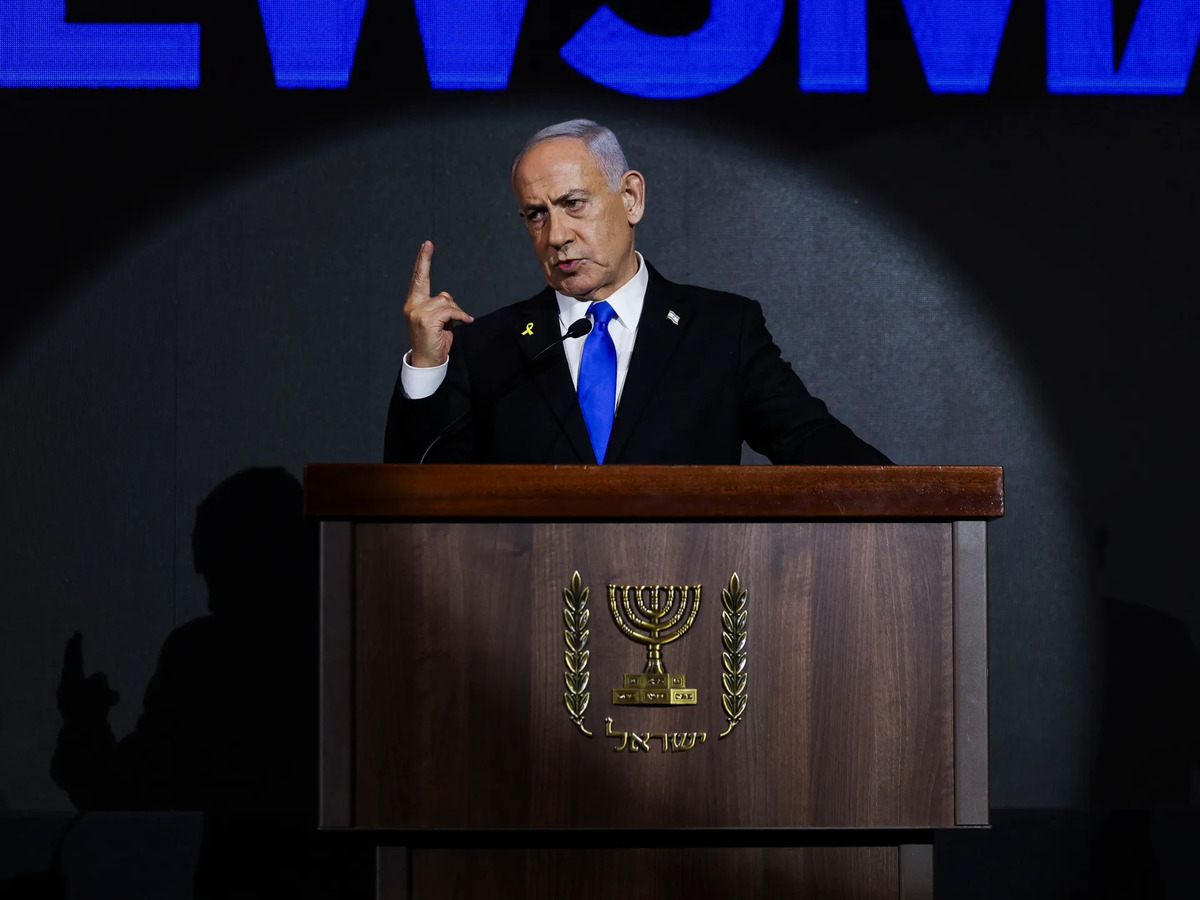







Israeli Prime Minister Benjamin Netanyahu, wanted by the International Criminal Court for war crimes in Gaza, acknowledged that he is "very much" connected to the idea of "Greater Israel." This announcement came in an interview with a news network, provoking strong reactions from several Arab countries.
The "Greater Israel" project is an ideological and political concept in Zionist thought, referring to expanded borders of the Israeli state that include lands located between the Nile River in Egypt and the Euphrates River in Iraq, as well as parts of neighboring countries such as Jordan, Syria, and Lebanon.
Historically, this concept is linked to biblical narratives about the divine promise to the Children of Israel for a land extending from the Nile to the Euphrates. The Zionist movement adopted this idea since its inception, using it to justify expansion and settlement.
In the early days of the occupation state in 1948, there was no official declaration adopting the project, but some leaders like Menachem Begin and Moshe Dayan spoke about the necessity of retaining the territories occupied after 1967 as part of "historical Israel."
Netanyahu's statement is the first of its kind in which a high-ranking official expresses his vision for achieving "Greater Israel" officially, reflecting the presence of this vision in Israeli political, party, and settlement discourse.
This concept has led to Arab fears of Israeli expansion at the expense of neighboring countries, as these fears have intensified due to some of the expansionist settlement policies of the Israeli occupation in areas of the West Bank and the occupied Golan Heights.
International law rejects any Israeli expansion by force and considers settlements in occupied territories illegal. The international community, including the United Nations, does not recognize the concept of "Greater Israel."
Within Israel, there is opposition to the idea from some secular and leftist political forces that see adherence to the concept of "Greater Israel" as an obstacle to peace and a threat to the demographic and democratic character of the state.
Netanyahu's justifications for announcing the expansionist project include religious and historical justifications, in addition to security and national justifications that reject the establishment of an independent Palestinian state along the 1967 borders.
Netanyahu's statement reflects a significant shift in Israeli political discourse and raises Arab concerns.


شارك برأيك
9 answers that clarify the ambitions of the occupation in the "Greater Israel" project.