ARAB AND WORLD

Sat 03 Feb 2024 8:41 am - Jerusalem Time

Pressure on Biden mounts as 50 US cities demand ceasefire in Gaza

Approximately 70 resolutions on the war on Gaza have been voted on, with the majority urging for an end to the bombardment.

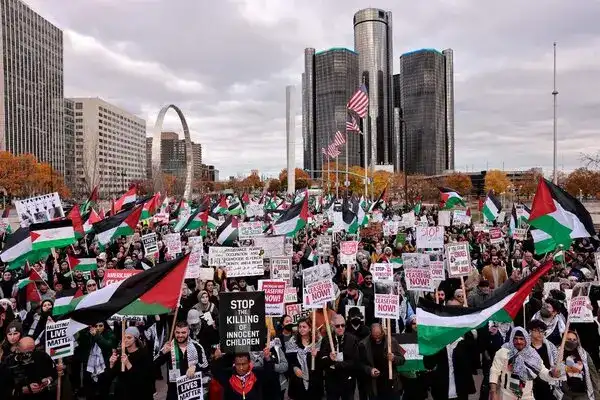
Around 50 cities in the United States have ratified resolutions asking for a ceasefire in Gaza, with at least 14 passing in key swing states like Michigan, piling up more pressure on President Joe Biden, Sky News reported.

Approximately 70 resolutions on the war on Gaza have been voted on, with the majority urging for an end to the bombardment.

Reuters has reported that many of the ceasefire resolutions have been passed in Democratic-controlled states, but territories that might be pivotal in this year’s presidential election are also included.

Gabriela Santiago-Romero, a Detroit council member who voted in favor of a ceasefire resolution in Michigan’s largest city in November, said it represented “frustration” particularly in young voters and people of color.

“We want leadership that is willing to listen to us,” Santiago-Romero expressed.

As a protest to Joe Biden’s policy toward the Israeli war on Gaza and the occupation’s use of starvation as a weapon of war in Gaza, Feds United for Peace, representing employees from twenty-seven US government agencies and departments, are going on a hunger strike on Thursday, calling it a “day of fasting for Gaza” to draw attention on the ongoing war.

The federal employees will show up to their offices dressed in black or wearing Koufiyyehs or other symbols of Palestinian solidarity.

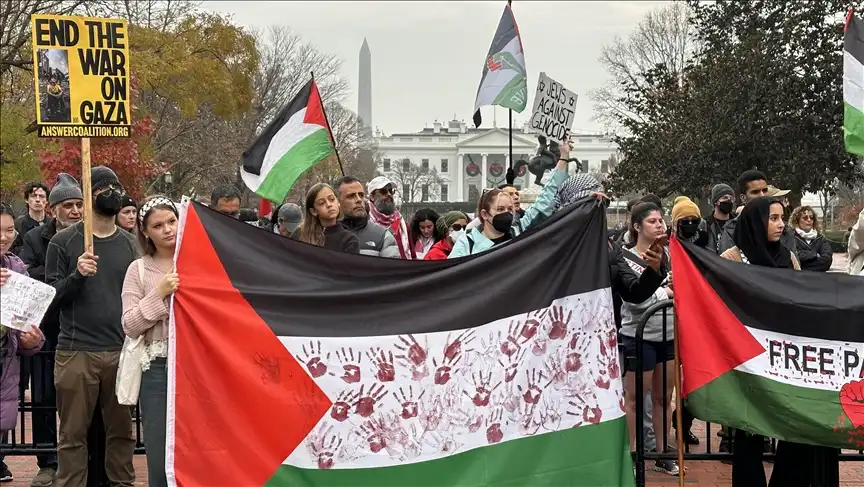
According to Reuters, former US House of Representatives Speaker Nancy Pelosi stated during a CNN interview on Sunday that she believes certain rallies in the United States calling for a ceasefire in Gaza are tied to Russia, warning that the FBI should investigate them. 

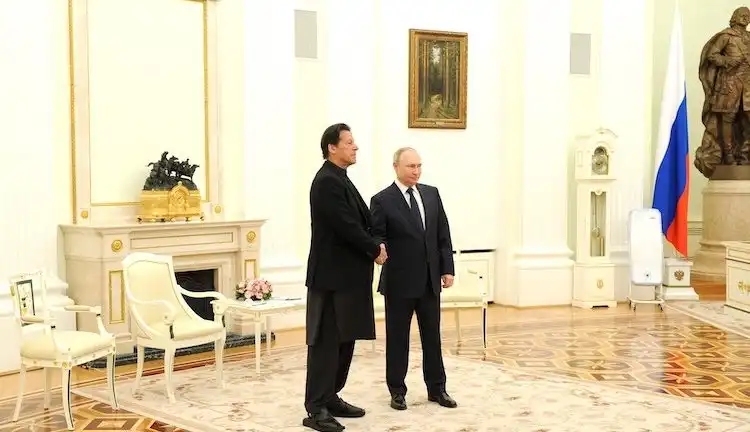
”We have to think about what we’re doing, and what we have to do is try to stop the suffering in Gaza but for them to call for a ceasefire is Mr. Putin’s message. Make no mistake, this is directly connected to what he would like to see,” she speculated.

As protesters gathered outside Nancy Pelosi’s house urging for a ceasefire of the Israeli genocide in Gaza, the former US House Speaker was caught on camera, scolding the pro-Palestinian protesters and telling them to ”go back to China,” alleging that this was the location of their ”headquarters”.

Biden says decided on response to attack on US base in Jordan

Biden revealed Tuesday that he had decided on how to respond to the recent drone strike that killed three American troops in Jordan as part of the ongoing operations against US the US occupation forces in the region for its complicity in the ongoing genocide in Gaza.

With the upcoming election adding pressure, Biden hinted at impending actions in response to the operation, though he refrained from disclosing the details of said response he pledged.

The White House issued a warning, stating that “multiple actions” were likely but offered no further information on the nature of the response.

While on the campaign trail in Florida, the 81-year-old President reiterated his commitment to avoiding a wider war in the region despite attacking Yemen, Syria, and Iraq within the span of a few days. When asked about the fear of exacerbating tensions with Iran, Biden affirmed that he was not seeking an escalation and emphasized his preference for a more measured approach.

Biden has blamed “radical Iran-backed militant groups operating in Syria and Iraq,” likely referring to the Islamic Resistance in Iraq, which announced earlier this month that they would escalate their attacks after the US conducted several raids in Iraq and assassinated a military official in central Baghdad.

Following the attack, Al Mayadeen‘s correspondent reported an increasing demand within the United States for an immediate ceasefire in the Gaza Strip.

Our correspondent affirmed that voices within the US Democratic Party have expressed their refusal to escalate the ongoing struggle and have instead called for addressing the fundamental issue, which is the ongoing war on the Gaza Strip.

Source: Defend Democracy Press

ARAB AND WORLD

Sat 03 Feb 2024 8:37 am - Jerusalem Time

Israeli media: The leaders of the security system decided to resign from their positions

Israeli Channel 12 said that the leaders of the occupation security system previously bore responsibility for the failure of the attack of last October 7.


It added that these leaders made it clear that they would resign from their positions and leave for their homes when circumstances permit.


According to the channel, the Chief of Staff of the occupation army, Herzi Halevy, the head of the Shin Bet, Ronen Bar, and the head of the Intelligence Division of the Israeli Army (Aman), Aharon Haleva, are still hesitant about the correct time to resign.


It added that they intend to remain in their positions as long as the war on the Gaza Strip and in the north continues.


Channel 12 said that the leaders of the security forces are taking into account the issue of submitting their resignation and appointing their replacements, especially with the current political situation of the occupation, as political officials will appoint their replacements.


The three heads of the security services acknowledged responsibility for failing to warn of the attack by the Islamic Resistance Movement (Hamas) and the Al-Aqsa Flood Battle, on October 7th.


The Israeli army suffered heavy losses during its aggression against the Gaza Strip, which forced it to withdraw several brigades from its forces in the Gaza Strip, including Battalion No. 7107, the 36th Division, and the 13th Battalion in the Golani Brigade within one month, despite many justifications in which it indicated that this step aims to strengthen Troops.


Hillel Shokin, a lecturer at Tel Aviv University, wrote an article in Haaretz newspaper, reading the meanings and connotations of the withdrawal of elite forces from the Gaza Strip, and the Israeli aspiration to begin the third phase of the war and redeploy the forces: “We will not win even if we are together as well. We have already lost the current military campaign on Gaza from Our right to a national homeland in the Land of Israel has been postponed, and the loss became clear on October 7th.


The lecturer at Tel Aviv University added, "Every additional day of ground maneuver increases failure, and when this military campaign ends, as is expected in a few weeks due to international pressure, Israel will find itself in a more difficult situation than the one it entered into."


Source: Israeli press

ARAB AND WORLD

Sat 03 Feb 2024 8:31 am - Jerusalem Time

Biden announces the start of the "American response" in the Middle East

US President Joe Biden announced that his country's forces, according to his directives, struck facilities in Iraq and Syria - Friday - in response to targeting American bases in the region, while Baghdad denounced the strikes as a violation of sovereignty, warning of their repercussions on regional stability, which was also expressed by Iranian sources.


Biden said that the targeted facilities are being used by the Iranian Revolutionary Guard and its affiliated militias to attack American forces, adding that “our response that began today will continue at the times and places we choose,” following the attack that took place in Jordan last Sunday, which resulted in the killing of 3 American soldiers.


The American President - who participated on Friday in the ceremony to receive the bodies of the three soldiers - stressed that his country "does not seek conflict in the Middle East or anywhere else in the world," but he continued, saying, "Let everyone who might seek to harm us know that we will respond."


American forces in the Middle East are facing escalating attacks with missiles and drones against the backdrop of their support for Israel in its war on Gaza.


The US Department of Defense (the Pentagon) has counted more than 150 attacks on its forces since last October, but the Jordan attack is the first targeting that resulted in the death of American soldiers since the start of the war.

For its part, the White House said that the strikes carried out on Friday targeted 3 facilities in Iraq and 4 in Syria, stressing that "the American response began tonight and will not end tonight."


He continued, saying, "We do not seek conflict with Iran or in the Middle East, but we will not hesitate to defend our forces."


The White House stated that Washington had informed the Iraqi side in advance of these strikes, but it had not communicated with Iran since the recent attack targeting American forces in Jordan.


"A violation of Iraq's sovereignty"

For his part, Yahya Rasoul, spokesman for the Commander-in-Chief of the Iraqi Armed Forces, said that the American strikes are a violation of sovereignty and undermine the efforts of the Iraqi government, which seeks to ensure the stability of the region, as he put it.


Rasoul added that these strikes “threaten to drag Iraq and the region into undesirable consequences,” and that their consequences will be “dire” for security and stability.


He pointed out that American aircraft targeted sites in Al-Qaim district and other border areas.


Iraqi security sources reported that 3 soldiers and 2 civilians were killed and 15 people were injured as a result of the American bombing on the headquarters of the Popular Mobilization Forces in western Iraq.


The American network NBC also quoted an Iraqi security official as saying that the raids targeted a weapons store and three homes of members of the Iraqi Hezbollah Brigades in Anbar Governorate, west of the country.

On the other hand, Iranian sources told Al Jazeera that the American strikes are an open and declared aggression against Syria and Iraq and strike regional stability, as they put it.


The same sources confirmed that there are no bases for the Iranian Revolutionary Guard or the Quds Force in the areas that were bombed, and that Washington’s talk about targeting the Quds Force in Syria is “unrealistic and a rubbish in the eyes.”


Iran has repeatedly warned the United States that the continuation of the Israeli massacres in Gaza will lead to an expansion of the scope of the war regionally, while Washington confirms that it does not seek to expand the conflict, but it continues to supply Tel Aviv with thousands of tons of weapons and ammunition via an air bridge in support of what it calls “Israel’s right.” In self-defense.


Source: Al Jazeera + agencies

ARAB AND WORLD

Sat 03 Feb 2024 8:29 am - Jerusalem Time

PM of Canada: We are considering imposing sanctions on “extremist” settlers in West Bank

Canadian Prime Minister Justin Trudeau said on Friday that his government is considering imposing sanctions on “extremist” settlers in the West Bank, the day after the US action against four Israeli men accused of involvement in violence in the occupied territories.


He added to reporters in Waterloo, Ontario, “We are examining how to ensure that those responsible for extremist violence or extremist settler violence in the West Bank are held accountable.”


PALESTINE

Sat 03 Feb 2024 8:24 am - Jerusalem Time

War on Gaza: 15 Palestinians killed in Israeli bombing of homes in Rafah and Deir al-Balah

15 citizens were killed, and a number of others were injured, as a result of Israeli warplanes bombing three homes in Rafah and Deir al-Balah in the southern and central Gaza Strip.


Local sources confirmed that the Israeli forces bombed a house housing dozens of displaced people in Rafah, belonging to the Hijazi family, and that the bombing resulted in the deaths of 12 people, including a child and an elderly woman, and the injury of 17 others.


Two citizens were also killed when the Israeli forces bombed a house for the Al-Hams family in the Al-Jeneina neighborhood, east of the city of Rafah, south of the Gaza Strip.


Local sources reported that a citizen was killed and 3 others were injured as a result of the Israeli warplanes bombing a house for the Abu Nusair family on Al-Tarzi Street in the city of Deir Al-Balah in the central Gaza Strip.


The Israeli forces continue their aggression against the Gaza Strip for the 120th day, as the toll of the Israeli aggression against the Gaza Strip has risen, since then, to 27,131 dead, the majority of whom are women and children, and the number of injured to 66,287, in an infinite toll.


Thousands of citizens are still missing under the rubble and on the roads, and the occupation is preventing ambulance and civil defense crews from reaching them.


PALESTINE

Fri 02 Feb 2024 10:54 pm - Jerusalem Time

War on Gaza: 27,131 killed and more than 66 thousand injured

The number of killed in the Israeli war on Gaza rose to 27,131, while the number of those injured rose to 66,287 since the start of the war, according to what was confirmed by the Ministry of Health in the Gaza Strip, which noted that “the Israeli forces committed 13 massacres, claiming the lives of 112 dead and 148 wounded within 24 hours.


For the 119th day in a row, the Israeli army continues its war on the Gaza Strip, launching air strikes, artillery shelling, and firing belts, resulting in the death and injury of dozens.


The Israeli army targeted various parts of the Gaza Strip, including neighborhoods, homes, and displaced communities, with a focus on the city of Khan Yunis.

ARAB AND WORLD

Fri 02 Feb 2024 10:02 pm - Jerusalem Time

Blinken will visit Saudi Arabia, Egypt, Qatar, Israel, and the West Bank next week

US Secretary of State, Anthony Blinken, will advance a proposal to release Israeli detainees in Gaza in exchange for a suspension of the Israeli war on the Strip, according to what the US State Department announced on Friday.


The US State Department indicated that Blinken, on his fifth Middle Eastern tour, will visit Qatar and Egypt, which are leading mediation on the proposal, as well as Israel, the West Bank, and Saudi Arabia.

PALESTINE

Fri 02 Feb 2024 9:43 pm - Jerusalem Time

Overcrowding and scarcity of medicine and food... Epidemic diseases are killing the population of Gaza

The repercussions of the Israeli aggression on Gaza were not limited to depriving residents of their homes or patients of their right to hospitalization, but rather made access to the most basic necessities of living an unattainable wish, including drinking water.


Yahya Al-Najjar, like many displaced people, spends hours of the day trying to get a drink of fresh or salty water, just to satisfy the thirsty people waiting for him.


A woman from Gaza said that her grandson contracted hepatitis from the water he obtained and used for washing, ablution, and cooking food.


Epidemics sweep Gaza

The absence of fresh drinking water, which has become a rare currency in the Gaza Strip, has led to a worsening health situation, amid overcrowding and a complete inability to isolate those infected with infectious diseases.


One Palestinian explained that there is a lack of services, water, care, and hygiene in shelter centers.


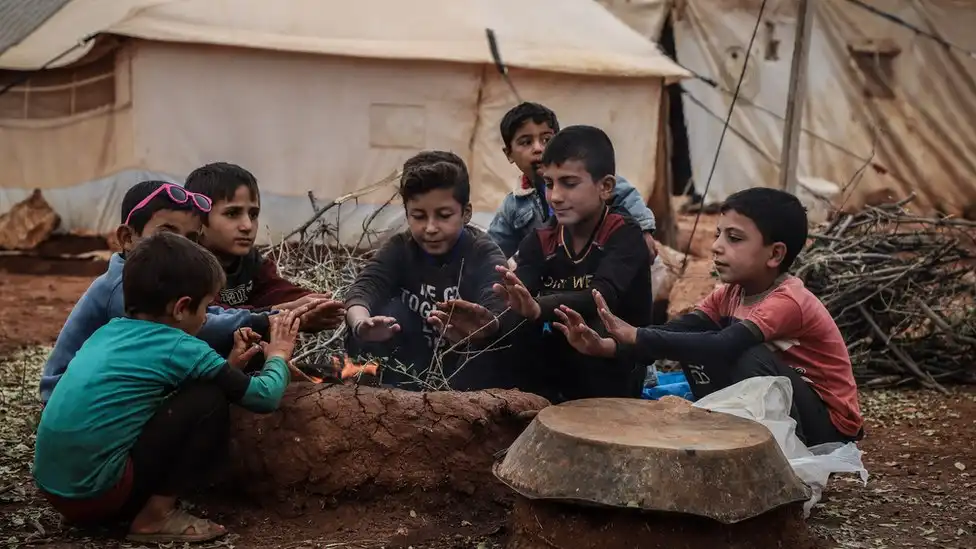
Diseases spread like wildfire with the harsh winter cold, affecting camps, shelter centers, and even hospitals, which became hotspots for the rapid spread of epidemic diseases.


In turn, Doctor Karam Madboul attributed the matter to an unhealthy environment lacking the most basic necessities of life.


Overcrowding, poor hygiene standards, and scarcity of medicine and food have led to the emergence of a number of diseases, including cases of pneumonia, diarrhea, skin diseases such as smallpox, and type 1 hepatitis. More than eight thousand cases were recorded, in addition to cases of measles and other infectious diseases.


A starvation methodology that can only be briefly described as genocide, exacerbated by the catastrophic spread of epidemics and the decomposition of bodies under rubble and in the streets, amid the complete destruction of the sanitation infrastructure, as well as the spread of waste in public places and displacement centers.


Last month, the Palestinian Environmental Quality Authority revealed that “the shortage of potable water and the closure of all water desalination plants, as a result of the ongoing Israeli occupation aggression, resulted in 66% of the people of the Gaza Strip suffering from the spread of diseases transmitted through contaminated water, such as cholera, chronic diarrhea, and intestinal diseases.” .


The "Environmental Quality" warned of the dangers of "the Israeli occupation's bombing of sewage lines" in the Strip, noting that these practices "lead to a health and environmental catastrophe."


Source: Al-Arabi - Agencies


PALESTINE

Fri 02 Feb 2024 8:38 pm - Jerusalem Time

West Bank: An Israeli settler tramples a herd of sheep in Kisan, east of Bethlehem

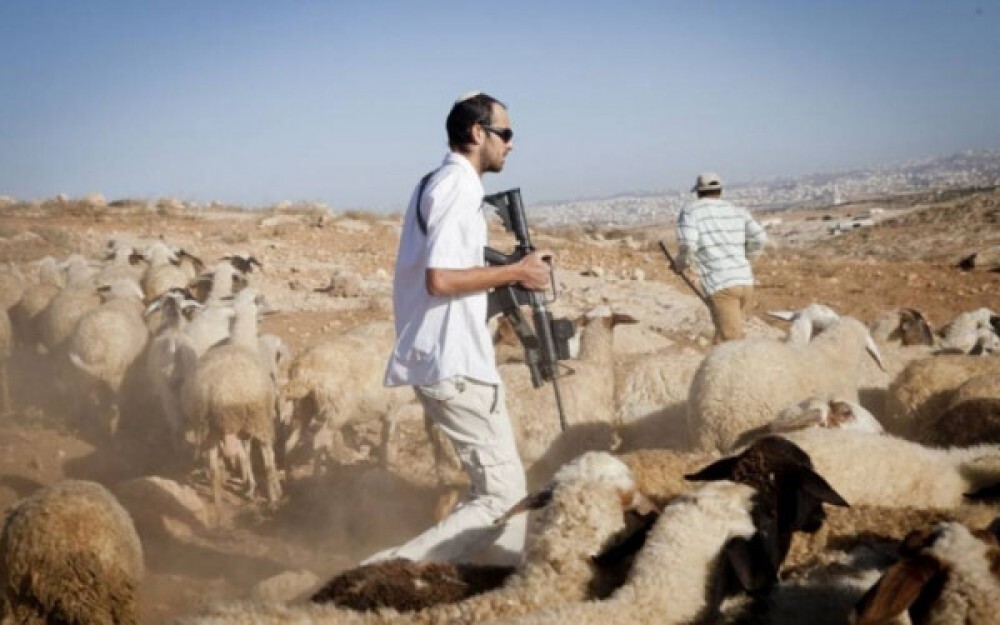
An Israeli  settler trampled a herd of sheep in the village of Kaisan, east of Bethlehem.


The head of the Kisan Village Council, Musa Abayat, said that a settler ran over a flock of sheep belonging to citizen Mustafa Ibrahim Abayat with his vehicle, near the main street in the village, which led to the death of one sheep and the injury of another head.

ARAB AND WORLD

Fri 02 Feb 2024 7:29 pm - Jerusalem Time

An Israeli newspaper talks about the obstacles to the prisoner deal with Hamas

Although the United States talks about making progress that may lead to an exchange agreement between the Islamic Resistance Movement (Hamas) and Israel and a ceasefire in Gaza, and despite the existing optimism, the road to achieving this is still long, and negotiations are expected to be difficult ccording to a report by Yedioth Ahronoth newspaper.


The Israeli newspaper recalled at the beginning of its news analysis the announcement of Israeli Prime Minister Benjamin Netanyahu that some of the demands of the Hamas movement, namely the release of thousands of prisoners and the withdrawal of the Israeli army from the Gaza Strip, could not be met.


It pointed out that Israel, the United States, Qatar and Egypt reached a consensus on an agreement that includes a 45-day ceasefire that coincides with the release of Israeli detainees held by Hamas.


The newspaper said that the agreement will also include the release of Palestinian prisoners, with specific details, such as the number of fighters among them who will be released for each Israeli detainee and the identity of the prisoners, which will be discussed between the two sides, and in addition, humanitarian aid entering the Gaza Strip will be increased.


Once Hamas announces its acceptance of the initial agreement, intensive negotiations will begin on its basic provisions. However, the newspaper says that it is clear that Hamas will not accept an agreement similar to the previous one, which stipulated the release of 3 Palestinian prisoners for every Israeli detainee.


Under the previous agreement, the Palestinian movement released a number of women and children up to the age of 19, in exchange for the release of Palestinian female prisoners and minors.


Numbers

But this time, according to a Yedioth Ahronoth report, it is expected that Hamas will demand between 100 and 300 prisoners for every Israeli prisoner released.


Hamas' conditions for returning Israeli bodies detained in Gaza are still unclear, and it is not known whether the movement will agree to exchange them for the bodies of Hamas members, or whether it will request the release of additional prisoners, according to the newspaper's report.


Hamas is currently detaining - according to Tel Aviv's estimates - 136 Israelis, the deaths of 29 of whom have been confirmed, and 4 individuals who were already detained in Gaza before the “Al-Aqsa Flood” battle on October 7, 2023.


If Hamas's demands are met, this will likely lead to the release of thousands of Palestinian prisoners, the report claims.


The newspaper pointed out that the Israeli Prime Minister set limits to the possible prisoner exchange deal when he said that “thousands of terrorists will not be released,” in reference to imprisoned Hamas members in Israel.


However, it quoted news reports about the possibility of Israel releasing between 4,000 and 5,000 Palestinian fighters as part of the expected deal. The newspaper considered this the largest number of prisoners Israel has ever released.


A test balloon Sources close to Israeli National Security Minister Itamar Ben Gvir, quoted by Yedioth Ahronoth, believe that Netanyahu's statement is nothing more than a "test balloon" for the circle around him.


They believe that this is just a strategic move by the Prime Minister so that the deal will be seen as a success for him, even if half of the proposed number of Palestinian prisoners are eventually released.


But after the complex issue of prisoners is agreed upon, Hamas also insists on the complete withdrawal of the Israeli army from Gaza, according to the newspaper.


There is another question that must be discussed in the negotiations: Can Israel prevent Gazans from reaching the northern Gaza Strip for 45 days? What will happen after the ceasefire during the aforementioned period, especially since Netanyahu keeps repeating that the war will not end unless Israel achieves all its goals?


However, according to an Israeli source, reaching an agreement is very likely for one reason: US President Joe Biden is determined to end the war and hopes that the prisoner deal will lead to a long-term ceasefire, according to the newspaper.


Source: Yedioth Ahronoth


OPINIONS

Fri 02 Feb 2024 6:23 pm - Jerusalem Time

The U.S. tacks hard toward a Mideast ‘moment of truth’

The Washington Post

The Washington Post

Opinion Writer


By David Ignatius

Let’s try a thought experiment: Imagine the Middle East as a pool table surrounded by a raging fire. The United States, amid this inferno, is about to attempt a complicated three-cushion shot with balls that we’ll call “Saudi Arabia,” “Israel” and “Hamas.”

If successful, this bold stroke could switch on the sprinklers and extinguish the flames. But some of our imaginary balls are explosive. And one more thing: There’s a clock ticking.

This sounds like a daredevil act out of Las Vegas, right? But it makes an apt metaphor for an intense diplomatic push by the Biden administration. Unlikely as it might sound, this high-risk shot might be the best way to put out the raging inferno of the war in Gaza.

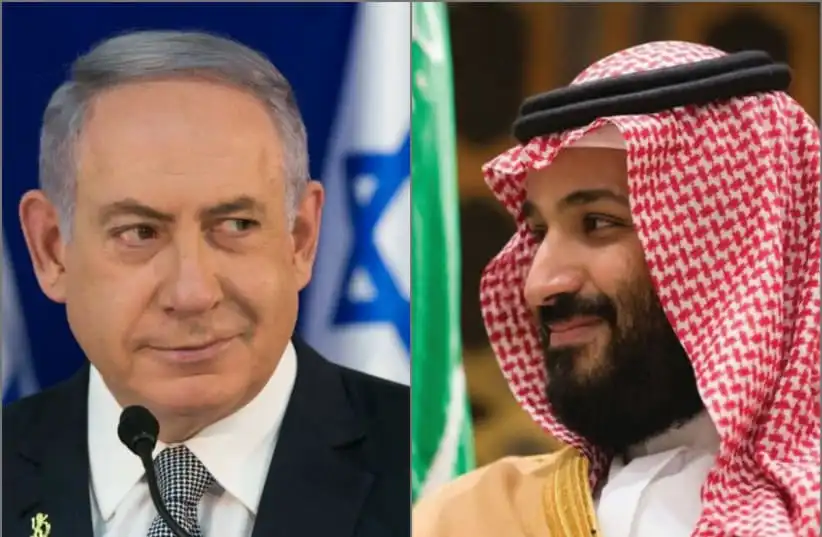
Secretary of State Antony Blinken plans to travel to the Middle East soon. He’ll probably stop first in Saudi Arabia, where he hopes for a renewed pledge from Crown Prince Mohammed bin Salman to normalize relations with Israel if — and only if — Israel ends the Gaza conflict and commits to the eventual creation of a Palestinian state that includes Gaza and the West Bank.

Blinken is then likely to travel to Israel, where he’ll meet with Prime Minister Benjamin Netanyahu. The Israeli leader, mired in war, deeply wants a breakthrough peace deal with MBS, as the Saudi leader is known. But at the same time, Netanyahu and his hard-line coalition refuse the Saudis’ conditions of a quick end to the fighting in Gaza and a path to Palestinian state.


Here’s President Biden’s game: He wants to make Netanyahu an offer his coalition can’t accept politically — but that the prime minister, whose legacy as a historic Israeli leader has been shattered, personally might not be able to resist. If Netanyahu embraces the Saudi proposal, his coalition will fracture, and he’ll need to find new partners. If he refuses, his government might be toppled by rivals who embrace the U.S. formula for ending the war.

Martin Indyk, twice a former U.S. ambassador to Israel and perhaps the United States’ wisest observer of the Israeli-Arab conflict, offers a colorful metaphor of his own to describe the U.S. diplomatic gambit. “Biden wants to make Bibi swallow the frog (and do the deal), or gag on the frog (and make way for another government).” Either way, the United States hopes, the impasse will be broken.

What chance is there that Netanyahu would shake hands with MBS? You might think it’s zero, given his repeated public rejection of a Palestinian state. But an Israeli who knows him well says that Netanyahu realizes he faces a serious choice, and that he will weigh the political factors carefully. To be blunt, becoming a peacemaker with the Saudis might be Netanyahu’s only way to avoid lasting infamy over the Oct. 7 terrorist attack by Hamas.


Timing is critical. The United States has told Israel that the Saudi normalization deal must get rolling within the next two months. That’s partly because MBS is demanding, as part of the normalization package, a treaty providing NATO-like guarantees for Saudi security. Because it’s an election year in the United States, such a deal would likely have to get Senate ratification by June before it gets buried in campaign politics.

But we haven’t gotten to the hardest part yet. None of this complicated diplomacy can really begin until the fighting in Gaza ends. That’s the last element of the three-cushion shot. CIA director William J. Burns and White House aide Brett McGurk, guided by national security adviser Jake Sullivan, have been working with Israeli officials and Qatari and Egyptian mediators to craft a hostage-release deal.

It would be a phased swap: Over many weeks, Hamas would trade the roughly 136 remaining Israeli hostages and the dead bodies it holds in exchange for what it could call a cease-fire. Israel would call it something different — a freeze, or an extended pause — but such turns of phrase are how diplomats make their living.

That hostage deal is tantalizingly close, according to U.S., Israeli and Arab sources. But it might take weeks to finalize. Once the guns fall silent, a broad de-escalation is possible: The Saudis could move toward normalization, a border deal between Israel and Lebanon might be possible, and progress toward an eventual Palestinian state could begin.

“The only way to calm Gaza is the hostage deal,” says one person who’s involved in negotiations, stressing that it’s the key to reversing the cycle of violence that has brought the Middle East to the brink of all-out war. The reason he’s hopeful is that Israelis see release of hostages as an overriding priority after the trauma of Hamas’s terrorist attack.

Israel keeps pounding Hamas in its underground Gaza kingdom to try to persaude its military leader, Yehiya Sinwar, to make a deal. A new approach is flooding Hamas tunnels with sea water from the Mediterranean, a tactic that was considered early in the war, then shelved because of technical and environmental problems. It has now been revived with some new techniques.

Israel still doesn’t have coherent plans for the “day after” the war ends. Its governance plan for Gaza — involving clans, merchants and local power brokers — sounds to me like a formula for creating a chaotic ungoverned enclave on Israel’s borders. U.S. officials hope that Israel will eventually recognize that the only sound plan is a U.S.-backed mission to train security forces of a “revitalized” Palestinian Authority — which officials are beginning to describe as the “RPA.” That force could be ready in eight months to a year.

Then there is the problem of stopping settler violence and relocating as many as 200,000 Israelis from a future Palestinian state. Biden took a strong step Thursday by sanctioning four Israeli West Bank settlers who committed violence against Palestinians. That’s just a start, but it enhances U.S. credibility with Palestinians as peace broker.

“The moment of truth is not quite here yet,” says one official who has been involved in the complex negotiations. But it’s coming. What U.S. diplomats envision is an unwieldy structure with unsteady partners, risky bets and untested resolve — with an American president with strategic vision but political weakness. There’s a lot that could go wrong, but, given the bleak alternatives, it’s worth a shot.


OPINIONS

Fri 02 Feb 2024 6:08 pm - Jerusalem Time

What Frantz Fanon can tell us about the West’s colonial war in Gaza

Middle East Eye

Middle East Eye

Opinion Writer

By Joe Gill

The analysis of the pioneering anti-colonial writer is still relevant in today's war in Gaza. The parallels with the Algeria liberation war and the West's conduct today are many

In his seminal The Wretched of the Earth, Frantz Fanon could be writing about Gaza when he said: “In all armed struggles, there exists what we might call the point of no return. Almost always it is marked off by a huge and all-inclusive repression which engulfs all sectors of the colonial people.” 

In Israel, Gaza and the West Bank, that point has arrived.

From Gaza to the Red Sea, on all fronts the West is now unmasked as a lawless killing machine in terror of losing control. Genocide, starvation and war, defended with Olympic-level diplomatic double-speak, are its only answers to the fact that the Global South, and the nations of the Middle East (if not their leaders) no longer wish to live under US hegemony.

Jean-Paul Sartre, in his preface to Fanon's work, wrote of western colonialism: “Our Machiavellianism has little purchase on this wide-awake world that has run our falsehoods to earth one after the other. The settler has only recourse to one thing: brute force… the native has only one choice, between servitude and supremacy.”

Fanon was a revolutionary thinker and a practising psychiatrist of colonial racism and its psychic impact on the colonised, and the coloniser. He and Sartre were writing about France’s imminent defeat in Algeria after seven years of brutal war.

Bottom of Form

It might seem absurd only four months into this war to say that the American-led Anglo-Saxon empire is likewise facing defeat. The wars in Ukraine and Gaza have exposed the limits of western power, and its utterly two-faced approach to international law and the laws of war. Russia is accused of war crimes in Ukraine, while Israel’s genocidal war in Gaza is backed by all means necessary, even in the face of the interim ruling by the International Court of Justice in the Hague against Israel over its ongoing genocide.

The decision, following that historic ruling, to withdraw funding to Palestinian refugee agency Unrwa by the US, UK and a dozen of their mostly European allies is a barefaced, shameless move to starve out the Palestinians and force a surrender of Hamas, which is proscribed as a terror group in the US, UK and European Union. 

Shameless Unrwa defunding

With the suspension of the funding to Unrwa - the main aid body that assists Palestinians - based on unproven Israeli allegations, Israel believes it has won a big prize from its western allies, which will make a catastrophic situation in Gaza even worse.

All of this is designed to put unimaginable pressure on Palestinians and force Hamas into agreeing a hostage swap. For Benjamin Netanyahu’s ministers, defunding Unrwa enables the next stage of their war, which as the recent conference on Gaza in Israel showed is to achieve its goal of ethnic cleansing and resettlement of the strip.

The Houthi blockade of Israel-bound vessels through the Red Sea is the first in history to be imposed without a navy

While on paper all this points to Israel and its allies having an overwhelming advantage over Hamas and its allies in the region, given the military firepower and financial terrorism arrayed against them, the position is less rosy for the western axis than it might seem.

As macroeconomist Philip Pilkington explained recently, the Houthi blockade of Israel-bound vessels through the Red Sea, which it has enforced since November, is the first in history to be imposed without a navy.

This is a game-changing strategy of resistance that the US and its allies have reacted to with air strikes against Yemeni targets, and shooting down Houthi drones. Rather than backing down, the Yemeni movement’s response to this has been defiance and mass mobilisation of millions of its supporters on the boulevards of Sanaa and other cities.

This points to the larger problem, also exposed by this week’s drone attack on a US base on the Syria-Jordan border. The main forces fighting the US and Israel are highly motivated non-state actors, rather than the weakened dictatorships that the axis of western empire has attacked in the past.

US President George W Bush’s invasion force was able to capture Baghdad in a matter of weeks in 2003, declaring mission accomplished on 1 May 2003 (but failing to secure the country in the years ahead). It took Nato around seven months to hunt down Libya’s Muammar Gaddafi, when rebel forces murdered him in a ditch in 2011. By contrast, non-state actor Hezbollah fought Israel to a standstill in Lebanon over one month in 2006. 

Pilkington, creator of the Multipolarity podcast, also wrote this week that western support for Ukraine is at a critical juncture, hence some of the more alarmist talk coming out of western capitals. “The West is in a very precarious position right now. A war effort that threw a huge amount of resources behind Ukraine is very close to disintegrating.”

Ukraine war fatigue

Republicans in the US are tying further support for Ukraine to their calls for a tougher border policy, while the EU’s pledge of €50bn to Ukraine is likely to disappear into Kyiv's budget black hole.

“The political situation in the United States is becoming superheated and veering toward a potential constitutional crisis,” wrote Pilkington. “And all this is taking place with an extremely contentious and destabilising election looming over the country this November.”

Tensions between the Conservative government of Rishi Sunak and the UK Ministry of Defence are also emerging over British strategy regards the Ukraine war and wider challenges, with the outgoing chief of staff raising the prospect of the return of conscription in the face of impending global conflict. 

Sir Patrick Sanders' speech was so critical of the UK’s reduced military capacity that the Ministry of Defence refused to release it to the media. A press officer confirmed to Sky that Sanders’ speech “has not and will not” be made available.

Tobias Ellwood, former UK defence minister and war hawk, told Sky “there is a 1939 feel to the world right now”. Reflecting a common western through-the-losing-glass view of what is happening, he said: "These authoritarian states are rearming. There's a risk averseness about the West in wanting to deal with that, and our global institutions, such as the United Nations, aren't able to hold these errant nations to account.”

While Ellwood sees the West as risk averse, the rest of the world sees the US and its allies on the rampage, defying the ICJ, starving besieged civilians in Gaza, and bombing one of the poorest countries on Earth.

The US and Britain are waging war in the Red Sea with strikes against Yemen in response to its naval blockade of Israeli ships. Since the strikes, the Houthis have declared they will target UK and US shipping.

No matter how often UK and US politicians deny that the Houthis are doing this for the Palestinians in Gaza, that is how the rest of the world sees it. And thanks to social media, the Yemenis’ statements cannot be blocked.

Risks of escalation

Each day brings new risks of escalation. President Joe Biden is now being pushed by US senators to attack Iran, following the death of three US troops at a base on Syria’s border in a drone strike claimed by an Iraqi militia.

In backing Ukraine, and potentially even joining the war, the West is planning for World War Three. Russia is fighting on its own border, and Putin can portray the war as an existential fight against its eternal enemy, the West, which the Russians now appear to be winning.

'The colonial world is a Manichaean world… at times this Manichaeism goes to its logical conclusion and dehumanises the native... it turns him into an animal'

- Frantz Fanon

Each of these escalations points toward an all-round conflagration stretching from the Red Sea to Lebanon to the Baltic. It may not be what either Biden or Sunak wants in an election year, with voters weary of war and majorities in favour of a ceasefire in Gaza. But all their actions are pushing us in this direction. 

Western powers are involved in conflicts thousands of miles from home, as they were in Fanon's time in Algeria, Congo and Indochina. Today the western political class has united behind Ukraine and Israel, but for millions of people it is no longer clear that the wars are worth fighting. 

As Yemen’s spokesman, Mohammed al-Bukhaiti, put it: “The war today is between Yemen which is struggling to stop the crimes of genocide, and the American and British coalition [who] support its perpetrators. Every party or individual in this world has two choices that have no thirds… who do you stand with as you watch these crimes?”

Fanon, writing 63 years ago, agrees: “The colonial world is a Manichaean world… at times this Manichaeism goes to its logical conclusion and dehumanises the native, or to speak plainly, it turns him into an animal. The native is declared insensible to ethics; he represents not only the absence of values, but the negation of values… he is the enemy of values, and in this sense he is the absolute evil.

“The native knows all this, and laughs to himself every time he spots an allusion to the animal world in the other’s words. For he knows he is not an animal, and it is precisely at the moment he realises his humanity that he begins to sharpen the weapons with which he will secure victory.”

ARAB AND WORLD

Fri 02 Feb 2024 6:02 pm - Jerusalem Time

Saudi Arabia willing to make concessions on Palestinians for peace with Israel

Saudi officials have told their US counterparts that Riyadh would not insist Israel take concrete steps to create a Palestinian state.


  • Saudi Arabia would be willing to accept a political commitment from Israel to create a Palestinian state, rather than anything more binding, in a bid to get a defense pact with Washington approved before the US presidential election, three sources said.

Months of US-led diplomacy to get Saudi Arabia to normalize relations with Israel and recognize the country for the first time were shelved by Riyadh in October in the face of mounting Arab anger over the war in Gaza.

But Saudi Arabia is increasingly keen to shore up its security and ward off threats from rival Iran so the kingdom can forge ahead with its ambitious plan to transform its economy and attract huge foreign investment, two regional sources said.


Saudi Arabia to accept Israeli 'political commitment'

To create some wiggle room in talks about recognizing Israel and to get the US pact back on track, Saudi officials have told their US counterparts that Riyadh would not insist Israel take concrete steps to create a Palestinian state and would instead accept a political commitment to a two-state solution, two senior regional sources told Reuters.

Such a major regional deal, widely seen as a long-shot even before the Israel-Hamas war, would still face numerous political and diplomatic obstacles, not least the uncertainty over how the Gaza conflict will unfold.


A pact giving the world's biggest oil exporter US military protection in exchange for normalization with Israel would reshape the Middle East by uniting two long-time foes and binding Riyadh to Washington at a time when China is making inroads in the region.

A normalization deal would also bolster Israel's defenses against arch-rival Iran and give US President Joe Biden a diplomatic victory to vaunt ahead of the Nov. 5 presidential election.


The Saudi officials have privately urged Washington to press Israel to end the Gaza war and commit to a "political horizon" for a Palestinian state, saying Riyadh would then normalize relations and help fund Gaza's reconstruction, one of the regional sources said.

"The message from the kingdom to America has been: 'Stop the war first, allow humanitarian aid and commit to a just and lasting solution to give the Palestinians a state'," said Abdelaziz al-Sagher, head of the Gulf Research Center think-tank in Jeddah, who is familiar with the ongoing discussions. "Without it, Saudi Arabia can't do anything."

The problem, though, is that Prime Minister Benjamin Netanyahu, who has spent much of his political career opposing Palestinian statehood, has rejected outright any US and Arab aspirations for a Palestinian state once the Gaza war is over.

"Normalization does require really - if not legally, at least politically - a commitment from the Israelis that they are open to a two-state solution," said one of the senior regional sources familiar with Saudi thinking.

"If Israel stopped its military offensive on Gaza - or at least declared a ceasefire - it would make it easier for Saudi Arabia to go ahead with the deal," the person said.

The Saudi government's communication office did not respond to requests for comment.

ARAB AND WORLD

Fri 02 Feb 2024 5:55 pm - Jerusalem Time

Over 800 Officials in U.S. and Europe Sign Letter Protesting Israel Policies

By Edward Wong and Matina Stevis-Gridneff

The document was signed by government employees in 12 nations and E.U. institutions. Signers say their leaders’ policies could be contributing to war crimes in Gaza.

The letter is the first instance of officials in allied nations across the Atlantic coming together to openly criticize their governments over the war. 


More than 800 officials in the United States, the United Kingdom and the European Union released a public letter of dissent on Friday against their governments’ support of Israel in its war in Gaza.

The letter is the first instance of officials in allied nations across the Atlantic coming together to openly criticize their governments over the war, say current and former officials who are organizing or supporting the effort.

The officials say that it is their duty as civilian servants to help improve policy and to work in their nations’ interests, and that they are speaking up because they believe their governments need to change direction on the war. The signers say they have raised concerns through internal channels but have been ignored.

“Our governments’ current policies weaken their moral standing and undermine their ability to stand up for freedom, justice and human rights globally,” the letter says, according to a copy obtained Thursday by The New York Times. It adds that “there is a plausible risk that our governments’ policies are contributing to serious violations of international humanitarian law, war crimes and even ethnic cleansing or genocide.”


The Israeli military launched a bombing and ground campaign in Gaza after Hamas fighters invaded Israel on Oct. 7 and killed about 1,200 people while abducting about 240, Israeli officials said. More than 27,000 people in Gaza have been killed and nearly 2 million have been displaced since Israel’s offensive began, according to the health ministry in Gaza and United Nations officials.


The document does not include the names of signers because they fear reprisal, said one organizer, an official who has worked in the State Department for more than two decades. But about 800 current officials have given approval to the letter as it has quietly circulated among employees at the national level in multiple countries, the official said.

The effort reveals the extent to which pro-Israel policies among American, British and European leaders have stirred dissent among civilian servants, including many who carry out the foreign policies of their governments.

About 80 of the signers are from American agencies, with the biggest group being from the State Department, one organizer said. The governing authority most represented among the signers is the collective European Union institutions, followed by the Netherlands and the United States.


National-level officials from eight other member nations of the North Atlantic Treaty Organization, as well as Sweden and Switzerland, have approved the letter, said another person familiar with the letter. Most of those supporters work in the foreign ministries of those nations.


“The political decision-making of Western governments and institutions” over the war “has created unprecedented tensions with the expertise and duty that apolitical civilian servants bring to bear,” said Josh Paul, who worked in the State Department bureau that oversees arms transfers but who resigned in October over the Biden administration's support of Israel's military campaign. Mr. Paul said he knew the organizers of the letter.


ARAB AND WORLD

Fri 02 Feb 2024 5:37 pm - Jerusalem Time

The Washington Post: Biden’s game to put down the Gaza war.. Will he convince Netanyahu?

It seems that the attempt to put down Israel's war on Gaza has become a major electoral card for President Joe Biden. How does the White House resident seek to convince Benjamin Netanyahu?


The American newspaper The Washington Post published an article entitled “The Moment of Truth in the Middle East,” monitoring the three dimensions of Biden’s strategy aimed at putting out the Gaza fire before it expands and turns into a broader conflict.


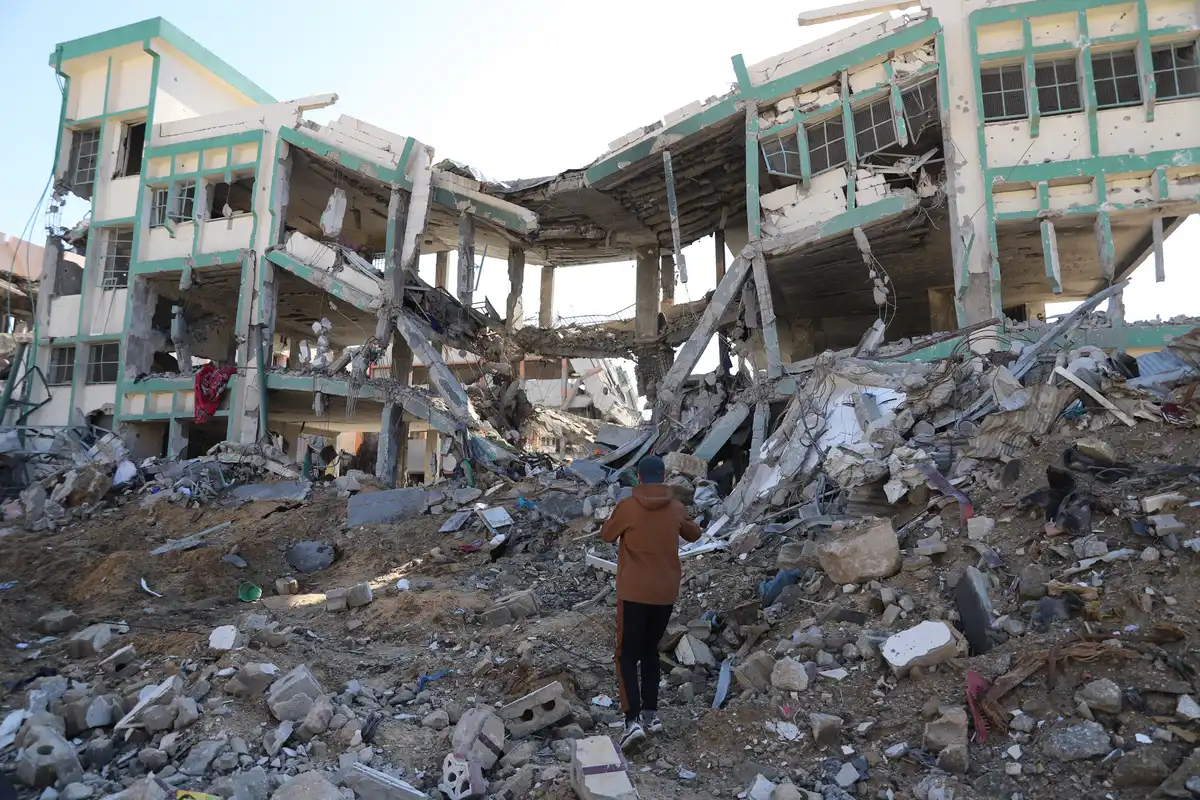
Since the “Al-Aqsa Flood” military operation, on October 7, Israel has launched an air and naval bombardment on the Gaza Strip, followed by a ground invasion, causing more than 27 thousand martyrs, the overwhelming majority of whom were civilians, women and children. It also destroyed the entire infrastructure of the sector.


“Al-Aqsa Flood” is the name given by the Palestinian Islamic Resistance Movement “Hamas” to the comprehensive military operation, which began at dawn on October 7, in response to “the continuing Israeli crimes against the Palestinian people,” which crossed all red lines since the most extremist government took office in Israel in late 2022.


Saudi relations with Israel

The Washington Post article describes Biden's plan as a desperate attempt to extinguish a raging fire threatening the Middle East: “Imagine the Middle East as a billiard table surrounded by burning fires. And in the midst of this hell, the United States of America is about to launch a complex attempt to launch a three-ball strike, and these three balls are “Saudi Arabia, Israel, and Hamas.”


This is the first element in Biden's strategy, and if this bold element succeeds, "the water sprinklers can be turned on and the fires can be extinguished" before they devour the table or the Middle East. But the second element is the presence of some imaginary balls that can explode, and the third element is time, of which “there is not much of it anymore.”


Although this endeavor sounds like a game in a Las Vegas casino, it represents an apt metaphor for the intense diplomatic push on the part of the Biden administration recently. The success of Biden's game may seem unlikely, but this high-risk strike may be the best way to extinguish the hell of the Israeli war on the Gaza Strip.


Away from the imaginary analogies, on the ground, Biden’s Secretary of State, Anthony Blinken, intends to return to the Middle East soon, and this will be his sixth tour since the outbreak of the war.

According to the Washington Post article, Blinken will likely begin this tour from Saudi Arabia, where he hopes to renew the pledge he received from Crown Prince Mohammed bin Salman to normalize relations with Israel. But the Crown Prince's promise was conditional on Israel ending its war on Gaza and that the occupation commit to establishing an independent Palestinian state that would eventually include the Gaza Strip and the West Bank.


Blinken's second stop is likely to be Israel, where he will meet with Prime Minister Benjamin Netanyahu, who desperately wants to reach a peace agreement with the Saudi leader, but at the same time Netanyahu and his extremist government coalition reject the Saudi conditions of a rapid end to the aggression against Gaza and an announcement of approval for a path that leads to the establishment of the Palestinian state.


How does Biden expect to convince Netanyahu?

If Netanyahu and his government openly refuse to stop the war or have any chance of establishing a Palestinian state, then how does Biden expect to convince the Israeli prime minister? Biden wants to make Netanyahu an offer that his coalition cannot accept politically, but the prime minister, whose legacy as a historic Israeli leader has been shattered, may not personally be able to resist this offer, according to the Washington Post article.


If Netanyahu agrees to the Saudi proposal, his ruling coalition will collapse and the prime minister will then need to find new partners, and searching for these partners may not be a very difficult task, in light of the presence of some opposition leaders, such as Naftali Bennett, who has already announced his willingness to join to the government as an alternative to Finance Minister Bezalel Smotrich and Internal Security Minister Itamar Ben Gvir, both of whom are prominent opponents of stopping the war. If Netanyahu himself rejects the offer, his government may be overthrown by competitors who adopt the American formula for ending the war.

Martin Indyk, who twice served as US ambassador to Israel and is considered by many in Washington to be the wisest American observer when it comes to the Israeli-Arab conflict, used his own colorful metaphor to describe the US diplomatic maneuvering: “Biden wants to make Bibi understand the mission and accept it (and close the deal), or make way for another government,” according to the American newspaper.


The Washington Post article addresses the next step in this scenario, through which the Biden administration hopes that the impasse will be opened. The question here is: What is the possibility of a handshake between Netanyahu and the Saudi Crown Prince? “You might think the chances of this happening are completely non-existent, given Netanyahu's public and repeated rejection of the establishment of a Palestinian state.”


But Netanyahu realizes that he faces a serious choice, and that he will weigh the political factors carefully, and to be frank, becoming a peacemaker with the Saudis may be the only way for Netanyahu to avoid the lasting shame caused by the October 7 attack (the Al-Aqsa flood)” according to a Washington Post article.


Here we come to another extremely important element for the success of Biden’s game, which is the time factor, as the United States informed Israel that the agreement to normalize relations with Saudi Arabia should begin within the next two months, partly because the Crown Prince is demanding, as part of the normalization package, a treaty that provides similar guarantees. With NATO guarantees for Saudi security.


American election calculations

The time factor is directly related to the US elections next November, which means that such a deal may obtain approval by the Senate, where the Democrats have the majority, by June. However, if the deal is delayed beyond that time, it will be buried. Under campaign politics, Washington Post says in its article.


Returning to the scenario of hitting the three balls on the billiard table, we find that things have not yet reached the most difficult part, as none of this complex diplomacy can truly begin until after the end of the war on Gaza, that is, the prisoner exchange deal to stop the war.


In this context, CIA Director William Burns and White House Assistant Brett McGurk, under the guidance of National Security Advisor Jake Sullivan, were working with Israeli officials and Qatari and Egyptian mediators to formulate a prisoner release deal.


This deal will be a phased prisoner exchange and a ceasefire. Israel may give the matter another name, such as a freeze or an extended halt. It seems that this hostage deal is excitingly close, according to American, Israeli and Arab sources.


It may take weeks to finalize the details of the deal, but once the war stops, widespread de-escalation will be possible: the Saudis may move toward normalization, a border agreement between Israel and Lebanon may become possible, and progress toward Palestinian statehood could begin in Ultimately, says the Washington Post.


The newspaper article quoted one of the people involved in the negotiations as saying: “The only way to calm Gaza is a hostage deal,” stressing that this is the only key to extinguishing the war, which is pushing the entire Middle East to the brink of all-out war.


The reason this person involved in the negotiations is optimistic is because the Israelis consider the release of the hostages a top priority after the shock of the Al-Aqsa flood attack. Israel still does not have coherent plans for the “day after” the end of the war. Its plan to run Gaza — which includes enlisting the help of tribes, merchants, and local power brokers — appears to be a formula for creating an ungoverned, chaotic enclave on Israel's borders, according to the Washington Post article.


US officials hope Israel will eventually acknowledge that the only sound plan is a US-backed mission to train the “revitalized” Palestinian Authority security forces – which officials have begun describing as the “Palestinian National Army” and that a force could be ready within eight months to a year.


There is also the problem of stopping the violence of Israeli settlers in the West Bank and Jerusalem, in addition to transferring up to 200,000 settlers from the future Palestinian state to within Israel’s borders. In this context, Biden took a strong step on Thursday, February 1, by imposing sanctions on four Israeli settlers in the occupied West Bank who committed acts of violence against Palestinians.


The move may be just the beginning, but it could bolster US credibility with the Palestinians as a peace broker. “The moment of truth has not yet come,” one official involved in the complex negotiations told the Washington Post, but it is coming.


The bottom line here is that what American diplomats envision is an unworkable structure with unstable partners, risky bets and untested resolve — and an American president who has a strategic vision but is politically weak. There are a lot of things that could go wrong, but given the bleak alternatives, it's worth a try.

Source: Sama News

OPINIONS

Fri 02 Feb 2024 5:34 pm - Jerusalem Time

Israeli Press: Will opposition to the deal with Hamas continue? These are projections that could harm Israel

Maariv

Maariv

Opinion Writer

By Danny Strinovich

The discussion about reaching a ceasefire between Israel and Hamas, to which the international community is making great efforts in recent weeks, focuses mainly on the future of the Gaza Strip and the future of Hamas, in addition to understandings regarding the price that Israel will pay in exchange for the release of the kidnapped persons. However, the discussion about Gaza ignores the dramatic implications of the possibility of a deal or not on the future of the confrontation, not only between Hamas and Israel, but also between Israel and Hezbollah.

Hezbollah, under Iranian guidance, joined the battle of the “Iron Swords” with the motive of exhausting Israeli military efforts and making it more difficult to achieve its declared goals - dismantling Hamas militarily and authoritatively. Therefore, the party began a limited military battle along the border in order to keep the largest possible number of Israeli military forces on Israel's northern border.

Senior Hezbollah officials stress, in their public statements, that Hezbollah will stop the battle against Israel only if the battle in the Gaza Strip stops. Despite all efforts being made to tempt Hezbollah to stop the fighting within the framework of understandings on the northern border, the party stresses that all dialogues will take place only after the Israeli aggression in Gaza stops.

This fact makes the issue of a ceasefire in Gaza at a crossroads regarding the future of relations between Hezbollah and Israel. A ceasefire in the Gaza Strip will necessarily lead to a ceasefire by Hezbollah (and also the rest of the Iranian arms, which have announced this many times), and will allow the start of dialogues with the Lebanese government regarding arrangements on the northern border (including removing Hezbollah from the border). It will also lead to Mainly for the population in the north to return to their homes.

At the same time, if the battle continues in the south, and also on the Lebanese border, the potential for a regional war to break out will be high, because the ability to maintain the current level of confrontation without the population returning to their homes is very weak. In addition, in recent weeks, in order to maintain the battle of “army against army,” both sides are trying to raise the ceiling of their operations against the other side (in terms of pace, distance, and also type of weapon), and it seems that the ability to control the volume of fire is eroding.

If a ceasefire does not occur in the Gaza Strip, both parties will understand that there is actually no way to cease fire at the present time, and it is expected that there will be an increase in military operations so that each party will try to force the other party to cease fire. This fact, in addition to the increase in tension in Iraq and Yemen due to the increase in American intervention against the Houthis and Shiite militias, increases the risk of being drawn into a wide battle, in which it will be difficult for Iran to stand aside, especially if Israel and Hezbollah are drawn into a wide battle.

In conclusion, the ceasefire will not only determine the fate of the battle in the Gaza Strip, but it is also directly related to the possibility of it deteriorating into a broad regional battle.

OPINIONS

Fri 02 Feb 2024 5:19 pm - Jerusalem Time

Report: Thomas Friedman: Biden is adopting a new approach that includes a strong push towards a demilitarized Palestinian state.

Yedioth Ahronoth

Yedioth Ahronoth

Opinion Writer

Journalist Thomas Friedman said that the administration of US President Joe Biden is adopting a new approach that includes a plan that includes a strong push towards establishing a demilitarized, but immediately viable, Palestinian state. He stressed that such a tendency did not exist previously.


Friedman added, in the context of a report published in the New York Times yesterday (Thursday), that the plan will include a form of American recognition of a demilitarized Palestinian state in the West Bank and Gaza Strip, which will not be formed until after the Palestinians develop a set of specific security institutions and capabilities. It has the credibility to ensure the continuation of this state, and to ensure that it can never threaten Israel.


He also revealed that White House officials are consulting with experts inside and outside the US administration regarding the multiple forms that this recognition of a Palestinian state could take.


Biden's new approach, which Friedman describes as a doctrine, will include strengthening US relations with Saudi Arabia, along with normalizing relations between Riyadh and Jerusalem, and maintaining a tough military stance against Iran and its proxies in the region. It was noted in the report that before the Hamas movement’s attack on the Gaza envelope area [southern Israel] on October 7, 2023, Riyadh was seeking security guarantees from Washington, as well as assistance in a civilian nuclear program that includes uranium enrichment as part of a Normalization deal with Israel. 

Saudi Crown Prince Mohammed bin Salman told US Secretary of State Anthony Blinken last January that he was ready to normalize relations with Israel as part of efforts to rebuild the Gaza Strip after the war, according to what was reported by two American officials who also confirmed that he conditioned normalization on taking practical Israeli steps towards the establishment of a Palestinian state.


Friedman wrote: “The Hamas attack on Israel appears to be forcing the Biden administration to fundamentally rethink the Middle East region. If the administration is able to achieve this, which is huge, the Biden doctrine could become the largest strategic realignment” in the region since the Camp David Treaty [between Israel and Egypt] in 1979.”


He, who is close to Biden and has been accustomed to publishing messages to Israel through his corner in the newspaper recently, also indicated that this emerging doctrine will include an escalating American campaign against Iran, including a strict military response to the killing of 3 American soldiers this week.


On the other hand, Friedman stressed that Israel is not achieving victory in the war in the Gaza Strip because of the damage it has suffered on the global scene. He also stressed the fact that it does not have a realistic plan for who will rule the Strip after the war.


His article comes a day after a report was issued on the Axios website, quoting two high-ranking American officials as saying that US Secretary of State Anthony Blinken asked the State Department to review the policies available to the United States on the issue of a Palestinian state and present them for discussion.


US State Department spokesman Matthew Miller, during a press conference held the day before yesterday (Wednesday), downplayed the report, but at the same time stressed that the administration is actually seeking to establish an independent Palestinian state with real security guarantees for Israel, because it believes that this step is considered better means to achieve lasting peace and security for Israel, the Palestinians and the entire region. He also stressed that this has been the United States' position for a long time, and does not represent a shift in policy.


Miller said: “There is no shift in the administration’s policy. We have made clear publicly that we support the establishment of an independent Palestinian state, and this has been the policy of the United States for some time, and this is the policy of the current administration.”


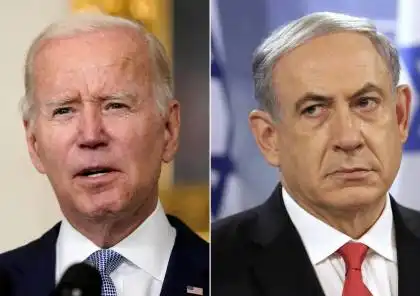
It should also be noted that this news comes after the announcement of a phone conversation between President Biden and Israeli Prime Minister Benjamin Netanyahu last week, after which Biden expressed his hope that a two-state solution could be achieved even with Netanyahu in office if the Palestinian state were demilitarized. A CNN report the next day indicated that Netanyahu told Biden that he did not completely rule out the establishment of a Palestinian state.


The American Wall Street Journal also reported that the United States, Egypt and Qatar are pressuring Israel and Hamas to accept a comprehensive plan that would end the war, release the kidnapped Israelis detained in Gaza, and ultimately lead to full normalization of Israel with its neighbors and talks to establish a Palestinian state. .

OPINIONS

Fri 02 Feb 2024 5:12 pm - Jerusalem Time

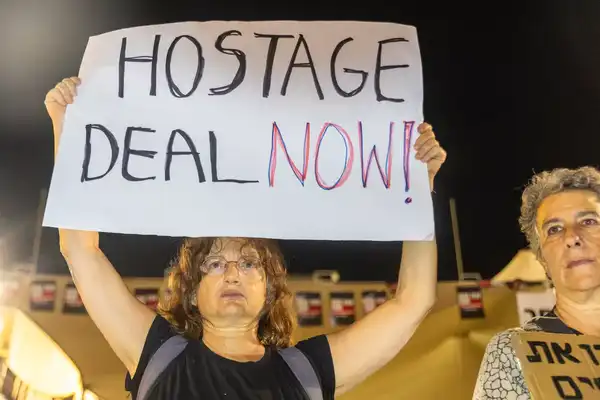
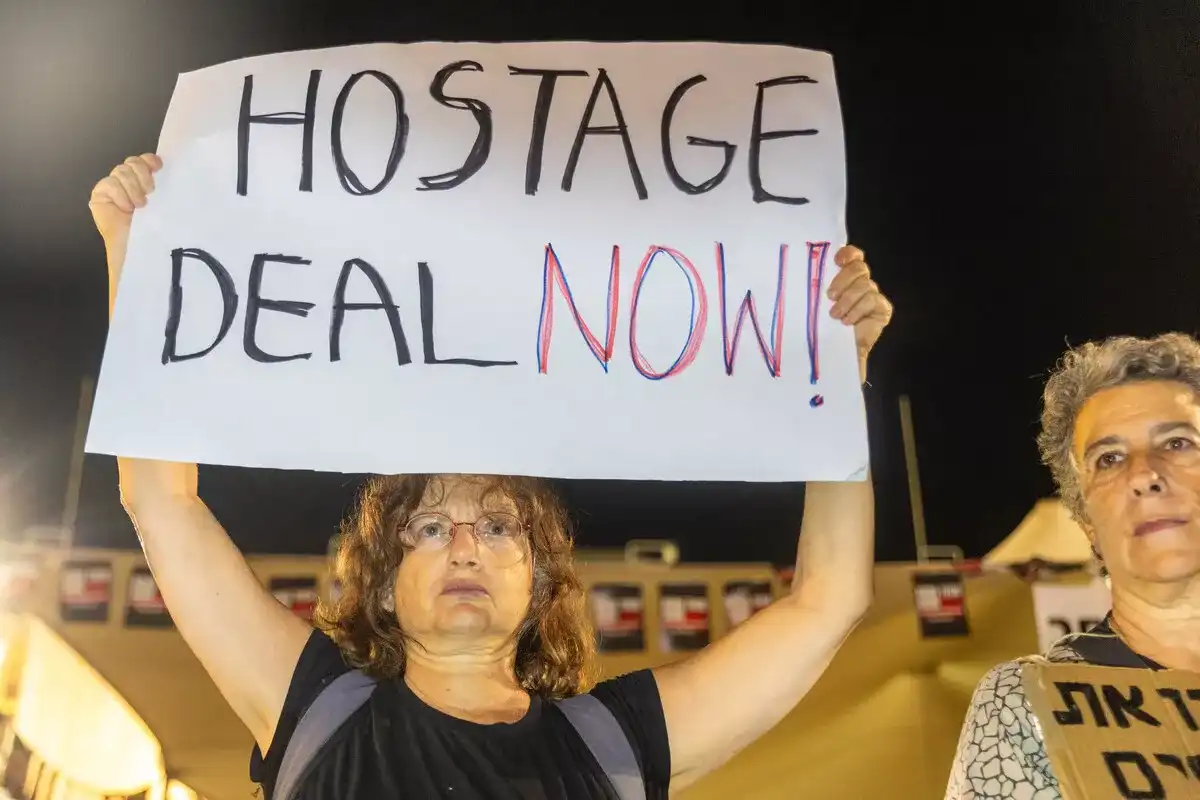
Israeli Writer: The kidnapped deal has not been completed, and the conflict in Israel over it is at its peak

Haaretz- "Al-Quds" dot com

Haaretz- "Al-Quds" dot com

Opinion Writer

By Amos Harel

This morning, a lot of caution was required, as despite the optimistic forecasts published by sources in the United States, Egypt and Qatar, it appears that the deal to release the kidnapped people has not yet been completed. 

Last week, real progress occurred after the United States and the two Arab mediating countries presented an agreed-upon proposal regarding the two parties, Israel and Hamas, but the distance to the negotiations is still long, and today there is no indication that the contacts will end in an agreement, or a clear timetable for achieving it. .

Before concluding the Shalit deal in 2011, Egyptian intelligence personnel were keen to hold “close conversations” with the two parties in Cairo, and on that day the representatives of Israel and Hamas refused to be in the same room, and stayed in separate floors of the hotel, and mediators moved between the two delegations to reach an agreed formula for the deal.

When we hear about the start of a close round of negotiations, this is an indication of real progress in the negotiations, and it is difficult to finalize a complex agreement without the physical presence of delegations in Cairo, while Sinwar is hiding in the tunnels and does not have permanent contact with the outside world.

The first important step towards a new deal took place at the weekend at the Paris summit, without the presence of Hamas, as a series of proposals were presented by the mediators to the Israeli delegates.

In the meantime, it is not in the interest of both parties to enter into a dispute with the mediators; Israel needs them to advance the deal, and Hamas needs them more to secure its needs (money from Qatar, and entry and exit from the Gaza Strip via Egypt). In Paris, the mechanisms and framework to advance the agreement have been formulated, and the game of accusing failure, led implicitly by the mediators, has begun. It is not in the interest of Israel and Hamas to appear as if they are working to thwart the deal.

In recent days, details about the deal began to leak out, some of them coming from Israel, most likely the Prime Minister's Office, and this was a process of several stages: first, initial lines were published warning of the deal ("thousands of 'saboteurs' released"), and after that, Channel 12 published a report stating that a large majority of the public was against the initial lines. Then came Netanyahu’s statement during his visit to the Eli settlement (“We will not liberate thousands of ‘terrorists’”). Finally, Netanyahu held a meeting with the families of the kidnapped in which he said: “All efforts to release "The kidnapped persons will remain secret, and there are great chances of their success."

Netanyahu is trying to control all stages of the process, and there is suspicion that he is not in a hurry to advance the deal for fear of finding himself on a collision course with the far-right wing of his coalition...

This week, far-right ministers, along with some Likud ministers, joined those publicly criticizing the plan. According to the leaked details, what is meant is a deal with several stages; initially, the “humanitarian” cases among the kidnapped are released, including 35-40 women (it is not clear if they mean kidnapped female soldiers) and elderly people, and this part will last 6 weeks. In the coming stages, kidnapped persons and the bodies of Israelis will be released, while the soldiers will eventually be released. What is meant here is that the matter will be completed in two or three stages, over a period of approximately two months, during which a complete ceasefire will take place. In contrast to previous demands, it currently appears that Hamas is not demanding a complete withdrawal of Israeli army forces from the Gaza Strip in order to approve the deal, or as a condition for its implementation.

Hamas is holding 136 kidnapped Israelis and foreigners, and the Israeli army announced the death of 30 of them based on evidence collected. It is plausible that the actual death toll is much higher. In the negotiations, no number was determined, and it is not known how many prisoners Israel will release in exchange. Every kidnapped person, and it is reasonable that the number of Palestinian prisoners who will be released in the final stages of the deal will increase. Meanwhile, Netanyahu is still able to fulfill his promises (not to stop the fighting, and not to release thousands of prisoners, at least in the first phase). But continuing to implement the deal will increase his political difficulties with the right wing of the government, and also with a section of his voters. In the background, Netanyahu faces a political threat, and he continues to talk about the idea of a major political deal that includes normalization with Saudi Arabia, which in his opinion entails risks.


Thomas Friedman, a journalist very close to President Biden, estimated yesterday in the "New York Times" that the American administration will soon present a new doctrine in the Middle East, the basis of which is to push for a Palestinian state and an American-Saudi defense alliance (along with normalization between Riyadh and Tel Aviv) and a "strong position" confronting Iran. What are the chances of moving forward with this initiative with Israeli approval as long as Netanyahu is in power? It seems very small.

Netanyahu hopes to safely pass the winter session of the Knesset, which ends in two months, without storms leading to the downfall of his impossible war coalition, and his method for survival is based on publishing conflicting promises and constant ambiguity about his intentions. In the street and in the government, it becomes difficult for him to achieve his goals.

PALESTINE

Fri 02 Feb 2024 1:55 pm - Jerusalem Time

Hamas leader: We will respond to the exchange deal proposal very soon

A senior Hamas official said on Friday that the movement will respond "very soon" to a proposal that includes extending ceasefire periods in the war on Gaza and a phased prisoner exchange, according to what was reported by the Associated Press.


The official pointed out that a permanent ceasefire represents the most important element for Hamas, and that anything else is negotiable.


Senior officials from the United States, Israel, Qatar, and Egypt formulated the multi-stage proposal at the beginning of this week. But Israel refrains from announcing its position on it, while analysts unanimously agreed today that Israeli Prime Minister Benjamin Netanyahu is seeking to thwart the implementation of such a deal.


A high-ranking Egyptian official with direct knowledge of the communications said that Hamas did not provide an official response, but it sent positive signals. The two officials, the Palestinian and the Egyptian, spoke on condition of anonymity because the indirect talks are still ongoing.


The proposal presented to Hamas includes significantly increasing the number of aid trucks entering the Gaza Strip and allowing displaced residents to gradually return to their homes in the north, but it does not explicitly call for a permanent ceasefire.


Israel had announced that it would not agree to end the war as a condition for the release of the hostages.


Netanyahu seriously fears that agreeing on and implementing a prisoner exchange deal and stopping the war will lead to the fall of his government, following the threats of his far-right partners that they will topple the government if Netanyahu agrees to the deal.


Yesterday, Netanyahu repeated his statement that the war on the Gaza Strip “will continue until complete victory over the Hamas movement.”


Yesterday, the head of the extremist Religious Zionism Party and the Israeli Minister of Finance, Bezalel Smotrich, expressed his strong opposition to the prisoner exchange deal, through which thousands of Palestinian prisoners and Israeli hostages would be released, and claimed that such a deal is like demanding that Hamas possess an atomic bomb.


The day before yesterday, Israeli Minister of National Security Itamar Ben Gvir attacked the American administration against the backdrop of reports about a prisoner exchange deal. Ben Gvir repeated his strong opposition to such a deal and his threat to topple the government. He said during a session of the Knesset General Assembly that this deal “seems to pave the way for a less dangerous deal, but it will remain a defeatist deal by all standards.”


He continued, "I say this so that no one will have any doubts. Did we not learn the lesson from the Shalit deal (in which the head of Hamas in Gaza, Yahya Sinwar, and more than a thousand Palestinian prisoners) was liberated? I heard the White House comment that Netanyahu can speak for himself, but the negotiations (about... The deal continues. I heard what (White House spokesman) Kirby said. Did the United States move to run Israel without informing it? We will not turn into a banana republic. Perhaps the Knesset members on the left want President Biden to decide for us. But this is what I will say: Who He thinks he will create fog here, and then within three hours he will assemble the cabinet in order to ratify a defeatist deal, he is wrong.”

ARAB AND WORLD

Fri 02 Feb 2024 1:49 pm - Jerusalem Time

Egypt denies Cairo’s coordination with Israel regarding the Philadelphia axis: ـFales news

Egypt informed Washington that it does not allow the smuggling of any weapons and that it has full control over the borders

An Egyptian source told Al-Sharq on Thursday that Cairo rejects any Israeli attempts to have a presence on the Philadelphia border axis between the Gaza Strip and Egypt, after Israeli reports stated that the two sides were approaching an agreement on the axis, and Israeli Defense Minister Yoav Galant announced the Israeli army’s readiness to head to the city. Rafah border.


The source stated that Cairo has repeatedly informed Tel Aviv of its complete refusal to discuss any matters that violate the agreements previously signed regarding the Philadelphia Axis, and that Egypt warned the American side of the danger of Israel’s thinking of controlling the Philadelphia Axis.


It stressed that Cairo informed the American side that it would not allow the smuggling of any weapons and that it had full control over the borders, noting that the Israeli side was “promoting rumors and lies about Cairo’s positive response to Israeli proposals regarding the axis.”


The source said that Egypt refused in several meetings with the Israeli side to discuss any proposal regarding Philadelphia, adding that Tel Aviv "deceives the Israelis by promoting false news and rumors that strengthen the position of the extreme right."

OPINIONS

Fri 02 Feb 2024 1:44 pm - Jerusalem Time

Western coverage of Gaza: A textbook case of colonizer's journalism

Aljazeera

Aljazeera

Opinion Writer

By Vidya Krishnan 

Israel’s war on Gaza has exposed the true nature and purpose of Western media.

If you have been following Western media to try to make sense of the heartbreaking images and stories coming out of Gaza during Israel’s invasion, you are bound to be disappointed.

Since the beginning of the latest Israeli assault on the besieged Palestinian enclave – which is proving to be one of the swiftest ethnic cleansing efforts in history – Western news organisations have repeatedly published unsubstantiated claims, told one side of the story and glossed over violence selectively to justify Israel’s violations of international law and shield it from scrutiny.

In doing so, Western journalists have abandoned basic standards in their coverage of Israel’s conduct towards Palestinians. None of this is new. The failures of Western journalism have helped Israel justify its occupation and violence against Palestinians for over 75 years.

On August 6, 2022, more than a year before Hamas’s October 7 attack on Israel, in a particularly egregious break from good journalism, The New York Times buried the lede on the deaths of six Palestinian children in its report on a “flare” in “Israel-Gaza fighting”.

In the report, the journalists waited until the second paragraph to mention that six children were among those killed by Israeli strikes in the Jabalia refugee camp in Gaza and without even breaking the sentence added that “Israel said some civilian deaths were the result of militants stashing weapons in residential areas” and “in at least one case, a misfired Palestinian rocket killed civilians, including children, in northern Gaza”.

In journalism schools this is identified as “breathless” reporting. And it turned out to be wrong reporting too. Ten days later, the Israeli military finally admitted that it was behind the strikes that killed those children in Jabalia.

The New York Times did not report this bit as breathlessly.

I could call it unprofessional – which would be true as the coverage of this conflict in Western media has clearly been shaped by ideology rather than rigorous fact-checking. Such an assessment, however, would gloss over a deeper, more profound problem within Western journalism: coloniality.

Conflict reporting is one of the most hyper-colonised corners of the world’s largest newsrooms. Even in racially diverse newsrooms, reporting on conflicts can be tricky. But the egregious errors that appear to get past editorial filters in newsrooms that take pride in the accuracy of their conflict reporting needs to be accounted for. It also needs to be put on record that, with these consistent errors, Western journalists are “mediating” the conflict in Palestine, not simply reporting on it.

I would be mincing my words if I do not call it what it is: a textbook case of coloniser’s journalism. It is journalism done by practitioners from colonising countries who take pride in their imperial conquests and have an elevated sense of self, every fibre nurtured by centuries of predatory accumulation of wealth, knowledge and privilege. These journalists seem convinced that their countries have fought and defeated particularly immoral and powerful enemies throughout history, stopped evil in its tracks, protected civilisation, saved the day. This is the dominant story of the West and by extension, the story of Western journalism too.

However, the dominant story is often not the true story – it is merely the story of the victors.

And today, Western media are once again telling the story of the victors in Gaza, like they did countless times before in their coverage of conflicts, crises and human suffering in post-colonial nations.

I’ve seen this in the coverage of tropical diseases by reporters who know malaria, dengue or Ebola will never course through their veins or affect their communities. I’ve seen it after the Rohingya genocide when genocide survivors were asked whether they had been “held down by five men or seven” as they were gang-raped.

Western journalism is, at its very core, journalism of the victor – it never attempts to deconstruct stories, put them in the right order or add relevant context to speak truth to power and expose the continuing excesses, aggression and violence of the “victors” of history.

And when it comes to Palestine, it is journalism about occupation by people who will never know what it feels like living under occupation. It is voyeuristic reporting without a moral compass or a bedrock sense of decency.

In coloniser’s journalism, language is a weapon that is used to erase the humanity of the colonised. In The Wretched of the Earth, in which he analysed the dehumanising effects of colonisation, philosopher Frantz Fanon wrote of Algerian suffering (during France’s imperial conquest) as being depicted in media reports as “hordes of vital statistics” about “hysterical masses” with “children who seem to belong to nobody”. The book was written in 1961, but its inferences apply perfectly to the Western media coverage of Palestinian suffering today.

This dehumanising use of language has been most visible in the counting of deaths. In early November, The Times of London noted, “Israelis marked a month since Hamas killed 1,400 people and kidnapped 240, starting a war in which 10,300 Palestinians are said to have died”. In Western news, Israelis die in active voice – Hamas “killed” or “murdered” them – while Palestinians die passively. They “dehydrate to death as clean water runs out” as the Guardian once put it, as if this is not a wilful crime against humanity but a random act of God.

According to the propaganda machine of the West, Israel has the right to destroy Gaza, the West Bank, East Jerusalem, Iran, Lebanon, Yemen and any other country in the region to keep Israelis safe. It can kill nearly every Muslim, Jews asking for a ceasefire, UN staff and physicians in Doctors Without Borders (Medecins Sans Frontieres, or MSF), journalists, ambulance drivers and even babies in the process of targeting Hamas. Yet few news organisations ever discuss what it means for Israel and the world, if the only way it can feel secure is by raining death and misery on millions of people. None of them – for there is now an “us” and “them”, a divided world of the colonised and the colonisers – ever meaningfully questioned whether a victory achieved at the expense of the lives of thousands of innocent children can ever be considered a victory in the first place.

In this slick propaganda of war, Western journalists are obscuring the true story we are faced with here –  that Israel, backed by the most powerful military in the world, is waging war on a stateless people living under its occupation and pulverising innocent men, women and children in their thousands. The story that Western governments have been enabling this carnage while lecturing the world about their superior values, decency and love for democracy. Anyone living in the post colonial world knows that their talk of decency and love for democracy and exceptional journalism and decent politicians – it is all but a swindle.

At this late hour, as war rages and children starve and Israel is tried for “plausible genocide”, it is crucial to point at the blood in the hands of Western journalists. They have, in perfect coordination with their powerful governments, maligned and disempowered multilateral institutions like the United Nations, gave Israeli narratives of “self-defence” a veneer of respectability, and drove Palestinian stories and perspectives into irrelevance.

The few Palestinians who were given a platform – in the name of “balance” and good journalism – were discouraged from discussing the decades of oppression, occupation and abuse they endured at the hands of Israel. They were allowed merely to weep for their dead relatives and beg for more aid to feed their starving children – after condemning Hamas, of course.

Perhaps with this war, the game is finally up for Western journalism. As they watch Israel’s war on Gaza on their social media feeds and see what is happening with their own eyes through the reports and testimonies of Palestinians themselves, more and more people around the world are recognising Western media’s role in perpetuating colonial power, its language and ideologies.

These days there is growing criticism of how Western leaders have failed, but not nearly enough is being said about how the Western intelligentsia, and especially those leading the West’s most influential newsrooms, have also failed. It’s not just Western liberalism and rules-based order that has been reduced to rubble as a result of Israel’s war on Gaza, but the legitimacy of Western journalism.

In their coverage of the Gaza war, Western news organisations demonstrated clearly that they view mass death, starvation and limitless human misery as acceptable and even unavoidable when it is inflicted by their allies. They showed that conflict journalism, as practiced in Western newsrooms, is nothing but another form of colonial violence – one that is realised not with bombs and drones, but words.

In this moment of overwhelming barbarity, journalists of colour like me are whiplashed by the the monumental amorality of the newsrooms that we are told to look up to. The least Western journalists, with their significant power, could do at this moment is demand a permanent ceasefire and spare us yet another instalment of coloniser’s journalism.

PALESTINE

Fri 02 Feb 2024 1:40 pm - Jerusalem Time

Israel’s war on Gaza: List of key events, day 119

Latest on human impact and fighting

  • The Palestine Red Crescent Society (PRCS) has reported that Israel’s siege of the al-Amal Hospital in Gaza’s Khan Younis has continued for an 11th day.
  • PRCS also said Israeli forces stormed al-Amal hospital for the third time on Thursday.
  • Gaza’s Health Ministry spokesperson, Ashraf al-Qudra, released a statement on Thursday, warning that over 30,000 displaced people in schools near Nasser Hospital in Khan Younis have no water, food or baby formula.
  • Israel announced on Thursday that it had succeeded in the fight in the southern Gaza city of Khan Younis, where Israel launched a major ground attack last week, which means its forces could advance to Rafah on the enclave’s southern border.
  • More than half of Gaza’s 2.3 million people are sheltering in Rafah, mainly cold and hungry in makeshift tents and public buildings.Video Duration 01 minutes 26 seconds01:26

Diplomacy

  • The US defence secretary, Lloyd Austin, spoke with the Israeli defence minister, Yoav Gallant, about shifting to “low-intensity operations in Gaza”, support for a diplomatic solution along the Israel-Lebanon border and stability in the occupied West Bank.
  • British Foreign Secretary David Cameron said on Thursday that his country could officially recognise a Palestinian state after a ceasefire in Gaza without waiting for the outcome of talks on a two-state solution.
  • US President Joe Biden will join grieving families at Dover Air Force Base on Friday to honour three American service members killed in a drone attack in a US facility in Jordan’s Tower 22.
  • Biden has signed an executive order on Thursday that aims to punish settlers who attack Palestinians in the occupied West Bank as the violence has surged since Israel’s war on Gaza began.

Attacks in the West Bank

  • Israeli forces fired at and injured a Palestinian man in the city of Hebron, according to local sources, Palestinian news agency Wafa reported.
  • Israeli settlers tried to set a car on fire on the outskirts of the Palestinian town of as-Sawiya, south of Nablus, Wafa reported.
  • Israeli forces have conducted raids in the cities of Jenin, Nablus and Hebron on Thursday night, Wafa reported.

ARAB AND WORLD

Fri 02 Feb 2024 1:34 pm - Jerusalem Time

US Poll: 50% of US adults say Israel ‘gone too far’ in war on Gaza

A poll from The Associated Press-NORC Center for Public Affairs Research shows 31 percent of US adults approve of Biden’s handling of the war on Gaza.


Half of US adults now believe Israel’s military offensive has gone beyond what it should have, the poll found. That’s up from 40 percent in an AP-NORC poll conducted in November.


The survey also shows about half of US adults are “extremely or very concerned” the war will lead to a broader conflict in the Middle East.

The US has become increasingly isolated in its support of Israel as the Palestinian death toll has risen above 27,000 with two-thirds of the victims women and children. 

Fracture lines are growing in Biden’s Democratic base with some key voting blocs he will likely need if he’s going to win a second term unhappy with his handling of the conflict.

ARAB AND WORLD

Fri 02 Feb 2024 1:28 pm - Jerusalem Time

Dennis Ross: Hamas cannot be eliminated, but Gaza can be demilitarized

American politician Dennis Ross predicted that Israel would witness a major political change as a result of the repercussions of Operation Al-Aqsa Flood, highlighting that eliminating the Islamic Resistance Movement (Hamas) is far-fetched because it is an idea, but on the other hand, he believes that the disarmament of Gaza is possible.


In its introduction that began an interview with him, the Italian newspaper La Repubblica said that when the story is good, it explains the issue much better than studies and theses.


It added that Dennis Ross, who is 75 years old, has many good stories about the Israeli-Palestinian conflict, especially since he worked for the White House for 30 years on this thorny issue... initially as director of foreign policy planning during the era of President George Bush. The father, then the special coordinator of former US President Bill Clinton in the Middle East, became, during the era of the other former president Barack Obama, a special advisor to the president for Iranian and Arab Gulf affairs. He now serves as co-director of the Jewish People Policy Institute.


Below is the story that began the interview conducted by the Italian newspaper La Repubblica with him, when he said:


“Months before his assassination, Yitzhak Rabin one day asked me who, in my opinion, would have a decisive influence in the 1996 Israeli elections. I referred to him as one of the prominent politicians of that era. But he told me, ‘No.’ So I mentioned another name to him, and he said, ‘No.’” So I asked him in turn, “Who then?” He replied, “Two bombs from Hamas, and the Israelis will vote for Benjamin Netanyahu.” And this is what actually happened.


Ross explained to the newspaper, saying, “In my opinion, extremist movements have always played a decisive role in thwarting efforts aimed at reaching peace.”


Ross cited the crisis that Israel is experiencing today, which he said is headlined by Smotrich and Ben Gvir, the two Messianic nationalist ministers divorced from reality, who insist on the need to expel the Palestinians to another place.


In response to a question: How long will Netanyahu last with this right-wing government? “We are about to see major political change in Israel,” Ross said. October 7 was the darkest day in Netanyahu's history. The current ruling coalition is also unable to manage what needs to be done.


Regarding what must be done, Ross said, “The conflict between the Palestinians and the Israelis, who are exhausted from the shocks they have received over the years, has become an existential conflict... two national movements competing for the same space. Therefore, the only solution is two states for two peoples, provided that neither of them is a failure,” stressing. On the need to carry out reforms within the current Palestinian Authority.

Ross: The conflict between the Palestinians and the Israelis, who are exhausted from the traumas they have received over the years, has become an existential conflict: two national movements competing for the same space. Therefore, the only solution is two states for two peoples, provided that neither of them is a failure


In response to what these reforms are, Ross pointed out that the Palestinians have been able in the past to make notable reforms. This was precisely in 2007 when the Bush administration convinced Palestinian President Mahmoud Abbas to appoint Salam Fayyad as prime minister. The Palestinian National Authority worked differently at that time, restoring security and the economy.


This is the way, Ross added. Abu Mazen must now choose a reliable prime minister who is prepared to cleanse the Palestinian National Authority from within.


To the newspaper’s question about the ongoing war in the Gaza Strip, which is claiming thousands of casualties, and with the complete absence of a clear Israeli strategy, except for Netanyahu’s statements in which he affirms his intention to eliminate Hamas. “You can't eliminate Hamas, because you can't eliminate an idea,” Ross said.


On the other hand, Ross says that Gaza could be demilitarized if the United States and Israel focused on activating an international mechanism to ensure that only post-war funds and donations are used for reconstruction. Thus, I think it will be complicated for Hamas to regain control of the Gaza Strip.


Regarding the European Union’s proposal for a temporary Arab-led UN mission in Gaza during the period following the cessation of fighting, Ross said, “Yes. There are several applicable models for the interim administration. The important thing is that it be based on a reconstruction process that does not lead to the re-arming of Hamas.”


Regarding the possibility of Russia voting to veto such a proposal in the Security Council. “With an Arab-led mission and an Arab initiative proposed by the Saudis or a coalition of Arab countries, I think the Russians and Chinese will not hinder it,” Ross said.


Ross spoke of an Arab mission in Gaza after the war, ranging from 18-24 months, after which its leadership would transfer to the Palestinian Authority, with the reunification of Gaza with the West Bank.


Regarding the duration of this mission, Ross said, “I think it will range between 18-24 months, after which its leadership will transfer to the Palestinian Authority and with the reunification of Gaza with the West Bank.”


Regarding the question: Can the plan succeed, even if Yahya Al-Sinwar is not arrested? Ross said, “The issue is not related to Sinwar as much as it is related to Hamas. We must ensure that Hamas does not have control in the Gaza Strip.”


Regarding the question: How can we talk about a two-state solution at a time when settlements have become present everywhere in the West Bank, and settler violence is increasing day by day? Ross said, “In 2000, former President Bill Clinton proposed annexing 55 settlements close to the Green Line in which he lives.” "85% of the Israelis in the West Bank belong to Israel in exchange for compensating the Palestinians with the same area of Israeli land and dismantling 75 small settlements located far from the Green Line. This plan is still valid provided that Israel works to suppress the notorious settlers who are working to take their rights into their own hands," he said. His expression.


Source: Italian press +Aljazeera

ARAB AND WORLD

Fri 02 Feb 2024 1:17 pm - Jerusalem Time

Discussions between Austin and Gallant regarding reducing military operations in Gaza

In a call with his Israeli counterpart, Yoav Gallant, US Secretary of Defense Lloyd Austin discussed Israel's shift to less severe military operations in Gaza, in addition to supporting efforts for a diplomatic solution along the border with Lebanon and stability in the West Bank.


A statement from the US Department of Defense (Pentagon) - Thursday evening - explained that Secretary Austin discussed in a phone call with Gallant Israel's shift toward low-intensity operations in Gaza. The two sides also discussed supporting a diplomatic solution on the Israeli-Lebanese border and stability in the West Bank.


Austin stressed the importance of ensuring the uninterrupted delivery of humanitarian aid to Gaza, “thanking Gallant for his efforts to achieve this common goal,” according to the statement.


Since last October 7, the Israeli army has been waging a devastating war on the Gaza Strip, leaving 27,19 martyrs and 66,139 injured, most of them children and women, and causing massive destruction and an unprecedented humanitarian disaster, according to the United Nations.


In another context, the two ministers discussed regional threats against American forces, and Gallant offered his condolences to Austin over the killing of 3 American soldiers in a drone attack on a base in Jordan.


On Wednesday, the US administration accused the Islamic Resistance in Iraq of carrying out an attack on a military base on the Syrian-Jordanian border, in which 3 American soldiers were killed.


US President Joe Biden is expected to participate with his wife, Jill, today, Friday, in a ceremony to receive the bodies of the three soldiers at Dover Air Force Base in Delaware.


Source: Agencies+ Aljazeera

OPINIONS

Fri 02 Feb 2024 1:11 pm - Jerusalem Time

The US Preaches Democracy but Dictates Covert Regime Change

IDN- In Depth News

IDN- In Depth News
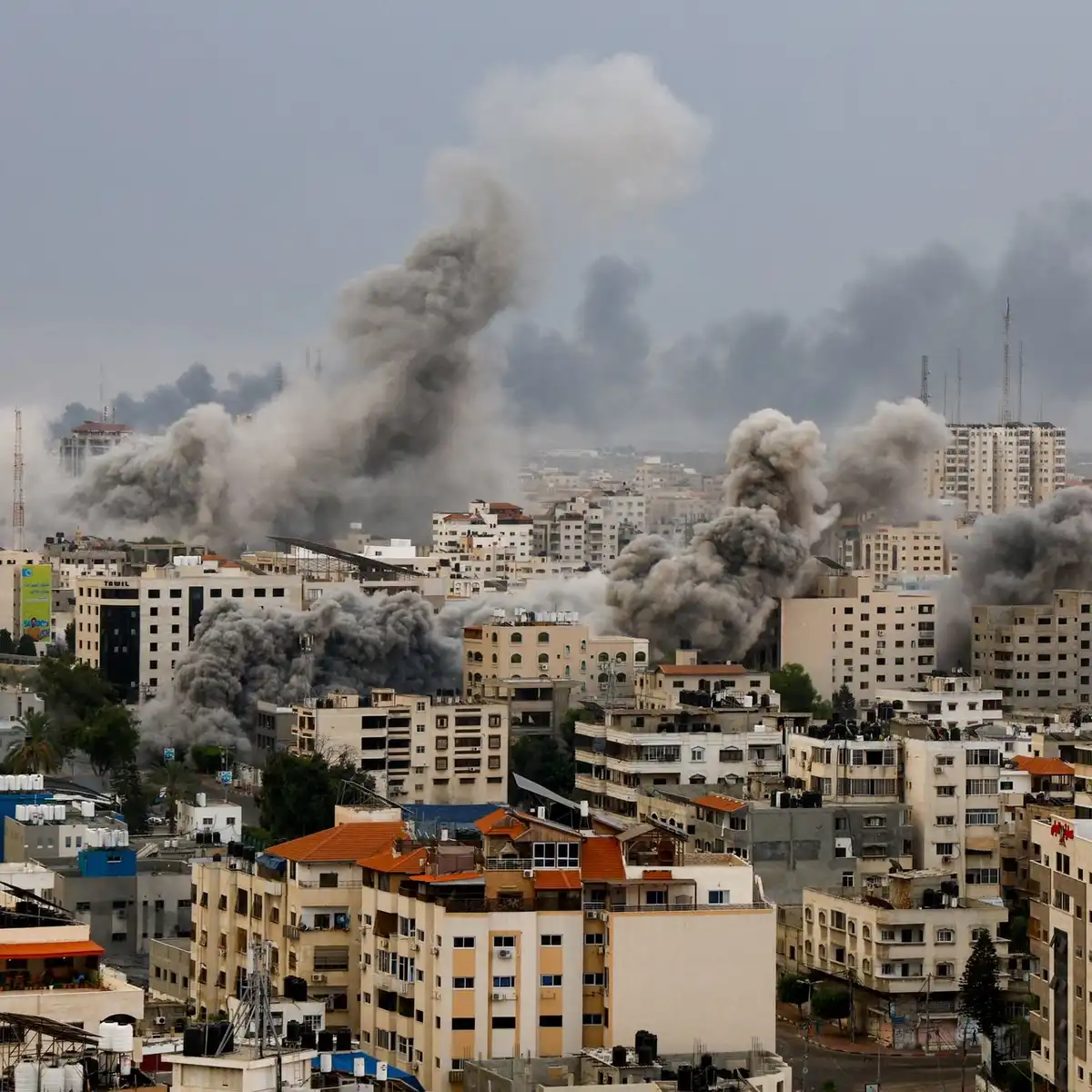
Opinion Writer

By Jeffrey D. Sachs

A principal instrument of U.S. foreign policy is covert regime change, meaning a secret action by the U.S. government to bring down the government of another country. There are strong reasons to believe that U.S. actions led to the removal from power of Pakistan’s Prime Minister Imran Khan in April 2022, followed by his arrest on trumped-up charges of corruption and espionage, and sentencing this week to 10 years imprisonment on the espionage charge. The political objective is to block Pakistan’s most popular politician from returning to power in the elections on February 8.

The key to covert operations, of course, is that they are secret and hence deniable by the U.S. government. Even when the evidence comes to light through whistleblowers or leaks, as it very often does, the U.S. government rejects the authenticity of the evidence and the mainstream media generally ignore the story because it contradicts the official narrative. Because editors at these mainstream outlets don’t want to peddle in “conspiracy theories,” or are simply happy to be the mouthpieces for officialdom, they give the U.S. government a very wide berth for actual regime-change conspiracies.

Covert regime change by the U.S. is shockingly routine. One authoritative study by Boston University professor Lindsay O’Rourke counts 64 covert regime change operations by the U.S. during the Cold War (1947 and 1989), and in fact the number was far larger because she chose to count repeated attempts within one country as a single extended episode. Since then, U.S. regime change operations have remained frequent, such as when President Barrack Obama tasked the CIA (Operation Timber Sycamore) with overthrowing Syria’s President Bashar al-Assad. That covert operation remained secret until several years after the operation, and even then, was hardly covered by the mainstream media.

Neutrality is a Sin

All of this brings us to Pakistan, another case where evidence points strongly to U.S.-led regime change. In this case, the U.S. desired to bring down the government of Prime Minister Imran Khan, the charismatic, talented, and hugely popular leader in Pakistan, renowned both for his world-leading cricket mastery and for his common touch with the people. His popularity, independence, and enormous talents make him a prime target of the U.S., which frets about popular leaders who don’t fall into line with U.S. policy.

Imran Khan’s “sin” was to be too cooperative with Russian President Vladimir Putin and Chinese President Xi Jinping, while also seeking normal relations with the United States. The great mantra of U.S. foreign policy, and the activating principle of the CIA, is that a foreign leader is “either with us or against us.” Leaders who try to be neutral amongst the great powers are at dire risk of losing their positions, or even their lives, at U.S. instigation, since the U.S. does not accept neutrality. Leaders seeking neutrality dating back to Patrice Lumumba (Zaire), Norodom Sihanouk (Cambodia), Viktor Yanukovych (Ukraine), and many others, have been toppled with the not-so-hidden-hand of the U.S. government.

Like many leaders in the developing world, Khan does not want to break relations with either the U.S. or Russia over the Ukraine War. By sheer coincidence of prior scheduling, Khan happened to be in Moscow to meet Putin on the day that Russia launched the special military operation (February 24, 2022). From the start, Khan advocated that the conflict in Ukraine should be settled at the negotiating table rather than on the battlefield. The U.S. and E.U. arm-twisted foreign leaders including Khan to fall into line against Putin and to support Western sanctions against Russia, yet Khan resisted.

Popularity poses an existential threat

Khan probably sealed his fate on March 6 when he held a large rally in northern Pakistan. At the rally, he berated the West, and especially 22 EU ambassadors, for pressuring him to condemn Russia at a vote in the United Nations. He also excoriated NATO’s war against terror in next-door Afghanistan as having been utterly devastating to Pakistan, with no acknowledgment, respect, or appreciation for Pakistan’s suffering.

Khan told the cheering crowds, “EU ambassadors wrote a letter to us asking us to condemn and vote against Russia… What do you think of us? Are we your slaves … that whatever you say, we will do?” He added, “We are friends with Russia, and we are also friends with America; we are friends with China and with Europe; we are not in any camp. Pakistan would remain neutral and work with those trying to end the war in Ukraine.”

From the U.S. perspective, “neutral” is a fighting word. The grim follow-up for Khan was revealed in August 2023 by investigative reporters at The Intercept. Just one day after Khan’s rally, Assistant Secretary of State for the Bureau of South and Central Asian Affairs Donald Lu met in Washington with Pakistan’s Ambassador to the U.S., Asad Majeed Khan. Following the meeting, Ambassador Khan sent a secret cable (a “cypher”) back to Islamabad, which was then leaked to The Intercept by a Pakistani military official.

The cable recounts how Assistant Secretary Lu berated Prime Minister Khan for his neutral stance. The cable quotes Lu as saying that “people here and in Europe are quite concerned about why Pakistan is taking such an aggressively neutral position (on Ukraine), if such a position is even possible. It does not seem such a neutral stand to us.”

Lu then conveyed the bottom line to Ambassador Khan. “I think if the no-confidence vote against the Prime Minister succeeds, all will be forgiven in Washington because the Russia visit is being looked at as a decision by the Prime Minister. Otherwise, I think it will be tough going ahead.”

An Orwellian Turn

Five weeks later on April 10, with the U.S. blunt threat hanging over the powerful Pakistani military, and with the military’s hold over the Pakistani parliament, the Parliament ousted Khan in a no-confidence vote. Within weeks, the new government followed with brazenly manufactured charges of corruption against Khan, to put him under arrest and prevent his return to power.

In utterly Orwellian turn, when Khan made known the existence of the diplomatic cable that revealed America’s role in his ouster, the new government charged Khan with espionage. He has now been convicted on these charges to an unconscionable 10 years, with the U.S. government remaining silent on this outrage.

When asked about Khan’s conviction, the State Department had the following to say: “It’s a matter for the Pakistani courts.” Such an answer is a vivid example of how U.S.-led regime change works. The State Department supports Khan’s imprisonment over Khan’s public revelation of U.S. actions.

Pakistan will therefore hold elections on February 8 with its most popular democratic leader in prison and with Khan’s party the subject of relentless attacks, political murders, media blackouts, and other heavy-handed repression. In all of this, the U.S. government is utterly complicit. So much for America’s “democratic” values. The U.S. government has gotten its way for now—and has deeply destabilized a nuclear-armed nation of 240 million people. Only Khan’s release from prison and his participation in the upcoming election could restore stability.


ARAB AND WORLD

Fri 02 Feb 2024 1:08 pm - Jerusalem Time

Hebrew media: Reaching a prisoners exchange deal may lead to the dismantling of Israeli government

A senior Israeli official told the American network NBC, today, Friday, that the chance of reaching an agreement does not exceed 50%, while Israeli television suggested that concluding a deal would lead to the dismantling of Benjamin Netanyahu’s government.


The political correspondent of the Hebrew channel Kan 11 commented that "the agreement is different from the one in the previous truce, and the price will be high, more difficult, and more complicated to ratify politically," and pointed out that it may lead to "the dismantling of the government."


He added that the mini-ministerial council did not receive any specific proposal for approval, and if Netanyahu agreed with the Qataris without the knowledge of the ministers, this alone could raise severe criticism within the government.


Negotiations continue on a possible exchange deal with Hamas, amid an Israeli division over it. Israeli Channel 12 had previously revealed details of the exchange deal, which included the release of an Israeli prisoner in exchange for every truce day.


According to the channel, the Israeli dispute is related to the type of Palestinian prisoners whom Israel may find itself obligated to release, and not their number.


Yedioth Ahronoth newspaper said that Hamas insists that the next deal include Marwan Barghouti, Ahmed Saadat and Abdullah Barghouti.


Meanwhile, the leaders of the occupation army expressed their approval for any prisoner exchange deal, while Bezalel Smotrich and Itamar Ben Gvir threatened to withdraw from the government coalition if the deal was completed.


PALESTINE

Fri 02 Feb 2024 12:25 pm - Jerusalem Time

Palestinian Red Crescent: The fate of the Palestinian child Hind and the paramedics is still unknown

The Palestinian Red Crescent Society said today, Friday, that more than 89 hours have passed, and the fate of its ambulance crew, consisting of paramedics Yousef Zaino and Ahmed Al-Madhoun, who went out to rescue the child Hind Rajab (6 years old), is still unknown.


The association appealed to the international community to intervene immediately to pressure the Israeli occupation authorities to reveal the fate of the child Hind and the crew that went to rescue her.


It stressed that international humanitarian law provides for the protection of civilians and workers in the field of health care and humanitarian work.


The child, Hind, was riding in a vehicle with five members of her family (her uncle, Bashar Hamada, his wife, and his three children), at one o’clock last Monday afternoon, in an attempt to move from their place of residence in Gaza City to a family home on Al Wahda Street in the city, when they were surrounded by incursive occupation tanks. In the vicinity of the “Finance Roundabout” in the Tal Al-Hawa neighborhood, it opened fire with machine guns at the vehicle, killing everyone in it, except for her and her cousin, Layan (14 years old).


Layan tried to call the ambulance services center to help her and evacuate her and her family from the vehicle, but the occupation soldiers did not give her long before they opened their machine gun fire again at the vehicle.


The Red Crescent Society published an audio recording, in which the child’s voice can be heard, Layan, as she tries to tell the ambulance services what is going on around her, and she says: “My uncles are sitting and they hit us. The tank is next to us. We are in the car and next to the tank.” After that, the sound of a volley of bullets was heard while Layan was screaming. Then he lost contact with her.


The ambulance crew of the Red Crescent Society went to the location of the targeted vehicle to rescue the little girl, Hind, but did not return until this moment, and contact with its personnel was cut off.

PALESTINE

Fri 02 Feb 2024 12:18 pm - Jerusalem Time

Israeli analysts: Netanyahu seeks to thwart the prisoner exchange deal

Israeli analysts unanimously agreed today, Friday, that Israeli Prime Minister Benjamin Netanyahu will seek to thwart the prisoner exchange deal with Hamas, which was crystallized during a meeting between the heads of the Israeli, American, and Egyptian intelligence services and the Prime Minister of Qatar in Paris, last Sunday.


According to the military analyst in the newspaper "Haaretz", Amos Harel, "It appears that the upcoming deal to free the kidnapped persons is still unfinished." Despite the optimistic expectations of American, Egyptian and Qatari sources, “there is now no certainty that the contacts will end with understandings or even a clear timetable for their implementation.”


Harel pointed out that it is difficult to reach an agreement on a prisoner exchange deal without the actual and simultaneous presence of delegations from Israel and Hamas in Cairo.


He added that some of the leaks about the deal in the media “sourced from Israel and from the office of Prime Minister Netanyahu.”


It was a multi-stage step: beginning with publishing a deterrent plan for the deal - such as releasing thousands of saboteurs; Then the poll published by Channel 12 indicated that a large majority of the Israeli public opposes such a deal. And then Netanyahu's statement that 'We will not liberate thousands of terrorists; Finally, Netanyahu met with the families of the kidnapped and said that “the more the liberation effort is kept secret, the greater the chances of its success.”


Harel continued, “Netanyahu is trying to control all stages of this process, and suspicions are rising that he is not in a hurry to advance a deal, because such a step would put him on a collision course with the extreme right wing of his coalition. He ignores that the heads of the security apparatus, whom he sent to Paris, They had coordinated in advance with the mediators, and many details of the deal were crystallized with Israel’s approval.”


Far-right ministers Itamar Ben Gvir, Bezalel Smotrich and from Likud joined the public criticism of the deal. According to Harel, "No equation has yet been agreed upon in the negotiations. It is not known how many Palestinian prisoners Israel will release for each one of the kidnapped. It is likely that the number of Palestinians liberated will increase significantly in the final stages of the deal."


He added: “It seems that Netanyahu can still fulfill his promises that he made this week, not to stop the war completely and not to release thousands of terrorists, at least in the first phase. But the continued implementation of the deal will increase the political difficulty for him in the right wing of the government, as well as for a section of his constituency in government.” 


Harel pointed out that, “In the background, he is also struggling against a political threat. Although the prime minister continues to flirt with the idea of a major political deal, including normalization with Saudi Arabia, for him there are also risks in it. The United States and Britain are considering official recognition of a Palestinian state.” This is a clear means of pressure on Israel, and it has not been exercised against any other Israeli prime minister.”

For his part, Nahum Barnea, a political analyst in Yedioth Ahronoth newspaper, pointed out that “Netanyahu is fighting a complex battle, and the goal is to thwart the deal without anyone being able to accuse him of thwarting it. He is not prepared to pay the price of the deal or the price of thwarting it.”

Barnea also stressed that “Netanyahu is not only fighting for the price he demands to pay in the deal, but mainly for the price he will have to pay if the deal is implemented. They talk (in press reports) about the number of prisoners who will be freed, their quality, and their danger. They talk about integrating "Hamas has a future Palestinian government. These are not small prices for Israel's security. But what worries Netanyahu, perhaps primarily, is the political price. His government, his survival, and his legacy will be in danger."

Barnea referred to how Biden's post-war plan for Gaza emerged. “The events of October 7 led to conclusions in Washington that were completely different from those that were expressed in the Kriya in Tel Aviv (the headquarters of the Ministry of Security and the Army). The weakness shown by the Israeli army that morning and its absolute dependence on American emergency supplies led to the conclusion that Israel could not cope on its own. Netanyahu's continued abstention from making decisions reinforces this conclusion. Its American friends are obligated to decide in its place and for it."


In turn, Tal Shalev, a political analyst on the Walla website, said that the slogan “until absolute victory” in the war on Gaza, which Netanyahu repeats, comes in order to repel “internal and external pressures in order to advance another kidnapped deal and make a decision about what will happen in Gaza the day after the end of the war.


She added, "Netanyahu decided to escalate the victory campaign in an attempt to recover from his collapse in public opinion since the October 7 massacre. Whenever he repeats 'victory', he hopes that the words disaster, failure, calamity, or defeat that Israel suffered under his leadership will be obscured in public consciousness." 


She pointed out that this campaign "does not succeed in deceiving public opinion, and his support rates continue to deteriorate. But other than simple awareness engineering, the pledge to fight until 'absolute victory' has a clear political goal, which is to procrastinate as much as possible and prevent elections that might pose a threat to his seat."


Shalev continued, “Netanyahu, who built his political career on fighting terrorism, knows that in history there is no absolute victory over terrorist organizations like Hamas, whose goal is to remain as terrorist and resistance organizations. But the pledge of absolute victory guarantees that the war will not end soon, and delays the next day’s political scenarios which will knock on his door, from the dismantling of the war cabinet with Gantz and Eisenkot, through the investigation into responsibility for the October 7 failure with an official investigation committee, and ending with the protest movements that are preparing to return to the streets to demand new elections.”
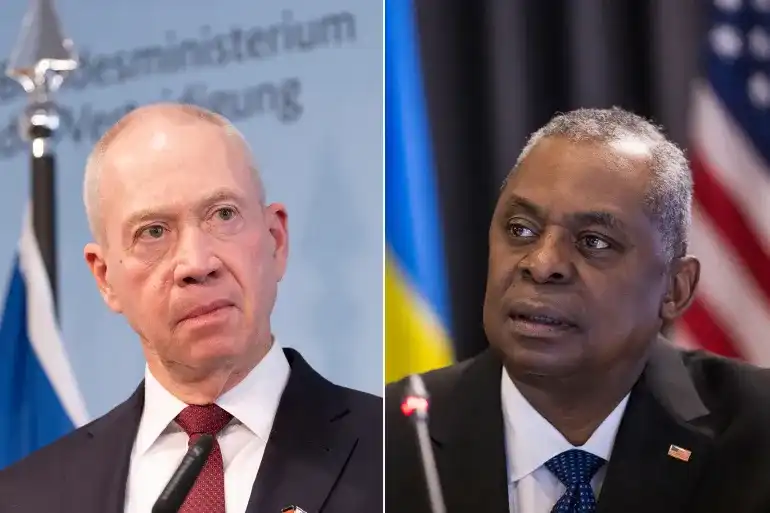

She added, "The pledge of absolute victory gives hope to his extremist partners on the right, who dream and dance to the impact of reoccupying and establishing settlements in the Gaza Strip, and ignites his supporters who fear that a deal to free the kidnapped will herald the end of the war."


PALESTINE

Fri 02 Feb 2024 10:34 am - Jerusalem Time

World Bank: Nearly one million people completely lost their homes in the Gaza Strip

In its unprecedented war on the Gaza Strip, Israel relied on systematic destruction that affected all aspects of life, including neighborhoods, residential areas, schools, hospitals, banks, markets, bakeries, and others.


The World Bank estimates that approximately 45% of residential buildings in the Gaza Strip were completely destroyed, meaning that approximately one million people completely lost their homes in the Strip.


According to a report by Salam Khader broadcast by Al Jazeera, the occupation forces took control of the town of Beit Hanoun in the northern Gaza Strip in mid-December, and leveled entire neighborhoods there with deliberate bombings and not just aerial bombardment. Satellite images showed the areas that were subjected to total or almost total destruction in the town.


The Al-Zahraa neighborhood south of Gaza City - which is known for its tall towers and is designated for middle-class employees - was also subjected to massive destruction. According to the World Bank, 34,000 homes were completely destroyed out of 55,000, with a destruction rate of approximately 60%.


The Israeli newspaper "Haaretz" had revealed that the soldiers were "destroying some buildings in Gaza by setting them on fire based on direct orders from their commanders," while the British newspaper "The Guardian" accused the occupation forces of "arming the buildings and facilities in the Gaza Strip," that is, of dealing with them on the basis of It is an armed entity.


The Guardian quotes experts as saying that Israel is systematically destroying the Palestinians’ cultural heritage sites and their daily urban fabric, as the destruction of buildings in the Gaza Strip is not limited to depriving residents of their homes, students of their right to education, or patients of their right to hospitalization.


Destroying buildings is a form of killing communities and their collective memory, according to the United Nations Rapporteur on the right to adequate housing.