





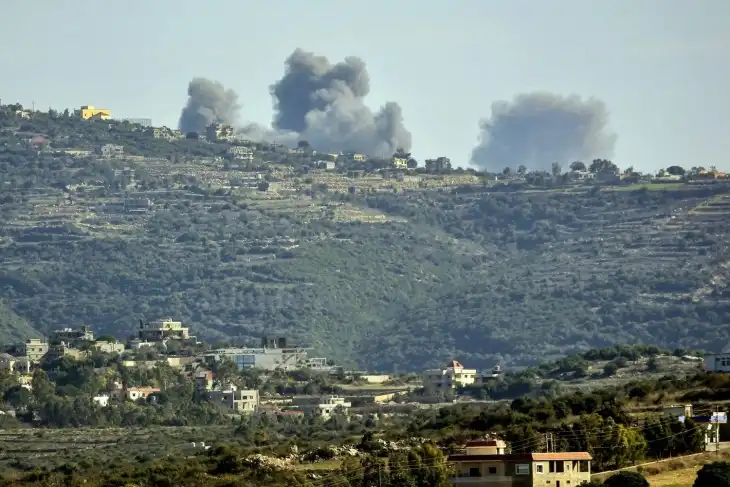
At dawn on Friday, Israeli artillery bombed the outskirts of the towns of Naqoura, Yarin and Al-Jebin in southern Lebanon.
The Israeli warplanes also launched three raids on the town of Al-Dhahira, resulting in severe damage to property.
The Israeli artillery bombed "Al-Awaida Hill" with a large number of heavy artillery shells.
The Lebanese News Agency reported that Israeli reconnaissance aircraft flew over the villages of the western and central sectors, all the way to the Litani River, throughout last night and until this morning, amidst the firing of flares at night, over the border villages adjacent to the Blue Line.
On Thursday evening, the Israeli aircraft launched several raids on the triangle of the towns of Tair Harfa, Shihin and Al-Jebain, targeting a commercial store that had been bombed more than once.

ARAB AND WORLD
Fri 02 Feb 2024 10:11 am - Jerusalem Time
Israeli raids and artillery shelling on several towns in southern Lebanon
PALESTINE
Fri 02 Feb 2024 9:32 am - Jerusalem Time
A settlement plan to build 7,000 housing units in the West Bank

Members of the Settlement “Directorate” formed by the Israeli Minister of Finance, Bezalel Smotrich, after his appointment as Minister Responsible for Settlements in the Ministry of Security, intend to hold a meeting of the Supreme Planning Committee of the “Civil Administration”, affiliated with the Israeli Army, with the aim of approving the construction of 7,000 new housing units in Settlements in the West Bank.
The Ynet website reported today, Friday, that members of the Directorate are seeking to speed up the approval of 7,000 new housing units in the settlements, including more than 2,000 housing units that will be finally approved. This settlement plan includes expanding settlements, legitimizing random settlement outposts, and increasing the number of settlers.
The Israeli political level must approve holding a meeting of the Supreme Planning Committee in the Civil Administration, but planning the amount of permits to build housing units in the settlements began some time ago.
The push for these settlement plans comes at a time when the administration of US President Joe Biden is pushing a comprehensive plan for the Palestinian situation after the end of the war on Gaza, which includes the Gaza Strip and the West Bank, so that a “developed Palestinian authority” will hand over governance in the West Bank and the Gaza Strip, after many years, according to the American plan, in addition to normalizing relations between Israel and Saudi Arabia.
Ynet quoted the Chairman of the Settlement Bloc Council, Gush Etzion, and the Chairman of the Settlements Council, Shlomo Neeman, as saying that the Supreme Planning Committee has not met since last June. He added, "Our silence so far stems from the realization that the State of Israel exists in a very complex period, while strategic relations with the United States are conducted according to the needs of war."
Neeman considered that "the time has now come to end the construction freeze and liberate us from the disgraceful American directives that apparently prevent construction" in the settlements.
He continued, "Any housing unit that is not planned this year will not be built in the next three years. The Israeli government and its president must realize that we have reached the stage in which the enemy will receive a response not only in Gaza and Lebanon, but in Judea and Samaria as well."
PALESTINE
Fri 02 Feb 2024 9:12 am - Jerusalem Time
There is no official response from Hamas to the proposed prisoners deal
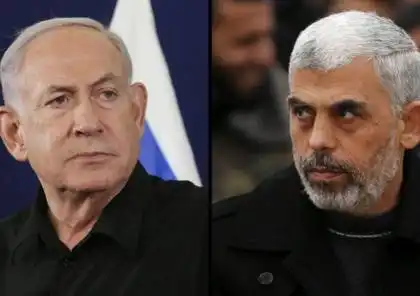
Israeli sources said that they had not received an official response from Qatar regarding the Hamas movement’s response to the proposed prisoner exchange deal proposed after the Paris meeting. This was shortly after the Qatari Ministry of Foreign Affairs announced that Hamas had received the ceasefire proposal in a “positive atmosphere” and was awaiting its response to it.
Israeli sources reported that Tel Aviv did not receive an official response from Qatar regarding Hamas’ response, while it was likely that this would occur in the next few hours.
The head of the Mossad, David Barnea, received reports issued by the Qatari Foreign Ministry that it received a “positive response from Hamas” during the meeting of the “war cabinet,” while Tel Aviv did not receive any official response from Qatar regarding a “green light” from Hamas as reported by Israeli Channel 13.
The Cabinet, with its expanded ministerial formation, is scheduled to discuss the proposed prisoner exchange deal at a later time.
Reuters quoted an unnamed Qatari official as saying, “There is no agreement yet on a ceasefire. Hamas received the proposal but has not responded to it yet.”
In this context, the leader of the Hamas movement, Osama Hamdan, said in statements on Al-Arabi TV yesterday evening, “Until now, it is not possible to talk about reaching an agreement. We are still in the beginnings and it is not possible to talk about reaching an agreement.”
PALESTINE
Fri 02 Feb 2024 9:04 am - Jerusalem Time
Day 119 of war on Gaza: dozens of killed and a major retreat of tanks northwest of Gaza
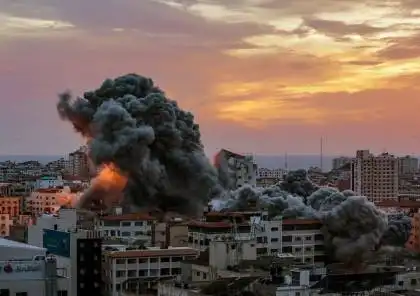
Israeli aircraft continued to bomb various areas of the Gaza Strip on the 119th day of the war, leaving dozens of killed and hundreds wounded.
The Israeli army committed 15 massacres against families in the Gaza Strip, claiming 118 killed and 190 injuries during the past 24 hours, bringing the toll of the Israeli aggression to 27,019 dead and 66,139 injuries since the 7th of last October.
In a surprising move, Israeli tanks withdrew from neighborhoods northwest of Gaza City for the first time since October 27th.
Citizens were able to enter the Karama area, the Intelligence Towers, and the Sudaniya area.
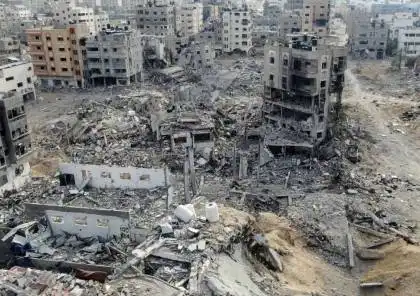
The retreat of the tanks revealed massive destruction in neighborhoods, public facilities, and streets.
The Israeli aggression destroyed the Al-Mashtal Hotel, the Egyptian City, and Al-Rashid Street.
The Israeli retreat also revealed the presence of dozens of decomposed dead bodies that no one was able to reach.
South of the sector
The Israeli army continued its bombing of various neighborhoods in the city of Khan Yunis.
The tanks repositioned themselves near Nasser Hospital after retreating from the vicinity of Al-Aqsa University, west of Khan Yunis.
Citizens were able to recover 22 dead bodies from the withdrawal area.
The Israeli artillery bombed the Taiba Towers area in Khan Yunis.
13 citizens were injured as a result of the bombing of a house adjacent to the Palestinian Red Crescent Society, west of Khan Yunis. It confirmed that he had buried five bodies on Thursday evening in the courtyard of Al Amal Hospital in Khan Yunis, bringing the number of those buried since the ground operation west of Khan Yunis to 15.
The Israeli army is still imposing a siege on Al-Amal and Nasser Hospital for the 11th day in a row, amid a food shortage that has led to patients and displaced people receiving only one meal a day.
In Rafah, six citizens were killed in a bombing that targeted the Al-Diri family in the Al-Nasr neighborhood, east of the city.
Central Gaza Strip
Six dead Palestinians, whose bodies had decomposed, were transferred from northern Deir al-Balah to Al-Aqsa Martyrs Hospital after theIsraeli forces retreated.
The Israeli aircraft launched a series of raids on the Nuseirat camp.
Gaza and the north
The Israeli forces are still stationed near the industrial junction in Gaza after destroying the police headquarters in Gaza.
The Israeli aircraft launched a series of raids on the Tal Elhwa neighborhood and the Daraj neighborhood.
ARAB AND WORLD
Fri 02 Feb 2024 8:29 am - Jerusalem Time
President of UN Security Council: Gaza will remain the focus of the Council’s attention throughout the month
The President of the Security Council for the month of February, Guyana’s Ambassador to the United Nations, Carolyn Rodriguez-Birkett, said that Gaza would remain the Security Council’s primary focus throughout the month of February.
Ambassador Caroline added, in a press conference at the headquarters yesterday, that the Council will also hold meetings on the situations in Ukraine and Myanmar.
She indicated that the Council will organize a high-level open discussion to study the dynamic relationship between climate change, food insecurity and conflicts in the context of maintaining international peace and security. The meeting, scheduled to be held on February 13, will be chaired by the President of Guyana, Muhammad Irfaan Ali.
She added that there will be 16 meetings, including the United Nations missions in Iraq, Somalia, Libya, the Central African Republic, Syria, Yemen and Afghanistan, while the monthly Security Council session on Palestine will be on February 22.
#UN Security Council #Gaza
ARAB AND WORLD
Fri 02 Feb 2024 8:22 am - Jerusalem Time
Spain to Voluntarily Contribute to ICC’s War Crimes Investigation in Gaza

Spain’s coalition government has reportedly said it will make a voluntary contribution to the Prosecutor’s Office of the International Criminal Court (ICC) to investigate human rights violations in Gaza by Israel.
At a meeting yesterday, the Council of Ministers decided that Spain will contribute to the ICC Prosecutor’s Office in the investigation of mass human rights violations in Gaza to hold those responsible to account before the court, reports the Middle-East Monitor (MEMO).
As part of this commitment, the ICC Prosecutor’s Office Trust Fund will receive €500,000 ($541,790) in 2024, the report adds.
The ICC Prosecutor’s Office, headed by Prosecutor Karim Khan since June 2021, is one of the four organs of the ICC investigating genocide, crimes against humanity and war crimes.
The Prosecutor’s Office, which currently has 17 open investigations, three of which are in preliminary stages, established a fund in March 2022 to support these investigations and training.
The office is investigating human rights violations in Gaza and war crimes against journalists.
Last month, it confirmed to Reporters Without Borders (RSF) that “crimes against journalists” are included in its ongoing investigation into the situation in occupied Palestine.
RSF said that Khan’s office “stated for the first time that crimes against journalists were included in its investigation.”
The prosecutor’s office is also accepting online reports of war crimes, injury, loss of life and property destruction with Palestinians with family in the occupied territories encouraged to submit survivor claims, reports MEMO.
In December, South Africa submitted all necessary documents to the International Criminal Court (ICC), bringing war crime charges against Israel over its war in Gaza.
According to Gaza’s Ministry of Health, 27,019 Palestinians have been killed, and 66,139 wounded in Israel’s ongoing genocide in Gaza starting on October 7. Palestinian and international estimates say that the majority of those killed and wounded are women and children.
(Palestine Chronicle, MEMO)
ARAB AND WORLD
Fri 02 Feb 2024 8:13 am - Jerusalem Time
Russian writer: Ideas to change the current world order
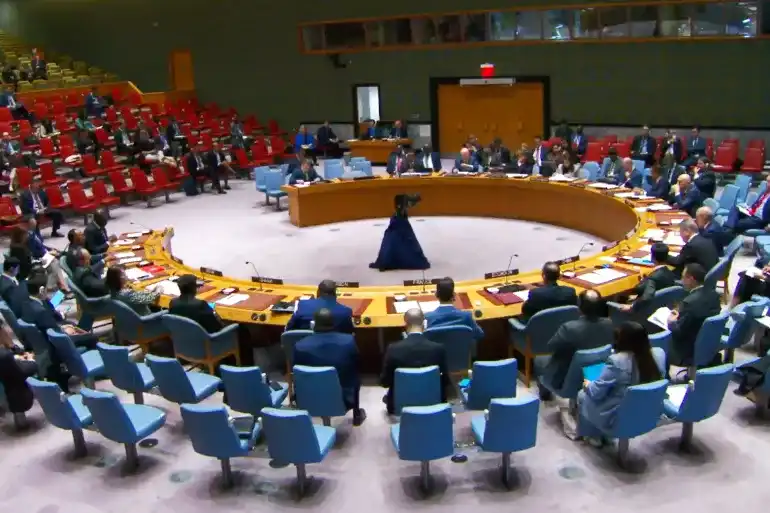
Russian writer Veniamin Popov says, in a report published by the newspaper "Nezavisimaya", that the wars in Ukraine and Gaza put an end to the unipolar world after many people were convinced of the decline of American influence and this was recognized by Washington itself.
He explained that the countries of the Global South are increasingly talking about the loss of confidence in America, and it is time to draw at least the approximate lines of a new world order.
According to Popov, the following ideas are worth discussing to bring about changes in the currently existing system of international relations:
Reform of the United Nations Security Council, so that the BRICS group could propose including India as a global superpower as a permanent member with veto power, and adding Iran, Brazil and South Africa as non-permanent members, representing Asia, Africa and Latin America.
Depriving Britain of permanent membership
Depriving Britain of its status as a permanent member of the Security Council, especially since many former colonies are seriously demanding compensation for the exploitation and plunder of these countries. As a compromise, Britain could retain a seat on the Security Council, but without veto power. While France can represent the entire European Union. The writer justified his idea that Europe is overrepresented in the UN Security Council, especially since the size of its economy in 2022 reached only 19.8 trillion, and the size of the American economy reached 25 trillion.
Moving the United Nations headquarters from New York to an Asian city such as Istanbul or Kuala Lumpur, or an African city such as Cairo or Nairobi.
Changing the composition of the most important international economic organizations, most notably the International Monetary Fund and the World Bank, as well as other global federations for the benefit of the countries of the Global South.
Cancel debts for the 25 poorest countries in the world
Given the debt slavery that the West imposes on the poorest countries of the Global South, decisions should begin to be made to cancel the debts of the 25 least developed countries. Moreover, BRICS members could come up with an initiative to significantly reduce the debt burden of the most vulnerable developing countries and start working on forming a new payment system without delay.
Adopting a main slogan to work to reduce the gap between the poor and the rich. Ideas could be considered about imposing an additional tax on wealth above a certain amount. He rejected attempts by Western powers to shift the burden of combating pollution and carbon dioxide emissions to producers, most of whom are located in the Global South.
A clear plan to create a Palestinian state
Develop a clear plan to implement the United Nations decisions regarding the establishment of a Palestinian state. It is important to focus in particular on the time frame for the implementation of this project and the corresponding international guarantees. BRICS members, especially Near and Middle Eastern countries, should also be the main actors.
Establishment of a new body under the UN Security Council whose mission is to develop long-term plans for broad global cooperation, primarily in the field of culture and human relations, to find solutions to global problems such as tackling artificial intelligence, environmental pollution, climate change, reducing fresh water reserves as well as land suitable for agriculture, and many more. Of other natural resources.
Forming a Council of Civilizations in which 3 countries represent the currently existing civilizations; Slavic Orthodox, Western, Indian, Chinese, Islamic, African and Latin American. This new council could include representatives of major countries that do not fit within the framework of these seven cultures, such as Japan, South Korea, Vietnam, and others.
Source: Nezavisimaya+ Aljazeera
ARAB AND WORLD
Fri 02 Feb 2024 8:10 am - Jerusalem Time
An American expert to Al Jazeera Net: Israel's strategy in Gaza has failed

Former US military intelligence officer, Scott Reiter, confirmed that the Islamic Resistance Movement (Hamas) won the Israeli war on the Gaza Strip militarily and politically.
Reiter added, in a lengthy interview published by Al Jazeera Net on Friday evening, that Israel realizes that the strategy it followed in Gaza did not succeed in weakening Hamas militarily, so it is withdrawing its brigades.
The former American intelligence officer said that Tel Aviv is losing at all levels of this political, military and economic conflict, and will continue to lose.
Regarding the status of Hamas among the Palestinian people, he believes that if elections are held today in Gaza, the West Bank, and abroad, Hamas will win, because it is the only Palestinian organization that works and calls for the establishment of a Palestinian state, according to his statement.
Regarding the ceasefire in Gaza, Reiter says that it is a political issue that will be achieved when Israeli Prime Minister Benjamin Netanyahu, who is currently fighting for his political life, is removed from office.
"Successful operation"
He explained that Hamas's "successful" operation last October 7 was not estimated at the required size and that it "blinded" Israel. Tel Aviv also “chose genocide” and therefore failed to free its hostages.
The former American intelligence officer pointed out that the occupation aims, by destroying all means of life in Gaza, to “remove the Palestinian people from the Strip,” hoping that it will not succeed in its endeavor.
Regarding US President Joe Biden's administration's full support for the Israeli aggression on Gaza, Scott Reiter says that American government institutions are being bought by Israeli interest groups, led by AIPAC, which has mastered the profession of buying politicians.
The military expert spoke to Al Jazeera Net about an “awakening” in American society about the reality of the plight of the Palestinian people after the operation of October 7, 2023.
Regarding Washington's operations in the Red Sea against the Houthis, he considered that it played a low-level reaction game as it was being attacked in Syria, Iraq and Jordan. He believes that the era of automatic American deterrence has “ended,” as he put it.
The American military expert concluded that the CIA, which had become "lazy", should never rely excessively on the Israelis or any other country, especially after Tel Aviv's failure to prevent the "Al-Aqsa Flood" operation.
Source: Al Jazeera
ARAB AND WORLD
Fri 02 Feb 2024 8:03 am - Jerusalem Time
Belgium summons Israeli ambassador after the destruction of its headquarters in Gaza
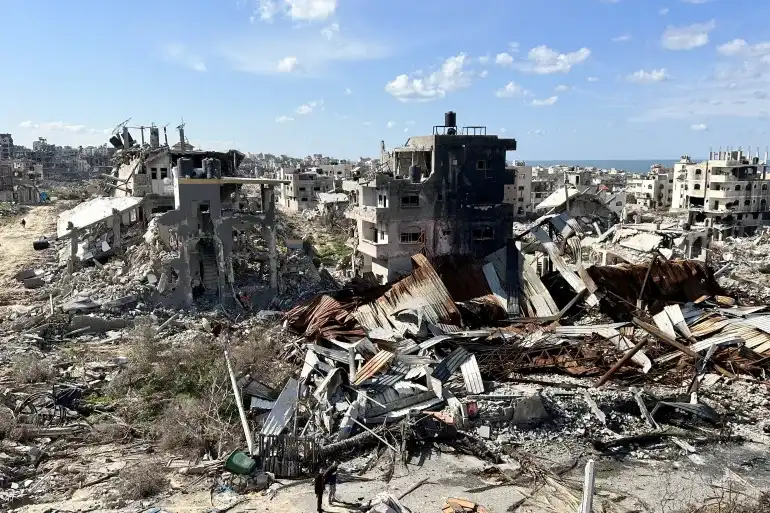
Belgian Foreign Minister Hajja Lahbib announced - early Friday - that she had summoned the Israeli ambassador to Belgium after raids destroyed the offices of the Belgian Development Agency (Annabel) in the Gaza Strip, stressing that targeting civilian buildings is unacceptable.
Through the X platform, Lahbib (of Algerian origin) indicated that the summoning of the Israeli ambassador to Belgium came to clarify the targeting of the Annabel agency building in Gaza by an Israeli raid.
For his part, Annabel Agency Director Jean Fan confirmed that the agency's offices in Gaza were completely destroyed in an Israeli bombing that targeted them yesterday, Thursday.
He expressed his shock at the targeting of the agency's building in Gaza, saying that the agency, as a government working for the public good within the framework of international humanitarian law, could not accept being bombed.
The Israeli embassy in Belgium has not yet responded to the statements of the Belgian Foreign Minister and Annabel.
It is noteworthy that the agency’s building is located in the Al-Rimal neighborhood in Gaza City in the middle of the Strip, which has been subjected to continuous Israeli artillery and air strikes since the start of the aggression against the besieged Strip on October 7.
According to the report of the United Nations Conference on Trade and Development (UNCTAD), which was published last Wednesday, more than 37 thousand buildings, equivalent to 18% of the total buildings in the Gaza Strip, were damaged or destroyed in the Israeli aggression.
However, updated satellite data indicates that 50% of buildings in Gaza are destroyed or damaged, according to a co-author of the UNCTAD report.
Source: French + Anadolu Agency
ARAB AND WORLD
Fri 02 Feb 2024 7:58 am - Jerusalem Time
Qatari Foreign Ministry: Tel Aviv agreed to a truce proposal and Hamas expressed positive confirmation

Qatari Foreign Ministry spokesman Majid Al-Ansari announced that the Paris meeting reached a proposal for a truce and Tel Aviv agreed to it, noting that there was an initial positive confirmation from Hamas, but it has not yet provided its final response.
The Qatari Foreign Ministry spokesman confirmed that the Hamas movement received the ceasefire proposal in a positive atmosphere and we are awaiting their response.
Al-Ansari pointed out that Hamas provided a “positive initial confirmation” that will represent a “general understanding of the features” of the upcoming humanitarian truce. As "the two parties agreed on the essence that could lead to the next humanitarian truce."
It is noteworthy that a leading source in the Palestinian factions announced the arrival of a message from the Hamas leadership sent to the leaders of the Palestinian factions regarding the framework paper that was presented based on the Paris meeting. The leadership source indicated that the paper is being studied on the basis of agreed-upon national determinants, where priority will be given to the following conditions:
1- A comprehensive cessation of aggression and a complete withdrawal of the occupation forces from Gaza.
2- Providing shelter for the displaced.
3- Reconstruction and lifting the siege.
4- Carrying out a serious prisoner exchange.
He also clarified that no delegation from the Hamas leadership has gone to Cairo so far, and no date has yet been set for the meetings. Mediation efforts by the Egyptian and Qatari brothers were also unified. He called for not paying attention to the Zionist media, which issues fabricated and false news to stir up public opinion about the negotiations.
ARAB AND WORLD
Thu 01 Feb 2024 10:40 pm - Jerusalem Time
US sanctions on Israeli settlers and Israeli criticism of the decision
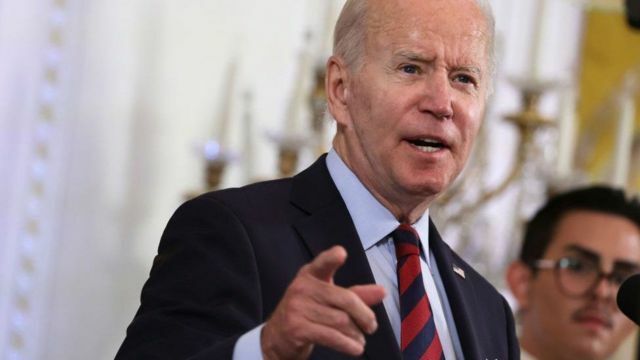
US President Joe Biden issued an executive order aimed at punishing Jewish settlers who attack Palestinians in the occupied West Bank.
Biden believed that "the situation in the occupied West Bank, especially the high levels of violence by extremist settlers (...) and the destruction of property has reached unbearable levels and constitutes a serious threat to peace, security and stability in the West Bank, Gaza, Israel and the Middle East region."
National Security Advisor Jake Sullivan said that the decision aims to address activities that undermine peace and stability in the West Bank.
Sullivan explained that the executive order would allow for the issuance of financial sanctions and visa restrictions against individuals found to have attacked or terrorized Palestinians or seized their property.
Sullivan stressed that Biden was clear about “Israel’s right to self-defense and its efforts to defeat (the Islamic Resistance Movement) Hamas,” noting that five packages of sanctions were imposed on Hamas.
In the same context, US Secretary of State Anthony Blinken said that the executive order included imposing financial sanctions on 4 Israelis linked to violence against civilians in the occupied West Bank.
The Israeli newspaper Haaretz reported, citing an official in the Biden administration, that the latter is considering imposing sanctions on the two extremist ministers in the Israeli government, Minister of National Security Itamar Ben Gvir and Finance Minister Bezalel Smotrich.
US National Security Council Coordinator for Strategic Communications John Kirby denied that there were currently plans to target Israeli government officials with sanctions.
Kirby indicated that the Israeli government was informed of the executive order related to the West Bank prior to its announcement.
The American move comes after the sharp criticism directed at the American administration due to its position in strong support of the Israeli aggression on the Gaza Strip, where it committed several massacres against the Palestinians, leading to the death of more than 27,000 people and the injury of more than 66,000.
Last December, the United States began imposing a ban on granting entry visas to people involved in violence in the occupied West Bank.
Israeli criticism
The American decision faced criticism from Israel, as a statement issued by the office of Israeli Prime Minister Benjamin Netanyahu expressed the government's dissatisfaction with Washington's tightening of sanctions on settlers accused of attacking Palestinians.
The statement stressed that the vast majority of West Bank settlers are “law-abiding.”
He pointed out that "Israel is taking measures against all violators of the law everywhere," explaining that there is "no need to take extraordinary measures regarding this issue."
In the same context, the Israeli newspaper Yedioth Ahronoth said that Minister Smotrich attacked President Biden's administration, and said that "the American administration is cooperating with an anti-Semitic campaign that sanctiones the blood of settlers."
While Ben Gvir called on the United States to consider its policy towards the West Bank, he said that Biden is wrong regarding the citizens of the State of Israel and the “heroic settlers.”
The extremist minister claimed that "the heroic settlers in the West Bank are the ones who are being thrown with stones in an attempt to harm and kill them."
ARAB AND WORLD
Thu 01 Feb 2024 8:30 pm - Jerusalem Time
Qatari Foreign Ministry: Tel Aviv agrees to the ceasefire proposal
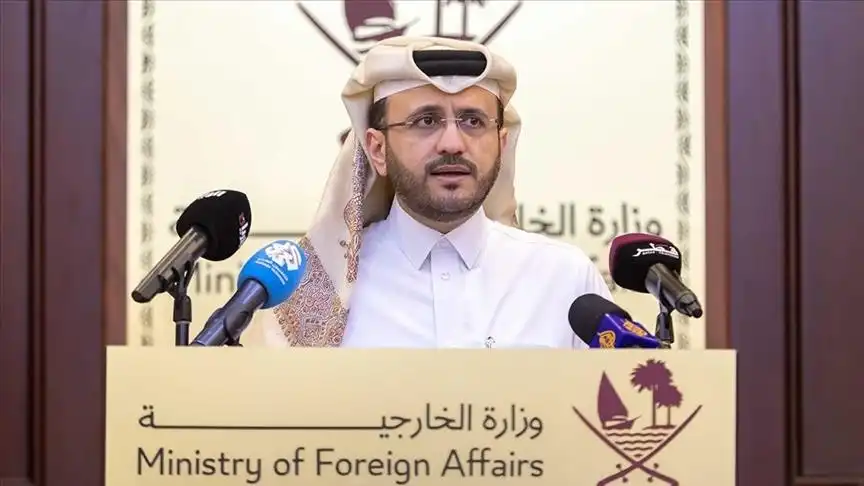
Qatari Foreign Ministry spokesman Majed Al-Ansari said that Tel Aviv agreed to the ceasefire proposal in the Gaza Strip.
He added, in statements reported by Al Jazeera on Thursday evening, that he had initial positive confirmation from Hamas.
The Israeli aggression against Gaza continues for the 118th day, with continuous bombing of several people in the Strip.
The Al-Qassam Brigades, the military arm of Hamas, launched Operation Al-Aqsa Flood on October 7, in response to the Israeli occupation’s violations in the occupied Palestinian territories.
On the other hand, the Israeli army launched a military operation against the Gaza Strip, which it called “Iron Swords,” and launched a series of violent raids on several areas in the Strip, resulting in thousands of dead and wounded, in addition to the destruction of large numbers of buildings, residential towers, institutions, and infrastructure.
The Ministry of Health in Gaza announced, according to the latest toll, that 27,019 people were killed and 66,139 were injured as a result of the aggression since October 7.
According to the death toll of Israeli side, which was acknowledged by the Israeli army, it rose to 561 since October 7, and 224 of them were killed since the ground operations on October 26.
ARAB AND WORLD
Thu 01 Feb 2024 7:31 pm - Jerusalem Time
Report: United States is planning a weeks-long bombing campaign against Iranian targets
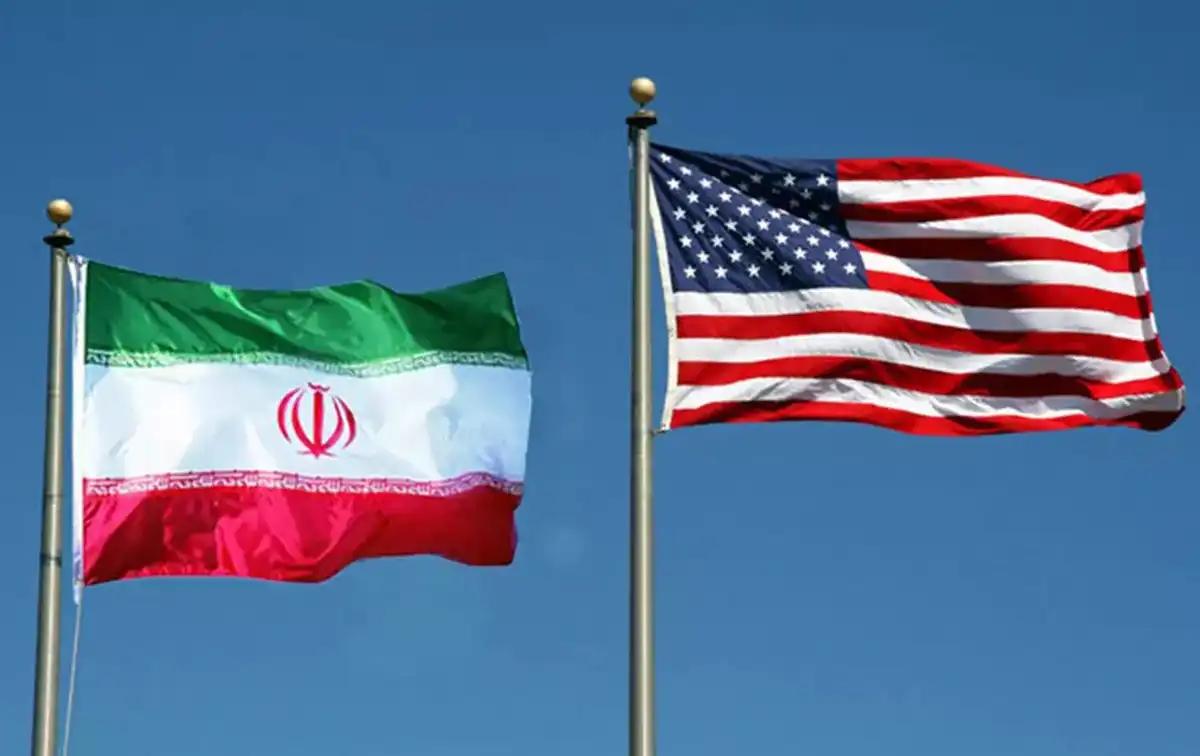
The United States is planning a weeks-long bombing campaign in the Middle East in response to a drone attack in northeastern Jordan that killed three American soldiers, US officials told NBC News on Thursday.
The officials said that President Joe Biden has decided to target several targets, and that the targets are expected to include Iranian targets outside Iran, and the campaign will include strikes and electronic operations.
Other reports stated that the United States is considering targeting Iranians in Iraq and Syria or the Iranian Navy.
President Biden and Defense Secretary Lloyd Austin will receive the bodies of the three soldiers at Dover Base, Delaware (President Biden's state) on Friday, and the start of the process will likely coincide with the reception and burial ceremony of the bodies.
While the potential targets are not inside Iran, direct attacks on the Iranian military could lead to all-out war between the United States and Iran. The United States is considering taking this course of action despite the Pentagon's admission that it has no evidence of direct Iranian involvement in the drone attack in Jordan.
The Pentagon said the Jordanian attack had "effects" on Kataib Hezbollah, one of the main Shiite militias in Iraq. The United States says Iran is only responsible because it arms Kataib Hezbollah and other Shiite militias. US officials told the New York Times that while Iran is arming and funding Shiite militias, there is no evidence that Tehran is “making the decision.”
John Kirby, spokesman for the White House National Security Council, said on Wednesday that US intelligence indicates that the drone attack was carried out by the Islamic Resistance in Iraq, a shadowy umbrella group for Iraqi Shiite militias.
The Islamic Resistance (in Iraq) has claimed responsibility for many of the 160 attacks launched against American forces in Iraq and Syria since mid-October. The attacks began in response to US support for the Israeli massacre in Gaza.
Kirby also hinted at the possibility of a long-term bombing campaign. "The first thing you see won't be the last," he said, adding that it won't be a "one-off."
Iran pledged to respond to any American attacks on Iranians in the region. Amir Saeed Iravani, Iran's ambassador to the United Nations, said, "The Islamic Republic will respond firmly to any attack on the country, its interests, and its citizens under any pretext."
PALESTINE
Thu 01 Feb 2024 6:59 pm - Jerusalem Time
War on Gaza: 30 thousand displaced Palestinians near “Nasser Complex” lack water, food and medicine
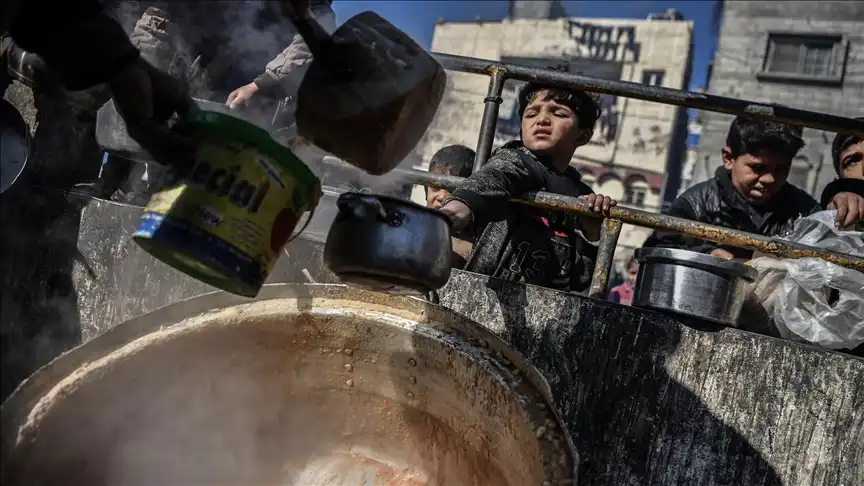
The Palestinian Ministry of Health in the Gaza Strip revealed, on Thursday, that more than 30,000 displaced people are located near the “Nasser Medical Complex” in the south of the Strip, lacking water, food, baby formula, and medicines.
Ministry spokesman Ashraf Al-Qudra said in a statement published on the Telegram platform, “More than 30,000 displaced people in schools near the Nasser Medical Complex are missing water, food, baby formula, and medicines, which are required for thousands of sick and chronic cases.”
In his statement, Al-Qudra appealed to the United Nations and its institutions to "work to conduct urgent interventions to provide the living and health needs of the displaced."
Since the outbreak of the devastating Israeli war on the Strip on October 7, 2023, the occupation has cut off supplies of water, food, medicine, electricity, and fuel to the residents of Gaza, who are about 2.3 million Palestinians who are already suffering from extremely deteriorating conditions.
Although the Israeli army allowed some relief trucks to enter the Gaza Strip, the number allowed to enter cannot meet the growing need, in light of the continuous and escalating deterioration of the infrastructure as a result of the continuous Israeli bombing, and the complete deterioration of the health system against the backdrop of the war.
The ongoing Israeli war against the Gaza Strip since October 7, until Thursday, left “27,19 killed and 66,139 injured, most of them children and women,” according to the Palestinian authorities, and caused “massive destruction and an unprecedented humanitarian catastrophe,” according to the United Nations.
OPINIONS
Thu 01 Feb 2024 6:34 pm - Jerusalem Time
Israeli writer: A ceasefire in Gaza could accelerate the political process towards Lebanon

Haaretz
Opinion Writer

By Zvi Bar'el
US President Joe Biden's announcement of his decision to respond forcefully to the attack on the American base in Jordan on Monday, in which 3 American soldiers were killed, led to a practical response. Hezbollah militias in Iraq, loyal to Iran, have “officially” announced that they will stop attacking American targets “so as not to embarrass the Iraqi government.”
For its part, the United States made clear that a response would occur, and that “the militias will be judged according to their actions, not their words.” Iranian Revolutionary Guard Commander Hossein Salami was quick to announce that his country is not seeking to expand the war, “but will respond to any threat against Iran.” He said against Iran, not against its arms, as if what is happening is a “private” confrontation between the militias and the United States, and Iran has nothing to do with it.
The Houthis in Yemen continue to attack ships in the Red Sea, and confrontations continue on the Lebanese front, as usual. This "routine" is now waiting for the kidnappers to agree and a long ceasefire, extending between 6 weeks and two months. This period of time is more than a humanitarian truce, during which political issues that go beyond the battlefield in Gaza could mature.
The “distribution of work” in each axis seems clear. Hezbollah is clashing directly with Israel, and the Houthis and Shiite militias in Iraq are dealing with the security belt that the United States provides to Israel, while Iran is not paying the price for operating its arms remotely. This distribution of labor is careful not to deviate from the limits of a low-power war, and thus allows organizations that do not belong to states to operate as a single front with Hamas, and at the same time, it does not provide an excuse for the United States and Israel to engage in a large-scale war on several fronts.
If these things were taking place in a computer game, where each side must collect points through tactical strikes, these skirmishes could continue at their current size without resolution. But as Hassan Nasrallah said in one of his speeches, “The speech is about the field,” but the field is not just raids, marches, artillery shelling, and casualties. Political pressures in Beirut, and in Jerusalem, Baghdad, Sanaa, and Washington, are mounting and demanding their share in managing the confrontations.
In the case of Lebanon, the front where there is the highest possibility of war, the pressure set links villages in southern Lebanon and the southern suburbs of Beirut, between Christians and Shiites, between the effort to elect a president of the republic and the government, and between Hassan Nasrallah’s veto of any agreement, or Political negotiations, as long as the war in Gaza continues. In the previous truce that accompanied the release of kidnapped persons and prisoners, Hezbollah also ceased fire, then resumed it after the end of the ceasefire.
Since that time, the circle of confrontations has expanded, and Israel has deepened its attacks inside Lebanon, destroying many buildings in the southern villages, and hitting military and civilian targets deep in Lebanon, while Hezbollah brought into the battle precision missiles of the Falaq 1 and 2 model, which it has not used until now, and hit An air surveillance facility on Mount Meron, as well as attacks on Kiryat Shmona and other settlements. The firing equation still maintains the “agreed upon” border lines, and has not yet reached a large-scale war, intense attacks on all of Lebanon, and the firing of distant missiles deep into the Israeli home front.
Meanwhile, the political scene in Lebanon is waiting for a turn. On Tuesday, the ambassadors of the five countries - Saudi Arabia, Qatar, Egypt, France and the United States - which took it upon themselves to save Lebanon from the political and economic crisis, met with Parliament Speaker Nabih Berri.
There is unspoken tension between the ambassadors themselves, not only because of the substantive issues, but also because of who is leading the process. The new US Ambassador Lisa Johnson is competing with Saudi Ambassador Walid Al-Bukhari, who is acting as the owner of the house. In confronting them, French Ambassador Herve Magro is keen on the position of his country, which considers itself the first sponsor of Lebanon. Likewise, Qatar, a partner in the postponed Lebanese gas project, has something to say.
Apparently, the small glimmer of hope that emerged in previous meetings regarding reaching a political agreement has dissipated, and things have seemed less optimistic recently...
A ceasefire in Gaza could provide Nasrallah with the appropriate pretext to stop his opposition to taking political steps as long as the war continues, and would thus constitute an opportunity to reach a deal to elect a president of the republic. The truce could also constitute an opportunity to advance negotiations on the demarcation of the land border between Israel and Lebanon, and completing these negotiations would enable, at least in theory, the implementation of Resolution 1701, especially the part related to the Lebanese army deploying its forces along the border with Israel, a step that Lebanon has not yet implemented. Under the pretext that the international border line has not been agreed upon, and that the Blue Line that was demarcated with the Israeli army’s withdrawal from Lebanon in 2000 is not the international border line.
The ceasefire will also have a calming effect on the Houthis, who have caused the greatest strategic damage, and whose repercussions can be felt well in a number of countries in the region. It will also help complete negotiations to end the war in Yemen. A long ceasefire lasting 6 weeks, or more, constitutes a sufficient period of time to allow political steps to be taken forward, and it will force the administration in Washington to exploit it in order to use its full diplomatic power to formulate with the Arab countries, primarily Egypt, Qatar, and Saudi Arabia, mechanisms for a Palestinian administration in sector.
The main ambitious goal of this step is to completely eliminate, or at least reduce, the need to resume fighting at its current level when the ceasefire ends.
The challenge will move from the need to plan for the “day after the war” to planning for the day after the ceasefire.
ARAB AND WORLD
Thu 01 Feb 2024 6:30 pm - Jerusalem Time
Israel must say yes to the Palestinian state

The words of British Foreign Secretary David Cameron, in which he said that his country and its allies “are considering recognition of a Palestinian state, as part of a diplomatic process that leads to irreversible progress towards a two-state solution,” is an important diplomatic statement, and we hope that it will be supported by diplomatic action.
According to Cameron, “the most important step is to give the Palestinians a political horizon,” and that Britain “has begun to consider the image of a Palestinian state, what it will consist of, and who will run it. When that happens, we and our allies will begin to think about recognizing a Palestinian state, including voting in a council.” Security. This recognition could be one of the things that will help make this process irreversible” (“Haaretz,” 1/30).
These words express a similar point of view that appeared in the statements of US President Joe Biden, two weeks after the “massacre” of October 7, when he said: “Israel and the Palestinians can no longer return to the situation that existed before October 7,” and added that at the end of the crisis There is a need to pursue a two-state solution, “which means that both parties, Israeli and Palestinian, and other leaders from the region, will have to focus on moving towards peace.”
Since then, the Biden administration has been promoting a plan to establish a demilitarized Palestinian state within the framework of normalization with Saudi Arabia, and a plan to rebuild the Strip led by Saudi Arabia and four Arab countries. Biden spoke with Israeli Prime Minister Benjamin Netanyahu and pressured him to agree to the establishment of a Palestinian state after the war. But Biden knows that this matter will not happen under a failed leader without a vision linking his political fate to the Kahanists and supporters of the transfer.
Contrary to the noise from the British Conservative Party, which viewed Cameron's words as giving a prize to Hamas, unilateral recognition of a Palestinian state that advances the two-state solution is the absolute opposite of what Hamas wants.
The Hamas movement does not want a regional settlement, nor a two-state solution, because it is not ready to recognize the State of Israel. Every step the world takes towards a two-state solution is a reward for moderates and a punishment for extremists.
PALESTINE
Thu 01 Feb 2024 6:09 pm - Jerusalem Time
Sources: Hamas unlikely to reject ceasefire but will demand Israeli withdrawal
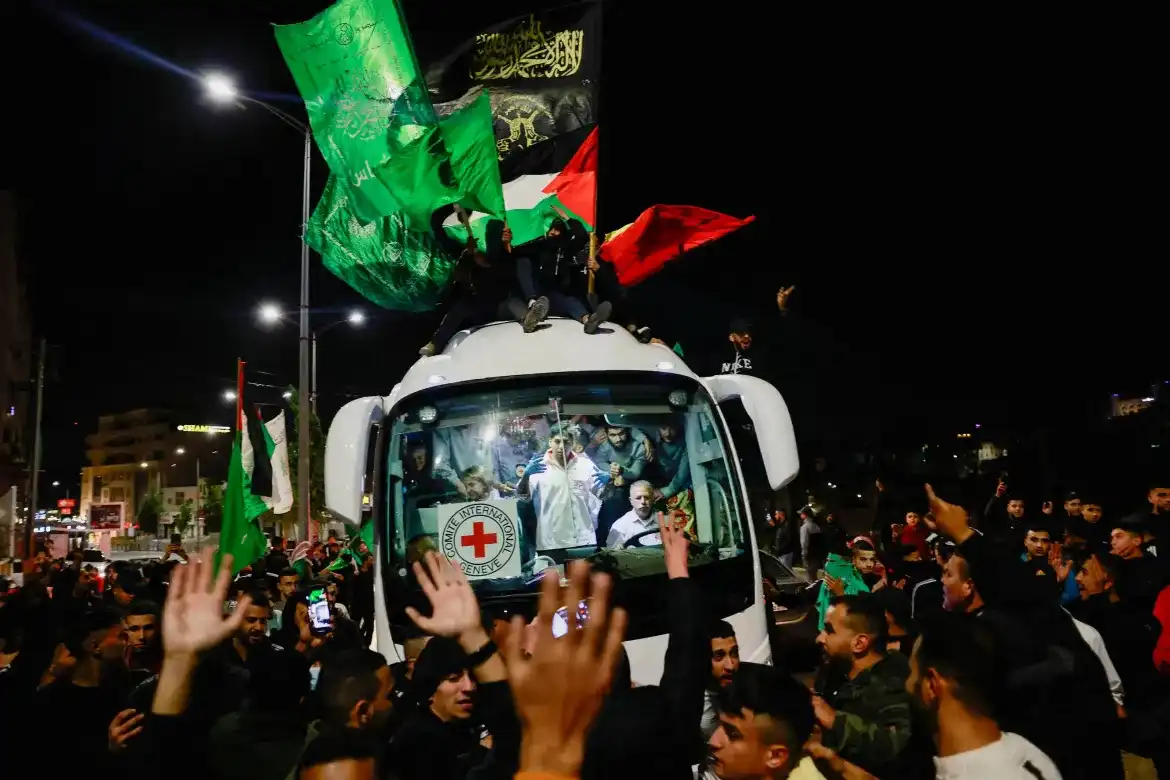
Hamas is unlikely to reject a Gaza ceasefire proposal it received from mediators this week, but will not sign it without assurances that Israel has committed to ending the war, a Palestinian official close to the talks told Reuters.
“I expect that Hamas will not reject the paper, but it might not give a decisive agreement either,” the official said, speaking on condition of anonymity.
“Instead, I expect them to send a positive response, and reaffirm their demands: For the agreement to be signed, it must ensure Israel will commit to ending the war in Gaza and pull out from the enclave completely.”
The source said the text agreed with Israel and the US at talks in Paris last week envisions a first phase lasting 40 days, during which fighting would cease while Hamas released remaining civilians held in Gaza.
Further phases would see the release of Israeli soldiers and the handover of bodies of dead captives, the report added.
ARAB AND WORLD
Thu 01 Feb 2024 6:04 pm - Jerusalem Time
Petition demanding the ouster of Netanyahu: “There is a conflict of interests that harms the security of the state”
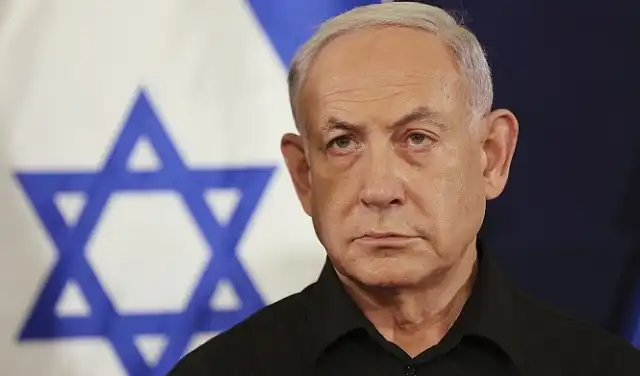
Pretexts for the petition: a conflict of interests because Netanyahu is accused of criminal offenses and is prime minister; “The series of actions and failures that occurred before and after October 7”; Netanyahu is in an unhealthy state that requires announcing his inability to carry out his duties
A petition submitted to the Israeli Supreme Court today called on Al-Hamis to issue a decision rendering Prime Minister Benjamin Netanyahu unable to carry out his duties, thus preventing him from remaining in office and ousting him, because he “exists in a conflict of interests that harms the security of the state.”
The petition was submitted by ten people, including former Minister of Defense, Moshe Ya'alon, former Chief of Staff of the Israeli Army, Dan Halutz, and a member of the Knesset from the Labor Party, Naama Lazimi.
The petition was based on three central pretexts, according to the Haaretz newspaper website.
The first pretext is that Netanyahu is in a state of classical and structural conflict of interests simply because he is accused of criminal violations and holds the position of prime minister, in terms of the timetables, resources, and dedication required to adhere to the challenges of the position.
The second pretext for overthrowing Netanyahu is “the series of actions and failures that occurred before and after the October 7 massacre.” According to the petitioners, Netanyahu’s actions indicate that the interests and considerations guiding him are “personal, narrow, irrelevant and contrary to the interests of the state, the public, the kidnapped people and their families.”
The petition added that the third pretext is that there are indications that Netanyahu is in an unhealthy health condition that requires announcing his inability to carry out his duties. Last October, Netanyahu was transferred to Shaare Zedek Hospital in Jerusalem after feeling chest pains. Last July, a device to measure his heart rate was implanted in his body.
It is noteworthy that, last month, the Supreme Court issued a decision stipulating that the amendment to the “Basic Law: Government,” which aims to prevent the announcement of Netanyahu’s inability to carry out his duties, will be effective starting from the next term of the Knesset. This decision allowed the petition to be submitted today.
The majority of the judges confirmed in their decision last month that the Knesset abused its powers and that the measure that would prevent a defect in the law in this case was to postpone the entry into force of the amendment.
ARAB AND WORLD
Thu 01 Feb 2024 6:01 pm - Jerusalem Time
Israeli official: The chances of an exchange deal are high because Biden wants to end the war
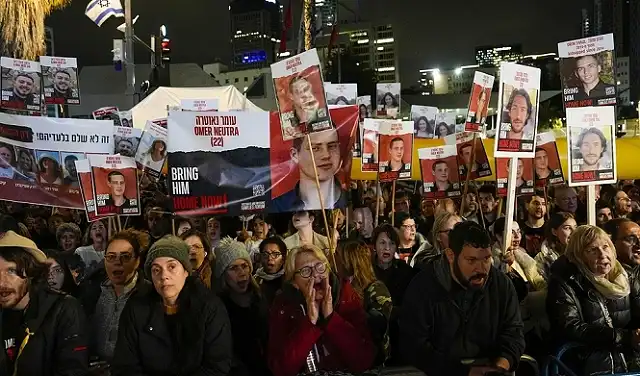
Blinken visits Israel at the end of the week to discuss the mediators’ proposal that crystallized in Paris regarding the deal, in addition to the issue of the “next day” after the war and the normalization of relations between Israel and Saudi Arabia, in exchange for opposition from Smotrich and Ben Gvir, who threaten to bring down the government.
An Israeli official said, “The possibilities of a prisoner exchange deal between Israel and Hamas are still high, because the US President, Joe Biden, wants to end the war on Gaza, and realizes that the only way to do so is a deal that leads to a long truce, and with the hope that it will become permanent” what Yedioth Ahronoth newspaper reported today, Wednesday.
US Secretary of State, Anthony Blinken, will visit Israel, where he will arrive next Saturday evening, to discuss the details of the prisoner exchange deal and the truce, in addition to the issue of the “next day” after the war and the normalization of relations between Israel and Saudi Arabia.
The newspaper also quoted ministers in the political-security cabinet as saying that Israeli Prime Minister Benjamin Netanyahu is “seeking a deal,” but he is “very afraid” that the deal will lead to the withdrawal of the parties of extremist ministers Itamar Ben Gvir and Bezalel Smotrich. They added that Netanyahu does not want a government with the opposition leader, Yair Lapid.
After Ben Gvir threatened that he would topple the government if Israel agreed to the deal that was formulated during a meeting in Paris, last Sunday, which brought together the heads of the Mossad, the CIA, Egyptian intelligence, and the Prime Minister of Qatar, Netanyahu announced, “We will not liberate thousands of terrorists, and we will not withdraw the Israeli army.” From the sector.”
Ben Gvir wrote on the “X” platform that “a defeatist deal = dismantling the government.” According to the newspaper, although Ben Gvir has threatened to withdraw from the government more than once since the beginning of the war on Gaza, he is serious now, and told those close to him, “I mean every word. There is nothing I can do in a government that implements a defeatist deal. In my opinion, the government does not have a mandate.” To implement a defeatist deal with Hamas.
Those close to Ben Gvir said that he would withdraw from the government even if the deal included the liberation of a quarter or a third of the number of Palestinian prisoners who would be released, and that they believe that Netanyahu is paving the way for the possibility of liberating half the number of prisoners that are being talked about, and that he will consider this an achievement, according to what the newspaper quoted them as saying.
Meanwhile, the parties to the negotiations on the deal are awaiting Hamas’s response to it, after the head of its political bureau, Ismail Haniyeh, announced yesterday that the deal is being studied. The Hamas delegation visiting Cairo today may present the movement’s response to the proposed deal.
The deal stipulates Israel's release of thousands of prisoners and a truce in the war for a month and a half, in exchange for Hamas releasing a first batch of 35 Israeli hostages. According to the Haaretz newspaper, Netanyahu refuses to pledge to abide by this deal because of the opposition within his government.
The newspaper added that Israel agreed during the negotiators' meeting in Paris that the mediators would transfer their proposal to Hamas. “Israel thus linked itself to a large extent to the mediators’ proposal, even if it did not officially ratify the entire deal.”
The newspaper added that there is “concern” among the extreme right about a long-term ceasefire that will signify the end of the war on Gaza and the continuation of Hamas in power, “at least in the south of the Gaza Strip.” Also, "Netanyahu realizes that the return of a portion of the kidnapped, in exchange for thousands of prisoners, will be interpreted by large parts of the Israeli public as an admission of failure."
The newspaper indicated that Netanyahu is approaching a point where he will have to decide between the position of the extreme right, represented by Ben Gvir and Smotrich, who reject any deal, and accepting the deal. If Netanyahu agrees to the mediators’ proposal, “there is no hope for the government to survive in its current composition.”
PALESTINE
Thu 01 Feb 2024 5:43 pm - Jerusalem Time
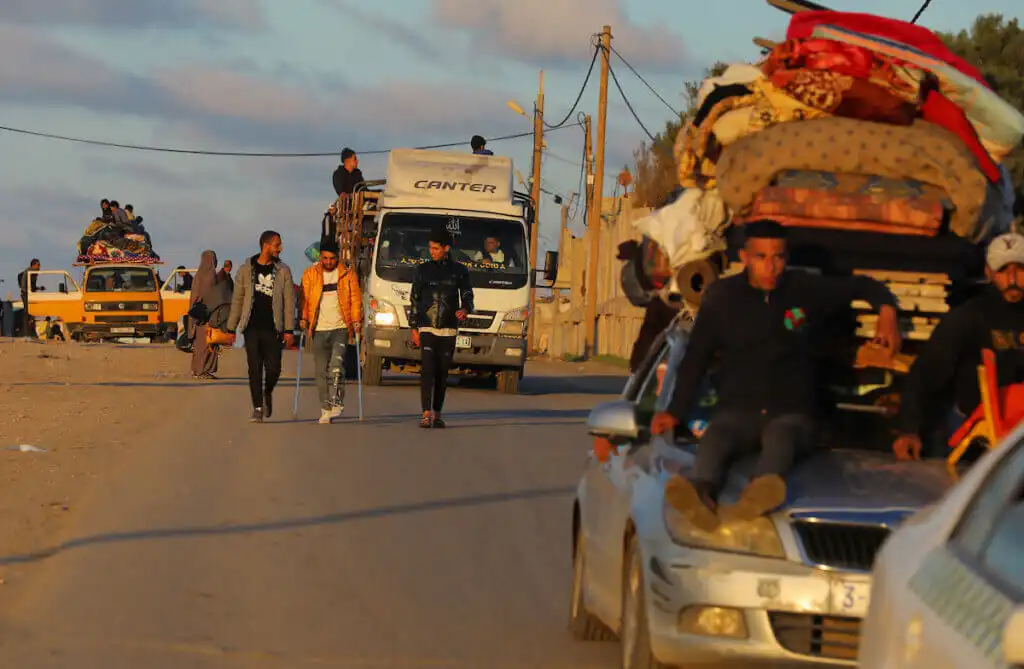
Testimonies describe forced displacement campaign in northern Gaza
BY TAREQ S. HAJJAJ
Israel claims there is not a policy to forcibly expel Palestinians in Gaza, but direct testimonies from people arriving in Rafah reveal there is a ethnic cleansing campaign taking place around Gaza City.
Meters away from Egypt’s border with the city of Rafah in southern Gaza stands Mahmoud Ahmad, whose real name has been altered at his request. Mahmoud asks passers-by about a place where he can find shelter for himself and his family, who were recently displaced from Gaza City. With a yellowed face and a hesitant voice emanating from his frail body, the weary-eyed young man tells me how his family of six arrived in Rafah on foot.
Mahmoud’s testimony is a direct refutation of the Israeli propaganda claims that the army is not forcibly displacing people from their homes. Mahmoud and his family live west of Gaza City near the Ansar area, where the Israeli army invaded last week. They had originally sought refuge at a shelter east of Gaza City in the Daraj neighborhood, but after the withdrawal of the Israeli army from Western Gaza, they returned to their home there. In Gaza, the Israeli army calls inhabitants according to their area of residence.
“The occupation would call us on our phones and order us to go to specific locations within Gaza City,” Mahmoud tells Mondoweiss. “They would call someone in Ansar [west of Gaza City] and tell them to go to north of Gaza. Then, when we reached a shelter in al-Daraj [in the north], we got another call telling us to evacuate back to the West.”
“In this way, they force us to go from one place to another,” he continues. “They cause chaos, and then we get caught in the middle.”
Mahmoud and his family lived through “days of death,” as he says. These were days when he wasn’t sure what his family’s fate would be — whether they would be buried under the rubble and left to be eaten by animals, arrested and tortured like so many others, or simply executed by gunfire.
When the family returned to their neighborhood near the coast in al-Ansar, where the army had withdrawn, they spent several days in their old apartment building, which had miraculously survived the urban decimation. Several families occupied the building, but during the day, all the occupants would gather in a single apartment and share resources while planning for what might come next. They wondered what they might do if the army invaded again.
A little over a week ago, the occupation re-invaded the Ansar and Abu Mazen Circle areas. This time, the area was full of people, and six shelter-schools teemed with displaced persons, each shelter housing between 200-300 families.
“On the first day of the [second] invasion, we heard strange and terrifying sounds,” Mahmoud says. “Sounds of tanks and armored troop carriers. In Gaza, we’re now able to distinguish between the sounds of a moving tank and a personnel carrier, which make different noises and move at different speeds.”
Mahmoud says that from 5:00 a.m. in the morning until dawn, these vehicles did not stop their incursion into the area.
“We could hear the soldiers speaking loudly in Hebrew, and none of the people living in the building dared look out the window to see what was happening, but we all knew that they were preparing for a wider invasion of the area,” he continues.
“On the second day, those six UNRWA schools were surrounded by the army vehicles, and then we heard a military vehicle call out through a megaphone in Arabic, ordering people to leave the schools and move to a place that had been prepared for them. They then ordered men and women to separate, dividing each of them into age groups and isolating them from one another.”
Mahmoud says that during the invasion, the machine guns never stopped. “They were firing at people and over their heads and beneath their feet,” he says. “And they killed a large number of people, we couldn’t count how many. But the sound never stopped. It didn’t stop from the vehicles or from the soldiers shooting with their rifles.”
“In addition, quadcopter drones hovered over our building,” he adds. “We could see their shadows, but we kept away from the windows, fearing that they would spot us and open fire.”
Up until that moment, the military operation continued outside Mahmoud’s building, making them believe that they would be safe so long as they remained inside and that the Israeli soldiers would not enter their homes. By the end of the day, Mahmoud says they could hear the sound of an explosion right below the building. The soldiers had entered the tower, blowing up the external garage door as well as the door to the building. All the families had gathered in one apartment beforehand, but now they all rushed to their respective apartments and locked their doors behind them. But their efforts were ultimately pointless.
“We were on the fifth floor,” Mahmoud relates. “And we could hear through the stairwell that the soldiers were going from apartment to apartment, banging on the door with their boots, and when there wasn’t an answer, they would blow the door up.”
“We were yelling as they got closer, telling them that we are civilians,” Mahmoud continues. “We told them, ‘We don’t have any weapons. We don’t have anything that can hurt you.’”
No one responded to them until the soldiers reached their apartment. Mahmoud’s family raised their hands, holding pieces of white cloth and their ID cards in either hand. They looked into the soldiers’ eyes and kept repeating that they were civilians and that they demanded safe passage, as they had just been following army directions and moving to designated safe zones.
None of their entreaties worked. Within seconds, everyone was blindfolded and bound with their hands behind their backs and made to face the wall.
“We weren’t expecting to leave our house alive,” Mahmoud says.
A home with an interrogation room
Mahmoud tells Mondoweiss that the army gathered everyone in the building on the fourth floor, separating women and children from the men, and placing each group in a room. Then, the soldiers set up a third room — for interrogation.
They interrogated each person individually, searching their cell phones and electronic devices for information. Anyone whose phone contained videos of the October 7 events or videos published by the resistance factions showing the targeting of soldiers and tanks was arrested on the spot. Mahmoud says that his brother Ahmad was arrested due to such photos that were downloaded to his device.
The family still does not know what happened to Ahmad from this moment on. They have contacted the International Committee of the Red Cross several times but have not received any information yet.
I asked for a photo of Ahmad, in the hopes of being able to find him, but Mahmoud refused outright, fearing for the safety of his brother and believing that if a relative of Ahmad were seen speaking to the media, there would be a reprisal from the Israeli authorities against Ahmad.
When Mahmoud was interrogated, the army asked him questions in Arabic about ties to Hamas — whether he was a Hamas member, whether he knew any members, or whether he knew if any of his neighbors were from Hamas.
Mahmoud points out that he does not have relatives in Gaza. All his uncles and extended family live abroad in the Gulf and elsewhere, and his family and his brother’s family are the only ones to have remained. They both work remotely for companies in Saudi Arabia, Mahmoud as an accountant, and his brother as a programmer.
“Neither of us have had any ties to any military activity,” he says.
He adds that the field interrogators played “good cop, bad cop.” One officer would pretend to sympathize with him and look out for his interests, while the other was harsh and would assault everyone he interrogated, sometimes physically.
The ethnic cleansing of the Ansar area
After the interrogations had concluded, the soldiers ordered everyone to go down to the first floor. They didn’t allow them to take anything with them — no food, no clothes, no electronics, no money or wallets.
“They forced me out of my house barefoot and blindfolded and kept screaming at me the entire time,” Mahmoud continues. “No one allowed me even to pick up my shoes from my apartment. They would only scream at me, some in Hebrew, some in Arabic, some in English, and they would order me to keep walking and be quiet, threatening that the next time I ask for something they will kill me. That’s what the soldiers told everyone.”
On the ground floor, they were handed over to a group of other soldiers, who were far more harsh and brutal than the group that had interrogated them. These soldiers constantly physically assaulted them, beating them while shouting and cursing and firing live bullets above their heads and at their feet, and no one was allowed to even look at a soldier.
“If someone were to so much as stare at a soldier, they would have been killed,” Mahmoud intimates, saying that the soldiers were deliberately trying to terrorize them.
While the Israeli media and statements by Israeli officials claim that Israel will not forcibly displace Palestinian civilians in Gaza, Mahmoud’s account indicates the opposite. As the soldiers were hurling their abuse at them, they ordered them to head south on foot.
“When we reached the street, we were shocked by the massive number of soldiers filling the area,” Mahmoud continues. “They were spreading out everywhere, between the buildings, surrounding schools, entering houses. There were so many of them, and the sight was terrifying.”
That’s when the soldiers corralled them alongside all the other displaced people who had been rounded up from the neighboring shelters and ordered all of them to march south.
“They said, ‘you must all go south using the sea road,’ which is al-Rashid Street,” Mahmoud recounts.
That’s when they joined the throngs on the long march south, repeating the scenes of their ancestors during the Nakba of 1948.
The Ansar area used to be a security zone belonging to Hamas and was used by the movement to train its fighters. It was also the location of a central prison and the police academy. This will all no doubt be used as a pretext to claim that it continued to be a Hamas stronghold and thus necessitated this brazen act of ethnic cleansing. But the reality is that all Hamas operatives retreated into the tunnels at the outset of the war, and the only people left in the area were civilians.
The claims by the Israeli media, and even American media and officials, that the north would slowly be repopulated and that civilians would be allowed to return have been thoroughly belied by the ethnic cleansing of the Ansar area.
ARAB AND WORLD
Thu 01 Feb 2024 5:41 pm - Jerusalem Time
Report: Biden is about to sign a presidential order against Israeli settler terrorism
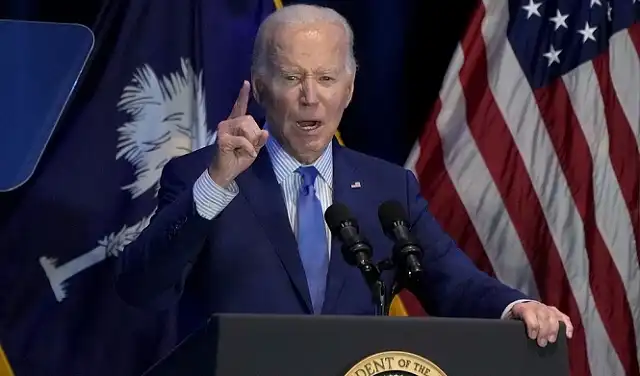
The US President issues a presidential decision imposing sanctions on settlers involved in terrorist attacks against Palestinians in the occupied West Bank. A decision allows the targeting of Israeli officials involved in terrorist attacks on settlers in the West Bank, whether by invitation or incitement.
US President Joe Biden intends to sign a presidential order, later today, Thursday, allowing the imposition of new sanctions on settlers involved in terrorist attacks against Palestinians in the occupied West Bank. At this stage, the sanctions target four settlers involved in terrorist attacks.
This came according to what the political correspondent of the Israeli Walla website and the American Axios website reported, citing high-ranking officials in the White House. The report noted that the presidential order allows future sanctions to be imposed on Israeli politicians or government officials involved in terrorist attacks targeting Palestinians.
American officials explained that "the first round of sanctions imposed under the new presidential order will include four settlers who were directly involved in attacks against Palestinians in the West Bank, according to American information, as well as in systematic activities that led to the forced displacement of Palestinian communities."
The report did not reveal the identity of the four settlers targeted in the first round of sanctions. On the other hand, the Israeli government claims that it “has taken steps in the last two months that have led to a significant decrease in the number of attacks carried out by settlers in the occupied West Bank.”
Under the US sanctions, any assets or bank accounts held by these four settlers in the United States of America will be frozen, and sanctions will be imposed on parties that deal with them commercially or transfer money to them through the American banking system, and they will not be allowed to enter the United States.
The expected presidential decree allows the administration to “impose sanctions on persons who have directed or participated in acts of violence or threats of violence against Palestinians, intimidated Palestinians in an attempt to force them to leave their homes, destroyed or confiscated Palestinian property, or in acts of terrorism against Palestinian citizens.”
American officials explained that "one of the prominent provisions in the new presidential decree allows in the future to impose sanctions on Israeli politicians and government officials directly or indirectly involved in acts of violence against Palestinian citizens."
The order states that people “who direct, implement, implement, carry out, or refrain from implementing policies in a manner that threatens the peace, security, or stability of the West Bank” may be subject to US sanctions, and the order allows for sanctions to be imposed on people who provide support or financial assistance to settlers who have carried out attacks against the Palestinians.
The report described the US President's anticipated step as "unprecedented and the most important taken by any US administration ever to deal with settler violence against Palestinian citizens in the occupied West Bank," while Tel Aviv believes that US allegations regarding settler terrorism are "exaggerated."
High-level American officials said that this measure reflects the vision of the Biden administration, which believes that “extremist settler attacks against Palestinians have reached levels that constitute a threat to security in the West Bank and the entire Middle East, and undermine the foreign policy goals of the United States, especially the possibility of implementing the two-state solution.”
According to American officials, the White House, the State Department, and the US Treasury Department began drafting the presidential order secretly several weeks ago, and the Biden administration did not inform the Israeli government of the new order until today, shortly before it was announced.
The report explained that the Biden administration studied the possibility of including Israeli ministers Itamar Ben Gvir and Bezalel Smotrich in the list of people targeted by sanctions, “but in the end it decided to exclude them from the list and focus at this stage on the people involved in carrying out the attacks.”
Biden and other senior American officials have repeatedly warned that Israel must act to stop the violence committed by settlers against Palestinians in the West Bank. Attacks there have escalated in the past few months in light of settlement expansion.
Settler attacks have also escalated since the attack of last October 7, and last December, the United States began imposing a ban on...
ARAB AND WORLD
Thu 01 Feb 2024 4:05 pm - Jerusalem Time
UNRWA: The suspension of funding forces us to end our operations at the end of February
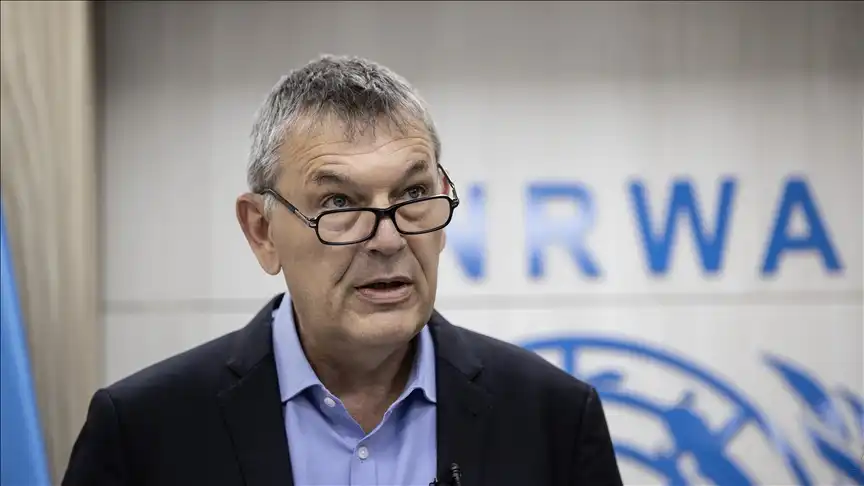
The Commissioner-General of the United Nations Relief and Works Agency for Palestine Refugees (UNRWA), Philippe Lazzarini, said on Thursday that the continued suspension of international funding for the agency is forcing it to “end” its operations by the end of this February, in Gaza and throughout the region.
Lazzarini explained in a statement, “At a time when the war in Gaza continues unabated, and at a time when the International Court of Justice calls for more humanitarian aid, this is the time to strengthen UNRWA, not weaken it.”
He noted that the agency "remains the largest relief organization in one of the most complex humanitarian crises in the world."
He added: "If funding remains suspended, we will likely have to end our operations by the end of February, not only in Gaza, but also throughout the region."
Lazzarini renewed the call of the Secretary-General of the United Nations, Antonio Guterres, to resume funding for UNRWA, according to the statement.
PALESTINE
Thu 01 Feb 2024 3:16 pm - Jerusalem Time
Palestine Red Crescent: The unknown fate of the child Hind 66 hours ago

The Palestinian Red Crescent reported that more than 66 hours had passed since its ambulance team came to the rescue of 6-year-old Hind, noting that her fate and the fate of the crew were still unknown.
The Red Crescent appealed to the international community to help reveal the fate of the child Hind and the paramedics Yousef Zaino and Ahmed Al-Madhoun, and to intervene to protect civilians and health care and humanitarian workers.
ARAB AND WORLD
Thu 01 Feb 2024 3:11 pm - Jerusalem Time
Former head of the Israeli Shin Bet: The war on Gaza is “revenge”

On Thursday, former head of the Israeli Shin Bet Security Service, Karmi Gilon, described the Israeli war on the Gaza Strip as “revenge.”
Gilon said in an interview he gave to the Hebrew Channel 12, on Wednesday, and the contents of which were published by Channel 7, on Thursday: “We have entered into a war of revenge, and this is completely justified in light of what we have been through,” referring to the events of last October 7.
Although he considered that "Hamas received a strong blow," Gilon said that "it will remain the ruling body in the Strip as long as there is a vacuum, and there is no one to fill it. Until now, everyone has fled Gaza," he said.
He added, "Maybe there will be a ceasefire for 5 or 6 years, and the missile rituals will return, but the story of what happened on October 7 will not be repeated in my opinion." Gilon, who headed the Shin Bet between 1995 and 1996, believed that the war on Gaza was “over.”
He believed that "the war is over, and the only reason, in my opinion, for the Israeli army to remain in the field is to return the hostages (the Israeli prisoners in Gaza)."
OPINIONS
Thu 01 Feb 2024 3:05 pm - Jerusalem Time
Only the Middle East Can Fix the Middle East The Path to a Post-American Regional Order
Foreign Affairs
Opinion Writer
By Dalia Dassa Kaye and Sanam Vakil
In the early weeks of 2024, as the catastrophic war in the Gaza Strip began to inflame the broader region, the stability of the Middle East appeared to be once again at the center of the U.S. foreign policy agenda. In the initial days after Hamas’s October 7 attacks, the Biden administration moved two aircraft carrier strike groups and a nuclear-powered submarine to the Middle East, while a steady stream of senior U.S. officials, including President Joe Biden, began making high-profile trips to the region. Then, as the conflict became more difficult to contain, the United States went further. In early November, in response to attacks on U.S. military personnel in Iraq and Syria by Iranian-backed groups, the United States conducted strikes on weapons sites in Syria used by Iran’s Islamic Revolutionary Guard Corps; in early January, U.S. forces killed a senior commander of one of these groups in Baghdad. And in mid-January, after weeks of attacks on commercial ships in the Red Sea by the Houthi movement, which is also supported by Iran, the United States, together with the United Kingdom, initiated a series of strikes on Houthi strongholds in Yemen.
Despite this show of force, it would be unwise to bet on the United States’ committing major diplomatic and security resources to the Middle East over the longer term. Well before Hamas’s October 7 attacks, successive U.S. administrations had signaled their intent to shift away from the region to devote more attention to a rising China. The Biden administration has also been contending with Russia’s war in Ukraine, further limiting its bandwidth for coping with the Middle East. By 2023, U.S. officials had largely given up on a revived nuclear agreement with Iran, seeking instead to reach informal de-escalation arrangements with their Iranian counterparts. At the same time, the administration was bolstering the military capacity of regional partners such as Saudi Arabia in an effort to transfer some of the security burden from Washington. Despite Biden’s early reluctance to do business with Riyadh—whose leadership U.S. intelligence believes was responsible for the 2018 killing of the Saudi journalist and Washington Post contributor Jamal Khashoggi—the president prioritized a deal to normalize relations between Saudi Arabia and Israel. In pursuing the deal, the United States was willing to offer significant incentives to both sides while mostly ignoring the Palestinian issue.
October 7 upended this approach, underscoring the centrality of the Palestinian issue and forcing the United States into more direct military engagement. Yet remarkably, the war in Gaza has not led to significant shifts in Washington’s underlying policy orientation. The administration continues to push for Saudi normalization despite Israeli opposition to a separate state for the Palestinians, which the Saudis have made a condition of any such agreement. And U.S. officials seem unlikely to end their effort to disentangle the United States from Middle East conflicts. If anything, the war’s increasingly complicated dynamics may result in even less U.S. appetite for engagement in the region. Doubling down on commitments in the Middle East is also not likely to be a winning strategy for either American political party in a crucial election year.
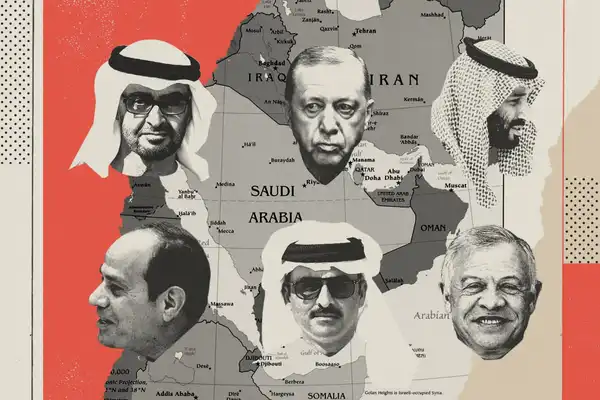
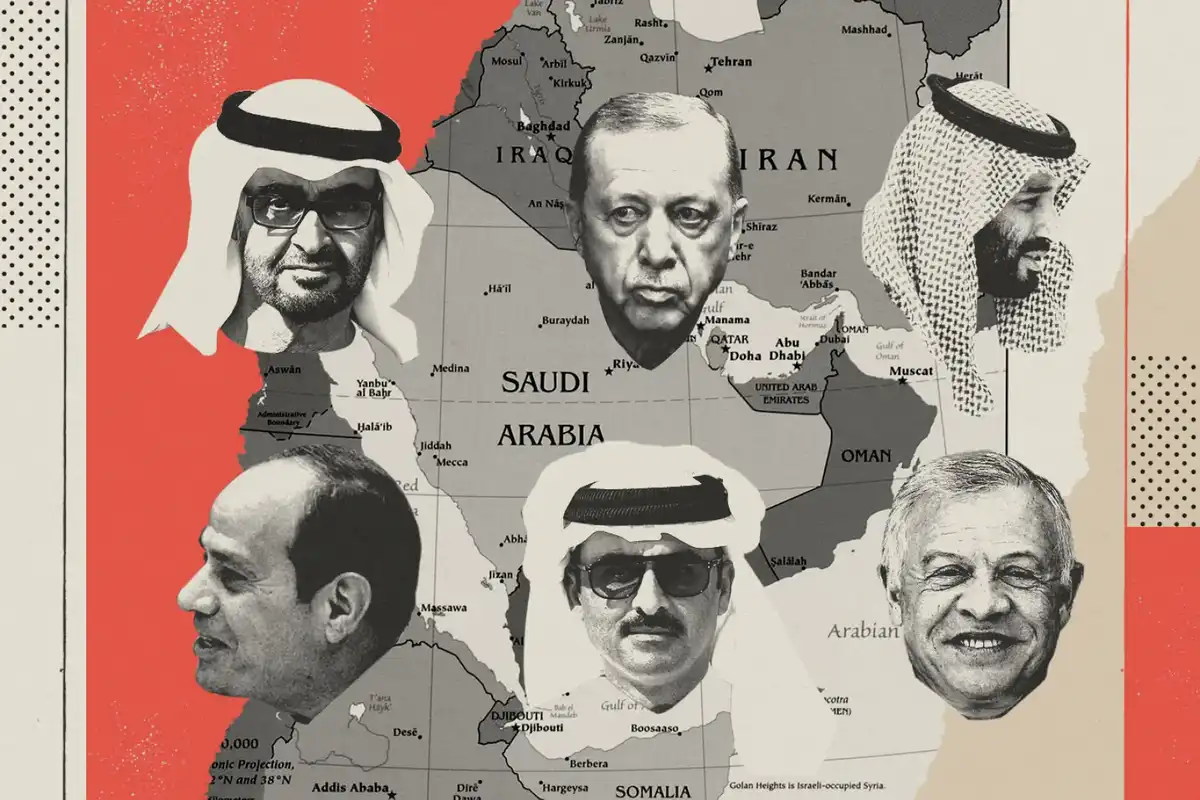
Of course, the United States will continue to be involved in the Middle East. If missile strikes on U.S. forces result in American deaths or if a terrorist attack linked to the Gaza conflict kills American civilians, it could force a greater U.S. military engagement than the administration might want. But waiting for the United States to take the lead in effectively managing Gaza and delivering a lasting Middle East peace would be like waiting for Godot: current regional and global dynamics simply make it too difficult for Washington to play that dominant role. That doesn’t mean that other global powers will replace the United States. Neither European nor Chinese leaders have demonstrated much interest in or capacity for taking on the job, even as U.S. influence wanes. Given this emerging reality, regional powers—particularly Israel’s immediate Arab neighbors Egypt and Jordan, along with Qatar, Saudi Arabia, Turkey, and the United Arab Emirates (UAE), which have been coordinating since the war began—urgently need to step up and define a collective way forward.
Finding common ground after Hamas’s brutal October 7 attacks and Israel’s devastating campaign in Gaza will be exceptionally difficult. And the longer the war continues, the greater the risk of broader fractures across the Middle East. But in the years preceding the attacks, both Arab and non-Arab states showed the potential for new forms of cooperation in what amounted to a major reset of relations across the region. Even after months of war, many of these ties have remained intact. Now, before this trend reverses, these governments must come together to build lasting mechanisms for conflict prevention and, ultimately, peace.
Most urgently, regional powers must support a meaningful political process between the Israelis and the Palestinians. But they should also take decisive steps to prevent such a cataclysm from happening again. In particular, they should seek to establish new and stronger regional security arrangements that can provide stability with or without U.S. leadership. It is well past time for the Middle East to have a standing forum for regional security that establishes a permanent venue for dialogue among its own powers. Gleaning opportunity from tragedy will take hard work and a commitment at the highest political levels. But as distant as this vision may seem today, the potential exists for Middle East leaders to arrest the spiral of violence and move the region in a more positive direction.
ANXIETIES OF INFLUENCE
Despite mounting frustration with the Biden administration for not taking decisive action to end the war, some Arab leaders, along with pro-interventionists in Washington, may be eager to see the United States “back” in the Middle East. The Biden administration’s swift diplomatic and military response—and its willingness to use force against Iranian-aligned groups—has suggested that the region is once more at the heart of U.S. national security concerns. In fact, in terms of military might, the United States never left: at the time of the October 7 attacks, tens of thousands of U.S. forces were already stationed in the region, and Washington continues to maintain sizable military bases in Bahrain and Qatar, as well as smaller military deployments in Syria and Iraq.
But the United States’ military and diplomatic activity since October 7 has not instilled confidence. For one thing, the administration’s effort to prevent a wider regional conflict has been decidedly mixed. At one of the most concerning flash points, Israel’s simmering conflict with Hezbollah on the Lebanese border, Washington has been unable to prevent growing violence on both sides. Along with significant military and civilian casualties, tens of thousands of civilians have been forced to evacuate towns in northern Israel and southern Lebanon. Hezbollah has thus far refused to withdraw its forces from the border in exchange for economic incentives, and Israel—which has already assassinated a top Hamas official in Beirut—has signaled that time is running out for diplomacy.
Meanwhile, the United States has struggled to contain military pressure from Iranian proxies in Iraq, Syria, and Yemen. Since the start of the war, U.S. forces in Iraq and Syria have faced more than 150 attacks from these groups. And despite a series of retaliatory strikes by the United States and the United Kingdom, Washington has been unable to put an end to the Houthis’ relentless missile and drone attacks in the Red Sea. Already, the Houthis have been able to cause significant disruptions to international trade, forcing major shipping companies to avoid the Suez Canal. Notably, U.S. attempts to corral a multinational maritime force to counter the threat have been unable to attract regional partners such as Egypt, Jordan, and Saudi Arabia, which remain wary of the administration’s Gaza policies.
American military and diplomatic activity has not instilled confidence.
As Washington’s military leverage diminishes, its diplomatic muscle has also weakened. Rather than showing resolve, the continual visits of senior administration officials to the region have demonstrated how little sway the United States retains—or in the case of Israel, the administration’s unwillingness to use it. During the initial months of the war, one of the administration’s few apparent accomplishments was a one-week pause in fighting in late November, which led to the release of over 100 Israeli and foreign hostages and a modest delivery of humanitarian aid to Gaza. But even in that case, Qatari and Egyptian mediation was crucial. Otherwise, the United States has been unwilling (at least as of this writing) to call for a cease-fire, and the administration’s public diplomacy has mostly been limited to rhetorical efforts to restrain the worst impulses of Israeli Prime Minister Benjamin Netanyahu and his right-wing government.
The administration has been more vocal in promoting “day after” peace ideas focused on what it calls a “revitalized” Palestinian Authority leadership in the West Bank and Gaza and regional support for rebuilding Gaza. But regional powers, particularly the wealthy Gulf Arab states, have made clear that they will not endorse such plans without irreversible steps toward Palestinian statehood. After U.S. officials began speaking more publicly about the need for a two-state solution as part of a larger normalization pact with Saudi Arabia, Netanyahu flatly rejected the possibility and insisted that Israel must remain in full security control of Palestinian areas. But even centrist Israeli officials expressed astonishment that the United States was pressing peace initiatives while the all-out war against Hamas was continuing. Meanwhile, the administration’s backing of Israel in the fighting and its perceived lack of empathy for Palestinian suffering have created significant obstacles to attracting regional support, let alone Palestinian buy-in, for any American-led plan.
The United States will continue to be a major player in the region because of its military assets and its unparalleled relationship with Israel. But any expectation that Washington will be able to achieve a grand bargain that could definitively end the Israeli-Palestinian conflict is detached from the realities of today’s Middle East. In the end, major diplomatic breakthroughs are most likely to come from, and depend on, the region itself.
GOING IT ALONE, TOGETHER
The consequences of Washington’s diminishing influence in the Middle East have not been limited to the current conflict. As U.S. engagement in the region declined in the years leading up to October 7, major regional powers steadily increased their efforts to shape and set security arrangements. Indeed, beginning in 2019, governments across the region began to mend previously fraught relations. This unusual regional reset was driven not only by economic priorities—overcoming frictions that had previously disrupted or held back trade and growth—but also by the perception that Washington’s interest in managing Middle East conflicts was waning.
Take the rapprochement between the Gulf states and Iran. In 2019, the UAE began restoring bilateral ties with Iran after a three-year rupture, seeing an opportunity to directly manage relations and protect its interests from Iranian-backed groups that had been disrupting Gulf shipping and threatening Emirati tourism and trade. Abu Dhabi formally resumed diplomatic ties with Tehran in 2022, paving the way for Riyadh to follow suit. In March 2023, the longtime rivals Saudi Arabia and Iran announced that they were resuming relations in an accord brokered by China after months of back-channel talks moderated by Oman and Iraq. The United States had no part in these deals.
Meanwhile, in 2021, Bahrain, Egypt, Saudi Arabia, and the UAE ended a three-and-a-half-year blockade of Qatar that had been motivated principally by Qatar’s backing of Muslim Brotherhood groups, its close ties with Iran and Turkey, and its activist Al Jazeera television channel. Around the same time, the UAE and Saudi Arabia reconciled with Turkey, which they had previously shunned in response to Turkish support for Qatar and for groups affiliated with the Muslim Brotherhood. (Saudi-Turkish ties had also been strained because of a Turkish judicial investigation into the murder of Khashoggi at the Saudi consulate in Istanbul.) By resuming ties, the Saudis and Emiratis opened the door to crucial Gulf investment in the struggling Turkish economy. And in May 2023, Arab leaders invited Syrian President Bashar al-Assad back into the Arab League, marking the end of more than a decade of isolation during Syria’s brutal civil war.
As part of this broader reset, governments across the Middle East also began to participate in a variety of regional forums. The Baghdad Conference for Cooperation and Partnership, which met for the first time in Baghdad in 2021 and again in Amman in 2022 to discuss Iraq’s stability, convened a wide array of previous rivals—including Iran and Turkey, the members of the Gulf Cooperation Council, and Jordan and Egypt. The East Mediterranean Gas Forum, established in 2020, brought together Cyprus, Egypt, France, Greece, Israel, Italy, and Jordan, along with representatives from the Palestinian Authority, in what is designed to be a regular dialogue built around gas security and decarbonization. And the so-called I2U2, a group that includes India, Israel, the UAE, and the United States, was set up in 2021 to foster cross-regional partnerships focusing on health, infrastructure, and energy.
Another aspect of this regional reset was Israel’s normalization with several Arab governments. In the 2020 Abraham Accords, Bahrain, Morocco, and the UAE agreed to establish formal ties with Israel, creating opportunities for new economic relations and trade. Notably, one goal of the accords was to pave the way for new direct security relationships between Israel and the Arab world. Before the October 7 attacks, the Biden administration had high hopes that Saudi Arabia, as a leading member of the Arab world, would also join this group. Building on those accords, the March 2022 Negev Summit brought together Bahrain, Egypt, Israel, Morocco, the UAE, and the United States to encourage economic and security cooperation in what was intended to be a regular meeting.
Glaringly absent from the normalization deals, however, was the Palestinian issue, which was largely set aside. As a result, Jordan refused to participate in the Negev Summit, and as tensions over Israel’s settlements in the West Bank flared in early 2023, a further meeting of the group was repeatedly postponed. Now, with the devastation of Gaza, any further progress will be contingent on not just ending the war but also building a viable plan for a Palestinian state.
RUPTURES AND RESILIENCE
In theory, the catastrophic war in Gaza would seem to pose a grave threat to the Middle East reset. In most cases, newly established regional relations are still fragile and have yet to address thorny issues such as weapons proliferation, the continued backing of militant groups in Libya and Sudan by the UAE, Iran’s support for armed nonstate militia groups across the region, and Syria’s export of the drug Captagon. Along with endangering Israel’s fledging normalization of relations with Arab governments, the intensifying involvement of Iranian-backed groups—from Hezbollah and the Houthis to various militias in Syria and Iraq—has the potential to create new fissures between Iran and the Gulf states. Yet so far, the emerging realignments have proved surprisingly durable.
Rather than derailing relations between Iran and Saudi Arabia, the Gaza war seems to have strengthened them. In November 2023, Iranian President Ebrahim Raisi attended a rare joint meeting of the Arab League and the Organization of Islamic Cooperation hosted by Saudi Crown Prince Mohammed bin Salman in Riyadh, and the following month, Iranian and Saudi leaders met again in Beijing to discuss the Gaza war. The two countries have also planned an exchange of state visits by Raisi and Mohammed in the coming months—meetings that are supposed to formalize new economic and security ties. And despite simmering tensions over the Houthis in particular, the Iranian and Saudi foreign ministers met at the World Economic Forum in Davos in January 2024, as well.
So far, the war seems to have strengthened ties between Iran and Saudi Arabia.
Meanwhile, diplomatic ties between Israel and its Abraham Accord partners have so far held. The UAE has made clear that it views dialogue with the Israeli government, even in the current crisis, as an important way to make progress on an Israeli-Palestinian political settlement. And although Bahrain’s parliament has condemned the sustained assault on Gaza, the country has not formally severed ties with Israel. For both Arab states, normalization is not just about strengthening economic bonds with Israel but also reinforcing strategic ties with the United States. For despite Washington’s perceived shift away from the region in recent years, Gulf Arab states still seek U.S. security guarantees and protection: in January 2022, Biden designated Qatar as a “major non-NATO ally,” and in September 2023, Bahrain and the United States signed an agreement to strengthen their strategic partnership.
Certainly, the war has created new obstacles to regional cooperation, particularly when it comes to Israel and neighboring states. Both Turkey and Jordan have withdrawn their ambassadors from Israel, and direct flights between Israel and Morocco stopped in October. By late January, with more than 26,000 killed in Gaza and no cease-fire in sight, Arab public opinion was more strongly opposed to normalization than ever. Many also fear that the U.S. and British military strikes on the Houthis could embolden the group in Yemen and set back efforts to formalize a long-sought cease-fire in the Houthis’ nearly decadelong war in Yemen with Saudi Arabia. And although Gulf Arab states have made a commitment to continue reaching out diplomatically to Tehran, few officials in the region are hopeful that Iran will alter its approach of “forward defense,” in which it relies on militant groups to build strategic leverage and maintain deterrence. In mid-January, Tehran’s direct missile strikes on Iraq, Pakistan, and Syria in response to Israeli strikes and an attack by the Islamic State in the Iranian city of Kerman increased tensions further.
For now, there are indications that Middle East leaders seek to transcend these disputes. For example, to manage growing economic pressure and unrest at home, Iran has given new priority to regional business and trade relations not only with Gulf Arab states but also with Iraq, Turkey, and Central Asian countries, as well as China and Russia. This points to the pragmatic impulses driving Tehran’s message that it seeks to avoid direct engagement in the Gaza conflict despite its backing of various proxy groups. But as tit-for-tat attacks mount across the region in the absence of a Gaza cease-fire, Iran’s calculations could very well shift.
THE GAZA EFFECT
Paradoxically, one of the strongest forces holding the region together may be the plight of Gaza itself and the Palestinian issue, which the war has so starkly brought to world attention. Facing overwhelming popular anger and the long-term potential for radicalization and the return of extremist groups, regional leaders have largely aligned their policy responses to the war. Despite divergent strategies toward Israel and the Palestinians before October 7, governments around the Middle East are broadly united on demanding an immediate cease-fire, opposing any transfer of Palestinians out of Gaza, calling for humanitarian access to Gaza and for the urgent provision of aid, and supporting negotiations for the release of Israeli hostages in return for an end to the war. The question now is whether this unity can be steered toward building a legitimate peace process.
For many regional Arab and Muslim countries, the highest priority has been defining a clear plan for Gaza and, ultimately, Palestinian statehood. Israeli leaders have suggested that Gulf states with substantial resources, such as Saudi Arabia and the UAE, might share the cost of rebuilding Gaza. But Israel’s current government has said it opposes a Palestinian state, and with the war continuing, no Arab governments are willing to make such a commitment or be seen to be underwriting Israel’s war effort. Instead, they have unveiled their own proposals for a postwar peace.
In December 2023, Egypt and Qatar put forward a plan that began with a cease-fire contingent on phased hostage releases and prisoner exchanges. After a transition period, these confidence-building steps would, in theory, lead to the creation of a Palestinian unity government. Composed of members of both Fatah, the nationalist party that has long controlled the PA, and Hamas, the new leadership would jointly run the West Bank and Gaza, in view of a critical regional demand that the different Palestinian territories no longer be politically separated. This last phase would require Palestinian elections and the creation of a Palestinian state. Although Israel dismissed the plan itself, both for the inclusion of Hamas and over the issue of statehood, it provided a starting point for further discussion.
In turn, Turkey has floated the concept of a multicountry guarantor system, with states in the region protecting and bolstering Palestinian security and governance and the United States and European countries providing security guarantees for Israel. Others have proposed that the United Nations run a transitional authority in the West Bank and Gaza, an approach that would allow time to overhaul the Palestinian governance structure and ultimately lay the groundwork for Palestinian elections. For its part, Iran has repeatedly stated that it will reinforce any outcome that is supported by the Palestinians themselves—suggesting that there is a renewed opportunity to persuade Tehran to support a deal and forestall its usual spoiler role.
Meanwhile, Saudi Arabia has been developing a peace plan with other Arab states that would condition normalizing ties with Israel on the creation of an irrevocable path to a Palestinian state. Riyadh’s approach is underpinned by the 2002 Arab peace initiative that committed to Arab recognition of Israel in exchange for the creation of a Palestinian state in East Jerusalem, Gaza, and the West Bank. The current Saudi plan aligns with Washington’s push for Israeli-Saudi normalization. It remains unclear, however, whether the Saudis would agree with their American counterparts on what constitutes credible and irreversible steps toward a Palestinian state, particularly given strong Israeli resistance.
Under Netanyahu, the Israeli government continues to reject all these proposals. But as of late January, Israel remained far from accomplishing its war aim of eradicating Hamas, and it had yet to secure the release of more than 100 remaining hostages. There were also rising tensions in both the war cabinet and the Israeli public about the future course of the military campaign. Moreover, the country has deferred any serious public or political debate on its future security until the war is over. When that happens, Israel will need to have open diplomatic channels with, and secure funding and security guarantees from, Arab governments, as well as retain Washington’s engagement through the process.
It may take years to establish the necessary political conditions for a serious peace process after such a terrible war. Nonetheless, the conflict and its regional spillover are a stark reminder that although the Israeli-Palestinian conflict is not the only cause, regional stability will be at constant risk as long as it continues. And regional governments are increasingly aware that they cannot rely on the United States alone to provide a viable peace process for them.
RIVALS INTO NEIGHBORS
Even as it has thrust the Palestinian issue back to the forefront of the international agenda, the war in Gaza has underscored the important new political dynamics in play across the Middle East. On the one hand, the United States appears to have less influence. But at the same time, regional powers, including those previously at odds, are taking the initiative, involving themselves in mediation, and coordinating their policy responses. Whereas before October 7, regional powers—in particular, Egypt, Jordan, Qatar, Saudi Arabia, Turkey, and the UAE—were less aligned on the Palestinian issue, they are now acting with impressive unity, coordination, and planning. To turn this shared resolve into a lasting source of collective leadership, however, these powers must embrace more permanent regional institutions and arrangements.
Most critically, these should include a standing dialogue forum for the entire region. Episodic summits for cabinet ministers and ad hoc “minilateral” groupings such as the East Mediterranean Gas Forum and I2U2 will no doubt continue to define the regional landscape in the years ahead. But a permanent forum for regional security is lacking. In other parts of the world, cooperative security forums, such as the Organization for Security and Cooperation in Europe and the Association of Southeast Asian Nations, have been able to develop alongside bilateral and regional security alliances, enhancing communication even among adversaries and helping prevent conflict. There is no reason for the Middle East to remain the global exception. And given the region’s pressing need to coordinate and de-escalate, the current crisis provides a crucial opportunity to begin such an initiative.
Although leaders have been skeptical about the idea of a forum embracing the entire region, there are several ways that new cooperative security mechanisms could be built. For example, ever since the Madrid peace process was launched in the early 1990s to address the Israeli-Palestinian conflict, such arrangements have been informally proposed in dialogues among experts. Over the past few years, numerous policymakers and others have made clear that this approach is ripe for implementation at an official level. Although such a forum should ultimately aim to include the entire region—all Arab states, Iran, Israel, and Turkey—that won’t immediately be feasible. But a smaller number of key states could start an official process, holding open the prospect of wider participation down the road. Since several Arab states and Turkey have relationships with both Israel and Iran, their participation will be especially valuable at the outset.
The Middle East lacks a permanent forum for regional security.
The new organization, which could be called the MENA Forum, to encompass the broadest understanding of the Middle East and North Africa region, should initially focus on cross-cutting issues on which there is broad consensus, such as climate, energy, and emergency responses to crises. Although the resolution of the Gaza war and the Israeli-Palestinian conflict will likely need to be led through a separate Arab initiative, the forum could coordinate positions on postwar Gaza through its emergency response agenda, including humanitarian support and reconstruction aid for Palestinians. The forum would not directly mediate conflicts itself: cooperative security dialogues have proved most effective when focused on improving communication and coordination to defuse tensions and on providing mutual security and socioeconomic benefits to members. But through regular contacts and a gradual building of trust, such a process could support conflict resolution in the Israeli-Palestinian arena and beyond.
Indeed, standing regional meetings can provide important opportunities, not to mention political cover, for dialogues on contentious disputes among rivals and adversaries who otherwise lack direct channels of communication. These could include not only Israelis and Palestinians but eventually also Israelis and Iranians, who could meet in technical working groups on noncontroversial issues of mutual concern. Such interactions have already quietly unfolded on the sidelines of other multilateral forums focused on climate and water, suggesting that more inclusive regional cooperation is ultimately possible.
Establishing a Middle East security forum will require political will at the highest levels, as well as a strong regional champion that is considered a neutral party. One possibility is to announce the new organization at a meeting of foreign ministers, possibly on the margins of another regional gathering, like one of the economic sessions that have been held at the Dead Sea in Jordan. The initiative will be more likely to succeed if it is both created and led from the region. Middle powers in Asia and Europe could provide political and technical support in areas where they may have valuable expertise, for example. At least at the outset, China, Russia, and the United States should have limited roles to prevent the forum from turning into another platform for great-power competition. Nonetheless, support from both Washington and Beijing will be critical to ensure that the forum becomes a useful supplement, rather than a threat, to their own diplomacy in the region.
A TIME TO LEAD
Among the difficult realities that the war in Gaza has exposed, one of the starkest may be the limits of American power. As much as it may be wished for, the United States is unlikely to provide the decisive leadership or the leverage needed to push through a lasting Israeli-Palestinian settlement. It will be up to the Middle East’s own leaders and diplomats to take charge. By capturing the region’s attention and diplomatic energy, the war has provided a rare opportunity for new forms of cooperative leadership.
A regional security forum cannot by itself deliver Middle East peace—no single initiative can do that. And without accountable governance, genuine long-term stability will remain elusive. Nor is an organization like this going to replace all the competitive power balancing that has long been a hallmark of Middle East statecraft. Even in Asia and Europe, cooperative arrangements have not supplanted national strategic rivalries or been able to foreclose military confrontation, as the war in Ukraine has so painfully demonstrated. Nonetheless, a regular forum would add a crucial layer of stability to the conflict-prone Middle East. Such a project is also increasingly urgent.
Although October 7 has not yet reversed all the regional currents favoring de-escalation and accommodation, time may be running out to capitalize on this reset. Leading Arab states, together with regional powers such as Turkey, must seize the moment to lock in some of the rapprochement that preceded Gaza and the coordination that has arisen since. The Middle East is facing a moment of reckoning. If it becomes paralyzed by the horrific bloodshed in Gaza, it could further descend into crisis and conflict. Or it can start building a different future.
ARAB AND WORLD
Thu 01 Feb 2024 2:37 pm - Jerusalem Time
Israeli army withdraws for the first time from areas in Gaza since the start of ground intervention
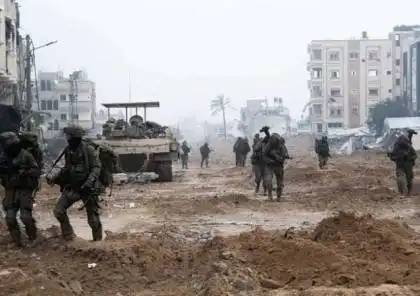
On Thursday, the Israeli army withdrew from the areas of the northwestern Gaza governorates and the northern Gaza Strip, for the first time since the start of its ground military operation on October 27, 2023.
The army and its military vehicles withdrew completely for the first time since October 27 from areas they had penetrated into in the western region of the northern Gaza Strip governorate, which includes the neighborhoods of Al-Tawam, Al-Karama, and Al-Rashid Street.
Israeli army also withdrew from residential neighborhoods located in the northwestern areas of Gaza Governorate, namely “General Security,” “Al-Maqousi,” “Intelligence Towers,” “Bahloul,” and “Al-Rashid Street.”
Hours after the withdrawal, residents of those areas went to inspect their homes and property, which they had been displaced from when the war on the Gaza Strip began.
A number of citizens said that they were “able to reach this area for the first time since the start of the ground operation.”
On October 27, 2023, the Israeli army began a ground operation that included an incursion into several areas and neighborhoods in the Gaza and North governorates.
Since mid-December, Israeli army began gradually withdrawing from areas in the northern Gaza Governorate, followed at the beginning of last January by partial withdrawals from neighborhoods and areas in the Gaza Governorate.
While it reopened its incursion into some areas in the Gaza and North governorates, in the middle of last January, to carry out rapid operations, changing the locations of the incursion from time to time while retreating after the end of its operations to its locations near the eastern and northern outskirts of the North governorate, and the eastern and “southwestern” parts of Gaza.
Since October 7, 2023, the Israeli occupation army has been waging a devastating war on the Gaza Strip that, as of Wednesday, left “26,900 killed and 65,949 injured, most of them children and women,” according to the Palestinian authorities, and caused “massive destruction and an unprecedented humanitarian catastrophe,” according to the United Nations.
PALESTINE
Thu 01 Feb 2024 2:34 pm - Jerusalem Time
A humanitarian tragedy is worsening... War, famine, and epidemics converge on Gaza

Experts warn that mass starvation is looming in Gaza on a scale unprecedented in modern history, according to Alex DeWall, executive director of the World Peace Foundation at Tufts University in Boston, and author of Mass Starvation: The History and Future of Famine.
Dewal says that before the war broke out in October, food security in Gaza was precarious, but very few children – less than 1% – were suffering from severe acute malnutrition, the most serious type. Today, “almost all Gazans, of any age, anywhere in the region, are at risk.”
Not since World War II has an entire population fallen into extreme hunger and destitution so quickly. There has never been a case in which the need for international commitment to stop this has been so clear.
Dewal warns that the famine in Gaza is man-made and the result of a deliberate Israeli policy of collective punishment. It would not have been possible to push the population to the brink of the abyss so quickly had it not been for the decision to place Gaza under siege by cutting off supplies of food, water, fuel and medicine. “The small amount of aid that has been allowed in since then cannot begin to meet the needs of more than two million people, especially after all of them were forcibly displaced,” he says. “And now, even the limited assistance provided by UNRWA is at risk due to the malicious and cynical decision that "The United States and other Western governments have taken action to cut off funding for the agency."
On Wednesday, CNN broadcast a report on the poor conditions that people are currently living in, noting that “those who are still in northern Gaza are forced to eat grass, while the lack of safe drinking water means that people are drinking contaminated water. Cases of diarrhea have increased.” "Among children under the age of five, it has increased by 2,000% since the beginning of the war. For young, malnourished children living in these conditions, diarrhea greatly increases the risk of death."
The Washington Post reported that some people in Gaza have resorted to grinding animal feed into bread so that they have something to eat.
There is no doubt that Israel is responsible for creating these conditions, according to Diwal. As UN human rights experts have said, “Israel is destroying Gaza’s food system and using food as a weapon against the Palestinian people,” while the Israeli government continues to deny the existence of any famine in Gaza, underscoring how little it cares about the civilian population in the blockaded enclave.
“Merely allowing aid in and placing some limits on Israeli military action will not stop this thundering train of disaster fast enough,” de Waal wrote. “An immediate ceasefire and full restoration of humanitarian aid are the minimum requirements to prevent the worst outcomes. Even if all “That tomorrow, thousands of people, most of them children, will still die of hunger and disease due to the harsh conditions that already exist throughout the province.”
“If nothing is done to stop the famine,” he says, “this number will rise sharply in the coming weeks and months. The worst can still be prevented, but there are no major international efforts underway to do so, and unless Israel follows the recommendations of the Famine Relief Commission.” "It will deliberately cause mass death due to hunger and disease."
PALESTINE
Thu 01 Feb 2024 1:44 pm - Jerusalem Time
West Bank: Israeli army and settlers uproot 300 vine trees west of Bethlehem

Today, Thursday, Israeli forces and settlers uprooted about 300 vine trees in the village of Battir, west of Bethlehem.
According to local sources, these forces, with military reinforcements and settlers, stormed the Al-Hanjaliyah Al-Qusayr area, east of the village, and bulldozed 5 dunums of land belonging to the citizen Ibrahim Khalil Abu Nimah.
It indicated that these forces closed the road between Battir and Husan.
PALESTINE
Thu 01 Feb 2024 1:28 pm - Jerusalem Time
Within 24 hours...Israeli army committed 15 massacres in the Gaza Strip, killing 118 Palestinians
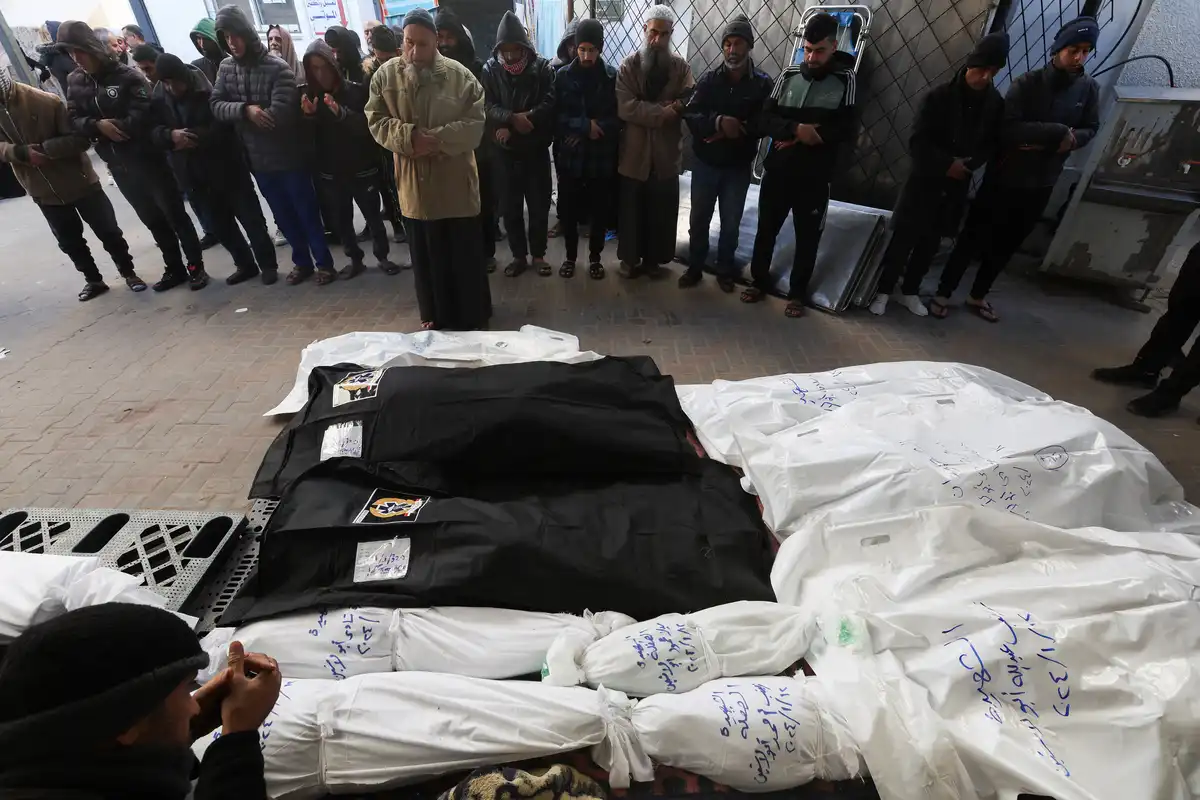
The Israeli army committed 15 massacres against families in the Gaza Strip, killing 118 people and wounding 190, during the past 24 hours.
According to the Ministry of Health in the Gaza Strip, the number of killed has risen to 27,019 people and 66,139 wounded since the start of the aggression on the Gaza Strip on the seventh of last October.
The Ministry indicated that there are still thousands of victims under the rubble and on the roads, as the occupation prevents ambulance and civil defense crews from reaching them.
ARAB AND WORLD
Thu 01 Feb 2024 12:53 pm - Jerusalem Time
Belnik to visit Tel Aviv for the sixth time.. What does he bring?

US Secretary of State Anthony Blinken will head to Israel next Saturday evening, on his sixth visit since the war between Israel and Hamas began on October 7, amid expectations that the United States will intensify pressure to reach a solution regarding the ceasefire in light of an expected truce.
Observers who spoke to Sky News Arabia believe that the US President’s administration is facing more pressure to stop the war in Gaza, in light of the rejection of a large segment of young voters’ policy of absolute support for Israel, which threatens the popularity of potential presidential candidate Joe Biden. Therefore, the United States is intensifying its efforts to Its movements to establish a comprehensive ceasefire.
On Monday, Blinken expressed his hope of reaching an agreement to stop the fighting in Gaza in exchange for the release of the hostages. His statements came a day after the CIA director, the Qatari prime minister, and Israeli and Egyptian security officials met in Paris to develop a framework agreement to present to Hamas.
Blinken visited Israel earlier this month for a series of tense meetings with Prime Minister Benjamin Netanyahu and Israel's wartime leadership, which yielded no results.
Democratic Party member Mahdi Afifi told Sky News Arabia that the US Secretary of State will press this time to reach a solution for a ceasefire in Gaza, and he is also expected to discuss the American proposal for a two-state solution.
The visit comes at a time when talks brokered by the United States, Qatar and Egypt appear to be making progress on a new agreement between Israel and Hamas aimed at the release of 136 Israeli hostages in exchange for the release of Palestinian prisoners and a truce in Gaza, according to Afifi.
President Biden is facing increasing pressure for a ceasefire in Gaza inside America, according to Afifi, in light of the worsening humanitarian crisis inside the Strip and the increasing number of victims to a level historically unprecedented.
Afifi also points out the political pressure on the Biden administration from within Congress to stop policies of absolute support for Israel and advance American interests, so Blinken is intensifying diplomatic moves in order to reach a solution soon.
The focus of disagreement
According to Afifi, the dispute between the two sides revolves around two axes:
The US administration fully supports the two-state solution through the establishment of a Palestinian state. Which is rejected by the Netanyahu government.
The Biden administration is dissatisfied that Israel has not yet achieved the stated goals of its war on Gaza (liberating Israelis and foreigners and eliminating Hamas); Which means its duration will be prolonged as the number of civilian deaths continues to increase.
Will US pressure succeed?
American researcher Irina Tsukerman told "Sky News Arabia" that Biden faces a dilemma in the election year, which is to ensure the settlement of the Gaza war as quickly as possible, and on the other hand to appeal to diverse constituent bodies, with conflicting views on this issue, as well as managing regional and global crises. Multiple.
On the one hand, Biden needs Israel to succeed in crushing Hamas, because he wants to be seen as standing by a key ally in the Middle East, and because Hamas has shown to be not just a local or even a regional threat, but a global threat.
On the other hand, the controversy over humanitarian and human rights appeals after the Israeli massacres and high casualty numbers in Gaza has caused division among Western allies at a critical time when the United States needs their support on the Ukraine issue given the level of polarization in the United States.
Republicans are blocking any additional funding for Israel and Ukraine and focusing on other priorities.
The difficult effort to balance these concerns has therefore included pressure to get Israel to focus solely on high-level Hamas leadership while using smaller teams of members of the IDF, to increase humanitarian access, and even to scale back operations.
The conflict expands regardless of what Israel does or does not do, because it was planned that way by Iran and its proxies.
Israel is committed to its national security priorities, and no matter how much support the United States appreciates, it cannot afford not to completely destroy Hamas' military infrastructure, otherwise the conflict will renew with Hamas better positioned to fight this war later because of its political role. It turned out that it was not a small, marginal organization, but rather it had formed an army, a system, and the capabilities of a state.