PALESTINE

Wed 21 Feb 2024 11:54 am - Jerusalem Time

Thedeath of the Palestinian detainee Khaled Al-Shawish from Tubas in Nafha prison

The Prisoners' and Ex-Prisoners' Affairs Authority and the Prisoners' Club announced today, Wednesday, the death of detainee Khaled Al-Shawish from Al-Fara'a camp, north of Tubas. He has been detained since May 28, 2007, and has been sentenced to 11 life imprisonments.


Prisoner Al-Shawish was born on January 14, 1971. He studied in UNRWA schools in the camp. He is married and has four children, one of whom is his son Qutaiba, who spent 5 and a half years in the occupation prisons.


Prisoner Al-Shawish was seriously injured by bullets from the Israeli army in 2001, which led to his paralysis. Six years after his injury, the occupation forces arrested him on May 28, 2007, and sentenced him to life imprisonment (11) times.

Since the date of his arrest until today, prisoner Khaled Al-Shawish has been facing chronic and serious health conditions that resulted mainly from being shot by bullets.


PALESTINE

Wed 21 Feb 2024 11:45 am - Jerusalem Time

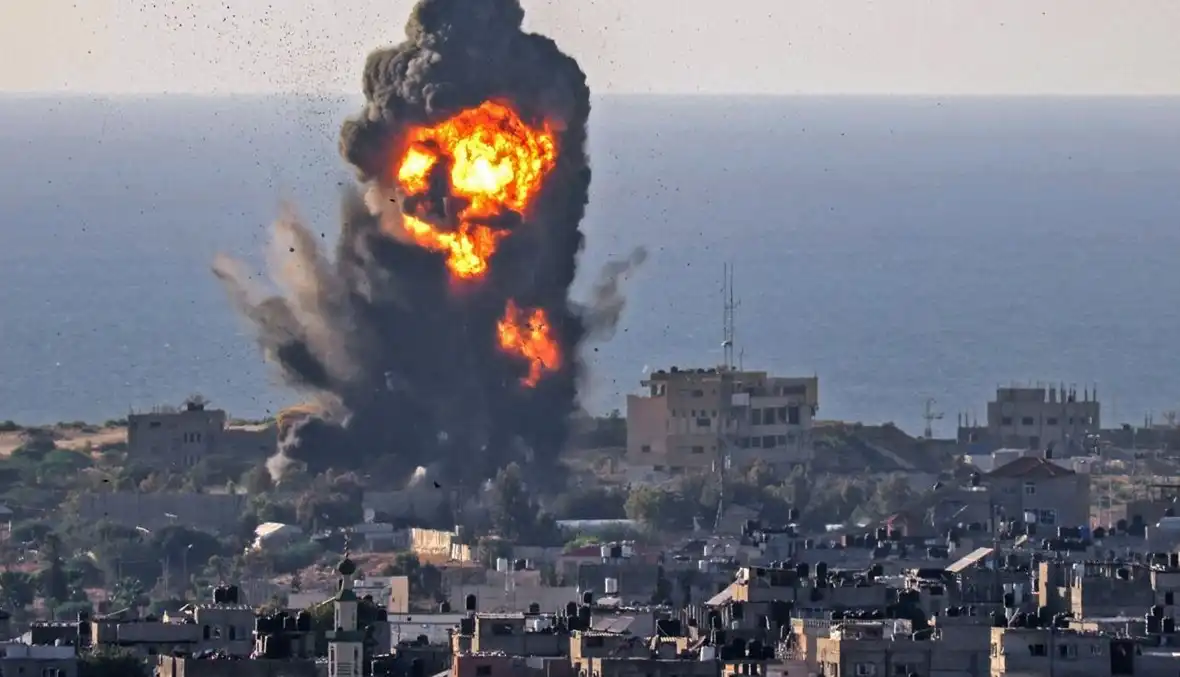
During the past 24 hours, Israel committed 11 massacres in the Gaza Strip

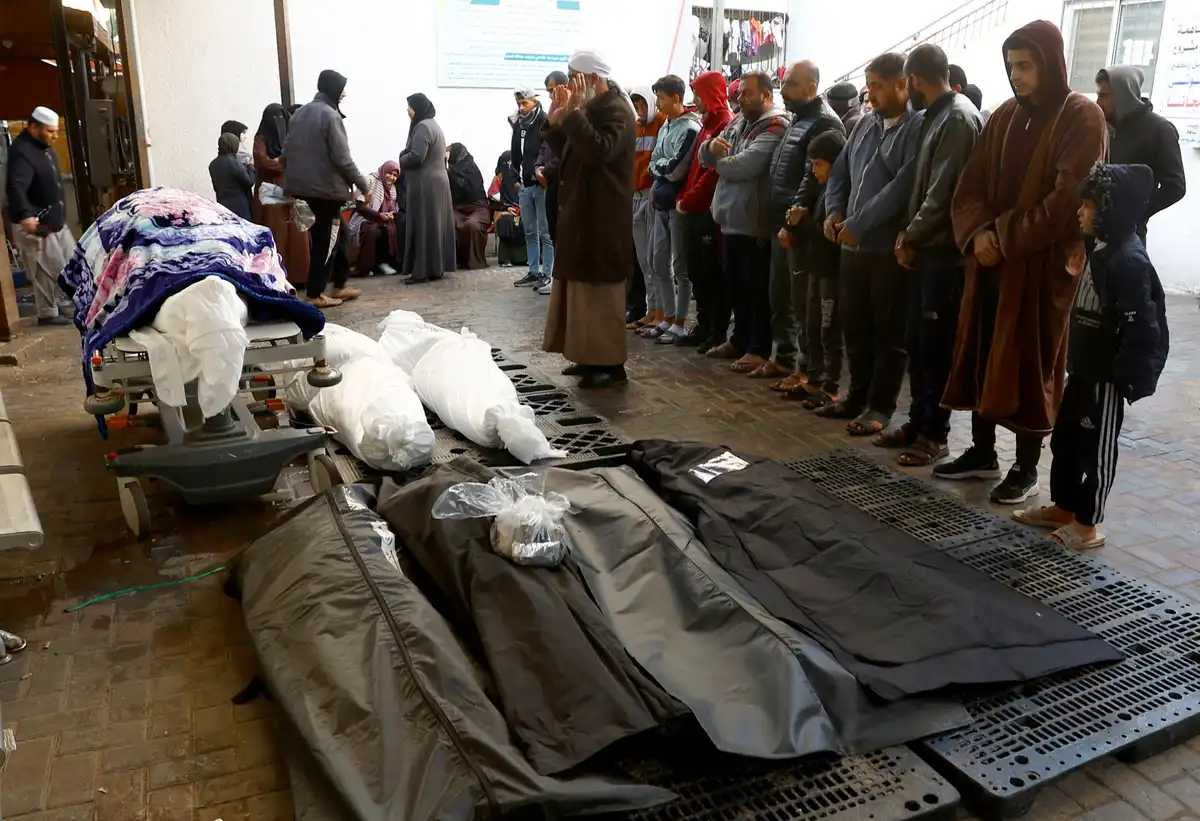
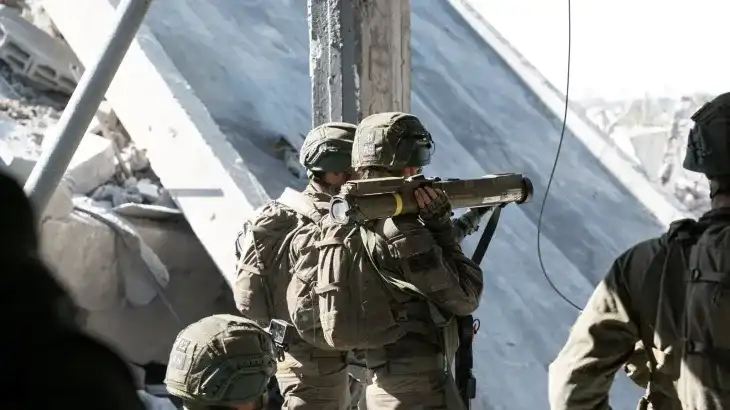
The Israeli army committed 11 massacres against families in the Gaza Strip, claiming 118 killed and 163 injuries during the past 24 hours.

According to the Ministry of Health, there are still a number of victims under the rubble and on the roads, and Israeli  army prevents ambulance and civil defense crews from reaching them.

She pointed out that the toll of the Israeli aggression rose to 29,313 killed and 69,333 injuries since the seventh of last October.

ARAB AND WORLD

Wed 21 Feb 2024 10:37 am - Jerusalem Time

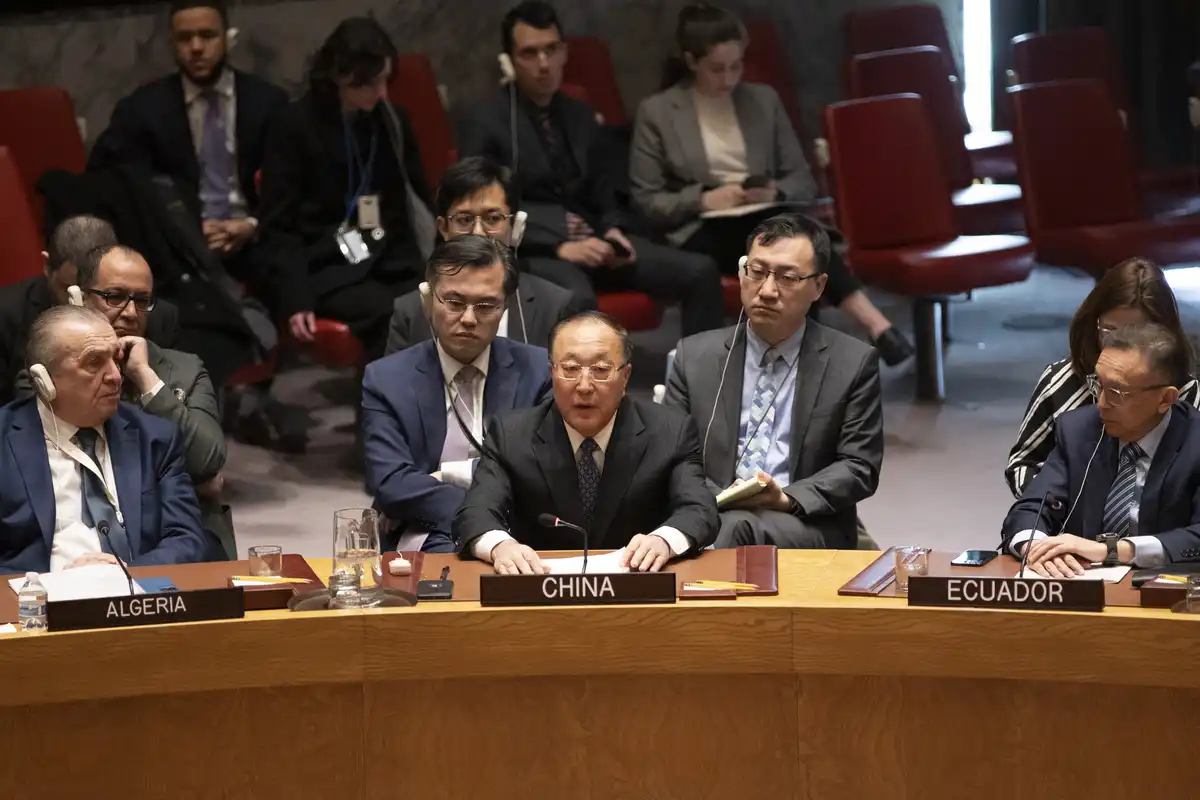
China: Objecting to the ceasefire in Gaza is no different from giving a license to kill

Following the US veto of a draft resolution in the UN Security Council that had called for an immediate humanitarian ceasefire in Gaza, a Chinese envoy said that objecting to a ceasefire in Gaza is no different from giving the green light to the continuation of the massacre.


The draft resolution received 13 supportive votes from among the 15 members of the Council. Britain abstained from voting.


Zhang Jun, China's permanent representative to the United Nations, said that China expresses its deep disappointment and dissatisfaction with the American "veto."


He explained in an explanation of the vote after the vote that Algeria, on behalf of the Group of Arab States, presented the draft resolution demanding an immediate ceasefire in Gaza, the immediate release of all hostages, ensuring the arrival of humanitarian supplies, and rejecting forced displacement, adding that such a resolution, which is based To the minimum humanitarian requirements, it is urgently needed due to the situation on the ground and deserves the support of all members of the Security Council.


He stated that Algeria, which showed wisdom, sincerity and an open position, conducted lengthy and extensive consultations with all parties on the draft resolution and took into account many constructive ideas, which made the draft resolution more balanced, adding that “the result of today’s vote clearly shows that with regard to the issue of a ceasefire The fire to stop the fighting in Gaza is not that the Security Council does not have an overwhelming consensus of opinions, but rather the exercise of its veto power by the United States is what is stifling the Council’s consensus.”


Zhang pointed out that the US "veto" sends the wrong message, which pushes the situation in Gaza to a more dangerous situation.


He stated that the United States’ claim that the resolution would conflict with ongoing diplomatic efforts is completely indefensible, indicating that, given the situation on the ground, the continued passive avoidance of an immediate ceasefire is no different from giving the green light for the continuation of the massacre.


Zhang pointed out that with the veto of the draft resolution, the repercussions of the conflict destabilize the entire Middle East region, leading to increased risks of a broader war. The world cannot prevent the fires of hell from sweeping the entire region except by extinguishing the fire of war in Gaza, explaining that the Security Council must move quickly to stop this massacre.


He stressed that the Security Council must take measures to pressure for a ceasefire, and this should not be a topic of discussion, but rather it is considered a moral obligation that the Council cannot ignore. It is a legal responsibility that must be undertaken by the Council. Even more than that, this is a political demand that the Council must fulfill in accordance with the United Nations Charter.


He said, "The veto cannot silence the strong call for a ceasefire and an end to the war. The Security Council cannot stop its work to uphold justice and fulfill its responsibilities just because of the use of the veto."


Zhang stated that China urges Israel to respond to the call of the international community, abandon its plans to launch an attack on the city of Rafah, and stop the collective punishment of the people of Palestine. China expects countries with great influence to have less political calculations, but rather to be truly neutral and responsible, and to take action. The right choice to push for a ceasefire in Gaza, adding that China calls on the international community to mobilize all diplomatic efforts to give the people of Gaza a chance to survive, and to give the peoples of the entire Middle East region a chance to enjoy peace, and to give them a chance to obtain justice.

PALESTINE

Wed 21 Feb 2024 9:22 am - Jerusalem Time

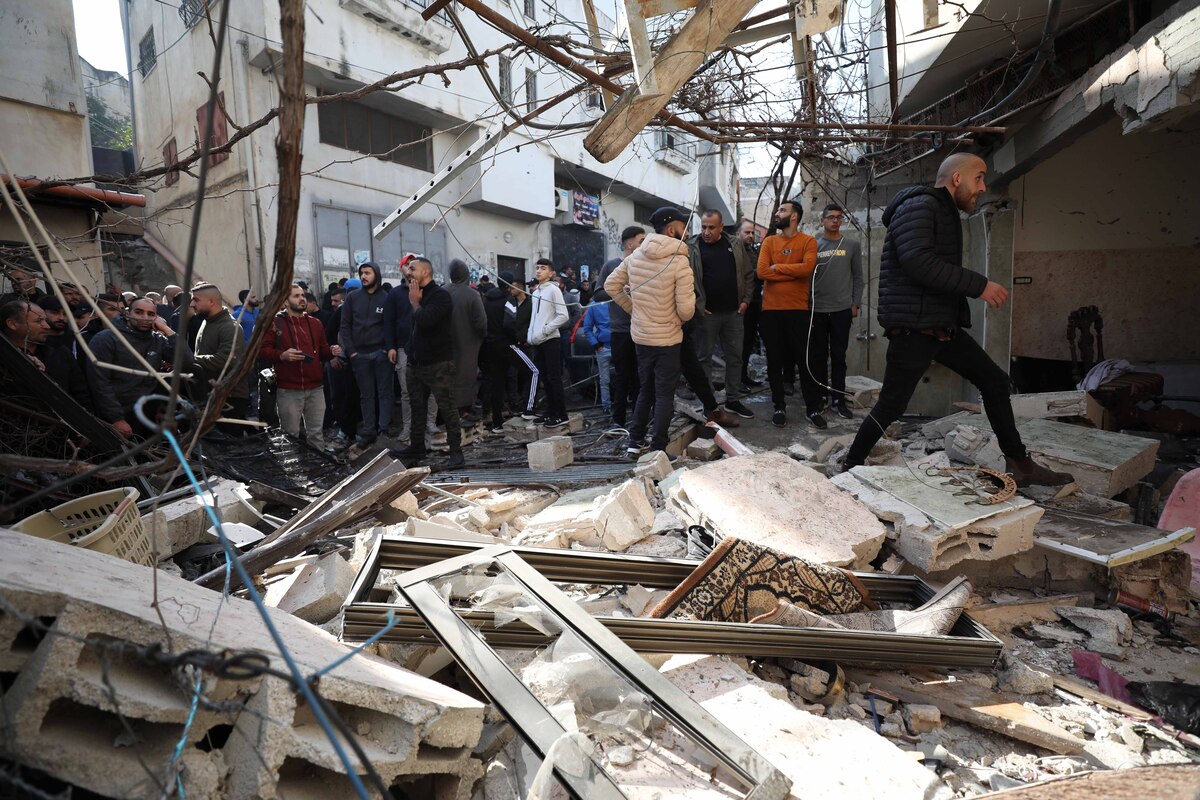
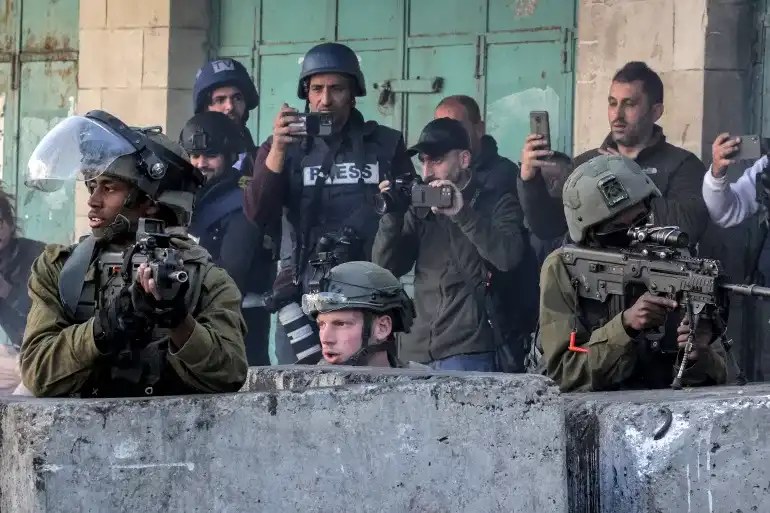
West Bank: One Palestinian dead, arrests, and destruction of infrastructure in Jenin

The Ministry of Health announced the death of the young man, Arif Marwan Arif Ali (26 years old), from the village of Kafr Qaddum in Qalqilya, during the Israeli forces’ storming of the city of Jenin and its camp, last night.


Large forces from the Israeli army stormed the city of Jenin and its camp from Nazareth and Haifa Streets, after a special Israeli force, “Musta'arabiun,” besieged two houses in the camp, which led to the outbreak of violent confrontations, during which three citizens were injured, the wounds of one of whom were described as serious.


The Israeli forces began to destroy the infrastructure in the city of Jenin and its camp, especially on Haifa Street at Al-Ahmadin Roundabout, Military Street, Yahya Ayyash Roundabout, Al-Jalbouni Roundabout, Watermelon Roundabout, and Al-Hathnawi Roundabout. They also destroyed Baskets. Citizens near “Al-Hamamah Roundabout” and “Zayed Roundabout” area in the city. A vehicle was also burned and other vehicles were destroyed.


The Israeli forces bombed with a missile a house in the Al-Samran neighborhood in the camp belonging to the citizen Muhammad Abu Jaber, and subjected dozens of young men to field investigation.


The Israeli forces launched a massive campaign of raids on homes in the camp, and arrested eight citizens, namely: Abdul Rahman Nidal Sabaya, Fadi Issam Sabaya, Hatem Sabri Masharqa, Tawfiq Muhammad Murad, Adham Samir Abu Tabikh, Adham Mutee Al-Saadi, and the two brothers Fares and Imran Jaber Al-Shalabi.

ARAB AND WORLD

Tue 20 Feb 2024 10:22 pm - Jerusalem Time

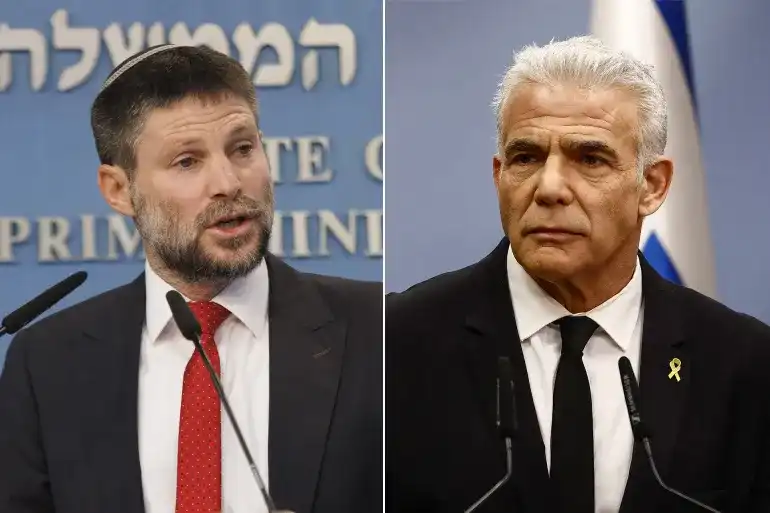
Smotrich: The destruction of Hamas is more important than the return of detainees in Gaza

Israeli Finance Minister Bezalel Smotrich said on Tuesday that the destruction of the Islamic Resistance Movement (Hamas) is more important than the return of those he called kidnapped from Gaza, to which opposition leader Yair Lapid responded by saying that his position regarding the detainees is a “moral disgrace.”


Smotrich explained, "The return of the kidnapped people at all costs is not the most important matter, but rather the destruction of Hamas," adding, "Whoever calls for a (prisoner) exchange deal at any price will bring loss to Israel and reduce the possibility of returning the kidnapped ones," he said.


Smotrich - who heads the "Religious Zionism" party - usually raises controversy with his statements, and he previously acknowledged to the families of Israeli detainees held by the Palestinian resistance in Gaza that he cannot promise them to return all the prisoners alive.


He added, "In my estimation, what is happening to manage this war is correct, and there is a clear policy that we will follow until the end, and we are prepared to pay prices for that."


'Moral disgrace'

The statements of the Israeli Finance Minister on Tuesday quickly sparked a response from opposition leader Yair Lapid, who said that "Smotrich's position on the return of the kidnapped people is a moral disgrace."


Lapid previously said that Israel "will neither be safe nor a moral state nor will it win the war unless the kidnappers return."


Lapid's statements coincided with previous statements by the Minister of Heritage in the Israeli government, Amichai Eliyahu, in which he said that "dropping a nuclear bomb on Gaza is a possible solution."


The Israeli opposition leader also previously called for the formation of a new government, and believed that the time had come for Benjamin Netanyahu's government to step down, stressing that the person during whose term "the greatest catastrophe we have witnessed occurred must leave our lives."


Source: Al Jazeera + agencies

ARAB AND WORLD

Tue 20 Feb 2024 10:02 pm - Jerusalem Time

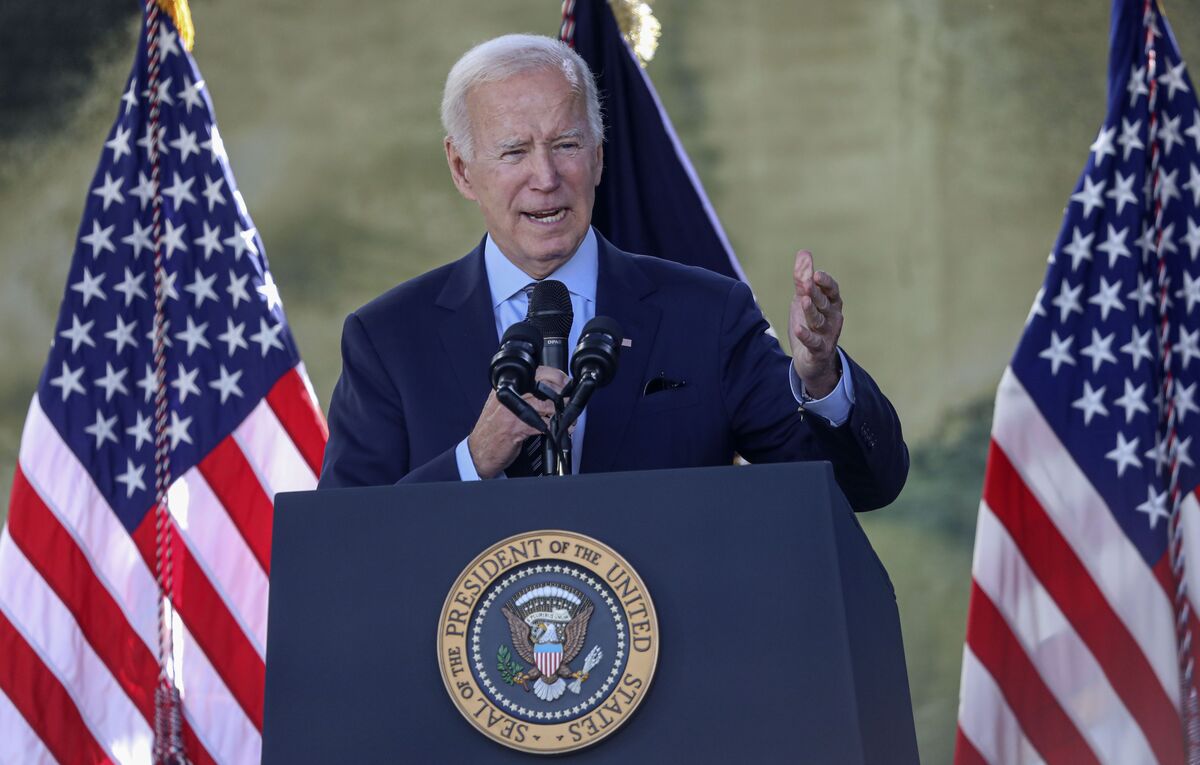
Biden's envoy will discuss with Netanyahu a possible operation in Rafah and the hostage deal

US President Joe Biden's senior advisor for the Middle East, Brett McGurk, who is currently in the region, discusses the details of a possible deal regarding the Israeli hostages being held in Gaza, in addition to an Israeli operation that may be imminent in Rafah.


A White House spokesman said: “Brett McGurk, the president’s senior advisor in the Middle East, will discuss the details of the Israeli hostage deal.”


He added, "McGurk will discuss the details of the Rafah operation with the Israeli Prime Minister (Benjamin Netanyahu), specifically the security and safety of a million and a half civilians there."


He stated, "The United States was unable to support today's Security Council resolution, because it would have jeopardized the hostage deal talks," he said.


The White House said: "We want Israel to succeed in confronting Hamas, but while emphasizing the importance of the safety of civilians in the Gaza Strip."


He continued: "We still maintain our position that a permanent ceasefire in Gaza will strengthen Hamas's position, and therefore we oppose."


He added: "We want to complete the Israeli hostage deal as soon as possible, to implement the ceasefire and save lives in Gaza."


The White House said that it does not want "an escalation between Hezbollah and Israel, and our envoy Amos Hockstein is engaged in intensive talks to achieve that."


He stated, "Any major operation in Rafah would be a disaster in light of the current situation, with more than a million people not safe."


Earlier today, the Axios website, citing three unnamed Israeli and American officials, reported that McGurk is expected to visit Israel and Egypt this week to hold talks regarding the possible Israeli military operation in Rafah and efforts to release Israeli hostages in Gaza.


According to officials, McGurk is expected to meet with Major General Abbas Kamel, head of Egyptian General Intelligence, and other Egyptian officials in Cairo, tomorrow, Wednesday.


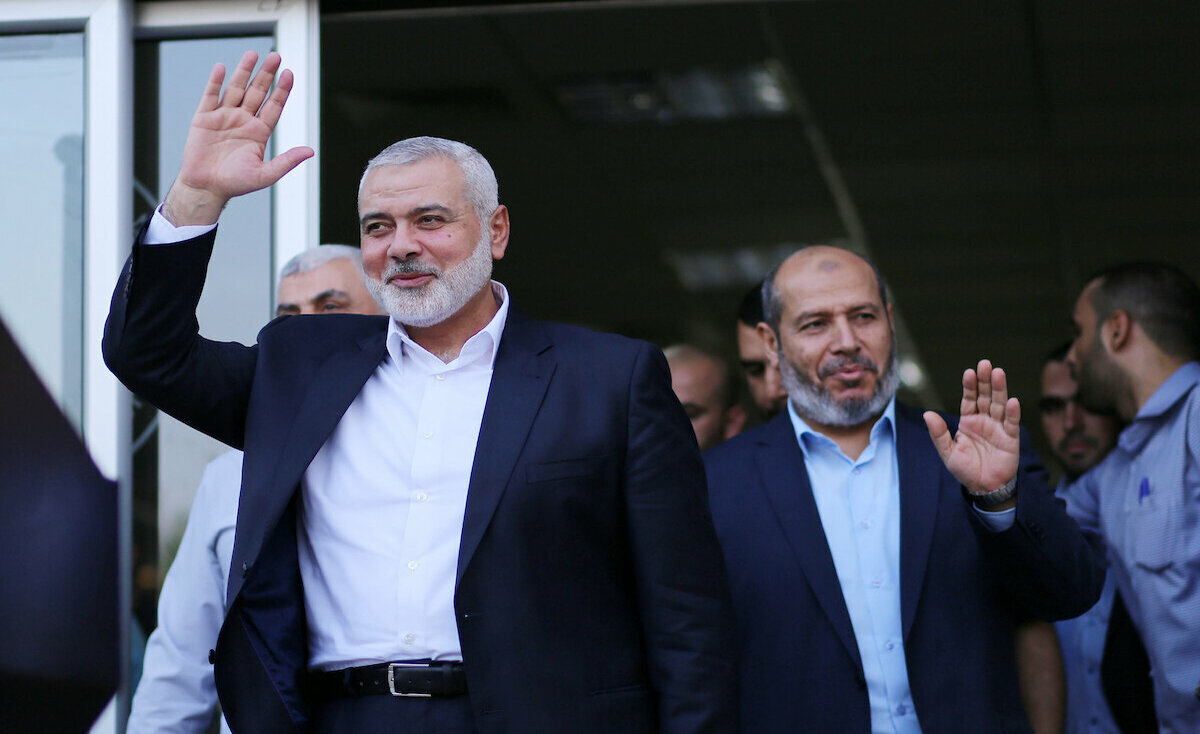
This comes as Hamas announced, on Tuesday, the arrival of a delegation from the movement headed by the head of its political bureau, Ismail Haniyeh, to Cairo to hold discussions with Egyptian officials about the political and field conditions in Gaza, and the efforts made to stop the Israeli war, provide relief to the Palestinians, and achieve their goals.


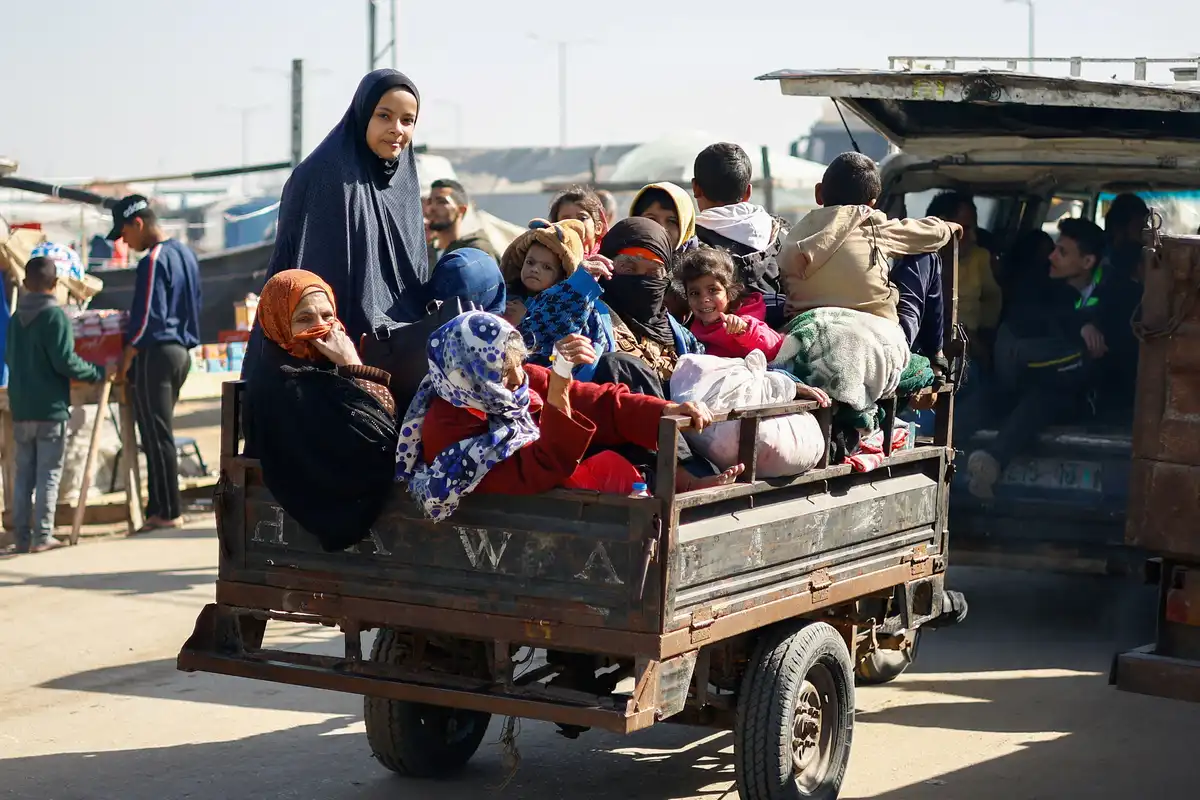
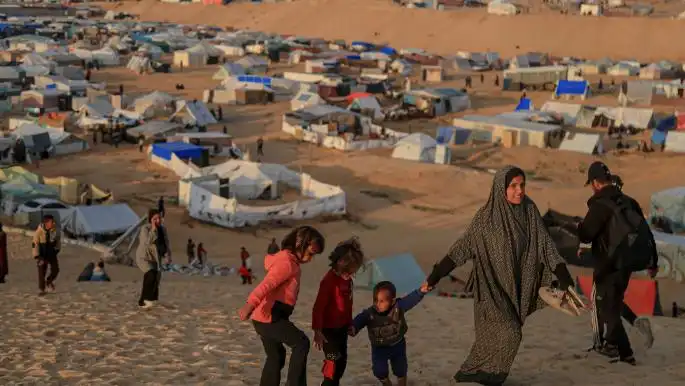
Negotiations continue under Egyptian and Qatari mediation between Hamas and Israel in order to reach a prisoner exchange deal and a ceasefire in the Gaza Strip, in light of international and regional concerns about the danger of Tel Aviv expanding its military operations in Rafah, which is crowded with displaced people.


Hamas insists on “a complete cessation of Israeli aggression, the withdrawal of the occupation army from Gaza, and a commitment to reconstruction” in order to reach a prisoner exchange agreement.

PALESTINE

Tue 20 Feb 2024 9:19 pm - Jerusalem Time

Ramallah: Israeli forces arrest 6 children from Aboud and the head of the Rantis Village Council

On Tuesday evening, the Israeli forces arrested 6 children from the village of Aboud, west of Ramallah, and the head of the Rantis Village Council.


Local sources reported that the Israeli forces arrested 6 children after they stormed the village of Aboud, west of Ramallah. They are: Ayoub Muhammad Abd al-Majid Barghouthi (13 years old), Uday Thabet al-Barghouthi (13 years old), Abdullah Thabet al-Barghouthi (16 years old), and Adel Diyaa al-Barghouthi. (13 years old), Abdul Majeed Nael Al-Barghouthi (13 years old), and Mahmoud Jibril Al-Barghouthi (13 years old).


The same sources added that the Israeli forces arrested the head of the Rantis Village Council, Moaz Ayed Al-Khatib, as he passed through a military checkpoint near the village of Shuqba, west of Ramallah.

OPINIONS

Tue 20 Feb 2024 6:42 pm - Jerusalem Time

Hebrew Newspaper: In preparation for Ramadan: Israel must keep the religious giant in the bottle

Israel Hayom

Israel Hayom

Opinion Writer

By Nadav Sargai

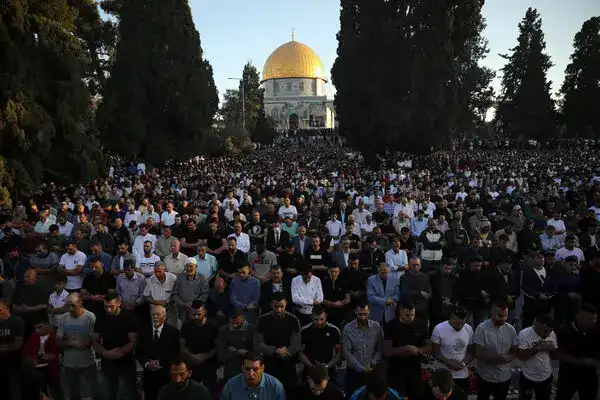
Absolutely preventing Arabs from entering Israel to pray at Al-Aqsa Mosque could unleash the religious genie from the bottle in Jerusalem - a genie that Israel has been able to imprison so far.

Preventing residents of East Jerusalem and Arabs in Israel from entering the mosque during Ramadan in a comprehensive manner could push many of them to openly show solidarity with Gaza, and push them into the arms of “Hamas” and actively participate in “terrorism” and operations.

Israel has no interest in a confrontation - particularly religious - with the Arabs in Israel and in East Jerusalem. Therefore, it is better to listen to the position of the Israeli police, which has put East Jerusalem in general, and Al-Aqsa Mosque in particular, out of the war, through its professional work over the past four months alongside the Shin Bet.

The successes cannot be debated: If the residents of East Jerusalem and the Arabs in Israel were now part of the storm and “terrorism and violence,” there would be logic in preventing them from entering the Temple Mount. Given that the reality is different there in general - there is no need to forcefully bring them into the circle, by comprehensively preventing everyone from entering the mosque.

What is correct is to establish blacklists: preventing the entry of “instigators and saboteurs” from certain categories, and those who have a significant record of provocations in the mosque, confrontations and operations. Many residents of Umm al-Fahm and Kafr Kana are like this, as those areas are clear centers of the northern trend of the Islamic movement in Israel, which was considered outlawed.

Over the years, Umm al-Fahm has been the center of many operations. The most notable was the operation carried out in July 2017, in which two police officers were killed. The funeral of the "murderers" turned into a display of hatred against Israel, and about 10,000 residents of the city participated in it. As for Kafr Kana, where the “instigator” Sheikh Kamal Al-Khatib lives, it witnessed strong confrontations during the “Keeper of the Walls” campaign, in which many people participated.

In Huwwara in the Negev, there are large gatherings of residents, from which ISIS activists emerged. The same applies to the Shuafat refugee camp in Jerusalem, which is a “bad hotspot” in itself, and from which many “saboteurs” emerged who killed or attempted to kill Jews, after they were incited by the false narrative of our generation: Al-Aqsa is in danger.

Even if expressions were made by hundreds of Arabs in Israel since the beginning of the war, in which they identify with “Hamas,” or with the “massacre,” and tens of thousands who thought the same way and chose to remain silent, this is not sufficient reason to prevent two million people (21% of the population in Israel) from entering the mosque and praying in it during the month of Ramadan.

As for the East Jerusalem community. As in the West Bank, the percentage of support for Hamas is high, but the deterrence and relative calm that has been recorded so far on this front, and the desire to maintain that, all push us to be smart, not just honest. The police and the Shin Bet in Jerusalem know the neighborhoods well, as well as the community in the east of the city, in order to catch those who are prohibited from entering the mosque, and allow others.

The pressure cooker in East Jerusalem is boiling, but it has not gone beyond its limits. And if you leave - the rules of the game will change. Currently, in order to prevent this exit, residents of East Jerusalem must be allowed into the mosque during Ramadan. It would be better for Israel to swallow this matter.

ARAB AND WORLD

Tue 20 Feb 2024 6:38 pm - Jerusalem Time

Hebrew Newspaper: Israeli concerned about a proposed American resolution regarding a temporary ceasefire and opposes an operation in Rafah

Reuters reported, in a report yesterday, that the United States submitted to the United Nations Security Council a resolution proposal calling for a temporary ceasefire in Gaza as soon as possible. The draft proposal also included United States opposition to a large-scale military operation in Rafah, south of Gaza. sector. The proposal stated: “In the current circumstances, a large ground military operation in Rafah will end with the injury of more civilians, and will lead to new displacement to neighboring countries. This matter will have severe repercussions on peace and security in the region, and must not be undertaken at this time.”


The American proposal also rejected the idea of establishing buffer zones, and any attempt to reduce the territory of the Gaza Strip, temporarily or permanently. The United States submitted the resolution proposal to the Security Council, in response to the proposal submitted by Algeria, which calls for an immediate humanitarian ceasefire, against which the United States is expected to use its veto.


When Israeli political sources spoke to the American proposal, they said that what was meant was a draft, and it was not clear what the final version would be. Analyst Shimon Schaefer said that the United States prevents the issuance of resolutions against Israel in the Security Council automatically, and if the American resolution is presented to the Council, this expresses the American administration’s despair of Prime Minister Benjamin Netanyahu. The decision also constitutes an American warning to the Israelis: If they do not behave as the Americans expect of them, they will join the rest of the countries of the world.


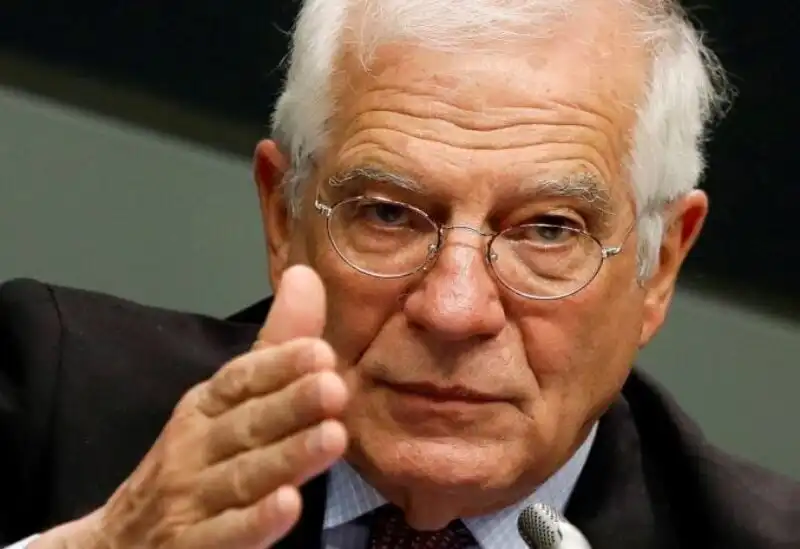
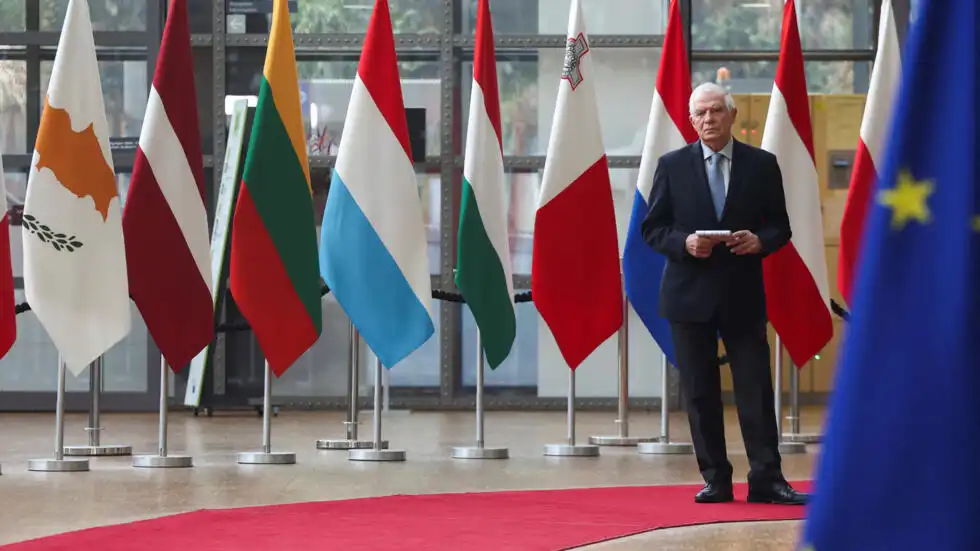
Meanwhile, the European Union warned Israel yesterday against carrying out a military operation in Rafah, and the EU’s foreign ministers said that such an operation would constitute a disaster for about 1.5 million displaced people residing in the city in the south of the Gaza Strip. Union Foreign Minister Joseph Borrell stated that 26 out of 27 countries agreed to issue a warning about the operation in Rafah, and called for an “immediate humanitarian truce” leading to a ceasefire and the liberation of the kidnapped persons.


Borrell did not mention the name of the 27th country, but a few days ago, Hungary used its veto when voting on a joint resolution of this type.


Meanwhile, German Foreign Minister Annalena Berbuck called on Israel to respect the laws of war, but at the same time, she pointed to Israel's right to defend itself, especially in light of the presence of "Hamas saboteurs" in Rafah. She added: “The most important thing is for Hamas to lay down its weapons,” and demanded a “humanitarian ceasefire” that would allow the displaced to return to their homes.

ARAB AND WORLD

Tue 20 Feb 2024 6:26 pm - Jerusalem Time

Journalists or public relations employees?.. An Israeli magazine criticizes the local media’s bias towards the army’s narrative

"972+" magazine said that military correspondents in major Israeli media outlets have consistently neglected to investigate the army's behavior and actions, which means that the events of October 7 are a failure for them as well.


The magazine pointed out - in an article by Sebastian Ben Daniel - that the Israeli press remained throughout the war a parody of the press, and provided the average Israeli citizen with countless articles about the anger of the people of Gaza against the Islamic Resistance Movement (Hamas), but did not provide him anything about the fact that the Israeli bombing The intense siege led to the death of more than 12,000 children, made large parts of the Gaza Strip uninhabitable, displaced millions, and created conditions for famine, in addition to the lack of solidarity of Israeli journalists with more than 120 Palestinian journalists who were martyred during the Israeli attack.


The writer sarcastically referred to Akiva Novik, a prominent news anchor and correspondent for the Israeli public broadcaster Kan, who said that the role of journalists is to raise national morale, and therefore what the Israeli public wants to hear is that there are no innocent people in Gaza, and that the Israeli army The mighty are victorious, and that the entire world is anti-Semitic, and that only military pressure will lead to the release of the detainees, contrary to all evidence, and that the Israeli soldiers shooting 3 detainees, while waving white flags, is also Hamas’ fault.


Constant glorification of the army

Ben Daniel stated that the media abdication of responsibility did not begin on October 7, as the Israelis knew little about what their army had been doing for years, when more soldiers were stationed in the West Bank to keep pace with the increasing numbers of settlers and maintain the apartheid system that pushes The Palestinians are under the pressure of the Israeli army, but the Israelis are also paying a price for it.


Just two days before the Hamas attack on southern Israel - as the writer says - two commando units were transferred from the Gaza fence to the West Bank, and the remaining forces near Gaza were left completely unprepared for the attacks that followed.


Military correspondents in Israel not only do not report on such issues, but they continue to glorify the army and take the statements of its spokesman seriously, which falsely convinces the public that everything is fine, and means that the media’s failure to scrutinize the army’s performance played a role. Key in pushing Israel to the disaster of October 7.


The writer gave, for example, the coverage of Amir Bohbut, the military correspondent for the right-wing Walla news site, and said that it glorified the head of military intelligence, Aharon Haliva, and his supposedly invincible plans, in addition to dozens of articles, not one of which criticizes or investigates the army’s activities, but some of them criticize the reserve soldiers who In the context of last year's protests, they threatened not to attend service.


Ben Daniel continued on the coverage of newspapers such as "Yedioth Ahronoth" and "Israel Hayom", which are not very different. Then he referred to the newspaper "Haaretz" and said that it is more critical than others of the army, but it only focuses - in his opinion - on the heinous crimes committed by soldiers in Gaza and the West Bank, and are usually in the opinion pages subject to subscription, and therefore only 5% of Israelis read them, in contrast to the free newspapers “Yedioth Ahronoth” and “Israel Hayom”.


On the few occasions when Israeli news sites publish “investigative reports” by military correspondents, they report only on the army’s internal investigations rather than conducting independent investigations, as happened with the investigation into the shooting of the three detainees.


The price of obliterating the truth

About a decade ago, 972+ magazine published a series of investigative reports entitled “License to Kill,” which explored cases investigated by the Military Police’s Criminal Investigation Division, including the murders of Palestinian teenagers who were shot in the back or head by Israeli soldiers. It also included forgery and lying in investigations, at a time when reporting such incidents was prohibited due to strict censorship.


The writer pointed out that he discovered that reporters often repeat what the army spokesman tells them, and sometimes remove the attribution to him, and publish the messages as news. He gave an example of the tweet of prominent Defense Ministry correspondent, Alon Ben David, when a soldier shot a mentally disabled Palestinian, saying “A terrorist opened fire on the soldiers and was subsequently killed.” It was a lie that he later corrected.


In every case I investigated - the writer says - the Israeli army spokesman published false information that was repeated without attribution, and sometimes these reporters act as public relations representatives for the army, especially when they are invited to watch military training with a new weapon that may need to be marketed before it is exported.


In fairness to many Israeli reporters, Sebastian Ben-Daniel points out that if they investigated army shootings of Palestinians in the West Bank or bombings in Gaza, they would be out of work, because the public simply does not want to hear such news.


The writer concluded that when a country does not have a judicial system that effectively supervises the army, does not have a system of public oversight of its budget, and officers are not held accountable for their criminal behavior, even when violations are clear, then journalists must fill this void, because strict journalism is a requirement. For any healthy society.


Source: Israeli press

OPINIONS

Tue 20 Feb 2024 6:11 pm - Jerusalem Time

The Strange Resurrection of the Two-State Solution

Foreign Affairs

Foreign Affairs

Opinion Writer

By Martin Indyk

How an Unimaginable War Could Bring About the Only Imaginable Peace

For years, the vision of an Israeli state and a Palestinian state existing side by side in peace and security has been derided as hopelessly naive—or worse, as a dangerous illusion. After decades of U.S.-led diplomacy failed to achieve that outcome, it seemed to many observers that the dream had died; all that was left to do was bury it. But it turns out that reports of the death of the two-state solution were greatly exaggerated.

In the wake of the monstrous attack Hamas launched on Israel on October 7 and the grievous war that Israel has waged on the Gaza Strip ever since, the allegedly dead two-state solution has been resurrected. U.S. President Joe Biden and his top national security officials have repeatedly and publicly reaffirmed their belief that it represents the only way to create lasting peace among the Israelis, the Palestinians, and the Arab countries of the Middle East. And the United States is hardly alone: the call for a return to the two-state paradigm has been echoed by leaders across the Arab world, the countries of the EU, middle powers such as Australia and Canada, and even Washington’s main rival, China.

The reason for this revival is not complicated. There are, after all, only a few possible alternatives to the two-state solution. There is Hamas’s solution, which is the destruction of Israel. There is the Israeli ultra-right’s  solution, which is the Israeli annexation of the West Bank, the dismantling of the Palestinian Authority (PA), and the deportation of Palestinians to other countries. There is the “conflict management” approach pursued for the last decade or so by Israeli Prime Minister Benjamin Netanyahu, which aimed to maintain the status quo indefinitely—and the world has seen how that worked out. And there is the idea of a binational state in which Jews would become a minority, thus ending Israel’s status as a Jewish state. None of those alternatives would resolve the conflict—at least not without causing even greater calamities. And so if the conflict is to be resolved peacefully, the two-state solution is the only idea left standing.

All that was true before October 7. But a lack of leadership, trust, and interest on both sides—and the repeated failure of American efforts to change those realities—made it impossible to conceive of a credible pathway to a two-state solution. And doing so now has become even more difficult. The Israelis and the Palestinians are angrier and more fearful than at any time since the outbreak of the second intifada in October 2000; the two sides seem less likely than ever to achieve the mutual trust that a two-state solution would require. Meanwhile, in an age of great-power competition abroad and political polarization at home, and after decades of failed diplomatic and military interventions in the Middle East, Washington enjoys far less influence and credibility in the region than it did in the 1990s, when, after the collapse of the Soviet Union and the U.S.-led eviction of the Iraqi dictator Saddam Hussein’s army from Kuwait, the United States kick-started the process that eventually led to the Oslo accords. And yet, as a result of the war in Gaza, the United States finds itself with a stronger need for a credible process that can eventually lead to an agreement, and stronger leverage to transform the resurrection of the two-state solution from a talking point to a reality. Doing so, however, will take a significant commitment of time and political capital. Biden will have to play an active role in shaping the decisions of a reluctant Israeli ally, an ineffective Palestinian partner, and an impatient international community. And because what he will be pushing for is an incremental approach that would achieve peace only over a lengthy period, the two-state solution needs to be enshrined now as the ultimate objective in a U.S.-sponsored UN Security Council resolution.

THE LONG AND WINDING ROAD

The two-state solution dates back to at least 1937, when a British commission suggested a partition of the British mandate territory then known as Palestine into two states. Ten years later, the UN General Assembly passed Resolution 181, which proposed two states for two peoples: one Arab, one Jewish. Although the resolution’s recommended territorial partition left neither side satisfied, the Jews accepted it—but the Palestinians, encouraged by their Arab state sponsors, rejected it. The ensuing war led to the founding of the state of Israel; millions of Palestinians, meanwhile, became refugees, and their national aspirations languished.

The idea of a Palestinian state lay mostly dormant for decades as Israel and its Arab neighbors became preoccupied with their own conflict, one result of which was the Israeli occupation and settlement of Gaza and the West Bank after the 1967 Six-Day War, which placed millions of Palestinians under direct Israeli control but without the rights accorded to Israeli citizens. Eventually, however, terrorist attacks launched by the Palestine Liberation Organization and an uprising of the Palestinian people against Israeli occupation in the 1980s forced Israel to come to terms with the fact that the situation had become untenable. In 1993, Israel and the PLO signed the American-brokered Oslo accords, recognizing each other and laying the groundwork for a phased, incremental process intended to eventually lead to the establishment of an independent Palestinian state. The two-state solution’s moment appeared to have arrived.

By the end of the Clinton administration, the Oslo process had generated a detailed outline of what the two-state solution would look like: a Palestinian state in 97 percent of the West Bank and all of Gaza, with mutually agreed swaps of territory that would compensate the Palestinian state for the three percent of West Bank land that Israel would annex, which at that time contained some 80 percent of all the Jewish settlers on Palestinian lands. The Palestinians would have their capital in East Jerusalem, where predominantly Arab suburbs would come under Palestinian sovereignty and predominantly Jewish suburbs under Israeli sovereignty. The two countries would share control of Jerusalem’s so-called Holy Basin, the site of the most important shrines of the three Abrahamic faiths.

But a final agreement on those terms never materialized. As a member of the Clinton administration’s negotiating team at the time, I came to see that neither side was ready to compromise on the highly emotional question of who would control Jerusalem or on the issue of “the right of return” of Palestinian refugees, which was deeply threatening to the Israelis. In the end, the edifice of peace that so many had labored so hard to construct was consumed in a paroxysm of violence as the Palestinians launched another, more intense uprising and the Israelis expanded their occupation of the West Bank. The ensuing conflict lasted for five years, claiming thousands of lives on both sides and destroying all hopes for reconciliation.

Every subsequent American president has sought to revive the two-state solution, but none of their initiatives proved capable of overcoming the mistrust generated by the Palestinian return to violence and the Israeli settlers’ determination to annex the West Bank. The Israelis became frustrated by the Palestinian leadership’s unwillingness to respond to what they regarded as generous offers for Palestinian statehood, and the Palestinians never believed that the offers were genuine or that Israel would deliver if they dared compromise on their claims. Leaders on both sides preferred to blame each other rather than find a way to lead their people out of the miserable morass that the failed peace process had created.

STATE OF DENIAL

By the time Biden became U.S. president in 2021, the world had given up on the two-state solution. Netanyahu, who had dominated his country’s politics for the preceding 15 years, had persuaded the Israelis that they had no Palestinian partner for peace and therefore did not need to address the challenge of what to do with the three million Palestinians in the West Bank and the two million in Gaza whom they effectively controlled. Netanyahu sought instead to “manage” the conflict by kneecapping the PA (Israel’s putative partner in the peace process) and taking steps to make it easier for Hamas, which shared his antipathy to the two-state solution, to consolidate its rule in Gaza. At the same time, he gave free rein to the settler movement in the West Bank to make it impossible for a contiguous part of a Palestinian state to ever emerge there.

The Palestinians also lost faith in the two-state solution. Some turned back to armed struggle, while others began to gravitate to the idea of a binational state in which Palestinians would enjoy equal rights with Jews. Hamas’s version of a “one-state solution,” which would do away with Israel altogether, also gained greater traction in the West Bank, where the group’s popularity began to eclipse the geriatric and corrupt leadership of Mahmoud Abbas, the president of the PA.

For years, American diplomats had warned that this status quo was unsustainable and that another Palestinian uprising would soon emerge. But it turned out that the Palestinians had no stomach for another intifada and preferred to sit on their land as best they could and wait the Israelis out. This suited the Biden administration. It was determined to deprioritize the Middle East as it addressed more pressing strategic challenges in Asia and Europe. What it wanted in the Middle East was calm. So whenever the Israeli-Palestinian conflict threatened to flare up, particularly over provocative settler activities, American diplomats would swoop in to reduce the tensions, with support from Egypt and Jordan, which had a common interest in avoiding an explosion.

For his part, Biden paid lip service to the two-state solution but didn’t seem to believe in it. He kept in place policies favorable to the settlers that had been introduced by his predecessor, Donald Trump, such as the labeling of products from West Bank settlements as “made in Israel.” Biden also failed to make good on his campaign promise to reopen the U.S. consulate for Palestinians in Jerusalem. (The consulate had been absorbed into the U.S. embassy when Trump moved it to Jerusalem.)

Biden paid lip service 

to the two-state solution 

but didn’t seem to believe in it.

Meanwhile, the Arab states had decided to all but abandon the Palestinian cause. They had come to see Israel as a natural ally in countering the Iranian-led “axis of resistance” that had taken root across the Arab world. This new strategic calculation found expression in the Abraham Accords, negotiated by the Trump administration, in which Bahrain, Morocco, and the United Arab Emirates (UAE) each fully normalized relations with Israel without insisting that Israel do anything that might make the establishment of a Palestinian state more likely.

Biden sought to broaden this Israeli–Sunni Arab compact by seeking normalization between Israel and Saudi Arabia, the world’s largest oil producer and the custodian of Islam’s holiest sites. From a U.S. point of view, there was a compelling strategic logic to normalization: Israel and Saudi Arabia could serve as the anchors for a U.S. “offshore balancing” role that would stabilize the region while freeing up American attention and resources to deal with an assertive China and an aggressive Russia.

Biden found a willing partner in Saudi Arabia’s Crown Prince Mohammed bin Salman, widely known as MBS, who had embarked on an ambitious effort to modernize his country and diversify its economy. Fearing he would be unable to defend the fruits of that investment with Saudi Arabia’s limited military capabilities, he sought a formal defense treaty with the United States, as well as the right to maintain an independent nuclear fuel cycle and to buy advanced U.S. arms, using the prospect of normalization with Israel to make such an agreement palatable to the heavily pro-Israel U.S. Senate. MBS cared little for the Palestinians and was not willing to condition his deal on progress toward a two-state solution. The Biden administration, however, feared that bypassing the Palestinians completely could lead to a Palestinian uprising, especially because, in 2022, Netanyahu had formed a coalition government with ultranationalist and ultrareligious parties who were bent on annexing the West Bank and toppling the PA. The administration also assessed that it could not secure the necessary Democratic votes in the Senate for a defense treaty with the unpopular Saudis without a substantial Palestinian component in the package. Since the Saudis needed some political cover for their deal with Israel, they were amenable to Biden’s proposal for significant constraints on West Bank settlement activity, the transfer of additional West Bank territory to Palestinian control, and the resumption of Saudi aid to the PA.

By early October 2023, Israel, Saudi Arabia, and the United States were on the brink of a regional realignment. Netanyahu had not yet accepted the Palestinian component of the deal, and his coalition’s opposition to any settlement concessions made it unclear how much of the proposed agreement would survive—as did MBS’s general diffidence. Still, had a breakthrough taken place, the Palestinians would likely have been sidelined yet again, and Netanyahu’s ultra-right government would have gained greater confidence in pursuing its annexation strategy. But then it all came crashing down.

LAST PLAN STANDING

At first glance, it may be hard to see why what happened next would help resurrect the two-state solution. It is difficult to express in words the trauma that all Israelis suffered on October 7: the complete failure of the vaunted military and intelligence capabilities of the Israel Defense Forces (IDF) to protect Israeli citizens; the horrific atrocities committed by Hamas fighters that left some 1,200 Israelis dead and nearly 250 captives in Gaza; the ongoing hostage saga that suffuses every Israeli home with grief and concern; the displacement of border communities in southern and northern Israel. In this context, not surprisingly, Israelis of all stripes have no interest in contemplating reconciliation with their Palestinian neighbors. Before October 7, most Israelis were already convinced that they had no Palestinian partner for peace; today, they have every reason to believe that they were right. And the way that Hamas’s popularity has increased in the West Bank since the war started has only reinforced this assessment. According to polling conducted in November and December by the Palestinian researcher Khalil Shikaki, 75 percent of West Bank Palestinians support Hamas’s continued rule in Gaza, compared with 38 percent of Gazans. The Israelis point to the refusal by the Palestinians—including Abbas—to condemn Hamas’s atrocities, the outright denial on the part of many Arabs that anything of the sort took place, and the newly anti-Semitic dimension of the international support for the Palestinian cause and conclude that the Palestinians want to kill them, not make peace with them.

Most Palestinians have understandably reached a similar conclusion with regard to the Israelis: the assault on Gaza has killed more than 25,000 Palestinians (including more than 5,000 children), destroyed more than 60 percent of the homes in the territory, and displaced nearly all of its 2.2 million residents. On the West Bank, anger over the war is compounded by the systematic violence of Israeli settlers who have assaulted Palestinians, driven some from their homes, and prevented others from harvesting their olives and grazing their sheep. At least some Palestinians, potentially a majority, do not reject the idea of an independent Palestinian state as an eventual solution that could end the Israeli occupation and allow them to live a life of dignity and freedom. (Notably, that remains the official position of the PA, whereas the official position of the Netanyahu government is to adamantly oppose the establishment of a Palestinian state.) But few Palestinians believe that the Israelis will allow them to build a viable state free of military occupation.

For all these reasons, there is a complete disconnection between renewed international calls for a two-state solution and the fears and desires currently shaping Israeli and Palestinian society. Many have argued that the best the United States can do in these circumstances is to try to bring the fighting to an end as soon as possible and then focus on rebuilding the shattered lives of the Israelis and the Palestinians, putting the issue of an ultimate resolution of the conflict aside for the time being until passions cool, new leadership emerges, and circumstances become more conducive to the contemplation of what now seem like far-fetched ideas of peace and reconciliation.

Yet taking a short-term, pragmatic approach has its own dangers: that, after all, is what Washington did after the four rounds of fighting between Hamas and Israel that broke out between 2008 and 2021—and look what that produced. After this round, moreover, Israel will not simply withdraw and leave Hamas in control, as it did in the past. Netanyahu is already speaking about a long-term Israeli security presence in Gaza. This is a recipe for disaster. If Israel remains stuck in Gaza, it will be fighting off a Hamas-led insurgency—just as it fought off an insurgency led by Hezbollah and other groups for 18 years when it was stuck in southern Lebanon after invading in 1982. There is no credible way to bring the war in Gaza to an end without trying to fashion a new, more stable order there. But that cannot be done without also establishing a credible path to a two-state solution. The Sunni Arab states, led by Saudi Arabia, are insisting on that as a condition for their support for the revitalization of the PA and the reconstruction of Gaza, as is the rest of the international community. The PA would need to be able to point to that goal in order to legitimize any role it played in controlling Gaza. And the Biden administration must be able to include the goal of two states as part of the Israeli-Saudi agreement it is still eager to broker.

The first step would be for the Palestinians to establish a credible governing authority in Gaza to fill the vacuum left by the eradication of Hamas rule. This is the opportunity for the PA to expand its writ and unite the divided Palestinian polity. But with its credibility already at a low point, the PA cannot afford to be seen as Israel’s subcontractor, maintaining order for the sake of Israel’s security interests. Fortunately, Netanyahu’s opposition to the PA taking control in Gaza seems to have backfired, serving only to legitimize the idea in the minds of many Palestinians.

But in its current state, the PA is in no position to take responsibility for governing and policing Gaza. As Biden has put it, the PA must be “revitalized.” It needs a new prime minister, a new set of competent technocrats who are not corrupt, a trained security force for Gaza, and reformed institutions that no longer incite against Israel or reward prisoners and “martyrs” for terrorist acts against the Israelis. The United States and the Sunni Arab states, including Egypt, Jordan, Saudi Arabia, and the UAE, are already engaged in detailed discussions with the PA about all these steps and seem satisfied that the PA is willing to undertake them. But it will require the active cooperation and support of the Netanyahu government, which adamantly opposes a PA role in Gaza and has so far refused to make any decisions about the “day after” there.

Once the revitalization process got underway, it would probably take around a year to train and deploy PA security and civilian cadres in Gaza. During this period, Israel would likely undertake some military activity against residual Hamas forces. In the meantime, an interim governing body would need to run the territory. That entity would need to be legitimized by a UN Security Council resolution and would oversee the gradual assumption of responsibility by the PA. It would control a peacekeeping force tasked with maintaining order. To prevent friction with the IDF, the force would need to be led by a U.S. general. But there would be no need for American boots on the ground: troops could come from other countries friendly to Israel that have deep experience in peacekeeping operations and would be acceptable to the Palestinians, including Australia, Canada, India, and South Korea. Sunni Arab states should be invited to participate in the force, although it is unlikely that they would want to take responsibility for policing the Palestinians.

But even without contributing troops, the Sunni Arab states would have a critical role to play. Egypt has a considerable interest in securing the stability that would allow millions of Gazans to move away from the Egyptian border, where they pose a continual threat of flooding into Egypt. Egyptian intelligence has good ground knowledge of Gaza, and the Egyptian army can help prevent the smuggling of arms into Gaza from the Sinai Peninsula—although it failed to do so before October 7. Jordan has less influence in Gaza than Egypt does, but the Jordanians have ably trained Palestinian security forces in the West Bank and could do the same for PA forces in Gaza. The oil-rich Gulf Arab states have the necessary resources to rebuild Gaza and fund the revitalization of the PA. But none of them will be suckered into footing the bill unless they can tell their own people that doing so will lead to the end of the Israeli occupation and the eventual emergence of a Palestinian state—which would prevent another round of war that would leave them holding the bag again.

A FRIEND IN NEED

There are, of course, two major obstacles to such a plan, and they are the main combatants in the war. Although its control of northern Gaza is now in doubt, Hamas still maintains its underground strongholds in the southern cities of Khan Younis and Rafah. As of this writing, it still holds around 130 hostages whom it intends to use as bargaining chips; the longer the fighting drags on, the more domestic pressure will build on Netanyahu to agree to a semipermanent cease-fire in exchange for the rest of the hostages, potentially leaving a good part of Hamas’s infrastructure and control mechanisms in place. Washington can try to convince the IDF to shift to a more targeted approach that will produce fewer casualties. But for any postwar order to take shape, Hamas’s command-and-control system must be broken—and that outcome is far from guaranteed.

On the other side, the survival of Netanyahu’s government coalition with ultra-right and ultrareligious parties depends on the rejection of the two-state solution and any return of the PA to Gaza. Although speculation is rife in Israel that Netanyahu will be hounded out of office soon and new elections will bring a moderate, centrist coalition to power, his survival skills are unmatched; he should never be counted out.

Nevertheless, Biden retains considerable leverage over Netanyahu. The IDF is now heavily dependent on military resupply from the United States as it contemplates having to fight a two-front war against Hamas in Gaza and Hezbollah in southern Lebanon. Israel has expended massive amounts of materiel in its campaign in Gaza, requiring two emergency efforts by the Biden administration to expedite resupply by bypassing congressional oversight, much to the chagrin of some of the Senate Democrats whom Biden will need to support an Israeli-Saudi deal. Even if Israel opts for a more targeted campaign in Gaza, it will have to restock its arsenal and be prepared for a resource-intensive war with Hezbollah. Holding up resupplies is something that Biden is reluctant to do because he does not want to look as if he is undermining Israel’s security. But in a standoff with Netanyahu, Biden could drag his feet on certain decisions by tying things up in bureaucratic procedures or asking for congressional reviews. That might lead the IDF to press Netanyahu to give in. Pressure might also come from the decorated military men who serve in his emergency war cabinet: the retired generals Benny Gantz and Gadi Eisenkot, who lead the main opposition party, and Yoav Gallant, the defense minister.

This dynamic has already begun to play out. Even though it has taken a Herculean effort, the Biden administration has succeeded in convincing the IDF to reshape its strategy and tactics—limiting the scope of its operations against Hamas and restraining it from taking on Hezbollah—and has persuaded it to allow increasing amounts of humanitarian aid into Gaza, including opening the Israeli port of Ashdod to supplies. Gallant has even publicly stated his support for the PA to assume a role in Gaza, directly contradicting the prime minister.

In some ways, the United 

States has become Israel’s 

first line of defense.

In the long run, the IDF will remain heavily dependent on military support from the United States to rebuild its deterrent power, which took a blow on October 7. This new dependence is best illustrated by the need for the United States to deploy two carrier battle groups to the eastern Mediterranean and a nuclear-powered submarine to the region to deter Iran and Hezbollah from joining the fray at the outset of the war. Before October 7, Israel’s military capabilities alone had served as a sufficient deterrent, and the United States was able to deploy its major forces elsewhere. But according to reporting by Israel’s Channel 12, in January, when U.S. officials decided it was time to withdraw one of the carrier battle groups, the IDF asked them to keep it in place.

This heavy tactical and strategic dependence on the United States is a new phenomenon. Washington has long served as Israel’s second line of defense. But the deployment of the U.S. carrier battle groups signaled that in some ways, the United States has become Israel’s first line of defense. Israel is no longer able to “defend itself by itself,” as Netanyahu was fond of bragging before October 7. He may do his best to ignore this new reality, but the IDF cannot afford to do so.

Meanwhile, Israel is weathering a tsunami of international criticism as its indiscriminate use of force in the early stages of the war, when it was reacting out of rage rather than calculation, caused massive civilian casualties. The United States alone has stood in the breach, repeatedly protecting Israel from international censure and defending its right to continue prosecuting the war against Hamas despite the almost universal demands for a cease-fire. This serves American interests, too, since Hamas’s destruction is a prerequisite for establishing a more peaceful order in Gaza. But Israel is just one American abstention away from UN Security Council resolutions that could invoke sanctions. Like its newly acute military dependence on Washington, this political isolation makes Israel vulnerable to U.S. leverage.

Until now, Netanyahu seemed determined to resist the influence of his only real friend in the international community, using outright public rejections of the two-state solution to shore up his coalition and gain credit with his base for standing up to the United States. But Biden has a number of other sources of leverage beyond potentially dragging his feet on military resupply or letting it be known that he is considering an abstention on a UN resolution critical of Israel. Netanyahu is dependent on the international community to finance the rehabilitation of Gaza. Israel is in no position to pay the $50 billion or so that will be needed to repair the damage its military campaign has wrought. And yet if Netanyahu does not reach an understanding with Biden on a credible pathway to a two-state solution, Israel will be left holding the bag. The oil- and gas-rich Arab states have repeatedly made it clear that they will not pay for Gaza’s reconstruction without a firm commitment to a Palestinian state. And leaving Gaza in ruins will ensure that Hamas returns to power there, in charge of an otherwise failed state on Israel’s borders. He may not recognize it yet, but Netanyahu has no choice but to find a way to accommodate this demand.

Finally, Biden can influence the public debate in Israel by going over Netanyahu’s head to address the Israeli people. They deeply appreciate that he was there for them in their darkest moments after the October 7 attack. His visit to Israel comforted the country when Netanyahu could not. Ever since, Israelis have watched as the president of the United States has defended them, fought for the return of the Israeli hostages, rushed military supplies to the IDF, and vetoed UN resolutions critical of Israel. By contrast, Netanyahu’s standing with the Israeli public was already at a historic low before October 7 because of the divisiveness of the self-serving campaign he had been mounting to reduce the powers of the judiciary. If an election were held today, he would be routed. According to recent opinion polls, over 70 percent of Israelis want him to resign. Meanwhile, over 80 percent of Israelis approve of U.S. leadership in the wake of the war and prefer Biden to Trump by 14 points—the first time in decades that Israelis have preferred the Democratic candidate for U.S. president to the Republican.

WHAT BIDEN MUST DO

If Biden found himself in a showdown with Netanyahu, a speech to the Israeli people could give the American president the edge. The best time to deliver it would be after the United States helped broker another hostages-for-prisoners swap, for which the Israeli public would be profoundly grateful. The point would not be to sell the two-state solution to the Israelis, who are not yet ready to hear that pitch. Rather, the idea would be to offer an avuncular explanation of what the United States is trying to do to ensure a stable “day after” in Gaza that would prevent a repeat of October 7 and also provide a pathway, over time, to end the broader conflict. Biden would explain that he does not want to see his beloved Israel condemned to never-ending war, with each generation sending its children off to fight in the streets of Gaza and the refugee camps of the West Bank. He would offer an alternative that would instead hold out the hope of an enduring peace—as long as Israel’s government followed his lead. He would need to counter Netanyahu’s claim that Israel has to maintain overall security control in the West Bank and Gaza by emphasizing alternative U.S.-supervised security arrangements, including the demilitarization of the Palestinian state, which would reconcile Israeli security needs with Palestinian sovereignty—and keep Israelis safer than would a permanent military occupation.

Caving in to Biden would go against all of Netanyahu’s political instincts. The only way Netanyahu can reliably stay in power now is by maintaining his coalition with the ultranationalists, who adamantly oppose the revitalization of the PA and the two-state solution. If he gave in, he would run the considerable risk of losing power. Normally, when he is backed into the corner, Netanyahu dances: giving in a little to the United States while reassuring his hard-liners that his concessions are not serious. On the issue of Israeli settlements in particular, he has gotten away with that maneuver for 15 years.

But the jig is up. Netanyahu cannot credibly claim to support a two-state solution. He did so before, in 2009, but it has since become obvious that he was lying, as he now boasts of having prevented the emergence of a Palestinian state. But even if Netanyahu maintains his opposition to that outcome, cooperation with a U.S. postwar plan for Gaza would commit him to actions, such as allowing the PA to operate in Gaza and restricting settlement activity in the West Bank, that would constitute a credible pathway to a two-state solution—and would thus doom his fragile coalition and likely end his career.

Biden would clearly prefer to avoid a face-off with Netanyahu, but it seems inevitable. As the president contemplates how to get Netanyahu’s attention, he needs to find a way to change Netanyahu’s calculus—or, if Netanyahu continues to balk, to help win Israeli public support for Biden’s preferred “day after” approach.

Saudi Arabia can lend a significant hand in this effort. Before October 7, Biden thought he was on the cusp of a strategic breakthrough on Israeli-Saudi peace. That opportunity still exists, the Gaza war notwithstanding. MBS is not about to let his ambitious trillion-dollar plan for the development of his country be buried by Hamas. Nor is he happy at the boost that the war has given to Iran and its partners in the “axis of resistance,” which threatens Saudi Arabia as much as Israel. Because the deal he had negotiated with Biden serves the vital interests of his kingdom, he is still interested in forging ahead when things quiet down. But normalization with Israel is now highly unpopular in Saudi Arabia, where public opinion, as elsewhere in the Arab world, has turned even more fiercely against Israel. The only way MBS can square this circle is to insist on the very thing he was indifferent to before October 7: a credible pathway toward a two-state solution.

Biden should make clear the choice facing Israelis. They can continue on the road to a forever war with the Palestinians, or they can embrace the U.S. “day after” plan—and be rewarded with peace with Saudi Arabia and better relations with the broader Arab and Muslim worlds. Netanyahu has already publicly rejected these terms. But he did so after the deal was offered in private. Biden should try again—but this time, he should pitch the deal directly to the Israeli public in a way that would shift its attention from the trauma of October 7.

Biden would clearly prefer to 

avoid a face-off with Netanyahu, 

but it seems inevitable.

After the Yom Kippur War in 1973, Egyptian President Anwar Sadat captured Israelis’ imaginations with a surprise visit to Jerusalem. MBS is unlikely to be as adventurous, but he might be persuaded to join Biden in appealing directly to the Israeli public via an interview with a respected Israeli TV journalist. Working together, Biden and MBS could use the Saudi offer of peace to enhance a message of hope. They could point to the Saudi and Sunni Arab role in promoting PA rule in Gaza and the two-state solution as ways of ensuring that the Palestinians will do their part. Biden would need to add, in nonthreatening terms, that such a breakthrough would serve the vital strategic interests of the United States, as well as bring peace with Saudi Arabia to Israel. He would need to convey that he therefore thinks it’s reasonable to expect Israel to cooperate—and that he would not understand if its government refused to do so.

Biden will face a less acute but similar problem when it comes to persuading the Palestinians and Arab leaders, who have little reason to trust his commitment to a Palestinian state—especially since they know there is a chance that Biden will not be in the White House come 2025. Winning them over will not be easy. Some have suggested that the United States should recognize the Palestinian state now, with its borders negotiated later. But a grand gesture of that sort would put the cart before the horse: the PA must first embark on building credible, accountable, transparent institutions, demonstrating that it is a trustworthy “state in the making,” before it is rewarded with recognition.

There is, however, another way to demonstrate American and international commitment to the two-state solution. The basis for every negotiation among Israel, its Arab neighbors, and the Palestinians is UN Security Council Resolution 242, which was passed and accepted by Israel and the Arab states following the Six-Day War in 1967. (In 1998, the PLO also accepted it as the basis for the negotiations that led to the Oslo accords.) Resolution 242 is silent, however, on the Palestinian issue, except for a passing reference to the need for a just settlement of the refugee issue. It makes no mention of any of the other final-status issues, although it does make an explicit reference to “the inadmissibility of the acquisition of territory by war” and the need for Israeli withdrawal from territories (although not “the territories”) it occupied in the 1967 war.

A new resolution that updated Resolution 242 could enshrine the U.S. and international community’s commitment to the two-state solution in international law. It would invoke UN General Assembly Resolution 181 in calling for two states for two peoples based on mutual recognition of the Jewish state of Israel and the Arab state of Palestine. It could also call on both sides to avoid unilateral actions that would impede the achievement of the two-state solution, including settlement activity, incitement, and terrorism. And it could call for direct negotiations between the parties “at the appropriate time” to resolve all final-status issues and end the conflict and all claims arising from it. If such a resolution were introduced by the United States, endorsed by Saudi Arabia and other Arab states, and passed unanimously, Israel and the PLO would have little choice but to accept it, just as they accepted Resolution 242.

THE TIME HAS COME

Wars often don’t end until both sides have exhausted themselves and become convinced that they are better off coexisting with their enemies than pursuing a futile effort to destroy them. The Israelis and the Palestinians are a long way from that point. But maybe, after the fighting in Gaza ends and the passions cool, they will begin to think again about how to get there. There are already some reasons for hope. Consider, for example, the fact that Israel’s Arab citizens have so far refused Hamas’s call to rise up. There has been relatively little communal violence in Israel’s mixed Arab-Jewish cities since October 7, and one of the most prominent leaders of the Arab-Israeli community, the politician and Knesset member Mansour Abbas (no relation to the Palestinian prime minister), has given courageous voice to the goal of coexistence. “All of us, Arab and Jewish citizens, must take pains to cooperate in order to maintain peace and calm,” he wrote in The Times of Israel in late October. “We will strengthen the fabric of relations, increasing understanding and tolerance, to overcome this crisis peacefully.” Nor have the Palestinians in the West Bank and East Jerusalem turned to popular violence (as opposed to isolated terrorist incidents), despite the provocations and predations of extremist settlers; the 150,000 or so Palestinians who live in the West Bank but worked in Israel proper before October 7 may understandably burn with a sense of humiliation, but they would rather return to their jobs than see their children fighting with Israeli soldiers at checkpoints.

Neither the Israelis nor the Palestinians are ready to make the deep compromises that genuine coexistence would require; indeed, they are far less ready to do so than they were at the end of the Clinton administration, when they failed to close the deal. But the massive costs of refusing to compromise have become much clearer in recent months, and will become clearer still in the years to come. Over time, majorities in both societies may recognize that the only way to secure the future for their children is to separate out of respect rather than engage out of hatred. That realization could be accelerated by responsible, courageous leadership on both sides—should it ever emerge. In the meantime, the process can start with an international commitment to an Arab state of Palestine living alongside a Jewish state of Israel in peace and security—a promise articulated by the United States, endorsed by the Arab states and the international community, and given credibility by a concerted effort to generate a more stable order in Gaza and the West Bank. In the end, the parties to the conflict and the rest of the world may then come to see that decades of destruction, denialism, and deceit did not kill the two-state solution—but only made it stronger.


ARAB AND WORLD

Tue 20 Feb 2024 6:10 pm - Jerusalem Time

An American “veto” thwarts a draft resolution calling for stopping the war on Gaza

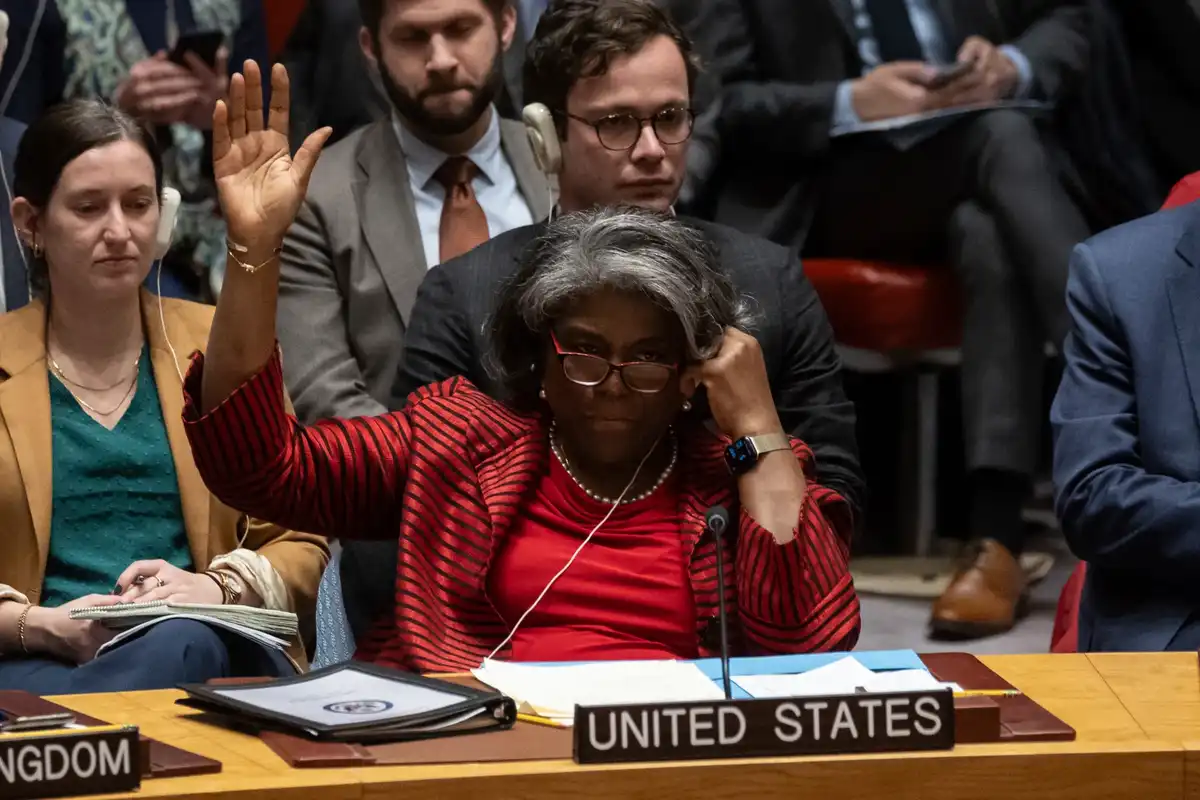
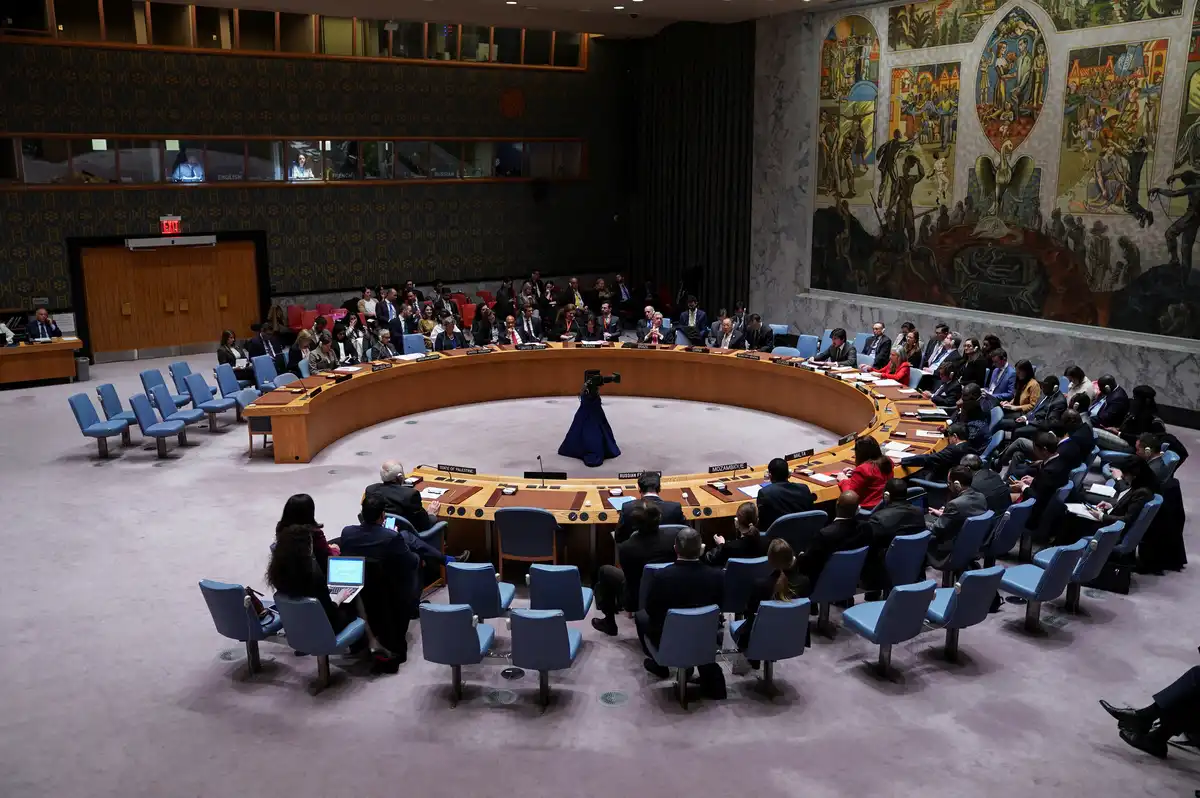
Today, Tuesday, the Security Council failed to adopt the Algerian draft resolution calling for a ceasefire in the Gaza Strip, after Washington used its veto.


The UN Security Council decided on a text prepared by Algeria weeks ago calling for an “immediate” ceasefire in Gaza, but the draft resolution failed due to a new veto from the United States, its third since the beginning of the war.


The draft resolution, which calls for “an immediate humanitarian ceasefire that should be respected by all parties,” received the support of 13 members of the Security Council, against the objection of one member, and the abstention of another member, the British representative, from voting.


The draft resolution called for "an immediate humanitarian ceasefire that all parties must respect."

The text rejected the "forced displacement of Palestinian civilians," while Israel spoke of a plan to evacuate civilians before a possible ground attack in Rafah, where 1.4 million people are concentrated in the southern Gaza Strip, and called for the release of all hostages.


Like previous draft resolutions criticized by Israel and the United States, this text does not condemn the attack launched by Hamas on October 7.


The United States warned that the Algerian text was unacceptable. The US Deputy Ambassador to the United Nations, Robert Wood, confirmed yesterday, Monday, that his country does not consider that this text “will improve the situation on the ground, and therefore if this draft resolution is put to a vote, it will not pass.”


The Americans considered that this text would jeopardize the delicate diplomatic negotiations to reach a truce, including the release of more hostages.


In this context, they distributed an alternative draft resolution yesterday, which talks about a “temporary ceasefire in Gaza as soon as possible” based on a “formula” that includes the release of all hostages.


The American project also expresses concern about Rafah, and warns that “a large-scale ground attack should not be launched under the current circumstances.”


A senior American official said yesterday: “We are not in a rush to vote on our project,” indicating that there is no “deadline” for that.


For years, the Security Council has been witnessing a major division over the Palestinian-Israeli conflict, and since October 7, it has been able to adopt only two resolutions on this issue, both of which are essentially humanitarian in nature.


The Arab group at the United Nations supported the project presented by Algeria. She said in a statement, “No excuse can justify the Security Council’s inaction, and all efforts must intersect to stop the massacre in Gaza,” stressing that “the time has come” for the Security Council to act “before it is too late.”

ARAB AND WORLD

Tue 20 Feb 2024 6:05 pm - Jerusalem Time

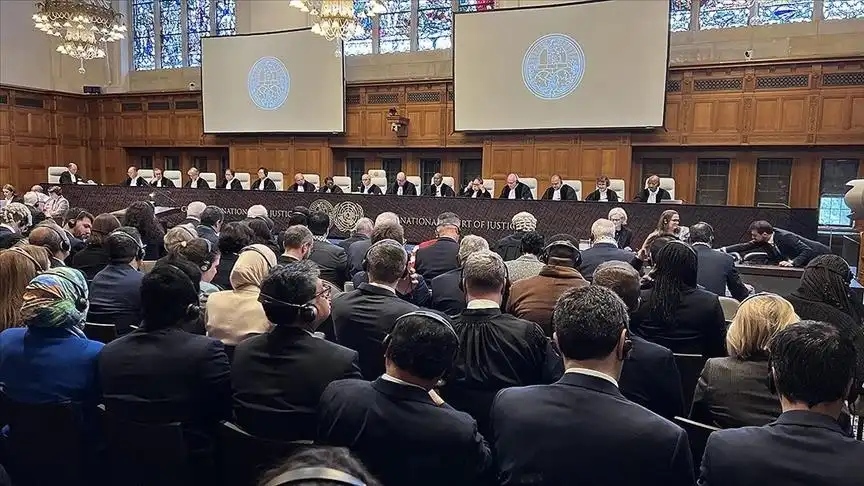
International Court of Justice to examine 57 years of Israeli occupation


Fifty-two countries to participate in hearings regarding Israel's practices towards the Occupied Palestinian Territory


A large number of countries and international organizations will participate in the International Court of Justice (ICJ) hearings on the Israeli occupation beginning on February 19, 2024, Human Rights Watch said today. today. Fifty-two countries and three international organizations will participate in the oral proceedings, more than in any other case brought before the ICJ – the highest court in the world – since its creation in 1946.


The broad participation in the hearings and numerous written submissions reflect growing global momentum to address the decades-long failure to ensure respect for international law in the Occupied Palestinian Territory.


“The International Court of Justice is being called upon for the first time to broadly examine the legal consequences of nearly six decades of Israeli occupation and mistreatment of the Palestinian people,” said Clive Baldwin, senior legal adviser at Human Rights Watch. . “Governments presenting their arguments before the Court should use these historic hearings to highlight the serious abuses that Israeli authorities are committing against Palestinians, including the crimes against humanity of apartheid and persecution. »


The oral proceedings follow a request for an advisory opinion transmitted by the United Nations General Assembly to the Court in December 2022, regarding the “legal consequences arising from the policies and practices of Israel in the Occupied Palestinian Territory”. The Court will have the opportunity to address the question of the continuing occupation, to examine the practices and policies of Israel violating the international prohibition of racial discrimination and constituting the crimes against humanity of apartheid and persecution, and to assess the legal responsibilities of other countries and the UN to respond to violations of international law arising from the occupation.


Although ICJ advisory opinions are not binding, they often carry significant moral and legal authority, and may ultimately become part of customary international law, which is legally binding on states.


These proceedings, which will last six days, are separate from the case brought by South Africa before the ICJ, alleging that Israel is violating the Genocide Convention in the context of hostilities between Israeli forces and Palestinian armed groups which erupted after the attacks carried out by Hamas on October 7, 2023.


In December 2003, the UN General Assembly requested for the first time from the ICJ an advisory opinion concerning the Occupied Palestinian Territory, regarding the construction by Israel of a wall in this territory. In July 2004, the ICJ published an advisory opinion which concluded that the route of this separation wall violated international law, and called for its dismantling.


The request sent to the court in December 2022 has a broader scope. The General Assembly asked the Court to give its opinion on the "legal consequences of Israel's continued violation of the Palestinian people's right to self-determination, its prolonged occupation, colonization and annexation" of the Palestinian Territory. occupied, as well as the adoption by Israel of “laws and related discriminatory measures”. The General Assembly also asked the ICJ to issue an opinion on the “legal consequences arising therefrom for all States and the United Nations”.


This new request gives the Court the opportunity to reassess the situation in the Occupied Palestinian Territory, two decades after its last advisory opinion on this subject, and to provide legal guidance within the framework of international humanitarian law and human rights law. . The Court could notably assess Israel's actions under international human rights law, which prohibits racial discrimination, and under international criminal law, which prohibits crimes against humanity such as apartheid and persecution.

The ICJ decides disputes between states and issues advisory opinions on international law. However, the Court does not have jurisdiction over the conduct of non-state armed groups like Hamas. In contrast, the International Criminal Court (ICC) deals with serious international crimes allegedly committed by individuals, including members of armed groups. The ICC Prosecutor has confirmed that since March 2021, his office has been investigating alleged atrocities committed in Gaza and the West Bank since 2014, and that the ICC has jurisdiction over international crimes committed by all parties to the hostilities. current situation between Israel and Palestinian armed groups.


Human Rights Watch has previously concluded that Israeli authorities are committing the crimes against humanity of apartheid and persecution against Palestinians. Given that an occupying power's responsibilities for the rights of the occupied population increase over time, Human Rights Watch also called on Israel to grant Palestinians living in the occupied territories rights at least equal to those afforded Israel provides its own citizens with the protections of international humanitarian law.


The ICJ is made up of 15 judges elected by the United Nations General Assembly and the Security Council for a nine-year term. As of July 2023, before the escalation of hostilities in October, 57 “written statements” had already been filed by various states and international organizations as part of the procedure. In October and November 2023, 15 other States and international organizations filed additional written comments. Among the States and entities that will participate in the oral proceedings are Palestine, South Africa, Belgium, Brazil, China, the United States, France, Indonesia, Namibia, Pakistan, the Kingdom -United States, Russia, Switzerland and the African Union. Israel submitted a written statement, but chose not to participate in the hearings.


The ICJ will issue its legal opinion later, on a date which has not yet been determined. Given the Court's previous practices, it can be assumed that it will issue its opinion before the end of 2024.


ARAB AND WORLD

Tue 20 Feb 2024 6:02 pm - Jerusalem Time

EU Foreign Policy Chief to World Leaders: ‘Stop Saying Please’ and Cut Off Arms to Israel

By Jake Johnson 

“If you believe that too many people are being killed, maybe you should provide less arms in order to prevent so many people being killed,” Josep Borrell said in remarks directed at U.S. President Joe Biden.


The European Union’s top foreign policy official said Monday that the Biden administration and other governments professing concern about the grisly death toll in the Gaza Strip should stop supplying so much weaponry to the Israeli military as it carries out one of the most devastating bombing campaigns in modern history.

Pointing to U.S. President Joe Biden’s statement late last week that Israel’s war on Gaza has been “over the top,” E.U. High Representative for Foreign Affairs and Security Policy Josep Borrell said during a press conference in Brussels, “Well, if you believe that too many people are being killed, maybe you should provide less arms in order to prevent so many people being killed.”

Borrell then extended that suggestion to the rest of the international community, saying if governments believe that “this is a slaughter, that too many people are being killed, maybe they have to think about the provision of arms.”

“Everybody goes to Tel Aviv, begging, ‘Please don’t do that, protect civilians, don’t kill so many.’ How many is too many?” Borrell asked. “It is a little bit contradictory to continue saying that there are ‘too many people being killed, too many people being killed, please take care of people, please don’t kill so many.’ Stop saying please and [do] something.”

Shortly following Borrell’s remarks, veteran Associated Press reporter Matt Lee grilled U.S. State Department spokesperson Matthew Miller on what leverage the Biden administration has used thus far to pressure the Israeli government to protect civilians in Gaza.

Lee challenged Miller by saying that top U.S. officials, including Biden, standing up and “wagging [their] finger” at Israel was “not really leverage.”

Miller responded by citing “the words of the president of the United States” and other diplomatic engagement—a reply that exemplified the approach Borrell urged nations to abandon.

The U.S. is by far the largest supplier of arms to Israel, but other countries—including the United Kingdom, Canada, Germany, and the Netherlands—have provided the country with weapons and other military equipment deployed during its ongoing assault on Gaza.

On Monday, a Netherlands court ordered the Dutch government to stop exporting F-35 fighter jet parts to Israel, citing the “clear risk” that the warplanes “might be used in the commission of serious violations of international humanitarian law.” The government said it would appeal the ruling to the nation’s Supreme Court. 

Borrell’s call for restrictions on weapons transfers to Israel came weeks after a coalition of leading humanitarian organizations urged all countries to impose an arms embargo on Israel and Palestinian militants, declaring that “all states have the obligation to prevent atrocity crimes and promote adherence to norms that protect civilians.”

The U.S. Senate over the weekend advanced legislation that would provide Israel with over $10 billion in military assistance on top of what the Biden administration has already provided since the Hamas-led attack on October 7. U.S. Sen. Bernie Sanders (I-Vt.) was the lone member of the upper chamber’s Democratic caucus to vote against advancing the bill.

In the E.U., the foreign ministers of 16 countries received a letter from human rights groups on Monday urging them to do everything in their power to ensure Israel complies with the International Court of Justice’s (ICJ) interim order, which requires Israel to prevent acts of genocide in Gaza.

“Furthermore,” the letter reads, “the E.U. and its member states must call for a cease-fire to ensure that no genocidal acts might be committed by the state of Israel and ensure that they do not cooperate on potential genocidal acts by suspending arms trade with Israel.”

Pressure on governments to stop providing arms to the Israeli military is growing as the Netanyahu government prepares for an invasion of Rafah, a small Gaza city to which more than a million displaced Palestinians fled in an attempt to find refuge from incessant Israeli airstrikes.

During Monday’s press conference in Brussels, Borrell criticized Israeli Prime Minister Benjamin Netanyahu’s plan to forcibly “evacuate” Rafah’s civilian population. 

“They are going to evacuate. Where, to the moon?” he asked. “Where are they going to evacuate these people?”


ARAB AND WORLD

Tue 20 Feb 2024 5:23 pm - Jerusalem Time

Rep. Jim Clyburn says he and Biden believe Netanyahu's leadership is "not good" for Israel

Representative Jim Clyburn (Democrat from South Carolina) said that he and US President Joe Biden feel that "the leadership of Israeli Prime Minister Benjamin Netanyahu is not in Israel's interest."


Clyburn, who is considered the primary and primary factor in Joe Biden's victory in the 2020 elections, said, "I spoke with the president about this issue. Naturally, he will not announce everything he says to Netanyahu." "But I know this. He feels what I feel when it comes to Netanyahu. He is — his leadership has not been good for Israel," Clyburn added Sunday to CBS' Robert Costa on "Face the Nation."


The very influential member of the Democratic Party said: “We stand firmly with the people of Israel, but I have always had a real problem with Netanyahu and it still exists today.”


When Costa asked the congressman to clarify whether Biden agreed with his assessment of Netanyahu, Clyburn said: "Well, he accepted my assessment. I didn't ask him whether he agreed with me or not."


“Actually, I told them that's the way I feel.”


Clyburn, the former third-ranking Democrat in the House of Representatives, helped Biden gain the support of many black voters during the previous election. According to Time magazine, Clyburn recently resigned as assistant House Democratic leader to help Biden in his re-election campaign.


In an NBC News report published Monday, Biden privately condemned Netanyahu, calling him an “idiot” and saying he was “giving him hell,” according to sources familiar with the matter. Biden also reportedly called Netanyahu a "bad guy." However, President Biden has rarely criticized Netanyahu publicly.
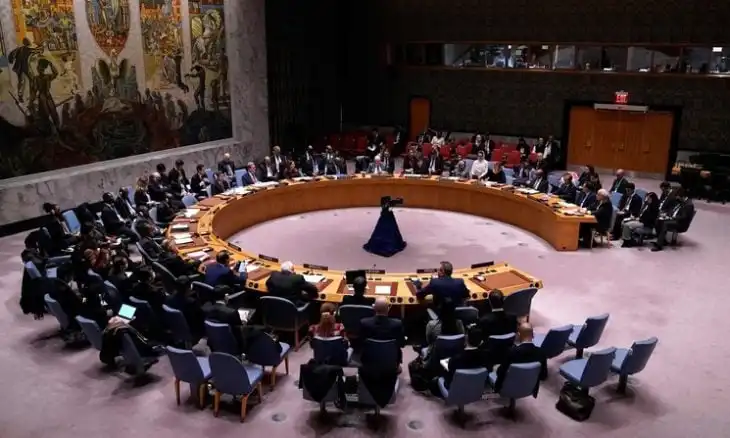

Israel has continued its relentless bombing of Gaza since October, and Israeli attacks on Gaza have led to the deaths of more than 29,000 Palestinians and the injury of more than 65,000, according to Amnesty International, as well as the displacement of at least 1.8 million people, according to the New York Times.


Israel has continued its relentless bombing of Gaza since October, and Israeli attacks on Gaza have led to the deaths of more than 29,000 Palestinians and the injury of more than 65,000, according to Amnesty International, as well as the displacement of at least 1.8 million people, according to the New York Times.


The International Court of Justice said it was plausible that Israel was committing genocide.

ARAB AND WORLD

Tue 20 Feb 2024 1:55 pm - Jerusalem Time

Saudi Arabia: The Israeli occupation is illegal and must be ended without conditions

The Ambassador of the Kingdom of Saudi Arabia to the Netherlands, Ziyad bin Maashi Al-Attiyah, said on Tuesday that the Israeli occupation of the Palestinian territories is “illegal,” calling for its end “without conditions.”


This came in a speech during a hearing held by the International Court of Justice in The Hague, based on a request from the United Nations General Assembly to provide advisory opinions regarding the legal consequences arising from Israel’s policies and practices in the occupied Palestinian territories.


The Saudi ambassador said, "Israel's actions indicate that it has no intention of peace."


He added: "Israel made it impossible to establish a Palestinian state by annexing more than two million dunams of land and building more than 279 illegal settlements in the West Bank."


Ambassador Al-Attiyah stressed that "the Israeli occupation is illegal and must be ended without conditions."

ARAB AND WORLD

Tue 20 Feb 2024 12:54 pm - Jerusalem Time

Israel’s war on Gaza: List of key events, day 137

As Israel threatens to launch offensive in Rafah, the US has drafted a UN resolution calling for a temporary ceasefire.


Fighting and humanitarian crisis

  • Israel’s assault in Gaza has killed more than 29,000 Palestinians since October 7, the territory’s Ministry of Health said on Monday, marking another grim milestone in one of the deadliest and most destructive military campaigns in recent history.
  • Footage verified by Al Jazeera shows Palestinian people fleeing to take cover after coming under attack from Israeli forces as they waited for humanitarian aid in northern Gaza.
  • The Israeli military released a video on Monday showing what is believed to be the youngest captive, his brother and mother being led through the streets of the southern Gaza city of Khan Younis. Al Jazeera could not independently verify the Israeli claims.
  • Separately, Benny Gantz, a member of Netanyahu’s three-man war cabinet, warned that the offensive would expand to Rafah if the captives were not freed by the start of the holy month of Ramadan, expected around March 10.
  • Meanwhile, with thousands of Palestinians detained by Israel, an Israeli human rights group reported that Palestinians inside Israeli prisons face daily violence from guards. Physicians for Human Rights said that Israeli guards enter cells and beat inmates with batons, kicks and fists without provocation in abuse it said could amount to torture.
  • The war has driven around 80 percent of the Palestinians in Gaza from their homes and left a quarter of the population starving, according to UN officials.

Diplomacy

  • The US says it is still working with mediators Egypt and Qatar to try to broker another truce and captive release agreement. But those efforts appear to have stalled in recent days. Qatar on Monday criticised comments by Israeli Prime Minister Benjamin Netanyahu in which he said that the Gulf state should do more to secure the release of captives and that Doha funds the Palestinian group.
  • The US drafted a United Nations Security Council resolution calling for a “temporary ceasefire” in the Gaza Strip “as soon as practical” and opposing an Israeli ground offensive on the southernmost city of Rafah.
  • The conflict has brought near daily exchanges of fire between Israel and Lebanon’s Hezbollah group risking an escalation in the conflict. Israeli warplanes on Monday carried out at least two strikes near the southern port city of Sidon in one of the largest attacks near a major city, wounding 14 people, Lebanese state media said.
  • Palestinian representatives on Monday asked judges at the UN’s highest court to declare Israel’s occupation of their territory illegal, saying their advisory opinion could contribute to a two-state solution and a lasting peace.
  • The 15-judge panel of the International Court of Justice has been asked to review Israel’s “occupation, settlement and annexation … including measures aimed at altering the demographic composition, character and status of the Holy City of Jerusalem, and from its adoption of related discriminatory legislation and measures”.

Violence in the occupied West Bank

  • The Palestinian news agency Wafa reports that the Israeli military has released Muhammad Muhammad Abd al-Majid Sharqiya, a 50-year-old prisoner from the village of Zabuba, west of Jenin in the occupied West Bank, after 23 years in Israeli custody.
  • Elsewhere in the occupied West Bank, a man has been injured by bullet fragments and dozens of citizens were exposed to tear gas during Israeli raids in the Arroub refugee camp, north of Hebron.

SOURCE: AL JAZEERA AND NEWS AGENCIES

OPINIONS

Tue 20 Feb 2024 12:50 pm - Jerusalem Time

Thomas Friedman: Dehumanization par excellence amid a genocide

Aljazeera

Aljazeera

Opinion Writer

By Belén Fernández

It is hardly surprising that these days, America’s leading columnist is working hard to dehumanise the people of the Middle East.

There are few American journalists who so transparently embody the United States’ pompous and demeaning approach to Arab and Muslim lands and peoples as Thomas Friedman, the foreign affairs columnist for the New York Times since 1995.

Prior to tormenting humanity with his biweekly opinions (such as that McDonald’s is the key to world peace), Friedman served in the 1980s as the Times bureau chief in Beirut and then Jerusalem. His time in the Middle East permitted him to hone his Orientalist arrogance, which earned him the starring role in a 1989 essay by none other than Edward Said, who remarked on the “comic philistinism of Friedman’s ideas” and Friedman’s apparent conviction that “what scholars, poets, historians, fighters, and statesmen have done is not as important or as central as what Friedman himself thinks”.

Of course, Friedman’s inauguration as a foreign affairs columnist gave him greater freedom to share what he, himself, thought. Over the years, these thoughts have included that Palestinians are “gripped by a collective madness”, that Afghanistan is the equivalent of a “special needs baby”, and that the nation of Iraq needed to “suck on this” in order to burst the “terrorism bubble” that had made itself known on 9/11 – an event Friedman nonetheless admitted Iraq had nothing to do with.

Friedman’s persistent warmongering has been facilitated by a dedicated rejection of reality and its replacement with one in which “a lot of bad stuff happens in the world without America, but not a lot of good stuff”. The fact that Friedman’s opinions align so conveniently with US foreign policy goals does much in the way of explaining how a purveyor of “comic philistinism” has soared to such prestigious heights at the national newspaper of record.

With a genocide now going down in the Gaza Strip, however, nothing is very comical any more. A die-hard fan of Israel – to the extent that he gushes that Israel “had me at hello” – Friedman was clearly not going to be any objectively logical person’s go-to source for analysis of a war that has now killed more than 28,000 Palestinians since October.
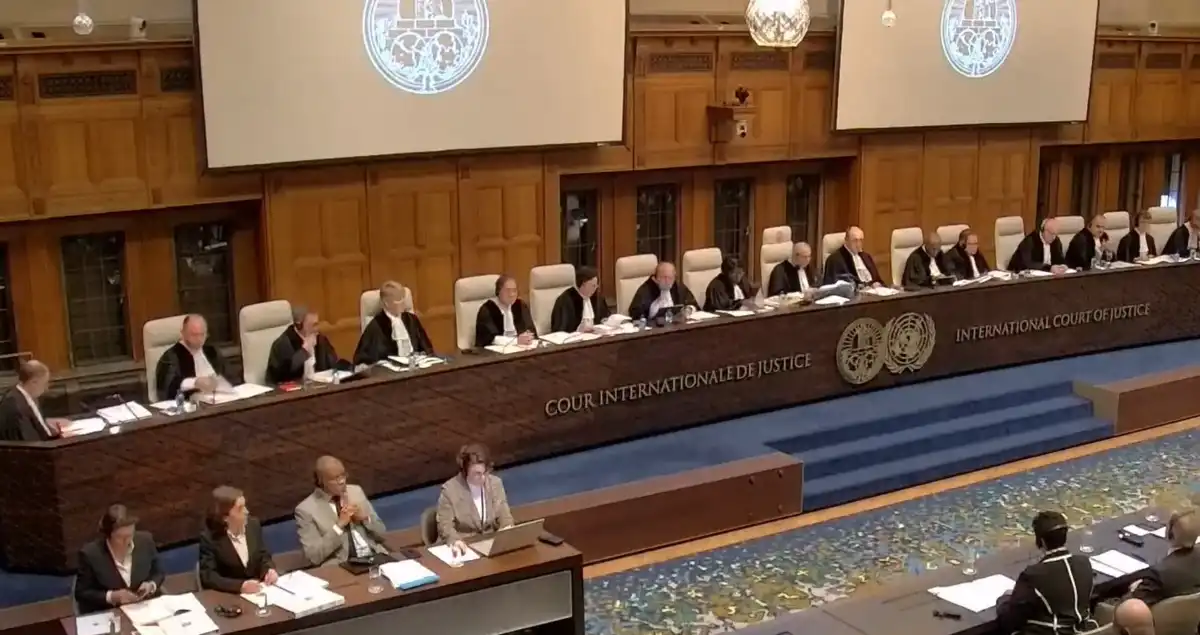
In his February 13 column, Friedman reasserts his self-appointed centrality to the Middle East by once again claiming much of the credit for the Saudi-backed “peace plan” of 2002. The present genocide of Palestinians notwithstanding, Friedman blasts Hamas for being a “longtime enemy of reconciliation” and the perpetrators of a “brutal down payment on Israel’s destruction” – never mind Israel’s apocalyptic monopoly on destruction and repeated rejections of truce offers from Hamas dating back to the 1980s.

Friedman, who curiously insists on portraying himself as a serious critic of Israel despite having been “had at hello”, goes on to announce: “I totally get why Israelis, who every day are taking fire from Hamas, Hezbollah and the Houthis, do not want to discuss a two-state solution with the Palestinians right now.” As for the folks who are actually “taking fire” on a daily basis, he reduces Gaza to merely being “engulfed by conflict” and the West Bank to “boiling”.

Granted, this was unsurprising coming from the man who during Israel’s Operation Cast Lead in Gaza in 2009 suggested that it was “not pretty, but it was logical” for the Israeli military to “inflict substantial property damage and collateral casualties” on Arab populations – and who enthusiastically cheer-led the sadistic 2002 Israeli attack on West Bank refugee camp of Jenin (so much for that year’s “peace plan”).

Some 10 days before his latest Israel-Palestine column, Friedman unleashed a dispatch titled “Understanding the Middle East Through the Animal Kingdom”, which even those of us who have been condemned to extreme intimacy with the Friedman oeuvre were not prepared for.

At first, one naturally assumed the article to be some sort of sick joke or Friedman parody. Alas, it was not. This would be grotesquely bonkers enough already had the Israeli military establishment not declared its Palestinian victims to be “human animals”.

Explaining that he sometimes prefers to think about Middle Eastern politics “with analogies from the natural world”, Friedman casts the US in the role of an “old lion” who is “still king of the Middle East jungle” but tired. The Islamic Republic of Iran, on the other hand, “is to geopolitics what a recently discovered species of parasitoid wasp is to nature”.

Quoting Science Daily, Friedman educates us as to how said wasp “injects its eggs into live caterpillars, and the baby wasp larvae slowly eat the caterpillar from the inside out, bursting out once they have eaten their fill”. He proceeds to ask: “Is there a better description of Lebanon, Yemen, Syria and Iraq today?”

A better question might be whether there is no one else in the world who might perform the functions of New York Times columnist without babbling nonsensically about parasitoid wasp eggs. In case we haven’t fully grasped the analogy, Friedman specifies that the Islamic Revolutionary Guard Corps is the wasp, while the aforementioned four countries are the caterpillars. The eggs are the Houthis, Hezbollah, Hamas and Kataib Hezbollah.

Friedman laments: “We have no counterstrategy that safely and efficiently kills the wasp without setting fire to the whole jungle”.

Never mind that the old, tired lion and its Israeli accomplice have wreaked far more lethal destruction in the Middle East than all of the wasp eggs combined. Burning down the whole jungle has long been the US-Israeli modus operandi, and is once again endorsed here by Friedman as basically the only option.

Anyway, there is no time to dwell on murderous incoherence since Friedman – having just appointed Hamas one of the wasp eggs – suddenly decides that the group is instead the “trap-door spider”, which according to an unnamed nature site “leaps out at great speed, seizes its prey and hauls it back into the burrow to be devoured, all in a fraction of a second”.

There is evidently no need for the animal equivalent of a military that has spent more than four months slaughtering Palestinian children, women and men with US backing, but Friedman does manage a profoundly bizarre yet innocuous comparison of bloodthirsty Israeli Prime Minister Benjamin Netanyahu to the sifaka lemur (apologies to all lemurs everywhere).

Having neared the end of his dehumanising rant, our New York Times columnist throws in one last defiance of political correctness and basic human decency: “Sometimes I contemplate the Middle East by watching CNN. Other times, I prefer Animal Planet”.

In his 2002 book Longitudes and Attitudes, Friedman boasted that the only person who reviewed his biweekly columns prior to publication was “a copy editor who edits them for grammar and spelling”. Perhaps it’s time to rectify that arrangement.

And as Thomas Friedman approaches his 30-year columnist anniversary of injecting his audience with incendiary drivel, it seems there might be another contender for the title of parasitoid wasp.


ARAB AND WORLD

Tue 20 Feb 2024 12:35 pm - Jerusalem Time

Western diplomats: Efforts to dissuade Netanyahu from invading Rafah have failed

In light of international warnings of a catastrophe if Israeli Prime Minister Benjamin Netanyahu proceeds to invade Rafah on the border with Egypt, where nearly a million and a half displaced Palestinians are crowded, and his and his Defense Minister Yoav Galant’s insistence on carrying out a broad military operation in the region, Cairo is waiting. US President Joe Biden's senior advisor, Brett McGurk, arrives in Egypt.


The Israeli Channel 13 reported yesterday, Sunday, that McGurk is expected to arrive in the region in the coming days. She explained that "the talks in Egypt will focus on two main files: the Rafah issue, and the possible (Israeli military) movement in the city located south of the Gaza Strip." The channel placed the visit against the backdrop of the Netanyahu government’s refusal to send another delegation to participate in the Cairo talks, and the escalation of fears of an invasion of Rafah.


Netanyahu sticks to his decision to invade Rafah

In this context, Western diplomats in Cairo confirmed, “Attempts and communications that took place over the past few days to dissuade Netanyahu from his plans that would blow up the region have failed.”


In Cairo, McGurk will discuss the possible Israeli move in Rafah


A European diplomat, familiar with her country's efforts regarding the situation in the Gaza Strip, said, "There were serious efforts on the part of a number of countries with weight in the European Union, but they failed in the face of the stubbornness of the prime minister of the occupation, who stressed during the past days the move forward with his plan, which... He says it aims to paralyze the capabilities of Hamas and prevent it from attacking Israel again.


An Israeli report on a “defect” in Egypt’s management of the border region

European diplomacy revealed, in an interview with Al-Araby Al-Jadeed, that Israel “prepared a report that was reviewed by Washington and a number of European capitals, confirming that Egypt’s management of the border region between Sinai and the Gaza Strip was flawed throughout the past period, in a way that allowed the Hamas movement to build an arsenal.” A large military force that later enabled it to do what it did last October 7.”


It explained that "the report prepared by the Israeli government, which it says is based on information, did not include clear evidence confirming Tel Aviv's story, but it included accusations of gaps in the Egyptian administration of the borders, claiming that those gaps still exist, which necessitates a broad military operation in Rafah, as well as in the Philadelphia axis area parallel to the Egyptian border with Gaza.”


European diplomacy suggested that “the relative shift in the Biden administration’s position, from categorically rejecting the military operation in Rafah to allowing it on the condition that Israel presents a clear and well-calculated plan, ensuring that large numbers of displaced people will not fall in the region, to that report that the Netanyahu government recently promoted.” .


It said, "Despite what Tel Aviv mentioned in the report regarding the situation on the Egyptian border with Gaza, it did not accuse the Egyptian administration of deliberately providing weapons to Hamas, but indicated that this defect may be due to negligence and human failure in performing the tasks of securing the borders."


European diplomacy pointed out that “the Israeli report, which was recently briefed on some European capitals after it demanded that the Netanyahu government withdraw from the Rafah invasion, indicates that Cairo did not express concerns to Tel Aviv during the recent security meetings, nor did it reject military operations in the Philadelphia axis. This contradicts the peace agreement signed between the two sides, but it expressed fears that this would cause the displaced to flock to its lands, which Israel provided assurances that would not happen.”


According to Western diplomats in Cairo, the Israeli government indicated in the report that it had “previously provided military, security and intelligence support to Egypt, during its confrontation with ISIS elements in Sinai, during the past five years, which contradicts what is being promoted regarding the rejection of any military actions in the axis.” "Philadelphia".


Egypt has a buffer zone on its border with Gaza

Diaa Rashwan, head of the Egyptian State Information Service, which is affiliated with the Presidency of the Republic, said, commenting on what was circulated by some international media regarding what is described as Egypt beginning to construct a separation wall on its border with the Gaza Strip, finally, that “Egypt already has, and for a long time before The outbreak of the current crisis created a buffer zone and fences in this region, which are the procedures and measures taken by any country in the world to maintain the security of its borders and sovereignty over its territories.”


In a previous statement, Rashwan described statements by Israeli officials, in which they indicated the existence of smuggling operations of weapons, explosives, ammunition and their components from Egyptian territory to the Gaza Strip, as “false claims and allegations.”


European diplomat: There are real fears of the expansion of the conflict in the Middle East


Another European diplomat told Al-Araby Al-Jadeed that his country "was keen to listen to Egyptian officials recently regarding what was raised in the media, whether Egyptian or international, regarding the peace agreement with Israel and its future."


He added: "We received categorical responses in this context, indicating Egypt's adherence to the agreement, and even emphasizing its role as a mediator between the Israelis and Palestinians, but it wants to ensure that its security is not exposed to risks that it will not be able to face at the present time given the economic crisis it is facing."


According to the diplomat, “A high-ranking Egyptian official confirmed that the peace agreement with Israel is outside the scope of any escalation or discrepancy between the two sides, as he stressed at the same time the extent of coordination between Cairo and Tel Aviv, and Egypt’s sponsorship of mediation in order to reach an agreement stipulating the release of Israeli prisoners.” He stops the fire and works to address the roots of the crisis, so that the region is not exposed to greater danger.”


Fears of expanding conflict in the Middle East

On the other hand, a third European diplomat confirmed that "there are real fears of the expansion of the conflict in the Middle East." He told Al-Araby Al-Jadeed, “These fears have become an incentive to reject further military measures by Israel, especially what we see as unjustified or that can be replaced by alternative measures.”


He added, "European concerns at the present time are due to the fact that the conflict continues for longer than that, and with the entry of the month of Ramadan (starting in the second week of next March), which has a special character in the Islamic and Arab world, may make European interests clear targets for sabotage." By the angry people.


He continued: “Also, the situation in the Red Sea may slide into a complete closure of the most important trade corridor,” stressing that “European estimates, in this context, believe that the outbreak of a large-scale war on the Lebanese front is no longer a far-fetched occurrence.”


The European diplomat said, "The occurrence of widespread killings in Rafah, if the Israeli army carries out a major military operation there, may signal the beginning of an explosion in the situation on the front with Hezbollah, as well as in the Red Sea on the part of the Houthis." At the same time, he pointed to "European concerns that the expansion of the conflict and the continuation of the crisis will allow the expansion of Russia's role and influence in the Middle East."


He explained that recent days "witnessed European-American consultations regarding the need to put pressure on the Israeli Prime Minister, to dissuade him from invading Rafah or carrying out a large-scale military action that would prolong the conflict." He revealed that "the American administration informed the Europeans of measures that it said would ensure the imposition of restrictions on military actions against civilians in Gaza, as it did against settler leaders in the West Bank."


The European diplomat revealed that the American administration "prepared a report on several incidents that were recently captured by cameras in the war that broke out in Gaza and aroused world public opinion, and asked the Israeli government to provide clear responses regarding them within 40 days, while expressing its readiness to approve sanctions on the soldiers involved in it and their leaders."

ARAB AND WORLD

Tue 20 Feb 2024 12:30 pm - Jerusalem Time

26 European countries demand an “immediate humanitarian truce” in Gaza

European Union foreign policy chief Josep Borrell announced on Monday that 26 European countries in the bloc, out of 27 member states, demanded an “immediate humanitarian truce” in the Gaza Strip, at a time when the occupation army announced that it was preparing to launch an attack on the city of Rafah on the far side. South of the sector.


Borrell said in a press conference following the meeting of European foreign ministers that this request, which was rejected by Hungary, means a “cessation of battles” that later paves the way for a permanent ceasefire.


Borrell added that the 26 countries are "very concerned" about the possibility of launching an attack on Rafah, stressing that the situation in Gaza is catastrophic and may "get worse" if Israel insists on carrying out this operation.


Belgian Foreign Minister Hajjah Lahbib confirmed, via the “X” platform, that the 26 countries called on Israel to refrain from any military action in Rafah.


Israel threatened to continue its attack in the Gaza Strip, including the Rafah area, during the month of Ramadan, which falls in March, if Hamas did not release the detainees by that time, at a time when the violent bombardment of the besieged Strip continues.


Borrell was asked about Hungary's refusal to join the request of the rest of the countries, and he refused to make any comment, stressing that the European Union intends to "play a role" in the region, and it can only do so if it is "unified."


Spain intends to impose sanctions on Israeli settlers

Spanish Foreign Minister Jose Manuel Albarez said on Monday that his country would unilaterally impose sanctions on Israeli settlers who practice violence in the West Bank if European Union member states did not reach an agreement on this matter.


Albarez told reporters: “If an agreement is not reached, Spain alone will proceed with imposing these sanctions on settlers who practice violence.”


Earlier on Monday, Irish Foreign Minister Michael Martin expressed his hope that European Union countries would unanimously agree to these sanctions.


Last week, the French authorities prevented 28 Israeli settlers from entering the country, accusing them of attacking Palestinians in the occupied West Bank.


Today, Tuesday, Albarez confirmed that Madrid supports the European consensus on implementing the two-state solution, stressing the need to protect Palestinian civilians during the ongoing Israeli war on the Gaza Strip.


PALESTINE

Tue 20 Feb 2024 12:25 pm - Jerusalem Time

A delegation from the Hamas movement arrives in Cairo

A leading delegation from the Hamas movement, headed by the head of the movement's political bureau, Ismail Haniyeh, arrived in Cairo to hold discussions with Egyptian officials about a ceasefire in the besieged Palestinian Strip.


A leadership source in the Hamas movement said, "The meetings with Egyptian officials will focus on completing the discussion of proposals for calm and alleviating the suffering of our Palestinian people."


The Hamas movement said, in a statement, that the head of its political bureau, Haniyeh, arrived this morning in the Egyptian capital, Cairo, “at the head of a delegation from the movement’s leadership, in order to hold discussions with Egyptian officials about the political and field situation.”


The movement stated that the discussions taking place “in light of the aggressive war on Gaza” include “efforts made to stop the aggression, provide relief to citizens, and achieve the goals of our Palestinian people.”

PALESTINE

Tue 20 Feb 2024 11:53 am - Jerusalem Time

Video: Hanan Ashrawi: Israel’s primary objective is to destroy ‘all of Palestine’

Hanan Ashrawi, veteran Palestinian activist and former member of the Palestine Liberation Organisation’s executive committee, says, “We are in the midst of a genocide” in Gaza. 


“Israel is hellbent on taking it a notch up … having treated the Palestinians like herds of cattle where they shift them from one place to the other carrying out demographic engineering … now they are destroying the last refuge that they have,” she told Al Jazeera. 


“Everybody knows that there are no limits to Israeli depravity, to Israeli blood thirst, to the use of massacres and carnage to achieve we don’t know what ends, because they don’t know what ends. They cannot destroy Hamas … so in a way it is a willful infliction of pain, death and destruction without any accountability,” Ashrawi said. 


“The primary objective is to destroy not just the Palestinians of Gaza but all of Palestine,” she concluded.


ARAB AND WORLD

Tue 20 Feb 2024 11:46 am - Jerusalem Time

Netanyahu: Everyone knows that I was the one who obstructed the establishment of a Palestinian state

Israeli Prime Minister Benjamin Netanyahu said that Israel will maintain full security control over the West Bank and Gaza Strip, whether with or without a permanent settlement, and considered that the establishment of a Palestinian state constitutes an existential threat to Israel.


Netanyahu said in a statement yesterday, Monday, “I submitted to the government a proposal stating that Israel will oppose the attempt to impose the establishment of a Palestinian state on it unilaterally. The proposal met with consensus despite the differences in opinions within the government, and this means that we are united in refusing to submit to international dictates.”


He explained that he presented to the Knesset (Parliament) legislation consistent with the Council of Ministers’ decision to reject “international dictates” that seek to push the establishment of a Palestinian state.


The Israeli Prime Minister expected that the proposed legislation would gain broad support, "and it will show the world that there is broad agreement in Israel against international efforts to impose a Palestinian state on us," he said.


Everyone knows

He continued, "Everyone knows that I am the one who obstructed, for decades, the establishment of a Palestinian state that would endanger our existence," and pointed out that his position was strengthened in the wake of the Al-Aqsa flood operation carried out by the Palestinian resistance on the seventh of last October.


He added, "My position remains clear. In any situation, whether with or without a permanent settlement, Israel will maintain full security control over the entire area west of Jordan, and this of course includes the West Bank and Gaza Strip."


In addition to the United States, European countries announced that they were considering recognizing an independent Palestinian state, in a proactive step that would pave the way for the implementation of the two-state solution, but this was met with rejection from the highest political levels in Israel.


The United Nations granted Palestine observer status in 2012, and among the 193 member states of the United Nations, 139 countries have so far recognized Palestine as an independent state.


Source: Al Jazeera + agencies

ARAB AND WORLD

Tue 20 Feb 2024 11:43 am - Jerusalem Time

Prince William's first comment on the occupation war against Gaza...and this is what he will do

In Prince William's first comment on the Gaza war, the heir to the British throne acknowledged the "human suffering" in the Palestinian Strip, saying that he would undertake a number of activities to reflect his "acknowledgment of the human suffering" resulting from the conflict in Gaza and the Middle East, and drawing attention to the rise of anti-Semitism on the Gaza Strip. World level.


Kensington Palace said that Prince William (41 years old) will meet with those involved in providing humanitarian support in the region, and listen to accounts of the situation on the ground, and the Prince of Wales will also visit a synagogue to listen to young people involved in tackling hatred and anti-Semitism.


Prince William's comment on the Gaza war


In 2018, Prince William became the first among the senior members of the British royal family to make an official visit to Israel and occupied Palestine.


With his father, King Charles, currently absent from official public duties while undergoing treatment for cancer, Prince William is expected to make some high-profile engagements. This comes as his wife, Kate, is also recovering from abdominal surgery.


“The Prince and Princess are deeply concerned by the events that occurred in late 2023, and continue to hold all the victims, their families and friends in their hearts and minds,” William’s office said in a statement.


The war began last October, after the Palestinian resistance launched Operation “Al-Aqsa Flood” in response to the occupation’s violations against the Palestinians.


Since last October 7, the Israeli occupation has been waging a devastating war on the Gaza Strip, leaving thousands of victims, most of them children and women, according to Palestinian and UN statements, which led to Israel being tried before the International Court of Justice for “genocide crimes” for the first time since its founding.


ARAB AND WORLD

Tue 20 Feb 2024 11:41 am - Jerusalem Time

UN warnings of an “explosion” in the number of child deaths in Gaza

The United Nations has warned that the alarming food shortage and the rapid spread of diseases may lead to an “explosion” in the number of child deaths in the Gaza Strip.


After 20 weeks of Israel's war against Hamas, UN agencies said that food and clean water had become "very scarce" in the besieged Palestinian enclave, and that almost all young children were suffering from infectious diseases.


Ted Chaiban, deputy executive director of UNICEF, said Gaza is about to witness “an explosion in preventable child deaths, which could double the already unbearable level of child mortality.”


At least 90 percent of children under the age of five in Gaza are affected by one or more infectious diseases, according to a report issued by UNICEF, the World Health Organization and the World Food Programme. 70 percent had had diarrhea in the past two weeks, a 23-fold increase compared to 2022.


Rafah, one of the most densely populated places on Earth, now houses half of Gaza's population, many of whom have been displaced multiple times due to the war.

For his part, Mike Ryan, in charge of emergency situations at the World Health Organization, said: “Hunger and disease are a deadly combination,” adding: “Hungry, weak, and severely traumatized children are more vulnerable to disease. Sick children, especially those with diarrhea, cannot absorb nutrients well.


According to a United Nations assessment, more than 15% of children under the age of two, or one in six, suffer from “acute malnutrition” in northern Gaza, and are almost completely deprived of humanitarian aid.


UN agencies warned that “this data was collected in January, and the current situation is likely to be more serious.”


In the southern Gaza Strip, 5 percent of children under the age of two suffer from acute malnutrition, according to the assessment.


The UN agencies said that “this deterioration in the nutritional situation” of people within three months is “unprecedented in the world.”


The death toll from the Israeli military operations in the Gaza Strip rose on Monday to 29,029 dead and 69,028 wounded since October 7.

ARAB AND WORLD

Tue 20 Feb 2024 11:23 am - Jerusalem Time

The Arab group calls on the Security Council to stop the Gaza war, and America calls for a “temporary halt.”

The Arab group at the United Nations requested support for the draft resolution submitted by Algeria for a ceasefire in the Gaza Strip, which is scheduled to be voted on in the UN Security Council on Tuesday. In return, the United States presented a draft resolution supporting a temporary ceasefire.


The Arab group said in a statement, on Monday evening, that the draft resolution submitted by Algeria would support the negotiations conducted by the United States, Egypt and Qatar, contrary to American claims.


It added that the UN Security Council must take steps and not ignore the calls of the international community and global public opinion.


Ite indicated that any justification would not be sufficient to explain the failure of the UN Security Council, issuing a call to all members of the Security Council to support the Algerian draft resolution calling for an urgent humanitarian ceasefire in Gaza.


On Sunday, Algeria announced that it had submitted a “non-amendable” draft resolution to the UN Security Council calling for an immediate ceasefire in the Gaza Strip, to be put to a vote next Tuesday.


American proposal

In the same context, Reuters said that it had seen a draft of a US draft resolution in the UN Security Council that “affirms support for a temporary ceasefire in Gaza as soon as possible.”


Washington has so far opposed the use of the word ceasefire in any United Nations action regarding the Israeli war on the Gaza Strip.


The draft resolution also states: “Under the current circumstances, any major ground attack on Rafah will cause further harm to civilians, and may lead to their displacement to neighboring countries.”


The American draft stated that such a step “would have serious implications for regional peace and security, and therefore the necessity of not proceeding with such a major ground attack under the current circumstances must be emphasized.”


It is not yet clear if or when the draft resolution will be put to a vote.


European invitation

In a related context, European Union foreign policy official Josep Borrell told reporters - yesterday, Monday - that 26 out of 27 European Union member states are calling for an “immediate humanitarian truce” that leads to a “sustainable ceasefire” in Gaza.


Borrell added that those countries agreed to "demand an immediate humanitarian truce that would lead to a sustainable ceasefire, the unconditional release of hostages and the provision of humanitarian assistance."


Borrell did not name which EU member state did not agree to the statement, but diplomats say Hungary blocked a similar statement a few days ago.


The Israeli army is preparing to launch a military ground operation in the city of Rafah, south of Gaza, where about a million and a half Palestinians are gathered, the majority of whom have left their cities in the northern Gaza Strip, due to the continuous Israeli bombing since the seventh of last October.


Since the seventh of last October, the Israeli occupation army has been waging a devastating war on the Gaza Strip, which led to the death of about 29,000 people and more than 68,000 injured, in addition to the destruction of various cities and the displacement and starvation of the population.

PALESTINE

Tue 20 Feb 2024 11:11 am - Jerusalem Time

"International Justice" resumes its public hearings on the legal consequences arising from the occupation

Today, Tuesday, the International Court of Justice in The Hague resumed its public hearings on the legal consequences arising from Israel’s policies and practices in the occupied Palestinian territory, including East Jerusalem.


Yesterday, the court heard the State of Palestine’s plea, presented by the Minister of Foreign Affairs and Expatriates, Riyad Al-Maliki, and the legal team of the State of Palestine, which included: Professor Andre Zimmerman, Faul Rackler, Professor Philip Sander, international law expert Ambassador Namira Negm, and the Permanent Representative of Palestine to the United Nations Riyad Mansour and Alain Pele.


Today, the court is scheduled to hold two public sessions, in the morning and in the evening, to hear briefings from the countries that submitted written pleadings earlier, namely: South Africa, Algeria, Saudi Arabia, the Netherlands, Bangladesh, Belgium, Belize, Bolivia, Brazil, and Chile.


The public sessions will continue for six days, between February 19 and 26, to listen to briefings from 52 countries, in addition to the African Union, the Organization of Islamic Cooperation, and the League of Arab States.


The hearings come in the context of the United Nations General Assembly’s request to obtain an advisory opinion from International Justice on the effects of the Israeli occupation that has continued for more than 57 years.


On November 11, 2022, the Fourth Committee of the United Nations General Assembly, the Special Committee on Political Issues and Decolonization, adopted a draft resolution submitted by the State of Palestine to request a legal advisory opinion and advisory opinion from the International Court of Justice, on the nature of the existence of the Israeli colonial occupation. In the territory of the State of Palestine, including Jerusalem.


This is the second time that the United Nations General Assembly has asked the International Court of Justice, also known as the World Court, to issue an advisory opinion related to the occupied Palestinian territory.


In July 2004, the General Assembly requested a legal advisory opinion on Israeli actions in the territory occupied in December 2003 regarding the construction of the apartheid wall in the West Bank, including East Jerusalem.


A few months later, in July 2004, the court found that construction of the wall contravened international law and must stop, and that the parts that had been built must be dismantled.


Although advisory opinions issued by the International Court of Justice are non-binding, they carry significant moral and legal authority and could eventually become part of the norms of international law.

PALESTINE

Tue 20 Feb 2024 10:47 am - Jerusalem Time

War on Gaza: Dozens of Palestinians killed and wounded in the bombing of various areas in Gaza Strip

On the 137th day of its aggression against the Gaza Strip, the Israeli forces continued to bomb many areas in the Strip with warplanes, artillery, and gunboats, committing several massacres, which resulted in the death and injury of dozens of citizens, most of them women and children.

According to local sources, a large number of citizens were killed and others were injured in missile and artillery shelling and gunfire from Israeli marches on the Al-Zaytoun neighborhood, southeast of Gaza City.

The sources said that large Israeli military vehicles entered the Al-Zaytoun neighborhood from the Tal Al-Hawa area west of the city, and Mahmour Salah al-Din to the south, and were stationed near the intersection of Street 8 and Salah al-Din Street amid bombardment by Israeli warplanes and the firing of artillery shells that hit a number of citizens’ homes. Which led to at least 15 killed and dozens of wounded.

It added that Israeli "Capter" drones opened fire on citizens moving between the alleys and side streets in the neighborhood, pointing out that the Israeli incursion into the Al-Zaytoun neighborhood caused the forced displacement of thousands of citizens towards the western areas of Gaza City, specifically to Al-Shifa Hospital and the vicinity of the hospital in Al-Rimal neighborhood.

Israeli warplanes, artillery, and tanks launched raids and fired shells at a number of residential neighborhoods in the city of Khan Yunis, south of the Gaza Strip, resulting in 6 dead and 15 wounded.

The Israeli war machine continues its operations in Nasser and Al-Amal hospitals, west of the city, amid tragic conditions for the wounded, patients, and medical staff in Nasser Hospital.

In Rafah, the Israeli army bombed a number of shells in the center and west of the city, causing injuries among the displaced.

In the central Gaza Strip, Israeli warplanes bombed several homes in the Nuseirat, Bureij, and Maghazi camps, and in Deir al-Balah, killing 4 citizens and wounding about 10 others. They were transferred to Al-Aqsa Martyrs Hospital in the center of the Gaza Strip.

The Israeli army fired fire and shells at citizens waiting for humanitarian aid west of Gaza City.

Three citizens were killed tonight in an Israeli bombing targeting the Nuseirat camp, in the central Gaza Strip.

Eyewitnesses reported that the Israeli forces bombed a house in the camp, leading to the death of three citizens. They were transferred to Al-Aqsa Martyrs Hospital in Deir Al-Balah.

In the same context, Israeli artillery bombed the Al-Shaaf area east of Al-Shuja'iya, while occupation gunboats bombed the coast of Gaza City.

In an infinite toll, the number of killed has risen to more than 29,092, the majority of whom are women and children, and the wounded to more than 68,883, since the start of the Israeli aggression on the Gaza Strip on the 7th of last October.

OPINIONS

Tue 20 Feb 2024 10:42 am - Jerusalem Time

Equation: Have you run out of credit, Israel?

Hamdi Farrag

Hamdi Farrag

Opinion Writer

Every day that passes, in its search for complete and absolute victory, Israel loses something new of its assets, whether material or moral, military or political, popular or partisan, immediate or future, regional or international, tactical or strategic, so much so that it is as if we are about to hear the traditional phrase on mobile phones: You have run out of credit.

On the 136th day of the genocidal aggression in Gaza, we stop at two events, the first happened, and the second has not happened yet. The first is related to Yahya Al-Sinwar with his family as he was escaping in one of the tunnels. It was filmed by one of Hamas’ cameras on the 10th of last October, that is, three days after the Al-Aqsa flood, that is, 133 days before today, and this old tape was treated with great attention. Security, politically and media wise, much more than what was done with his shoe, and although the person who appeared in the tape may not be Yahya Sinwar, because he was filmed from behind, and the way he walked did not resemble Sinwar’s walk, Israel presented the tape on It is one of her achievements, ignoring that it is an old tape. About this, the famous journalist Nahum Barnea says in Yediot Aharonot: “Over the course of an entire day, they fed the Israelis a story about a tape recorded about Sinwar in a tunnel. The coward not only flees in terror from our crawlers that are plowing the land above him, but also sends his wife and children ahead of him to They die before him. On October 10, that is, 17 days before the ground move, Sinwar would not have fled anywhere because he had no reason to do so.” Barnea concludes that an officer stopped him and told him, “I fear that the greatest harm from the events of October 7 will be the harm to the values of Israeli society. Hamas will corrupt us, and this war will give birth to another Israel, a vengeful, violent, fanatical mob.”

The second event that has not happened yet is the month of Ramadan, which Israel treats as a frightening thing or a suspicious object that will attack it after about twenty days. It is another matter entirely. It is a holy month for about two billion Muslims, in which they fast during the day and pray at night. They tolerate, love, and sympathize. And they show mercy, on the condition that God accepts their fasting - certainly not all Muslims are like that - but Israel, the owner of the first heavenly religion, views it as a widespread evil, the Corona epidemic, for example, or a second flood of a new type, which it links to Al-Aqsa Mosque as a place, and begins planning to prevent about a million. A believer can seclude themselves in it during their fast. They begin by classifying their ages, political identities, and hometowns, whether they are “Israeli Arabs,” or a citizen of the unified capital, Jerusalem, or from the West Bank.
As for those from Gaza, how do you know what Gaza is? They have been deprived of entering it during Ramadan and other than Ramadan for 17 years, and this year in particular, we have been starving them day and night, for five months. Is your balance running out, Israel?

PALESTINE

Tue 20 Feb 2024 9:26 am - Jerusalem Time

The Security Council votes today on a draft resolution to stop the war on Gaza

Today, Tuesday, the UN Security Council will vote on a draft resolution calling for an immediate ceasefire in Gaza for humanitarian reasons, submitted by Algeria on behalf of the Arab Group.


Algeria had initially distributed the draft at the end of last month, but some permanent members demanded negotiations on the resolution, while the United States threatened to use its veto power, and distributed an alternative draft for voting in the coming days.


The Algerian project calls for stopping the war on Gaza, and asking the parties to the conflict to comply with their obligations under international law and protect civilians and civilian objects.


The American project stipulates “a temporary ceasefire when conditions permit,” and stresses “the urgent need for a plan to ensure the protection of civilians and avoid their displacement in the event of a major military attack in Rafah.”


In order for any proposal to be approved in the Security Council, it must receive the support of at least nine votes and not use the veto by the United States, France, Britain, Russia, or China.


The Israeli forces have continued their aggression on land, sea and air against the Gaza Strip since the 7th of last October, which resulted in the death of 29,092 citizens, the majority of whom were women and children, and the injury of more than 68,883 others, an infinite toll.