PALESTINE

Wed 20 Mar 2024 6:52 pm - Jerusalem Time

West Bank: 3 Palestinians killed as Israeli drones bombed a vehicle in Jenin

Three citizens were killed, and a fourth was moderately injured, this evening, Wednesday, as a result of Israeli drones bombing a vehicle on the outskirts of Jenin camp.


The Red Crescent Society in Jenin reported that its crews transported at least three dead bodies to Jenin Governmental Hospital, while a fourth citizen was injured, described as moderate.

PALESTINE

Wed 20 Mar 2024 5:49 pm - Jerusalem Time

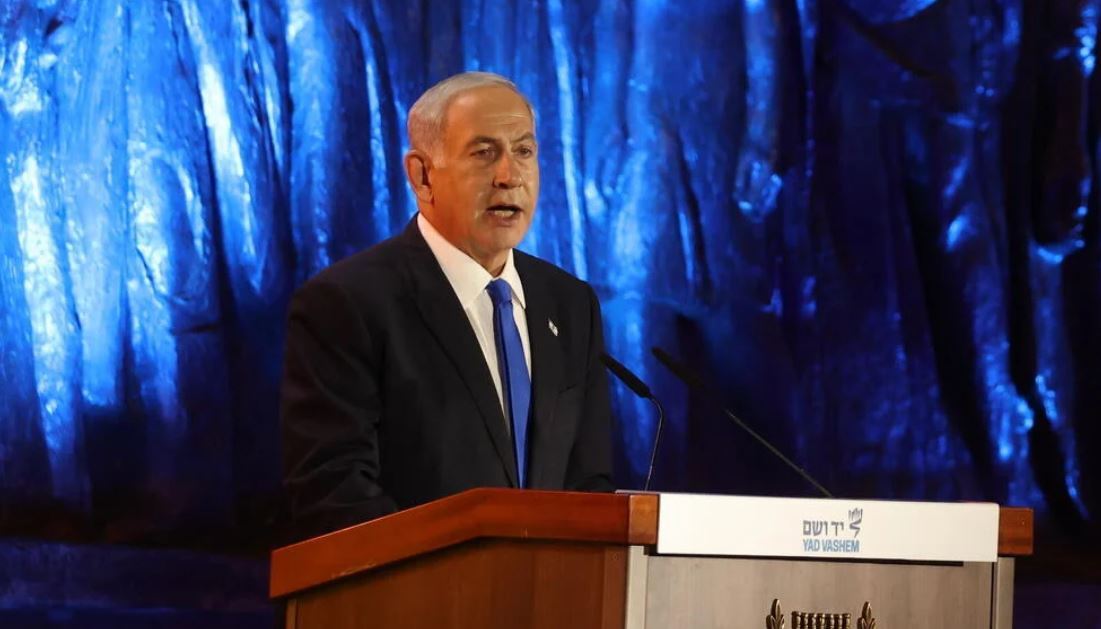
Netanyahu: Entering Rafah requires time, and without that we will not win

Israeli Prime Minister Benjamin Netanyahu said on Wednesday that it will take time for his forces to enter Rafah.


Netanyahu confirmed that he had informed US President Joe Biden that without entering Rafah, “Israel” could not achieve victory.


Meanwhile, Israeli Defense Minister Yoav Galant said that all segments of society must be recruited "in order to ensure our military superiority."


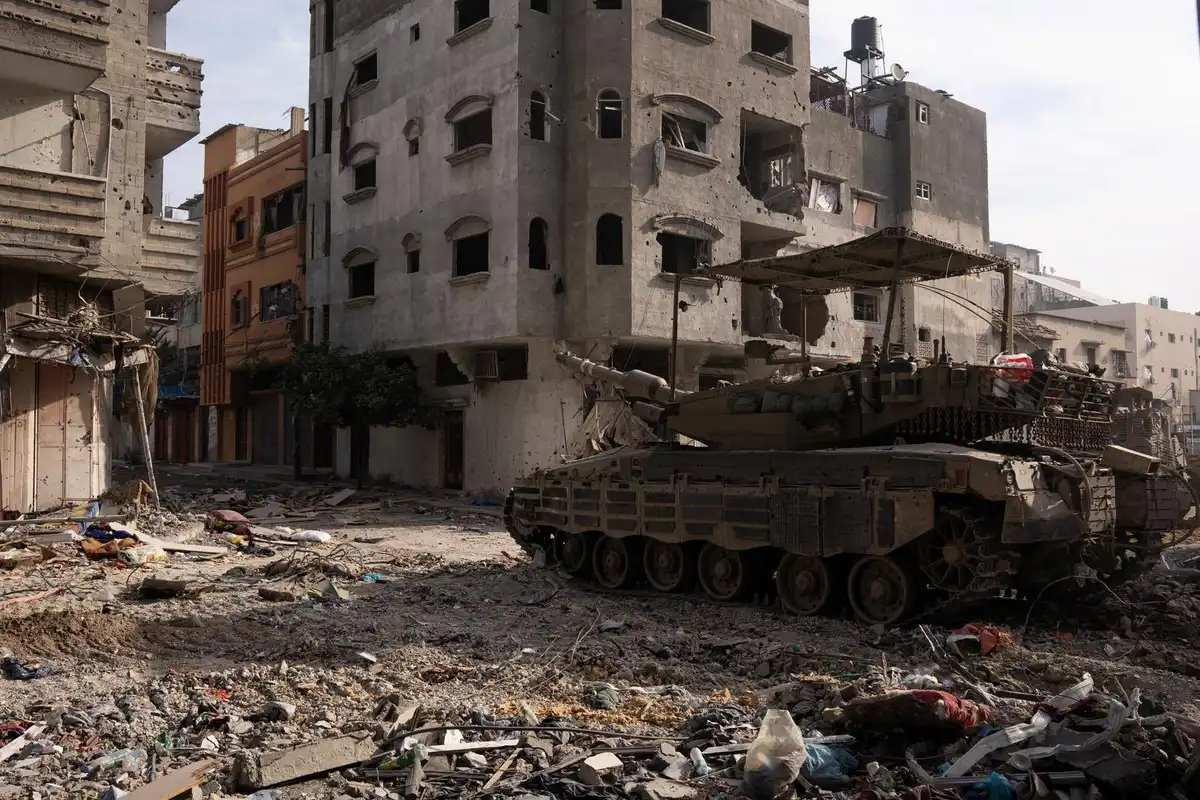
The Israeli army continues its aggression against the Gaza Strip for the 166th day in a row, leaving 31,923 dead and 74,096 injured since October 7, according to what the Palestinian Ministry of Health in the Strip stated in its statistical report.


The Ministry reported that the Israeli army committed 10 massacres against families in the Gaza Strip, including 104 deaths and 162 injuries to hospitals during the past 24 hours.


It confirmed that there are still a number of victims under the rubble and on the roads, and ambulance and civil defense crews cannot reach them.

ARAB AND WORLD

Wed 20 Mar 2024 5:41 pm - Jerusalem Time

US State Department: Blinken will visit Israel on Friday

The US State Department announced, on Wednesday, that Secretary Anthony Blinken will conclude his sixth trip to the Middle East with a visit to Israel, on Friday.


The US State Department said, in a statement, that Blinken is scheduled to visit Tel Aviv, on Friday, after talks with the leaders of Saudi Arabia and Egypt and the foreign ministers of the two countries, in Jeddah and Cairo, according to what the Associated Press reported.


State Department spokesman Matthew Miller said that Blinken will discuss in Tel Aviv with the leadership of the Israeli government “the ongoing negotiations to secure the release of all hostages” in the Gaza Strip, according to the statement.


Miller explained that Blinken's discussions in Israel will include "discussing the need to ensure the defeat of Hamas, including in Rafah, in a way that protects the civilian population, does not impede the delivery of humanitarian aid, and enhances Israel's public security."


The statement stated that Blinken's tour in the Middle East includes Saudi Arabia on Wednesday, continues in Egypt on Thursday, and concludes in Israel on Friday.

PALESTINE

Wed 20 Mar 2024 4:23 pm - Jerusalem Time

The Secretary-General of the United Nations attacks the occupation and demands a ceasefire

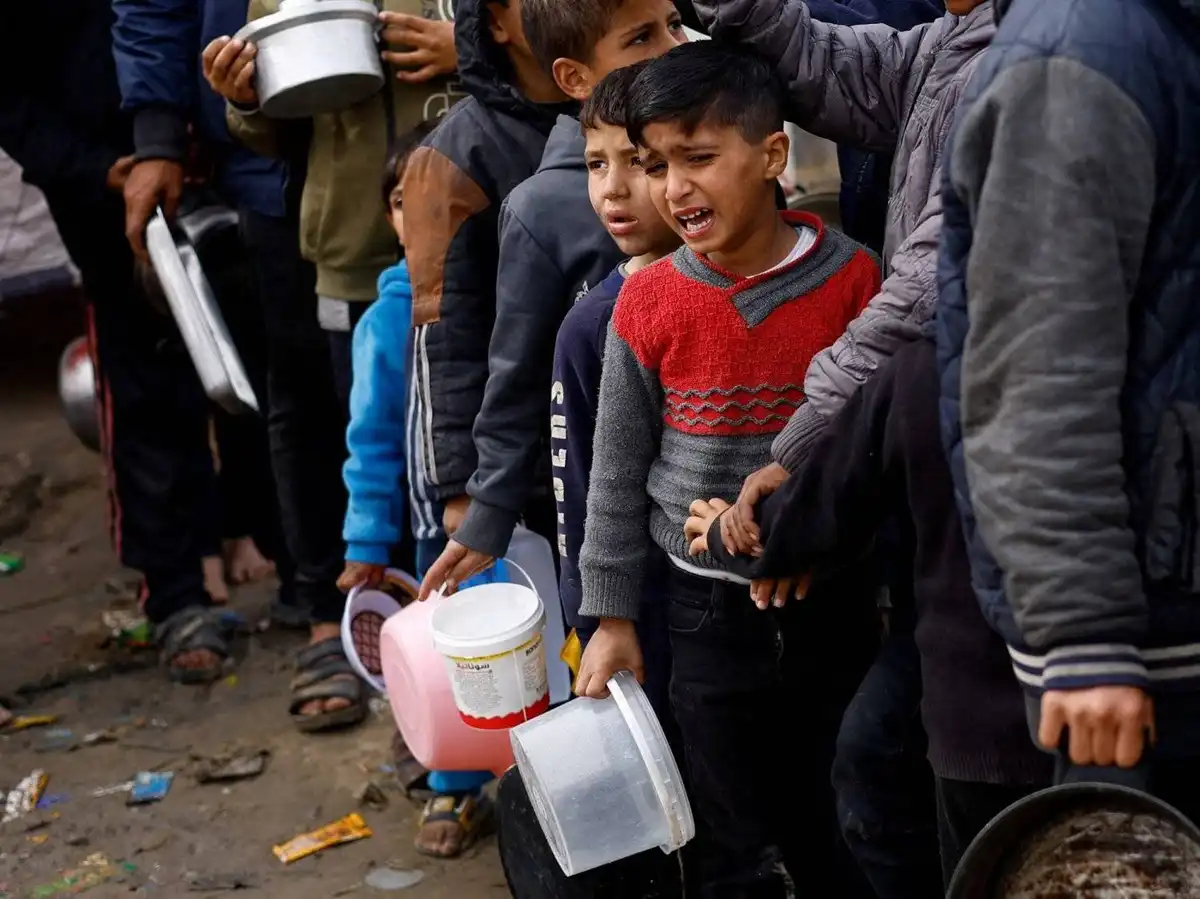
United Nations Secretary-General Antonio Guterres said on Wednesday that more than one million people are threatened by famine in Gaza and action must be taken immediately before the situation worsens.


Guterres stated that the residents of the Gaza Strip are threatened with famine and action must be taken to save them, calling for all possible efforts to stop the killing in Gaza and ensure the release of the hostages without conditions.


He stressed that nothing justifies the collective punishment practiced by Israel against the Palestinians in Gaza, noting that the world is going through dark moments in light of the continuing war in Gaza.


The Israeli army continues its aggression against the Gaza Strip for the 166th day in a row, leaving more than 31,923 dead and 74,096 injured since October 7, according to what the Palestinian Ministry of Health in the Strip reported.

ARAB AND WORLD

Wed 20 Mar 2024 3:00 pm - Jerusalem Time

American newspaper: Israeli Prime Minister is considering calling early elections

The American magazine “Politico” revealed that the Israeli Prime Minister, Benjamin Netanyahu, and some of those close to him are actually studying the idea of calling for early elections in Israel in his quest to remain in power, even though the opposition is the one calling for this, and accuses Netanyahu of failure in his war on the Gaza Strip.


The American magazine indicated in a report, Tuesday, March 19, 2024, that Netanyahu and the Likud Party he leads were quick to rebuke the leader of the Democratic majority in the US Senate, Senator Chuck Schumer, in response to his explicit call on Israel to hold parliamentary elections.


In a scathing speech, Schumer, the most senior Jewish lawmaker in the US Congress, warned Israel that it risked becoming an international “pariah” unless it changed its approach in its military campaign in Gaza and adopted a two-state solution.


This explicit intervention, which Netanyahu viewed as one of the obstacles to peace, was seen in both Washington and Israel, not only as a remarkable shift for Schumer personally, but also for American policy.


It was, of course, another indication of the frustration of American Democrats as they fear that the war in Gaza and its high death toll will cause President Joe Biden to lose crucial young voters in next November’s elections.


However, in their statement, Netanyahu and Likud asked Schumer to return to the ranks, and declared that Israel is not a “banana republic.” The Prime Minister then informed his government last Saturday, March 16, that “no international pressure will prevent Israel” from achieving its war goals.


“Friends Advice”

But despite the insult that Netanyahu and his party may feel, Schumer's invitation may amount to advice from friends. The Israeli leader and his inner circle are already thinking about whether to call early elections in Israel, although it will not be for the reasons given by the US Senator.


As Netanyahu tries to cling to power, he faces contradictory demands about the direction of the war. Opposition politicians who joined his war government have long pushed for a deal with Hamas to secure the return of Israeli hostages remaining in detention in Gaza.


Meanwhile, Likud lawmakers, as well as the religious nationalists and far-right extremists in his coalition, are pushing for the war to continue at full force until Hamas is eliminated. They also completely reject American and European demands regarding the “Day After” plan, which includes real negotiations to establish an independent Palestinian state.


In a recent television interview, Biden reiterated his opposition to military action in Rafah without a credible plan to protect civilians, warning that such an attack would represent a “red line” for him.


But Netanyahu simply added fuel to the burning diplomatic fire, announcing last Friday, March 15, the approval of the military plans for the attack.


Netanyahu thought about early elections in Israel

So, with pressure mounting at home and abroad, Netanyahu and his trusted aides are now considering whether holding early elections in Israel might be his best tactic in trying to maintain his grip on power.


According to a current aide to Netanyahu who spoke to the American magazine Politico, this option was first discussed in regular strategy sessions last December, even before war cabinet minister Gadi Eisenkot publicly said that elections must be held soon, in order to restore confidence in the government. Following the attacks of October 7th.


Nadav Strauchler, a former strategist who worked with Netanyahu, told the magazine, “Bibi is in a difficult position, and he has big problems wherever he turns.” But he adds, “He always has a plan, in fact more than one plan, and he always says that you have to come up with two plans, and then decide which one is better at the last minute.” He continued that surrender is not in Netanyahu's nature.


Netanyahu was dubbed “Bibi the Magician” in the 1990s, after he defeated Shimon Peres in elections held months after the assassination of then Prime Minister Yitzhak Rabin. The then US President, Bill Clinton, secretly tried to obstruct Netanyahu's election campaign, but to no avail.


Later, few believed he could win in 2015 given talk of a possible criminal investigation into allegations of breach of trust, bribery and fraud. However, Bibi pulled another rabbit out of his hat, securing re-election by courting the Israeli far right and religious nationalists.


The protests worry Netanyahu

One of Netanyahu's biggest fears is that protests against him will soon break out again, this time perhaps even dwarfing last year's demonstrations against his judicial reform plans.


So, one option is to try to pre-empt this by going to early elections in Israel and using mounting American criticism of the war in Gaza to argue that he is the best person to defend Israel and fend off international criticism until “total victory” is achieved.


For this purpose, Netanyahu uses the saying “standing up to Washington” in his Hebrew-language media, a saying that served him well in the past, especially when he challenged former US President Barack Obama.


While opinion polls also show signs that things may be turning back in Bibi's favour. According to an opinion poll published by the Israeli Channel 14, Netanyahu has a chance to fight to remain in power, and his bloc may obtain a majority in the Knesset, albeit a small majority.


ARAB AND WORLD

Wed 20 Mar 2024 2:29 pm - Jerusalem Time

Biden reassures Netanyahu that he is not trying to overthrow him

President Biden reassured Israeli Prime Minister Benjamin Netanyahu that he is not trying to undermine him politically by criticizing the Israeli government, Axios reported.


Biden gave his assurance to Netanyahu during a phone call on Monday, which came after Senate Majority Leader Chuck Schumer (D-N.Y.) said last Thursday that Netanyahu is an "obstacle to peace" and called for new Israeli elections. Biden said Schumer gave a "good speech."


Sources told Axios that Netanyahu complained about Schumer's speech and Biden's approval of it, which prompted Biden to say that he was not looking to undermine the Israeli leader or interfere in Israel's internal politics.


Biden and other Democrats in the US have tried to distance themselves from Netanyahu's government while also supporting Israel's mass slaughter of Palestinians and its famine blockade of Gaza. But the criticism stopped short of changing policy as the United States continued to provide Israel with unconditional military and political aid.


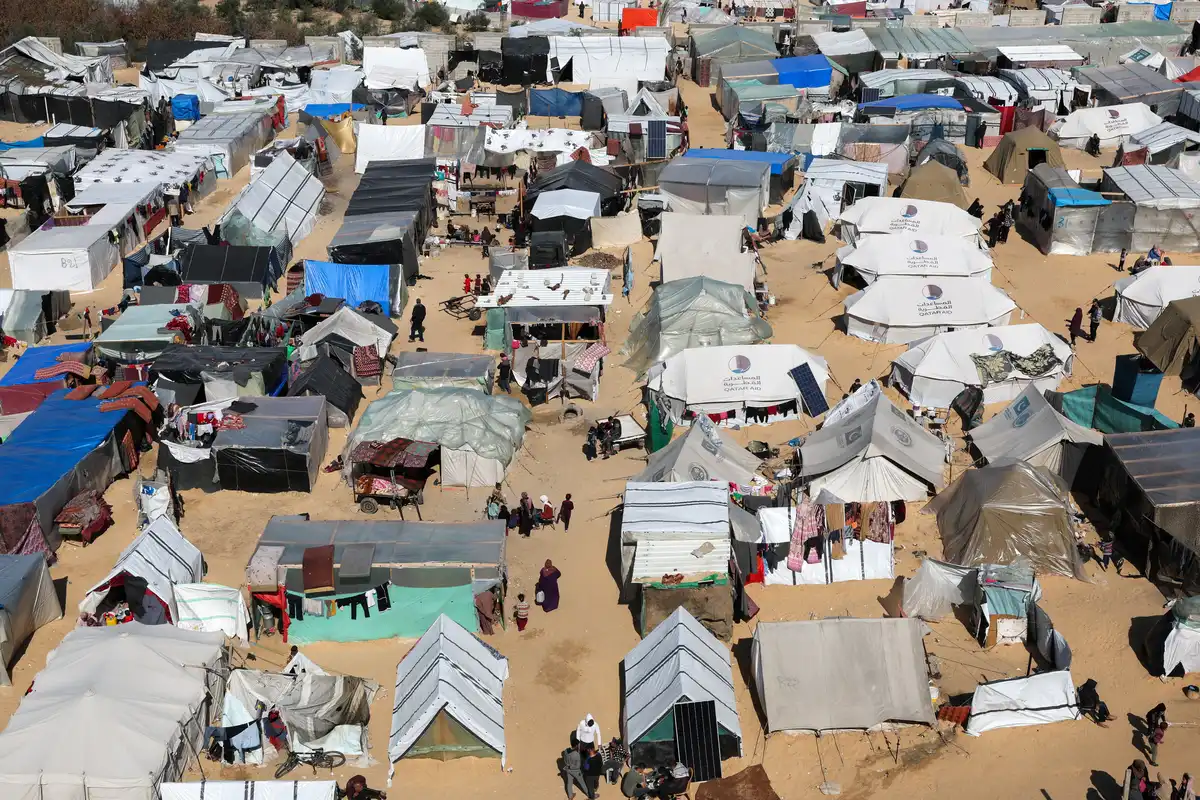
Biden and Netanyahu also agreed during the call that Israel would send a delegation to Washington to discuss its plans to invade Rafah, the city of Gaza located on the Egyptian border and inhabited by 1.5 million Palestinians. American officials were warning against a large-scale invasion, and were proposing a more limited operation.


According to the White House, Biden expressed to Netanyahu his “deep concerns” about the possibility of Israel conducting a major ground operation in Rafah, where more than a million displaced civilians are currently seeking shelter after fleeing fighting in the north. But Netanyahu said on Tuesday that he ignored Biden's concerns and reiterated that he planned to attack the city.


Netanyahu told members of the Knesset Foreign Affairs and Defense Committee: “I made it clear to the president as much as possible that we are determined to complete the elimination of these brigades in Rafah, and there is no way to do this without a ground incursion.”


Netanyahu said that Israel is under "international pressure," but said that Israel "rejects in order to achieve the goals of the war."


It is noteworthy that the directors of the American intelligence services unanimously agreed on Monday, March 11, that Israel cannot achieve Netanyahu’s goal of “eliminating” Hamas.

PALESTINE

Wed 20 Mar 2024 1:50 pm - Jerusalem Time

West Bank: Israeli settlers assault a citizen and burn his vehicle in Nablus

Today, Wednesday, Israeli settlers attacked a citizen and burned his vehicle while he was on his land between the towns of Burqa and Beit Amrin, northwest of Nablus.


Citizen Abdel-Jabbar Sadiq Abdo said that eight settlers attacked us while we were working to reclaim the land in the Dalba area between Beit Amrin and Burqa. They beat me and burned my vehicle completely.


He added that the settlers attacked the bulldozer that was working in the land and caused damage and destruction to it.

PALESTINE

Wed 20 Mar 2024 1:38 pm - Jerusalem Time

The Washington Post refutes Israel's claims regarding the assassination of Hamza al-Dahdouh and Mustafa Soraya

The Washington Post said that it obtained photos of a drone belonging to journalist Mustafa Thuraya, who was killed by Israeli forces along with his colleague Hamza al-Dahdouh (son of Wael al-Dahdouh, director of Al Jazeera’s office in Gaza) on January 7, stressing that the photos raise questions about the Israeli justification for the journalists killing .


The newspaper indicated that it conducted interviews with 14 witnesses and with Hamza and Mustafa’s colleagues and found no indication that any of them was involved in any activity not related to his journalistic work on the day of the assassination.


It also pointed out that the drone photos do not show any Israeli soldiers or military equipment, despite Israel’s claim that it targeted a “terrorist” who was operating an aircraft that poses a threat to the Israeli army.


It said that it commissioned two experts to review satellite images taken by Planet Lab and Airbus on January 7 near the launch site of Mustafa Thuraya’s drone, and they did not find any evidence of military deployment or armed activity in the region during that day.


She added that journalists Hamza and Mustafa crossed Israeli checkpoints on their way to southern Gaza from its north in the first days of the start of the war on the Strip.


It also stated that Hamza al-Dahdouh had obtained approval to leave Gaza before being targeted by Israel, a “rare privilege” not granted to militants.


The newspaper quoted the United Nations Rapporteur on the right to freedom of expression, Irene Khan, as saying that Israel must investigate the killing of journalists Hamza and Mustafa, and that it is not enough for Tel Aviv to say that it suspected the journalists and killed them.


Israel recognizes

It is noteworthy that the Israeli army had admitted to targeting the car of fellow journalist Hamza Al-Dahdouh and his colleague Mustafa Thuraya while they were performing a press mission in Rafah, south of the Gaza Strip, claiming that they were “terrorist elements.”


The occupation army claimed that the two journalists were flying drones in a way that posed a threat to the Israeli forces before the raid that caused their martyrdom.


He also claimed that Al-Dahdouh Jr. is a member of the Al-Quds Brigades, the military arm of the Islamic Jihad Movement, and that Thuraya is a member of the Islamic Resistance Movement (Hamas), claiming that he “found documents on the battlefield in Gaza” indicating the organizational structures of the Palestinian factions and in which the names of these two journalists were mentioned.


The Israeli occupation forces systematically targeted our colleague Al-Dahdouh Sr. and his family since the start of the war on Gaza. His wife, son, daughter, and grandson were martyred in November 2023. He and his colleague, the martyr photographer Samer Abu Daqqa, were also targeted in December 2023.


Source: Al Jazeera + Washington Post


PALESTINE

Wed 20 Mar 2024 10:29 am - Jerusalem Time

Biden administration will suggest to "Israel" alternatives to the ground invasion of Rafah

Axios quoted two American officials as saying that the administration of US President Joe Biden is studying several alternatives to the Israeli ground invasion of Rafah, which it will propose to a high-level Israeli delegation scheduled to visit Washington next week.


The officials said the White House requested the meeting to try to avoid an imminent clash between the United States and Israel. Both Biden and Netanyahu drew “red lines” around the expected Israeli invasion of the city of Rafah, to which more than a million people were displaced from other areas of Gaza.


There is a belief in Washington that the collapse of negotiations over the detainees and the Israeli invasion of Rafah may lead to a breaking point in US-Israeli relations.


The Biden administration strongly opposes what it described as the Israeli operation in Rafah, and said it was concerned about the lack of an implementable plan that would protect the Palestinians.


Netanyahu said that Israel must enter Rafah to eliminate Hamas.


It is noteworthy that White House National Security Advisor Jake Sullivan told reporters on Monday that the operation could prevent the entry of much-needed humanitarian aid from Egypt into Gaza, isolate Israel internationally and harm the Israeli-Egyptian peace treaty.


Biden surprised Netanyahu when he suggested during their phone call on Monday that the prime minister send a delegation to Washington to talk about the Rafah operation. This was the first time Israelis had heard about this, American and Israeli officials told Axios.


American officials: The White House realized that it is not enough to tell the Israelis what they should not do, but there is also a need to offer an American alternative


Two American officials said that the idea was discussed within the administration for several days as a way to move toward a more positive path with the Israelis.


“The fear was that negotiations on the hostage deal would collapse, and then the Israelis would go ahead with the invasion of Rafah, which would be the breaking point in US-Israeli relations,” one official said.

American officials said that the White House realized that it was not enough to tell the Israelis what not to do, but that there was also a need to provide an American alternative.


According to several sources, a number of alternatives to an immediate Israeli ground invasion of Rafah have been discussed within the administration in recent days.


US officials said one idea is to postpone the military operation in the city and focus on stabilizing the humanitarian situation in northern Gaza, where famine is “imminent,” according to a UN-backed report released on Monday. This plan will also include building shelters for civilians evacuated from Rafah.


Reportedly, Washington will propose securing the Egyptian side of the border with Gaza as part of a joint American-Israeli-Egyptian plan to destroy tunnels under the border.


One of the officials said that the goal would be to reduce civilian casualties during the Israeli occupation army's invasion.


American officials say that another idea is to focus in the first phase on securing the Egyptian side of its border with Gaza as part of a joint plan between the United States, Egypt and Israel to destroy tunnels under the border and create infrastructure to prevent weapons smuggling into Gaza.


Netanyahu said on Tuesday during a meeting with the Knesset Foreign Affairs and Defense Committee that “out of respect for President (Joe Biden)” he agreed to send a delegation to Washington so that the administration could present its ideas to Israel, “especially on the humanitarian side.”


Netanyahu claimed, "We fully share this desire to facilitate an orderly exit of the population and provide humanitarian aid to the civilian population. We have been doing this since the beginning of the war."


He added that he is still determined to complete the elimination of Hamas, saying that it "requires the elimination of the remaining brigades in Rafah, and there is no way to achieve this without a ground incursion."


Netanyahu also said that he would send the minister close to him, Ron Dermer, and National Security Advisor Tzachi Hanegbi to Washington early next week for talks.


They will be accompanied by a humanitarian affairs official in the Israeli army. The delegation will not include Israeli army officers responsible for military planning for the operation in Rafah, as the United States requested.

ARAB AND WORLD

Wed 20 Mar 2024 9:36 am - Jerusalem Time

Kushner proposes transferring Palestinians to the Negev or Egypt while “cleansing” Gaza of resistance

Politico magazine reported that Jared Kushner, son-in-law of former President Donald Trump, faced sharp criticism yesterday, Tuesday, for comments in which he described waterfront real estate in the Gaza Strip as “valuable” in the face of the war between Israel and Hamas.


Kushner said that Israel must deport civilians during its work on what he called cleansing the Gaza Strip of Palestinian resistance, to the Negev Desert, or Egypt.


At a March 8 event at Harvard University, Kushner, who served as a senior adviser to Trump during his tenure in the White House, said that “waterfront property in Gaza could be of great value if people focus on building livelihoods.”


“It's a somewhat unfortunate situation there, but from Israel's point of view I will do my best to move people and then clean it up,” Kushner said, according to Politico. He then added that Israel should transfer Palestinian civilians to the Negev Desert in the southern region of the country.


Kushner received swift and sharp backlash on social media, with Dylan Williams, vice president of government affairs at the left-leaning Center for International Policy, posting on One of the faces of the Zionist lobby due to his “record in political work,” Donald Trump’s son - and his son-in-law, Jared Kushner, openly calls for ethnic cleansing in Gaza.


It is noteworthy that earlier this month, the Anti-Defamation League awarded Kushner an award for his “vital and highly influential work on the Abraham Accords,” which saw various Arab countries, including the United Arab Emirates, normalize relations with Israel. The Anti-Defamation League said Politico said it stood by the award, pointing to its CEO Jonathan Greenblatt's remarks at the awards ceremony earlier this month that his "public service has uniquely helped advance the cause of peace in the Middle East."


Kushner's comments come in the wake of Republican attempts to reduce the Palestinians' right to land and establish their independent state amid the war waged by Israel against Gaza. "GOP lawmakers have indicated that they would like to see Palestinians leave the territories currently occupied and administered by Israel. One Republican from Tennessee even called for 'killing them all' when confronted by a Palestinian activist," Politico said.


Kushner and his wife, Ivanka, have distanced themselves from Trump since he left office, and Kushner has said he will not return to the White House if his father-in-law is elected president. But he remains an influential figure in Trump's orbit.


The Trump campaign did not respond to a request for comment.


Despite having no foreign policy experience, Kushner served as an unofficial presidential envoy to Middle Eastern countries during his father-in-law's presidency. He built a close relationship with Saudi Arabia, helped broker the Abraham Normalization Accords, and became the Trump administration's point person for negotiating an end to the decades-long Israeli-Palestinian conflict.

PALESTINE

Wed 20 Mar 2024 9:27 am - Jerusalem Time

Reuters: A congressional agreement prevents funding for UNRWA until March 2025

Two sources cited by Reuters reported yesterday, Tuesday, that an agreement was reached in the US Congress and the White House on a draft law with a huge funding package for the army, the State Department, and a group of other government programs that will continue to ban American funding for the United Nations Relief and Works Agency for Palestine Refugees (UNRWA) until March. March 2025.


In January, President Joe Biden's administration announced the cessation of funding for the agency, after Israel accused 12 of its 13,000 employees in the Gaza Strip of participating in the October 7 attack (Al-Aqsa Flood).


The US Senate approved legislation last month to stop funding UNRWA, which was part of a $95 billion aid package for Ukraine, Israel and Taiwan, and the legislation is still awaiting approval by the House of Representatives.


Aid advocates are trying to restore funding, and are calling on Washington to support UNRWA at a time when relief groups are working to stave off a looming famine in Gaza.


Freeze

The two sources familiar with the agreement said that funding would be frozen for a year, and that details of alternative efforts to provide humanitarian assistance to Palestinians in Gaza would be discussed after the legislation is published.


The White House and Congressional officials declined to comment on the details of the agreement until the texts of the spending bills are published.


UNRWA was established by a resolution of the United Nations General Assembly in 1949, and was mandated to provide assistance and protection to refugees in 5 regions: Jordan, Syria, Lebanon, the West Bank, and the Gaza Strip. Its work aims to reach a just solution to the refugee tragedy.


Today, UNRWA directly employs 30,000 Palestinians, and provides the civil and humanitarian needs of about 5.9 million refugee children in the Gaza Strip and the West Bank, and in large camps in neighboring Arab countries.


In Gaza, UNRWA runs the Strip's schools, primary health care institutions and other community services, and distributes humanitarian aid.


PALESTINE

Wed 20 Mar 2024 9:16 am - Jerusalem Time

US calls on Israel to allow the UNRWA Commissioner to enter the Gaza Strip

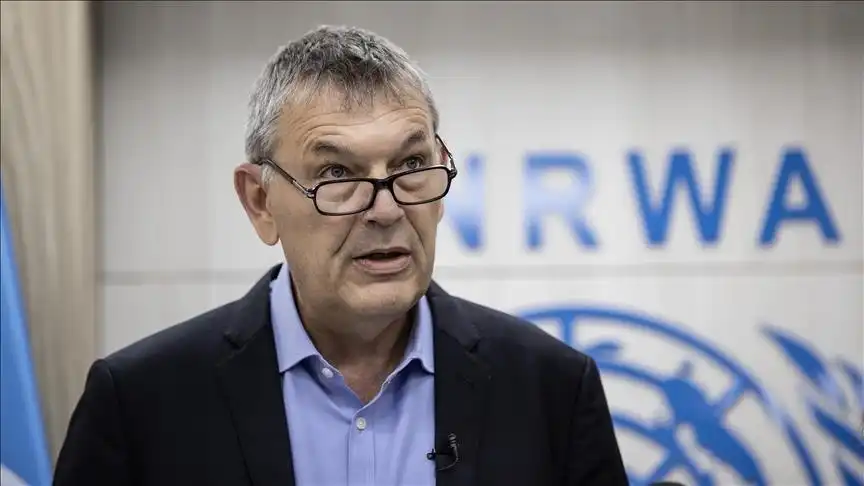
The United States called on Israel to allow the Commissioner-General of the United Nations Relief and Works Agency for Palestine Refugees (UNRWA), Philippe Lazzarini, to enter the Gaza Strip.


The day before Monday, the occupation authorities prevented Lazzarini from entering the Gaza Strip.


The United States stressed the need to enable Lazzarini and his team to visit the Strip.

US State Department spokesman Vedant Patel said, "We believe they should be able to visit UNRWA's field of work, including Gaza, and we will continue to work with the government of Israel to quickly approve all visas requested by United Nations and non-governmental organization workers."


He added, "All regional governments must do what is necessary to activate the humanitarian response, and this includes, of course, allowing freedom of movement for international staff."

PALESTINE

Wed 20 Mar 2024 9:11 am - Jerusalem Time

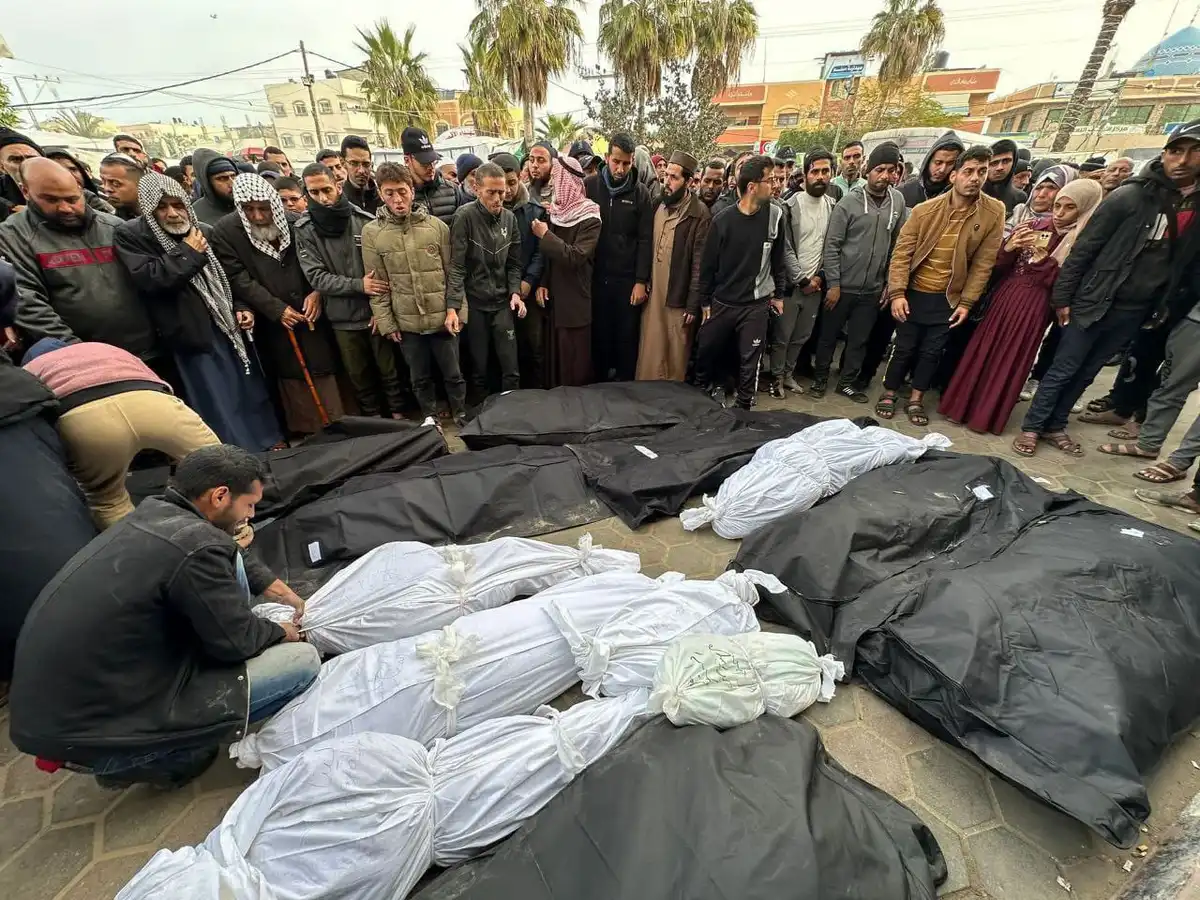
War on Gaza: Israeli army committed 10 new massacres in Gaza, claiming the lives of 104 persons

Israeli army committed 10 massacres against families in the Gaza Strip, including 104 deaths and 162 injuries to hospitals during the past 24 hours.


According to the Ministry of Health, the toll of the Israeli aggression has risen to 31,923 killed and 74,096 injured since the seventh of last October.


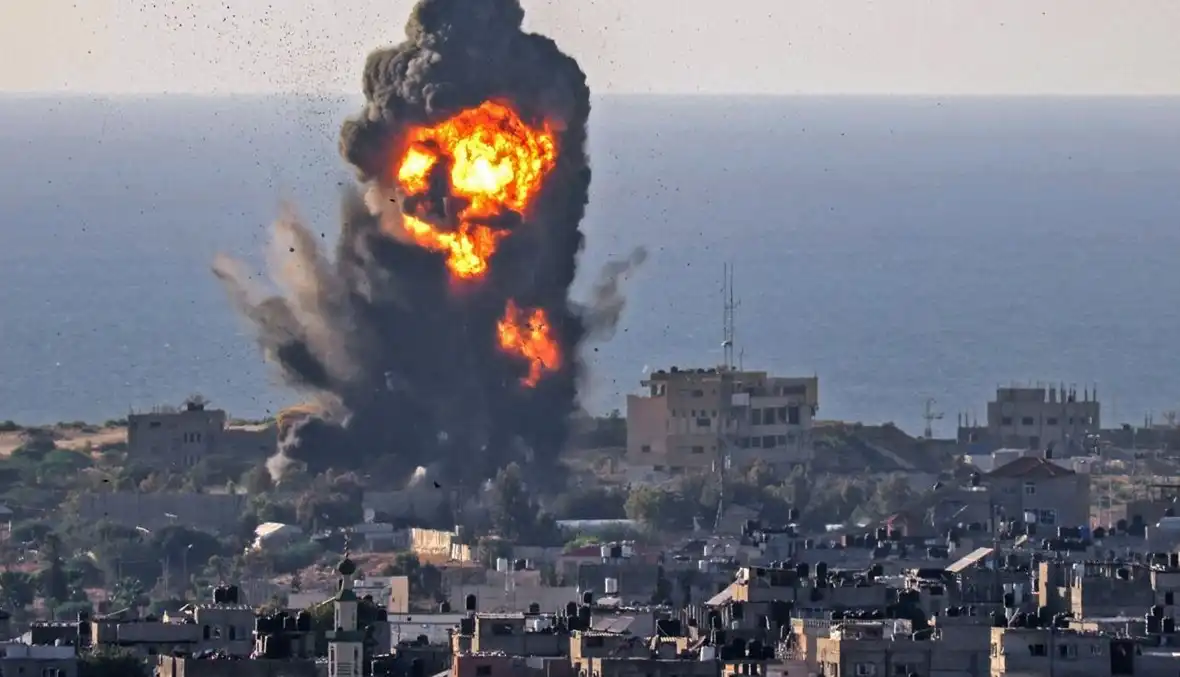
Dozens of citizens were killed and injured at dawn today in air strikes and Israeli artillery shelling of homes, buildings and apartments in various areas of the Gaza Strip.


In the latest events on the 166th day of the aggression against the Gaza Strip, the Israeli army bombed several areas in Gaza City, specifically the Al-Rimal neighborhood and the vicinity of Al-Shifa Hospital, west of the city.


Our correspondent said that 20 dead bodies were recovered as a result of an Israeli missile bombardment that targeted a residential building west of Gaza City, while killed and wounded fell in a bombing by Israeli warplanes on the Sidra area in the Daraj neighborhood east of the city.


The Israeli army's artillery also bombed residential apartments in the "Mushtaha" building opposite Shawa Hosari Tower in Gaza City.

Our correspondents pointed out that a large number of families are besieged in the Al-Rimal neighborhood, west of Gaza City, amid tragic circumstances due to the ongoing Israeli bombing of the neighborhood.


According to the sources, at dawn today, the Israeli army threw the patients outside the Shifa Medical Complex, and citizens transferred them to the Baptist Hospital in difficult health conditions.


The death toll from the Israeli warplanes’ bombing of a residential house for the Al-Habbash family in the Nuseirat camp in the central Gaza Strip rose to 27 , most of whom were displaced.


In the Bureij refugee camp in the central Gaza Strip, 6 dead bodies were recovered from a house that was targeted by Israeli warplanes.


The areas east of Deir al-Balah in the middle of the Gaza Strip witnessed heavy gunfire by Israeli army vehicles, resulting in the death and injury of a number of citizens.

PALESTINE

Tue 19 Mar 2024 8:33 pm - Jerusalem Time

Gaza: 300 detainees from Al-Shifa Complex and martyrs, including the Nuseirat Police Director

The Israeli army committed 9 massacres against families in the Gaza Strip, including 93 killed and 142 injured arrived to hospitals during the past 24 hours. Thus, the toll of the Israeli war rose to 31,819 dead and 73,934 injured since the 7th of last October, according to what the Ministry of Health in Gaza reported, Tuesday.


The Israeli army launched a series of air strikes and artillery shelling on various areas in the Gaza Strip, as the Israeli war on Gaza entered its 165th day, causing dozens of martyrs and hundreds of injuries.


Israeli aviation intensified its raids on Rafah in the south and Jabalia camp in the north, while Israeli artillery renewed its bombardment of populated areas and residential squares in Nuseirat, Al-Rimal neighborhood, Deir Al-Balah and Khan Yunis.


These raids come as Israeli army forces continue to besiege the Al-Shifa Medical Complex and the patients and displaced persons in its courtyards and surroundings, for the second day, after storming it, at dawn on Monday, and arresting more than 200 of those present in and around it.


On the humanitarian level, the United Nations warned that the lives of more than a million residents of the Strip are in danger, while the World Food Program warned of the specter of famine, as European Union foreign policy official Josep Borrell said that famine is being used as a weapon of war in Gaza.

OPINIONS

Tue 19 Mar 2024 5:24 pm - Jerusalem Time

The Doha Negotiations, Hamas’ Victory and Israel’s loss

Gershon Baskin

Gershon Baskin

Opinion Writer

The negotiations for a ceasefire and a hostage deal have resumed in Doha and that is very good. The latest Hamas response includes a number of signs of flexibility and points to Hamas’ possible desire to reach an agreement. Hamas’ primary interest is the end the war with Hamas still in control of Gaza.  One of the Hamas negotiators communicated their proposal as follows: 

14 Mar 2024: We want Israel to present clear positions: 1- A permanent ceasefire (possibly in stages), 2- Withdrawal of Israeli forces from the entire Strip (in stages) 3- The return of the displaced to their places of residence.

Israel complains that the number of prisoners requested by Hamas is too high. We said that if we find a positive position on the three issues, we are ready to show great flexibility on the issue of prisoners.


Additional responses of Hamas as presented through Reuters included more details including the release of about 40 hostages – women, children, elderly and wounded. This includes women soldiers – which is a new development absent from all discussions until now. In exchange Hamas wants the release of about 1000 Palestinian prisoners including about 100 prisoners serving life sentences. There are conflicting reports on whether or not the 100 life sentence prisoners include the most dangerous, those who have murdered the most Israelis such as Abdallah Barghouthi, Hasan Salameh, and others including Palestinian leader Marwan Barghouthi. 


The flexibility in Hamas’ proposal is their apparent agreement to achieve the first phase of the deal without a full Israeli obligation to end the war and withdraw from all of Gaza.  This is not entirely clear, but it seems that it might be the case from the text above talking about stages. This will become clearer in the coming days of negotiations. 


Israel must make every effort to get all of the hostages home and for the sake of all of us, we have to find a way to end this war. There is little chance of the Netanyahu government agreeing to end the war while the senior Hamas leadership in Gaza is still alive. There is also no willingness in Israel to grant any kind of victory to Hamas, meaning that Hamas stays in power when Israel exits Gaza. As has been said many times by many people other than myself, Netanyahu clearly has the desire to prolong this war as long as possible because his own political future is connected to it. When the war ends, the mass demonstrations in Israel will take to the streets demanding new elections and directly placing blame and responsibility on Netanyahu for the failures that led to October 7 and for the failures of October 7 itself. As long as the war is going on, Netanyahu has a kind of protective shield which thus far has been solid enough for him to deflect all of the more than justified criticism of him and his failures. He is, after all, the worst leader that the Jewish people have ever had. 


Netanyahu’s conceptual failures since 2009 are obvious to all, including the funding of Hamas and keeping Hamas in power all of these years to prevent any pressure on Israel with regards to the two-states solution. But Netanyahu’s conceptual failures continue almost six months into this war. The failure of Israel to present a political end-game which has the power to challenge Hamas on the ideological front and to enlist the partnership of Israel’s Arab neighbors, including Saudi Arabia, is another colossal error and miscalculation of Netanyahu that leaves the negotiators in Doha, right now, with options that continue to empower Hamas and to weaken the war against it. 


The two-states solution is the way to defeat Hamas, which will be supported by the majority of the Palestinian people and all of the moderate Sunni Arab states.

. There must be a clear and coherent Israeli strategy that recognizes that Gaza must be turned over to Palestinian rule which is in opposition to armed struggle and resistance, understands the danger of radical Islamic rule and is prepared to ensure that there is no armed group in Gaza other than a legitimate Palestinian police-security force.  No Palestinian government can achieve stability and security and be legitimate in the eyes of the international community that would be wiling to invest in rebuilding Gaza without first having a significant military force entering Gaza at the invitation of the Palestinian government. That military force, with a clear but time limited mandate, perhaps backed by a decision of the Arab league, should be a multi-national Arab force. But first there must be a Palestinian leadership which is legitimate in the eyes of the Palestinian people in the West Bank and in Gaza and one that has the authority to govern. 


President Abbas appointed a new Prime Minister, Dr. Mohammed Mustafa. I know Dr. Mustafa quite well.  He is a decent person who is respected in the international economic world. There is a lot of criticism against him within Palestine by those who see him as being too close to President Abbas and therefore lacking legitimacy. I wish him success, but I doubt that he will be able to build a government that will have the legitimacy to govern. I also doubt that President Abbas will turn over to him enough authority and power to govern.  Today the Palestinian Authority in Ramallah has very limited authority and power over most of the West Bank and zero power and authority in Gaza.  I would venture to guess that the selection of Dr. Mustafa was immediately approved by Netanyahu and his national security advisor because they know that he will not succeed in creating a government that can actually govern. This is once again, a failure of Netanyahu and just one more example of his bad judgement regarding our future. 


There is nothing I want more than for the all of the hostages to come home and for this war to end. There is a chance that the Doha negotiations can produce an agreement that will succeed in bringing more hostages home. The negotiators are in a very difficult bind because of the limited mandate that they have and mainly because they have no way of achieving an agreement that does not reward Hamas for the atrocities that they committed. The citizens of Israel have to see and understand this situation and absorb that Netanyahu and his government are bad for Israel. We hear every evening on the news that the army is slowing down, that they are staying in place without progress, that all of the progress made in defeating Hamas militarily is being wasted because there is no political endgame. Israel has lost the support of most of the world and is rapidly losing support of the United States.   There is no way to understand the massive civilian casualties in Gaza of non-combatants and the unexplainable physical ruin that Israel has unleashed on Gaza. None of that can be undone, but it is possible to achieve the political goals of ensuring that Hamas does not rule Gaza and threaten Israel ever again, only through a comprehensive and coherent endgame with political goals. Those goals must include ending Israel’s occupation of the Palestinian people, Palestinian statehood, and a regional plan for security, stability and economic cooperation and development. 


Right now, we are on the clear path of the lose-lose scenario both Israel and for Palestine. That is the only scenario possible when the only solution being employed is military.  There is no military solution to the Israeli-Palestinian conflict. We are all still living the trauma of October 7 and the months that followed, and I understand if our thinking is still clouded by anger, sadness, pain, and despair. But that is not a plan and we must have a plan. There must be a political solution to this war and to this conflict.  It is hard to recognize through the anger and the desire for revenge that a solution is in front of us. But it is there. It is not easy and it requires a lot of work. It will require that we make great efforts to learn from the failures of the past. Unfortunately, none of that will happen until we change our leaders (on both sides). So let’s get to it already!


ARAB AND WORLD

Tue 19 Mar 2024 4:17 pm - Jerusalem Time

Netanyahu accuses Israeli parties of cooperation with US administration against his government

Today, Tuesday, Israeli Prime Minister Benjamin Netanyahu addressed the differences between him and US President Joe Biden over the conduct of the war on Gaza, and accused Israeli parties of cooperating with the US administration against the Israeli government, and at the same time referred to the visit of a member of the war cabinet, Benny Gantz to Washington, and that the latter must be able to say “no” to the Americans.


At the beginning of deliberations described as “secret” in the Knesset Foreign Affairs and Security Committee, Netanyahu said that the severe criticism directed at him by American officials, including Biden, “is because I prevent the establishment of a Palestinian state. Another prime minister would have implemented that and won the Americans, but he would have lost the battle of Israel versus "Hamas. We have no choice but to work in Rafah."


Regarding Gantz’s visit to Washington despite Netanyahu’s opposition, the latter said, “Whoever travels to the United States must be able to stand behind the government’s policy and say ‘no’ to the Americans, just as I say ‘no’ to them.”


Netanyahu continued, "We are waging a double battle, military and political. Both are linked to each other, of course, and the political struggle gives us the time space as well as the resources to reach the exhaustion of the results of the war."


He pointed out, "We have been fighting for more than five months, and this is a record number in the history of Israel's wars, with the exception of the War of Independence. We are of course subject to increasing international pressure and repelling it in order to complete the goals of the war. I would like to mention very briefly that this war is the destruction or elimination of military and authoritarian capabilities." To Hamas, to free all our kidnappers and to ensure that Gaza does not pose a threat to Israel.”


Netanyahu added, "We must complete the military elimination of Hamas. There is no alternative to that, and we cannot proceed around that, and it is not possible to say 'We will destroy 80% of Hamas', 'We will destroy 20%', because this 20% will reorganize itself and reoccupy the Gaza Strip, and they will constitute Of course, it is a renewed threat to Israel, and of course this will be a victory for the broadest axis that threatens us, the Iranian axis.”


He continued, "Eliminating Hamas requires liquidating the remaining brigades in Rafah, and of course one and a half battalions in the camps in the middle of the Gaza Strip. We are determined to implement this matter. We have a discussion that I will put on the table, and everyone knows it, as the US National Security Advisor, Jake Sullivan, said yesterday." We have a discussion with the Americans about the necessity of entering Rafah. We do not see the possibility of eliminating Hamas from a military standpoint without annihilating these remaining brigades. We are determined to implement that.”


Netanyahu claimed, “Out of respect for President (Biden), we agreed on a way through which they could present to us their ideas, especially on the humanitarian side, which we of course share this desire to allow an orderly exit of the (Gazan) population and provide aid to the civilian population. We have been doing this from the beginning.” the war".


Netanyahu referred to his phone conversation with Biden yesterday, and said that “I made it clear to the president that we are determined to complete the elimination of these battalions in Rafah. There is no possibility of implementing this except for a ground entry” by the Israeli army.


In his answer to a question asked by committee members about the lack of an Israeli media campaign in the United States, Netanyahu added, “This is not just about money (to finance a campaign). This is simply because there are no people. You are surrounded by people who do not know the structure of a sentence (in English). Such people should be found."

ARAB AND WORLD

Tue 19 Mar 2024 2:36 pm - Jerusalem Time

UN rapporteur: Israel does not want witnesses to the genocide in Gaza

Today, Tuesday, the United Nations Special Rapporteur on Palestine, Francesca Albanese, commented on Tel Aviv’s decision to prevent Philippe Lazzarini, Director of the United Nations Relief and Works Agency for Palestine Refugees (UNRWA), from entering Gaza by saying, “Israel does not want witnesses to genocide.”


On her account on the “X” platform, Albanese said: “The man-made conditions that cause the largest number of people to ever face starvation, coupled with mass killing, ongoing harm and the creation of conditions that destroy the lives of humanity, has a name: genocide.”


Earlier Monday, Lazzarini announced in a post on the “X” platform that Israel had refused him passage to the Gaza Strip, “while famine is about to spread” in the northern Gaza Strip.


On the other hand, the Israeli Ministry of Foreign Affairs claimed that preventing Lazzarini from entering Gaza was incorrect.


The director of UNRWA said in a press conference with Egyptian Foreign Minister Sameh Shukry in Cairo on Monday that he intended to go to Rafah, but he was informed an hour ago that entry was denied.


Shukry added, during the same press conference: “To be clear and clear, it was the Israeli government that prevented it, not Egypt, and this is an unprecedented position against a UN official.”


Since January 26, 18 countries and the European Union have suspended their funding to the UN agency, against the backdrop of Israeli allegations that a number of its employees participated in the attack on settlements adjacent to the Gaza Strip on October 7, while the agency announced that it was investigating those allegations.


The Israeli allegations against UNRWA come at a time when Tel Aviv has been waging a devastating war on the Gaza Strip since that date, causing it to appear before the International Court of Justice on charges of committing “genocide,” after the war left tens of thousands of civilian victims, most of them children and women, in addition to an unprecedented humanitarian catastrophe. It was preceded by massive destruction of infrastructure. UNRWA was established by a decision of the United Nations General Assembly in 1949, and was authorized to provide assistance and protection to refugees in its five areas of operations, Jordan, Syria, Lebanon, the West Bank, and the Gaza Strip, until a just solution to their issue is reached.

PALESTINE

Tue 19 Mar 2024 2:30 pm - Jerusalem Time

UN official: Israeli restrictions on aid entering Gaza are a “war crime”

The United Nations High Commissioner for Human Rights said on Tuesday that the restrictions imposed by the Israeli authorities on the entry of humanitarian aid into the Gaza Strip may constitute a war crime.


UNHCR spokesperson Jeremy Lawrence said, "The continued Israeli restrictions on the entry of aid into Gaza, in addition to the manner in which hostilities continue, may amount to the use of starvation as a means of war."

He stressed that this "constitutes a war crime."


Earlier today, US Secretary of State Anthony Blinken said that “all residents of Gaza suffer from severe levels of food insecurity,” stressing the “priority” of delivering humanitarian aid to the besieged Strip.


This came in a press conference, held by Blinken with Philippine Foreign Minister Enrique Manalo, in the capital, Manila, and he added that “100% of the population of Gaza faces a severe level of food insecurity.”


He explained that this is "the first time that an entire people has been classified in this way," referring to a UN report issued yesterday, Monday.

Blinken said that the UN report confirms “the priority of delivering aid to Gaza.”


The “Integrated Food Security Phase Classification” report, prepared by United Nations institutions, stated that “all Gazans face crisis levels of food insecurity or worse.”


The report indicated that "half of the population (about 1.1 million people in Gaza) have completely exhausted their food supplies and their ability to adapt," explaining that they are "suffering from catastrophic hunger (the 5th and final stage of the classification) and starvation."

PALESTINE

Tue 19 Mar 2024 2:22 pm - Jerusalem Time

ActionAid: The impending famine in Gaza is a stain on the conscience of humanity

Action Aid International said that 70% of the population of northern Gaza are on the brink of famine unless urgent measures are taken to facilitate the delivery of aid on a large scale and avoid catastrophic hunger.


It added in a statement issued today, Tuesday, that famine is imminent in the northern governorates and is expected to occur at any time between mid-March and May 2024.


The organization indicated that the Israeli forces prevented thousands of tons of aid from crossing overland from Rafah to northern Gaza, where the crisis has intensified over the past few months.


It pointed out that, according to United Nations officials, a quarter of the citizens in Gaza are one step away from famine, and UNICEF also reported that one out of every three children suffers from acute malnutrition, and the Integrated Interim Classification of Food Security indicated that almost all families reduce her meals so her children could eat, while the report also noted a sharp rise in child deaths, which IPC experts believe could signal the imminent onset of famine.


ActionAid confirmed that there are many women suffering from health problems, which causes weight loss problems for them and for their children. Children are also born weighing less than 3.5 kilograms, which is the average normal weight for a newborn baby, as a result of a lack of nutritious foods, especially for pregnant women. 


It continued: Although there were attempts to deliver food and aid to those in need, reports of attacks launched by Israeli forces on UN aid distribution centers threatened the safety of aid delivery throughout Gaza, leaving many without life-saving aid such as food and medical supplies.


The United Nations Relief and Works Agency for Refugees (UNRWA) has recorded an unprecedented number of violations against its employees and facilities since the start of the war, as at least 165 UNRWA team members were killed, and more than 150 facilities were targeted.


About 2,000 doctors and medical staff in northern Gaza are also facing severe famine, leaving them exhausted and unable to feed themselves properly while working around the clock to save lives.


The lack of aid and supplies available in Gaza has also led to high market prices for necessities such as baby formula, diapers, flour and other basic items.


Reham Jaafari, Communications and Advocacy Officer at ActionAid Palestine, said: Today represents a grim milestone for millions of Palestinians who are now living through one of the worst disasters in living memory. In just six months, much of the Gaza Strip is on the brink of an entirely avoidable famine before our eyes. Palestinians also live six months of extreme hunger - an endless nightmare that claims the lives of children while women with severe malnutrition give birth to stillborn fetuses. The world is still watching in silence. Today's announcement represents a collective stain on the conscience of humanity and a disastrous indictment of Western countries that have slept through this disaster while offering little action aimed at averting an imminent famine. World leaders are urgently called upon to wake up and pay attention to the sheer scale of this disaster after so many dire warnings in recent months. Waiting for confirmation of famine to take urgent steps to increase aid is untenable – we need an immediate and permanent ceasefire now.

ARAB AND WORLD

Tue 19 Mar 2024 2:16 pm - Jerusalem Time

Biden knew that Israel was bombing civilian targets in Gaza

The Washington Post reported Monday that Biden administration officials knew last October that Israel was bombing buildings in Gaza without having "strong intelligence" that they were military targets and continued to provide full support for Israeli military operations anyway.


The report said that a meeting was held at the White House on October 27, three weeks after the start of the brutal Israeli military bombing of Gaza due to massive destruction, as it was clear that Israel was bombing the Strip indiscriminately, and a report from +972 magazine published in October revealed. The second is that Israel was in fact deliberately striking civilian targets.


Israeli intelligence sources told +972 that Israel targeted what it called “energy targets,” which include civilian infrastructure, such as high-rise residential buildings, banks, universities and other public buildings. The sources said that the Israeli army also approved the strikes, which were known to lead to the killing of large numbers of civilians, in an attempt to target only one member of the Hamas movement.


Biden officials also acknowledged during the October 27 meeting that Israel does not have a clear plan on how to defeat Hamas. A source familiar with the meeting told the newspaper: “We never had a clear sense that the Israelis had a specific, achievable military goal, and from the beginning, there was a feeling that we did not know how the Israelis would implement what they said they would do.”


US intelligence has since acknowledged that Hamas will not end or disappear. An annual "threat assessment" released publicly by the Office of the Director of National Intelligence this month said Israel "will likely face prolonged armed resistance from Hamas for years to come."


Despite the lack of a realistic target and the heavy civilian casualties, President Biden still continues to provide unconditional military assistance to the massacre. Since October 7, his administration has approved the sale of more than 100 arms deals to Israel, of which only two were reported to Congress.

PALESTINE

Tue 19 Mar 2024 2:04 pm - Jerusalem Time

Qatar: Resuming truce negotiations and the meeting included Israel’s response

Qatari Foreign Ministry spokesman Majid Al-Ansari announced on Tuesday the resumption of indirect negotiations between Israel and Hamas in Doha to reach a ceasefire and a prisoner exchange deal, indicating that Monday’s meeting carried Tel Aviv’s response to Hamas’ proposal.


Earlier Tuesday, Mossad chief David Barnea returned to Israel from Doha, after a visit that lasted hours during which he held talks with Egyptian and Qatari mediators about reaching a deal with Hamas, while the Israeli technical team remained in Qatar.


Al-Ansari said in a weekly press conference in which he discussed the latest developments, that negotiations had been resumed in Doha, and that the meeting held yesterday (Monday) carried the Israeli response to the Hamas proposal.


He added: "We moved to technical meetings. The head of the Mossad left Doha, but the Israeli technical team is still meeting."


The Qatari spokesman warned of the consequences of Israel launching a ground attack on the city of Rafah (south), which is crowded with displaced people, considering that "any Israeli attack on Rafah will negatively affect reaching an agreement."


On Tuesday, the Palestinian Foreign Ministry accused Israel of starting its “aggression” against the city of Rafah, “without announcing the move or waiting for anyone’s permission,” after several neighborhoods and homes in the city were exposed to Israeli bombing on Monday evening, resulting in deaths and injuries.


On the other hand, Al-Ansari considered that the attack on journalists at Al-Shifa Hospital, west of Gaza City, “can only be understood in the context of covering up other crimes taking place in the vicinity of the hospital.”


Since yesterday, the Israeli army has continued a military operation in Gaza City, which included storming Al-Shifa Hospital, despite the presence of thousands of sick, wounded and displaced persons inside it, as well as about 70,000 Palestinians residing in the surrounding areas.


This is the second time that Israeli forces have stormed the hospital since the beginning of the war on October 7, 2023. They stormed it on November 16 after besieging it for a week and destroying its courtyards and parts of its buildings and medical equipment, in addition to the electricity generator.


The Israeli war left tens of thousands of civilian victims, most of them children and women, massive destruction and an unprecedented humanitarian catastrophe, which led to Israel appearing for the first time since its establishment in 1948, before the International Court of Justice on charges of committing “genocide.”

PALESTINE

Tue 19 Mar 2024 1:55 pm - Jerusalem Time

Israel will confiscate 16% of Gaza's territory by establishing a "buffer zone"

Israel's plan to create a "buffer zone" inside Gaza along its border with Israel would capture 16% of the territory of the Strip, the Wall Street Journal reported Tuesday, citing an analysis of the operation by Udi Ben-Nun, a professor of geography at Hebrew University.


Israel has begun the process of rebuilding the area, which includes demolishing Palestinian homes and agricultural land that obstructs the road. The buffer zone will be about 1 km (0.6 miles) wide.


Israeli media reported last January that Israel destroyed 1,100 buildings out of 2,800 buildings in the border areas. In the same month, 21 Israeli soldiers were killed while working to demolish a building after a Palestinian resistance missile detonated explosives planted by Israeli occupation army soldiers.


The Israeli army insists that it needs to create a buffer zone to prevent future attacks similar to what happened on October 7. But the plan also reinforces Israel's land grab in Gaza, and many Israeli government ministers favor re-establishing Jewish settlements in the Strip.


In addition to the buffer zone on the border, Israel is also building a road that will divide the Gaza Strip into two parts.


Israel claims that it does not seek to occupy Gaza, but rather wants to maintain open security control over the Strip, which is not possible without some form of occupation.


The Biden administration claims that it opposes any Israeli plans that would reduce the territory of Gaza. But the United States continues to provide unconditional military aid to Israel while devising a plan to steal 16% of Gaza.


The Israeli army insists that it needs to create a buffer zone to prevent future attacks similar to what happened on October 7. But the plan also reinforces Israel's land grab in Gaza, and many Israeli government ministers favor re-establishing Jewish settlements in the Strip.

PALESTINE

Tue 19 Mar 2024 12:33 pm - Jerusalem Time

USAID says famine is imminent in Gaza

On Monday, Samantha Powers, Administrator of the United States Agency for International Development (USAID), issued a statement in which she referred to the “painful” assessment of security experts that famine is imminent in northern Gaza between now and May, and that There is also a serious risk of famine in the rest of Gaza.


“The catastrophic levels of hunger and malnutrition described in the Integrated Phase Classification (IPC) report are unimaginable in today’s era, but for hundreds of thousands of Palestinians in Gaza, this is the reality, with famine declared only twice a century,” Powers says in her statement. "On the 21st, this is a terrible milestone."


Powers' statement adds: "There must be a continuing and sustainable international effort to ensure that the appropriate type of assistance reaches the most vulnerable groups. Israel must do more to protect civilians and allow humanitarian workers to provide assistance in a safe and continuous manner," stressing that the administration of US President Joe Biden “It will continue to do everything in its power to fight famine in Gaza, and we call on Israel to take immediate action to put an end to this preventable mass suffering.”


“We also recognize the extraordinary efforts of humanitarian agencies and international donors, and urge increased safety and access in order to expand life-saving activities to those most in need,” the statement says.


USAID continues to prioritize emergency food assistance through ongoing support to the World Food Program (WFP), which was able to reach 1.45 million people with partial food assistance last February - but much more is needed, according to the statement.


“We continue to call on Israel to open more land routes to Gaza and reduce bottlenecks and delays in inspections so that the land crossings operate at full capacity, even as we seek to find air and sea options to supplement these land routes,” Powers says. “We also continue to demand that Hamas release "Recover all hostages, stop its attacks, use civilians as human shields, and refrain from any action that would make it more difficult for aid to reach those in need."


“Since the beginning of this conflict, the United States has been leading efforts to deliver life-saving humanitarian aid to Gaza to alleviate the suffering of innocent Palestinians who have no connection to Hamas,” the USAID Administrator insists.


This is and will remain a top priority. High-level American diplomacy led to the opening of the Rafah and Kerem Shalom crossings, and the recent Gate 96, and we established air and sea deliveries in order to increase options for providing assistance, and we continue to call for increased throughput in order to get assistance to those who need it most.”

ARAB AND WORLD

Tue 19 Mar 2024 12:18 pm - Jerusalem Time

Trump: Jews who vote for Democrats hate Israel and Judaism

Former US President Donald Trump accused Jews who vote for Democrats of “hating Israel and hating their religion,” sparking a storm of criticism from the White House and Jewish leaders.


In response to a question from his former aide Sebastian Gorka about Democrats' criticism of Israeli Prime Minister Benjamin Netanyahu regarding his handling of the war on the Gaza Strip, Trump said, "I actually think they hate Israel, and the Democratic Party hates Israel."


Trump, who last week became the presumptive nominee of the Republican Party, continued, saying, “Any Jewish person who votes for the Democrats hates his religion. They hate everything about Israel, and they should be ashamed of themselves because Israel will be destroyed.”


The comments sparked immediate backlash from the White House, President Joe Biden's campaign and Jewish leaders. Without mentioning Trump by name, White House spokesman Andrew Bates described the comments as “vile, despicable, and anti-Semitic rhetoric.”


“With anti-Semitic crimes and acts of hate on the rise around the world, including the deadliest attack against the Jewish people since the Holocaust, leaders have an obligation to call hate what it is and unite Americans against it,” Bates added.


As for the Biden election campaign, it said, “The only person who should be ashamed here is Donald Trump.” Campaign spokesman James Singer suggested that Trump would lose again in the presidential elections scheduled for next November, justifying this by saying that Americans are “tired of his hateful resentment, his personal attacks, and his extremist agenda.” ".


Jonathan Greenblatt, who heads the Anti-Defamation League, said: “Accusing Jews of hating their religion because they might vote for a particular party is slander and a clear lie.” “Serious leaders who care about the historic alliance between the United States and Israel should focus on strengthening partisan support for the State of Israel rather than undermining it,” he wrote on the X platform.


Trump's comments come at a time when Biden is facing increasing pressure from the progressive wing of his party due to his administration's support for Israel in its retaliatory attack on Gaza, in which more than 31,000 Palestinians were martyred since last October 7.


Biden continues to support what he considers "Israel's right to defend itself" and has increasingly criticized Netanyahu. He said - after his State of the Union address - that he needed to have what he called a “come to Jesus” conversation with the Israeli prime minister.


Biden also accused Netanyahu of "harming Israel more than helping it," adding, "He should pay more attention to the innocent lives that are lost as a result of the measures taken."


Schumer effect

Trump was particularly interested in recent comments by Senate Majority Leader Chuck Schumer, the country's highest-ranking Jewish official, accusing him of being "very anti-Israel."


In a speech last week, Schumer strongly criticized Netanyahu's handling of the war in Gaza, warning that civilian casualties were "harming Israel's standing around the world" and also called on Israel to hold new elections.


While the White House formally distanced itself from Schumer's comments, the Democratic leader and key ally was increasingly expressing an opinion of the Biden administration.


Schumer responded to Trump's statements and accused him of making "extremely partisan and hateful statements," and wrote on the X platform, "Making Israel a partisan issue only harms Israel and the American-Israeli relationship."


It is noteworthy that the vast majority of Jewish Americans identify themselves as Democrats, but Trump has often accused them of disloyalty.


The Pew Research Center reported in 2021 that Jews are “among the most liberal and democratic groups in the United States,” with 7 out of 10 Jewish adults sympathizing with or leaning toward the Democratic Party.


In 2020, a poll found that nearly three-quarters of American Jews disapproved of Trump's performance as president, with only 27% rating him favorably.


Americans' dissatisfaction with the Israeli military operation in Gaza has also increased, according to polls conducted by the Associated Press and the NORC Center for Public Affairs Research.


Last January, 50% of American adults said that the Israeli military response in the Gaza Strip had gone too far, compared to 40% last November, and this number was higher among Democrats, where 6 in 10 of them said the same. In both polls.

OPINIONS

Tue 19 Mar 2024 10:11 am - Jerusalem Time

The Zone of Interest is about the danger of ignoring atrocities – including in Gaza

The Guardian

The Guardian

Opinion Writer

By Naomi Klein

 If Jonathan Glazer’s brave Oscar acceptance speech made you uncomfortable, that was the point

It’s an Oscar tradition: a serious political speech pierces the bubble of glamour and self-congratulation. Warring responses ensue. Some proclaim the speech an example of artists at their culture-shifting best; others an egotistical usurpation of an otherwise celebratory night. Then everyone moves on.

Yet I suspect that the impact of Jonathan Glazer’s time-stopping speech at last Sunday’s Academy Awards will be significantly more lasting, with its meaning and import analyzed for many years to come.

Glazer was accepting the award for best international film for The Zone of Interest, which is inspired by the real life of Rudolf Höss, commandant of the Auschwitz concentration camp. The film follows Höss’s idyllic domestic life with his wife and children, which unfolds in a stately home and garden immediately adjacent to the concentration camp. Glazer has described his characters not as monsters but as “non-thinking, bourgeois, aspirational-careerist horrors”, people who manage to turn profound evil into white noise.

Before Sunday’s ceremony, Zone had already been heralded by several deities of the film world. Alfonso Cuarón, the Oscar-winning director of Roma, called it “probably the most important film of this century”. Steven Spielberg declared it “the best Holocaust movie I’ve witnessed since my own” – a reference to Schindler’s List, which swept the Oscars 30 years ago.

But while Schindler List’s triumph represented a moment of profound validation and unity for the mainstream Jewish community, Zone arrives at a very different juncture. Debates are raging about how the Nazi atrocities should be remembered: should the Holocaust be seen exclusively as a Jewish catastrophe, or something more universal, with greater recognition for all the groups targeted for extermination? Was the Holocaust a unique rupture in European history, or a homecoming of earlier colonial genocides, along with a return of the techniques, logics and bogus race theories they developed and deployed? Does “never again” mean never again to anyone, or never again to the Jews, a pledge for which Israel is imagined as a kind of untouchable guarantee?

These wars over universalism, proprietary trauma, exceptionalism and comparison are at the heart of South Africa’s landmark genocide case against Israel at the international court of justice, and they are also ripping through Jewish communities, congregations and families around the world. In one action-packed minute, and in our moment of stifling self-censorship, Glazer fearlessly took clear positions on each of these controversies.

“All our choices were made to reflect and confront us in the present – not to say, ‘Look what they did then’; rather, ‘Look what we do now,’” Glazer said, quickly dispatching with the notion that comparing present-day horrors to Nazi crimes is inherently minimizing or relativizing, and leaving no doubt that his explicit intention was to draw out continuities between the monstrous past and our monstrous present.

And he went further: “We stand here as men who refute their Jewishness and the Holocaust being hijacked by an occupation which has led to conflict for so many innocent people, whether the victims of 7 October in Israel or the ongoing attack on Gaza.” For Glazer, Israel does not get a pass, nor is it ethical to use intergenerational Jewish trauma from the Holocaust as justification or cover for atrocities committed by the Israeli state today.

Others have made these points before, of course, and many have paid dearly, particularly if they are Palestinian, Arab, or Muslim. Glazer, interestingly, dropped his rhetorical bombs protected by the identity-equivalent of a suit of armor, standing before the glittering crowd as a successful white Jewish man – flanked by two other successful white Jewish men – who had, together, just made a film about the Holocaust. And that phalanx of privilege still didn’t save him from the flood of smears and distortions that misrepresented his words to wrongly claim that he had repudiated his Jewishness, which only served to underline Glazer’s point about those who turn victimhood into a weapon.

Equally significant was what we might think of as the speech’s meta-context: what preceded it and immediately followed. Those who only watched clips online missed this part of the experience, and that’s too bad. Because as soon as Glazer wrapped up his speech – dedicating the award to Aleksandra Bystroń-Kołodziejczyk, a Polish woman who secretly fed Auschwitz prisoners and fought the Nazis as a member of the Polish underground army – out came actors Ryan Gosling and Emily Blunt. Without so much as a commercial break to allow us to emotionally recover, we were instantly jettisoned into a “Barbenheimer” bit, with Gosling telling Blunt that her film about the invention of a weapon of mass destruction had ridden Barbie’s pink coat tails to box-office success, and Blunt accusing Gosling of painting on his abs.

At first, I feared that this impossible juxtaposition would undercut Glazer’s intervention: how could the mournful and wrenching realities he had just invoked coexist with that kind of California high-school prom energy? Then it hit me: like the fuming defenders of Israel’s “right to defend itself”, the sparkly artifice that encased the speech was also helping to make his point.

“Genocide becomes ambient to their lives”: that is how Glazer has described the atmosphere he attempted to capture in his film, in which his characters attend to their daily dramas – sleepless kids, a hard-to-please mother, casual infidelities – in the shadow of smokestacks belching out human remains. It’s not that these people don’t know that an industrial-scale killing machine whirs just beyond their garden wall. They have simply learned to lead contented lives with ambient genocide.

It is this that feels most contemporary, most of this terrible moment, about Glazer’s staggering film. More than five months into the daily slaughter in Gaza, and with Israel brazenly ignoring the orders of the international court of justice, and western governments gently scolding Israel while shipping it more arms, genocide is becoming ambient once more – at least for those of us fortunate enough to live on the safe sides of the many walls that carve up our world. We face the risk of it grinding on, becoming the soundtrack of modern life. Not even the main event.

Glazer has repeatedly stressed that his film’s subject is not the Holocaust, with its well-known horrors and historical particularities, but something more enduring and pervasive: the human capacity to live with holocausts and other atrocities, to make peace with them, draw benefit from them.

When the film premiered last May, before Hamas’s 7 October attack and before Israel’s unending assault on Gaza, this was a thought experiment that could be contemplated with a degree of intellectual distance. The audience members at the Cannes film festival who gave The Zone of Interest a rapturous six-minute standing ovation likely felt safe toying with Glazer’s challenge. Perhaps some looked out at the azure Mediterranean and considered how they had themselves gotten comfortable with, even uninterested in, news of boats packed with desperate people being left to drown just down the coast. Or maybe they thought about the private jets they had taken to France, and the way flight emissions are entangled in the disappearance of food sources for impoverished people far away, or the extinction of species, or the potential disappearance of entire nations.

Glazer wanted his film to provoke these kinds of uneasy thoughts. He has said that he saw “the darkening world around us, and I had a feeling I had to do something about our similarities to the perpetrators rather than the victims.” He wanted to remind us that annihilation is never as far away as we might think.

But by the time Zone made it into theatres in December, Glazer’s subtle challenge for audiences to contemplate their inner Hösses cut a lot closer to the bone. Most artists try desperately to tap into the zeitgeist, but Zone, whose theatrical release has been muted given the initial response, may well have suffered from something rare in the history of cinema: a surplus of relevance, an oversupply of up-to-the-minuteness.

One of the film’s most memorable scenes comes when a package filled with clothing and lingerie stolen from the camp’s prisoners arrives at the Höss home. The commandant’s wife, Hedwig (played almost too convincingly by Sandra Hüller), decrees that everyone, including the servants, can choose one item. She keeps a fur coat for herself, even trying on the lipstick she finds in a pocket.

Everyone I know who has seen the film can think of little but Gaza

It is the intimacy of the entanglements with the dead that are so chilling. And I have no idea how anyone can watch that scene and not think of the Israeli soldiers who have filmed themselves rifling through the lingerie of Palestinians whose homes they are occupying in Gaza, or boasting of stealing shoes and jewelry for their fiances and girlfriends, or taking group selfies with Gaza’s rubble as the backdrop. (One such photo went viral after the writer Benjamin Kunkel added the caption “The Zone of Pinterest”.)

There are so many such echoes that, today, Glazer’s masterpiece feels more like a documentary than a metaphor. It’s almost as if, by filming Zone in the style of a reality show, with hidden cameras throughout the house and garden (Glazer has referred to it as “Big Brother in the Nazi House”), the movie anticipated the first live-streamed genocide, the version filmed by its perpetrators.

Zone offers an extreme portrait of a family whose placid and pretty life flows directly from the machinery devouring human life next door. This is most emphatically not a portrait of people in denial: they know what is happening on the other side of the wall, and even the kids play with scavenged human teeth. The concentration camp and the family home are not separate entities; they are conjoined. The wall of the family’s garden – creating an enclosed space for the children to play, and shade for the pool – is the same wall that, on the other side, encloses the camp.

Everyone I know who has seen the film can think of little but Gaza. To say this is not to claim a one-to-one equation or comparison with Auschwitz. No two genocides are identical: Gaza is not a factory deliberately designed for mass murder, nor are we close to the scale of the Nazi death toll. But the whole reason the postwar edifice of international humanitarian law was erected was so that we would have the tools to collectively identify patterns before history repeats at scale. And some of the patterns – the wall, the ghetto, the mass killing, the repeatedly stated eliminationist intent, the mass starvation, the pillaging, the joyful dehumanization, and the deliberate humiliation – are repeating.

So, too, are the ways that genocide becomes ambient, the way those of us a little further away from the walls can block the images, and tune out the cries, and just … carry on. That’s why the Academy made Glazer’s point for him when it hard-cut to Barbenheimer – itself a trivialization of mass slaughter – without missing a beat. Atrocity is once again becoming ambient. (One might see the entire Oscar spectacle as a kind of live-action extension of The Zone of Interest, a sort of Denialism on Ice.)

What do we do to interrupt the momentum of trivialization and normalization? That is the question so many of us are struggling with right now. My students ask me. I ask my friends and comrades. So many are offering their responses with relentless protests, civil disobedience, “uncommitted” votes, event interruptions, aid convoys to Gaza, fundraising for refugees, works of radical art. But it’s not enough.

And as genocide fades further into the background of our culture, some people grow too desperate for any of these efforts. Watching the Oscars on Sunday, where Glazer was alone among the parade of wealthy and powerful speakers across the podium to so much as mention Gaza, I remembered that exactly two weeks had passed since Aaron Bushnell, a 25-year-old member of the US air force, self-immolated outside the Israeli embassy in Washington.

I don’t want anyone else to deploy that horrifying protest tactic; there has already been far too much death. But we should spend some time sitting with the statement that Bushnell left, words I have come to view as a haunting, contemporary coda to Glazer’s film:

“Many of us like to ask ourselves, ‘What would I do if I was alive during slavery? Or the Jim Crow south? Or apartheid? What would I do if my country was committing genocide?’ The answer is, you’re doing it. Right now.”


OPINIONS

Tue 19 Mar 2024 10:05 am - Jerusalem Time

Fascism and Regional Functions on the Margins of the Tragedy in Gaza

Eyad Abu Shakra

Eyad Abu Shakra

Opinion Writer


Hassan Nasrallah’s talk about not wanting to "drag Iran into a war with Israel and the United States" and his insistence that Hezbollah would wage this battle alone, is highly indicative. I wouldn't be surprised to see people commenting that they "Wish he cared as much for what remains of Lebanon's interests as he does the interest of the Islamic Republic!"

Quoting an "Iranian source," Reuters has reported that the Secretary-General Hezbollah made these remarks to Quds Force Commander General Esmail Qaani during their meeting in Beirut in February... Nasrallah reportedly added: "This is our battle." Last month's meeting was reportedly the third between the two men since the events of October 7, all which have dealt with the risks of a broad Israeli attack on the party, and by extension, Iran’s foothold in Lebanon and the region.

The atmosphere on the Lebanese-Israeli border is doubtlessly unsettling, especially amid the "war" of statements and bellicose speeches being made as the two sides "bargain with fire."

More than that, the role that Iran has assigned to the Houthis in the Red Sea and the Gulf of Aden has entered a new phase, considering the news of American-Iranian meetings in Muscat that The New York Times reported on last week, claiming that the two sides discussed security in the Red Sea and attacks by Iranian proxies on American bases in both Iraq and Syria.

The newspaper reported that the "indirect" Muscat talks - which were not announced at the time - had been requested by Tehran and held on January 10. Omani officials conveyed the messages of Iranian and American delegations, who were sitting in separate rooms. The Iranian delegation was headed by Deputy Foreign Minister for Political Affairs Ali Bagheri Kani, while the American delegation was led by National Security Council coordinator for the Middle East and North Africa Brett McGurk.

Meanwhile, Israeli Prime Minister Benjamin Netanyahu continues to ramp up his political-military rhetoric, stressing the "inevitability" of an assault on Rafah... the final refuge of the people of Gaza after the "war of displacement" claimed over 30,000 lives. In turn, Western "rejection" of the offensive does not seem to reflect any real determination to prevent it and the humanitarian disaster that several bodies have warned would ensue from it.

Even the criticism of Netanyahu personally by President Joe Biden, and Democratic Senate Majority Leader Chuck Schumer (the highest-ranking Jewish official in Washington) calling for Netanyahu’s departure after snap elections, have not come with serious threats. Worse, Senator Mitch McConnell, the Republican leader in the Senate, outbid Schumer in his defense of Israel, attacking Biden and criticizing his Democratic colleague.

On a related note, amid the "ambiguity" of the US administration's stance on the "scenario" of the coming hours and days in the Gaza Strip, some have presented a different reading of Washington's decision to set up aid facilities on the central coast of the Gaza Strip. They see it as a substitute for the vital Rafah and Kerem Shalom crossings... and thus as evidence that the US is unwilling or unable to prevent the attack on Rafah!

In this regard, there are undeniable facts that should not be downplayed, including:

- The US stance has not changed its stance on confining the fighting and violence to the Gaza Strip. It has been reiterating this position since Israel began its operations "in response" to the October 7 attack. While no US administration would want to get involved in wars or long-term problems during an "election year," plunging a region as sensitive as the Middle East into political security "quicksand," is a disastrous move for the future.

- Washington's position on Tehran adds to the confusion. Whether in Lebanon, Iraq or Syria, it does not seem that the US will take a decisive or stern position on the Iranian leadership. That is the case despite the fact that Washington is well-aware that Tehran calls the shots for all the regional players in its orbit. Indeed, the US administration is going in the opposite direction, diplomatically engaging Iran in Muscat and releasing billions of dollars in assets to the Iranian leadership, knowing full well where those funds will go and how they will be spent.

- The situation in the region can still be contained for now. However, the Biden administration must – at the very least – understand that this could change. Rather, it would inevitably change for the worse if Donald Trump returns to the White House and Benjamin Netanyahu maintains his ability to extort through violence, occupation and displacement.

- As we know, many crucial elections will be held across the globe this year. It is obvious that racist, populist, and "neo-fascist" movements are seeking major victories. Even the oldest and most stable democracies that have maintained the appearance of gravitas, claiming moderation and respect for human rights, are rapidly changing for the worse. There are indications from across the globe - and this is expected to reflect negatively on the Middle East - that the future does not bode well at all for religious, ethnic and cultural coexistence.

Thus, problems that can be resolved or contained today could become insurmountable if action is not taken in the next few months.

To put it plainly, the Arab world will not stabilize so long as Israel is beholden to the whims of its most extreme right-wing fascists and racists and their dictates, and Iran continues to exploit its proxies to make "bazaarish" deals with the West... both openly and in secret.

Source: Alsharq Alawsat


OPINIONS

Tue 19 Mar 2024 10:03 am - Jerusalem Time

Sinwar, Netanyahu and the Al-Aqsa Flood

Sam Menassa

Sam Menassa

Opinion Writer

The Ramadan truce between Hamas and Israel that we had been promised does not seem forthcoming. In fact, Benjamin Netanyahu and Yahya al-Sinwar could be dragging the region in general, and their countries in particular, to a dangerous place, as they are accounting only for their own personal fates.

Netanyahu is complicit, with his fanatical racist right-wing coalition allies, in the push to annex Palestinian territory, expel Palestinians from Gaza, and install Jewish settlers there. To that end, he has rejected every proposal, whatever the terms, that gives rise to a Palestinian state, and he has insisted that Israel will make an incursion into Rafah and liquidate what remains of Hamas and its leadership.

For his part, Sinwar has met this approach by doubling down and pledging to keep resisting, even if that means the destruction of what remains of Gaza.

Recent national polls show that about 4 out of every 5 Israelis hold Netanyahu primarily responsible for the lapses that led to the October 7 attack and 3 out of every 4 Israelis want him to resign. He also has to contend with political opposition within and without the war cabinet, as many officials and politicians also hold him personally responsible for the government's astonishing incompetence, its slow decision-making, its poor coordination in the management of this war, and its blunders in managing relations with Israel's most important ally, the United States, which it has blatantly defied.

Netanyahu's approach to managing the conflict reflects his narcissistic, manipulative and shortsighted character, as well as his indifference to the fate of his country, its interests, and its future. This is evident in the many risky gambles he has taken over the years. Indeed, he has allegedly refused to approve operations to eliminate the Hamas leadership proposed by the Shin Bet (Shabak) six times over the past 12 years. No one summed up Netanyahu's approach better than President Joe Biden, who said the former "does more harm to Israel than good."

In the opposite corner, Sinwar knows he has lost the leadership, the future of the movement as it currently exists, and his control over the people of Gaza. He has also probably lost public support because of the repercussions of his misadventures. Sinwar has one final task: to finish what he had started with Al-Aqsa Flood, which was partly an effort to sabotage the peace process in the region, and to deny the attack's destructive ramifications.

Continuing the resistance into Ramadan and even beyond, as Sinwar might be planning to do, could leave Israel at odds with the entire world, especially its American allies, as well as potentially inflaming the West Bank, including Jerusalem, and it could even precipitate a third intifada that includes Arab Israelis. Moreover, Egyptian and Jordanian relations with Israel could deteriorate, threatening the peace agreements Israel had concluded with them and Israeli-Arab relations more broadly, especially with the countries that have normalized relations with Israel.

It's a grim scenario. If it were to materialize, it would bring about only more death and destruction, destabilize the region's stability and security, inflame religious conflict, and hinder development and modernization. The primary and ultimate beneficiary would be Iran and its regional policies. These policies undermine everything the Biden administration has offered to Netanyahu to bring about a new regional order.

This new order would paralyze Hamas and leave it unable to threaten Israel or rule Gaza after the war, as well as place the territories in the hands of a reformed Palestinian Authority supported by Arab countries within the framework of a process that ultimately allows Israel to live in security alongside a viable Palestinian state in the West Bank and Gaza Strip.

The problem, for both Sinwar and Netanyahu, is that they are at an impasse from which they cannot retreat. Palestinian, Arab, and international actors have created a wall blocking Sinwar’s path.

As for Netanyahu, if he yields to Washington, he risks losing the support of the hard right, which would bring down his government and be the end of his political life. It would even mean heading straight to jail. If he continues to reject Biden's approach, he risks sinking Israel deeper into the quicksand of Gaza, igniting a third intifada in the West Bank, and another war with Hezbollah.

Moreover, taking this route could severely damage relations with the United States, which Israel depends on for ammunition, financial support, and crucial diplomatic backing. It could also jeopardize all of Israel’s Arab relations, old and new. Any one of these outcomes would be terrible for Israel, and together, they would constitute an existential disaster for Israel.

If Netanyahu proceeds to storm Rafah (or even if he continues at the same pace of killing that he has maintained over the past months, or broadens the war with Hezbollah), and Sinwar insists on futile and shortsighted resistance, they would be breathing new life into the October 7 operation together, in what could be called "Al-Aqsa Flood 2," and this time, it would be signed by both Sinwar and Netanyahu.

Source: Alsharq Alawsat


ARAB AND WORLD

Tue 19 Mar 2024 10:01 am - Jerusalem Time

Blinken to Visit Saudi Arabia, Egypt This Week as US Pushes for Ceasefire in Gaza

States Secretary of State Antony Blinken will visit the Middle East this week, the US State Department said on Tuesday, as Washington pushes for a ceasefire between Israel and Hamas in Gaza to allow the release of hostages kidnapped by the Palestinian group.

Blinken will visit Saudi Arabia and Egypt and will meet with senior leaders in both countries, the State Department said.

Providing more humanitarian aid into Gaza as well as discussing post-war planning for the enclave will be among the topics he will discuss with Saudi and Egyptian official.

He will head to Jeddah on Wednesday before flying out to Cairo on Thursday.

Blinken is currently in Asia, where he attended a democracy summit in South Korea.

This will be Blinken's sixth trip to the Middle East since the start of the war between Israel and Hamas on October 7.

The war began when Hamas launched an unprecedented attack from Gaza on October 7 that left about 1,160 dead in Israel, mostly civilians, according to an AFP tally of official figures.

Hamas fighters also seized about 250 Israeli and foreign hostages, of whom Israel believes about 130 remain in Gaza, including 33 who are presumed dead.

Israel has carried out a relentless bombing campaign and ground offensive that Gaza's health ministry says has killed at least 31,726 people, most of them women and children.

The United Nations has warned for weeks that a famine is looming in Gaza, with aid agencies reporting huge difficulties gaining access to the territory, particularly the north.

Donors have turned to deliveries by air or sea, but these are not viable alternatives to land deliveries, UN agencies say.


PALESTINE

Tue 19 Mar 2024 9:51 am - Jerusalem Time

War on Gaza: Israel commits 9 massacres and intensifies the bombing of Gaza neighborhoods

Today, Tuesday, the Israeli army intensified its bombardment on the neighborhoods of Gaza City and other areas in the Strip, resulting in dozens of martyrs and wounded, hours after it committed 9 new massacres against civilians.


In the latest developments, 15 citizens from the “Muqbel” family were martyred as a result of an Israeli raid on downtown Gaza City.


Today, Israeli aircraft launched raids on several areas west and central of Gaza City.


The bombing of homes west of the city - where the Al-Shifa Medical Complex is located - resulted in dead and wounded. The raids were accompanied by artillery shelling of Al-Shati camp.


At the Samer Junction in central Gaza, a Palestinian woman was martyred and others were injured as a result of Israeli bombing of residential apartments.


Two citizens were killed and wounded as a result of the Israeli aircraft’s bombing yesterday of a house for the Abu Awaila family on Al-Lababidi Street in the vicinity of Al-Shifa Complex.


The Ministry of Health in Gaza announced that the Israeli committed 9 massacres in the Strip during the past 24 hours, killing 93 citizens and injuring 142.


The Ministry said that the toll of the aggression that has been ongoing for more than 5 months on the besieged Gaza Strip has risen to 31,819 dead and 73,934 wounded.


Hard night

In the southern Gaza Strip, last night, Israeli aircraft launched several raids on homes in the city of Rafah, resulting in the death of 14 Palestinians.


The new raids on Rafah come at a time when Benjamin Netanyahu's government threatens to invade the city, despite UN and international appeals.


In the northern Gaza Strip, two citizens were killed in an Israeli bombing that targeted an aid warehouse in Jabalia, in the northern Gaza Strip.


In the middle of the Gaza Strip, Israeli raids targeted the Al-Mahathin Junction, south of Deir Al-Balah.


Israeli bombing has escalated on residential areas throughout the Gaza Strip, while the humanitarian situation is worsening, in light of the hunger that has claimed the lives of dozens - most of them children - and international warnings of a famine that could cause large numbers of deaths.

ARAB AND WORLD

Tue 19 Mar 2024 9:44 am - Jerusalem Time

Israel calls on the International Court of Justice not to issue new orders regarding Gaza

Israel on Monday asked the International Court of Justice not to take new emergency measures to increase the amount of humanitarian aid provided to Gaza.


In a filing submitted to the court, Israel also rejected South Africa's request to take new measures to bring aid into Gaza, describing the African request as "morally repugnant."


Israel claimed in its file that it "feels real concern about the humanitarian situation and the lives of innocent people, as evidenced by the measures it has taken and is taking" in Gaza during the war.


Israel's lawyers denied accusations of intentionally causing human suffering in the Strip, saying South Africa's repeated requests for additional measures represented an abuse of process.


The file stated that South Africa's accusations as part of its request for additional measures, which it submitted on March 6, "are baseless, legally baseless, and morally repugnant, and represent an abuse of the Convention on the Prevention of the Crime of Genocide and the Court itself."

The new controversy between the two parties comes within the framework of the case that South Africa filed before the court, accusing Israel of committing genocide in Gaza after the October 7 attack.


As a result of this call, the International Court of Justice ordered Israel to refrain from any actions that could fall under the Genocide Convention, and to ensure that its forces do not commit acts of genocide against the Palestinians in Gaza.


Israel denies targeting Palestinian civilians and says its only goal is to eliminate Hamas, but relief agencies say sending humanitarian aid to Gaza's 2.3 million people faces several restrictions.


The war in the Gaza Strip entered its 164th day in light of the continuous Israeli bombing and the humanitarian catastrophe reached the point of famine, without the mediators being able to prevent the shooting, even for the month of Ramadan.

Source: Sama News