OPINIONS

Tue 19 Mar 2024 10:05 am - Jerusalem Time

Fascism and Regional Functions on the Margins of the Tragedy in Gaza

Eyad Abu Shakra

Eyad Abu Shakra

Opinion Writer


Hassan Nasrallah’s talk about not wanting to "drag Iran into a war with Israel and the United States" and his insistence that Hezbollah would wage this battle alone, is highly indicative. I wouldn't be surprised to see people commenting that they "Wish he cared as much for what remains of Lebanon's interests as he does the interest of the Islamic Republic!"

Quoting an "Iranian source," Reuters has reported that the Secretary-General Hezbollah made these remarks to Quds Force Commander General Esmail Qaani during their meeting in Beirut in February... Nasrallah reportedly added: "This is our battle." Last month's meeting was reportedly the third between the two men since the events of October 7, all which have dealt with the risks of a broad Israeli attack on the party, and by extension, Iran’s foothold in Lebanon and the region.

The atmosphere on the Lebanese-Israeli border is doubtlessly unsettling, especially amid the "war" of statements and bellicose speeches being made as the two sides "bargain with fire."

More than that, the role that Iran has assigned to the Houthis in the Red Sea and the Gulf of Aden has entered a new phase, considering the news of American-Iranian meetings in Muscat that The New York Times reported on last week, claiming that the two sides discussed security in the Red Sea and attacks by Iranian proxies on American bases in both Iraq and Syria.

The newspaper reported that the "indirect" Muscat talks - which were not announced at the time - had been requested by Tehran and held on January 10. Omani officials conveyed the messages of Iranian and American delegations, who were sitting in separate rooms. The Iranian delegation was headed by Deputy Foreign Minister for Political Affairs Ali Bagheri Kani, while the American delegation was led by National Security Council coordinator for the Middle East and North Africa Brett McGurk.

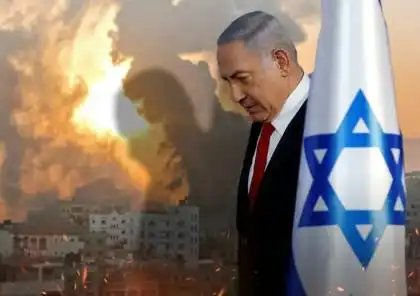
Meanwhile, Israeli Prime Minister Benjamin Netanyahu continues to ramp up his political-military rhetoric, stressing the "inevitability" of an assault on Rafah... the final refuge of the people of Gaza after the "war of displacement" claimed over 30,000 lives. In turn, Western "rejection" of the offensive does not seem to reflect any real determination to prevent it and the humanitarian disaster that several bodies have warned would ensue from it.

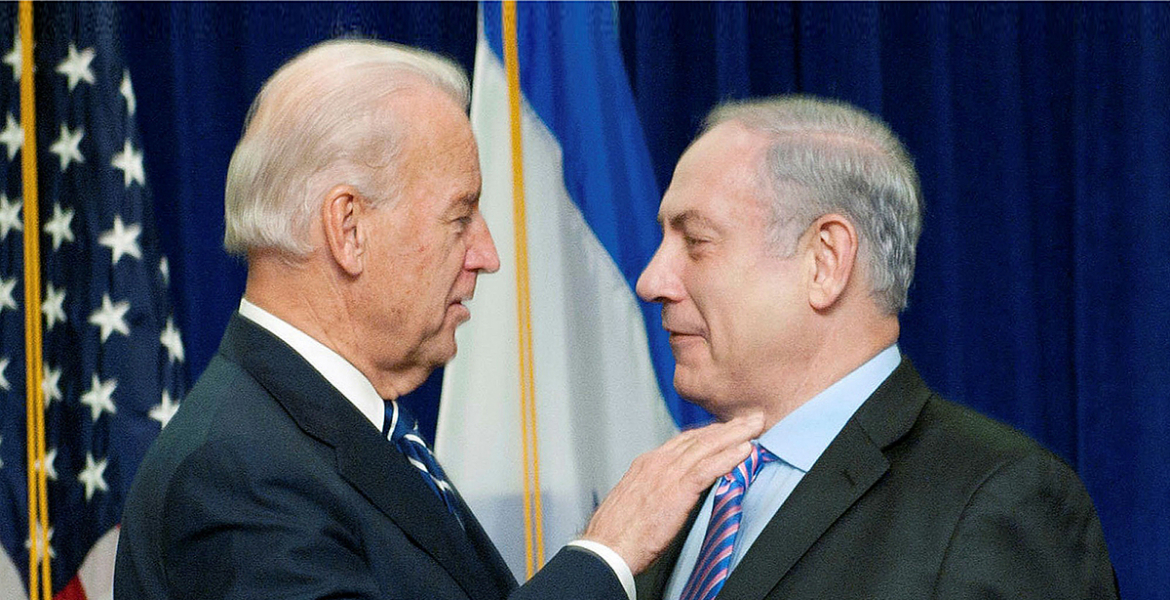
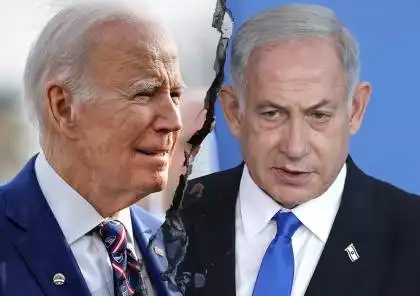
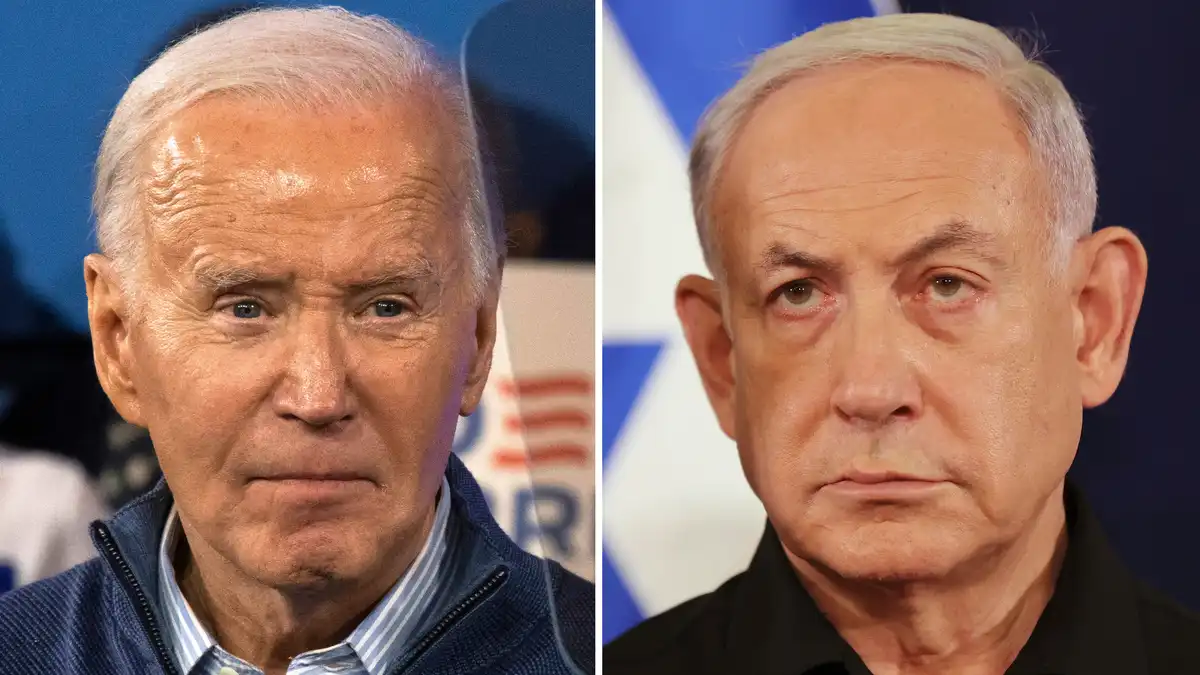
Even the criticism of Netanyahu personally by President Joe Biden, and Democratic Senate Majority Leader Chuck Schumer (the highest-ranking Jewish official in Washington) calling for Netanyahu’s departure after snap elections, have not come with serious threats. Worse, Senator Mitch McConnell, the Republican leader in the Senate, outbid Schumer in his defense of Israel, attacking Biden and criticizing his Democratic colleague.

On a related note, amid the "ambiguity" of the US administration's stance on the "scenario" of the coming hours and days in the Gaza Strip, some have presented a different reading of Washington's decision to set up aid facilities on the central coast of the Gaza Strip. They see it as a substitute for the vital Rafah and Kerem Shalom crossings... and thus as evidence that the US is unwilling or unable to prevent the attack on Rafah!

In this regard, there are undeniable facts that should not be downplayed, including:

- The US stance has not changed its stance on confining the fighting and violence to the Gaza Strip. It has been reiterating this position since Israel began its operations "in response" to the October 7 attack. While no US administration would want to get involved in wars or long-term problems during an "election year," plunging a region as sensitive as the Middle East into political security "quicksand," is a disastrous move for the future.

- Washington's position on Tehran adds to the confusion. Whether in Lebanon, Iraq or Syria, it does not seem that the US will take a decisive or stern position on the Iranian leadership. That is the case despite the fact that Washington is well-aware that Tehran calls the shots for all the regional players in its orbit. Indeed, the US administration is going in the opposite direction, diplomatically engaging Iran in Muscat and releasing billions of dollars in assets to the Iranian leadership, knowing full well where those funds will go and how they will be spent.

- The situation in the region can still be contained for now. However, the Biden administration must – at the very least – understand that this could change. Rather, it would inevitably change for the worse if Donald Trump returns to the White House and Benjamin Netanyahu maintains his ability to extort through violence, occupation and displacement.

- As we know, many crucial elections will be held across the globe this year. It is obvious that racist, populist, and "neo-fascist" movements are seeking major victories. Even the oldest and most stable democracies that have maintained the appearance of gravitas, claiming moderation and respect for human rights, are rapidly changing for the worse. There are indications from across the globe - and this is expected to reflect negatively on the Middle East - that the future does not bode well at all for religious, ethnic and cultural coexistence.

Thus, problems that can be resolved or contained today could become insurmountable if action is not taken in the next few months.

To put it plainly, the Arab world will not stabilize so long as Israel is beholden to the whims of its most extreme right-wing fascists and racists and their dictates, and Iran continues to exploit its proxies to make "bazaarish" deals with the West... both openly and in secret.

Source: Alsharq Alawsat


OPINIONS

Tue 19 Mar 2024 10:03 am - Jerusalem Time

Sinwar, Netanyahu and the Al-Aqsa Flood

Sam Menassa

Sam Menassa

Opinion Writer

The Ramadan truce between Hamas and Israel that we had been promised does not seem forthcoming. In fact, Benjamin Netanyahu and Yahya al-Sinwar could be dragging the region in general, and their countries in particular, to a dangerous place, as they are accounting only for their own personal fates.

Netanyahu is complicit, with his fanatical racist right-wing coalition allies, in the push to annex Palestinian territory, expel Palestinians from Gaza, and install Jewish settlers there. To that end, he has rejected every proposal, whatever the terms, that gives rise to a Palestinian state, and he has insisted that Israel will make an incursion into Rafah and liquidate what remains of Hamas and its leadership.

For his part, Sinwar has met this approach by doubling down and pledging to keep resisting, even if that means the destruction of what remains of Gaza.

Recent national polls show that about 4 out of every 5 Israelis hold Netanyahu primarily responsible for the lapses that led to the October 7 attack and 3 out of every 4 Israelis want him to resign. He also has to contend with political opposition within and without the war cabinet, as many officials and politicians also hold him personally responsible for the government's astonishing incompetence, its slow decision-making, its poor coordination in the management of this war, and its blunders in managing relations with Israel's most important ally, the United States, which it has blatantly defied.

Netanyahu's approach to managing the conflict reflects his narcissistic, manipulative and shortsighted character, as well as his indifference to the fate of his country, its interests, and its future. This is evident in the many risky gambles he has taken over the years. Indeed, he has allegedly refused to approve operations to eliminate the Hamas leadership proposed by the Shin Bet (Shabak) six times over the past 12 years. No one summed up Netanyahu's approach better than President Joe Biden, who said the former "does more harm to Israel than good."

In the opposite corner, Sinwar knows he has lost the leadership, the future of the movement as it currently exists, and his control over the people of Gaza. He has also probably lost public support because of the repercussions of his misadventures. Sinwar has one final task: to finish what he had started with Al-Aqsa Flood, which was partly an effort to sabotage the peace process in the region, and to deny the attack's destructive ramifications.

Continuing the resistance into Ramadan and even beyond, as Sinwar might be planning to do, could leave Israel at odds with the entire world, especially its American allies, as well as potentially inflaming the West Bank, including Jerusalem, and it could even precipitate a third intifada that includes Arab Israelis. Moreover, Egyptian and Jordanian relations with Israel could deteriorate, threatening the peace agreements Israel had concluded with them and Israeli-Arab relations more broadly, especially with the countries that have normalized relations with Israel.

It's a grim scenario. If it were to materialize, it would bring about only more death and destruction, destabilize the region's stability and security, inflame religious conflict, and hinder development and modernization. The primary and ultimate beneficiary would be Iran and its regional policies. These policies undermine everything the Biden administration has offered to Netanyahu to bring about a new regional order.

This new order would paralyze Hamas and leave it unable to threaten Israel or rule Gaza after the war, as well as place the territories in the hands of a reformed Palestinian Authority supported by Arab countries within the framework of a process that ultimately allows Israel to live in security alongside a viable Palestinian state in the West Bank and Gaza Strip.

The problem, for both Sinwar and Netanyahu, is that they are at an impasse from which they cannot retreat. Palestinian, Arab, and international actors have created a wall blocking Sinwar’s path.

As for Netanyahu, if he yields to Washington, he risks losing the support of the hard right, which would bring down his government and be the end of his political life. It would even mean heading straight to jail. If he continues to reject Biden's approach, he risks sinking Israel deeper into the quicksand of Gaza, igniting a third intifada in the West Bank, and another war with Hezbollah.

Moreover, taking this route could severely damage relations with the United States, which Israel depends on for ammunition, financial support, and crucial diplomatic backing. It could also jeopardize all of Israel’s Arab relations, old and new. Any one of these outcomes would be terrible for Israel, and together, they would constitute an existential disaster for Israel.

If Netanyahu proceeds to storm Rafah (or even if he continues at the same pace of killing that he has maintained over the past months, or broadens the war with Hezbollah), and Sinwar insists on futile and shortsighted resistance, they would be breathing new life into the October 7 operation together, in what could be called "Al-Aqsa Flood 2," and this time, it would be signed by both Sinwar and Netanyahu.

Source: Alsharq Alawsat


ARAB AND WORLD

Tue 19 Mar 2024 10:01 am - Jerusalem Time

Blinken to Visit Saudi Arabia, Egypt This Week as US Pushes for Ceasefire in Gaza

States Secretary of State Antony Blinken will visit the Middle East this week, the US State Department said on Tuesday, as Washington pushes for a ceasefire between Israel and Hamas in Gaza to allow the release of hostages kidnapped by the Palestinian group.

Blinken will visit Saudi Arabia and Egypt and will meet with senior leaders in both countries, the State Department said.

Providing more humanitarian aid into Gaza as well as discussing post-war planning for the enclave will be among the topics he will discuss with Saudi and Egyptian official.

He will head to Jeddah on Wednesday before flying out to Cairo on Thursday.

Blinken is currently in Asia, where he attended a democracy summit in South Korea.

This will be Blinken's sixth trip to the Middle East since the start of the war between Israel and Hamas on October 7.

The war began when Hamas launched an unprecedented attack from Gaza on October 7 that left about 1,160 dead in Israel, mostly civilians, according to an AFP tally of official figures.

Hamas fighters also seized about 250 Israeli and foreign hostages, of whom Israel believes about 130 remain in Gaza, including 33 who are presumed dead.

Israel has carried out a relentless bombing campaign and ground offensive that Gaza's health ministry says has killed at least 31,726 people, most of them women and children.

The United Nations has warned for weeks that a famine is looming in Gaza, with aid agencies reporting huge difficulties gaining access to the territory, particularly the north.

Donors have turned to deliveries by air or sea, but these are not viable alternatives to land deliveries, UN agencies say.


PALESTINE

Tue 19 Mar 2024 9:51 am - Jerusalem Time

War on Gaza: Israel commits 9 massacres and intensifies the bombing of Gaza neighborhoods

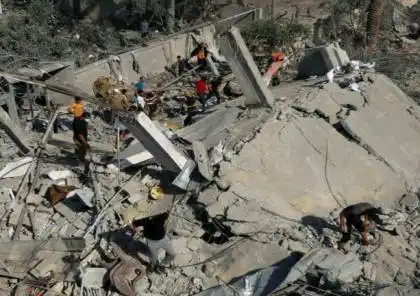
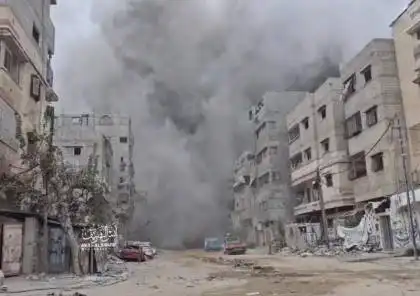
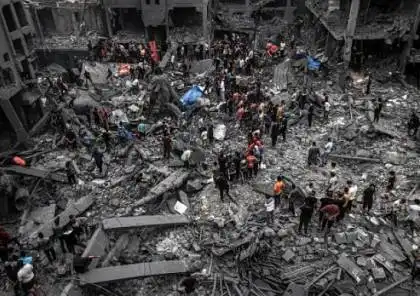
Today, Tuesday, the Israeli army intensified its bombardment on the neighborhoods of Gaza City and other areas in the Strip, resulting in dozens of martyrs and wounded, hours after it committed 9 new massacres against civilians.


In the latest developments, 15 citizens from the “Muqbel” family were martyred as a result of an Israeli raid on downtown Gaza City.


Today, Israeli aircraft launched raids on several areas west and central of Gaza City.


The bombing of homes west of the city - where the Al-Shifa Medical Complex is located - resulted in dead and wounded. The raids were accompanied by artillery shelling of Al-Shati camp.


At the Samer Junction in central Gaza, a Palestinian woman was martyred and others were injured as a result of Israeli bombing of residential apartments.


Two citizens were killed and wounded as a result of the Israeli aircraft’s bombing yesterday of a house for the Abu Awaila family on Al-Lababidi Street in the vicinity of Al-Shifa Complex.


The Ministry of Health in Gaza announced that the Israeli committed 9 massacres in the Strip during the past 24 hours, killing 93 citizens and injuring 142.


The Ministry said that the toll of the aggression that has been ongoing for more than 5 months on the besieged Gaza Strip has risen to 31,819 dead and 73,934 wounded.


Hard night

In the southern Gaza Strip, last night, Israeli aircraft launched several raids on homes in the city of Rafah, resulting in the death of 14 Palestinians.


The new raids on Rafah come at a time when Benjamin Netanyahu's government threatens to invade the city, despite UN and international appeals.


In the northern Gaza Strip, two citizens were killed in an Israeli bombing that targeted an aid warehouse in Jabalia, in the northern Gaza Strip.


In the middle of the Gaza Strip, Israeli raids targeted the Al-Mahathin Junction, south of Deir Al-Balah.


Israeli bombing has escalated on residential areas throughout the Gaza Strip, while the humanitarian situation is worsening, in light of the hunger that has claimed the lives of dozens - most of them children - and international warnings of a famine that could cause large numbers of deaths.

ARAB AND WORLD

Tue 19 Mar 2024 9:44 am - Jerusalem Time

Israel calls on the International Court of Justice not to issue new orders regarding Gaza

Israel on Monday asked the International Court of Justice not to take new emergency measures to increase the amount of humanitarian aid provided to Gaza.


In a filing submitted to the court, Israel also rejected South Africa's request to take new measures to bring aid into Gaza, describing the African request as "morally repugnant."


Israel claimed in its file that it "feels real concern about the humanitarian situation and the lives of innocent people, as evidenced by the measures it has taken and is taking" in Gaza during the war.


Israel's lawyers denied accusations of intentionally causing human suffering in the Strip, saying South Africa's repeated requests for additional measures represented an abuse of process.


The file stated that South Africa's accusations as part of its request for additional measures, which it submitted on March 6, "are baseless, legally baseless, and morally repugnant, and represent an abuse of the Convention on the Prevention of the Crime of Genocide and the Court itself."

The new controversy between the two parties comes within the framework of the case that South Africa filed before the court, accusing Israel of committing genocide in Gaza after the October 7 attack.


As a result of this call, the International Court of Justice ordered Israel to refrain from any actions that could fall under the Genocide Convention, and to ensure that its forces do not commit acts of genocide against the Palestinians in Gaza.


Israel denies targeting Palestinian civilians and says its only goal is to eliminate Hamas, but relief agencies say sending humanitarian aid to Gaza's 2.3 million people faces several restrictions.


The war in the Gaza Strip entered its 164th day in light of the continuous Israeli bombing and the humanitarian catastrophe reached the point of famine, without the mediators being able to prevent the shooting, even for the month of Ramadan.

Source: Sama News

ARAB AND WORLD

Tue 19 Mar 2024 9:32 am - Jerusalem Time

Canadian House of Commons votes on a proposal supporting the establishment of a Palestinian state

Lawmakers in Canada will vote on Monday on a non-binding proposal supporting the establishment of a Palestinian state, and Israel denounced the proposal that may increase divisions within the ruling Liberal Party.

Jagmeet Singh: Justin Trudeau can take serious steps for peace and justice, but he does not have the courage to do so


Although the government is free to ignore the result of the vote in the House of Commons, the proposal could cause political problems for Prime Minister Justin Trudeau.

The left-wing minority of the New Democrats, which helps Trudeau's Liberals remain in power, submitted this proposal because of its dissatisfaction with what it sees as a failure to take adequate measures to protect the civilian population in Gaza.

“Justin Trudeau can take serious steps for peace and justice, but he does not have the courage to do so,” New Democrats leader Jagmeet Singh said in a statement. “That is why we have put forward a motion to force the Liberal government to help end this bloodshed.”


He added that Palestinians and Israelis deserve to live in peace.

Canada said last week that it had stopped exporting non-lethal military equipment to Israel as of January due to the rapidly evolving situation on the ground.


Although Trudeau emphasized what he described as Israel's right to defend itself, he strongly criticized the Israeli war on Gaza.

The proposal calls on Canada to “formally recognize the State of Palestine,” a step that no G7 member state has taken, in addition to halting all commercial cooperation with Israel in the fields of technology and military equipment.

The proposal also calls for an immediate ceasefire and an end to illegal arms transfers to the Islamic Resistance Movement (Hamas), and also calls on the Palestinian movement to release Israeli detainees.


There are clear indications of a division within the liberal bloc between supporters and opponents of the government's policy towards the conflict in Gaza.

In a related context, the office of Canadian Prime Minister Justin Trudeau said that the Prime Minister expressed his concern on Monday about the planned Israeli attack on the city of Rafah in southern Gaza, during a phone call with Israeli Defense Cabinet member Benny Gantz.


(Reuters)

PALESTINE

Tue 19 Mar 2024 9:29 am - Jerusalem Time

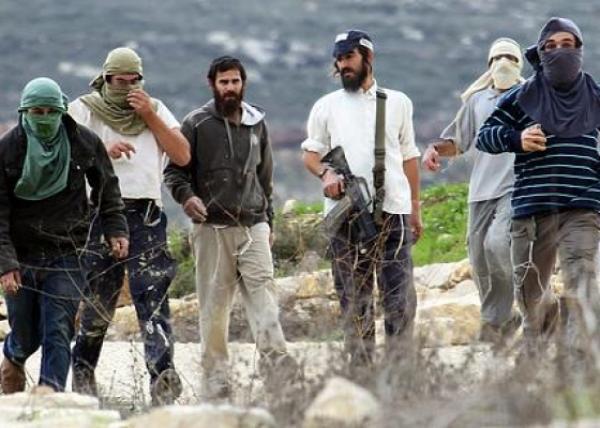
Ben Gvir brags about arming 100,000 Israeli settlers since October 7

The Minister of Internal Security in Israel, Itamar Ben Gvir, announced that his ministry has been able to arm 100,000 settlers since the beginning of the war on the Gaza Strip.


Ben Gvir explained that a license to possess a weapon was given to the Israeli, number 100,000, out of about 300,000 applications submitted to the ministry since the war.


Last February, the Hebrew newspaper Haaretz reported that the followers of extremist Minister Ben Gvir had granted licenses to possess weapons to a number of media workers.


The newspaper added that Ben Gvir and officials in his office had granted 14,000 weapons licenses without oversight since last October, and that his advisor personally approved hundreds of requests.


Ben Gvir embarked on a campaign to facilitate obtaining licenses to carry weapons for Israelis, in the wake of Operation Al-Aqsa Flood, where he personally distributed weapons to residents of the occupied city of Ashkelon, and later, many Israelis appeared walking around with weapons in public places.


Media reports, citing the Israeli Security Committee, reported that it had received more than 250,000 applications for licenses to carry weapons since the Al-Aqsa Flood operation, while demand for training centers on the use of weapons increased, and thousands of Israelis obtained weapons for the first time.


Hebrew circles estimate that the Israeli government has armed more than 165,000 settlers in the local settlements of the West Bank and Jerusalem, until the end of 2023.


PALESTINE

Tue 19 Mar 2024 9:26 am - Jerusalem Time

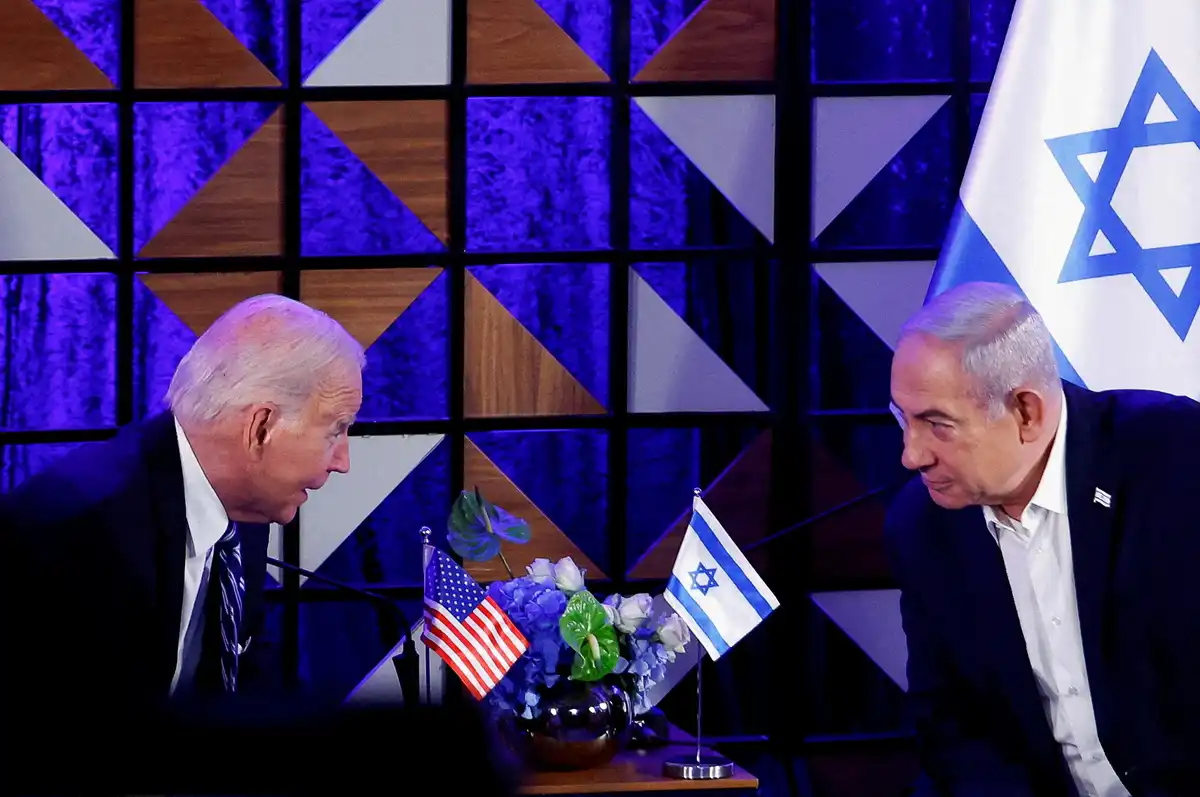
Biden asks Netanyahu to discuss the plan to invade Rafah in Washington

US President Joe Biden said that he asked Israeli Prime Minister Benjamin Netanyahu to send a team to Washington to discuss the plan to invade Rafah.


Biden added that he stressed during a phone call with Netanyahu the importance of agreeing on an immediate ceasefire in Gaza that will last for weeks as part of an agreement to release Israeli detainees.


For his part, US National Security Advisor Jake Sullivan said on Sunday that Israeli Prime Minister Benjamin Netanyahu had agreed to send a team to the United States to discuss Israel's plan to invade Rafah without a major ground invasion.


Sullivan's speech came in a briefing to reporters from the White House following a phone call between Netanyahu and Biden, the first after more than a month of interruption of direct communication, which was accompanied by the expansion of differences between the two sides against the backdrop of Israel's management of the war on Gaza and its failure to reduce the number of civilian casualties as requested of it.


According to Sullivan, Netanyahu has agreed to send intelligence officials in addition to humanitarian affairs workers to Washington in the coming days, to listen to US concerns about the current Israeli plan for Rafah, and to develop an alternative approach that targets the main Hamas elements in the city, and secures the Egyptian-Israeli border without a big ground invasion. 


Sullivan said the United States does not expect Israel to begin any invasion until talks are held with the team that will be sent.


He stated that Biden rejected Netanyahu's argument that invading Rafah would mean defeating Hamas, saying, "Every time I hear an argument that says if Rafah is not stormed, you will not be able to defeat Hamas."


According to Sullivan, Biden said in the call that the United States is concerned about the presence of more than a million refugees in Rafah who have no place to go.


Sullivan said that a major ground operation in Rafah would be a mistake, and would lead to the death of more innocent civilians, exacerbate the humanitarian crisis, deepen the chaos in Gaza, and increase Israel's international isolation.


He also stated that talks to reach a ceasefire agreement in Gaza and a prisoner exchange between Israel and Hamas are continuing despite the challenges, adding, "So far this agreement has been more elusive than we had hoped, but we will continue to put pressure because we consider this an urgent priority."


The United States is working with Qatar and Egypt to reach an agreement to stop the Israeli war on Gaza, and to release more than 100 Israeli detainees in Gaza, but the mediators have been struggling for weeks to narrow the wide gaps between the two sides.


PALESTINE

Tue 19 Mar 2024 9:24 am - Jerusalem Time

Axios: Israel and Hamas have begun negotiating an actual ceasefire agreement in Gaza

Israel and Hamas are negotiating for the first time in months on the details of a possible agreement to release Israeli detainees and a temporary ceasefire in Gaza, according to Israeli officials and an informed source, according to the Axios website, which also indicated that both Israel and Hamas are under intense pressure to reach an agreement that would release detainees and begin a humanitarian ceasefire in Gaza, where more than 30,000 Palestinians were killed.


Since December last year, talks mediated by Qatar and Egypt have reached an impasse in discussions about a framework for negotiations, rather than the details of the actual agreement.

The current proposal being negotiated could lead to a six-week ceasefire in Gaza and the release of 40 hostages – women, female soldiers, men over 50 and men in critical medical condition – in exchange for hundreds of Palestinian prisoners.

Ongoing efforts to reach an agreement made progress last week when Hamas responded to the hostage deal framework proposed by the United States, Qatar and Egypt.


Israeli officials reportedly said that there were still gaps between the two parties, but that Hamas' response came close to the original framework and allowed negotiations to progress toward reaching the details of the agreement.

The American framework included the release of 400 Palestinian prisoners, including 15 serving life sentences, in exchange for 40 hostages.

Hamas' response, presented last Thursday, included the release of 950 prisoners, including 150 serving life sentences.

Hamas wants to choose which prisoners will be released, especially those serving life sentences. Israel rejected this request, according to Israeli officials.


On the other hand, Israel demands that it obtain in advance a list of the names of living hostages and that the released prisoners be transferred to another country. The officials said that Hamas rejected this.

But the widest of the two gaps is Hamas's demand that the Israeli army withdraw from the corridor it established south of Gaza City, which prevents the return of Palestinians to the north of the Strip.

Another sticking point is Hamas's demand that the next phase of the deal, which could include the release of soldiers, include a permanent ceasefire.

Israeli negotiators headed by Barnea met on Monday in Doha with Qatari and Egyptian mediators led by Qatari Prime Minister Mohammed bin Abdul Rahman Al Thani, according to Axios.


A source with direct knowledge of the opening session of the talks said it was positive. The source said: “The two parties have reached some concessions and are preparing to negotiate.”


A senior Israeli official said that the Israeli negotiating team will remain in Doha to continue detailed talks with Qatari and Egyptian mediators traveling between the two parties located in separate parts of the same complex in Doha.

The official said the current round of talks could take at least two weeks. “It will be a long, difficult and complex process, but we want to try to reach an agreement,” he said.

The hostage deal is reportedly a hot-button political issue in Israel as Netanyahu's extremist coalition partners object to any deal that includes a mass release of Palestinian prisoners and could lead to a permanent ceasefire.


Last week, Netanyahu postponed a cabinet meeting to discuss the mandate of the Israeli negotiating team for several days. Israeli officials said that on Sunday he narrowed the scope of the mandate sought by negotiators in the hostage talks and set stricter red lines for what they could accept in the negotiations.

An Israeli official said that some on the Israeli negotiating team are concerned that Netanyahu's red lines will make reaching an agreement more difficult, but Mossad Director David Barnea, who heads the team, believes it is still doable.

An Israeli official said: “The negotiating team did not get what it wanted, but it got enough love.” If we get close to a good agreement, Netanyahu will offer more love.”

PALESTINE

Tue 19 Mar 2024 9:20 am - Jerusalem Time

World Food Program: If we do not enter northern Gaza, thousands of children will die of hunger

The United Nations World Food Program warned on Monday that thousands of children would die of starvation if program crews were unable to enter northern Gaza.


The chief economist at the Food Program, Arif Hussein, said that children are dying of hunger in the Gaza Strip, especially in the north, adding that the program is on the verge of declaring famine in northern Gaza.


During a video conference interview with journalists at the United Nations about the Integrated Interim Classification for Food Security (IPC) report, Hussein said, “For humanitarian relief workers, famine means declaring our collective failure, and it means that we have failed and people and children have died.” "Hunger."


Hussein stressed that, therefore, the necessary measures must be taken before famine occurs, stressing that children are dying of hunger throughout Gaza, “and if we are not able to enter northern Gaza, not 20-30 children will die, but thousands of them.. We cannot allow that.” .


The Integrated Interim Classification for Food Security (IPC) report, prepared by United Nations institutions, showed that 70 percent of the population of the northern Gaza Strip faces catastrophic hunger.


Israel restricts humanitarian aid access to Gaza, where about 2.3 million Palestinians live, causing a scarcity of food, water, medicine and fuel supplies and creating a famine that has claimed the lives of children and the elderly, in light of the presence of about two million displaced people in the Strip, which has been under siege for 17 years.


Since October 7, 2023, Israel has been waging a devastating war on the Gaza Strip, leaving tens of thousands of civilian victims, most of them children and women, a humanitarian catastrophe and massive infrastructure destruction, which led to Tel Aviv appearing before the International Court of Justice on charges of genocide.

PALESTINE

Tue 19 Mar 2024 9:13 am - Jerusalem Time

Developments on the 165th day of the Israeli war on Gaza

Israeli aircraft continued to bomb various areas of the Gaza Strip on the 165th day of the war, leaving dozens of martyrs and hundreds wounded.


The Israeli army committed eight massacres against families in the Gaza Strip, claiming 81 killed and 116 injured during the past 24 hours, bringing the toll of the Israeli aggression to 31,726 dead and 73,792 injured since the seventh of last October.


The Israeli forces continued to storm Al-Shifa Hospital, west of Gaza City, for the second day in a row and carried out an arrest campaign that targeted 200 citizens, while the occupation army announced that it had killed twenty Palestinians inside the hospital.


The Israeli army killed Brigadier Fayek Al-Mabhouh, who facilitated the introduction of aid into the northern Gaza Strip.


Military aircraft launched a series of raids in the vicinity of Al-Shifa and on Al-Nasr and Al-Jalaa Streets, resulting in the death of dozens of Palestinians, including nine from the Arbi’ family on Al-Jalaa Street.

Six were killed in an Israeli raid on a home for the Al-Amoudi family in the Sheikh Radwan neighborhood in Gaza City.

The Israeli army destroyed Al-Sabreen Mosque and Najm Tower, west of Gaza.

In Beit Hanoun, at least eight killed and a number of people were injured as a result of targeting a group of citizens who were searching for food north of Beit Hanoun in the northern Gaza Strip, while eight citizens were killed in a bombing on the home of the Al-Banna family in Jabalia Al-Balad.

Two persons were killed in an Israeli bombing targeting an UNRWA center east of Jabalia, in the northern Gaza Strip.


The middle of the sector

Six citizens were killed and a number of others were wounded as a result of the Israeli bombing of a house for the Al-Hajj family, west of the Nuseirat camp in the central Gaza Strip.

A citizen was killed and injured when the Israeli army bombed the Bureij Municipality headquarters in the central Gaza Strip.

One killed and 4 wounded were shot dead by the Israeli forces on Al-Rashid Street, opposite Madinat Al-Zahra in the central Gaza Strip.


South of the sector

The Israeli aircraft returned to bombing the city of Rafah, south of the Gaza Strip, which led to the death of 14 citizens and the injury of dozens.


The Israeli aircraft carried out five attacks in the city of Rafah, starting with targeting a house belonging to the Al-Malahi family on Al-Mudarreen Street in the Al-Geneina neighborhood, east of Rafah, resulting in only injuries, while targeting a house belonging to the Abu Al-Rous family, south of the Al-Muminin Mosque, on Awni Dhair Street, east of Rafah, led to a number of killed.

Three citizens were killed in the targeting of a house belonging to the Abu Al-Rous family, opposite the cemetery on Awni Dhair Street, east of Rafah.

The Israeli aircraft targeted a residential apartment in the Mohandessin Towers in the Al-Zuhur neighborhood, north of Rafah, leading to the death of three citizens.

The Israeli aircraft targeted a house belonging to the Jargun family in the Shaboura camp in central Rafah, leading to the death of four Palestinians.

In Khan Yunis, ambulance and civil defense crews recovered the bodies of three citizens from areas that had previously witnessed fighting.


PALESTINE

Mon 18 Mar 2024 10:02 pm - Jerusalem Time

An Israeli delegation arrives in Doha to begin prisoner exchange talks

The Israeli delegation, headed by Mossad chief David Barnea, arrived today, Monday, in the Qatari capital, Doha, ahead of the start of prisoner exchange negotiations.


Hebrew Channel 11 reported that the Hamas movement is demanding that all prisoners who will be released as part of the deal be identified, and that residents be allowed to return freely from the south to the north of the Strip. In return, Israel aims to release 40 hostages in exchange for a 42-day ceasefire.


The channel reported that Shin Bet head Ronan Bar was not among the delegation that included the army representative for the negotiations, Nitzan Alon, while the Shin Bet sent a “professional delegation,” and the delegation is expected to remain in Doha for a long period to conduct negotiations.


It quoted officials who will participate in the talks as saying that Hamas needs 24-36 hours to make any change in answers, due to indirect talks being held with the movement’s leader in Gaza, Yahya Sinwar.


Channel 11 indicated that some of the officials in the delegation who went to Qatar requested a better mandate than what they had received in previous rounds, considering that the mandate currently granted is insufficient at this stage to conduct negotiations.

ARAB AND WORLD

Mon 18 Mar 2024 10:00 pm - Jerusalem Time

International newspapers: Gaza is bringing Washington back to the region, and Netanyahu may lose his position

International newspapers and websites discussed in analyzes and reports the United States’ strong return to the Middle East against the backdrop of the war on the Gaza Strip, and the dimensions of the US administration’s disagreements with Israeli Prime Minister Benjamin Netanyahu.


The Washington Post said that the war on Gaza brought the United States back into the Middle East, writing, "While American planes were dropping food parcels into Gaza, other fighters and helicopters were over the Red Sea leading efforts to deter the Houthis."


The newspaper adds, "The situation in Gaza taught President Joe Biden, and other American presidents before him, that disengagement from the Middle East is not an easy matter."


Regarding the US administration’s dispute with Netanyahu, The Economist magazine explained the growing criticism of the Israeli Prime Minister in the United States as “a desire by the White House to remove the man from the scene.”


However, the magazine stresses that overthrowing Netanyahu is not an easy matter, and may be fraught with chaos and dangers, “because the path to changing the leadership in Israel is currently complicated, and requires a transitional phase that allows Netanyahu to gather his cards... and if this coincides with the war in Gaza, the Rafah issue, and the tension with the Hezbollah party.” God is in the north, it will be something that calls for slowing down and thinking.”


For its part, the Financial Times described the Israeli Prime Minister as one of the world leaders most favored by the US administration, but he may lose this favor.


The newspaper adds in a lengthy analysis that other Israeli officials had disagreements with Washington, but none of them were rude, according to its expression. It indicates that Netanyahu is betting in managing his relationship with the United States on the lobbies supporting him in Washington and on lawmakers.


On another topic, an analysis by the French newspaper Le Monde monitored growing support for Israel among evangelical Christians in the Americas, and indicated that this support is translated into concrete activities and actions in favor of Israel, but not all of them deviate from religious principles.


Source: Al Jazeera

PALESTINE

Mon 18 Mar 2024 9:39 pm - Jerusalem Time

European Union foreign ministers approve sanctions on settlers in the West Bank

On Monday, European Union foreign ministers approved sanctions on settlers in the occupied West Bank.


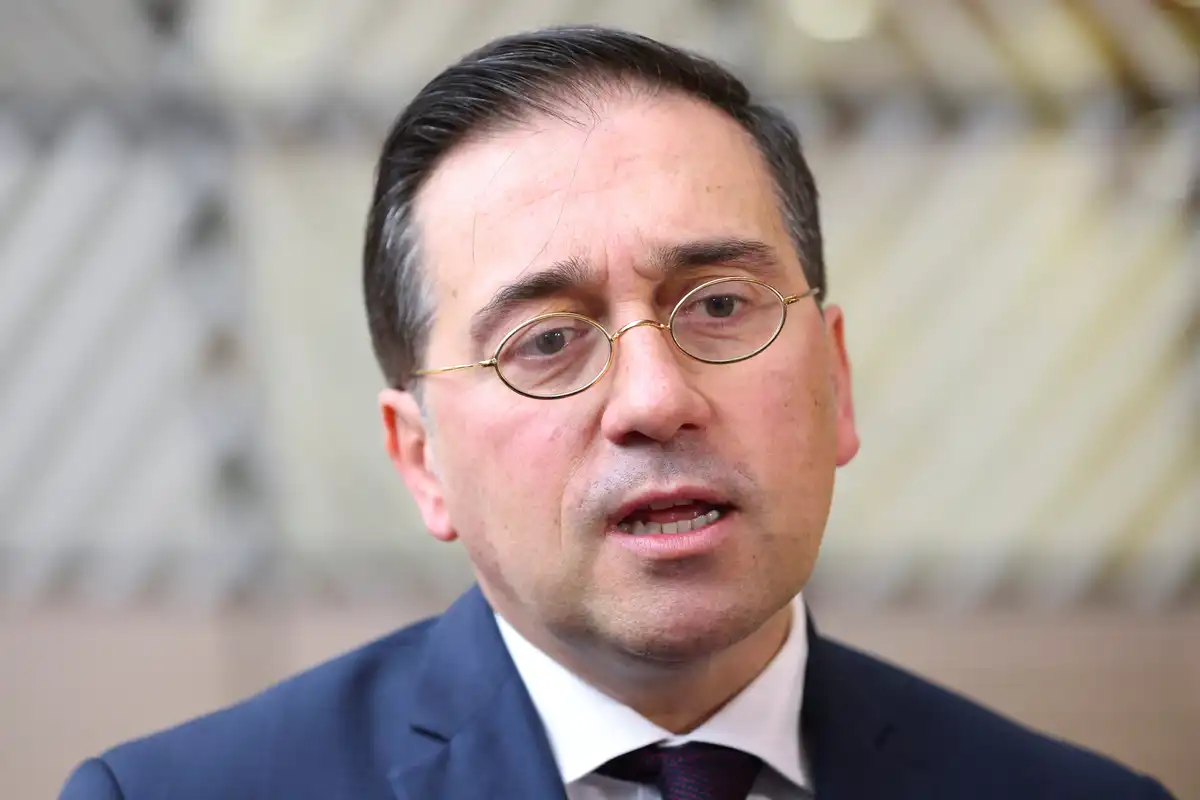
Spanish Foreign Minister Jose Manuel Albarez Bueno said, after a meeting with his European Union counterparts in Brussels: “Today we unanimously agreed to impose sanctions on settlers who attack Palestinians in the West Bank.”

OPINIONS

Mon 18 Mar 2024 9:38 pm - Jerusalem Time

Peace Amid War: Saudi Arabia’s Public Opinion Challenge in Promoting Normalization With Israel

INSS

INSS

Opinion Writer

bY Ilan Zalayat

In an effort to advance normalization with Israel, Saudi Arabia faces muted but significant public opposition, which has been exacerbated following the war in Gaza. The popular rejection takes many forms: There is a religious dimension, which views a peace with Israel as contrary to Islamic law; a pro-Palestinian dimension, which regards opposition to normalization as a demonstration of support for the Palestinians; and a liberal perspective, which cautions that ties with Israel could empower the Saudi regime to further violate human rights. Accordingly, Riyadh is making a concentrated effort to generate public support for normalization, raising high expectations about the concessions that Israel will make to the Palestinians in return. While Israeli discourse focuses on security cooperation with Saudi Arabia against Iran, the Saudi public shows little interest in this aspect, focusing instead on the economic benefits of the relationship. Overall, the reception in the kingdom of a normalization agreement highly depends on the success of Crown Prince Muhammed bin Salman’s ambitious reforms and ventures. The more these initiatives yield positive results without provoking a backlash, the better positioned Riyadh will be to mitigate public dissent and move toward establishing relations with Israel.

On the eve of Hamas’s October 7th attack and the ensuing “Swords of Iron” war in Gaza, Israel and Saudi Arabia moved closer than ever to a historic normalization agreement. Only two weeks before the war, Crown Prince Muhammad bin Salman, the de facto ruler of Saudi Arabia, asserted in an interview with American media that the prospect of such an agreement seemed “serious for the first time,” referencing negotiations between the kingdom and the United States aimed at a comprehensive agreement that will include, among other things, Israeli–Saudi normalization. Even the outbreak of the war in the Gaza Strip did not bring the normalization process to a halt and after a three-month pause, US–Saudi talks resumed in January 2024 even if Riyadh, in public, conditions normalization on a ceasefire in Gaza and the establishment of a Palestinian state. The slow but steady approach of Bin Salman toward normalization with Israel raises the question of how the Saudi public would receive such a move.

Historical Background: The Government Discourse and Its Changes

There is not much historical baggage between Israel and Saudi Arabia standing in the way of normalization; the two countries do not share a border, and they have never fought one another, apart from a negligible Saudi force that participated in the 1948 War. Nevertheless, for most of Saudi Arabia’s century-long existence until the last decade, the government’s discourse and indoctrination were marked by harsh antagonism toward Israel and Jews in general. While it banned worship of all religions other than Islam, Riyadh exhibited a particularly stringent attitude toward Jews: they were prevented from entering the kingdom, even for work purposes, on the grounds that they would defile its sanctity, and antisemitic content such as “The Protocols of the Elders of Zion” found favor among the ruling elite. At the same time, Saudi Arabia has been one of the most pragmatic in the Arab world toward recognizing Israel; notably, as early as 1981, the then Crown Prince Fahd endorsed an Arab League initiative that acknowledged Israel’s right to exist in peace, contingent upon its withdrawal to the 1967 borders and resolution of the conflict with the Palestinians. Furthermore, in 2002, the Saudis instigated the Arab Peace Initiative, offering full normalization with Israel as part of an Israeli–Palestinian peace agreement.

This duality was the result of the close alliance from which Saudi Arabia emerged, between the Al Saud royal dynasty and the Wahhabi sect in Islam. Under this alliance, the royal house practiced political pragmatism in the diplomatic sphere, while domestically enforcing Islamic Sharia law in its strict Wahhabi interpretation. The Saudi kings leveraged their upholding of Wahhabism to claim legitimacy for their rule over Islam’s two holiest sites, Mecca and Medina, presenting themselves as the ultimate model of Islamic virtue. Wahhabism pretends to purge Islam of detrimental external influences, including Judaism—not only in the context of Israel, but as part of a long-standing religious dogma predating Zionism. Furthermore, the Saudi elite historically associated Marxism with Judaism, inspired by classical Western antisemitism. In the context of the Israeli–Palestinian conflict, the Saudi royal family framed the Palestinian cause as an Islamic issue and a component of the kingdom’s Muslim identity, which entailed projecting not only to its people, but to the entire Muslim world that prays toward Mecca.

A series of developments in the 21st century caused a shift in the power dynamics between the Saudi royal family and the religious establishment, leading the royal family to diminish the power of the latter and distance itself from Wahhabism. Key factors include the 9/11 attacks, carried out by terrorists who were educated in Wahhabi institutions. The regional ascendancy of Islamist actors that challenge the Saudi monarchy, such as Iran, the Muslim Brotherhood, and ISIS also played a role. As the American reliance on Saudi oil decreased, awareness of Saudi Arabia’s internal repression grew. In response, Riyadh turned to burnish its global image in a bid to diversify its economy through investment and tourism.

A decade ago, in 2014, the Saudi authorities allowed Jews to work and live in the kingdom, signaling a shift in the attitude toward the Jews and Israel. The turning point occurred when Muhammad bin Salman became crown prince in 2017, as he openly declared he had renounced Wahhabism in favor of “a return to moderate Islam.” Antisemitism and calls for the destruction of Israel were removed from Saudi schoolbooks and disappeared from the media. Although Israel is still absent from the official Saudi maps, the government portrays it in a much more tolerant way that focuses on criticism of its control over the Palestinians. Since 2018, Rabbi Jacob Herzog, an American-Israeli, has been operating within the kingdom with the support of the authorities to organize the slowly growing Jewish community. During her 2022 visit to Saudi Arabia, Deborah Lipstadt, the US administration’s special envoy to combat antisemitism, testified that she was impressed by the progress the kingdom had made in eradicating antisemitism.

These trends, however, do not necessarily concern Israel. Rather, they form part of Bin Salman’s far-reaching set of socioeconomic reforms, “Saudi Vision 2030,” and his strive to outwardly project a Saudi image of pluralism and moderation, particularly to improve the kingdom’s position in Washington. Nonetheless, it seems that the new tolerance toward the Jews is also aimed at laying the groundwork in the Saudi public for the kingdom’s relationship with Israel, which it has been taught to hate for decades.

Although Saudi Arabia did not join the Abraham Accords in 2020, it indirectly supported them, notably by allowing flights to pass over its territory from Israel to the Gulf. In the decade leading up to the Abraham Accords, clandestine relations between Israel and Saudi Arabia took place and were strengthened, in part, due to the shared threat posed by Iran and its regional proxies. In March 2022, Bin Salman crossed the Rubicon when he declared in an interview that Israel “is not an enemy, but a potential partner” of Saudi Arabia. The message from Riyadh was that it is willing to demonstrate flexibility regarding the Arab Peace Initiative, which stipulated a comprehensive solution to the Palestinian issue, but the “price tag” of normalization with Saudi Arabia—the custodian of the holy places that supposedly bears not only a national but an all-Islamic responsibility—is higher than that of other Arab countries.

Public Reaction to the New Policy

On the surface, the shifting attitude of the Saudi government toward Israel and Jews, along with other religious and social changes that have been introduced, has not provoked any protests or public dissent within the kingdom, suggesting that Bin Salman is able to further his vision for relations with Israel. Given that Saudi society is young, with approximately 70 percent of the population under the age of 30, it may be amenable to significant changes. However, it is still uncertain whether this apparent lack of opposition signifies genuine support for Bin Salman and his policies, or if it stems from a fear of expressing dissent.

In Saudi Arabia, an absolute monarchy with stringent restrictions on freedom of speech—where citizens can be imprisoned for criticizing government policies on social media—it is difficult to gauge public opinion on normalization with Israel. Public sentiment is not only shaped by the official narrative, but it is also influenced by online information and international media (especially the popular Al Jazeera network, known for its critical stance toward the Saudi government). Social networks indicate that there is opposition to normalization with Israel, but its scale and impact are difficult to assess. For example, a Twitter account named “Saudis with al-Aqsa,” advocating against Israel’s existence from an Islamist and pro-Palestinian perspective, garnered nearly 300,000 followers while remaining anonymous.

A series of polls conducted by the Washington Institute for Near East Policy since the Abraham Accords in 2020 provide a rare glimpse into Saudi attitudes toward normalization with Israel. Before the current war in Gaza, approximately 40 percent of Saudis supported economic ties with Israel if they proved beneficial to the local economy. This figure, although a minority, indicates an exceptional openness to entertain pragmatic relations with Israel; in contrast, support for similar ties in Egypt and Jordan, both of which have peace treaties with Israel, hovers around only 10 percent.

However, sentiments shifted dramatically during the Gaza war. In November–December 2023, support for any form of relations with Israel dropped to 20 percent, and an overwhelming majority of Saudis (96 percent) favored the immediate cessation of ties between the Arab states with Israel in response to its actions in Gaza. Although the timing of the poll may have heightened this response, it should be noted that even before the war, 87 percent of Saudis believed that Israel could eventually be defeated, and only five percent agreed that world Jewry should be respected and that relations with them should be improved.

These surveys also highlight a discrepancy between the interests of the Saudi government in having ties with Israel and those of the populace. Only 20 percent of Saudis expressed support for their government’s cooperation with Israel against Iran, while only a slim majority of 60 percent of Saudis even viewed Tehran as a rival after the Saudi–Iranian reconciliation in March 2023. 

The Saudi Polemics Regarding Normalization

Saudis have raised multiple arguments against normalization with Israel. Liberal Saudi dissidents exiled in the West find Riyadh’s rapprochement with Israel as a vulnerability in Muhammad bin Salman’s policies. This milieu considers the normalization efforts with Israel, along with Bin Salman’s other reforms, as a veiled attempt to bolster the regime’s capacity to suppress dissent and human rights in the kingdom. This group claims that behind the normalization is Bin Salman’s interest in Israeli weapons and surveillance technology—which will be used against Saudi citizens just like they are used against the Palestinians—while whitewashing the regime’s image in the United States (often citing the Saudi use of the Israeli-made Pegasus spyware to monitor dissidents, including Jamal al-Khashoggi, who was murdered in 2018, and Loujain al-Hathloul, who was imprisoned for her activities supporting women’s rights). Opponents of normalization in Bahrain and the UAE have voiced similar arguments.

As much as the liberal opposition does not pose a significant threat to the Saudi regime, the idea that normalization with Israel underpins the regime’s repressive practices against Saudi citizens could gain traction within the kingdom—where it is not allowed to be expressed—through social media and the Qatari outlets.

The Islamic sphere in Saudi Arabia is also engaging in the issue of normalization. Despite the image that Bin Salman tries to convey, Saudi Arabia is still a devout country, making the Islamic perspective critical. Thus, the discourse in the kingdom’s mosques and various religious institutions is of paramount importance. Moreover, the appeal of Islamist actors has always been the greatest threat to the Saudi royal family, pushing the regime to tighten control over the messages delivered by the imams and clerics. In a rare public statement on the issue given to the Israeli channel “Kan” in August 2023, Sheikh Ahmed al-Ghamdi, who has held senior positions in the Saudi religious establishment, said that Saudi clerics “differ in their views” regarding rapprochement with Israel. However, he implied that if Israel complied with Palestinian demands on the basis of the Arab Peace Initiative (in line with Saudi Arabia’s official position), the dissenting views would not stand in the way of normalization.

In recent years, the government has seemingly influenced the discourse of the clerics under its control to portray the Jews and their relations with them in a positive light. For example, the “Muslim World League,” a Saudi-funded network of clerics that used to be known for its extremism, has in recent years begun to engage in interfaith initiatives, among others, with Jews; its head, Sheikh Muhammad Al-Issa, even made a highly publicized visit to Auschwitz at the beginning of 2020. Another example is the most-heard sermons in the kingdom of the imams of the Grand Mosque in Mecca. In September 2020, in parallel to the signing of the Abraham Accords, Imam Abd al-Rahman al-Sudais dedicated his sermon to stories from the life of the Prophet Muhammad that describe his positive relationship with the Jews. He noted, for example, that the Prophet shared harvest crops with the Jews in Khaybar and that on his deathbed, he pawned his shield to a Jew. Given the timing of this sermon, it was largely perceived as an Islamic seal of approval for relations with Israel. At the same time, some ambivalent voices about normalization remain; in 2022, during a sermon in Mecca, Imam Salih bin Humaid called on Allah to protect Muslims from “the Jews who are occupiers and thieves.”

Religiously, the Saudi clerical establishment may back normalization with Israel based on a 1994 religious ruling (fatwa) by Sheikh Abd al-Aziz ibn Baz, the former Grand Mufti of Saudi Arabia. Following the Oslo Accords, Ibn Baz—who until his death in 1999 was considered the kingdom’s leading religious authority—authorized a Muslim ruler to reconcile with the Jews as long as it benefited Muslims, citing the Treaty of al-Hudaybiya from the Qur’an in which the Prophet Muhammad reconciled with the Quraysh infidels. This is a powerful argument, as it not only sets a precedent of making peace with non-Muslims—in that case, even infidels—but it also attributes to the Prophet himself an act that contradicts the argument of the opponents of normalization who claim that agreement with Israel contravenes Sharia law. Ibn Baz’s stature and influence, emblematic of a religious conservative yet politically flexible “old” Saudi Arabia, gave this fatwa considerable weight, and it was cited in the Gulf discourse following the Abraham Accords.

Noteworthy, the religious establishment in Egypt also cited the Treaty of al-Hudaybiya to legitimize the Egyptian–Israeli peace treaty, as did Yasser Arafat with the Oslo Accords. Some commentators interpreted this at the time as an indication that Egypt and Arafat saw the peace with Israel as merely a temporary necessity until an opportune time arose to fight, akin to how the Treaty of al-Hudaybiya was eventually violated by Qurayshi infidels, leading to the Muslim conquest of the Jewish Khaybar. Given the polls showing the Saudi public’s belief that Israel will one day be defeated, this dual meaning may help assuage the staunch opponents of normalization by implying that reconciliation with the Jewish state is not eternal.

While establishment clerics are ultimately subservient to the Saudi government’s decisions about normalization, this is not the case for preachers outside the establishment. In this context, it is worthwhile noting a circle of Saudi clerics known as the al-Sahwa (“The Awakening”) movement. This movement gained immense popularity as it sought to correct what was perceived as the Saudi royal family’s religious negligence, seen as infringing upon its right to represent Islam, particularly regarding ties with the Western world.

The al-Sahwa movement first became prominent during the first Gulf War in 1991, when its clerics denounced Mufti ibn Baz’s religious ruling permitting the deployment of the US military in the kingdom to protect it from Saddam Hussein, regarding it as the surrender of Islam to non-Muslims. On a similar basis, two of its leaders, Sheikhs ‘Aidh al-Qarni and Salman al-Ouda, appealed in 1994 Ibn Baz’s decree allowing reconciliation with Israel. They held that Islamic law categorically forbids reconciliation with the Jews over the Islamic land of Palestine since this would only serve the Jews, and Islam would eventually triumph over them. Hence, a Muslim ruler is not allowed to sign such an agreement, let alone the custodian of Islam’s two holiest sites. Another prominent member of al-Sahwa, Sheikh Safar al-Hawali, quoted Islamic scripture to prove Israel’s imminent demise. Accordingly, the movement strongly criticized the Arab Peace Initiative and Saudi Arabia’s perceived inadequate support for the Palestinians against Israel.

The oppositional stance of the al-Sahwa movement led the Saudi government to alternately harass and imprison its members, which did not stop them from gaining public sympathy. At the beginning of the previous decade, they became internet celebrities with millions of followers on social media. For example, Sheikh ‘Aidh al-Qarni has 20 million followers on Twitter (now known as X) and half a million on YouTube, and Sheikh Salman al-Ouda has 12 million followers on Twitter.

Their voices, however, have not been heard regarding the warming in the Saudi–Israeli ties in recent years. When Bin Salman took office in 2017, he moved to completely wipe out the movement, and its members have either been imprisoned (such as al-Ouda and al-Hawali) or they have been silenced and forced to renounce the opinions that they had previously voiced (like al-Qarni). Nonetheless, the great sympathy they had just a few short years ago cannot be ignored. Unlike groups like ISIS or al-Qaeda that undermine the modern state as a whole, al-Sahwa’s messages dealt only with “fixing” Saudi Arabia religiously, and therefore they were more accepted by a wider audience. Hence, their Islamic approach regarding Israel—rejecting political pragmatism and leeway for the ruler in favor of an uncompromising line against reconciliation with Israel—is likely to still resonate in Saudi discourse, leading many Saudis to rule out normalization on religious grounds.

The Palestinian Issue in the Question of Normalization

Like the rest of the Arab and Muslim world, the Palestinian issue is central to the opposition to normalization with Israel in Saudi Arabia. Despite some assertions, particularly after the Abraham Accords, that the issue has waned in the Gulf countries, the aforementioned poll indicates its persistent centrality among the Saudi public. At the moment, the war in Gaza and the harsh scenes that have been broadcasted from it have returned the Palestinians to the headlines in the kingdom. For many, normalization with Israel is seen as neglecting the Palestinians, while the refusal of normalization—despite its promised benefits—is viewed as an expression of solidarity with the Palestinians and support for their struggle.

It is currently difficult to ignore the contrast between the Saudi government’s recent rapprochement with Israel and the fact that all its regional rivals are supporting the Palestinians in the ongoing war against Israel since October—whether Iran, the Muslim Brotherhood (with which Hamas is associated), or even the Houthi rebels in Yemen. Therefore, the survey results, showing a demand that the kingdom sever relations with Israel due to the war, reflect dissatisfaction among the Saudi public with their country’s position on the Palestinian issue.

Riyadh has approached the issue by presenting a counter-narrative. Already before the war, when the Saudi–American contacts regarding a tripartite agreement with Israel were underway, an intellectual discourse emerged in the columns of the publicists in Saudi newspapers (directly or indirectly controlled by the government) describing Saudi Arabia’s willingness to normalize relations with Israel not as an abandonment of the Palestinian cause, but on the contrary, as an alternative and effective means of promoting it. The writers explained that it is Israel and the United States that have been courting Saudi Arabia about normalization, while Saudi Arabia has conditioned it upon improving the situation of the Palestinians and enabling them to exercise their national rights (which is, a softened version of the Arab Peace Initiative). Hence, there is purportedly no contradiction between support for the Palestinians and support for normalization.

The war that broke out on October 7 only reinforced this line of reasoning: the op-ed columns concluded that the unfolding tragedy in Gaza has only further proven that the solution to the Palestinian issue lies in an inclusive and wide-ranging peace process, which Riyadh seeks through normalization talks, rather than the fruitless bloodshed promoted by Hamas and the Iranian axis of resistance. Ultimately, it is unclear if the government succeeded in instilling in the public the notion that normalization with Israel works in the Palestinians’ favor—a stance that starkly contrasts with the prevailing perception on the issue.

Conclusion

Saudi Arabia is a country in the midst of a profound process of change imposed top-down by the royal house. Despite an obvious shift in the discourse on relations with Israel within the kingdom, hostility to Israel and aversion to the idea of relations with it are firmly rooted among the general public, leaving a clear gap between the positions of the populace and the government. Although not publicly expressed, the development of deep undercurrents in Saudi Arabia intolerant to the numerous accelerated reforms and ambitious ventures of the crown prince should not be ruled out. If Bin Salman does not “deliver the goods” in the long term—which means developing alternative sources of income to oil that will maintain Saudi Arabia’s economic stability and services for its citizens—he might eventually face an internal backlash that would also put the normalization with Israel on the line. In this case, the pro-Palestinian, liberal, and religious arguments against normalization, which are often overlapping, will be used against it. Bin Salman’s confidence in taking a dramatic step like normalization with Israel may increase over time, especially if and when he smoothly inherits the crown from his 88-year-old father, King Salman, and establishes himself as the undisputed king.

It is too early to say the war in Gaza is a game-changer for Israeli–Saudi normalization; the same incentives and obstacles remain, chief among them are Riyadh’s security demands from the United States and the concessions Israel will be asked to grant the Palestinians. The war will likely increase the “Palestinian component” that Israel needs to fulfill as part of the deal in order to convey Riyadh’s solidarity with the Palestinians—compensating for its relatively passive stance in the war—and show that leveraging normalization will also benefit the Palestinians, as promised. If Saudi Arabia is perceived internally and externally as having contributed to breaking the diplomatic deadlock between Israel and the Palestinians as part of the US-backed solution for Gaza’s future, it could significantly strengthen Crown Prince Ibn Salman’s internal legitimacy to move toward an agreement with Israel.

In any case, normalization will be an unpopular move among the Saudis. This does not mean that it is impossible to “soften the blow” and create conditions for strengthening long-term relations between the countries. The few indicators of Saudi populace attitudes reveal a dissonance between the Israeli discourse on the advantages of normalization, focusing on the security and military alliance, and the Saudi public that does not express any interest in such a partnership and may even see it as facilitating government repression. While a US defense pact and nuclear capabilities would benefit the regime but not the average Saudis, relations with Israel supporting the Saudi economy could produce greater public willingness toward normalization. An Israeli contribution to the Saudi 2030 vision for diversifying sources of income, namely in technology and tourism, would also make it easier for the royal house and the religious establishment to convince the public that peace with Israel is beneficial for Muslims.

_____________________

[1] This article is published as part of a joint research project of INSS and the Ministry of Foreign Affairs, which deals with the perceptions of Jews and Israel in the Arab-Muslim sphere and their effects on the West. For more publications, please see the project page on the INSS website.

 

OPINIONS

Mon 18 Mar 2024 9:30 pm - Jerusalem Time

Israeli Newspaper: Netanyahu's attack on Biden is ungratefulness and a strategic failure

Haaretz

Haaretz

Opinion Writer

By Amos Gilad

The unprecedented attack by Prime Minister Benjamin Netanyahu on the US President, Joe Biden, is one of the most ungrateful expressions and a strategic failure of the first degree. The United States is the only true ally of Israel, and Joe Biden is its absolute most important friend. Therefore, there is no strategic logic in the attack on him, and on the leader of the Democratic majority in the Senate, Senator Chuck Schumer, and one can only suspect that what is meant is a trivial internal policy rather than a strategy necessary for the security and future of the state.

During the long years of his rule, Netanyahu initiated more than one confrontation with an American president, and these mistakes cost us dearly. It is true that the Prime Minister revealed the Iranian threat well a quarter of a decade ago, and pledged to eliminate it, but since then, during at least the last 12 years, he has repeated the dangerous mistakes in his policy, which has left Israel in a state of weakness in the face of the Iranian threat. Today, Iran is a country on the threshold of nuclear weapons, and only by its decision can develop a nuclear weapon within a short time, which will very plausibly lead to the start of a nuclear race that will give all “terrorist” organizations a defensive umbrella, starting from Hezbollah in the north, all the way to the Houthis in Yemen. . The roots of this situation go back to the year 2011, after the revelation of Netanyahu’s initiative to launch a military attack on Iran without strategic coordination with the United States and its then president, Barack Obama. 

In addition, he insulted Obama for no reason; When he stood before Congress and delivered a speech against the nuclear agreement with Iran, without coordination with it, the result was that the United States signed the agreement with Iran behind Israel’s back, despite it being a bad agreement. But President Trump's cancellation of the agreement a few years later, with Netanyahu's encouragement, made the situation worse than we imagined. Iran was freed from the restrictions of the agreement and decided to move forward on the military nuclear path, reaching the current dangerous threshold.

On the accursed Saturday, October 7, the United States saved Israel, allowing the Israeli army to stand on its feet and deal strong blows to Hamas. But then came Netanyahu's statements regarding the strategy of absolute victory, which will lead to the failure of the Israeli army's achievements and harm them, because it ignores the alliance with the United States. 

The United States proposes to Israel a dream deal that includes a strategic axis that relies on the major Arab countries, led by Saudi Arabia, Egypt, and the countries of the Abraham Accords, and also integrates Israel into a regional military alliance under its leadership. In addition, the United States is proposing to Israel a plan for the reconstruction of Gaza, with generous funding from the Gulf states, as without reconstruction in Gaza, and without authentic Palestinian leadership, Israel could be drawn into a direct occupation of the Gaza Strip, which is suffering as a result of disasters and crises.

Moreover, if Israel wants to return thousands of residents of the northern settlements to their homes, it has two paths: Either a comprehensive confrontation with Hezbollah, the strategic price of which is very high, and the United States will not help us in it, or improved security arrangements based on Security Council Resolution No. 1701, allowing the removal of the Radwan force beyond the Litani. The achievements achieved by the Israeli army in southern Lebanon are very important, but without political action, there is no horizon for an end to the confrontations and for the Israeli population to return to their homes.

In addition, entering Rafah could damage special relations with the United States and Egypt, and despite its military importance, it is not possible without coordination with them. 

Egypt, as a pioneer of peace, can help establish very important relations in military and economic terms with leading arab countries. In return, the United States will continue to provide Israel with a security, economic, political, and legal steel dome, but if the insults continue, this dome may crack. The verse “The people of Israel can survive alone” is beautiful, but it is not appropriate for a small country like Israel, and it is unfortunate that there are those who do not understand that.

Netanyahu must make it the first priority to return the kidnapped people alive and well. Israel can transform the achievements of the Israeli army in Gaza and southern Lebanon into strategic profits that enhance the future of its national security, but adhering to the strategy of absolute victory and not coordinating with Washington will harm this. It is time to pursue a strategy that builds on our impressive military achievements.

ARAB AND WORLD

Mon 18 Mar 2024 8:46 pm - Jerusalem Time

Analysts: The debate between Netanyahu and Biden will harm relations between Washington and Tel Aviv

Coinciding with the travel of a security negotiating mission to Doha today, criticism is increasing within Israel directed at its coalition headed by Netanyahu, accusing it of failing to manage the war on Gaza and foreign relations, calling for serious dealing with a valuable opportunity to complete an important deal for the kidnapped and for Israel’s national security.


An Israeli mission headed by Mossad chief David Barnea is supposed to leave for Qatar with more powers than it had the previous time, but less than what the security establishment wants, according to what the Hebrew radio said today.


Last night, the War Council met, and after it the expanded Ministerial Council, to continue considering Hamas’ proposals for a new deal, and the powers of the negotiating team in Doha. In this regard, the Foreign Minister of the occupation government, Yisrael Katz, refused to respond to a question about the War Council’s decision regarding the authority of the negotiators.


For the second day in a row, Yedioth Ahronoth and Haaretz newspapers quoted sources in the Israeli security establishment as saying that Hamas’ proposals are bad, but they constitute a real basis for negotiations, and that they fear that Netanyahu himself is the one obstructing the deal. Military analyst Amos Harel said “On the eve of the decisive moment in the negotiations, today, it seems that the Netanyahu government is not rushing anywhere.”


Netanyahu rebukes the world

As attention turns to Doha today, internal debates continue in Israel about the negotiations with Biden, and about the deal and its possibilities and priority, after the verbal escalation between its Prime Minister Netanyahu and US President Joe Biden.


Yesterday, Netanyahu, as usual, moved from defense to attack, and he and some of his ministers criticized the American administration and the international community in an unprecedented manner, rebuking them by saying, “Have you forgotten October 7th?”


Despite speaking in English, Netanyahu was practically addressing the Israelis, specifically his partisan constituency, betting on gaining political points that would improve his shaky political position, through the image of a strong leader capable of saying no to the United States in defense of Israel’s highest interests, trying to benefit from the desire of the majority of Israelis to continue the war. Now, or after an exchange and truce deal, until the goals of the war are achieved and Hamas is prevented from receiving a “sign of victory.”


Netanyahu is still ambitious for a victory over “Hamas,” or an image of victory that will restore the prestige that has been damaged since October 7. He is also seeking to rule out a deal that includes a political horizon that is compatible with the idea of two states that is strongly proposed in the world today, just as he aims to preserve his coalition and rule out a day of internal reckoning.


Strategic foolishness

Reserve General Amos Gilad blamed Netanyahu and his government, and said that their unprecedented attack on Biden is an expression of ingratitude and a strategic failure of the first order.


In an article entitled “Strategic Folly,” published today by Yedioth Ahronoth newspaper, Gilad says that America is the only true ally, and Biden is the president most friendly to Israel, suggesting that Netanyahu’s small internal political calculations replace a strategy for national security and the future of Israel.


Gilad continues with his warnings: “America saved Israel on October 7, enabled its army to stand on its feet, and struck Hamas with painful blows, but suddenly Netanyahu’s statement came about the strategy of absolute victory, which is doomed to failure, and to harm the army’s achievements because it ignores the alliance with the United States.” .


Gilad considers that Israel is missing a dream opportunity that lies in Biden’s theory of normalization, alliance with Arab countries, and integration into the region, warning that “without restoring the Gaza Strip and original Palestinian leadership, Israel will be drawn into direct occupation of Gaza, which has been stricken by a disaster, and without a political horizon we cannot find a solution in the north includes the return of the displaced from the Galilee to their homes, knowing that the war with “Hezbollah” entails serious strategic risks.”


Strategic wisdom

Gilad also believes that “the invasion of Rafah will harm Israel’s relations with the United States and Egypt, and despite its military vitality, this operation is not possible without coordination with them, warning that with the continued insults directed at the American administration, the American military, diplomatic, and economic Iron Dome would be harmed.”


Israeli General Gilad concludes by saying: “Israel, as a small country, cannot live alone and rely only on itself. Netanyahu must place the return of the kidnapped alive as a supreme value that has no alternative.”


Regarding the goals of the war, Gilad suggests that Israel can stop it now, saying that it can translate its gains in Gaza and southern Lebanon into strategic profits that enhance its security and future, but commitment to the strategy of absolute victory, and loss of coordination with Washington, will cause harm to this.


He adds in conclusion: “This is the time for strategic wisdom based on our impressive military achievements.”


Gilad was preceded by General Yitzhak Brik, known as the Prophet of Wrath, as he predicted October 7th years ago, in an article published by “Maariv” yesterday in which he “opened fire” on Netanyahu and his coalition, and said that Israel lost the war in Gaza because it did not have a strategic vision, stressing that The Israeli home front “is not prepared for a wide regional war.” Brik also said that since October 7, 2023, Israel has been waging a devastating war on the Gaza Strip that has left tens of thousands of civilian victims, most of them children and women, in addition to an unprecedented humanitarian catastrophe and massive destruction of infrastructure, which led to Tel Aviv being brought before the International Court of Justice on charges of “genocide.” Collective, for the first time since its founding.

In clear, direct language, Reserve General Yisrael Ziv, in an interview with Hebrew Radio, warned of the army losing all its gains in the Gaza Strip, warning that Israel is heading to lose the war due to failure to manage it, especially the failure to provide a plan for the next day, and a plan for humanitarian aid, which causes the emergence of Somali case in Gaza.


He was followed, in an interview with the same radio, by the former Israeli consul in New York, Alon Pinkas, who warned that we are losing our friendship with the United States on the altar of factional interests. He also joined those warning about losing sight of the line between reality and illusion by believing that Israel could give up support. America remains here in the East.


Gaza is not Singapore

The political commentator in the Yedioth Ahronoth newspaper, Nahum Barnea, has continued to criticize the occupation government since October 7, and confirms that Netanyahu’s refusal, for five months, to specify the next day turned the fighting inside Gaza into a stagnation, a humanitarian and diplomatic disaster, and a disaster in terms of Israel’s image in the country. the world.


He goes on to criticize in a sarcastic tone: “Netanyahu’s plan to turn Gaza into Singapore is a big lie: Contrary to Netanyahu’s claims, the UAE does not care... and there is no party enthusiastic about controlling Gaza except “Hamas,” Ben Gvir, and Smotrich. Rabin once said that the best solution was to drown Gaza in the sea, but this did not happen, and Singapore will not be located there either. Sometimes dreams don't come true.”


Dramatic crisis

Yedioth Ahronoth newspaper highlighted the escalation of the tone of the debate between Netanyahu and Biden by choosing its main headline today: “Saddam,” but it warns that the tension between them is sliding towards a dramatic crisis between Israel and its most important ally.


Today's newspaper cartoon expresses this by showing Biden and Netanyahu in a debate, while candidate Trump sits aside, eating popcorn and drinking a Coke.

Sama News

ARAB AND WORLD

Mon 18 Mar 2024 8:37 pm - Jerusalem Time

A former American soldier: What is happening in Palestine now is not a war but ethnic cleansing

“It is doing its utmost to violate international law.” With these words, Alan Chibaro, a former soldier who served in the American Special Forces, described the clear-cut war crimes committed by Israel in the Gaza Strip, ignoring the International Bill of Human Rights.


Shibaru spoke to the Anatolia correspondent after he delivered a speech last month about the Israeli attacks on the Gaza Strip at the Texas Municipal Council, which was widely spread on social media, about the Israeli attacks on the Gaza Strip.


Last February, Alan Chibaro (47 years old), gave an anti-war speech at the Texas City Council, which was widely spread on social media.


In his speech during a public meeting in the city council, Chibaro, who resides in the city of McKinney, north of Dallas, criticized American support for the genocidal war being conducted by Israel in the Gaza Strip.


Shabaro said in his speech: I know what war is. What is happening in Palestine now is not a war, but ethnic cleansing, dehumanization and genocide to seize the lands of the Palestinian people. What's worse is that this is happening out of the treasury of US taxpayers.


Shibaru added to the Anatolia correspondent: I believe that Israel is doing its utmost to violate international law by committing violations in the Gaza Strip that amount to clear war crimes.


Chibaro, who served for 15 years in the US Special Forces, referred to the incident in which 118 people were martyred after Israel opened fire on civilians south of Gaza City at the end of last February.


He said, “How frustrating it is for someone to seek to draw the attention of the international community to such a horrific crime in light of the spread of biased reports that support the perpetrator over the victim.”


One of the most violent targeting incidents in the context of the Israeli war on Gaza, which has been ongoing for six months, was last February 29, when Israeli forces opened fire on hundreds of Palestinians as they gathered south of Gaza City waiting to receive humanitarian aid on Al-Rashid Street (the flour massacre). 118 killed and 760 wounded, according to the Ministry of Health in the Gaza Strip.


Biased position of the American media regarding the Palestinian issue

Chibaro, who after his retirement founded an endowment foundation concerned with serving army retirees and veterans, pointed out during his talk to Anadolu Agency that the media in his country had adopted a biased and superficial approach to the Palestinian issue.


Chibaro pointed out that the monopoly of some major media outlets on media work in the United States makes it difficult for the American viewer to reach the truth about field news.


Chibaro stated that the aforementioned media presents what is happening in the Gaza Strip as part of Israel’s response to the attacks it was subjected to on October 7, 2023.


Chibaro stressed that the format through which the American media presents developments in the Gaza Strip is “an unjustified act.”


He added: Therefore, when we follow this level of biased and superficial reporting, we discover that there is a huge error in this entire situation and the way in which the news is presented.


The language currently used in the news is “deceptive,” based on downplaying the impact of the ongoing war in Gaza, as Chibaro put it.


Media fanfare does not make us fat or make us hungry

Chibaro criticized the calls made by the United States to Israel to protect civilians in Gaza during military operations. “Honestly, it seems like a joke,” he said. Such calls are nothing more than insufficient media hype, in addition to the lack of any weight to what the United States says.


Chibaro asked what sanctions the United States would impose if Israel did not comply. Of course nothing. This means that the statements of the Biden government (US President) demanding a temporary ceasefire are not serious and are not taken seriously by Tel Aviv.


Regarding the plan announced by the United States to build a temporary port on the coast of Gaza to provide humanitarian aid, Shibaro continued, saying: Is there any logic for the American side to build a port on the sea in light of the Israeli side’s failure to comply with international calls demanding the opening of the crossings and allowing the entry of humanitarian aid?


In his State of the Union address on March 8, Biden announced that he had instructed the army to establish a temporary port near the coast of Gaza, indicating that more humanitarian aid would enter Gaza by sea through the port without American soldiers setting foot on the territory of the Strip.


Last Wednesday, the US Army announced that a number of its ships were heading to Gaza to establish a “temporary” port that would allow the delivery of humanitarian aid to the Strip, which is besieged by Israel.


It was altruism

Regarding the fact that, on February 25, a member of the US Air Force, Aaron Bushnell, burned himself in front of the Israeli embassy in Washington, saying, “I will not be a party to this genocide,” Shiparo described this as a tragic and terrible protest.


He continued: For someone to understand the truth of what is going on, and not want to be complicit in this work, and to sacrifice his life without knowing or having any connection to anyone in Palestine, that is a form of altruism.


Chibaro pointed out that people in the United States began to realize the truth about what is happening after this tragedy, but frankly the matter should not have reached this point, given the street and government’s ignorance of what is happening in Gaza.

Since October 7, 2023, Israel has been waging a devastating war on the Gaza Strip that has left tens of thousands of civilian victims, most of them children and women, in addition to an unprecedented humanitarian catastrophe and massive infrastructure destruction, which led to Tel Aviv appearing before the International Court of Justice on charges of “genocide.” For the first time since its founding.


Anatolia

ARAB AND WORLD

Mon 18 Mar 2024 8:25 pm - Jerusalem Time

Thomas Friedman: “Netanyahu is the worst leader in Jewish history”

He said that Israeli Prime Minister Benjamin Netanyahu will go down in history as the worst leader in Jewish history.


He said in an interview with the Israeli newspaper "Haaretz": "I will be honest, I think this is the worst government that Israel has ever seen. I believe that Netanyahu will go down in history as the worst leader in Jewish history, and not just in Israeli history."


He added, "I will not allow this Israeli government to be waiters at my grandson's coming-of-age party. They are truly incompetent," referring to the failure of the Netanyahu government to manage the war on Gaza.


Friedman criticized the government's refusal to make any kind of plan for the morning after the war.


He considered that if Israel entered into a partnership with the Palestinian Authority “to form two states for two peoples, it could solve three of its current problems: changing the narrative, changing Gaza’s options, and strengthening the regional alliance with its Arab allies.”


Friedman, a writer for the American New York Times, described the Israeli war on Gaza as “the real World War II.”


He said: “When the Ukraine war broke out, I said: This is actually World War I. The war that we call “World War I” was not a world war.”


“The Ukraine war was World War I because people could follow it on their smartphones, they could give their opinions about it, the agricultural impact was immediate, there was an impact on food prices — it was a real world war,” Friedman added.


He continued: "I claim that Israel's war on Gaza is in fact World War II. Everyone in the world has an opinion about it, follows it, and is affected by it. It affects classrooms everywhere."


Friedman rejected the idea that Israel was committing genocide in Gaza.

In response to Israel's accusation of genocide in Gaza, he said: "I find it horrific. I think this is wrong. I do not think this is genocide. But I think it is a terrible war in which a very large number of civilians were killed, but I do not think it was intentional."


He believed that the case of South Africa against Israel in the International Court of Justice is a clear indication that Israel launched a war without any kind of political vision or strategic plans for the future, thus exposing itself to accusations that it is committing genocide.


Friedman concluded the interview with two stark warnings - to the Americans: Do not re-elect (former US President Donald) Trump, and to the Israelis: Vote to oust Netanyahu and his coalition government.


“I believe that if Netanyahu survives this war and Trump is re-elected, the world that I want to leave to my new grandchildren will no longer exist,” Friedman said.

ARAB AND WORLD

Mon 18 Mar 2024 8:15 pm - Jerusalem Time

Financial Times: Netanyahu’s bet on the American right and the Republicans in his war with Biden is futile

The Financial Times published an article by journalist Mehul Srivastava in which he said that Benjamin Netanyahu resorted to the Israeli lobby, the second most powerful force supporting the Jewish state in Washington, a few days after his public disagreement with Joe Biden - who declares that he is a Zionist.


In a short but scathing speech to the American Israel Public Affairs Committee (AIPAC) last week, he rejected every rebuke the US president had ever leveled: that the Israeli military had killed too many civilians in its attempt to defeat Hamas, and that Netanyahu was hurting Israel by While obstructing the establishment of a Palestinian state, the Israeli Prime Minister should allow the moderate and secular Palestinian Authority to administer Gaza.


“You cannot say that you support Israel’s right to exist and defend itself and then oppose Israel when it exercises this right,” Netanyahu said, referring to Biden’s repeated demands to postpone the planned attack in Rafah, on the southern tip of the Gaza Strip.


The writer comments that perhaps there is no greater student of American power among world leaders than Netanyahu himself. He has befriended and feuded with four American presidents, turned the Republican Party — and the evangelical Christians who make up its base — into all-weather friends, and reaped the benefits of an enduring military and diplomatic alliance that no other country has enjoyed.


Since Hamas's devastating attack on Israel on October 7, emergency airlifts of US weapons have helped support the Israeli military campaign in Gaza, while US diplomats have worked to protect it from criticism in the UN Security Council, and US lawyers have defended... In its favor at the International Court of Justice.


In addition to the $3.4 billion that the United States gives to Israel annually, which usually represents a quarter of its annual military budget, there is another $15 billion awaiting Congressional approval. For Biden, it is the fabric of an enduring and unique alliance, not just during this war, but throughout the five decades of his political career.


But now, at a time when Israel needs American support more than ever — with Israel determined to push its Gaza war to Rafah, and daily tit-for-tat escalation that brings it to the brink of all-out conflict with the Lebanese Hezbollah forces stationed in it — Netanyahu has chosen to antagonize the White House. This could put this aid at risk.


Biden, who has not spoken with Netanyahu since mid-February, appeared last week via a live microphone saying that it was time for a “Come to Jesus” moment with the Israeli prime minister, and then told MSNBC that Netanyahu “Hurts Israel.” Senate Majority Leader Chuck Schumer, the most prominent Jewish politician in America, was more frank: Israel needs elections to replace the leader who has weakened its “political and moral fabric.”


According to the writer, in his dispute with Biden, Netanyahu bet that the other levels of influence he had gained over decades - from friendly US senators, to the powerful pro-Israel lobby and Israel’s pivotal geopolitical role in the region - would preserve his ability to wage war and keep him in office. "It's a gamble he's taken before, but never this high risk."


He referred to what Ehud Olmert, Netanyahu’s predecessor as prime minister, said: “Netanyahu is playing a risky game that may cost Israel a lot. If Biden decides to punish Netanyahu, it will end up hurting Israel as well.”

Other Israeli leaders have clashed with the White House before: Ronald Reagan accused Menachem Begin of committing a “Holocaust” after Israel bombed Beirut in August 1982; George H.W. Bush was forced to withhold $10 billion in loan guarantees to force Yitzhak Shamir to delay settlement construction and engage in peace talks with the Palestinians in 1991.


But, according to the writer, no one did this as brazenly as Netanyahu, whose right-wing base loves him when he keeps the White House close to him, loves him when he challenges him, and portrays himself as the only Israeli who can say no to America.


The report quoted Martin Indyk, former US ambassador to Israel and Barack Obama’s peace envoy, as saying: “The dispute over civilian casualties represents a serious problem for US-Israeli relations and Netanyahu’s ability to continue his war until complete victory is achieved.” If Netanyahu was concerned about the relationship between the United States and Israel, he would not have allowed things to deteriorate to this point.”


Indyk said Netanyahu's primary motivation is to keep his far-right coalition partners satisfied. “The best way to do this is to confront Biden rather than accommodate him. . . Now we sit and watch the train crash.”


The writer describes the situation as a rapid break in relations, especially after Biden became the first American leader to visit Israel during the war, as he hugged Netanyahu at Ben Gurion Airport in mid-October, after the deadly Hamas attack that killed 1,200 people in Israel. About 240 hostages were taken.


Biden said during his trip: “Justice must be achieved.” But I warn you, as you feel this anger, let it take hold of you.”


Since then, Netanyahu has overseen a war in Gaza that has killed more than 31,000 people, according to Palestinian officials, and has resisted calls for an extended ceasefire that could help the United States and Qatar mediate a second round of hostage swaps. Israel claims to have killed at least 10,000 Hamas fighters.


Netanyahu's separation from Biden came in the same week that the US intelligence community issued an annual assessment challenging the pillars of his current political strategy. It found that Iran had no role or knowledge of Hamas’ attack on Israel on October 7, that the complete defeat of Hamas may take years, and that Netanyahu’s grip on power may be weak.


“This is one of the biggest crises in relations between the United States and Israel,” said Michael Oren, Israel’s ambassador to the United States during the Obama administration and a deputy minister in a previous government.


Oren added that although Biden has ruled out cutting off Iron Dome interceptors that protect Israeli cities from Hamas and Hezbollah rockets, it is not clear whether the United States is equally determined to continue supplying the larger offensive weapons that Israel has used extensively in Gaza. .


The use of these 2,000-pound US-supplied bombs, the largest in its conventional arsenal, in densely populated Palestinian neighborhoods has drawn international condemnation.


Oren noted that the United States may have changed the mix of munitions it sends. “Aid has actually changed in substance, not quantity,” he said. “My feeling is that precision bombs continue to arrive, because that is in Biden’s interest — there is much less collateral damage.”


Based on the report, a person familiar with Netanyahu’s decision to confront Biden’s demands, rather than respond to them, denied that the Israeli Prime Minister was reacting to the American political calendar, where Republican support far exceeds the Democratic Party’s support for Netanyahu.


He quoted a person who claimed that support for Netanyahu in the American political establishment goes deeper than the White House, “because under Netanyahu, Israel made the world safer” for US interests in the region, “this is a historical fact.” After sharp criticism from Schumer on Thursday, Netanyahu's Likud party on Thursday called for "respect," saying: "Israel is not a banana republic, but an independent and proud democracy."


According to the writer, it is certain that Netanyahu's history with American power is long, if it is defined by his quest for power. His American accent — which he honed as a student, then a consultant, in Boston, when his name was Ben Nitai — made him a mainstay on American television, especially on CNN during the first Gulf War.


According to him, “His friendship and easy political charm turned American politicians into lifelong friends, who still call the longest-serving Israeli prime minister by his childhood nickname, “Bibi.”


But, according to him, Netanyahu was also proud to sacrifice these relationships when his principles - or policies - were threatened. “No one in history has insulted the Oval Office the way Netanyahu did,” Olmert said, referring to the period when he broke with Obama over nuclear talks with Iran in 2015. In light of the White House’s refusal, Netanyahu simply delivered a direct speech at the session. Joint Congress.


At the time, Netanyahu paid a small political price – Obama was on his way out and, other than blocking a US veto in a December 2016 UN Security Council resolution condemning Israeli settlements, continued to implement the nuclear deal over Netanyahu’s theatrical objections.


Donald Trump later tore up that deal, after Netanyahu exploited the president's antipathy toward any Obama-era legislation by providing secret documents Mossad had extracted from Tehran indicating that Iran had sought a nuclear weapon in the early 2000s.


“[Democrats] never forgot that,” Indyk said. “Bibi has succeeded in destroying the nature of bipartisan support for Israel — a long-standing tradition that he deliberately put in jeopardy, believing that evangelicals are more reliable than progressive [American] Jews.”


Now, there are many Democrats whom Netanyahu has offended in the Biden administration, and Trump's generosity cannot be relied upon if he wins the US elections. “Fuck him,” Trump told an Israeli reporter in 2021, complaining that Netanyahu had congratulated Biden on his victory.


“The election is still a long way off, and the inauguration is a year away,” Oren said. “It's not like there's a new administration tomorrow — for now, you'll have to deal with Biden.”

PALESTINE

Mon 18 Mar 2024 8:06 pm - Jerusalem Time

West Bank: Israeli settlers attack a Palestinian house and vehicles south of Nablus

Settlers attacked a house and vehicles, Monday evening, between the villages of Burin and Madama, south of Nablus.


According to local sources, settlers from the “Yitzhar” settlement, established on citizens’ lands south of Nablus, attacked with stones a house belonging to the Hindi family in the area of the bridge connecting the two villages and smashed its windows and a number of citizens’ vehicles, causing damage to two vehicles.


The same sources indicated that the Israeli forces arrived at the site of the attack to provide protection for the settlers, and fired live bullets and toxic tear gas bombs at the citizens, but no injuries were reported.

PALESTINE

Mon 18 Mar 2024 8:02 pm - Jerusalem Time

Philippe Lazzarini: Israel prevented me from crossing into Gaza despite the famine

Philippe Lazzarini, Director of the United Nations Relief and Works Agency for Palestine Refugees (UNRWA), said on Monday that Israel had refused him passage to the Gaza Strip, “while famine is about to spread” in the northern Strip.


This came in his post on the “X” platform, following a press conference with Egyptian Foreign Minister Sameh Shoukry in Cairo.


Lazzarini added: “The Israeli authorities prevent me from entering Gaza,” pointing out that “famine is imminent in the northern Gaza Strip.”


The director of the UN agency said in the press conference broadcast by the private “Cairo” channel, and followed by Anatolia, that he intended to go to Rafah today, Monday, but he was informed an hour ago that entry was denied.


Shukry added, during the same press conference: “To be clear and clear, it was the Israeli government that prevented it, not Egypt, and this is an unprecedented position against a UN official.”


Shukri stressed the importance of the agency’s continued work to continue its responsibility towards Palestine, warning the international community of the danger of its disappearance.


There was no immediate comment from Israel regarding what Lazzarini announced until 15:20 (UTG).


Since January 26, 18 countries and the European Union have suspended their funding to the UN agency, against the backdrop of Israeli allegations that a number of its employees participated in the attack on settlements adjacent to the Gaza Strip on October 7, while the agency announced that it was investigating those allegations.


The Israeli allegations against UNRWA come at a time when Tel Aviv has been waging a devastating war on the Gaza Strip since that date, causing it to appear before the International Court of Justice on charges of committing “genocide,” after the war left tens of thousands of civilian victims, most of them children and women, in addition to an unprecedented humanitarian catastrophe. Unprecedented and massive destruction of infrastructure.


UNRWA was established by a decision of the United Nations General Assembly in 1949, and was mandated to provide assistance and protection to refugees in its five areas of operations, Jordan, Syria, Lebanon, the West Bank, and the Gaza Strip, until a just solution to their issue is reached.


PALESTINE

Mon 18 Mar 2024 7:40 pm - Jerusalem Time

Biden and Netanyahu discuss the food crisis and the course of the war in Gaza

Today, Monday, US President Joe Biden discussed with Israeli Prime Minister Benjamin Netanyahu developments in Israel and Gaza, including the situation in Rafah, south of the Strip, and efforts made to increase humanitarian aid.


This came, according to what the Associated Press reported from the White House, in the first interaction between them in more than a month, with the growing division between the two allies over the food crisis in Gaza and the course of the war.


According to the White House, Biden discussed with Netanyahu “the recent developments in Israel and Gaza, including the situation in Rafah in the south of the Strip and efforts to increase humanitarian aid to Gaza.”


The call comes after Republicans in Washington and Israeli officials expressed their anger after Senate Majority Leader Chuck Schumer strongly criticized Netanyahu's handling of the war in Gaza, accusing him of "violating the unwritten rule against interfering in the electoral politics of a close ally."


On Thursday, US Senate Majority Leader Chuck Schumer called on Israel to hold new elections, and considered that Netanyahu had “lost his way” and had become an “obstacle to peace” in the region, amid a growing humanitarian crisis in Gaza.


Yesterday, Sunday, Netanyahu stressed, during his speech at the beginning of the weekly government meeting, that international pressure on Tel Aviv would not prevent it from continuing the war on Gaza. He said: “We are fighting on two fronts: military and political, and on the political level, the pressure on us is increasing.”


Biden did not endorse Schumer's election call, but said he thought he gave a "good speech" that reflected the concerns of many Americans.


Earlier Monday, the press release for the report in question showed that 70 percent of the population of the northern Gaza Strip, or about 210,000 people, are facing catastrophic hunger.


Israel restricts humanitarian access to Gaza, where approximately 2.3 million Palestinians live; This caused a scarcity of food, water, medicine, and fuel supplies and created a famine that claimed the lives of children and the elderly, in light of the presence of about two million displaced people in the besieged sector for 17 years.


This situation prompted the international community, including Israel's allies, led by the United States, to demand that Israel allow humanitarian aid to enter the Gaza Strip, especially to the north, which has been subjected since the beginning of the war to a strict siege that has led to real famine.

PALESTINE

Mon 18 Mar 2024 7:23 pm - Jerusalem Time

War on Gaza: Israel continues its attack on the Al-Shifa complex

The Israeli forces bombed schools and residential neighborhoods in the vicinity of the Al-Shifa Medical Complex, west of Gaza City, after storming the complex on Monday morning, while the Al-Qassam Brigades, the military wing of the Islamic Resistance Movement (Hamas), said that it was engaged in fierce clashes with the forces penetrating near the complex.


Meanwhile, the Palestinian Red Crescent said that communications were completely cut off with the Shifa complex after the occupation forces stormed it.


The Red Crescent added that Israel ignores all international calls for the necessity of protecting health institutions and medical teams, noting that targeting the complex comes after it partially restored its services during the last period.


At the same time, WHO Director-General Tedros Adhanom Ghebreyesus said in a post on the X platform, “We are deeply concerned about the situation at Al-Shifa Hospital.”


"Any hostilities or militarization of the facility jeopardizes health services, the arrival of ambulances and the delivery of life-saving supplies," Ghebreyesus warned.


Dead, wounded and displaced

The Ministry of Health in Gaza announced the death and injury of a number of Palestinians as a result of the Israeli bombing of the Al-Shifa Complex.


A number of dead and wounded fell as a result of the Israeli aircraft bombing a house for the Abu Awaila family on Lababidi Street in the vicinity of Al-Shifa Complex.


The Israeli forces also bombed homes on Al-Jalaa Street in Gaza. The bombing coincided with the military operation announced by the Israeli army in the Shifa complex.


The Israeli forces arrested displaced men and youth after storming a number of schools in the vicinity of the Shifa Complex, and asked the women to go to Deir al-Balah via Al-Rashid Street. The Israeli forces also besieged two other schools in the vicinity of the complex.


Scenes obtained by Al Jazeera showed the presence of Israeli vehicles and bulldozers inside the Shifa Medical Complex, and the scenes showed an Israeli vehicle closing the gate of the complex in conjunction with bulldozing operations inside the square.


A number of Palestinians were killed and wounded as a result of the Israeli aircraft bombing Al-Sabreen Mosque and the Bakr family home near Al-Shifa Complex.


The Israeli quadcopter drones flew over the areas surrounding the Al-Shifa Complex, firing at every moving object.


Fierce clashes

For its part, the Al-Qassam Brigades announced that it was engaged in fierce clashes with the Israeli forces penetrating near the Shifa complex, and said that it had targeted a number of Israeli vehicles, causing deaths and injuries.


The Israeli army acknowledged the killing of a sergeant in its ranks during the military operation in the Shifa Complex area, and announced that 3 other soldiers were injured during the battles in the Gaza Strip in the past 24 hours.


On the other hand, the Israeli army announced that it killed Palestinian officer Fayeq al-Mabhouh during the Al-Shifa Complex operation, and described him as “the head of operations for Hamas’ internal security.”


Brigadier General Al-Mabhouh is also responsible for police operations in the Gaza Strip, and was supervising the entry of aid into the northern Gaza Strip.


The Israeli army said this evening that it had killed 20 of what it described as saboteurs in clashes at the Shifa complex, and that it was continuing its operation in the complex.


He added that he is currently interrogating dozens of suspected detainees.


Earlier, Israeli Army Radio said that the army carried out an operation “planned for days” in the Shifa complex, was able to take control of the complex, and arrested 80 people.


Israeli army spokesman Daniel Hagari said that "senior Hamas officials" were working from inside the compound to attack Israel, as he put it.


The Israeli army carried out a large-scale attack on the Shifa complex last November, after making allegations of the presence of a Hamas command center under the complex, which turned out to be incorrect.


Israel has been waging a devastating war on the Gaza Strip for more than 5 months, leaving tens of thousands of martyrs and wounded, most of them children and women, amid warnings from international organizations of famine - especially in the northern Gaza Strip - as a result of the Israeli restriction the entry of aid.


Losses to Israeli army

On the other hand, the Israeli army today issued an update on the number of soldiers and officers wounded since Operation Al-Aqsa Flood on October 7, announcing that 3,082 soldiers had been wounded, including 1,482 since the start of the Israeli ground attack on Gaza.


Currently, 296 Israeli soldiers are still being treated for their injuries in the Gaza battles, 26 of whom have serious injuries, and 204 have moderate injuries.


In total, 485 soldiers have been seriously injured since October 7, according to the Israeli army.


39 Israeli soldiers were killed in “operational incidents,” 20 of them by friendly fire.


ARAB AND WORLD

Mon 18 Mar 2024 7:05 pm - Jerusalem Time

Guterres on Gaza: a man-made disaster

United Nations Secretary-General António Guterres described the situation in the Gaza Strip as a "completely man-made disaster."


In statements to reporters in New York on Monday, Guterres said that the “Integrated Interim Classification of Food Security” (IPC) report, prepared by institutions affiliated with the United Nations, shows that famine is now imminent in northern Gaza.


Guterres considered the report's conclusions a "horrific indicator" of the situation on the ground.


Guterres pointed out that the report contains horrific information about the conditions on the ground for civilians, and stressed that more than half of the Palestinians in Gaza have completely exhausted their food resources and are facing catastrophic hunger.


“Palestinians in Gaza are suffering horrific hunger and pain,” Guterres said. “According to the IPC report, this is the largest number of people ever facing catastrophic hunger anywhere, at any time.”


He added: "This is a completely man-made disaster, and the report shows that it can be stopped."


Regarding the findings of the relevant report, Guterres stressed the urgent need for a humanitarian ceasefire in Gaza, calling on the Israeli authorities to fully allow humanitarian aid to reach all parts of Gaza. He also called on the international community to provide support for the humanitarian efforts made by the United Nations.


Earlier Monday, the press release for the report in question showed that 70 percent of the population of the northern Gaza Strip, or about 210,000 people, are facing catastrophic hunger.


Israel restricts humanitarian access to Gaza, where approximately 2.3 million Palestinians live; this caused a scarcity of food, water, medicine, and fuel supplies and created a famine that claimed the lives of children and the elderly, in light of the presence of about two million displaced people in the besieged sector for 17 years.


PALESTINE

Mon 18 Mar 2024 5:38 pm - Jerusalem Time

Israel issues 100 deportation orders from Jerusalem and Al-Aqsa since the start October 7

Today, Monday, the Israeli authorities issued 100 deportation orders from the occupied city of Jerusalem and the blessed Al-Aqsa Mosque since last October 7.


A report issued by the Wadi Hilweh Human Rights Information Center in occupied Jerusalem said that the Israeli authorities escalated deportation orders against citizens in occupied Jerusalem and within the 1948 territories, until it became a routine policy that anticipates religious occasions and deprives hundreds of Palestinians of their right to worship and visit the Blessed Al-Aqsa.


According to the Wadi Hilweh Information Center, from October 7, 2023 until the end of last February, the occupation forces issued 100 deportation decisions from Jerusalem and the Old City, including 45 deportation decisions from Al-Aqsa specifically.


Most of the decisions targeted former detainees, stationed men and women from Jerusalem and the 1948 territories, and their duration ranged from a week, renewable up to 6 months.

ARAB AND WORLD

Mon 18 Mar 2024 1:46 pm - Jerusalem Time

The United States is considering giving Israel more military aid as a means of pressure

Recent media reports stated that there are discussions within the administration of US President Joe Biden to impose conditions on military aid to Israel if it invades Rafah as a means of reducing civilian casualties. The assumption was that the United States could threaten to cut off or reduce arms supplies to Israel, but according to a report by ABC News, the United States might do the opposite.


The report quoted American officials who said that the United States had not made a decision about benefiting from military aid, and that “it is possible to provide additional aid - not less - as an incentive” to reduce civilian casualties.


American officials made these statements in response to a complaint from a senior Israeli official that American arms shipments were not arriving quickly enough. The official said that in the wake of October 7, US weapons were “coming very quickly,” but “we now find that they are very slow.”


US officials denied any intentional slowdown in arms shipments to Israel. When asked about the Israeli claim, White House National Security Council spokesman John Kirby said (on ABC News) that the United States continues to supply weapons to Israel.


“I'm not going to talk about the timeline for each individual system that's provided,” Kirby said. “We continue to support Israel in its self-defense needs. That's not going to change, and we've been very vocal about that.”


The United States provides Israel with $3.8 billion in annual military aid, and the Biden administration has approved more than 100 arms deals since October 7 to support the mass slaughter of Palestinians in Gaza. The United States is looking to give Israel another $14 billion as part of a $95 billion foreign military aid bill that has passed through the Senate but has yet to be voted on in the House.


The Gaza Ministry of Health said on Sunday that the death toll in Gaza since Israel launched its attack reached 31,645 Palestinians. About 70% of the victims are women and children. The Ministry of Health's figures are considered low estimates because they do not take into account the thousands of missing people who are presumed to have died under the rubble.

ECONOMY

Mon 18 Mar 2024 1:16 pm - Jerusalem Time

Arab Palestinian Investment Company (APIC) achieved net profits of USD 19.05 million in 2023

Palestine: Arab Palestinian Investment Company (APIC) announced its consolidated preliminary (unaudited) financial results for 2023. In his statement, APIC Chairman and CEO Tarek Aggad announced that the company's total revenues in 2023 amounted to  USD 1.21 billion, a growth of 3.85% year on year. Net profits amounted to USD 19.05 million, a decline of 37.7% year on year, while net profits attributed to APIC shareholders amounted to USD 17.6 million, a decline of 36.5%. Earnings per share amounted to USD 0.15, a decline of 39.3% year on year. 


Aggad explained the main reasons for the decline in net profits in 2023 when compared to 2022, with the most prominent factor being the increase in the cost of debt by around USD 7 million in 2023 due to the inflation in the cost of financing as a result of the global rise in interest rates, in addition to provisions of USD 8 million because of the war on Gaza, of which USD 2.8 million related to losses of the group’s assets in Gaza through the income statement and USD 5.3 million provisions for financial assets impairment through the other comprehensive income. Also, there was an accounting impact related to the application of International Accounting Standard No. 29 on the results of Siniora's Turkish subsidiary Polonez of about USD 3 million in 2023, since Turkey is classified as a hyperinflationary country. Furthermore, there was a major shortage of essential supplies faced by some companies within the group due to logistical problems with some global suppliers, in addition to the continuous rise in the cost of the global supply chain, especially the increase in raw material costs, and the increase in costs related to shipping, storage, energy, and insurance, as well as the sharp decline in the value of the shekel against the US dollar, where the main operational currency in Palestine is the shekel, while the main currency for purchases from outside Palestine, and the official currency for APIC’s financial statements, is the US dollar. Aggad went on to add that the results of 2022 included one-time capital gains from an investment of around USD 2 million.   Therefore, these factors combined led to lower profits in 2023 versus 2022.


Total assets amounted to USD 792.1 million in 2023, an increase of 6.7% over the previous year, while net equity attributed to APIC shareholders amounted to USD 183 million, a decrease of 1.6%.


Aggad added that in 2023, APIC and its subsidiaries invested USD 2.3 million in corporate social responsibility, which represented 12% of the group's net profit, of which USD 600,000 went for the relief of Gaza as urgent support to contribute to alleviating the suffering of our people and meeting their basic needs. He said that more than 70 institutions that work with orphans and people with special needs, in addition to institutions in the fields of education, youth, leadership and entrepreneurship, health and medical care, culture, and heritage, among others, benefited from APIC’s financial, and in-kind support.


About APIC

APIC is a foreign public shareholding investment holding company listed on the Palestine Exchange (PEX: APIC). It holds diversified investments across the manufacturing, trade, distribution and service sectors in Palestine, Jordan, Saudi Arabia, the United Arab Emirates, Iraq and Turkey through its subsidiaries: Siniora Food Industries Company; Unipal General Trading Company; Palestine Automobile Company; Medical Supplies and Services Company; National Aluminum and Profiles Company (NAPCO); Sky Advertising and  Public Relations and Event Management Company; Arab Leasing Company, and Arab Palestinian Storage and Cooling Company, employing a total of around 3,150 people. 

For more information, visit www.apic.ps.  


ARAB AND WORLD

Mon 18 Mar 2024 1:00 pm - Jerusalem Time

Israeli Foreign Minister: We will carry out a huge activity in the city of Rafah

Israel announced, on Monday, its intention to carry out what it called a “huge activity” in the city of Rafah, the far south of the Gaza Strip, after the Palestinians were evacuated to the western area of the city.


Israeli Foreign Minister Yisrael Katz told the official Broadcasting Corporation: “Of course, we will move in Rafah (on the border with Egypt) and before the massive activity, we will evacuate the citizens from there, not to the north, but to the western region,” he said.


He added, "When we have to move in Rafah, I do not see a gap between the United States and Israel, including the evacuation of civilians."


ARAB AND WORLD

Mon 18 Mar 2024 12:17 pm - Jerusalem Time

Trump: If I were president, the Gaza invasion would not have happened

Former US President Donald Trump called on Israeli Prime Minister Benjamin Netanyahu to quickly end the war in Gaza, during an interview with the “Media Buzz” program on Fox News.


Axios said that this is the first time that Trump has called for an end to the war in Gaza since the Hamas attack on Israel on October 7.


Trump's comments in the interview, which aired on Sunday, follow calls he made on Friday with Fox News Channel's "Fox & Friends" host Brian Kilmeade that Israel should "end the problem."


Axios quoted Trump as saying on Friday: “There has been a terrible invasion. And by the way, if I were president, this would never have happened.”


Trump did not speak yesterday, Sunday, about the hostages or any other conditions he would support to broker a ceasefire.


Trump said, in response to a question by Media Buzz host Howard Kurtz about what he could tell Netanyahu about the war in Gaza: “You have to get it over with, do it quickly, and get back to the world of peace.” We need peace in the world... and we need peace in the Middle East.”


Trump added that Senate Majority Leader Chuck Schumer's (D-New York) criticism of Israel was motivated by domestic politics.