ARAB AND WORLD

Wed 30 Oct 2024 7:38 pm - Jerusalem Time

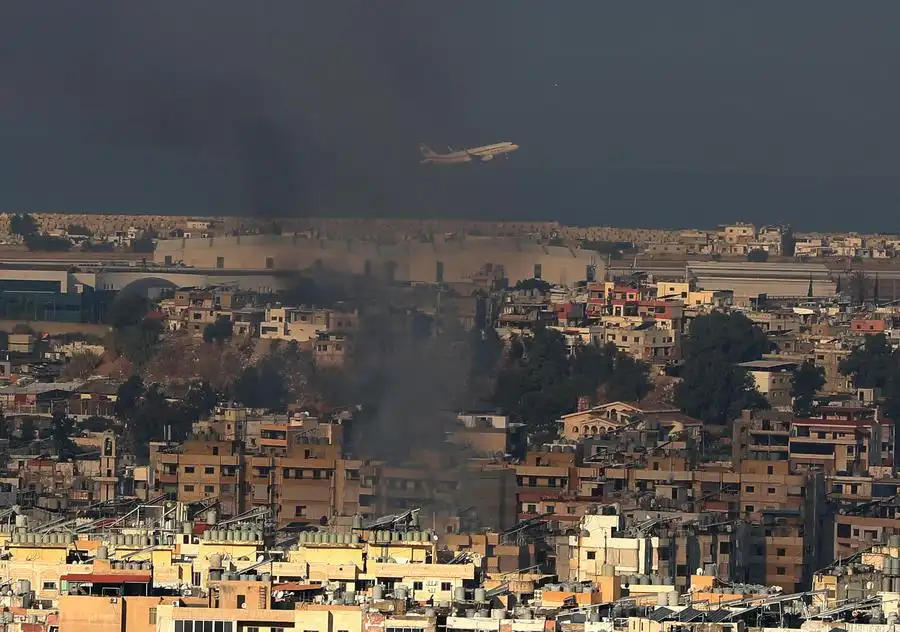
Dozens of dead and wounded as a result of the occupation's bombing of several areas in Lebanon

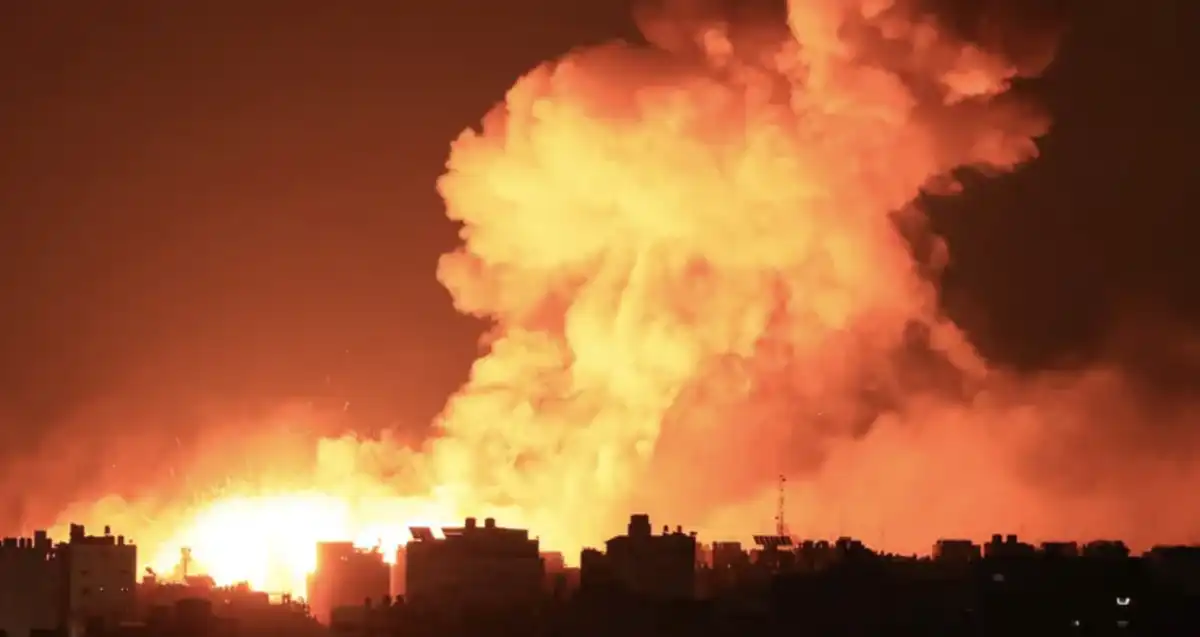
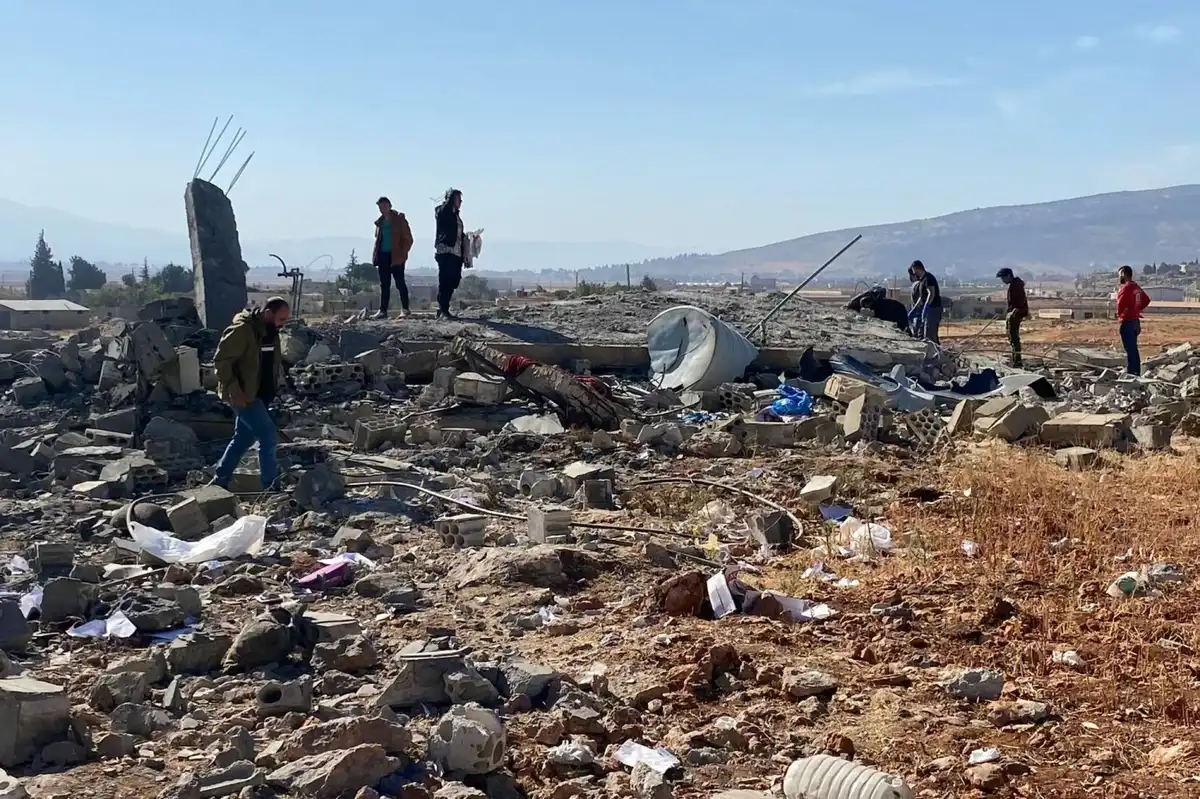
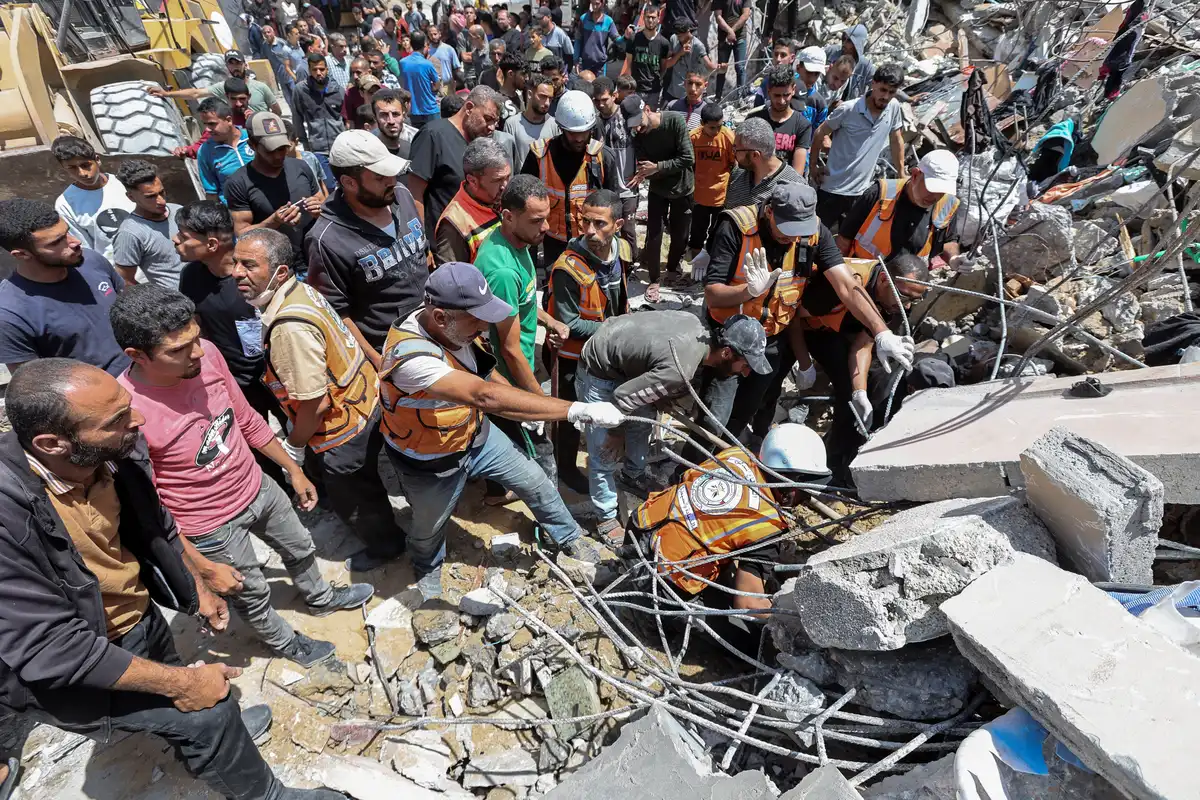
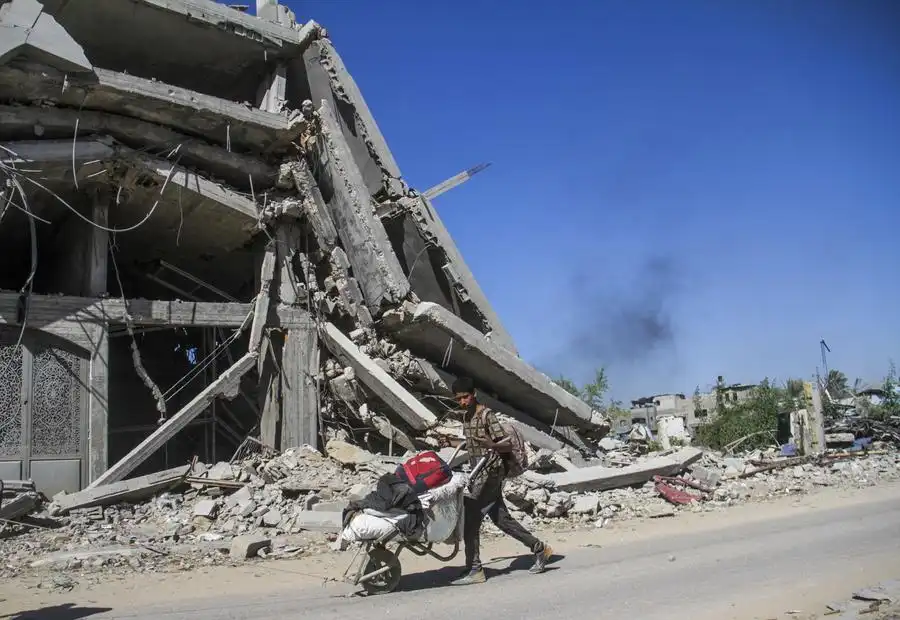
Dozens of Lebanese citizens were killed and injured on Wednesday evening as a result of renewed Israeli occupation shelling of various areas in Lebanon, amid widespread destruction of buildings, facilities and infrastructure.


The raids launched by the occupation air force on the towns of Beit Salibi, Badnayel, and Sahmar in the Bekaa resulted in the martyrdom of 27 citizens and the injury of dozens.


The city of Baalbek and its towns were subjected to a violent series of raids, which led to massive destruction of buildings and property.


The occupation's air force and artillery bombed the cities of Tyre, Baalbek, and Nabatieh, and the towns of Douris, Ras al-Ain, Ain Bourday, Khiyam, Shaqra, Safad al-Battikh, al-Bazouriyeh, al-Aytaniyah, Kfar Malki, Ainatha, al-Mansouri, Burj al-Muluk, Zefta, Yahmar, al-Khardali, Kfar Kila, Jebshit, al-Ramadiyeh, Bafliyeh, Dab'al, al-Sha'itiyah, and al-Malikiyah in southern Lebanon and the Bekaa.

PALESTINE

Wed 30 Oct 2024 6:41 pm - Jerusalem Time

A Palestinian worker was injured by the occupation forces' bullets, south of Qalqilya

A worker was injured by Israeli occupation forces' bullets, this evening, Wednesday, south of Qalqilya.


According to local sources, a worker was injured by a bullet fired at him by occupation soldiers, near the racist separation and expansion wall built on the lands of the town of Habla, south of Qalqilya, while trying to reach his workplace inside the 1948 lands.

PALESTINE

Wed 30 Oct 2024 6:36 pm - Jerusalem Time

Three Palestinians injured during the occupation's storming of northern Hebron

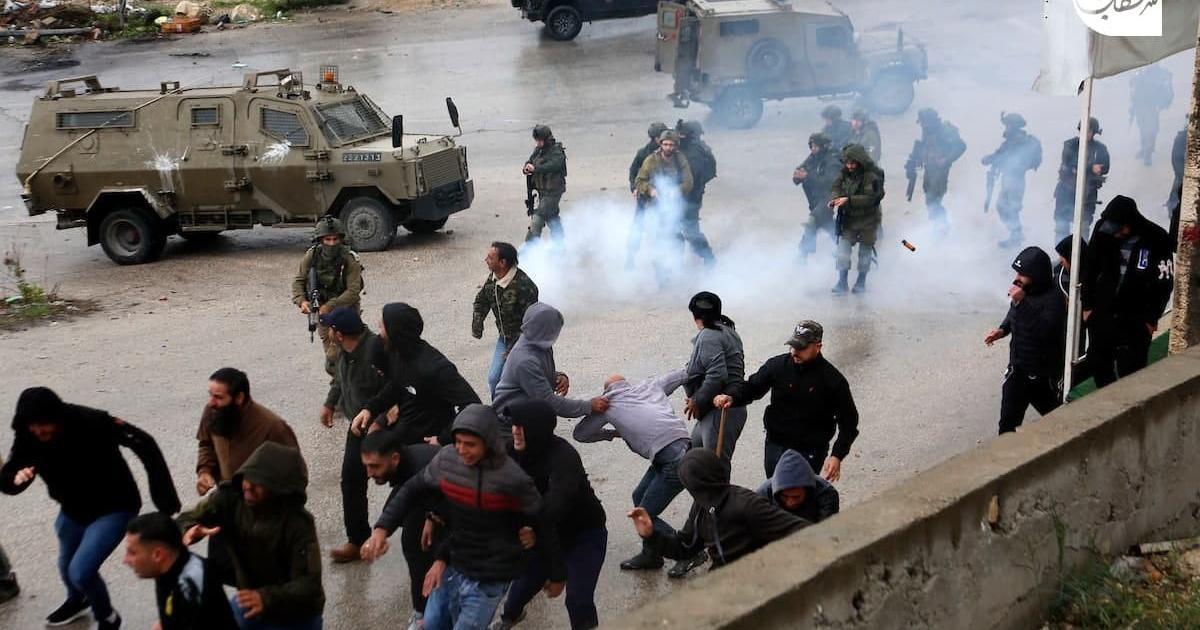
Three citizens were injured this evening, Wednesday, by rubber bullets during the Israeli occupation forces’ storming of the town of Beit Ummar, north of Hebron.


According to local sources, the occupation forces stormed the town of Beit Ummar and deployed around the Beit Ummar Girls Secondary School. Violent clashes erupted, during which the occupation soldiers fired rubber bullets, sound bombs and tear gas at the citizens, which led to three of them being injured by rubber bullets and dozens suffering from suffocation. They were all treated in the field.

PALESTINE

Wed 30 Oct 2024 6:00 pm - Jerusalem Time

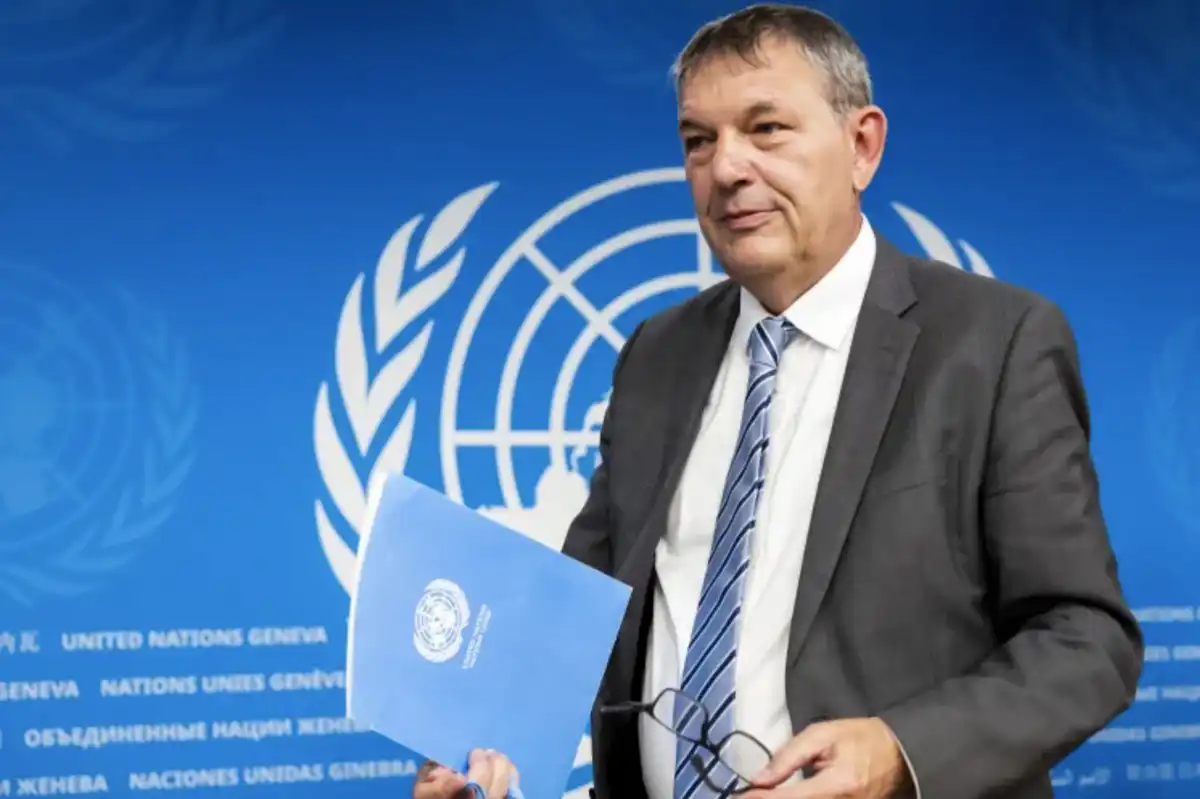
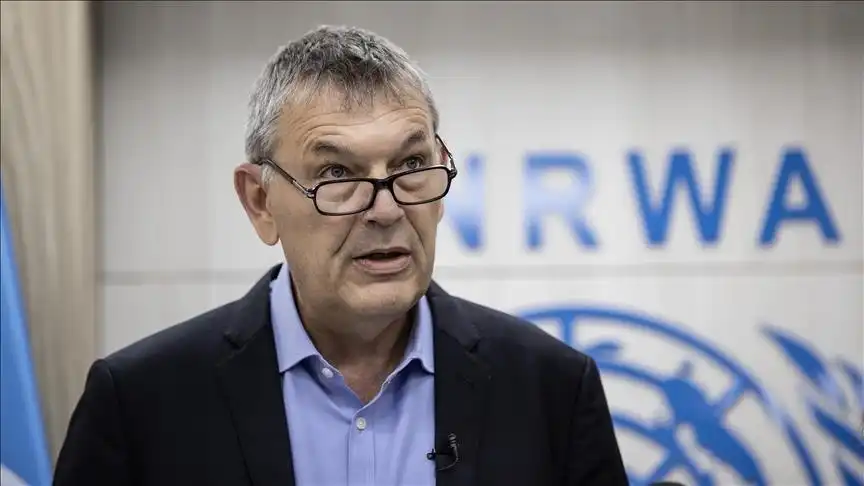
UNRWA: Attacking us is political to get rid of Palestinian refugees

The Commissioner-General of the United Nations Relief and Works Agency for Palestine Refugees (UNRWA), Philippe Lazzarini, said that the attack on the agency was politically motivated to get rid of Palestinian refugees, following the Israeli Knesset’s vote to ban the agency.


Lazzarini stressed that "Israel must reverse its decision to ban the agency," while affirming at the same time that the Gaza Strip has been systematically destroyed.


Earlier, the UNRWA Commissioner-General said, "The Knesset's decision to ban our activities is unprecedented, sets a dangerous precedent, and contravenes the UN Charter."


Lazzarini considered the ban on the agency's services as "collective punishment because it is a decision that will deepen the suffering of the Palestinians, especially in the Gaza Strip, where people have been living for more than a year of hell."


The United Nations, the European Union, Arab countries and other Western countries also condemned the Israeli Knesset’s approval of the bill.


The Palestinian presidency announced on Tuesday its intention to take political action to discuss the possibility of holding a session of the UN Security Council, considering the UNRWA issue a political issue related to the right of return.


The Israeli law, which was approved by the Knesset on Monday evening in its second and third readings, stipulates that “UNRWA will not have any representation, will not provide any service, and will not carry out any activity, directly or indirectly, in the sovereign territory of the State of Israel.” The decision is expected to come into effect within 90 days.


According to the law, the 1967 agreement - which allowed UNRWA to operate in Israel - will be cancelled, the agency's activities in the country will cease, and any contact between Israeli officials and its employees will be prohibited.


Israel claims that UNRWA employees contributed to the October 7, 2023, Al-Aqsa Intifada, and that the agency's education system supports terrorism and hatred, which has since been proven false.


UNRWA also denied Israel's allegations, and the United Nations confirmed that the agency is neutral and focuses exclusively on supporting refugees.


For years, UNRWA has faced Israeli pressure in an attempt to dismantle it, and as part of the liquidation of the Palestinian cause, according to UN and Palestinian officials.


The Palestinians' need for UNRWA services is growing in light of the genocide that Israel has been waging on Gaza since October 7, 2023, which has left more than 144,000 martyrs and wounded, amid massive destruction and famine that has claimed the lives of dozens of children.

ARAB AND WORLD

Wed 30 Oct 2024 5:47 pm - Jerusalem Time

Israeli raids on Baalbek in Lebanon coincide with Qassem's speech

The official Lebanese National News Agency reported today (Wednesday) that Israeli warplanes continue to launch raids on the city of Baalbek and its surroundings, reaching towns that were not included in the warning alert that was issued previously, which coincided with the speech of Hezbollah Secretary-General Naim Qassem.


The raids included residential neighborhoods in the city of Baalbek, namely the hills of Ras al-Ain, Amshki, al-Asira, al-Kayyal Road, and the northern and southern entrances to Baalbek.


The Israeli air force also targeted the Ain Bourdai area, Douris, and fuel tanks in its vicinity, and on the outskirts of the town of Shamshtar.


A correspondent for Agence France-Presse reported a series of raids targeting the city of Baalbek and its surroundings in eastern Lebanon, after the Israeli army issued a warning to residents to evacuate.


Baalbek Mayor Mustafa al-Shal confirmed that the raids targeted the city and its surroundings, without providing further details.


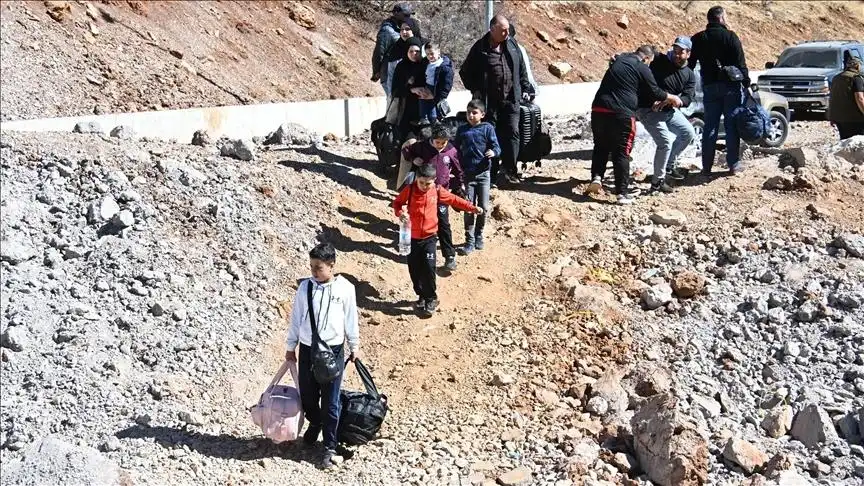
The National News Agency reported today that there is a massive displacement movement from Baalbek in the east of the country, after the Israeli army issued an evacuation order.


The agency reported that the displaced people are flowing from "the city of Baalbek and the neighboring towns of Douris and Ain Bourday towards the Baalbek-Zahle and Baalbek-Deir al-Ahmar-Ainata-Arz roads towards the north."


For his part, the mayor explained that about 100,000 people were displaced from the city, noting that the competent authorities are working to secure the displacement process.

ARAB AND WORLD

Wed 30 Oct 2024 5:39 pm - Jerusalem Time

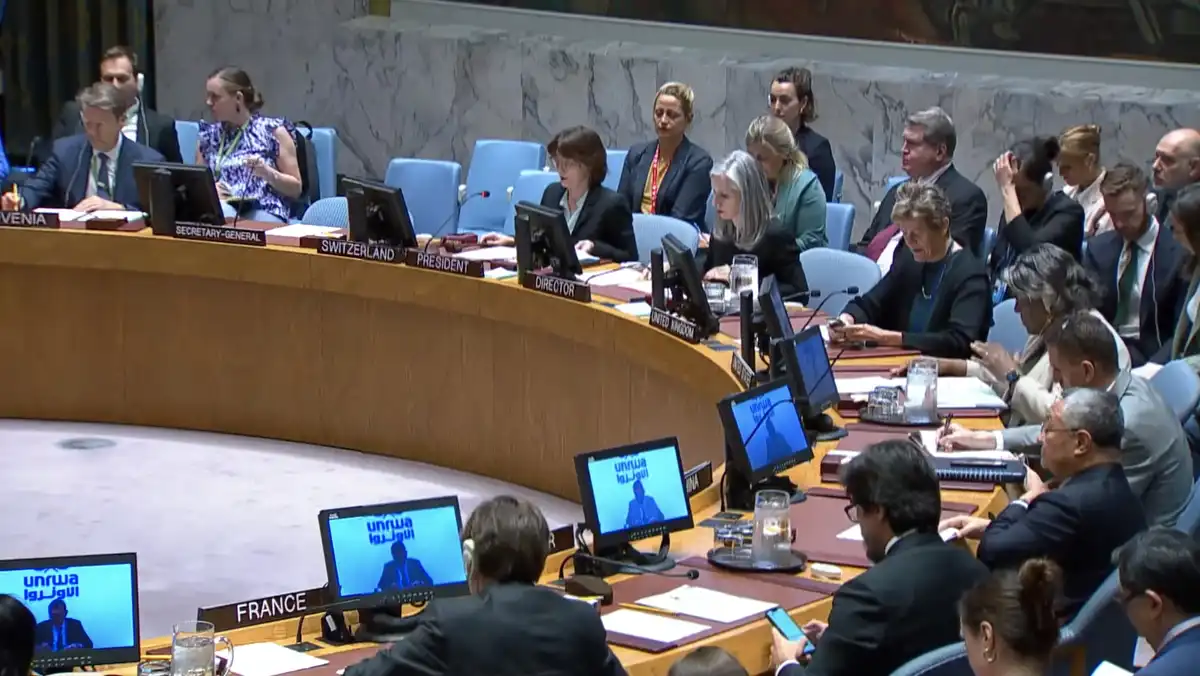
The Security Council demands that UNRWA be enabled to carry out its tasks and warns against tampering with it

The members of the Security Council stressed the vital role played by the United Nations Relief and Works Agency for Palestine Refugees in the Near East (UNRWA) in providing life-saving humanitarian assistance to Palestine refugees through its education, health, relief and basic social services programmes and emergency assistance in the occupied Palestinian territory, Jordan, Lebanon and the Syrian Arab Republic.


They stressed, in a statement issued today, Wednesday, that UNRWA remains the backbone of all humanitarian responses in Gaza, and stressed that no organization can replace or replace UNRWA's capacity and mandate to serve Palestinian refugees and civilians in urgent need of life-saving humanitarian assistance.


The members of the Security Council strongly cautioned against any attempts to dismantle or reduce UNRWA’s operations and mandate, recognizing that any interruption or suspension of its work would have serious humanitarian consequences for the millions of Palestine refugees who depend on the Agency’s services, as well as repercussions for the region.


The members of the Security Council expressed their grave concern at the legislation adopted by the Israeli Knesset, and urged the Government of Israel to abide by its international obligations, respect the privileges and immunities of UNRWA and fulfil its responsibilities to allow and facilitate full, rapid, safe and unhindered humanitarian access of all kinds to and throughout the Gaza Strip, including the provision of essential services so desperately needed by the civilian population.


The members of the Security Council called on all parties to enable UNRWA to implement its mandate, as adopted by the General Assembly, in all areas of operation, with full respect for the humanitarian principles of humanity, neutrality, impartiality and independence, and respect for international humanitarian law, including the protection of United Nations and humanitarian facilities.


The members of the Security Council highlighted the findings of the independent review of the mechanisms and procedures to ensure UNRWA’s commitment to the principle of humanitarian neutrality, led by Catherine Colonna, and welcomed the commitment of the Secretary-General and the Agency to fully implement its recommendations and called for their expeditious implementation, in line with UNRWA’s commitment to the principle of neutrality.

They took note of the measures taken to terminate the employment of 9 UNRWA staff members following the attacks of 7 October 2023. They stressed the importance of taking timely measures to address any credible allegations and ensure accountability for any violations of the Agency’s policies relating to the principle of neutrality.


The members of the Security Council called on all parties to take the necessary steps to allow and facilitate humanitarian access to civilians in Gaza, in accordance with international humanitarian law.


The members of the Security Council expressed their appreciation for the work of the Agency’s staff, including under extremely difficult circumstances, in fulfilling the Agency’s mandate, stressed the importance of ensuring the continuity of UNRWA’s vital services to Palestine refugees, and acknowledged the efforts of Member States to enhance their support to UNRWA.

PALESTINE

Wed 30 Oct 2024 5:32 pm - Jerusalem Time

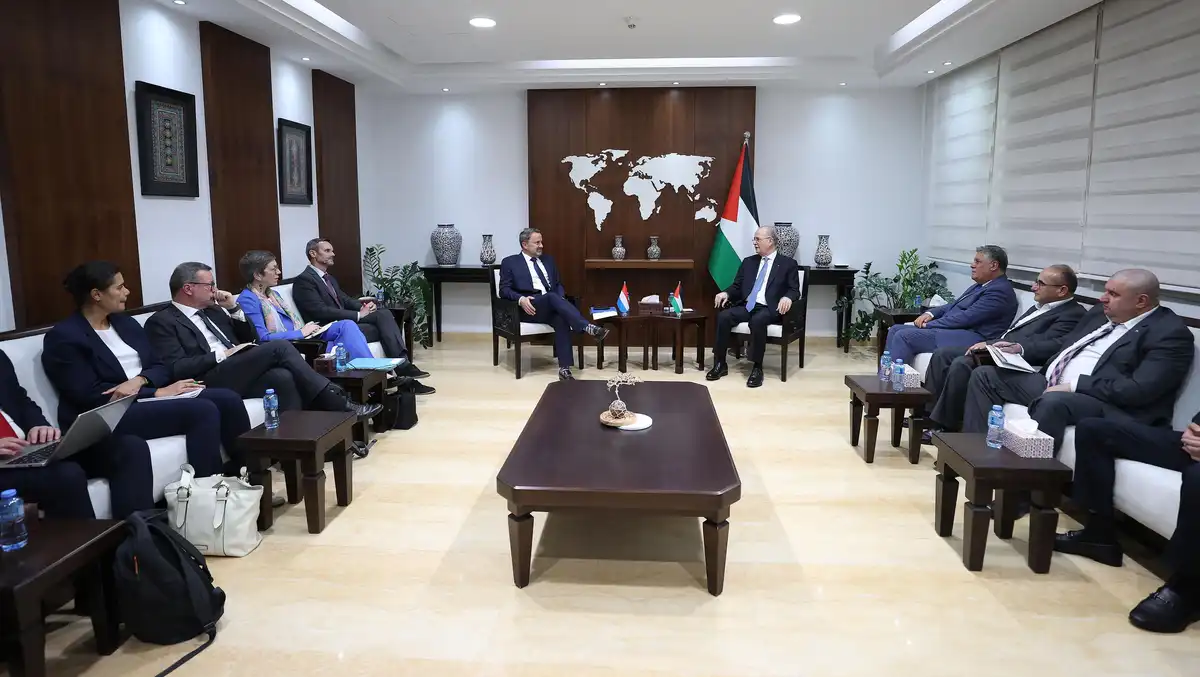
Palestinian PM during his meeting with the Luxembourg Foreign Minister: We support all efforts to cease fire on the way to ending the occupation

Prime Minister and Minister of Foreign Affairs Mohamed Mustafa said: "We support all efforts and initiatives to cease fire and release all prisoners, which will pave the way for a political path to reach a comprehensive solution to end the occupation and embody the establishment of an independent Palestinian state."


The Prime Minister added: "How long must the world wait while Israel continues its series of massacres against our people in the Gaza Strip, where most of the martyrs are women and children? The human suffering and difficult conditions in the Strip must end."


This came during his reception of Deputy Prime Minister and Minister of Foreign Affairs of Luxembourg, Xavier Bettel, today, Wednesday, in Ramallah, in the presence of Minister of State for Relief Affairs, Basil Nasser.


Mustafa expressed the Palestinian rejection and condemnation of the Israeli legislation banning UNRWA's work, which will deprive our people in the Gaza Strip and the West Bank of the services provided by UNRWA, which is currently the only entity providing services and relief aid in the Strip due to the limited presence of the government.


The Prime Minister called on the European Union and its member states to impose sanctions on Israel and oblige it to abide by and respect international law, and to exert more pressure to stop all Israeli deductions from Palestinian tax revenues, and to release all withheld funds. Mustafa appreciated Luxembourg's efforts and positive positions towards supporting the ceasefire and stopping the aggression against our people, and the continued financial support for UNRWA.


For his part, the Luxembourg Foreign Minister expressed his country's support for the efforts to cease fire, release prisoners and detainees, end the humanitarian suffering in the Gaza Strip, stop the escalation in the region as a whole, support the right of the Palestinian people to their independent state, and continue financial support for UNRWA and its international mandate and jurisdiction, in accordance with the resolutions of international legitimacy and the United Nations.

ARAB AND WORLD

Wed 30 Oct 2024 4:03 pm - Jerusalem Time

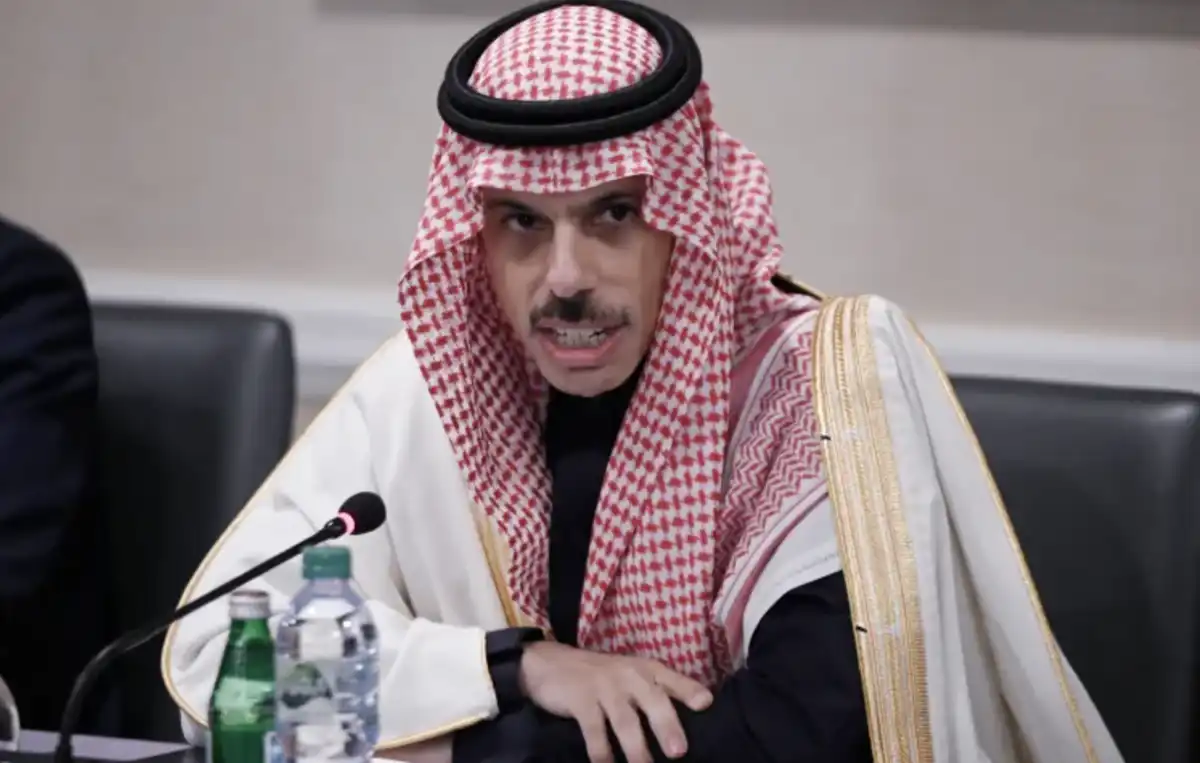
Saudi Arabia: No normalization with Israel before the establishment of the Palestinian state

On Wednesday, the Kingdom of Saudi Arabia ruled out normalizing its relations with Israel before the establishment of a Palestinian state, and at the same time pledged to mobilize international public opinion against the occupation’s practices against the Palestinians.


Saudi Foreign Minister Prince Faisal bin Farhan said that the establishment of a Palestinian state is the Kingdom's condition for moving forward with normalization with Israel, stressing his country's rejection of the genocide committed by the Israeli army in the northern Gaza Strip.


Saudi Al-Ekhbariya channel quoted Bin Farhan as saying, "The Kingdom will mobilize international public opinion against Israel's practices against the Palestinian people."


Earlier, Saudi Arabia condemned the Israeli Knesset's approval of legislation banning the work of UNRWA, considering it part of its persistence in ethnic cleansing crimes against the Palestinian people.


The Saudi Foreign Ministry said in a statement that it expresses the Kingdom's condemnation and denunciation in the strongest terms of the Israeli Knesset's approval of draft laws banning UNRWA activities in the occupied Palestinian territories.


She considered this recognition a flagrant violation of international law and a direct violation of the rules of international legitimacy, in light of the unprecedented humanitarian catastrophe that the Palestinian people are facing.


ARAB AND WORLD

Wed 30 Oct 2024 2:53 pm - Jerusalem Time

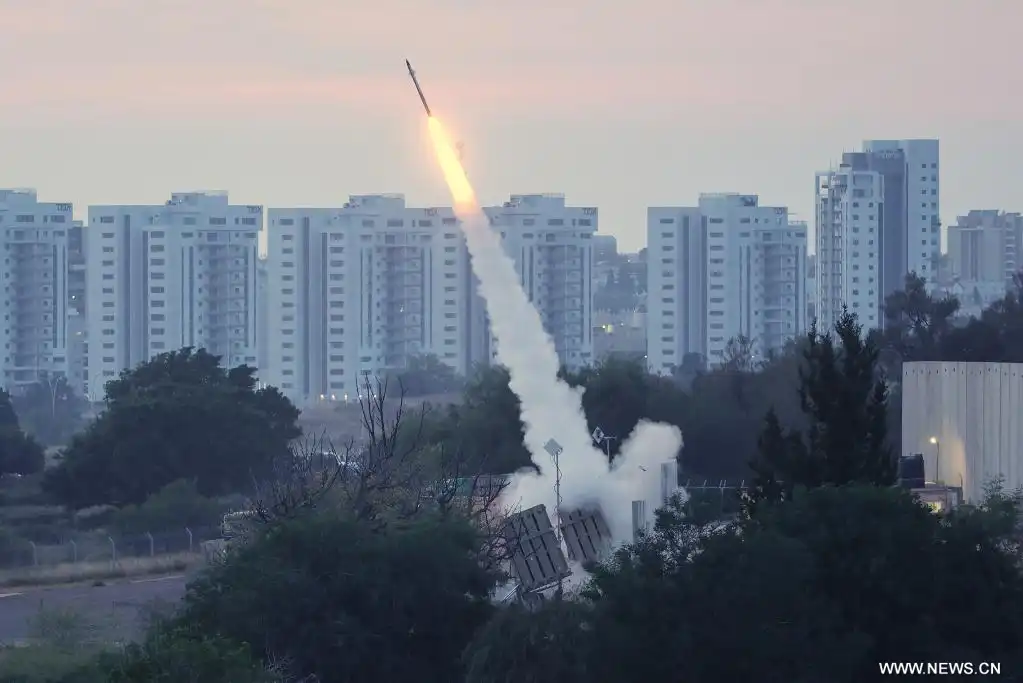
Washington tests new defense system for Israel

The U.S. Marine Corps has completed its first training exercise to launch an air defense system "including the Iron Dome" in Israel, the Israeli Defense Ministry announced Wednesday.


The system that was tested, according to a statement by the Israeli Ministry of Defense, relies on American radar and control systems, in addition to Iron Dome interceptor missiles, as well as portable launchers manufactured by the Israeli company Rafael and the American company Raytheon.


The Israeli Defense Ministry explained that the training, during which the system was fully operational to intercept a series of targets, is "a major step towards declaring a new prototype for the Marines.


Israel is the country in the world that has received the most American aid since the end of World War II.


The United States helped Israel develop and arm the Iron Dome short-range missile defense system, which was created after the 2006 war between Israel and Hezbollah.


In mid-October, the US Department of Defense (Pentagon) announced the deployment of the advanced THAAD missile defense system in Israel to enhance its air defenses, in light of the escalating tensions between Tel Aviv and Tehran.


Source: Sky News Arabia


PALESTINE

Wed 30 Oct 2024 1:39 pm - Jerusalem Time

Israeli occupation forces attack students of Al-Khader schools, south of Bethlehem

Today, Wednesday, the Israeli occupation forces attacked students in the schools of Al-Khader town, south of Bethlehem.


Local sources reported that the occupation forces attacked students in the Tal area in the Old City, while they were leaving schools after the end of the school day, where they fired tear gas and sound bombs, which led to a number of them suffering from suffocation.


She added that the occupation forces chased the students in the neighborhoods of the old city and on the main street leading to the "gate" area.


It is noteworthy that the occupation forces have continued for some time, and repeatedly, on a daily basis, to attack school students in the town of Al-Khader, causing them to suffocate as a result of inhaling the toxic gas that they fire at them.

PALESTINE

Wed 30 Oct 2024 1:29 pm - Jerusalem Time

Gaza Ministry of Health: 102 dead and 287 wounded in 24 hours in Gaza

The Ministry of Health in Gaza announced today, Wednesday, that the death toll in the Gaza Strip has risen to 43,163, the majority of whom are children and women, since the start of the Israeli occupation aggression on October 7, 2023.


She added that the number of injuries has risen to 101,510 since the start of the aggression, while thousands of victims are still under the rubble.


She pointed out that the occupation forces committed 5 massacres against families in the Gaza Strip, 102 martyrs and 287 wounded people arrived at hospitals during the past 24 hours.


She explained that a number of victims are still under the rubble and on the roads, and ambulance and civil defense crews cannot reach them.

PALESTINE

Wed 30 Oct 2024 12:41 pm - Jerusalem Time

North Gaza is being destroyed.. Beit Lahia Municipality declares it a "disaster" and calls for 5 demands

On Wednesday, local authorities declared Beit Lahia, north of the Gaza Strip, a “disaster city” due to the genocidal war and the Israeli siege, and launched an “urgent distress call” that included 5 demands to “save what can be saved.”


The Beit Lahia municipality said that the city's residents are suffering a "humanitarian catastrophe" as a result of "the ongoing war of extermination and the siege imposed on the city."


She explained that the city has become "without food, without water, without hospitals, without first aid, without civil defense, without doctors, without services (sewage and waste) and without communications."


She continued: "Accordingly, we declare Beit Lahia a disaster-stricken city, and we issue an urgent distress call for the necessity of saving whatever can be saved in the city that is being subjected to killing and genocide."


The municipality directed 5 demands to the international community and international and humanitarian organizations, which are: “Pressure the occupation to stop the genocide in the city of Beit Lahia.”


She added: "And opening a safe corridor to bring in all medical supplies, food and fuel to save the health and service system."

She added: "And bringing in civil defense and ambulance equipment to work on retrieving the martyrs and the injured from under the rubble, especially after the occupation committed a number of massacres against citizens."


The municipality also called for "the entry of fuel needed to operate water wells, desalination plants and sewage pumps", as well as "the entry of heavy machinery to open roads and remove rubble, to facilitate the movement of citizens, ambulances and civil defense vehicles".

ARAB AND WORLD

Wed 30 Oct 2024 12:40 pm - Jerusalem Time

In preparation for its bombing... Israel threatens to evacuate the "archaeological" Baalbek in eastern Lebanon

In a dangerous development, the Israeli army warned, on Wednesday, the residents of the city of Baalbek and two towns in the Baalbek-Hermel Governorate in eastern Lebanon to evacuate immediately, a procedure that is usually followed by intense and bloody air strikes.


"Urgent warning to the residents of Baalbek and (the towns of) Ain Bourday and Douris," Israeli army spokesman for the Arab media, Avichay Adraee, said via the X platform.


He added: "You must evacuate your homes immediately and move outside the city and villages" via axes he specified in an attached map.


Adraee warned that the Israeli army "will act forcefully against Hezbollah's interests inside your city and villages," as he put it.


The population of Baalbek-Hermel Governorate is about 416 thousand people, and its center is Baalbek city, and its population is estimated at more than 100 thousand people, according to the Anadolu Agency correspondent.


The expected raids threaten the 3,000-year-old historic city of Baalbek, which is listed as a UNESCO World Heritage Site.


Following previous raids during the current war, the “Dome of Doris” in the village of Doris, which is mainly inhabited by Lebanese Turkmen, was damaged. The dome was built using dilapidated Roman materials during the Ayyubid era.


The columns of this historic building, which was built in the 13th century, were damaged, and the stones began to fall under the weight of the fierce Israeli raids.


After clashes with factions in Lebanon, including Hezbollah, which began after Israel launched a genocidal war on the Gaza Strip on October 7, 2023, which resulted in the killing and wounding of more than 144,000 Palestinians, Tel Aviv expanded the scope of the genocide since September 23 to include most areas of Lebanon, including the capital Beirut, through air strikes, and also began a ground invasion in the south.


The aggression on Lebanon resulted in a total of 2,792 deaths and 12,772 injuries, including a large number of children and women, in addition to about 1.4 million displaced persons. Most of the victims and displaced persons were recorded after September 23, according to Anadolu Agency’s monitoring of the latest official Lebanese data announced until Tuesday evening.


Every day, Hezbollah responds by launching missiles, drones, and artillery shells targeting military sites, intelligence headquarters, military gatherings, and settlements. While Israel announces some of its human and material losses, military censorship imposes a strict blackout on most of the losses, according to observers.


ARAB AND WORLD

Wed 30 Oct 2024 12:02 pm - Jerusalem Time

Japan expresses concern over Knesset's passing of law banning UNRWA

The Japanese Ministry of Foreign Affairs expressed its concern after the Israeli Knesset passed a law banning the activities of the United Nations Relief and Works Agency for Palestine Refugees (UNRWA).


She added in a statement on Wednesday that since 1953, Japan has contributed financially to UNRWA and worked closely with the agency to assist Palestinian refugees. UNRWA plays an indispensable role in providing humanitarian assistance, as well as health care and education to millions of Palestinian refugees, not only in the Gaza Strip, but throughout the Middle East region.


The Japanese Foreign Ministry continued: “We are deeply concerned about the worsening humanitarian situation that has become dire due to the prolonged fighting in the Gaza Strip, as well as the deterioration of humanitarian conditions in areas including the West Bank and Lebanon. It is of utmost importance to ensure a sustainable enabling environment for humanitarian assistance activities by UNRWA and other international organizations, and Japan strongly urges the Government of Israel to maintain such an environment in a sustainable manner.”

ARAB AND WORLD

Wed 30 Oct 2024 11:48 am - Jerusalem Time

Dead and wounded as a result of the ongoing Israeli aggression on Lebanon

Dozens of Lebanese citizens were killed and wounded on Wednesday as a result of the ongoing Israeli aggression on Lebanon, amid widespread destruction of buildings, facilities and infrastructure.


An occupation raid targeted a civilian vehicle in the Aaraiya area on the road between Beirut and the Bekaa, resulting in injuries according to initial information, while an occupation drone targeted a civilian vehicle in the town of Bchamoun, Aley District.


The occupation warplanes and artillery bombed the towns of Sinai, Kfar Shuba, Khiyam, Shebaa, Zrarieh, Doueir, Hermel, Ghandourieh, Janata, Ainatha, Kounine, Hanin, Tayri, Qatrani, Naqoura, Tayr Harfa, Alma al-Shaab, Maroun, Yaroun, Yater, Bint Jbeil, Aita al-Shaab, Ain Ebel, Tibnin, Shamaa Qabrikha, Joya, Shakra, Al-Khardali, Maarakeh, Ramadiyeh, Al-Bayada, and the Qald al-Sabaa crossing in southern Lebanon and the Bekaa.


-

PALESTINE

Wed 30 Oct 2024 11:26 am - Jerusalem Time

Knesset Bans UNRWA... Israel, the Ruler of the Universe, Has Delegated to Cancel UN Resolutions and Institutions

Sheikh Akram Sabri: The decision strips refugees of their rights and is an attempt to erase the right of return

Dr. Ahmad Tibi: Part of the Israeli war and efforts to get UNRWA out of the law

Bishop Atallah Hanna: A step within a plan to conspire against the Palestinian people and the right of return

Rasim Obeidat: A dangerous and unprecedented decision that paves the way for preventing the provision of services to refugees

Lawyer Mohammed Dahla: The law is a challenge to international legitimacy and places Israel above the authority of the United Nations

Osama Al-Sharif: Israel is trying to get out of its wars with "victories", including banning UNRWA


The Israeli Knesset’s approval of a law banning UNRWA the day before yesterday was met with widespread condemnation, amid warnings of the law’s significant and dangerous effects on UNRWA’s operations in the West Bank, including Jerusalem, and in the Gaza Strip, which is suffering from widespread destruction of all aspects of life as a result of the ongoing Israeli war of extermination there for more than a year.

Religious and public figures and analysts who spoke to “I” considered the new Israeli law to be dangerous and unprecedented, and that it places Israel above the authority of the United Nations, by whose decision Israel was established, as part of a broader Israeli plan to liquidate the refugee issue and eliminate the right of return.

They see this decision as part of the broader war on the Palestinian people, and that it will lead to the collapse of the humanitarian operations system of the UN agencies in the Palestinian territories, and deprive the Palestinian refugees who live in tragic and catastrophic conditions in the refugee camps in the West Bank and Gaza Strip of the basic services provided to them, including education, health and social services.

They stress that the United Nations is facing another difficult test for all its laws, treaties and charters, which Israeli Prime Minister Benjamin Netanyahu and his extremist government have disregarded. They believe that the world’s silence on this blatant violation means that the international community is dependent on racist Israeli policies that have reached the point of committing genocide against the Palestinian people before the eyes of the world.


Israeli strategy to end the refugee issue


Sheikh Dr. Akram Sabri, head of the Supreme Islamic Council in Jerusalem, condemned the Israeli occupation’s decision targeting the United Nations Relief and Works Agency for Palestine Refugees (UNRWA) and threatening its work in the occupied Palestinian territories, describing it as an attempt to erase the right of Palestinian refugees to return to their homes.

Sabry explained that UNRWA, as an international humanitarian institution, is concerned with providing health, social and educational services to refugees, and represents a symbol of the rights of Palestinian refugees until they return to their land.

Sabry stressed that tampering with UNRWA's work in Jerusalem and the occupied territories means, indirectly, stripping the Palestinians of their historical rights, stressing that "the right of return is a sacred right that cannot be relinquished, and will remain in place and passed down from generation to generation."

He added that the decision reflects an Israeli strategy aimed at ending the refugee issue once and for all, in an effort to remove this file from the conflict arena.

Sabry pointed out that closing UNRWA offices would deprive Palestinian refugees of the basic services they depend on, especially in the areas of health, education and social services, which would create great difficulties for thousands of refugees living in the occupied territories and relying on UNRWA services in their daily lives.


Political targeting of refugees and their rights


Arab Knesset member Dr. Ahmed Tibi stressed that the ongoing Israeli attack on UNRWA for years aims to undermine the rights of Palestinian refugees and distort their struggle.

He explained that the Israeli government and the Knesset are systematically seeking to remove UNRWA from the law, in a political move that shows a lack of recognition of the Palestinian people.

Al-Tibi added that the accusations promoted by the Israeli government linking UNRWA to terrorism are fabricated, indicating that the agency has been working for decades to provide humanitarian, educational and relief services to more than 90,000 employees and one million Palestinian refugees in the camps.

He considered that Israel is enacting this law as part of its broad war against the Palestinians, citing the outcome of the recent Israeli aggression that claimed the lives of thousands of children and women, in addition to the destruction of schools and hospitals.

Tibi also expressed his pride in his position and the position of the Arab members of the Knesset who stood against this law, noting that Netanyahu's government ignores the protests of the foreign ministers of Western countries, Israel's allies, and continues to enact "fascist and inhumane" laws with continuous international support.


UN Calls to Go Beyond Statements of Condemnation


Archbishop Atallah Hanna, Archbishop of Sebastia of the Greek Orthodox Church, denounced the decision to ban UNRWA from operating in Jerusalem and the occupied territories, describing this decision as part of an ongoing conspiracy against the Palestinian people and their historical rights, especially the right of return.

Hanna called on the United Nations to go beyond statements of condemnation and denunciation, and take more effective and practical steps to confront this measure, which he described as a direct targeting of the Palestinian cause.

Bishop Hanna pointed out that UNRWA represents a living witness to the Palestinian people’s catastrophe and displacement, which makes the decision to ban it a direct violation of the right of return and a targeting of the symbolism of the institution that was established to provide basic services to Palestinian refugees and defend their rights.

Hanna said: The forces implementing this decision are the same ones committing massacres against the Palestinians in Gaza and launching attacks on Lebanon, noting that targeting UNRWA is targeting the entire Palestinian cause and the right of refugees to return to their homes.


Serious implications of the decision


Jerusalemite writer and political analyst, Rassem Obeidat, described the decision of the Israeli occupation government to ban the activities of the United Nations Relief and Works Agency for Palestine Refugees (UNRWA) in Jerusalem, the 1948 territories, the West Bank and the Gaza Strip as a dangerous and unprecedented decision.

The decision, which was voted on by the Knesset by a majority of 90 votes to 10 votes, includes the cancellation of the agreement signed with UNRWA after 1967 that allows it to operate in Jerusalem, and paves the way for the occupation to seize its headquarters and prevent it from providing its services to Palestinian refugees.

Obaidat explained that this decision has serious repercussions, as it brazenly and blatantly violates the decisions of international institutions, foremost among which is the United Nations General Assembly, which established this agency to care for and provide services to our people’s refugees from the 1948 areas in Jerusalem, the West Bank, Gaza, and refugee camps in Jordan, Syria, Lebanon, and Iraq.

According to Obeidat, the decision represents a step towards liquidating UNRWA and preventing it from providing its services or carrying out any direct or indirect activities.

The new resolution considers UNRWA an illegal organization, which withdraws diplomatic and economic privileges granted to its employees, and prevents any official communication between the agency and the occupation government.

He said: The decision targeting the UN agency, which is a witness to the occupation's crimes against our people, is intended to liquidate the Relief Agency once and for all, which would cancel and nullify the right of return for the Palestinian people who were displaced and expelled from their land.


The decision comes with American support.


Obaidat believes that the decision comes under American support, such that this American partner covers up the crimes of the occupation, and it is necessary for this decision to put the membership of the occupying state in the United Nations to the test, as it made a UN decision from the United Nations General Assembly, and therefore work must be done to cancel its membership in the United Nations General Assembly and strip it of its legitimacy.

He continued, saying: “The decision was also accompanied by the approval of the Knesset Foreign Affairs and Security Committee to seize the agency’s main headquarters in the Sheikh Jarrah neighborhood in East Jerusalem, to establish a new settlement that includes the construction of 1,440 settlement units on the way to Judaizing the city and tightening control over it. This is inseparable from the decision of the extremist Smotrich, the occupation’s Finance Minister, to impose Israeli sovereignty over the West Bank and the Gaza Strip, describing this as the madness of Zionist extremism and criminality supported by America and Western Europe in light of the complete collapse of the official Arab system and the unprecedented failure of the international community.”

Obaidat believes that the decision entails the dangers of seeking to liquidate the Palestinian cause from all sides through policies of Judaization, expulsion, displacement, killing, destruction, and displacement through geographical and demographic “engineering.”


Dangerous and unprecedented law


Lawyer Mohammed Dahla, who specializes in Israeli affairs, described the new law, which aims to prevent the United Nations Relief and Works Agency for Palestine Refugees (UNRWA) from operating in Jerusalem, as an unprecedented step in the history of Israel. He explained that this law prohibits UNRWA, which has been operating in the region for decades under a UN mandate, from providing its services or carrying out its activities, whether directly or indirectly, inside Israel, including East and West Jerusalem.

Dahla stressed that "the Israeli Knesset, by enacting this law, is putting itself in a position that goes beyond the authority of the United Nations," adding that the law aims to change the reality that has persisted for many years in Jerusalem, which Dahla describes as a clear challenge to international legitimacy.


The Israeli Supreme Court is unlikely to cancel the decision.


Regarding the possibility of going to the Israeli Supreme Court to challenge the law, Dahla explained that it is unlikely that the court will intervene to cancel it, noting that the Israeli Supreme Court rarely cancels Knesset laws except in exceptional cases related to violations of basic human rights, while the court does not see that Israel’s violation of international obligations constitutes sufficient reason to intervene.

Dahla concluded his remarks by pointing out that the burden now falls on the United Nations, saying: “The United Nations, by whose resolution Israel was established, must play its role in confronting this blatant violation of international law and punishing Israel for ignoring its international obligations.”


Burial of one of the most important pillars of the Palestinian cause


Jordanian political analyst Osama Al-Sharif confirmed that Israel is trying to emerge from its wars with a bouquet of alleged victories, including banning the work of UNRWA, which is a goal aimed at burying one of the most important pillars of the Palestinian cause, which is the return of refugees or the right of return in its political sense, which is one of the thorny issues of the final solution.

He said: It is no secret to anyone that dismantling the Palestinian issue and stripping it of any substance are among the goals of Netanyahu's plan and the far-right alliance, and that includes ending UNRWA's powers.

He pointed out that the repercussions of the ban are serious for Palestinian society in the occupied Palestinian territories, especially in Gaza.

He said: The issue is not limited to UNRWA's responsibilities in terms of relief only, which is a priority in light of the devastating war on Gaza, especially in the north, but rather in what the organization provides in terms of other services such as education, for example, explaining that no other party can replace UNRWA.

He said that there is a deep humanitarian disaster surrounding hundreds of thousands of Palestinians as a result of this decision.


Will Israel be punished?


On the other hand, Al-Sharif considered the decision to be a challenge to the United Nations, the Security Council and the General Assembly, asking: Will Israel be punished for evading its obligations as an occupying state? Will America stand up to defend this blatant violation? And what next?

He said: If Israel succeeds in its endeavor, it means the collapse of the international system sponsored by America. Will the United States sacrifice its role as the sponsor of the international system for the sake of an extremist Zionist gang?

Al-Sharif stressed: We are facing another difficult test for all the laws, treaties and covenants that Netanyahu has ignored, noting that the world’s silence on this violation means that the international community is dependent on heresies that have reached the point of exterminating the Palestinian people and stripping them of their humanity under American protection.

Al-Sharif added: We are facing a historic moment that heralds the collapse of the entire global system.

PALESTINE

Wed 30 Oct 2024 11:25 am - Jerusalem Time

Israel's cancellation of UNRWA is an earthquake with repercussions on the camps

Dr. Sabri Saidam: An earthquake will have profound repercussions on refugees and is part of the war of extermination

Dr. Radi Yaqoub: The decision could lead to disastrous results for refugee camps in terms of services and politics

Nihad Al-Shawish: The decision is part of an Israeli strategy aimed at eliminating the refugee issue

Dr. Jamal Harfoush: The importance of strengthening local initiatives to improve camp conditions and confront the crisis

Muhannad Abdul Hamid: Collective punishment consistent with broader political goals to liquidate the refugee issue

Oraib Al-Rantawi: The Palestinian Authority must take urgent steps to capitalize on the international rejection of the resolution


The recent decision by the Israeli Knesset to ban the work of the United Nations Relief and Works Agency for Palestine Refugees (UNRWA) threatens a humanitarian and political catastrophe, and represents a fundamental threat to Palestinian refugees.

Leaders, officials, writers and political analysts, in separate interviews with “I”, confirm that UNRWA is not just a service provider, but rather represents part of the Palestinians’ identity and narrative, stressing the importance of taking action at all popular and international levels to pressure Israel to cancel the decision, which will lead to disastrous consequences for the Palestinian camps, especially with regard to health, hygiene and education, amid the risk of displacement of the camps themselves as a result.


Deep repercussions and aftershocks


Dr. Sabri Saidam, Deputy Secretary of the Central Committee of the Fatah Movement, considers the recent decision of the Israeli Knesset to ban the work of the United Nations Relief and Works Agency for Palestine Refugees (UNRWA) as an “earthquake” that will have profound repercussions on Palestinian refugees, whether inside or outside Palestine, in terms of services, specifically health, education, or daily services. The decision is also part of the war of extermination against the Palestinians.

Saidam explains that the decision will lead to aftershocks that will reach the Palestinian camps and refugee communities in the host countries, all the way to the donor countries that were providing financial support to UNRWA, noting that the agency provides vital educational, health and daily services to the refugees, and is a platform for preserving the Palestinian narrative, which raises great concern in Israel.

Sa'idam stresses that the Palestinian options in this context must be directed towards pressuring to freeze the implementation of this law and work to cancel it completely.

Saidam stresses that UNRWA is not just an entity that provides temporary services or a transient project, but rather an essential institution that provides educational, health and service support that is an essential parallel to government services inside the camps on a daily basis.

Saidam believes that this Israeli decision is part of a broader plan aimed at displacing Palestinians and dismantling Palestinian society in the camps, which is considered a form of “systematic ethnic cleansing” aimed at erasing Palestinian identity and displacing Palestinians outside the borders.

He points out that the international community faces a major responsibility that goes beyond emotional statements and formal positions.

Saidam says: “The point is in the results, not the feelings, and the point is in the actions, not the wishes,” calling for taking practical steps to pressure Israel to back down from this decision, instead of just denouncing and condemning.

Saidam stresses the importance of having an effective international movement that challenges the Israeli decision, and calls for standing up to the "Israeli impudence" that continues to challenge the United Nations, even though Israel is a member of the organization.

Saidam wonders about the future of Israel's membership in the United Nations in light of its continued disregard for international laws, stressing that this decision is a blatant attack on the international legitimacy granted to Israel by the United Nations, wondering about Israel's right to continue its membership in the United Nations in light of its abuse of the Palestinians and its efforts to prevent them from receiving basic services.

Saedam calls on the world to take a decisive stance, saying: “Either Israel will be the master of the world, or the United Nations will have a real presence.”

Saedam warns that the continuation of this Israeli approach may undermine the role of the United Nations in maintaining international peace and protecting the rights of peoples.


Opening the door to further restrictions on the camps


Dr. Radi Yaqoub, the media spokesman for the Popular Committee for Qalandia Camp Services, points out that the Israeli Knesset’s decision to ban the work of the United Nations Relief and Works Agency for Palestine Refugees (UNRWA) has two main dimensions: service and political.

Yaqoub explains that the service aspect is related to providing vital services including education, health and the environment, and is expected to lead to disastrous results for the Palestinian camps.

Yaqoub confirms that the accumulation of waste as a result of the disruption of UNRWA services will lead to the spread of epidemics and social problems, and depriving refugees of these services will increase the financial burdens on the refugee community.

He stressed that cancelling UNRWA health services would cause a serious humanitarian crisis in the camps, where large numbers of refugees depend on the agency for basic health care.

Yaqoub points out that depriving about 46,000 Palestinian students of educational services constitutes a severe blow aimed at the "systematic policy of ignorance" that Israel seeks to impose.


Attempts to undermine authority


On the other hand, Yaqoub asserts that trying to burden the Palestinian Authority with this burden related to services will lead to serious political and economic consequences, and will allow Israel to implement its decision on the ground to gradually reduce the role of UNRWA, which may pave the way for threatening the existence of the Palestinian camps themselves, as they constitute symbols of the right of return and the refugee issue, and perhaps demanding their evacuation in the future, as they are part of UNRWA’s property.

Yaqoub asserts that "everything that is happening now is an attempt to undermine the Palestinian Authority and burden it with additional responsibilities that it cannot bear."

Yaqoub explains that this is the first time that a country has banned the work of a UN organization, UNRWA, which is affiliated with the United Nations. He stresses that the international community must intervene to prevent the implementation of this Israeli decision, as it has repercussions that threaten the work of UN organizations as a whole in the world, not just in Palestine. The decision will pose a major challenge to the international community, as it must stand up to this decision, which will affect the UN organizations that it created, and it must defend them.

Meanwhile, Yaqoub points out that the Department of Refugee Affairs in the Palestine Liberation Organization has formed a legal committee to mobilize international support and follow up on the issue at the global legal level.

Yaqoub points out that closing UNRWA offices in Jerusalem will have serious repercussions on the lives of Palestinians in the city and constitutes a step that opens the door to further restrictions on Palestinian camps.

Yaqoub calls on the popular committees and the entire Palestinian society to take action and protest this decision, and to consider steps to pressure Israel in order to force it to back down.


One more step will cause a disaster in the camps


The head of the Popular Committee for Services in Nour Shams Camp, Nihad Al-Shawish, explains that the situation in the Palestinian camps is already suffering from accumulated pressures, as a result of continuous cuts that have affected all services provided by the United Nations Relief and Works Agency for Palestine Refugees (UNRWA) over the past years.

Al-Shawish stressed that the recent Israeli decision to ban UNRWA activities represents an additional step that will greatly exacerbate human suffering and cause a humanitarian disaster in the camps.

Al-Shawish warns that refugees in the West Bank, especially in the camps in the northern West Bank, whose infrastructure and many of their homes and facilities were destroyed as a result of being targeted by the occupation, will face tragic conditions that threaten their daily lives as a result of this decision.

Al-Shawish explains that this decision is not limited to limiting access to basic services for refugees, but rather falls within an Israeli strategy aimed at eliminating the Palestinian refugee issue once and for all.

Al-Shawish believes that “searching for alternatives or accepting this decision as a fait accompli is a crime against refugees and their historical rights, and poses a threat to a long history of struggle for those rights.”

Al-Shawish calls for the necessity of adhering to the struggle to confront this "catastrophic" decision, and working to ensure the continuity of UNRWA's work in the Palestinian camps, stressing that the presence of the agency constitutes an international witness to the rights of Palestinian refugees for 76 years, and cannot be dispensed with or compensated for until the refugees return to the homes from which they were displaced.


The importance of organizing protest steps


In the context of the actual response to the decision, Al-Shawish stresses the importance of taking massive and organized protest steps in all areas where refugees are present, including the diaspora, and the popular committees in the camps must begin immediate and rapid action to confront the decision.

Al-Shawish explains that the movement should include mass protests, in addition to diplomatic and legal moves aimed at pressuring the international level to force Israel to reverse its decision.

Al-Shawish stresses that these activities must be based on broad international support, given that the Israeli decision targets a UN organization that provides essential humanitarian services and bears witness to the rights of Palestinian refugees.


A step beyond the political dimension


Professor Dr. Jamal Harfoush, Professor of Scientific Research Methods and Political Studies at the University of the Academic Research Center in Brazil, believes that Israel’s decision to ban the work of the United Nations Relief and Works Agency for Palestine Refugees (UNRWA) is a step that goes beyond the political dimension, to constitute a fundamental threat to the rights of Palestinian refugees, and represents an attempt to dismantle the international umbrella that guarantees their basic rights.

Harfoush points out that restricting or stopping educational and health services is a direct attack on the lives and human dignity of refugees, which threatens to worsen the humanitarian conditions in the camps and increase the suffering of marginalized Palestinian communities.

Harfoush points out that UNRWA schools, which serve hundreds of thousands of Palestinian students, provide them with free education, which is the basic pillar on which refugees depend to build their future.


The risks of disrupting UNRWA's educational role


In light of this ban, Harfoush asserts that disrupting UNRWA’s educational role threatens to deprive an entire generation of the right to education, which effectively translates into a “policy of ignorance” practiced by Israel against Palestinian society.

Regarding health care, Harfoush points out that UNRWA medical centers are one of the few resources that refugees rely on, especially in besieged Gaza, where the disruption of these services contributes to the possibility of the spread of disease and poverty among refugees.

Harfoush believes that this decision came within the framework of Western collusion, whether from the United States or European countries, with Israeli policies that have targeted Palestinian refugees since the Nakba.

Harfoush explains that continued Western support for Israel enables it to take unjust steps such as banning UNRWA, which reflects an international alliance that undermines the rights of refugees and increases the feeling of injustice among Palestinians, which may contribute to the escalation of tensions in the region.

Harfoush urges the international community to intensify its pressure on Israel to cancel the decision, stressing the importance of securing sustainable financial support for UNRWA from donor countries to ensure the continuation of basic services, especially in the areas of education and health.

Harfoush points out that the countries supporting the Palestinian cause, most notably China, Russia and Latin American countries, can play a pivotal role in providing the financial and logistical support necessary for the continuity of UNRWA services, which contributes to strengthening humanitarian efforts to protect the rights of refugees.

Harfoush calls on Arab countries, especially the Gulf countries, to increase their financial contributions to ensure the continuation of UNRWA’s work, noting that this support is not just a financial commitment, but rather a historical and moral responsibility borne by Arab countries towards Palestinian refugees, who depend on the agency’s services in vital sectors such as education and health.

Harfoush stresses that the Arab community can enhance support for UNRWA through popular campaigns and collective awareness to encourage support for the agency in facing current challenges.

Harfoush stresses the need to strengthen local initiatives within Palestinian society to improve the conditions of the camps in order to confront any potential crisis, whether through youth initiatives or civil society efforts.

Harfoush explains that coordinating these efforts could contribute to bridging the gap that may result from the decline in UNRWA’s role, by improving infrastructure and providing basic services, especially in the areas of health and education, in cooperation with humanitarian agencies and non-governmental organizations.

Harfoush points out that unifying Palestinian efforts between the Palestinian Authority and the various factions to raise awareness of the importance of supporting UNRWA is a fundamental step in confronting this decision. Internal Palestinian cohesion and strengthening national unity can enhance international pressure to confront the Israeli decision, stressing that the Palestinian Authority must benefit from this unity to organize a global diplomatic campaign to expose American and European complicity with this decision.


The need for the authority to adopt strategies to confront the decision


On the other hand, Harfoush stresses the need for the authority to adopt multiple strategies to confront the decision, starting with launching a strong diplomatic campaign to expose international complicity in international forums, such as the United Nations and the Human Rights Council, and ending with focusing on the humanitarian effects of this decision on the lives of refugees.

Harfoush stresses that the goal of this campaign should be to highlight the urgent need for UNRWA to continue providing its services, as an international commitment until the refugee issue is resolved in accordance with international resolutions.

Harfoush believes that holding Arab and Islamic summits to discuss ways to support and fund UNRWA by Arab donor countries could be a pivotal step in confronting this decision.

Harfoush stressed that the Palestinian Authority must coordinate with Arab and Islamic countries to hold international conferences to support UNRWA and collect the necessary donations to ensure the continuation of its services.

Harfoush points to the importance of working on the ground by forming community committees that seek to provide direct support to refugees, especially in the fields of education and health. These committees can organize volunteer campaigns to provide basic services, which contributes to mitigating the effects of the Israeli decision on refugees.

Harfoush points out that the international community bears a moral and legal responsibility towards protecting the rights of refugees and supporting UNRWA to confront the Israeli decision, as any interference with UNRWA’s work is considered a violation of international resolutions.

Harfoush explains that the United Nations and member states must assume their responsibility towards the ban decision, which threatens the agency’s continuity in performing its humanitarian missions.

Harfoush stresses that the European countries that still support UNRWA must increase their financial contributions to compensate for the shortfall resulting from the Israeli ban.

Harfoush points out the importance of activating the role of international non-governmental organizations, such as the Red Cross and the World Health Organization, to provide additional support in the event that UNRWA services falter.

He points out that Arab countries and Latin American countries that support the Palestinian cause must play an effective role in pressuring Israel within international forums, stressing that any effective step must include strengthening international alliances to support the rights of refugees. He stressed that there is a need to organize international conferences to enhance support for UNRWA, and to collect financial donations to ensure the continuity of its humanitarian services.

Harfoush warns that continued international complicity with Israel in its decisions against Palestinian rights is a threat to the stability of the region, stressing that international inaction poses a real threat not only to the rights of Palestinian refugees, but to global peace and stability.

Harfoush calls on the international community to take a bold stance that restores respect for human rights and international laws, by stopping support for Israeli policies that undermine humanitarian efforts and deprive Palestinian refugees of their basic rights.


Muhannad Abdul Hamid: Banning UNRWA is a form of collective punishment and is consistent with broader political goals to liquidate the refugee issue.

Journalist Muhannad Abdul Hamid asserts in a recent article that the recent decision by the Israeli Knesset to ban any activity by the United Nations Relief and Works Agency for Palestine Refugees (UNRWA) within what is known as the “territory of the State of Israel” is a severe blow to humanitarian efforts in the occupied Palestinian territories, and doubles the suffering of hundreds of thousands of Palestinian refugees.

Abdul Hamid believes that this decision threatens humanitarian stability and exacerbates the crises of Palestinian refugees, who depend on UNRWA as a primary source of relief, education and health, especially in the Gaza Strip, where the UN Secretary-General, Antonio Guterres, described the agency as “the backbone of all humanitarian efforts in Gaza.”


650 thousand male and female students are deprived of their right to education


Abdul Hamid explains that the decision to ban UNRWA will deprive 650,000 male and female students of their right to education, especially in Gaza, where dozens of schools have been destroyed due to the ongoing Israeli bombardment, forcing the agency to convert some of the remaining schools into shelters for hundreds of displaced families who lost their homes. The decision will also disrupt the health and relief services provided by UNRWA in the West Bank and occupied Jerusalem, thus deepening the suffering of refugees and depriving them of basic health care.

According to Abdel Hamid, the ban on UNRWA is nothing but a “form of collective punishment” that is consistent with broader political goals to liquidate the refugee issue as part of the liquidation of the Palestinian issue.


The necessity of working to thwart the decision


Within the framework of the options available to the international community and the Palestinians, Abdel Hamid stresses the importance of taking several immediate steps to ensure the continuation of UNRWA services, including: rejecting the Israeli decision and working to thwart it before it enters into force, with political action that ensures mobilizing international support against the decision.

As well as continuing to support UNRWA politically and financially so that it can continue to provide its services in all five areas of operation, including East Jerusalem, until a permanent solution to the refugee issue is achieved in accordance with United Nations Resolution 194.

Abdul Hamid stresses the need to reject the alternatives proposed by Israel, such as Prime Minister Benjamin Netanyahu’s statements about establishing “alternative institutions,” which Abdul Hamid described as “an attempt to deceive the international community.”

Abdul Hamid points out that the policy of liquidating UNRWA actually began in 2018, when the administration of former US President Donald Trump stopped funding the agency as part of the “Deal of the Century,” which aims to redefine the Palestinian refugee to include only those who were displaced in 1948, excluding their children, grandchildren, and great-grandchildren. This definition means that the refugee status will fade away over time.

Abdul Hamid stresses that the Palestinian and Arab movement must focus on activating international positions rejecting the Israeli decision, and working to translate statements of condemnation and denunciation into legal and diplomatic measures that oblige Netanyahu's government to hold accountable.

Abdul Hamid points out that undermining UNRWA’s mandate is the biggest challenge to the decision of the International Court of Justice, which confirmed in its legal opinion that “Israel does not have sovereignty over the occupied Palestinian territories, including Jerusalem.” This requires returning to the Security Council and the General Assembly of the United Nations, and taking legal and punitive steps to deter Israel and prevent it from implementing the decision.

Abdul Hamid believes that the United Nations today faces a historic responsibility, not only to defend its charter and institutions, but also to preserve international laws and resolutions.

Abdul Hamid warns that silence or hesitation may contribute to transforming international legitimacy into a tool to justify force and arrogance, stressing that the international community is required to take a decisive stand to protect UNRWA and ensure its continued provision of services to Palestinian refugees.


A new chapter in the attack on the UN agency


Director of the Jerusalem Center for Political Studies, Oraib al-Rantawi, considers that Israel’s decision to ban the activities of the United Nations Relief and Works Agency for Palestine Refugees (UNRWA) in the occupied Palestinian territories constitutes a “new chapter” in the ongoing Israeli attack on the agency, which represents a “lifeline” for huge numbers of Palestinian refugees in the West Bank, Gaza Strip and Jerusalem.

Al-Rantawi stressed that this ban will lead to a decline in the agency’s services in the areas of relief, education and health, as hundreds of thousands of Palestinian refugees will be affected, as they depend mainly on UNRWA to secure basic needs, especially in the Gaza Strip, which is going through a critical humanitarian situation.

Al-Rantawi points out that targeting UNRWA comes as part of Israel’s ongoing attempts to “demonize” the organization and accuse it of “providing an umbrella for terrorism,” in an Israeli campaign that goes beyond the agency to specifically target the issue of Palestinian refugees and the right of return, which reflects a clear intention to remove everything related to the symbolism of the “Nakba” and what it represents for Palestinian refugees as a reminder of their painful reality as a result of forced displacement.


More serious repercussions on Gaza


He believes that the repercussions of the decision to ban UNRWA will be more dangerous for the people of the Gaza Strip, who are facing a state of systematic genocide, as this reality includes the starvation and displacement of thousands of Palestinian families due to the ongoing bombing and the stifling siege.

Al-Rantawi explains that UNRWA is the only agency capable of meeting basic relief needs due to its infrastructure and extensive network of work. Thus, the decision to ban the agency is an extension of the “war of extermination” that Gaza is being subjected to, and a war on the interests of millions of refugees, especially in light of the current crisis that the Strip is experiencing.

Although the Israeli decision faced a wave of international condemnation, including from the United States, Rantawi points to the weakness of the American position and the inaction of the current administration, which weakens the chances of taking strict measures to curb the Israeli attack on UNRWA.

Rantawi stresses that these decisions should not be surrendered to by the Palestinian leadership or considered a reality, but rather they should be resisted and thwarted by unifying the Palestinian front and interacting with the international community to thwart the Israeli plan aimed at weakening UNRWA.

Al-Rantawi points out the necessity for the Palestinian Authority to take urgent steps to capitalize on the international rejection of this decision, by mobilizing support to protect UNRWA and applying pressure through all international forums.

He points out that the Palestinian Authority must lead coordinated efforts to move the international community towards measures that will overturn Israel's decision, using all possible pressure cards, including reviewing the agreements concluded with Israel.

Al-Rantawi believes that the Palestinian Authority must unify the Palestinian word by establishing a national consensus government that brings together all forces under the umbrella of the PLO, noting that a “unified Palestinian front” will be able to confront “ongoing Israeli projects.”

In this context, Rantawi stresses the necessity of strengthening Palestinian unity and activating institutions that represent all Palestinians, in order to create a strong Palestinian position capable of expressing rejection of these decisions and restoring UNRWA’s status on the international level.

Al-Rantawi points to the importance of partnership with countries supporting UNRWA, whether refugee-hosting countries or donor countries, to form an international coalition that supports the agency’s continued provision of its services, as the international campaign supporting UNRWA can be restored, which succeeded in saving the agency from the targeting attempts it was subjected to in 2018 by the Trump administration.


There is still an opportunity to build a global coalition to support UNRWA.


Al-Rantawi explains that the opportunity is still available to build a global coalition to support UNRWA, but this requires a “unified and comprehensive Palestinian movement” led by the Palestinian Authority and the PLO with a unified and strong voice.

Al-Rantawi stresses that unifying the Palestinian ranks is the basis for achieving any effective international action, stressing that the starting point is to create a unified Palestinian position and effective institutions, while stressing the importance of communicating with the countries hosting Palestinian refugees and the countries supporting UNRWA to ensure that they are not affected by the Israeli decision.

Al-Rantawi believes that building a unified internal front will have a significant impact on the efforts made to confront these racist decisions, calling on the Palestinian Authority to act urgently to protect Palestinian rights and ensure the continuity of services provided to refugees.


PALESTINE

Wed 30 Oct 2024 11:23 am - Jerusalem Time

Israeli settlers continue their attacks in the West Bank

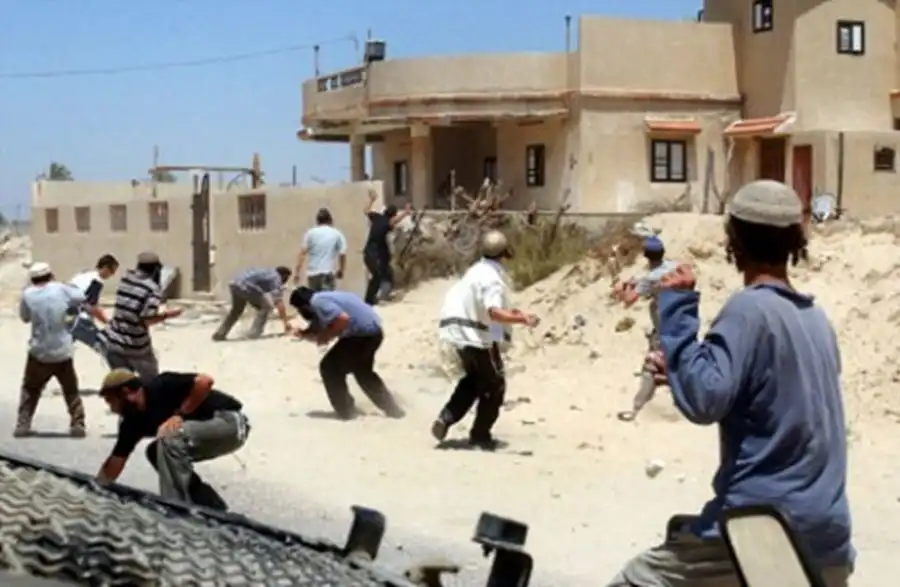
Today, Wednesday, settlers continue their attacks against citizens and their property in the West Bank.


In Jericho, a group of settlers installed barbed wire around the home of the family of citizen Suleiman Musa Kaabneh in the Arab al-Malihat community, in a blatant challenge to the citizens and a violation of their most basic human rights.


Local sources reported that the house was made of bricks and zinc and housed 7 people, including his wife and children, who expressed their fear as they left and entered their home.


In the northern Jordan Valley, settlers planted olive trees on agricultural land south of the village of Ein al-Baida.


Yesterday, the settlers began bulldozing and ploughing these lands in preparation for planting and seizing them, noting that they are owned by the land registry of citizens from the village of Ein al-Baida, and their owners use them for agriculture.


OPINIONS

Wed 30 Oct 2024 11:15 am - Jerusalem Time

Confronting the Israeli Negotiation Tactic

Translation for "Alquds" dot com

Translation for "Alquds" dot com

Opinion Writer

Walid Abdul-Hay

A historical review of the declared and secret Arab-Israeli negotiations (which were later revealed) indicates that the backbone of the Israeli negotiation is based on the idea of "fragmentation" in three aspects: the subject, time, and parties, as follows:

First: The subject:

When I review all the cases of negotiation between Israel and any Arab party, they divide the subject into parts, then each part is divided into sub-parts, and negotiations are conducted on each sub-part, and work to achieve the greatest amount of gains in each sub-part, which leads to the sum of the partial gains exceeding the value of the gains of negotiating the "whole" subject. The Israeli party in the Palestinian issue has applied this completely in all its negotiations since the armistice agreements in 1949 until now. In Oslo, for example, it divided it into the subjects of land and population, then divided the land into areas A, B, and C, then military areas and natural reserve areas, then Jerusalem, and divided Jerusalem into municipal borders and holy places, then divided the holy places into Jewish, Islamic, and Christian places in the entire West Bank...and did The same thing applies to water, electricity, etc.


The danger in dividing the issue is that concessions in the minor part seem acceptable to Arab society, but the accumulation of partial gains reveals a valuable catch, and the whole is greater than the sum of its parts (holism).


An academic study in business says that the "total" profits of retailers exceed the profits of wholesalers for the same goods and the same quantity..

Second: Time:

Time in Israeli negotiations is divided into two parts: immediate issues, then postponed issues (or what they call final solution issues). Israel works to delay final solution issues for the longest possible period, while focusing on immediate issues that are of urgent importance to it and not to the other party. Security is almost the most important immediate issue for Israel, which is noted in the fact that Arab recognition of Israel and normalization with it occurred without implementing a single clause of the Oslo Accords, despite the fact that the length of the first stage of Israel's commitment to the remaining Oslo Accords was five years, and here it is that more than 31 years have passed on the postponed issues.

Third: The parties:

Israel does not tend to negotiate with an “Arab bloc,” but rather with each party alone. In fact, it does not see any harm in negotiating with sub-structures in one party. It does not hesitate to communicate even with representatives of some minorities in Arab countries in the East and West. It is certain that individual negotiation with each country makes the impact of the balance of power greater than the results of negotiating with a bloc. It has negotiated with the normalization countries, each alone and without the slightest participation or even coordination with another party, because unilateral negotiation makes the results of the balance of power yield better fruits than negotiating with a group. In the current circumstances, Israel wants to:


1- Divide the Gaza issue into the following topics: An alternative authority to Hamas, the presence of an international, Arab or joint force, disarming Gaza, the issue of aid entry, the relationship between completing normalization and the solution in Gaza, the issue of canceling the UNRWA, the buffer zone in the northern Gaza Strip (the generals’ plan), the issue of monitoring the Egyptian-Israeli border, the issue of hostages... It seeks to put the important issues first, which are the issue of hostages, destroying the resistance, and separating the Gaza path from the Lebanese, Yemeni or even Iraqi path - security is its first priority - then it will discuss the rest of the topics according to its schedule.


2- Divide time: This is clear in that it only agrees to a ceasefire for short periods (such as the last Egyptian proposal for two days) and in each short period it achieves results to return to war again to achieve a new ceasefire and new gains, and so on...etc., then the entry of aid will be postponed until the end of the time period so that the siege can do its job in pressuring the resistance, and to invest any subsequent developments in Israel’s favor or to determine its plans according to those future changes such as the American elections and others.
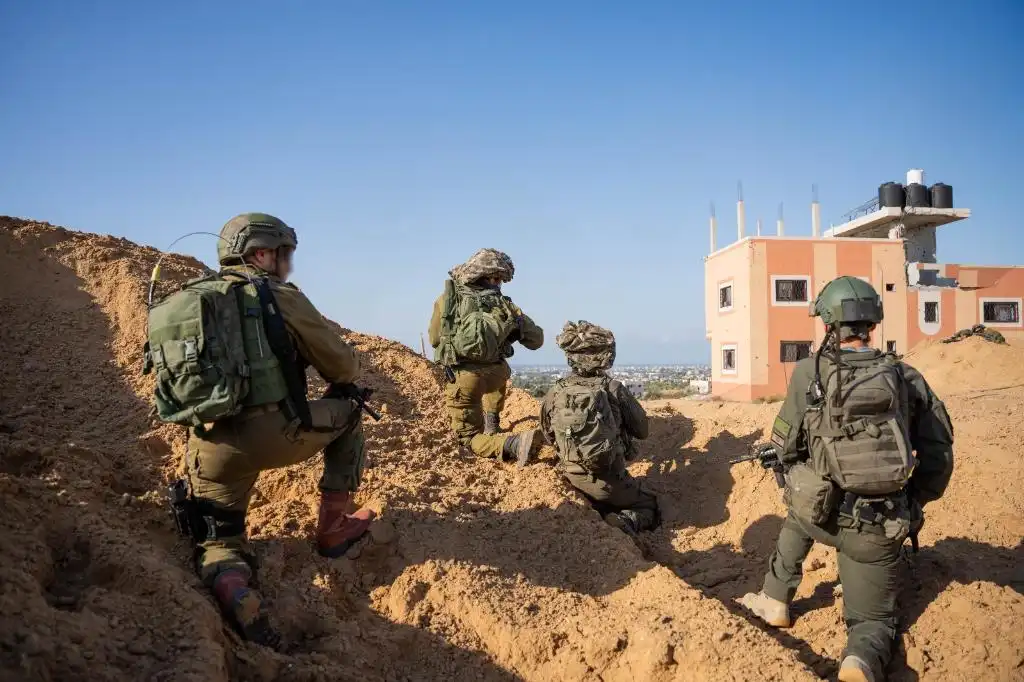

3- Dividing the parties: Israel is aware of the latent sensitivity between Egypt and Qatar, so it was enthusiastic about the presence of two Arab parties in the negotiating team, but both parties harbor dormant concerns for each other that can be awakened at the right moment, and it tries to invest in the relations of each country from the two negotiating parties (Egyptian and Qatari) to communicate with other parties, then it tries to employ the normalization parties so that each of them plays its role in direct negotiations (negotiating table) or indirect negotiations by providing facilities by the normalization parties that help Israel to stifle the resistance, so the goal is achieved through this indirect negotiation, as it divides the Arabs into the negotiating team, the normalization team, the opponents team, and the team that is neither in the donkey nor in the mobilization, and manages the relationship with each one separately.

Conclusion:

I think that it is necessary for the resistance in any negotiations to avoid all of the above and insist on the interconnection and synchronization of three issues: a permanent ceasefire, a complete withdrawal from Gaza, and the simultaneous opening of aid crossings, and to consider this as a basis for discussing the issue of hostages and not the opposite.

On the other hand, I see that the most important test for the axis of resistance and the extent of its commitment is in the coming weeks, especially after the American elections, and the necessity of confirming the inseparable link between the axis’ fronts. Israel will work to return to the tactic of fragmentation by saying to cease fire in Lebanon and then discuss the issue of Gaza, and it will work to raise issues that may be a subject of disagreement between the resistance in Gaza and the security coordination authority in Ramallah, or between the resistance factions themselves or with some Arabs or the negotiation team... etc. Fragmentation is the dominant idea in the mind of the Israeli negotiator... while the strategy of the Palestinian negotiator must be: unity, synchronization and interconnectedness of the issue for the axis of resistance, without that preventing some negotiation camouflage tactics, provided that the negotiation strategy is preserved, which is unity, synchronization and interconnectedness.

Source: Sahat Al Tahreer

PALESTINE

Wed 30 Oct 2024 10:25 am - Jerusalem Time

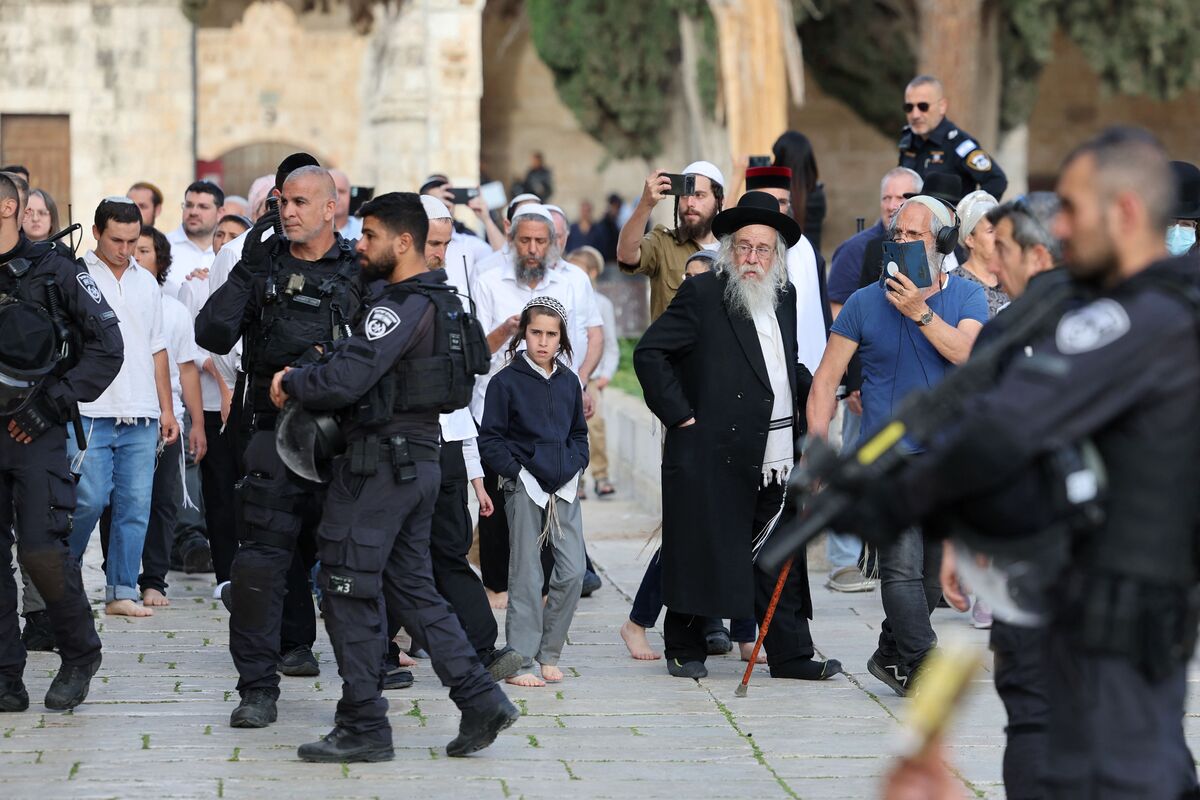
Israeli settlers storm Al-Aqsa under the protection of Israeli police

Today, Wednesday, settlers stormed the blessed Al-Aqsa Mosque in the occupied city of Jerusalem, under the protection of the Israeli occupation police.


The Jerusalem Governorate reported that dozens of settlers stormed Al-Aqsa in successive groups from the Al-Maghariba Gate, carried out provocative tours, and performed Talmudic rituals in its courtyards.


Since the beginning of the comprehensive Israeli aggression against our people in the Gaza Strip and the West Bank, including Jerusalem, in October 2023, the occupation forces have tightened their measures at the gates of Al-Aqsa Mosque and the entrances to the Old City.

PALESTINE

Wed 30 Oct 2024 10:23 am - Jerusalem Time

Lazzarini: UNRWA collapse would have dire consequences for international peace and security

The Commissioner-General of the United Nations Relief and Works Agency for Palestine Refugees (UNRWA), Philippe Lazzarini, said that the political repercussions of the collapse of UNRWA are catastrophic and will have dire consequences for international peace and security.

Lazzarini added in a letter to UN General Assembly President Philomon Yang that attacks on the agency would lead to unilateral changes in the parameters of any future political solution to the Israeli-Palestinian conflict and harm the Palestinians' right to self-determination and their aspirations for a political solution.

He pointed out that the Israeli Knesset's adoption of two laws regarding UNRWA effectively deprives it of the protection and basic means necessary for its work, after a year of blatant disregard for the lives of its employees, buildings and humanitarian operations in Gaza, and after intensive diplomatic campaigns by the Israeli government targeting UNRWA donors with misleading information to undermine funding.

He pointed out that these developments threaten the collapse of UNRWA operations in the West Bank (including East Jerusalem) and the Gaza Strip, and severely undermine the entire UN humanitarian operation in Gaza, which depends on UNRWA, and that the absence of any alternative to the agency capable of continuing and surviving will exacerbate the suffering of the Palestinians.

“The situation in Gaza goes beyond the diplomatic vocabulary of the General Assembly,” Lazzarini said in his message. “Palestinian lives have been devastated by more than a year of the most intense bombardment of the civilian population since World War II. Humanitarian aid has been restricted to below the bare minimum. Schools, universities, hospitals, places of worship, bakeries, water and sewage networks, electricity, roads and agricultural land have been destroyed. Survivors live in the most humiliating conditions, trapped and waiting to die by airstrikes or starve.”

He stressed that dismantling UNRWA would have a catastrophic impact on the international response to the humanitarian crisis in Gaza, noting that no one other than UNRWA would be able to provide education for 660,000 boys, and an entire generation of children would be sacrificed, with long-term risks of marginalization. In the West Bank, refugees would be deprived of access to education and primary health care, exacerbating an already unstable situation.

He pointed out that these attacks will not lead to the end of the status of Palestinian refugees, which exists independently of the services provided by UNRWA, but they will cause severe harm to their lives and future.

The Commissioner-General of UNRWA called for support from member states of the United Nations General Assembly, in proportion to the gravity of the situation and the risks, to ensure the agency's ability to fully implement the mandate granted to it by the General Assembly in accordance with Resolution 302 (IV) of 1949.

OPINIONS

Wed 30 Oct 2024 9:00 am - Jerusalem Time

Israeli hysteria and ongoing genocide

op-ed "AlQuds" dot com

op-ed "AlQuds" dot com

Opinion Writer

Massacre after massacre, martyrs ascend, most of them civilians, a daily series of killing and destruction, without any shred of conscience, and the world and the entire global system are silent, not moving, even with a word to condemn, denounce or denounce what is happening, as if Palestinian blood has become so cheap that it is shed by Israel, its government, its army and its settlers.


Yesterday, in one day, and in all forms of aggression and barbaric practices, the occupation aircraft bombed a five-story complex for displaced persons, and targeted civilians throughout the Strip, killing more than 150 martyrs, most of them children, women and defenseless civilians, and the army appears and justifies its retaliatory operations by the presence of resistance fighters in the bombed areas.


The citizens of Gaza have not been spared from the merciless machine of oppression led by Israeli Prime Minister Benjamin Netanyahu, the political and security cabinet, the Israeli government, the army and its leaders, the Shin Bet, the Mossad, and the Ministry of National Security headed by Itamar Ben-Gvir, with the full complicity of the United States and some Western countries, which contribute to supporting Israel and supplying it with weapons to kill what remains of our people.


The United States has given Israel a full month to carry out more genocidal massacres, under the pretext that during this period Israel must increase the pace of aid. As for killing, destruction, terrorizing, and forced displacement, it seems that these practices do not exist in the American dictionary until this moment, as if they have become axioms that convey a message from the United States under the title: Kill them, slaughter them, torture them, destroy them, expel them, but do not forget them from aid, if there is any aid.


Yesterday, in an unofficial toll, about 150 martyrs were killed, including 110 in the Beit Lahia massacre and other massacres, bringing the number of martyrs to more than 43,000 and a few dozen, in addition to thousands of wounded who need more than half a million surgeries.


Israel violates all international laws, treaties and conventions, and disregards them and continues a comprehensive and collective war of extermination, starvation, displacement and destruction, in a clear attempt to kill the rest of our Palestinian people. For a long time, and throughout the days and months of the war, the question that has no answer at all has become: Who will stop this Israeli rampage that has crossed all red lines and is causing ongoing massacres of extermination?

OPINIONS

Wed 30 Oct 2024 8:59 am - Jerusalem Time

The intellectual and the resistance

The trustworthy Taha

The trustworthy Taha

Opinion Writer

Many writers have delved into the issue of the intellectual and his relationship with the authority or the masses, and have addressed his role and what should be done, and have elaborated on setting specifications for him, and have filled Gramsci, for example, with analysis and mention, and have insisted on the concept of commitment and alignment with the resistance... and the talk has continued to explode here and there.

We say: There is a deep and natural alliance and connection between the intellectual and the revolution, in its broadest sense. The intellectual cannot deserve this title unless he is completely and unconditionally biased towards the people and their causes in the face of all enemies. This is not related to a specific time or the time of the revolution and resistance, as much as the intellectual always sides with his people and their aspirations, preoccupied with at least two things: the first is to stand with the people without hesitation or justification, and the second is to express through his creativity the spirit of (his people), that is, the people and their dreams, far from factionalism, regionalism and the whims of the politician. By intellectual here I mean anyone who is preoccupied or works with creativity, without neglecting any of its forms.

Perhaps the intellectual who is still besieged by the authorities, parties, politicians, tribalism, geography, functional religion and extremists, has been absorbed and monopolized by the "authorities" that practice all forms of terror, abortion and alienation. In other words, the intellectual is being aborted by placing him in molds of monotony and regulation, and he is forced under the pressure of the job, the pursuit of a livelihood, and fear for his job, and political, social and intellectual formulas are imposed on him, so that he believes in them, adopts them and generalizes them.

However, I see, along with many others, that there are three cultures: a negative culture, a participatory culture, and a proactive culture. The intellectual is closer to proactive and participatory culture when he creates his creativity while at a distance from all the political, linguistic, and intellectual authorities that are ready, prepared in advance, spent, and fascist.

The intellectual who lived without levers, laws to protect him, and a free space struggles until he achieves his goal, because creativity is the last land on which he can dream, and he looks forward to seeing his principles and aspirations on the path to realization and presence.

The creative person is closer to freedom when he continues his role in aligning with people and expressing them, meaning that creativity is freedom. However, if the creative person stops his mission, he stops being free and enters the darkness of slavery, I mean the slavery of the reality governed by the grip of the authoritarian regime, whoever it may be!

In every resistance we see, which seeks to confront the occupation or the oppressive regime, it is obvious that the creative person, with his decisive qualities, stands with it and with the people without question. The intellectual’s discourse should go beyond denunciation, condemnation and helpless reporting, but rather he should dive into the heart of the fire, to move its hands and point to it, to kill it, to sharpen the spirits, and open the fronts to their blazing and luminous breadth. That is why it seems strange when the creative person sides with the regime or the enemy, or justifies them, or casts doubt on those who resist, because the creative person, here, loses the intuitive, spontaneous and natural aspect of the requirements of his position. The creative person, here, is also either subject to enticement or intimidation, meaning that he has been bought or silenced by force and marginalized. If the process of buying him has taken place, the creative person has lost the most important pillar of his specifications, which is “conscience”, and in its absence he loses the quality of creativity, because the content of his creativity is… Fake, unreal, deceitful, hypocritical, or at best a venting. However, if it is muzzled, pursued, and submitted, it will have lost one of the most important qualities of creativity, which is the ability to confront, penetrate, penetrate, and challenge, which is ideological audacity or intellectual courage and transcendence.

We have seen many "independent" intellectuals who did not utter a single word in the face of what was happening, and who have no relation to the horrific events taking place! Which makes these people subservient and paid to the suspicious pressure organization, and they play a cosmetic role for it! And they leave a hurtful void. The strange thing, at this time, is that a "significant" number of intellectuals identify, adopt and even unite with the orientalist, false and unjust sayings of the West, in search of crumbs... which makes this intellectual completely empty of his content and alienated from his roots. These people thought that the recognition of the dominant culture would give them presence! But they forget that the intellectual must be the conscience of his people, and the one who expresses the aspirations and dreams of his nation, because he is not independent in the face of the massacre, and he does not have the luxury of neutrality, and he will lose his moral steadfastness, and history will question him. We do not need his cognitive awareness, his cultural meanings, or his aesthetic suggestions.

The creator’s bias towards his family and audience is not just sympathy, but rather a firm, principled and decisive position that must be evident in all circumstances.

The true and courageous creator often stands with the revolution when it is in its early stages, because this is his natural place and expected role, because the audience looks at him as a natural owner of this role, and to form a lever, guide, supporter, motivator and attractor of the audience, and here the creator is a vanguard, dedicating this characteristic to himself, and deserves it with merit. As for the creator in the stage of the revolution and during its explosion, he is in a new stage of sorting, because the matter is no longer theorizing and taking a verbal position or free solidarity, but rather direct and intimate engagement in the revolution itself, side by side with all the people, and with the different abilities that distinguish the creator. If he is a musician, he must play for the revolution, if he is a poet, let him chant for it, if he is a theorist, let him stand with it without equivocation or ambiguity, and if he is an actor, let him make the squares a stage for him and his audience, deepening his relationship with them and merging with all their details. Here, it is not permissible to be satisfied with the theoretical positions he took before the revolution, otherwise the creative person will appear to have two faces, or he will market words without any basis, and he will fail the first practical exam.

Let us note that collective consciousness during a revolution is a distinct consciousness, and differs from it in typical and monotonous cases, because consciousness in normal cases may be directed or misled by the media or others, but in the stage of revolution, resistance and confrontation, consciousness is vibrant, alive, free and alert, and thus the position it expresses is not a search of consciences, but rather a selection that possesses the right to a decisive response free of courtesy, moderation or justification, meaning that collective consciousness has the right to respond to those who demonized and distorted it and accused it of vices, frivolity and adventure, in hypocrisy to the ruler or the occupation, whatever their justifications and miserable arguments. The matter is not a disagreement over opinion or convictions, but rather a selection between right and wrong. There is no room for saying; This is freedom of opinion, or the right of every citizen or creative person to take the position he deems appropriate or to stand here or there, because freedom is a sublime value that only exists with the truth and in the face of falsehood.

The broken positions of some of the “great creative thinkers and activists” indicate a fundamental rift in the character of these people, and that their cognitive load is more like the load of saddlebags on the back of a horse, or closer to the bag of a magician than to a thinker or a careful guide, because he “mockerizes” the Palestinian dialect, and tries to laugh at the chins of the simpletons in covering up facts that cannot be covered.

I ask: Where do these people get their culture, creativity and stances from, if they do not stem from the authenticity and right of a living, ancient and progressive society? Were these people expecting the resistance to emerge from the halls of coordination, alienation and alienation, or from the spaces of normalizing rulers, or the heirs who plunder wealth and a history blacker than darkness and coal? Or should the resistance raise the slogans of financiers and exposed interests or the resounding fall into sectarianism and the interests of some regional countries and the theories of severance, father killing or purification of history?

Philosophy, in general, is one of the manifestations of human consciousness, but it is originally the result of a deep understanding that connects the private and the public, while here we see the broken “creative thinker” erasing the identity of the self, which is the private, and canceling it, and removing it from its true, deep roots, and wants to replace it with a philosophy of the distant and the universal human, or to bring the human in his enemy, under the pretext of not perpetuating the conflict... which is not divided originally... for each philosophy has its own essence, meaning that our culture, resistance, and philosophy stem from our self, and are created in our space by intertwining with its surroundings, to reach the human with its own flavor and features, and in a way that achieves its just aspirations.

OPINIONS

Wed 30 Oct 2024 8:58 am - Jerusalem Time

November Options Consequences

James Zogby

James Zogby

Opinion Writer

The current presidential race has sparked intense debate within the Arab American community. If this were a normal election year, I would be out in the field urging my community to vote Democrat.


I warned Arab Americans that we needed to do everything we could to prevent Donald Trump from returning to the White House. I pointed out the threat he posed to women’s rights, civil rights, civil liberties, and the environment. It would have been, as we say, a “slam dunk.” But this is no ordinary election. My community has been deeply traumatized by what has been happening in Gaza for a year, and the devastating war in Lebanon. They are angry that the Biden administration has refused to enforce U.S. laws that would put a stop to Israel’s unacceptable and illegal actions, and they accuse it of providing cover for Israel to act with impunity. In light of this, there has been a significant drop in Arab American support for Democrats, and a surge in support for the Republican Party, with many saying they want to punish Democrats by voting for a third-party candidate. I too feel this pain and am torn about how to move forward. I wish it were different, but it is not. However, I have some questions for those who hold this “Democratic” administration responsible for Israeli abuses and want to punish the Democratic candidate for president.


When they say they are voting their conscience by supporting a third party, I ask them to explain how sanctioning Vice President Kamala Harris and enabling Donald Trump to become president would end these abuses, especially since we have allies on the progressive side of the Democratic Party who support us and work with us to advance our concerns on foreign and domestic policy and would be with us to pressure a Harris White House? Meanwhile, Trump’s party is dominated by hardline “hawks” who care little about Palestinians or our civil rights. Or how could voting for parties that have been in place for decades and are struggling to get to 1 percent of the vote do anything other than help elect Donald Trump? Or how could ignoring all the groups that have been our allies in the struggle for our civil and political rights and for a just foreign policy lead to “voting our conscience”? This reminds me of a lesson I learned from the late Julian Bond after the 1968 election.


A decade ago, I wrote a reflection on this lesson. Let me ask you to think about it again: It was 1968, and the United States was reeling from the effects of the Vietnam War, urban unrest, and the assassinations of Martin Luther King and Senator Robert Kennedy. In the wake of voter opposition to the war, President Lyndon Johnson had been forced to end his reelection bid in favor of his vice president, Hubert Humphrey. All of this was in the air when the Democrats gathered at their convention to formally nominate Humphrey. On the first night of the convention, a battle erupted over whether to recognize the all-white Georgia delegation or the mixed black-white delegation led by a young Georgia civil rights activist, Julian Bond.


The mixed delegation won a partial victory. On the second night, the convention struggled with an attempt to amend the platform to oppose continuing the war. Bond was a leader in this fight, too, and the amendment was defeated. On the third night, when the convention met to nominate Humphrey’s vice president, the antiwar delegates proposed that Bond run against the party leaders’ chosen candidate, Senator Ed Muskie. Unable to silence the antiwar opposition, the party leaders called in the police, who were shown on television beating delegates who chanted Bond’s name. On the last day of the convention, after Humphrey and Muskie had delivered their acceptance speeches, Julian Bond came on stage and raised the hands of Humphrey and Muskie in a show of unity.


Many of the young activists were shocked. A few years later, I met Julian Bond, asked him why he had done this, and told him how disappointed I was. He told me that there were two types of people. Those who looked at the evils of the world and said, “I’m going to stick to my principles because things have to get worse before they get better.” And those who said, “I have to get down to business and see if I can make things at least a little bit better.” “I’m with the latter,” he said. “Because if I take the former view, I’m going to let a lot of people continue to suffer while I maintain my purity and refuse to do anything to help. At the conference, it wasn’t Julian Bond versus Ed Muskie. It was Hubert Humphrey versus Richard Nixon, and I had to choose who was going to help make life at least a little bit better.”


I have never forgotten this lesson and am challenged daily to apply it. It is the reason I have little patience with ideologues of the right or left. They often overlook the harsh reality in which most of us live and the difficult, often less than perfect, choices we face in the never-ending challenge of making life a little better, whether it is the fight for human rights, improving the quality of life, or providing security for the most vulnerable.


When they say they vote their conscience by supporting a third party, I ask them to explain how punishing Vice President Kamala Harris and enabling Donald Trump to become president would end these abuses.

OPINIONS

Wed 30 Oct 2024 8:56 am - Jerusalem Time

The Second Nakba and the Coming Settlement

Sami Mshasha

Sami Mshasha

Opinion Writer

The celebration is over. The members of the entity's Knesset congratulated each other, and were elated by the majority vote for the two bills. A resounding success for them, and a profound pain, because the two laws, on the surface, remove UNRWA from the equation, but in reality, they are the kiss of death for the right of return of Palestinian refugees and a great practical and moral confirmation for them in establishing the concept that Jerusalem is one and united, and there is no place in it for a refugee camp, nor for UNRWA headquarters, nor for refugees registered with it in our capital.

"It is our capital, and we will not share it with anyone."

They have the right to celebrate! It is a great victory (!) and puts the train of settling Palestinian refugees in Jordan, Lebanon and Syria on its actual track towards the desired goal.

It is a bitter victory like wormwood in the course of the war of extermination on Gaza, as the policy of starvation, thirst, and open and systematic killing (and no randomness here) has come a long way (in one of its pivotal manifestations) in preventing UNRWA from working effectively in Gaza and establishing their control over what aid is brought in, when, where, and by whom, and ensuring that UNRWA, and the United Nations as a whole, will not have any real role in the stage of what is called the reconstruction (or more accurately, re-engineering) of Gaza. They have the right to celebrate and be elated.

Their celebration is over and they continue to translate such achievements and create facts on the ground. This is where their strength lies: action and creating facts on the ground at any cost.

A new party of slapping, wailing and lamenting sessions has begun, and a new stream of statements of condemnation and denunciation has begun, some of which are honest but have no effect, and many of which are hypocritical and lying statements, especially the American and British ones. Perhaps there is no need for a paragraph referring to the statements of the Arab League, the Islamic countries and the worn-out and lazy human rights associations.

We made a big fuss describing the repercussions of the vote by the members of the entity’s Knesset. We said that it was a fascist decision, a lifeline, a violation of the UN Charter, and the new record that entered our dictionary of descriptions is that the decision “contradicts the interim measures adopted by the International Court of Justice in the case of genocide” and other outdated linguistic descriptions. The Secretary-General surprised us with his tweet that the decision was “catastrophic,” since I thought that the decision was not catastrophic, so we must thank him for his important clarification! His official spokesman stuttered with a statement that exposes the impotence of the international organization, stating that the institution is evaluating its response to the two laws and that “our reactions will be negative!” Isn’t this statement painful in its paralysis?!

Yesterday, the entity's Knesset approved "the delayed start of implementing the provisions of the law," and gave the executive branch a period of 90 days to implement the provisions and clauses of the law in preventing UNRWA's activities and closing its headquarters (this will include its presence and services in all the occupied territories). 90 days to find alternatives to UNRWA in Gaza, roll back the fragmentation and dismantling of the agency in Jerusalem and the West Bank, and find alternatives for it of local, regional and international origin. And then the actual start of the process of settling Palestinian refugees outside the homeland. And this is what will happen!

We do not have any effective, practical, effective movement at the Palestinian, Arab, Islamic, regional, or international levels to confront the entity’s decision and its successive translation on the ground.

Perhaps the demand to adopt the equation of expulsion for expulsion (expulsion of the entity from the United Nations in exchange for its expulsion of UNRWA) will remain within the framework of wishes.

So, the series is over, and there is no second part. They have celebrations and achievements on the ground, and we have hung a "Do Not Disturb" sign on our bedroom and sleeping area.

——


90 days to implement the decision to expel UNRWA from Jerusalem and prevent its activities in the occupied territories. What are we going to do? They have celebrations and achievements on the ground, while we have hung a "Do Not Disturb" sign on our bedroom and sleeping area.

PALESTINE

Wed 30 Oct 2024 8:48 am - Jerusalem Time

80 Israelis, including 64 soldiers and police, killed in October

The Israeli Army Radio reported that 80 Israelis were killed, including 64 from the army and police; 33 officers and soldiers in southern Lebanon, 19 in the Gaza Strip, and 16 civilians, during the current month, which it described as “Black October.”


The radio said in a report on Tuesday evening: "Since the beginning of this black October, 80 Israeli soldiers and civilians have been killed in battles and war events." It added: "64 members of the Israeli security forces and 16 civilians have been killed."


In detail, the radio said that "33 Israeli officers and soldiers were killed in the ground maneuver in southern Lebanon, and 19 in the ground maneuver in the Gaza Strip during October." Also, "four soldiers were killed on October 13, in a drone strike that targeted the Golani Brigade training base in the Binyamina area near Haifa (north), and about 60 others were injured."


According to the radio, "Three Israeli soldiers were also killed in October by Hezbollah missiles on the Lebanese border, where the party routinely bombs Israeli troop concentrations in the area." Also, "Two Israeli soldiers were killed on October 4 in a drone attack launched from Iraq on a military base in northern Israel, and about twenty others were injured."


Two days later, the radio reported: “An Israeli Border Policewoman was killed in a shooting attack in Beersheba (south), and 10 others were wounded in the attack.” In mid-October, “An Israeli policeman was killed and 4 others were wounded in a shooting attack on Route 4 near Ashdod (south).”


On the 22nd of the same month, "the Israeli army announced the death of a soldier in the Nahal Brigade, in an operational car accident in the Gaza envelope area near the Strip," according to the same source.


According to the radio, "Seven Israeli civilians were killed by Hezbollah missiles in separate incidents in the northern Galilee region during October, including two in Kiryat Shmona, two in Majd al-Krum, one in Yaron, one in Acre, and one in Maalot-Tarshiha." Earlier this month, "seven Israeli civilians were killed and 16 others were injured in a shooting in Jaffa, near Tel Aviv (central)."


On October 10, “an Israeli was killed as a result of wounds he sustained a day earlier in a stabbing attack in the city of Hadera, north of Tel Aviv, which also injured six others.” On October 27, “an Israeli was killed in a car-ramming attack near the Glilot military base in Ramat Hasharon, central Israel, and 36 others were injured,” according to Army Radio.


OPINIONS

Wed 30 Oct 2024 8:47 am - Jerusalem Time

They will slaughter you.

Ibrahim Melhem

Ibrahim Melhem

Opinion Writer

“They will slaughter you,” is the warning title, whispered about a year ago by a European official to former Prime Minister Dr. Mohammad Shtayyeh, during a passing meeting between them in the halls of the hotel hosting the security conference in Munich, Germany.


The warning was taken seriously, given the weight and reliability of the source, and it was only a few days before the seriousness of that warning became clear, through the flow of shipments of lethal weapons to the rogue state to implement the plan of annihilation without mercy.


A few days ago, the European Union representative in Palestine was accused, during his meeting with a group of activists in Ramallah, of reinforcing this warning while explaining to the youth the role played by some European countries in supplying Israel with weapons to complete the war of extermination that has been raging in the Gaza Strip for more than a year, while providing legal cover to help the perpetrators escape punishment.


What was attributed to the European Union representative may not be accurate, but the visible evidence throughout the year of the genocide in the policies and positions adopted by some European countries, especially those that have the “blocking third” and which openly support the continuation of the genocide, gives those statements a great deal of accuracy.


It is true that European countries, such as Spain, Belgium, Norway, Ireland and others, have taken very positive positions in rejecting Israeli crimes, as well as the position of the wise man of Europe, Josep Borrell, whose voice has become hoarse and his tongue has become dry from repeating calls to stop the war of extermination, which has brought upon him and those calling for him like Guterres, Lazzarini, Albaner and others with noble values, accusations of belonging to Hamas and anti-Semitism, which is the scarecrow that Israel brandishes in the face of anyone who criticizes its policies.


However, the unanimous voting mechanism within the EU countries enabled the countries supporting the aggressor state to disrupt those humanitarian positions and send more shipments of deadly weapons to continue the massacre.


Stop the war of extermination..!

PALESTINE

Wed 30 Oct 2024 8:45 am - Jerusalem Time

Reuters: Norway to submit draft resolution to UN on UNRWA ban

Reuters reported that Norway will submit a draft resolution to the United Nations to request an opinion from the International Court of Justice on Israel's compliance with international law after it banned the United Nations Relief and Works Agency for Palestine Refugees (UNRWA).


"We hope to put the draft resolution to a vote in the coming weeks, and it is likely to be adopted," Reuters quoted the Norwegian foreign minister as saying.


Reuters said the question that will be asked before the court is: "Is Israel violating international law by preventing humanitarian aid to the Palestinians?"


She pointed out that the court's opinion would be advisory and non-binding, but would carry legal and political significance regarding the Israeli move.

ARAB AND WORLD

Wed 30 Oct 2024 8:44 am - Jerusalem Time

Lebanese drone hits Israeli aircraft components factory in Nahariya

The Israeli Broadcasting Authority said that the drone that exploded in the industrial zone in Nahariya this morning hit a factory that produces aircraft components.


The Israeli Home Front Command said earlier that sirens were sounding in Nahariya, Shlomi, Maalot-Tarshiha and other towns in the Western Galilee in Israel, warning of a drone infiltrating the area.


PALESTINE

Wed 30 Oct 2024 8:42 am - Jerusalem Time

Axios: Signs of an agreement to stop the Israeli war on Lebanon

The American news website Axios quoted American and Israeli officials as saying that they believe that Hezbollah "has finally become willing to distance itself from the Islamic Resistance Movement (Hamas) in the Gaza Strip."


According to Axios, an agreement to end the fighting between Israel and Hezbollah could be reached within weeks.


He pointed out that Israeli Prime Minister Benjamin Netanyahu discussed the potential deal with ministers, army leaders and intelligence agencies.


Hezbollah had begun supporting the resistance in Gaza since the first day of the war on the Strip on October 7, 2023, and the party refused to stop engaging the Israeli army, which led to the occupation army launching an aggression on Lebanon in order to separate the two paths from each other, which is something that Hezbollah still rejects.


Axios reported that the visit of Amos Hochstein, US President Joe Biden's envoy, to Israel indicates that Netanyahu supports moving forward with concluding the deal, and that Hochstein was waiting for the Israelis to decide their position on the deal before heading to Israel.


The Israeli news website Walla reported that Hochstein and Brett McGurk, Biden's envoys, will visit Israel tomorrow, Thursday, in an effort to conclude an agreement to end the war in Lebanon.


What the website mentioned contradicts what Mahmoud Qamati, the deputy head of Hezbollah’s political council, told Al Jazeera that the party had not received “any project or political initiative officially.”


According to Qamati, Hezbollah's priority now is the field, stressing that "Hezbollah does not accept any negotiations under fire... Let the aggression stop and we are ready to discuss all political issues."


The US Department of Defense (Pentagon) said that it still believes there is a chance to reach a diplomatic settlement in Lebanon, and that it will continue to work to achieve this.

Draft agreement

The agreement in question, according to Axios, calls for a ceasefire followed by a 60-day transitional period. It is based on the re-implementation of UN Security Council Resolution 1701, and Hezbollah will move its heavy weapons north of the Litani River away from the Israeli border during the transitional period.


During the transitional period, the Lebanese army will deploy about 8,000 soldiers along the border with Israel, while the occupation army will gradually withdraw its forces to the Israeli side of the border during the transitional period. It is noteworthy that the Israeli occupation army suffered heavy losses in southern Lebanon and was unable to advance on the ground for a long distance due to the fierce resistance it faces from Hezbollah fighters. The party said that 90 Israeli soldiers were killed since the start of the ground incursion early this month.


After 10 occupation soldiers were killed and about 20 others were injured a few days ago, Galant described the death of the Israeli soldiers as a difficult day, and stressed that Israel must remain united in order to stand firm. What the site mentioned is accompanied by what several Israeli media outlets announced that the Israeli army is close to ending its ground operation in the Lebanese villages bordering Israel, and that the army informed Netanyahu and his Defense Minister Yoav Galant that the time is right to end the fighting with Hezbollah.

Source: Al Jazeera + Agencies