PALESTINE

Thu 31 Oct 2024 1:27 pm - Jerusalem Time

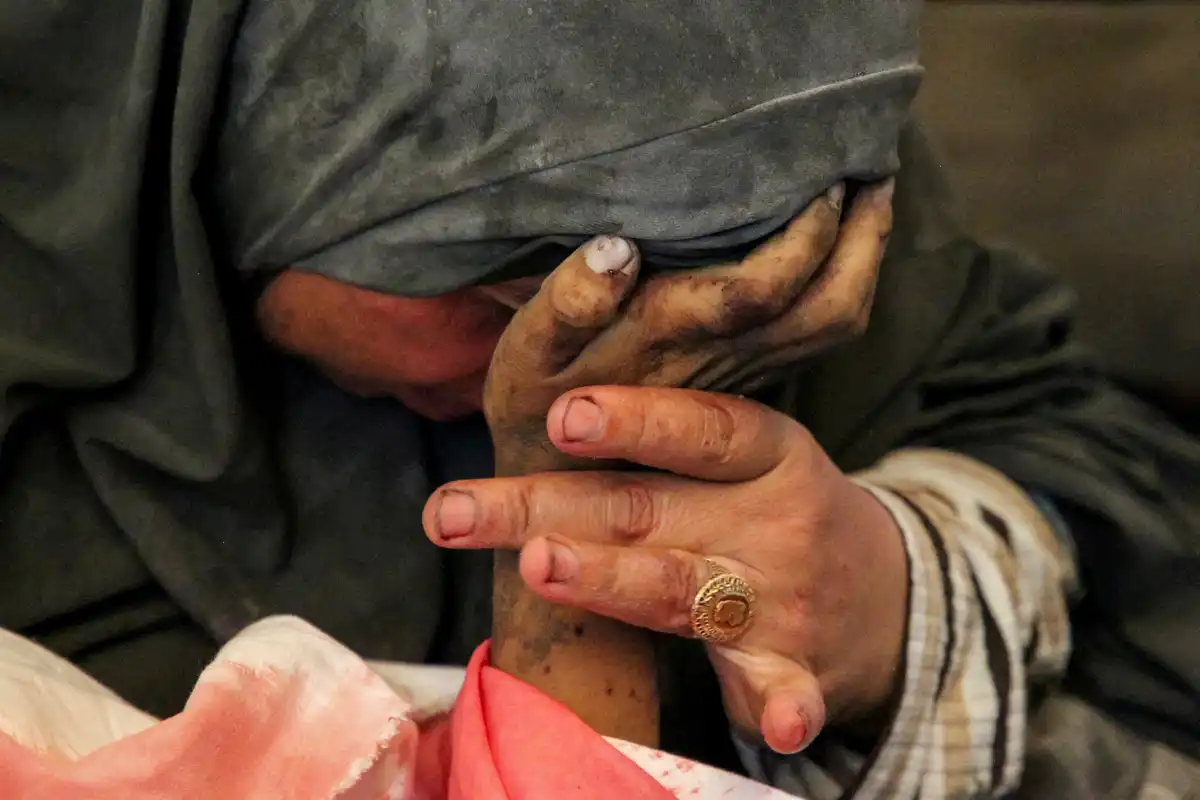
Al-Quds documents horrific testimonies of the siege of Kamal Adwan Hospital: field executions, arrests, torture and starvation

Hanan Awda: My leg was amputated due to the bombing, but I remained without treatment or medication in the hospital

Mahmoud Al-Qateel: They forced me to take off my clothes and remain naked, and they arrested most of the medical staff and companions

Mahmoud Hamdona: A scene from the Day of Judgment.. They surrounded us with tanks and shelling and we were left without food or water

Abu Safiya: The health system is collapsing, and the wounded who arrive at Kamal Adwan Hospital die due to lack of resources.

“They forced us out of the school, and as soon as we started going down the stairs, they bombed us,” said the wounded Hanan Awda, describing the moment she fled amidst the death from the school to Kamal Adwan Hospital in the northern Gaza Strip. She did not know that one of her sons would be martyred and the others would be injured.


Under the showers of live bullets from the quadcopter plane and the violent artillery and air bombardment, Hanan fled to the hospital, believing it to be the safest place, but she forgot that the occupation does not differentiate between a hospital and a school, and the entire sector is under attack.


Awda told Al-Quds.com: “Inside the hospital, I remained without treatment or medication, knowing that my right leg was amputated as a result of the Israeli bombing, and I need dressings and painkillers.”


At exactly one o'clock after midnight, large forces of the Israeli occupation army stormed Kamal Adwan Hospital. Hanan recounts: "They forced us to go down to the hospital yard, and we remained in the open for 24 hours, without food, drink, or even treatment."


She added: “They then transferred us to the children’s section inside the hospital, where they arrested some of the women and left others, and I was left alone with those who suffer from motor disabilities like me.”

Brutal storming of the hospital with police dogs

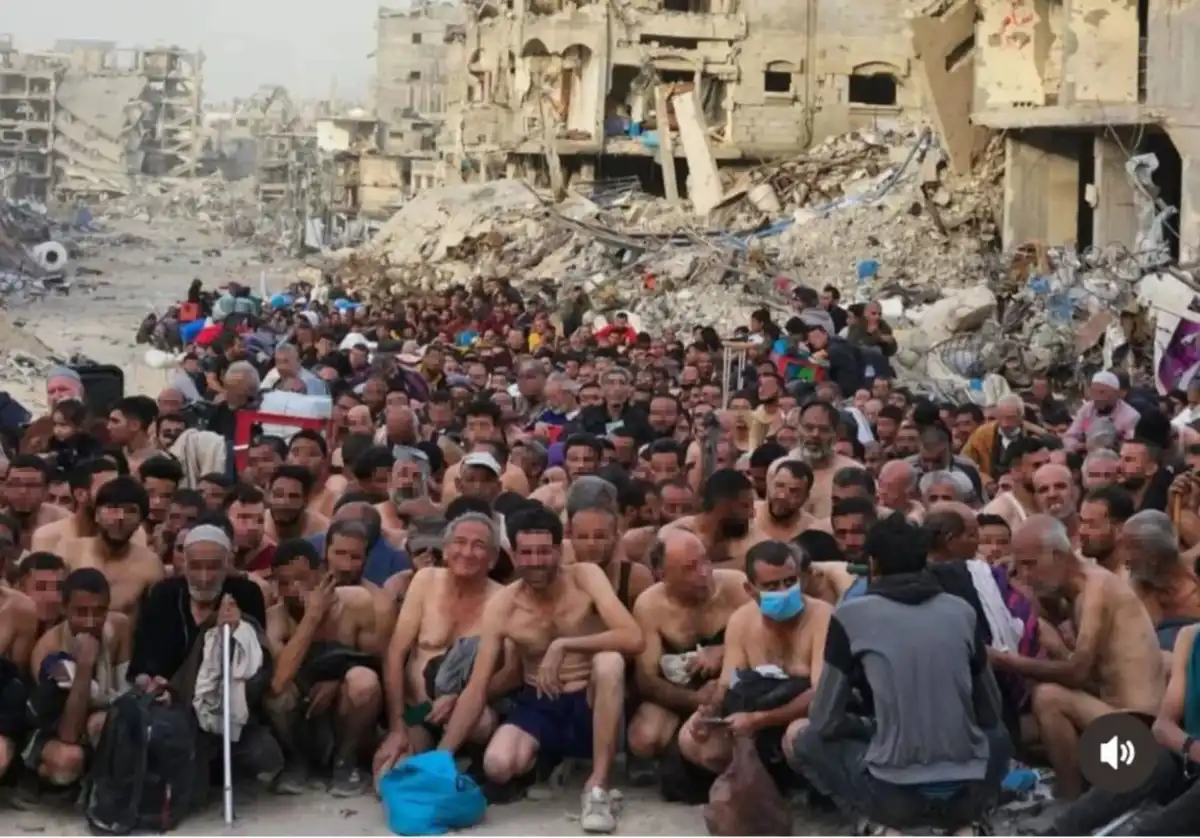
In the other section of the hospital, Mahmoud al-Qateel, who was injured in the back, lies. He tells what happened to him at the moment of the raid to “I” and “Al-Quds” Dot Com: “Suddenly, the occupation forces stormed all the hospital sections, accompanied by police dogs, and forced all the medical staff and companions to leave. They arrested most of them, and then forced the patients and injured to go out to the hospital yard.”


The occupation does not differentiate between a sick person, an injured person, or a child. All civilians in Gaza are subject to arrest and abuse. So what happened to you? He answers: “They forced me to take off my clothes and remain completely naked, not to mention cursing us all with obscene, vulgar words.”


Not only that, but the Israeli soldiers prevented the injured and sick from receiving treatment. He added: “We were left without food or drink throughout the hospital siege.”

The bodies of the martyrs are in the streets, being devoured by dogs.

In the building next to the hospital, the young man Mahmoud Hamduna was staying with his family and a number of other displaced people. He told “I” and “Al-Quds”: “We heard the sound of tanks approaching us, artillery firing its shells randomly, and soldiers calling through loudspeakers to leave the buildings next to the hospital.”


For about five days, Hamdona and his companions remained trapped inside the building, without food or water. He continues: “We were eating dates, and water was very scarce, so we would cut off our water so that it would remain for the children, and we would only eat what would keep us alive.”


He recalls the moment of the storming: “They surrounded us with their tanks from four sides, and the artillery and air bombardment did not stop, not to mention the quadcopter that did not leave the sky of the area.”


He describes those days as: “A scene from the Day of Judgment... like a Hollywood movie,” adding: “We lived through moments of terror, only God knows about them.”


The Israeli army withdrew from the hospital and its surroundings, so what did you do after that? He answers: “We did not go out in groups, but individually, so that the occupation would not commit a massacre against us. We recovered as many bodies as we could of the martyrs in the streets. Most of them were decomposed, and stray dogs had devoured their bodies.” He adds: “There are many bodies under the rubble. There is no civil defense to remove the rubble to recover them.”


Regarding the situation in the northern Gaza Strip, Hamdona describes it, saying: “It is very difficult and tragic. The north needs medical teams, rescue teams, and civil defense to retrieve the martyrs and search for the missing.”

There are no ambulances in the northern Gaza Strip.

In turn, the director of Kamal Adwan Hospital in the northern Gaza Strip, Hussam Abu Safiya, announced the complete collapse of the health system in the region. He said: "Everyone who arrives at the hospital from the wounded from the Israeli raids dies due to the lack of capabilities."


He continued: "There is no way to transport the injured. The injured who reach us either come themselves or are transported by citizens. During this journey, their blood runs out and they die."


He called for the entry of ambulances and fuel, after the Israeli army destroyed several vehicles and put them out of service, noting that there are no ambulances in the northern Gaza Strip.

ARAB AND WORLD

Thu 31 Oct 2024 1:25 pm - Jerusalem Time

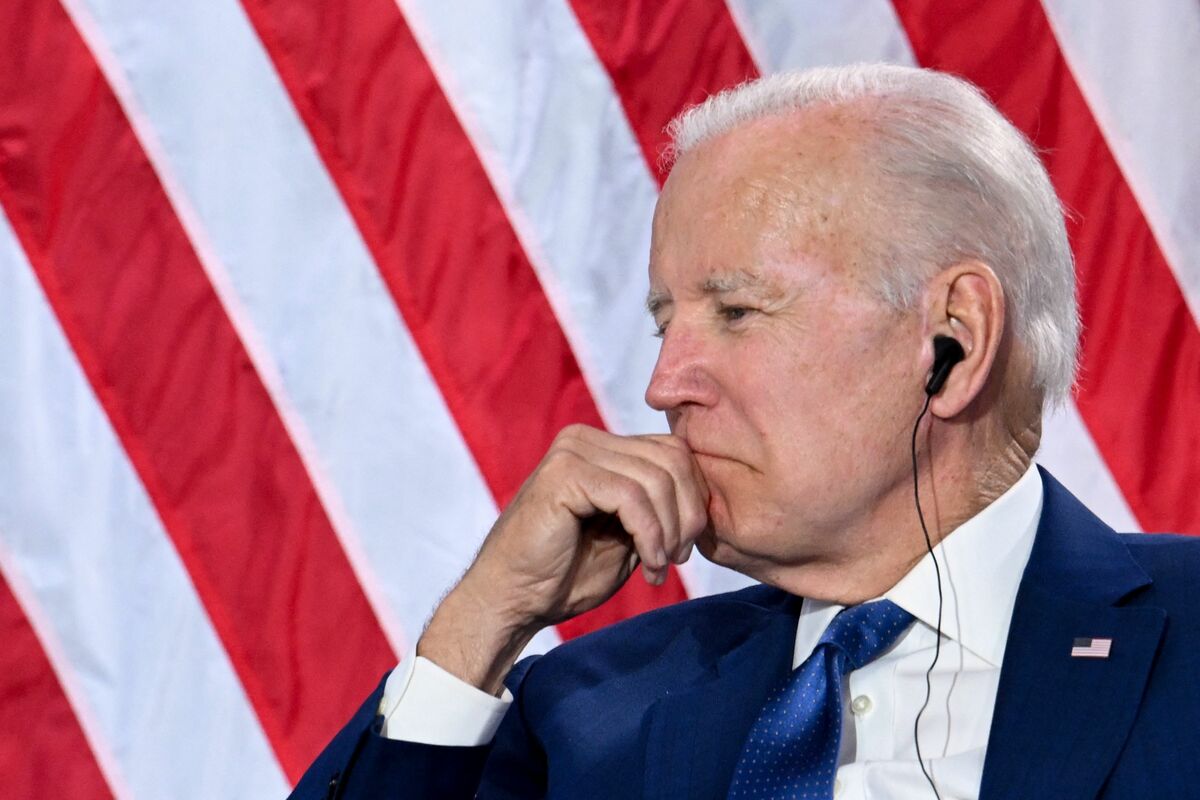
Biden administration ignores hundreds of reports of US weapons used to kill civilians in Gaza

The Washington Post reported on Wednesday that the Biden administration has received nearly 500 reports of Israel using American weapons to unnecessarily kill civilians, but no action has been taken.


By refusing to act, the State Department is violating its own policy, which was initiated in August 2023 in response to concerns about Saudi Arabia and the United Arab Emirates’ use of U.S. weapons to kill civilians in Yemen. The policy, known as the Civilian Harm Incident Response Guidance (CHIRG) process, directs U.S. officials to investigate incidents and recommend action within two months.


According to the Washington Post report, none of the roughly 500 reports reached the “action” stage. U.S. officials said the CHIRG process had become functionally irrelevant because senior State Department officials were dismissive of any non-Israeli source.


Mike Casey, a former State Department official who resigned last July, said senior State Department officials often dismiss the credibility of Palestinian sources, eyewitness accounts, NGOs, the Palestinian Authority, and the United Nations.


Sources told The Washington Post that at least a quarter of the cases were dismissed in the first of three investigations because they were deemed unreliable or because officials believed that American weapons were not used. The rest of the cases reached the “verification stage,” but this involved only asking Israel about the cases, giving the Israeli government the opportunity to make excuses for its crimes.


“We ask [the Israeli government] about the cases: Did you warn? Why did you hit this school or this safe road or this safe area?” a former official said.


More than two-thirds of the cases remain unresolved because they await a response from the Israeli government. State Department spokesman Matt Miller has made clear over the past year that the United States has been reluctant to hold Israel accountable when asked about atrocities committed with American weapons.


On Tuesday, Israeli airstrikes on an apartment building in Beit Lahiya, northern Gaza, killed at least 109 Palestinians, including more than two dozen children. Asked by a pastor about the matter, Miller said the United States was “deeply concerned” about the “horrific incident,” but said only that the United States would question Israel about the attack and did not call for an investigation or suggest any U.S. action. “We have reached out to the government of Israel to ask what happened here,” he said.


The United States is violating multiple foreign aid laws by continuing to supply weapons to Israel as it deliberately withholds food aid to starving Palestinians and slaughters women and children on a daily basis. A group of American health volunteers in Gaza estimated that the U.S.-backed Israeli bombing and blockade campaign has killed at least 118,908 Palestinians, including more than 60,000 who have starved to death.


The United States spent at least $22.76 billion in support of the genocidal campaign in one year, including $17.9 billion in direct military aid and $4.8 billion on military operations to support Israel in the region.

ARAB AND WORLD

Thu 31 Oct 2024 1:17 pm - Jerusalem Time

AIPAC funds Congressional visits to Israel and spends tens of millions annually to elect them.

On June 16, as Benjamin Netanyahu continued his yearlong challenge to Joe Biden over the war in Gaza, eight members of the U.S. House of Representatives and two congressional staffers arrived at the luxurious Kempinski Hotel in Tel Aviv for four days of immersion in Israeli politics, Politico reported in an investigation published Wednesday.


Lawmakers and aides toured Israel and met with a range of speakers who largely align with the Israeli prime minister's right-wing views — including Netanyahu himself.


The trip, like hundreds of others over the past decade, was hosted by the American Israel Public Affairs Committee, or AIPAC, which calls itself “America’s pro-Israel lobby,” one of the most influential lobbying organizations in the United States that promotes the Israeli government’s agenda.


After a nearly five-month hiatus following Hamas’s October 7, 2023, attack on Israel, AIPAC-funded travel has resumed at a rapid pace this year, with eight trips by 71 House members and staffers from early March through early September. Slightly more Republicans traveled on AIPAC-organized, AIPAC-funded travel during that period than Democrats.


“Now, as lawmakers face pressure from both sides over U.S. aid — with critics like Sen. Bernie Sanders (I-Vt.) calling for a halt to arms sales in the face of Israel’s assault on Lebanon and supporters like Sen. Lindsey Graham (R-S.C.) demanding more funding for Israel to bolster its defenses — members are drawing on lessons learned from their travels at AIPAC to shape their views of Israel,” the magazine says in its investigation.


Rep. Glenn Ivey (D-Md.), who has made two trips to AIPAC since September 2023 and benefited from $6 million in independent spending (on his campaign against pro-Palestinian candidate Donna Edwards) from AIPAC in his first run for Congress in 2022, said his time in Israel was valuable in understanding what it means to have a U.S.-Israeli partnership.


“It helps to try to get out and see things firsthand,” Ivey said. For example, Ivey said the most powerful moments of his June trip were meeting the families of hostages and visiting the site of a music festival where dozens of civilians were killed or wounded.


While the American Israel Public Affairs Committee is known for sponsoring trips for lawmakers and aides to Israel in an attempt to “build support for the Jewish state,” the full extent of the trip was not known until now.


A new analysis of thousands of records shows that Israel, thanks to AIPAC, is the top destination for privately sponsored foreign travel by members of Congress and their aides.


According to a study by the Howard Center for Investigative Journalism at the University of Maryland, which is publishing its findings in partnership with Politico, more than a quarter of the approximately 4,100 privately sponsored trips abroad since 2012 were to Israel.


This means that the number of flights to Israel is greater than the number of flights to the entire Western Hemisphere and the continent of Africa combined.


The Howard Center has created a database of all House travel over the past decade. Each of the roughly 17,000 trips represents travel by a representative or House staffer, either alone or as part of a delegation and sometimes accompanied by a family member. The vast majority of the trips—at least three out of every four—were by staffers, who play important roles in shaping policy and drafting legislation.


The Senate, which is much smaller than the House, reported that its members and staff took more than 2,600 trips during the same period, but the Senate’s disclosure forms don’t list who sponsored the trips, which everyone knows AIPAC does. Sponsors or destinations are in a format that can be easily analyzed.


In addition to travel disclosures, nonprofit tax records and lobbying registrations, the Howard Center’s examination of House travel used data collected by OpenSecrets, a nonpartisan government watchdog, and public affairs information platform LegiStorm, to document the extensive links between lobbyists and travel sponsors.


Critics contend that the trips left lawmakers with a one-sided understanding of U.S.-Israel relations and the Israeli-Palestinian conflict — one that reinforces the current Israeli government's hardline policies toward the Palestinians.


“Whoever frames the debate wins the debate,” said former Rep. Andy Levin (D-Mich.), a progressive Jewish American politician and critic of the American Israel Public Affairs Committee, which helped engineer his defeat in 2022.


The vast majority of trips to Israel — about 75 percent — were sponsored by the American Israel Education Foundation, an AIPAC affiliate.


AIPAC’s use of the American Israel Education Foundation allows it to legally circumvent a 2007 law that limits direct lobbying participation in most privately sponsored trips. An exception in the law allows certain 501(c)(3) organizations like the American Israel Education Foundation to sponsor the travel.


AIPAC lobbied for this exception, known by some as the "AIPAC loophole," and without this exception, AIPAC would be restricted to sponsoring only one-day trips as an organization that employs lobbying staff.


While other organizations exploited the “AIPAC loophole,” AIPAC monopolized what House members and staff saw and heard on their trips to Israel and the occupied West Bank.


AIPAC spokesman Marshall Whitman declined multiple interview requests, but responded in a written statement to what he called the Howard Center's "mischaracterizations of our travels."


“AIEF-sponsored trips help educate political leaders from both parties about the importance of the U.S.-Israel relationship through first-hand experiences in Israel, briefings from Middle East experts, and meetings with Israeli leaders from across the political spectrum,” Whitman wrote.


“The trips uniquely focus on policy and a broad range of issues related to U.S.-Israel cooperation including regional security, technology, health, and science.”


“In the wake of the horrific Hamas attack on October 7, these trips provide Members of Congress with a deeper understanding of the threats Israel faces from Iranian terrorist proxies on its borders. Members of Congress have indicated that they have found these trips extremely helpful in giving them a unique perspective on the challenges facing the United States and our ally Israel in a critical region.”


The trips to Israel are just one part of a multi-pronged strategy to advance Israel’s interests. AIPAC hosts an annual conference for elected officials in the Washington, D.C., area, which former Rep. Brian Baird (D-Wash.) has called “the largest gathering of members of Congress” other than the State of the Union.


AIPAC spent nearly $100 million this election year to ensure that pro-Israel candidates would win outright, the organization said in its campaign statements.


Yet AIPAC’s extensive recruitment of members and staff to travel to Israel—which costs more than $10 million, based on U.S. tax dollars, according to Legstrom’s 2012-2023 data—demonstrates the importance AIPAC places on its travel program. Nearly half of current members of the House of Representatives have traveled with the organization since 2012, according to a Howard Center analysis.


Among them is first-term Congressman Ivey, who defeated former Rep. Donna Edwards in the 2022 primary, in which the American Israel Public Affairs Committee’s political action committee spent $6 million on his behalf.


Ivey’s first trip was with eight other members of the Congressional Black Caucus. They arrived in Jerusalem on September 2, 2023, (a month before the October 7 attacks). Ivey said in an interview that they met with senior Israeli officials, but that the Palestinian perspective was missing from the trip.


The itinerary included a meeting with a Palestinian-Israeli peace activist, “but not with people from Gaza, not the Palestinian Authority,” Ivey said. “So the focus was very much on Israel and Israeli politics.”


Ivey's visit was the second of a trip by the American Israel Public Affairs Committee this June, which in addition to focusing on Israeli policy included multiple sessions on the October 7, 2023 attacks. Ivey said that when they arrived in Israel, the airport was "filled with pictures and faces of the hostages who had been taken."


Although Ivy said the group met with Israeli Palestinians, the trip did not include a visit to Gaza or the West Bank.


Like previous AIPAC-sponsored trips before October 7, Ivey and the rest of the delegation also met with senior Israeli officials including Prime Minister Netanyahu, Defense Minister Yoav Gallant and National Unity Party leader Benny Gantz, according to the itinerary listed on his disclosure forms.


But on this trip, Ivey said, “the focus was completely different.”


During his September 2023 trip, he said there was a stronger focus on “trying to figure out… potential paths to a two-state solution.”


Asked whether the possibility of a two-state solution was still a topic of discussion or consideration in June, Ivey said, according to Politico, that he was not supposed to share details of the meetings.


But outside the United States, he added, "there are a lot of people who doubt that it is possible."


“I think that’s true in Israel. I think that’s true … among many Palestinians,” he said. “A lot of people are skeptical or have questions about whether this is still a realistic option.”


AIPAC spent $68,000 to cover Ivey's two trips, which included luxury accommodations. Ivey was joined on his first trip by his wife.


According to Federal Election Commission data, AIPAC spent $6 million in independent spending during Ivey’s 2022 primary. Ivey’s campaign also benefited from about $750,000 in contributions sent by supporters through another AIPAC-affiliated organization, and more than $400,000 in outside spending from another pro-Israel group, Democratic Majority for Israel, a front for the Israel lobby in the United States.


Effie voted in favor of the military aid package for Israel on April 20, which his staff said reflected his desire to help Israel defend itself and ensure additional humanitarian aid flows to Gaza.


Among those who declined interview requests were Rep. Mike Levin, a California Democrat, and Rep. Hakeem Jeffries, a New York Democrat. Levin traveled to Israel three times between 2012 and 2023, twice with AIPAC and once with J Street.


During the same period, Jeffries traveled to Israel four times with AIPAC, most recently leading a Democratic delegation in August 2023.


AIPAC takes the position that being pro-Israel means supporting the Israeli government, which for much of the 21st century has meant supporting the right-wing policies of Prime Minister Netanyahu, said Dov Waxman, a professor and director of the Y&S Nazarian Center for Israel Studies at the University of California, Los Angeles.


Among the achievements touted on its website, AIPAC credits its efforts in recent years with Congress continuing to fund billions of dollars in unconditional military and security aid to Israel and increasing sanctions on Iran. AIPAC has also lobbied Congress to limit the ability of individuals and companies to participate in the Palestinian-led Boycott, Divestment and Sanctions (BDS) campaign against Israeli companies and support for Israel’s continued war on Gaza.

ARAB AND WORLD

Thu 31 Oct 2024 1:03 pm - Jerusalem Time

Israeli bombing of Al-Qusayr in the countryside of Homs in Syria

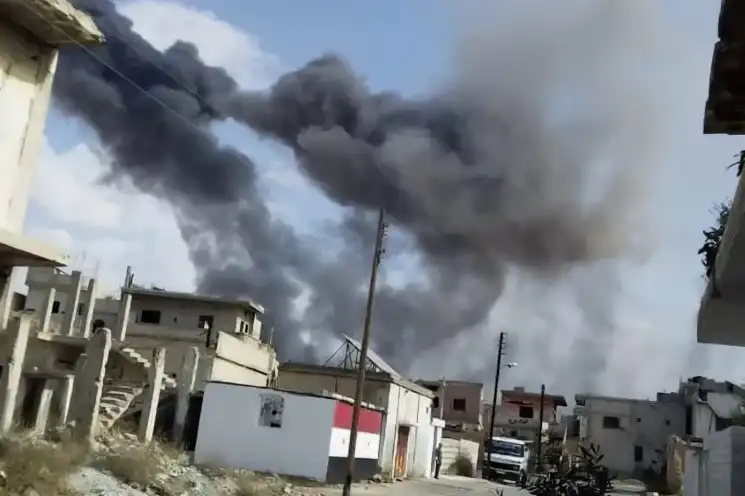
The Syrian Arab News Agency (SANA) confirmed today, Thursday, that the Qusayr area in the southern countryside of Homs in the central region was subjected to Israeli shelling, which led to the injury of civilians.


She added that the bombing resulted in material damage to the industrial area and some residential neighborhoods in the city of Al-Qusayr, and that the bombing also resulted in a large cloud of smoke that covered large parts of the area.


The agency did not mention what the Israeli bombing was targeting, but Israel has targeted leaders in Hezbollah and the Iranian Revolutionary Guard in Damascus in recent weeks, in addition to targeting sites in central Syria and coastal cities, amid a ground incursion into Quneitra in the south.


Israel has been launching raids on Syria for years and has intensified these attacks since the start of its war on the Gaza Strip on October 7, 2023.

ARAB AND WORLD

Thu 31 Oct 2024 12:32 pm - Jerusalem Time

Lebanese Health: 173 paramedics killed and 277 others injured since the start of the aggression

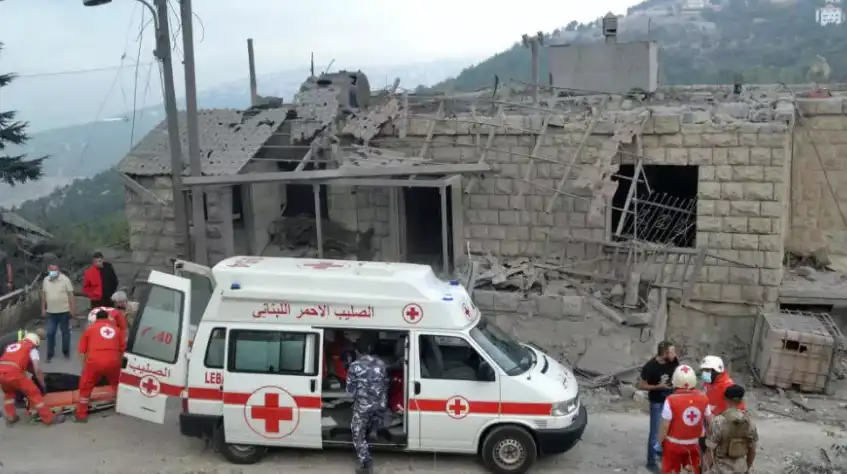
The Lebanese Ministry of Health announced today, Thursday, the martyrdom of a paramedic and the injury of two others, as a result of the Israeli raid that targeted an ambulance in the town of Zefta, southern Lebanon.


The Lebanese Health Ministry said in a press statement that with the martyrdom of the paramedic, the total number of martyred paramedics since the beginning of the aggression has risen to 173 dead, the number of wounded to 277, and the number of targeted vehicles to 243.

ARAB AND WORLD

Thu 31 Oct 2024 12:11 pm - Jerusalem Time

Israel claims to thwart arms smuggling from Egypt

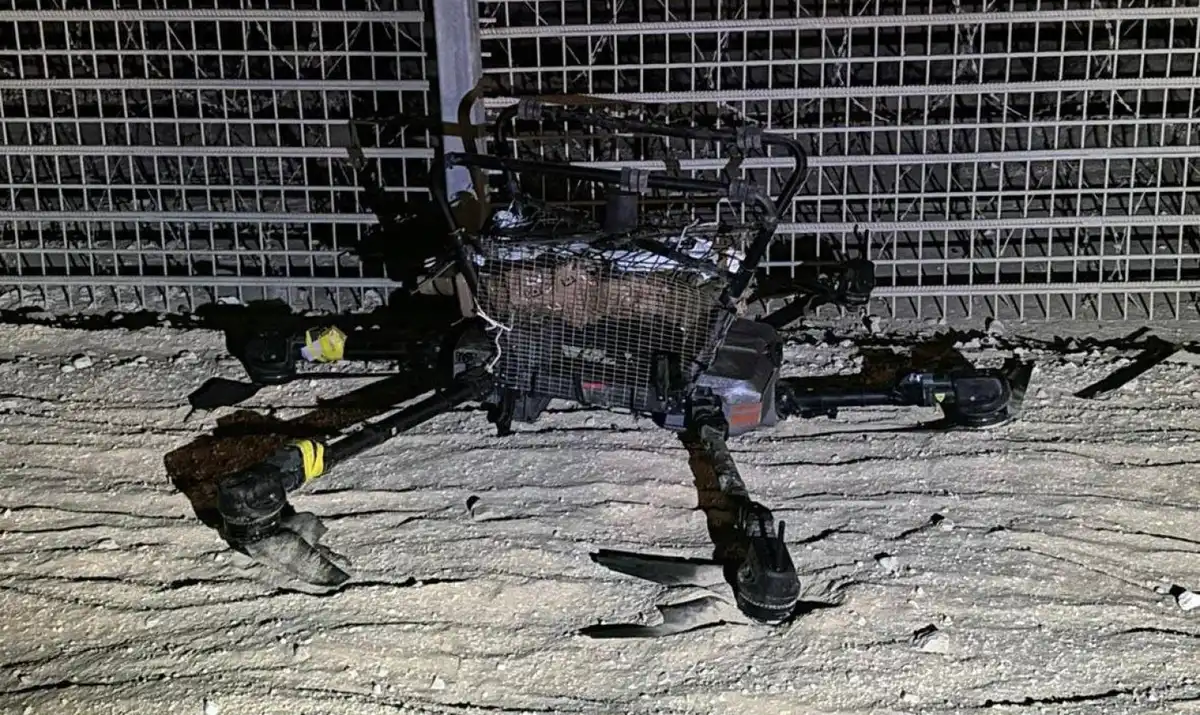
The Israeli occupation army said on Thursday that it had shot down a drone smuggling weapons from Egyptian territory to Israel on Wednesday.


The Israeli army said in a statement that the march was smuggling rifles and pistols that crossed from Egyptian territory into Israeli territory.


The army said in a statement on the X platform: “Last night, Israeli army forces repelled a drone that crossed from Egyptian territory into Israeli territory in the area of the Baran Brigade. The drone was shot down.”


The statement added that an Israeli army force found four rifles and a pistol after shooting down the drone. The weapons found were handed over to the security forces.


Israeli officials said during the war that Hamas used tunnels running under the border with Egypt's Sinai region to smuggle in smuggled weapons. Egypt says it destroyed the tunnel networks leading to Gaza years ago and created a buffer zone and border fortifications to prevent smuggling.

PALESTINE

Thu 31 Oct 2024 12:03 pm - Jerusalem Time

Two days after the decision to ban it: Israel demolishes the UNRWA office in Nour Shams camp

  1. Today, Thursday, the Israeli occupation forces demolished the office of the United Nations Relief and Works Agency for Palestine Refugees (UNRWA) in Nour Shams camp, east of Tulkarm.


    The head of the Nour Shams Camp Services Committee, Nihad Al-Shawish, said in a phone call with the official news agency, WAFA, that the occupation bulldozers demolished the UNRWA office located in the middle of the camp and razed its outer walls.


    Al-Shawish explained that Nour Shams camp includes two UNRWA schools, one for girls and the other for boys, and both provide educational services to a total of 1,536 according to data for the 2022-2023 academic year.


    He pointed out that the camp also contains a health center that provides primary health care services, including reproductive health services, infant and child care, vaccinations and medical examinations, and a dental clinic, all of which are run by the UNRWA office.


    Last Monday, the Israeli Knesset approved, in the second and third readings, a law banning the activities of the United Nations Relief and Works Agency for Palestine Refugees (UNRWA), despite international and UN warnings about the danger of this legislation, which violates international and UN charters and laws.


    The law aims to “prevent any UNRWA activity in the territory of the State of Israel,” and states that “UNRWA will not operate any representative office, will not provide any service, and will not carry out any activity, directly or indirectly, in the territory of the State of Israel.”


    Under the law, the 1967 agreement that allowed UNRWA to operate in Israel is cancelled, and the agency's activities in Israel and the occupied Palestinian territories are therefore halted, and any contact between Israeli officials and its employees is prohibited.


    UNRWA was established by a resolution of the United Nations General Assembly in 1949, and was mandated to provide assistance and protection to Palestine refugees in its five areas of operation: Jordan, Syria, Lebanon, the West Bank and the Gaza Strip.

ARAB AND WORLD

Thu 31 Oct 2024 11:39 am - Jerusalem Time

US-British raid on Hodeidah, German ships avoid Red Sea

The Yemeni Houthi group announced, at dawn on Thursday, that the US-British coalition launched an air strike on the coastal province of Hodeidah in western Yemen, while the German Navy announced that it was avoiding the Red Sea due to the "Houthi threat."


Al Masirah TV, the mouthpiece of the Houthi group, said in a news item on its breaking news feed, "An American-British aggression targeted an area near Hodeidah University in Al Hawak District with an airstrike," but it did not mention the name of the area.


According to the channel, "the US-British coalition aircraft targeted Hodeidah International Airport with two raids last night, Wednesday."


Hodeidah is one of the most important Yemeni governorates, as it contains an international airport and 3 vital ports, and has a long coastal strip.


German caution

Germany's defense ministry said two German warships are avoiding the Red Sea and sailing around Africa instead for fear of Houthi attacks on passing shipping.


German Defense Ministry spokesman Colonel Mitko Mueller said at a news conference yesterday that Defense Minister Boris Pistorius "ordered a longer route for the frigate and the supply ship on their way back from a mission in the Indian and Pacific Oceans."


"The threat level in the Red Sea is very high," Mueller warned at a press conference in Berlin, citing "very sophisticated attacks" carried out there in recent months with tactical ballistic missiles, drones and other weapons.


"Unlike other German naval vessels, the two ships are not specifically designed to carry out air defence operations to protect themselves as well as nearby fleets," he said.


German Chancellor Olaf Scholz, during his visit to India last week, inspected the two ships, the frigate Baden-Württemberg and the supply ship Frankfurt am Main, in the southwestern state of Goa.


The frigate will then head to the Mediterranean to join a UN peacekeeping mission in Lebanon, while the supply ship will sail back to Germany, Mueller said.


In solidarity with Gaza, which has been facing Israeli genocide with American support since October 7, 2023, the Houthis are targeting Israeli or Israeli-linked cargo ships in the Red Sea, the Arabian Sea, and the Indian Ocean with missiles and drones.


Since the beginning of this year, a US-led coalition has been launching raids that it says target Houthi sites in various parts of Yemen, in response to their naval attacks, which have been met with occasional responses from the group.


With the intervention of Washington and London and the escalation of tensions in January, the Houthi group announced that it now considers all American and British ships among its military targets.


Most major shipping companies avoid the Red Sea route towards Egypt's Suez Canal and the Mediterranean, forcing them instead to take a longer and more expensive journey around Africa.


OPINIONS

Thu 31 Oct 2024 11:34 am - Jerusalem Time

Video| David Satterfield says situation in Gaza is 'true disaster'

The National

The National

Opinion Writer


Former US envoy for aid in Palestine tells The National the risk of famine has escalated throughout the year.

OPINIONS

Thu 31 Oct 2024 11:28 am - Jerusalem Time

Why Jordan's 1994 peace treaty with Israel is gathering dust

The National News

The National News

Opinion Writer


By Marwan Muasher

Saturday marks 30 years since the Jordan-Israel peace treaty was signed. In the decades since, has peace in the region become more attainable? Unfortunately, the answer is a decisive no.

Looking back to that day, October 26, 1994, King Hussein was reluctant to sign a peace treaty with Israel until he felt that the Syrians had reached agreement with the Israelis in a separate accord, and that the Palestinians had chosen their own track through the Oslo process. The Jordanian monarch’s motives for agreeing to such a deal went beyond water rights and recovering Jordanian land that had been occupied by Israel.

Jordan’s principal aim with regards to the treaty was to have Israel acknowledge the Jordanian state and system, prevent any mass transfer of Palestinians to Jordan, and bury once and for all the “Jordan is Palestine” argument put forward by then fringe and radical elements in the Israeli political system.

Jordan also felt it could use its newly formed relationship with Israel to facilitate Palestinian-Israeli negotiations and help establish a Palestinian state on Palestinian soil. By establishing economic and security relations between the two countries, Jordan also felt it could help moderate Israel’s position regarding the peace process with the Palestinians.

Thirty years later, none of these aims seem to have been realised. An Israel led by the likes of prime minister Yitzhak Rabin or a coalition government willing to engage in peace talks seems like a distant memory. Today, that coalition has been replaced by a right-wing government that is the result of a marriage between radical forces, both secular and religious.

Some members of today’s government, such as Israeli Finance Minister Bezalel Smotrich and National Security Minister Itamar Ben Gvir, publicly and repeatedly commit themselves to an Israel that stretches “from the river to the sea”. Prime Minister Benjamin Netanyahu has stated that a two-state solution is “a reward for terrorism” and Israeli society appears to be increasingly and permanently shifting to the right. A survey carried out by the Israel Democracy Institute in February found that 63 per cent of Jewish Israeli respondents are opposed to a Palestinian state. This sentiment was reflected in a law passed by the Knesset in July opposing Palestinian statehood in principle; the legislation was endorsed by all major Jewish Israeli parties.

After October 7, 2023, the mass killings of Palestinians in Gaza, the destruction of the territory’s infrastructure to the point where it is near uninhabitable and the attempted ethnic cleansing of Palestinians by settlers in the West Bank – supported by the Israeli army – have all revived Jordanian fears that an Israeli desire to transfer the Palestinian population seems not to have been relegated to the past.

An Israel led by the likes of prime minister Yitzhak Rabin or a coalition government willing to engage in peace talks seems like a distant memory

Radical groups in Israel that are committed to the “Jordan is Palestine” argument, were on the political fringe when the 1994 treaty was signed. Today, they are part and parcel of the Israeli government. Hopes that any successor to Mr Netanyahu would be more open to ending the occupation and establishing a Palestinian state on Palestinian soil are being dashed amid an Israeli society where the divide today is between only pro and anti-Netanyahu factions. On the issue of peace, Israeli society seems to be largely united against it.

Where does this leave Jordan? If a Palestinian state is regarded by Israel as a reward for terrorism, what then, official Jordan is increasingly asking, is Israel’s long-term plan? Is it continued occupation – basically apartheid? Is it trying to get rid of as many Palestinians as possible, through direct killings or mass transfer to reverse the current the reality of a Palestinian population that has overtaken Jewish Israelis?

The answers to the questions above seem highly problematic, not only to Palestinians, but to Jordan as well. Whereas public opinion in Jordan has been extremely hostile to Israeli policies for quite some time, these challenges have seeped into the thinking of Jordanian officials. The significance of the 1994 peace treaty to Jordan is severely diminished today, given the absence of a path towards Palestinian statehood.

One thing is clear: Jordan’s relationship with Israel after October 7 cannot be the same. The model of a warm peace that might moderate Israel and facilitate negotiations has failed. Israel today is more radical than it has been since it signed peace treaties with Egypt and Jordan. And although Jordan will not abrogate its treaty with Israel, which would result in difficulties that Amman does not want to face, the agreement is already – in the words of current Jordanian Foreign Minister Ayman Safadi, “sitting on the shelf and gathering dust”. Plans for co-operation with Israel on water and energy issues have been abandoned, and any future economic ties will be fiercely resisted by a Jordanian population more hostile to Israel than ever before.

Jordan will have to walk a tightrope in the coming period, trying to balance its relationship with the US and the international community if it maintains its current anti-Israel stance and rhetoric, and between an angry public who will reject going back to the pre-October 7 relationship with Israel.

The absence of any serious political vision to deal with the aftermath of the war can only complicate matters further. Without a vision to end the occupation, it will be difficult to argue for a warm relationship with a country that seems to have hostile designs not only against the Palestinians, but against Jordan as well. Thirty years later, the treaty has lost almost all its lustre.

OPINIONS

Thu 31 Oct 2024 10:41 am - Jerusalem Time

October 7: Between foolishness and treason

Al Arabiya

Al Arabiya

Opinion Writer

Abdulrahman al-Rashed


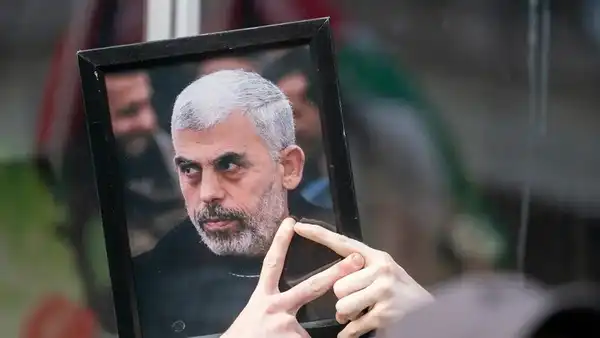
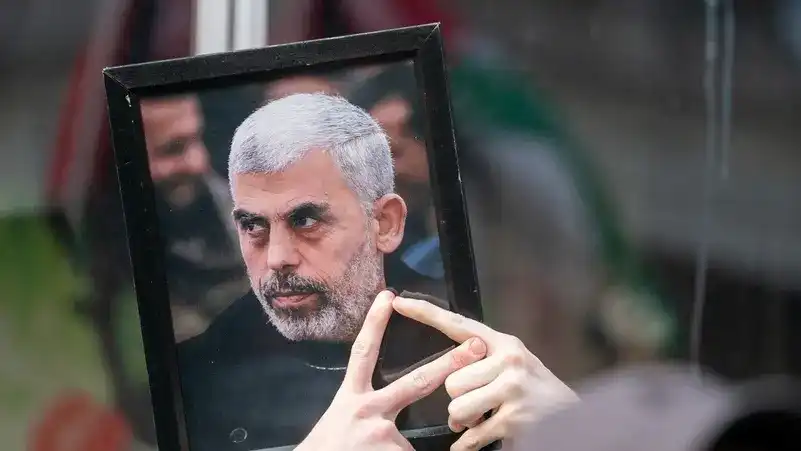
On the ground, Sinwar has achieved for Israeli extremists what the hardline Israeli leaders like Menachem Begin, Yitzhak Shamir, and even Ariel Sharon couldn’t. Sharon, who withdrew from Gaza in 2005, dismantled settlements, and handed the territory over to the Palestinian Authority.

  Why did Sinwar do this? I can’t say for certain why he launched the October 7 attack or who was behind it. Was it ignorance on his part, or was it orchestrated by Iran? This is what I imagine, though there is no evidence to support it.  The October 7, 2023 attack resulted in over 40,000 deaths, a quarter of a million wounded, and millions of displaced people, many of whom are now struggling to survive on just one meal a day. As winter approaches, they will need shelter and blankets. Sinwar’s assault failed to liberate even an inch of land, which he claimed was the goal. Instead, Israel has grown more powerful and more entrenched within Palestine and the broader region.  


Sinwar has internationally destroyed the Palestinian cause, accomplishing what even the infamous Abu Nidal couldn’t. The images of the Israeli dead from October 7th—children, women, and the elderly—will dominate the narrative, alongside the images of the hostages, some of whom were children, infants, and the elderly. This doesn’t excuse Netanyahu’s crimes in deliberately killing Gaza’s innocent civilians. However, Sinwar has successfully ignited a wave of mutual anger and hatred.  Sinwar has effectively buried Hamas, destroyed his ally Hezbollah, and ended Islamic Jihad’s presence in Gaza and the West Bank.  These are the outcomes of the October 7th battle. It doesn’t matter what the leaders outside Gaza claim—whether Mashal declares victory, or Khamenei celebrates Hezbollah’s “victory” as he mourns the deaths of hundreds of leaders who couldn’t even fire a single shot in defense.  Just as Bin Laden led to the downfall of al-Qaeda with the September 11 attacks, Sinwar has done the same.  If I believed conspiracy theories, I wouldn’t be able to resist the thought that Sinwar or those around him are working for Mossad, known for infiltrating Palestinian organizations, especially within Israeli prisons. The attack was carried out to justify everything that followed. The truth is incompetent leaders are more dangerous than agents.

 Under the leadership of Haniyeh, Mashal, and Sheikh Yassin, Hamas’s wars were small raids and limited operations—stabbings, car rammings, or the kidnapping of a soldier or two. Their goal was to keep the Palestinian cause alive and possibly reach political solutions, understanding the power imbalance. Then Sinwar arrived with an operation that can only be explained in one of three ways:  Either he is part of al-Qaeda, not Hamas, infiltrated the movement, rose to power, and executed a suicide mission aimed at destruction, not liberation. In this, he has succeeded.  Or, like other Hamas leaders, he is linked to Iran but acted on Tehran’s agenda without proper calculations. Iran’s regional goals, like halting India’s trade corridor or securing dominance over Iraq, were at play in the October operation. Yet neither Sinwar nor Iran has achieved their objectives.  The final possibility is that Sinwar is politically ignorant. He may not have anticipated that an attack on Israeli civilians would result in such high casualties or studied Israel’s potential response. Perhaps, in his ignorance, he thought—like many others—that Israel would refrain from fighting and instead negotiate for the hostages.


Militarily and politically, the October 7th attack has destroyed the two most significant armed organizations in the Middle East—Hamas and Hezbollah. This may serve regional and international goals, but the humanitarian catastrophe is indescribable. There seems to be no solution in sight for Gaza or Lebanon, where nearly five million people are either displaced or at risk of displacement. This is an overwhelming number, far beyond what international organizations can handle. Now is the time to unite in saving the victims of October 7th, who were neither leaders nor soldiers in these wars yet are suffering their consequences. 


We must also prevent future disasters caused by Sinwar, including the risk of civil war in Lebanon and the displacement of millions of Gazans from their land, which Israel may then seize.  The humanitarian aspect also has a political purpose: to take the next steps in correcting the long history of wrong decisions in Palestine and Lebanon.  October 7 marks a pivotal moment, and its consequences continue to unfold.

ARAB AND WORLD

Thu 31 Oct 2024 10:36 am - Jerusalem Time

Trump told Netanyahu he wanted Gaza war over by the time he took office

Former US President Donald Trump told Israeli Prime Minister Benjamin Netanyahu that he wants Israel to end the war in Gaza by the time he returns to office if he wins re-election, two sources familiar with the matter told The Times of Israel this week.


The message was first conveyed when the Republican presidential candidate hosted the Israeli prime minister at his Mar-a-Lago resort in Florida in July, according to a former Trump administration official and an Israeli official. While Trump has publicly confirmed that he told Netanyahu he wanted Israel to win the war quickly, sources who spoke to the Post revealed there was a timeline attached to that request.


The former US official said Trump was not specific in his appeal to Netanyahu, and he reiterated his support for “residual” Israeli military activity in Gaza, as long as Tel Aviv formally ended the war. Netanyahu has long maintained that Israel will maintain overall security control over Gaza for the foreseeable future after the war, and other Israeli officials have spoken of the IDF maintaining a buffer zone inside the Strip with the ability to enter areas throughout the Strip when Hamas is found to be trying to regroup.


But the prime minister indicated on Monday that Israel had not yet reached the stage of ending the conflict, telling Likud Knesset members in a leaked recording that he could not agree to Hamas's demand to end the war in exchange for the release of 101 hostages it is still holding.


Trump has indicated in recent weeks that he would give Israel greater freedom to make decisions, and has criticized U.S. President Joe Biden for trying to limit potential targets for an Israeli response to Iran’s ballistic missile attack on Oct. 1.


The former US official explained that the victory that Trump wants Israel to secure in Gaza before Inauguration Day also includes the return of the hostages. Trump warned, at the Republican National Convention in July, that those holding American hostages abroad “will pay a very heavy price” if they are not released before he takes office.

ARAB AND WORLD

Thu 31 Oct 2024 10:32 am - Jerusalem Time

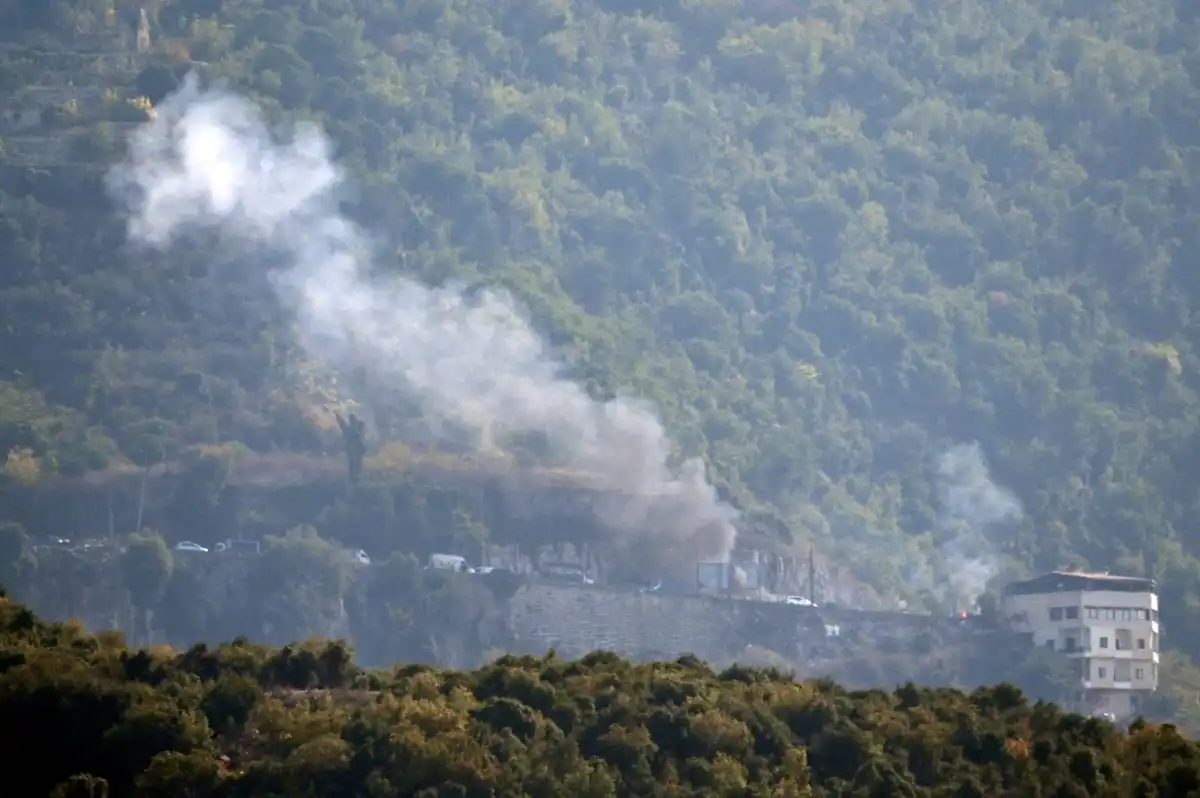
Lebanon: A Car targeted on public road in Mount Lebanon

Today, Thursday, Israeli warplanes targeted a car on a public road in Araya, Mount Lebanon Governorate.


The "Traffic Control" page on the "X" platform reported that traffic was cut off on Al-Kahala Road in both directions due to a security incident, and that it was diverted upwards towards the Basous area and downwards towards Shwit.


This comes after an Israeli airstrike targeted a Hezbollah minibus carrying ammunition on Wednesday while it was traveling on an international road linking Beirut to the Bekaa Valley bordering Syria, killing its driver. In another attack in the nearby town of Qamatiyeh, an Israeli airstrike on a four-wheel drive vehicle killed two people inside, who were not identified due to the charring of their bodies.


A source told Agence France-Presse that "an Israeli airstrike targeted a minibus on the Kahala-Ariya road, killing its driver."

OPINIONS

Thu 31 Oct 2024 10:09 am - Jerusalem Time

When will Netanyahu give in?

op-ed "AlQuds" dot com

op-ed "AlQuds" dot com

Opinion Writer

Netanyahu and his extremist government ministers, especially Smotrich and Ben-Gvir, continue to insist on continuing the chapters of the mass massacre in the Gaza Strip and Lebanon, without the Israeli government paying any attention to the diplomatic initiatives and political movement that became very active this week, in order to establish a ceasefire in the Strip and Lebanon.


The leadership of the occupation army recommended in sessions to assess the situation that the Israeli political level move towards a diplomatic agreement with Lebanon to stop the war and end the ground operation, amidst the belief of the Israeli military apparatus that the war on the Gaza Strip and Lebanon is approaching its goals, and that it is better to conclude an agreement that includes a swap deal in Gaza, and that it is difficult for the army to remain longer in the areas it controls for fear of being exposed to more losses, and its involvement in the Lebanese front more amidst the conviction of the inability to achieve more than the current achievements according to the allegations if the war continues.


After discussing these recommendations with Netanyahu and the leaders of the extreme right, it became clear that the Israeli Prime Minister is still evasive and maneuvering. While he publicly declares his blessing for the initiatives calling for diplomatic agreements, behind the scenes and in closed sessions he rejects them. Israeli sources familiar with the negotiations warn that Netanyahu’s refusal to include the phrase “cessation of hostilities” in the proposed exchange deal could hinder the talks.


Diplomatic activity reaches its peak today, with expectations of the arrival of American officials in Tel Aviv, Jerusalem and Cairo, led by mediator Amos Hochstein, American special envoy Brett McGurk, and CIA Director William Burns. While the latter will be busy trying to formalize the Qatari initiative towards a swap deal and a ceasefire in Gaza for about a month, and turn it into a reality, Hochstein and McGurk will discuss the Lebanese file and the possibility of agreeing on a ceasefire for sixty days with Israeli conditions, which Hezbollah Secretary-General Naim Qassem was open to, but with the party’s conditions in his speech he gave yesterday afternoon, amidst the heavy shelling of Baalbek and the continued expulsion of citizens from southern Lebanon, while Hamas welcomed any initiative based on a ceasefire, the withdrawal of the Israeli army and the end of the aggression, with the condition of rejecting partial solutions that allow Israel to resume the war.


Is the Israeli war really coming to an end? Will diplomatic efforts finally succeed in stopping the torrent of blood that Israel has shed, without any supervision or accountability, or will Netanyahu continue his rampage and rebellion against international legitimacy decisions to continue the war of extermination against our people and Lebanon?


OPINIONS

Thu 31 Oct 2024 10:03 am - Jerusalem Time

Marwan Muasher Initiative

Hamada Faraana

Hamada Faraana

Opinion Writer

In an optimistic tone that is not devoid of awareness of the complexities facing both sides of the Palestinian-Israeli conflict, the serious initiative, worthy of pause and discussion, published by Dr. Marwan Muasher in Foreign Affairs magazine on 10-27-2024, deserves dialogue and attention, first at the Palestinian level before any other party, and especially with the official institution, the Palestine Liberation Organization and its various circles.


Dr. Al-Maasher’s initiative or proposal is full of titles and concepts that need to be reconsidered from his point of view, for example:


- It is time for a fundamental shift in how the world deals with the Israeli-Palestinian conflict. Instead of focusing on a two-state solution, international leaders should focus on ensuring that Palestinians and Israelis have equal rights.


- Foreign governments should pressure both peoples to agree to common rules and principles.


- Arab countries must abandon old ideas and abandon loyalty to the two-state solution.


- This new proposal will not be based on promoting the two-state solution, but instead focuses on promoting the rights and dignity of both Palestinian and Israeli societies.


- Dealing with the truth to accept and implement this vision requires new leadership by Israelis and Palestinians.

Finally, Dr. Marwan Muasher is counting on international pressure to achieve this trend.


The idea proposed by Marwan Muasher is not new, as he says, but he enriched it with details, perhaps to achieve his goal of achieving success. Rather, it is new and old, and it had previously attracted the attention of many Palestinian leaders, but, to be honest, it was not proposed with the detail provided by its owner.


It is necessary to acknowledge that the obstacle to the achievement of this idea is not any Palestinian party at all. The Palestinian leadership, and I do not exclude anyone from it, whether President Abbas, or the leaders of the factions united within the framework of the PLO, or even the Hamas movement, is proposing the idea of the two-state solution as a temporary transitional option, and not a final strategic solution to the Palestinian-Israeli conflict. Thus, the complete strategic solution for Palestine is integration into a single state: a binational Arab-Hebrew state, and a dual Palestinian-Israeli identity, with multiple religions: Islamic, Christian, Jewish, and Druze as well, or within the framework of what it called a federal union between the two parties.


When Dr. Al-Muasher acknowledges that “there is simply no large Jewish constituency in Israel – the colony – that supports equal rights for the Palestinians,” and how can this be achieved and Israeli acceptance of this idea be achieved, he answers by saying: “The short answer is international pressure,” and frankly he avoids talking and acknowledging that the international community, which is the decision-maker with the five countries: the United States, Britain, France, Germany and Italy, is with the colony, supporting it, including the crimes and massacres that the colony has committed and continues to commit daily against the Palestinian people, and in contrast to that, the Russian and Chinese camp supports Palestinian rights, respects the choices of the Palestinians and works to do them justice.


The solution is the struggle within the Palestinian and Israeli societies, and they are the decision makers, and they alone, and no one else can achieve this goal, and the strongest and most effective Israeli party and the decision makers is the ruling coalition consisting of: 1- The extreme right-wing political parties, 2- The extremist Jewish religious parties and with them the triple opposition: 1- Yair Lapid, 2- Benny Gantz and Lieberman, who are also right-wing parties, as indicated by the votes within the Knesset on Palestinian issues, including the decision to reject the establishment of the state and the decision to criminalize UNRWA and other decisions indicating the content of the right-wing orientation that rejects all solutions: 1- The two-state solution, 2- The one-state solution and any solution that responds to Palestinian rights, and the only solution for them is the Israeli solution, based on: 1- Occupying, swallowing and colonizing the entire map of Palestine, 2- Reducing the Palestinian human presence on the land of their homeland according to the solution presented by Smotrich, the "decisive plan", which is to get rid of the Palestinians by voluntary departure, or forced departure, or remaining without political rights at all.


Dr. Marwan Muasher's idea is noble and forward-looking, but it does not have legs to stand on before working to penetrate Israeli society and gain significant Israeli biases, so that the struggle becomes a partnership between Palestinians and Israelis together, on the basis of rejecting Zionism, occupation and discrimination, to reach complete equality for both parties on the land of Palestine.

PALESTINE

Thu 31 Oct 2024 9:51 am - Jerusalem Time

An arrest campaign launched by Israeli occupation forces in the West Bank

The Israeli occupation forces launched a wide-scale arrest campaign in the West Bank at dawn and this morning, Thursday.


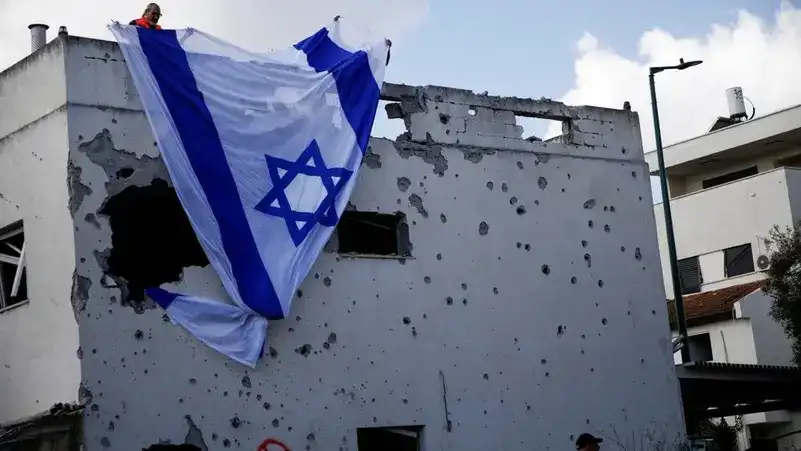
In Hebron, the occupation forces stormed the town of Dura with a number of their military vehicles, and deployed in several neighborhoods of the town amidst the firing of live bullets and sound bombs. The soldiers climbed onto the roofs of some houses and raised the flag of the occupying state on them.


The forces also raided a number of other citizens’ homes and arrested a number of citizens, including: Osama Shaheen, Adi Faisal Al-Awawdeh, Yousef Abu Zneid, Alaa Abrioush, Munther Zuna, Imad Jad Allah, Mohsen Younis Al-Masalma, Ayed Dudin, who was arrested while working as a Red Crescent ambulance driver, Moaz Khaled Al-Faqih, Ziad Badawi, Tariq Ziad Badawi, Ibrahim Samir Al-Atrash, and Ismail Al-Awawdeh.


In Nablus, the occupation forces stormed the villages of Rojib, Salem, and Beit Furik east of Nablus, and Urif south of Nablus, and raided and searched a number of homes, tampered with their contents, and arrested: Ayoub Yahya Ishtiya from Salem, and Muhammad al-Kaabi from the village of Rojib, and also arrested the wounded young man Diaa Basem Khatatbeh, after raiding his home in Beit Furik.


In Ramallah, the young man Anas Saed Khalil (25 years old) was arrested after his house was raided and searched. The occupation also seized a vehicle during its raid on the town of Beitunia.


In Qalqilya, the young man Laith Salim was arrested after storming his house in the town of Jayyous.

PALESTINE

Thu 31 Oct 2024 9:30 am - Jerusalem Time

Israel bombs Kamal Adwan Hospital and Gaza Health condemns the ongoing aggression

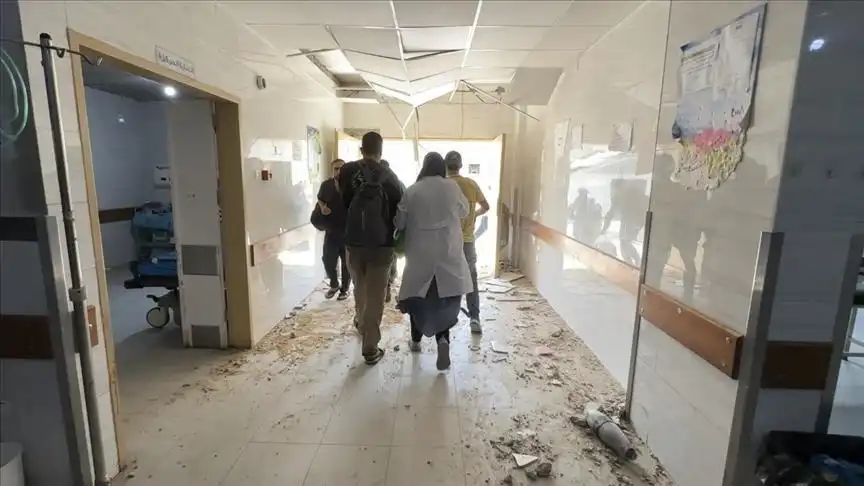
This morning, Thursday, the occupation warplanes bombed the third floor of Kamal Adwan Hospital in the northern Gaza Strip, which led to the burning of a warehouse of medicines and medical supplies that had been received 5 days ago from the World Health Organization.


Medical sources announced the complete suspension of surgical services at the hospital, due to the ongoing aggression.


The occupation forces' vehicles penetrated again into the vicinity of the Indonesian Hospital, while firing machine guns directly at the hospital and the surrounding area.


In turn, the Ministry of Health in the Gaza Strip condemned the repeated attacks by the occupation forces on Kamal Adwan Hospital in the northern Gaza Strip, by targeting the third floor of the hospital, which contains the remaining medicines and medical supplies, and causing great damage to it.


The Ministry called on all international and UN bodies and organizations to protect hospitals and medical staff from the brutality of the occupation and its crimes against institutions.

PALESTINE

Thu 31 Oct 2024 9:25 am - Jerusalem Time

Updated: Dead and wounded in Israeli bombing of the northern and central Gaza Strip

Dozens of citizens were killed and injured this Thursday morning in the occupation's bombing of the northern and central Gaza Strip.


Medical sources reported that a number of citizens were killed and others were injured, as a result of the occupation's artillery shelling of a number of homes in the town of Beit Lahia.


The same sources added that four citizens were killed and others were injured when an occupation drone bombed a vehicle west of Al-Maghazi camp.


The occupation forces continue their aggression on the Gaza Strip, by land, sea and air, since October 7, 2023, which resulted in the death of 43,163 citizens, and the injury of 101,510 others, the majority of whom are children and women, in an incomplete toll, as thousands of people are still missing under the rubble, amid the deterioration of the humanitarian situation in the besieged Strip.

PALESTINE

Thu 31 Oct 2024 9:17 am - Jerusalem Time

US warnings of the collapse of the Palestinian economy: political messages or real fears?

Dr. Tariq Al-Hajj: The absence of a strong economy weakens the ability of Palestinians to achieve economic independence that enhances their political aspirations

Ayham Abu Ghosh: Releasing the withheld funds or stopping the deductions is ruled out at the current stage, and the situation requires a political solution

Dr. Thabet Abu Al-Rus: The American warning directed to Netanyahu regarding the risks of the collapse of the Palestinian economy is real and serious

Talat Alawi: The deterioration of the economic situation is not limited to the Authority alone, but extends to include various sectors of Palestinian society


The Palestinian economy is facing an unprecedented crisis, amid warnings issued by the United States of America and seven of its allies, indicating the risk of a comprehensive collapse of the Palestinian economy if the current conditions continue without addressing them.


A number of experts and economic analysts, in separate interviews with “I”, believe that these warnings are part of an implicit political message aimed at dissuading the Palestinians from taking independent political positions away from American influence.


In contrast, analysts and experts pointed to real indicators of the collapse of the Palestinian economy, including rising unemployment rates, increasing public debt, and escalating Israeli restrictions on Palestinian funds, which deepens the fragility of the Palestinian economy, which is groaning under the weight of Israeli restrictions.


Experts and analysts stressed that the Palestinian Authority finds itself facing difficult choices, ranging from seeking international support and implementing transparency measures, to strict austerity measures, at a time when it needs real international support to stop the ongoing Israeli punitive measures against the Palestinian economy.


The American warning is a veiled message to the Palestinians


The economic expert, Professor Dr. Tariq Al-Hajj, said: The warnings of the United States and its seven allies regarding the Palestinian economic situation are warnings, pointing out that they reflect real indicators of the collapse of the Palestinian economy if the current conditions continue for an additional six months.


Al-Hajj explained that this warning is based on recent reports by the World Bank and the International Monetary Fund, which addressed the state of economic contraction that the Palestinian economy is experiencing, considering that this contraction may be a preliminary stage for a comprehensive collapse.


Al-Hajj pointed out that the warnings were based on the situation in the Gaza Strip, which reflects part of this collapse, as the Strip has become completely destroyed, and international agencies are unable to work there due to the lack of food resources and the escalation of displacement operations.


Al-Hajj pointed to other foundations on which the warning of the collapse of the Palestinian economy was based, namely the recent Israeli decisions, such as controlling the surplus shekel and piracy of clearance funds, which exacerbate the economic situation and raise concerns among some Israeli parties that believe in peace.


Al-Hajj touched on another matter on which the warning was based, which is the increasing unemployment and poverty figures, as poverty and unemployment indicators have reached record levels, while the percentage of bounced checks has increased, which highlights the extent of the financial crisis. In addition, government debt has reached 140% of the GDP, which is a high percentage that reflects the size of the financial deficit of the Palestinian Authority, especially with the failure to adopt a budget for the second year in a row, which creates a state of ambiguity about the future financial situation.


Israel's control over financial resources and land


According to Al-Hajj, the American warning is a veiled message aimed at dissuading the Palestinians from seeking political solutions without the United States, as the absence of a strong economy weakens the Palestinians’ ability to achieve economic independence that enhances their political aspirations.


Al-Hajj explains that the message carries a threat that a political solution is meaningless in light of these deteriorating economic conditions, in light of Israel’s control over financial resources and land, which hinders any serious attempts to establish an independent Palestinian state.


Al-Hajj points out that despite the Palestinian leadership's commitment to international agreements, the Israeli government is seeking to exploit the situation through a plan aimed at gaining complete control over the Palestinian territories and undermining the Palestinian economy.


Al-Hajj confirms that the United States is fully aware of the Israeli measures, and that it may intervene to change the situation if it wants.


Regarding the options available to the Palestinian Authority to overcome the current financial crisis, Al-Hajj explains that they include the extent of its commitment to its understandings with the European Union to support employees’ salaries through what is known as the “Agreement of Intent.”


Among the options, according to Al-Hajj, are European efforts to establish coordination platforms to support the Palestinian Authority, then the option of rebuilding the Gaza Strip, who will manage the Palestinian Authority after this crisis, and the extent of international readiness to support its stability.


The most important options, according to Al-Hajj, are Palestinian unity, transparency in the management of public funds, and activating the Palestinian Legislative Council to assume its responsibilities.


Palestinian Economy and Political and Security Tensions


In turn, the journalist specializing in economic affairs, Ayham Abu Ghosh, pointed out the fragility of the Palestinian national economy, which suffers from the effects of political and security tensions, with the escalation of risks that have begun to threaten its structure.


Abu Ghosh pointed out that the American warnings, as well as the warnings of Washington's allies to Israeli Prime Minister Benjamin Netanyahu, about the danger of the collapse of the Palestinian economy, are putting the economic reality in a dangerous and unprecedented phase.


Abu Ghosh explained that the latest figures announced by Prime Minister Dr. Mohammad Mustafa show the extent of the crisis, as he pointed out that the Palestinian economy has contracted by 35%, a figure that has never been seen before, which increases the indicators of the crisis and confirms the seriousness of the situation.


Abu Ghosh believes that the continued multiple pressures on the Palestinian economy, including Israel’s withholding of clearance revenues, preventing some 200,000 Palestinian workers from reaching their jobs within the Green Line, in addition to the restrictions imposed on trade and investment, including Israeli checkpoints and the siege imposed on the territories, all contribute to the aggravation of the Palestinian economic crisis and push it to the brink of collapse. These pressures are also reinforced by the threat by Israeli Finance Minister Bezalel Smotrich to sever banking relations between Israel and the Palestinian Authority, a measure that, if implemented, could exacerbate the crisis and lead to the collapse that the international community, especially the United States, fears.


Abu Ghosh said: "Washington, despite its negative stance towards the Palestinian issue in general, does not want the Palestinian economy to collapse, because of the consequences that could lead to chaos in the West Bank.


Accordingly, Abu Ghosh believes that serious American pressure is directed towards preventing this collapse by pressuring the Israeli side not to sever banking relations, stressing that the banking relationship will likely remain in place thanks to American pressure.


Abu Ghosh pointed out that these relations have become a political pressure card used by Smotrich and the Israeli right in an attempt to blackmail the Palestinian side.


Releasing the withheld funds or stopping the deductions is still unlikely.


As for Israel’s decision to deduct the clearance funds, Abu Ghosh explained that American and international pressure on Israel may remain limited in effect at present, as the decision depends on the approval of the Israeli Knesset, and therefore releasing the clearance funds or halting the deductions from them may remain out of reach at the present time.


But Abu Ghosh pointed out that international pressure may achieve some mitigation in Israeli trends or limit their escalation, especially with regard to the continuation of the banking relationship, although the release of the withheld funds or the cessation of deductions is still unlikely at the current stage.


Regarding the financial options available to the Palestinian Authority, Abu Ghosh confirmed that they are very limited, as the possibility of local borrowing has reached its maximum, which prompted the Authority to seek a syndicated loan from banks operating in Palestine, similar to the loan it obtained last year, to cover some obligations such as paying installments due on employee loans, or obtaining a direct loan and rescheduling its obligations. However, these solutions remain temporary and not radical.

Abu Ghosh explained that the situation requires a comprehensive political solution that ends the aggression and addresses the economic crisis from its roots, in addition to the return of international financial support, and the resumption of financial aid to the Authority, while exerting real pressure on Israel to release the withheld tax funds and stop the deductions from them.


Abu Ghosh believes that the Palestinian Authority, in light of the continuation of these pressures, will remain stuck in a stifling financial crisis that may worsen over time if radical solutions are not available that guarantee international support and Israel assumes its economic responsibilities towards the Palestinian territories.


Urgent international action required


For his part, economic analyst Dr. Thabet Abu Al-Rus said: The American warning directed to Israeli Prime Minister Benjamin Netanyahu regarding the collapse of the Palestinian economy is real and serious, as this warning is supported by the positions of seven countries allied with the United States. This warning indicates that the Palestinian economy is facing the risk of imminent collapse, which reflects widespread international concern about the repercussions of this deterioration on the political and security situation in the region.


Abu Al-Rus stressed that this warning is based on reports issued by high-level international institutions, including the World Bank and the European Union, which Washington relies on primarily to form its vision regarding the Palestinian economy.


According to Abu Al-Rus' analysis, there is a close connection between the economic warning and the expected political impact, noting that international reports that have been following the situation since October 7th confirm the increasing threat of the collapse of the Palestinian economic system.


Abu Al-Rus pointed out that there is a fear that any collapse in the Palestinian economy would increase tensions in the West Bank and Gaza Strip, which threatens to create a state of "security deterioration," a scenario that neither the United States nor Israel wants to see happen, given the undesirable security repercussions it could bring.


In this context, Abu Al-Rus believes that the American warnings are serious, and that they are directed primarily to the Israeli government to take appropriate measures.


Israel realizes the seriousness of the Palestinian economic situation


Abu Al-Rus pointed out that Israel is well aware of the seriousness of the Palestinian economic situation, and this is evident from its ongoing dealings with the Palestinian Authority’s financial clearance file, as Israel either transfers clearance dues intermittently or withdraws the surplus shekel currency.


Abu Al-Rus noted that these moves reflect the Israeli government's awareness of the consequences of the collapse of the Palestinian economy on its security and stability, even its economic one, especially since the Palestinian market is the third largest market for Israeli products, and therefore any economic imbalance among the Palestinians will also have a negative impact on the Israeli economy, especially in light of the current circumstances.


Regarding whether the United States is serious in its warning to Israel, Abu Al-Rus stressed the seriousness of this warning, noting that several countries, including European and Arab countries, share this concern with the United States, due to the potential negative impact of the collapse of the Palestinian economy on regional stability.


Punitive economic policies to achieve political gains


However, Abu Al-Rus pointed out that the actual ability of the United States and its allies to force Israel, and specifically Israeli Finance Minister Bezalel Smotrich, to back down from his punitive policies against the Palestinian economy, remains limited so far, especially since Smotrich and the Netanyahu government are using punitive economic policies to achieve political gains from the Palestinian Authority.


Abu Al-Rus explained that the greatest danger does not lie only in the current punitive measures, but in the accumulation of these measures over the years, which has led to a significant deterioration in the Palestinian economy.


Abu Al-Rus stressed that Israeli policies, especially with regard to deductions from clearance funds, represent an increasing burden on the Palestinian Authority, which is now in a very difficult economic situation.


Abu Al-Rus believes that the United States of America believes that the current time is not appropriate to force Israel to cancel these measures, pointing out that Tel Aviv is well aware of what it is doing, as it is exploiting economic sanctions as a political pressure tool on the Palestinian Authority to make political concessions or change its positions.


International warnings are informational, not actual.


Abu Al-Rus pointed out that international warnings, despite their seriousness, are mostly media-related and do not have any real impact on the ground. He explained that major countries could have stopped the Israeli aggression on Gaza if they wanted to or intervened directly to cancel the punitive measures. However, international action has so far been limited to media messages without taking practical steps to change the status quo, which, according to Abu Al-Rus, reflects the lack of real political will to pressure Israel.


In his analysis, Abu Al-Rus presented some of the options available to the Palestinian Authority to confront the expected financial challenges, stressing that the Palestinian Authority is in a critical economic position in light of the “uncertainty” surrounding the political and economic scene.


Abu Al-Rus suggested that the Authority begin activating Palestinian diplomacy at the highest levels, with the aim of shedding light on the punitive Israeli practices and mobilizing international support for its position.


Abu Al-Rus pointed out that the Palestinian government's efforts to implement austerity policies and rationalize government spending are no longer sufficient alone to confront the financial crisis.


Palestinian plan to face challenges


Abu Al-Rus believes that the Palestinian government, led by Dr. Muhammad Mustafa, has developed a two-year economic plan to confront the growing challenges, which included seeking funding from the European Union and the Gulf States to support the Authority’s treasury, and has achieved some success in this regard, although this aid does not constitute a long-term solution.


Abu Al-Rus stressed that the ideal solution should begin with collecting the “Palestinian right” of financial dues, instead of relying solely on foreign aid, because that weakens the independence of the Palestinian economic decision.


Abu Al-Rus believes that the Palestinian economic situation is going through a serious crisis that could lead to a comprehensive collapse if urgent measures are not taken by the international community, stressing that Washington and its allies are required to take practical steps that go beyond media warnings, to pressure Israel to end its punitive measures against the Palestinian economy.


Warnings Free of Active Pressure Tools


Commenting on the repeated international warnings about the collapse of the Palestinian economy, journalist and economic media figure Talat Alawi said: These warnings are nothing more than threats that are repeated with every political escalation, and he considered them “political messages” devoid of effective pressure tools on Israel to stop targeting the Palestinian economy.


Alawi pointed out that Israeli Finance Minister Bezalel Smotrich, who has always issued warnings and escalatory decisions, is not only acting as a finance minister, but is also interfering in security and political issues, which reflects the Israeli government’s support for these expansionist policies without any real international deterrent.


Alawi considered that these international warnings regarding the collapse of the Palestinian economy come in light of the failure of the international community to reconcile the economic and political files in Palestine, and are nothing more than an expression of "economic fears" that reflect the international community's concern about the deterioration of the situation in the Palestinian territories.


Alawi stressed that the warnings of the United States and its allies are not new, pointing out that these warnings did not go beyond their theoretical framework and were not accompanied by practical measures on the ground, considering them attempts aimed at "whitewashing" the West, especially during the US elections, and some Western governments in front of their people in light of the difficulty of actually pressuring Netanyahu's hardline government.


Alawi stressed the need for international warnings to go beyond mere "political movements" and for there to be clear, time-bound measures to pressure Israel.


Alawi believes that the international community is required today to prove its seriousness through actual tools to pressure the Israeli government, and not just warning messages for media consumption.


The Palestinian Authority is in a state of "semi-collapse"


Explaining the impact of these Israeli policies on the Palestinian economy, Alawi said that the Palestinian Authority is in a state of “semi-collapse,” and that the deterioration of the economic situation is not limited to the Authority alone, but extends to include various sectors of Palestinian society.


Alawi believes that the restrictions imposed by Israel on the banking sector are part of a broader plan aimed at “strangling” the Palestinian economy completely, as some Israeli banks impose restrictions on banking transactions with Palestinian and foreign banks.


Alawi stressed that these restrictions harm key sectors, starting with salary transfers and universities, all the way to the real estate and fuel sectors, which puts the entire Palestinian economy in a state of partial paralysis.


Alawi pointed out that Israel's economic policy in the West Bank and Gaza Strip aims to create "economic paralysis" that targets the basic pillars of the Palestinian economy, through deliberate strangulation policies in the banking sector and other vital sectors.


economic war of extermination


Alawi explained that there is an "economic war of extermination" being waged by the Israeli government against the Palestinians, which comes in parallel with the military operations in the Gaza Strip, where the infrastructure there is facing almost complete destruction in addition to targeting the Palestinian economy as a whole.


Alawi believes that the American warnings are not serious enough, especially since Israel keeps “part of the tap open” to ensure a limited flow of money into the West Bank, which he considers a strategy aimed at “keeping things under political control.”


Alawi stressed that the West is fully aware of the seriousness of the situation, but is content with issuing warning statements, without taking any practical steps to pressure the Israeli government.


Alawi considered that these countries lack the political will and credibility to pressure Israel.


Alawi explained that the continuous warnings issued by international bodies for more than two years lack actual measures on the ground, which makes them useless in stopping the Israeli escalation.


Alawi believes that the international community, despite the addition of several countries to the list of countries under warning, has not yet succeeded in taking any tangible steps to pressure Israel.


Alawi said that the ability of Israeli Finance Minister Bezalel Smotrich, along with other ministers such as Itamar Ben-Gvir, to implement these policies without any deterrent, reflects the strength of their influence within the current Israeli government, which strengthens their political control.


The authority's options to confront the risk of economic collapse


Alawi pointed out that the partisan balances within Israel allow them to implement their political and economic plans without fear of sanctions or external pressures, which makes this government more stubborn towards any international criticism.


As for the Palestinian Authority's options to confront the threat of economic collapse, Alawi considered that the current Palestinian government is making some efforts to confront this crisis, but they are "insufficient" in light of a clear and declared economic war.


He stressed that the Palestinian Authority lacks comprehensive national solidarity and coordination with all Palestinian components, which makes it unable to confront this economic war imposed by Israel.


Alawi believes that the Palestinian Authority needs a unified strategy that includes all components of the Palestinian people to confront this challenge, but these efforts must be strong and thoughtful, far from being satisfied with media statements, and the Palestinian government also needs economic hedging.


Alawi explained that the Palestinian economy, despite its limited size, has the ability to recover and rise, but on condition that there is a real Palestinian political will to adopt new tools to increase revenues, reduce expenses, and involve the entire economy in policies and trends.


Alawi stressed that there is a need to create an integrated and comprehensive national situation, based on a unified vision that includes all components of the Palestinian economy, and that it be built on new economic foundations capable of withstanding challenges.


PALESTINE

Thu 31 Oct 2024 9:11 am - Jerusalem Time

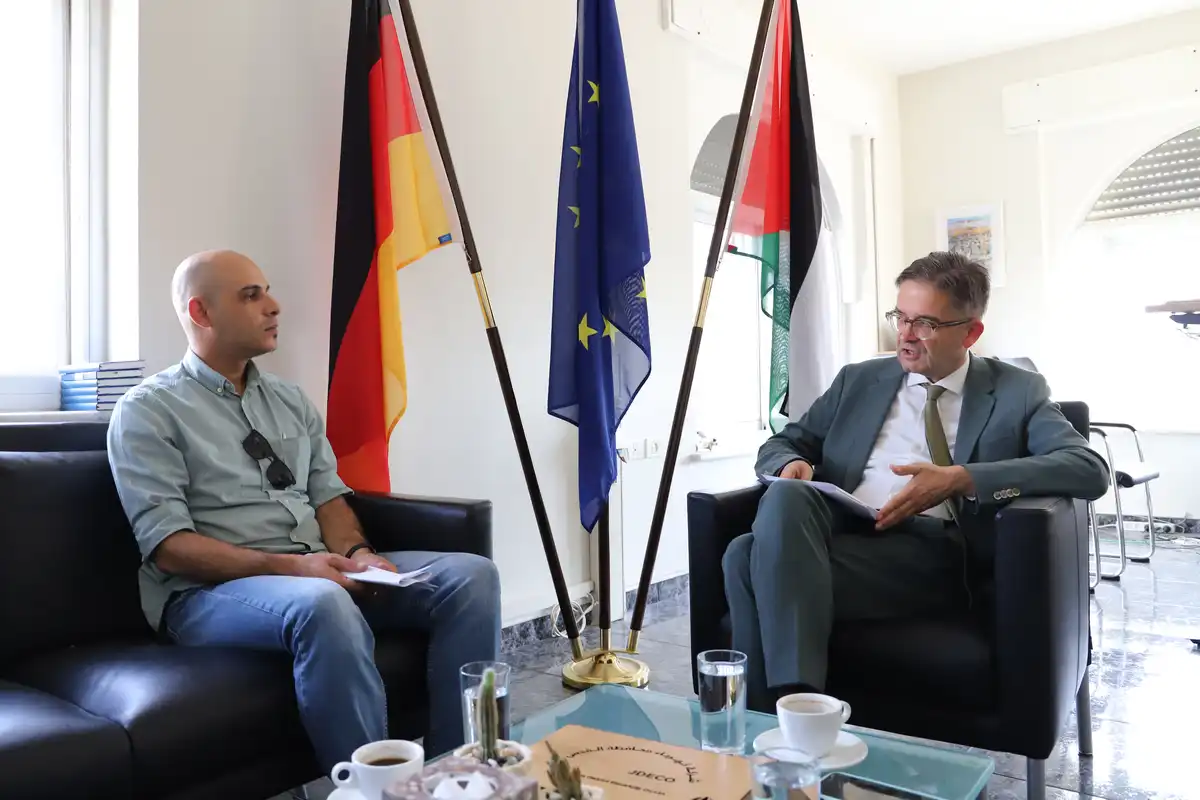
Al-Quds meets with the head of the German representation in Palestine.. Owcza: UNRWA services for Palestinian refugees cannot be dispensed with in all areas

It is important to protect every civilian in Gaza and a balance must be struck between action and reaction.

We admire the pace and path of reform pursued by Mohamed Mustafa’s government and offer it full support.

- We provide financial support to the Palestinian government through the “joint package” from the European Union.

It is necessary for the Palestinian Authority to play its role in managing the sector and for all of Palestine to be under the administration of any government that is formed.

We look forward to opening a political horizon with the support of regional and Arab powers and the European Union in cooperation with the United States.
- Germany adheres to and supports the two-state solution, despite the difficulty of imagining it at the present time.

- Strongly committed to the principle of a united Palestine and for the Authority to be representative of all Palestinians and to extend its control over all Palestinian territories.

- We urge the Israelis to abide by international law and international humanitarian law.. Human rights are indivisible and we see that Palestinian human rights are being violated.

- I express my great respect for the many advantages enjoyed by the Palestinians, from their educational level to their physical and psychological endurance. This is the steadfastness that I consider an example to be emulated.

German policy has a sense of historical responsibility towards Israel.


In a special interview with Al-Quds, the head of the German mission in Palestine, Oliver Owcza, spoke about Germany’s policies in supporting Israel, justifying this with the historical responsibility that Germany feels, and explaining that the events of October 7 strengthened this support, which is backed by German political consensus.


Owcza expressed the German government's concern about the repercussions and risks of the Israeli Knesset's approval of a law banning the work of the United Nations Relief and Works Agency for Palestine Refugees (UNRWA) in Israel, calling on the Israeli government to ensure that UNRWA is able to continue providing life-saving humanitarian aid and is able to deliver education and health care services to Palestinians in Gaza, the West Bank and East Jerusalem.


The German envoy stressed that freedom of expression is protected in Germany, but there are restrictions related to combating anti-Semitism, noting that most demonstrations in Germany have not been banned, and that legal options are open to object to any ban.


Owcza referred to Germany’s support for the Palestinian Authority, saying: “We appreciate the reform efforts led by the government of Mohammad Mustafa, and we affirm Germany’s support for the principle of a two-state solution, provided that the Palestinians commit to renouncing violence.” He also explained that Germany is committed to providing security assistance to Israel, but expects respect for human rights from all parties. He concluded by emphasizing his respect for the steadfastness of the Palestinians and their pride in higher education, stressing the importance of continuing the dialogue to achieve a balance in rights. The following is the text of the interview:


Q- How does Germany view the Knesset’s decision to ban UNRWA’s work in Israel and its repercussions?


We are deeply concerned by the Knesset’s decision to ban the United Nations Relief and Works Agency for Palestine Refugees in the Near East (UNRWA). UNRWA provides indispensable humanitarian assistance and essential supply services to refugees in Gaza, East Jerusalem, the West Bank and throughout the region. Without UNRWA, not only vital humanitarian assistance is at risk. The health care of tens of thousands of people and the education of some 50,000 children in the West Bank and East Jerusalem are also at risk due to the ban on UNRWA, while hundreds of thousands of children in Gaza will lose their hopes and aspirations for continuing their education. The German government therefore believes that the Israeli government must now ensure that UNRWA is able to continue providing life-saving humanitarian assistance and is able to deliver education and health care services to Palestinians in Gaza, the West Bank and East Jerusalem.


Q- How does Germany justify its continued bias towards the Israeli position, despite Israel’s violation of international and humanitarian conventions? Do you believe that historical reasons alone explain this position?


First of all, I do not want to adopt the assessment contained in the question that you asked, but at the same time I would like to say: Yes, in German politics there is a feeling of special historical responsibility towards Israel, and this historical responsibility is reinforced in the political corridors in Germany, especially after the events of October 7, which are considered to be unparalleled events. This also applies to the German parliament, where there is a consensus in parliament and with one voice from the various parliamentary parties in support of Israel.


This decision in the German parliament casts a shadow over the political work of the German government, which nevertheless seeks to have a balanced policy towards the region, including delivering humanitarian aid, calling for a ceasefire, and opening a political horizon.


Q- Given the liberal values that Germany advocates, why do you impose strict policies against the Palestinian community regarding freedom of expression and organization? And how do you balance these policies with human rights?


I understand this question and its sources. Nevertheless, I would like to emphasize that freedom of opinion in Germany is now, as it was in the past, the highest good, and freedom of opinion is also protected by German law. At the same time, there are limits to this, and we consider that the limits are breached or crossed if other freedoms are infringed upon, which are also protected, including in matters of anti-Semitic acts and actions.


To be more precise, I would say that between October 2023 and April 2024, there were more than 2,000 demonstrations in Germany, half of which were pro-Israel and the other half were pro-Palestinian. Of those more than 2,000 demonstrations, only about 100 were banned, meaning only 5% of all demonstrations were attended. Even if there is a ban, prohibition or non-permission to hold a demonstration, recourse to the courts and legal objection is open to everyone, and it is also being used, and has been used.


Q- In recent statements, the German Foreign Minister justified the targeting of civilians in Gaza by saying that they are being used as human shields. How do you justify supporting this Israeli narrative that contradicts international law?


First, the excerpts or sentences circulated from the minister’s speech were parts taken from a long and detailed speech, and there was no presentation or discussion of everything that was included in the speech. The central sentence around which the controversy revolves, which was mentioned in a way that differs from what you presented in the question, was intended to remind us that the exploitation of civilian facilities for military purposes is not in accordance with international law.


At the same time, I understand the emotional outcry when this sentence is mentioned, along with the images coming from Gaza, and we know what they carry, perhaps it would be useful, or of great importance, to add that this matter must be verified in each case individually, and there must be a balance between action and reaction, and it is also of great importance to protect everything that is civilian.


Q- Germany has provided significant financial and logistical support to the Palestinian National Authority. What is Germany’s position on the Authority now, and does it see it as the appropriate body to govern the Gaza Strip? What criticisms does Germany face of the Palestinian Authority’s work and management style?


We are fundamentally and initially impressed by the reform path pursued by the government of Prime Minister Dr. Mohamed Moustafa, and also the pace of this reform, and we provide comprehensive support to this government as part of what we call direct cooperation, and in practical terms we provide this government with advice through experts present at the German Agency for International Cooperation (GIZ), or through the German Development Bank KFW, and we also provide it with financial support through the joint fund or what is called the “joint package” provided by the European Union, and we also provide it with political support by raising various political issues before our international partners.


But it is of utmost importance that these reforms undertaken by the government receive comprehensive support from the entire Palestinian leadership, with all its components, especially if these steps and reforms aim to enhance political legitimacy and combat corruption.


We believe, want, and consider it necessary for this Palestinian Authority to take its role in administering the Gaza Strip, so that it is a government responsible for all of Palestine, regardless of the form of the government. At the same time, it is of utmost importance that any government formed adhere to Israel’s right to exist and to renounce violence.


Q- There are those who believe that Germany cannot bypass American policy in dealing with the Palestinian-Israeli conflict, and that its role is limited to funding rather than active participation in the settlement. What is your comment on this opinion?


In general, I think that there is a constructive role for the United States. They are trying, for example, in the short term, to deliver and facilitate humanitarian aid and its entry into Gaza, and to enhance that, and they have achieved success in this matter.


It is very important, as I mentioned, to create a political horizon, and I believe that creating a political horizon must be a joint effort. My government supports that there be some coordination between the regional powers in the region, and the Arab powers in the region in cooperation with the United States, and with the support of the European countries in order to work on creating this political horizon and moving it forward.


Q- What is the future of Palestinian-German relations? Are there new opportunities for cooperation in light of recent developments, especially after the ongoing war waged by Israel on the Gaza Strip since October 7, 2023 until today?


This is a very important question, and I am aware of the challenges, and I am aware that at the present time, there are voices on both the Palestinian and German sides that are critical of the other’s policy, in a way that calls for questioning and thinking about the position of each of them.


However, I believe that there is still a mutual, principled appreciation from both sides for each other, and there are common interests, and that the basis for these common matters still exists. For example, there are still opportunities to study in Germany, and Germany still adheres in principle to the perspective of the two-state solution, and these are matters that we must not ignore.


I also believe that it is very important at the present time to continue the channels of communication and dialogue, and to keep the joint cooperation open, whether in terms of development cooperation, cultural exchange, or also in terms of discussing political affairs, and we want to hold political consultations in the near future in order to enhance trust.


Q- Does Germany actually support the establishment of an independent Palestinian state that includes the West Bank, Gaza, and Jerusalem? Do you have a vision for how to achieve a capable and geographically contiguous Palestinian state?


Yes, even when one considers that this goal has become unattainable or even unachievable, we still support the two-state solution, and we still stand with this position, even though it is difficult to imagine at the present time, we do so, and we did so at a time when others moved away from this principle, or this position, and we will continue to support the two-state solution through our diplomatic presence here in the German representation in the city of Ramallah.


We are strongly committed to the principle of One Palestine, and we work towards that by supporting the Palestinian Authority, which should be representative of all Palestinian geography and all Palestinians, and we implement that by supporting projects that are not limited to one place, but rather in the West Bank, East Jerusalem, and Gaza as well.


Q-In light of Germany's supply of advanced weapons to Israel, including submarines, how do you reconcile your military support for Israel with your commitments to human rights? Isn't this support for the occupation?


This is an important question, and it requires difficult and complex approaches and trade-offs. As I mentioned, there is a special responsibility on the part of Germany to protect Israel, and we believe that in order for events like those that occurred on October 7 not to be repeated in the future, there is a German commitment to supply Israel with weapons.


At the same time, we expect Israel to remain committed to international law, international humanitarian law and human rights, which is a high value, and we do this by constantly talking to the Israelis and urging them to do so, by raising these issues with them, and reminding them that in the long run there will be no guarantee of Israel's security unless there is also a guarantee of Palestinian security, and that will only be achieved through a Palestinian state.


Q- Given Germany's continued support for Israel, how does Germany view the position of the Palestinians as holders of legitimate rights? Do you believe there is a balance in your policies towards both sides?


Human rights are indivisible, and of course this also applies to the Palestinians. At the same time, we see that Palestinian human rights are being violated, and this also applies to both the Palestinian and Israeli sides. Hence, we see that it is necessary to maintain a permanent dialogue and discussion aimed at protecting human rights by all parties.


The German envoy to Palestine refused to answer the question: How does Germany justify its position in defending Israel before the International Court of Justice, even though the German experience with destruction and displacement makes the Palestinians expect a more sympathetic position towards their cause?


Ovcha concluded his speech by saying: “I express my great respect for the many advantages that the Palestinians enjoy, especially in higher education, and their ability to endure physically and psychologically, for much of what they have been through, and if my expression in the Arabic language is correct, it is what is called steadfastness, which I have the utmost respect for, and which I consider an example that should be emulated.”

OPINIONS

Thu 31 Oct 2024 9:06 am - Jerusalem Time

Israel does not intend to stop

Abdulrahman al-Rashed

Abdulrahman al-Rashed

Opinion Writer

The sun rises again over Gaza and Lebanon, but this time without the dominance of Hezbollah and Hamas, whether we see them as resistance movements or extensions of Iranian influence. A new and a different scene is about to unfold, demanding a Palestinian, Lebanese, Arab, and international effort to minimize human and political losses and to prevent further collapses.  Following the death of Hamas leader Yahya Sinwar and the destruction of Hamas’ power, Israel finds itself in a stronger position than before, largely due to mismanagement of the crisis earlier in the year. Israel is no longer pressured to negotiate hostage exchanges or accept the compromises that were discussed during Cairo negotiations over the administration of Gaza. Proposals from Paris are now off the table, and no one can dictate to Israel how it will manage border crossings, including the key “Philadelphi” corridor.   


With the death of Hassan Nasrallah and most of Hezbollah’s leadership, Lebanon too is in a different position. Israel is no longer content with just the demands of Resolution 1701, which required the cessation of rocket fire and the disarmament of Hezbollah fighters in exchange for Israeli restraint.  The Lebanese army can take full responsibility for protecting the borders and dismantling Hezbollah’s military role. Without this, Israel will continue its military operations until the spring, aiming to eliminate every last fighter in Lebanon. This could lead to the complete destruction of Lebanon and the end of Hezbollah’s political and military presence.  


The war is not over yet. A new confrontation is looming, potentially on a third front in Syria and a fourth with Iran. After its success in destroying Hamas and most of Hezbollah’s capabilities, Israel fears that these threats could resurface unless it cuts off Iran’s influence stretching from Iraq through Syria.  Although not officially stated, Israel’s current goal seems to be driving Iran out of Syria, as reflected in its actions on the ground. For example, Israel has cleared mines on the Golan Heights and called for the removal of international forces, indicating plans for further military operations. Although Syria has avoided getting involved in the Hamas and Hezbollah conflicts, not giving Israel any excuse to target it, Netanyahu’s government is determined to eliminate surrounding Iranian threats, which include Hamas, Hezbollah, and Iranian bases in Syria.  Israel’s attack on the Iranian consulate in Damascus in early April was a clear message: Iran must pack its bags and leave Syria. If Iran withdraws peacefully, it will be a gain for the Syrian government, which no longer needs Iran’s presence as it did during the civil war. Now, Iran’s presence has become a burden on Syria.  Netanyahu may seem reckless, firing in all directions, but in reality, he is following a well-structured plan with a clear objective. Few expected him to be capable of this—dismantling the major regional Iranian threats surrounding Israel. It is anticipated that he will strike Iran this week, aiming for more than just Yahya Sinwar. If the attack happens, Iran will face two choices: accept Israel’s conditions and curb the activities of its external Islamic Revolutionary Guard Corps (IRGC), or face an even more dangerous conflict, both for Iran and the entire region.

Al Arabiya


ARAB AND WORLD

Thu 31 Oct 2024 9:03 am - Jerusalem Time

Riyadh: Palestinian state is a condition for relations with Israel

Saudi Foreign Minister Prince Faisal bin Farhan confirmed yesterday (Wednesday) that the establishment of the State of Palestine is the first condition for establishing relations with Israel.


On the sidelines of the meeting of the "Global Alliance for the Implementation of the Two-State Solution", hosted by Riyadh, he stressed Saudi Arabia's rejection of the genocide being carried out by Israel in the Gaza Strip, and that the Kingdom will do everything necessary to stop the fire in Gaza and Lebanon, and reach a final solution to the Palestinian issue.


On the sidelines of the meeting of the Global Alliance for the Implementation of the Two-State Solution in Riyadh, Bin Farhan announced Saudi Arabia's call for an Arab-Islamic summit to discuss the situation in Lebanon and Gaza.


Meanwhile, the UN Security Council yesterday expressed its rejection of “any attempts to dismantle or reduce” the operations of the United Nations Relief and Works Agency for Palestine Refugees in the Near East (UNRWA), the day after the Israeli Knesset passed a law banning its operations, reminding Israel of its international obligations. The 15 members of the Security Council unanimously affirmed in a statement “the vital role played by UNRWA in providing life-saving humanitarian assistance to Palestinian refugees… and no organization can replace it.” (Details p. 2)

PALESTINE

Thu 31 Oct 2024 8:56 am - Jerusalem Time

UNRWA finds itself a refugee in a tent!

If I were to borrow, for a few minutes, the pen of the newspaper’s artist and cartoonist, colleague Nasser al-Jaafari, I would draw a tent bearing the UNRWA logo, erected in front of the international body’s glass building, located on the banks of the East River in central New York, with the Secretary-General of the United Nations, Antonio Guterres, its Director-General, Philippe Lazzarini, and a number of his employees inside, covered with blankets, and lighting a kerosene stove for heating and preparing food.


If my grandparents, my father and my mother were victims of the first Nakba, with their forced exodus from the village of Beit Atab in 1948, and their “temporary” asylum, which became permanent in the Deheishe camp, then the international agency that provided them and hundreds of thousands of refugees, who were distributed in the homeland and the diaspora, with education, health and relief services, and the construction of “temporary” housing, became a refugee like them, living in a tent.


Without UNRWA, I would not have been able to write this daily column and become the editor-in-chief of the largest newspaper in the country. It is to it that I owe my education and my family’s salvation from the scourge of poverty, disease, need, ignorance and miserable housing, which the refugees found themselves facing after their means of decent living were cut off.


Today, as UNRWA itself is added to the refugee list, this is the greatest disaster for the afflicted who are being killed morning and evening in Gaza, and who are dying of hunger and poverty. At the moment when they are most in need of the services of the Relief Agency, its tent is being removed from them, leaving them prey to killing, hunger, terror and displacement.


After about eight decades, Israel returns to its former ways, as a gang that commits crimes of genocide, and is reassured that it will escape punishment, or even accountability, as if it is not questioned about what it does!


Stop the war of extermination now!

PALESTINE

Thu 31 Oct 2024 8:46 am - Jerusalem Time

West Bank: Two Palestinians killed by Israeli forces in Nour Shams camp in Tulkarm

The child Ahmed Issam Fahmawi and the young man Abdul Aziz Abu Samn were shot dead at dawn today, Thursday, as a result of an Israeli drone bombing of the Nour Shams camp square.


The Israeli occupation forces stormed the city of Tulkarm at dawn today.


Local sources reported that a large number of occupation vehicles, accompanied by three heavy bulldozers, stormed the city through its western axis, and toured its main streets, specifically Al-Alimi, Al-Quds Al-Maftuhah, and Nablus, passing through the entrance to Tulkarm camp, and headed towards Nour Shams camp east of the city.


It added that the occupation bulldozers razed the area surrounding Saif Abu Labdeh roundabout at the entrance to Nour Shams camp, and destroyed the infrastructure in the area, while the entrances to the shops along the main street adjacent to the camp were razed.


The occupation forces imposed a tight siege on Nour Shams camp, amidst the outbreak of violent clashes, the sound of explosions, and the intensive flying of reconnaissance aircraft at low altitudes.


Power was also cut off in the camp, the Aktaba suburb and parts of the city.

OPINIONS

Thu 31 Oct 2024 8:36 am - Jerusalem Time

Genocidal Scorecard

CHRIS HEDGES

CHRIS HEDGES

Opinion Writer


The latest U.N. report chronicles Israel’s advances in its genocidal assault in Gaza. Israel is intent, the report warns, on expelling the Palestinians, recolonizing Gaza and turning on the West Bank.


A United Nations report, published on Monday, lays out in chilling detail the advances made by Israel in Gaza as it seeks to eradicate “the very existence of the Palestinian people in Palestine.” This genocidal project, the report ominously warns, “is now metastasizing to the West Bank, including East Jerusalem.” 

The Nakba or “catastrophe,” which in 1948 saw Zionist militias drive 750,000 Palestinians from their homes, carry out more than 70 massacres and seize 78 percent of historic Palestine, has returned on steroids. It is the next and, perhaps, final chapter in “a long-term intentional, systematic, State-organized forced displacement and replacement of the Palestinians.”

Francesca Albanese, the U.N. Special Rapporteur on the situation of human rights in the Palestinian territories occupied since 1967, who issued the report, titled “Genocide as colonial erasure,” makes an urgent appeal to the international community to impose a full arms embargo and sanctions on Israel until the genocide of Palestinians is halted. She calls on Israel to accept a permanent ceasefire. She demands that Israel, as required by international law and U.N. resolutions, withdraw its military and colonists from Gaza and the West Bank, including East Jerusalem. 

At the very least, Israel, unchecked, should be formally recognized as an apartheid state and persistent violator of international law, Albanese states. The U.N. should reactivate the Special Committee Against Apartheid to address the situation in Palestine, and Israel’s membership in the U.N. should be suspended. Short of these interventions, Israel’s goal, Albanese warns, will likely come into fruition.

 “This ongoing genocide is doubtlessly the consequence of the exceptional status and protracted impunity that has been afforded to Israel.” she writes. “Israel has systematically and flagrantly violated international law, including Security Council resolutions and [International Criminal Court] ICJ orders. This has emboldened the hubris of Israel and its defiance of international law. As the ICC Prosecutor has warned, ‘if we do not demonstrate our willingness to apply the law equally, if it is seen as applied selectively, we will be creating the conditions of its complete collapse. This is the true risk we face at this perilous moment.’”

The U.N. report comes amid an Israeli blockade of northern Gaza where over 400,000 Palestinians are enduring a starvation siege and constant airstrikes in an attempt to depopulate the north. Israeli forces have killed 1,250 Palestinians in the assault, launched on October 5, a medical source told Al Jazeera. Reports from northern Gaza are difficult to obtain as internet and phone services have been cut and the few journalists on the ground continue to be killed. Israel’s ground and aerial assaults are centered on Jabaliya, Beit Lahiya and Beit Hanoun. Civil defense units say they have been barred by Israeli forces from reaching the sites of recent strikes and their crews have been attacked. 

Israel has ordered Palestinians to flee to designated “safe zones,” but once in these “safe zones” they have been attacked and ordered to move to new “safe zones.” 

“Displaced people have been systematically chased down and targeted in shelters, including in United Nations Relief and Works Agency for Palestine Refugees in the Near East (UNRWA) schools, 70 percent of which Israel has repeatedly attacked.” 

In May, Israel’s Rafah invasion caused the displacement of nearly one million Palestinians, driven into southern Gaza because of Israeli evacuation orders, into “uninhabitable wastelands of rubble, sewage and decomposing bodies,” Albanese notes.

By August, 90 percent of Gaza’s population of 2.3 million Palestinians were displaced “under dire conditions,” according to the U.N.

The months of “relentless shunting of weakened humans from one unsafe area to another — fleeing bombs and bullets, with minimal chances of escape, amid loss, fear and grief, and with little access to shelter, clean water, food and healthcare — have inflicted incalculable harm, especially on children,” the report reads. “The movement of displaced Palestinians resembles the death marches of past genocides, and the Nakba. Forced displacement severs connection with the land, undermining food sovereignty and cultural belonging, and triggering further displacement. Communal bonds are broken, the social fabric shredded and reserves of resilience depleted. Systematic forced displacement contributes to ‘the destruction of the spirit, of the will to live, and of life itself.’”

The constant displacement — many Palestinians have been displaced nine or 10 times — from one part of Gaza to another is accompanied by calls from Israeli officials to “renew settlements in Gaza” and encourage the “voluntary transfer of all Gazan citizens” to other countries. 

Israel has killed at least 43,163 people in Gaza and wounded 101,510 in Israeli attacks since October 7, 2023. An estimated 1,139 people were killed – some by Israeli forces – in Israel during the incursion by armed Palestinian fighters into Israel and more than 200 were taken captive. In Lebanon, at least 2,787 people have been killed and 12,772 wounded since the Israeli assault on Gaza began, with 77 killed in strikes across the country on Tuesday alone.

The report found evidence that Israel has carried out “more than 93 massacres.” 

U.N. investigators concede the numbers of dead in Gaza are probably a vast undercount given that at least 10,000 people, including 4,000 children, are missing, probably buried under the rubble, where “the voices of those trapped and dying are often audible.” Other Palestinians, an “uncertain number,” have been seized by Israel forces and “disappeared.”

Israel has repeatedly attacked aid distribution sites, tent encampments, hospitals, schools and markets “through the indiscriminate use of aerial and sniper fire.” The report notes that “at least 13,000 children, including more than 700 babies, have been killed, many shot in the head and chest” while approximately “22,500 Palestinians have sustained life-changing injuries.”

 “The disturbing frequency and callousness of the killing of people known to be civilians are ‘emblematic of the systematic nature’ of a destructive intent,” the report reads. “Six-year-old Hind Rajab, killed with 355 bullets after pleading for help for hours; the fatal mauling by dogs of Muhammed Bhar, who had Down’s Syndrome; the execution of Atta Ibrahim Al-Muqaid, an older deaf man, in his home, later bragged about by his killer and other soldiers on social media; the premature babies deliberately left to die a slow death and decompose in the intensive care unit at Al-Nasr Hospital; the elderly man, Bashir Hajji, killed en route to southern Gaza after appearing in a propaganda photograph of a ‘safe corridor;’ Abu al-Ola, the handcuffed hostage shot by a sniper after being sent into Nasser Hospital with evacuation orders. When the dust settles on Gaza, the true extent of the horror experienced by Palestinians will become known.”

The genocide has turned the landscape into a toxic wasteland.

“Nearly 40 million tons of debris, including unexploded ordnance and human remains, contaminate the ecosystem,” the report goes on. “More than 140 temporary waste sites and 340,000 tons of waste, untreated wastewater and sewage overflow contribute to the spread of diseases such as hepatitis A, respiratory infections, diarrhea and skin diseases. As Israeli leaders promised, Gaza has been made unfit for human life.”

In a further blow, the Israeli parliament on Monday approved a bill to ban UNRWA, a lifeline for Palestinians in Gaza, from operating on Israeli territory and areas under Israel’s control. The ban almost certainly ensures the collapse of aid distribution, already crippled, in Gaza.

As of Oct. 20,  233 UNRWA workers have been killed in Gaza since Oct. 7, 2023, making it the deadliest conflict for U.N. workers.

Israel has expanded its “buffer zone” along the Gaza perimeter to 16 percent of the territory, in the process leveling homes, apartment blocks and farms. It has pushed over 84 percent of the 2.3 million people in Gaza into  “a shrinking, unsafe ‘humanitarian zone’ covering 12.6 percent of a territory now reconfigured in preparation for annexation.” Satellite imagery indicates that the Israeli military has built roads and military bases in over 26 percent of Gaza, “suggesting the aim of a permanent presence.” 

The blockade of food is accompanied by the destruction of water treatment plants, sewage systems, reservoirs, aid convoys, healthcare facilities and food distribution points — crowds of desperate people waiting for food “have been massacred” by Israeli soldiers. 

Israel has all but obliterated medical facilities and services in Gaza. It has damaged 32 of 36 hospitals, with 20 hospitals and 70 of 119 primary healthcare centers incapacitated. By this August it had attacked healthcare facilities 492 times. Israel besieged Al-Shifa Hospital for the second time in March and April, killing more than 400 people and detaining 300, including doctors, patients, displaced persons and civil servants. It carried out a forced evacuation of all but 100 of 650 patients in Al-Aqsa hospital.

“In August,” the report reads, “entry permits for humanitarian organizations nearly halved. Access to water has been restricted to a quarter of pre-7 October levels. Approximately 93 per cent of the agricultural, forestry and fishing economies has been destroyed; 95 per cent of Palestinians face high levels of acute food insecurity, and deprivation for decades to come.”

“In recent months, 83 percent of food aid was prevented from entering Gaza, and the civilian police in Rafah were repeatedly targeted, impairing distribution,” the report notes. “At least 34 deaths from malnutrition were recorded by 14 September 2024.”

These measures “indicate an intent to destroy its population through starvation.”

Palestinians detained by Israeli forces “have been systematically abused in a network of Israeli torture camps. Thousands have disappeared, many after being detained in appalling conditions, often bound to beds, blindfolded and in diapers, deprived of medical treatment, subjected to unsanitary conditions, starvation, torturous cuffing, severe beatings, electrocution and sexual assault by both humans and animals. At least 48 detainees have died in custody.”

The report cites the role of the Israeli media in “inciting” the genocide “by helping to foster an unchecked genocidal climate.” 

The report criticizes the Israeli media for platforming “proponents of genocide” and withholding “facts from the Israeli public.” At the same time, the Israeli military has killed over 130 Palestinian journalists. 

Palestinians are equated with the Amalek, the Biblical enemies of the Israelites, as well as Nazis, to justify their extermination.

Albanese’s report, in a section titled “Risk of genocide in the West Bank, including East Jerusalem,” notes that Israel has accelerated its lethal attacks, detentions and land seizures in the West Bank. 

“Genocidal conduct in Gaza set an ominous precedent for the West Bank,” it notes.

In May 2024, the governance of the West Bank was “officially transferred from military to civilian authorities — further de jure annexation — and placed under [Bezalel] Smotrich, a committed Eretz Yisrael politician,” the report reads. “The largest single land appropriation in 30 years was then approved.” 

Smotrich, the Minister of Finance, claims there are “two million Nazis” in the West Bank. He has threatened to turn parts of the West Bank into “ruined cities like in the Gaza strip” and stated that starving the entire Gaza population was “justified and moral,” even if two million people died. Minister of Foreign Affairs Israel Katz has also called for the West Bank to receive the same treatment as Gaza.

Thousands of Palestinians in the West Bank towns of Jenin, Nablus, Qalqilya, Tubas and Tulkarem live for days under curfew, making it difficult to access food and water. As in Gaza, the Israeli army, during its Operation Summer Camps, has “targeted ambulances, blocked entrances to hospitals and laid siege to Jenin Hospital. Bulldozers destroyed streets and electricity and public health infrastructure.” 

Drones and war planes carry out airstrikes. Israeli roadblocks, checkpoints and blockades make travel difficult or impossible. Israel has suspended financial transfers to the Palestinian Authority, which nominally governs the West Bank in collaboration with Israel. It has revoked 148,000 work permits for those who had jobs in Israel.

“The gross domestic product (GDP) of the West Bank contracted by 22.7 percent, nearly 30 percent of businesses have closed, and 292,000 jobs have been lost,” the report reads. Over 692 Palestinians — “10 times the previous 14 years’ annual average of 69 fatalities,” have been killed and more than 5,000 have been injured. Of the 169 Palestinian children who have been killed, “nearly 80 percent were shot in the head or the torso.”

Since August, in the Jenin refugee camp “approximately 180 homes were levelled and 3,800 structures damaged, destroying or damaging power supplies, public services and amenities, displacing thousands of families and causing widespread disruption. More than 181,000 Palestinians have been affected, many multiple times.”  

The report dismisses the claim that Israel is carrying out the assault in Gaza and the West Bank to “defend itself,” “eradicate Hamas” or “bring the hostages home,” charging that these claims are “camouflage,” a way of “invisibilizing the crime.” Genocidal intent, as Judge Dalveer Bhandari from the ICJ points out, “may exist simultaneously with other, ulterior motives.”

Rather, the incursion into Israel by Hamas and other resistance fighters on Oct. 7 “provided the impetus to advance towards the goal of a ‘Greater Israel.’” 

“In the context of Israel ignoring the ICJ directive to end the unlawful occupation, the aim to eradicate resistance contradicts the rights to self-determination and to resist an oppressive regime, protected by Customary International Law,” the report reads. “It also portrays the entire population as engaged in resistance and therefore eliminable. By continuing to suppress the right to self-determination, Israel is replicating historical instances in which self-defence, counter-insurgency or counter-terrorism were used to justify destruction of the group, leading to genocide.”

It notes that Israel, rather than abiding by the 1993 Oslo Accords, which were supposed to lead to a two-state solution, increased its colonies in the West Bank from 128 to 358 and the numbers of Jewish settlers “have grown from 256,400 to 714,600.” Israel passed the 2018 Nation State Law that asserts exclusive Jewish sovereignty over “Eretz Yisrael” and names “Jewish settlement” on occupied Palestinian land a “national priority.” It cultivates “a political doctrine that frames Palestinian assertions of self-determination as a security threat to Israel” and uses it “to legitimize permanent occupation.”

“The current intent to destroy the people as such could not be more evident from Israeli conduct when viewed in its totality,” the report states.

A leaked Israeli Ministry of Intelligence “concept paper” from October 2023 outlines the plan to expel the entire Gaza population to Egypt and recolonize Gaza. It is a plan Israel appears to be following.

Albanese writes that Israel is replicating the patterns of past genocides. It creates through its rhetoric a “vengeful atmosphere” that conditions soldiers to be “willing executioners.” It claims it is acting in self-defense while targeting a civilian population. It is obliterating the infrastructure that sustains life, a process of “genocide by attrition.” It uses starvation as a weapon. It is attempting to hide its crimes by killing Palestinian journalists and U.N. workers and blocking international agencies and the international media from Gaza. 

We have seen genocide before. We have also seen the complicity or silence of nations that have the power to intervene. History doesn’t repeat itself, but too often it rhymes.

ARAB AND WORLD

Wed 30 Oct 2024 9:43 pm - Jerusalem Time

Qatar, Iran discuss de-escalation in the region, developments in Gaza and Lebanon

On Wednesday, Qatari Foreign Minister Mohammed bin Abdulrahman discussed with his Iranian counterpart Abbas Araghchi the latest developments in the Gaza Strip and Lebanon and ways to reduce escalation in the region.


This came during a phone call made by Bin Abdulrahman (who holds the position of Prime Minister) with Araqchi, according to a statement by the Qatari Foreign Ministry.


The ministry said, "During the call, they reviewed cooperation relations between the two countries and ways to support and enhance them."


The two sides also discussed "the latest developments in the region, especially in the Gaza Strip and Lebanon, and ways to de-escalate."

PALESTINE

Wed 30 Oct 2024 9:11 pm - Jerusalem Time

Israeli army: New military division established on the border with Jordan

The Israeli occupation army announced on Wednesday evening that the Minister of Defense in the occupation government, Yoav Galant, and the Chief of Staff, Major General Herzi Halevi, agreed to establish a military division on the eastern border.


The occupation army said in a statement that the division was established to protect Israel's eastern borders, in light of the situation assessment, noting that the division would be subordinate to the central command.


He added that the division's mission is to strengthen the defense in the border area, Route 90 and the settlements, and to confront terrorist incidents and arms smuggling.


ARAB AND WORLD

Wed 30 Oct 2024 8:09 pm - Jerusalem Time

US: We support Israel's right to strike legitimate Hezbollah targets

11The US State Department said on Wednesday that Washington supports Israel's right to strike legitimate Hezbollah targets in Lebanon, according to Reuters.


The ministry's statement came when asked about Israel's bombing of the city of Baalbek in eastern Lebanon.


But State Department spokesman Matthew Miller told reporters in a briefing that Israel must do so in a way that does not endanger civilian lives, and that it is necessary to protect civilian infrastructure and important cultural heritage sites.


The city of Baalbek and surrounding villages in eastern Lebanon were subjected to a series of raids today, a few hours after the Israeli army issued an evacuation warning to the residents of the city and two villages in the governorate, warning against striking Hezbollah targets in the area.


According to the National News Agency, the Israeli raids targeted residential neighborhoods in the city. They also targeted “towns that were not included in the warning alert.”

ARAB AND WORLD

Wed 30 Oct 2024 7:55 pm - Jerusalem Time

Ben Gvir describes Smotrich as arrogant and ignorant of security and economy

Israeli National Security Minister Itamar Ben-Gvir attacked Finance Minister Bezalel Smotrich, describing him as "arrogant" and "ignorant of security and economic matters," Hebrew media reported on Wednesday.


The private newspaper "Israel Hayom" said on Wednesday that Ben Gvir (far-right) conveyed to those close to him his dissatisfaction with Smotrich (far-right).


Ben-Gvir said: "Smotrich is very arrogant, and he thinks he knows about security and economics, and now he understands internal security (...) and in reality he does not understand anything."


The Hebrew newspaper attributed Ben-Gvir's dissatisfaction with Smotrich to a statement the latter made to journalists a few days ago, in which he criticized Ben-Gvir's demand to double the National Security Ministry's budget to 20 billion shekels ($5.4 billion).


Smotrich considered that Ben Gvir is demanding to double his ministry's budget without achieving any results.


The private newspaper Yedioth Ahronoth reported that an argument between Ben-Gvir and Smotrich took place in Prime Minister Benjamin Netanyahu's office last September.


The newspaper added at the time that the argument "ended in a fight and blame," explaining that "Ben Gvir presented during his meeting with Netanyahu a plan to build 5,000 new detention places, and demanded a special budget for the project," but Smotrich shouted at him, demanding that he use the money in his ministry first before requesting a new budget.


The current dispute between Smotrich and Ben-Gvir comes despite both of them belonging to far-right parties; the former leads the Religious Zionism party, and the latter leads the Jewish Power party.


Both parties adopt extremist policies, including hostility towards Arabs and Palestinians, and the promotion of Israeli settlement in the occupied territories.


In recent months, Smotrich and Ben-Gvir have taken hardline positions, including refusing to stop the genocide in Gaza, calling for the starvation of the Palestinians in the Strip, taking measures to annex the occupied West Bank, and reducing the rights of Palestinian prisoners.

ARAB AND WORLD

Wed 30 Oct 2024 7:38 pm - Jerusalem Time

Dozens of dead and wounded as a result of the occupation's bombing of several areas in Lebanon

Dozens of Lebanese citizens were killed and injured on Wednesday evening as a result of renewed Israeli occupation shelling of various areas in Lebanon, amid widespread destruction of buildings, facilities and infrastructure.


The raids launched by the occupation air force on the towns of Beit Salibi, Badnayel, and Sahmar in the Bekaa resulted in the martyrdom of 27 citizens and the injury of dozens.


The city of Baalbek and its towns were subjected to a violent series of raids, which led to massive destruction of buildings and property.


The occupation's air force and artillery bombed the cities of Tyre, Baalbek, and Nabatieh, and the towns of Douris, Ras al-Ain, Ain Bourday, Khiyam, Shaqra, Safad al-Battikh, al-Bazouriyeh, al-Aytaniyah, Kfar Malki, Ainatha, al-Mansouri, Burj al-Muluk, Zefta, Yahmar, al-Khardali, Kfar Kila, Jebshit, al-Ramadiyeh, Bafliyeh, Dab'al, al-Sha'itiyah, and al-Malikiyah in southern Lebanon and the Bekaa.