ARAB AND WORLD

Fri 01 Nov 2024 3:58 pm - Jerusalem Time

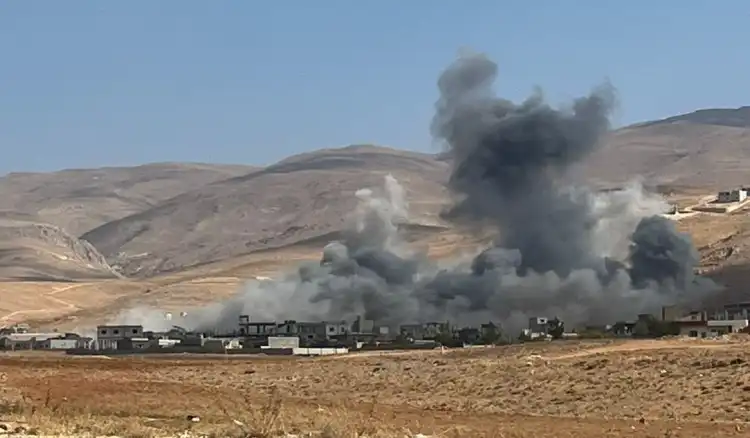
Twelve dead in Israeli raids on Baalbek, eastern Lebanon

12 people were killed and others were injured today, Friday, in a raid launched by Israeli occupation aircraft on the town of Amhaz in the Baalbek Governorate, eastern Lebanon.


The Lebanese News Agency reported that 12 people were killed in the initial toll of the raid launched by the occupation aircraft on a residential neighborhood in the town of Amhaz, noting that the rubble removal operations in the targeted neighborhood are continuing.


Civil Defense firefighting teams were also able to extinguish a fire in a house that was targeted by an Israeli raid in the town of Tarya, which led to the martyrdom of two people and the injury of four others with moderate injuries.


The Lebanese News Agency reported that the member of the Nabatieh Municipal Council, the executive director of the municipality, Muhammad Jaber, was killed in an airstrike launched by the occupation aircraft on a house in the Al-Maslakh neighborhood in the city of Nabatieh, south of Lebanon.


She pointed out that the ambulance teams were able to retrieve the body of the martyr Jaber from under the rubble after the raid completely destroyed it and caused great damage to the surrounding homes and shops.


At night, the city of Nabatieh was subjected to a series of Israeli air strikes that targeted a number of neighborhoods and caused significant damage to residential buildings.


In a related context, the occupation aircraft launched raids on the towns of Iaat, Bouadi, Ras al-Ain, Maqna, Qasr Naba, al-Bazaliyah, and Rasm al-Hadath in Baalbek Governorate, in addition to al-Zahraa neighborhood in Baalbek city.

ARAB AND WORLD

Fri 01 Nov 2024 3:01 pm - Jerusalem Time

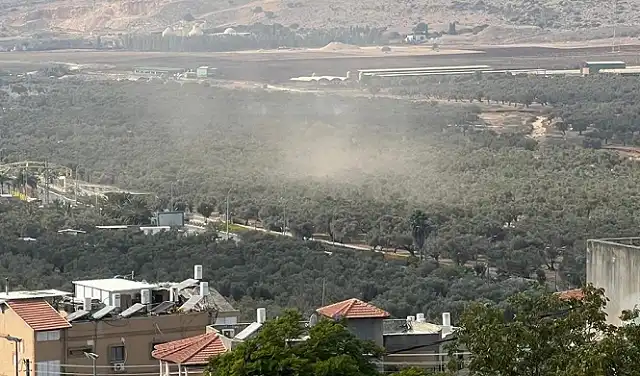
Rocket and shrapnel fall in Shaab: 11 injured, including children and a pregnant woman, while picking olives

Eleven people were injured when a rocket fired from Lebanon and interceptor shrapnel fell in the village of Shaab in the Galilee region, in the north of the country, on Friday.


Hayyan Intensive Care Center confirmed that it "provided treatment to eleven injuries in the village of Shaab, including five injuries to children and one injury to a pregnant woman, while the rest of the injuries were to adult men."


It stated in its statement that "most of the injuries were described as minor, with the exception of one injury to a man in his thirties, whose injury was described as moderate, and he was transferred to the intensive care unit at the Galilee Medical Center."


Before that, Hayyan reported that its crews were "providing treatment for several injuries from a missile that fell on the village of Shaab," noting that "one of the injuries is critical," before adding a short time later in a brief statement that there were "9 injuries in the village of Shaab, one of which is serious."


In another statement, the medical team said that "the serious injury is in stable condition," noting that "it has been treated, and the injury is now described as moderately stable, and she is being transferred to the intensive care unit at the Galilee Medical Center."


For its part, Hezbollah said in a statement: “In support of our steadfast Palestinian people in the Gaza Strip, in support of their valiant and honorable resistance, and in defense of Lebanon and its people, the Islamic Resistance fighters bombed the Karmiel settlement at 1:45 p.m. today, Friday, with a salvo of rockets.”


Mina Shafiq Hassoun, 60, and her son Karmi Raja Hassoun, 30, were killed, and a 71-year-old man was slightly injured, on Thursday, when rocket shrapnel fell on an olive grove near the city of Shefa-Amr.


6 Arab victims due to shells and rocket fragments


With the killing of the two victims from Shefa-Amr yesterday, Thursday, 4 others were killed as a result of interceptor missiles and falling shells and missile fragments launched from Lebanon since the beginning of the escalation and mutual shelling between Israel and Hezbollah.


On August 9, young Michael Samara from Kafr Yasif died of shrapnel wounds he sustained from an Israeli interceptor missile south of Nahariya.


On October 25, Hassan Ali Suwaed from the town of Ba’ana and Arjwan Abdul Halim Manaa from the town of Majd al-Krum were killed when rocket shrapnel fell on a commercial store in Majd al-Krum.


On October 29, a young man, Muhammad Yasser Qaytan Naim, from Tarshiha, was killed by a direct hit from a rocket and shrapnel while he was on his way to the shelter to take cover.

PALESTINE

Fri 01 Nov 2024 2:55 pm - Jerusalem Time

Hamas: Truce proposals do not meet our people's demands

A Hamas leader said on Friday, "The truce proposals do not meet our people's demands and needs in providing security, relief, and reconstruction, nor even opening the crossings, especially the Rafah crossing."


The leader added in a statement to Al Jazeera, "The movement heard from Egypt and Qatar ideas about a truce for specific days, increasing aid, and a partial exchange of prisoners."


He stressed that the proposals do not include a permanent cessation of aggression, a withdrawal of the occupation from the Gaza Strip, or the return of the displaced. He said, "We have confirmed our people's demand for a permanent ceasefire, withdrawal from the Strip, the return of the displaced, and the lifting of the siege."


The leader also stressed that Hamas is open to any ideas or negotiations to achieve these goals and implement UN Security Council Resolution 2735, stressing the need to provide the necessities of life, reconstruction and achieving an exchange that includes alleviating the suffering of Palestinian prisoners.


Egyptian President Abdel Fattah el-Sisi announced last Sunday that his country had proposed an initiative for a temporary ceasefire in the Gaza Strip, starting with two days to exchange four Israeli prisoners for some Palestinian prisoners, then within 10 days negotiations would take place to transform the temporary truce into a permanent one and a complete ceasefire.


Qatar, Egypt and the United States have been mediating between Israel and Hamas in talks for months, and the negotiations stopped last August without reaching an agreement.

PALESTINE

Fri 01 Nov 2024 1:42 pm - Jerusalem Time

Updated:: Continuous Israeli attacks in the West Bank

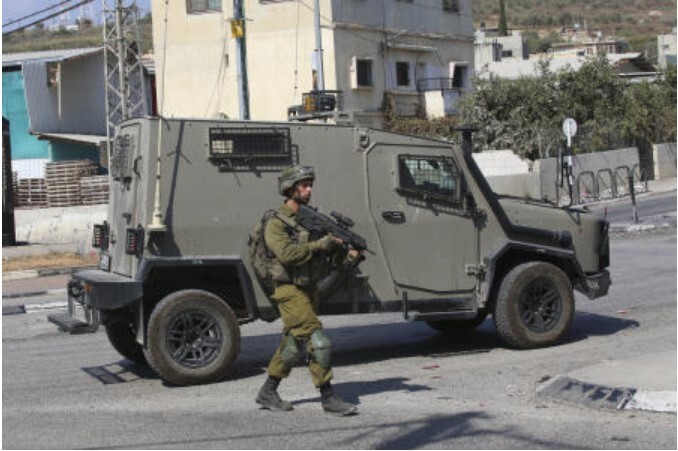
The Israeli occupation forces and settlers continue their attacks against citizens and their property in the West Bank.


In Qalqilya, the occupation forces suppressed the weekly anti-settlement march in the village of Kafr Qaddum, which led to clashes with citizens.


Local sources reported that the clashes erupted after the occupation forces attacked the march participants with sound bombs and toxic tear gas, without any injuries being reported.


In Tulkarm, a large group of settlers set fire to the plain lands planted with olive trees, which led to their ignition and the spread of the fire.


Local sources reported that the fire, due to the direction of the wind, rebounded onto the settlers’ tents, where the settlement outpost they had forcibly established in the plain lands, which led the settlers to pursue the olive pickers hysterically and madly, and forced them at gunpoint to leave their lands and prevented them from completing their work.


She added that the settlers pursued the farmers' vehicles, attacked them, and destroyed a number of them. They also stole the tools and equipment that the farmers were forced to leave under the olive trees. They also seized the olives of the farmer Younis Dhafer.


In Bethlehem, the occupation forces stormed Al-Khader, and were stationed in the neighborhoods of "Dar Salah", "Al-Balou", "Al-Bawaba" and "Hut Al-Jami'", and pursued young men and obstructed the movement of vehicles, before seizing a vehicle.


In Ramallah, the occupation forces arrested four citizens, raided a number of homes, and seized 15 vehicles when they stormed the village of Abwein.


Local sources reported that these forces stormed the village, raided a number of homes, and arrested: Hassan Khaled Sahweil, Abdul Jawad Saleh, Omar Ahmed Al-Tayeb, and Mahmoud Ayman Nimr. They also turned a popular café into a military barracks, and subjected dozens of citizens to field investigations.


The sources pointed out that the occupation army seized 15 vehicles belonging to citizens in the village.


In the village of Burqa, dozens of settlers attacked the Wadi al-Shami area, but the citizens confronted them and forced them to retreat.


Settlers escalated their attacks on Palestinian villages and towns coinciding with the olive harvest season.

PALESTINE

Fri 01 Nov 2024 12:54 pm - Jerusalem Time

"We are hungry" Gazans tell Al-Quds about their suffering in obtaining a loaf of bread

Hunger is ravaging all areas of the Gaza Strip

Umm Muhammad: I struggle every day to get one loaf of bread. I wish we died in our homes, it would be more honorable than this humiliation.

Abu Youssef: Everyone is fighting for their livelihood. Either they kill us and spare us or they free us from the injustice we are living in.

Umm Alaa: I go at dawn to stand in line in front of the bakery... but one loaf is not enough for my children and grandchildren


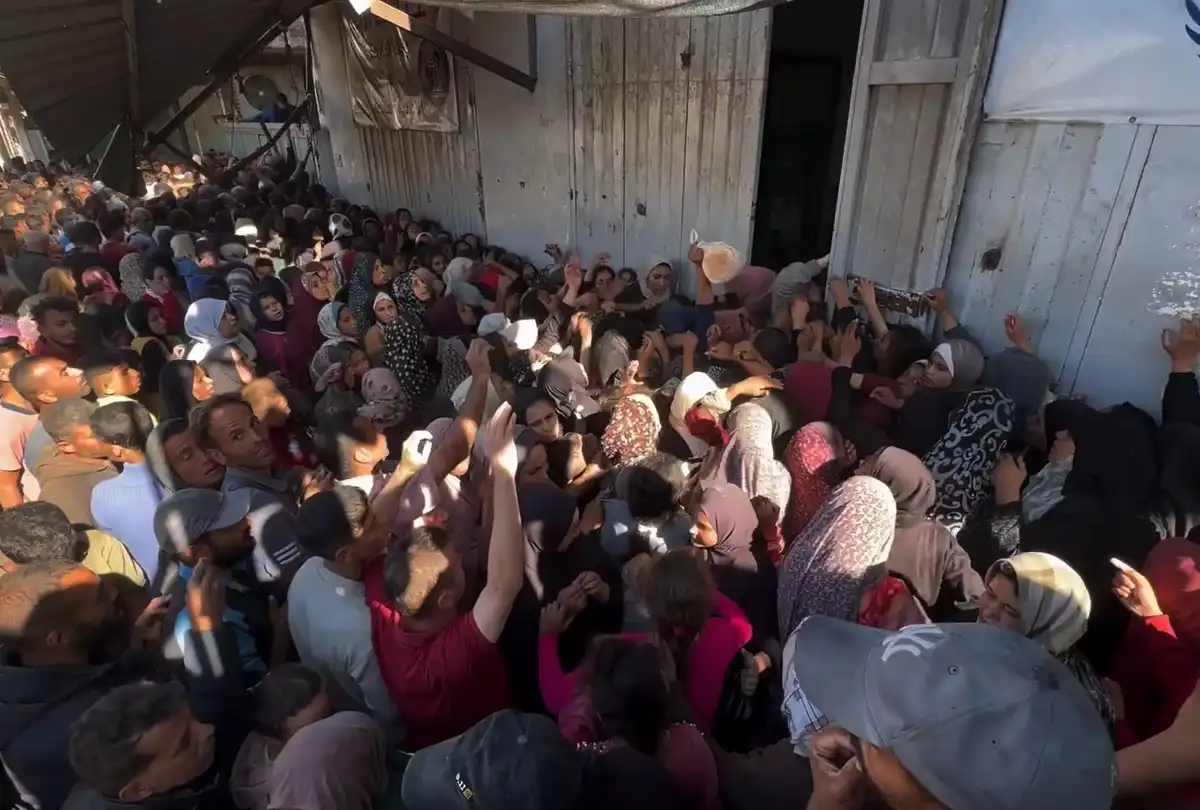
"We are hungry... we are even deprived of food," with these words, "Umm Muhammad" Masoud summed up her suffering in obtaining bread, after standing for long hours in front of the bakery in the city of Deir al-Balah in the central Gaza Strip.


At the door of the bakery, dozens of citizens stand for long hours in order to obtain a single loaf of bread, with which they can satisfy their families’ hunger. However, they often return home without bread, as a result of the great crowding and jostling in front of the bakery.


"Umm Muhammad", who was standing in the women's line, told "I" and "Quds.com" about her and her family's suffering: "We were displaced from Jabalia camp in the northern Gaza Strip after the occupation bombed us and destroyed our homes, to Deir al-Balah. I struggle every day to get a single bundle," and she added, "I wish we had died in our homes, it would be more honorable than the humiliation we are living."


Despite having cancer and not taking the necessary medications and supplements, she stands in front of the bakery for long hours. She adds: “I have to stand to satisfy the hunger of my children and my daughter’s children, as there is no food or flour in the markets.”


A loaf of bread costs 3 shekels in the bakery and 15 outside.


As for a loaf of bread, Umm Muhammad cannot buy it from outside the bakery, because of its high price. She continues: “A loaf of bread inside the bakery costs three shekels, and outside they sell it for 15 shekels, and I cannot buy it at that price.”


Umm Mohammed despaired after all the women gathered around her, as she was unable to buy the loaf of bread she needed. She added: “We, the people, are victims, and no one is looking for us. God is sufficient for us, and He is the best Disposer of affairs.”


Abu Youssef: Everyone is fighting for their livelihood. Either they kill us and spare us or they free us from the injustice we are living in.


No one sees our suffering


In the opposite queue, Abu Yousef Ghaban stands for more than four hours to get a loaf of bread. He tells Al-Quds.com: “Since dawn, I have been waiting for my turn to no avail. People are on top of each other, and everyone is fighting for their livelihood, and no one sees our suffering.”


The biggest suffering is waiting for long hours and getting a limited amount of bread, which is not enough for the family. Abu Youssef continues: “I am only allowed to buy one loaf, and if I want to buy again, I have to stand in line again.”


He adds: “One loaf of bread is not enough for my family of 10 people. We need four loaves a day.”

Abu Youssef expressed his frustration at the bitter situation he and his family were living in, saying: “Either they kill us and let us go...or they free us from the injustice we are living in.”


The Israeli war on the Gaza Strip has increased the tragedy and severity of poverty; many citizens cannot buy bread for their families, not to mention the lack of job opportunities.


I want to take out a loan to buy bread


“I need to take out a loan to buy bread,” said Umm Alaa Bakr, expressing her inability to buy a loaf of bread for her family members, after their circumstances became difficult due to the lack of a source of income to support them.


“I go at dawn to stand in line at the bakery. After a few hours, I get one bundle, but it is not enough for my children and young grandchildren,” Umm Alaa told Quds.com. “I cannot buy it from outside, as its price is very high and I do not have a steady source of income.”


Umm Alaa faces a daily battle in the bread line. She says: “I fainted many times, especially since I have a heart condition and cannot stand for long hours.”


She added: "Many times I miss my turn because of the crowding of women and children, not to mention the problems that occur between people and the fear that I will be harmed."


Since the beginning of October 2024, the Israeli occupation has continued to close the Kerem Shalom crossing, preventing the entry of food supplies, vegetables, and the like into the markets of the Gaza Strip, deliberately using starvation as a weapon to strangle citizens.

PALESTINE

Fri 01 Nov 2024 12:06 pm - Jerusalem Time

Six Palestinians dead and others injured as a result of Israeli bombing of Gaza Strip

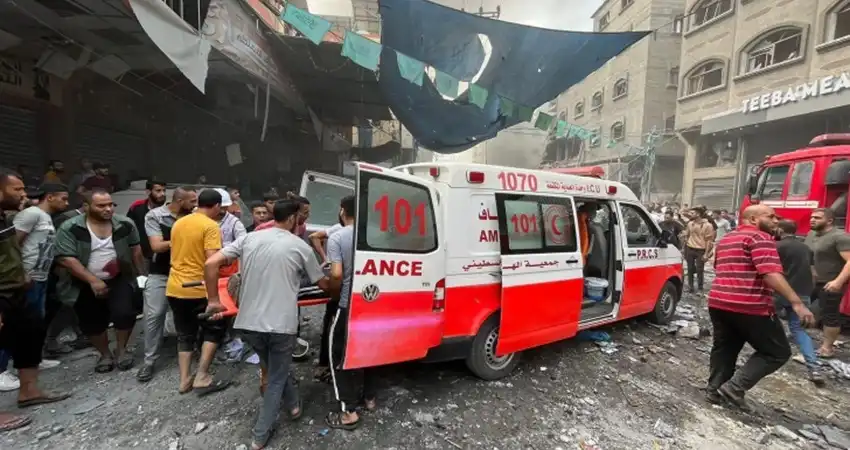
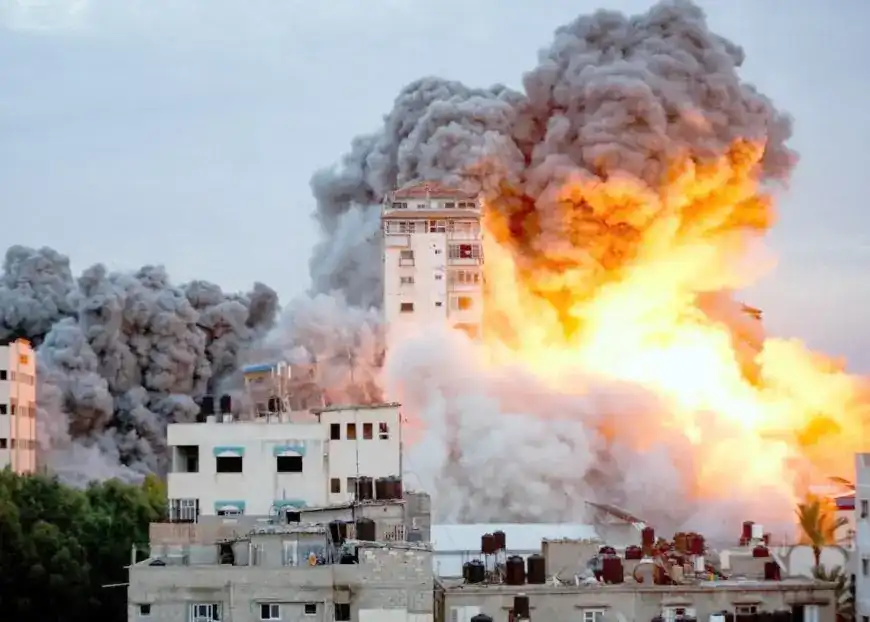
Today, Friday, 6 citizens were killed as a result of the Israeli occupation's bombing of the central and southern Gaza Strip.


In Nuseirat camp, ambulance crews transferred three martyrs, including a child, to Al-Awda Hospital in the camp, and others were injured, after the occupation forces targeted a house belonging to the Shehadeh family.


In Khan Yunis, three citizens were martyred and their remains arrived at Nasser Hospital, after the occupation forces targeted two vehicles on the coastal road west of Al-Qarara town in Khan Yunis Governorate.

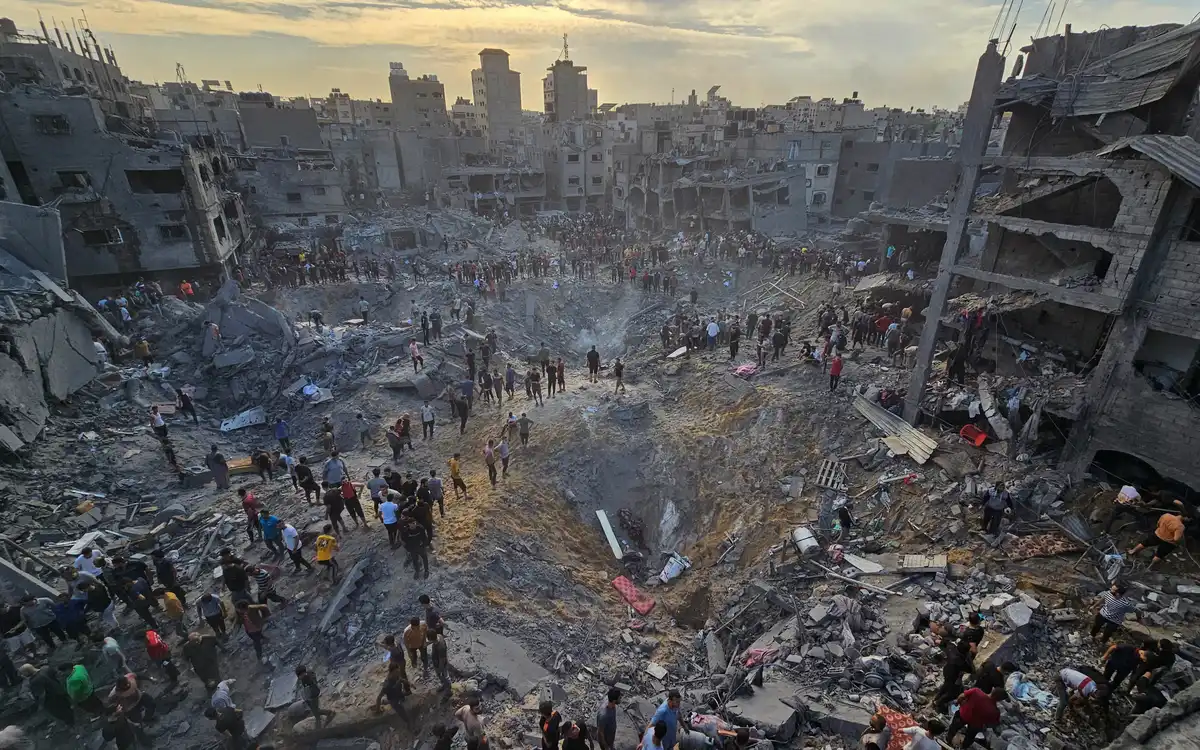
The occupation forces continue their aggression on the Gaza Strip, by land, sea and air, since October 7, 2023, which resulted in the death of 43,204 citizens, and the injury of 101,640 others, the majority of whom are children and women, in an incomplete toll, as thousands of missing people are still under the rubble, amid the deterioration of the humanitarian situation in the besieged Strip.

ARAB AND WORLD

Fri 01 Nov 2024 10:34 am - Jerusalem Time

Three killed and five wounded in the ongoing Israeli aggression on Lebanon

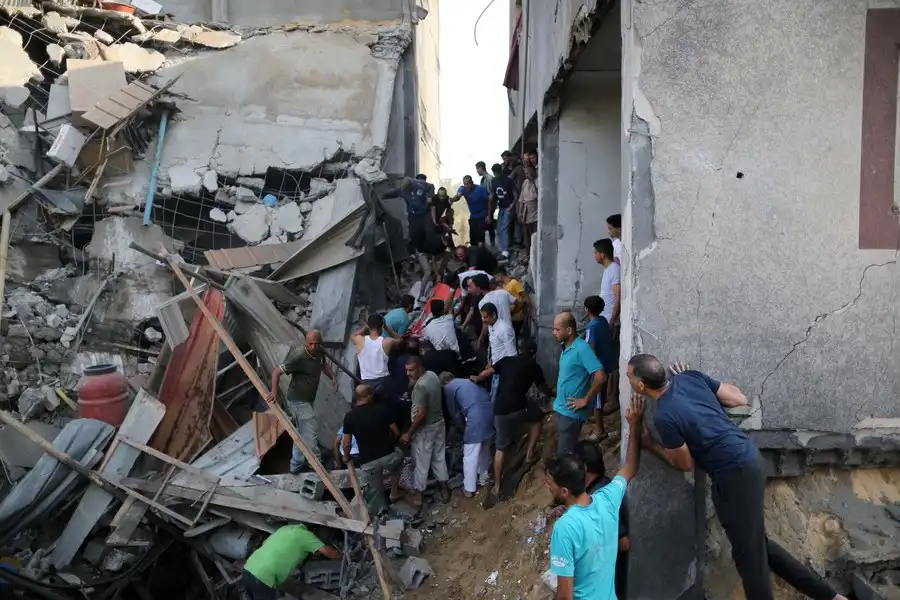
Three citizens were killed and five others were injured in the town of Qamatiyeh in Mount Lebanon today, Friday, as a result of the ongoing aggression of the Israeli occupation forces on various areas in Lebanon, amid widespread destruction of buildings, facilities and infrastructure.

The Lebanese Ministry of Health announced the martyrdom of three citizens and the injury of five others in a raid on the town of Qamatiyeh in Mount Lebanon.

Lebanese sources reported that the Israeli occupation renewed its raids at dawn today on the southern suburb of the Lebanese capital Beirut, resulting in widespread destruction of buildings, facilities and infrastructure. The occupation warplanes also targeted the areas of Haret Hreik, Al-Ruwais, Al-Ghobeiry, Al-Marija, Airport Road, Al-Amerikan neighborhood, Al-Kafaat, Al-Sabil neighborhood, Tahwitat Al-Ghadeer, and Burj Al-Barajneh in the suburb.


According to sources, the occupation aircraft and artillery also bombed the city of Nabatieh and the towns of: Al-Tayri, Bint Jbeil, Al-Khiam, Al-Majadil, Al-Shahabiyeh, Kounine, Ainata, Al-Jumaijmeh, Barashit, Majdal Salm, Aitat, and Wadi Jilo in southern Lebanon.

PALESTINE

Fri 01 Nov 2024 9:27 am - Jerusalem Time

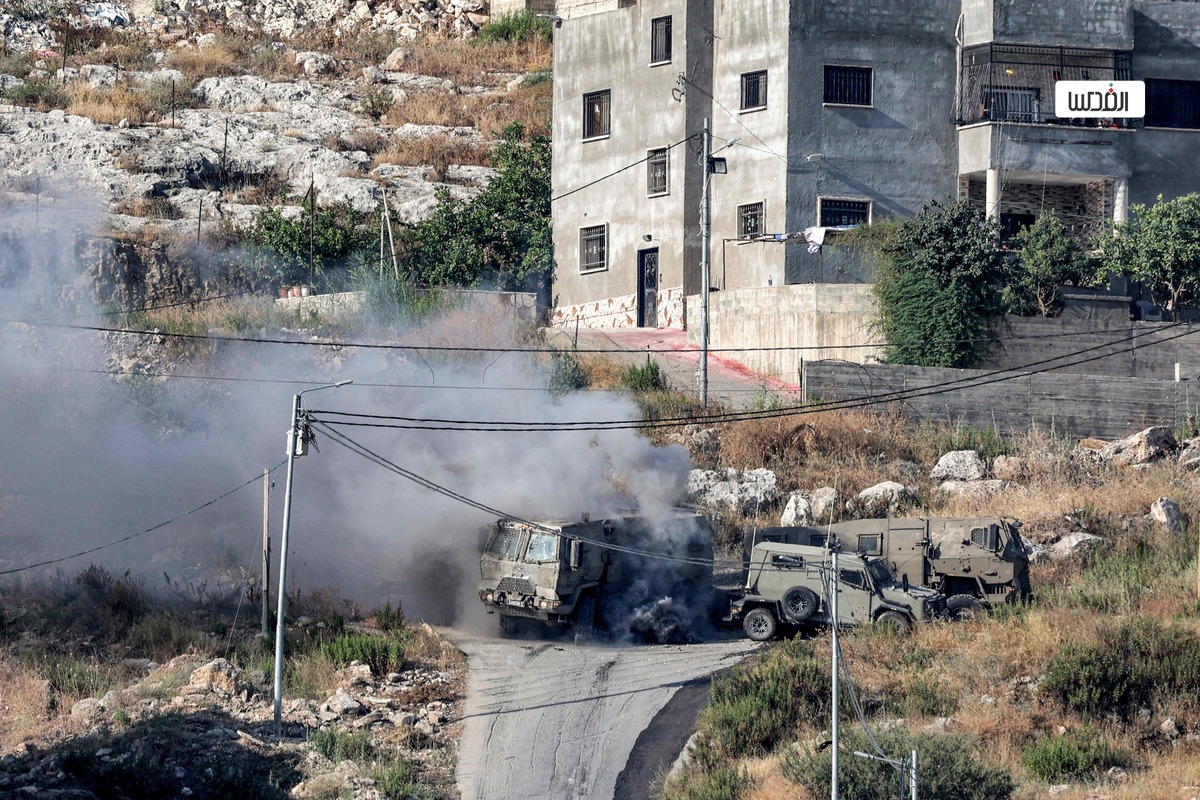
Israeli forces storm Yamoun town and besiege a house

This morning, Friday, the Israeli occupation forces stormed the town of Al-Yamoun, west of Jenin, and surrounded a house.


Local sources said that the occupation forces stormed the town after discovering a special force from the occupation army in civilian clothes infiltrating the town and besieging a house there.


She added that the occupation deployed its vehicles in the streets of the town and stormed the Al-Jaabari family's home, without reporting any arrests.

OPINIONS

Fri 01 Nov 2024 9:23 am - Jerusalem Time

Israeli admission of starving Gazans

op-ed - Al-Quds dot com

op-ed - Al-Quds dot com

Opinion Writer

The report published yesterday by Haaretz newspaper indicates a sharp and unprecedented decline in the number of aid trucks that entered the Gaza Strip during the month of October, which turned its last page and departed carrying more tragedies and massacres. The number of trucks reached only 859 trucks, compared to 3,591 trucks as a monthly average for previous periods, which is the lowest number since the beginning of this year. This is an admission of a severe shortage that indicates a systematic and programmed starvation campaign approved by the Israeli government, in order to impose more suffering and difficulties on the citizens of the Strip.


The publication of this data coincides with a review presented yesterday by the United Nations Office for the Coordination of Humanitarian Affairs (OCHA), which discussed in a detailed report the humanitarian and health conditions suffered by civilians in the Gaza Strip in light of the continuation of the Israeli aggression for the twenty-fourth day of the second consecutive year.


In the most prominent axes, reports indicate at least seven incidents that resulted in large numbers of casualties across Gaza during the past week, including four incidents in northern Gaza, in addition to the recent horrific Beit Lahia massacre. The report moves on to address the Palestinian Ministry of Health’s appeal to immediately deploy medical teams, ambulances and civil defense vehicles in order to save lives in northern Gaza, given that there are only two doctors left in Kamal Adwan Hospital, which is under enormous burden.


According to OCHA, children in Gaza are not dying because of bombs, bullets and shells alone, but because those who survive are prevented from leaving Gaza to receive life-saving care. According to UNICEF, only 127 children in critical health conditions have been allowed to leave the Strip since last May.


The report points out the difficulties faced by citizens in living and sleeping in displacement schools, which are being bombed and burned by Israel, with the continued raids carried out by Israel without justification. Despite the calls for help, Israel prevents the entry of aid and obstructs the work of international institutions and bodies.


The report, which includes a review of the past three weeks, talks about the displacement of more than 71,000 people from the North Gaza Governorate to Gaza City, while about 100,000 people remained in North Gaza, according to the latest estimates issued by the United Nations and its partners, and the announcement by the Palestinian Civil Defense Authority to stop its operations in North Gaza, leaving the area without life-saving defense services, including firefighting, search and rescue, and emergency medical assistance.


The picture of the situation remains catastrophic and tragic in terms of the overall situation, especially the rise in the number of martyrs to more than 43 thousand, several hundred and thousands missing, and more than one hundred thousand wounded. In an accurate descriptive picture, Ms. Joyce Msuya, Under-Secretary-General for Humanitarian Affairs and Emergency Relief Coordinator, says: “What the Israeli forces are doing in the besieged northern Gaza Strip cannot be allowed to continue. Hospitals are being bombed, health workers are being arrested. Shelters are being emptied and burned. First responders are being prevented from rescuing people from under the rubble.


Families are being torn apart, men and boys are being taken away on trucks. Hundreds of Palestinians have been killed. Tens of thousands have been displaced once again. The entire population of northern Gaza is at risk of death,” the UN Secretary-General said in a statement, followed by an expression of shock at “the appalling levels of death, injury and destruction in the north.”


Gaza remains targeted and the occupation fires are killing all aspects of life there, and the massacres continue. Yesterday alone witnessed the death of more than 80 citizens, most of them women and children, in the northern Gaza Strip, amidst many indications that the negotiations for a prisoner exchange deal and ceasefire will fail, due to the United States’ blatant bias in favor of Israel, and their planning to move towards a limited and short deal, during which Israel will be able to resume its aggression after obtaining its detainees. This is what the resistance rejects, insisting that the solution is through a comprehensive ceasefire, the withdrawal of the army from the Gaza Strip, the return of the citizens of the Strip to their homes, and the reconstruction and rehabilitation of the Strip. It seems that this will take more time.

OPINIONS

Fri 01 Nov 2024 9:22 am - Jerusalem Time

Israeli opposition agreement to cancel UNRWA: What does it mean?

Samah Khalifa

Samah Khalifa

Opinion Writer

The existence of UNRWA means the existence of refugees, and the existence of refugees means the existence of an occupying usurper, and the existence of an occupier means, by nature, the existence of resistance. Eliminating UNRWA means, in the long run, eliminating the idea of refugees completely, and thus erasing the idea of an occupation on a land usurped from its displaced people; so that the occupying state automatically becomes, over time, a resident state with a land and a homeland, and thus the project of eliminating resistance is completed under another name, which is eliminating terrorism outside the state (an illegitimate occupying state = a legitimate existing state).


This is what the Israeli occupation government seeks to achieve through the Knesset’s decision to ban the work of the United Nations Relief and Works Agency for Palestine Refugees in the Near East (UNRWA) on all of historical Palestine, after a previous decision to reject the establishment of a Palestinian state on the territories occupied in 1967. The majority of 92 votes, excluding Arab votes, granted to the two previous decisions means a Zionist consensus among all political blocs and parties, so that the opposition becomes a complete consensus regarding the United Nations resolutions regarding the political rights of the Palestinian people.


The United Nations, which undertook, through its Resolution No. 194, to establish a special body for Palestinian refugees, unlike any other similar body it has established for refugees in the world in terms of composition, structure, tasks, and political dimensions, stands today helpless in the face of the decision of the Israeli government, which challenges it on the one hand and represents its ideology on the other, in a formal contradiction and a hidden agreement.


The occupying state, which previously failed to abolish UNRWA and refer the Palestinian refugee file to other bodies with humanitarian dimensions; to strip it of its political and legal character, is now relying on force to end the presence and work of UNRWA on the land of Palestine, which reveals its goals of ending the refugees and their rights approved by the International Assembly. This is what the Commissioner-General of the United Nations Relief and Works Agency for Palestine Refugees (UNRWA), Philippe Lazzarini, stated on Wednesday, saying: The attack on the agency is politically motivated; to get rid of the Palestinian refugees. Especially after the United Nations investigations that showed the falsity of the Israeli allegations that its employees work for the Hamas movement, and the occupation's intentions are clear through its systematic method of destroying the Gaza Strip, in light of the difficult conditions they live in, especially in the north of the Strip.


In order for Israel to achieve its goal of liquidating the Palestinian cause, the Knesset had previously approved on Tuesday 10-29-2024 a decision to prevent any country from establishing a consulate in Jerusalem that provides services to the Palestinians, thus also blocking the path for the United States to fulfill its previous promise to reopen its consulate in Jerusalem.


This decision, which did not provoke any current or future American administration, constitutes a blatant challenge to the international system, whether at the level of the universal institutions or at the level of individual countries.


The occupying state, which imposed itself by force first, before the will of the United States, as Netanyahu stated in his talk about the legitimacy of his country, is now placing itself in a challenge to the United Nations, with all its institutions, decisions, legal and value systems, and in a challenge to the existing international system, at the head of which the United States still stands, and is striving to prevent its collapse, or change it.


Although the decision to establish a Palestinian state and grant the Palestinians their rights has not yet been issued by an explicit decision, but rather by indirect decisions, including its position in the United Nations as an observer, and the recent decision of the General Assembly to strengthen its seat in the General Assembly, like its members, the UNRWA file was issued by a correct and clear decision by the General Assembly known as the “Right of Return” Resolution No. 194 of 1949.


Resolution No. 194 was one of the United Nations’ requirements for recognizing the occupying state after the 1948 war, and it constitutes part of the translation of Resolution No. 181, which concerned the partition of Palestine into two states, one Arab and one Jewish.


The question that arises here is: If the occupying state is able to cancel the agency’s work inside occupied Palestine, can it cancel it outside it? Can it cancel 40% of the refugees in Jordan, 10% in Syria, and 8% in Lebanon, in addition to those in other Arab and foreign countries? And will it succeed in canceling Resolution 194, and what it represents in terms of protecting the right of Palestinian refugees to return?


Will Israel, with its practices that defy international and humanitarian laws, resolutions, values, and international justice institutions, impose itself as a fait accompli that countries must deal with and accept as they are? Or will its fate be that of a rogue state that does not belong to international values and institutions, which will place it in open confrontation not only with the Palestinian people but also with the international community as a whole, the global system, and the United Nations?


The Knesset’s decision on UNRWA provides the legitimate legal justification for the decision to freeze the occupation state’s membership in the General Assembly, or perhaps the courage to approve the expulsion of Israel from the international institution. There is no doubt that it is a difficult battle in the General Assembly, but the United States will not be able to prevent the issuance of a decision if it is put to a vote. Thus, the occupation state has chosen comprehensive international isolation, with no benefit to its means of power, which are in turn collapsing.


International and Arab reactions will not stop at condemnation, expressing concern, and issuing statements, knowing that the results of such a decision will awaken in every refugee his cause that has been numbed for almost a century, and thus will only increase his resistance action that will disturb the occupying state and the entire international community.

OPINIONS

Fri 01 Nov 2024 9:21 am - Jerusalem Time

Genocide and the Reality of a Crisis-ridden State

Sari Al Qudweh

Sari Al Qudweh

Opinion Writer

Despite America's support for Israel, the latter feels isolated globally and finds itself facing increasing diplomatic isolation due to its war in Gaza. Despite this, the extremist occupation government has become uninterested in what is said about it or in the unprecedented level of direct accusations of committing war crimes and genocide that it has reached, and that it does not care about what the world thinks of it, while it has become an unsafe country for many Israelis residing in it, most of whom have already left it for good.


Netanyahu dominated the scene through his positions and determination to change the face of the Middle East, while Israel lacked security and calm and was no longer able to convince Israelis to provide stability, as Israel became permanently isolated and became an unsafe country for many Israelis, especially those with dual citizenship, and many of them admit to being uncomfortable because they do not hear from Netanyahu any realistic end except more conflict, and they admit that they were shocked by the speed with which Israel lost global sympathy and the consequences of that and their reality and living future.


The genocidal war and the reality of the troubled state reflected a new strategy for the dominance of the Israeli right, and carried trends in reshaping the Middle East. The extremist voices within the most right-wing government in Israel’s history raise fears of what some call “expansionist aspirations toward what is known as ‘Greater Israel’,” as the extremist bloc believes that it can expand to what is known in Israel between the Tigris and Euphrates, and they declare openly through maps in front of which they take pictures that they will not be satisfied with Gaza.


Such expansionist aspirations across borders cannot be on the current agenda of the occupation government, despite the fact that the far-right bloc adopts such slogans. In fact, the image that revolves in Netanyahu’s mindset at the present time and what he can draw across the new Middle East remains about enabling Israel to settle the remaining Palestinian lands, reoccupy the Gaza Strip and annex the West Bank. Israel does not hide its intentions regarding extending its settlement project, and has explicitly announced its intention to double the number of settlers to one million, despite the Arab and international criticism that this has received.


Within the Israeli political scene, there are a number of ministers in the far-right government who do not believe in the two-state solution, and now we seem farther away from the establishment of a Palestinian state than we have been since the Oslo Accords, but it is not possible to believe that the international community will agree to these Israeli maps that are devoid of Palestinian lands, as all the data confirm that the Israeli perspective of the new Middle East cannot be achieved and is difficult to become a reality, and the Palestinian people disappear from the scene once the occupation’s liquidation plans are implemented.


The occupying state cannot continue its war without providing comprehensive and integrated support and adopting the Israeli project by the United States of America, which worked during the war to provide military, political and financial support to the extremist government, and supplied it with the appropriate weapons to wage its war, and provided it with international political cover by using the right of veto in the UN Security Council more than three times to prevent the passage of resolutions condemning Israel, as it provided great support to Israel to ensure its strategic superiority, and intensified its military presence in light of the increasing tension and instability in the region.


OPINIONS

Fri 01 Nov 2024 9:19 am - Jerusalem Time

No ceasefire soon on the Lebanese and Gaza fronts

Rassem Obaidat

Rassem Obaidat

Opinion Writer

The source of optimism about the imminent reaching of a ceasefire agreement on the northern front and the spread of the illusion of severing the relationship between the Lebanese and Palestinian fronts, is that front which initially participated as a support front for the Gaza Strip front, since the second day of the aggressive war on the Gaza Strip. This optimism comes from the Israeli media and the caretaker Prime Minister Mikati, while Sean Savitt, the spokesman for the US National Security Agency, confirmed that what is being circulated are drafts for negotiations and do not reflect an agreement in the negotiations.


The Israeli leaders and army say that they will stop fighting on the Lebanese and Gaza fronts, after the army has achieved enough accomplishments. Netanyahu wants a ceasefire that meets the priorities of Israeli security, according to him, which is achieving political and security gains for his strategic project that goes beyond Lebanon and Palestine. He wants to amend Security Council Resolution 1701, hollowing it out and emptying it of its content in his favor. Israel has not implemented this resolution for 18 years. It did not withdraw from the occupied part of the Lebanese village of Ghajar, according to the text of the agreement, and rejected the solution of the former UN Secretary-General Ban Ki-moon regarding the dispute over the Shebaa Farms, and violated this resolution 39 thousand times. Netanyahu wants to hollow out this resolution by continuing to violate Lebanese sovereignty on land, air and sea, and to have the authority to form a security belt in southern Lebanon, and to enjoy the approval of the Lebanese state to disarm Hezbollah if the army does not disarm it with a UN mandate. Lebanon's obligations under Resolution 1701 are to cease firing bullets and rockets, deploy the Lebanese army, and refrain from armed resistance south of the Litani, while Israel's obligations are to cease violating Lebanese sovereignty by land, sea, and air, withdraw from the Lebanese part of the village of Ghajar, and implement the solution presented by former UN Secretary-General Ban Ki-moon regarding the Shebaa Farms. Therefore, if a ceasefire is necessary, it will begin in the Gaza Strip, which is outside the umbrella of the Security Council and international balances, and is completely subject to the American umbrella.


The settlement on this front is made by America, not the UN Security Council, and the ceasefire and fighting on all fronts will be supported from Gaza. Therefore, all the illusion that the relationship between the two fronts has been severed and that Hezbollah or Iran has abandoned the Gaza Strip is part of a psychological and media war in which various Israeli, "Hebrew", Arab, American and Western European media outlets are participating. Its goal is to serve Netanyahu's electoral goals and his political and personal interests, as well as to serve the Democratic Party by achieving an accomplishment that will improve Harris's chances of winning the US presidential elections. How many times have they spread the false illusion that the negotiations are close to achieving serious breakthroughs that will lead to stopping the aggression and a ceasefire on the Gaza Strip front, and then we find that Netanyahu is running away and wasting time, and America stands by his side, holding the resistance responsible for the failure of the negotiations, while the Arab participants in what is known as the Quartet participating in the negotiations do not have the decision or will to hold Israel responsible for the failure of the negotiations. These are illusions and rumors being spread, as Israel is not yet ready and mature for a political path, and it is the one that has mobilized five divisions on the Lebanese land front and added several brigades to them. Despite the cracks and fissures that have begun to increase between the military and security establishment and the political establishment, due to the inability to achieve the goals of the war neither on the Gaza Strip front nor on the Lebanese front.


There is a question posed to the Lebanese resistance after the election of Sheikh Naim Al-Qassem as Secretary-General: Will the Lebanese resistance accept the separation between the two fronts? That the war on the northern front should stop and continue on the Gaza Strip front, which means that Hezbollah will break its pledges not to separate the two fronts. We are certain that what was rejected by the former Secretary-General of the party, His Eminence Nasrallah, who was assassinated by Israeli aircraft with American guided bombs weighing 900 kg, will not be accepted by the new Secretary-General, Sheikh Naim al-Qassem. The developments that took place on the Lebanese scene, with the widespread assassinations of a number of the party’s security and military leaders, within what was known as the deadly triple package, and hundreds of unprecedented air raids launched by Israeli aircraft that targeted the environment and structure of the resistance, leading to the ascension of the Secretary-General, His Eminence Sayyed Nasrallah, and his deputy, His Eminence Sheikh Hashem Safi al-Din, these developments, in addition to the comprehensive destructive war on the party and the resistance, and the quest to impose security and political conditions on Lebanon, pushed the resistance to modify its tactics, but its strategy did not change and its commitment to Gaza did not change. The Lebanese resistance has enough reasons to be convinced that the occupation cannot accept a ceasefire on the Lebanese front without obtaining gains and privileges related to its strategic project, and not to the course of its war on Gaza, the most important of which is what the occupation leaders are expressing regarding their efforts to amend Resolution 1701, and obtain the powers to pursue and chase the resistance on land inside Lebanese territory, and to overlook its continued occupation of Lebanese territory, and its violation of Lebanese airspace and waters under the pretext of security necessities, and to verify that the resistance is not armed. These aspirations open up the opportunity for the resistance to form a broad Lebanese front to defend Lebanese national sovereignty under the ceiling of the ceasefire and Resolution 1701 without amendment.


The resistance's alignment under this roof is based on the certainty that it is impossible for the occupying state to accept it after its investment in the war on the resistance in Lebanon has greatly inflated, and its costs have increased greatly, whether through the costs of the ground war or the resistance's targeting of the depths of the occupying state with missiles and drones. The occupation will not back down from seeking to achieve gains at the expense of Lebanese sovereignty to justify the size of the prices it has incurred except when forced, that is, when it is defeated.


If the occupation is forced to accept a ceasefire and Resolution 1701 without amendment, which guarantees its withdrawal from the occupied Lebanese territories and the cessation of its violations of Lebanese airspace and waters, it cannot do that and leave its war in Gaza continuing. There is the prisoners’ file and the question that awaits it: Why do you accept in Lebanon the end of the war without gains despite the losses, and continue the war in Gaza while the prisoners are exposed to death there?


Either the occupation is strong, in which case it will continue its war on Lebanon, or it is weak, in which case it will stop its war on Lebanon and Gaza with minimal losses. In this case, it is better for it to leave through the Gaza gate, because it is outside the umbrella of the Security Council and its balances, and under a purely American umbrella, which alone guarantees that if it stops, all other fronts will stop.


The resistance says in all its leaders’ positions that it is committed to Gaza, but it is not obligated to explain in detail how this will be achieved. As long as the war continues on both fronts, there is no need to worry. When someone sees a ceasefire on the Lebanese front but not on the Gaza front, let him ask the resistance how this happened.

OPINIONS

Fri 01 Nov 2024 9:17 am - Jerusalem Time

Hamas after Sinwar.. Is it time for major transformations?

Alaa Kanaan

Alaa Kanaan

Opinion Writer

Since the assassination of Yahya Sinwar, the leader of Hamas, the movement has entered a historic turning point that will determine its future for years to come, as Sinwar is considered one of its most steadfast and influential leaders. Sinwar was not only a military leader, but also a pivotal figure in negotiation and peace decisions, and the source of authority within the movement in Gaza.


Sinwar had an exceptional ability to balance defiance and confrontation with Israel and open the door to negotiations when necessary, making him a unique figure in the history of Hamas. He is also considered the leader who shaped the history of the Gaza Strip, as his word was the final word in the movement’s military and political decisions, which enhanced the movement’s reputation among Palestinians as a symbol of defiance and resistance against Israel. With his passing, the question remains about Hamas’s remaining options, especially after the massive destruction that befell the Gaza Strip.


Although Sinwar was a strong leader, his decision to escalate on October 7 has left the Gaza Strip in a difficult position; some Gazans see him as responsible for giving Israel a pretext to destroy the Strip, while others see him as a hero who defended their cause. However, it cannot be ignored that Sinwar’s assassination represents a critical turning point in the movement’s and the Gaza Strip’s trajectory.


Recent polls in the Gaza Strip have indicated a decline in favor of Hamas continuing to control the area after the war ends, and an increase in favor of Palestinian Authority control. Despite all this, Hamas remains the most popular movement among all Palestinian factions. The results also indicate a significant increase in support for the two-state solution, accompanied by a decline in favor of armed action and an increase in favor of negotiations as an effective means of ending the occupation.


What has happened since October 7 and the assassination of Sinwar has put Hamas in an unprecedented predicament, as leaders who can make radical decisions like those Sinwar made in October may be few in the movement’s ranks, which finds itself forced to search for a new leadership capable of making strategic decisions in light of the deteriorating conditions in Gaza.


Although Hamas built its legitimacy and power in the Strip, Gaza is now a thing of the past; the total destruction poses unprecedented challenges to the movement, which will not be the same as it was before October 7. However, it remains to be seen whether the movement will be able to regroup, or whether its power and influence will decline.


In comparison with global movements, when Osama bin Laden, the founder of Al-Qaeda, was assassinated in 2011, his assassination was a moral and symbolic blow to the organization. Although Al-Qaeda had prepared for his succession, and Ayman al-Zawahiri took over the leadership, the impact on the effectiveness of operations was clear, as Al-Qaeda’s central ability to plan major operations weakened, and later led to a split within the organization and the widespread spread of branches in regions such as Yemen, North Africa, Syria, and others, in addition to the emergence of new organizations that adopted a similar approach but with different strategies and local leadership, which reduced Al-Qaeda’s centrality and increased the fragmentation of jihadist groups.


In the Palestinian context, the question remains: Is Hamas finished? While some may see Sinwar’s assassination as the end of the movement in the Gaza Strip, this is not guaranteed. Hamas may face its most difficult phases, but throughout its history it has shown an ability to adapt to changing circumstances. The next scenario may be that Hamas becomes more of a political force than a military one, or the movement may witness internal divisions that weaken it in an unprecedented way. With the martyrdom of a leader of Sinwar’s stature, Hamas may move towards strengthening the collective leadership within the movement to enhance participation in decision-making between the various wings - military and political - which will allow the movement to maintain its continuity despite the absence of a central leadership.


This move could help reduce internal divisions and enhance organizational stability. Hamas has a history of adopting collective leadership in times of crisis, which could be one of its main options.


Ultimately, Sinwar’s assassination represents a major turning point in Hamas’s history, and the movement’s remaining options will depend on its ability to adapt to this loss and the new circumstances imposed by the war on Gaza.


In light of what is happening on the ground, Hamas finds itself at a crossroads; options that may seem military to the world are for Hamas a necessity to defend the rights of the Palestinian people who are suffering from the woes and consequences of what Israel is doing in the Palestinian territories. However, questions arise about whether these options will bring an end to the conflict or increase the suffering of the innocent.


On the regional level, Hamas may seek to strengthen its relations with Iran and Hezbollah, which will provide it with material and military support. Iran and Hezbollah may find in the martyrdom of Sinwar an opportunity to expand their influence in the Palestinian conflict, which is the growing choice within Hamas to move towards the Iranian axis, which puts it in a complex position within the Arab political scene.


In light of international and regional pressure, Hamas may find itself forced to adopt the option of appeasement and diplomacy, especially since there are indications that the movement may seek to negotiate with international and regional mediators to ensure a long-term truce with Israel.


This option may be an attempt to ease military pressure and improve humanitarian conditions in Gaza, but it may provoke internal criticism from hardliners within the movement.


The deep wounds left by the war in Gaza cannot be healed by appointing a new leader to replace Sinwar alone. The people of Gaza are facing immense humanitarian suffering and are in dire need of an end to the conflict and a political solution. Perhaps the only way for Hamas to maintain its presence and influence in the Palestinian arena requires adopting a more comprehensive political vision, beginning with joining the Palestine Liberation Organization and working within a unified national framework.


Such a step could represent the beginning of achieving national aspirations and ending the political division that has drained the Palestinian cause for years, in order to find a political solution that guarantees a decent life for the people of Gaza, alleviates the burden of daily suffering and opens up horizons for a better future.

OPINIONS

Fri 01 Nov 2024 9:15 am - Jerusalem Time

What does Netanyahu really want?

 Dr. Asaad Abdul Rahman

Dr. Asaad Abdul Rahman

Opinion Writer

The October 7, 2023 attack marked a dramatic shift in the Israeli political and security landscape, exposing serious gaps in the security strategy for which Benjamin Netanyahu bears full responsibility, whether he likes it or not! Amid mounting criticism and popular skepticism of his leadership, he is trying to exploit the crisis as an opportunity to redirect Israeli society’s attention and tickle their feelings in a morbid and chauvinistic way towards expansionist ambitions, claiming that Israel, in order to remain strong and secure, must “expand,” as former US President Donald Trump indicated in a previous meeting after Netanyahu “whispered” in his ear, I think - and not all suspicion is sinful! But where does Netanyahu want to take Israel? And what is the real vision he seeks to achieve?


This vision includes (1) expansionist ambitions, (2) an attempt to drag the United States into a larger regional conflict, and (3) to create new facts that could change the geopolitical map of the Middle East, but at the expense of the region’s security and stability. Netanyahu believes that regional conditions and the decline in the influence of international opposition help him achieve his goals, driven by the support of a significant component of Israeli society that sees him as the “King of Israel” and the “magician” capable of realizing the biblical dream.


His expansionist project includes complete control over the Gaza Strip, displacing Palestinians from their lands to evacuate a third of the Strip, and perhaps turning it into a settlement area. Netanyahu believes that establishing a buffer zone 10 kilometers deep inside Lebanese territory, free of villages and residents, will help secure the northern border and reduce the chances of any future threat from Hezbollah.


Following the failure of October 7, Netanyahu began to direct attention towards what he called the "historic mission" that he seeks to achieve, trying to use expansion as a means, as an Israeli, to atone for his mistakes, and even his political sins, and there are many of them! Just as he tries to portray expansionist ambitions as an inevitable necessity to protect Israel's "existentialism", in an escape forward; his goal is to divert attention from holding him accountable and prosecuting him, after the losses that Israel incurred during this attack led to the expansion of the circle of criticism against him, especially since he has always promoted himself as an invincible leader and that his survival is the survival of Israel. In all of this, Netanyahu enjoys strong support from right-wing settler groups. In this context, settlement in a third of the Gaza Strip is considered part of this vision, as these groups see the Strip as a "natural extension" of Israel. Also, at the basis of the expansion plan is exploiting the current situation to control and annex as much land as possible from the West Bank, and imposing a fait accompli policy that may make a return to the 1967 borders impossible.


The threat from Iran is central to Netanyahu’s strategy, and he sees the United States as a reliable ally to achieve this goal. Netanyahu tries to portray Iran as a global threat that requires American intervention, but in reality he seeks to use American power to achieve his own goals in the region. This move is driven by strategic considerations; he believes that neutralizing Iranian influence will strengthen Israel’s hegemony in the Middle East and give it greater freedom to expand its borders to impose its influence in the region for generations. Again, he sees this vision as an opportunity for personal gain and to secure a political legacy that will return him to the front pages as a historic leader.


Despite Israel receiving significant support from the United States, the European and international position remains reserved towards Israeli expansionist policies. Europe, which views the stability of the region as vital to its national security, sees Netanyahu’s expansionist policies as a danger that could lead to an escalation of violence and create a new crisis in the region. Although many Western countries support “Israel’s right to defend itself,” they are wary of expansionist plans that could lead to the displacement of Palestinians or change the geopolitical map of the region.


It also realizes that expanding Israel’s borders according to Netanyahu’s vision could exacerbate crises and cause more unrest in the Middle East, which means that the end result may not necessarily be in Israel’s favor or in Europe’s and the world’s, not least because of the repercussions on the Middle Eastern oil issue. Indeed, the future of these ambitions still depends on international and regional reactions, especially since “everything ends in its own right,” and the lesson lies in what this policy will lead to in the long term.


PALESTINE

Fri 01 Nov 2024 9:09 am - Jerusalem Time

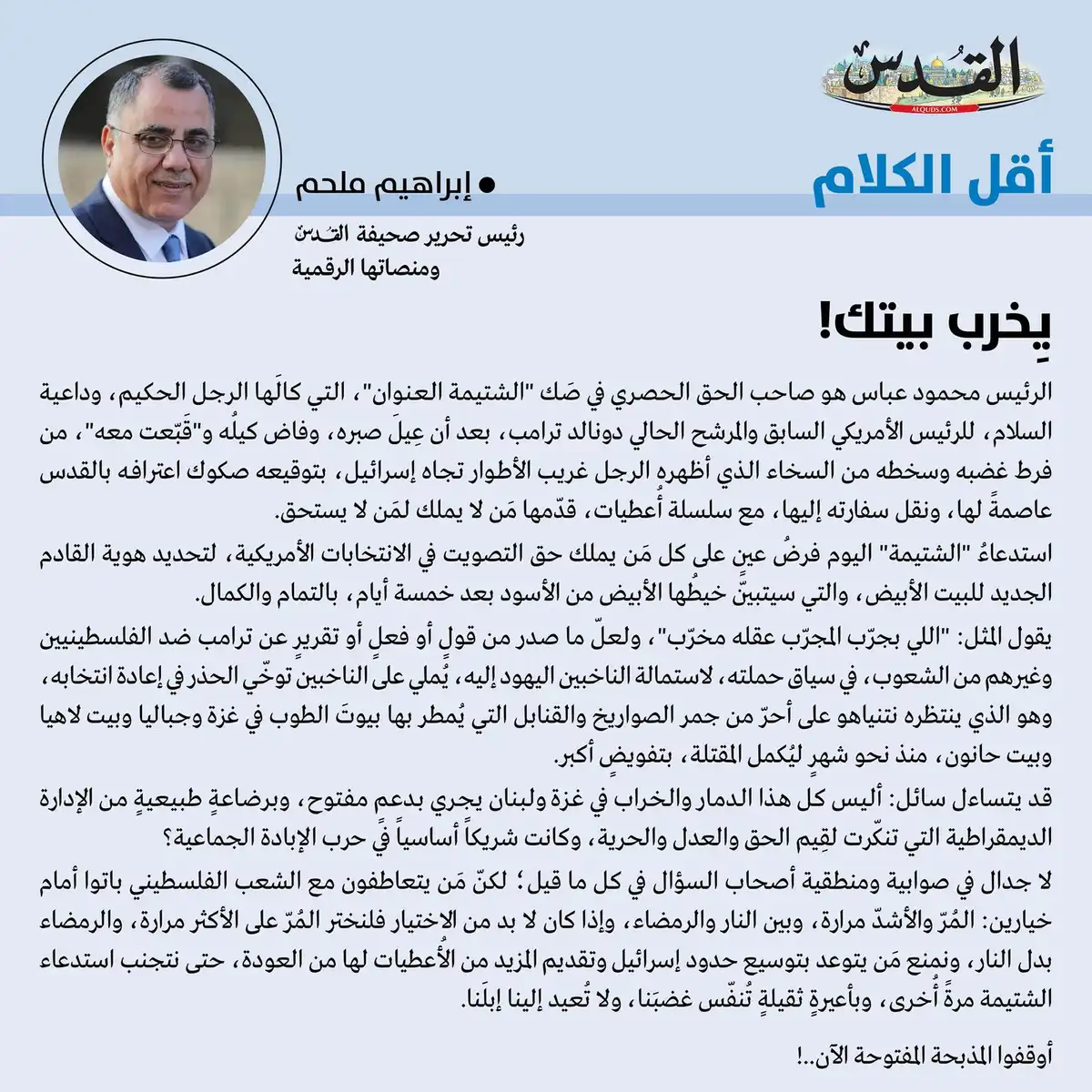
Damn you!

President Mahmoud Abbas is the exclusive right holder of the “title insult” that the wise man and peace advocate hurled at former US President and current candidate Donald Trump, after his patience ran out, his cup overflowed and he “got fed up” with it, due to his extreme anger and resentment at the generosity that the eccentric man showed towards Israel, by signing the documents recognizing Jerusalem as its capital and moving his embassy to it, along with a series of gifts that were given by someone who does not own to someone who does not deserve it.


Summoning the "curse" today is an obligation for everyone who has the right to vote in the American elections, to determine the identity of the new arrival to the White House, whose white thread will be distinguished from the black in five days, exactly.


The proverb says: “He who tries what has been tried has a ruined mind.” Perhaps what Trump has said, done, or reported against the Palestinians and other peoples, in the context of his campaign to attract Jewish voters, dictates to voters to be cautious in re-electing him, as Netanyahu has been waiting for him with the utmost eagerness to rain down rockets and bombs on the brick houses in Gaza, Jabalia, Beit Lahia, and Beit Hanoun for about a month, to complete the massacre, with a greater mandate.


One might ask: Isn’t all this destruction and devastation in Gaza and Lebanon taking place with open support and natural breastfeeding from the democratic administration that has disavowed the values of truth, justice and freedom, and was a primary partner in the war of genocide?


There is no dispute about the correctness and logic of the questioners in everything that was said; however, those who sympathize with the Palestinian people are now faced with two choices: bitter and more bitter, and between fire and ashes. If we must choose, let us choose bitter over more bitter, and ashes instead of fire, and prevent those who threaten to expand Israel’s borders and provide it with more gifts from returning, so that we avoid invoking the insult once again, and with heavy bullets that vent our anger, and do not return our camels to us.


Stop the open massacre now..!

PALESTINE

Fri 01 Nov 2024 8:36 am - Jerusalem Time

Israeli army: We attacked 200 targets in Gaza and Lebanon

The Israeli army announced on Friday morning that it had attacked, over the past day, more than 200 Hamas and Hezbollah targets, including command and control headquarters, missile launch pads, and military infrastructure, via the air force.


The Israeli army claimed in a statement that a rocket launcher that was fired towards Haifa was destroyed and that a "saboteur" who carried out the rocket attack was eliminated, according to its statement.


He pointed out that his ground forces continue their operations in southern Lebanon and have taken control of new sites, seized various weapons and missiles, and killed dozens of "saboteurs."

He stated that his forces are continuing their military operations in Jabalia and have killed dozens of "saboteurs" by air and land, and have raided military headquarters and buildings, among others. An armed group has also been eliminated in the middle of the Strip, and another in Rafah that was working in an underground tunnel, according to his announcement.

PALESTINE

Fri 01 Nov 2024 8:14 am - Jerusalem Time

Netanyahu fears his whereabouts will be revealed and seeks to postpone his trial

The Hebrew newspaper Haaretz reported on Friday that Israeli Prime Minister Benjamin Netanyahu is seeking to postpone his trial and to testify in corruption cases in which he is suspected of committing, under the pretext of the security situation.


According to the Hebrew newspaper, a new session of Netanyahu's trial is scheduled to be held on December 11, but the latter is seeking to postpone it.


According to the newspaper, Netanyahu currently appears unwilling to testify.


She explained that Netanyahu is using the incident of a drone exploding in his home as a pretext to postpone his testimony, and is claiming that Hezbollah may target the Central Court building in Jerusalem with another drone during his trial.


The newspaper revealed attempts to legislate a law preventing the disclosure of Netanyahu's location for security reasons after his home was targeted by a plane and his fear that his meeting place in the Knesset would be targeted.


She pointed out that no proposal has been submitted in this regard yet, but if the law is decided to be submitted, it will stipulate that anyone who violates this will be criminally punished.

PALESTINE

Fri 01 Nov 2024 7:52 am - Jerusalem Time

87 Israelis killed in the past month

The Israeli Army Radio reported on Friday that 87 Israelis were killed during the month of October.


The Hebrew radio reported that among the dead were 64 soldiers and security personnel and 23 "civilians."


She pointed out that these people were killed on various fronts, whether by launching anti-missiles, rocket barrages, or drones, or in clashes and confrontations that took place on the battlefields.

PALESTINE

Fri 01 Nov 2024 7:22 am - Jerusalem Time

Updated: The occupation forces arrest 4 young Palestinians and seize a vehicle in Nablus and Hebron

The Israeli occupation forces arrested four young men in Nablus at dawn on Friday.


Local sources reported that a number of occupation vehicles and jeeps raided a number of neighborhoods in the city, including Khallet Al-Iman in the northern mountain, and the streets of Al-Arsad, Mu'tah, and Sufyan, and fired live bullets, which led to the outbreak of clashes.


The sources added that the occupation forces raided a number of homes during their raid, searched them, tampered with their contents, and arrested the two young men, Saif Marai from Khallet Al-Iman in the northern mountain, and Muhammad Al-Titi from Al-Irsad Street.


The occupation forces surrounded a building on Sufyan Street in the city and arrested the young man, Hamed Nael Al-Qawqa.


In Hebron, the occupation forces raided the Safa area north of Beit Ummar and arrested the young man Salem Akhlil (25 years old), and assaulted him. They also stormed several homes, searched them, ransacked their contents, and destroyed some furniture and belongings inside them. The occupation forces also stormed the town of Al-Karmel east of Yatta and seized a vehicle.


The occupation forces tightened their closure of the entrances to towns, camps and the entrances to the city of Hebron, and tightened the closure of the neighborhoods of the Old City and the checkpoints leading to the Ibrahimi Mosque.


The occupation forces also stormed the city of Qalqilya.


Local sources reported that a number of military vehicles stormed the city from its eastern entrance, and the occupation soldiers climbed a number of buildings and set up snipers on their roofs.


The sources added that the occupation forces raided a number of homes and residential buildings in a number of neighborhoods in the city.

ARAB AND WORLD

Thu 31 Oct 2024 10:42 pm - Jerusalem Time

Lebanon Health: 45 dead and 110 wounded yesterday


The Lebanese Ministry of Health announced on Thursday evening that the death toll from the ongoing Israeli aggression on the country since October 8, 2023 has risen to "2,865dead and 13,047 wounded."


The ministry said in a statement, "The Israeli enemy's raids on Lebanon yesterday, Wednesday, resulted in 45 dead and 110 wounded."


With this toll, according to the ministry, the number of victims has risen to "2,865 dead and 13,047 wounded since the start of the Israeli aggression."


The ministry stated that the Israeli army launched 68 air strikes on different areas of Lebanon on Wednesday, most of them in the southern governorates, Nabatieh (south) and Baalbek-Hermel (east), bringing the total number of its attacks since the beginning of the aggression to "11,647 attacks."

PALESTINE

Thu 31 Oct 2024 10:40 pm - Jerusalem Time

UN: Israel bombed medical supplies to Kamal Adwan Hospital


UN spokesman Stephane Dujarric said that medical supplies delivered to Kamal Adwan Hospital in northern Gaza Strip five days ago were subjected to Israeli shelling and were completely destroyed.


Dujarric explained in a press conference on Thursday that the Israeli siege imposed on northern Gaza is still ongoing.


He added that search and rescue teams and medical staff are unable to perform their duties due to Israeli attacks on hospitals.


The UN spokesman pointed out that hospitals in the Gaza Strip are trying to continue their work despite the ongoing Israeli bombing.

ARAB AND WORLD

Thu 31 Oct 2024 10:36 pm - Jerusalem Time

Israeli intelligence estimates: Iran is preparing to attack us from Iraq

Two Israeli officials told Axios that Israeli intelligence indicates that Iran is preparing to attack Israel from Iraqi territory in the coming days, perhaps before the US presidential elections, which will be held next Tuesday.


According to what the website reported on Thursday evening, the Iranian attack may be carried out through pro-Iranian factions in Iraq, and not directly from Iranian territory, in an attempt to avoid another Israeli attack against strategic targets in Iran.

The sources added that intelligence information indicates that the expected attack may be carried out using a large number of drones and ballistic missiles.

An American official said that the United States does not know whether the decision to attack from Iraq has already been taken, but that if Iran decides to attack, its preparations for it will be done quickly.


This came as the commander of the Iranian Revolutionary Guard, Hossein Salami, said in press statements on Thursday that "Israel made a mistake when it attacked Iran," and stressed that Iran's response "will be different from any scenario" that Israel might expect.

For his part, the deputy head of the Revolutionary Guards, Ali Fadavi, said that "the Iranian response to Israel is inevitable," adding that we can "target everything Israel has in one operation."

"Iran will definitely respond to the Israeli attack on its territory," said Mohammad Mohammadi, director of the office of Iran's supreme leader. "Our response will be severe and the enemy will regret it," he said.

On Wednesday, CNN quoted a "high-ranking" Iranian source as saying that "Iran is planning a decisive and painful response that will likely come before the elections."

ARAB AND WORLD

Thu 31 Oct 2024 8:52 pm - Jerusalem Time

The Wall Street Journal reveals details of the proposed truce in Lebanon against Israel

US officials have discussed with Israeli Prime Minister Benjamin Netanyahu a draft agreement to end the war in Lebanon that would allow Israel to continue striking Lebanon for two months, a proposal that is likely to be rejected by Hezbollah and the Lebanese government.


The deal, a draft of which The Wall Street Journal says it has seen, includes an agreement between the United States and Israel that would allow Israeli forces to strike Lebanon during a 60-day transitional period in response to imminent threats. The deal would enforce the agreement and relevant U.N. resolutions, including Security Council Resolution 1701, which ended the last war between Israel and Hezbollah in 2006.


The draft proposal also calls for Israel to withdraw its forces from Lebanon after one week, after which time the Lebanese Armed Forces would deploy to the south to help dismantle military infrastructure linked to Hezbollah and other non-state militias.


Israel’s security establishment is pushing for a diplomatic solution in Lebanon, believing it is close to achieving many of its goals. But those close to Israeli Prime Minister Benjamin Netanyahu do not expect a deal before the U.S. election, according to a person familiar with his thinking.


So far, neither Hezbollah nor the Lebanese government has reportedly accepted the proposal, which they say gives Israel too much latitude to continue attacking across the border, according to Lebanese and other Arab officials involved in the negotiations. Lebanese officials say they don’t want to publicly drop the deal because the document leaves room for continued negotiations that could eventually end the war, Arab officials told the Wall Street Journal.


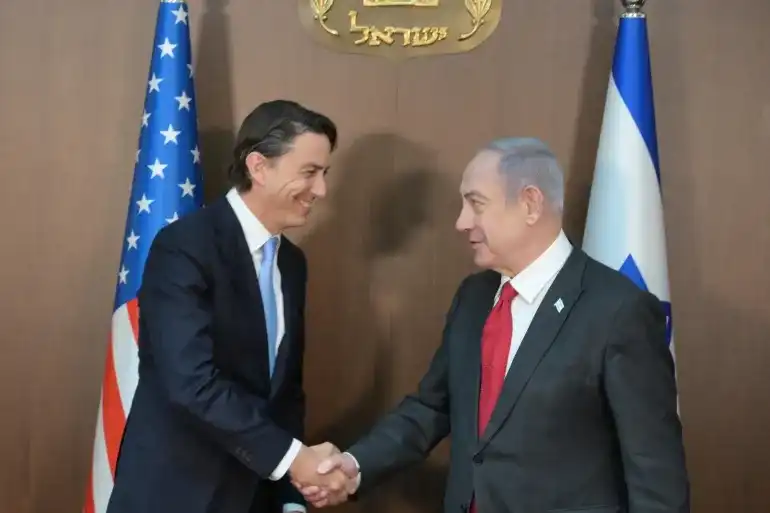
The proposal is expected to be part of discussions led by senior US officials who traveled to the region this week as part of a renewed push by the Biden administration to end the wars in both Gaza and Lebanon. CIA Director William Burns met with Egyptian officials in Cairo, while senior White House officials Amos Hochstein and Brett McGurk traveled to Israel, where the State Department said they were scheduled to discuss the Lebanon war.


Netanyahu's office said Thursday that at the start of Netanyahu's meeting with Hochstein on Thursday, "(Netanyahu) made clear that the main point is not this or that agreement on paper but Israel's ability and determination to enforce the agreement and thwart any threat to its security from Lebanon."


A US official said Michael Erik Kurilla, head of US Central Command, also arrived in Israel on Thursday and was expected to travel to Jordan.


The US effort comes in a belated attempt to defuse the Middle East crisis, days before the US presidential election and at a critical time in both Gaza and Lebanon. Israel has launched thousands of airstrikes on Lebanon that have killed more than 2,700 Lebanese citizens, most of them women and children, along with a group of senior Hezbollah leaders, and destabilized the country, uprooting hundreds of thousands of Lebanese citizens from their homes and forcing them to flee.


In Gaza, the ongoing humanitarian crisis is deepening amid growing concerns over the fate of Israeli hostages held by Hamas.


Hezbollah has told mediators that the 60-day transition period also opens the door for Israel to continue what it calls aggression in Lebanon. The Lebanese militant group also says it opposes amending Resolution 1701, which called for both sides to cease fire, for Israeli forces to withdraw from Lebanon, for Israeli overflights to end, and for Hezbollah to withdraw its forces from areas near the Israeli border.


The draft agreement was first reported by Israel’s Kan public broadcaster on Wednesday night. Both the draft and the side letter were dated October 26. Officials familiar with the talks said only minor changes had been made to the draft since then.


Inside Israel, the country's military and other security forces have begun pushing for a deal in Lebanon, arguing that they have achieved many of their goals by striking against Hezbollah, including weakening its missile arsenal.


The Wall Street Journal quotes an Israeli official as saying, “We have certainly reached a point where it is important to take advantage of the huge operational achievements that Israel has made, especially the complete destruction of Hezbollah’s leadership... All negotiations will take place under enemy fire. No one agrees to a cease-fire to negotiate an agreement.”


The newspaper (known for its support for Israel) quotes Arab officials as saying that one sign of progress in the current negotiations is that Hezbollah has secretly indicated its willingness to separate the negotiations on Lebanon from the war in Gaza after a year in which it said it would not stop striking Israel unless there was a ceasefire in Gaza.


Hezbollah's public position is that it continues to link the two conflicts.


“The Israeli enemy will not be able to impose its conditions,” Naim al-Qassam, Hezbollah’s newly appointed secretary-general, said in a televised speech on Wednesday. Qassam was appointed the group’s supreme leader earlier this week after his predecessor, Sayyed Hassan Nasrallah, was killed in an Israeli airstrike in Beirut in late September.


In an interview with Lebanese television on Wednesday evening, interim Lebanese Prime Minister Najib Mikati, one of two senior Lebanese officials acting as a mediator between the United States and Hezbollah, said he was "cautiously optimistic" about the possibility of a ceasefire in the coming hours or days.


Lebanese officials have expressed optimism in recent days about the efforts of US officials, including Hochstein, who visited Lebanon last week, saying they welcome an agreement that would enforce Resolution 1701.


The U.S. proposal also includes other provisions likely to raise objections from Hezbollah and Lebanese government leaders. It includes a provision that would allow Israel to fly aircraft over Lebanon for surveillance purposes as long as the aircraft do not break the sound barrier and are “invisible to the naked eye to the extent feasible.” Israel would also be able to launch airstrikes on Lebanon in response to “imminent or emerging threats.”

PALESTINE

Thu 31 Oct 2024 7:44 pm - Jerusalem Time

Gaza Strip: Fifteen killed and dozens of injuries in Israeli bombing


15 citizens were killed and others were injured, Thursday evening, in an Israeli occupation bombing that targeted Gaza City and the central Gaza Strip.

Local sources reported that 9 citizens were killed and dozens were injured, as a result of the occupation bombing the homes of the Abu Amuna and Saidam families, in the new camp, north of the Nuseirat camp in the central Gaza Strip.

The sources added that two citizens were killed when the occupation targeted a bicycle in the village of Al-Zawaida in the middle of the Strip, while four citizens were killed and 10 others were injured in an Israeli bombardment that targeted a house in the vicinity of Al-Shanti land, northwest of Gaza City.

The occupation forces continue their aggression on the Gaza Strip, by land, sea and air, since October 7, 2023, which resulted in the death of 43,204 citizens, and the injury of 101,640 others, the majority of whom are children and women, in an incomplete toll, as thousands of missing people are still under the rubble, amid the deterioration of the humanitarian situation in the besieged Strip.

PALESTINE

Thu 31 Oct 2024 6:02 pm - Jerusalem Time

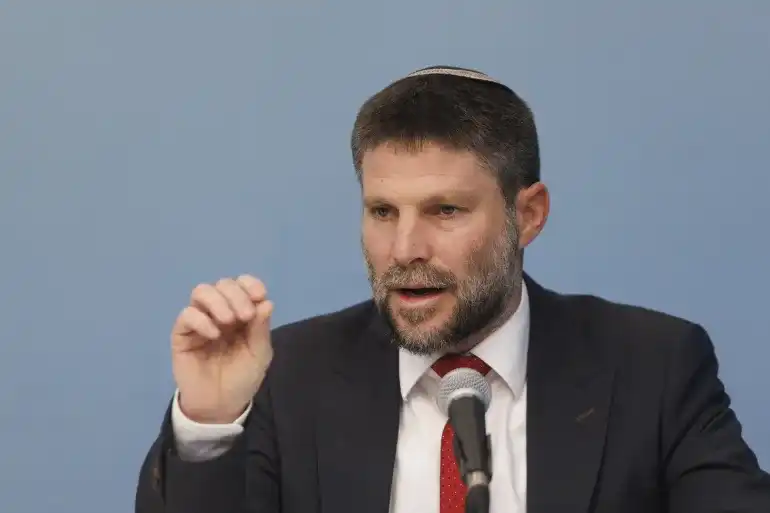
Smotrich to extend cooperation between Israeli and Palestinian banks for a month


A spokesman for Israeli Finance Minister Bezalel Smotrich said cooperation between Israeli and Palestinian banks will be extended for another month.


Israel has threatened to cut ties with Palestinian banks as a retaliatory measure.


Israel also banned bank transfers immediately after the outbreak of the war on Gaza.


Under the Oslo Accords, Israel collects funds for the Palestinian Authority, which exercises limited self-rule in parts of the West Bank occupied by Israel since 1967.

ARAB AND WORLD

Thu 31 Oct 2024 6:00 pm - Jerusalem Time

Netanyahu discusses Lebanon ceasefire with US envoys


Axios quoted American and Israeli officials as saying that Israeli Prime Minister Benjamin Netanyahu discussed the ceasefire agreement in Lebanon with American envoys Amos Hochstein and Brett McGurk, while Lebanese Prime Minister Najib Mikati confirmed that he is awaiting the results of Hochstein’s contacts, who is said to be working on drafting an agreement.


The American website reported that Netanyahu also discussed with the envoys the efforts being made to resume negotiations on the agreement of the Israeli prisoners in Gaza, and the Iranian threats to respond to the Israeli strike.

Israel Hayom reported that the Americans hope to reach a framework agreement within days, while Israeli leaders announced that their goal is to neutralize Hezbollah and paralyze its ability to launch rockets at northern Israel, and to allow the return of about 60,000 people who were displaced from these areas due to the bombing to their homes.

On Wednesday, the Authority reported that Hochstein is drafting an agreement stipulating the withdrawal of the Israeli army from Lebanon within a week, and that it will resume its military operations if the agreement is violated.

The proposal calls on Lebanon and Israel to abide by Security Council Resolution 1701, with a 60-day truce in place, with Lebanese forces to begin deploying in the south at the time of the Israeli withdrawal.

The resolution also calls for the creation of an area between the Blue Line (the border between Lebanon and Israel) and the Litani River in southern Lebanon, free of any armed men, military equipment and weapons, except those belonging to the Lebanese Army and the United Nations Interim Force in Lebanon (UNIFIL).

The intended agreement between the two parties will not prevent them from the right to defend themselves if either of them violates the agreement, and the spread of weapons in southern Lebanon is prohibited except under the supervision of the Lebanese government itself, according to the draft.

The alleged draft emphasizes granting the Lebanese government the necessary powers to implement the decision to prevent Hezbollah from arming itself, while monitoring and dismantling military facilities that the government does not recognize for producing weapons, as well as dismantling any armed infrastructure that does not comply with Resolution 1701.


1 minute 53 seconds1:53

Mikati awaits Amos' response

In Lebanon, caretaker Prime Minister Najib Mikati said that US Presidential Envoy Hochstein informed him yesterday that he is seeking to reach a ceasefire in Israel, in preparation for searching for ways to fully implement Resolution 1701.

Mikati added that Lebanon is waiting to be informed by Hochstein of the results of his contacts, expressing hope that a ceasefire agreement with Israel will be announced in the coming hours or days, but he considered that the ongoing Israeli escalation does not give rise to optimism soon.

advertisement

Mikati described Israel's threats against Lebanese civilians to evacuate entire cities and displace them as an additional war crime, stressing that Lebanon asked diplomatic bodies to intensify pressure on Israel to stop its aggression.

American desire

Meanwhile, the Times of Israel newspaper quoted American officials as saying that President Joe Biden's administration now believes that securing a ceasefire in Lebanon is the best way to end the war in Gaza.

US officials told the newspaper that Washington had changed its assessment in recent weeks, after months of insisting that calm in Gaza would lead to an easing of tensions between Israel and Hezbollah.

The Times of Israel quoted an Israeli official as saying that US envoy Hochstein's visit to the region came after indications in Lebanon and Israel of their readiness to move forward according to the US proposal, but the Israeli official ruled out reaching an agreement before the US elections.

For his part, US State Department spokesman Matthew Miller said that the United States seeks to resolve the conflict in Lebanon through diplomatic means, and to avoid a long Israeli military campaign similar to what happened in Gaza.


Meanwhile, the Times of Israel newspaper quoted American officials as saying that President Joe Biden's administration now believes that securing a ceasefire in Lebanon is the best way to end the war in Gaza.

US officials told the newspaper that Washington had changed its assessment in recent weeks, after months of insisting that calm in Gaza would lead to an easing of tensions between Israel and Hezbollah.

The Times of Israel quoted an Israeli official as saying that US envoy Hochstein's visit to the region came after indications in Lebanon and Israel of their readiness to move forward according to the US proposal, but the Israeli official ruled out reaching an agreement before the US elections.

For his part, US State Department spokesman Matthew Miller said that the United States seeks to resolve the conflict in Lebanon through diplomatic means, and to avoid a long Israeli military campaign similar to what happened in Gaza.

ARAB AND WORLD

Thu 31 Oct 2024 4:53 pm - Jerusalem Time

Israeli media: 7 dead and several wounded due to Hezbollah missiles


Israeli media reported that 7 people were killed and a number of others were injured since this morning as a result of Hezbollah missiles falling.


Channel 13 Israel also confirmed, quoting the Metula Municipality, that 5 people were killed when a shell fell on the town in the Upper Galilee, northern Israel.


The Israeli Army Radio said that the five dead in Metula were 4 foreign workers and an Israeli.


Haaretz newspaper quoted the Israeli ambulance as confirming that 4 people were seriously injured, and 2 people were seriously injured as a result of the targeting of Matla.


The Israeli ambulance announced that two people were killed as a result of rockets falling on the eastern areas of Haifa Bay.

For its part, the Israeli army announced that it had detected the launch of 25 missiles from Lebanon towards Haifa Bay, noting that it was able to intercept some of them.

PALESTINE

Thu 31 Oct 2024 3:58 pm - Jerusalem Time

A Palestinian shot by Israeli occupation forces in Nour Shams camp in Tulkarm

The Ministry of Health announced today, Thursday, the death of a young man in Nour Shams camp in Tulkarm.


The ministry confirmed that the martyr had arrived at Tulkarm Governmental Hospital from Nour Shams Camp.


She pointed out that the number of dead in Tulkarm has risen since yesterday evening to 4 martyrs.

PALESTINE

Thu 31 Oct 2024 3:31 pm - Jerusalem Time

41 dead and 131 injuries arrived at Gaza hospitals within 24 hours

The Israeli occupation committed 6 massacres against families in the Gaza Strip, resulting in 41 dead and 131 injuries arriving at hospitals during the past 24 hours.


According to the Ministry of Health in Gaza, the death toll from the Israeli aggression has risen to 43,204 dead and 101,641 injuries since October 7, 2023.

PALESTINE

Thu 31 Oct 2024 1:37 pm - Jerusalem Time

The battle of narrative alongside the war of extermination.. The Israeli targets the novel as a tool of resistance

Mahmoud Shuqair: The artistic and literary productions written by the martyrs, both male and female, will remain the best testimony against aggression, baseness and ugliness.

Dr. Talal Abu Afifa: The escalating Israeli crimes deliberately target those who carry the Palestinian narrative to the world and everything that represents life

Ibrahim Jawhar: The assassination of Ghassan Kanafani more than fifty years ago was the beginning of a series of cultural assassinations against the Palestinians

Dr. Manal Qadri: The occupation deliberately decided to kill the artist and obliterate his voice and art because it is the effective means to kill him morally and dwarf him in front of the world

Osama Nazzal: The crimes of genocide claimed the lives of 21 artists and creators and more than 50 beacons of the arts, including theaters, institutes, ceremonies, and galleries.


The war of extermination waged by the occupying state in the Gaza Strip for the thirteenth consecutive month has spared neither young nor old, neither woman nor man, neither institution nor street. However, what was striking was the unprecedented targeting of journalists, writers, authors, artists and university professors, the vast majority of whom were targeted along with their families.


It is clear that this targeting was deliberate and intentional, due to the danger that these people represent to the Israeli colonial project on the front of the narrative and the transmission of facts to the world, and documenting them in writing, literature, or art, and thus dealing with them as a front parallel to the fighting front in the field, and perhaps more important, so the number of creative writers, artists, and journalists who were martyred was horrific and unprecedented in the history of conflicts.


But what calls for questioning and astonishment are the international reactions, and those of specialized institutions and organizations, to this type of crime against people who have nothing to do with fighting and armed action, the pretext by which the occupying state justifies its brutal war in the Strip, from which academic institutions, including universities, institutes and schools, in addition to cultural institutions, were not spared.


"We are Burning" is the latest work of the visual artist Mahasen Al-Khatib


The Jerusalemite short story writer and novelist Mahmoud Shuqair said: “As I follow with sadness and sorrow the murders and bloody massacres that are being committed every day against our people in the Gaza Strip, I remembered the poet Mahmoud Darwish’s description of the Sabra and Shatila massacre when he said in his poem: ‘Sabra is the identity of our era until eternity.’”


He wondered: If Mahmoud Darwish were still alive, what poetry would he have written about the horrific massacres that occur every day there?


Shaqir pointed out that the last of these massacres occurred on 10/18/2024 in Jabalia camp, and among its victims was the Palestinian artist Mahasen Al-Khatib, who published her last work before her martyrdom, a drawing entitled “We are Burning,” and it was seen by nearly five million people in the world.


Shaqir confirmed that the young Mahasen Al-Khatib, 31 years old, had announced that she was ready to organize a free drawing course, to remain a charity on behalf of her soul if she died.


He explained that “the martyrdom of Mahasen is not the first and not the last. Before her, a long caravan of female and male martyrs passed; I remember the poet Salim Al-Nafar who was martyred a few months ago in the current war of extermination, and before him the poet and novelist Hiba Abu Nada, author of the novel “Oxygen is Not for the Dead”, was martyred. If we delve deeper into the past, we remember the martyr leader Majed Abu Sharar, author of the short story book “Bitter Bread”, who was assassinated by Mossad in 1980. Before him, the martyr poet Kamal Nasser was assassinated in 1973, and before him, the martyr short story writer and visual artist Ghassan Kanafani was assassinated, and before him, the poet Abdul Rahim Mahmoud was martyred while defending the homeland, in addition to a long list of Palestinian and Lebanese journalists.”


How do the occupiers justify killing creative people?


Shaqir continued his speech: “In order to understand how the Israeli occupiers justify to themselves the killing of creative men and women from among the Palestinian people, it is enough to remember the statement of their Minister of Defense, Galant, who described the Palestinians in the Gaza Strip as “human animals,” to justify the killing and genocide. How, in this case, and how, with their logic like this, can they spare the blood of male and female artists, writers, journalists, and journalists who defend their people with the brush and the pen, the camera, and the press and television reports, and expose the crimes of the occupying army against a people who have been suffering from the Zionist invasion for more than a hundred years?!”


He added, "They, that is, this elite group of martyrs, both male and female, who took it upon themselves to expose the claims of the Zionist occupiers who practice lying to cover up their crimes by saying that they are defending themselves, and they are the ones who occupied the land and practiced genocide against dozens of Palestinian villages in Deir Yassin, Al-Dawayima, Al-Tantura, Abu Shusha and others during the 1948 catastrophe."


Shaqir concluded by saying: “In light of the official Arab failure and the collusion of some countries, led by the United States of America, with the aggressors, the artistic, literary and journalistic productions written by the martyrs, both male and female, will remain, along with all the Palestinian cultural productions committed to loyalty to the homeland and to exposing the crimes of the Zionist movement against our people, the best testimony against the aggression and against the baseness, ugliness and hideousness that will remove the Israeli occupiers from the circle of normal human beings and will accompany them as a result of their evils forever.”


Destroying everything that represents life


In turn, Dr. Talal Abu Afifa, a member of the General Secretariat of the General Union of Palestinian Writers and Authors, said: The Israeli army, under the direction of the political leadership headed by Netanyahu and his government ministers Ben Gvir and Smotrich, aims through its war on the Gaza Strip to eliminate the Palestinian person, whether he is a fighter or a civilian, and to destroy everything that represents life, from people to stones and trees.


Abu Afifa pointed out that the Israeli attacks deliberately target Palestinian intellectuals, including writers, authors, artists and university professors, who are the ones who carry the Palestinian narrative to the world, as many countries have begun to sympathize with the Palestinian people and denounce the escalating Israeli crimes.


He explained that "the last victim of this targeting was the Palestinian artist Mahasen Al-Khatib, who was assassinated by the Israeli army. She was contributing with her drawings to spreading the Palestinian narrative through her drawings and raising awareness in the world about the reality of the suffering of her people, which gained her wide popularity on the international scene."


He pointed out that Israel seeks to empty the Palestinian land of its original owners in order to expand settlement projects, in order to achieve its goals of establishing the "Kingdom of Israel" that extends from the Nile to the Euphrates. These are plans that have been entrenched since 1948 with the support of Britain and America and the complicity of some Arab parties.


Abu Afifa expressed his regret over the Arab and Islamic position, which is still "in a deep sleep," referring to the famous saying: "I was eaten the day the white bull was eaten," in reference to the necessity of taking a unified position before it is too late.


Assassination of the word and the pen


For his part, the Jerusalemite writer Ibrahim Jawhar described the targeting of Palestinian artists and creators as “the assassination of the word and the pen,” considering that this killing represents the assassination of life itself and a practical application of the saying of the Nazi Propaganda Minister Goebbels: “As soon as I hear the word culture, I reach for my gun.”


Jawhar said, "The word fights, as does the pen, so the enemies of life and freedom assassinate it." He added, "The enemies fear the awareness that plants resistance to darkness, so you see them encouraging contentment with the philosophy of the brute animal that lives to eat, not eats to live."


Jawhar pointed out that the Palestinians have experienced throughout their history the assassination of men of science, culture and creativity, whose artistic production the enemies see as equivalent to a battalion of fighters.


He stated that "the assassination of Ghassan Kanafani, accompanied by his niece, more than fifty years ago, was the beginning of a series of cultural assassinations against the Palestinians, followed by the assassination of the creatives Majed Abu Sharar, Izz al-Din al-Qalaq, Kamal Nasser, Kamal Adwan, Naji al-Ali, and other Palestinian and Arab intellectuals who resisted with words and pens."


Jawhar highlighted the martyred Palestinian poet Abdul Rahim Mahmoud from Anabta, whose words were embodied in reality by his martyrdom in the Battle of Al-Shajara, saying: “Abdul Rahim Mahmoud lived through his poetry and words in which he said: I will carry my soul in my palm and throw it into the abyss of destruction, either a life that pleases a friend or a death that angers an enemy.”


The Jerusalemite writer Jawhar stressed that the painting, the anthem, and the word are symbols of resistance that disturb the peace of the greedy, and always remind them of the existence of a resistant people. He believes that targeting creative people is nothing but a miserable attempt to pave the way for the occupation’s death machine.


Eliminate artistic and cultural tools


For her part, Dr. Manal Qadri, Professor of Sociology at the University of Tunis, confirmed that Israel’s targeting of Palestinian artists, poets and cartoonists reflects the occupation’s desire to eliminate artistic and cultural tools that carry messages of resistance and documentation of the collective Palestinian memory.


Qadri said: “Times of war usually coincide with major developments in art, as the artist becomes more free to record his personal vision away from what the authorities impose, whether religious, security or political. It is known that paintings do not, have not and will not stop the missiles from falling, and music will not alleviate the suffering of the people of the land and will not stop their displacement and killing in the most horrific ways, ways that are displayed to everyone. Despite that, culture remains a great force that preserves the collective memory despite its darkness since the Al-Aqsa flood.”


Qadri explained that “artworks are the result of an artist’s artistic expression. They are works of art in and of themselves, and do not carry their own agenda. Then the artwork becomes valuable in a world that goes beyond direct communication and endorsement. Instead of directly depicting battles and their tragedies, it seems as if the colors themselves are fighting in the war and imposing themselves by engaging in the battle, even implicitly, in which there is a profound portrayal of the image of the enemy and the image of the victim.”


Qadri believes that “the artist, the poet, and the cartoonist all contributed to the resistance according to forms and mechanisms of resistance that they saw as a means to repel the occupation. Some works of art hurt the Israeli occupation to the point that their social media pages were closed, and others were persecuted, and some artists were even killed in a way that they saw as the demise of their work, but it is impossible. The occupation does not know that everything that the artist publishes there on that pure land with the blood of its martyrs is simultaneous with its spread throughout the world. The power of social media is to preserve greatly and deeply that collective memory that the Gazan aspires to protect and preserve generation after generation.”


The occupation killed and destroyed everyone and does not care about human rights


She pointed out that the Israeli occupation killed everyone, destroyed everyone, and does not care about human rights or international treaties. It is the one that decided to kill the artist and obliterate his voice, art, and content, because it is the effective means that kills him morally and dwarfs him in front of the world.


Qadri explained that “the occupation was and still is using all its tools to kill, and therefore the artist - as part of the people - has no choice but to use his energy to support the war and avenge the martyrs, by drawing trampling, stabbing, stones, and everything that rejects the occupation and ends it.”


Qadri stressed that “the Israeli machine kills children, women and the elderly, and destroys and ends the lives of the owners of the land, its creators, thinkers, artists, musicians and dreamers of a better tomorrow on a land where they saw their honor and the honor of an entire nation. They resisted with their words, paintings, melodies and their fingerprint on a land under siege for more than a year. They colored the gray world with paintings that reflect the picture to us in all its aspects.”


Qadri concluded by saying: “But the occupation is weak in the face of seeing itself breathe its last breaths in the ugliest caricatures before a generation and generations that will continue to denounce it and its crimes for the rest of their lives, as a result of artistic works that are preserved in memory as well as history. They have the machine to kill, and the artist has a continuous artistic history with his existence or after his demise.”


Palestinian art under the occupation's fire


In turn, cartoonist Osama Nazzal said, “When the occupation began its genocide against our Palestinian people in the Gaza Strip after October 7, it targeted all segments of civil society without discrimination. Here, Palestinian society began to confront this attack, including Palestinian artists, creators and intellectuals. Cartoonists, artists and intellectuals began to cover and document the crimes of the invaders, and visual artists began to draw the tragic state that people had reached, each from his position and cultural and artistic status.” He added, “This contributed to supporting the Palestinian narrative so that it could reach the world, despite the occupation’s attempt to repel the Palestinian narrative with a false Israeli narrative.”


Nazzal stressed that the Palestinian artist contributed to leaving his mark on the global cultural scene, which used Palestinian artworks, sayings and national symbols as a protest material and a visual image that expresses the human genocide against the Palestinian people in all protest movements around the world.


He explained that the artist was indeed able to assume a high degree of responsibility in preserving his national identity and his humanitarian message to confront any attempt to distort the stereotypical image of the Palestinian, and this is what disturbed and bothered the occupation because culture and arts are considered soft resistance that is respected by the human mind.


Israeli barbaric message


Nazzal explained that “the Israeli response came with a barbaric message to complete the series of persecution of Palestinian artists, creators and intellectuals, either by arrest or direct assassination by physical liquidation. This is the language of the occupier, as it did to Naji al-Ali and Ghassan Kanafani, until the turn came to Palestinian artists in the heart of the Gaza Strip, such as the martyred artist Hiba Zaqout, who was killed with her children, and the artist Mahasen al-Khatib, who was assassinated a few days ago after the number of her followers reached more than 4 million viewers, and the artist Maher Obeid, who was assassinated by the Israeli forces in northern Gaza, knowing that he was the calligrapher and painter of the walls of the city and the camp. All of this comes as a role for the occupier to muzzle artists and intellectuals and terrorize others from continuing on this path.”


The artist Nazzal pointed out that this genocide claimed the lives of 21 artists and creators and more than 50 beacons of art, including theaters, institutes, studios, galleries, and the destruction of murals, monuments, and sculptures, in addition to the loss of artists in the Gaza Strip of their works and paintings that were left in their personal studios to return after the war, but everything went to waste.