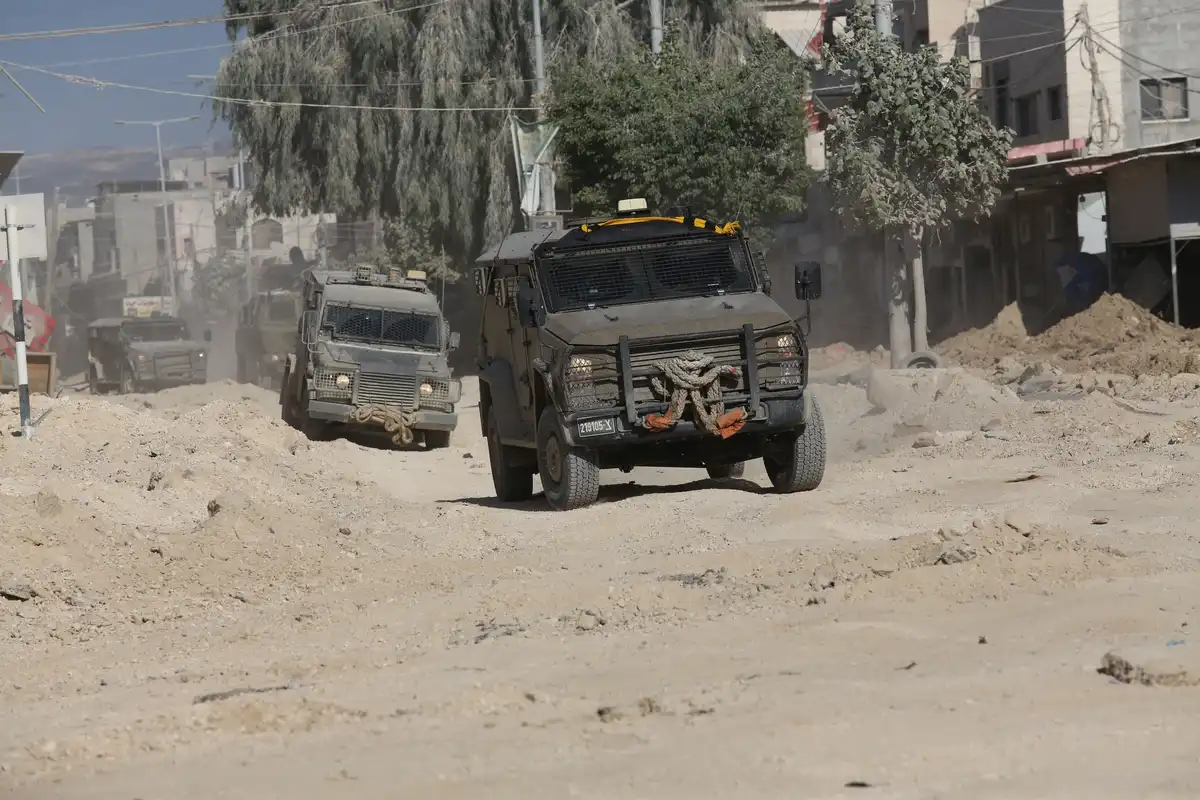
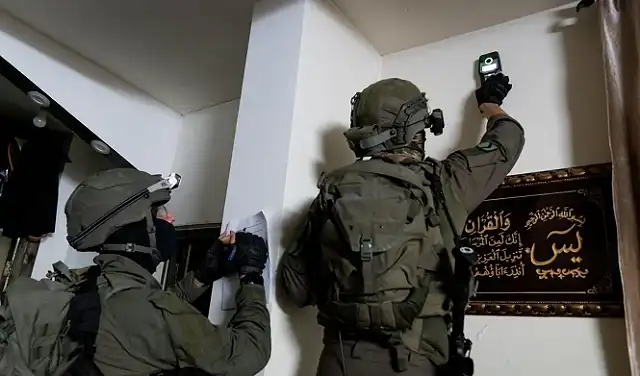
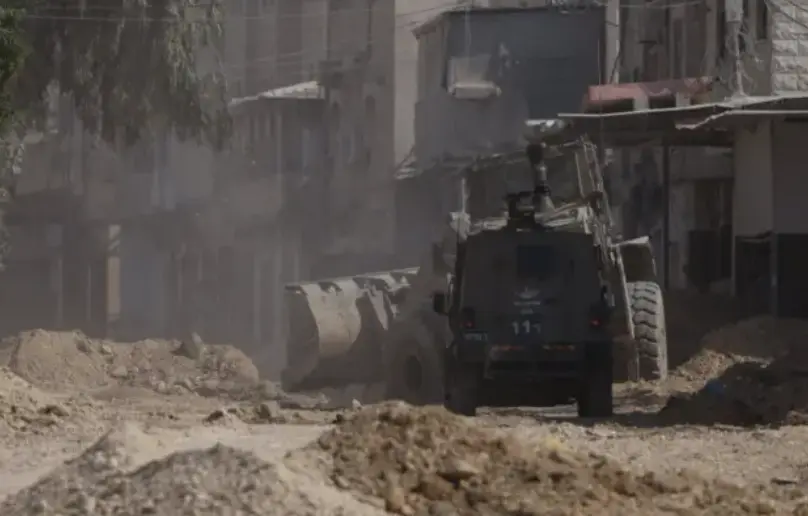
PALESTINE

Tue 24 Sep 2024 5:35 pm - Jerusalem Time

UN officials call for end to brutal war on Gaza

Senior United Nations officials on Monday called for an "end to the appalling human suffering and humanitarian catastrophe" in the Gaza Strip nearly a year after a war between Israel and the Islamist Hamas movement.


"These atrocities must end," they said in a statement signed by the heads of UN agencies including UNICEF and the World Food Programme, along with other aid groups, as world leaders gathered in New York for the annual UN General Assembly.


“Humanitarian workers must have safe and unhindered access to people in need. We cannot do our jobs in the face of overwhelming need and ongoing violence,” the statement seen by Al-Quds said.


The United Nations has long complained about the obstacles to getting aid into Gaza during the war and distributing it amid “complete chaos” in the blockaded Gaza Strip. Nearly 300 aid workers have been killed, more than two-thirds of them UN staff. “The threat of famine remains as 2.1 million people remain in dire need of food and livelihood assistance as humanitarian access remains restricted,” UN officials said. “Health care has been devastated. More than 500 attacks on health care have been recorded in Gaza.”


Australia, Brazil, Colombia, Indonesia, Japan, Jordan, Sierra Leone, Switzerland and the United Kingdom said on Monday they would work together to develop a declaration to protect humanitarian workers and call on all countries to sign it, Reuters reported.


“2024 is on track to be the deadliest year on record for aid workers,” said Australian Foreign Minister Penny Wong.


"Australia felt this deeply with the IDF strike against World Central Kitchen vehicles in April, which killed Australian Zumi Francom and her colleagues," she said, referring to the Israel Defense Forces.
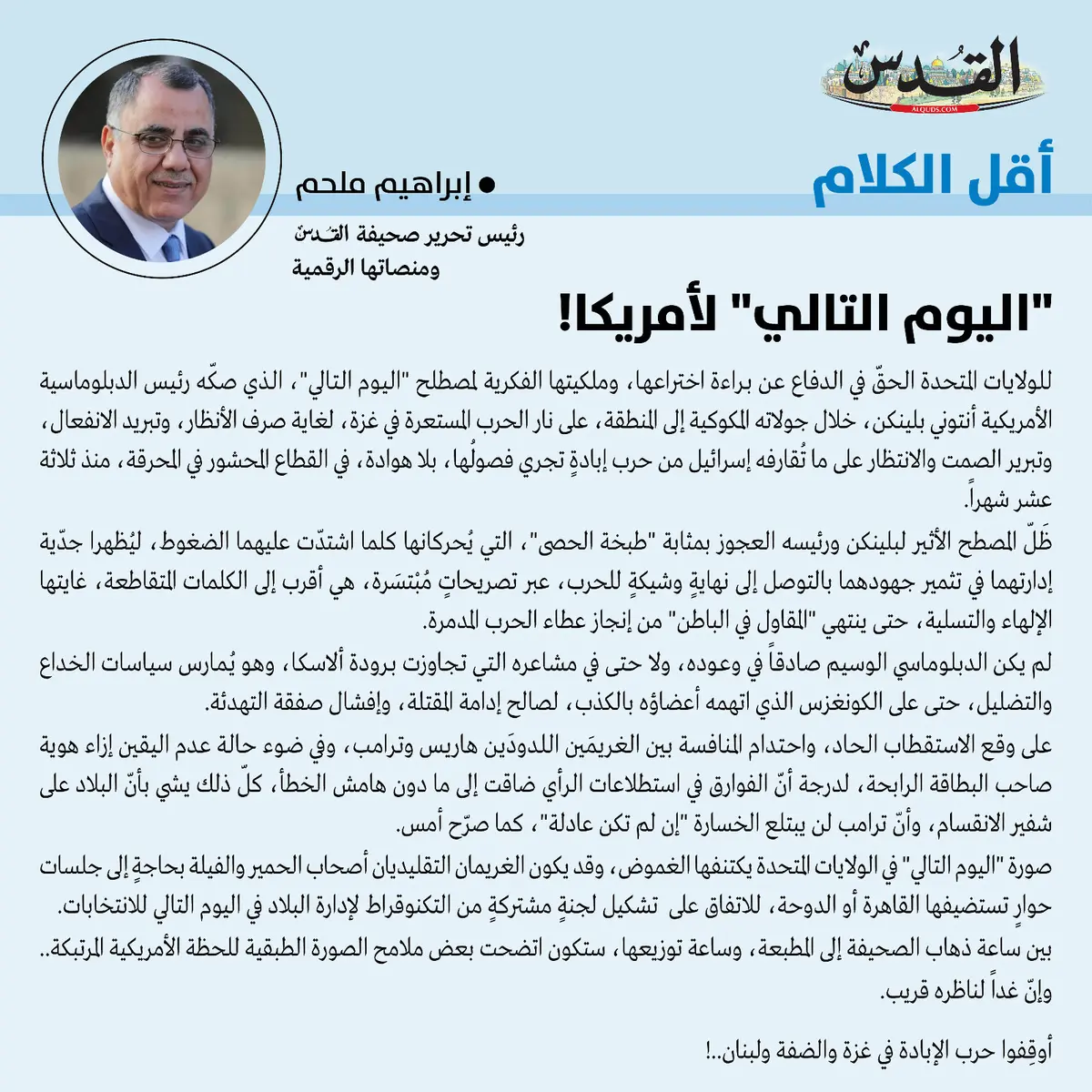

"Gaza is the deadliest place on earth for aid workers," she said.


According to Reuters, "The Israeli military apologized and fired two senior commanders involved in the World Central Kitchen strikes. The Israeli military formally reprimanded three other commanders. Israeli Prime Minister Benjamin Netanyahu said the strikes were unintended and tragic."


The war on the besieged Gaza Strip began on October 7, 2023, when Hamas fighters stormed settlements and towns in the Gaza Envelope area, killing about 1,200 people, including 311 soldiers on active duty, and taking about 250 hostages and returning them to Gaza, according to Israeli statistics.


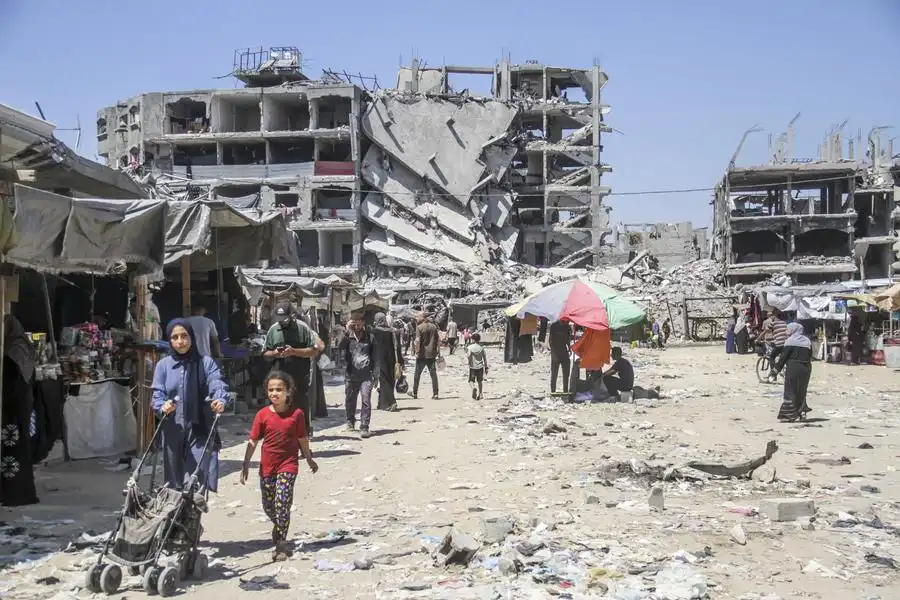
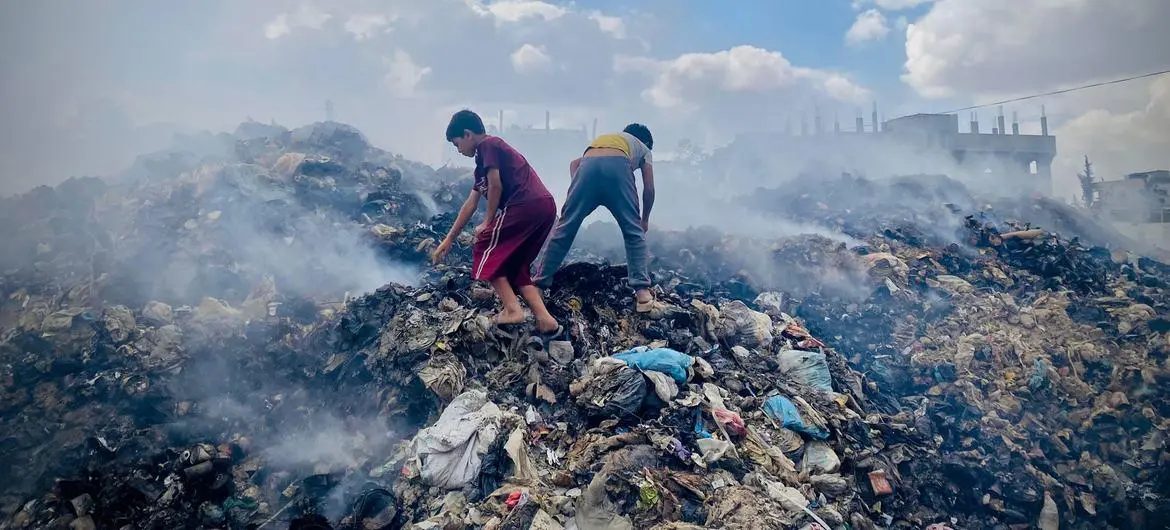
Since then, the Israeli military has destroyed vast swaths of the Gaza Strip, forcing nearly all of its 2.3 million residents to flee their homes, spreading hunger and deadly disease and killing more than 41,000 people, according to Palestinian health authorities in Gaza.


The Israeli occupation army claims that it takes steps to reduce the risk of harm to civilians and that at least a third of the Palestinian dead are militants.

PALESTINE

Tue 24 Sep 2024 4:07 pm - Jerusalem Time

War on gaza: 6 Palestinians killed in Israeli bombing of a house in Nuseirat

Six citizens, including two children, were killed and others were injured when the occupation bombed a house in Nuseirat in the central Gaza Strip.

Medical sources reported that four citizens and two children were killed when the occupation targeted a house in the new camp in Nuseirat with a missile.


In a preliminary toll, the number of martyrs since the beginning of the occupation's aggression on the Gaza Strip on October 7, 2023, has risen to 41,467, in addition to 95,921 wounded, the majority of whom are children and women, while thousands of missing people are still under the rubble.

PALESTINE

Tue 24 Sep 2024 3:44 pm - Jerusalem Time

Israeli occupation issues and renews administrative detention orders against 85 detainees

  1. The Prisoners' Affairs Authority and the Prisoners' Club said on Tuesday that the occupation authorities issued and renewed administrative detention orders against 85 detainees.

  2. The following is a list of the names of detainees against whom administrative detention orders have been issued (new and renewed):

    1. Khaled Walid Abdul Rahim Suleiman / Qaraweh Bani Zaid (3 months)

    2. Bilal Ahmed Jamal Hamouda / Kharbatha Bani Harith (3 months)

    3. Muhammad Faris Suhail Farajah / Deheishe Camp (4 months)

    4. Adi Nabil Ali Jibril/ Bethlehem (4 months)

    5. Muhammad Ahmad Tawfiq Abu al-Rab/ Jenin (6 months)

    6. Qutaiba Muhammad Omar Hamdan/ Beitunia (3 months)

    7. Amjad Kanaan Mustafa Hamed / Two houses (4 months)

    8. Ayman Saadi Jabrin Al-Hasanat / Deheishe Camp (4 months)

    9. Shadi Abdul Rasoul Ghazi Falna/Safa (6 months)

    10. Muhammad Walid Sharif Abu al-Rab/ Jalboun (5 months)

    11. Ahed Musa Hamed Dababsa/Nuba (4 months)

    12. Abla Muhammad Othman Abdul Rasool/ Ramallah (4 months)

    13. Ismail Jamal Ismail Ramana/ Nablus (6 months)

    14. Zahi Zuhair Ibrahim Kousa/ Nablus (4 months)

    15. Louay Faisal Muhammad Nasrallah/ Jenin (6 months)

    16. Omar Ahmed Jamil Abdel Razek/Ramallah (4 months)

    17. Mohammed Raed Omar Malukh/ Qaraweh Bani Zaid (6 months)

    18. Wissam Hassan Abdel-Mannan Zaid/ Qalqilya (4 months)

    19. Alaa Nael Mohammed Al-Abd Ibrahim / Deheishe Camp (4 months)

    20. Mohammed Malik Hilal Saeed Abdo / Al-Baqaa (4 months)

    21. Amin Naji Muhammad Al-Abayat/ Bethlehem (4 months)

    22. Mujahid Mustafa Raja Qurini/Jenin (4 months)

    23. Ghassan Nayef Talab Dhaqan/ Nablus (4 months)

    24. Mohamed Ahmed Abdel Razzaq Farakh/Pharaoh (6 months)

    25. Hamad Ahmed Hamad Abu Maria/Beit Ummar (6 months)

    26. Moaz Maan Abdul Hafeez Dar Ayesh/Kafr Malik (6 months)

    27. Ezz El-Din Faris Adel Badr/ Deir El-Sudan (4 months)

    28. Ahmed Fakhri Yousef Daraghmeh/ Tubas (4 months)

    29. Ashraf Raed Nawaf Daraghmeh/ Tubas (4 months)

    30. Muhammad Fathi Arsan Ghanem/Tulkarm (6 months)

    31. Mohi El-Din Fahmy Saeed Najm/Saris (3 months)

    32. Iyad Amer Mustafa Rawajbeh/Nablus (4 months)

    33. Badr Muhammad Hussein Al-Ghawadra/Jenin (3 months)

    34. Malik Musa Yousef Ryan/Qarawat Bani Hassan (3 months)

    35. Muhammad Khader Abdul Jabbar Al-Hasanat/Bethlehem (3 months)

    36. Ali Bassam Jawdat Adwan/Al-Eizariya (4 months)

    37. Montaser Bilal Ahmed Yaqoub/ Nablus (5 months)

    38. Diaa Khalil Muhammad Jafari/ Bethlehem (5 months)

    39. Moatasem Mohammed Fayeq Izzat Nabulsi - Nablus - (5 months)

    40. Ismail Ibrahim Abdullah Al-Masalma - Beit Awa - 3 months

    41. Asef Yousef Adel Taym - Azzun - Qalqilya - 5 months

    42. Raafat Mustafa Muhammad Awad - Beit Ummar - 3 months

    43. Saif Al-Din Saleh Mustafa Sheikh - Bethlehem - 6 months

    44. Abdul Aziz Muhammad Musa Khader - Ramallah - 6 months

    45. Adham Yasser Khaled Fashafsha - Bethlehem - 6 months

    46. Jamal Nawaf Abdul Latif Jawabreh - Al-Arub - 6 months

    47. Mamoun Mahmoud Sobhi Hamed - Salwad - 4 months

    48. Nidal Daman Asaad Qarqash - Nablus - 6 months

    49. Ammar Muhammad Abdul Hamid Abu Maria - Beit Ummar - 6 months

    50. Idris Youssef Idris Hassan - Birnbala - 4 months

    51. Ammar Farah Hassan Al-Far - Al-Zababdeh - Jenin - 6 months

    52. Hassan Faisal Mustafa Abu Al-Rab/Masliya-Jenin (4 months)

    53. Yaqoub Jamal Yaqoub Jaber/Beitunia (6 months)

    54. Amjad Yasser Muhammad Zaid/Qalqilya (6 months)

    55. Savior Ragheb Mohamed Salah - Barqa (4 months)

    56. Munir Muhammad Abbas Abdul Shakoor Al-Zaro/Hebron (two months)

    57. Omar Anwar Ismail Taloul/Ramallah (5 months)

    58. Munther Muhammad Rajab Al-Aqra’/Qalqilya (6 months)

    59. Moaz Raed Naim Daraghmeh/Tubas (6 months)

    60. Suleiman Ibrahim Suleiman Qatani/Nablus (4 months)

    61. Qais Wael Rajih Hanani/Beit Furik (4 months)

    62. Muhyiddin Ismail Salem Abu Fanar/Yatta (4 months)

    63. Ammar Yasser Muhammad Hammad/Qalqilya (6 months)

    64. Zakir Aziz Izzat Arar/Ramallah (4 months)

    65. Waseem Taha Muhammad Abu Maria/ Beit Ummar (4 months)

    66. Firas Ibrahim Ahmed Abu Maria/Beit Ummar (6 months)

    67. Muhammad Subhi Hassan Matahin/Jenin (4 months)

    68. Zain Jawad Suleiman Bahr/Beit Ummar (3 months)

    69. Attaf Attia Abdullah Naasan/Al-Mughair (4 months)

    70. Waseem Basil Tayseer Jaraj’a/Asira al-Shamaliya (6 months)

    71. Yousef Ayman Nawaf Sabarna/ Beit Ummar (6 months)

    72. Saad Fouad Ibrahim Omar/Beit Ur al-Tahta (6 months)

    73. Murad Muhammad Saeed Fashafsha/Jabaa (4 months)

    74. Yaqoub Yahya Muhammad Al-Rajabi/Hebron (6 months)

    75. Muhammad Jawad Muhammad Muati Taqtouk/Nablus (4 months)

    76. Muhammad Hisham Mahmoud Sabaa/ Beit Ummar (6 months)

    77. Jaafar Marwan Muhammad Aqraa/Qablan (4 months)

    78. Samer Azmi Muhammad Rajabi/Hebron (6 months)

    79. Baraa Iyad Muhammad Saeed Hammad/Qalqilya (6 months)

    80. Nour El-Din Mohammed Qasim Ahmed/ Qalqilya (6 months)

    81. Wissam Ahmed Abdel Karim Enaya/ Qalqilya (5 months)

    82. Ahmed Saeed Ahmed Ajami/Ateel (5 months)

    83. Laith Hamad Mahmoud Bani Awda/Al-Baqaa (6 months)

    84. Muhammad Yassin Tayseer Sabah/Bethlehem (4 months)

    85. Diaa Mohammed Ali Abu Hamad / Assira Al-Qabliya (4 months)


ARAB AND WORLD

Tue 24 Sep 2024 3:40 pm - Jerusalem Time

Israeli occupation launches violent raids on Lebanese towns, and the death toll rises to 558

Today, Tuesday, the Israeli occupation aircraft carried out a series of violent raids targeting a number of Lebanese towns.


The warplanes targeted the towns of Al-Qalila, Debbin, Kounin, Barashin, Al-Haniya, Deir Antar, Beit Yahoun, Al-Jumaijma, Al-Mansouri, and Haris, in conjunction with intensive flights of warplanes and reconnaissance aircraft in Lebanese airspace.


Lebanese Health Minister Firas Abiad announced earlier today that the death toll from the Israeli raids had reached "558, including 50 children and 94 women, in addition to 1,835 wounded."


He added: "There are still a large number of remains that the security forces are working to identify," noting that "we had previously developed plans to confront disasters, and today they are in place, which has enabled hospitals to carry out their role in the face of the aggression."

PALESTINE

Tue 24 Sep 2024 3:36 pm - Jerusalem Time

West Bank: Israeli occupation forces injure a Palestinian doctor and arrest a woman east of Qalqilya

Today, Tuesday, a doctor was injured by the occupation forces’ bullets in the town of Azzun, east of Qalqilya.


According to the Ministry of Health, the doctor was shot in the back with live ammunition, and his injury was described as serious.


The occupation forces arrested the wife of the young man, "Kazem Radwan", after raiding and searching his house, to pressure him to surrender himself.


The occupation forces also forced the owners of shops in the Triangle area near the main northern entrance to the town to close their shops, numbering approximately 50 shops.


PALESTINE

Tue 24 Sep 2024 2:46 pm - Jerusalem Time

West Bank: Israeli settlers bulldoze Palestinian lands south of Nablus

Today, Tuesday, settlers bulldozed lands in the village of Qaryut, south of Nablus.


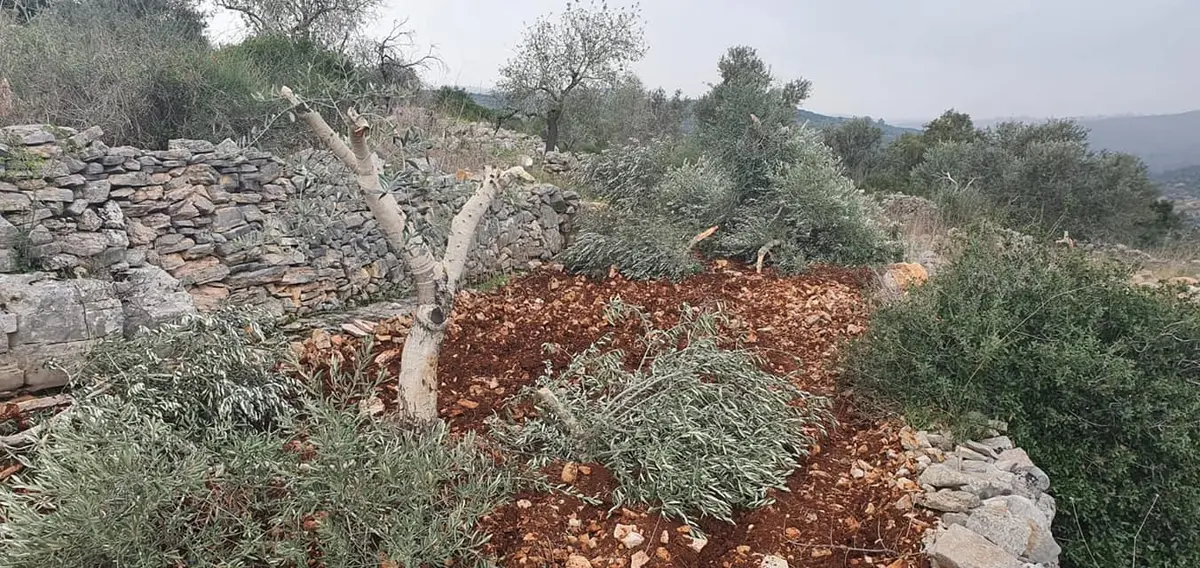
Human rights activist Bashar Al-Qaryouti reported that the settlers bulldozed a mountainous land planted with olives, and another flat land estimated at 15 dunams in the “Khirbet Sarra” area southeast of the village.


He pointed out that this is the first time that settlers have bulldozed in this area, which raises citizens' fears of colonial expansion there, especially since the area is located between the "Shovot Rachel" and "Shilo" settlements, which are built on citizens' lands.


PALESTINE

Tue 24 Sep 2024 12:59 pm - Jerusalem Time

Israeli settlers attack Palestinian shepherds south of Hebron

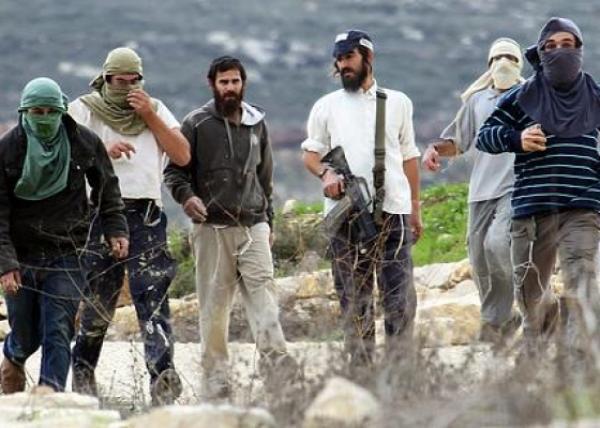
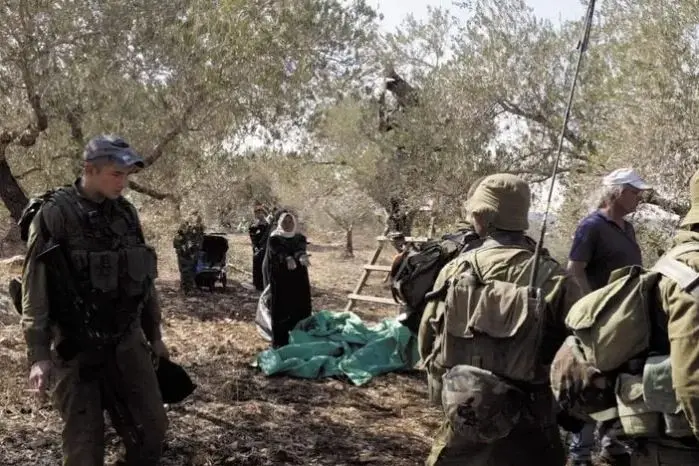
Today, Tuesday, settlers, under the protection of the Israeli occupation forces, attacked shepherds and citizens in Khirbet Zanuta, east of the town of Adh Dhahiriya, south of Hebron.


According to local sources, the settlers, under the protection of the occupation forces, attacked the shepherds and citizens with their horses, expelled them from their lands, prevented them from approaching their wells and watering their livestock, and tampered with their drinking water and poured it on the ground, in the Zanuta hamlet, adjacent to the so-called 'Shama' settlement, which was built on citizens' lands east of the town of Dhahiriya.


According to the residents of Zanuta village, the occupation and its settlers are seeking, through these attacks, to expel the residents from their lands and properties, with the aim of stealing dozens of dunams of land from the residents who live in the village and have documents and ownership deeds for their lands that they inherited from their fathers and grandfathers hundreds of years ago.

ARAB AND WORLD

Tue 24 Sep 2024 12:53 pm - Jerusalem Time

Hundreds of Lebanese families displaced from the south and Bekaa to the north after Israel's bombing

Hundreds of Lebanese families were displaced this morning, Tuesday, from the south and the Bekaa to the north, after the occupation warplanes intensified their bombing of several areas.


The National News Agency reported that a number of displaced families from the South and the Bekaa arrived in a number of Akkar towns, where some municipalities and civil society organizations provided them with all necessary needs.


According to the Lebanese Ministry of Health, the occupation raids since yesterday have resulted in the martyrdom of more than 492 people, including 35 children and 58 women, and the injury of 1,645.

PALESTINE

Tue 24 Sep 2024 12:51 pm - Jerusalem Time

War on gaza: Death toll rises to 41,467

The Ministry of Health in Gaza announced that the death toll from the occupation's aggression on the Gaza Strip has risen to 41,467 dead and 95,921 wounded, since October 7, 2023.


The ministry added in a brief statement that the occupation forces committed 3 massacres against families in the Gaza Strip, resulting in the death of 12 citizens and the injury of 43 others, during the past 24 hours.


It pointed out that thousands of victims are still under the rubble and on the streets, and ambulance and civil defense crews cannot reach them.

PALESTINE

Tue 24 Sep 2024 12:48 pm - Jerusalem Time

New testimonies of Gaza detainees revealed in Negev prison

The Palestinian Prisoners' Affairs Authority and the Palestinian Prisoners' Club revealed new testimonies from a group of Gaza detainees held in the Negev Desert Prison, based on a series of visits conducted recently by the Prisoners' Authority's lawyers, which included eight detainees, most of whom were arrested at the beginning of the ground invasion of Gaza, specifically through the so-called "safe passage", during their displacement from northern Gaza to its south, and others were arrested from shelter schools and from Al-Shifa Hospital.


The testimonies of the eight detainees included details about the crimes of torture, abuse and horrific attacks to which they were subjected, specifically during the first period of their arrest, before their transfer to the Negev prison. Here we point out that the horrific details to which they were subjected were mainly related to the first period of their arrest, but this does not mean that the crimes of torture against them stopped after their transfer from the camp, which they referred to as being in the Gaza Envelope, to the prisons. Rather, all the detainees are still subjected to difficult and tragic conditions that language, according to their description, is unable to convey the reality of what is happening to them in an instant inside the prison, especially at the current stage due to the spread of skin diseases among them, specifically scabies, which has become a tool of torture and abuse.


According to the data obtained by the prisoners’ institutions from the Gaza detainees in the Negev prison, there are about 1,200 detainees from Gaza in the Negev prison, distributed across eight sections, each section containing (150) detainees.


The Prisoners' Authority and the Prisoners' Club reviewed in the report a central testimony from one of the detainees, in addition to other testimonies that included details about the crimes they were subjected to as well as the current prison conditions. It is worth noting that these visits are part of a series of visits conducted by human rights organizations, which are limited visits that were mainly made to detainees in the Ofer camp and the Negev prison, in addition to a number of visits to detainees in the Sde Teiman camp, which was the most prominent station for torture crimes against Gaza detainees, in addition to a group of camps in which the level of torture crimes is no less than the level of crimes to which detainees were subjected in the Sde Teiman camp.


OPINIONS

Tue 24 Sep 2024 12:46 pm - Jerusalem Time

Gaza and Lebanon under aggression

op-ed - Al-Quds dot com

op-ed - Al-Quds dot com

Opinion Writer

As the first anniversary of the Israeli aggression on the Gaza Strip approaches, targeting all the necessities of life for the Gazans, carrying out massacres and heinous crimes against civilians, including children, women and the elderly, squandering the right to a decent life, displacing tens of thousands of citizens, targeting them wherever they flee, leaving them homeless and far from any refuge, Israel decided yesterday to transfer its aggressive experience on Gaza to Lebanon, through a war declared by Netanyahu and his army leaders, targeting the (Land of the Cedars) with hundreds of missile strikes that left about 400 martyrs and more than 1,300 wounded, and forced thousands of Lebanese to flee from the south to the north, as is the case with the citizens of the Strip who were forced by the army to flee from the north to the south and to the pastures in Khan Yunis, in a scene that confirms the policy of displacement that the occupation, with its racist mentality, is trying to impose in southern Lebanon, amid a Palestinian uprising, by the sons of the camps in Lebanon, who rushed to rescue the displaced fleeing from the ferocity of the Israeli bombing. To open the doors and facilities of their humble homes, which are full of all the elements of Palestinian pride, dignity, authenticity and chivalry.


The aggression on Lebanon was planned by the occupation a lot and it does not aim, as announced, to return the settlers to the north, eliminate Hezbollah’s military capabilities, and prevent it from threatening the settlements established in northern Palestine. Rather, the further strategic goal is to create a new reality through which the Netanyahu government seeks to occupy southern Lebanon. This is a policy and language that the occupation seeks to impose with the logic of force and barbarism, by violating Lebanon and its sovereignty, a country that has always stood in the face of the Israeli occupation and has played roles through honorable stances alongside the Palestinian people and their resistance, especially the current stance of support for the war front in the south.


The occupation government seeks to expand the scope of its terrorism in southern Lebanon to deeper areas and to intensify the raids, in preparation for ground invasions, the goal of which is to inflict the largest possible number of victims targeted by yesterday’s bombing, in addition to other plans that Israeli Defense Minister Yoav Galant spoke about when he said: We are overcoming twenty years of Hezbollah’s preparation and organization, referring to a long war against Lebanon, despite Netanyahu’s claim that the army is only attacking Hezbollah, while in fact it is attacking the entire Lebanese people, in a manner completely similar to what it is doing in the Gaza Strip, and with a green light from the United States.


Lebanon, its resistance, its free people, and all the honorable people in this country will face difficult days. It is proud of its evergreen cedars, it fights time and does not accept anything but the peaks as its home. Its plains, its valleys, and its north as well, insist on taking up the challenge and standing firm in the face of this sinful aggression.


Every drop of blood shed by a Lebanese, every deep wound in the ranks of their fighters, every green tree burned, or every house destroyed by the aggression, is the price of the honorable stance taken by the Lebanese people and Hezbollah with Palestine, through the “Support Gaza” front since the first day of the Al-Aqsa flood... at a time when entire Arab regimes and peoples stand as spectators, watching Israel enjoy shedding our blood.


Congratulations to those who decided to take the soil of Lebanon as an eternal bed to confront the aggression...and a station that will remain firmly in the hearts and conscience...Long live Lebanon

OPINIONS

Tue 24 Sep 2024 12:44 pm - Jerusalem Time

Netanyahu seeks to cover up his failure in the war of extermination

Jamal Zaqout

Jamal Zaqout

Opinion Writer

The war of extermination led by Netanyahu against our people in the Gaza Strip, which has been ongoing for nearly a year, has not yet succeeded in breaking the Palestinian resistance, despite the comprehensive destruction he has inflicted on the Strip and its people in the largest crime of extermination recorded in modern times in terms of the area of the Strip and its population. Netanyahu, who is racing against time to resolve the conflict by liquidating the Palestinian cause, or at least paving the way for that in his current term, is expanding the scope of his war to annex the West Bank and complete the Judaization of Jerusalem, targeting the West Bank camps, in an effort to liquidate the refugee issue by destroying their camps and re-displacing their residents, especially after he succeeded in annihilating the camps of the Strip, which have been the reservoir of the revolution and the title of the popular uprisings that have not stopped since the Nakba.


Zionist Israel, which has always considered the mere presence of Palestinians on their land an existential threat, has tried all kinds of wars against the Palestinian people, their revolution and uprisings since the Nakba, but it has always failed to break the will for freedom and dignity, and the willingness of the Palestinian people to sacrifice in resisting the Zionist project. Nevertheless, Netanyahu imagines that he can uproot them from their homeland. It seems that the military and security establishments in Israel, which have experienced the mettle of the Palestinian people and the extent of their attachment to their land, realized early on the absurdity of the strategy that Netanyahu seeks to implement. Perhaps herein lies the essence of the disparity that sometimes appears on the surface and sometimes returns to the shadows, without disappearing, between the political and military establishments.


Netanyahu, who is fleeing from his scandals and failures, the most dangerous of which was the failure of October 7, which toppled the myth of the invincible army, and his primary responsibility for this failure in its political and strategic dimensions, can no longer retreat, especially since it seems that he is still living in his crumbling illusions about the possibility of exploiting the nature of the Arab and regional moment to defeat the Palestinian cause in preparation for its liquidation. In this context, we find him throwing all his cards away, using the American arsenal of weapons, which has not stopped him for a moment since October 7, which confirms Washington's involvement and its being dragged behind Netanyahu's adventure, which reveals the reasons for the failure of all the so-called mediation efforts to stop the "fire", which have reached a dead end due to Netanyahu's entrenchment, his insistence on completing the crimes of genocide in Gaza, and the illusions of breaking its resistance. This is in preparation for implementing the annexation and displacement plans in the West Bank, without Washington moving a finger.


Washington's failure, due to its bias and even its partnership in the dirty war of extermination, is what encouraged and encourages Netanyahu to pursue his military options, desperate to implement his political plans. In this context, the escalation of the Israeli war against Lebanon comes in a blatant attempt to marginalize his failure in the war against the Gaza Strip and the Palestinian people, and an attempt to fold the position that the justice of the Palestinian cause has begun to occupy in international public opinion, including exposing the Zionist narrative and its racist fascist nature, which stood behind the establishment of Israel at the expense of Palestinian and Arab rights, continuing, i.e. Netanyahu, attempts to directly implicate Washington in a regional war that it does not want, especially at the moment of the US presidential elections that put the future of the Democrats in the White House in front of a dangerous moment, in light of the exposure of the role of the incapable Biden administration and the extent of its involvement in the war of extermination against our people in the Gaza Strip.


The Secretary-General of Hezbollah showed political wisdom, despite the enormity of the loss the party suffered last week, when he confirmed that the title of the current conflict is to stop the war on Gaza, announcing the continued support of the resistance forces for the occupied Gaza and West Bank fronts, and that he does not want to be dragged into a comprehensive war without that meaning his defeat in the face of Netanyahu’s goals, foremost of which is to isolate the Palestinian people to liquidate their cause, which, if successful, will mean the downfall of the entire region, foremost of which is the Lebanese resistance.

The first question, in light of the changing rules of the game and the nature of the conflict on the northern front, is Washington really seeking to stop Netanyahu from dragging it into a regional war, or will the dynamics of continuing to be dragged behind Netanyahu be the master of the situation? The Lebanese resistance, along with the Yemeni and Iraqi resistances, confirm that stopping the war on Gaza is the key to preventing further escalation and eliminating the risk of rolling into a regional war. Accordingly, the most important question is why has Washington not succeeded in reaching a ceasefire agreement in Gaza? It seems that the Zionist wing in Washington realizes that Netanyahu's failure in the war on the Gaza Strip will necessarily mean the failure of any military option to break the Palestinian people and the extent of their adherence to their national rights, foremost of which is the right to self-determination, which has become a matter of universal consensus, with the exception of the Zionist current dominating the Washington administration, which still stands behind the Zionist project led by Netanyahu's government at this stage.

The coming days and weeks hold some answers to the developments in the conflict raging in the entire region, especially the future of the Palestinian cause, which remains in the eye of the storm and at a crossroads, between what Netanyahu seeks to liquidate it, and the free people of the world who have begun to see justice in Palestine as a key to the victory of universal justice. Will the "Palestinian leadership" realize its position in this universal conflict and side with its people and their need for unity and the mobilization of all their energies to thwart Netanyahu and successfully cross over to freedom and self-determination?!


===================


Washington's failure, due to its bias and even its partnership in the dirty war of extermination, is what encouraged and encourages Netanyahu to pursue his military options, desperate to implement his political plans. In this context comes the escalation of the Israeli war against Lebanon; in a blatant attempt to marginalize his failure in the war against the Gaza Strip and the Palestinian people

OPINIONS

Tue 24 Sep 2024 12:23 pm - Jerusalem Time

All possibilities of war are open

Hani Al Masry

Hani Al Masry

Opinion Writer

Before the dangerous Israeli escalation last week against targets in Lebanon, I wrote that escalation is possible, but within the limits of a regional war. After this escalation, we can confirm that all possibilities of war are now possible, including an open, comprehensive, regional war and the continuation of the support war with calculated escalation, unless something unexpected happens that changes the likely scenarios and introduces other scenarios. However, Hezbollah and the axis of resistance are keen not to fall into the Israeli trap of being dragged into an open, comprehensive war at a time that suits the occupying state, as a war of attrition suits the axis of resistance and does not suit the far-right government, so it seeks to change the war scenarios.


What leads to this conclusion is that Benjamin Netanyahu's government wants a comprehensive war while continuing the war of extermination against the Palestinians, especially if the war of terror, shock and internal undermining does not work, which expresses itself through the qualitative operations it carried out, from the assassination of Saleh al-Arouri, through the assassination of Fouad Shukr, the pager and wireless devices operations, the assassination of Ibrahim Aqil and his companions, and ending with the concentrated targeting of missile launchers, with the aim of paralyzing the resistance and inciting the internal Lebanese environment, starting from the party's circles and the Shiite sect and ending with all of Lebanon; to pressure Hezbollah to stop the support war to spare Lebanon a destruction similar to what happened in the Gaza Strip.


Whoever carried out the two mass bombings that targeted thousands, and the targeting of the leader of al-Radwan and his companions a day later, in which dozens of martyrs, most of them civilians, were killed, crossing the red line by targeting the southern suburb again, wants or takes into account the high possibility of turning the support war into an open war. If it were up to Netanyahu and his generals alone, they would have launched a comprehensive war immediately after the pager and wireless communications operations, and caught Hezbollah by surprise while it was in a state of complete confusion. However, this constitutes a departure from the scope permitted by the United States; as is evident from the continuous warnings of a regional war, the administration of US President Joe Biden gave Israel the green light for a war below the level of a regional war, in the hope that the displaced people of southern Lebanon and northern occupied Palestine would return to their homes, as Biden stated.


The Netanyahu government most likely aimed, and still aims, to lure Hezbollah into a strong and proportionate response at an inappropriate time for it, so that it can launch a comprehensive war against it while ensuring that the US administration stands by its very special ally, especially since it is constrained on the eve of the US elections, due to the impact of the comprehensive war on raising prices and inflation, and enabling Beijing and Moscow to benefit through intervention, even if indirectly; which greatly affects Kamala Harris’s chances in the elections, so that it can launch a comprehensive war against it under the pretext of self-defense, while being assured that Washington will be with it, albeit reluctantly.


The Biden administration would have preferred to reach a prisoner exchange and calm deal on the Gaza front that would help reach a settlement on the Lebanese front.


The dangerous criminal Israeli escalation that took place last Tuesday and Wednesday, and then last Friday, indicates either a major breakthrough by Hezbollah, or a greater technological superiority than previously thought, or both. Therefore, before rushing into a proportionate response, the defect must be addressed and the ranks must be reorganized, not dealt with emotionally, and submit to the demands of the public supporting the resistance away from cold strategic calculations. Hezbollah received strong blows and the occupying state achieved important tactical gains, but despite their importance, they did not change the strategic environment, as evidenced by the fact that the support war continued and escalated and the rules of engagement changed, and the stage of open reckoning began, and that the settlers of the northern colonies have not returned to their homes, and will not return according to Hassan Nasrallah’s commitment except by stopping the war of extermination.


We must note that Iran, like China, is endowed by the imbalance of power and the fact that the Israeli entity is part of the colonial camp with the characteristics of a "Persian carpet" maker who spends years and years weaving the carpet with art, mastery, and tirelessly step by step, and in light of the skill and intelligence of the country and people of the "inventor of chess" who are endowed with strategic patience and the perseverance and persistence of an ant that tries and tries and tries until it achieves what it wants. Tehran also gives priority to maintaining its nuclear program and bringing it to its final stage after it has reached the threshold of becoming a nuclear state, and then ensuring its continuation.


If, as they say, the devil’s work had opened up, Gamal Abdel Nasser had not fallen into the Israeli trap aimed at dragging him into war in 1967 before he had completed his preparations, as the minutes of the meetings of the General Staff of the occupation army published later indicated, which insisted and pressured the government of Levi Eshkol to wage war under the pretext of the measures taken by Abdel Nasser, the shameful June defeat would not have occurred, and the fate of the entire region would have been different; because the June defeat is the founding event of the Arab collapse, which brought the Arabs, stage after stage, to their current situation without a single Arab project, nor a single Arab leadership, nor a leading state, nor a single leader.


Does the above not hold Hezbollah responsible? No, of course not. It bears responsibility for not anticipating the repercussions of the Israeli superiority it knew, and it should have been more careful about raising the ceiling of expectations, and thus limiting the level of threats and promises.


It is enough for Hezbollah to continue the support war until now, despite the high price it has paid and is still willing to pay, for a period of almost a full year so far, and has prevented the occupation army from ending the war and returning the displaced to their homes. It is true that this has not stopped the war of extermination on the Gaza Strip until now, but it has raised the Israeli price of this war, limited the capabilities of the occupation state to achieve its goals, and placed more question marks regarding the Israeli deterrent force.


If Hezbollah had known about the Al-Aqsa flood and pledged to Hamas to wage a comprehensive war, and that it was capable of it, the assessment would have been different. However, it waged a war of attrition appropriate to its level of readiness despite not knowing in advance, and for this it deserves appreciation, not blame, and it is credited to it, not against it.


To those who push for or insist on an untimely assessment of October 7, or the role played by the axis of resistance and Hezbollah in particular and the unity of the arenas, we say to them: Look with one standard, at a time when they do not say a word about the Arab parties that not only did not fire a single bullet in support of Gaza, but also did not sever the countries that normalized their relations with the occupying state, and did not even verbally threaten to do so.


There is something to be said about the wisdom of implementing the Al-Aqsa Flood and the role of the axis of resistance, but at the right time and place, and in a dialogue between allies and friends in one camp.


However, if we imagine for a moment that this axis did not exist and that Iran was following America’s lead, like the Arab countries, Israel would have been roaming the region and achieving Netanyahu’s declared goal of changing the Middle East without a price or at the lowest price.


The occupation government has adopted the annexation, Judaization and displacement program, and the conflict resolution plan that aims to liquidate the Palestinian cause from all its dimensions before the Al-Aqsa flood. It was supposed and natural to initiate a unified national response commensurate with it, based on a comprehensive vision, strategy and a single leadership, otherwise it would succeed in resolving the conflict, and this is the worst thing that could happen to the Palestinians and their cause, but this did not happen, and opened the way for what happened to happen. It is not possible to turn back the hands of history, and instead to reduce losses and damages, maximize gains and utilize available opportunities.


PALESTINE

Tue 24 Sep 2024 10:32 am - Jerusalem Time

West Bank: Israeli occupation forces demolish a house west of Jenin

Today, Tuesday, the Israeli occupation authorities demolished a house in the village of Tura, west of Jenin.


According to local sources, the occupation forces stormed the village of Tura, accompanied by three military bulldozers, and demolished a house belonging to the citizen Younis Zaid, with an area of 120 square meters, under the pretext of not having a permit.


Citizen Mohammed Zaid said that the occupation notified his brother Younis last year of its intention to demolish the house without specifying a date for implementation, and the family’s attempts to cancel the demolition order were unsuccessful.


He added that his brother, his wife and his daughter have been living in the house for about 6 years.


He pointed out that the occupation forces surrounded the house and prevented the town's residents from reaching it.


The occupation threatened to demolish about 13 houses in Tura under the pretext of lacking a permit.


According to the Wall and Settlement Authority, the occupation forces have demolished nearly 500 homes and facilities in the West Bank since October 7, while the demolition operations in the Jenin Governorate affected nearly 45 homes and facilities, including 15 inhabited and uninhabited homes.

ARAB AND WORLD

Tue 24 Sep 2024 10:21 am - Jerusalem Time

10 Lebanese killed from one family as a result of Israeli bombing of the eastern Bekaa

10 Lebanese citizens were killed, at dawn on Tuesday, as a result of the Israeli occupation's bombing of the towns of the eastern Bekaa.


10 citizens from one family were martyred after the occupation bombed their home in the town of Shaath in the Bekaa.


The occupation raids also targeted: the towns of Al-Khader, Janta, Nabi Sheet, Al-Safri, Tamnin, Sahl Sarein, Al-Wahlaniyeh, Badnayel, Boudai and its surroundings, Taraya, Shaat, Younin, the outskirts of Nahle, Hadath Baalbek, Wadi Umm Ali, Shamstar, Rasm Al-Hadath, Hosh Al-Rafiqa, the outskirts of the town of Maqna, Halbata, Harbata, Wadi Fara, Al-Ain, Iaat, Nabi Othman, Douris, Al-Bazaliyah, Ain Bourday, Al-Hermel, Al-Ain, and Nabi Sheet in the Bekaa.


The occupation air force launched raids on the city of Tyre and the towns of Al-Duwayr, Aita Al-Shaab, Al-Sultaniya, Kfar Donin, Shaqra, and Al-Abbasiya in southern Lebanon.


The Lebanese Ministry of Health announced yesterday that the occupation raids resulted in the death of 492 people, including 35 children and 58 women, and the injury of 1,645.

PALESTINE

Tue 24 Sep 2024 9:38 am - Jerusalem Time

(Updated) 7 killed and a number of wounded in Israeli occupation's bombing of Khan Yunis

Four citizens were killed and others were injured, Tuesday morning, in an Israeli occupation raid on the city of Khan Yunis, south of the Gaza Strip.


Paramedics recovered the bodies of five martyrs and a number of wounded people, following an Israeli airstrike that targeted the home of the Harb family in the vicinity of the Qalaa housing complex in Khan Yunis. They were transferred to Nasser Hospital in the city.


Two citizens were killed and five others were injured in a bombing that targeted the Abu Jarbou family's house in the Tahlia area in Khan Yunis.


Israeli warplanes launched a raid at dawn today on the Al-Zeitoun neighborhood, southeast of Gaza City, while occupation forces fired on citizens' homes in the Tel Al-Hawa and Al-Sabra neighborhoods in Gaza City.


The occupation forces have continued their aggression on the Gaza Strip by land, sea and air since October 7, 2023, resulting in the death of 41,455 citizens and the injury of 95,878 others, most of whom are children and women, while thousands of people are still missing under the rubble.

PALESTINE

Tue 24 Sep 2024 9:28 am - Jerusalem Time

A year after the war of extermination in Gaza.. Differing opinions on the results, repercussions and outcomes

Dr. Dalal Erekat: We must admit our decline... and restoring the Palestinian situation requires decades of intensive efforts

Muhammad Jaradat: The October 7 attack came to answer the questions of 76 years of attempts to liquidate the Palestinian cause

Adnan Al-Sabah: It is not time to count the scores, as the war is not over, and the lesson is in the endings, because the next stage is difficult.

Samah Khalifa: Any future regional settlement will not be possible without addressing the Palestinian issue

Muhammad Manasra: The October 7 attack did not achieve any gains and deprived the Palestinian cause of its independent decision


After about a year of the Israeli war of extermination against the Gaza Strip, the Palestinians find themselves at a stage in which they must evaluate the achievements and losses resulting from that war.


The opinions of a number of writers, political analysts and university professors differ in separate interviews with “I” regarding the gains achieved from the October 7 attack, but they agree that the ongoing war of extermination that followed the attack achieved unprecedented popular achievements on the international scene, especially with regard to returning the Palestinian cause to the global agenda.


Some writers and analysts believe that the resistance, despite the blows it has suffered, has been able to maintain its presence in the military and political scenes. Also, despite talk of a possible truce or diplomatic solutions, writers and analysts believe that the coming period will witness an escalation of the regional war.


Gains on the international level and losses on the ground


In her assessment of a full year of the Israeli war of extermination on the Gaza Strip, Dr. Dalal Erekat, professor of diplomacy and conflict resolution at the Arab American University, confirms that the main Palestinian gains were on the international level, where Palestinian diplomacy was able to return the Palestinian issue to the global agenda, whether through legal or political efforts.


However, Erekat believes that these international gains cannot hide the huge losses suffered by the Palestinians on the ground.


Erekat stresses the need for the Palestinians to realize that they have lost a lot, whether on the human, political, social or cultural level, stressing that the assessment of what happened must be realistic and logical, as the process of restoring the Palestinian situation will require decades of intensive efforts at all levels.


Erekat explains that the decline witnessed by the Palestinians over the past year was not only in the large number of martyrs and wounded, but also included the comprehensive destruction of the infrastructure in Gaza, as the war set the sector back decades, and these enormous losses cannot be considered an achievement.


Even amid talk of diplomatic and peaceful initiatives and solutions, Erekat points out that Israel continues to implement its colonial project under various pretexts, such as eliminating Hamas or confronting Iranian or Turkish support. However, she stresses that these pretexts should not hide the basic truth, which is that Israel seeks to annex Palestinian lands and achieve its colonial expansionist project.


Erekat believes that the far-right Israeli occupation government headed by Benjamin Netanyahu has already made great strides towards annexing the territories, while leaving Gaza destroyed, with no infrastructure, as a result of the Israeli war that caused widespread destruction and continuous killing.


Concern over deteriorating Palestinian political situation


Erekat expressed her concern about the deterioration of the internal Palestinian political situation, as no progress has been made towards unity or ending the Palestinian division over the course of 17 years, and no achievement has been made in this regard even after a year of the war of extermination, noting that the Palestinian political situation has “regressed and is in need of major restoration.”


She warns that renewed talk of international peace conferences could return the Palestinian issue to square one, especially if there is no tangible progress on the domestic front.


Erekat stresses that what is required in the next stage is to keep Gaza within the framework of the future Palestinian state, with the necessity of preventing the Strip from being transformed into the "State of Gaza", and it is also necessary to confront the annexation of the West Bank, which is what Israel seeks.


Erekat stresses the importance of ending the Palestinian division and achieving national unity, calling for activating the Palestine Liberation Organization and restoring the presence of the Palestinian leadership in the Gaza Strip, in addition to continuing to use diplomatic tools on the international scene to achieve the ultimate goal of establishing an independent Palestinian state.


October 7th is a direct result of the crimes of the occupation


Writer and political analyst Mohammed Jaradat points out that one year after the war of extermination that Israel launched on the Gaza Strip following the October 7 attack, the Palestinians stand wondering about the outcome of that war and what was achieved from it.


Jaradat believes that October 7 was a direct result of the ongoing Israeli crimes and violations, not only in Gaza and Al-Aqsa Mosque, but also in the West Bank.


The October 7 attack, according to Jaradat, came to answer questions from decades of more than seventy years, which were full of massacres, injustice, and the deliberate liquidation of the Palestinian cause through unjust political paths.


A major turning point in the course of the conflict


“The October 7 attack was a major turning point in the course of the conflict, as it placed the Palestinian cause in a new historical phase,” Jaradat says. “Despite the heavy losses and great sacrifices paid by the Palestinian people, including thousands of martyrs and wounded and the destruction of infrastructure in Gaza, this war brought the Palestinian cause back to the forefront of global politics and media. For the first time, the Israeli depth became a permanent arena of confrontation.”


Jaradat points out that the Palestinian resistance has proven its ability to withstand and continue, despite the repeated strikes, whether in the military field or in politics. Despite the decline in the intensity of the missile bombardment, the resistance continues to launch intermittent strikes on Israeli cities and settlements, in light of the occupation’s failure to achieve its declared goals from the war, especially breaking the will of the resistance and restoring its prisoners.


On the other hand, Jaradat points to the importance of supporting the various support fronts, most notably the Lebanese front, which witnessed a major escalation, as the Lebanese resistance’s response to the occupation’s massacres had a clear impact on the development of the battlefield, with its missiles reaching Tel Aviv.


According to Jaradat, this escalation confirmed that Gaza is still the address and focus of the conflict, and that the occupation failed to secure the northern settlers who were displaced, and did not succeed in achieving the desired stability.


Israel is experiencing an unprecedented historical crisis


Jaradat believes that Israel is now experiencing an unprecedented historical crisis, represented by deep political and social divisions at home, and the crisis of the Israeli detainees who were left by the Israeli government, in addition to the blows it received from several fronts and axes, which deepened this crisis. With its continued international isolation, Israel is exposed to increasing criticism at the global level because of the war of extermination it is waging on Gaza.


Jaradat expects that the coming period will witness an escalation, whether in the resistance operations in Gaza or the West Bank, as well as in Israel’s expansion of its wars in the region, which will push the axis of resistance to expand its fronts as well.


Jaradat points out that the occupying state finds itself today in a major diplomatic and political predicament, as it moves from one internal crisis to another, and despite some security successes, it has not achieved its goals from the war, and is still marking time.


On the other hand, Jaradat believes that the Palestinian, regardless of his political or geographical affiliation, will eventually find himself part of the axis of resistance, due to the ongoing crimes of the Israeli occupation, whether he wants it or not.


It's not time to take stock yet.


As a year has passed since the Israeli war of extermination on the Gaza Strip, writer and political analyst Adnan Al-Sabah asserts that the time has not yet come to count the scores, pointing out that the war has not ended yet, and that the lesson lies in the end of the war.


Al-Sabah believes that the Palestinian cause has regained momentum on the international scene, with the rise of a wave of global solidarity with the Palestinians, but the question he poses is: “Has this solidarity been invested in a way that serves the interests of the Palestinians?”


Al-Sabah points out that the Israeli occupation is going through a critical phase, as it is waging what he calls a "war of survival and self-assertion."


According to Al-Sabah, Israel, after a year of this war, is not only seeking to restore its prestige, but it is also seeking to break the will of the other, warning that the next stage may witness a more severe and violent escalation. The occupation, according to Al-Sabah, will not accept to remain broken, and will be prepared to use all available means to achieve its goals.


Regarding the second year of this war, Al-Sabah confirms that the Palestinian people, with all their factions and segments, are seeking to stop the war, but he stresses that this is not the way the occupation wants.


Al-Sabah wonders about Israel's ability to endure another year of this war, noting that "Israel has a surplus of power, but this does not create a cohesive society."


The necessity of returning to UN Partition Resolution No. 181


From Al-Sabah's point of view, the post-war phase calls for redefining the Palestinian national project within a unified political framework.


Al-Sabah stresses the need to return to UN Partition Resolution No. 181, which stipulates the establishment of two states for two peoples, considering that demanding the implementation of this resolution is the best way to achieve justice.


Al-Sabah believes that going to the United Nations should focus on demanding the implementation of this internationally recognized resolution, and that if the world continues to ignore the rights of the Palestinians, then it should move towards the option of “withdrawing recognition of Israel.”


Al-Sabah believes that the next stage depends on the rule of "victory or defeat," stressing that Palestinian unity is the key to achieving victory, and he says: "We win with our unity, and we are defeated with our division."


Bringing the Palestinian issue back to the forefront of the regional and international scenes


Writer and political analyst Samah Khalifa believes that the Palestinian people will not get used to humiliation, despite the long decades of occupation and confrontation, and more than 76 years of continuous conflict with the Zionist project.


Khalifa points out that before the outbreak of the “Al-Aqsa Flood” battle, the Palestinian cause was absent from the international arena, especially in light of the renewed American projects that aim to remove it from the Arab and international scene, and one of the most prominent of these projects is “normalization,” which several Arab countries implemented publicly, after it was passed indirectly, but the “Al-Aqsa Flood” battle turned this equation upside down and drew the world’s attention once again to the Palestinian cause.


Khalifa asserts that this battle has re-shed light on the suffering of the Palestinians from killing, destruction and confiscation of their rights, and has once again raised their demands for their right to an independent state on the 1967 borders, a concession that came after they had been demanding their entire land, without this concession achieving any tangible results. However, now, with the continued illegal occupation of Palestinian lands, the right of the resistance to defend oneself and one’s land remains.


As a year has passed since the war of extermination in the Gaza Strip, Khalifa points out that the occupation's methodology of killing and destruction is not new.


Khalifa stresses the need to evaluate the achievements and failures of both sides of the war after the battle. On the Hamas side, despite losing some control over the Strip, it is still the main actor in Gaza, where its leaders, such as Yahya Sinwar and Mohammed Deif, continue to operate, albeit partially. In addition, Hamas continues to hold dozens of Israeli prisoners, all of which has kept Israel from achieving its war goals so far.


Khalifa believes that the "Al-Aqsa Flood" battle has returned the Palestinian issue to the forefront of the regional and international scenes, stressing that any future regional settlement will not be possible without addressing the Palestinian issue.


The resistance regained the element of surprise.


Khalifa points out that the resistance has regained the element of surprise in its confrontation with Israel, as happened in the October 1973 war, but in a deeper and stronger way, as it has inflicted heavy losses on Israel, including the evacuation of settlements in the Gaza Strip and the northern border areas with Hezbollah, which has not happened since the declaration of the establishment of the occupying state.


Khalifa stresses that the Palestinian resistance, despite its human losses, has succeeded in keeping its losses lower than expected, while the Israeli army's losses are increasing day after day, despite the fact that the largest losses were among Palestinian civilians.


On the other hand, Khalifa points to the international success in launching a broad campaign against Israel, whether at the level of international courts or through demonstrations in major capitals, in addition to the economic boycott, and the suspension of military aid to Israel by Spain and others, leading to the recognition of the State of Palestine by some countries.


On the other hand, Khalifa points out that Iranian interventions through its allies such as Hezbollah, the Houthis, and Iraqi Shiite militias pose a new challenge to Israel, especially in light of the internal conflicts and divisions in Israeli society over the policies of the Netanyahu government.


Khalifa stresses the importance of reading the scene from a historical perspective, as Israel faces long-term challenges, based on what happened in Lebanon when the Fatah movement was expelled from it, but there was the rise of new resistance factions such as Hezbollah after the invasion of Lebanon in 1982.


“Although Israel was able to partially destroy Hamas and create a severe shock to Palestinian society that will continue to resonate in Palestinian and regional consciousness for years to come, making them realize the price they might pay if they repeat their attack, Hamas will realize that it must develop its capabilities and vision of the expected results, as the hostages are no longer the winning card it had counted on, and thus a new and different generation of resistance will be born,” Khalifa said.


The war of extermination on Gaza will continue with American and Western support


As for the nature of the next stage, Khalifa believes that the war of extermination on the Gaza Strip will continue with American and Western support, regardless of any humanitarian disaster that will result from it, under the pretext of eliminating the infrastructure of the resistance as a whole, no matter how much time it takes. The resistance may have prepared what will enable it to withstand, which will lead to a new equation with Hamas and the resistance as its foundation. If the resistance no longer has enough to offer to withstand, a truce and ceasefire will take place that will direct the position of the resistance to new political data based on the Gaza Strip and the holy places. If the resistance ends as an effective force on the ground, the Palestinian cause will be eliminated as an independent state, the rule of Hamas will end, the resistance and its infrastructure will be destroyed, then the withdrawal from the Strip will take place and it will be handed over to the international and Arab community and the Palestinians who are prepared to be part of the solution, on condition of security control under Arab and American supervision, while working to rebuild the Strip.


Regarding the northern front, Khalifa warns of the possibility of the war expanding with direct intervention from Hezbollah, which may push the United States to intervene directly as well, which means the region being dragged into a third world war, with the possibility of Iran entering directly into the conflict front.


The necessity of activating the role of the PLO and integrating all factions into a national dialogue


On the internal Palestinian level, Khalifa stresses the need to activate the role of the Palestine Liberation Organization, and to integrate all Palestinian factions and forces into a factional dialogue, in order to form a Palestinian national consensus government that works to unify Gaza and the West Bank.


Khalifa calls for exporting the scene of Palestinian national unity to the world, to support the growing international solidarity movement with the Palestinians, which began after October 7, and escalated at a remarkable speed.


Prioritize peaceful struggle


Writer and analyst Muhammad Musa Manasra believes that the October 7 attack did not achieve any tangible gains on either the political or military levels for the Palestinians.

Although the attack and the massacres that followed achieved global popular solidarity from the international community, Manasra believes that this support could have been achieved without the need for this massacre and the resulting bloodshed.

"The Palestinians must have the courage to face themselves and admit that our people's goals could have been achieved through other, less costly means, such as political struggle, and without all this blood," Manasra says.

Manasra calls for giving priority to peaceful struggle, but he does not mean the negotiations that took place over the past decades, describing them as not being based on scientific foundations or solid references, and not being used as a form of struggle.


Manasra explains that it is wrong to describe these negotiations as serious or scientific negotiations, stressing the need to review the negotiation phase comprehensively and evaluate its effectiveness and usefulness in achieving the aspirations of the Palestinian people.


On the other hand, Manasra believes that one of the most dangerous results of October 7 is the loss of the Palestinian cause’s independent national decision, pointing out that this situation reflects the inability of the Palestinian factions, whether Fatah or Hamas or others, to manage Gaza effectively later.


He holds the Palestinian leadership responsible for giving up the initiative, stressing that the Palestinian cause is no longer entirely in the hands of its people.


A critical and serious review of the performance of Palestinian organizations


Manasra stresses the urgent need for a serious and critical review by the Palestinian organizations of their political performance, programs, slogans, and their entire past experience, calling for the summoning of independent specialists to complete this evaluation and identify the mistakes made by the factions, whether in relation to the armed struggle or political strategies. These ideas were put forward and called for in our space by the Palestinian thinker Abdul Majeed Hamdan.


Manasra stresses that the results must be presented to everyone in a transparent manner, with the aim of overcoming mistakes and learning from them to achieve real progress, as achieving progress and adopting tasks for the future depends to a large extent on evaluating the entire previous struggle experience.


The absence of a constitutional law regulating the work of political parties in Palestine


As for the internal political situation, Manasra criticizes the absence of a constitutional law regulating the work of political parties in Palestine, which has allowed Palestinian organizations to be affiliated with other countries and serve foreign agendas. It would have been more appropriate to establish a law to prevent such subordination.


Manasra calls for establishing a clear legal framework that guarantees the independence of political organizations from any external interference, with the need to focus on building a unified Palestinian political system capable of confronting internal and external challenges, and the existing Palestinian organizations are unable to achieve this confrontation.


Manasra asserts that if the Palestinians do not review themselves and perform real self-criticism, they will continue to repeat the mistakes of the past, which will hinder the achievement of their national and political goals.

PALESTINE

Tue 24 Sep 2024 9:16 am - Jerusalem Time

Israeli occupation forces launch arrest campaign in the West Bank

The Israeli occupation forces launched a wide-scale arrest campaign in the West Bank at dawn and this morning, Tuesday.


In Nablus, the occupation forces arrested: Hussam Rizq Ziada, Abdul Karim Ghassan Ziada, Ahmed Shaher Qat, Muhammad Dhaher Qat, Suleiman Marouf Sufan, Asid Abdul Nasser Qat, and Ayham Muhannad Al-Jafri, after raiding their families’ homes in the village.


The forces also raided ten homes, stole some of their contents, and assaulted their residents. They also destroyed 3,000 shekels worth of diesel and gasoline belonging to the young man Abdul Karim Ziyada. One of the military patrols also hit the vehicle of the young man Adham Al-Jafari during the arrest of his brother Ayham.


In Askar camp, the occupation forces arrested the two young men, Majed Ardeef and Mu'ayyad Abdul Rahim Abu Shusha, from the old camp, after raiding their parents' homes in the camp and searching them, while the young man Imran Muhammad Tayeh, from the village of Iraq al-Tayeh, was arrested after raiding his parents' home.


The occupation forces also arrested the secretary of the Duma village council, Sameh Muhammad Dawabsheh, from the village of Duma, while he was passing through a military checkpoint near the village of Majdal Bani Fadl, south of Nablus.


In Ramallah, the occupation forces raided the house of Saleh Ankoush in the village of Deir Abu Mash’al, and arrested his six sons: Hassan Saleh Ankoush (39), Ahmed Saleh Ankoush (44), Sadiq Saleh Ankoush (48), Muhammad Saleh Ankoush (34), Sharhabil Saleh Ankoush (28), and Yousef Saleh Ankoush (23).


The occupation forces also arrested citizen Louay Arar, after raiding his home in the Masayef neighborhood in the city of Al-Bireh. Meanwhile, the center of Ramallah witnessed a raid by several military vehicles, which toured the vicinity of Al-Manara Square and several neighborhoods in the city.


In Jenin, the occupation forces arrested three citizens whose identities are not yet known, after raiding and searching their homes in the town of Ya'bad.


Citizen Abdul Basit Atout Abahra and his son Makram Abahra were also arrested after raiding and searching his home, while the occupation forces stormed the home of the freed prisoner, Dhiab Al-Samoudi, and tampered with its contents.


PALESTINE

Tue 24 Sep 2024 9:07 am - Jerusalem Time

Palestinian PM before the United Nations: We are committed to enhancing the performance of our institutions and ensuring effective governance

In his speech at the UN Future Summit, Prime Minister Mohammad Mustafa affirmed his commitment to enhancing the performance of Palestinian institutions, ensuring effective governance, and providing the best services to our people, who have been suffering from occupation and oppression for many years.


Mustafa said at the summit held on the sidelines of the 79th session of the United Nations General Assembly that our people in Gaza are suffering from one of the darkest chapters in modern history, as the Israeli genocidal war for nearly a year has caused unprecedented losses, suffering and a humanitarian catastrophe.


“At the same time, our people in the West Bank, including East Jerusalem, continue to face systematic threats driven by escalating settler violence, military raids, restrictions on movement, and a financial blockade to withhold Palestinian tax revenues,” he added.


Mustafa pointed out that while we strive to play a positive role in responding to global challenges, we unfortunately suffer from the Israeli occupation and its aggressions in the Gaza Strip and the West Bank, including East Jerusalem.

PALESTINE

Mon 23 Sep 2024 10:20 pm - Jerusalem Time

Suffocation injuries during Israeli occupation's storming of southern Hebron

A number of citizens suffocated on Monday evening, during the Israeli occupation forces' storming of the town of Adh Dhahiriya, south of Hebron, in the southern West Bank.


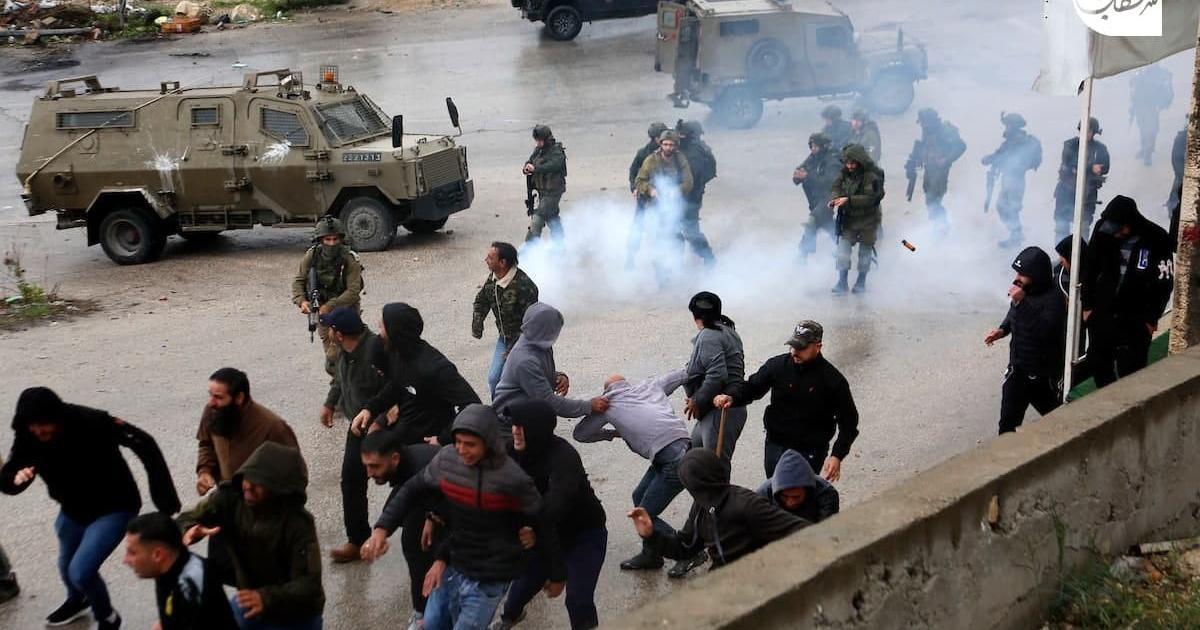
According to local sources, the occupation forces stormed the town and fired live bullets, sound bombs and tear gas at the citizens, causing dozens of them to suffer from suffocation due to inhaling the toxic gas, and they were treated in the field.

PALESTINE

Mon 23 Sep 2024 8:28 pm - Jerusalem Time

79th UN General Assembly begins Tuesday amid unprecedented Israeli violence

Amid growing chaos and escalating Israeli violence against Palestinians in the devastated Gaza Strip and the occupied West Bank on the one hand, and the escalation of confrontations on the Lebanese front to unprecedented levels, the United Nations is holding its meetings, starting on Tuesday, where world leaders will discuss several wars, perhaps the most dangerous of which is the Israeli war of extermination in Gaza, climate change, rising sea levels, and proposals to expand representation in the Security Council.


When the UN General Assembly meets on Tuesday, attention will focus on the major wars raging in Gaza, Ukraine, Lebanon, Syria and Sudan, amid an assessment that the world body and world powers have been unable to end the violence.


By all accounts, the world has descended deeper into chaos and turmoil since last year’s annual meeting, when the Russian-Ukrainian war and the Sudanese civil war cast their shadows. Now, this chaos and turmoil has been overshadowed by an Israeli war of annihilation in Gaza, after Hamas launched a surprise attack on Israel on October 7, just days after the 78th session ended, and Israel’s brutal war has taken a catastrophic humanitarian toll on the Palestinians.


The UN itself has also had a turbulent year. A record 220 of its staff were killed in Israel’s war on Gaza. Its humanitarian resources, the critical backbone of global relief efforts, are stretched and underfunded, with its main agency for Palestinian aid, UNRWA, facing declining support, increased blockades and persecution in Palestine, and needs rapidly increasing worldwide due to wars, climate change and natural disasters. Meanwhile, its leadership is struggling to play a meaningful and significant role in mediating multiple conflicts, to no avail because of American hegemony.


According to the schedule obtained by Al-Quds, Palestinian President Mahmoud Abbas will deliver his speech on Thursday, September 26, where he will appeal to the international community to take concrete steps to stop the massacre of Palestinians.


“Global challenges are moving faster than our ability to solve them,” UN Secretary-General António Guterres said at a press conference last week. “We are seeing geopolitical divisions spiraling out of control and conflicts raging – not least in Ukraine, Gaza, Sudan and beyond.”


The Security Council, which usually holds a single session on the sidelines of the General Assembly, is scheduled to meet three times this year, on Ukraine, Gaza and the broader issue of leadership challenges in conflict resolution.


US President Joe Biden will address the General Assembly for the last time on Tuesday as his presidency draws to a close. With the exception of the United States’ European allies, most UN member states have been highly critical of Biden’s strong support for Israel and the US’s blocking of multiple calls for a ceasefire during the first eight months of the war.


In recent months, Biden has led efforts, with Egypt and Qatar, to broker a ceasefire between Israel and Hamas and secure the release of all hostages held by Hamas. But the talks have stalled, and last week’s cyberattack in Lebanon and an Israeli airstrike in Beirut on Friday that killed dozens appear to have dealt a serious blow to the prospects for a breakthrough toward a ceasefire.


French President Emmanuel Macron and British Prime Minister Keir Starmer will attend this year after both France and Britain skipped last year’s meeting. Ukrainian President Volodymyr Zelenskiy will make three speeches in person, diplomats said, including at a Security Council meeting on Ukraine, where he is expected to present a new peace plan and renew his appeal to allow Ukraine to use Western missiles to strike military targets deep inside Russia. “It seems like we say this every year, but this year’s meeting couldn’t come at a more important and challenging moment,” Linda Thomas-Greenfield, the U.S. ambassador to the United Nations, told reporters in a briefing. “The list of crises and conflicts that demand attention and action seems to grow and grow.”


Thomas-Greenfield said the United States will pursue three policy priorities during the General Assembly: international cooperation for peace and stability, improving global humanitarian responses, and reforming the Security Council.


Iran's new (reformist) president, Masoud Pezeshkian, who will make his international debut, will try to present his government as moderate, pragmatic and open to diplomacy with the West, in contrast to his predecessor, Ebrahim Raisi, who died in a helicopter crash last May.


But that may not be easy. Iran’s support for a network of militias in Lebanon and Yemen, its backing of Palestinian resistance in Gaza and the West Bank, and recent reports that it is supplying Russia with ballistic missiles for its war in Ukraine are obstacles to defusing tensions with the West that Mr. Pezeshkian will find difficult to overcome.


Richard Gowan, a U.N. expert at the International Crisis Group, told the New York Times on Sunday that the prospects for breakthroughs on Gaza or Ukraine in the General Assembly are dim, “but Sudan may be an exception.” He said, “I actually think the General Assembly could do some good on Sudan, perhaps in a way that it couldn’t do on Gaza and Ukraine. There is a growing sense among many U.N. members that the U.N. has failed inexcusably on Sudan and that it is time to push for more diplomacy.”


Climate change and rising sea levels will join the restructuring of the Security Council and the World Bank as key topics of discussion. For years, countries in Africa, Asia and South America have complained that the Security Council’s core group of five veto-wielding permanent members — the United States, Britain, France, Russia and China — is outdated and ignores economic powerhouses like India, Brazil and Japan, as well as the entire continent of Africa.


US Ambassador Linda Thomas-Greenfield said last week that the United States supports adding two African permanent members to the Security Council and has proposed starting preliminary negotiations on the issue. Washington also supports adding seats for Germany, India and Japan, but none of the new permanent members would have veto power.


Any changes to the Security Council would require an amendment to the UN Charter and the approval of all five current members, a daunting task given the divisions between Russia, China and the United States.


In an effort to drive change, Guterres will host a conference on Monday, before the General Assembly begins, with the aim of countries agreeing on three negotiated documents intended to serve as blueprints for addressing the challenges.

ARAB AND WORLD

Mon 23 Sep 2024 7:19 pm - Jerusalem Time

Hezbollah leader targeted in Beirut suburb raid


The Israeli army said on Monday that it had launched an air strike on the southern suburbs of Beirut in Lebanon, while Israeli military sources reported that the target was Hezbollah leader Ali Karaki.


The army said in a brief statement via the "X" platform: "We are now launching a targeted and specific attack on Beirut. More details later."


In turn, the Israeli Army Radio quoted Israeli military sources as saying: "The target of the attack on Beirut was Hezbollah leader Ali Karaki."


The sources added that "Ali Karaki, the commander of Hezbollah's southern front, is the most prominent military figure remaining in Hezbollah after the assassination of Fouad Shukr (last July) and Ibrahim Aqil (last week), and he is the one who supervised all of Hezbollah's movements against the Israeli army and the towns of northern Israel during all the months of the war."


The radio did not mention details about Karaki's fate, while Hezbollah did not issue an immediate comment on the matter until 16:00 (GMT).


The targeting of Beirut coincides with an intense Israeli bombardment of southern Lebanon, the most violent since October 8, as the Lebanese Ministry of Health announced on Monday the killing of 274 people, including children, women and paramedics, and the injury of more than a thousand, as a result of the Israeli raids that targeted the east and south of the country, in an incomplete toll.


Since Monday morning, the Israeli army has launched the "most violent, extensive and intensive" attack on Lebanon since the beginning of the confrontations with Hezbollah about a year ago, while army spokesman Daniel Hagari announced in a press conference that Tel Aviv will target the depth of the Bekaa Valley in eastern Lebanon.


In contrast, sirens continue to sound in Israeli settlements near the border with Lebanon, after Hezbollah fired dozens of rockets at military sites and settlements.


PALESTINE

Mon 23 Sep 2024 5:05 pm - Jerusalem Time

Netanyahu: We are on the cusp of complicated days

Israeli Prime Minister Benjamin Netanyahu said that Tel Aviv is on the cusp of difficult days, calling on settlers to obey the instructions of the Home Front Command and be patient.


"I promised that we would change the balance of power in the north and that is exactly what we are doing," Netanyahu said in remarks from the Defense Ministry in Tel Aviv.


He continued: "We do not wait for the threat, but rather we anticipate it in every place and front."


The Israeli occupation army announced the start of carrying out large-scale raids on the Bekaa Valley in Lebanon, targeting buildings and residential facilities in southern Lebanon.


The Lebanese Ministry of Health announced the martyrdom of about 182 people, including children, women and ambulance personnel, and more than 727 wounded in the initial toll of the aggression on Lebanon since Monday morning.

ARAB AND WORLD

Mon 23 Sep 2024 4:20 pm - Jerusalem Time

182 dead and more than 727 wounded in Israeli bombing of Lebanese areas

The Lebanese Ministry of Health announced, on Monday evening, the death of more than 182 citizens and the injury of more than 727 others as a result of the intensive raids launched by the Israeli occupation army on large areas of Lebanon.


The Lebanese Health Ministry indicated that among the dead and wounded were children, women and paramedics. The occupation's bombing also destroyed a number of homes and facilities, and burned a number of vehicles.


The occupation air force launched raids targeting the towns of Al-Kharayeb, Al-Sarfand, Deir Kifa, Breiqa, Al-Qasiba, Al-Saksakieh, Rumin, Bint Jbeil, Arabsalim, Tebnin, Tayr Dibba, Toul, Al-Khiam, Meifdoun, Al-Mashouq, Deir Siryan, Srifa, Mleeta, Maaroub, Ain Baal, Arzoun, and the towns of Al-Kawthariyah, Al-Sharqiyah, Al-Duwair, Zefta, Al-Numairiyeh, Kharouf in southern Lebanon and Sahmar and Ain Al-Tineh in western Bekaa.

PALESTINE

Mon 23 Sep 2024 4:00 pm - Jerusalem Time

Israeli settlers continue to bulldoze Palestinian lands in the villages of Umm Safa and Aroura

For the thirteenth consecutive day, settlers continued to bulldoze lands in the villages of Umm Safa and Aroura, northwest of the city of Ramallah.


The head of the village council in Umm Safa, Marwan Sabah, said that settlers, under the protection of the occupation army, began to bulldoze about 500 dunams of the lands of the two villages, and cut off the road connecting the village to the village of Deir Sudan, and prevented citizens from passing.


He added that the occupation, through the bulldozing operations it is carrying out, has completely separated the village from its Arab surroundings, and its 720 residents have become completely imprisoned, surrounded by settlements and bypass roads from all directions.


Sabah said that the residents have been subjected to continuous gunfire from the settlers during the past few days if they try to object to the bulldozing operations targeting Jabal al-Ras in the village, calling on all international and human rights institutions to intervene in order to put an end to the ongoing aggression of the settlers aimed at displacing them from it.

ARAB AND WORLD

Mon 23 Sep 2024 3:35 pm - Jerusalem Time

US fears Israeli finance minister will topple Palestinian banks

Axios revealed that the administration of US President Joe Biden expressed its deep concern that the Israeli finance minister will cut Palestinian banks from the Israeli financial system next month and cause an economic collapse in the occupied West Bank, according to what two US officials told the website.


A collapse of the Palestinian banking system could lead to the collapse of the Palestinian Authority, creating a power vacuum that could throw the West Bank into chaos and exacerbate conflict in the region.


Israeli Finance Minister Bezalel Smotrich, an anti-Palestinian extremist settler, has taken numerous steps over the past two years to weaken the Palestinian Authority as part of his West Bank annexation ideology.


"In the past, Smotrich has described the Palestinian Authority as a threat to Israel and said that supporting Hamas is a good thing because it divides the Palestinians and reduces the chances of establishing a Palestinian state," according to the website.


Smotrich's positions as finance minister and defense minister responsible for civilian affairs in the West Bank give him significant influence over Israeli government policy toward Palestinians in the occupied territories.


Smotrich has the authority to authorize Israeli banks to conduct financial transactions with Palestinian banks without the risk of being accused of money laundering and financing terrorism. Without this approval, Palestinian banks will be cut off from the Israeli financial system and will collapse.


In June, Smotrich threatened not to extend the mandate for Israeli banks working with Palestinian banks.


The threat allowed him to pressure Israeli Prime Minister Benjamin Netanyahu to approve the construction of thousands of new housing units in Jewish settlements in the occupied West Bank and to legalize five illegal outposts.


In return, Smotrich extended the bank's mandate for four months, instead of one year as his predecessors did.


The banking correspondence authorization expires on October 31, and the United States and many of its allies are concerned that Smotrich will not extend it, US officials told the site.


An official from one of the G7 countries said that the United States expressed its concerns about Smotrich and the Palestinian banks during a meeting held in recent weeks with treasury and finance officials from G7 governments.


The G7 official said the United States had warned that if Palestinian banks were cut off from Israeli banks, it could significantly destabilize the West Bank and create a violent escalation that would spill over into Israel.


The G7 official said the West Bank would turn into a "cash economy" that could benefit terrorist organizations that largely use cash to operate.


The official added that if the Palestinian Authority's security forces were further weakened, they would not be able to fight terrorism.


The G7 official said that the collapse of the banking system would be devastating to the entire Palestinian society and would reduce the ability of Palestinian civilians to access food and basic services.


A US official said that the Biden administration and its G7 allies expressed their concerns to the Israeli government in the weeks following the meeting and stressed the risks of such a situation to Israel's security.


The G7 official said the United States and other G7 countries do not engage directly with Smotrich because of his extremist views. The United States has considered imposing sanctions on Smotrich over his destabilizing actions in the West Bank.


The message was instead conveyed to Israeli Foreign Minister Israel Katz, Strategic Affairs Minister Ron Dermer and Netanyahu himself, a source said.


What to watch: Two sources said that ahead of the October deadline, Smotrich set technical conditions centered on a third-party review of the Palestinian banking system as a condition for renewing the license for one year.


But the Biden administration and its G7 allies are concerned that when the deadline approaches and Smotrich’s conditions are met, he will make “new demands that will have nothing to do with banking and have a lot to do with expanding settlements” in the West Bank, the official said.


"Our goal is to make clear that such behavior not only endangers stability in the West Bank, but also endangers Israel's security," the official said.

PALESTINE

Mon 23 Sep 2024 3:19 pm - Jerusalem Time

War on Gaza: The death toll rises to 41,455

The Ministry of Health in Gaza announced today, Monday, that the death toll in the Gaza Strip has risen to 41,455, the majority of whom are children and women, since the beginning of the Israeli occupation aggression on October 7.


It added that the number of injuries has risen to 95,878 since the beginning of the aggression, while thousands of victims are still under the rubble.


It pointed out that the occupation forces committed 3 massacres against families in the Gaza Strip, resulting in 24dead and 60 wounded arriving at hospitals during the past 24 hours.


It explained that a number of victims are still under the rubble and on the roads, and ambulance and civil defense crews cannot reach them.

PALESTINE

Mon 23 Sep 2024 2:55 pm - Jerusalem Time

Netanyahu Considers Ethnic Cleansing Plan in Northern Gaza

CNN reported that Israeli Prime Minister Benjamin Netanyahu is considering a plan that would lead to the ethnic cleansing of Palestinian civilians from northern Gaza.


The report added, quoting the Israeli Broadcasting Corporation "Kan", that during a closed meeting of the Knesset's Foreign Affairs and Defense Committee, Netanyahu said that the plan is "very logical."


"It is one of the plans being considered, but there are many others," Netanyahu added. "We are committed to dismantling Hamas's civilian control."


The ethnic cleansing plan is known as the "General's Plan" because it was devised by retired Israeli generals, including Giora Eiland, who posted a video on YouTube explaining the idea.


The plan includes four steps:


· Transfer of the civilian population in northern Gaza to the south of the Netzarim corridor.


· Preventing the arrival of aid and imposing a complete siege on northern Gaza, declaring it a “closed military zone.”


· Preventing aid from entering the area until it is “cleansed” and the remaining Hamas fighters are defeated through the application of “intense” military pressure.


· Similar procedure in other areas of the Gaza Strip.


In the video, Eiland said that the evacuation order for civilians would not be optional. “The right thing to do is to inform the approximately 300,000 residents who remained in northern Gaza, the resident citizens, of the following: We are not suggesting that you leave northern Gaza, we are ordering you to leave northern Gaza,” he said.


“Within a week, the entire territory of northern Gaza will become a military zone. And this military zone, as far as we are concerned, no supplies will enter it. That is why 5,000 terrorists in this situation will either surrender or starve to death,” Eiland added.


Many Palestinian civilians in northern Gaza are likely to ignore any evacuation order as they have nowhere to go, and Israel has repeatedly bombed so-called “safe areas” throughout the genocidal war. This means that any Palestinian civilians remaining in the north will be killed or starved to death by the Israeli military.


If the ethnic cleansing is completed, it could pave the way for Jewish settlements. Many Israeli ministers and Knesset members publicly support the re-establishment of settlements in the Gaza Strip.


A group of 27 MKs, including three ministers, recently sent a letter to Netanyahu urging him to adopt the “General’s Plan.” The letter was signed by members of Netanyahu’s Likud party, the Religious Zionism party, and the Jewish Power party.

ARAB AND WORLD

Mon 23 Sep 2024 1:40 pm - Jerusalem Time

Updated: 100 dead and more than 400 wounded in Israeli bombing of large areas in Lebanon

The Lebanese Ministry of Health reported that 100 Lebanese citizens were killed and more than 400 others were injured as a result of the intensive raids launched by the Israeli occupation army on large areas of Lebanon.


It explained that among the martyrs and wounded were children, women and paramedics.

The occupation's bombing also destroyed a number of homes and facilities, and burned a number of vehicles.


The occupation air force launched raids targeting the towns of Al-Kharayeb, Al-Sarfand, Deir Kifa, Breiqa, Al-Qasiba, Al-Saksakieh, Rumin, Bint Jbeil, Arabsalim, Tebnin, Tayr Dibba, Toul, Al-Khiam, Meifdoun, Al-Mashouq, Deir Siryan, Srifa, Mleeta, Maaroub, Ain Baal, Arzoun, and the towns of Al-Kawthariyah, Al-Sharqiyah, Al-Duwair, Zefta, Al-Numairiyeh, Kharouf in southern Lebanon and Sahmar and Ain Al-Tineh in western Bekaa.


In a related context, Lebanese Prime Minister Najib Mikati pointed out that what the UN Secretary-General announced regarding his fears of turning southern Lebanon into a second Gaza and that it is a war that must end, is the position that should be an incentive for everyone, especially the decision-making countries, to pressure Israel to stop its aggression and implement international resolution No. 2735 issued by the Security Council, and to resolve the Palestinian issue on the basis of adopting the two-state solution and a just and comprehensive peace.


He stressed that the continued Israeli aggression on Lebanon is a war of extermination in every sense of the word, and a destructive plan aimed at destroying Lebanese villages and towns and eliminating all green spaces.


He concluded: "In all the contacts we make, we call on the United Nations, the Security Council, and the influential countries to stand with the right and deter aggression. We renew our commitment to Resolution 1701 in full, and we work as a government to stop the new Israeli war, and avoid as much as possible falling into the unknown."

OPINIONS

Mon 23 Sep 2024 1:20 pm - Jerusalem Time

Are we on the verge of a regional war?

Christine Hanna Nasr

Christine Hanna Nasr

Opinion Writer

The Middle East has been undergoing rapid transformations since the beginning of the Arab-Israeli conflict and after the invasion of Iraq and the fall of Saddam Hussein's regime, then the events of the so-called Arab Spring and the emergence of Iran's hegemony over Iraq, and then the spread of clear control of several parties, including Hezbollah, as a party resisting Israel, and fully supported by the Islamic Republic of Iran, in Syria, Lebanon, Iraq and other countries, and the establishment of militias supported by Iran in Iraq, Syria, Lebanon and Yemen, which are under orders from Iran. Sayyed Hassan Nasrallah, Secretary-General of Hezbollah, indicated in a speech about the party's strategy, saying: "We must remove the colonial and Israeli situation, and our project, which we have no choice but to adopt, as we are ideological believers, is the project of the Islamic state and the rule of Islam, and that Lebanon is not a single Islamic republic, but rather part of the greater Islamic Republic, which is ruled by the Master of the Age and his deputy, the rightful guardian jurist, Imam Khomeini."


The problem here is that the Arab Islamic countries are characterized by being composed of several races, sects and nationalities, and thus such an approach conflicts with many parties in the Arab countries, especially in Lebanon, where it conflicts with the idea of Lebanon being under the command of the Supreme Leader in Iran, including the Sunni parties present in Lebanon. This intellectual trend has led to an ideological rift between the Sunni and Shiite parties in Lebanon and the Arab countries in general. Hezbollah has entered into a conflict with Israel during several stages in confrontations, including the July 2006 war, and now the Israeli conflict with Hamas in Gaza, which has led to a heated phase currently, specifically on the southern side of Lebanon with Israel. It appears that there are signs of the development of this conflict into a bloody war between them, represented by the firing of missiles deep into Israel and Israeli missiles and shelling in southern Lebanon.


The war between Hezbollah and Israel has evolved and with this course the rules of engagement have changed, from a defensive position by Israel to a new offensive strategy, especially recently, with the aim of exhausting Hezbollah’s military forces, as Israel destroyed the communications network (pager and wireless) that connects Hezbollah members and elements, using cyber warfare technology, where these devices were remotely detonated and many of them were killed and injured, followed by bombing and air targeting operations that targeted the southern suburb, resulting in the killing of Ibrahim Aqil (head of the special operations unit of the Radwan Forces), in addition to the killing of about 30 leaders and members of the Radwan Forces.


The importance of targeting the first ranks of the Radwan forces for Israel, at this particular stage and after months of conflict approaching a year, is to exhaust and perhaps completely eliminate Hezbollah’s military forces and reduce the party’s military capabilities, and of course also eliminate all the armed militias supported by Iran in Iraq, Syria, and Yemen and present in the Arab region. This bloody conflict will inevitably enter a deeper and more intense phase of conflict, and indirectly it will include striking Iran through the most important card that Iran possesses in the Arab region, which is Hezbollah.


Israel has recently targeted weapons depots, command and control centers, and strategic weapons that can be used in war. This new phase will inevitably lead us into the most prominent scenario, which is the opening of several fronts in the region that will directly enter a state of regional war. The first front is, of course, Gaza and the West Bank, and the front of the Houthi Ansar Allah Party in Yemen, Syria, and Iraq. Consequently, it will lead to a direct war between these fronts on the one hand and Israel on the other. It is known that all of these fronts witness the presence and spread of militias supported by Iran.


The main front of the war is of course the one in Gaza, where the clashes are ongoing, but after that, without a doubt, all the aforementioned fronts will intensify and the intensity of the clashes will escalate, so that we will practically be facing a wide regional war arena with Israel, inevitably, and within the possibility that it will affect the neighboring countries, including the border countries of these already burning fronts, in a way that is heading towards development and in a way that can open the door to war wide open between Israel and Iran, meaning the possibility of Iran responding to the killing of the head of the political bureau of the Hamas movement, Ismail Haniyeh, and through the Syrian front, which has recently become clear, as Israel targeted the Iranian militias present in the border areas with qualitative bombing operations, and recently, Iranian movements were sensed, represented by preparing the factions loyal to it, especially on the border with Israel. These movements by the factions were centered in two military airports inside Syria near Sweida, namely the Tha’la Airport and the Khalkhala Airport near the Golan Heights area that Israel occupied in 1967, and these militias are loyal to Iran. Including armed factions of the Houthis, the Zainabiyoun Brigade, the Fatemiyoun Brigade, the Abbas Forces, and the Iraqi Hezbollah under the banner of the Popular Mobilization Forces, and groups of Afghans and Bengalis. All of these militias and armed groups are waiting for the announcement of zero hour and Iran’s orders for them to launch from this front, which will open from the Syrian border towards the Golan, and thus towards participating in the new regional war.


As for the Sweida region, it has witnessed widespread demonstrations for more than a year, and the Syrian state has not controlled the situation and security of this region, which has made it outside the influence of the Syrian regime and practically isolated from the Syrian political geography. The most important thing is that this southern region of the Syrian desert contains many militias that possess advanced missiles and is about 55 kilometers from the Golan and also close to the Syrian-Jordanian border. This geographical region, which is part of the fire belt surrounding Israel and on the borders of the southern Syrian desert directly adjacent to the Jordanian border, is apparently looking towards Iran to open up this front, which will lead to Jordanian intervention to protect its borders and citizens, especially since Jordan has repeatedly announced that it will not allow the use of Jordanian lands and airspace by any party.


As for the Lebanese front, specifically southern Lebanon, represented by Hezbollah, this front has been on fire and tense since the beginning of the conflict between Hamas and Israel in Gaza. However, in this regional war, matters will escalate and deepen towards a completely open war between the two sides, in a way that makes the previous rules of engagement useless. It is known that Hezbollah in southern Lebanon is in fact an essential part of the fire belt that surrounds Israel from the north. Israel, in preparation for this potential regional confrontation, preempted it by striking Hezbollah’s infrastructure and killing some of its first-line leaders, including the Radwan forces, and apparently dismantling the communication networks between the party’s elements. In response, Hezbollah will intensify its rocket fire to prevent Israel from achieving its goals. Therefore, if Israel is able to eliminate the party’s infrastructure and military through aerial and artillery bombardment, there is a current possibility of a ground invasion, the goal of which, as Israel has repeatedly claimed, is to reach the Litani River and the Blue Line and work to establish a buffer zone, the direct goal of which is the return of the displaced to their areas of residence in The North, and these goals can be achieved through the support of Israel's allies, namely America and Britain, in this regional war that appears to have multiple fronts and parties. If Israel is able to establish this buffer zone in southern Lebanon, there will be an entry into a path of negotiations with the Lebanese state that includes the presence of international forces and forces from the Lebanese army, and work to implement Security Council Resolution No. 1701 of 2006, which is concerned with resolving the Israeli-Lebanese conflict.


The multiplicity of fronts in the Ring of Fire and the confrontations with Israel, consisting of the Yemeni front, its launching of missiles and drones towards Israel, and the restrictions on navigation in the Red Sea, in addition to the Iraqi front represented by the militias and factions loyal to Iran, as well as the front on the southern border of Lebanon and the Syrian front, all of these are data that contribute to a basic scenario and possibility, which is that the region is actually entering a new phase of a broad and comprehensive regional war, inevitably.