ARAB AND WORLD

Thu 26 Sep 2024 8:09 am - Jerusalem Time

Joint US-European-Arab Call for a “Temporary Ceasefire” in Lebanon

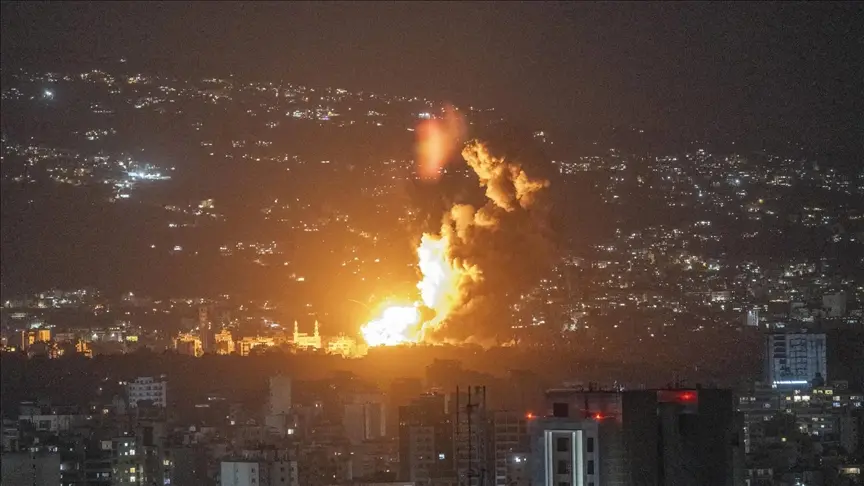
The United States, the European Union, and a number of Western and Arab countries issued a joint call on Wednesday to establish a “temporary ceasefire” in Lebanon, where the ongoing conflict between Israel and Hezbollah threatens to drag the region into a large-scale war.


US President Joe Biden and French President Emmanuel Macron said in a joint statement, “We have worked together in recent days on a joint call for a temporary ceasefire to give diplomacy a chance to succeed and avoid further escalation across the border,” noting that “the statement we negotiated now has the support of the United States, Australia, Canada, the European Union, France, Germany, Italy, Japan, the Kingdom of Saudi Arabia, the United Arab Emirates, and Qatar.”


French Foreign Minister Jean-Noel Barrot revealed during an emergency session of the UN Security Council on Wednesday a joint proposal with the United States to establish a 21-day ceasefire in Lebanon to prevent the current conflict between Israel and Hezbollah from developing into a full-scale war.


"In recent days, we have been working with our American partners on a temporary ceasefire for 21 days to allow for negotiations," Barrot said during the session, which was held at his country's request. He added that this proposal "will be announced quickly and we are counting on both parties accepting it."


The French minister stressed that the outbreak of a comprehensive war between Israel and Hezbollah "is not inevitable" provided that all parties engage "firmly" in finding a peaceful solution to the conflict. Barrot warned that "the situation in Lebanon today threatens to reach a point of no return." He added that "the tensions between Hezbollah and Israel today threaten to push the region into a comprehensive conflict whose consequences are unpredictable." The French minister recalled that Lebanon has been suffering from a state of "great weakness" since before the current escalation due to the political and economic crisis it is struggling with, and warned that if "a war breaks out, it will not recover from it."


The current situation between Hezbollah and Israel appears to have reached a dead end, as the Iranian-backed armed party demands that the war between Israel and Hamas in Gaza cease in order to stop its attacks on the Hebrew state, which demands that it withdraw from its borders in order to stop its attacks against it. In his speech before the UN Security Council, the French minister said, "Let us take advantage of the presence of many leaders in New York to impose a diplomatic solution and break the cycle of violence." This French-American initiative comes after intensive discussions held on the sidelines of the UN General Assembly in New York, and after a bilateral meeting between US President Joe Biden and his French counterpart Emmanuel Macron.


The White House announced that Biden met Macron in New York "to discuss efforts to reach a ceasefire between Israel and the Lebanese Hezbollah and prevent a wider war." This meeting came after Biden warned that the outbreak of a "comprehensive war" in the Middle East is "possible," while Macron called on "Israel to stop the escalation in Lebanon and Hezbollah to stop the fire."


"We urge Israel to stop this escalation in Lebanon, and we urge Hezbollah to stop firing rockets at Israel. We urge anyone who provides Hezbollah with the means to do so to stop," the French president said from the podium of the United Nations General Assembly, while considering that the Hebrew state "cannot expand its operations in Lebanon without consequences." Macron stressed in his speech that "there can be no war in Lebanon."


These warnings coincided with the Israeli army's announcement on Wednesday that it was preparing to launch a possible ground attack on Lebanon to strike Hezbollah, which is increasing its bombing of Israeli territory day after day. On Wednesday, Israeli air defenses intercepted a ballistic missile launched by Hezbollah towards Tel Aviv, in an unprecedented move since the conflict between the two parties began about a year ago, as the Iranian-backed party has never before fired a ballistic missile at the Hebrew state, and it is the first time it has directed its fire towards Tel Aviv.


At the start of the Security Council session, UN Secretary-General Antonio Guterres said that the current escalation between Israel and Hezbollah "opens the gates of hell in Lebanon," stressing that "diplomatic efforts have intensified to reach a temporary ceasefire." For his part, Iranian Foreign Minister Abbas Araqchi warned before the start of the meeting that the Middle East is "on the brink of a comprehensive catastrophe," stressing that his country will support Lebanon "by all means." In contrast, Israeli Ambassador to the United Nations Danny Danon said that the Hebrew state prefers to use diplomatic channels to secure its northern border with Lebanon, but will use "all available means" if diplomacy fails to reach an agreement with Hezbollah.

PALESTINE

Thu 26 Sep 2024 8:06 am - Jerusalem Time

Kirby: Sinwar is the main obstacle to a ceasefire in Gaza

In a meeting with a group of journalists accredited to the United Nations at the US mission headquarters on Wednesday, the Coordinator for Strategic Policy at the US National Security Council at the White House, John Kirby, said, “There are many civilians who have suffered as a result of the conflict in Gaza, and President Biden is working hard, sincerely and forcefully to end this war.” He said that the attempt to bring the parties together to reach a ceasefire is still ongoing.


Kirby considered that the leader of the Islamic Resistance Movement (Hamas), Yahya Sinwar, “is the main obstacle to reaching a ceasefire at the present time,” noting that “the United States is making intensive diplomatic efforts between Israel, Lebanon and Hezbollah to try to reduce tensions in the area surrounding the Blue Line, up and down, so that families on both sides can return to their homes and live in peace.”


Kirby said, in his opening introduction to the meeting held on the sidelines of the 79th session of the General Assembly, “We are very excited to be returning to New York City for the United Nations General Assembly. This is an event that the president looks forward to every year. “It’s a rare opportunity for all the world leaders to talk about a range of issues, issues that affect us all in some way or another in almost every way. And I think you’ll see that play out over the next few days,” Kirby said.


“When President Biden took office four years ago, almost four years ago, he pledged to restore American leadership on the world stage. And given that this is his last General Assembly as president of the United States, it’s an opportunity for him to talk about how that approach has produced real results not just for the American people but for people around the world. We’re going into the General Assembly, of course, at a difficult time. The president described it in his remarks as a turning point, and that’s exactly the way we look at it. There’s a turning point on many levels.”


“We have active conflicts in Sudan, in the Middle East, in Gaza, and of course the tensions between Israel and Lebanon right now and the attacks,” Kirby added.


In response to a question about what Kirby called “the leadership and positive role of the Biden administration,” where is that leadership in the ongoing wars in Gaza and Lebanon and the steps taken by the Biden administration to end the war, he said: “I don’t know of any other leader who has invested the energy and effort and sought to end the war in Gaza, as President Biden has done since October 7 to end the war and is still making efforts.” Kirby stressed Israel’s right to defend itself.


Kirby said that “his country, more than any other country, is making continuous efforts to try to end this conflict and restore peace and security to the Middle East so that we can make progress on the path to a two-state solution.” He stressed that the president is very confident that his national security team will continue to work during the rest of his term and work to achieve this.


Regarding the suffering of civilians, Kirby said: “Obviously, many Israelis have suffered because of Hamas and Hezbollah, but also many innocent Palestinians living in Gaza and now innocent Lebanese are suffering and being killed and injured, their lives have been disrupted, their homes have been destroyed.”


On Sudan, Kirby said that it is essential for all countries that have an interest in ensuring that the Sudanese have access to food, water, medicine... and a minimum of peace and security to live in. He spoke about the need for all countries to work to convince both sides, the Rapid Support Forces and the Sudanese Armed Forces, to return to the negotiating table and end this war.

OPINIONS

Thu 26 Sep 2024 7:56 am - Jerusalem Time

Hebrew Newspaper: Sinwar’s advantage could turn against him, and Israel must exploit it immediately

Maariv

Maariv

Opinion Writer

Amit Yegor

The IDF is currently carrying out an impressive operation on the northern front. In general, everything that the State of Israel sought to do against Hezbollah at the beginning of a comprehensive campaign is now being carried out skillfully, but in a different way; by dividing it into stages, and leaving some “big sticks” to be used later without entering into a comprehensive war.


If we look at the war with a careful eye and a strategic perspective, we will find that the current time represents the best opportunity to exploit the successes on the northern front to achieve gains in Gaza. Yes, in Gaza. The depletion of Hezbollah’s capabilities does not go unnoticed by Yahya Sinwar and Hamas in Gaza, and it seems that the military “insurance certificate” that Hamas hoped to bring to the battle against Israel in the north to relieve the pressure on Gaza no longer meets the required conditions now, despite the fact that other capabilities remain and are ready for use by the party.

Thus, ironically, the connection between the arenas that we are currently trying to separate may actually serve the Israeli interest in the short term, and weaken Hamas even more. This is the point at which we must “break” the status quo in the Strip, and seek to achieve a decisive victory.


One of the solutions being proposed these days is the so-called “Generals’ Plan,” led by the former head of the IDF Operations Division and later head of the National Security Council, Giora Eiland. The plan aims to cleanse the northern Gaza Strip of militants by forcing them to surrender, and this is done through a complete military siege of the area after evacuating the civilian population, and then this plan can be repeated in other areas of the Strip.


But this Generals’ Plan contains several conceptual and operational failures, and even if it achieves the desired result from their point of view, it will not strategically change the situation in the Strip. My understanding of Hamas and Sinwar is different. While the generals’ plan focuses on reducing Hamas’s ability to rebuild its capabilities during the battle (financing, recruiting fighters, supply, and motivation), my analysis extends more to the strategic realm.


I see Hamas as being driven by only two main logics at the moment: the ability to protect the lives of Sinwar, his family, and the senior commanders who are still with him, and Hamas’s continued control over the population in the Gaza Strip, which will provide it with legitimacy after the war ends and will be a fundamental pillar for its reconstruction and re-growth.


The organization’s main tool is the distribution of humanitarian aid. In contrast to the Hamas leadership’s desire to survive, the military efforts in the Strip are currently being managed according to a “hunting” strategy.


However, Israel has not succeeded in working against Hamas’s ability to govern simultaneously with the Israeli military efforts, and has only now begun to approach this issue seriously, using various methods, and by appointing a special official for this matter, who works within the framework of the Coordinator of Government Activities in the Territories. Accordingly, it can be said that the “generals’ plan” suffers from several fundamental flaws:


This plan specifically guarantees more military effort to occupy the land, while the land is no longer an important factor in Hamas’s view, because the issue of occupying the land, in its view, is subject to change in any settlement or deal after the war ends.


The plan does not create a new authority in the Strip, but rather returns the population that can be influenced to Hamas’s hands, and misses the opportunity to establish an alternative government in Gaza.


Implementing the plan requires time, as each stage of this plan requires time to be implemented, and after that, it requires time for the impact to reach Sinwar and his companions. We do not have much time, especially because of the hostage issue.


The occupation of the land is a cause for war according to international understanding, and it will return Gaza to the focus of global attention, especially in the United States, which may see this step as a permanent move by Israel to impose a new reality after the war without coordinating with it. This step could also turn global public opinion against Israel.

Although the plan may be consistent with international law, the law is open to interpretation by lawyers and judges. We have seen this several times since October 7, and although it was clear that Hamas was the one who attacked and committed the “massacres,” the world and international law showed leniency toward it, and this will also happen when the plan is implemented, but in reverse; Israel will be seen as the strong one exploiting the situation in order to achieve a permanent occupation of the territories from the weak, and this proposal may cause concern to neighboring countries, especially Saudi Arabia, which will fear an Israeli move to establish facts on the ground. There is no doubt that after the end of the war, we will want to build a regional alliance with these countries, so, in my opinion, we can act as we did in Lebanon “below the threshold of all-out war” and achieve excellent achievements, without resorting to the step of occupation and military rule, which is considered a “red line,” and restricts the continuation of Israeli operations in Gaza, and hinders our ability to achieve achievements there, and to define the next day in a manner that suits our interests. My alternative proposal (in brief) is to exploit the battle in the north and the interest in that front in order to establish a temporary buffer zone in the north of the Strip as soon as possible, and then to cleanse the areas in the north of the Strip and create “humanitarian bubbles” in which a “different” rule can be imposed on the population, with the primary driver initially being the distribution of humanitarian aid, and the IDF assuming temporary responsibility alongside civilian American security companies and perhaps other regional entities.

These bubbles can be gradually expanded by the population that will want to flee Hamas rule. This strategy will neutralize Hamas (i.e., make it unnecessary), rather than elevating it back to the central position it occupied at the beginning of the war. This neutralization will increase the pressure on the organization and, in my view, will also contribute to progress toward a hostage deal on much better terms for Israel than previously, perhaps including the expulsion of Hamas leaders from the Strip. I suggest that decision-making circles think about this before rushing to adopt the “generals’ plan” on the one hand, and perhaps “press the gas pedal hard” now under the cover of the battle in the north to dismantle Hamas’s governing capabilities as quickly as possible. Now is a very good time to do so.

OPINIONS

Thu 26 Sep 2024 7:52 am - Jerusalem Time

Hebrew Newspaper: With the momentum on our side, we must combine military and political action

Haaretz

Haaretz

Opinion Writer

Tamir Hayman

After the series of operational successes in the past week, we must realize that we have not achieved anything. Hezbollah has experienced the most difficult week since the Second Lebanon War [July 2006 War], and yesterday was the most difficult, yet dramatic events still await Israel.

The IDF is striking Hezbollah with blow after blow, and the attack that began yesterday is unprecedented in two respects: The first is intelligence, meaning the accumulation of tireless work since the Second Lebanon War that Nasrallah has not yet discovered. In the second matter, intelligence is the basis; this is evident in the wide-ranging attack directed at sensitive targets and systems of Hezbollah, precision and long-range missiles, medium-range missiles and cruise missiles.

The attacks took place in complex and densely populated areas, and weapons hidden in homes were eliminated. The larger the attacks, the greater the damage to the enemy’s capabilities, and the less flexibility Nasrallah has in his operations. Regarding the damage to capabilities, it is better to be very careful, and not try to determine numbers from now on, and to continue to inflict damage. But Hezbollah has a great ability to inflict great damage on Israel’s home front.


The pace of targeted assassinations, which is much greater than the pace of recovery of Hezbollah’s command and control system, is a very important achievement. After the assassination of Hezbollah’s second figure, Fuad Shukr, Hassan Nasrallah’s close friend and the man who carried out his orders, his authority was transferred to two other people, Ibrahim Akil and Ali Karaki. The first has passed away, while the status of the second is unclear.


The series of assassinations greatly undermines Hezbollah, and these operations must be increased whenever the intelligence opportunity arises. Here, we must emphasize that despite the great damage inflicted on Hezbollah, there are still leaders, and the organization is very large.


However, how can we explain the narrow limits of Hezbollah’s operations thus far compared to its capabilities? It can be assumed that Hezbollah is measuring the losses and assessing the situation; Attacking the chain of command and control may have made the work of this leadership more complicated. But we must not delude ourselves, for within a short time, Hezbollah will understand the reality, and Nasrallah will find himself facing two basic options: The first is to expand the circle of fire and fire on new areas, such as Gush Dan, perhaps in a relatively calculated manner, but more than what we have seen so far. The second is for Nasrallah to understand that he is in a difficult situation and decide to go all the way, and in such a case, we are facing a comprehensive war. A final word about the southern front, and especially the issue of the kidnapped soldiers and the political tool that must complement the military steps; now in particular, and with the momentum we have in the north, we must begin thinking about mixing political action with military action, and identifying the peak point of military action at which we introduce the political tool. If we do not do this now, we will discover, as happened in the south, that the matter is too late. In addition to the moral and ethical aspect, and the difficulty of imagining what the families of the 101 kidnapped soldiers who are still in the hell of Gaza are going through, when they see all the attention directed today to the north, and the fear of removing the issue from the agenda, there is also a strategic aspect. The importance of strategy must be emphasized at a stage like this, and this could also be a strategy to exit the battle from the north and sever the connection between the fronts after the heavy blows Hezbollah suffered. We must create an opportunity, however small, to advance a deal in the south now in particular.

ARAB AND WORLD

Thu 26 Sep 2024 7:51 am - Jerusalem Time

US delaying Israeli request to replenish munitions and missile interceptors

Biden administration is slow-rolling new Israeli request for more US munitions, including for Arrow interceptor system, officials tell MEE

The Biden administration may be slow-rolling a new Israeli request to refill its arms and munitions stockpiles, raising some questions among US officials whether or not it is trying to apply pressure on Israel to stop a full-scale offensive on Lebanon, Middle East Eye can reveal.

Israel submitted an “extensive” three-page request last week for additional munitions and armaments to the Biden administration, a senior US official and former US official told MEE.

Israel did not request new types of weapons but is looking to replenish stockpiles from its US ally which have been depleted, as fighting with Hezbollah escalates, the current and former US officials said. 

One weapons system that Israel is asking the US to refill are interceptors for the Arrow missile defense system, the current and former US officials told MEE.

Analysts and former US officials say it would be used if Israel came under attack from long-range missiles fired by Iran, Hezbollah or the Houthis in Yemen.


Last week’s request includes more US military aid and foreign military sales, the latter of which Israel buys with its sovereign funds.

Behnam Ben Taleblu, a senior fellow at the Foundation for Defence of Democracies, told MEE it is not surprising the Biden administration would seek to put new roadblocks on weapons transfers, which is "consistent with other signs from the Biden administration that it is prioritising de-escalation over deterrence".

US officials are concerned that Israel’s intense bombing campaign inside Lebanon could escalate into a full-blown regional war, and there are signs that the Biden administration is frustrated with Israel.

Unlike during previous rounds of tension, Biden has not spoken on the phone with Israeli Prime Minister Benjamin Netanyahu since Israel detonated thousands of explosive pagers and walkie-talkies in Lebanon last week.

Biden is also not scheduled to meet Netanyahu when he is in the US for the UN General Assembly.

“My team has been in constant contact with their counterparts, and we're working to de-escalate in a way that allows people to return to their home safely,” Biden said on Monday, as he hosted UAE President Mohamed bin Zayed al-Nahyan at the White House.

Over the weekend, John Kirby, the US National Security Council spokesperson, told ABC News the US is warning Israel against launching a full-scale war on Hezbollah.

“We don’t believe that a military conflict, and we’re saying this directly to our Israeli counterparts . . . we don’t believe that escalating this military conflict is in their best interest,” Kirby said. 

In May, the US said it was leveraging arms transfers to head off an Israeli invasion of the southern Gaza city of Rafah, with the White House saying it delayed two shipments of 500-pound bombs and 2,000-pound bombs. Israel invaded Rafah and in July the US resumed shipments of 500-pound bombs to Israel. 

In August, the US approved a $20bn weapons sale to Israel. 

The Pentagon, White House and State Department did not respond to MEE's request for comment by the time of publication. Israel's embassy in the US also did not respond. 

Israel's tiered air defence system

If a full-blown regional war erupts, Israel will need the Arrow system, which is one part of its layered air defence systems.

The Arrow system uses interceptors to shoot down ballistic missiles flying at high altitudes. Israel uses the Iron Dome to intercept short-range projectiles, and David’s Sling to intercept medium-range projectiles.

The Arrow 2 is used to intercept long-range atmospheric missiles that are likely to be fired by Iran and Hezbollah. Arrow 3 is used to intercept high-altitude missiles outside the atmosphere, that analysts say the Houthis and Iran are capable of firing.

The Arrow system intercepted most of the ballistic missiles fired by Iran at Israel in April when the Islamic Republic retaliated for an Israeli strike on its consulate in Damascus, Syria, analysts say.

Israel is also running through offensive munitions at a fast pace, US officials tell MEE, and at least some of the missiles and bombs need to be refilled.

Footdragging on the Israeli request is coming from some quarters of the State Department and the White House, the current and former officials say.

Israel says strikes 'seriously degrading Hezbollah' 

On Monday, Israel launched roughly 1,600 strikes across Lebanon, in what was the deadliest day of fighting between Israel and Hezbollah since the 2006 Lebanon war.  The air strikes continued on Tuesday, leaving at least 558 people, including women and children, killed and 1,600 injured, according to Lebanon’s health ministry.

Israel’s army said the strikes hit weapons storage facilities and cruise missiles. On Friday, Israel said they killed the head of Hezbollah's elite Radwan force and his deputies.

Israeli officials have shared intelligence with the US which says its operation, named “Northern Arrows”, is achieving its aim of degrading Hezbollah’s capabilities and senior leadership, a separate US official told MEE.

GPS and infrared-guided bombs

Israel’s ability to target senior Hezbollah commanders and missile sites depends on its fighter jets having a steady stream of munitions from the US.

Joint Direct Attack Munitions  - kits that provide GPS navigation to unguided bombs - allow Israel to strike targets based on its intelligence.

Fabian Hinz, a research fellow at the International Institute for Strategic Studies, said footage of  Israel’s strikes on Monday also suggests they are using “electro-optical imaging infrared seekers” to guide warheads.

“In Israeli imagery of strikes on cruise missiles inside houses, you can basically see a video feed being relayed to the operator until the last minute,” Hinz said, which is an indication of infrared seekers being used.

Hezbollah boasts around 150,000 missiles and rockets. It began retaliating against Israel on 8 October, in what it said was in solidarity with besieged Palestinians in Gaza.

Until now, Hezbollah has concentrated its fire on northern Israel, displacing around 60,000 Israeli civilians. On Monday it began widening its attacks to the suburbs of Haifa.

The US has provided almost unconditional military support to Israel since the Hamas-led attacks on 7 October on southern Israel, and Israel’s subsequent invasion of Gaza. 

A new investigation by ProPublica revealed on Tuesday that US officials have maintained a steady supply of arms to Israel despite USAID and the head of the State Department’s Bureau of Population, Refugees and Migration concluding that Israel was blocking aid into Gaza. The State Department's bureau went so far as to say that the Foreign Assistance Act should be triggered to freeze $830m in weapons sales to Israel.

Secretary of State Anthony Blinken has rejected those assessments. 


ARAB AND WORLD

Thu 26 Sep 2024 7:46 am - Jerusalem Time

US pushing for 21-day truce between Hezbollah-Israel to avert wider war

Arab and US officials tell MEE a 'big push' is underway as Israel and Hezbollah reach brink of all-out war

The Biden administration is rushing to achieve a weeks-long truce between Hezbollah and Israel that it hopes can provide an offramp to full-scale regional war, one Arab official and former US official told Middle East Eye.

The US is aiming for a 21-day pause in fighting, the former senior US official told MEE. The Arab official said that Biden administration officials are speaking with Lebanese and French officials to push for a deal.

A US official in the region also confirmed to MEE that a “big push” was underway to stop the fighting.

The talks come as world leaders, including US President Joe Biden, France’s Emmanuel Macron, and Lebanon's caretaker Prime Minister Najib Mikati gathered at the United Nations. The US relies on Lebanon’s government to ferry messages to Hezbollah, a US-designated terror organisation.


On Wednesday, Israel told troops to prepare for a potential ground incursion of Lebanon, saying air strikes were being conducted “to prepare the ground for your possible entry”. 

Michael Milshtein, a former Israeli intelligence officer, told MEE that Israel would be likely to deploy ground troops in the event Hezbollah launches a massive strike on Tel Aviv or if fighting continues for weeks on end. 

"The ground manoeuvre is not only a threat but something Israel plans although there is no desire to implement this," he said. 

The escalation is a major challenge for the Biden administration, which former US officials tell MEE was angered by Israel's decision to launch more than 1,000 strikes on Lebanon earlier this week. 

MEE revealed on Tuesday that Israel submitted a three-page request for munitions and arms to refill existing stockpiles, underscoring how it may be girding for a longer war, including arrow system missile interceptors. 

One senior US official and a former US official told MEE that the White House and State Department were slow-rolling the request amid anger at Israel as it escalates in Lebanon.

But the US has previously ruled out using arms sales to leverage Israel into a ceasefire in Gaza and the success of this US truce initiative is far from guaranteed.

Hezbollah on their backheels

The Biden administration has been negotiating for months to achieve an elusive ceasefire in Gaza, but those talks have stalled.

The former senior US official and Arab official, however, cautioned about making comparisons between Hezbollah and Hamas, saying US, French and Arab officials believe the reality on the ground in Lebanon is different and might make a truce between Hezbollah and Israel more achievable.

 “Israel has put Hezbollah on their backheels. They aren’t in a good position,” the former US official said.

Hezbollah and Israel have exchanged near daily fire since 8 October, after the group began firing rockets at Israel in what it said was solidarity with besieged Palestinians in Gaza.

But fighting seriously escalated last week after Israel detonated thousands of pagers and walkie-talkies used by Hezbollah members. The attacks decimated Hezbollah’s communications and command and control network, analysts say.

On Monday Israel launched widespread air strikes against what it said were Hezbollah fighters, missile sites and arms warehouses. The attacks have killed at least 600 people.

Hezbollah, the world’s largest non-state armed actor, is also Lebanon’s most powerful political party, but the Lebanese movement backed by Iran doesn’t enjoy dominant support in Lebanon which is divided among Christians, Sunni and Shia Muslims.

Israel’s attacks were initially concentrated in southern Lebanon and the Bekaa Valley, the traditional heartlands of Hezbollah, but on Wednesday they were expanded to the northern suburbs of Beirut and parts of Mount Lebanon.

At least 90,530 people have fled the strikes, the International Organisation for Migration has said.

ARAB AND WORLD

Thu 26 Sep 2024 7:42 am - Jerusalem Time

The Economist: The pace of money flight from Israel doubles amid preparations for the "nightmare scenario"

The British newspaper The Economist said that the pace of money flight from Israeli banks to foreign institutions doubled between May and July, as investors prepare for the "nightmare scenario" if the war swallows Tel Aviv and occupied Jerusalem.


The newspaper pointed out that investors are not sure of Israel's ability to recover, as the shekel is volatile and Israeli banks are suffering from capital flight.


According to the newspaper, the three largest Israeli banks report a significant increase in the number of customers requesting to transfer their savings to other countries or link them to the dollar, adding that they are resigned to things getting worse.


The newspaper saw in a report that the situation of the Israeli economy has become more difficult compared to the first periods of the war on Gaza, as its gross domestic product grew by only 0.7% between April and June on an annual basis, which is about 5.2 percentage points less than economists expected, according to Bloomberg News Agency.


On September 16, Israeli Finance Minister Bezalel Smotrich was forced to ask lawmakers to approve an emergency increase in the deficit, the second time he has made such a request this year, according to what the British newspaper pointed out.


Smotrich's extravagance and the outbreak of more violent confrontations (southern Lebanon) are a source of concern for investors. On September 23, Israel launched air strikes on the Lebanese border, killing more than 500 people, according to local officials.


This came in the wake of the explosion of pagers and walkie-talkies used by Hezbollah, which killed 39 people, as well as months of rocket attacks by the party on Israeli settlements.


The newspaper pointed out that money has begun to flee Israel, with outflows from Israeli banks to foreign institutions doubling from the same period last year to $2 billion between May and July, at a time when the country’s economic policymakers are more concerned than they have been since the beginning of the conflict.


To the brink

The Economist stated that any economy in wartime is deeply damaged, as the government must finance its armed forces, often through deficit spending, while ensuring that it remains strong enough to pay off its debts when the war ends.


The “nightmare scenario” for Israel, according to the newspaper, is a conflict that spreads to occupied Jerusalem and Tel Aviv, the two main commercial centers, but even a less severe war in which the confrontation is limited to northern Israel could be enough to push its economy to the brink.


The newspaper explained that the unlimited Israeli government spending does not help it. Last March, when the army was hoping to reach a ceasefire by July, the generals estimated that they would need 60 billion shekels ($16 billion, or 3% of Israel’s GDP) above their regular budget, and then a permanent increase of 30 billion shekels ($8 billion) annually to deal with the new security situation.


Since then, as the fighting has continued, deficit projections have continued to rise, and the deficit is now expected to reach 8.1% of GDP this year, which is nearly three times what was expected before the war.


Even a less severe war in which the confrontation is limited to northern Israel could be enough to push its economy over the edge.


The report indicated that Israel’s debt in January reached about 62% of GDP (below the average in OECD countries), which means to investors that Smotrich has little room to maneuver, but if the war continues next year, the financial situation will deteriorate.


The newspaper pointed out that Israeli bondholders want to make sure there is enough room for more military spending, so the acceptable debt ceiling for Israel is lower than that of similar countries, and credit rating agencies are also concerned, with Fitch and Moody’s saying they may downgrade Israel again after doing so once this year.


A Worse Problem

Israeli Finance Minister Bezalel Smotrich, a West Bank settler whose party belongs to the far right in Israel, is making the problem worse, as he is unlikely to ask the military to cut costs.


He has also refused to take other measures to rein in the deficit, either by cutting spending in other items or raising taxes, and Israel’s welfare state continues to expand economically, and the religious population (the Haredim) and the settlers (Smotrich’s allies) have benefited from more subsidies and aid to keep men in their homes, according to the newspaper.


Smotrich has promised to provide $35 billion next year, but he has not said where most of that money will come from.


Work Permits and the Decline of the Construction Industry in Israel


The report indicated that Israel refused to issue work permits to about 80,000 Palestinian workers after October 7, and they were not replaced, and as a result the construction industry declined by 40% compared to the same period last year, which greatly hindered the construction and repair of housing.

At present, the biggest impact has been on inflation, which reached an annual rate of 3.6% last August after accelerating during the summer. If Hezbollah attacks increase, the shortage of construction workers will become a bigger problem, according to the newspaper.


The newspaper saw that investors are not sure about Israel's ability to recover. The shekel is volatile and Israeli banks are suffering from capital flight. The three largest Israeli banks report a significant increase in the number of customers asking to transfer their savings to other countries or to link them to the dollar. However, although inflation is still above target, the central bank chose to hold the previous interest rate at its monetary policy meeting in August for fear of hindering the recovery.


With the scenario of a comprehensive war, military spending will jump to large levels, and the flight of investors may lead to the collapse of banks and the fall of the shekel.


The "nightmare scenario"

As for what the newspaper mentioned as the "nightmare scenario", it is that few investors are preparing for a war that could include all of Israel, including occupied Jerusalem and Tel Aviv.


Under this scenario, economic growth will be severely damaged, perhaps even more than it was after October 7, military spending will jump to record levels, and investor flight may bring down the banks and drop the shekel, forcing the Bank of Israel to step in and spend its reserves.


The newspaper concluded its report by noting that whatever happens, Israeli economists are resigned to things getting worse, and even Smotrich, who is generally optimistic, is now showing a sense of exhaustion, saying, “We are in the longest and most expensive war in Israel’s history.”


Source: The Economist +Al Jazeera

PALESTINE

Thu 26 Sep 2024 7:39 am - Jerusalem Time

American Magazine: No End to the Israeli Killing Machine and American Collusion

The American left-wing magazine "Counter Punch" published an article by Melvin Goodman, a senior researcher at the "Center for International Policy" in Washington, in which he explains that the Israeli killing machine and America's collusion with it are endless.


The writer pointed out that no American democratic administration was prepared to challenge the excesses of Israeli policy, including the administration of current President Joe Biden.


He said that there are many indications of clear American collusion in favor of Israel, including Biden's embrace of Israeli Prime Minister Benjamin Netanyahu a few days after the attack by the Islamic Resistance Movement (Hamas) in October of last year, and the arrival of Secretary of State Anthony Blinken only 5 days after the attack, and his statement that he did not come to Israel as US Secretary of State only, but as a Jew.


Genocide

Goodman asserted that the United States has been complicit in almost every aspect of Israel’s genocidal campaign in Gaza, as well as ignoring Israel’s brutal policies against innocent Palestinians in the West Bank, and taking no action to restrict the supply of American weapons to Israel, noting that 70% of the weapons used by Israel in Gaza and Lebanon are American.


He added that the United States’ silence in the wake of the deadly explosions of pagers and walkie-talkies across Lebanon is another indication of the United States’ unwillingness to condemn Israel’s heinous acts of terrorism.


Corrupt and Globally Embarrassing

He described Blinken’s recent statements in Cairo urging “all parties” to avoid steps that could “further escalate the conflict we are trying to resolve” as corrupt and that they have only embarrassed the United States in the Middle East, as well as on the larger world stage.


The article listed many American policies that clearly demonstrate the United States’ bias towards Israel, and attributed to Senator Chris Van Hollen, one of the few senators who stress the need to hold Israel accountable, sarcastically saying, “If Israeli behavior conforms to international standards, God help us all.”


An incurable disease

The writer went on to say that Israel’s plan to displace and persecute Palestinian Arab communities was clear even before the declaration of the State of Israel, and that the current hostilities in Gaza and the West Bank are an integral part of Israel’s policies, as the Israelis have always asserted that Palestine is “a land without a people, for a people without a land,” and they have always denied the existence of a people sharing the land with the Jews.


Goodman said that Israel’s denial of the Palestinians is an incurable disease.


He concluded by saying that it is quite clear that Netanyahu’s strategy is to eliminate both Hamas and Hezbollah, regardless of the cost to Israeli prisoners or Palestinian and Lebanese civilians, yet there is no indication that the Biden administration will oppose this strategy.


Source: American Press + Al Jazeera

PALESTINE

Wed 25 Sep 2024 10:44 pm - Jerusalem Time

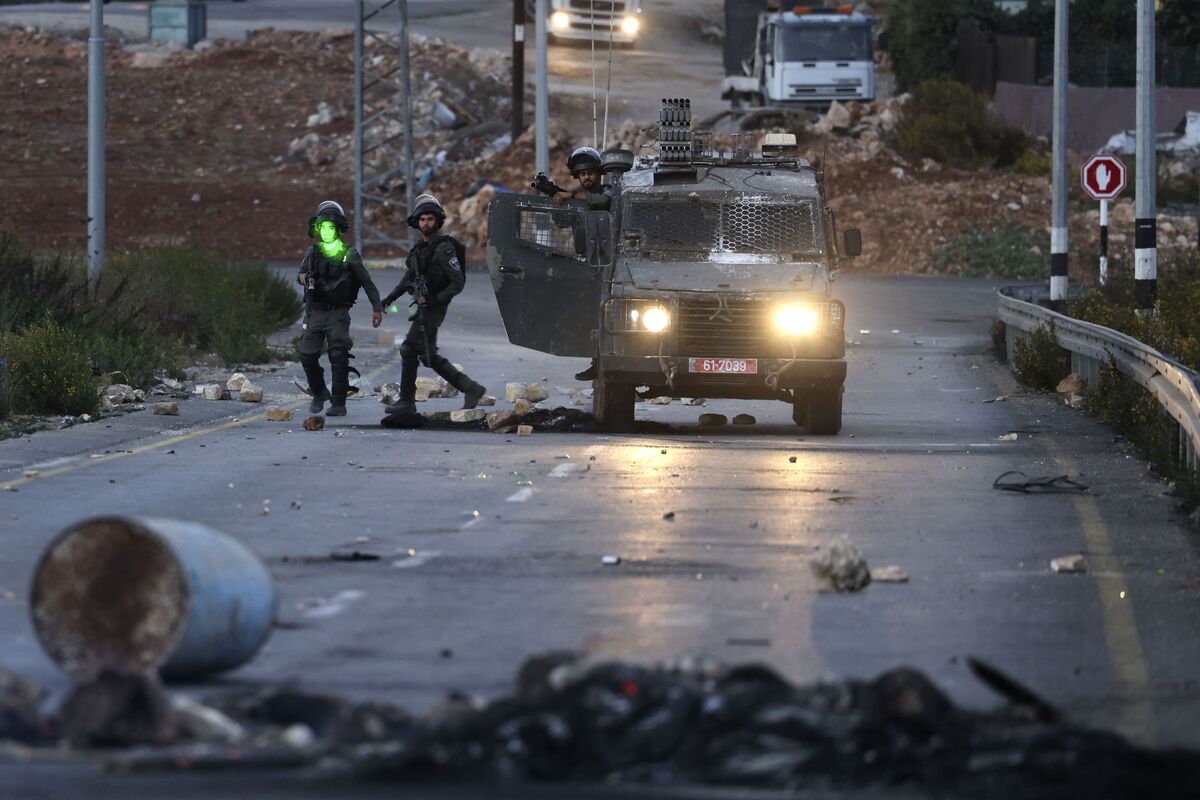
Israeli occupation forces stormed western Ramallah

This evening, Wednesday, the Israeli occupation forces stormed the village of Deir Qadis, west of Ramallah.


According to local sources, the occupation forces stormed the village, detained a number of young men, conducted field investigations with them, and fired tear gas canisters at citizens' homes, without any injuries or arrests being reported.

ARAB AND WORLD

Wed 25 Sep 2024 10:07 pm - Jerusalem Time

Lebanon calls Biden's remarks on conflict with Israel 'unpromising'

Lebanese Foreign Minister Abdallah Bou Habib expressed disappointment with US President Joe Biden's comments on the escalating crisis between Israel and Lebanon on Tuesday, but said he still hoped Washington could step in to help.


“It wasn’t strong,” Bou Habib said of Biden’s UN speech. “It’s not promising and it won’t solve this problem.”


“I am still hopeful,” Bou Habib said in New York during a virtual event hosted by the Carnegie Endowment for International Peace. “The United States is the only country that can really make a difference in the Middle East and with regard to Lebanon.”


Bou Habib told his interviewer, Aaron David Miller, vice president of the Carnegie Endowment for International Peace and a U.S. negotiator with the Palestinians during the administration of former President Bill Clinton, that estimates indicate that half a million people have been displaced in Lebanon. He said the Lebanese prime minister hopes to meet with U.S. officials in the next two days.


After nearly a year of war on Gaza, Israel is turning its focus to its northern border with Lebanon, where Hezbollah is firing rockets into Israel in support of its ally Hamas.


Israel says about 70,000 Israelis were forced to flee their homes in northern Israel.


In his speech, Biden sought to calm tensions, saying that all-out war was in no one’s interest. He told the 193-member UN General Assembly that a diplomatic solution was still possible, while Israel said it preferred a diplomatic solution that would keep Hezbollah away from the Israeli-Lebanese border.


Hezbollah says it also wants to avoid a full-scale conflict and that only an end to the war in Gaza will stop the fighting. Efforts to reach a ceasefire in Gaza have reached a dead end after months of stalled talks mediated by Egypt, Qatar and the United States.


Bou Habib pointed out that the Israeli government did not seriously seek to end the fighting through negotiations and instead sought to achieve some victory on the battlefield.


Special envoy Amos Hochstein led the American effort to stop the full-scale conflict between Hezbollah and Israel. But these efforts were thwarted by a series of attacks and counterattacks that began on October 8, the day after Hamas launched an attack on Israel, which led to Israel launching its deadly war on the besieged Gaza Strip.


Hochstein and French diplomats have sought to broker a deal under which Hezbollah would withdraw from Israel’s northern border, creating a buffer zone where the Lebanese army would deploy. Hezbollah has rejected the deal until Israel agrees to a ceasefire with Hamas. Israel says the return of Israelis expelled from their homes in northern Israel is a key goal in its fight against Lebanese militants.


For its part, the Washington Post reported in a report on Tuesday that Israel had been preparing for decades for a war against Hezbollah, and now with Hamas's capabilities in Gaza diminishing, Israel has begun to put its war plan into effect.


The newspaper quotes Israeli spokesmen as saying that many in Israel believe that it should have taken firm action against Hezbollah.


“The army has been building and reconstructing the plan for years,” said Miri Eisin, a former Israeli military intelligence officer who was briefed on the security deliberations, according to the newspaper.


She added: "Everything is now ready for the opening phase. The strikes that I have carried out in the past few days are part of detailed war scenarios that have been meticulously planned for years. Hamas did on October 7 what everyone was waiting for Hezbollah to do."


“Israel’s security chiefs pushed for the plans to be put into effect a few days after October 7,” Eisen said, an account confirmed by a “senior” Western diplomat who spoke on condition of anonymity to discuss sensitive matters, according to the Washington Post.

PALESTINE

Wed 25 Sep 2024 10:05 pm - Jerusalem Time

PA PM Mustafa: Fatah and Hamas to meet soon in Cairo, PA will run Gaza after war

Palestinian Prime Minister Mohammad Mustafa said on Wednesday that the Fatah and Hamas movements will meet soon in Cairo, adding that the Authority will run the Gaza Strip after the war with the participation of "everyone."


Mustafa's statements came in statements to the Qatari channel "Al Jazeera Mubasher".


Mustafa said: "Today we are talking about a close meeting between Fatah and Hamas to reach some understandings that will help in better arranging the situation to serve our people in Gaza in the coming period."


He added that the meeting "will be held in Cairo very soon, God willing, and the meetings (with the rest of the factions) may expand after that," without mentioning a specific date.


The Palestinian factions held their last dialogues in China, which ended with the Beijing Declaration on July 23, in which they agreed to reach a “comprehensive national unity” that includes all forces within the framework of the PLO, and to form an interim national consensus government, without achieving anything that was agreed upon.


On the other hand, Mustafa said that the Palestinian Authority will administer the Gaza Strip the day after the war on the Strip.


He stressed that "Gaza is part of the Palestinian territories," and that the Authority, its institutions and employees are present and continue their work in the sector, especially education and health.


Mustafa continued: "The only legitimacy for rule in Palestine is the legitimacy of the Palestinian state and the PLO, and the Palestinian Authority will manage the sector in a way that includes all the energies of the Palestinian people without excluding anyone. We will bear the responsibility and are ready to do our duty."


He pointed out that there is coordination with all relevant Palestinian parties in this regard. “We need everyone’s efforts. The responsibility is great, the disaster is great, and all the energies of the Palestinian people must be mobilized for the noble goal of restoring life to Gaza, the unity of the Palestinian people, linking the West Bank and Gaza, and establishing the state.”


PALESTINE

Wed 25 Sep 2024 10:03 pm - Jerusalem Time

Mustafa discusses with Wennesland mobilizing international efforts to end the occupation and embody the state

Prime Minister, Minister of Foreign Affairs and Expatriates Mohammad Mustafa discussed today, Wednesday, with the United Nations Special Coordinator for the Middle East Peace Process, Tor Wennesland, advancing efforts to stop the war of extermination against our people in the Gaza Strip, and the aggression of the occupation army and settlers in the West Bank, including occupied Jerusalem, and to end the occupation and embody the Palestinian state.


During a meeting on the sidelines of the 79th session of the United Nations General Assembly in New York, Mustafa stressed the importance of mobilizing efforts to implement the recent UN resolutions on Palestine, whether through stopping the aggression against our people, or practical steps to implement the UN General Assembly resolution based on the advisory opinion issued by the International Court of Justice, in order to end the occupation and embody the establishment of the Palestinian state.

ARAB AND WORLD

Wed 25 Sep 2024 9:23 pm - Jerusalem Time

Report reveals that Anthony Blinken deceived Congress on Israel

Earlier this year, two U.S. government authorities determined that Israel was deliberately blocking the delivery of food and medicine to Gaza during its brutal massacre in the territory.


But even after USAID and the State Department’s refugee office shared their findings with senior diplomats in late April, Secretary of State Antony Blinken told Congress the exact opposite days later, ProPublica reported Tuesday, citing leaked reports.


In a statement to Congress on May 10, Blinken said, “We do not currently assess that the Israeli government is prohibiting or restricting in any way the transfer or delivery of U.S. humanitarian assistance” to the blockaded Gaza Strip.


According to the report, Blinken received a 17-page memo from USAID on Israel’s behavior, ahead of his statement to Congress (obtained by ProPublica, the New York-based investigative journalism organization), which described instances in which Israel killed local and international aid workers, bombed hospitals and ambulances, demolished agricultural structures, regularly turned away food and medicine trucks, and sat on supply warehouses.


The memo said food destined for Gaza, including flour that could have fed nearly 1.5 million Palestinians for five months, was stored less than 30 miles from the Gaza border at an Israeli port. However, in February, Israel stopped allowing flour into the territory, accusing the recipient, the United Nations Relief and Works Agency for Palestine Refugees in the Near East (UNRWA), of being linked to Hamas. Independent investigations have found no evidence for Israel’s claims.


Blinken and other senior Biden administration officials appear to have ignored the findings. The United Nations has declared a famine in Gaza, saying many Palestinians in the territory are going days without food and that many children have starved to death. The war has also created a health emergency in Gaza, including the first confirmed case of polio in the territory in 25 years.


The State Department issued a statement in response to questions from ProPublica, claiming that it had pressured Israel to allow more aid into Gaza.


“As we made clear in May when we issued our report, the United States has been deeply concerned since October 7 about actions or inactions by Israel that have contributed to the continued failure to deliver needed humanitarian assistance,” the State Department response said. “Israel has subsequently taken steps to facilitate increased humanitarian access and flow into Gaza.”


The US government’s handling of the USAID memo led to internal strife, with one State Department official, Stacey Gilbert, resigning in May over Blinken’s statement to Congress.


“There is abundant evidence that shows Israel is responsible for obstructing aid, and to deny this is absurd and shameful,” Gilbert wrote in a statement at the time. “This report and its blatant lies will haunt us.”

PALESTINE

Wed 25 Sep 2024 9:07 pm - Jerusalem Time

A Palestinian child was injured after being run over by an Israeli military jeep in Nablus

A child was injured, on Wednesday evening, after being run over by an Israeli military jeep in the city of Nablus.


Medical sources reported that a 15-year-old child was transferred to the hospital after being run over by an occupation jeep during the raid on Al-Taawon Street in Nablus.

ARAB AND WORLD

Wed 25 Sep 2024 8:55 pm - Jerusalem Time

Lebanon calls Biden's remarks on conflict with Israel 'unpromising'

Lebanese Foreign Minister Abdallah Bou Habib expressed disappointment with US President Joe Biden's comments on the escalating crisis between Israel and Lebanon on Tuesday, but said he still hoped Washington could step in to help.


“It wasn’t strong,” Bou Habib said of Biden’s UN speech. “It’s not promising and it won’t solve this problem.”


“I am still hopeful,” Bou Habib said in New York during a virtual event hosted by the Carnegie Endowment for International Peace. “The United States is the only country that can really make a difference in the Middle East and with regard to Lebanon.”


Bou Habib told his interviewer, Aaron David Miller, vice president of the Carnegie Endowment for International Peace and a U.S. negotiator with the Palestinians during the administration of former President Bill Clinton, that estimates indicate that half a million people have been displaced in Lebanon. He said the Lebanese prime minister hopes to meet with U.S. officials in the next two days.


After nearly a year of war on Gaza, Israel is turning its focus to its northern border with Lebanon, where Hezbollah is firing rockets into Israel in support of its ally Hamas.


Israel says about 70,000 Israelis were forced to flee their homes in northern Israel.


In his speech, Biden sought to calm tensions, saying that all-out war was in no one’s interest. He told the 193-member UN General Assembly that a diplomatic solution was still possible, while Israel said it preferred a diplomatic solution that would keep Hezbollah away from the Israeli-Lebanese border.


Hezbollah says it also wants to avoid a full-scale conflict and that only an end to the war in Gaza will stop the fighting. Efforts to reach a ceasefire in Gaza have reached a dead end after months of stalled talks mediated by Egypt, Qatar and the United States.


Bou Habib pointed out that the Israeli government did not seriously seek to end the fighting through negotiations and instead sought to achieve some victory on the battlefield.


Special envoy Amos Hochstein led the American effort to stop the full-scale conflict between Hezbollah and Israel. But these efforts were thwarted by a series of attacks and counterattacks that began on October 8, the day after Hamas launched an attack on Israel, which led to Israel launching its deadly war on the besieged Gaza Strip.


Hochstein and French diplomats have sought to broker a deal under which Hezbollah would withdraw from Israel’s northern border, creating a buffer zone where the Lebanese army would deploy. Hezbollah has rejected the deal until Israel agrees to a ceasefire with Hamas. Israel says the return of Israelis expelled from their homes in northern Israel is a key goal in its fight against Lebanese militants.


For its part, the Washington Post reported in a report on Tuesday that Israel had been preparing for decades for a war against Hezbollah, and now with Hamas's capabilities in Gaza diminishing, Israel has begun to put its war plan into effect.


The newspaper quotes Israeli spokesmen as saying that many in Israel believe that it should have taken firm action against Hezbollah.


“The army has been building and reconstructing the plan for years,” said Miri Eisin, a former Israeli military intelligence officer who was briefed on the security deliberations, according to the newspaper.


She added: "Everything is now ready for the opening phase. The strikes that I have carried out in the past few days are part of detailed war scenarios that have been meticulously planned for years. Hamas did on October 7 what everyone was waiting for Hezbollah to do."


“Israel’s security chiefs pushed for the plans to be put into effect a few days after October 7,” Eisen said, an account confirmed by a “senior” Western diplomat who spoke on condition of anonymity to discuss sensitive matters, according to the Washington Post.

ARAB AND WORLD

Wed 25 Sep 2024 8:08 pm - Jerusalem Time

Netanyahu: We will use full force in Lebanon until the residents of the north return

Israeli Prime Minister Benjamin Netanyahu said on Wednesday that Tel Aviv will use full force against Hezbollah until the residents of the north are guaranteed to return to their homes.


"We are striking Hezbollah in a way that they never imagined. We are doing it with full force and with cunning. I promise you one thing: We will not rest until they return home," Netanyahu said in a statement.


In a related context, the Chief of Staff of the occupation army called on his forces on Wednesday to prepare for a "possible entry" into Lebanon, while the air force continues to bomb Hezbollah targets.


"You can hear the planes here. We are attacking all day long. The goal is to prepare for your possible entry and also to continue striking Hezbollah," Lieutenant General Herzi Halevi told members of an armored brigade, according to a statement issued by the army.


"We will not stop. We will continue to attack and hurt them everywhere," Halevi said.


"To do this, we are preparing for the maneuver course... your entry there with force, the confrontation with Hezbollah elements who will see what it is like to face a professional and experienced combat force," Halevi added in a video broadcast by the occupation army, addressing the soldiers.


"You are coming much stronger than them, much more experienced than them. Go in and destroy the enemy there and go destroy the infrastructure," he continued.


"These are the things that will allow us to bring the people of the North back safely at a later date," he said.


PALESTINE

Wed 25 Sep 2024 6:40 pm - Jerusalem Time

A Palestinian female killed and four injuries by Israeli forces in the village of Anza, south of Jenin

Citizen Zahra Qasim Amur (37 years old) was killed and three other women, including an elderly woman and a young man, were injured by Israeli occupation forces’ bullets, on Wednesday evening, in the village of Anza, south of Jenin.


The Palestinian Red Crescent Society reported that its crews in Jenin dealt with a deadand four injuries, including a young man, a girl, and two women, one of whom was an elderly woman (73 years old) who was shot in the head with live bullets and is in very critical condition, during the occupation forces’ storming of the village of Anza.


The occupation forces stormed the village of Anza and arrested the young man, Muhammad Walid Brahma, while firing live bullets, which led to the death of a female citizen and the injury of a girl, two women and a young man.

ARAB AND WORLD

Wed 25 Sep 2024 5:50 pm - Jerusalem Time

Israeli army: We attacked 280 Hezbollah targets

The Israeli occupation army announced, on Wednesday, that it had attacked "280 targets" that it said belonged to "Hezbollah" in Lebanon since the beginning of the day.


"During the day, warplanes attacked about 280 Hezbollah targets on Lebanese soil," the army said in a statement.


He claimed that among the targets were "the platforms from which the (rocket) launches were carried out towards Safed, Nahariya and the Jordan Valley (northern Israel) this morning."


He continued: "The raids also targeted militants, weapons depots, launch pads, and military infrastructure in Nabatieh and other areas in southern Lebanon."


He pointed out that "it continues to launch more raids."


There was no immediate comment from Hezbollah on the army's claim as of 14:20 GMT.


Hezbollah continues to fire rockets at targets in northern Israel, causing sirens to sound in dozens of settlements.


There are increasing indications that Israel is preparing to launch a ground invasion of southern Lebanon, under the pretext of establishing a "security buffer zone."


On Wednesday, the army announced a decision to call up two reserve brigades to the border with Lebanon, shortly after Northern Command Commander Oren Gordin announced a “strong state of readiness to enter into a ground exercise.”


Since Monday morning, the Israeli army has launched the "most violent and extensive" attack on Lebanon since the 2006 war against Hezbollah; leaving 583 dead, including children and women, 1,930 wounded, and 390,000 displaced, according to Lebanese authorities.


In return, Hezbollah launched hundreds of rockets at military sites and settlements, and a ballistic missile at the headquarters of the Mossad foreign intelligence agency in Tel Aviv (center), for the first time since October 8.


In order to maintain the morale of the Israelis and to practice psychological warfare against the Lebanese, Israel, according to numerous international reports, imposes strict military censorship on its media regarding human and material losses resulting from Hezbollah strikes, which primarily target military targets.


This censorship is due to the fact that what is happening on the Lebanese front is unprecedented since the Palestinian Nakba in 1948, as it strikes at the security doctrine entrenched in Israeli society, which is based on “transferring the battle to enemy territory,” while the strikes have reached most parts of Israel, including Tel Aviv.


For decades, Israel has occupied Arab lands in Lebanon, Syria and Palestine.

PALESTINE

Wed 25 Sep 2024 4:57 pm - Jerusalem Time

Settlers set up tents on Palestinian citizens' lands west of Ramallah

Today, Wednesday, settlers set up tents on citizens' lands in the village of Umm Safa, northwest of Ramallah.


According to local sources, the settlers, in continuation of the bulldozing and land seizure operations in "Jabal al-Ras", set up tents in the area today, confirming that the villagers have documents proving their ownership of the land.


A few days ago, settlers, under the protection of the occupation army, began bulldozing about 500 dunams of land from the villages of Umm Safa and Aroura, and blocked the road leading to the village of Deir Sudan, preventing citizens from passing.


Sabah explained that the occupation, through the bulldozing operations it is carrying out, has completely separated the village from its surroundings, and its 720 residents have become in a prison, surrounded by settlements and bypass roads from all directions.


PALESTINE

Wed 25 Sep 2024 4:13 pm - Jerusalem Time

Gaza: Six dead, including three children and a fetus, in an Israeli bombing of a house in Al-Bureij camp

Rescue teams recovered six dead today, Wednesday, including three children, a woman, and a seven-month-old fetus, in addition to a number of wounded, following an Israeli bombardment that targeted a house belonging to the Al-Saud family in the Al-Bureij camp in the central Gaza Strip.


According to local sources, the victims were transferred to Al-Awda Hospital in Al-Nuseirat camp in the central Gaza Strip.


Medical sources reported that the death toll in the Gaza Strip has risen to 41,495, most of them children and women, since the start of the Israeli aggression on October 7. The sources also confirmed that the number of injuries has risen to 96,006, while thousands of victims are still trapped under the rubble in various areas of the Strip.


The sources indicated that the past twenty-four hours witnessed the occupation forces committing four massacres against families, which led to the death of 28 citizens and the injury of 85 others.


They also added that ambulance and civil defense teams are facing great difficulties in reaching victims trapped under the rubble and in the streets due to the continued heavy shelling.

ARAB AND WORLD

Wed 25 Sep 2024 10:03 am - Jerusalem Time

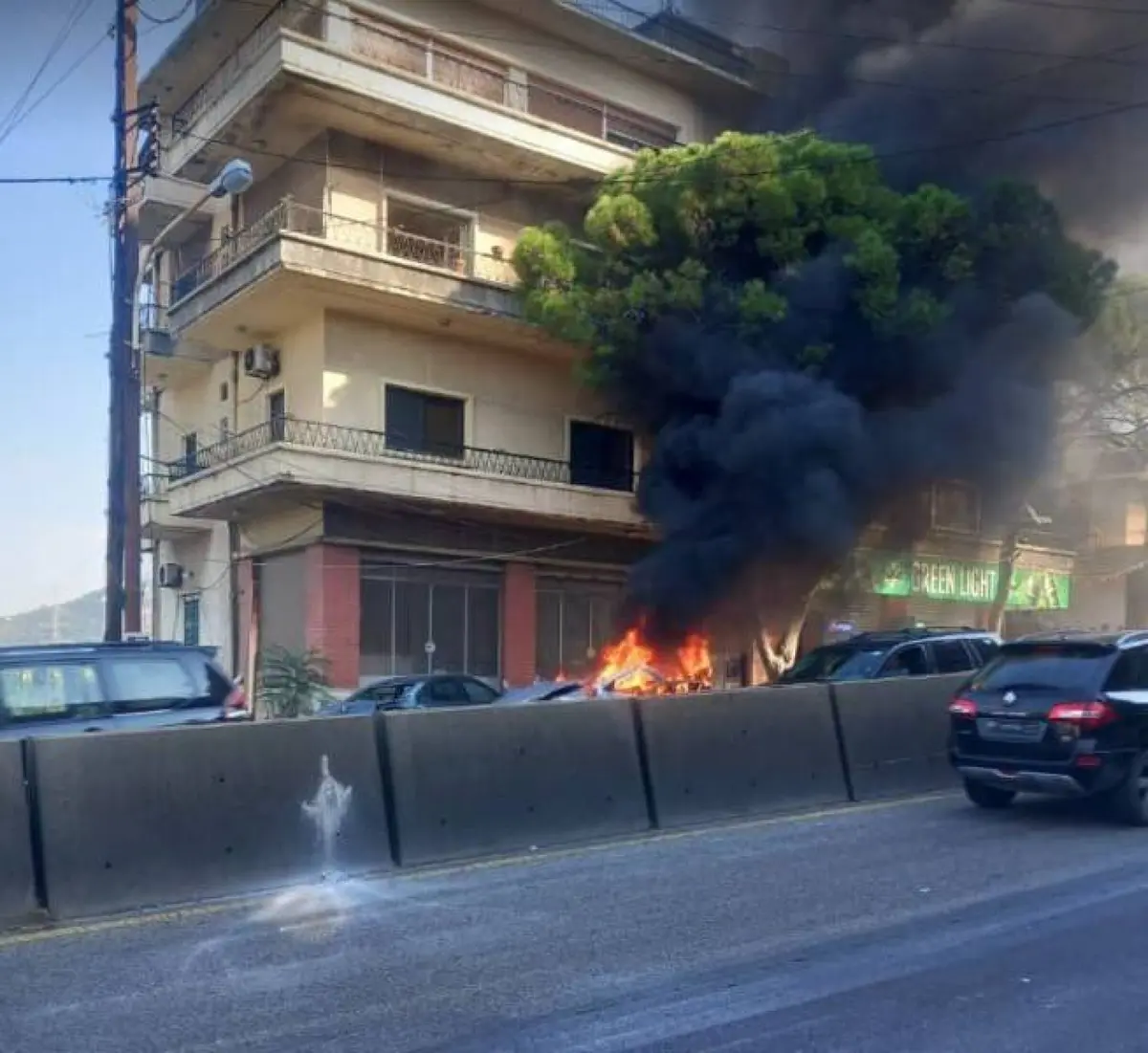
The occupation continues its raids on several Lebanese towns

This morning, Wednesday, the Israeli occupation air force carried out a series of violent raids targeting a number of Lebanese towns.


The warplanes carried out a raid, targeting for the first time the area between the towns of Al-Jiyeh and Al-Saadiyat, north of the city of Sidon.


The occupation air force also launched raids on the city of Baalbek and the towns of Nabi Sheet, Shaat, Sareen, Mashghara, Sahmar, Yahmar, Labaya, Qaliya, Midoun, Ali al-Nahri, and al-Nasiriyah in the Bekaa.


The Israeli warplanes raided the towns of Arzun, Srifa, Tefahta, Abbasiyeh, Arabsalim, Barashit, Toul, Shaqra, Kfar Malki, Babliyeh, Aba, Aita al-Jabal, Haboush, Deir Qanoun al-Nahr, Halousiyeh, Shahour, Majdal Zoun, Tayr Harfa, Houmin al-Fawqa, Qleila, Srifa, Dab’al and Bafliyeh, Halousiyeh, Zrarieh, Tayr Filsayeh, Qasibeh, Khiam, Shebaa, Mahmoudiyah and Wadi Ain Qana in southern Lebanon.

PALESTINE

Wed 25 Sep 2024 9:59 am - Jerusalem Time

Dead and injuries in Israeli occupation's bombing of areas in Gaza

A number of citizens were killed and others were injured on Wednesday after the Israeli occupation forces targeted large areas in the Gaza Strip.


Civil Defense sources reported that its crews recovered the body of an elderly man (70 years old) and a young man who were martyred after the occupation targeted a group of citizens in the Khirbet Al-Adas area north of Rafah in the southern Gaza Strip.


The defense teams also recovered the body of a girl from under the rubble of her house, which was destroyed by the occupation forces yesterday in the Al-Ahly Club area in the Nuseirat camp in the central Gaza Strip. The bodies of three martyrs were also recovered after the occupation forces bombed a civilian vehicle northeast of the Nuseirat camp.


Israeli gunboats opened fire towards the western areas of the Gaza Strip, and the occupation aircraft targeted agricultural land in the town of Al-Fakhari, east of Khan Yunis, in the southern Gaza Strip.


In a preliminary toll, the number of martyrs since the beginning of the occupation's aggression on the Gaza Strip on October 7, 2023, has risen to 41,467, in addition to 95,921 wounded, the majority of whom are children and women, while thousands of missing people are still under the rubble.

PALESTINE

Wed 25 Sep 2024 9:55 am - Jerusalem Time

The United Nations stuck under the rubble of violated values!

The successive words of the leaders and heads of state participating in the "International Organization's Annual Masquerade Ball" are nothing more than repetitive chatter of what is customary about such meetings, which seem disconnected from the reality that they were formed to sense, respond to its grievances, and side with the values of truth, justice, and freedom. These values are the first victim of the evil tendencies and dreams of arrogance that possess the leaders of the rogue state in its ongoing aggression against Gaza, and its transition in a similar version to sow killing and destruction in cities, villages, and towns in Lebanon, taking advantage of the state of excessive liquidity, weakness, and provocative laxity that the international organization suffers from.


Despite the importance of the speeches made by the heads of sister and friendly countries expressing their anger at the crimes of genocide committed by Israel on live television, the glaring absence of the international body makes it a burden on humanity, as long as it does not assume the roles for which it was established, foremost among which is the strict implementation of the decisions issued by it, and not allowing any of its members to rebel against its decisions and undermine its values.


Forming a humanitarian alliance to stop the Israeli persistence in the crimes that are moving between Gaza and Lebanon, as was proposed by Turkish President Erdogan, has become an urgent matter today before tomorrow, to stop the blood of the innocent, and to give the tortured hope that there are those who seek to help them, and save them from the hell in which they are burning with its raging fire.


The US President's speech seemed dull, as he says one thing and its opposite. On the one hand, he believes that diplomacy is the solution, and on the other hand, he does not hesitate to drown Israel in military support that undermines the chances of a solution and feeds its tendency toward destruction and killing.


Like the children of Gaza and Lebanon who are trapped under the rubble of their bedrooms that were destroyed by the unruly and uncontrolled planes, the United Nations, with its bodies and its laws that regulate its work, is also trapped under the rubble of values that were victims of its impotence, helplessness, and insignificance in the eyes of the host country and the largest contributor to its budget!


Stop the aggression now.

PALESTINE

Wed 25 Sep 2024 9:41 am - Jerusalem Time

A year after the genocide.. The Palestinian cause is revived despite the crimes of genocide and attempts at obliteration and Judaization

Suleiman Basharat: With the continuation of the occupation’s crimes, it is difficult to accurately predict the final results of what this stage will lead to.

Dr. Saad Nimr: The events of October 7th brought the Palestinian issue back to the forefront again, in a completely different way.

Nihad Abu Ghosh: The absence of Arab solidarity and the Palestinian division have reduced the ability to benefit from the state of international solidarity

Hani Abu Al-Sabaa: No one can think of a political solution or security arrangement in the region without the active presence of the Palestinians

Samer Anabtawi: The Palestinians were able to impose their narrative internationally, and the internal front must be built and the people’s steadfastness on their land must be strengthened


A year after the Israeli war of extermination on the Gaza Strip, and the bloodshed and brutality that it entailed, what happened has put the Palestinian issue at the forefront of the international political scene, despite Israel’s attempts to obliterate it.


In separate interviews with “I”, writers, political analysts and university professors believe that the ongoing war of extermination has opened the door to increasing international popular solidarity with the Palestinians around the world. The Palestinians have been able to achieve important gains on the international scene and have succeeded in forcefully presenting their cause on international platforms. They have also taken steps to prosecute Israel internationally for the crimes committed against them, although this has not yet been achieved.


They assert that the international popular solidarity has contributed to undermining Israel's traditional image as a democratic state, and has revealed the true face of the occupation as an oppressive force that practices genocide against an entire people.


Writers and analysts stress that in light of what is happening, the Palestinian ranks must be united behind a comprehensive national project that transcends internal differences, strengthens the internal front, and takes the Palestinian cause globally to achieve national rights and demand the establishment of an independent Palestinian state.


The largest genocide against the Palestinian people


A year after the genocide of the Palestinian people in the Gaza Strip, writer and political analyst Suleiman Basharat believes that it is still premature to talk about clear results for this stage, as Israeli crimes against the Palestinians continue unabated, and with the continuation of this bloody operation, it is difficult to accurately predict the final results of what this stage of the conflict will lead to.


However, Basharat stresses that “despite the continuation of the genocide, there are some interim results that can be stopped at. The entire world has witnessed, and in full view and hearing, the largest genocide to which the Palestinian people have been subjected, amidst bewildering international silence and direct American military support. These events have removed the mask from international claims of protecting human rights, and exposed the falsehood of the positions of many Western countries that have always sung about supporting the Palestinians’ right to liberation, but left them to face the brutality of the occupation without any real intervention.”


In contrast, Basharat points to the emergence of positive positions from the Western street, where popular support for the Palestinian cause has increased in Europe and the United States. This shift has played a major role in breaking the narrative that has long promoted the idea that Israel is a democratic state and that the Palestinians are “terrorists.” Today, the picture has become clearer to many peoples of the world, and the Israeli occupation has become exposed as a terrorist entity that practices killing and destruction, while the Palestinian people appear as victims of this organized terrorism. He also confirms that this international popular movement may rearrange governments based on human rights.


A new phase of legal challenges


One of the important developments that the Palestinians have achieved during this difficult year, according to Basharat, is the success in bringing their cases before the International Criminal Court and the International Court of Justice, although practical measures have not yet been taken. However, this step constitutes an important beginning on the path to holding Israel accountable internationally, which was previously a red line that could not be crossed.


Basharat points out that these events have established a new phase of legal challenges that may haunt Israeli officials in the long term, opening the door to imposing future trials for their crimes.


On the international level, Basharat believes that the Palestinians have proven to the world that they are a people who deserve an independent state and a recognized political entity, as confirmed by the recent vote in the United Nations General Assembly, where a clear decision was issued based on the advisory opinion of the International Court of Justice that the Palestinians are living under an occupation that must end.


Despite these achievements, Basharat warns of the ongoing challenges facing the Palestinian people, as the Israeli occupation continues its policy of systematic killing and destruction, making the price paid by the Palestinians extremely high.


Unifying the Palestinian ranks behind a unified vision and program


On the other hand, Basharat believes that the only way to restore the political status of the Palestinian cause is to unify the Palestinian national ranks behind a unified vision and program. The current challenges imposed by the war of extermination require overcoming internal partisan differences and unifying efforts in order to confront the common enemy.


Basharat stresses the necessity of forming a comprehensive Palestinian reference, whether by reactivating the unified leadership framework or forming a new framework, to assume responsibility for supervising the Palestinian cause and representing it on the international scene.


Basharat stresses that the existence of such a leadership body will constitute a card of strength for the Palestinians, and will enhance their ability to defend their rights in international forums.


Basharat stresses that the Palestinians have a double responsibility: either they unite and agree on a common vision to confront the occupation, or they remain in a state of weakness and division that increases their suffering.


Redouble diplomatic efforts to expose the occupation's practices


In addition, Basharat calls for doubling Palestinian diplomatic efforts to expose the occupation’s practices to the world, as the Palestinians have a lot of evidence and testimonies documenting Israeli crimes, but they need to present these tragedies to the world in a more effective way so that the international community can experience their suffering more deeply.


Basharat stresses the importance of re-evaluating Palestinian relations with many regional and international parties, and building new alliances that support the Palestinian cause, based on the changes witnessed in the positions of the Western street and the international public towards this conflict.


Basharat discusses possible scenarios for the future of the Palestinian cause, noting that the positive scenario is the continuation of international popular pressure on Western governments, which may lead to political gains for the Palestinians, including the possibility of establishing an independent Palestinian state.


The negative scenario, according to Basharat, is the continuation of Israeli genocide crimes amid international silence, which could lead to a decline in the Palestinian national spirit and an increase in disappointment among the people. This could give the Israeli occupation an opportunity to impose its vision on the future of the Palestinian cause, but Basharat believes that this scenario is less likely given the possibility of the entire region igniting if the injustice against the Palestinians continues.


Radical changes after October 7


In turn, Dr. Saad Nimr, Professor of Political Science at Birzeit University, believes that the events of October 7 led to radical changes on various Palestinian, Israeli, regional and international levels. These developments have brought the Palestinian issue back to the forefront again in a way that is completely different from what it was in the past, especially in light of the growing international support and backing for the resistance front.


Nimr points out that this transformation revealed the true face of Israel in its dealings with the Palestinian people and their cause, in light of the actual absence of the Palestinian narrative globally for many years.


Nimr stressed that "despite this momentum, it is still too early to determine the final direction of events," stressing the need for "the Palestinian leadership to seek to achieve national unity and change its strategies to suit the new reality."


He points out the importance of defining a clear vision of what the Palestinian leadership wants and what it seeks to achieve at this critical stage.


Israel will not deal in any way with the establishment of an independent Palestinian state


Nimr believes that the idea of a two-state solution has become a thing of the past, stressing that “Israel, according to the current prevailing mentality of its leadership, will not deal in any way with the establishment of an independent Palestinian state, which should reflect a change in the Palestinian leadership’s need to look at a new vision for dealing with the revival of the Palestinian cause and the demand for national rights.”


He points out that there have been important achievements at the international level during the recent period, and this international momentum must be invested in order to achieve legitimate Palestinian rights.


Nimr stresses that working to isolate and boycott Israel, especially in the economic aspect, will have a major impact in weakening it, as happened in South Africa, taking advantage of the growing state of global solidarity with the Palestinian people and their cause.


Nimr believes that this approach, along with international and regional pressure, may open new horizons for resolving the Palestinian issue, especially in light of the growing global sympathy for the Palestinians and the increasing exposure of the occupation’s policies to the international community.


Palestinian steadfastness and international solidarity


Writer and political analyst Nihad Abu Ghosh points out that the Gaza Strip, a year after the last war, is suffering from unprecedented destruction and genocide, but this destruction is not only related to the events that began on October 7, but is rather the result of the continuation of the Israeli occupation policies that were not limited to Gaza alone, but extended to include the West Bank as well.


Abu Ghosh points out that the Palestinian resistance, thanks to its legendary steadfastness, alongside the steadfastness of the Palestinian people, has exposed the ugliness of Israeli practices, which has led to unprecedented international solidarity, reaching the point of recognizing the Palestinians’ right to their state.


As the war continues, Abu Ghosh sees new and dangerous political chapters aiming to liquidate the Palestinian cause. He says: “These chapters seek to achieve complete separation between the West Bank and the Gaza Strip, in addition to forced displacement operations, with the aim of achieving the dream of ‘Greater Israel’.”


He stresses that the absence of Arab solidarity and the Palestinian division have reduced the Palestinians' ability to benefit from the growing international solidarity with their cause.


Abu Ghosh believes that if there had been a unified Arab position supporting the Palestinian people, the situation would not have reached this level of atrocities, pointing out the danger of the daily massacres that accompanied the war of extermination becoming commonplace.


The next stage may witness greater escalation.


Abu Ghosh expects that the next stage will witness a greater escalation as Israel continues to implement its plans related to Greater Israel and the liquidation of the Palestinian cause, pointing out that these plans, despite their danger, are not necessarily capable of ending the Palestinian cause completely.


Abu Ghosh stresses that the Palestinian issue has remained and will remain a central issue on the global level, and failure to resolve it in a just manner will increase global tension and pose a threat to world peace, pointing out that Israel has come under international supervision as a result of the genocide it is practicing against the Palestinian people.


Abu Ghosh stresses that the Palestinian issue is still alive, and that Israel will not be able to end it, whether through conspiracies or wars, as long as the Palestinian people remain steadfast.


On the other hand, Abu Ghosh calls for overcoming internal Palestinian differences and working to develop a joint national program, forming a leadership body to reform the Palestine Liberation Organization, adopting a national program to provide relief to Gaza, in addition to forming a national consensus government and forming a unified leadership body.


Abu Ghosh stresses that "everyone is targeted," which requires internal arrangements to stand up to Israeli plans.


Exposing Israel's true face as a criminal, genocidal power


Writer and political analyst Hani Abu Al-Sabaa points out that the October 7 attacks came after two decades of the siege of the Gaza Strip, which imprisoned more than two million Palestinians in harsh conditions. Many military confrontations failed to end this siege, and most of them ended with truce agreements through mediators, returning the situation to what it was without achieving any real progress in improving the conditions of the Palestinians.


Abu Al-Sabaa points out that the war that came after the attack revealed Israel's true face as a criminal force practicing genocide against the Palestinian people, and reshaped the Palestinian narrative on the international level, confirming that there is a people who aspire to freedom and independence like the rest of the peoples of the world, from the last occupation that still exists on the face of the earth.


Abu Al-Sabaa believes that this bloody war has brought the Palestinian cause back to the forefront of the world forcefully, as the cause has entered all arenas, whether on the political, cultural, or sports level, or even in international alliances.


Resolving the conflict has become an urgent necessity.


It has become clear, according to Abu Al-Sabaa, that there is an international axis sympathetic to the Palestinians in the face of a Western alliance supporting Israel, and resolving the Palestinian-Israeli conflict has become an urgent necessity, amid fears that the Middle East will slide into a comprehensive regional war, the results of which could be disastrous.


Abu Al-Sabaa believes that after a year has passed since the start of the war, it can be noted that Israel, which ignited the fires of this war under the leadership of its Prime Minister Benjamin Netanyahu, is now suffering from the expansion of the circle of war into the depths, as the Israeli government has been unable to provide security for its citizens.


Abu Al-Sabaa points out that expectations indicated that the war would be short, but this confrontation turned into a long-term war of attrition, which is an unsuitable scenario for Israel, which prefers quick military confrontations against regular armies.


According to Abu Al-Sabaa, this reality affects the morale of the Israeli army, which is clearly evident in the increase in suicide rates among Israeli soldiers, in addition to the challenges facing Israeli society in withstanding this conflict for long periods.


Awakening the global conscience


Abu Al-Sabaa believes that the Palestinians, through their patience and resistance, were able to awaken the global conscience, which prompted international organizations to convene repeatedly to discuss their cause. The Palestinians were able to obtain a permanent seat in the United Nations, and they attracted millions of supporters around the world thanks to the activity of the Palestinian communities in Europe and America, in addition to the role of university students in spreading awareness and sympathy for their cause.


Meanwhile, Abu Al-Sabaa points out that Netanyahu and a number of his ministers are facing threats of international prosecution, after they remained immune from accountability throughout the years of occupation.


“Today, no one can think of a political solution or security arrangement in the region without the Palestinians having an active presence,” Abu Al-Sabaa says. “This conviction has become firmly rooted in the minds of decision-makers, who realize that continuing this conflict without giving the Palestinian people their rights will lead to rounds of conflict that may include new parties, as is the case in Yemen.”


The necessity of national unity and knocking on the doors of international bodies


Abu Al-Sabaa added: “At the end of this tragic year of genocide against the Palestinian people, the need for national unity is more evident than ever, and the Palestinians must overcome their partisan differences for the sake of a homeland that is large enough for everyone.”


On the international level, Abu Al-Sabaa stresses that the Palestinians must work tirelessly to knock on the doors of international bodies to hold the occupation accountable and demand their legitimate rights, in light of the reshaping of the world within new axes and alliances, and the Palestinians must seek to build strategic alliances that serve their interests in cooperation with the surrounding Arab countries.


A shift in the global mood towards Israel


A year after the intense Israeli aggression against the Gaza Strip, which witnessed mass killings, arrests and extensive bombing, the Palestinian people have managed to stand firm with legendary resilience, according to political analyst Samer Anabtawi.


Anbatawi stresses that this steadfastness, which lasted for a year, was not just resistance on the ground and the thwarting of displacement plans, but rather the Palestinians were able to impose their narrative on the international scene, which led to the trial of the occupying Israeli state as a state committing crimes of genocide.


Anbatawi explains that there is a shift in the global mood towards Israel, as the occupying state is no longer able to market itself as a “democratic state surrounded by terrorists,” but rather the Palestinian narrative of the occupation and systematic violence against the Palestinians has become the narrative adopted by the peoples of the world.


Anbatawi points out that in light of this, the Palestinians stand out for their steadfastness, overcoming the occupation’s attempts to deport them from Gaza and the West Bank, and in clear defiance of the liquidation of their cause.


Israeli confusion prompted it to move the battle to Lebanon


He points to the state of confusion that Israel is experiencing, as it has failed to achieve its main goals from the aggression on Gaza and the war of extermination there, which prompted it to transfer the battle to Lebanon, in an attempt to create a comprehensive war that would enable it to implement plans for displacement and liquidation of the Palestinian cause.


However, Anbatawi confirms that these attempts faced Palestinian and regional steadfastness that thwarted the occupation’s plans, in addition to inflicting heavy losses on Israel, including economic losses, on the part of the axis of resistance.


Anbatawi points out that the United States, which has adopted Israeli policies since the beginning of the war, failed when its Secretary of State, Anthony Blinken, came and tried to convince Egypt to open the way for the displacement of Palestinians to Sinai, which increased the occupation’s crisis in achieving its goals.


Anbatawi points out that the axis of resistance, with regional support, has exhausted the Israeli army and weakened the Zionist project, which has begun to decline with the continued inability to achieve its goals.


Although the current stage is difficult and its outcomes cannot be predicted, Anabtawi stresses that the only option before the Palestinians is to continue steadfastness and resistance to thwart the Zionist project in the region.


Anbatawi stresses the importance of Palestinian national unity as a fundamental step for the next stage, calling for rebuilding the Palestine Liberation Organization on clear foundations of struggle, and ending the state of division that has harmed the Palestinian cause at all levels.


Cancel all previous agreements with the occupation


Anbatawi believes that what is required from the Palestinians is to cancel all previous agreements with the occupation, which Israel exploited to strengthen settlements and Judaize Palestinian lands, calling for severing relations with the occupation, as the current stage is a stage of comprehensive confrontation with the Zionist movement that does not want a peaceful solution with the Palestinians.


Among the priorities that Anabtawi stresses is the development of a unified Palestinian national program, through which the international alliances that have emerged to support the Palestinian people are invested. He also suggests going to international institutions to expose the practices of the occupation, indicating that this requires a unified and strong Palestinian position.


Anbatawi stresses the necessity of building the Palestinian internal front and strengthening the steadfastness of the people on their land, while supporting alliances that support the Palestinian cause, and confronting any alliances with the occupying state, including pressuring Arab countries to stop the state of normalization with Israel.

ARAB AND WORLD

Wed 25 Sep 2024 9:38 am - Jerusalem Time

International Lawyers' Team Submits Response to ICC to Israeli Challenge to Court's Jurisdiction

The international legal team assigned by the Palestinian Bar Association submitted a memorandum to the Office of the International Prosecutor yesterday, in response to Israel’s challenge to the jurisdiction of the International Criminal Court and the legitimacy of the International Prosecutor’s requests to issue two arrest warrants against Israeli Prime Minister Benjamin Netanyahu and his Defense Minister Yoav Galant.


The head of the international lawyers' team, Dr. Faisal Khazal, said in a press statement that reached "I" yesterday: "We requested in the memorandum from the International Criminal Court to reject the appeal of the defendants (Israel) due to the previous ruling on the matter and confirming the jurisdiction of the court. On the other hand, we submitted a defense as a precaution and precaution."


He added: “We mentioned in the memorandum that the Pre-Trial Chamber of the International Criminal Court issued a decision on February 5, 2021 by majority vote that the court has jurisdiction over crimes committed in the Palestinian territories occupied in 1967, and that this decision applies to the territories of the Gaza Strip and the West Bank, meaning that international crimes and violations are committed on territories that fall under the jurisdiction of the International Criminal Court, and that the state of these territories is a member of the International Criminal Court, and the reference here is Palestine.”


The team explained in the memorandum, according to Khazal, that Israel’s withdrawal from its membership in the International Criminal Court, and its indication in the withdrawal decision that it no longer wishes to be a member and therefore there is no longer anything that compels it to implement its obligations towards the court, is something that does not apply to this complaint or the crimes referred to, which occurred in the Gaza Strip from October 7, 2023 until now, as well as the crimes that occurred after this date, as the crimes complained of occurred in the Palestinian territories occupied in 1967, that is, the territories of the Gaza Strip, the West Bank and the rest of the territories that fall within the 1967 borders from the Palestinian side, which is a member of the International Criminal Court.


Khazal continued: “Therefore, Israel’s withdrawal from membership has no impact on this complaint in terms of the spatial circumstance or the involvement of the defendants in the crimes, but rather it falls within the core jurisdiction and mandate of the International Criminal Court.”

PALESTINE

Wed 25 Sep 2024 9:23 am - Jerusalem Time

Israeli occupation forces launch arrest campaign in the West Bank

The Israeli occupation forces launched a wide-scale arrest campaign in the West Bank at dawn and this morning, Wednesday.


In Bethlehem, the occupation forces arrested: Yazan Yousef Al-Balawi (30 years old), Muhammad Walid Al-Saqa (23 years old), Saleh Muhammad Al-Jaidi (32 years old), Muhammad Fawzi Sajdiya (49 years old), Khaled Ali Al-Saifi (66 years old), Raafat Naim Abu Aker (52 years old), Karam Nasri Abd Rabbo (30 years old), Ahmed Mazen Ruqban (23 years old), Khaled Nayef Al-Jarashi (43 years old), and Theeb Abdul Hamid Najajra from the town of Nahalin, west of Bethlehem, after raiding and searching their homes.


In Nablus, the occupation forces stormed the villages of Beit Furik and Salem to the east, and Asira al-Shamaliya to the north of Nablus, and raided a number of homes there, searched them and tampered with their contents, and arrested each of: Yasar Munther Ishtia from Salem, Jihad Hamdi Khatatbeh, Abdul Ayham Bani Odeh, and Ahmed Bilal Nasasra from Beit Furik, and Muhammad Jamal Sawalma from Asira al-Shamaliya.


In Hebron, Shawqi Muhammad Abd al-Raouf al-Atrash, Mustafa Abd al-Jawad al-Atrash, Wael Marwan al-Atrash, and Sami Yusuf Matar from al-Tabqa, and Muhammad and Munif Hajjah from the town of Dura, were arrested after their homes were raided and searched.


The occupation police also arrested the young man, Musab Mahmoud Islimiya, from the town of Idhna, west of Hebron, from inside the 1948 territories.


Meanwhile, the young man, Rayan Abu Shanab, was arrested after raiding his house in the Ezbet al-Jarad suburb, east of Tulkarm city.


In Salfit, the occupation forces arrested the mayor of Kafel Haris, Osama Zaid Saleh, and the citizen Ammar Saleh Hammad, and from the town of Burqin, the citizen Hussein Kamel Samara, and from the village of Iskaka, they arrested each of: Zaid Hussam Harb, Muhammad Bahjat Harb, and Youssef Kamal Harb.

PALESTINE

Wed 25 Sep 2024 9:17 am - Jerusalem Time

A young Palestinian succumbed to his wounds south of Hebron

A young mandied, at dawn on Wednesday, due to his critical injury by Israeli occupation forces’ bullets in Al-Fawar camp, south of Hebron.


According to local sources, the young man Yahya Daniel Awad (29 years old) died of his critical injury from the occupation forces’ bullets to the chest, during their storming of Al-Fawar camp late Tuesday evening.


The occupation forces stormed the camp and raided several homes, while firing live bullets and sound bombs at the citizens, which led to four young men being injured by live bullets. The young man, Awad, was seriously injured in the chest, and the others sustained moderate to minor injuries in the foot, shoulder and back. They were transferred to Yatta Governmental Hospital, and doctors later announced the death of Awad as a result of his critical injury.

PALESTINE

Wed 25 Sep 2024 9:03 am - Jerusalem Time

Guarantees expire at the end of next month.. Serious repercussions of severing ties with Israeli banks

Dr. Firas Melhem: We are working on developing appropriate solutions to limit the negative effects in the event that banking relations with the Israeli side are severed

Dr. Nasr Abdel Karim: I rule out severing banking relations due to the serious economic consequences that could befall the Authority and Israel

Dr. Muawiya Al-Qawasmi: If this happens, it will lead to a major economic crisis that will affect all economic sectors and Palestinian banks.

Muhammad Salama: The danger lies in the transformation of the Palestinian economy into a cash economy, and this will undermine the progress achieved by the banking sector.

Raja Khalidi: What Smotrich is demanding is a violation of the Paris Agreement, especially since the monetary relationship is managed by the Bank of Israel, not the Minister of Finance


The guarantees or letters of immunity granted by the Israeli government to Israeli banks in exchange for their continued dealings with Palestinian banks will expire on October 31, which threatens to sever banking relations between the Israeli and Palestinian sides if these letters are not renewed.


Israeli Finance Minister Bezalel Smotrich threatened to isolate Palestinian banks by not extending guarantees to Israeli banks dealing with them against potential lawsuits, as part of “punitive” steps against the Palestinian Authority in response to the decision of European countries to recognize the State of Palestine.


These guarantees expired several months ago, but under pressure from the US government, the World Bank and the International Monetary Fund, they were renewed until October 31. If Israel carries out its threat and cuts all ties with these banks, this will make them unable to fulfill many tasks, including paying the amounts needed for imports and exports carried out by Palestinians in the West Bank.


85% of Palestinian exports to Israel, including 55% of imports


The Governor of the Palestine Monetary Authority, Dr. Firas Melhem, told “Y”: “The percentage of Palestinian exports to Israel is about 85% of total exports, while the percentage of direct imports is about 55% of total imports, and the value of these exports and imports is paid through the correspondent banking relationship between the two sides.


He added: Since their licensing, Palestinian banks have worked to pass and implement payments with the Israeli side through Israeli banks, and facilitated the implementation of commercial transactions, and the payment of prices for goods and services supplied from the Israeli market and goods exported to Israeli suppliers, while banks have succeeded in the last two years in receiving a significant percentage of the wages of Palestinian workers working in Israel through electronic transfers.


Melhem confirmed that since 2018, Israeli banks have been requesting immunity letters from the Israeli government in exchange for continuing to deal with Palestinian banks, threatening the Israeli government with severing banking relations if these letters are not issued. The Israeli government has traditionally renewed these letters annually, which has allowed correspondence relations between the two sides to continue.


Implications for the Palestinian economy and trade


The Governor of the Monetary Authority said: At the beginning of this year, the Israeli Finance Minister threatened not to renew these letters in light of the US Treasury’s decision to include a group of settlers on the OFAC LIST, while the Israeli government renewed the letters until the end of October 2024.


He added: If the Israeli government decides not to renew these letters, it is expected that this will have several effects and repercussions on the Palestinian economy, the most important of which is the halt in the ability of Palestinian traders and companies to supply basic goods and services to the Palestinian market and pay for them through the official system (the banking sector), which will lead to the growth of the informal market that relies on cash payments in trade operations.


He added: The transition from the formal system to the informal system is fraught with many risks and challenges, the most important of which are the high prices of goods and services, and the government’s inability to collect customs and taxes on these goods, which will affect tax revenues, in addition to the high expenses and risks that Palestinian traders will bear if they carry out trade operations and pay their prices in cash.


Impact on the ability to ship surplus shekels to Israeli banks


Melhem continued: “In terms of banking, the threat of severing banking relations will affect the ability of Palestinian banks to transfer surplus shekels to Israeli banks, and limit their ability to replace damaged cash, in addition to the problems related to carrying out transactions internally in shekels. It is important to note that dealing with currencies other than the shekel will not be affected, and therefore what was published about the collapse of the banking sector in the event of the cessation of banking relations is exaggerated and out of place.”


He stressed that the Monetary Authority and banks operating in Palestine are working to develop appropriate solutions to limit the negative effects in the event that the Israeli government does not renew the immunity letters, which will lead to severing the banking relationship between the two sides, while the correspondent banking relationship with the world will continue without any effects, as the Palestinian banking system enjoys a wide network of global correspondent banks through which financial and banking transactions can be carried out in various currencies to ensure the continued supply of basic goods and services to the Palestinian market.


The Governor of the Monetary Authority concluded his speech by stressing that the Israeli decision will not have any consequences on depositors’ funds, and that if this decision is taken, it will not threaten any of the banks operating in Palestine.


International community opposes collapse of Palestinian Authority


Academic and economic expert Dr. Nasr Abdel Karim expressed his doubts about the implementation of Finance Minister Smotrich’s decision, pointing to the serious economic consequences that could befall the Authority and Israel as a result of this step, in addition to the international community’s position opposing the collapse of the Palestinian Authority and harming the Palestinian banking sector as one of the vital pillars in the survival of the Palestinian economy and its minimal functioning.


Abdul Karim told "I have doubts that Smotrich will actually take this step by the end of October for reasons related to the international position and the international community and the economic damage that may be inflicted on Israel and the Palestinians."


The most serious consequences will be on the commercial and banking sectors.


Abdul Karim explained that if this threat is implemented, the consequences will be clear on the commercial and banking sectors, and that there will be great confusion in the banking settlements resulting from commercial deals or services exchanged between the two sides, as Palestinian banks will not be able to benefit from Israeli banking settlement channels.


He added: "Israeli banks will not find representation for Palestinian banks in the Israeli clearing, which will lead to caution in commercial dealings on both sides of the Green Line in the matter of trade and deals."


Alternatives for all possible scenarios


Abdul Karim pointed out that Palestinian banks have already worked on developing alternatives for these possible scenarios.

He added: One of these alternatives includes using European correspondent banks to facilitate financial transfers between Palestinian and Israeli banks. Palestinian banks also have the ability to deal with other foreign currencies such as the dollar and the euro, which enables them to continue international transactions.


Abdul Karim said: Despite the expected damage, I do not believe that the Palestinian economy will be paralyzed or that the banking system will be isolated from the world because Palestinian banks can send and receive remittances in foreign currencies.


Dr. Abdul Karim expressed his belief that this crisis may constitute an opportunity for the Palestinians to re-evaluate their economic relations with Israel.


He added that reducing dependence on the Israeli economy might push the Palestinians to look for alternatives, such as enhancing local agricultural and industrial production or networking trade relations with other countries outside Israel.

Abdul Karim believes that this option may be beneficial to the Palestinians in the long run.


Smotrich seeks to blackmail the authorities


In turn, Dr. Muawiya Al-Qawasmi, Secretary of the Palestinian Businessmen Association, confirmed that the decision to deal with Israeli banks had been in place for more than twenty years, as the Israeli Ministry of Finance had always sent letters to Israeli banks as a letter of guarantee, that they would not be subject to prosecution in Israeli courts.


Al-Qawasmi told "Y": Israeli Finance Minister Smotrich is seeking to blackmail the Palestinian National Authority and the Palestinian economy by not renewing this guarantee that it sends to Israeli banks, stressing that these guarantees expired several months ago, but under pressure from the American government, the World Bank and the International Monetary Fund, they were renewed until October 31.


Al-Qawasmi explained that one of the conditions was to examine the extent of Palestinian banks’ commitment to compliance and money laundering prevention rules, as an assessment was conducted by the World Bank, which showed that Palestinian banks are the best in the region.


Complicated electricity, water, taxes and commodity exchange


Al-Qawasmi pointed out that failure to renew the guarantee will negatively affect the economic relationship between Israel and Palestine, which will lead to complicating matters related to electricity, water, taxes, and the exchange of goods between the two parties.


Al-Qawasmi also stressed that this decision is a blackmail card, expressing his concern that the right-wing Israeli government might take any step.


However, he expressed his belief that the international community and the Americans will pressure to prevent the implementation of this decision.


Al-Qawasmi warned that if this happened, it would lead to a major economic crisis, affecting all economic sectors and Palestinian banks.


Positive economic impacts


For his part, the financial and Egyptian advisor, Mohamed Salama, told “Y”: The fear is that if Smotrich carries out his threats and Israeli banks stop dealing with Palestinian banks, European and American banks will follow the Israeli measure and stop dealing with Palestinian banks under the pretext of stopping Israeli banks from dealing with Palestinian banks. Thus, there will be a major challenge in dealing with the dollar as a currency to finance foreign trade, whether with Israel or others.


Salama believed that the danger lies in the transformation of the Palestinian economy into a cash economy, and this will undermine the progress achieved by the banking sector in combating money laundering and terrorist financing, and will hinder money transfers to and from Palestine, pointing out that the West Bank had experienced cash dealings before the return of Cairo Amman Bank during the eighties of the last century.


He stressed that there are positive economic effects that may result from this measure, the most important of which is the decline in trade with Israel, the elimination of the consumption of Israeli goods, and the rationalization of the consumption of many goods, which is in the interest of the Palestinian economy, especially since such a measure will stop the flow of goods and services from the Israeli occupation state to the Palestinian territories, which will prompt the search for alternatives, either locally or through neighboring countries.


The gradual decline in the use of the shekel currency


Salama pointed out that such a measure would lead to a gradual decline in dealing with the Israeli shekel, and this would serve the interests of the Palestinian economy by finding a monetary alternative to the shekel, either by issuing a local currency or by adopting the dinar or the dollar as an alternative currency.


He said: It is clear that such a measure will hinder the movement of the Authority's money, especially the transfer of clearance funds to the Authority's accounts, and will force the Authority to restructure its accounts such as salaries, taxes, customs, electricity, water and petroleum payments from the shekel to other currencies.


Salama concluded by saying: “As a result, such a decision, which I rule out taking, if it happens, will confuse the financial system and the Palestinian economy for a period, but the Palestinian Authority and the Palestinian economy will overcome this confusion by finding alternative solutions that have positive results in the medium and long term.”


Salama stressed that this step would have negative effects on Israel that may not be less than the damage it would cause on the Palestinian side, and such a step would mean the cancellation of the Paris Economic Protocol, which would require an international position that would cost Israel a lot, especially since what is being proposed as a possible economic peace contradicts such behavior by this fascist settler, Smotrich.


The monetary relationship is managed by the Bank of Israel.


Raja Khalidi, director general of the Palestine Economic Policy Research Institute (MAS), told WAFA: “Regardless of the seriousness of the renewed threats, they may still be in the context of Israeli political maneuvers to achieve new compromises regarding settlements and the process of reoccupying the West Bank and making it all Area C.”


Al-Khalidi added: "What the Israeli Finance Minister is demanding in exchange for not implementing his threat, of a financial audit of the Monetary Authority, is a blatant violation of the Paris Agreement, especially since the monetary relationship is managed by the Bank of Israel, not the Finance Minister."


"It is a ridiculous demand, as it is internationally known that the Palestinian banking system is audited and free of any risk of illicit cash flows," he said.


Al-Khalidi concluded by saying: “In any case, we must prepare for the worst, and therefore MAS is preparing a special study on Israeli financial and monetary sanctions, their potential consequences, and ways to confront them.”

PALESTINE

Tue 24 Sep 2024 9:40 pm - Jerusalem Time

A Palestinian mother and 4 of her children were killed in an Israeli bombing of Rafah

A mother and four of her children were killed on Tuesday evening in an Israeli bombing of Rafah, south of the Gaza Strip.


Eyewitnesses reported that the occupation aircraft targeted a house belonging to the Abu Jazar family in the town of Al-Nasr, northeast of Rafah, which led to the martyrdom of a mother and four of her children, and the injury of others.


The occupation forces have continued their aggression on the Gaza Strip by land, sea and air since October 7, 2023, resulting in the death of 41,467 citizens and the injury of 95,921 others, most of whom are children and women, while thousands of people are still missing under the rubble.

ARAB AND WORLD

Tue 24 Sep 2024 6:50 pm - Jerusalem Time

Biden calls from UNGA for an end to the war in Gaza and the establishment of a Palestinian state

US President Joe Biden on Tuesday, September 24, 2024, delivered his final address to the United Nations General Assembly, likely also one of his last on the world stage as president, capping a decades-long political career focused largely on foreign policy.


As usual, Biden was preceded to the podium by Brazilian President Luiz Inacio Lula da Silva, who condemned the killing and destruction being suffered by the Palestinians, calling for an immediate ceasefire in Gaza and an end to the Israeli aggression on Lebanon.


"Today is the fourth and last time I address this gathering," Biden said after Lula finished his speech, recalling the first time he attended the meeting when he was a young senator, noting that at that time the war was being fought in Vietnam, "but now the United States maintains good and strong relations with Vietnam."


"I see the challenges in Ukraine, Gaza, climate change — the list goes on," he said.


President Joe Biden on Tuesday expressed his sorrow for the loss of life and the pain felt by innocent civilians on both sides of the conflict between Israel and Gaza as he spoke at the United Nations General Assembly.


Biden pointed to the hundreds of civilians killed during Hamas's attack on Israel 11 months ago and the dozens held hostage. "I've met with the families of those hostages. I've grieved with them; they're going through hell," Biden said.


“Innocent civilians in Gaza are also going through hell. Thousands upon thousands have been killed, including aid workers. Many families have been displaced, crowded into tents, and face a dire humanitarian situation,” he added.


Regarding the faltering ceasefire agreement, Biden said: “Now is the time for the parties to finalize the terms of a ceasefire, return the hostages home, secure Israel and a Hamas-free Gaza, alleviate the suffering in Gaza, and end this war.”


He added, "We also look at the suffering of the Palestinians in the West Bank. We must end this conflict and this suffering by establishing a Palestinian state that gives the Palestinians the dignity, freedom and sovereignty they deserve, and the Israelis the security they aspire to."


President Joe Biden pledged to support Ukraine until victory in its war against Russia at the United Nations General Assembly on Tuesday.


Biden said that since the war began more than two years ago, "our NATO allies and partners and more than 50 countries have stood" against Russia.


“Most importantly, the Ukrainian people stood up,” Biden said. “I asked the people in this room to stand up for them.”


“The good news is that Putin’s war has failed, and so has his primary goal,” Biden added. “He set out to destroy Ukraine, but Ukraine remains free. He set out to weaken NATO, but NATO is bigger, stronger, and more united than ever, with two new members, Finland and Sweden.”


“But we can’t stop,” the president added, referring to the uncertain future of support for Ukraine both in the United States, where former President Donald Trump is seeking another term in office and could implement serious cuts in aid to Ukraine, and around the world.


The 79th session of the United Nations General Assembly, colloquially known as the “UNGA,” brings leaders from around the world to New York. A senior Biden administration official told reporters before Biden’s speech that the president’s speech will cover many of the foreign policy themes he has addressed throughout his administration — rallying the world around Ukraine, managing global competition and emphasizing the importance of preserving the U.N. Charter.


“He came into office four years ago with a vision of America returning to the world stage, having a new way of engaging with other countries and bringing countries together to solve some of these big challenges,” the official told reporters.


For Biden, it’s a busy week on foreign policy for the president, who met with leaders of Indo-Pacific nations — Japan, Australia and India — over the weekend at his home in Wilmington, Delaware. He’ll meet with world leaders on the sidelines of the United Nations General Assembly, as well as Ukrainian President Volodymyr Zelensky at the White House on Thursday.