ARAB AND WORLD

Fri 27 Sep 2024 9:56 am - Jerusalem Time

The UN on Impotence.. American Hegemony Consecrates Favoritism and Double Standards

Dr. Raed Abu Badawiyya: Changing the balance of global power is the only way to reactivate the role of the United Nations

Dr. Hussein Al-Deek: The global system is no longer able to meet the interests of new countries and is in urgent need of reform

Nour Odeh: Double standards, impunity and selectivity in applying the law threaten the collapse of the international system

Dr. Ahmed Rafiq Awad: The necessary reforms in the United Nations will not be achieved except through a radical change in its structure

Firas Yaghi: The formula of the "veto" law, which is limited to five permanent member states, obstructs the role of the United Nations


The United Nations is facing sharp criticism for its absence from the 79th session of its General Assembly, which reflects the conflict between the major powers that control the UN decision, which has contributed to weakening the UN organization’s ability to make decisive decisions on many international issues.


In separate interviews with “I”, writers, political analysts, experts and specialists believe that this decline in international performance is due to internal divisions between the permanent member states, each of which seeks to impose its own agendas.


It has become unable to keep up with rapid international changes, as major powers, especially the United States, continue to use their influence to obstruct any decisions that are not in line with their interests, which has made the United Nations a weak tool in the hands of some countries, which has sparked widespread criticism of the United Nations’ ability to achieve international justice and apply the law to all countries without discrimination.


Writers, analysts, experts and specialists called for a comprehensive reform of the structure of the Security Council and the United Nations in general, and the need to change voting mechanisms and grant member states equal rights instead of allowing major powers to impose a “veto,” which obstructs any serious action.


The United Nations (UN) is an international organization founded after World War II in 1945 with the aim of promoting international peace and security, enhancing cooperation among nations, and supporting human rights.


The UN Security Council is paralyzed in the face of conflicts between major powers and their allies.


Dr. Raed Abu Badawi, Professor of International Law and International Relations at the Arab American University, explained that the United Nations has shown effectiveness in intervening through the Security Council in conflicts that are not related to major powers or the allies of those countries, especially the permanent members of the Security Council, but the situation changes completely when the conflict is related to these powers or their allies, which makes the intervention of the United Nations in those cases less effective.


Abu Badawiya pointed out that this matter has become particularly clear in the Palestinian-Israeli conflict, where the United Nations has witnessed since before 1948 an inability to implement resolutions related to Israel, due to the intersection of the interests of Western powers with Israel, as the West provided an international umbrella to protect Israel over the past decades, which led to undermining the effectiveness of the United Nations and its institutions in resolving the conflict.


Abu Badawiya pointed out that this deficit appeared more clearly after October 7, when the United Nations’ deficit became noticeable.


Abu Badawiya believes that the United Nations is a tool of the great powers, but it has become powerless due to the bias of these countries.

“Changing the balance of global power is the only way to reactivate the role of the United Nations, with the emergence of multipolar powers such as Russia and China, along with other countries,” Abu Badawiya said.


According to Abu Badawiya, the current world order, which was established in 1945, no longer meets the aspirations of various countries, which prompted Russia and China to demand the establishment of a new international organization that would be far from Western bias. However, the form of this new organization or the nature of the alliances that may arise in the future have not yet crystallized.


The conflict of the major poles controlling the international institution


For his part, the American affairs expert Dr. Hussein Al-Deek said that the absence of the United Nations’ role in the 79th session does not come out of nowhere, but rather is the result of the conflict between the major poles controlling the international institution, headed by the permanent superpowers in the UN Security Council.


According to Al-Deek, these countries have historically been represented by two main axes: the Western Bloc and the Eastern Bloc. However, today, the international scene has changed with the Western Bloc remaining in the orbit of the American-British-French alliance, while the Eastern Bloc is trying to change. Russia is trying to break free from this orbit and take a position of equality towards the Western Bloc, relying on its strength and political weight, while China constitutes the third pole in this conflict, as it is engaged in a “soft” competition with the United States, especially with regard to economic, political and military expansion in Africa. China is also seeking to strengthen its position in the Middle East through soft diplomacy supported by increasing economic and industrial achievements.


Al-Deek believes that these rivalries between the three poles - the West, Russia and China - have negatively affected the performance of the United Nations in the current session, and led to what Al-Deek described as a "major failure" in dealing with many international issues.


Time of giant monsters


“We live in the ‘time of giant monsters’, as one Italian thinker described it, where the old world order is dying, while new powers struggle to be born,” Al-Deek said. “The monsters here represent the powers of the old world order that seek to maintain their dominance, at a time when threats from emerging powers are escalating.”


Al-Deek pointed out that this global system, which was formed after World War II by the victors - the Russians, Americans, British, and French - is no longer able to meet the interests of the new countries, which makes the need to reform the international system, headed by the United Nations and the Security Council, an urgent necessity.


Al-Deek stressed that as a result of this hegemony, the United Nations has become more like a tool in the hands of the United States, which has disrupted its effectiveness and paralyzed its prestige by controlling the Security Council and the United Nations institutions to serve its own interests, and the United Nations has come to be viewed as one of the tools of the US State Department.


International balance to activate the values of the United Nations


Al-Deek believes that international balance is the main factor that can reactivate the values of the United Nations, but in the absence of this balance between countries, the United Nations will remain hostage to the interests of the major powers, led by the United States.


Al-Deek pointed out that international law is now only applied to weak states, while major powers are excluded from it, referring to what is currently happening in Gaza, the West Bank and Lebanon, and how the decisions of international institutions, such as the International Court of Justice and the International Criminal Court, are being dealt with by Israel and the United States as if those decisions were merely “ink on paper.”


Al-Deek stressed the need to reform the international system and form international pressure forces to implement UN resolutions and impose peace and a ceasefire in conflict and war zones. Without this reform, the United Nations will remain an ineffective structure and a tool in the hands of major countries to implement their foreign policies.


Absence of the role of the United Nations due to member states


In turn, writer and political analyst Nour Odeh said that the absence of the role of the United Nations is not due to the failure of the organization itself, but rather is a result of the will of its member states, especially the major influential countries that exploit their power to pass their agendas and preserve their interests.


Awda explained that the problem lies in the structure of the United Nations, which is disrupted when faced with events that require its intervention, such as what is happening in the Palestinian file, the position on the war of extermination in Gaza, and the war on Lebanon and Ukraine.


This obstruction, according to Awda, is due to the permanent member states of the Security Council, which prevent the organization from performing its duties as it should.


Awda cited the experience of the Palestinian file over decades, where the United Nations remained unable to take real steps, as well as the case in Syria, where the world witnessed a conflict of wills between the major powers within the Security Council, which led to the disruption of any serious international effort to resolve these crises. Therefore, the problem does not lie with the United Nations as an organization, but rather with the member states, especially those that have the right to veto.


Guardian of the Charter and International Law


In response to criticism that the United Nations has become a department of the US State Department, Awda rejected this argument, stressing that the organization is still the guardian of the Charter and international law.


Awda pointed out that the recent decision issued in favor of Palestine, which called for an end to the Israeli occupation of the West Bank, Gaza Strip and East Jerusalem, based on the advisory opinion of the International Court of Justice, is, in her view, evidence that the United Nations is still capable of performing its role, but it is clashing with American influence despite the challenges.


Awda acknowledged that the United Nations’ ability to take real action is affected by the obstruction of major countries, especially the permanent members of the Security Council, in addition to the impact of funding. Major countries, led by the United States, sometimes threaten to withdraw their contributions to the organization’s budget, which could threaten its administrative existence.


Awda pointed out that the United States' contribution to the UN budget is very large, and that its threat to withdraw those contributions could lead to the collapse of the organization's administrative system.


Activating the role of the United Nations requires a new type of alliances


Awda believes that activating the role of the United Nations requires a new type of international alliances, while Awda cites the experience of the Non-Aligned Movement, which was at one time a cohesive and effective force that achieved a balance with the interests of the major powers.


Awda called for the importance of the countries of the South realizing the extent of their power, thinking differently, and uniting around policies specific to major issues on the international scene.


Awda warned that the world is now at a critical crossroads, where continued double standards, impunity, and selectivity in the application of international law could lead to the collapse of the entire international system.


Awda pointed out that there is another opportunity in reviving the United Nations to serve humanity as it was supposed to do, but to achieve this, the countries of the South must unite and work together to pressure policies that undermine the international system, especially those issued by the United States.


Awda stressed that the loss of confidence in the United Nations as a result of the policies of the United States and its allies may lead to making the organization irrelevant in the future, which may harm international peace and stability in the long term.


The influence of major powers in the United Nations


For his part, writer and political analyst Dr. Ahmed Rafiq Awad said: The structure of the United Nations General Assembly gives the major powers a wide scope of influence and power, which creates an imbalance in achieving international justice.


He added: "This unequal distribution of power makes some countries more powerful than others within the United Nations, and leads to the decline or absence of the organization's role in global issues when its decisions are subject to force rather than justice."


Awad pointed out that the absence or weakness of the role of the United Nations is mainly due to the control of the great powers over global decision-making. International decisions are mostly governed by the will of these major countries, and if these powers want to activate the role of the United Nations, then that is possible, and if they do not want to, then its role remains weak.


Despite these challenges, Awad believes that American influence has begun to decline over the past few years, as a result of the emergence of new poles on the international scene with different visions.


Awad explained that this decline does not mean the end of American influence, but rather only indicates that the United States, despite being a huge global empire with security, political, economic and military extensions, faces resistance from countries and peoples seeking to break its hegemony.


Reforming the composition of the Security Council


To enhance the role of the United Nations and preserve its values, Awad suggested the need to reform the composition of the Security Council, calling for increasing the number of member states in the Council, and changing the voting method so that each state has an equal vote, instead of granting some states the right to veto, which obstructs any important decisions.


Awad called for a change in the structure of the United Nations as a whole, and an improvement in the voting method and working mechanism, with the aim of activating international law so that it is respected and applied.


Awad expressed his belief that the world is not heading towards strengthening a large international body, but rather the trend seems to be moving towards dismantling existing states and alliances, and seeking to establish new alliances based on economic, political and security interests. These new alliances may constitute an alternative to the current international system, which Awad believes no longer serves the purpose required in dealing with the rapid global changes.


Awad stressed that the necessary reforms in the United Nations will not be achieved except through a radical change in its structure, including the distribution of power and influence within the Security Council, noting that the future of the global system will depend largely on these fundamental transformations.


The results of the global power struggle will determine the fate of the United Nations.


As for the writer and political analyst, Firas Yaghi, he believes that the absence of the role of the United Nations stems from the United States’ monopoly over the international system, especially after the collapse of the Soviet Union in 1990. This absence is usually linked to the nature of the international political position of the major powers regarding international conflicts.


Yaghi pointed out that if there is agreement among the permanent member states on a certain issue, the role of the United Nations is activated, and if there is disagreement, its role is suspended, but in all cases, due to American hegemony and control in the world, this role is absent.


Yaghi pointed out that the United States is trying to make the United Nations one of its circles, and it was so until there began a conflict between China and Russia on the one hand and the United States and its allies on the other hand, especially after the foreign interventions in what was falsely called the Syrian revolution.


Yaghi said: “The first signs of division appeared during what was called the Syrian revolution, and before that the United Nations was implementing and aligning with American foreign policy. Later, after the Russian-Ukrainian conflict, the dispute deepened, and after that, the complete absence of the United Nations’ role in the war of extermination on Gaza was confirmed due to the American position.”


Commitment to international law without favoritism or duplicity


To activate the role of the United Nations, Yaghi stressed that international law must be adhered to without favoritism or duplicity, and that dealings must be done in accordance with the principle on which it was founded, which is to maintain global security and peace.


Yaghi said: "In order to activate the role of the United Nations, the nature of the system on which this institution was founded must be changed, especially the Security Council, because the formula of the veto law, which is limited to five permanent member states, disrupts the role of the United Nations if there is no agreement between them on any issue or dispute."


Yaghi explained that this is done by changing the method of decision-making, so that countries are equal, and no specific countries are distinguished, so that they are the only ones capable of activating or disabling the United Nations and its institutions.


Yaghi said: “We are facing a global labor that has not given birth to anything new yet. It began with the Syrian crisis, deepened further in the Russian-Ukrainian (NATO) conflict, reached a major level in the war of extermination in Gaza, and is currently moving to Lebanon.”


No foreseeable alternatives to new institutions


Yaghi continued: "This labor is linked to the global power struggle, and what will result from the nature of this struggle is what will determine the fate of the United Nations, although everyone still emphasizes the role of the United Nations and international law."


Yaghi stressed that what is required is to activate the role of the United Nations and the role of its institutions, including international courts and humanitarian organizations, away from the conflict between the great powers that bear responsibility for disrupting it.


Yaghi explained that there are no foreseeable alternatives to new institutions that might replace the United Nations, but everything is linked to the end of American intransigence, which has worked and continues to work on hegemony and exclusivity, and willingly or unwillingly agrees to pluralism and polarity, which establishes the preservation of the interests of states, according to international law. Perhaps the Palestinian issue is the best example of the obstruction that any decision issued by the United Nations is exposed to due to the American position that dominates the world until now.

United Nations


The United Nations consists of several main bodies, including: The United Nations General Assembly, which represents all 194 UN member states and is considered a "world parliament", with each member having one vote. The Assembly issues non-binding resolutions on a variety of global issues, such as development, human rights, security, and international law. The General Assembly holds an annual session, but can hold emergency meetings in times of need.


The other body of the United Nations is the Security Council, which has 15 members, including 5 permanent members: the United States, Russia, China, France, and the United Kingdom, who have the right to veto. It is responsible for maintaining international peace and security, and has the authority to make binding decisions on member states, including imposing sanctions or using military force. The ten non-permanent members are elected for a period of two years.

PALESTINE

Fri 27 Sep 2024 9:38 am - Jerusalem Time

Deaths and wounded as a result of the ongoing war of extermination on the Gaza Strip

A number of citizens were killed and others were injured in an Israeli bombardment of Gaza City at dawn on Friday.


Local sources confirmed that the occupation aircraft targeted the Abu Shanab family's house on Hamid Street, west of Gaza City, which led to the death of a number of martyrs and the injury of others.


A young man was also killed and others were injured when the occupation aircraft bombed tents for displaced people inside Al-Aqsa Martyrs Hospital in Deir al-Balah, in the central Gaza Strip.


The occupation's artillery shelling continues east of the Zeitoun neighborhood, southeast of Gaza City, and of citizens' homes and lands in the Al-Amur area, east of Al-Fakhari town, southeast of Khan Yunis city, in the southern Gaza Strip.

ARAB AND WORLD

Fri 27 Sep 2024 9:29 am - Jerusalem Time

A family of 9 people was killed when the occupation bombed a house in Shebaa

A family of 9 people was martyred after midnight when Israeli occupation aircraft bombed a three-storey house in the town of Shebaa in southern Lebanon.


According to the National News Agency, 14 people were killed and 38 others were injured in the past 24 hours, according to the Lebanese Ministry of Public Health.


The occupation's aggression intensified after midnight and until morning, on the cities and villages of the western and central sectors, where the occupation's warplanes raided the towns of: Deir Qanoun al-Nahr, al-Halusiya, Dab'al, al-Bazouriyeh, al-Shahabiyeh, al-Abbasiya, the Qadmus area, Jal al-Bahr, the eastern entrance to Tyre and Ma'arka, which led to the deaths of martyrs and injuries.

ARAB AND WORLD

Thu 26 Sep 2024 10:04 pm - Jerusalem Time

Israeli army announces launching new raids on Hezbollah targets in southern Lebanon

The Israeli occupation army announced that it launched new air strikes on Hezbollah targets in southern Lebanon on Thursday evening.


This comes after the Israeli occupation rejected a 21-day truce proposal with Hezbollah, put forward by countries, most notably the United States.


The occupation army said in a statement that it is "currently striking Hezbollah targets in southern Lebanon."


In a related context, the White House confirmed that the international call for a ceasefire in Lebanon was coordinated with the Israeli occupation, while Tel Aviv later rejected the ceasefire proposal with Hezbollah.


White House spokeswoman Karine Jean-Pierre said on Thursday that "the statement was already coordinated with the Israeli side."


She pointed out that the talks are still ongoing during the UN General Assembly meetings.


At the same time, the Hebrew newspaper Haaretz reported, citing sources, that Israeli Prime Minister Benjamin Netanyahu had expressed his approval of the American truce proposal, but backed down after criticism from within his government.


The Israeli Broadcasting Corporation reported on Thursday that Israeli Prime Minister Benjamin Netanyahu supported the possibility of holding talks on stopping the attack against Hezbollah as part of efforts to generate political legitimacy for the continuation of the military operation in Lebanon, before he backed down from it.


The issue was raised during yesterday's cabinet session, but Netanyahu backed down from it later in the day, after intense pressure from his coalition partners.


During his trip to New York, a member of Netanyahu’s entourage conveyed a threat to Hezbollah Secretary-General Hassan Nasrallah, hinting at the possibility of his assassination. “If Hezbollah doesn’t get the message through the killing of its top officials, it will get it another way,” the member said.

PALESTINE

Thu 26 Sep 2024 9:00 pm - Jerusalem Time

Suffocation injuries during Israeli storming of southern Bethlehem

A number of citizens suffered from suffocation, Thursday evening, due to inhaling toxic gas fired by the Israeli occupation forces after storming the town of Al-Khader, south of Bethlehem.


According to local sources, an occupation army force was stationed along the main street leading to the gate area, in addition to the vicinity of the town's Grand Mosque, where it fired tear gas and sound bombs intensively, which led to a number of citizens suffering from suffocation. The injured received treatment in the field.

PALESTINE

Thu 26 Sep 2024 8:25 pm - Jerusalem Time

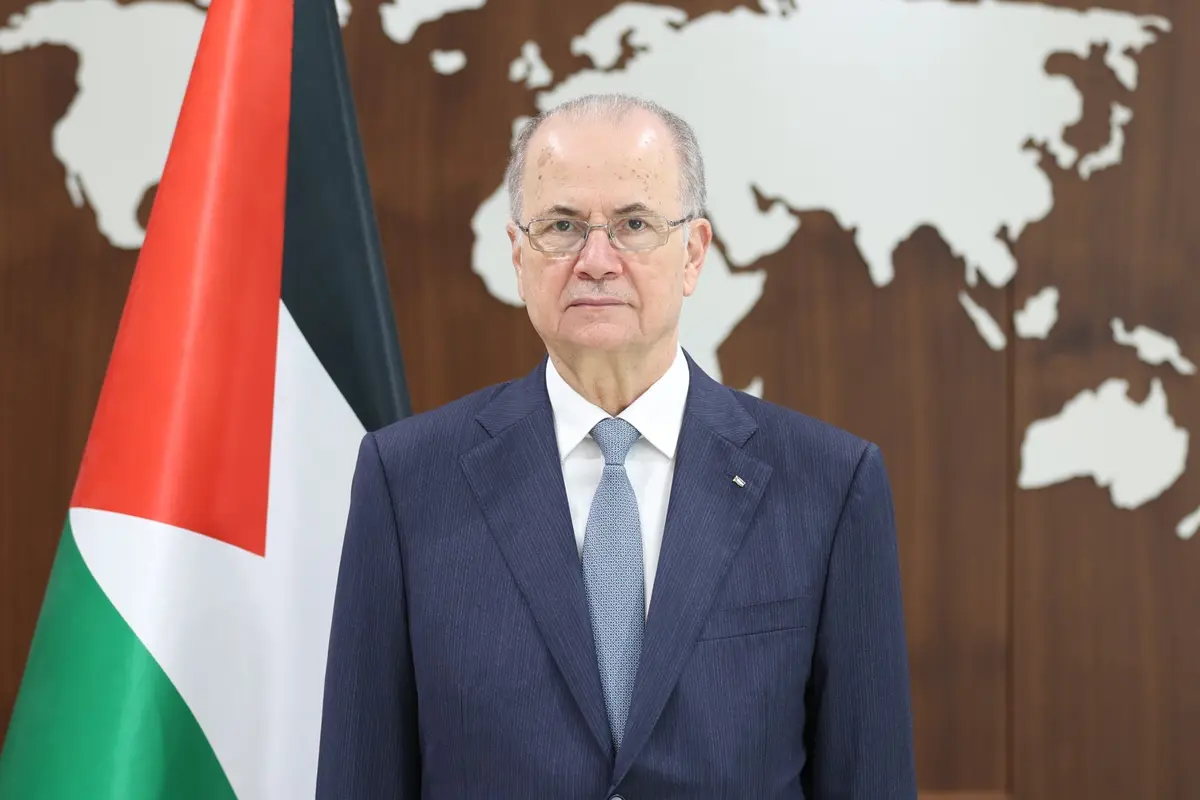
PM Mustafa discusses with Guterres steps to implement UN resolutions to stop aggression and end occupation

Prime Minister and Minister of Foreign Affairs Mohamed Mustafa met today, Thursday, with the Secretary-General of the United Nations, Antonio Guterres, on the sidelines of the 79th session of the United Nations General Assembly, in New York.


The Prime Minister briefed the Secretary-General on the latest developments in Palestine and the genocidal war our people are being subjected to in the Gaza Strip, and the escalation by the Israeli occupation army and its settlers in the West Bank, including Jerusalem.


Mustafa discussed with the Secretary-General the practical steps to implement and apply the Security Council resolutions to stop the aggression against our people, and the UN General Assembly resolution based on the advisory opinion issued by the International Court of Justice, in order to end the occupation and embody the establishment of the Palestinian state.


The Prime Minister stressed the Palestinian efforts to obtain full membership in the United Nations, and to gain more recognition of the State of Palestine, leading to ending the occupation and embodying the establishment of the Palestinian state, and for our people to obtain their legitimate rights guaranteed by international charters, resolutions and legitimacy.

PALESTINE

Thu 26 Sep 2024 7:42 pm - Jerusalem Time

Abbas at the UN: Israel is not worthy of UN membership

Palestinian President Mahmoud Abbas said Thursday that Israel is "not worthy" of membership in the United Nations, stressing that the Hebrew state has defied the international organization's resolutions related to the conflict.


Abbas said from the podium of the United Nations General Assembly, “Israel, which refuses to implement the United Nations resolutions, is not worthy of membership in this international organization.”


The Palestinian president urged an end to the war in the Gaza Strip, saying that Israel had almost completely destroyed the Strip and that it was no longer fit for life.


"This madness cannot continue. The entire world bears responsibility for what is happening to our people," he told the 193-member General Assembly.


The Palestinian president presented a vision to end the war in Gaza, which includes extending the authority of the Palestine Liberation Organization over all Palestinian territories, including Gaza.


Abbas demanded that the Palestinian authorities exercise their full authority in Gaza, including at the Rafah crossing, as part of a comprehensive plan.


Below is the text of the speech:


May the peace, blessings, and mercy of God be upon you


I come to you today while my people have been subjected for almost a year now to one of the most heinous crimes of our time, a comprehensive war crime and genocide waged by Israel, the occupying state. This crime has so far claimed the lives of more than 40,000 martyrs, with thousands still under the rubble. More than 100,000 others have been wounded, hundreds of entire Palestinian families have been wiped out and erased from the civil registry, and thousands have lost their lives due to the spread of diseases and epidemics and the lack of medicine and water. In addition, more than two million Palestinians have been displaced from their homes many times in search of safety from the systematic killings carried out by the Israeli occupation army. As the war of aggression continues, dozens of our afflicted people in the Gaza Strip, the West Bank and Jerusalem continue to be killed every day, and many times more are wounded.


I am not here to respond to the lies of the Israeli Prime Minister, in his speech before the US Congress last July, when he claimed that his army does not kill innocent civilians in Gaza. For God’s sake, who is the one who killed more than 15,000 children and the same number of women and elderly from our people and is still killing? Answer me!


Stop this crime, stop it now. Stop killing children and women. Stop the war of extermination. Stop sending weapons to Israel. This madness cannot continue. The entire world bears responsibility for what is happening to our people in Gaza, as well as in the West Bank, which is being subjected to continuous daily Israeli aggression, a fierce and barbaric settlement campaign, and terrorism by settler gangs sponsored and supported by the Israeli government and the occupation army, which is demolishing hundreds of homes in the land of the State of Palestine, in addition to what Jerusalem, our eternal capital, is being subjected to, from Judaization campaigns and aggression against the city, its holy sites and landmarks, in order to change the historical and legal status there.


Recently, an extremist terrorist Israeli minister came out and called for building a synagogue in Al-Aqsa Mosque. This reckless minister and others like him who want to ignite a religious war that will burn everything must be condemned and stopped. Al-Aqsa Mosque and its surroundings, ladies and gentlemen, are the exclusive property of Muslims, as was stipulated by the League of Nations in 1930, and we will not accept anything less, no matter the circumstances.


Ladies and gentlemen,


We have repeatedly warned before your esteemed assembly that the situation in the occupied Palestinian territory threatens to explode, and this explosion occurred on October 7 of last year and what followed.


Since the first day, I stood up and stressed the need for an immediate cessation of the war. I also stressed our rejection of targeting civilians, whoever they may be. I demanded the release of prisoners and detainees from both sides, and an immediate sitting at the negotiating table to implement the two-state solution on the basis of international legitimacy resolutions.


Instead of listening to the voice of reason, the Israeli government exploited what happened to launch a comprehensive war of genocide on the Gaza Strip, and committed and continues to commit war crimes recognized by the international community. Today, Israel is launching another aggression against the brotherly Lebanese people, and we condemn this aggression and demand that it be stopped immediately.


Israel has reoccupied the entire Gaza Strip and almost completely destroyed it, rendering it uninhabitable, after most of the homes, buildings, health and educational facilities, economic establishments, roads, churches, mosques, water and electricity stations, wastewater treatment plants, and others were destroyed. If Israel thinks that it will escape accountability and punishment for these crimes, it is mistaken. The international community must immediately begin imposing sanctions on it. The massacres, crimes, and genocide that Israel has committed against our people since its establishment until today will not go unpunished, and will not be forgotten, for no right is lost if someone demands it.


Despite our repeated and urgent demands, the world has not succeeded in forcing Israel, the rogue state, to stop its genocidal war and war crimes against innocent civilians. We regret that the US administration has three times blocked Security Council draft resolutions calling on Israel to cease fire by using its veto, and on top of that, it has provided it with deadly weapons that have killed thousands of innocent children, women and elderly people, which has encouraged Israel to continue its aggression.


This is the same United States that was the only member of the UN Security Council that voted against granting the State of Palestine full membership in the United Nations. I do not understand how the United States insists on standing against our people, and insists on depriving them of their legitimate rights to freedom and independence.


Ladies and gentlemen,


Israel, which refuses to implement the resolutions of the United Nations, is not worthy of membership in this international organization. Israel, whose representative in this international organization says that this United Nations building, in which we are now, must be removed from the ground, is not worthy of being a member of your organization. It has, from the beginning, not fulfilled the conditions for membership. It was required to implement General Assembly Resolutions 181 and 194 as a condition for accepting its membership, and it pledged to do so in writing but did not do so. Therefore, I call upon your esteemed Assembly to freeze Israel’s membership in the General Assembly until it fulfills its obligations and the conditions for accepting its membership, and implements all the resolutions of the United Nations and its bodies. We will submit a request to the President of the United Nations General Assembly in this regard.


I take this opportunity today to commend the member states of the United Nations, which voted by a majority of more than two-thirds in favor of the draft resolution submitted by the State of Palestine, supported by a large number of friendly and sisterly countries, to adopt the historic advisory opinion issued on 19/7/2024 by the International Court of Justice to end the illegal Israeli occupation of the State of Palestine within twelve months, including the immediate cessation of annexation and settlement activities, the dismantling of existing settlements, the removal of settlers from the Palestinian territories, the return of lands and resources confiscated since 1967, redress and compensation for the damages suffered by the Palestinians as a result of the illegal policies and practices of the occupation, and many other issues mentioned in the Court’s advisory opinion, and obligating Israel to implement.


We count greatly on your decision, which embodies the international will and principles of international law, and on the mechanisms adopted in this regard to ensure implementation.


Ladies and gentlemen,


Today, I also feel grateful as I see this great shift in the positions of the member states of the United Nations, as they support the Palestinian right to obtain an independent state and recognize it, and grant it full membership in this international organization, like the rest of the peoples of the world who yearn for freedom and love peace. On behalf of the Palestinian people, I thank you for these positions in support of truth and justice to achieve peace in our region, and I call on you to implement the provisions of international law, each according to his responsibilities and sovereignty.


I also feel gratitude and appreciation for the protests against the war of extermination on Gaza, and in support of Palestinian rights, that have taken place and are taking place all over the world, including the United States of America and European countries, and for the honorable solidarity activists who come to Palestine risking their lives. In this context, I offer my condolences to the martyred Turkish-American citizen, Aisha Nour, who was killed in cold blood by the occupation army.


I say to them that the Palestinian people will not forget your honorable positions, and we will remember you with pride and honor on the day the occupation ends and our people enjoy freedom and independence.


Ladies and gentlemen,


There has been a lot of talk lately about the day after the end of the war in the Gaza Strip. I take the opportunity today to present to you our vision of what needs to be done immediately and for the day after the war:


First: A comprehensive and permanent ceasefire in the Gaza Strip, and the military attacks and terrorist settler attacks in the West Bank and East Jerusalem.


Second: Bringing in relief aid urgently, regularly, in sufficient quantities and without conditions, and delivering it to all areas of the Gaza Strip.


Third: Complete Israeli withdrawal from the Gaza Strip, rejection of establishing buffer zones or seizing any part of its lands, halting forced displacement procedures inside or outside the Gaza Strip, and the return of the displaced to their areas of residence and providing them with shelter.


Fourth: Protecting UNRWA and humanitarian organizations from Israeli arbitrariness and providing political and material support to them so that they can perform their role and provide their services to Palestinian refugees until they return to their homes.


Fifth: Providing international protection for the Palestinians on the occupied land of their state.


Sixth: The State of Palestine shall assume its responsibilities in the Strip to exercise its full jurisdiction over it, including the border crossings, most notably the Rafah International Crossing between Egypt and Palestine, as part of a comprehensive plan.


Seventh: Within the framework of the comprehensive national reform process, we are rebuilding the infrastructure and state institutions that were destroyed by Israel, reviving the economy, sustainable development, reconstructing the Gaza Strip, and holding the occupying state responsible for that.


Eighth: Extending the authority of the State of Palestine, the Palestinian government, and the Palestine Liberation Organization, the sole legitimate representative of the Palestinian people, over all Palestinian territories in the Gaza Strip, the West Bank, and East Jerusalem, in preparation for holding general presidential and legislative elections there, and forming a Palestinian government, in accordance with the results of these elections.


Ninth: Continue to mobilize the greatest international support for the State of Palestine to obtain full membership in the United Nations as soon as possible.


Tenth: Full implementation of the General Assembly resolution regarding the legal advisory opinion of the International Court of Justice, leading to the end of the occupation within twelve months, as stated in the advisory opinion.


Eleventh: Holding an international peace conference under the supervision of the United Nations within a year to implement the two-state solution, and embody the independence of the Palestinian state on the borders of June 4, 1967, with East Jerusalem as its capital, and the return of Palestinian refugees, on the basis of international law, international legitimacy resolutions, and the Arab Peace Initiative.


Twelve: Adopting international peacekeeping forces by a Security Council resolution between the State of Palestine and Israel, to ensure the security of the two states.


These are the elements of our vision for the day and the day after the war in the State of Palestine in general. I appeal to you to adopt this plan and provide all the necessary capabilities to make it a success.


Ladies and gentlemen,


I announced a few weeks ago that I had decided to head the Palestinian leadership to the Gaza Strip, to be with our people who have been exhausted by the Israeli genocidal war. I appeal to you to support our decision by issuing a UN resolution on this matter and to pressure the occupation government not to obstruct our efforts. I welcome all of you who wish to join us in going to steadfast and patient Gaza to witness the crime committed against it and to contribute to achieving peace and stability.


A salute of respect and appreciation to our heroic people who sacrifice everything precious and dear for the sake of Palestine, in sacrificing Gaza, the steadfast West Bank, Jerusalem the jewel in the crown and the capital of the state, our people in refugee camps and the diaspora, and to our brave prisoners in Israeli prisons, who are today subjected to a blatant violation of their human dignity.


Palestine will be liberated, and our people will continue their lives in the land of their fathers and grandfathers as they have done for more than six thousand years, and will continue their legitimate struggle for independence, and the occupation will inevitably come to an end.


Last May, a New York City hospital fired a Palestinian-American nurse after she described Israel's actions in Gaza as "genocide" during her award acceptance speech.


Israel denies the genocide charges brought against it by South Africa at the International Court of Justice.

ARAB AND WORLD

Thu 26 Sep 2024 6:58 pm - Jerusalem Time

Jhumpa Lahiri Rejects US Award Over Palestinian Keffiyeh Ban

Renowned Indian-American author Jhumpa Lahiri has refused to accept an award from the Noguchi Museum in New York City after the museum fired three employees for wearing keffiyeh shawls - a garment long associated with solidarity with Palestine.


“Jhumpa Lahiri has chosen to withdraw her acceptance of the 2024 Isamu Noguchi Prize in response to our updated dress code policy,” the museum said in an emailed statement on Wednesday (September 25), reported by The New York Times.


"We respect her point of view and understand that this policy may or may not be in line with everyone's views," he added. Lahiri won the Pulitzer Prize in 2000 for her book "Interpreter of Maladies."


According to the New York Times, last August, the museum announced a policy prohibiting employees from wearing clothing or accessories that express “political messages, slogans or symbols.”


It is noteworthy that demonstrators supporting Gaza wear the Palestinian keffiyeh around the world, as a symbol of Palestinian rights. The most prominent of these celebrities was the late anti-apartheid leader in South Africa, Nelson Mandela, on several occasions.


Last November, three Palestinian students were shot in Vermont for wearing the Palestinian keffiyeh.


Others in the United States have lost their jobs because of their stance on Israel's war on Gaza.


Last May, a New York City hospital fired a Palestinian-American nurse after she described Israel's actions in Gaza as "genocide" during her award acceptance speech.


Israel denies the genocide charges brought against it by South Africa at the International Court of Justice.

OPINIONS

Thu 26 Sep 2024 5:43 pm - Jerusalem Time

Why Everything Is Suddenly Spiraling for Israel

New York  Times - "Al-Quds" dot com

New York Times - "Al-Quds" dot com

Opinion Writer

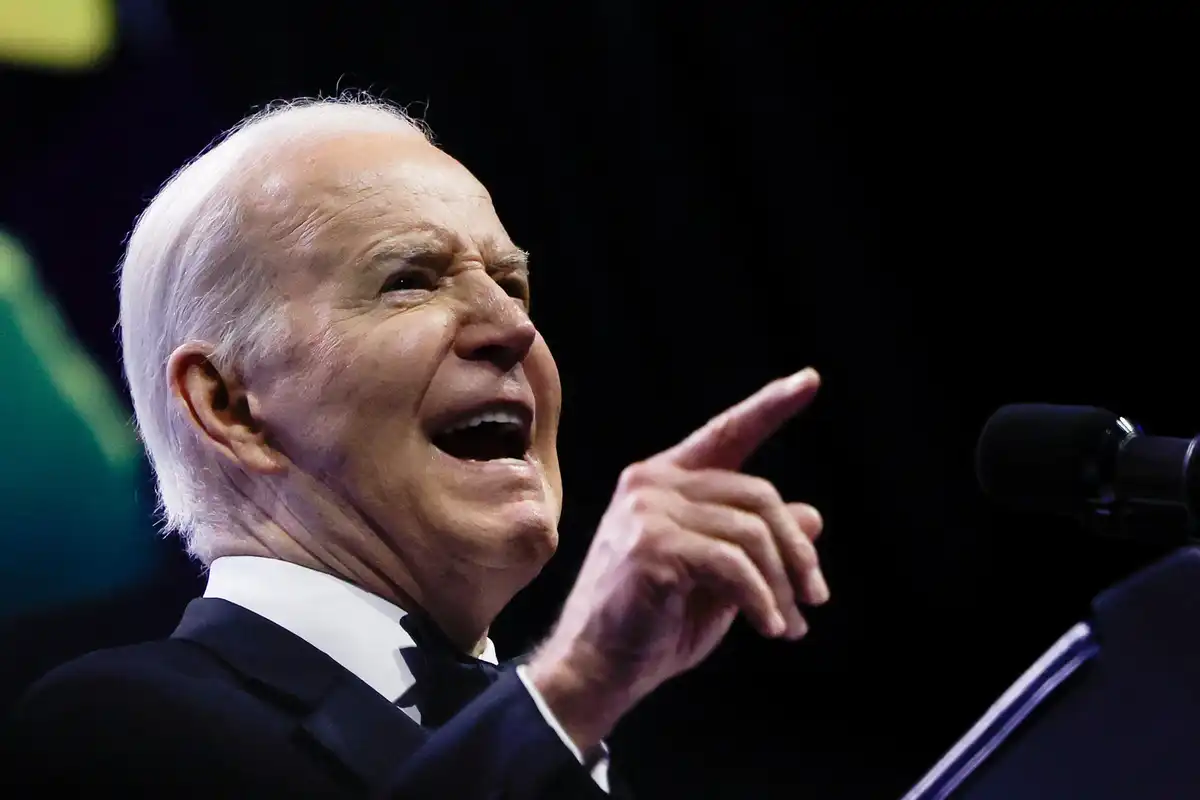
In his article today in NYT, Tom Friedman called Biden to invite Ehud Olmert and Dr. Nasser Alkidwa to the White House on Thursday.


By Thomas L. Friedman


What would you do?

There is no other question that Israel’s government has posed to the world more often since Hamas invaded Israel on Oct. 7 and Hezbollah attacked Israel on Oct. 8.

What would your country do if terrorists crossed your western border and killed, maimed, kidnapped or sexually abused hundreds of Israelis they encountered and the next day their Hezbollah allies sent rockets over your northern border, driving away thousands of civilians — all cheered on by Iran?

What would you do?

It is a powerful and relevant question and one that Israel’s critics often dodge.

But they aren’t the only ones dodging it.

This Israeli government, led by Benjamin Netanyahu, wants you and me and every Israeli and all of Israel’s friends — and even enemies — to believe that there was always only one right answer to that question: Invade Gaza, hunt down every Hamas leader and fighter, kill every last one and not be deterred by the civilian casualties, then pummel Hezbollah in Lebanon — and do both without spending time planning an exit strategy for either.

I’ve argued from Day 1 that it was a trap, a trap I’m sorry to say the Biden administration was not firm enough in stopping Israel from falling into and not firm enough in insisting on a better road, a road not taken.

This is no time to be pulling punches. The Jewish state of Israel is in grave, grave danger today. And the danger comes from both Iran and the current Israeli ruling coalition.

You see, I have never had any illusions about the macro reasons this war happened. It is the unfolding of an Iranian grand strategy to slowly destroy the Jewish state, weaken America’s Arab allies and undermine U.S. influence in the region — while deterring Israel from ever attacking Iran’s nuclear facilities — by using Iranian proxies to bleed Israel to death. That is the macro story.

The immediate trigger and goal of the war was a Hamas-Iranian interest to scuttle the Biden team’s diplomatic initiative to forge Israel, the Palestinian Authority and Saudi Arabia into a ring of peace.

The Iranian-Hamas counterstrategy was to ignite a ring of fire around Israel, using Hamas, Hezbollah, the Houthis, pro-Iranian Shiite militias in Iraq and West Bank militants armed by Iran with weapons smuggled through Jordan. The Iranian strategy is exquisite from Tehran’s point of view: Destroy Israel by sacrificing as many Palestinians and Lebanese as necessary but never risk a single Iranian life. The Iranians are ready to die to the last Lebanese, the last Palestinian, the last Syrian and the last Yemeni to eliminate Israel (and distract the world from the Iranian regime’s abuses of its own people and imperialist control over Lebanon, Yemen, Iraq and Syria).


The problem for Israelis and the Jewish people is that while the Netanyahu government was right in its diagnosis that this was a war of annihilation, it refused to conduct it in the only way that could hope to bring success — because that strategy ran counter to the political interests of the prime minister and the messianic ideological interests of his coalition.

Israel faces an existential threat from the outside, and its prime minister and his allies have been prioritizing their own political and ideological interests ahead of that. They have even lately resurrected their judicial coup attempt to crush the Israeli Supreme Court — in the middle of a war of national survival while hostages rot in Gaza. It is one of the most shameful episodes in Jewish history, and shame on the AIPAC pro-Israel lobby in Washington for not speaking out against it.

To counter this Iranian threat network, Israel needed four things: a lot of time, because this ring of fire could not be extinguished overnight; a lot of resources, particularly from the United States and other Western allies; a lot of Arab and European allies, because Israel cannot fight a war of attrition alone; and, perhaps most crucial of all, a lot of legitimacy.

President Biden and his team offered Israel a road map for that counterstrategy but, sadly, they just never had the steel to impose it on Netanyahu with a combination of leverage, diplomacy and ultimatums. Such a road map would have involved persuading America’s Arab allies to fundamentally reform the Palestinian Authority in the West Bank with new, credible leadership and then getting Israel to agree to open negotiations with that Palestinian Authority leadership on a long-term pathway to a two-state solution.

That would have done the following: 1) Opened the way to isolating and pressuring Hamas to agree to a cease-fire in which Israel gets out of Gaza in return for all the hostages — ending the war there and eliminating Hezbollah’s excuse for attacking Israel from the north. 2) Opened the way for Saudi Arabia to normalize relations with Israel — a devastating blow to Hamas and Iran. 3) Opened the way for the United Arab Emirates to partner with a reformed Palestinian Authority to put troops on the ground in Gaza and do the thing Hamas would hate most — replace it as the governing authority there, backed by hundreds of millions of dollars for rebuilding Gaza, which would probably make it the most popular Palestinian force in Gaza overnight.

Up to now, though, Bibi has turned Biden down (while openly playing footsie with Donald Trump) because the prime minister would have had to break with the right-wing crazies who brought him to power and form a different governing coalition with more moderate parties. Bibi has prioritized his personal political security over Israel’s national security. And for months, he’s been spinning the world and his own people to disguise it.

Netanyahu thought he could just tell the world that Israel was defending the frontier of freedom against Hamas, Hezbollah, the Houthis and Iran and everyone would fall in line behind Israel. What would you do? But the only place in the world that that gets you a standing ovation is in the U.S. Congress.

The rest of the world, particularly the moderate Arab states and the Europeans, told him: Bibi, you don’t have a clean story. You cannot tell the world you are defending the frontier of freedom against Hamas and Hezbollah while expanding — increasingly violently — Israel’s settler occupation over Palestinians in the West Bank. You don’t have a clean story.

So the Israeli prime minister opted instead for the Netanyahu doctrine: Fight alone on three fronts — Gaza, Lebanon and the West Bank — with no plan for the morning after anywhere. In doing so, he rejected the Biden strategy: Embed Israel in a U.S.-Israeli-moderate-Arab coalition that would isolate Iran and its proxies, provide some hope that maybe one day we’d see two states for two indigenous peoples between the Jordan River and the Mediterranean and make clear to the world that the source of trouble in the region is not the Party of God in Israel but the Parties of God in Lebanon, Yemen and Iran.

Netanyahu’s strategy is a disaster. As a veteran U.S. military commander who has observed close up Israel’s war strategy in Gaza told me privately, anyone with two eyes in his head knows that the only way to way to defeat Hamas is a strategy of “clear, hold and build”: Destroy the enemy, hold the territory and then build an alternative local, legitimate Palestinian governing authority. Israel’s strategy in Gaza, he said, has been: “Clear, leave, come back, clear again the same place, leave again, come back and clear again.”

It is a textbook example of how to transform Hamas, he added, “from a quasi-military to a classic insurgency.” Did you read the lead article on Haaretz online the day of the remarkable Israeli pager attack on Hezbollah? If you did, you’d have found four young Israeli soldiers killed that day battling Hamas in Gaza staring back at you — almost a year after the war there started. Almost daily now you also read of large numbers of Gazan civilians killed in an Israeli operation against a few Hamas fighters living among them. Meanwhile, no one is governing Gaza.

Yes, yes, I know the criticism: You are delusional. What Israeli or Palestinian leader would come together on such a plan? Well, two friends of mine have done just that: the former Israeli prime minister Ehud Olmert and the former Palestinian Authority foreign minister Nasser al-Qudwa. You can check out their plan for a two-state solution right here. Biden should invite them both to the Oval Office on Thursday to embrace their project, which is totally in line with U.S. interests.

I repeat: Israel is in terrible danger. It is fighting the most just war in its history — responding to the brutal, unprovoked murder and abduction of women and children and grandparents by Hamas — and yet today Israel is more of a pariah state than ever.

Why? Because when you fight a war like this with no political horizon for this long — one that denies any possibility for more-moderate Palestinians to govern Gaza — the Israeli military operation there just starts to look like endless killing for killing’s sake. That is just what Hamas, Hezbollah and Iran want.

There was always a road not taken. Do I know for sure it would work? Of course not. The only thing I know for sure is that the road that Netanyahu has Israel locked on now is a road to ruin, encircled by a ring of fire. Stay that course, and Israel’s most talented people will start to leave, and the Israel you knew will be gone forever.

ARAB AND WORLD

Thu 26 Sep 2024 5:08 pm - Jerusalem Time

Ben Gvir threatens Netanyahu if aggression on Lebanon stops

The Minister of National Security in the Israeli occupation government, Itamar Ben-Gvir, threatened his Prime Minister, Benjamin Netanyahu, with resignation if the aggression against Lebanon stopped.


Hebrew media quoted Ben Gvir as telling Netanyahu: "If a temporary ceasefire is signed with Lebanon, we will not vote with the coalition."


"If the temporary ceasefire becomes permanent, we will resign from the government," Ben-Gvir said.


The Israeli occupation army continues its violent aggression on several areas in Lebanon since last Monday, amidst continued violent shelling and assassinations.

PALESTINE

Thu 26 Sep 2024 4:29 pm - Jerusalem Time

Human Rights Watch calls for halt to arms sales to Israel

The international human rights organization Human Rights Watch called on Thursday to stop arms sales to Israel, due to the current aggression it is waging against Lebanon.


The organization said in a statement that the ongoing Israeli raids on Lebanon since Monday "killed hundreds and wounded thousands, and exposed civilians across the country to the risk of serious harm."


Since Monday morning, the Israeli army has launched the "most violent and extensive" attack on Lebanon, resulting in 640 martyrs, including children and women, in addition to 2,505 wounded and 70,000 officially registered displaced persons.


The organization called on "Israel's main allies to suspend military aid and arms sales to it, given the real risk that they will be used to commit serious violations."


Although arms sales have declined slightly, they continue, even as Israel is being tried internationally for genocide in Gaza.


The organization called on the United Nations to "urgently open an international investigation into the recent hostilities."


She added: "UN member states must support this investigation, and ensure that investigators are dispatched immediately to gather information and present their findings on violations of international law and their recommendations on accountability."


The statement quoted the organization's Middle East and North Africa Director, Lama Fakih, as saying: "The Israeli army killed hundreds of people in Lebanon in one day, thousands were injured and forced to flee their homes, and hundreds of homes, businesses and farms were destroyed."

PALESTINE

Thu 26 Sep 2024 4:05 pm - Jerusalem Time

The number of killed from Israeli occupation's bombing of a school in Jabalia rises to 15

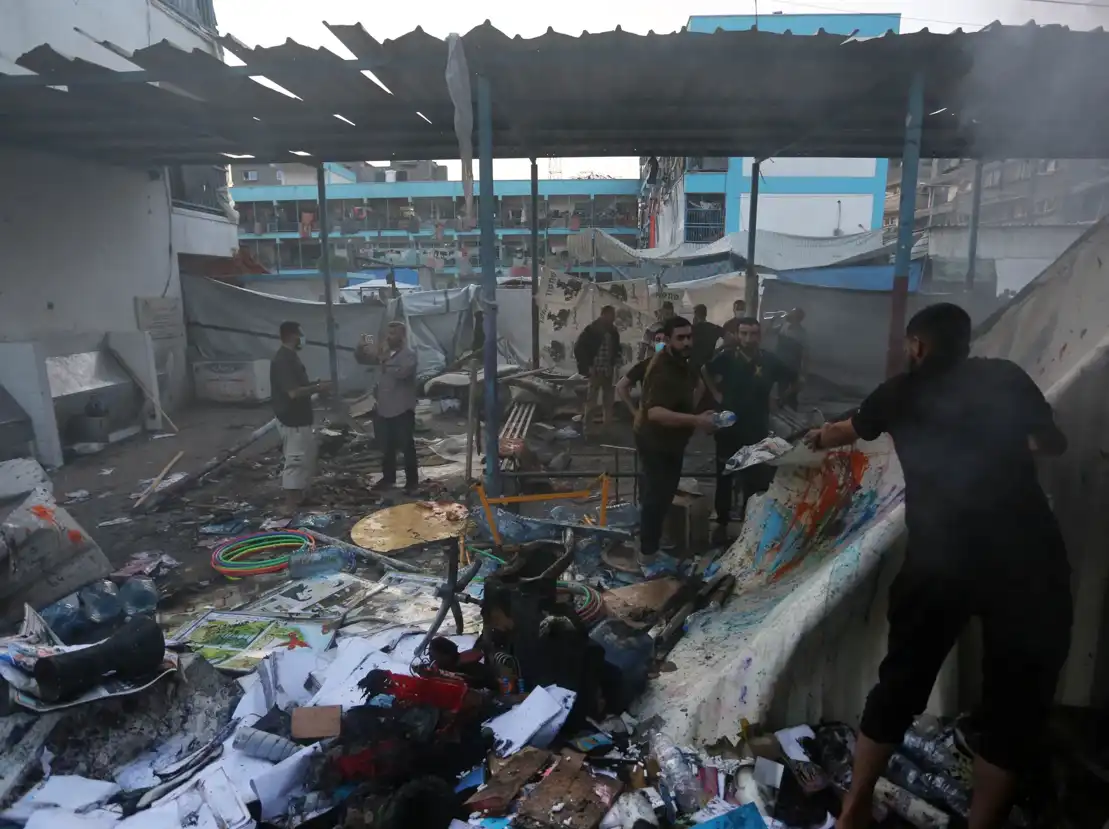
The number of dead from the Israeli occupation's bombing of a school sheltering displaced people in Jabalia, central Gaza Strip, on Thursday afternoon, rose to 15 martyrs, and the number is expected to rise.


Medical sources reported that 15 citizens, including children and women, were killed and dozens were injured, including serious cases, as a result of the occupation targeting Al-Faluja School in Jabalia camp with missile shelling.


In a preliminary toll, the number of killed since the start of the occupation's aggression on the Gaza Strip on October 7, 2023, has risen to 41,534, in addition to 96,092 wounded, the majority of whom are children and women, while thousands of missing people are still under the rubble.

ARAB AND WORLD

Thu 26 Sep 2024 2:39 pm - Jerusalem Time

Qatar: It is too early to talk about an official mediation process between Israel and Hezbollah

Qatari Foreign Ministry spokesman Majed Al-Ansar said there was "no direct link" between these ceasefire talks in the Gaza Strip and those aimed at halting the Israeli escalation in Lebanon, stressing that it was "too early" to talk about an "official mediation track" in the talks between Israel and Hezbollah.


"I am not aware of a direct link, but it is clear that the two mediations are very much intertwined when you are talking about the same parties that are mostly involved in this" diplomatic track, Al-Ansari said at a press conference in the Qatari capital, Doha, on Thursday.


Israeli attacks on Lebanon have escalated in recent days after months of efforts led by the United States, Qatar and Egypt to reach a truce between Israel and Hamas in the war that Israel has been waging on the Gaza Strip for about a year failed.


"We are working with our partners to ensure an immediate ceasefire in Lebanon and to work to get back on track after the current escalation," Ansari said. "We are also continuing our efforts on the other track, the talks on Gaza."


"I think there is a general feeling in the international community that everyone is working together to ensure a ceasefire in Lebanon, and I don't think we can now say that there is a formal path to mediation, but rather that all channels of communication remain open," he added.


Al-Ansari said it was "too early" to describe an "official mediation track" in the talks between Israel and Hezbollah.

Al-Ansari's statements came hours after several countries, including the United States, France and Saudi Arabia, called for a 21-day ceasefire between Israel and Hezbollah, after the recent escalation raised fears of a comprehensive war in the Middle East.


The attacks escalated dramatically last week, when an explosion of communications equipment used by Hezbollah killed 39 people and wounded about 3,000. The party blamed Israel for the blasts.


Israel then carried out an air strike on Beirut's southern suburbs, killing Ibrahim Aqil, commander of Hezbollah's elite Radwan Force, along with a number of other Hezbollah members and dozens of civilians.

Since Monday, Israel has been carrying out intensive air strikes on Lebanon, killing hundreds. Hezbollah responded by firing a barrage of rockets towards Israel, and claimed responsibility for firing a ballistic missile at Tel Aviv.

Diplomats have repeatedly said they believe a ceasefire in Gaza would ease regional tensions. Hezbollah has insisted that its attacks on Israel over the past year are in support of Hamas and the Gaza Strip, as do the Houthis in Yemen.


PALESTINE

Thu 26 Sep 2024 2:15 pm - Jerusalem Time

Three young Palestinians injured and others arrested during Israeli storming of the town of Dura

Three young men were injured by Israeli occupation forces' bullets today, Thursday, and a number of citizens were arrested, in addition to raiding dozens of homes, during the ongoing storming of the town of Dura, southwest of Hebron.


According to local sources, three young men were injured by live bullets in the limbs and were subsequently transferred to the hospital, after the occupation soldiers fired live bullets at a number of citizens in the vicinity of their homes in the Krisa area west of the town, and in the center of it near the Dura municipality.


Activist Shahd Rajoub also sustained minor bruises after being beaten by occupation soldiers while covering the raid in the Karisa area. She was pursued and the memory card of the camera she used to document the aggression was seized.

He pointed out that the occupation forces raided dozens of homes and arrested a number of citizens, after abusing them and subjecting them to field investigation.

PALESTINE

Thu 26 Sep 2024 1:32 pm - Jerusalem Time

The number of Palestinian female prisoners held administratively in Israeli prisons has risen to (27)

The Prisoners Club said that in the context of the escalation of the crime of administrative detention and the ongoing arrest campaigns, the number of female prisoners administratively detained in Israeli occupation prisons has risen to (27) female prisoners, after three female prisoners from the Ramallah Governorate were transferred to administrative detention.


The Prisoners Club explained that the three female prisoners are (Abla Saadat, wife of the prisoner leader Ahmed Saadat, Tahrir Jaber, and student Duaa Al-Qadi). The occupation issued an administrative order against Saadat and Jaber for a period of 4 months, and the student Al-Qadi for a period of 3 months. They have been detained since September 17.


The Prisoners Club added that the number of female prisoners in the Israeli occupation prisons has reached (97) female prisoners (female prisoners whose identities are known), and the majority of them are in the (Damon) prison, including a pregnant female prisoner, and three female prisoners from Gaza, noting that this data for the number of female prisoners in the occupation prisons does not include all female prisoners from Gaza, specifically those who are detained inside the camps affiliated with the occupation army, and the occupation authorities continue to implement the crime of enforced disappearance against them.


It is worth mentioning that the number of women arrested since the beginning of the war of extermination has reached more than (415), and this figure includes women who were arrested in the West Bank, including Jerusalem, as well as women from the territories occupied in 1948, while there is no clear estimate of the number of women arrested from Gaza.


It is noteworthy that the occupation continues to escalate the crime of administrative detention, which constituted one of the most prominent current transformations, as a result of the unprecedented increase in their numbers, as the number of administrative detainees reached, until the beginning of this month, no less than (3323) detainees, and all of them are subject to sham and formal trials under the pretext of the existence of a (secret file), noting that hundreds of administrative detainees are patients and the vast majority of them are former prisoners who spent years in Israeli occupation prisons.

PALESTINE

Thu 26 Sep 2024 12:37 pm - Jerusalem Time

Israel demolishes two residential facilities and burns a tent in Salfit and the Jordan Valley

Today, Thursday, the Israeli occupation forces demolished two residential facilities in the Al-Burj and Al-Aqaba areas in the northern Jordan Valley.


According to local sources, these forces carried out the demolition of a residential facility made of blocks and insulating panels with an area of 100 square meters, owned by citizen Khalil Radi Khalil Zawahra, in addition to destroying facilities and property belonging to the residence, including a water tank and solar panels.


The occupation forces also began demolishing a cement house under construction, owned by citizen Hamed Jaber, in the village of Aqaba, east of Tubas.


In Salfit, the occupation forces raided the area where the shepherds are located, west of the village of Rafat, which belongs to citizens Mufid and Yasser Qasim Ayyash, burned a tent, destroyed the entire site, and prevented them from being present in the place.

ARAB AND WORLD

Thu 26 Sep 2024 12:13 pm - Jerusalem Time

Queen Rania: Israel has become bolder to break more legal and moral boundaries

Queen Rania Al Abdullah said that Israel has become more daring to break more legal and moral boundaries, explaining that impunity never corrects itself.


“What we are seeing here goes beyond complacency,” she added. “When a red line is not really a red line, it becomes a green light and becomes permission, and the Palestinians are paying the ultimate price for this ‘permission’ to break all norms.”


During an interview on the American ABC News network conducted the day before yesterday by the broadcaster Lindsay Davis, the Queen explained that "this war is unprecedented in its scope and brutality. Gaza, which is one-third the size of New York, has been hit with more explosives than were used on Dresden, Hamburg and London combined during the entire Second World War."


“Gaza is breaking all records in the worst possible way: the highest rate of hunger, the highest number of children with amputated limbs, and the highest level of destruction of civilian infrastructure,” she said.


“The world operates on two different approaches,” Her Majesty noted. “Israeli suffering is acknowledged, while Palestinian pain is normalized, even justified. It sometimes seems as if Israel is the exception to every rule that governs our world, and the Palestinians are the exception to universal human rights.”


“Is it acceptable to use starvation as a weapon of war? Is it acceptable to target aid convoys, to target shelters housing civilians, to impose collective punishment? What does this mean for our world today? If the rule of law is undermined, can any other state really be held accountable for its actions?” Her Majesty asked.


She added: "Now we see another dangerous escalation in Lebanon. The risk of regional escalation has now reached a dangerous level. Yesterday was the bloodiest day, with about 500 Lebanese killed. Last year, 600 people were killed."


“No one will gain from such an escalation. No one will teach anyone a lesson,” she said, adding that “the only real way to achieve security in the region, for the people of Israel, and for Jews around the world who are sometimes unfairly held responsible for the actions of this government, is through a just and comprehensive peace agreement.”


It is time for the international community to act, she said, noting that "expressions of concern or even calls for a ceasefire are meaningless as long as weapons that kill civilians continue to be supplied."


Queen Rania stressed that "the United States has military, economic and diplomatic influence that it can use with Israel, and that it must start using it, because the risks of escalation are very high now."


She pointed out that the root cause of this conflict did not begin on October 7, and explained at the end of the interview that the failure of peace talks in the past was due to the lack of any effort to implement international law and the failure to set costs or consequences to deter the occupation, "so Israel felt empowered and built more settlements, and seized more land."

PALESTINE

Thu 26 Sep 2024 12:11 pm - Jerusalem Time

West Bank: Israeli forces leave behind massive infrastructure destruction

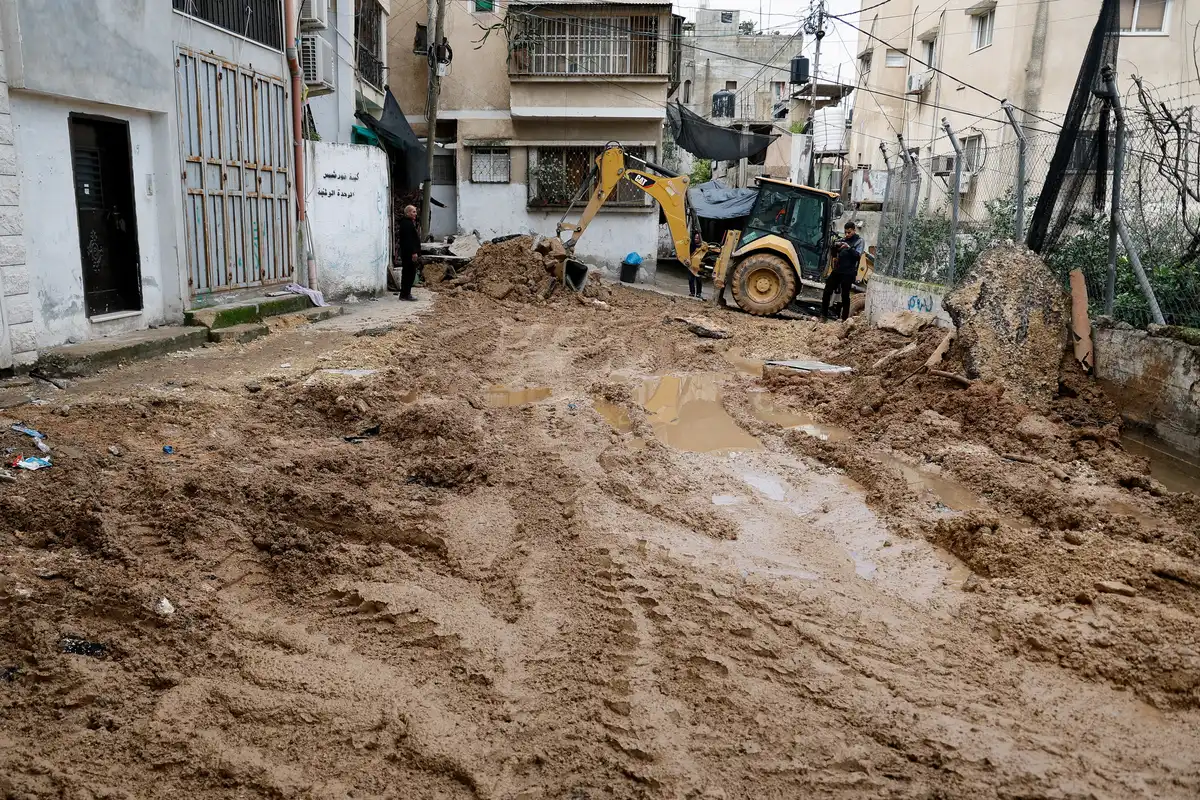
The Israeli occupation army withdrew, at dawn on Thursday, from the city of Jenin and its camp, after an aggression that lasted for about 15 hours, leaving behind massive destruction to the infrastructure.


The Director of Public Relations in Jenin Municipality, Bashir Matahin, told WAFA that the occupation bulldozers had re-destroyed what had been rehabilitated during the penultimate incursion into the city and camp, which lasted 10 days.


He explained that the occupation bulldozers destroyed the entrance to the eastern neighborhood, Al-Bayader roundabout, the Al-Madaris Street area, the entrances to Jenin camp, the Al-Hisan roundabout area, Al-Hadaf, Al-Awda roundabout, Al-Naseem roundabout, Al-Jabriyat Street, and the eastern housing street, which led to the destruction of water lines and sewage networks, and the power outage in the targeted areas.


Matahen pointed out that the occupation forces destroyed the main water line leading to Jenin Governmental Hospital, which needs more than 60 cups of water daily, noting that the municipality crews will provide the hospital with water tanks so that they can repair the line.


He pointed out that the occupation deliberately destroyed the streets in the eastern neighborhood in the area of Khalid bin Al-Walid Mosque Street, buried the entrances to the houses with dirt, dug the street to a depth of more than a meter, and destroyed the walls of the houses and the cemetery of the eastern neighborhood, pointing out that the majority of the areas it destroyed had been rehabilitated by the municipality and the lines repaired after the end of the last aggression.


In turn, the head of the Popular Committee in Jenin Camp, Major General Muhammad Al-Sabbagh, confirmed that the occupation had re-destroyed the infrastructure in several streets inside the camp, and destroyed the main water lines feeding the camp, which led to its being cut off from citizens’ homes.


He pointed out that the occupation stormed dozens of homes inside the camp and destroyed their contents, and also blew up the home of the young man Qais Al-Saadi, and conducted a field investigation with the young men and residents inside the homes.


He stressed that the repeated raids on the city of Jenin and its camp, and the destruction of the infrastructure, aim to displace the citizens from the camp, and create an unlivable environment in it, but their determination is high and they are steadfast in their land.


It is noteworthy that, in conjunction with the occupation's storming of the city of Jenin and its camp, it carried out several raids in the villages and towns of the governorate, including Anza, Yamoun, and Burqin, which resulted in the martyrdom of a female citizen and the injury of four others in Anza, and the arrest of a young man, in addition to the arrest of another young man in the town of Yamoun.

PALESTINE

Thu 26 Sep 2024 11:53 am - Jerusalem Time

A young Palestinian was injured by Israeli forces' bullets, south of Qalqilya

A young man was shot by Israeli occupation forces today, Thursday, in the village of Habla, south of Qalqilya.


Local sources said that a young man was injured by live bullets while he was near the racist separation and expansion wall in the village of Habla, and was transferred to Darwish Nazzal Governmental Hospital in the city of Qalqilya.

PALESTINE

Thu 26 Sep 2024 11:02 am - Jerusalem Time

Israeli occupation destroyed 5,000 tourist facilities in Gaza, and there was a sharp decline in tourism activity in the West Bank

A joint report by the Central Bureau of Statistics and the Ministry of Tourism, issued today, Thursday, showed that the Israeli occupation destroyed about 5,000 tourist facilities in the Gaza Strip since the beginning of the aggression on October 7, while West Bank hotels witnessed a sharp decline in the number of guests during the first half of this year.


According to the estimates of the "Statistics" and Tourism", the systematic destruction of the Israeli aggression on the Gaza Strip has caused the destruction of most tourist facilities, either completely or partially, as about 4992 facilities operating in the tourism sector were destroyed, including 3450 facilities in the restaurant and beverage business, which constitute 69.1% of the tourism facilities in the Gaza Strip, 921 facilities in creative activities, arts and other entertainment activities, which constitute 18.4% of the tourism facilities, 182 facilities in the manufacture and sale of handicrafts and souvenirs, and 173 facilities in the hotel, accommodation and similar facilities activities.


According to the report issued on the occasion of World Tourism Day, the Israeli aggression also caused 15,265 workers in the tourism sector to lose their jobs, including 10,887 workers in restaurant and beverage activities, constituting 71.3% of workers in tourism activities in the Gaza Strip, 2,277 in creative activities, arts and other entertainment activities, constituting 14.9% of workers in tourism activities, and 964 workers in hotel, accommodation and similar facilities activities.


In the West Bank, the report said that the number of hotel guests during the first half of 2024 witnessed a sharp decline of 84.2% compared to the same period of the previous year, as the number of hotel guests in the West Bank reached 59.8 thousand guests who stayed about 138.9 thousand nights.


Ramallah and Al-Bireh Governorate received the largest number of guests, at 26% of the total number of hotel guests, followed by Jericho and the Jordan Valley Governorate at 22.3%, then Nablus Governorate at 22.0%, then Bethlehem Governorate at 10.3%.


It is worth noting that 48% of hotel guests are Palestinian expatriates residing in the 1948 territories, followed by local guests at 35% of the total guests, while the remaining nationalities constituted 17%.


The data indicated that about 464 thousand visits were made by incoming visitors (single-day visitors) to tourist sites in the West Bank during the first half of 2024, compared to 1.921 million in the first half of 2023, a decrease of 75.8%, including 417 thousand visits from Palestinians residing in the 1948 territories and 48 thousand visits from visitors from outside Palestine.


The data also indicates that tourist sites in the West Bank during the first half of 2024 witnessed a decline in the movement of local visitors, resulting in more than 1.2 million visits to tourist sites, gardens and various parks, a decrease of 39% compared to the same period in 2023.


The report estimated a 39.7% decrease in the number of workers in tourism activities during the first quarter of 2024 in the West Bank compared to the same period in 2023, as the number of workers in the tourism sector reached 24,000 workers, which constitutes 3.8% of the total workers in the West Bank during the first quarter of 2024.

PALESTINE

Thu 26 Sep 2024 10:52 am - Jerusalem Time

Israeli occupation seizes 8 dunums of land in the Jericho and Jordan Valley Governorate

The Israeli occupation authorities announced today, Thursday, the seizure of 8 dunums of citizens’ land in the village of Fasayil in the Jericho and Jordan Valley Governorate, pursuant to a military order.


The Wall and Settlement Resistance Commission explained that the seizure of the eight dunams aims to add a section of a new security road linking the "Tomer" settlement south of Fasayil in the Jericho Governorate to Road No. 90.


The Authority's statistics indicate that this military order to seize land is the eighth in the current month of September, in a significant escalation in land expropriation operations under the pretext of military and security purposes in the recent period.

OPINIONS

Thu 26 Sep 2024 10:24 am - Jerusalem Time

Initiative or maneuver?

Jerusalem talk

Jerusalem talk

Opinion Writer

After the escalation of the Israeli aggression on Lebanon, and the threat of the Israeli leaders to invade the ground, the United States appeared in cooperation with France in order to formulate new proposals to stop the war, and as usual, Israel exploited this proposal to appear with a face different from the reality of what it is doing in terms of aggression, as the Israeli Prime Minister Netanyahu stated that he gave the green light to the Minister of Strategic Affairs Ron Dermer to lead the window of diplomatic consultations, but Netanyahu's office returned and confirmed that there is a red line that Israel cannot give up, which is the removal of Hezbollah forces to the north of the Litani River, which is the demand and condition that may make the negotiations complicated, and the new proposals by the United States and France aim to stop the aggression on the Gaza Strip and Lebanon, and this is another window that Israel cannot accept, because it is interested in continuing the aggression on the Strip and imposing its military plans there.


The initiative stipulates a temporary ceasefire for 4 weeks in Gaza and Lebanon, intensive negotiations with Hezbollah and Hamas, mediated by the United States and France, to reach a deal within the four weeks, an agreement to return Israeli prisoners from Gaza, release hundreds of Palestinian prisoners, and an agreement to implement Resolution 1701 to remove Hezbollah from the border in the north.


The United States also aims, through this political movement, to prevent Israel from starting a ground attack, for fear of Tehran’s intervention, and thus the war’s scope deepens and may become a regional war, which may ignite a dangerous conflict in the Middle East. Hence, the American president seeks to exert strong pressure to reach a diplomatic solution six and a half weeks before the end of his presidential term. However, the truth that should not be forgotten by anyone is how Washington can lead new efforts aimed at reaching a settlement that ends the escalation in Lebanon while resuming prisoner exchange negotiations between Israel and Hamas, which have failed to do so for nearly a whole year?


Israel is betting on Hezbollah’s refusal to stop the support front in favor of the Gaza Strip, and its condition of stopping the aggression on Gaza in order to stop the firing of rockets on the northern front. Hence, this tactical step that Netanyahu wants, on the grounds that Israel is ready to reach an agreement, is only to grant it legitimacy to continue the escalating aggression that it is waging on Lebanon if Hezbollah’s Secretary-General, Hassan Nasrallah, rejects this initiative, and this is something that is highly likely because Nasrallah wants Gaza first, not second.


Israel has fully prepared in the north and summoned two full army battalions, and the reduced political and security cabinet has authorized Netanyahu and Galant to make decisions regarding the Lebanese front. Hence, the statements of Chief of Staff Herzi Halevi, in which he called on the army to prepare for a ground invasion in southern Lebanon, are clear signals that are very close to being implemented on the ground, given what we are seeing of Israeli preparations on the northern borders of Palestine and Israel’s efforts to achieve the goal of destroying Lebanon, based on the failure of all previous rounds of negotiations, whether in the Gaza Strip or Lebanon. Will the initiative succeed, or will the maneuver begin?


A question that everyone is looking for an answer to, which may not arrive, after learning lessons from what happened before Israel in the negotiations over the Gaza Strip, its procrastination, delays and conditions, which is something that may be repeated in the new negotiations because Israel, under Netanyahu’s leadership, is interested in continuing the conflict in the Middle East without the slightest consideration for the rights, feelings and dignity of the Palestinians and the Lebanese.

OPINIONS

Thu 26 Sep 2024 10:22 am - Jerusalem Time

Could a ceasefire in Gaza give hope to the people of the West Bank?

Alaa Kanaan

Alaa Kanaan

Opinion Writer

Recently, the West Bank has witnessed a significant escalation in Israeli military operations, known as the “Summer Camps” operation targeting areas in the northern West Bank.


Anyone who visits the camps of Tulkarm, Jenin and Tubas will notice destruction operations similar to those that occurred and are occurring in the Gaza Strip, from the destruction of infrastructure, to the total and partial destruction of shops and citizens’ homes.


These military operations not only resulted in human losses, but also caused waves of internal displacement from the camps, as many families were forced to leave their homes and search for places that might be safer.


The suffering of the Palestinians is not limited to this matter only, but it is increased by the Israeli restrictions on the daily movement of Palestinians. For example, my trip from Ramallah to Nablus took longer than traveling from Nablus to Jordan because of the checkpoints, gates and restrictions imposed in the West Bank.


On your way from the northern West Bank to the city of Ramallah, you can notice how the occupation continues to expand its settlements at the expense of the Palestinians, transforming the natural geography into colonies, and even the road signs are in Hebrew, which reinforces the increasing feeling of alienation and separation from the land and that you are walking in a land that is not yours.


This suffering is part of the life of Palestinians in the West Bank, where the Palestinian territories have been torn apart into isolated areas with population centers separated by iron gates, as if they were “cantons.”


The Palestinian economy is also suffering, in addition to the destruction caused by the October 7, 2023 war. Perhaps the most prominent consequence of the war after the destruction of the Gaza Strip is Palestinian unemployment. The disruption of Palestinian workers’ entry to their jobs in the occupied interior has led to an increase in the economic and living deterioration of the Palestinians, which has a direct impact on all segments of the population in the West Bank, from families, men, children, and homes that have been economically and psychologically destroyed, which has led to a significant escalation in domestic violence.


All these developments prompt us to ask: How might the ongoing war in Gaza affect the situation in the West Bank? In light of the ongoing international efforts to achieve a ceasefire, there is no doubt that international pressure is an important tool towards a ceasefire in Gaza. It is not only a humanitarian duty, but also a right for the Palestinians who suffer daily from the consequences of war and cannot live a normal life under these circumstances.


This war does not target just one faction or movement, but rather adds a new chapter of suffering for millions of innocent Palestinians who want nothing but a decent life and hope for a better future.


How long will the Palestinian citizen continue to bear the consequences of the war in Gaza? This war was launched primarily as a result of the escalations. The Palestinians in the West Bank, like the people of the Gaza Strip, face displacement from their homes, the destruction of their livelihoods, and the confiscation of their lands. Therefore, a ceasefire in Gaza represents a necessary step for steadfastness, and the continuation of the war in Gaza represents a direct threat to the safety of the residents of the West Bank, as is the case in Gaza.


OPINIONS

Thu 26 Sep 2024 10:18 am - Jerusalem Time

Who will liberate Palestine?

Bakr Abu Bakr

Bakr Abu Bakr

Opinion Writer

The main idea on which the Palestinian resistance was founded since its modern launch in 1965 was that the resistance or revolution is the vanguard and the introduction for the Arab and Islamic nation to liberate Palestine, meaning that the revolution, with its limited capabilities, can only do so much as fight and struggle, within the framework of reviving and then continuing the spirit of steadfastness, perseverance, and resistance among the Palestinian people, and the main idea in the beginnings is linked to the priority of armed struggle, following the example of other liberation revolutions in which the Palestinian resistance was founded under the leadership of Yasser Arafat in the bosom of their experiences and ideas.


From 1967, when the setback occurred, until 1973, the atmosphere was Arabist under the leadership of President Gamal Abdel Nasser, who dragged the nation towards the necessities of liberation. His successor completed the action with the October 1973 war, with the participation of the Arab nation. Then, what happened since then was a division within the nation between those who believed in military liberation and those who stopped it, convinced of the limits of force, and that the cards of the game were in America’s hands.


The revolution fought a fierce struggle with various Arab countries to establish its vanguard and progress, far from the refusal of most countries to participate directly in the military war. Egypt was boycotted after Camp David in 1979, but the differences in the (steadfastness and confrontation) camp were not related to the necessity of steadfastness and readiness to fight as much as they were related to the dominance of a conflicting Arab regime or regimes or leaderships.


After the signing of the final Camp David Accords, it became clear that destroying Israel militarily without the Egyptian army was very far away to the point of impossibility. Opposing ideas accumulated regarding the necessity of dealing with the current situation to show political realism, where military action sows and political action reaps. From here, the school of compromise emerged in contrast to the school of armed struggle under any circumstances, without paying attention to the major subsequent changes, such as the fall of the global ally (the Soviet Union), the Egyptian army’s withdrawal from the war, and then what happened later in the destruction of the Iraqi army and the Syrian army to narrow the options of the axis of armed struggle, and the space became wider for advocates of historical compromise.


The experience of the complete Arab and international abandonment of the Palestinian resistance in 1982 was clear, as it appeared that no nation had a real connection to the Palestinian issue, and no international (ally) was prepared to fight for you or with you, which is what the regional axis is doing today in the massacre of Palestine, especially in Gaza.


Perhaps the immortal Yasser Arafat understood the imbalanced regional and global equation early on. He was both the general and the politician, so the politician outperformed the general (the military commander), and entered into the adventure of the Madrid talks, then in Oslo, arriving at the interim agreement for 5 years (ending in 1999), so he entered Palestine.


Hardly five years had passed before the peace partner Yitzhak Rabin was killed by the Jewish extremists who rule Israel today. The political bet ended with the second great intifada, and the world appeared dazzled and at the same time distancing itself from the actual support for the Palestinian people, the only one with its resistance, so we entered the area of what has been called peaceful popular resistance since 2005, and the legal, media and diplomatic struggle to this day.


Armed struggle as the only way to liberate Palestine practically required the presence of the entire nation with its great capabilities and unity of peoples and leaderships, capabilities that have been scattered and distributed today, as the Arabs say, “the hands of Sheba are scattered.” In contrast, the Zionist occupation did not comply with international resolutions, nor with justice and right by force after half a victory, as the veteran writer Samir Atallah called it, when he said that in the “1973 war, the Arabs won half of it and lost half of it.” Nor after the peace agreements on the available land of Palestine until today.


The Zionist occupation did not comply with the peace agreements (the interim self-rule agreement, called the Oslo Accords of 1993-1995), due to the growing fascism, Zionist exclusionism and racist religion. The Palestinian dialogue with peaceful popular resistance was the goal of a solution that would lead to the independence of the State of Palestine, but the action did not produce an achievement. No state became independent on the ground, and no authority emerged from the clutches of Zionist control. The coup was within a new old logic, namely the Iranian (axis of resistance and defiance) this time versus the Arab, who had made up his mind. The Palestinians fell between the facts of the ground and the ambitions of the future, or starting from where the first ones started, without realizing the meaning of the American becoming our immediate neighbor on the shores of Haifa, Jaffa and Gaza.


The East, in light of the known endings today of separation and after the massacre of the era in Gaza (2023-2024 AD), is that all Palestinian factions with beginnings or those that came with consequences have realized the limits of the goal of the independence of the State of Palestine on the available land, i.e. the 1967 borders, and no one says otherwise (with the exception of Islamic Jihad).


Whereas our mobilization and historical concept, which never ceases to emphasize the differences between land, homeland, and political entity until victory, must never be neglected, reaching this stage, even after early or late awareness, after a bloody coup, and fragmentation on both sides of the axes, and after dozens of visits to world capitals and the beginning of the disappearance of the Palestinian people in the Gaza Strip, it was necessary to lead to establishing a firm milestone on the road, rejecting all differences, and elevating the status of agreements.


Let me go back to the title: Who will liberate Palestine? Here, before answering, we must consider the concept from its origin or the goal and the scope of agreement on it in Palestine, so that we can move to the Arab and then Islamic levels, so that we do not fall under the hooves of the horses of ambitions or dreams of the countries of the region with special interests in their regimes, far from the actual reality and very far from the issue, and far from what we want in exchange for what we can, or what we must never forget forever, that Palestine is ours, and what must be maintained in terms of actions until God decrees a matter that was done.

OPINIONS

Thu 26 Sep 2024 10:15 am - Jerusalem Time

"North Winds" in the face of open war

Rassem Obaidat

Rassem Obaidat

Opinion Writer

Whoever believes that the war waged against the Lebanese Hezbollah is linked to its ideological, religious, national and principled position of standing by the Palestinian resistance, and opening the northern support front for it since the second day of the battle of October 7, 2023, is delusional and lives outside of reality and time. Israel and America, along with the colonial Western powers, since the liberation of southern Lebanon in May 2000, and the subsequent victory over the Israeli army in July 2006, this alliance has come to view Hezbollah as the main force that poses an existential threat to Israel, America's advanced base in the region, and the protector and defender of its interests in the region. Therefore, plans have begun to be developed and strategies drawn up for how to get rid of the Lebanese Hezbollah, whether through pressures and economic and financial sanctions on Lebanon and the security and political vacuum, all the way to pushing it into the labyrinths of strife and sectarian and civil wars. As well as "demonizing" the party and besieging it on the Arab and regional levels, through America's allies from the Arabs of official Arab normalization. Israel realizes that inflicting a military defeat on Hezbollah with its own capabilities is not possible, and therefore it has been working constantly and continuously to have America, Western countries, and many countries of the official Arab regime present in a battle or war with the axis of resistance, and has made it the title of "demonization" and "incitement" that threatens security, stability, and the thrones of Arab regimes in the region. We have seen how Israel, whose leaders Netanyahu, Galant, Gantz, Ben-Gvir, and Smotrich boasted that Israel is not the fifty-first star on the American flag, and that Israel alone is capable of attacking and defeating Iran, came the night of April 14-15, the night of the Iranian response with ballistic missiles and drones on Israel, its depth, its military bases, and its airports, in response to the targeting of its consulate in Damascus, where Israel entered a state of hysteria, and asked America and Western countries to provide it with protection, as America worked to establish an official American-Western-Arab alliance, which constitutes a protective shield for it from Iran's missiles and drones.


Moving on to the plans, programs and strategies to eliminate Hezbollah, destroy its military and armament capabilities, subjugate it and turn it into a marginal force, not only in Lebanon but also on the regional level, we find that the plan to bring down Hezbollah with a knockout blow was made public on the 17th and 18th of this month, where America, which possesses high technical, military, espionage and technological capabilities, in cooperation with the Israeli Mossad, booby-trapped the pagers used by employees in the party’s civilian institutions, hospitals, schools, shopping malls, companies and others, in addition to members of the party. The booby-trapping operation, which resulted in dozens of martyrs and nearly 3,000 wounded over the course of two days, was aimed at delivering a knockout blow to Hezbollah and bringing it down. The party did not recover from this wide-scale security breach until America, using F-15 and F-35 aircraft, under the name of Israel, launched a strike against the party by assassinating a group of Radwan leaders, most notably the leaders Ibrahim Aqil, the leader and founder of the Radwan unit, and his companion Ahmed Wahbi. Therefore, the goal was to strike the party’s incubator environment and its military and leadership structure, in order to create a state of chaos and confusion, and an inability to control and dominate at the leadership level, as well as to stop the process of communication and coordination between the party’s branches. This was preceded by another strike in late July with the assassination of the leader Fouad Shukr in the southern suburbs of Beirut.


Netanyahu and his generals, who focus on security dazzle and achieving tactical accomplishments based on assassinations, massacres, and targeting civilians, structures, and civil institutions, announced the transfer of the battle from the Gaza Strip with all its weight to the northern front, in order to return the displaced people of the northern settlements, and to sever the relationship between the Lebanese support front and the Gaza Strip front. He said that he was going to change the face of the Middle East and change the security and military situation on the northern front, and to push Hezbollah 22 km north of the Litani.


Nasrallah and his deputy Naim Qassem said clearly, despite all the blows that the party, its incubator environment and its military structure received, there is no severing of the relationship with the Gaza Strip front, and no return of the settlers to their settlements except by a political agreement, and after stopping the aggression on the Gaza Strip. These blows did not and will not bring down Hezbollah, and will not deter it from carrying out its jihadist role. His deputy Qassem said, “We have entered the stage of open war and strategic gradualism, and Hezbollah responded to the assassination of Commander Fouad Shukr with the Arbaeen operation that targeted a strategic facility for military intelligence, Unit (8200), the espionage, assassinations and liquidations unit. This blow dealt a strong blow to Netanyahu and his government, and told him clearly that the party is determined and insistent on following its approach and choice until the goal of the support operation is achieved. Netanyahu, who went out to the large-scale military operation in the north, the fiery escalation, and launched more than 1,400 random air strikes against civilians and their property and all civilian structures in the south, the Bekaa, Baalbek and northern Lebanon, those raids that It left more than 2,500 martyrs and wounded, and its goals are not only limited to returning the displaced people from the northern settlements and severing the relationship between the Lebanese and Gaza Strip fronts, and restoring its prisoners in the Gaza Strip, but there are major strategic goals for America and Israel that go far beyond that, goals related to America’s strategic interests in the region, its military, security and intelligence presence in Iraq, its military occupation bases in eastern Syria, which plunder Syrian oil, gas and Syrian wealth, and preventing the formation of the new world order and the advancement of Russia and China to fill the vacuum in the region.
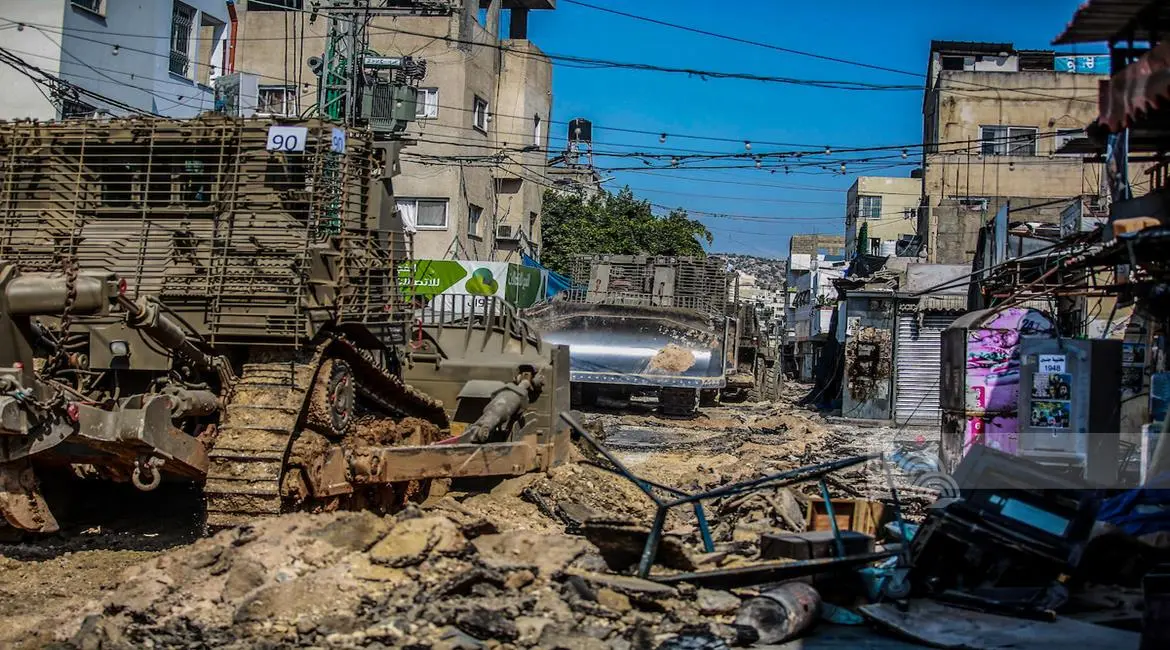
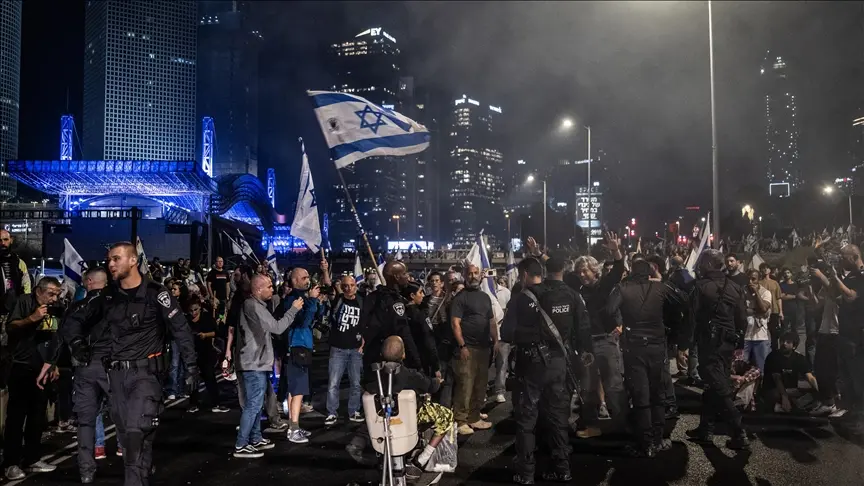

Therefore, the American-Israeli plan that Biden spoke about is to reach a mutual displacement balance, allowing the return of the displaced from the northern settlements, who are an economic and social dilemma for Israel, in exchange for the return of the displaced from the south, who stand behind the resistance and do not cry and complain. Therefore, this operation, "North Winds", aims to transform the issue of the displacement of the residents of the villages and towns of southern Lebanon, not only from the resistance environment, but also from the ordinary residents, so that the issue of the displaced becomes a national issue, beyond the party's capacity in terms of absorption, housing and covering the costs, so that the Lebanese state can exert pressure on Hezbollah to stop the support front and sever the relationship with the Gaza Strip front. The party, which Galant boasted that he had eliminated half of its missile capabilities and attacked hundreds of party targets, and that Nasrallah remained alone, launched new batches of missiles more modern than the missiles he had launched at military bases, the Ramat David military industrial complexes, and the Rafael Military Electronics factories, and with wider ranges, but targeting military and air bases and installations. The missiles reached settlements in the West Bank and a military base in Megiddo, and reached Nazareth, Afula, and Acre, sending clear messages to Netanyahu that the euphoria of tactical victories and security dazzle will not return the displaced people of the northern settlements, but will increase the number of displaced people, exacerbate Netanyahu’s economic crisis, and paralyze his home front, airports, and ports to a great extent. Netanyahu, who is surrounded by the generals, after the war expands and he sinks into a long, attritional war that he does not want, and after his economic crises deepen and the number of displaced people increases, and the inability to achieve what he promised the settlers, the differences between the military and security establishments and the political establishment will explode again, and this will be accompanied by internal and international pressure. It is a war that, so far, can be described as an open war with time limits and open to all possibilities, but it is not the major war in which all limits, controls and red lines fall.


Hezbollah’s responses by targeting strategic military, security and intelligence installations in the “Israeli depth,” especially Haifa and its surroundings, pave the way for more displacement and establishing a stronger balance in the displacement itself, but it is a displacement that carries a political title that pushes the Israeli leadership towards one of three doors: bombing the Lebanese depth and receiving a similar response with its surprises, or activating the ground front and discovering what awaits the occupation army then, or returning to square one represented by an agreement on Gaza that ends the war until the shooting stops on the Lebanese front and the displaced return.


OPINIONS

Thu 26 Sep 2024 10:11 am - Jerusalem Time

International justice obeys force

Hamada Faraana

Hamada Faraana

Opinion Writer

With these significant words, we can summarize the speech of the head of the Jordanian state, King Abdullah, before the most important international forum held annually, in the hall of the United Nations, in the presence of the presidents and leaders of 76 countries. It included a political message par excellence mixed with clear humanity, perhaps it will reach its goal, for the international community, especially the Americans and Europeans, who had previously created the Israeli colony on the land of Palestine, financed it, deported foreign Jews to it, and provided it with the elements of the ability to excel and aggression, and the political and diplomatic cover to prevent accountability and punishment for it, despite the extent of the crimes it committed against the Arab Palestinian people first for decades, from 1948 until today, and the Arab peoples: Jordanians, Egyptians, Syrians and Lebanese second, and others were not spared from its evil.


The vocabulary of the Jordanian head of state, and his speech addressed the implications of the absence of justice for poor peoples, foremost among them the Palestinian people, relying on tangible facts:


First: To the United Nations, which is marginalized and its status is disrespected.


Second: The criminal behavior of the Israelis and the horrific violations they commit.


Third: The suffering of the Palestinian people who lack the right to life, freedom and independence.


His Majesty the King presented a realistic reading of the situation of the United Nations, which “is facing a crisis that affects the core of its legitimacy, and threatens the collapse of global confidence and moral authority, as it is exposed to a real and moral attack.” The significance of this is:


1- The blue UN flag raised over shelters and schools is unable to protect civilians from the deliberate, barbaric Israeli military bombardment.


2- The UN relief trucks stand still, unable to reach the people of the Gaza Strip who are suffering from hunger, thirst and disease.


3- Relief workers carrying the UN logo are being attacked, bombed and assaulted.


4- The decisions of the International Court of Justice of the United Nations are ignored and not given the attention and respect they deserve, by the colony, its tools, and those who support it and provide it with protection, and push it to continue despite the court’s demand that described the occupation as illegitimate and demanded a halt to the ethnic cleansing and genocide operations.


Therefore, the author of the message reaches a harsh, painful and difficult conclusion, which is:


“Confidence in the fundamental principles and values of the United Nations has begun to crumble,” because the Israeli colony is effectively above international law, “international justice obeys force, and human rights are selective, a privilege granted to some – the colony – and denied to others – the Palestinian people.”


The behavior of the Israeli colony, reviewed by His Majesty the King with facts and figures:


1- The reason for the Israeli aggression and barbaric war on the Gaza Strip since October 7, 2013, is one of the fastest killing and death equipment compared to other bloody conflicts, and it has caused the martyrdom of about 42 thousand Palestinians, from that time until today.


2- The fastest rates of famine caused by wars.


3- The largest group of amputee children.


4- Unprecedented levels of destruction.


In short, the colony, in its war on the Gaza Strip, “killed more children, journalists, humanitarian aid workers, and medical crews than any war in modern history.”


In the West Bank, since October 7, 2023, the colony has killed:


1- More than 700 Palestinians, including 160 children.


2- The arrest of more than ten thousand and 700 Palestinians, including 400 women and 730 children.


3- The displacement of more than 4,000 Palestinians from their homes and lands, and the displacement of entire villages due to the violence of the colonial settlers, under the protection and support of the occupation army.


In Jerusalem:

The flagrant violations of the historical and legal status of Islamic and Christian holy sites continue unabated with the protection and encouragement of members of the Israeli colonial government.


The Jordanian speech to the UN General Assembly concludes: “It is strange that many people ask: How can this war not be considered a deliberate targeting of the Palestinians?”


Therefore, he called on the international community to “guarantee the protection of the Palestinian people, and it is a moral duty to adopt a mechanism to protect them in all occupied territories,” because the absence of this protection, and even its availability to the Israelis alone, has caused their successive governments to persist in their transgressions and crimes.


In order to alleviate the suffering of the Palestinians, His Majesty the King called on “all countries to join Jordan in imposing an international gateway for humanitarian aid to Gaza as a relief effort to deliver food, clean water, medicine and other essential needs to those who are most in need.”


The Jordanian head of state urged the members of the United Nations to work diligently to protect these institutions due to their importance, and his speech before the General Assembly constituted a trial of the Israeli colony, just as it constituted a supportive lever for the Palestinian people on the path to protecting them, ending their suffering, obtaining their rights, and freeing them from injustice and occupation.

ARAB AND WORLD

Thu 26 Sep 2024 10:03 am - Jerusalem Time

Emergency session of the UN Security Council on Lebanon and demands to stop the aggression on the Gaza Strip

The UN Security Council held an emergency session on Thursday morning regarding the war on Lebanon, during which members listened to a briefing from UN Secretary-General Antonio Guterres, who described the situation in Lebanon as hell.


"Lebanon is on the brink of an abyss, and we should all be concerned about the escalation," Guterres said, noting that "the exchange of fire represents a repeated violation of Security Council Resolution 1701."


He pointed out that nearly 200,000 people have been displaced since last October inside Lebanon, while many lives have been lost.


Guterres revealed intensive diplomatic efforts to reach a temporary cessation of violence, which would allow for the provision of humanitarian assistance and provide an opportunity to restore lasting peace.


Meanwhile, officials called for the UN Security Council to assume its responsibilities and stop the ongoing Israeli aggression on the Gaza Strip and Lebanon, in order to avoid dragging the region into a comprehensive war.


The High Representative of the European Union for Foreign Affairs and Security Policy, Josep Borrell, stressed that "escalation will not solve anything, because war does not solve anything, and what is happening in southern Lebanon cannot be separated from what is happening in Gaza."


Borrell stressed, "We must do everything to avoid southern Lebanon becoming a new Gaza."


In turn, Egyptian Foreign Minister Badr Abdel Aati said, "What we witnessed last year in Gaza and what we are witnessing now in Lebanon is likely to expand to other areas in the region, if the international community does not assume its responsibility to put an end to the machine of death and destruction."


As the Secretary-General of the Arab League, Ahmed Aboul Gheit, said, “Israel’s actions today are a deliberate and stupid invocation of a firestorm, a firestorm that will spare no one.”


In addition to the 15 members of the Security Council, the session was attended by Lebanese Prime Minister Najib Mikati, Syrian Foreign Minister Bassam Sabbagh, Egyptian Foreign Minister Badr Abdel Ati, Iraqi Foreign Minister Fuad Hussein, Iranian Foreign Minister Seyyed Araqchi, Arab League Secretary-General Ahmed Aboul Gheit, and EU High Representative for Foreign Affairs and Security Policy Josep Borrell.

PALESTINE

Thu 26 Sep 2024 10:02 am - Jerusalem Time

Israeli occupation blows up and burns shops of a detention center west of Ramallah

This morning, Thursday, the Israeli occupation forces blew up shops and a printing press belonging to a detainee from the village of Safa, west of Ramallah, and arrested three young men from the city of Al-Bireh.


Local sources reported that the occupation forces blew up and burned shops and a printing press belonging to prisoner Ghanem Alqam, who was arrested on the 17th of this month.


The occupation forces also arrested the two young men, Saleh Mustafa Marouf and Asid Khalil Marouf, from the town, while the occupation forces arrested from the city of Al-Bireh: Ahmed Qaraan (25 years old), Abdullah Qaraan (27 years old), and Abdul Rahman Al-Tawil, while they raided the house of journalist Muhammad Sarari.

ARAB AND WORLD

Thu 26 Sep 2024 9:33 am - Jerusalem Time

Israel negotiates with excess force.. Hezbollah's "ballistics".. will it accelerate the ground war or curb it?

Niv Yavin Abu Rahmoun: Hezbollah's strategy is taking an upward path in the circle of targeting in terms of type and significance

Dr. Rafat Sayed Ahmed: Israel began expanding the scope of the confrontation with assassinations in exchange for strategic patience from Hezbollah

Aziz Al-Assa: I rule out that the region will slide into a comprehensive war because that is not in the interest of any of the major players

Tarek Wahbi: Netanyahu's cancellation of his trip to New York reflects the extent of the anxiety Israel is experiencing after the Tel Aviv missile

Dr. Muhammad Halsa: Netanyahu seeks a quick resolution, and Hezbollah wants to lure Israel into a long war of attrition

Dr. Muhammad Khalifa Siddiq: The arrival of the “Qader 2” missiles to Tel Aviv is a turning point in the ongoing war and the region is on the brink of a volcano


The confrontation between Hezbollah, which took the initiative on October 8, 2023 to open a support front for Gaza, and Israel, which has outdone itself in committing crimes against humanity, has gone through developments and turns, the most dangerous of which was when the occupying state carried out two mass assassination operations by blowing up pagers and wireless devices the next day, followed by an airstrike that targeted a large group of Hezbollah military leaders and a large number of innocent civilians.


This escalation by the occupation was responded to by Hezbollah with a large wave of missiles on the Galilee region, reaching the cities of Haifa, Safed, Afula and the military and technological factories, weapons and fuel depots, and vital centers between them. Israel responded to this, last Monday morning, with unprecedented air strikes that targeted all regions of the south and the Bekaa, and even reached the southern suburb of the capital Beirut, causing more than 500 martyrs and more than 1,600 wounded in one day .


The attacks from both sides and the responses to the responses continued on both sides of the border for two days, with Hezbollah relying mainly on Katyusha rockets and Fadi 1, 2 and 3 missiles. However, the most prominent event in this latest escalation was Hezbollah targeting the headquarters of the Israeli foreign intelligence agency Mossad in Tel Aviv yesterday, Wednesday, with a Qader ballistic missile carrying an explosive warhead of more than 700 kilograms, which also caused hundreds of thousands of Israelis to enter shelters.


Tel Aviv in Hezbollah's circle of targets


Political analyst Nevin Abu Rahmon told "Ya": Hezbollah has expanded its targeting circle to include the greater Tel Aviv area, in an important escalation step that is occurring for the first time in the course of the confrontation.


She pointed out that some Israeli journalists are talking about the nature of the target, which may be “Gush Dan,” and if that is indeed the case, then this is a great indication, firstly, of the nature of the target and its vitality, and secondly, that Hezbollah’s threats have become real in targeting this geographical area in which “three-quarters of Israel” are gathered.


Abu Rahmon explained that “Gush Dan” was mentioned for the first time in a speech by Hezbollah Secretary-General Hassan Nasrallah without naming it, when he responded in 2010 to the threat of the “Dahiyeh Doctrine” by threatening to target “Tel Aviv,” explaining that “hitting Tel Aviv” does not mean “blowing up walls,” but rather displacing its settlers, noting that the Gush Dan area is “a very large Israeli population center in a strip that also includes oil refineries, major factories, government institutions, and everything.”


Abu Rahmoun saw that Hezbollah's military strategy is taking an upward path in the circle of targets in terms of type and significance in the balance of power that reflects capabilities, but it also reflects a combat doctrine that it employs towards goals that strike the stronghold of Israeli economic, structural, military and intelligence power.


The United States is not interested in all-out war.


Abu Rahmon expressed her belief that Netanyahu is still unable to launch a comprehensive war for several reasons, the most important of which are: First, the United States’ unwillingness to expand the scope of the war due to the sensitivity of the stage on the domestic and public levels.


She added: Secondly, Netanyahu is actually escaping his responsibility to recover the Israeli prisoners and going to escalate against Lebanon in search of political gains that serve his political project through which he is trying to export to the Israeli public that he is able to return the settlers to their homes on the northern border, stressing that Netanyahu is seeking to resolve this after the aggression as well in Israel's constant quest to restore its settlement role in the region.


The region may be on the verge of open war.


For his part, the strategic expert and Egyptian nationalist thinker, Dr. Rifat Sayed Ahmed, told “Y”: The region may be heading towards an open war in the north, although Hezbollah is trying to make it limited, by placing Beirut opposite Tel Aviv.


He pointed out that the Israeli occupation, led by the far-right government and Netanyahu's mentality, believes that the use of force is the only way to force the resistance to surrender.


Ahmed added: After the missile fell on Tel Aviv, the next stage may witness serious repercussions, including the possibility of opening fronts across the country, especially at the airport level, as we may hear about targeting Beirut Airport opposite Tel Aviv Airport, which will open the door to an open war.


A war confined to missiles and air strikes


He explained that open war may be limited to missiles and air strikes, as Israel does not want to wage a comprehensive ground war, but rather prefers limited ground operations.


However, it was the Israeli occupation that began to expand the scope of the confrontation through its assassinations in Beirut, in exchange for strategic patience from Hezbollah.


Ahmed expected that the region would soon face an open war, despite the warnings raised by analysts based on previous experiences, such as the 2006 war. However, he pointed out that the control of the Israeli right and Netanyahu may push the situation towards a major military escalation in the coming period.


Israel is in a dark dark


The writer and political analyst Aziz Al-Assa believes that the two events of the missiles reaching Tel Aviv, after they had reached Haifa, in addition to Netanyahu’s forced relinquishment of using the UN platform to broadcast his claims and delusions to the world, in justifying the killing of children in the Gaza Strip, and the destruction of buildings over the heads of their inhabitants in Lebanon, and considering it an achievement that Israel cannot win without, indicate that Israel is going through a pitch-black darkness.


Al-Assa considered that Netanyahu and the pillars of his far-right government had led Israel into a stagnant muddy quagmire; the more they tried to get out of it, the deeper they sank.


Al-Assa added: If this government continues to manage events with the same mentality and the same tools, it will push itself first, and the region second, into a deep abyss from which Israel will not emerge unscathed, and it will not return to where it was a year ago.


Al-Assa expressed his belief that the Americans are aware of the Israeli government’s madness, its imbalance, its inability to make the right decision, and its deviation from the ethics of war, and they often show their concern for the future of Israel and the future of the entire region.


Regarding the possibility of a comprehensive war, Al-Assa said, "Neither America nor Iran are concerned with it, and they categorically reject it. Therefore, it is not expected that the region will slide into a comprehensive war, because that is not in the interest of any of the major players in the region."


An important strategic shift in the confrontation with Israel


In turn, Lebanese expert in international relations, Tariq Wahbi, confirmed that the recent development in the type of missiles used by Hezbollah, which may be supersonic cruise missiles, constitutes an important strategic shift in the confrontation with Israel.


Wahbi explained that these missiles may not be intercepted by the Israeli Iron Dome, which has raised great concern in Israeli circles.


He pointed out that the Israeli state of alert, which reached its peak with Israeli Prime Minister Benjamin Netanyahu cancelling his trip to New York, reflects the extent of this concern.


"The Israelis are raising questions about the lack of missile density similar to that which they witnessed in the 2006 war, which indicates that Hezbollah is focusing its strikes on specific targets," Wahbi added.


He pointed out that this escalation comes at a time when Tel Aviv is on full alert, which shows the extent of the Israeli leadership's concerns about the development of the type of weapons used.


Saudi initiative at the United Nations


Wahbi pointed out that Netanyahu's last speech was directed to the entire world, accusing everyone of supporting terrorism if they do not support Israel, a speech that was not accepted by many countries, including Arab countries.


He explained that the Kingdom of Saudi Arabia seeks to present an initiative at the United Nations that addresses developments in Gaza, and perhaps Lebanon as well, in a session scheduled for September 26.


Regarding ground intervention, Wahbi ruled out that Israel would launch a large-scale ground operation inside Lebanon, stressing that Israeli forces would continue to target sites they believe contain weapons or equipment belonging to Hezbollah. He also expected the region to witness a new electronic war, as Israel has demonstrated its ability to penetrate Hezbollah’s security.


Wahbi pointed out that diplomatic efforts, led by the United States and France, are currently seeking to reach a ceasefire, while pressuring to implement UN Resolution 1701, which aims to strengthen the presence of international forces and the Lebanese army south of the Litani River, to prevent Hezbollah from approaching the Israeli border.


Different approaches to the confrontation between Israel and Hezbollah


For his part, political analyst Dr. Muhammad Halsa explained to “Y” that the recent escalation on the northern front between Israel and Hezbollah reflects a difference in the approaches of the two parties.


He pointed out that Israeli Prime Minister Benjamin Netanyahu's approach relies on a quick decision using firepower, as Israel seeks to avoid a long war of attrition that could negatively affect its home front.

Halsa stressed that Israel is betting on the ability of Israeli society to withstand, which was expressed by Israeli Defense Minister Yoav Galant when he said that the composure of the home front will be a decisive factor in victory.


According to Halasa, Hezbollah’s approach is based on luring Israel into a long war of attrition, while adopting measured responses that are far from emotion and the desire for revenge. Hezbollah focuses on preventing Israel from achieving its goals, relying on a strategy that avoids breaking the traditional rules of engagement with Israel, even as it uses new weapons and deepens the scope of the confrontation.


Hezbollah is economical in using its military arsenal


Halsa pointed out that Hezbollah seeks to prolong the period of attrition as much as possible, and to sustain the momentum of attrition by preserving its military arsenal in anticipation of any long or comprehensive confrontation.


He added: In return, Israel seeks to push Hezbollah to use the maximum of its military arsenal as soon as possible, with the aim of depriving it of any strategic weapons that it might use later in an open confrontation.

This escalation, according to Halsa, could lead to a comprehensive Israeli response targeting all of Lebanon, which would create a new crisis for Hezbollah internally, especially with the escalation of criticism from its Lebanese political opponents who believe that Hezbollah is dragging Lebanon into a war in which it has no interest.

Halsa pointed out that Netanyahu's meeting with Chief of Staff Herzi Halevi without the presence of Defense Minister Galant indicates that any strategic decisions are postponed until after Netanyahu returns from his participation in the 79th session of the United Nations.


Tens of thousands displaced on both sides


In turn, Dr. Mohamed Khalifa Siddiq, Professor of Political Science at the International University of Africa in Khartoum, said that the arrival of the Qader 2 missiles to Tel Aviv indicates the possibility of this war turning into a wider war.


He pointed out that the almost daily rocket attacks carried out by Hezbollah on northern Israel, and the Israeli air strikes on Hezbollah sites, have led to the displacement of tens of thousands of civilians on both sides of the border, which portends a dangerous escalation that may resemble the previous events in Gaza.


"The bets on the possibility of avoiding a full escalation between Israel and Hezbollah are a thing of the past, as the region now seems to be on the edge of a volcano," Khalifa added.


He also pointed out that the recent operation, which targeted thousands of Hezbollah members by blowing up pagers and wireless communication devices, has changed calculations and confused analyses about what the region will look like in the post-blast period.


OPINIONS

Thu 26 Sep 2024 8:10 am - Jerusalem Time

Hezbollah at the Finish Line

Nadim Koteich

Nadim Koteich

Opinion Writer

To justify the severe blows it has received, Hezbollah and its supporters console themselves with the notion that "we have been sacrificing martyrs for 40 years." The party’s shrewd bi-pronged propaganda game is centered around this theme. Managing the contradictions of its narrative, it glorifies leaders who have fallen in battles or been assassinated and portrays them as legends, before swiftly transitioning to an antithetical claim: losing these legendary leaders does not undermine the party’s efforts or project in any way. 


It seems that this game is no longer sufficient for boosting morale and mobilizing support at this point, as Hezbollah is undergoing the most difficult phase it has been through since it was established in 1982. Within less than a year, a deep crisis has undermined its leadership structure, military capabilities, and operational effectiveness, raising serious questions about its future in Lebanon and the regional geopolitical landscape. 


First: the penetration of Hezbollah's communication networks has dealt a severe blow to a crucial pillar of any organization or army’s capabilities. Without them, no fighting force can wage any kind of conflict. Israel’s ability to penetrate mobile phones has left the party exposed since the conflict began, allowing the Israelis to locate and eliminate a large number of the party’s field commanders. Later on, following the assassination of military commander Fuad Shukr, it became apparent that Israel had even succeeded in infiltrating Hezbollah's private landline communication network- the same network that Hezbollah had fought a "mini civil war"to maintain in 2008. 

The most consequential blow was dealt when Israel lured Hezbollah into making a deal to purchase thousands of booby-trapped pagers, most of which detonated in the hands of their users within less than 30 minutes, critically injuring many operatives and officials. This breach opened the door to locating figures like the commander of the Radwan Unit, Ibrahim Aqil, who had been injured as a result of this very operation. He was identified after Israel hacked into the surveillance cameras of the hospital where he was receiving treatment, and then tracked his movements after he was discharged, leading them to the building in the southern suburb of Beirut (Dahyieh) where he held his final meeting around 24 hours later. 

The scale of the collapse of Hezbollah's secure communications is immense. Even without accounting for the scale of the injuries and losses it caused, this breakdown makes it impossible for Hezbollah to engage in a direct conflict with Israel. By bombarding the location of the meeting in Beirut’s southern suburb, Israel demonstrated that Hezbollah is in chaos and that it has lost its operational efficiency and that its command and control capabilities have collapsed due to the severe breach of its communications infrastructure. Second: its breach of Hezbollah’s communications has allowed Israel to launch devastating preemptive strikes on Hezbollah’s military infrastructure, including its weapon depots, rocket launching sites, fortified positions, and drone and missile assembly plants. 

The most notable strikes were launched on August 25th, when around 100 Israeli fighter jets destroyed thousands of Hezbollah rocket launchers that were about to be used in attacks on northern and central Israel in retaliation for the assassination of Fuad Shukr. Anticipation and speculation of Hezbollah’s retaliation have not dominated the media coverage since then. The general impression is that, although it managed to launch a few rockets or sought to project strength by launching rockets at the vicinity of Haifa, Hezbollah has completely lost the initiative. Indeed, with the assassination of Fuad Shukr, the preemptive strike that followed, and finally, the strike that eliminated an unprecedented number of Hezbollah’s top brass in the heart of Beirut’s southern suburb, Israel has raised the stakes to an entirely new level. Third: the most painful blow might be Israel’s systematic assassination of Hezbollah leaders and its pivotal operatives. 

The Israeli military has released an image of Hezbollah’s leadership structure showing that the party has lost about 70 percent (6 out of 9) of its military and field commanders. Its assassinations have also targeted hundreds of Hezbollah figures that oversee critical operations, including drone warfare, cyberwar, special coordination units, and key field commanders and personnel. Given how rapidly and extensively Israel has drained the party’s human capabilities, a massive strategic vacuum has emerged and it will be difficult to fill in the near future. 

These assassinations have not only weakened the party’s effectiveness in the field but have also devastated its morale and strategic vision. As a result, Hezbollah now finds itself in the worst situation it has ever been in. Its communication networks were compromised, its military infrastructure was destroyed, and it is bleeding leaders and cadres. The hits it has taken in the past few weeks are more consequential than all the blow it has received over the past few decades combined, raising existential questions about Hezbollah’s future, its role in Lebanon, and its standing among its allies and adversaries in the Middle East.

Source: Al Sharq Al Awsat