ARAB AND WORLD

Fri 18 Oct 2024 4:32 pm - Jerusalem Time

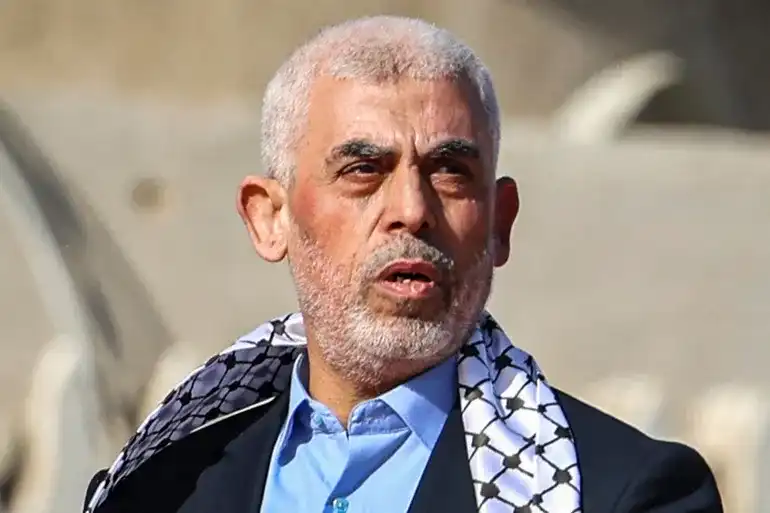
With Sinwar's Killing, Biden Reveals Active US Role in Gaza War


The Biden administration acknowledged Wednesday that the CIA and U.S. military special operations forces were helping Israel locate and track Hamas leaders, an involvement in the Gaza war that goes far beyond what the government has previously disclosed. The revelation follows the killing of Hamas leader Yahya Sinwar on Wednesday, but also comes after months of White House assurances that U.S. intelligence and special operatives were only involved in retrieving the hostages.


Despite the fact that Sinwar was killed by accident (and not as part of a targeted operation), the Biden administration’s desperation to grab some of the spotlight is a political desire to show success in its decision to support Israel. It also shows an acceptance of one of Israel’s core beliefs about its wars against its enemies in the so-called axis of resistance, which the United States has embraced: that killing leaders eliminates threats and even amounts to victory.


Israel is demanding that Hamas release the hostages and “surrender,” and they are pushing their fantasy and narrative about the importance of Sinwar’s death, which is used to continue the war on Gaza indefinitely. But lost in all the noise is the fact that Washington has consistently lied to the American people.


The United States has ground forces in Israel. The United States is directly involved in Israel’s war on Gaza (and Lebanon) for a year. The United States is an integral part of “Israel’s ability to defend itself against its enemies,” as the administration repeats daily. It is also the guarantor, according to experts, of Israel’s military adventures. All this without much ability or apparent interest in restraining Israel or seeking any real negotiated outcome.


“Shortly after the October 7 massacre, I directed our Special Operations personnel and intelligence professionals to work alongside their Israeli counterparts to help locate and track Sinwar and other Hamas leaders hiding in Gaza,” President Biden said in a press release Wednesday after announcing Sinwar’s death. Vice President Harris issued a nearly identical statement.


It is noteworthy that in October of last year, when Pentagon spokesman Maj. Gen. Pat Ryder was asked whether there were American special agents on the ground in Israel, he responded evasively. “We are providing planning and intelligence support to the Israelis, with regard to the recovery of the hostages.” Hostage recovery has been the official line of the administration ever since. Such statements were often accompanied by the reminder that American citizens were among the hostages held by Hamas. For Washington, it was a clever play: Who could oppose the rescue of Americans?


But behind the scenes, the Biden administration has been providing assistance in locating not only Sinwar but also other Hamas leaders (along with more than 50,000 tons of military equipment and materiel). Adopting the same framework of searching for the Palestinian movement’s leaders, similar to the war on terror adopted by the Bush administration after 9/11, runs counter to Biden’s public rhetoric “about the need for Israel to resist the temptation to retaliate.”


When asked on Wednesday whether US special agents had located Sinwar, Ryder declined to elaborate on the White House statement, suggesting that the hostage recovery mission had always been used to track down Hamas leaders.


“I won’t talk about intelligence,” Ryder said. “What I will say is that this was an Israeli operation and that we were exchanging information and intelligence to support the efforts to recover the hostages and track these leaders who were holding hostages, including American hostages. So, to the extent that that helped inform the Israeli operations in general, it certainly played a role.”


“After more than 20 years of hunting al-Qaeda and other terrorists,” officials claim, U.S. intelligence has become increasingly adept at the daunting task, mastering real-time intelligence processing, precise geolocation, and rapid attacks on individuals. Multiple sources have been added to the post-9/11 arsenal, from big data analysis to highly sensitive signals collection. New weapons and drones have been developed. Specialized organizations have been created.


Behind all this is a special access program in a joint CIA-U.S. military cell at CIA headquarters in McLean, Virginia, that directs what it calls the most sensitive “high-value targeting.”


Experts are looking for any clues to the target’s location, a process that is a form of forensic analysis that includes aerial reconnaissance, signals interception, and on-the-ground scouting. The U.S. has provided Israel with similar proficiency, experts say, but the United States has many more tools—from stealthy satellites to sophisticated tracking algorithms—that can cover an area more completely and efficiently. Yet Sinwar was not killed as a result of this device, not after a year of intensive work. Washington is overstating the impact of the massive effort as a means not only of continuing the perpetual war in the Middle East but also of creating an aura of success, an outcome that eludes both Israel and the United States.


President Joe Biden on Wednesday drew parallels between the 2011 raid that killed Osama bin Laden, though his death had no resemblance to Israel’s war on Gaza. The United States had been searching for bin Laden for a decade, and while his death served as a vindication of the effort, it came at a time when al-Qaeda, based in Afghanistan, had already morphed into other organizations. Biden’s praise of those same forces for helping Israel in some ways proves that the war never ended and never will.


Israel may claim that Sinwar’s death marks a turning point, but that, experts say, seems unlikely. While Hamas (and Hezbollah in Lebanon) continue to wage a leaderless war, there is no evidence whatsoever that either group is exhausted or faltering in its efforts.

ARAB AND WORLD

Fri 18 Oct 2024 3:20 pm - Jerusalem Time

Mikati denounces Iranian statements, requests summoning of Tehran's Chargé d'Affaires

Lebanese caretaker Prime Minister Najib Mikati denounced Iranian statements about Tehran's readiness to negotiate with France regarding the implementation of UN Resolution 1701, and considered this an interference in Lebanese affairs, and requested the summoning of the Iranian Chargé d'Affaires in Beirut.


This came in two statements published by the Lebanese Prime Ministry today, Friday, via the X platform, commenting on statements made by Iranian Parliament Speaker Mohammad Baqer Qalibaf, in this regard.


One of the statements attributed to Mikati saying, "We are surprised by this position, which constitutes blatant interference in Lebanese affairs, and an attempt to establish an unacceptable guardianship over Lebanon."


Mikati said, "We informed the Iranian Foreign Minister, Abbas Araqchi, and the Speaker of the Shura Council, Mohammad Baqer Qalibaf, during their recent visits to Lebanon, of the necessity of understanding the Lebanese situation, especially since Lebanon is exposed to an unprecedented Israeli aggression, and we are working with all of Lebanon's friends, including France, to pressure Israel to cease fire."


He explained that the issue of negotiating the implementation of international resolution 1701 is being handled by the Lebanese state, and everyone is required to support it in this direction, not to seek to impose new mandates that are rejected by all national and sovereign considerations, according to his expression.


During an interview with the French newspaper Le Figaro, Qalibaf expressed his belief that his country was ready to negotiate concretely on the procedures for implementing Resolution 1701 with France, which would act as a mediating state between Hezbollah and Israel.


Qalibaf's statements came during his participation in the 149th session of the Inter-Parliamentary Union in Geneva, which lasted from October 13 to 17.


In a later statement, Mikati asked his country's Foreign Minister, Abdullah Bou Habib, to summon the Iranian Chargé d'Affairs in Beirut, Tawfiq Samadi, and inquire about what was mentioned in Qalibaf's statements.


Mikati asked Bou Habib to inform the Iranian Chargé d'Affaires of the Lebanese position in this regard.

On August 11, 2006, the UN Security Council unanimously adopted Resolution 1701, calling for a complete cessation of fighting between Hezbollah and Israel, and calling for the creation of an area between the Blue Line - the dividing line between Lebanon and Israel - and the Litani River in southern Lebanon that would be free of any armed men and military equipment, except those belonging to the Lebanese army and the UNIFIL forces.


PALESTINE

Fri 18 Oct 2024 3:03 pm - Jerusalem Time

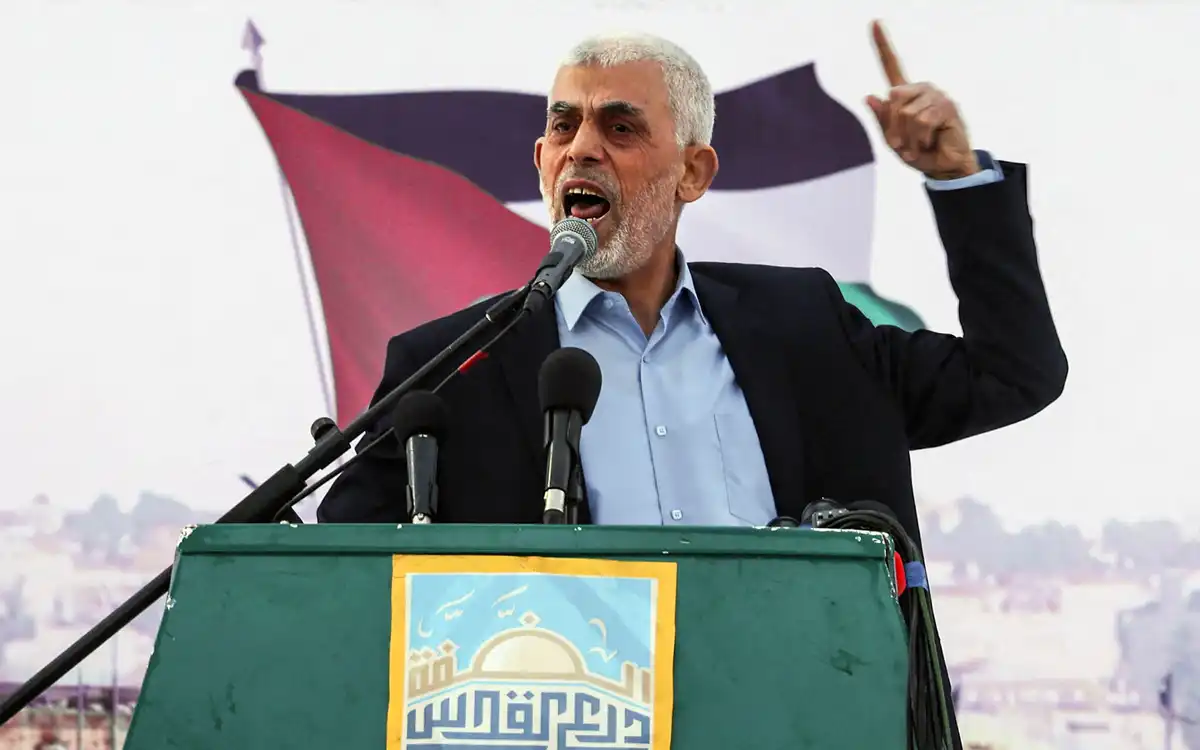
Hamas confirms the death of its leader Yahya Sinwar

The Islamic Resistance Movement (Hamas) confirmed, in a speech delivered by the movement’s leader, Khalil Al-Hayya, today, Friday, the death of its leader, Yahya Sinwar, who the Israeli army announced yesterday, Thursday, that he had been killed accidentally in the southern Gaza Strip.


Khalil Al-Hayya stressed, during his speech in which he said that “Al-Sinwar ascended as a heroic martyr, confronting the occupation army until the last moment of his life,” that “the occupation prisoners will not return except by stopping the aggression on the Gaza Strip and returning our prisoners,” affirming that “the martyrdom of the leaders will only increase the movement’s determination to continue.”


He added, "Hamas will continue its approach until the liberation of the land and the establishment of the Palestinian state."


Earlier today, a press report stated that the body of Hamas leader Yahya Sinwar, who was martyred during a confrontation with Israeli forces in the southern Gaza Strip, was transferred to a "secret" location in Israel, according to what was announced yesterday, Thursday.

PALESTINE

Fri 18 Oct 2024 2:55 pm - Jerusalem Time

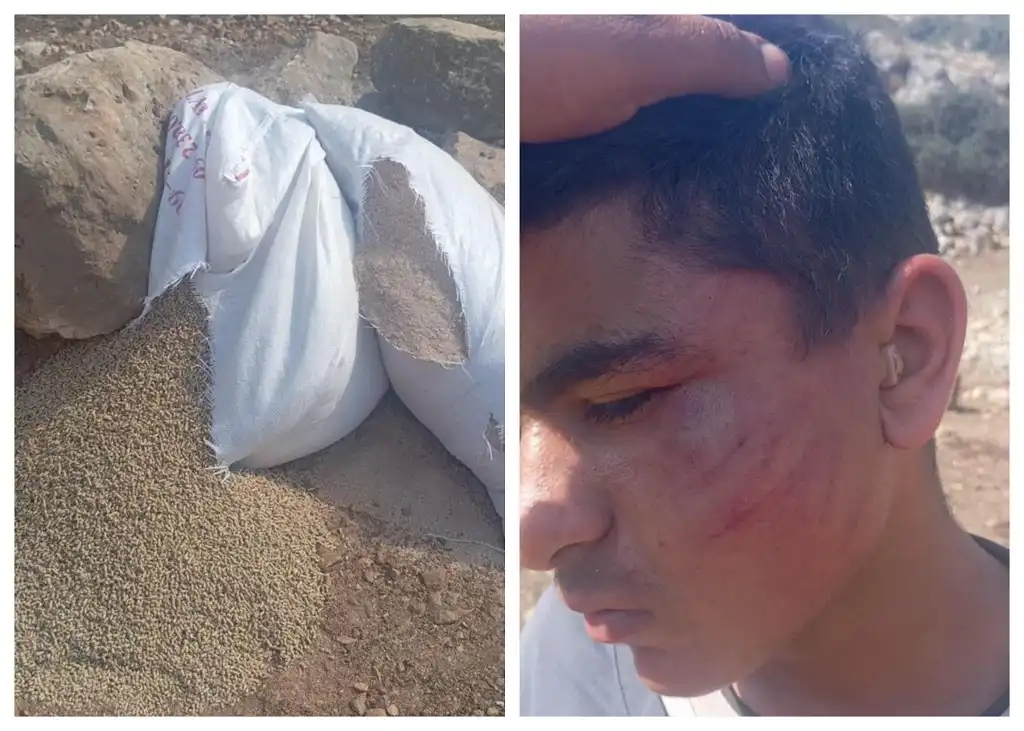
Settlers assault a child northwest of Salfit

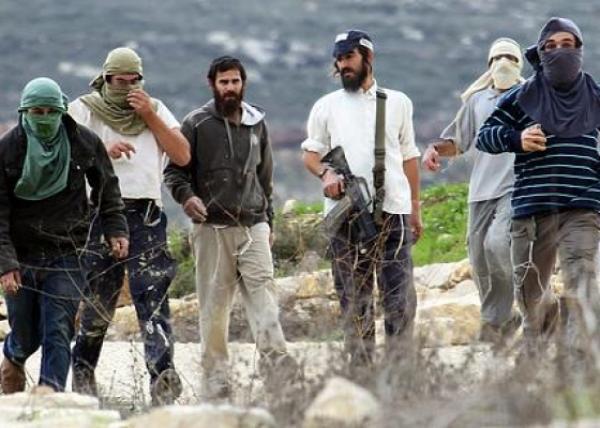
Today, Friday, settlers assaulted a child while he was in Wadi Qana, northwest of Salfit.


According to local sources, a group of settlers raided the Shaqif Danan farm in Wadi Qana, northwest of Deir Istiya, and assaulted the child Ahmed Abdel Fattah Muhammad Zidan (15 years old) while he was in the farm, and they stole an electric generator and tore up bags of barley and bran.


A group of settlers attacked olive pickers on Thursday evening in the "Ross Al-Mawaris" area north of the town of Kafr Al-Dik. They destroyed the picking machine, destroyed olives belonging to the family of farmer Farouk Ali Al-Ahmad, and forced them under threat to leave their land.

ARAB AND WORLD

Fri 18 Oct 2024 2:13 pm - Jerusalem Time

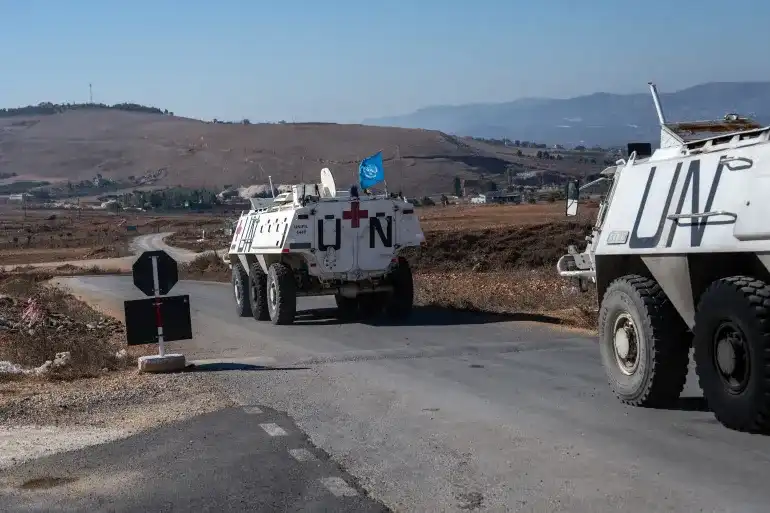
UNIFIL talks about the possibility of self-defense against Israel

The United Nations Interim Force in Lebanon (UNIFIL) reported on Friday that they had been targeted several times, "five of them deliberately," noting that they had found evidence of possible use of white phosphorus months ago near one of their bases.


A UNIFIL spokesman said the 10,000-strong mission would remain in Lebanon despite multiple Israeli attacks he described as "deliberate" that directly targeted UN forces in the past few days.


The spokesman referred to the possibility of self-defense against Israel as "it can be resorted to, but it is important to calm the tension," stressing that they must remain in Lebanon, and that "the morale of the peacekeeping forces is still very high."


Asked about the downing of a drone near a UNIFIL ship off the coast of Lebanon on Thursday, the spokesman said, "The drone came from the south, circled around our ship and came within a few metres," Reuters reported.


The UN force has previously said it has been repeatedly attacked by Israeli forces in recent days, while Israel has called on the United Nations to move UNIFIL out of the combat zone.


In the middle of this month, Jean-Pierre Lacroix, Under-Secretary-General for Peacekeeping Operations, confirmed that UNIFIL forces would remain in their positions in Lebanon, while the UN Security Council expressed its concern about the positions of those forces being exposed to gunfire, following Israel’s request for them to withdraw.


The Italian Defense Ministry also said in a statement last Wednesday that the 16 European Union member states contributing to UNIFIL believe that different and more effective rules should be followed for the participation of these forces.


The statement added that the European Union's allies also believe that pressure must be exerted to prevent any further attacks by Israeli forces on UNIFIL positions.


The statement also said that "the focal point that emerged from the meeting was the joint readiness to exert maximum political and diplomatic pressure on Israel so that no further incidents occur," and that "Hezbollah must not use UNIFIL personnel as shields in the context of the conflict," according to the statement.

OPINIONS

Fri 18 Oct 2024 2:07 pm - Jerusalem Time

Douglas Macgregor's Urgent Warning: The Only Way to Stop Netanyahu's Plan

Bismi TV

Bismi TV

Opinion Writer

In this exclusive video, we take an in-depth look at Douglas Macgregor’s journey, exploring his revolutionary military concepts, leadership strategies, and the profound influence he’s had on shaping global defense and warfare thinking.


OPINIONS

Fri 18 Oct 2024 2:04 pm - Jerusalem Time

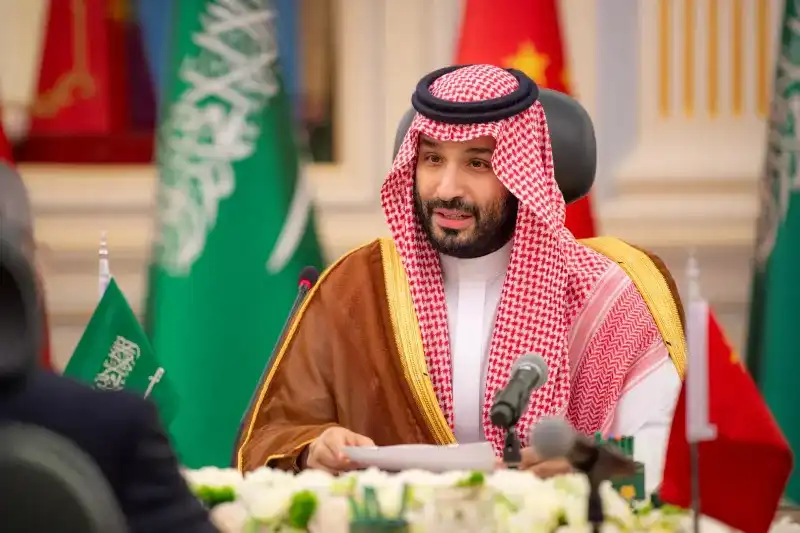
The Real Purpose of a U.S.-Saudi Security Agreement

Foreign Affairs

Foreign Affairs

Opinion Writer


A Deal Could Reduce Direct American Intervention in the Middle East

By Michael Singh


Earlier this year, the United States and Saudi Arabia were close to sealing a bilateral defense treaty. The agreement’s terms have largely been set, but its formal signing was postponed amid the present conflict in the Middle East. Analysts have frequently viewed this deal as but a piece of a larger puzzle. As conflict has racked the Middle East since Hamas’s heinous October 7 terrorist attack, the potential treaty tends to be characterized as one element of a “megadeal” aimed at pacifying the region: a cease-fire in Gaza would set the stage for the Saudis to normalize relations with Israel in return for a U.S. security guarantee and strengthened American and Israeli commitments to Palestinian statehood.

But that is the wrong way to look at a U.S.-Saudi treaty. In reality, the impetus for such a treaty preceded the conflict in Gaza. If signed, the agreement will not merely be another transaction in which the United States pays for an Arab state to normalize ties with Israel. The strategic context for it is global, not regional: if successful, a U.S.-Saudi treaty will pave the way for better security integration of U.S. partners in the Middle East and less direct American intervention there. In the long run, it will not tie the United States down in the region but help free Washington to act with greater latitude elsewhere. And the deal will draw Washington’s most capable friends in the Middle East deeper into efforts to address global challenges, including that posed by the rise of China.

THE BEST OF BOTH WORLDS

Few in Washington question the current wisdom that the United States must increase its focus on the Indo-Pacific or that doing so will require a decreased focus on the Middle East, a region that continues to drain U.S. resources. Yet this tradeoff holds only if one considers the Middle East of middling importance in the United States’ competition with China or conceives of U.S. national security strategy as akin to a zero-sum game in which policymakers merely push their pieces from one region to another.

In reality, the Middle East remains vitally important to both U.S. and Chinese interests. The past year’s turmoil demonstrates not that U.S. attention to the region has been futile but that the United States cannot ignore the region, however much it may wish to do so, and that it urgently needs a new, more sustainable strategy for securing its interests there. A bilateral defense treaty with Saudi Arabia may seem an unusual response, as it might appear only to promise deeper U.S. involvement in the Middle East. But if successful, a U.S.-Saudi defense treaty would in fact shift more of the burden of addressing the region’s troubles onto U.S. partners, limit Chinese influence, and even draw partners closer in U.S.-led efforts to address global challenges and entrench Washington’s preferred norms.

Such a treaty would bring three potential strategic benefits. First, it would more closely bind Saudi Arabia and the United States, solidifying one of Washington’s most important partnerships in the Middle East. A mutual defense guarantee would be the centerpiece of any U.S.-Saudi treaty, but any such treaty would also facilitate cooperation between the two countries in sensitive high-tech areas such as artificial intelligence and related supply chains as well as Saudi access to U.S. defense technology. Such cooperation on technology would also limit China’s opportunities in these areas and circumvent controversies that often arise in the transactional, issue-by-issue negotiations that typically characterize U.S. partnerships in the region. More frequent and routine collaboration in technology could also help entrench Washington’s preferred norms and practices for data privacy and the regulation and transfer of technology, potentially enabling their spread throughout the Middle East, given Saudi Arabia’s economic and financial weight there.

Second, the treaty would help Saudi Arabia—and by extension, the region—manage and resolve crises without extensive U.S. intervention. Saudi Arabia is already one of the world’s top buyers of American and other Western arms. But this reliance is becoming more of a strategic liability for Washington. With needy partners in Europe and Asia, it is difficult to justify putting Saudi Arabia first in line for U.S. arms sales, even if Riyadh pays up front and without assistance, unless it plans to use those systems to advance mutual interests with the United States. Selling one more shell or jet to Taiwan or Ukraine, for example, accomplishes far more for U.S. interests than sending those tools to a partner that will not or cannot use them. In a world of rekindled contention between great powers, this strategic math is just as important as the financial calculus of arms sales, if not more so.

If successful, a U.S.-Saudi treaty will pave the way for better security integration of U.S. partners in the Middle East.

A U.S.-Saudi defense treaty would presumably bring more frequent military exchanges and exercises, enabling the United States to better shape critical Saudi reforms that aim to turn its military into a modern fighting force. These improved capabilities must of course be accompanied by a willingness to act. Saudi Arabia under Crown Prince Mohammad bin Salman has demonstrated greater will than in the past to project its power and influence—for example, in its military campaign in Yemen—but its capabilities and strategic planning have not matched its ambition. As a result, some in the West have distanced themselves from Saudi Arabia; a more effective approach would forge a closer working partnership that can channel Saudi ambitions toward shared ends.

The United States doubtless hopes that a formal defense partnership with the Saudis would serve as the foundation for deeper multilateral coordination of U.S. defense relationships in the Middle East than the pacts it has signed so far with smaller (yet still critical) regional partners. This process began with the Abraham Accords and has already yielded collaboration, such as military exercises sponsored by the U.S. Central Command that have brought together Israeli and Arab officers. It has also led to the impressive effort by the United States, Israel, and an array of regional partners in mid-April to intercept the approximately 300 missiles and drones that Iran launched against Israel. But while this showed the potential for regional defense cooperation, it also demonstrated the region’s continued dependence on the United States. Washington would like to continue bolstering the former while reducing the region’s requirement for the latter. Perhaps counterintuitively, this would be best accomplished not by stepping away from the region but by even more intense training of regional forces through mechanisms that a bilateral treaty would likely produce. By strengthening U.S. partners, such a treaty would free up American forces and allow Washington to attend to priorities in the Indo-Pacific and elsewhere without abandoning its interests in the Middle East. The accord would also underline a competitive advantage that the United States has over China: the United States can act as both a security integrator bringing parties across the region together and as a security guarantor providing new military technology, neither of which China can offer at this stage.

Finally, a U.S.-Saudi defense treaty could bring the Saudis and perhaps others in the region further into efforts to tackle global challenges. Riyadh has already demonstrated interest in exercising its global influence beyond adjusting its oil supply to world markets. In August 2023, Saudi Arabia hosted an international summit on the war in Ukraine. It has also sought a more prominent role in meetings of multilateral groupings such as the G-20. Washington, for its part, has increasingly recognized Saudi Arabia’s potential, as well as that of the United Arab Emirates and other wealthy Gulf states to leverage wealth and diplomatic influence in addressing transnational issues such as climate change and critical minerals processing. After decades of viewing Middle Eastern states as objects of U.S. foreign policy, Washington increasingly sees them as partners in it. A U.S.-Saudi defense treaty can further aid in drawing these partners out of their regional bubble by increasing their natural links and commonalities with U.S. allies in Asia, Europe, and elsewhere.

UNDERSTANDING THE RISKS

A U.S.-Saudi defense treaty will not be without its risks, but the real risks are often misidentified. There is little reason to believe a treaty would increase the chances of a war between the United States and Iran. Even though the United States declined to respond militarily to Iran’s attack on Saudi oil facilities in 2019, any future U.S. president, treaty or not, will likely feel motivated to come to Saudi Arabia’s defense—or to that of another Gulf partner or strategic shipping route—in the event of a major Iranian attack. By formalizing what is already close to a de facto commitment, the United States can better deter Iran by eliminating any doubt that an attack on Saudi Arabia would prompt a strong U.S. response. And a treaty would not necessarily tie U.S. forces down in the region more than they already are. Evidence from the Middle East and elsewhere suggests that the involvement of U.S. forces in a given region is connected to threat levels and other factors, not the existence of a treaty. American forces have surged into the region recently in response to Iranian threats, for example, even though the United States has no formal treaty allies there.

The real risks are twofold. The first is of misaligned expectations. Policymakers in Washington will likely expect that by signing a bilateral defense treaty, Saudi Arabia will be committing to refrain from any actions that jeopardize U.S. security and to contribute more constructively to stability in the Middle East. Increasingly, policymakers expect allies to refrain from cooperating with U.S. adversaries not only in traditional military and defense matters but also through indirect actions that will enhance U.S. rivals’ broader military-industrial complexes. Such actions could simply involve providing adversaries with access to certain technologies or even, in the case of Russia especially, cooperating to protect their revenues through mechanisms such as OPEC Plus, which includes 22 of the world’s major oil exporters. Washington will be looking for Saudi Arabia not only to show preference for the United States at the margins but also to make a firm commitment to the U.S.-led alliance system that it would join after inking a treaty. Saudi normalization with Israel would be vital to securing ratification of the accord by the U.S. Senate and to realizing the full benefits of multilateral security cooperation in the region. It would also serve as a strong signal from Riyadh that Saudi Arabia is making a strategic and not merely a tactical shift in its foreign policy.

The second risk involves the fickleness of U.S. foreign policy, of which Saudi Arabia and other Gulf states have found themselves disproportionately on the receiving end. Twenty-plus years of quixotic nation-building efforts should have taught U.S. policymakers that the United States can hold fast to its own values without imposing them on others. Washington can harbor strong and valid concerns about the human rights or political practices of partners such as the Saudis while still working practically to promote reform—or better yet, supporting partners’ own programs of reform, such as Riyadh’s Vision 2030—rather than recklessly threatening to break relations after every new unsavory revelation. Riyadh sees the treaty ratification process, which requires approval by a two-thirds majority in the U.S. Senate, as a way of ensuring that Washington sticks to its commitments, just as the United States sees Saudi normalization with Israel as a signal of Riyadh’s long-term commitment.

THE MIDDLE EAST GOES GLOBAL

There is no imminent great-power shift in the Middle East. Yet competition between the United States and China there, as elsewhere, is indeed growing, and it is regarded by U.S. partners as a serious risk. Many have responded by choosing “omni-alignment,” that is, participating in both U.S.-led multilateral institutions and newer Chinese-led alternatives, to minimize the risks and maximize the benefits they can accrue from contention between the two powers. Even countries that understand China’s limits as a partner worry that the United States has become increasingly unpredictable and transactional as its attention shifts between short-term crises in places such as the Middle East and long-term priorities, notably in the Indo-Pacific.

A U.S.-Saudi defense treaty could help ameliorate this dynamic in the Middle East, both by tightening the bonds between Washington and one of its most important partners in the region and by putting those partners in a better position to address crises on their own. Some may worry that the treaty would trap the United States in the Middle East. In reality, a closer bilateral partnership on defense could over time limit Chinese inroads in the region, bolster Riyadh’s and other partners’ capacities to act without U.S. intervention, and even bring Saudi Arabia deeper into common efforts to tackle global challenges. Along with the increasing activism by countries such as India and Japan, the expansion of these efforts could help arrest the global order’s decline into a stalemate between two great powers. Rather than worry about the emergence of a new cold war, Washington should work to build a new global diplomatic-security concert, toward which a U.S.-Saudi defense treaty can be an important step.

PALESTINE

Fri 18 Oct 2024 1:57 pm - Jerusalem Time

Pope presented with Holy Land peace perspective

During an audience in the Vatican with Pope Francis, former Israeli Prime Minister, Ehud Olmert, and former Palestinian Minister for Foreign Affairs, Nasser Al-Kidwa, presented their peace proposal for the war ravaging their nations.

By Roberto Cetera and Linda Bordoni

"It was an important and emotional meeting. The Holy Father showed extraordinary interest in the peace efforts in the Middle East," said Ehud Olmert, after being received by Pope Francis on Thursday together with Nasser Al-Kidwa and a delegation of peace activists in the Vatican.


Olmert, who served as Prime Minister of Israel from 2006 to 2009, and before that as cabinet minister and mayor of Jerusalem, was welcomed by the Pope as part of that delegation that included Nasser Al-Kidwa, Foreign Minister of the Palestinian Authority from 2005 to 2006.

Speaking to Vatican Media after the audience, Olmert and Al-Kidwa explained they presented the Pope with a peace proposal for Gaza.

Olmert, who was Israeli PM when the 2006 Lebanon war ceasefire was signed, and who was behind the last real attempt at reaching an agreement for the creation of two States with Palestinian President Mahmoud Abbas, said “Pope Francis gave us extraordinary attention for more than half an hour, explaining that he follows every development of the conflict daily and that every day he connects with the Christians of Gaza."


 “It was an exceptional honour to be received by His Holiness this morning in the Vatican,” he said, “And we could feel that he is focused on the message that we wanted to bring forth, which is that the war in Gaza has to be stopped, that the hostages have to be returned to their families, that Israel has to pull out completely from Gaza, and that Israel and the Palestinians must embark immediately on negotiations for comprehensive peace on the two-state solution.”

Olmert also mentioned the possibility of a Special Agreement for the status of the Old City of Jerusalem which, under the jurisdiction of a trust comprising five nations, including Palestine and Israel, would keep it free for all believers, Christians, Jews, and Muslims, to practice their faith in the city of Jerusalem.


Nasser Al-Kidwa, who is well known not only for his pro-peace stance but also for being the nephew of the historical PLO leader Yasser Arafat, whom he represented in the United Nations, confirmed that during the audience this morning, "We presented the Holy Father with our peace proposal for Gaza, which includes an immediate ceasefire, the release of the Israeli hostages still held by Hamas, along with the simultaneous release of an agreed number of Palestinian detainees in Israeli prisons, and the resumption of negotiations for the creation of two separate states at peace with each other."


 “For us, it was important as a team and of course, for our mission to end the war and to achieve peace between the two peoples in the form of two states living side by side on the basis of 1967 borders, with a swap that is agreed upon,” he said, adding that he is in agreement with Olmert’s proposal regarding the West Bank and the urgent necessity of ending the war immediately in the Gaza Strip.

Al-Kidwa said that during the audience, the delegation tackled the “important issue for the whole of humanity” regarding Jerusalem and its status and how it should be governed.

“We took the step of presenting His Holiness with the proposal that we made together in this regard,” he affirmed, “and I believe that he will bless the plan and he will bless our actions and that definitely is going to make a huge difference.”


PALESTINE

Fri 18 Oct 2024 12:16 pm - Jerusalem Time

Israeli settlers steal a flock of sheep southeast of Nablus

Today, Friday, settlers stole a flock of sheep from the village of Jurish, southeast of Nablus.


Local sources reported that a group of settlers, under the protection of occupation soldiers, attacked a young boy while he was herding a flock of sheep at the intersection of the village of Jurish, southeast of Nablus. They stole the flock of sheep from him and headed to the nearby settlement of "Magdolim."


The sources added that the occupation forces detained the boy who was herding sheep there.

PALESTINE

Fri 18 Oct 2024 11:55 am - Jerusalem Time

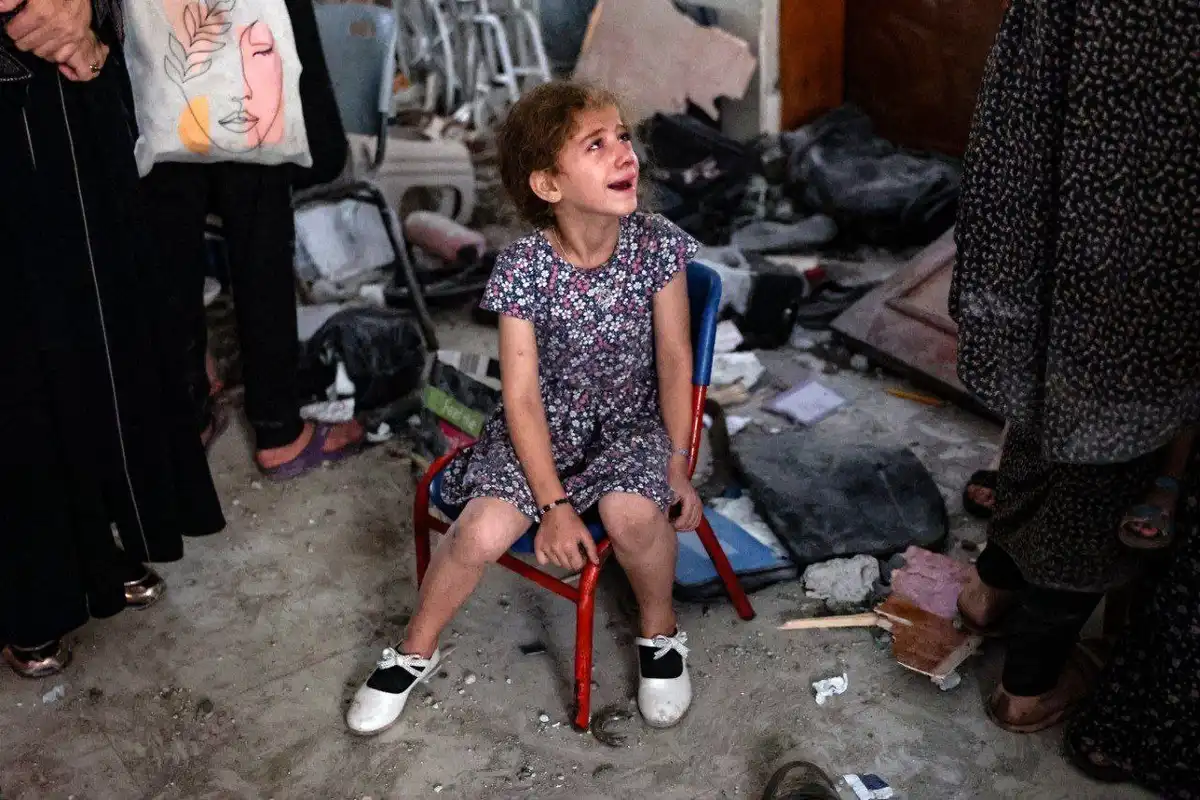
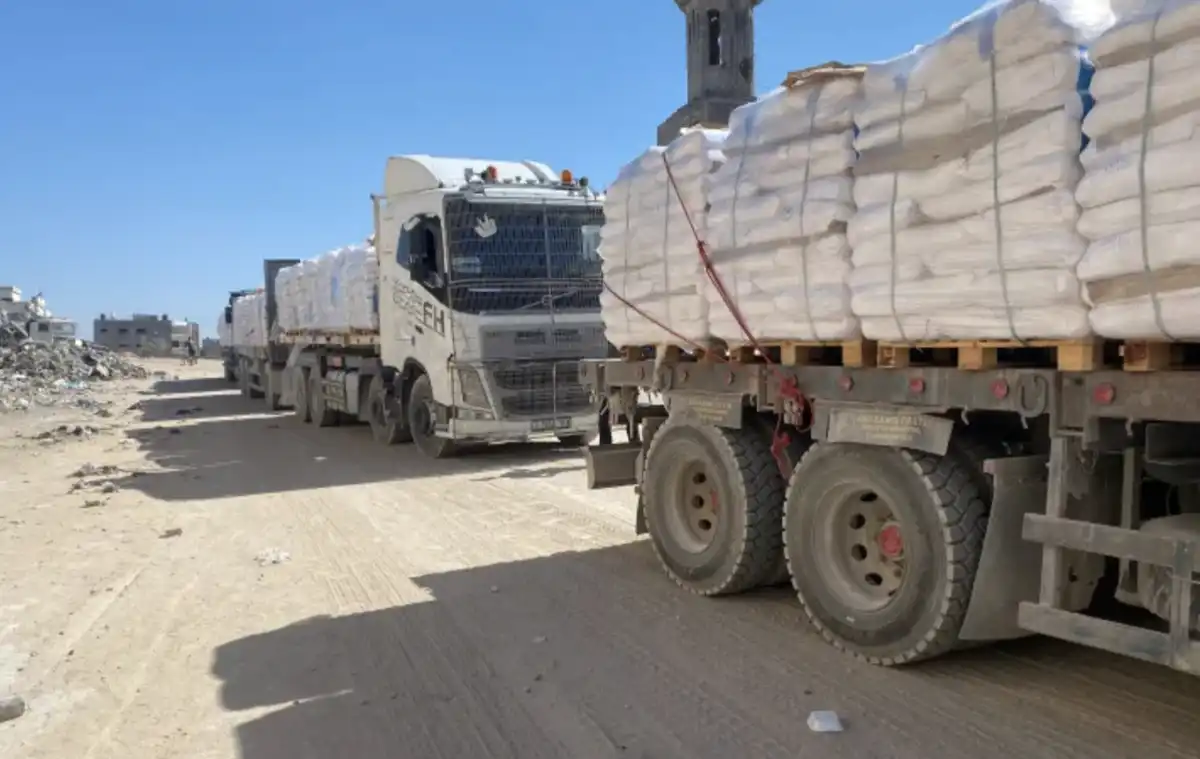
WHO: Almost everyone in Gaza is starving

Almost everyone in the Gaza Strip is starving, and this is an "inhumane" situation, said the Director-General of the World Health Organization, Tedros Adhanom Ghebreyesus.


In a post on the X platform, Ghebreyesus explained that recent assessments indicate that almost everyone in Gaza is starving.


He called for immediate delivery of humanitarian aid to severely malnourished children in need of urgent treatment.


Ghebreyesus renewed his call for a ceasefire, saying, "The best medicine is peace."

PALESTINE

Fri 18 Oct 2024 11:46 am - Jerusalem Time

Report: Yahya Sinwar's body transferred to secret location in Israel

A press report stated today, Friday, that the body of the head of the Hamas movement, Yahya Sinwar, who was martyred during his confrontation with Israeli forces in the southern Gaza Strip, according to what was announced yesterday, Thursday, was transferred to a "secret" location in Israel.


This came according to what was reported by the Yedioth Ahronoth newspaper on its website (“Ynet”).


The report said, "At the end of the autopsy of Hamas leader Yahya Sinwar, which was conducted at night (Thursday-Friday night) at the Institute of Forensic Medicine in Tel Aviv (Abu Kabir), the body was transferred to be kept in a secret location."


The report explained that "it is not clear at this stage what will be done with his body, and whether it will be used as a card in future negotiations that will also include the return of the 101 Israeli hostages in the Gaza Strip."


According to Ynet, "The autopsy showed that Sinwar was shot in the head, and his body showed signs of gunshot wounds, including those from shells."


The Israeli army confirmed, last Thursday evening, that it had killed Sinwar in the Tel al-Sultan area in the city of Rafah, south of the Gaza Strip, while reports indicated that this was done "completely by accident" and not as part of a special Israeli operation, which the Israeli army later acknowledged.


In a joint statement also issued by the Israeli General Security Service (Shin Bet), the Israeli military confirmed that “at the end of a manhunt that lasted for about a year, yesterday, Wednesday (October 16, 2024), IDF forces killed Hamas leader Yahya Sinwar in the southern Gaza Strip.” Reports indicated that he was assassinated on Wednesday afternoon, and his body was found on Thursday.


The Israeli army radio said that "a tank fired at a building" where Sinwar was located, adding that "according to estimates and results found at the scene, Sinwar was injured as a result of the tank firing at the building"; it also indicated that "infantry forces raided the building and conducted searches inside it, where the location of the suspicious body was identified during the scanning operations."


Israeli Prime Minister Benjamin Netanyahu said, while announcing the assassination of the head of the Hamas movement in the Gaza Strip, Yahya Sinwar, that his assassination represents the beginning of the "day after" after Hamas, which he stressed will not control the Strip after the war, considering it an "important moment."


Before Netanyahu spoke about the hostages yesterday, the families of the Israeli prisoners in Gaza demanded an "immediate deal" to exchange prisoners, after the killing of Sinwar.


A statement issued by the "Hostages' Families Headquarters" urged "the state's leadership to transform the military achievement into a political one, and to seek to reach an immediate agreement for their release," stressing the need to "release all 101 kidnapped people, some of them alive, for rehabilitation, and the dead for a proper burial."


While the statement considered the assassination of Sinwar "an important milestone on the road to true victory, which will not be achieved except with the return of the 101 kidnapped soldiers," it stressed that "the Israeli government has not been able, for more than a year, to benefit from the unprecedented security achievements in the fighting in Gaza, in favor of releasing the kidnapped soldiers."

PALESTINE

Fri 18 Oct 2024 11:22 am - Jerusalem Time

Two Israeli soldiers injured in shooting in Dead Sea area


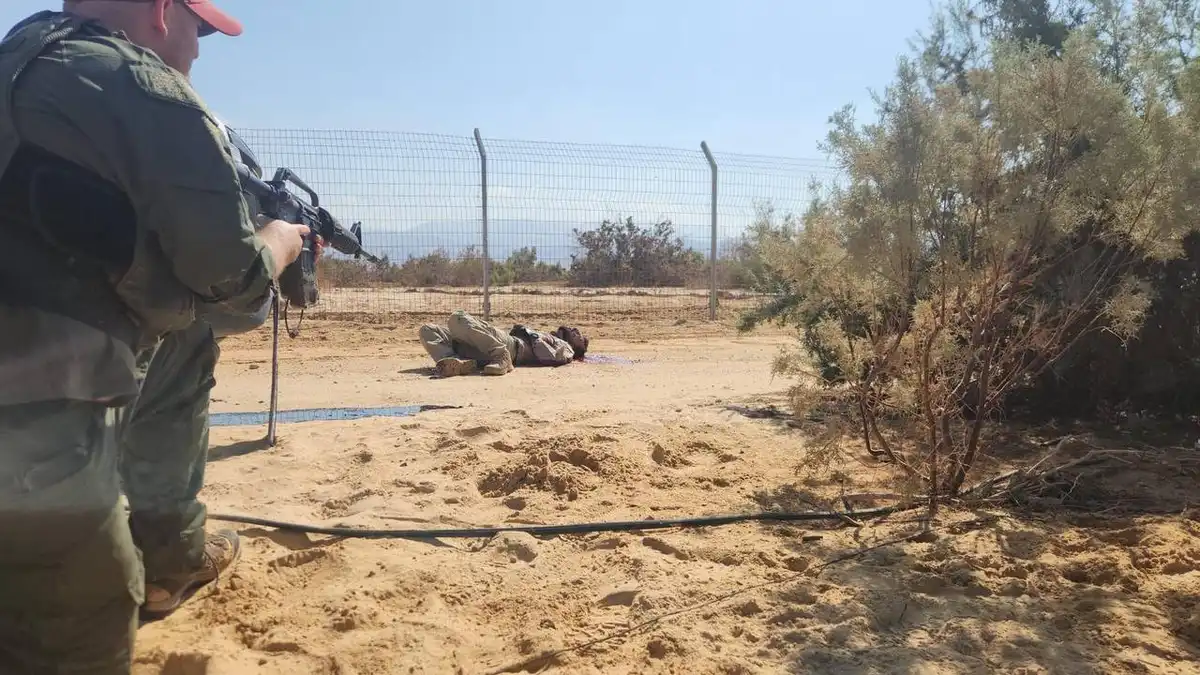
Two Israeli soldiers were injured in a shooting attack south of the Dead Sea, Israeli Army Radio said.


Israeli media reported that gunfire was directed at Israeli soldiers in the southern Dead Sea area, without giving further details.

PALESTINE

Fri 18 Oct 2024 10:42 am - Jerusalem Time

Updated:: Injuries in settler and occupation attack south of Nablus

Today, Friday, citizens were suffocated by toxic gas during clashes that erupted with the Israeli occupation forces, following an attack by settlers on the village of Yatma, south of Nablus.


According to local sources, large groups of settlers, protected by occupation soldiers, attacked the villagers from three directions, prevented them from picking olives from their lands, and tried to assault them.


She added that the occupation soldiers fired live bullets, gas bombs and sound bombs at the citizens, which led to a number of them suffocating.

PALESTINE

Fri 18 Oct 2024 10:40 am - Jerusalem Time

Washington: Killing Sinwar enables Israel to declare victory and end the war

For more than a year, the fate of the leader of the Palestinian resistance movement, Hamas, Yahya Sinwar, seemed intertwined with the fate of the war in Gaza.


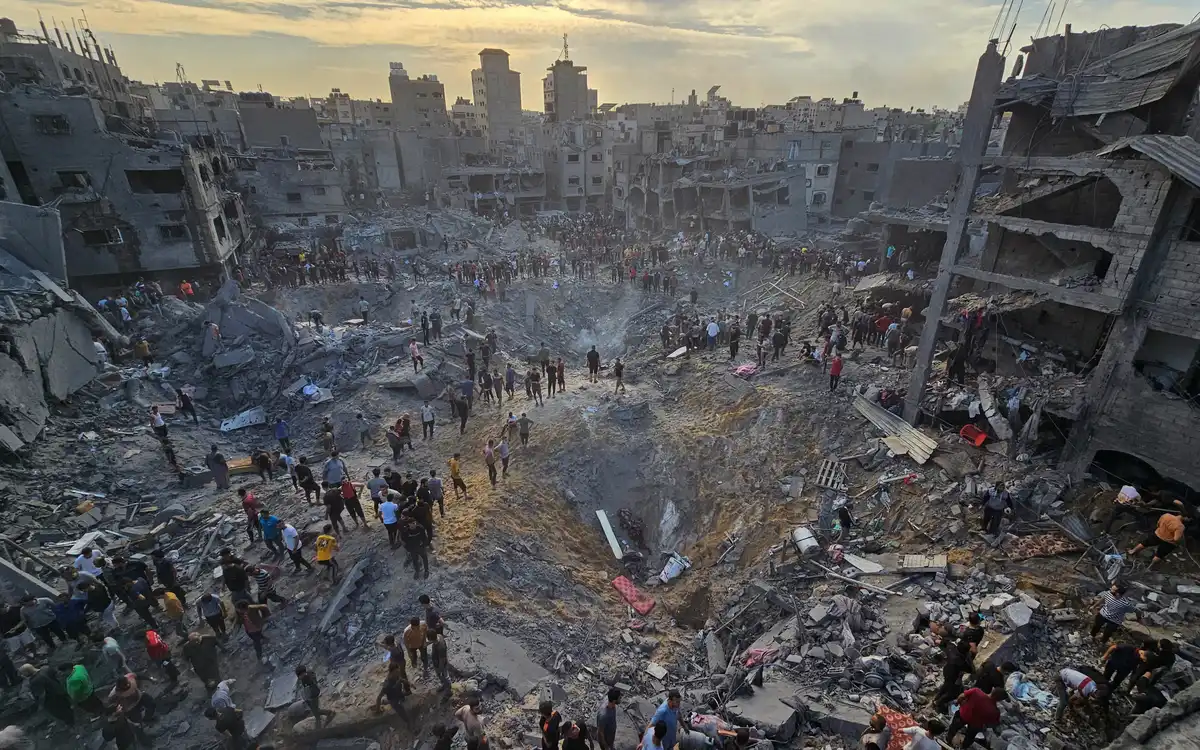
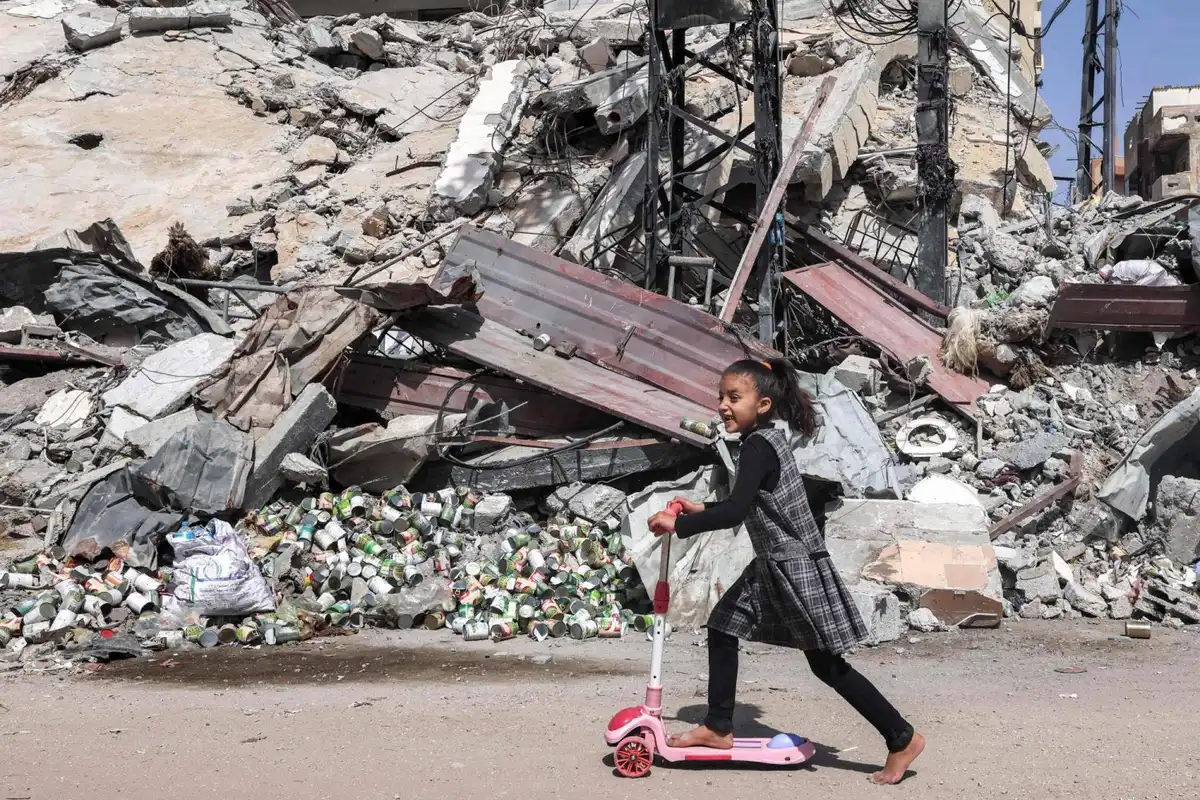
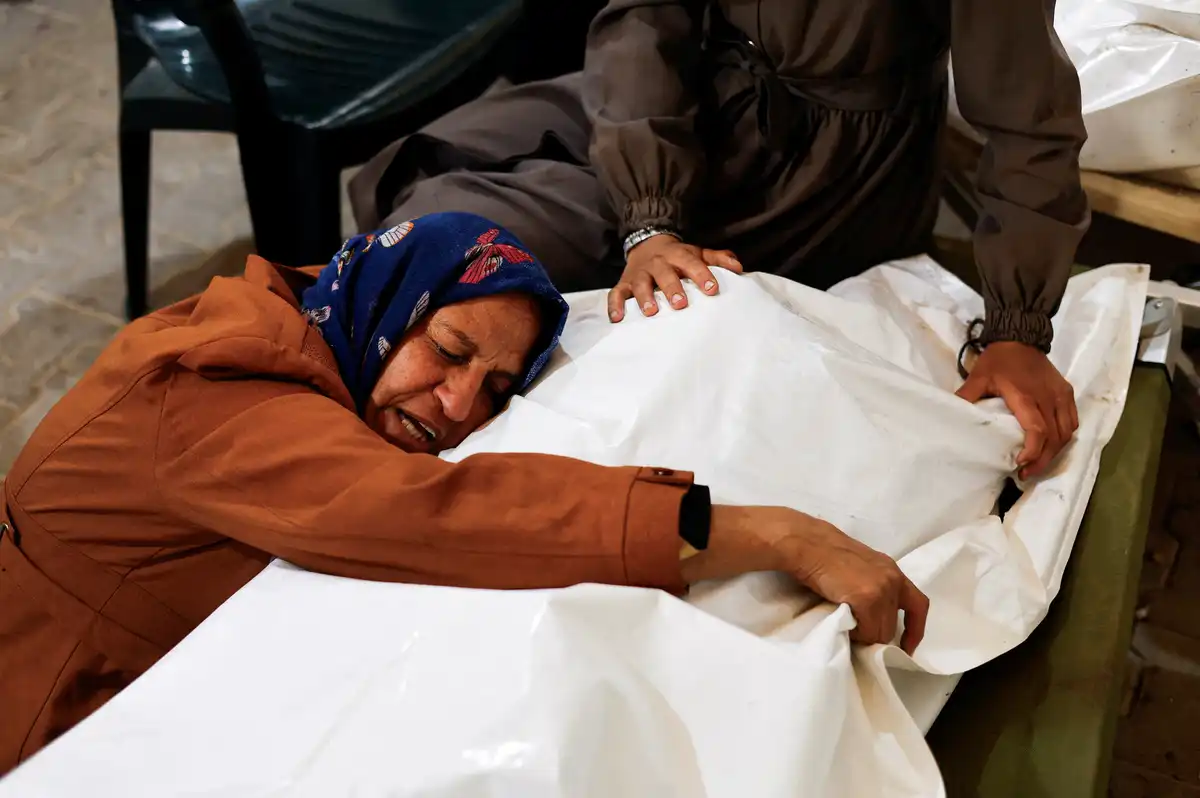
The US administration insists that Sinwar was the mastermind behind the Hamas fighters’ attack on the Gaza Strip, which is considered the most effective attack on Israel since its existence, on October 7, 2023, which resulted in the killing of up to 1,200 people, including 311 Israeli soldiers, and the capture of about 250 hostages, according to the official Israeli narrative, and prompted Israel to launch its barbaric war on the besieged Gaza Strip with unlimited and unprecedented lethal support from the administration of US President Joe Biden and his allies in Western Europe, which led to the killing of at least 43,000 Palestinians, most of them women and children, and forced all of the Strip’s 2.2 million residents to be continuously displaced, and a large part of the Gaza Strip was destroyed.


Sinwar, State Department officials believe, is the driving force behind Hamas’s refusal to surrender, even as Israeli airstrikes and ground invasions have devastated the Strip and displaced most of its population. His survival has also made it impossible for Israel to declare victory—living proof that Hamas, though battered, has kept fighting, and is not defeated.


“With Sinwar’s death, the path to some sort of truce in Gaza seems a little more navigable,” State Department spokesman Matthew Miller said Thursday in response to a question from a Jerusalem correspondent, because it gives both Israel and Hamas an excuse to soften their stance, according to Israeli and Palestinian analysts and some experts. But major obstacles remain — and any resolution in Gaza will have only limited impact on the broader conflict between Israel and Hamas’s regional allies, including Hezbollah.


Negotiations for a ceasefire and hostage release faltered in part because Sinwar held out for a permanent deal that would allow Hamas to retain power in Gaza after the war. His hardline position was at odds with that of Benjamin Netanyahu, the Israeli prime minister, who sought only a temporary truce that would allow Israel to return to the battlefield within weeks in order to prevent Hamas’s long-term survival.


Some American officials believe that after Sinwar's death, the remaining Hamas leaders may agree to make concessions that Sinwar had rejected.


In Israel, Netanyahu may now claim that Hamas has been defeated without the need for further war.


President Joe Biden and Vice President Kamala Harris have suggested that the killing of Hamas leader Yahya Sinwar could be the moment for Israel to declare victory and end its campaign in Gaza. But Israeli Prime Minister Benjamin Netanyahu says that’s not the end of the story.


The US administration is trying to push Sinwar’s death as a reason to renew ceasefire talks. “There is now a chance for a ‘day after’ in Gaza without Hamas in power, and for a political settlement that offers a better future for Israelis and Palestinians alike,” Biden said in a statement after Netanyahu’s speech. “Yahya Sinwar was an insurmountable obstacle to achieving all of these goals. That obstacle is no longer there.”


"Hamas has been eliminated and its leadership has been eliminated," said Harris, the Democratic candidate in the November 5 presidential election, speaking in Wisconsin. "This moment gives us an opportunity to finally end the war in Gaza."


Netanyahu’s far-right coalition partners are pressuring the prime minister not to accept past ceasefire proposals. Netanyahu needs these partners to stay in power — and perhaps stay out of prison on the corruption charges he is currently facing. Sinwar’s death could be a major political boon for Netanyahu, giving him more political support to continue the fight while Israel has all the momentum.


"It is time to increase the military pressure and step on the neck of the terrorist organization, until its complete defeat," Itamar Ben-Gvir, a far-right minister who previously threatened to resign from the government if the war ended prematurely, said in a statement.


The killing of Yahya Sinwar is Israel’s biggest victory yet in its war against Hamas in Gaza. It is also a major blow to Hamas, the organization Sinwar transformed into a fighting force that inflicted the greatest defeat on Israel in its history.


Sinwar was not killed in a planned operation by special forces, but rather by chance, which put him in a confrontation with the Israeli occupation forces that lasted for more than 18 hours in Rafah, south of Gaza, thus dispelling the American narrative that Sinwar was hiding in tunnels deep underground with the Israeli hostages.

OPINIONS

Fri 18 Oct 2024 10:11 am - Jerusalem Time

Sinwar's departure

op-ed - Al-Quds dot com

op-ed - Al-Quds dot com

Opinion Writer

After Israel announced the killing of Yahya Sinwar, head of the political bureau of Hamas, after a tank fired a shell at a building in the Tel al-Sultan neighborhood in Rafah, and the long hours of waiting to know the fate of Sinwar, who was martyred, the Palestinian resistance has presented a future leader, who passed away while he was on the battlefield, armed with his military uniform, so Palestine lost an icon of struggle, who occupied the world through the successful leadership of the Battle of the Flood of Al-Aqsa, and bearing the full responsibility and burden in managing a struggling movement that presented all the meanings of sacrifice and belonging.


After Sinwar's ability to lead the confrontation for more than twenty years, including a year in which he occupied the world, the men's metals and values come to the surface. We are talking here about working in a difficult time, amidst the harsh challenges experienced by the Gaza Strip, the peak of which was the year of the flood of the Al-Aqsa battle, in which the resistance succeeded in penetrating the Israeli home front and steadfastness with a successful tactic, in which Israel and the United States were unable to detect Sinwar, despite all the technology available to them. However, it was insurmountable in the face of the intelligence and cunning of the seasoned man, who proved the falsity of the Israeli narrative by fleeing the battle, hiding under tunnels, and holding hostages as human shields. All of this was proven to be false through his presence above ground to lead the battle with merit and competence, in the position of a true leader.


Israel was quick to issue several statements on the tongues of its political and military officials alike, most notably its Prime Minister Benjamin Netanyahu, who sought in a short press conference to deliver an election speech, claiming that the war is not over, and that Israel must recover the detainees, saying: Israel has dealt a blow to evil in the Middle East, amid Israeli jubilation in which political circles in the occupied entity believe that Sinwar’s departure will open the way to reaching an exchange deal and ending the war in the way Israel wants, which means that military pressure and eliminating the leadership of the resistance are what will contribute to reaching the end point of the war, according to the Israeli vision.


It can be said that Israel will currently be panting after the exchange deal, and will do everything in order to bring it to light, in a programmed Israeli effort to show Sinwar as if he was the main obstacle in the path of negotiations, but without making any concessions, because the occupation is accustomed to the policy of deception, fraud and manipulation, and it is well aware that this process blessed by the United States may produce a new negotiating path in the absence of Sinwar in the form that Israel seeks and according to its standards, but the resistance, which represents a strategic approach, is not affected by the departure of a leader, and will certainly develop a plan to fill the void that Sinwar’s departure will leave, and will insist on our people’s just demands for the withdrawal of the Israeli army, ending the aggression, and rebuilding the Gaza Strip.


Leader Yahya Sinwar bravely advanced to battle, and offered himself as a sacrifice on the altar of freedom for the sake of his country and his people. He believed in the inevitability of victory, and he departs as a martyr to heaven, joining the caravans of martyrs from our people’s leaders and fighters.

OPINIONS

Fri 18 Oct 2024 10:09 am - Jerusalem Time

The American President... a political analyst, a position assessor, and a fire extinguisher!!

Dr. Asaad Abdulrahman

Dr. Asaad Abdulrahman

Opinion Writer

Since announcing that he would not run for a second term, President Biden has been described as a “lame duck” or even a “lame duck” – that is, a weak president in the last (read: most despicable) part of his term. This situation would have given him greater freedom to make crucial decisions without concern for domestic electoral pressures, had he not been imprisoned by the commitment to ensuring Kamala Harris’s success in the upcoming presidential elections, and also (perhaps most importantly) the commitment to the close alliance between his administration and Israel, despite his poor relations with Benjamin Netanyahu’s government. Such supposed and “hoped-for” decisive decisions could have stood in the way of Netanyahu’s fires had he seen the “American red eye” that heralds dangerous consequences. In fact, the Biden administration seems to have granted a “license” to Netanyahu’s government to continue killing “cheap-souled” Palestinians, while keeping the number below a hundred per day!


Biden, instead of exercising his influence on Netanyahu to stop the Zionist campaign in the Gaza Strip and Lebanon, we find him - despite the successive insults he received from the Israeli Prime Minister - having almost completely surrendered to the aggressive Israeli policy, and even turned into a "trumpet", and in the best of circumstances a "political analyst", or a "position assessor", or a "firefighter", despite his and his administration's increasing lack of confidence, not to mention his lack of knowledge, of what the Israeli government is facing militarily in the war it is waging. Despite all this, we find President Biden, his administration and its decision-makers persisting in providing various types of support to Israel, whether under the table or above it, the latest of which is direct public American participation through the provision and operation of the "Thaad" system!


This submission to Netanyahu’s wishes reflects the weakness of the US administration in imposing its declared vision on its Israeli ally, which makes Washington appear weak before other allies in the Middle East and beyond. Instead of imposing conditions or presenting serious initiatives to resolve the crisis that are appropriate for it being the world’s superpower, the United States appears to be supporting Israel unconditionally, even if this contradicts America’s medium- or long-term interests in the region and the world.


There is a real concern that the US role could shift from being merely a supporter of Israel with money, weapons and diplomacy to a direct participant in an offensive war against Iran and its allies, which could seriously ignite the Middle East. If Israeli military operations against Iran’s allies escalate – as happened in the assassinations of Ismail Haniyeh, Hassan Nasrallah and others, and other operations in Yemen, Syria and Lebanon – the Iranian response could ignite a broad confrontation that could force the US to get involved, although the high human and political costs of such involvement would also further damage the Biden administration domestically, especially in light of the approaching presidential and congressional elections.


On the other hand, blind obedience to Netanyahu weakens America’s image as a superpower capable of imposing its will on its allies. Its reluctance to pressure Israel, despite the international community’s demands to stop the aggression against Palestine and Lebanon, makes the United States appear as a state subordinate to Israel! This decline directly affects Washington’s relations with its Arab and international allies, who view with concern the escalation of the conflict in the region and the United States’ failure to play its role.


Biden, who aspired to build strong regional alliances and reorder the global order, now finds himself in a weak position and unable to confront Netanyahu’s policies. This reminds us of the widespread joke about the UN Secretary-Generals (U Thant in particular and his successors after him, with the exception of the current Antonio Guterres) who were limited to “expressing concern” and “appealing” about events in the world!

OPINIONS

Fri 18 Oct 2024 10:06 am - Jerusalem Time

Lebanese unite under the slogan of priority to cease fire

Rassem Obaidat

Rassem Obaidat

Opinion Writer

The statement issued on Wednesday by the heads of the Lebanese religious sects during their meeting in Bkerke came to confirm the "Ain el-Tineh" tripartite appeal issued by the Speaker of the Lebanese Parliament Nabih Berri, the Lebanese Prime Minister Najib Mikati, and Walid Jumblatt, the former leader of the Progressive Socialist Party. This statement received the support of Hezbollah and the Free Patriotic Movement led by Bassil Gebran, meaning that most Lebanese were united behind the priority of a ceasefire, and then discussing the methods and mechanisms for implementing Resolution 1701 and electing a Lebanese president. The only exceptions to this consensus were the allies of America and Israel from the "Geagea" and the "Kafta", who subject their position and political decision to American and Israeli conditions and dictates.


Israeli Defense Minister Galant says that there will be no negotiations after the ceasefire, but rather negotiations will be under fire, and thus America and Israel want to take Lebanon back to 1982, when Israeli forces reached the heart of the capital Beirut, and American forces came and imposed on Lebanon a president under fire, the assassinated Bashir Gemayel, but the arrangements and agreement of May 17 did not last more than a year, as Gemayel was killed, and all Israeli-American arrangements collapsed. Today, the transformations and changes in Lebanon are not in the interest of America or Israel, and there is a parallel firepower that the party and the resistance do not hesitate to use, in defense of Lebanon's territorial integrity, sovereignty, and the safety of its citizens. What Galant says confirms that the targeting in Lebanon is far from being gains and border arrangements, but rather political and security prices, cutting off part of Lebanon’s territory for the benefit of the occupier. The plan does not only aim to establish a security zone, but rather to deploy multinational forces under Chapter VII of the UN Charter, which will have the right to pursue, deter, chase and search. In addition to that, Hezbollah will not be present on the border, but will withdraw to a distance of 22 km north of the Litani River, and Resolution 1559 will also be activated, so that multinational forces will be deployed on the Syrian-Lebanese border.


The Lebanese Hezbollah party was aware that it would be targeted immediately after the resistance front in the Gaza Strip was eliminated, and that Israel does not want to coexist with a powerful adversary that possesses military and armament capabilities that constitute a guarantee for Lebanon’s security and pave the way for protecting Arab national security. Therefore, the party’s insightful vision, especially its Secretary-General Sayyed Nasrallah, who was assassinated in the southern suburb by American F-35 aircraft, and the American technological, security and intelligence assistance and participation, and the use of American bombs weighing 900 kilograms that penetrate fortifications and reinforced concrete, and the implementation was Israeli.


From this standpoint, the party took the initiative on the second day of the October 7, 2023 battle to participate in supporting the Gaza Strip front, but after the occupation government expanded the scope of its aggression against Lebanon, to reach the capital Beirut and large areas of Lebanon, and carried out the most extensive killing, destruction and displacement operations against Lebanese citizens from the resistance environment and outside it. This was preceded by launching a war on the structure and environment of the party, as Israel sought through the silent triad to booby-trapped calling and signaling devices and carry out extensive assassinations against Hezbollah’s security and military leaders, and carry out unprecedented air strikes against Hezbollah’s structure and environment, leading to the assassination of the party’s Secretary-General, Sayyed Nasrallah. The goal here is clear: to push Hezbollah to collapse and disintegrate, and to destroy the system of command, communication, control and communication with field commanders, so that there is a political and military vacuum within the party, and thus it becomes a military without a compass and leadership, and a political one whose presence is reduced to the maximum extent in the institutions of the Lebanese state and Lebanese society. However, this party was able to restore its internal and organizational conditions in record time, and its Deputy Secretary-General, Sheikh Naim, said: Qassem said that there were no vacant positions in Hezbollah’s centers, and thus the party healed its wounds and rose, and the command, control and communication system remained operating effectively, although this large, wide and painful strike was enough to bring down major countries, but we found that this party had directed qualitative strikes at the occupation army, strikes that targeted the Golani Brigade base in the “Binyamina” base southeast of Haifa with drones, leaving 4 soldiers dead and 67 wounded, according to the Israeli admission, and this was followed by the fall of ballistic missiles on the Tel Aviv area and its surroundings.


Israel has entered a quagmire in Lebanon, and according to retired brigade commanders Yitzhak Brick, Israel Ziv, and others, Hezbollah has achieved accomplishments, and is capable of escalation and changing the equation, and is dragging Israel into a long war of attrition, leading it toward strategic weakness and failure. Israel had not yet recovered from the shock of the Binyamina base operations and the shelling of Tel Aviv, until the Ramya-Aita al-Shaab-Qawzah triangle ambush occurred, where Hezbollah fighters inserted an entire Israeli company into an ambush, through which they engaged that force from point zero and targeted them with appropriate missiles, and ten helicopters transported the dead and wounded occupation soldiers and officers to Israeli hospitals, leaving seven soldiers dead and more than 47 wounded, according to Israeli admission. The party intensified its bombardment of Haifa, the Golan Heights, the Western and Lower Galilee, the settlements in the north, Acre, Tiberias, Kiryat Shmona, Safed and Nahariya, drawing up the equation of Haifa versus the suburb. Instead of the occupation being able to re-settle the displaced from the north, the numbers of displaced settlers doubled, and the economic, military and political losses increased, not to mention the social and psychological crises, and the loss of confidence of Israeli society in the army’s ability to provide security and protection for them, or return the displaced settlers to their settlements.


The Deputy Secretary-General of Hezbollah said clearly in his third appearance that after the occupation expanded its bombing of civilians and comprehensive targeting of Lebanon, including the capital Beirut, the party has moved to the stage of national defense of all Lebanese territories, and the stage of inflicting the most severe pain on the occupation, through qualitative operations, whether on the land front, or targeting and qualitative operations with drones and missiles at the "Binyamina" base in Haifa, and targeting Tel Aviv with ballistic missiles. The party later announced the introduction of Nasr 1 and Qader 2 missiles into service, which have ranges of 100 km and 250 km, and are characterized by accuracy and the ability to target vital targets and the ability to maneuver and evade air defense systems and their systems that are secure from jamming.


Galant, who says that he rejects negotiations after a ceasefire, and that negotiations must be under fire, this position is supported by America, believing that the party will submit to such a demand, but the party responded through its deputy secretary-general, saying: “As Secretary-General Nasrallah said, between us are days, nights, and the field, and therefore the word will remain for the field, and Lebanon says with a unified voice, ‘No negotiations under fire,’ and no discussion of the mechanisms and applications of Resolution 1701, and no presidential elections, except after a ceasefire. The word is for the field, and the war has entered the stage of breaking bones and biting fingers.”

PALESTINE

Fri 18 Oct 2024 9:15 am - Jerusalem Time

Blinken's plan to manage Gaza away from the Authority... a leap in the air that will not succeed

Dr. Hassan Ayoub: What is currently happening on the ground is more dangerous than the “Deal of the Century,” and Blinken’s plan is nothing new and will not succeed

Bassam Zakarneh: Any attempts to pass political solutions away from the active factions will be doomed to failure

Khalil Shaheen: Blinken's plan is unworkable and trying to decide the fate of the Palestinians behind their backs is doomed to failure

Dr. Dalal Erekat: Any plan must be based on Palestinian national legitimacy and not by imposing solutions from outside

Magda El-Masry: Any plans for “The Next Day” are doomed to fail in advance if they go beyond the Palestinian position

Sulaiman Basharat: Talking about an American plan now reflects the Biden administration’s attempts to promote itself ahead of the elections


Reports of a plan by US Secretary of State Anthony Blinken for the so-called "day after" the war on the Gaza Strip, and the possibility of deploying international forces there while marginalizing the role of the Palestinian Authority and President Mahmoud Abbas, are raising controversy over the possibility of implementing it on the ground, amid fears that it may be more dangerous than the "deal of the century" proposed by former US President Donald Trump years ago.


In separate interviews with “I”, writers, analysts and political leaders believe that the plan being promoted comes within the framework of an ongoing American strategy aimed at normalizing relations in the region and establishing a regional alliance to confront Iran and its allies, while trying to eliminate Palestinian and Arab resistance factions.


According to leaders, writers and analysts, the success of this plan depends on the results of the upcoming US presidential elections, as well as the aggression on Gaza and Lebanon and the escalation between Israel and Iran.


They believe that the current situation is more dangerous than the "Deal of the Century", as Israel has succeeded in expanding its influence in the West Bank and signing normalization agreements, while seeking to separate Gaza from the West Bank.


They believe that there are great doubts about the possibility of the success of Blinken's plan, due to the social and factional complexities in Gaza and Israel's desire to control the Strip, and that any attempts to bypass the legitimate Palestinian leadership will be doomed to failure.


Blinken's plan re-promotes old ideas and nothing new


Writer, political analyst and specialist in American affairs, Hassan Ayoub, explains that US Secretary of State Anthony Blinken’s plan comes within the framework of the ongoing US strategy, which focuses on returning to the path of normalizing relations in the region, and establishing a regional alliance to confront Iran and its allies, while seeking to get rid of Palestinian and Arab resistance factions.


Ayoub points out that Israel and its allies believe that the intensity of the aggression on Gaza may pave the way for the passage of a settlement project according to their vision, but they do not know that this may clash with the war in Lebanon or with Iran.


Ayoub stresses that there is nothing new in Blinken's plan, as it re-promotes old ideas, especially talk of commercial and real estate projects in the Gaza Strip.


However, he stresses that the imposition of this plan depends mainly on the results of the upcoming US presidential elections, as they are based on the principle of regional normalization, as well as the results of the ongoing battles on the ground, whether in Gaza or in Lebanon and the ongoing war between Israel and Iran, which may hinder the implementation of these plans, stressing that these developments serve the interest of disrupting any US-Israeli settlement.


On the other hand, Ayoub points out that so far the Palestinian Authority has not issued any response to Blinken's plan.


Israel rejects any kind of political representation for the Palestinians.


Ayoub expresses his concern that the Palestinian Authority is adopting a strategy based on trying to "smart", that is, trying to improve the conditions for the Authority's survival in light of its inability to change the existing reality, but here the Authority must be aware that Israel absolutely rejects any kind of political representation for the Palestinians.


Ayoub believes that what is currently happening on the ground is more dangerous than the “Deal of the Century,” whose provisions were achieved after Israel succeeded in seizing large parts of the West Bank, as well as concluding normalization agreements, and seeks to completely eliminate the option of an independent Palestinian state. At the same time, Israel is trying to separate Gaza from the West Bank by establishing a separate entity in the Strip that has no political dimension, while undermining the work of the Palestinian Authority in the West Bank.


Ayoub explains that implementing Blinken's plan, if it happens, means ending any role for the Palestinian factions, despite the continued rejection of this plan by all components of the Gaza Strip.


Ayoub doubts the success of Blinken's plan due to the complex social and factional structure within the Gaza Strip, and Israel's desire to maintain its complete control over Gaza, and these two factors are likely to ultimately thwart Blinken's plan.


Any solutions that are not in line with the rights of the Palestinian people will be rejected.


Bassam Zakarneh, a member of the Revolutionary Council of the Fatah Movement, confirms that the Palestinian people, with all their components, place among their priorities the end of the ongoing suffering in the Gaza Strip in particular.


Zakarna stresses that any solutions proposed that are not in line with the rights of the Palestinian people will be met with categorical rejection, not only by the Palestinians, but by the Arab nation and the free people of the world.


Zakarneh believes that the plan proposed by US Secretary of State Anthony Blinken is part of the "illusion-selling" projects that aim to dismantle the Palestinian and regional arena in order to pass policies to reshape the new Middle East according to the American and Israeli vision.


On the other hand, Zakarna explains that there is a positive dialogue between the Fatah and Hamas movements that began in Beijing regarding ending the division and the form of management of the next stage after the end of the aggression against the Palestinian people, which will be carried out by a government of consensus between the two parties, with emphasis on the unity of government and the unity of reference in a way that guarantees the leadership of the Palestinian people in the West Bank and the Gaza Strip, with the aim of confronting any attempts aimed at ending the Palestinian Authority and the national factions or harming the reference of the PLO.


Zakarna confirms that there is a general awareness among all Palestinian forces that there is an attempt to target the representation of the Palestinian people by forming a new authority separate from its people and legitimate factions, led by America and some regional countries.


Zakarneh warns that any attempt to form an administrative committee that is not linked to the PLO and the Palestinian factions will be considered as a cancellation of the role of the factions, which is categorically rejected by everyone.


Zakarna asserts that Israel, America, and those behind them will not find in the Palestinian arena any new “village associations” or local militias like the “Lahad Army,” which Israel used in southern Lebanon during its occupation to pass treasonous projects.


Zakarna points out that the Palestinian people have become united today in the face of the bleeding unity and have set before their eyes one goal, which is to end the Israeli aggression, which must be crowned by the establishment of an independent Palestinian state with Jerusalem as its capital.


Zakarna stresses that Blinken's plan, or any other international project, will not succeed if it is not coupled with a political solution that guarantees the rights of the Palestinian people, most notably their right to establish their independent state.


Zakarneh stresses that any attempts to pass political solutions away from the legitimate Palestinian leadership and the active factions, headed by President Mahmoud Abbas and the Palestine Liberation Organization, will be doomed to failure.


Factors that make Blinken's plan unworkable


Writer and political analyst Khalil Shaheen believes that the plan currently being discussed by US Secretary of State Anthony Blinken does not seem feasible for several factors.


According to Shaheen, the first of these factors is the future of Blinken himself, who may not remain in his position after November 5 in any new administration formation after the elections, whether Trump or Harris wins, which makes it necessary to wait to know his fate, especially in light of the differences within the Democratic Party about how the Biden administration will deal with the Middle East crisis and the war on Gaza.


The other factor, Shaheen explains, is the existence of large gaps between the Emirati and Israeli positions, as well as between the American and Israeli positions. These gaps are primarily related to the issue of the end line of this plan, as the Emirates and the United States talk about a political horizon that includes a two-state solution, which Israel clearly rejects. There are even laws in the Knesset that prevent the establishment of an independent Palestinian state. In addition, there is an Israeli refusal to give any role to the Palestinian Authority in the Gaza Strip, which deepens the gap between the three parties: the United States, the Emirates, and Israel, and makes it difficult to bridge these differences.


Shaheen explains that the plan currently being proposed refers to the establishment of two separate entities: the first in Gaza under direct or indirect Israeli military rule, and the second in the West Bank, parts of which are controlled by the Palestinian Authority. However, the success of this plan would effectively mean separating the West Bank from Gaza, which contradicts the two-state solution that the United States and the Emirates are talking about, and serves Israeli interests that seek to continue the occupation of Gaza and even revive settlements in the northern part of the Strip.


Shaheen also believes that there is a third factor, the regional factor, which plays an important role. Shaheen doubts that influential countries in the region, such as Egypt and Jordan, will accept this plan. These two countries have clearly expressed their refusal to send any forces to Gaza unless fundamental issues are addressed, such as a complete Israeli withdrawal from the Strip and the unification of the Palestinian Authority to administer both Gaza and the West Bank, with a political horizon.


Another important factor is the exclusion of Palestinian factions and the Palestinian Authority from the ongoing consultations. According to Shaheen, trying to decide the fate of the Palestinians without involving them in these consultations will end in failure. He pointed out that Israel had previously tried to manage Gaza through various initiatives such as managing Gaza’s affairs through families, which was rejected. The ongoing military operations in northern Gaza also demonstrate the continued strength of Hamas.


In this context, Shaheen points out that Hamas and Fatah had agreed to form an administrative committee to administer Gaza, but disagreements over the nature of this committee, its powers and its reference led to a dead end, as happened in the Cairo talks.


More than a year after the war of extermination, Shaheen believes that the main problem is the absence of a clear and comprehensive Palestinian vision to deal with the challenges related to managing Palestinian affairs in the West Bank and Gaza, as well as the major challenges resulting from the war of extermination, including reconstruction, relief, and a ceasefire.


A comprehensive Palestinian dialogue is required.


Shaheen asserts that the absence of a coherent Palestinian vision regarding the day after the war, and how to manage the Gaza Strip as part of the Palestinian political system, leaves a political vacuum that is being filled by plans and ideas put forward behind the Palestinians’ backs.


Shaheen confirms that the Palestinian factions in Gaza continue to play a pivotal role in the resistance against the Israeli occupation, and it is likely to continue as long as the occupation remains, and those factions cannot be bypassed.


Therefore, Shaheen stresses that what is required is a comprehensive Palestinian dialogue that is not limited to the factions, but rather includes civil society and independents to reach a Palestinian vision capable of thwarting any initiative that is put forward, doubting the possibility of implementing these plans in the first place.


Major challenges related to international will


Dr. Dalal Erekat, Professor of Diplomacy and Conflict Resolution at the Arab American University, believes that the “day after” plan for war being studied by US Secretary of State Anthony Blinken, which was developed by the UAE and Israel, faces major challenges related to international will, especially with reliance on the US role in determining the course of events in the region.


Erekat points out that this plan includes the deployment of temporary international forces, and then the formation of a new Palestinian government, with clear marginalization of the role of President Mahmoud Abbas and his government. However, Erekat believes that this marginalization is completely unacceptable, as President Abbas is the legitimate elected representative of the Palestinian people, and the Palestine Liberation Organization is the sole representative on the international scene.


Erekat stresses that any plan must be based on Palestinian national legitimacy and respect for existing institutions, and not by imposing solutions from outside without national consensus.


She believes that imposing a plan without conducting a comprehensive Palestinian dialogue, including all parties and political movements, will deepen the internal division and will not serve the national interest.


Erekat warns of the danger of attempts to separate the West Bank and the Gaza Strip, or to ignore the role of the Palestine Liberation Organization, noting that this could undermine the unity of the Palestinian territories and threaten the Palestinians' right to self-determination.


A sustainable solution must come through comprehensive national unity.


Erekat stresses that the sustainable solution must come through comprehensive national unity and respect for the unity of the Palestinian territories, while strengthening national consensus and rebuilding the Palestinian political system on democratic foundations that accommodate all segments of society, including youth and women.


Erekat calls for caution in dealing with any international plan, demanding that the outcomes of the comprehensive Palestinian dialogue be the basis for any official Palestinian response to international proposals.


She stresses that ignoring the Palestinian factions in any political solution may deepen internal differences and undermine the chances of achieving a sustainable solution to the Palestinian issue.


Erekat believes that the best solution lies in involving all Palestinian parties in a transparent national dialogue to determine the future of Palestine as an integrated geographical unit, far from any attempts to impose solutions from outside without comprehensive consensus.


The Palestinian people will not pass the plan


Magda Al-Masry, Deputy Secretary-General of the Democratic Front for the Liberation of Palestine, affirms that the Palestinian people in the Gaza Strip, with their legendary steadfastness for more than a year in the face of the genocide practiced by Israel, and their resistance that has become a symbol of the struggle against the Israeli occupation army, will not pass the new Israeli-American plan that is being promoted by US Secretary of State Anthony Blinken.


Al-Masry says: “This plan, sponsored by Blinken with the support of the Emirates, seeks to legitimize the occupation through an Arab partnership and cover with a normalizing state.”


Al-Masry stresses the need to pressure the Arab League to stop such proposals and uncover them, stressing that the unified Palestinian position will be able to impose its will on some Arab countries that are calling for an end to the division and the restoration of national unity.


It stresses the importance of intensifying Arab and international diplomatic efforts to curb these plans, which essentially aim to liquidate the Palestinian cause.


Al-Masry believes that any plans for the so-called "day after the war" are doomed to failure in advance, as the Palestinian popular and official position and the resistance factions cannot be ignored.


She explains that the basis at this stage is the unity of the Palestinian position, which was adopted in the Beijing Dialogue and the Beijing Declaration, signed by 14 Palestinian factions, which requires immediate implementation of what was stated in it to confront the dangerous scenarios that are being proposed for the so-called “day after the war,” which basically aim to separate Gaza from the West Bank. This is the fundamental goal of the government of Israeli Prime Minister Benjamin Netanyahu and his War Council, which is to separate Gaza from the West Bank, bypass the Palestine Liberation Organization as the sole legitimate representative of the Palestinian people, and eliminate the resistance.


The need for a rapid convening of the unified and temporary leadership framework


Al-Masry calls for a quick convening of the unified and temporary leadership framework, which includes all the factions of the Palestinian national action and the Executive Committee of the Palestine Liberation Organization, and to begin forming a national consensus government that will be the body with legal jurisdiction in the West Bank and Gaza.


Al-Masry warns that any formula proposed to administer Gaza must be based on the Palestine Liberation Organization and the National Consensus Government, stressing that a unified Palestinian position would impose itself on the Arab countries that are calling for an end to the division and the restoration of national unity.


Al-Masry stresses that any formula for managing the Gaza Strip without clear, agreed-upon Palestinian references is rejected, and the Palestinian popular, official and resistance position cannot be ignored.


Al-Masry points out that such a formula for managing the Gaza Strip will contribute to separating the West Bank from Gaza and dividing the Palestinian territories, which essentially serves the Zionist liquidation project adopted by Netanyahu and Israeli Finance Minister Bezalel Smotrich.


This project, according to Al-Masry, aims to annex and resolve the final conflict over the land, according to the vision of the occupation government.


Al-Masry explains that Netanyahu has repeatedly announced his vision for the future of the Middle East, from the United Nations General Assembly, that the region be rearranged according to Israeli interests, and under complete Israeli hegemony and control, with the support of the United States.


Blinken's plan is the same as the "Deal of the Century" plan


Writer and political analyst Suleiman Basharat believes that talk of an American plan at this time reflects the Biden administration's attempts to promote itself ahead of the upcoming US elections.


Basharat believes that presenting the plan at this stage, especially with the end of Biden's term approaching and the return of the Democratic administration not guaranteed, is part of a political campaign aimed at demonstrating the administration's presence on the international stage, in an attempt to record a media "achievement" related to the war in Gaza.


Basharat points out that talking about this plan at this time represents an attempt by the US administration to attract critical groups, such as the Arab and Islamic communities, by suggesting that the Democrats are able to provide solutions if they are re-elected.


Basharat doubts the possibility of this plan seeing the light of day, as he considers it merely a marketing attempt by the Biden administration aimed at satisfying the American street, and does not have any serious elements to achieve success.


Basharat believes that this plan will face the same fate as many previous initiatives that failed to end Palestinian rights and provide achievements for Israel, making its fate linked to the desires of the occupation and ignoring the rights of the Palestinian people.


Unrealistic plan


Basharat stresses that the plan that Blinken is talking about is far from realistic, but rather is seen as part of an internal marketing strategy aimed at supporting the Biden administration in the United States.


On the other hand, Basharat believes that the American and Israeli goals are identical regarding the war on Gaza, as the United States aims to end the Palestinian resistance and the entire regional axis of resistance.


Basharat explains that Israel seeks to dismantle the resistance forces in a comprehensive manner, pointing out that what Israel is doing on the ground reflects its desire to continue the war, and not to accept any political solutions even if they are in its favor.


He stresses that the continuation of the war serves the goals of Israeli Prime Minister Benjamin Netanyahu, who seeks to achieve internal political gains and protect his future. In addition, the war aims to reshape the intellectual and ideological structure within Israel, a process that began with judicial reforms and now extends to the army and influences other political currents.


Basharat believes that any American plan presented to Israel at this time will not receive serious attention from the Israeli side, because it is not consistent with Netanyahu's goals and strategy.


Basharat describes US Secretary of State Anthony Blinken's plan as merely a "public relations plan" aimed at marketing media achievements, without any realistic basis or acceptance from the concerned parties, whether from Israel or some regional countries that may object to certain provisions in it.


Basharat believes that this plan represents an extension of the “Deal of the Century,” as it seeks to isolate the West Bank from the Gaza Strip and establish a Palestinian entity in the Strip, which aims to empty the Palestinian issue of its political content and transform it into an administrative and humanitarian issue.


This approach, according to Basharat, ignores the basic Palestinian demands for liberation from the occupation, and prefers to present solutions based on managing the status quo.


Regarding the impact of this plan on the unity of the Palestinian territories, Basharat believes that it seeks to establish separation between Gaza and the West Bank, which threatens to undermine the Palestinian political reference made up of Palestinian factions.


Basharat points out that implementing the plan will mean the end of the Palestinian political components and their legitimate umbrella, which is what Israel is looking forward to.


PALESTINE

Fri 18 Oct 2024 8:53 am - Jerusalem Time

UN: 345,000 will face catastrophic hunger this winter in Gaza

Some 345,000 Palestinians will face catastrophic hunger this winter in Gaza after aid deliveries declined, a UN assessment said, warning of the risk of famine across the territory.


"Commercial supplies are down. There is massive displacement, infrastructure is destroyed, agriculture has collapsed and people have no money," Arif Husain, chief economist at the UN World Food Programme, said yesterday.


The assessment, prepared by UN agencies and non-governmental organizations, noted that this number is compared to 133,000 people currently classified as suffering from "catastrophic food insecurity."


The Integrated Food Security Phase Classification (IPC) report said that increased humanitarian assistance during the summer somewhat alleviated the suffering of Gazans, but in September, fewer commercial and humanitarian supplies entered Gaza than in March.


As a result, the number of people facing catastrophic food insecurity (IPC Phase 5) is expected to reach 345,000 people, equivalent to 16% of the population, between November 2024 and April 2025.


The report said the recent "sharp decline" in aid access "will significantly limit families' ability to feed themselves and access basic goods and services in the coming months, unless the situation changes."


“All of this is reflected in the Integrated Food Security Phase Classification projections that the situation will deteriorate from November,” Hussein added.


It is estimated that about 60,000 cases of severe malnutrition are expected to be recorded among children between the ages of six months and four years between November and April.


“We must act now to reduce acute hunger and malnutrition,” said Beth Bechdol, Deputy Director-General of the Food and Agriculture Organization of the United Nations (FAO).


She pointed out that "hostilities must stop immediately and the ability to deliver essential and basic food aid and agricultural inputs must be resumed on time for the winter cropping season to allow them to grow food."

PALESTINE

Fri 18 Oct 2024 8:50 am - Jerusalem Time

Deaths and wounded, most of them children, as a result of the occupation targeting in Gaza

A number of citizens, most of them children, were killed and others were injured at dawn on Friday, when the Israeli occupation forces targeted several areas in Gaza City.


Palestinian Red Crescent paramedics confirmed that children were recovered after a missile attack by the occupation forces on a house in Al-Nasr Street, northwest of Gaza City. They were transferred to Al-Shifa Hospital, west of the city.


Paramedics reported that twodead from the Shahada and Hasaballah families were recovered from the Wadi al-Arayes area, east of the al-Zeitoun neighborhood, southeast of Gaza City, after they were targeted by Israeli army bullets. They were transferred to the Baptist Hospital in the city.


They pointed out that a number of citizens were injured after the occupation aircraft bombed the house of the Al-Husseini family near the Abu Mazen junction in the Tal Al-Hawa neighborhood, southwest of Gaza City. They were transferred to Al-Shifa Hospital.


The child Abdul Rahman Al-Dalo (12 years old) was also martyred due to severe burns he sustained, joining his mother and brother Shaaban, who were martyred by burning in the bombing of Al-Aqsa Hospital 4 days ago.


The occupation forces continue their aggression on the Gaza Strip, by land, sea and air, since October 7, 2023, which resulted in the death of 42,438 citizens and the injury of 99,246 others, the majority of whom are children and women, in an incomplete toll, as thousands of people are still missing under the rubble.

PALESTINE

Thu 17 Oct 2024 10:27 pm - Jerusalem Time

Settlers attack Jalud village south of Nablus

Settlers attacked the village of Jalud, south of Nablus, on Thursday evening.


According to local sources, settlers attacked citizens' homes with stones from the eastern side of the village, under the protection of the Israeli occupation army, amidst the firing of bullets and tear gas canisters, without any injuries being reported.

PALESTINE

Thu 17 Oct 2024 10:02 pm - Jerusalem Time

Israeli occupation is strangling Gaza by preventing commercial food imports

Israel has stopped processing traders' requests to import food into the Gaza Strip, according to 12 people involved in the trade, choking off a route that for the past six months has supplied more than half of the needs of the blockaded Palestinian enclave.


Since October 11, Gaza-based traders who were importing food from Israel and the occupied West Bank have been unable to access the system introduced in the spring by COGAT, the Israeli government body that oversees aid and commercial shipments, and have received no response.


A Reuters analysis of official Israeli data showed the shift has brought the flow of goods into Gaza to its lowest level since the start of the war.


The Coordination of Government Activities in the Territories unit did not respond to Reuters' questions about commercial food imports and aid to Gaza.


Between October 1 and 16, the overall flow of shipments into Gaza – including aid and commercial goods – dropped to a daily average of 29 truckloads, according to COGAT statistics. That compares with a daily average of 175 truckloads between May and September, the data show.


Commercial shipments – goods purchased by local merchants, transported by truck after receiving direct approval from the Coordination of Government Activities in the Territories (COGAT) unit, and then sold in markets in Gaza – constituted about 55% of the total during that period.


Two sources involved in food supplies said the reason for halting commercial shipments was Israel's concern that Hamas was getting revenue from imports.


A Hamas spokesman denied the allegations, saying the movement was trying to ensure aid was distributed in Gaza. He said the closure came as Israel launched a new military operation in northern Gaza, a development that has hampered the delivery of humanitarian aid.


Catastrophic hunger

The UN World Food Programme said in a statement on Sunday that the operation had halted all aid deliveries through crossings in the north for at least two weeks this month.


A series of measures taken by Israeli government departments and the military have reduced the delivery of food supplies to Gaza.


In August, Israeli authorities introduced a new customs rule on one of the aid channels, and began to reduce the separate route for commercial goods.


The global food security monitor issued a new warning on Thursday. The Integrated Food Security Phase Classification (IPC) said the recent escalation in hostilities could double the number of people in Gaza facing "catastrophic" hunger.


Before the war, about 500 trucks entered Gaza daily carrying a mix of aid and commercial imports, such as food, building materials and agricultural supplies.


Reuters spoke to five importers in Gaza, two businessmen who send goods from the West Bank, a Gaza business official and three people involved in delivering aid. "The situation has become miserable," said Ibrahim Baraka, a resident of southern Gaza.


“We have some non-perishable aid, but there is almost no fresh produce left. A kilo of onions costs $15 in southern Gaza,” he said, and five other residents, seven merchants and five humanitarian workers confirmed his account.


The main source of food for Gazans who cannot afford to buy from local markets remains international humanitarian aid organized by the United Nations, which is subject to security approval by the Office of the Coordinator of Government Activities in the Territories for each shipment.


PALESTINE

Thu 17 Oct 2024 9:37 pm - Jerusalem Time

UN: 345,000 people in Gaza at risk of hunger this winter

A report issued by the United Nations showed that about 345,000 residents of the Gaza Strip will face "catastrophic" hunger this winter, in light of the decline in the flow of humanitarian aid, warning of the risk of famine spreading throughout the Strip.


The report, prepared by UN agencies and non-governmental organizations, indicated that this number is compared to 133,000 people currently classified as suffering from "catastrophic food insecurity."


The Integrated Food Security Phase Classification (IPC) report confirmed that increased humanitarian aid during the summer contributed to alleviating the suffering of the people of Gaza, but in September, a smaller amount of commercial and humanitarian supplies were recorded entering the Strip, which raises concerns.


According to projections, the number of people facing catastrophic food insecurity is expected to reach 345,000 people, representing about 16% of Gaza’s population, between November 2024 and April 2025.


The reports said the “sharp decline” in aid entry would significantly impact families’ ability to feed themselves and access basic goods and services.


The economic situation in Gaza has deteriorated, said Arif Husain, WFP's chief economist, with "commercial supplies down, there has been massive displacement, infrastructure destroyed, agriculture collapsed, and people have no money."


Humanitarian aid

UN Secretary-General António Guterres has called for the urgent opening of border crossings and the removal of bureaucratic obstacles to ensure the delivery of essential humanitarian aid. He stressed that the current situation, with hunger and the risk of famine in Gaza, is “unacceptable.”


The Commissioner-General of the United Nations Relief and Works Agency for Palestine Refugees (UNRWA), Philippe Lazzarini, warned of the risk of famine in the Gaza Strip, which is suffering from widespread destruction due to Israeli military operations.


There are growing concerns that continued Israeli aggression and restricted access to humanitarian aid could lead to the risk of famine in the Gaza Strip. It is also expected that some 60,000 cases of severe malnutrition will be recorded among children between the ages of 6 months and 4 years.


On the other hand, the United States warned Israel that it may freeze part of its military aid estimated at billions of dollars if the delivery of aid to Gaza does not improve within 30 days.


The massacres in the Gaza Strip have been ongoing since October 7, 2023, as the Israeli genocidal war has resulted in more than 141,000 Palestinian martyrs and wounded, in addition to more than 10,000 missing persons, amid massive destruction of the infrastructure.

PALESTINE

Thu 17 Oct 2024 9:07 pm - Jerusalem Time

Netanyahu: Killing Sinwar does not end the war

Israeli Prime Minister Benjamin Netanyahu confirmed that the head of the political bureau of the Islamic Resistance Movement (Hamas), Yahya Sinwar, was killed in an Israeli army operation in the Gaza Strip, stressing that the war is not over.


Netanyahu added in a press conference today, Thursday, that the Israeli army will continue with full force until the detainees are returned, saying, "We have dealt a blow to evil, but the mission is not complete," according to his description.


He stressed that Hamas will no longer rule the Gaza Strip, and addressed the movement's fighters, saying, "To those holding the kidnapped, we say, free them and we will let you live."


He said the Middle East has an opportunity to stop what he describes as the "axis of evil", to bring peace and prosperity to the region, he claimed.


Minutes before Netanyahu's speech, the Israeli army confirmed that Sinwar was killed on Wednesday in clashes in the southern Gaza Strip.


Hamas has not yet commented on the Israeli announcement.


Israel considers Sinwar the mastermind behind the Al-Aqsa Flood operation on October 7, 2023, which killed more than a thousand Israeli soldiers and settlers.


PALESTINE

Thu 17 Oct 2024 7:37 pm - Jerusalem Time

Notice issued by Hamas Movement

The Islamic Resistance Movement (Hamas) issued a statement on Thursday evening regarding statements attributed to the movement’s leader, Khaled Meshaal.


The movement confirmed that Mashaal did not issue any statement or declaration regarding what was circulated.


The circulated statements attributed to Khaled Al-Meshaal stated that, “We must gather our papers and unite our ranks, and our hands are extended to any political solution that protects our people, and we agree to the PLO taking over all Palestinian affairs.”


Hamas reiterated that official statements and information are published on the movement's official website or its official page on the Telegram application.


This comes after the Israeli occupation army announced allegations of assassinating the head of the political bureau of Hamas, Yahya Sinwar, during clashes in Rafah, south of the Gaza Strip.


ARAB AND WORLD

Thu 17 Oct 2024 7:08 pm - Jerusalem Time

Guterres: Catastrophic level of hunger and risk of famine in Gaza is unacceptable

UN Secretary-General Antonio Guterres said the catastrophic level of hunger and the risk of famine in Gaza is "unacceptable."


Guterres indicated, in a post on the "X" platform, today, Thursday, that the results of the latest report of the United Nations Integrated Food Security Phase Classification are "worrying."


He explained that the catastrophic level of hunger and the risk of famine in Gaza, caused by Israeli restrictions on the flow of humanitarian aid, rising prices and levels of displacement, is "unacceptable."


He stressed the need to open the crossings urgently, indicating that this would enable the United Nations organizations to provide the necessary life-saving humanitarian aid.

PALESTINE

Thu 17 Oct 2024 6:59 pm - Jerusalem Time

A farmer was injured after settlers attacked him while picking olives east of Salfit

A farmer was injured on Thursday when settlers attacked him while he was picking olives in the village of Yasuf, east of Salfit.


According to local sources, settlers from the "Tafuh" settlement, built on citizens' lands, attacked farmers with stones while they were picking olives in the Al-Mushrifa area west of the village, which led to the injury of farmer Saif Suhail Khader Hussein with a stone in the head.


Abu Madi explained that the settlers are chasing the farmers and preventing them from picking olives in different areas of the village.


This year, the olive harvest season in the West Bank is witnessing repeated attacks by settlers and occupation forces, such as attacking farmers and preventing them from reaching their lands, burning and cutting down olive trees, and stealing the crop.

ARAB AND WORLD

Thu 17 Oct 2024 6:25 pm - Jerusalem Time

Evacuation of a building in central Beirut housing Al Jazeera’s office and two embassies following Israeli warnings

Employees evacuated a building in central Beirut that houses Al Jazeera's offices and the embassies of Azerbaijan and Norway, in addition to the Lebanese government's Audit Bureau building, on Thursday, after receiving Israeli evacuation warnings.


An employee of the Qatari Al Jazeera channel in the Beirut office said that they "received successive calls believed to be Israeli, warning them of the need to evacuate the building immediately."


Later, Al Jazeera reported via the "X" platform, quoting its correspondent in Beirut, that the employees of the channel's office in a building in central Beirut that includes the offices of the embassies of Azerbaijan and Norway evacuated it after receiving successive Israeli warnings.


The head of the Audit Bureau (affiliated with the government), Judge Mohammad Badran, stated in a call to the Lebanese News Agency that the Bureau “received a call via its landline warning of the possibility of its building being subjected to an Israeli attack.”


Badran explained that "the call was placed in the custody of the Lebanese security services to verify its authenticity and take the necessary measures if it was issued by people with the aim of spreading confusion."


After clashes with factions in Lebanon, including Hezbollah, which began after Israel launched a war of genocide on the Gaza Strip on October 7, 2023, Tel Aviv expanded the scope of the genocide since September 23 to include most of Lebanon’s regions, including the capital Beirut, through air strikes, and also began a ground invasion in the south.


PALESTINE

Thu 17 Oct 2024 6:17 pm - Jerusalem Time

Galant comments on the Hebrew media's announcement of the assassination of Yahya Sinwar

In his first comment after the Hebrew media announced the assassination of the head of the political bureau of the Islamic Resistance Movement (Hamas), Yahya Sinwar, in Rafah, south of the Gaza Strip, the Minister of Defense in the occupation government, Yoav Galant, said that Tel Aviv will pursue its enemies and eliminate them.


"Our enemies cannot hide. We will hunt them down and eliminate them," Galant wrote on his X account.

PALESTINE

Thu 17 Oct 2024 5:44 pm - Jerusalem Time

Settlers attack farmers while picking olives east of Tulkarm

This evening, Thursday, settlers attacked farmers while they were picking olives in the Ramin Plain, east of Tulkarm, and forced them to leave their lands at gunpoint.


According to local sources, settlers, one of whom was wearing an occupation army uniform and carrying a weapon, stormed the place, prevented them from completing their work of picking olives from their lands, and forced them to leave the area, indicating that the armed settler brought his sheep to the plain lands, in a provocative move against the farmers.


The sources added that this settler had previously seized areas of the plain's lands, and established a settlement outpost on them where he grazes his sheep. He constantly attacks farmers while they are working on their lands and forces them to leave them, in addition to the attacks of settlers coming from the nearby "Anab" settlement from time to time on the plain's lands, by burning and vandalizing trees.


This year, the olive harvest season in the West Bank is witnessing repeated attacks by settlers and occupation forces, such as burning and cutting down olive trees, stealing the crop, and preventing farmers from reaching their lands.


This morning, settlers opened fire on participants in an event organised by the Wall and Settlement Resistance Commission to help farmers from the village of Kafr al-Labad, east of Tulkarm, pick olives from their lands.


UN experts said yesterday that farmers in the occupied West Bank are facing the most dangerous olive season ever this year.


They considered that restricting the olive harvest season, destroying orchards and preventing access to water sources are attempts by Israel to expand its illegal settlements.