ARAB AND WORLD

Sat 19 Oct 2024 4:40 pm - Jerusalem Time

Blinken Considers Submitting Plan to Manage Gaza After US Elections

US State Department spokesman Matthew Miller said on Thursday in response to a question from a Quds.com correspondent regarding news reports that Secretary of State Antony Blinken is preparing to present a “post-Gaza war plan” and that the deadline will be after the elections: “So we have not made any decisions in this regard. We continue to consult with a number of countries in the region.”


“The Secretary has traveled extensively to talk with partners across the region — including Israel, including Arab states — about post-conflict plans for Gaza and how to establish governance, how to rebuild Gaza, how to rebuild people’s neighborhoods, how to provide a political path forward. But those discussions are ongoing.”


Asked by Al-Quds.com about the depth of these consultations, the role of the Israelis, the Emiratis, etc. in presenting some kind of “day after” plan, and whether he had details on that, Miller said, “Our Emirati partners, our Israeli partners, and other countries in the region as well. This has been the subject of a number of trips the minister has made and has been the subject of ongoing diplomatic conversations.”


"I won't speculate from here when we might put forward some kind of proposal, but we are very busy agreeing with our partners in the region on a proposal to provide real security, real governance and a political path forward for the Palestinian people."


Asked by Al-Quds.com whether the Israelis wanted to see a less important role for the Palestinian Authority, Palestinian President Mahmoud Abbas and the Palestine Liberation Organization, and whether the US administration would accept that, Miller said, “We have always made clear that one of the principles we are committed to is the unification of the West Bank and Gaza under the control of the Palestinian Authority, where the people of the West Bank and Gaza can choose their leadership, not anyone else.”


The American website "Axios" reported on Wednesday that American officials said that US Secretary of State Anthony Blinken is studying a post-war plan for Gaza based on ideas developed by Israel and the United Arab Emirates, which will be presented after the presidential elections.


According to the site, many officials in the White House and the State Department are concerned that the plan would marginalize Palestinian Authority President Mahmoud Abbas and his government, which is what Israel and the United Arab Emirates are pushing for in the near term.


But with no deal in sight to release Hamas hostages and establish a ceasefire in Gaza, presenting a “day after” plan “could be a potentially positive part of the Biden administration’s legacy on the conflict,” the site said.


Axios claims to have spoken to a dozen US, Israeli, Palestinian and Emirati officials with knowledge of the issue for this story.


Some in the State Department, including Blinken, believe that a hostage deal and ceasefire do not appear possible before the end of the Biden administration, and so the Israeli-Emirati plan is a potential “Plan B” that could begin to chart a path out of the war, U.S. officials say.


But other officials inside the State Department say it is an unwise idea that serves only the interests of Israeli Prime Minister Benjamin Netanyahu and is certain to be rejected by the Palestinians, leading to its failure.


The Biden administration, Israel and the UAE have discussed various ideas for potential plans for months, US, Israeli and Emirati officials said.


Former British Prime Minister Tony Blair also took part in the discussions and put forward some of the original ideas for the plan, officials said.


Last July, President Biden's Middle East adviser Brett McGurk and State Department adviser Tom Sullivan met in Abu Dhabi with Israeli Minister of Strategic Affairs Ron Dermer, a close associate of Netanyahu, and UAE Foreign Minister Abdullah bin Zayed to discuss the issue, according to the website.


The day before this meeting, the Emiratis presented their proposal in an op-ed by Bin Zayed’s special envoy, Lana Nusseibeh.


The plan called for the deployment of a temporary international mission to Gaza to provide humanitarian assistance, establish law and order, and lay the foundation for governance.


The Emiratis proposed sending soldiers to Gaza as part of an international force, but made this conditional on receiving a formal invitation from the Palestinian Authority after it had undergone “meaningful reforms and [is headed by] a new prime minister with authority and independence.”


"In practice, the Emiratis wanted to marginalize Palestinian President Mahmoud Abbas, who they say is corrupt and incapable of doing his job, and strip him of any executive authority. They also wanted to replace the current Palestinian Prime Minister, Mohammed Mustafa, whom they consider loyal to Abbas," the website said.


Another principle of the UAE plan was that it would be based on political leaders agreeing on a vision of a two-state solution for Israelis and Palestinians.


The website quotes Israeli officials as saying that Netanyahu liked many parts of the Emirati plan but opposes the most politically charged aspects, especially the Palestinian Authority’s participation in Gaza and the vision of a two-state solution.


"In recent weeks, discussions about the Israeli-Emirati plan have received renewed momentum, officials said," according to the website.


In late September, Dermer met with Abdullah bin Zayed and separately with Blinken, the point man on the Israeli war issue within the Biden administration, on the sidelines of the UN General Assembly in New York.


Both Abdullah bin Zayed and Dermer asked Blinken to help them bridge the remaining gaps between Israel and the UAE on the plan and then endorse it — or even turn it into a U.S. plan to be presented after the upcoming Nov. 5 elections, the officials said.


There is a remaining gap surrounding a new idea from the Emiratis that the plan includes reopening the US consulate in Jerusalem as a gesture to the Palestinians and a way to show that the US is invested in the plan and leading the process, but the Israelis have strongly rejected this idea, as have the Israelis who oppose any mention of a two-state solution.


But the main gap between Israel and the UAE concerns the precise role of the Palestinian Authority.


Emirati officials said the UAE wants the Palestinian Authority prime minister to appoint a Palestinian figure to help lead the transition in Gaza.


American and Israeli officials said the Israelis would not consider any possible role for the Palestinian Authority in the foreseeable future.


Two senior State Department officials told Axios that if Blinken presents a plan, it will include the ideas of Israel and the UAE as well as those of the United States, with the aim of gaining broader consensus in the region on the plan.


“We will not support the Day After plan without a role for the Palestinian Authority in Gaza,” a State Department official told the website. “What that role might look like is still under discussion.”


Axios claims that two US officials told it that the plan has become a highly contentious issue within the State Department, a source of fierce internal fighting and debate among Blinken’s advisers and, in some cases, between the secretary of state himself and some senior US diplomats.


U.S. officials say a key proponent of the Israel-UAE plan is Jamie Rubin, a former adviser to Blinken. Rubin has been working on the Gaza issue for Blinken in recent months and traveled with him to Israel in August, the officials said.


“The White House doesn’t like him and a lot of the people in the State Department who deal with this issue don’t take him seriously, but he has a voice on this issue and he’s close to Blinken,” a US official told Axios.


“Tony [Blinken] is seen as a serious person in the Biden administration and has the president’s attention,” said another US official working on the issue. “The sad thing is that the only person who thinks Jimmy is a serious person is Tony.”


Rubin declined to comment for this story. State Department spokesman Matthew Miller also declined to comment.


The website claims that a senior Palestinian Authority official told Axios that the Palestinian Authority is deeply skeptical of the Israeli-Emirati plan and stressed that he does not believe it can gain support in the region.


"Playing with the rule of Gaza is very dangerous. Any mistake could kill the Palestinian national project," he said, adding that any Palestinian figure who would be in charge of Gaza independently of the Palestinian Authority or not as part of the national consensus would have no legitimacy.

PALESTINE

Sat 19 Oct 2024 1:40 pm - Jerusalem Time

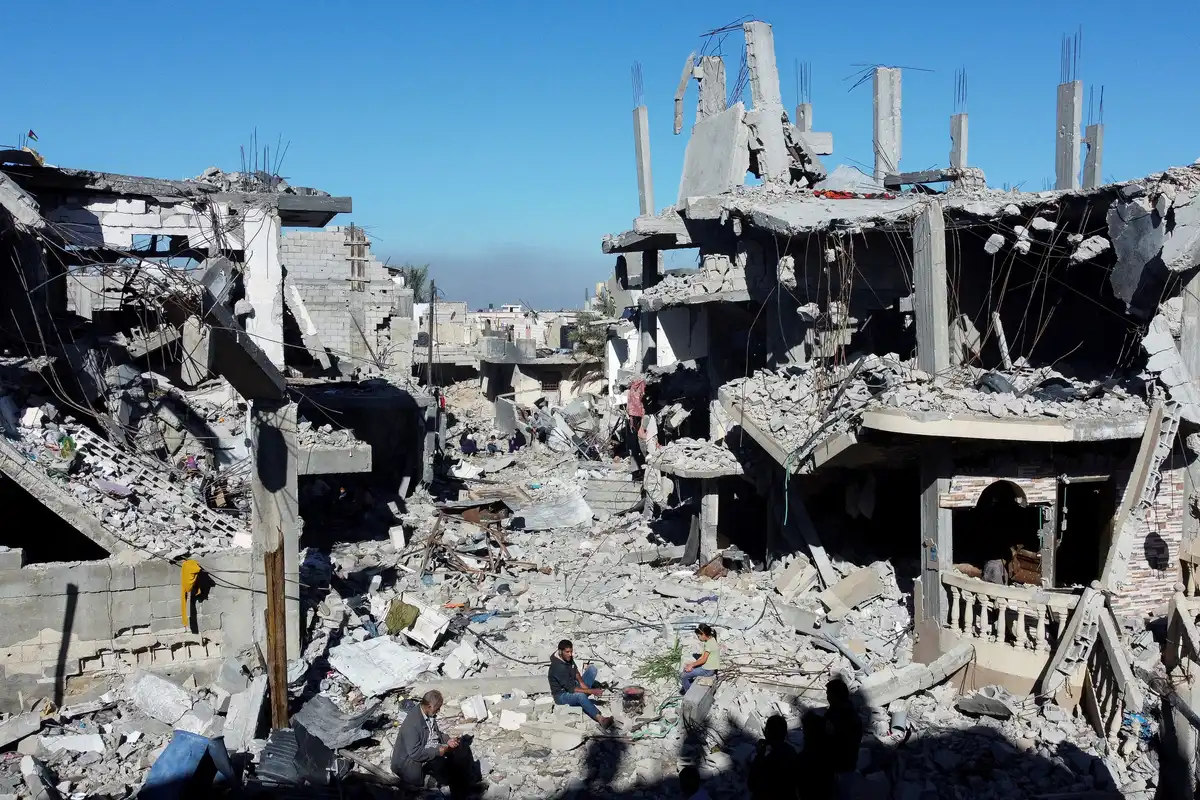
UN: Rebuilding Gaza will take 80 years

UN housing expert Balakrishnan Rajagopal confirmed that "reconstructing the Gaza Strip will take 80 years, if the Israeli occupation continues its aggression."


According to the official website of the United Nations, the independent UN investigator in charge of the right to adequate housing, Rajagopal, said that by January 2024, between 60 and 70 percent of homes in Gaza had been destroyed, and in the north the percentage was 82 percent.


"It's much worse now," he said, especially in the north, where the destruction rate is approaching 100 percent.


He said a recent report by the United Nations Development Programme estimated that in May there were more than 39 million tons of debris in Gaza, adding that the rubble was mixed with unexploded ordnance, toxic waste, asbestos from collapsed buildings and other materials.

"The pollution of groundwater and soil has reached a catastrophic level, to the point that we do not know if it can be treated in time," he added, noting that the sector has been exposed to "an unprecedented barrage of destruction" since October 7, 2023.


Asked how long it would take to rebuild Gaza, he said the rubble must first be removed, then funding must be found, and most importantly, reconstruction can only take place if the occupation ends.


He blamed Israel for this, which imposes restrictions on construction materials and equipment, which it claims have dual uses, noting that after the 2014 war in Gaza, less than a thousand homes were built each year.

ARAB AND WORLD

Sat 19 Oct 2024 1:19 pm - Jerusalem Time

New York: Demonstration in front of Black Rock demanding the withdrawal of its investments from Israel

Hundreds of activists and members of human rights organizations demonstrated in front of the headquarters of Black Rock, the largest asset management company in the world, to force it to withdraw its investments from Israeli companies and companies that support the occupying state, which has been practicing “genocide” against the Palestinian people for more than a year.


Activists called on the company's management to divest from Lockheed Martin, RTX, Northrop Grumman, Boeing, and General Dynamics, which manufacture weapons exported to Israel to kill Palestinians.


Activists stormed the company's headquarters last November to protest its investments in the occupying state, which exceed $33 billion.

ARAB AND WORLD

Sat 19 Oct 2024 1:12 pm - Jerusalem Time

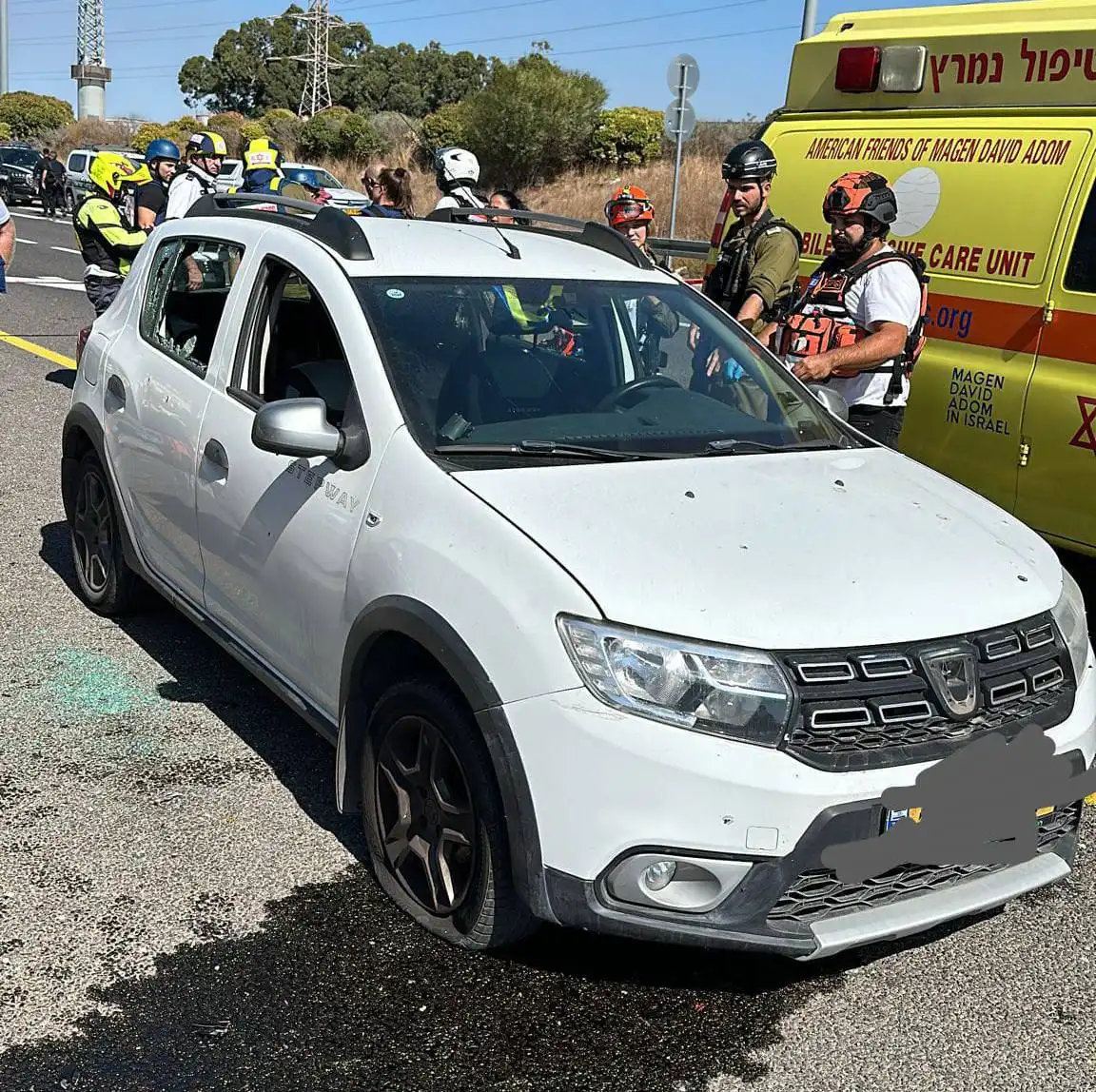
Israeli killed, 13 injured in rockets fired from Lebanon

Israeli Army Radio reported that one person was killed when a rocket fired from Lebanon fell on the Acre area.


The Israeli army reported that it had detected the launch of about 60 rockets from Lebanon towards the northern regions in the last hour, and that some of them had been intercepted.


The Israeli army radio quoted a military source as saying, "We have monitored the launch of more than 100 rockets since this morning towards the Galilee and Haifa Bay."


Lebanese Hezbollah said its fighters targeted a gathering of Israeli occupation soldiers in the settlement of Shlomi with a large barrage of rockets.


Israeli Army Radio reported that 13 people were injured by rockets fired from Lebanon since the morning.

PALESTINE

Sat 19 Oct 2024 12:56 pm - Jerusalem Time

Hebrew media: "Neutralizing" a Palestinian who tried to carry out an operation at the entrance to a settlement near Ramallah

The Israeli website "Walla" reported today, Saturday, that a Palestinian who tried to carry out an operation against a police car at the entrance to the Ofra settlement, north of Ramallah in the West Bank, was "neutralized."


According to the website, “A Palestinian terrorist attempted to carry out an operation by driving quickly towards a police car that was carrying out operations at the entrance to the Ofra settlement.”


He pointed out that "the terrorist was neutralized and there were no casualties among our forces."

PALESTINE

Sat 19 Oct 2024 12:37 pm - Jerusalem Time

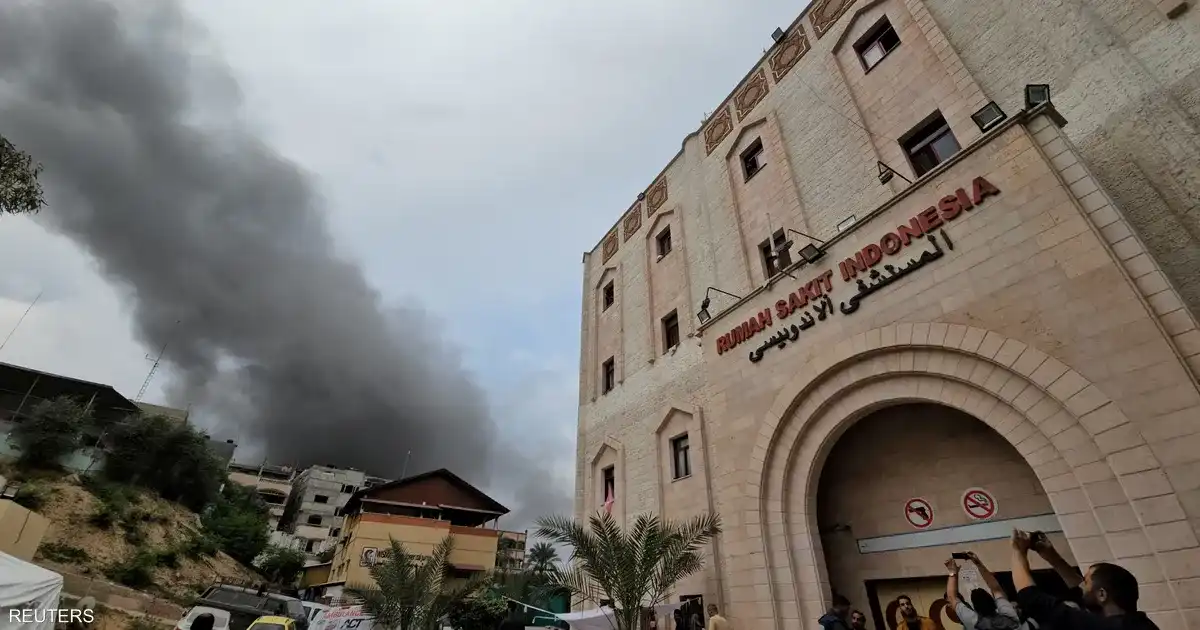
Two Palestinian patients die in Indonesian hospital due to siege and power outage

Two patients were d, Sadie suturday afternoon, in the intensive care unit of the Indonesian Hospital in the town of Beit Lahia, north of the Gaza Strip, as a result of the siege imposed by the occupation, and the interruption of electricity and medical supplies.


After the occupation forces besieged it and destroyed the electricity generator.


It is noteworthy that the occupation tanks surrounded the hospital since dawn today, and fired their shells towards its facilities, which led to the electric generator stopping working, due to the heavy gunfire.


The occupation tanks also bombed the second and third floors, and demolished part of the hospital wall.


For the fifteenth consecutive day, the occupation forces continue their air, land and sea bombardment of the northern Gaza Strip, preventing food, water, medicine and fuel supplies, destroying homes and blowing up entire residential blocks.

PALESTINE

Sat 19 Oct 2024 12:37 pm - Jerusalem Time

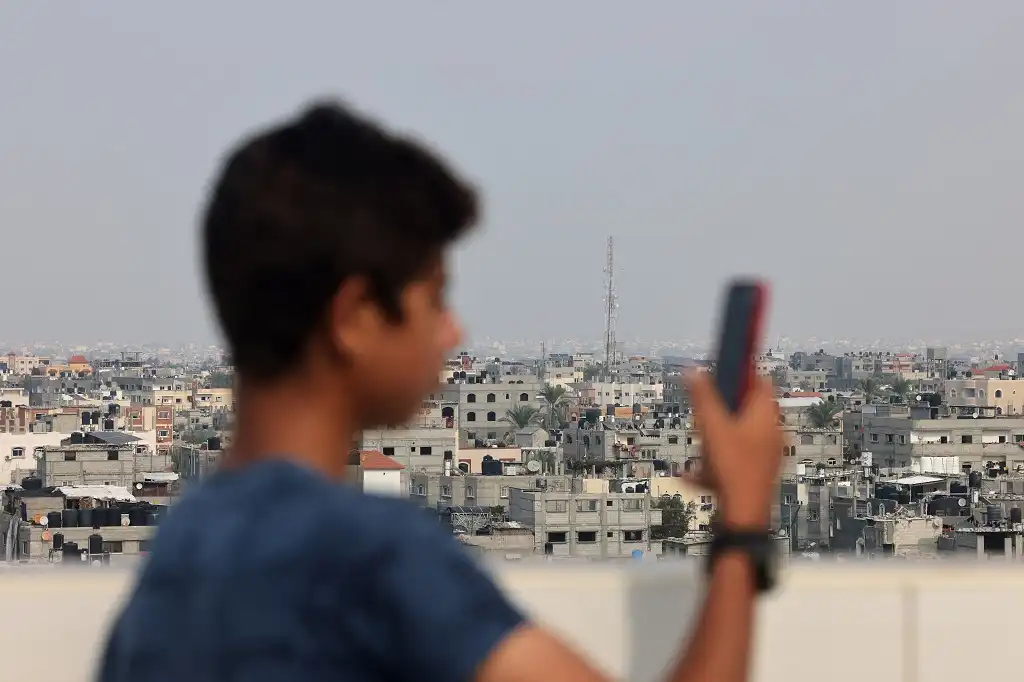
Complete interruption of internet services in the northern Gaza Strip

The Palestinian Telecommunications Company "Paltel" announced, this Saturday afternoon, a complete interruption of internet services in the northern Gaza Strip governorate, which has been subjected to a process of extermination and forced displacement by the occupation forces for 15 days.


The company stated in a statement to "Wafa" that the outages included most areas of northern Gaza, where there were scattered outages before it was completely cut off, noting that its crews are working hard to restore services as soon as possible.


The cutting off of communications and the Internet in some areas of Jabalia camp affects the ability of citizens to communicate with civil defense and medical services teams.


Since the beginning of the occupation's aggression on October 7, 2023, communications and internet services have been cut off several times in the Strip, or in large areas of it, as a result of the intensive bombing that affected the communications network infrastructure, or as a result of fuel running out.


Paltel had previously announced that a number of its employees had been killed while working to restore communications to citizens in the Gaza Strip.

Due to the cutting off of internet services in the north, journalists are facing great difficulty in covering field developments in light of the ongoing aggression.

PALESTINE

Sat 19 Oct 2024 12:35 pm - Jerusalem Time

Israeli occupation escalates its crimes of genocide and targets hospitals in the northern Gaza Strip

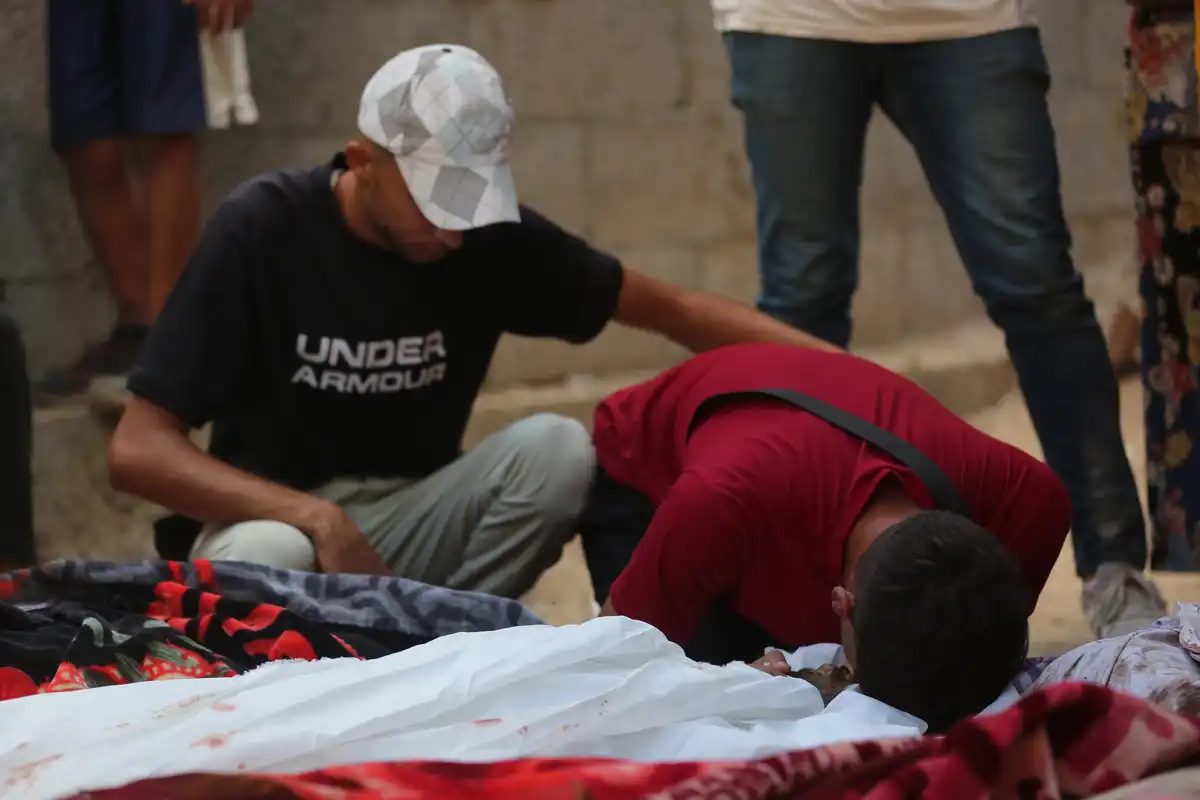
The Israeli occupation has escalated its ethnic cleansing crimes, committing horrific, bloody massacres that have claimed the lives of dozens of citizens, in addition to targeting hospitals and medical staff, on the fifteenth day of the tight siege on the northern Gaza Strip.

The occupation forces launched intensive air and artillery bombardment on Jabalia camp, Beit Lahia, and the areas of Saftawi, Tel al-Zaatar, Sheikh Zayed, and Tal Qleibo in the northern Gaza Strip, which resulted in the deaths of dozens of martyrs, including children and women.

Corpses in the streets

Medical sources reported that dozens of bodies are still scattered in the streets of the northern Gaza Strip, especially in Jabalia, where ambulance and civil defense crews were unable to reach them due to the intense Israeli bombardment.

The occupation also bombed dozens of houses in different areas of Jabalia camp, which led to the martyrdom and injury of many citizens.

The occupation's drones and vehicles are firing intensively, amidst continuous artillery shelling, coinciding with the movements of vehicles in Jabalia camp and its surroundings, which is being subjected to bombing, destruction, and burning of residential buildings, using explosive barrels and booby-trapped robots.

Dozens of families appealed to ambulance and civil defense crews to rescue them from under the rubble of their destroyed homes, and others from the fires raging as a result of the violent and intense occupation bombing.

targeting hospitals

The occupation tanks penetrated the northern Gaza Strip, reaching the gate of the Indonesian Hospital in the Sheikh Zayed area, besieging it from all sides, and demolishing part of its walls.

According to medical sources from inside the hospital, "the electricity was cut off, and it cannot be reconnected again, due to the dangerous situation and the presence of occupation forces in the area."

There are 30 injured people inside the besieged hospital, in addition to patients, 10 of whom need special care and oxygen around the clock.

Regarding Al-Awda Hospital in Tal al-Zaatar, north of the Gaza Strip, the occupation artillery shelled the upper floors three times, which led to the injury of a number of medical staff, one of whom was very seriously injured.

This comes in conjunction with the occupation forces continuing their campaign of extermination in the northern Gaza Strip for 15 days, by bombing homes and shelters, and blowing up, destroying, and burning entire residential neighborhoods, in addition to preventing the entry of food and water into the area, which has left hundreds of martyrs and wounded, in light of the almost complete disruption of the work of ambulance and civil defense crews, as a result of targeting them, or preventing them from performing their duties.

(350) thousand citizens were forced to flee due to the brutal bombing of the occupation by aircraft and artillery, and hospitals are still deprived of medical and non-medical supplies, which has directly affected their ability to provide medical services to patients and the injured. In addition, the reality in the northern Gaza Strip has led to the displacement of medical competencies, which has left citizens in a state of medical exposure.

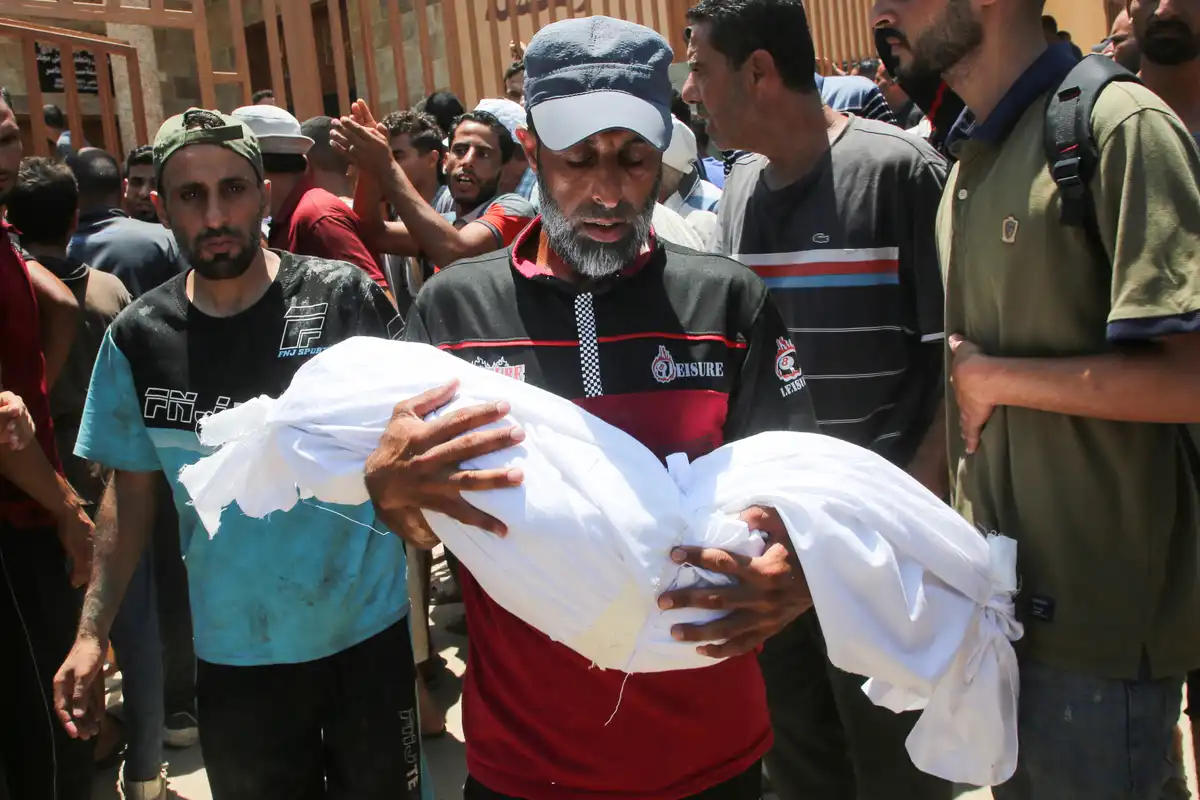
The occupation forces have continued their aggression on the Gaza Strip since October 7, 2023, resulting in the martyrdom of 42,500 citizens and the injury of 99,546 others, the majority of whom are children and women, in an incomplete toll, as thousands of people are still missing under the rubble.

PALESTINE

Sat 19 Oct 2024 11:26 am - Jerusalem Time

Report: Palestinian Farmers' suffering in this year's olive harvest season is more severe

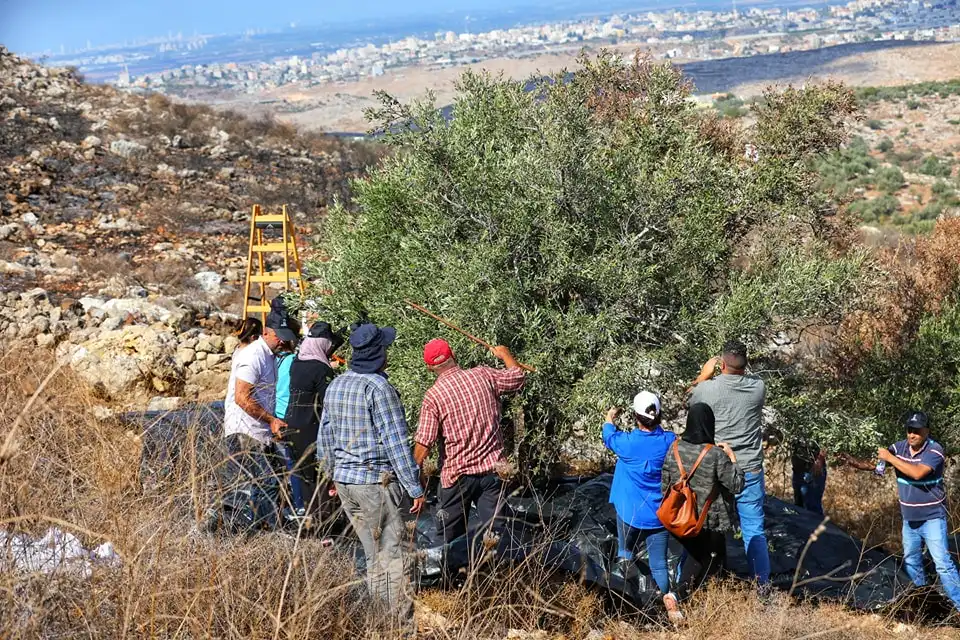
A report prepared by the National Bureau for Defending Land and Resisting Settlements stated that the suffering of farmers during this year’s olive harvest season is more severe than last year’s, due to the terrorism of the occupation and its settlers, which threatens to cause higher crop losses.

The office added in its weekly settlement report issued today, Saturday, that the terror of the settlers, under the protection of the occupation army, and the participation of Ben Gvir's gangs in attacking citizens during the olive harvest season, began early this year in various governorates of the West Bank, starting with preventing farmers from reaching their fields, through stealing the crop, burning olive trees, and ending with shooting at them, which led to the martyrdom of citizen Hanan Abu Salama (59 years old) by the occupation's bullets last Thursday.

It is expected that farmers will not be able to access 80,000 dunums of land planted with olives, which will lead to the loss of about 15% of this year’s crop.

According to the report: Wherever you go in the vicinity of the villages adjacent to the apartheid wall, and those close to the settlements and colonial outposts, you will find Ben Gvir’s emergency teams and the “Hill Youth” and “Price Tag” terrorist thugs confronting you.

He added: With the escalation of settler violence in the West Bank, the central unit of the Israeli police, under the leadership of "Avshai Moalem", who is close to Ben Gvir, stopped coordinating with the "Shabak", to limit, even on the narrowest scale, the settler attacks.

According to the newspaper "Haaretz", in its issue published last Sunday: "Officials in the "Shabak" confirmed in closed talks that the police unit is not doing its duty in dealing with the manifestations of violence and terrorism committed by settlers and elements of the extreme right against Palestinians in the West Bank.

According to its report, the unit commander, "Afshay Moalem," originally denies the increase in the level of Jewish terrorism in the West Bank, and refrains from coordinating with the relevant agencies.

On the level of colonial activities, the occupation authorities published last week a tender to build 286 colonial units in an open area to the north of the “Ramat Shlomo” settlement in East Jerusalem, which was seized through the application of the “Absentee Property” Law, according to a statement issued by the Israeli “Ir Amim” Association.

It is part of a plan to build a total of 650 units on an area of 71 dunams - which would expand this colony towards the Beit Hanina neighborhood.

The tender is scheduled to open for bidding on November 20, 2024, but the occupation authorities may decide to postpone the procedure. This plan would expand the aforementioned colony northward, to the edge of the built-up area of the Beit Hanina neighborhood, and achieve two goals of Israeli policy in East Jerusalem: first, to complicate the possibility of drawing the future borders of the Palestinian capital in Jerusalem, and second, to prevent the ability of Palestinian neighborhoods to expand and develop, in order to meet the needs of their residents.

The report indicated that the occupation authorities and settlement organizations are expanding the establishment of more colonial outposts in wartime conditions, as 43 illegal colonial outposts have been established since the beginning of the war.

For comparison, the settlers used to establish an average of about six outposts per year, while in the war year they established one outpost almost every week. These outposts are, according to estimates by Israeli organizations opposed to the settlements, linked by an umbilical cord to the violence of the settlers and the expulsion of Palestinian shepherds and farmers from their lands, a phenomenon that the head of the Shin Bet considers "Jewish terrorism."

Throughout the years of occupation, the olive tree has been a symbol of existence and steadfastness. In order to protect the land from the monster of colonialism, and from the occupation policy in general, the Palestinians began to expand the cultivation of the olive tree, especially in recent years after the Al-Aqsa Intifada (the Second Intifada). The area of land planted with olives in 2010 was about 462,824 dunams, of which about 21,509 were in the Gaza Strip, and in 2021 it became about 575,194 dunams, of which 33,633 dunams were in the Gaza Strip.

The annual production rate of olive oil, distributed among the governorates in the West Bank, is estimated at about 5,500 tons for Jenin Governorate, followed by Tulkarm at 3,500 tons, then Nablus, Ramallah, Salfit and the Gaza Strip at 3,000 tons each, Qalqilya at 1,500 tons, Hebron at 1,000 tons, Bethlehem at 600 tons, and finally Jerusalem at about 200 tons, while the production of olive oil in Jericho Governorate is almost limited.

After October 7, 2023, the olive tree became an integral part of the brutal war waged by the occupying state on the Gaza Strip, as well as in the West Bank, including Jerusalem.

In the Gaza Strip, the war had devastating effects on the olive sector, destroying more than 75% of the olive trees.

In the West Bank, last year’s season was extremely harsh for farmers, after the occupation authorities imposed a military tightening on the West Bank, and closed off large areas in the countryside to citizens with military checkpoints and earth mounds. The checkpoints and military gates between cities in the various governorates returned in a worse and harsher manner than they were in the Second Intifada (Al-Aqsa Intifada), and the earth mounds hindered the farmers’ ability to reach their fields.

In previous years, the occupation authorities required citizens to obtain permits to allow them to access their lands in certain areas, such as those located behind the wall (69 gates), or lands adjacent to settlements (more than 110 towns, villages, and communities, whose lands are located adjacent to 56 settlements and dozens of colonial outposts).

During the 2023 olive harvest season, the occupation authorities cancelled almost all of these approvals, effectively preventing farmers from accessing their lands. The agricultural gates along the apartheid wall remained closed, while the lands adjacent to the settlements were mostly closed by the occupation with earth mounds.

Consistent estimates from more than one source indicate that more than 96,000 dunums of olive-planted land throughout the West Bank were included in the occupation’s instructions as closed military zones, which resulted in the loss of a large olive crop.

The colonists practiced various forms of violence against the citizens, to prevent them from picking their olives.

The United Nations Office for the Coordination of Humanitarian Affairs (OCHA) documented 113 cases of attacks by settlers during the period between September and November of last year, ranging from attacks on Palestinians, damage to their trees, or the theft of their crops and harvesting tools.

Of these incidents, 10 resulted in injuries and property damage, 10 resulted in injuries but no property damage, 93 resulted in damage but no injuries, and more than 2,000 trees were vandalized during these incidents.

The highest number of incidents was in the governorates of Nablus (40) and Ramallah (31), and OCHA estimated that more than 10,000 olive trees were vandalized by settlers throughout the West Bank throughout the year 2023.

In nearly half of the incidents (46%), the occupation army is present at the scene of the incidents, and sometimes they join the settlers and violently assault Palestinians.

The following is a summary of the weekly violations:

Jerusalem: The occupation authorities bulldozed land, demolished water lines, a fence, tarpaulins, and a number of plants owned by citizen Marwan Darbas in the town of Issawiya, and demolished a facility for selling and filling medical oxygen, owned by the Badriya family in the industrial zone in Wadi al-Joz.

The demolition comes as part of the Silicon Valley project, which threatens to demolish industrial and commercial facilities, with the aim of building a technology zone (high-tech companies), hotels, and commercial spaces.

Hebron: The occupation forces bulldozed more than ten dunams of citizens’ lands planted with vegetables and fruit trees in the town of Beit Ummar, north of Hebron, in the “Al-Qarn” area, southeast of the town, causing heavy losses.

In the town of Dura in the south, the occupation prevented farmers from reaching their lands and picking olives in the areas of "Khalat Taha" and "Al-Abed".

Bethlehem: Settlers attacked the home of citizen Nader Abu Kamel in the village of Khalayel Al-Loz, southeast of the governorate, smashed its doors and windows, raised the flags of the occupying state around it, and cut down 20 olive trees.

Others bulldozed agricultural lands in the town of Battir, with the aim of expanding the borders of a colonial outpost in the area. Settlers and occupation soldiers also attacked shepherds while they were grazing their sheep in lands near the “Tekoa” settlement, and fired sound bombs and toxic gas at them, and assaulted them.

Ramallah: Armed settlers attacked olive pickers in the villages of Al-Mughayyir and Turmus Ayya in the north.

In the village of Al-Mughayyir, settlers attacked olive pickers in the plain area (Marj Al-Dhahab), Al-Hajar area, and Al-Rafid area, in an attempt to prevent them from picking olives.

In Turmus Ayya, dozens of settlers attacked olive pickers and forced them to leave their lands in the Dalja area east of the village. A young man was also shot in the foot with live ammunition during their attack on the village of Burqa east of Ramallah.

Nablus: Settlers attacked olive pickers in the Shaab al-Kharab area in Qusra, and demanded that they evacuate the area, under threat of arms and tear gas.

The occupation forces attacked olive pickers in the town of Asira al-Shamaliya, and seized the olive crop in the "Barnat" area on the eastern side of the town.

Settlers attacked olive pickers in the village of Jalud, forcing them to leave their lands.

In the village of Duma, settlers attacked citizens while they were picking olives in the western part of the village, and assaulted them. The occupation forces also expelled the olive pickers from their lands, attacked them with gas bombs, and forced them to leave their fields.

In the town of Beit Furik, the occupation forces forced Palestinian farmers to leave their lands while they were picking olives in the fields located on the western side of the town, threatening to arrest them if they returned to continue their work. The same thing happened on the western side of the village of Yanun, where a group of olive pickers were detained in Burin, south of Nablus, while they were working on one of the lands classified as (B).

Settlers also attacked citizens while they were picking olives in the village of Rojib, where they attacked farmers, sprayed them with pepper gas, and forced them to leave the olive fields.

Salfit: Settlers attacked citizens' vehicles between the towns of Rafat and Deir Ballut to the west with stones, under the protection of occupation soldiers. Others broke olive trees in the Wadi area, north of the village of Yasuf.

In the village of Kafr ad-Dik, the occupation forces demolished the house of citizen Samih al-Natour, which was under construction, under the pretext of building in the so-called “C” areas.

In Deir Ballut, the occupation army uprooted olive saplings, demolished a fence, and forced olive pickers to evacuate their lands. Farmers from the town of Haris near the “Rafafa” settlement were also raided, and forced to leave their lands while picking olive trees. During this raid, farmer Saif Suhail Khader Hussein was injured in the head with a stone after settlers from the “Tafuh” settlement, built on citizens’ lands in the Al-Mushrifah area west of the village, attacked him while he was picking olives in the village of Yasuf.

Jenin: Citizen Hanan Abdul Rahman Abu Salama (59 years old) was martyred after being shot by the occupation forces in the village of Faqqu’a, while she was picking olives with her family in the area near the racist separation and expansion wall built on the village’s lands.

Settlers from the "Homesh" settlement cut down dozens of olive trees in the town of Jaba, while the occupation forces demolished three greenhouses in the village of Al-Jalameh, northeast of Jenin, in the village's plain area, on an area of three dunams, owned by the brothers Amjad and Hisham Nader Abu Farha.

Tulkarm: The occupation forces prevented farmers in the town of Ramin from picking olives, and forced them to leave their lands, under threat of arms, and threatened them not to return to their lands, except after obtaining coordination and permits, under the pretext that the area is military. They also seized an agricultural tractor in the Ramin plain, owned by citizen Fayez Ahmed Fawzi Salman.

In the village of Beit Lid, settlers stole olives, while others attacked farmers while they were picking olives in the Ramin plain, and forced them to leave their lands, at gunpoint.

Meanwhile, an armed settler brought his sheep to the plain lands, in a provocative move against the farmers, and settlers opened fire on participants in an event organized by the Wall and Settlement Resistance Commission to help farmers from the village of Kafr al-Labad pick olives from their lands.

Jordan Valley: The occupation authorities have begun paving a colonial road in the northern Jordan Valley to the southeast of the village of Kardala, where the road is expected to reach the outskirts of Khirbet Ibziq. It covers large areas of land, as part of this land is owned by citizens, and the other part is mountainous pastoral land. The settlers had begun rehabilitating the road leading to the new colonial outpost, with the aim of displacing the residents of the community.

Settlers also stormed the Arab al-Malihat community northwest of Jericho, searched a number of homes, and placed signs on some of them, warning of imminent danger.

PALESTINE

Sat 19 Oct 2024 11:21 am - Jerusalem Time

UNICEF: Gaza is hell on earth for one million Palestinian children

The United Nations said, "One million children in the Gaza Strip are living in hell on earth, as about 40 children were martyred there every day, during the past year."

"More than a year after the Israeli war on the Gaza Strip, children continue to suffer indescribable daily harm," UNICEF spokesman James Elder said in a press statement.

"Gaza is the true embodiment of hell on earth for the one million children there. The situation is getting worse day by day. Estimates indicate that the death toll among children in Gaza has exceeded 14,100, which means that between 35 and 40 girls and boys are killed every day in Gaza," he added.

According to Elder, the figures provided, which estimated the total number of martyrs at more than 42,400, are reliable, and there are many, many more under the rubble.

He said those who survived daily airstrikes and military operations often faced horrific conditions.

Children were repeatedly displaced by violence and repeated eviction orders even as “deprivation gripped the entire Gaza Strip.”

"Where do the children and their families go? They are not safe in schools and shelters. They are not safe in hospitals. And they are certainly not safe in overcrowded camps," he asked.

PALESTINE

Sat 19 Oct 2024 10:03 am - Jerusalem Time

400,000 citizens face the horrors of the massacre of starvation and forced displacement in northern Gaza

377 days and the occupying state continues to commit the crime of genocide against the Palestinians in the Gaza Strip. For the thirteenth consecutive day, the Israeli occupation continues to commit the most heinous crimes in the northern Gaza Strip, where it has imposed a tight military siege on the areas of Jabalia, Jabalia camp, Beit Lahia and Beit Hanoun. The Ministry of Health has so far announced the deaths of nearly 400 martyrs, including about 80 whose bodies are still lying in the streets, and the occupation prevents access to them. Anyone who tries to retrieve them is at risk of being targeted. In addition, an unknown number of missing persons are still under the rubble as a result of the policy of bombing homes over the heads of their residents.


Hundreds of wounded are added to the record of this crime, in addition to the occupation forces forcing some citizens to follow illegal forced displacement orders under threat of death, as about 50,000 citizens were displaced from their homes immediately, while a stifling siege was imposed on those who remained, with the aim of starving them, and deliberately depriving them of treatment and health services, by targeting health sector workers, health facilities, ambulances, and civil defense. It even reached the point of targeting “Al-Yaman Al-Saeed Hospital”, putting it out of service, and killing and wounding those inside it from doctors, nurses, patients, and displaced persons, in addition to threatening “Kamal Adwan Hospital” with the necessity of evacuation. It is worth noting that Kamal Adwan Hospital is the most important and largest medical center that provides health services to northern Gaza, noting that it suffers from a severe shortage of all medical supplies, and everyone who currently receives treatment services in this hospital, especially premature babies, is considered on the verge of death due to the occupation’s siege of the north, and its prevention of the entry of aid and medical supplies.


The occupation also deliberately targets journalists, as the press helmet and protective shield have become an easy signal to target journalists, to prevent them from reporting the atrocities it is practicing against citizens and their capabilities in the north, where a number of journalists were martyred and injured in full view of everyone without anyone moving a finger, which confirms the occupation’s intent in targeting journalists, in a clear attempt to silence mouths, prevent them from documenting its crimes, and not provide arguments and evidence to pursue it in international courts, while continuing the approach of not holding the occupation accountable for its crimes, and continuing the approach of its impunity.


At the level of infrastructure and citizens’ property, the occupation destroyed the main headquarters of the United Nations Relief and Works Agency for Palestine Refugees, which is one of the most prominent stations through which aid is distributed, without any consideration for the legal and honorary status of the international institution that was established by international will. The occupation deliberately destroyed 7 water wells, in addition to destroying sewage networks, main roads, official headquarters, headquarters of some civil institutions, sports clubs, schools, and communications networks. It closed all entrances and exits to the aforementioned area with sand barriers, in addition to placing explosive barrels next to citizens’ homes and detonating them without any consideration for their lives, with the aim of destroying the largest possible number of homes and residential blocks, specifically in the western area of Jabalia camp. The occupation continues - until this statement is written - to target every moving creature, imposing house arrest on everyone who remains in their homes, without allowing them to try to stay alive, imposing death as their only available option, either by shooting from drones that never leave the skies of residential neighborhoods, or by artillery shelling or by fighter jets that continue to demolish homes on the heads of their residents, or by blowing up homes with explosive barrels, or by dying of hunger and thirst.


Accordingly, in light of these atrocities being committed before the world, and without any serious action to stop the occupation from continuing to commit its crimes, which aim to kill all chances of the Palestinian remaining on his land, we emphasize the following:


  • The need for all countries to take urgent and concrete measures to immediately stop the genocide committed by the occupation against the Gaza Strip.

  • The necessity for all countries to stop supplying weapons to the Israeli occupation army, and for all countries and their officials to refrain from providing any political cover for the crimes committed.

  • Urgently demand the opening of a humanitarian corridor, and ensure the entry of medical and food aid convoys into northern Gaza, under international supervision, while providing measures to ensure their arrival without being targeted by the occupation forces.

  • The necessity of preventing the occupation from continuing its plan aimed at displacing Palestinian citizens from their lands, especially northern Gaza.
  • Stop the deliberate targeting of medical personnel and facilities, with the aim of preventing them from carrying out their humanitarian duty, and the necessity of obligating them to facilitate their work.

  • Preventing the occupation from continuing to target journalists, punishing it for its crimes against journalists, and preventing its impunity.

  • Bringing humanitarian and medical aid into the northern Gaza Strip on a daily basis and under UN supervision, without any restrictions or conditions.

  • Allowing for urgent infrastructure repairs to enable citizens to obtain water and sanitation services at the very least.

  • Holding the occupation accountable for its crimes, in accordance with the requirements of international law and international humanitarian law.

ARAB AND WORLD

Sat 19 Oct 2024 9:08 am - Jerusalem Time

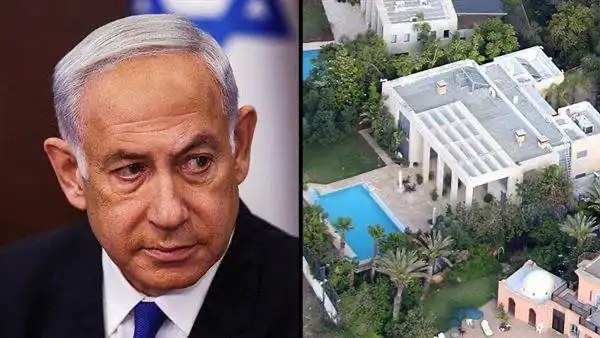
Drone explosion at Netanyahu's home in Caesarea

Israeli Prime Minister Benjamin Netanyahu's office said that a drone launched from Lebanon directly hit Netanyahu's residence in the Caesarea area and exploded inside it.


Netanyahu and his wife were not home at the time of the explosion, news reports said. The Hebrew website Walla reported that the drone that hit Netanyahu's home exploded despite Israeli military helicopters chasing it the entire time. News reports said the drone explosion caused a loud bang.


The Israeli occupation army said that it intercepted two drones launched today, Saturday, from Lebanon towards the north of the country, while a third exploded in a building in the city of Caesarea, south of Haifa.


In a statement published on its account on the X platform, the occupation army said: In the last hour, 3 drones crossed into the country coming from Lebanon, and two drones were intercepted.


The Israeli army added that the third march hit a house in Caesarea, without causing any injuries.


A video clip showed attempts to intercept the third drone and the sirens sounding after the failure to intercept it.

In Caesarea is the private home of Israeli Prime Minister Benjamin Netanyahu, where he usually spends his Saturdays.

PALESTINE

Sat 19 Oct 2024 8:34 am - Jerusalem Time

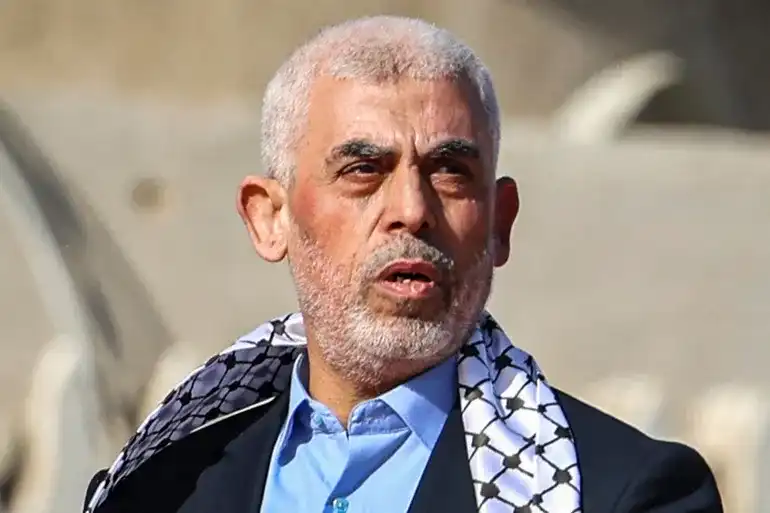
New York Times: A shot to the head killed Sinwar

The New York Times quoted the director of the Israeli National Institute of Forensic Medicine, Dr. Chen Kugel, who supervised the autopsy of the Hamas leader, as saying that Yahya Sinwar was killed by a “bullet to the head.”


"Shrapnel, possibly from a small rocket or tank shell, had earlier struck Sinwar's arm, causing bleeding that he was trying to stop using an electric wire as a tourniquet," Coogle added in an interview with the newspaper on Friday.


"Sinwar's use of the wire as a headband did not work, and his arm was shattered," Coogle told the newspaper.


The newspaper pointed out that there are unclear details in the incident of Sinwar's killing, such as "who fired the bullet, when, and with what weapon."


The Israeli military said Sinwar was killed by soldiers on a routine operation on Wednesday, adding that soldiers from the 828th Brigade (Beslach) were moving through the city of Rafah when they came across three Palestinian gunmen. The Israeli military said that while the soldiers pursued them, Sinwar became separated from the other two.


In a video shot by an Israeli drone, Sinwar sits alone, badly wounded and covered in dust amid the rubble of a building in the Gaza Strip, wrapped in a keffiyeh and staring directly into the camera. Israeli officials say the man was Yahya Sinwar, the Hamas leader.


The stare lasted about 20 seconds, then the man weakly but defiantly threw a broken piece of wood toward the drone. “Shortly after, officials say, an Israeli soldier shot himself in the head, and a tank shell destroyed part of the building,” the newspaper reported.


“Thus ended the long search for one of the world’s most wanted men, which began hours after the October 7, 2023, attack on Israel that Sinwar helped organize, and ended amid the destruction of a neighborhood in Rafah that resembles many parts of Gaza, and which Israeli military forces razed to the ground the year after,” the newspaper said.


"Israeli commandos and spies, as well as a special unit set up within the headquarters of the Israeli internal security service (Shin Bet) and the Central Intelligence Agency, took part in the manhunt. It used a sophisticated electronic surveillance network and ground-penetrating radar provided by the United States," the newspaper said.


New details have emerged about Sinwar's movements over the past year since his death, including the fact that Israeli intelligence officers have seen mounting evidence since August that Sinwar, or perhaps other senior Hamas leaders, may be in the Tel al-Sultan neighborhood of Rafah.


They observed people moving around with their faces covered, sometimes surrounded by what appeared to be guards, suggesting they were senior Hamas officials. In September, they found Sinwar’s DNA in urine collected from a tunnel, the newspaper claimed.


Sinwar was eventually discovered and killed in the Tel al-Sultan neighborhood of Rafah by chance, by a group of troops on a routine patrol. But Israeli forces had spent weeks combing the neighborhood based on intelligence that senior Hamas officials were hiding there, possibly with Israeli hostages.


Sinwar died above ground, a few hundred meters from a tunnel complex where he had been hiding this summer, according to Israeli officials, where six Israeli hostages were killed in late August.


This narrative of the hunt for Sinwar, and his eventual killing on Wednesday, is based on interviews with Israeli and American government officials, who spoke on condition of anonymity to discuss sensitive intelligence operations, as well as classified Israeli government documents obtained by The New York Times.


The newspaper says that Sinwar has been a ghostly presence since the attacks led by Hamas on October 7 of last year, and there have been only glimpses of him over the past year, and it is believed that he spent most of it moving from place to place, but experts believe that the way Sinwar was killed, in his military uniform, with his personal weapon, and with a small group, indicates that he fought alongside the movement’s fighters during the past year.


"However, he led Hamas forces in an ongoing war and was able to play an active role in negotiations for a ceasefire and the release of Israeli hostages," the newspaper said.

OPINIONS

Sat 19 Oct 2024 8:32 am - Jerusalem Time

Netanyahu... open excuses at sea!

Ibrahim Melhem

Ibrahim Melhem

Opinion Writer


As soon as an excuse slips through his fingers, he comes up with another in a series of extended excuses that have a beginning but no end.

After killing the "owner of the flood", the martyr Yahya Sinwar, whose head was a target and a pretext to prolong the aggression, the magician did not hesitate to pull out a new card from his pocket, under the influence of the ecstasy that intoxicated him, and raised his shares in the stock exchange of extermination that he has been practicing as a form of worship, and without mercy, for more than a year, taking advantage of the blindness of conscience that has afflicted the universe, as he watches the massacres of children in Jabalia, Rafah, Tel Sultan, and other neighborhoods and shelter schools, in which the killer exercises his excess power, and spews the poison of his hatred that is seething in his heart, without being satisfied after a year of waterfalls of blood that, if they were to flow in the Mediterranean, would change its name.


Netanyahu does not profit from the accuracy of his aim, as much as he profits from the mistakes of his enemies and opponents, and the coincidences that come at an unexpected time. He invests in coincidences to compensate for his losses in failures, which revealed the extent of weakness and the enormity of the fragility in the claims of strength, when a rusty bulldozer managed to penetrate walls that were said to be reinforced, in a resounding scandal. After that, the wounded wolf began killing, brutalizing, besieging, destroying, and starving the innocent, who eat their death morning and evening.

The war is not over... Netanyahu said, anticipating calls to end the massacre and open a path for negotiations; the magician's bag is still hiding more excuses, as the "last king of Israel" dreams of building a palace for himself overlooking the Gaza sea!

PALESTINE

Sat 19 Oct 2024 8:23 am - Jerusalem Time

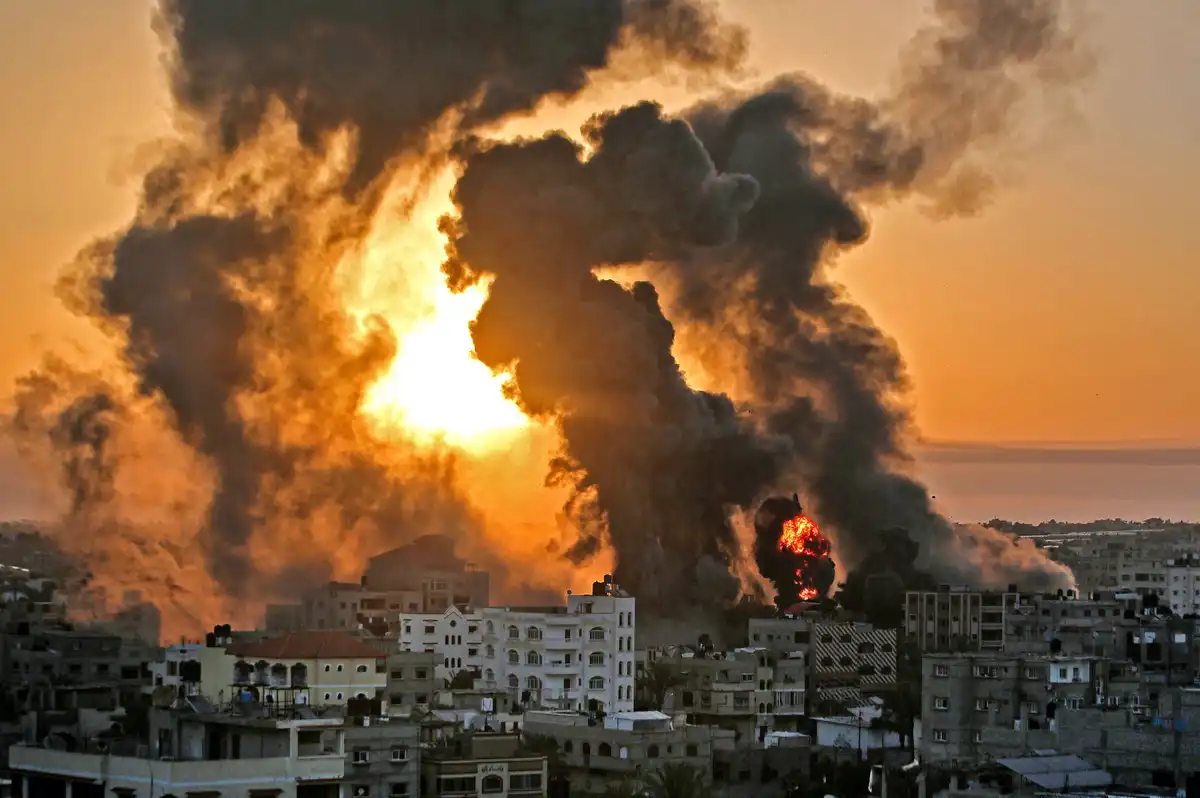
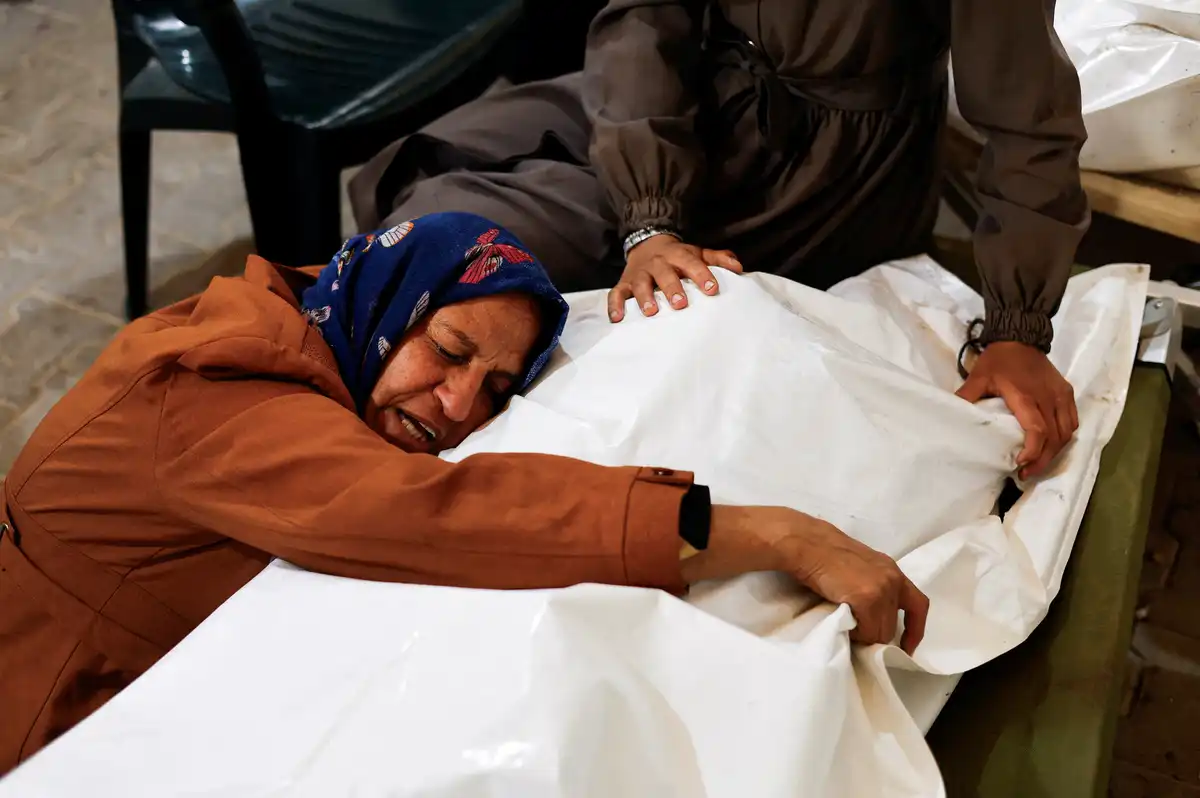
The genocide continues.. 33 killed in Israeli bombing of homes in Jabalia camp

Al Jazeera reported that 33 people were killed and more than 70 wounded as a result of the Israeli bombing of a number of houses at the Nassar junction in Jabalia camp, late Friday evening.


The government media office in Gaza said that among the martyrs were 21 women.


Al Jazeera also confirmed that the number of martyrs from the bombing of Tel al-Zaatar in northern Gaza had risen to 30, including 20 children and women, in addition to two martyrs and several injuries in an Israeli bombing that targeted a house in the Maghazi camp in the central Gaza Strip.


With this toll, the number of killed as a result of the Israeli raids on the Gaza Strip since dawn on Friday has risen to 64 dead, including 45 in Jabalia camp.


The director of Al-Awda Hospital said that the health sector is in a catastrophic situation due to the shortage of medical supplies, and the situation in the northern Gaza Strip is indescribable, as the number of martyrs is expected to rise in the coming hours due to the lack of medical capabilities.


A medical source said that the medical teams at Kamal Adwan and Al-Awda hospitals are unable to deal with the many injuries resulting from the occupation's bombing.

ARAB AND WORLD

Fri 18 Oct 2024 10:51 pm - Jerusalem Time

10 killed in Israeli raids on towns in Tyre and Nabatieh

The Lebanese Civil Defense said that 10 citizens were killed in Israeli raids that targeted several towns in the Tyre and Nabatieh regions in the south.


Sources reported that two Israeli raids targeted the towns of Kafra and Majdalzoun in the south of the country, while two other raids targeted the Hermel region in the Bekaa Valley (east).

ARAB AND WORLD

Fri 18 Oct 2024 9:07 pm - Jerusalem Time

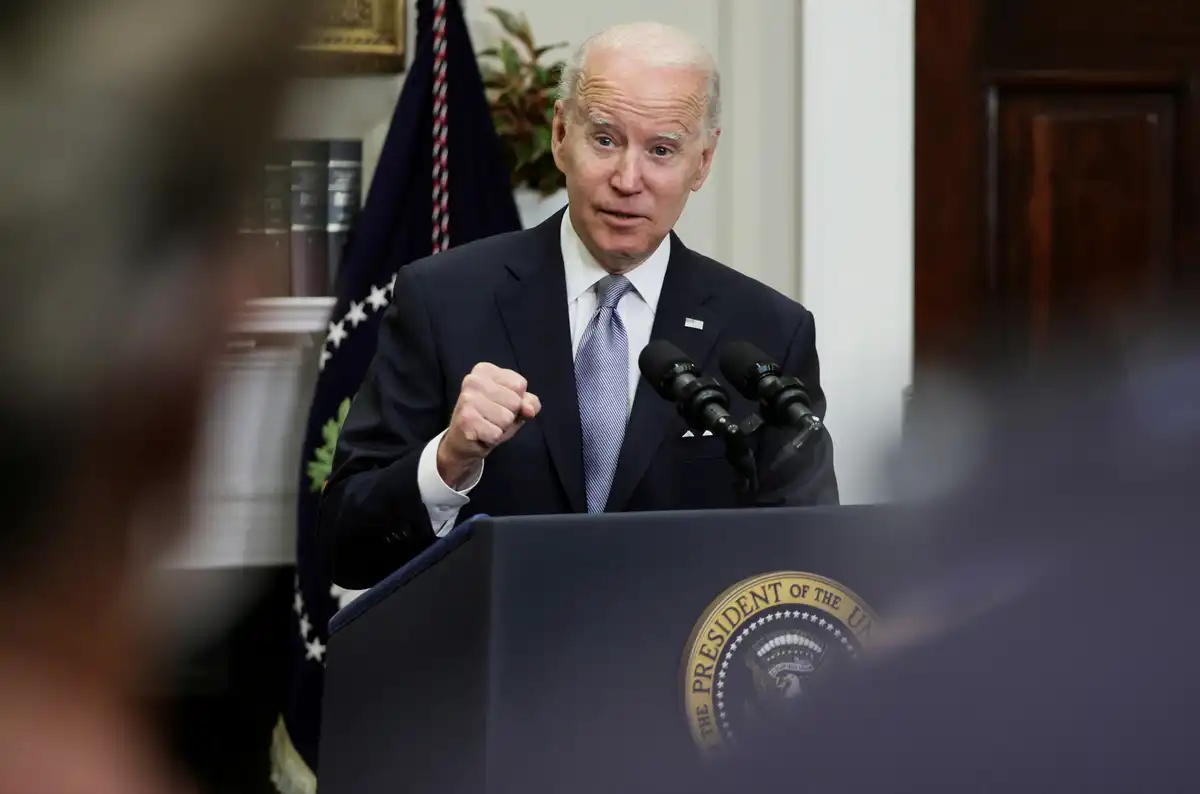
Biden says he knows how and when Israel will respond to Iran


US President Joe Biden indicated on Friday that he had details about an expected Israeli response to Iranian missile attacks on October 1, but declined to share them publicly on Friday.


A reporter asked Biden if he had an understanding of what Israel would do in response to the attack and when that response would occur.


"Yes and yes," Biden said in Germany as he prepared to board Air Force One back to Washington after a short visit. Asked if he would share the information, the US president replied succinctly, "No and no."


Iran fired about 200 missiles at Israeli targets in response to the Israeli killing of Hezbollah leader Hassan Nasrallah in Beirut and the assassination of Hamas leader Ismail Haniyeh in Tehran. Both Hezbollah and Hamas are designated as terrorist organizations by the United States and the European Union.


Israeli Prime Minister Benjamin Netanyahu has vowed to respond, raising fears of an escalation in the Middle East conflict.


For its part, Iran warned that any attack on its "infrastructure" would lead to a "stronger response," while Revolutionary Guard Brigadier General Rasoul Sanai Rad said that any attack on nuclear facilities or energy sites would be considered a crossing of a red line for the Islamic Republic.


Biden arrived in Berlin on Thursday evening for his last official visit to Germany that will focus on Western support for Ukraine and the conflict in the Middle East after the killing of Hamas leader Yahya Sinwar.


During his 24-hour whirlwind trip, the US president will meet Chancellor Olaf Scholz as well as the leaders of France and the United Kingdom.

PALESTINE

Fri 18 Oct 2024 8:25 pm - Jerusalem Time

Hamas announces the death of the commander of the Tel Sultan Battalion, with Al-Sinwar

The Islamic Resistance Movement (Hamas) mourned today, Friday, Mahmoud Hamdan, the commander of the Tel al-Sultan Battalion in Rafah, who it said was martyred along with the head of the movement's political bureau, Yahya Sinwar, in a clash with Israeli army forces in the southern Gaza Strip the day before yesterday, Wednesday.


The movement said in a statement: "We mourn the martyr leader Mahmoud Hamdan "Abu Yousef", the commander of the Tel Sultan Battalion in Rafah, who was martyred, advancing and not retreating, clashing with the occupation army in the Tel Sultan neighborhood, along with the leader of the flood, the martyr, the mujahid leader Yahya Sinwar."


The Israeli army confirmed yesterday, Thursday, that Sinwar was killed during clashes in the southern Gaza Strip.


It said in a statement that his soldiers carried out operations during the past few days in the southern Gaza Strip based on intelligence information indicating that Hamas leaders were present in the area, noting that a force from the 828th Brigade was present in the area and clashed with 3 fighters and killed them, and after examination it became clear that Sinwar was one of them.

Source: Al Jazeera

PALESTINE

Fri 18 Oct 2024 7:15 pm - Jerusalem Time

Deaths and wounded in Gaza and Jabalia, and the interruption of communications and internet services in the northern Gaza Strip

Six citizens were killed and others were injured, Friday evening, in the ongoing Israeli occupation raids on the northern Gaza Strip, coinciding with the interruption of communications and internet services in the northern Gaza Strip and several areas in Gaza City.

Paramedics from the Palestinian Red Crescent Society reported that 4 citizens were killed and others were injured when an occupation drone bombed a group of citizens near the Hamid intersection on Al-Nasr Street in Al-Nasr neighborhood, northwest of Gaza City. They were transferred to Al-Shifa Medical Complex, west of the city.

Two citizens were killed and others were injured in an occupation bombing that targeted a group of citizens in the vicinity of Al-Awda Hospital, Tal al-Zaatar, in Jabalia, north of the Gaza Strip. They were transferred to the same hospital.

Local sources reported that the occupation bulldozers demolished the house of the Washah family in the Faluja area of Jabalia camp over the heads of displaced persons from the Hassouna family, without knowing the fate of those inside the house until now.

The occupation's drones also bombed the vicinity of Martyr Kamal Adwan Hospital in the town of Beit Lahia, north of the Gaza Strip.

The official news agency "Wafa" reported that communications and internet services were cut off in the northern Gaza Strip and various areas in Gaza City.

Earlier, three citizens were killed and others were injured in Israeli occupation raids on Jabalia camp, north of the Gaza Strip.


WAFA reported that three citizens were killed in an Israeli bombardment of the Al-Fakhoura area in the middle of Jabalia camp, and 13 citizens were injured in an Israeli bombardment of a house in the camp. They were transferred to Al-Awda Hospital in Tal al-Zaatar.


For the fourteenth day, the Israeli occupation has besieged 200,000 citizens, without food, drink or medicine in the northern Gaza Strip, under continuous bloody bombardment, the demolition of homes over the heads of their residents, and the targeting of schools that shelter displaced people, as part of the ongoing war of genocide on the Strip.


The occupation forces continue their aggression on the Gaza Strip, by land, sea and air, since October 7, 2023, which resulted in the death  of 42,500 citizens and the injury of 99,546 others, the majority of whom are children and women, in an incomplete toll, as thousands of people are still missing under the rubble.

PALESTINE

Fri 18 Oct 2024 5:49 pm - Jerusalem Time

UN Committee: The World is Obligated to End the Israeli Occupation of Palestine

An independent international commission of inquiry said that all states and international organizations, including the United Nations, "are obligated to end the illegal Israeli presence in the occupied Palestinian territory."

This came in a statement issued today, Friday, by the United Nations Independent International Commission of Inquiry into crimes committed in the occupied Palestinian territory.

The committee explained that the advisory opinion of the International Court of Justice on the legal consequences of Israeli policies and practices in the occupied Palestinian territory states that "Israel's presence there is inconsistent with international law."

The head of the committee, Navi Pillay, stressed in the statement that the main cause of the long-standing conflict and cycles of violence is the "Israeli occupation."

She added that the committee concluded in its report submitted to the United Nations General Assembly in 2022 that "the occupation is in violation of international law."

She stressed that all states are obligated not to recognize Israel's territorial claims or sovereignty over the occupied Palestinian territory.

She added that countries should not support Israel's continued occupation of Palestinian land, nor should they recognize Jerusalem as Israel's capital or move their diplomatic representatives to Jerusalem.


PALESTINE

Fri 18 Oct 2024 5:47 pm - Jerusalem Time

The death toll from the aggression on Gaza rises to 42,500 deaths and 99,546 wounded

Medical sources said on Friday that the death toll from the Israeli occupation's aggression on the Gaza Strip has risen to 42,500 deaths, most of whom are women and children, and 99,546 wounded, since October 7, 2023.


The same sources explained that the occupation forces committed 4 massacres against families in the Gaza Strip, resulting in the death of 62 citizens and the injury of 300 others, during the past 24 hours.


It pointed out that thousands of victims are still under the rubble and on the streets, and that ambulance and rescue crews cannot reach them.


ARAB AND WORLD

Fri 18 Oct 2024 4:32 pm - Jerusalem Time

With Sinwar's Killing, Biden Reveals Active US Role in Gaza War


The Biden administration acknowledged Wednesday that the CIA and U.S. military special operations forces were helping Israel locate and track Hamas leaders, an involvement in the Gaza war that goes far beyond what the government has previously disclosed. The revelation follows the killing of Hamas leader Yahya Sinwar on Wednesday, but also comes after months of White House assurances that U.S. intelligence and special operatives were only involved in retrieving the hostages.


Despite the fact that Sinwar was killed by accident (and not as part of a targeted operation), the Biden administration’s desperation to grab some of the spotlight is a political desire to show success in its decision to support Israel. It also shows an acceptance of one of Israel’s core beliefs about its wars against its enemies in the so-called axis of resistance, which the United States has embraced: that killing leaders eliminates threats and even amounts to victory.


Israel is demanding that Hamas release the hostages and “surrender,” and they are pushing their fantasy and narrative about the importance of Sinwar’s death, which is used to continue the war on Gaza indefinitely. But lost in all the noise is the fact that Washington has consistently lied to the American people.


The United States has ground forces in Israel. The United States is directly involved in Israel’s war on Gaza (and Lebanon) for a year. The United States is an integral part of “Israel’s ability to defend itself against its enemies,” as the administration repeats daily. It is also the guarantor, according to experts, of Israel’s military adventures. All this without much ability or apparent interest in restraining Israel or seeking any real negotiated outcome.


“Shortly after the October 7 massacre, I directed our Special Operations personnel and intelligence professionals to work alongside their Israeli counterparts to help locate and track Sinwar and other Hamas leaders hiding in Gaza,” President Biden said in a press release Wednesday after announcing Sinwar’s death. Vice President Harris issued a nearly identical statement.


It is noteworthy that in October of last year, when Pentagon spokesman Maj. Gen. Pat Ryder was asked whether there were American special agents on the ground in Israel, he responded evasively. “We are providing planning and intelligence support to the Israelis, with regard to the recovery of the hostages.” Hostage recovery has been the official line of the administration ever since. Such statements were often accompanied by the reminder that American citizens were among the hostages held by Hamas. For Washington, it was a clever play: Who could oppose the rescue of Americans?


But behind the scenes, the Biden administration has been providing assistance in locating not only Sinwar but also other Hamas leaders (along with more than 50,000 tons of military equipment and materiel). Adopting the same framework of searching for the Palestinian movement’s leaders, similar to the war on terror adopted by the Bush administration after 9/11, runs counter to Biden’s public rhetoric “about the need for Israel to resist the temptation to retaliate.”


When asked on Wednesday whether US special agents had located Sinwar, Ryder declined to elaborate on the White House statement, suggesting that the hostage recovery mission had always been used to track down Hamas leaders.


“I won’t talk about intelligence,” Ryder said. “What I will say is that this was an Israeli operation and that we were exchanging information and intelligence to support the efforts to recover the hostages and track these leaders who were holding hostages, including American hostages. So, to the extent that that helped inform the Israeli operations in general, it certainly played a role.”


“After more than 20 years of hunting al-Qaeda and other terrorists,” officials claim, U.S. intelligence has become increasingly adept at the daunting task, mastering real-time intelligence processing, precise geolocation, and rapid attacks on individuals. Multiple sources have been added to the post-9/11 arsenal, from big data analysis to highly sensitive signals collection. New weapons and drones have been developed. Specialized organizations have been created.


Behind all this is a special access program in a joint CIA-U.S. military cell at CIA headquarters in McLean, Virginia, that directs what it calls the most sensitive “high-value targeting.”


Experts are looking for any clues to the target’s location, a process that is a form of forensic analysis that includes aerial reconnaissance, signals interception, and on-the-ground scouting. The U.S. has provided Israel with similar proficiency, experts say, but the United States has many more tools—from stealthy satellites to sophisticated tracking algorithms—that can cover an area more completely and efficiently. Yet Sinwar was not killed as a result of this device, not after a year of intensive work. Washington is overstating the impact of the massive effort as a means not only of continuing the perpetual war in the Middle East but also of creating an aura of success, an outcome that eludes both Israel and the United States.


President Joe Biden on Wednesday drew parallels between the 2011 raid that killed Osama bin Laden, though his death had no resemblance to Israel’s war on Gaza. The United States had been searching for bin Laden for a decade, and while his death served as a vindication of the effort, it came at a time when al-Qaeda, based in Afghanistan, had already morphed into other organizations. Biden’s praise of those same forces for helping Israel in some ways proves that the war never ended and never will.


Israel may claim that Sinwar’s death marks a turning point, but that, experts say, seems unlikely. While Hamas (and Hezbollah in Lebanon) continue to wage a leaderless war, there is no evidence whatsoever that either group is exhausted or faltering in its efforts.

ARAB AND WORLD

Fri 18 Oct 2024 3:20 pm - Jerusalem Time

Mikati denounces Iranian statements, requests summoning of Tehran's Chargé d'Affaires

Lebanese caretaker Prime Minister Najib Mikati denounced Iranian statements about Tehran's readiness to negotiate with France regarding the implementation of UN Resolution 1701, and considered this an interference in Lebanese affairs, and requested the summoning of the Iranian Chargé d'Affaires in Beirut.


This came in two statements published by the Lebanese Prime Ministry today, Friday, via the X platform, commenting on statements made by Iranian Parliament Speaker Mohammad Baqer Qalibaf, in this regard.


One of the statements attributed to Mikati saying, "We are surprised by this position, which constitutes blatant interference in Lebanese affairs, and an attempt to establish an unacceptable guardianship over Lebanon."


Mikati said, "We informed the Iranian Foreign Minister, Abbas Araqchi, and the Speaker of the Shura Council, Mohammad Baqer Qalibaf, during their recent visits to Lebanon, of the necessity of understanding the Lebanese situation, especially since Lebanon is exposed to an unprecedented Israeli aggression, and we are working with all of Lebanon's friends, including France, to pressure Israel to cease fire."


He explained that the issue of negotiating the implementation of international resolution 1701 is being handled by the Lebanese state, and everyone is required to support it in this direction, not to seek to impose new mandates that are rejected by all national and sovereign considerations, according to his expression.


During an interview with the French newspaper Le Figaro, Qalibaf expressed his belief that his country was ready to negotiate concretely on the procedures for implementing Resolution 1701 with France, which would act as a mediating state between Hezbollah and Israel.


Qalibaf's statements came during his participation in the 149th session of the Inter-Parliamentary Union in Geneva, which lasted from October 13 to 17.


In a later statement, Mikati asked his country's Foreign Minister, Abdullah Bou Habib, to summon the Iranian Chargé d'Affairs in Beirut, Tawfiq Samadi, and inquire about what was mentioned in Qalibaf's statements.


Mikati asked Bou Habib to inform the Iranian Chargé d'Affaires of the Lebanese position in this regard.

On August 11, 2006, the UN Security Council unanimously adopted Resolution 1701, calling for a complete cessation of fighting between Hezbollah and Israel, and calling for the creation of an area between the Blue Line - the dividing line between Lebanon and Israel - and the Litani River in southern Lebanon that would be free of any armed men and military equipment, except those belonging to the Lebanese army and the UNIFIL forces.


PALESTINE

Fri 18 Oct 2024 3:03 pm - Jerusalem Time

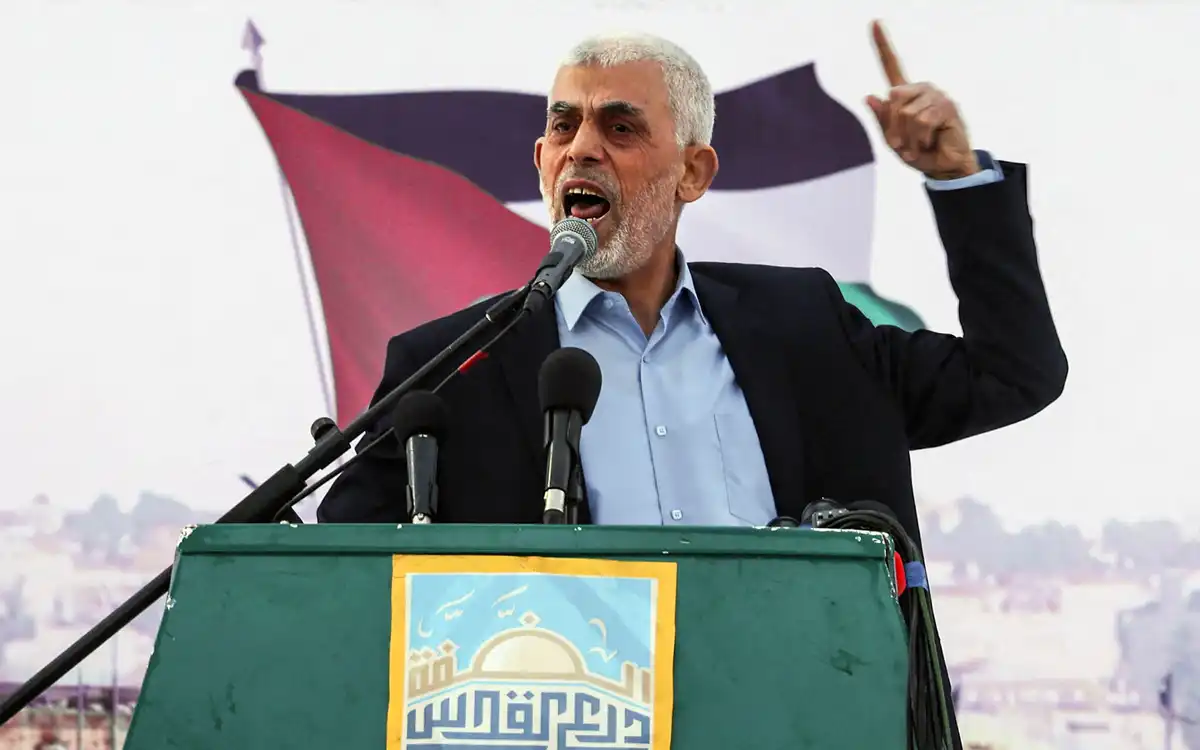
Hamas confirms the death of its leader Yahya Sinwar

The Islamic Resistance Movement (Hamas) confirmed, in a speech delivered by the movement’s leader, Khalil Al-Hayya, today, Friday, the death of its leader, Yahya Sinwar, who the Israeli army announced yesterday, Thursday, that he had been killed accidentally in the southern Gaza Strip.


Khalil Al-Hayya stressed, during his speech in which he said that “Al-Sinwar ascended as a heroic martyr, confronting the occupation army until the last moment of his life,” that “the occupation prisoners will not return except by stopping the aggression on the Gaza Strip and returning our prisoners,” affirming that “the martyrdom of the leaders will only increase the movement’s determination to continue.”


He added, "Hamas will continue its approach until the liberation of the land and the establishment of the Palestinian state."


Earlier today, a press report stated that the body of Hamas leader Yahya Sinwar, who was martyred during a confrontation with Israeli forces in the southern Gaza Strip, was transferred to a "secret" location in Israel, according to what was announced yesterday, Thursday.

PALESTINE

Fri 18 Oct 2024 2:55 pm - Jerusalem Time

Settlers assault a child northwest of Salfit

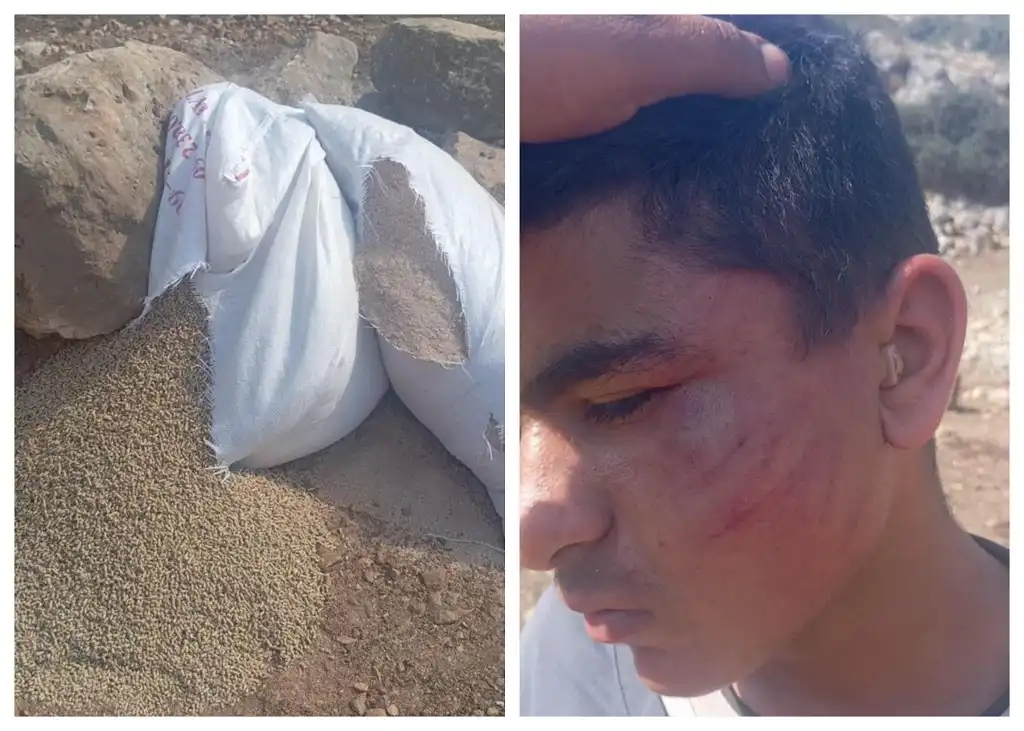
Today, Friday, settlers assaulted a child while he was in Wadi Qana, northwest of Salfit.


According to local sources, a group of settlers raided the Shaqif Danan farm in Wadi Qana, northwest of Deir Istiya, and assaulted the child Ahmed Abdel Fattah Muhammad Zidan (15 years old) while he was in the farm, and they stole an electric generator and tore up bags of barley and bran.


A group of settlers attacked olive pickers on Thursday evening in the "Ross Al-Mawaris" area north of the town of Kafr Al-Dik. They destroyed the picking machine, destroyed olives belonging to the family of farmer Farouk Ali Al-Ahmad, and forced them under threat to leave their land.

ARAB AND WORLD

Fri 18 Oct 2024 2:13 pm - Jerusalem Time

UNIFIL talks about the possibility of self-defense against Israel

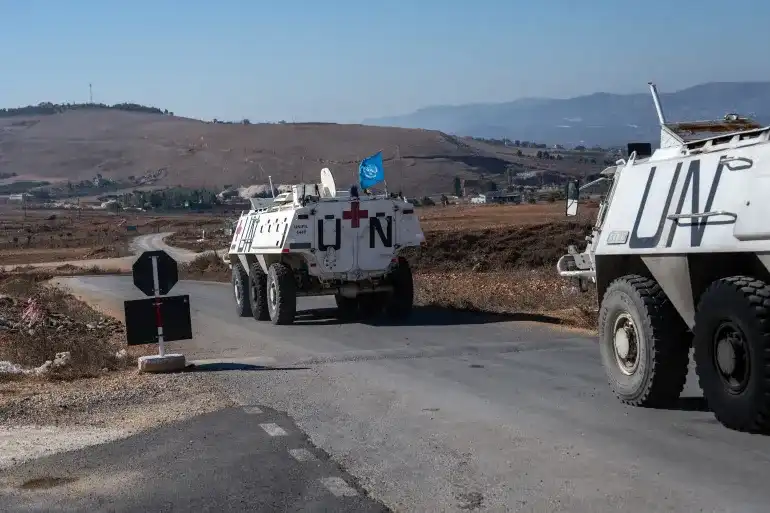
The United Nations Interim Force in Lebanon (UNIFIL) reported on Friday that they had been targeted several times, "five of them deliberately," noting that they had found evidence of possible use of white phosphorus months ago near one of their bases.


A UNIFIL spokesman said the 10,000-strong mission would remain in Lebanon despite multiple Israeli attacks he described as "deliberate" that directly targeted UN forces in the past few days.


The spokesman referred to the possibility of self-defense against Israel as "it can be resorted to, but it is important to calm the tension," stressing that they must remain in Lebanon, and that "the morale of the peacekeeping forces is still very high."


Asked about the downing of a drone near a UNIFIL ship off the coast of Lebanon on Thursday, the spokesman said, "The drone came from the south, circled around our ship and came within a few metres," Reuters reported.


The UN force has previously said it has been repeatedly attacked by Israeli forces in recent days, while Israel has called on the United Nations to move UNIFIL out of the combat zone.


In the middle of this month, Jean-Pierre Lacroix, Under-Secretary-General for Peacekeeping Operations, confirmed that UNIFIL forces would remain in their positions in Lebanon, while the UN Security Council expressed its concern about the positions of those forces being exposed to gunfire, following Israel’s request for them to withdraw.


The Italian Defense Ministry also said in a statement last Wednesday that the 16 European Union member states contributing to UNIFIL believe that different and more effective rules should be followed for the participation of these forces.


The statement added that the European Union's allies also believe that pressure must be exerted to prevent any further attacks by Israeli forces on UNIFIL positions.


The statement also said that "the focal point that emerged from the meeting was the joint readiness to exert maximum political and diplomatic pressure on Israel so that no further incidents occur," and that "Hezbollah must not use UNIFIL personnel as shields in the context of the conflict," according to the statement.

OPINIONS

Fri 18 Oct 2024 2:07 pm - Jerusalem Time

Douglas Macgregor's Urgent Warning: The Only Way to Stop Netanyahu's Plan

Bismi TV

Bismi TV

Opinion Writer

In this exclusive video, we take an in-depth look at Douglas Macgregor’s journey, exploring his revolutionary military concepts, leadership strategies, and the profound influence he’s had on shaping global defense and warfare thinking.


OPINIONS

Fri 18 Oct 2024 2:04 pm - Jerusalem Time

The Real Purpose of a U.S.-Saudi Security Agreement

Foreign Affairs

Foreign Affairs

Opinion Writer


A Deal Could Reduce Direct American Intervention in the Middle East

By Michael Singh


Earlier this year, the United States and Saudi Arabia were close to sealing a bilateral defense treaty. The agreement’s terms have largely been set, but its formal signing was postponed amid the present conflict in the Middle East. Analysts have frequently viewed this deal as but a piece of a larger puzzle. As conflict has racked the Middle East since Hamas’s heinous October 7 terrorist attack, the potential treaty tends to be characterized as one element of a “megadeal” aimed at pacifying the region: a cease-fire in Gaza would set the stage for the Saudis to normalize relations with Israel in return for a U.S. security guarantee and strengthened American and Israeli commitments to Palestinian statehood.

But that is the wrong way to look at a U.S.-Saudi treaty. In reality, the impetus for such a treaty preceded the conflict in Gaza. If signed, the agreement will not merely be another transaction in which the United States pays for an Arab state to normalize ties with Israel. The strategic context for it is global, not regional: if successful, a U.S.-Saudi treaty will pave the way for better security integration of U.S. partners in the Middle East and less direct American intervention there. In the long run, it will not tie the United States down in the region but help free Washington to act with greater latitude elsewhere. And the deal will draw Washington’s most capable friends in the Middle East deeper into efforts to address global challenges, including that posed by the rise of China.

THE BEST OF BOTH WORLDS

Few in Washington question the current wisdom that the United States must increase its focus on the Indo-Pacific or that doing so will require a decreased focus on the Middle East, a region that continues to drain U.S. resources. Yet this tradeoff holds only if one considers the Middle East of middling importance in the United States’ competition with China or conceives of U.S. national security strategy as akin to a zero-sum game in which policymakers merely push their pieces from one region to another.

In reality, the Middle East remains vitally important to both U.S. and Chinese interests. The past year’s turmoil demonstrates not that U.S. attention to the region has been futile but that the United States cannot ignore the region, however much it may wish to do so, and that it urgently needs a new, more sustainable strategy for securing its interests there. A bilateral defense treaty with Saudi Arabia may seem an unusual response, as it might appear only to promise deeper U.S. involvement in the Middle East. But if successful, a U.S.-Saudi defense treaty would in fact shift more of the burden of addressing the region’s troubles onto U.S. partners, limit Chinese influence, and even draw partners closer in U.S.-led efforts to address global challenges and entrench Washington’s preferred norms.

Such a treaty would bring three potential strategic benefits. First, it would more closely bind Saudi Arabia and the United States, solidifying one of Washington’s most important partnerships in the Middle East. A mutual defense guarantee would be the centerpiece of any U.S.-Saudi treaty, but any such treaty would also facilitate cooperation between the two countries in sensitive high-tech areas such as artificial intelligence and related supply chains as well as Saudi access to U.S. defense technology. Such cooperation on technology would also limit China’s opportunities in these areas and circumvent controversies that often arise in the transactional, issue-by-issue negotiations that typically characterize U.S. partnerships in the region. More frequent and routine collaboration in technology could also help entrench Washington’s preferred norms and practices for data privacy and the regulation and transfer of technology, potentially enabling their spread throughout the Middle East, given Saudi Arabia’s economic and financial weight there.

Second, the treaty would help Saudi Arabia—and by extension, the region—manage and resolve crises without extensive U.S. intervention. Saudi Arabia is already one of the world’s top buyers of American and other Western arms. But this reliance is becoming more of a strategic liability for Washington. With needy partners in Europe and Asia, it is difficult to justify putting Saudi Arabia first in line for U.S. arms sales, even if Riyadh pays up front and without assistance, unless it plans to use those systems to advance mutual interests with the United States. Selling one more shell or jet to Taiwan or Ukraine, for example, accomplishes far more for U.S. interests than sending those tools to a partner that will not or cannot use them. In a world of rekindled contention between great powers, this strategic math is just as important as the financial calculus of arms sales, if not more so.

If successful, a U.S.-Saudi treaty will pave the way for better security integration of U.S. partners in the Middle East.

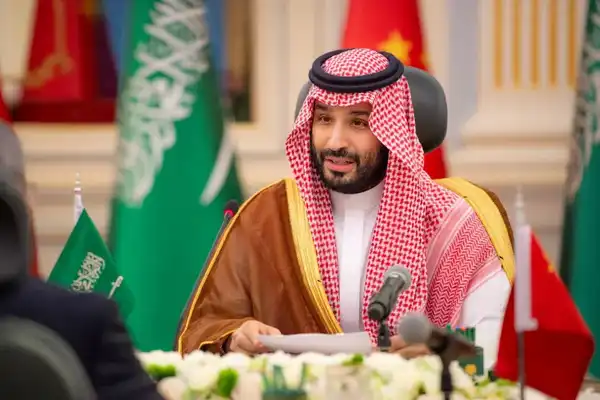
A U.S.-Saudi defense treaty would presumably bring more frequent military exchanges and exercises, enabling the United States to better shape critical Saudi reforms that aim to turn its military into a modern fighting force. These improved capabilities must of course be accompanied by a willingness to act. Saudi Arabia under Crown Prince Mohammad bin Salman has demonstrated greater will than in the past to project its power and influence—for example, in its military campaign in Yemen—but its capabilities and strategic planning have not matched its ambition. As a result, some in the West have distanced themselves from Saudi Arabia; a more effective approach would forge a closer working partnership that can channel Saudi ambitions toward shared ends.

The United States doubtless hopes that a formal defense partnership with the Saudis would serve as the foundation for deeper multilateral coordination of U.S. defense relationships in the Middle East than the pacts it has signed so far with smaller (yet still critical) regional partners. This process began with the Abraham Accords and has already yielded collaboration, such as military exercises sponsored by the U.S. Central Command that have brought together Israeli and Arab officers. It has also led to the impressive effort by the United States, Israel, and an array of regional partners in mid-April to intercept the approximately 300 missiles and drones that Iran launched against Israel. But while this showed the potential for regional defense cooperation, it also demonstrated the region’s continued dependence on the United States. Washington would like to continue bolstering the former while reducing the region’s requirement for the latter. Perhaps counterintuitively, this would be best accomplished not by stepping away from the region but by even more intense training of regional forces through mechanisms that a bilateral treaty would likely produce. By strengthening U.S. partners, such a treaty would free up American forces and allow Washington to attend to priorities in the Indo-Pacific and elsewhere without abandoning its interests in the Middle East. The accord would also underline a competitive advantage that the United States has over China: the United States can act as both a security integrator bringing parties across the region together and as a security guarantor providing new military technology, neither of which China can offer at this stage.

Finally, a U.S.-Saudi defense treaty could bring the Saudis and perhaps others in the region further into efforts to tackle global challenges. Riyadh has already demonstrated interest in exercising its global influence beyond adjusting its oil supply to world markets. In August 2023, Saudi Arabia hosted an international summit on the war in Ukraine. It has also sought a more prominent role in meetings of multilateral groupings such as the G-20. Washington, for its part, has increasingly recognized Saudi Arabia’s potential, as well as that of the United Arab Emirates and other wealthy Gulf states to leverage wealth and diplomatic influence in addressing transnational issues such as climate change and critical minerals processing. After decades of viewing Middle Eastern states as objects of U.S. foreign policy, Washington increasingly sees them as partners in it. A U.S.-Saudi defense treaty can further aid in drawing these partners out of their regional bubble by increasing their natural links and commonalities with U.S. allies in Asia, Europe, and elsewhere.

UNDERSTANDING THE RISKS

A U.S.-Saudi defense treaty will not be without its risks, but the real risks are often misidentified. There is little reason to believe a treaty would increase the chances of a war between the United States and Iran. Even though the United States declined to respond militarily to Iran’s attack on Saudi oil facilities in 2019, any future U.S. president, treaty or not, will likely feel motivated to come to Saudi Arabia’s defense—or to that of another Gulf partner or strategic shipping route—in the event of a major Iranian attack. By formalizing what is already close to a de facto commitment, the United States can better deter Iran by eliminating any doubt that an attack on Saudi Arabia would prompt a strong U.S. response. And a treaty would not necessarily tie U.S. forces down in the region more than they already are. Evidence from the Middle East and elsewhere suggests that the involvement of U.S. forces in a given region is connected to threat levels and other factors, not the existence of a treaty. American forces have surged into the region recently in response to Iranian threats, for example, even though the United States has no formal treaty allies there.

The real risks are twofold. The first is of misaligned expectations. Policymakers in Washington will likely expect that by signing a bilateral defense treaty, Saudi Arabia will be committing to refrain from any actions that jeopardize U.S. security and to contribute more constructively to stability in the Middle East. Increasingly, policymakers expect allies to refrain from cooperating with U.S. adversaries not only in traditional military and defense matters but also through indirect actions that will enhance U.S. rivals’ broader military-industrial complexes. Such actions could simply involve providing adversaries with access to certain technologies or even, in the case of Russia especially, cooperating to protect their revenues through mechanisms such as OPEC Plus, which includes 22 of the world’s major oil exporters. Washington will be looking for Saudi Arabia not only to show preference for the United States at the margins but also to make a firm commitment to the U.S.-led alliance system that it would join after inking a treaty. Saudi normalization with Israel would be vital to securing ratification of the accord by the U.S. Senate and to realizing the full benefits of multilateral security cooperation in the region. It would also serve as a strong signal from Riyadh that Saudi Arabia is making a strategic and not merely a tactical shift in its foreign policy.

The second risk involves the fickleness of U.S. foreign policy, of which Saudi Arabia and other Gulf states have found themselves disproportionately on the receiving end. Twenty-plus years of quixotic nation-building efforts should have taught U.S. policymakers that the United States can hold fast to its own values without imposing them on others. Washington can harbor strong and valid concerns about the human rights or political practices of partners such as the Saudis while still working practically to promote reform—or better yet, supporting partners’ own programs of reform, such as Riyadh’s Vision 2030—rather than recklessly threatening to break relations after every new unsavory revelation. Riyadh sees the treaty ratification process, which requires approval by a two-thirds majority in the U.S. Senate, as a way of ensuring that Washington sticks to its commitments, just as the United States sees Saudi normalization with Israel as a signal of Riyadh’s long-term commitment.

THE MIDDLE EAST GOES GLOBAL

There is no imminent great-power shift in the Middle East. Yet competition between the United States and China there, as elsewhere, is indeed growing, and it is regarded by U.S. partners as a serious risk. Many have responded by choosing “omni-alignment,” that is, participating in both U.S.-led multilateral institutions and newer Chinese-led alternatives, to minimize the risks and maximize the benefits they can accrue from contention between the two powers. Even countries that understand China’s limits as a partner worry that the United States has become increasingly unpredictable and transactional as its attention shifts between short-term crises in places such as the Middle East and long-term priorities, notably in the Indo-Pacific.

A U.S.-Saudi defense treaty could help ameliorate this dynamic in the Middle East, both by tightening the bonds between Washington and one of its most important partners in the region and by putting those partners in a better position to address crises on their own. Some may worry that the treaty would trap the United States in the Middle East. In reality, a closer bilateral partnership on defense could over time limit Chinese inroads in the region, bolster Riyadh’s and other partners’ capacities to act without U.S. intervention, and even bring Saudi Arabia deeper into common efforts to tackle global challenges. Along with the increasing activism by countries such as India and Japan, the expansion of these efforts could help arrest the global order’s decline into a stalemate between two great powers. Rather than worry about the emergence of a new cold war, Washington should work to build a new global diplomatic-security concert, toward which a U.S.-Saudi defense treaty can be an important step.

PALESTINE

Fri 18 Oct 2024 1:57 pm - Jerusalem Time

Pope presented with Holy Land peace perspective

During an audience in the Vatican with Pope Francis, former Israeli Prime Minister, Ehud Olmert, and former Palestinian Minister for Foreign Affairs, Nasser Al-Kidwa, presented their peace proposal for the war ravaging their nations.

By Roberto Cetera and Linda Bordoni

"It was an important and emotional meeting. The Holy Father showed extraordinary interest in the peace efforts in the Middle East," said Ehud Olmert, after being received by Pope Francis on Thursday together with Nasser Al-Kidwa and a delegation of peace activists in the Vatican.


Olmert, who served as Prime Minister of Israel from 2006 to 2009, and before that as cabinet minister and mayor of Jerusalem, was welcomed by the Pope as part of that delegation that included Nasser Al-Kidwa, Foreign Minister of the Palestinian Authority from 2005 to 2006.

Speaking to Vatican Media after the audience, Olmert and Al-Kidwa explained they presented the Pope with a peace proposal for Gaza.

Olmert, who was Israeli PM when the 2006 Lebanon war ceasefire was signed, and who was behind the last real attempt at reaching an agreement for the creation of two States with Palestinian President Mahmoud Abbas, said “Pope Francis gave us extraordinary attention for more than half an hour, explaining that he follows every development of the conflict daily and that every day he connects with the Christians of Gaza."


 “It was an exceptional honour to be received by His Holiness this morning in the Vatican,” he said, “And we could feel that he is focused on the message that we wanted to bring forth, which is that the war in Gaza has to be stopped, that the hostages have to be returned to their families, that Israel has to pull out completely from Gaza, and that Israel and the Palestinians must embark immediately on negotiations for comprehensive peace on the two-state solution.”

Olmert also mentioned the possibility of a Special Agreement for the status of the Old City of Jerusalem which, under the jurisdiction of a trust comprising five nations, including Palestine and Israel, would keep it free for all believers, Christians, Jews, and Muslims, to practice their faith in the city of Jerusalem.


Nasser Al-Kidwa, who is well known not only for his pro-peace stance but also for being the nephew of the historical PLO leader Yasser Arafat, whom he represented in the United Nations, confirmed that during the audience this morning, "We presented the Holy Father with our peace proposal for Gaza, which includes an immediate ceasefire, the release of the Israeli hostages still held by Hamas, along with the simultaneous release of an agreed number of Palestinian detainees in Israeli prisons, and the resumption of negotiations for the creation of two separate states at peace with each other."


 “For us, it was important as a team and of course, for our mission to end the war and to achieve peace between the two peoples in the form of two states living side by side on the basis of 1967 borders, with a swap that is agreed upon,” he said, adding that he is in agreement with Olmert’s proposal regarding the West Bank and the urgent necessity of ending the war immediately in the Gaza Strip.

Al-Kidwa said that during the audience, the delegation tackled the “important issue for the whole of humanity” regarding Jerusalem and its status and how it should be governed.

“We took the step of presenting His Holiness with the proposal that we made together in this regard,” he affirmed, “and I believe that he will bless the plan and he will bless our actions and that definitely is going to make a huge difference.”


PALESTINE

Fri 18 Oct 2024 12:16 pm - Jerusalem Time

Israeli settlers steal a flock of sheep southeast of Nablus

Today, Friday, settlers stole a flock of sheep from the village of Jurish, southeast of Nablus.


Local sources reported that a group of settlers, under the protection of occupation soldiers, attacked a young boy while he was herding a flock of sheep at the intersection of the village of Jurish, southeast of Nablus. They stole the flock of sheep from him and headed to the nearby settlement of "Magdolim."


The sources added that the occupation forces detained the boy who was herding sheep there.