ARAB AND WORLD

Thu 17 Oct 2024 7:08 pm - Jerusalem Time

Guterres: Catastrophic level of hunger and risk of famine in Gaza is unacceptable

UN Secretary-General Antonio Guterres said the catastrophic level of hunger and the risk of famine in Gaza is "unacceptable."


Guterres indicated, in a post on the "X" platform, today, Thursday, that the results of the latest report of the United Nations Integrated Food Security Phase Classification are "worrying."


He explained that the catastrophic level of hunger and the risk of famine in Gaza, caused by Israeli restrictions on the flow of humanitarian aid, rising prices and levels of displacement, is "unacceptable."


He stressed the need to open the crossings urgently, indicating that this would enable the United Nations organizations to provide the necessary life-saving humanitarian aid.

PALESTINE

Thu 17 Oct 2024 6:59 pm - Jerusalem Time

A farmer was injured after settlers attacked him while picking olives east of Salfit

A farmer was injured on Thursday when settlers attacked him while he was picking olives in the village of Yasuf, east of Salfit.


According to local sources, settlers from the "Tafuh" settlement, built on citizens' lands, attacked farmers with stones while they were picking olives in the Al-Mushrifa area west of the village, which led to the injury of farmer Saif Suhail Khader Hussein with a stone in the head.


Abu Madi explained that the settlers are chasing the farmers and preventing them from picking olives in different areas of the village.


This year, the olive harvest season in the West Bank is witnessing repeated attacks by settlers and occupation forces, such as attacking farmers and preventing them from reaching their lands, burning and cutting down olive trees, and stealing the crop.

ARAB AND WORLD

Thu 17 Oct 2024 6:25 pm - Jerusalem Time

Evacuation of a building in central Beirut housing Al Jazeera’s office and two embassies following Israeli warnings

Employees evacuated a building in central Beirut that houses Al Jazeera's offices and the embassies of Azerbaijan and Norway, in addition to the Lebanese government's Audit Bureau building, on Thursday, after receiving Israeli evacuation warnings.


An employee of the Qatari Al Jazeera channel in the Beirut office said that they "received successive calls believed to be Israeli, warning them of the need to evacuate the building immediately."


Later, Al Jazeera reported via the "X" platform, quoting its correspondent in Beirut, that the employees of the channel's office in a building in central Beirut that includes the offices of the embassies of Azerbaijan and Norway evacuated it after receiving successive Israeli warnings.


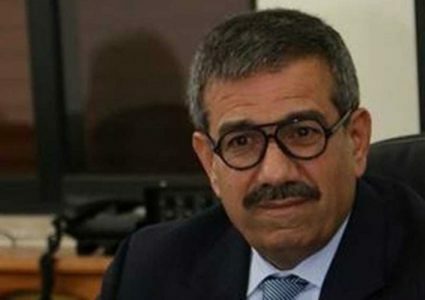
The head of the Audit Bureau (affiliated with the government), Judge Mohammad Badran, stated in a call to the Lebanese News Agency that the Bureau “received a call via its landline warning of the possibility of its building being subjected to an Israeli attack.”


Badran explained that "the call was placed in the custody of the Lebanese security services to verify its authenticity and take the necessary measures if it was issued by people with the aim of spreading confusion."


After clashes with factions in Lebanon, including Hezbollah, which began after Israel launched a war of genocide on the Gaza Strip on October 7, 2023, Tel Aviv expanded the scope of the genocide since September 23 to include most of Lebanon’s regions, including the capital Beirut, through air strikes, and also began a ground invasion in the south.


PALESTINE

Thu 17 Oct 2024 6:17 pm - Jerusalem Time

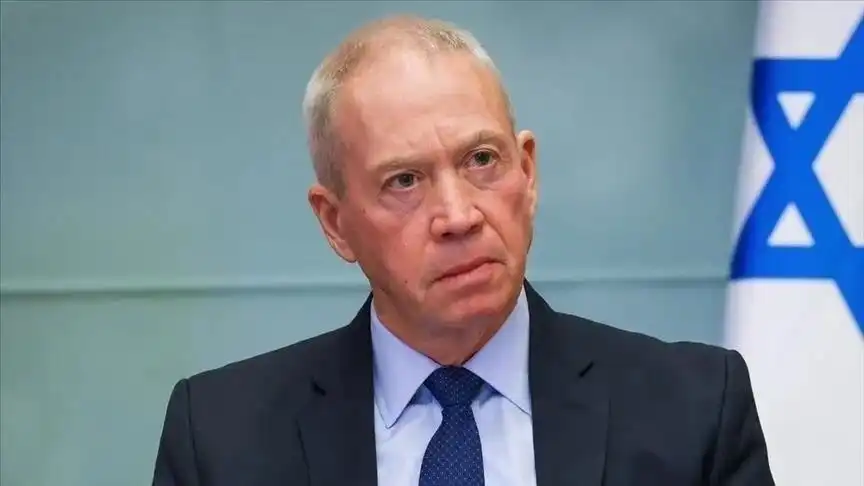
Galant comments on the Hebrew media's announcement of the assassination of Yahya Sinwar

In his first comment after the Hebrew media announced the assassination of the head of the political bureau of the Islamic Resistance Movement (Hamas), Yahya Sinwar, in Rafah, south of the Gaza Strip, the Minister of Defense in the occupation government, Yoav Galant, said that Tel Aviv will pursue its enemies and eliminate them.


"Our enemies cannot hide. We will hunt them down and eliminate them," Galant wrote on his X account.

PALESTINE

Thu 17 Oct 2024 5:44 pm - Jerusalem Time

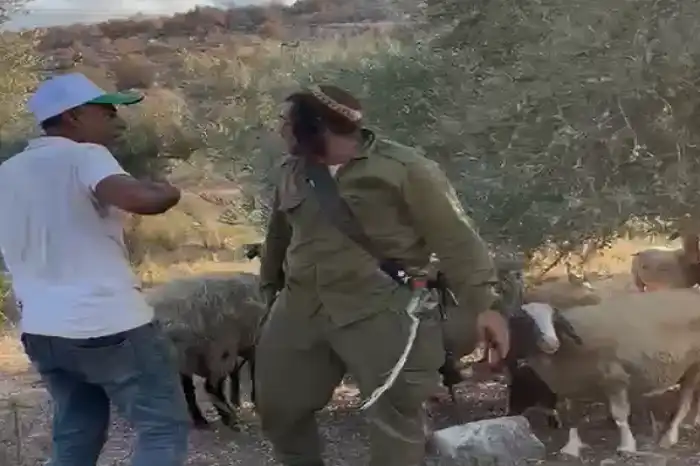
Settlers attack farmers while picking olives east of Tulkarm

This evening, Thursday, settlers attacked farmers while they were picking olives in the Ramin Plain, east of Tulkarm, and forced them to leave their lands at gunpoint.


According to local sources, settlers, one of whom was wearing an occupation army uniform and carrying a weapon, stormed the place, prevented them from completing their work of picking olives from their lands, and forced them to leave the area, indicating that the armed settler brought his sheep to the plain lands, in a provocative move against the farmers.


The sources added that this settler had previously seized areas of the plain's lands, and established a settlement outpost on them where he grazes his sheep. He constantly attacks farmers while they are working on their lands and forces them to leave them, in addition to the attacks of settlers coming from the nearby "Anab" settlement from time to time on the plain's lands, by burning and vandalizing trees.


This year, the olive harvest season in the West Bank is witnessing repeated attacks by settlers and occupation forces, such as burning and cutting down olive trees, stealing the crop, and preventing farmers from reaching their lands.


This morning, settlers opened fire on participants in an event organised by the Wall and Settlement Resistance Commission to help farmers from the village of Kafr al-Labad, east of Tulkarm, pick olives from their lands.


UN experts said yesterday that farmers in the occupied West Bank are facing the most dangerous olive season ever this year.


They considered that restricting the olive harvest season, destroying orchards and preventing access to water sources are attempts by Israel to expand its illegal settlements.

PALESTINE

Thu 17 Oct 2024 4:36 pm - Jerusalem Time

Gaza Health Director: The occupation is besieging hospitals and cutting off the lifeline of aid

The Director of Health in Gaza confirmed that the occupation forces are besieging the hospitals in the Strip and cutting off the artery of aid, in addition to preventing the entry of aid and medicine.


He added that the occupation seeks to completely annihilate the northern Gaza Strip, including Jabalia.


This comes after a massacre carried out by the occupation on Thursday, targeting a school housing displaced people in Jabalia.


Medical sources in Gaza said that 28 martyrs were killed in the massacre, in addition to 150 others injured in the occupation's bombing of the school that shelters displaced people in Jabalia camp.


Kamal Adwan Hospital and Al-Awda Hospital in the Gaza Strip received injured and martyrs as a result of an Israeli air strike that targeted a school housing displaced people.


PALESTINE

Thu 17 Oct 2024 4:22 pm - Jerusalem Time

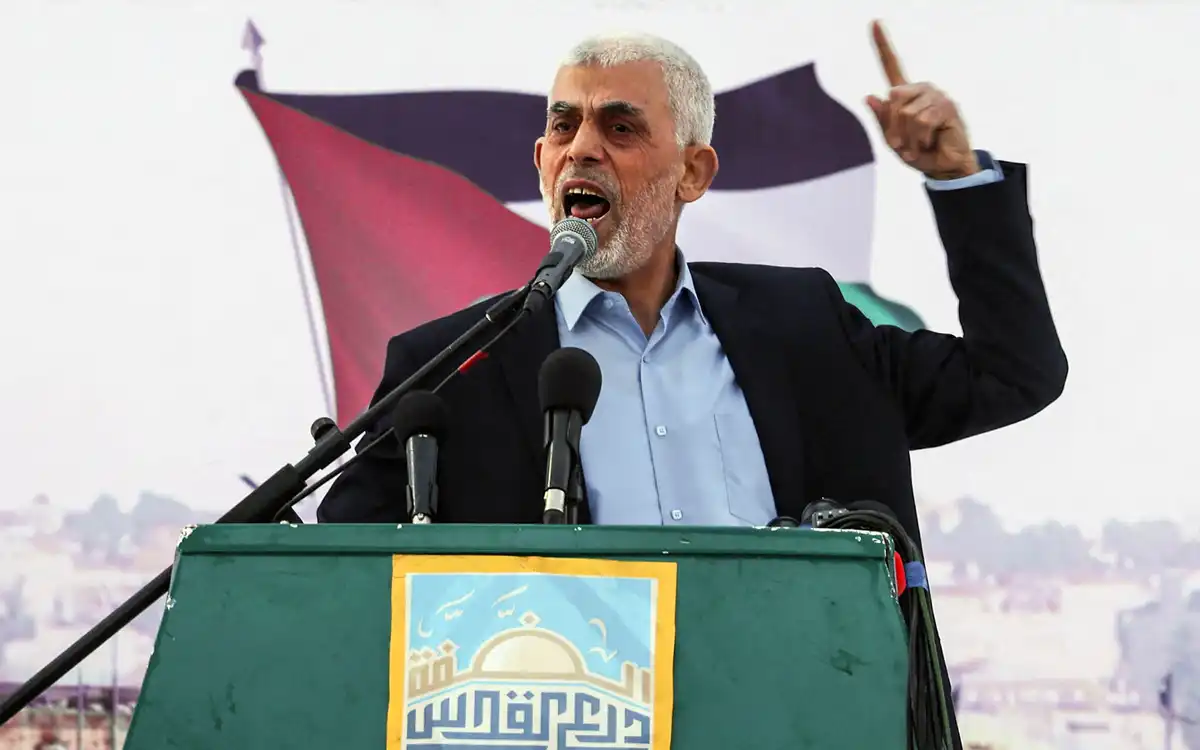
Updated: Hebrew media officially announces the assassination of Yahya Sinwar

Hebrew media officially announced, on Thursday, the assassination of the head of the Islamic Resistance Movement (Hamas), Yahya Sinwar, after DNA verification.


The official Hebrew Broadcasting Corporation announced, quoting the occupation army, the assassination of Sinwar, while Netanyahu instructed his office to write to the families of the detainees that the assassination of Sinwar was precise and that there were no losses among the hostages.


According to Channel 12, Netanyahu called for a security meeting to discuss the latest developments on the ground after the assassination of Sinwar.


The occupation prison administration raised the state of alert inside the prisons in anticipation of confrontations or demonstrations by Palestinian prisoners following the announcement of the assassination of Sinwar.


PALESTINE

Thu 17 Oct 2024 4:00 pm - Jerusalem Time

Two children injured by occupation bullets, one of them seriously, north of Hebron

Two children were injured by Israeli occupation forces' bullets, today, Thursday, during their raid on Al-Arroub camp, north of Hebron.


According to local sources, the occupation forces stormed Al-Arroub camp and fired live bullets at the citizens, which led to the injury of two children, who were transferred to Al-Ahli Hospital in Hebron.


Medical sources from inside the hospital reported that one of them had a serious head injury.

ARAB AND WORLD

Thu 17 Oct 2024 3:16 pm - Jerusalem Time

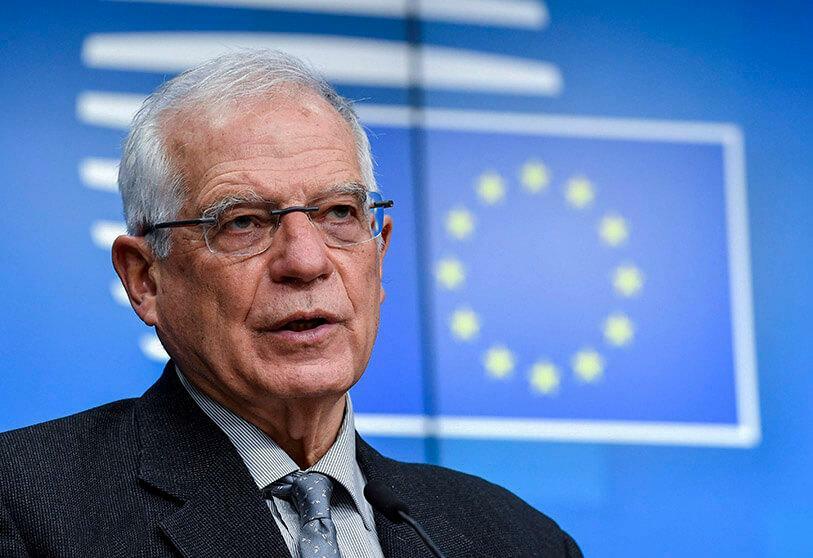
Borrell criticizes Washington's granting of a month to Israel to allow humanitarian aid into Gaza

The European Union's foreign policy chief, Josep Borrell, has criticised the United States for giving its ally Israel a month to "improve the humanitarian situation" in the Gaza Strip, warning that "a very large number" of Palestinians could be killed during that period.


"The United States is telling Israel that it must improve humanitarian support to Gaza, but they have given it a one-month deadline, one month at the current rate of people being killed... (meaning) a very large number (of dead), the situation is catastrophic," Borrell told reporters on Thursday ahead of a summit of EU leaders in Brussels.


US officials said Tuesday that Israel must take steps within a month to improve the humanitarian situation in Gaza or face possible restrictions on US military aid.


Washington's giving its ally Tel Aviv a month, according to observers, is an "inhumane act" in light of the catastrophic current situation in Gaza, and aims to give Israel time to implement what it calls the "generals' plan" in the northern Gaza Strip.

PALESTINE

Thu 17 Oct 2024 2:18 pm - Jerusalem Time

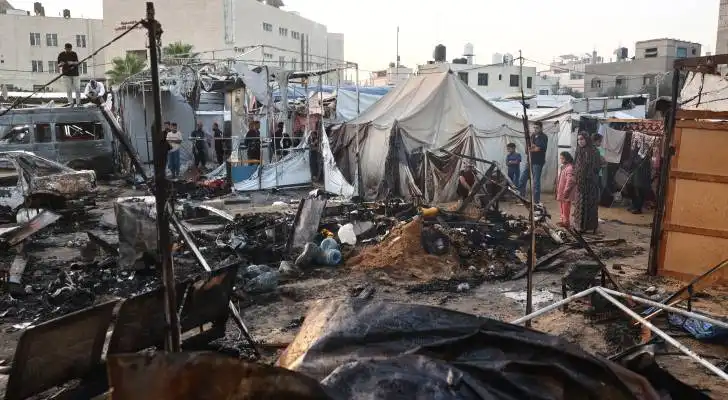
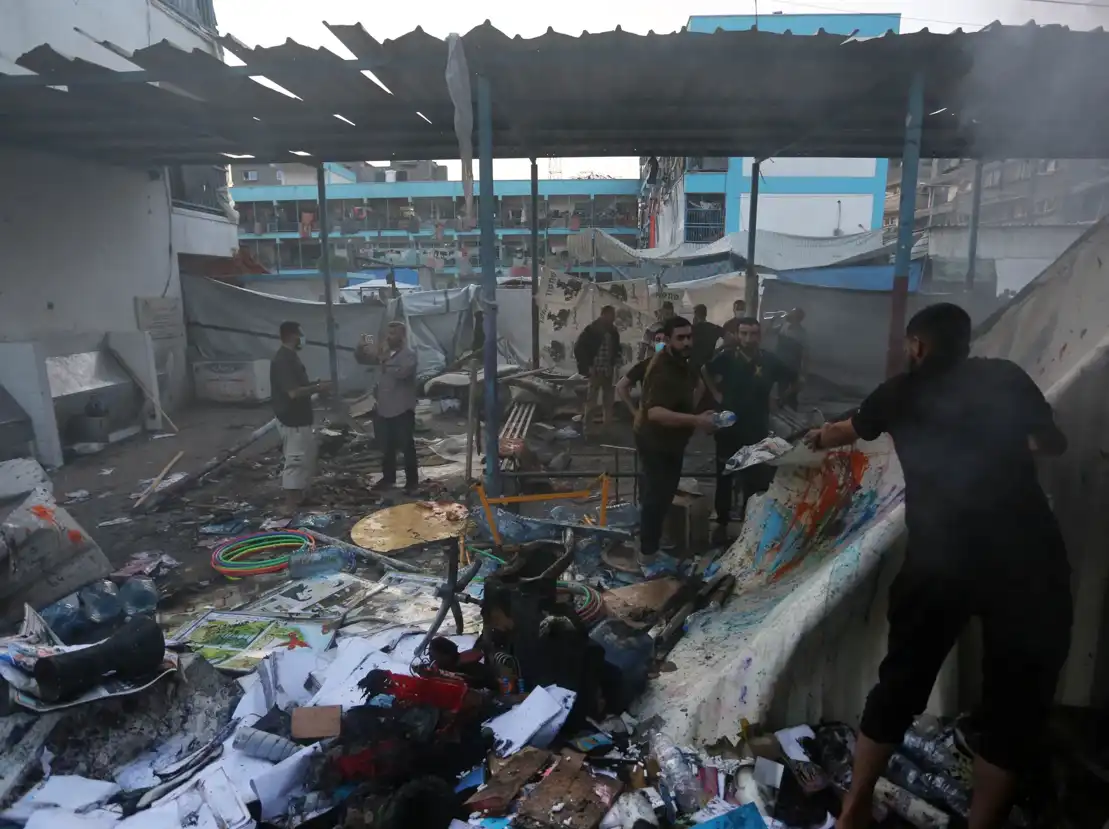
At least 15 dead and dozens injured in bombing of a school in Jabalia camp

At least 15 citizens were killed and dozens were injured, including women and children, when the Israeli occupation forces bombed a school housing displaced people in Jabalia camp, north of the Gaza Strip.


The occupation bombed Abu Hussein Elementary School, which is affiliated with the United Nations Relief and Works Agency for Palestine Refugees (UNRWA), and which houses displaced persons in Jabalia camp in the northern Gaza Strip.


Fire broke out in the tents of the displaced people in the school yard as a result of the occupation's bombing.


Some of the martyrs and wounded were transferred to Kamal Adwan and Al-Awda hospitals in the northern Gaza Strip, as ambulance crews are unable to reach the rest in the targeted school. Moreover, hospitals in the northern Gaza Strip are unable to provide services to the wounded in light of the strict siege imposed by the occupation for the 13th consecutive day.


At least 3 citizens were killed and others were injured earlier today, Thursday, when the occupation bombed a tent at a school housing displaced people east of the city of Deir al-Balah in the central Gaza Strip.


The occupation forces continue their aggression on the Gaza Strip, by land, sea and air, since October 7, 2023, which resulted in the martyrdom of 42,438 citizens and the injury of 99,246 others, the majority of whom are children and women, in an incomplete toll, as thousands of people are still missing under the rubble.

PALESTINE

Thu 17 Oct 2024 12:13 pm - Jerusalem Time

Warns of a real disaster facing newborns in the northern Gaza Strip

Medical sources warned of a real humanitarian disaster facing newborn babies in the nursery of Kamal Adwan Hospital, in light of the fuel crisis and shortage of medicines and medical supplies, as a result of the siege imposed by the Israeli occupation forces on the northern Gaza Strip, for the 13th consecutive day.


The sources indicated that the nursery department at Kamal Adwan Hospital, the only one that provides nursery services for newborns in the northern Gaza Strip, is full of cases, most of which are critical, and all of them are on ventilators.


She indicated that there are a number of cases waiting on the caesarean section schedule in order to be placed in the nursery, noting that the staff working in the nursery is still providing its services under the bombing and sounds of explosions.


Hospitals and medical centers in northern Gaza are suffering from a severe shortage of medical supplies and materials and are being directly targeted by the occupation forces, which has made them unable to carry out their responsibilities.


The United Nations Office for the Coordination of Humanitarian Affairs warned yesterday that the situation in northern Gaza is "catastrophic", with only three hospitals operating, as Israel intensifies its military aggression.


According to the official website of the United Nations, the official spokesman, Stephane Dujarric, said that the escalation in the north "severely undermines people's ability to access the means of survival."


He added that UN health partners reported that the three hospitals "are suffering from severe shortages of fuel, blood, trauma supplies and medicines," noting that with military operations continuing outside, about 285 patients remain in the Kamal Adwan, Al Awda and Indonesian hospitals.


The occupation forces are besieging more than 400,000 citizens in the northern Gaza Strip governorate (Jabalia and its camp, Beit Lahia, and Beit Hanoun), after it was separated from the Gaza governorate by earth mounds and the fire of military drones that comb the skies of the region, in addition to the artillery shelling of homes and citizens on the roads.

PALESTINE

Thu 17 Oct 2024 12:08 pm - Jerusalem Time

Etzion Prison Administration Fights Prisoners with Continuous Abuse and Expired Food

The lawyer of the Prisoners and Freed Prisoners Affairs Authority confirmed, after her last visit to Etzion Prison, where 112 prisoners are held, that the prison administration continues to provide the prisoners with expired food. For a whole week, it provided closed sandwiches consisting of tuna, yellow cheese, and expired mortadella, and the prisoners had no objection to eating them, as they have no choice in light of the food shortage, as they are somewhat filling.


She said in a statement: “The abuse and storming of rooms is still ongoing. The repressive forces are cramming the prisoners into the corners of the rooms and forcing them to lower their heads in a harmful manner. Then they drag each prisoner to another room, subject him to a strip search, and ask him to get up and down several times, under the pretext of searching for capsules inside their intestines.”


She added: "Fungi began to invade the prisoners' bodies, due to the lack of cleaning materials for the rooms, or bathing and personal hygiene supplies. The covers are also damp and have a very bad smell, which made the situation worse."

In this context, the Authority’s lawyer conveyed the testimony of prisoner Tariq Yousef Abu Matar (35 years old)/Ramallah, who has been in Etzion prison for 20 days, from the city, who said: “This is my seventh arrest. I have previously spent a total of 9 years in prison, but I have never been subjected to such an amount of beating, violence and torture over the past years as this time. My hands were tied behind my back and my eyes were blindfolded, then the soldiers threw me to the ground and beat me severely with weapons and their boots all over my body, until I was no longer able to move.”


“They took me to an army camp for 12 hours, during which the soldiers took turns beating me and forced me to squat the whole time. Then they tied me up with a chain and put a dog in front of me to scare me. I remained in this condition until they transferred me to Etzion prison. I remained for 3 days unable to move, eat or go to the bathroom except with the help of the prisoners. After that, I was interrogated and accused of belonging to a hostile organization. I was sentenced to 6 months of administrative detention.”

ARAB AND WORLD

Thu 17 Oct 2024 11:23 am - Jerusalem Time

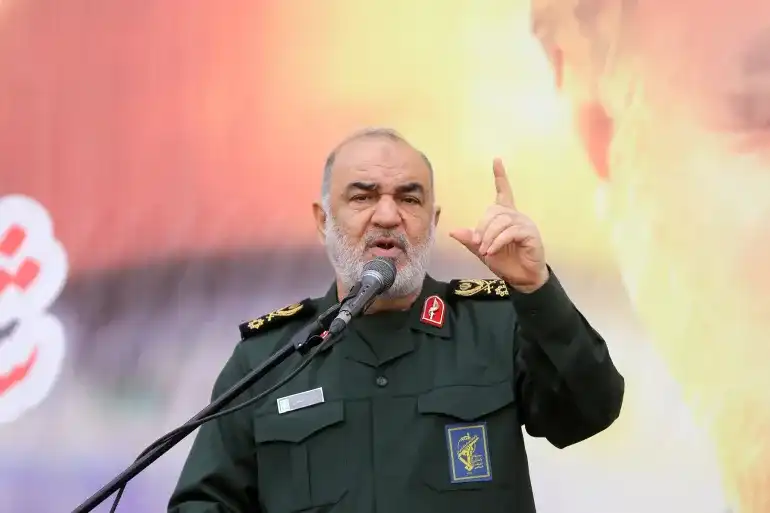
Revolutionary Guards Commander: We will hit Israel painfully if it attacks us

Iran's Revolutionary Guards commander Hossein Salami said Tehran would hit Israel "painfully" if it attacked its targets, while sources said Prime Minister Benjamin Netanyahu had approved a set of targets to hit inside Iran.


During the funeral of the Revolutionary Guards commander Abbas Nilforoushan, who was killed in the Lebanese capital Beirut last September in an Israeli airstrike, Salami said that the Israeli enemy "made a mistake in targeting resistance leaders and thought we would not respond."


"We assure the enemy that Operation True Promise 2 was just a warning," he continued, noting that "Israel, Iran's enemies, are suffering losses" due to their miscalculations.


He added, "If the enemy targets our lands, we will target his lands, and he knows that we will fulfill what we say."


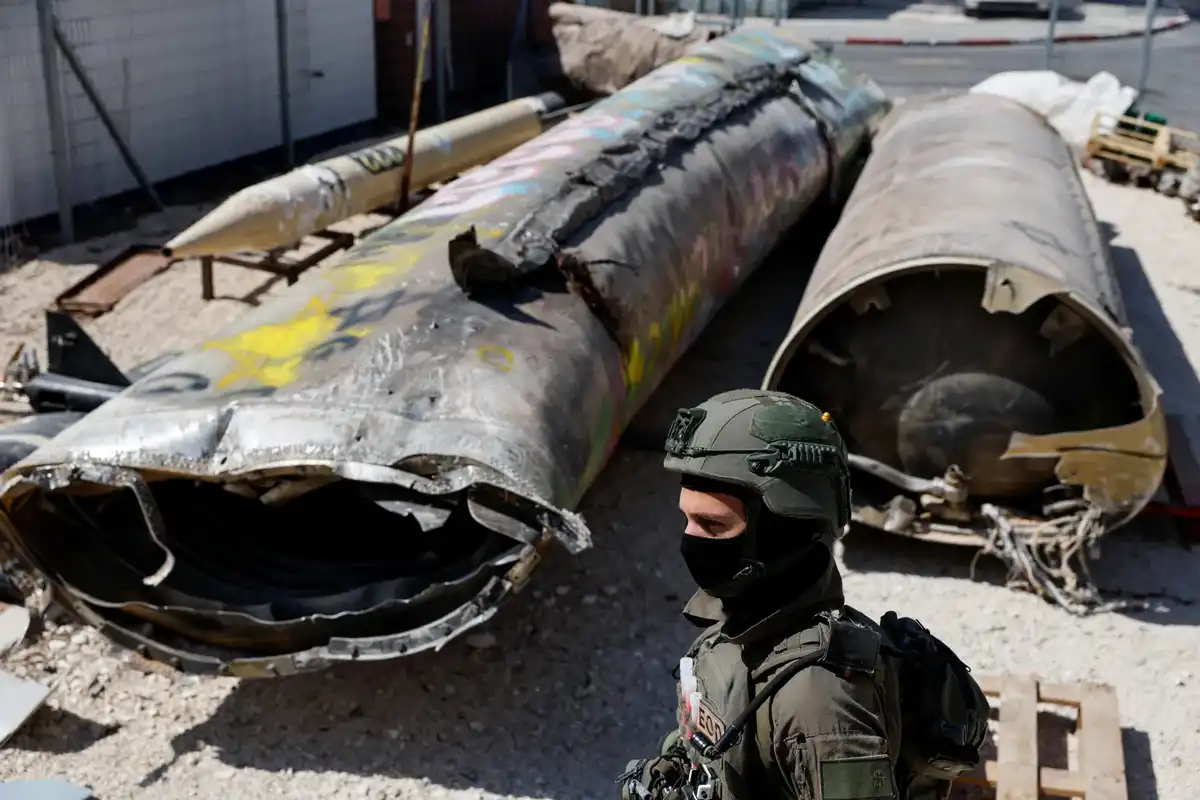
In early October, Iran launched an attack on Israel, using about 180 missiles. Tehran said it was in retaliation for the assassination of Ismail Haniyeh, head of the political bureau of the Islamic Resistance Movement (Hamas), Hassan Nasrallah, Secretary-General of Hezbollah, and Nilforoushan.


Israel assassinated Nasrallah and others, including Nilforoushan, in an air strike on Beirut's southern suburbs on September 27.


As for Haniyeh, he was assassinated in a bombing that targeted his residence during a visit to Tehran at the end of last July, and Iran accuses Israel of assassinating him.


Approval and objectives

Earlier, the American ABC network quoted an Israeli source as saying that Prime Minister Benjamin Netanyahu had approved a group of targets to strike inside Iran, in response to Tehran launching about 200 ballistic missiles at Israel in early October.


The source, who did not reveal his identity, indicated that despite the approval of the group of targets, the timetable for the attack has not been determined.


Two days ago, the New York Times quoted officials as saying that Israel had agreed to update military targets in Iran, in light of American statements calling on Israel to avoid bombing oil or nuclear facilities.


According to an official who spoke to the New York Times, the military targets in Iran include missile and drone launch pads and their factories, as well as government buildings.


The targets could also include Iranian nuclear research labs, while avoiding enrichment sites, officials said.


Since September 23, Israel has expanded the scope of the genocide it has been committing in the Gaza Strip since October 7, 2023, to include most areas of Lebanon, including the capital Beirut, through air strikes.

PALESTINE

Thu 17 Oct 2024 11:22 am - Jerusalem Time

A Palestinian woman was killed by the occupation forces while picking olives in Jenin

A citizen died today, Thursday, after being shot by the occupation forces while picking olives in Jenin.


A medical source told Al-Quds.com that Hanan Abdul Rahman Abu Salama (59 years old) from Faqqu’a, east of Jenin, was martyred after being shot by occupation soldiers while she was picking olives inside the borders of Faqqu’a village.


OPINIONS

Thu 17 Oct 2024 11:07 am - Jerusalem Time

The Lebanese War: A Tragedy, Not an Opportunity

James Zogby

James Zogby

Opinion Writer

It is galling to hear some policymakers in the United States, Israel, and elsewhere suggesting that Israel’s devastating strikes on Hezbollah and Lebanon have created “an opportunity to put Lebanon on a better path.” First and foremost, this is grossly insensitive to a serious situation. Thousands have already been killed, large parts of Beirut have been destroyed, and a quarter of Lebanon’s population has been internally displaced without adequate shelter, food, or services.


The toll continues to mount. To suggest that anything good can come out of this massive human tragedy is shameful.


Such a view is not only offensive to the victims, it is also akin to putting “ashes in the mouths” of those who have lost loved ones and are living in mourning. This mentality is dangerously naive because it ignores the lessons of history. Let us recall how, faced with similar nightmares in 1982 or 2006, we were told that these nightmares would also be opportunities. Each involved Israel’s excessive use of force. In each case, Israel said, “its enemies will be defeated and a new day will dawn.”


Ultimately, each case only resulted in a more turbulent situation with a more ferocious enemy emerging from the ashes it left behind. The reason for this is that all of these conflicts were rooted in real grievances resulting from injustice, which led to the emergence of resistance movements.


Instead of addressing and resolving these grievances, Israel, with the full support of the United States, has seen force as the only acceptable solution. What it has essentially said is, “Once we punish them and crush them into submission, everything will be fine.” This approach has not worked before, and it will not work now. At the heart of these deep-seated grievances is the historical injustice to which the Palestinian people have been subjected. Former US President Bill Clinton described this injustice eloquently when he told a group of Palestinian leaders that he knew their history of “dismemberment, dispersion, and dispersion among nations.”


For the Lebanese who have embraced Hezbollah, the grievances include their enduring anger over Israel's hostile occupation of southern Lebanon for more than two decades, which has displaced tens of thousands of Lebanese.


None of this is to say that Palestinian militant groups or Hezbollah haven’t made serious mistakes in their attempts to address the grievances of their constituencies. Rather, it is to say that the effort to violently eliminate these groups is shortsighted at best, and is not a solution because it does not address the roots of the grievances that make these groups attractive in the first place.


This is a recipe for disaster. Finally, ignoring Israel’s responsibility for its actions that have caused so much pain at the heart of the problem, and refusing to pressure it to change course, only guarantees that grievances will morph into more violent forms. That is the case today. Israel is committing grave violations in Gaza, while violent operations are ongoing throughout the West Bank.


Meanwhile, as Hezbollah launched rockets into Israel in support of Gaza, Israel now turned its attention to systematically eliminating Hezbollah’s leadership and cadres. In both Lebanon and Gaza, Israel sought “total victory” without regard for civilian casualties or damage to the broader society and its infrastructure. Seeing Iran as the primary backer of both Hezbollah and Hamas, Israel took it a step further by attacking Iranian positions and assassinating Iranian allies in Lebanon, Syria, and Iran itself, bringing the Middle East to the brink of a devastating regional war. While the United States expresses concern about the risks of expanding this war, it has done nothing to deter Israel’s actions. We have set red lines that Israel continues to cross, expressed concern about civilian casualties that Israel ignores, and repeatedly offered ceasefire proposals that Israel rejects. Meanwhile, we provide Israel with advanced, devastating weapons and unlimited diplomatic support.


The result is Israeli impunity, more Arab victims and suffering, and a Middle East that is farther removed from addressing the root causes of the conflict. When the fighting ends, the grievances will be greater than ever. If history is any guide, what we are likely to see in the coming years is a Hamas 2.0, a reconstituted Lebanese movement that holds a grudge against Israel and those it feels betrayed, a well of anger and bitterness toward Israel and the United States, and a region that is more unstable than it was. But despite all this, this tragedy holds no chance. The fact is that there is only one thing we can be certain of: Israel’s wars in Lebanon and Gaza will not end well.


Instead of naive fantasies about opportunity, the only logical step is to end this conflict now. For that to happen, the United States needs to “take responsibility” and demand that Israel “stop,” and back it up by halting arms shipments. Only then can we begin to address the humanitarian cost and alleviate some of the suffering. Only then can we begin to assess what steps must be taken to address the grievances at the heart of this tragedy. This is not an opportunity, it is a responsibility.

OPINIONS

Thu 17 Oct 2024 10:12 am - Jerusalem Time

Direct American Participation

Hamada Faraana

Hamada Faraana

Opinion Writer

It is natural for the United States to work and employ its three institutions: 1- the diplomatic government, 2- intelligence and its information, 3- the army and its capabilities, to protect the Israeli colony and enhance its influence, and support it in imposing its hegemony, domination and expansion at the expense of the homeland of the Palestinians and Arabs.


The United States has brought its fleet three times and moved it in the Mediterranean, after the October 7, 2023 operation, to be close to the borders of Palestine, to support the colony’s forces in their invasion of the Gaza Strip last year, and their invasion of Lebanon this year, and to participate in confronting, as it is doing, the Iranian bombing, and thwarting it, as President Biden said.


Strengthening the capabilities of the US military in Palestine to protect the airspace of the colony, its sites, and its institutions, and to cover up its attacks against the Arab resistance forces in Palestine, Lebanon, and Syria, has become a daily, direct task, after the expansion of the size and form of Arab-Israeli clashes. This is due to several reasons, the most important of which are, first, protecting the global interests of the United States, including the Arab world region. Second, protecting the colony and making it the strongest deciding party in the Arab world. Third, to confront Iranian influence, which constitutes an obstacle to the aspirations of Israeli-American expansion and influence. Fourth, and most importantly, confronting Russia and China in our Arab region and their global reach.


The United States succeeded in 1990 with the end of the Cold War, and achieved victory over communism, socialism, and the Soviet Union, and its defeat, and the decline of its global position, which made American and European influence alone in managing the international political scene.


In order to continue this international exclusivity, the United States is working to confront the Chinese economic power, the primary competitor to the American economy, and to confront Russia’s attempts to regain its international status that it lost as a result of the results of the Cold War and its defeat in it.


The United States is working to maintain its position in the Arab world, politically, militarily and intelligence-wise, which it did by employing its capabilities to overthrow regimes in Iraq, Libya, Yemen and Sudan, and what it sought to do in Syria, and in direct action to support the capabilities of the intelligence and cyber-technology colony in eliminating and liquidating Hezbollah leaders.


American participation is no longer just silent intelligence, but rather the expansion of the size of Arab participation with the Palestinians has pushed the American army to be a direct partner in supporting the capabilities of the colony and providing it with all the requirements for superiority, to confront the forces of the Arab resistance.


The battle is exposed, and is no longer a deceptive under-the-table operation, but has become clear and obvious with the participation of the American army, which does not allow the colony’s army to carry out any military action outside Palestine, without direct American approval, consent, and participation.

PALESTINE

Thu 17 Oct 2024 10:07 am - Jerusalem Time

Israeli occupation continues its siege of the northern Gaza Strip and carries out killings and forced displacement

The occupation forces continue their air, land and sea bombardment of the northern Gaza Strip for the thirteenth day, carrying out killings, blowing up homes, and forcible displacement, as well as preventing supplies of food, water, medicine and fuel.


The occupation army is pursuing a policy of systematic destruction of buildings and forced displacement of citizens in the northern Gaza Strip, especially in Jabalia camp, while about 400,000 citizens in the northern Gaza Strip are suffering from a strict siege, refusing to be displaced and leave their homes towards the southern Gaza Strip, while the Civil Defense announced that 200,000 citizens in Jabalia camp are living without food, drink or medicine for the 13th consecutive day.


Citizens insist on not moving to the southern Gaza Strip, despite the war of extermination and the intense pressure exerted by the occupation, and its efforts to put the health system in the northern Gaza Strip out of service, after it asked the Kamal Adwan, Indonesian, and Al-Awda hospitals to evacuate on the tenth of this month.


Since the beginning of its aggression and new ground invasion of the northern Gaza Strip, the occupation has been besieging the town of Jabalia and its camp, preventing the residents from fleeing to the neighboring city of Gaza, and ordering them to flee only via Salah al-Din Street, which extends along the eastern Gaza Strip from north to south.


This is the third ground invasion carried out by the Israeli occupation forces in Jabalia camp since the beginning of the genocidal war on Gaza on October 7, 2023.


On the ground, the occupation's drones opened heavy fire on citizens and their homes in Jabalia camp. Firefighting teams were also able to extinguish a large fire in a house near Abu Rashid Pool in Jabalia camp after it was bombed by the occupation.


Civil Defense reported that war, artillery and phosphorous bombardment by the occupation army targeted Khalifa School, which houses displaced people behind Sheikh Zayed Towers, north of Gaza.


The occupation's gunboats also fired towards the coast of Gaza City and the northern Gaza Strip, in conjunction with artillery shelling targeting the Sabra neighborhood in southern Gaza, the vicinity of the port area, and the Tal al-Hawa neighborhood in the west of the city.


The occupation forces continue their aggression on the Gaza Strip, by land, sea and air, since October 7, 2023, which resulted in the death of 42,409 citizens and the injury of 99,153 others, the majority of whom are children and women, in an incomplete toll, as thousands of people are still missing under the rubble.

PALESTINE

Thu 17 Oct 2024 9:09 am - Jerusalem Time

8 deaths and wounded in the occupation's bombing of a house west of Gaza City

Eight citizens were killed and others were injured tonight when the Israeli occupation forces targeted a house in Gaza City.


Medical sources reported that 8 citizens were killed and others were injured after the occupation aircraft bombed the house of the Al-Halou family on Al-Sina'a Street, southwest of Gaza City.


The occupation forces also bombed the house of the Saleh family, opposite Abu Rashid Pool, on the western side of Jabalia camp, north of Gaza.


The occupation artillery bombed the north of the Nuseirat camp in the central Gaza Strip.


The occupation forces continue their aggression on the Gaza Strip, by land, sea and air, since October 7, 2023, which resulted in the martyrdom of 42,409 citizens and the injury of 99,153 others, the majority of whom are children and women, in an incomplete toll, as thousands of people are still missing under the rubble.

ARAB AND WORLD

Thu 17 Oct 2024 8:46 am - Jerusalem Time

Waiting for the Israeli strike on Iran...the calm before the storm!

Dr. Jamal Harfoush: The expected Israeli strike on Iran will depend on achieving a greater deterrent effect, not a direct reaction

Major General Wassef Erekat: The strike requires preparations and its scenarios depend mainly on the size of American support

Sari Arabi: The Israeli strike is imminent, as preparations are complete, and the responses will continue, but slowly.

Dr. Saad Nimr: The timing of the Israeli strike may be very soon, and its size will determine the development of the course of events in the region

Nihad Abu Ghosh: The response sequence is part of the war of attrition and Israel aims to eliminate the Iranian nuclear project


Tensions are rising in the Middle East with increasing talk of an imminent Israeli strike against Iran, amid questions about its potential repercussions on the entire region, whether the region will enter a series of responses and reactions, or slide into a dangerous regional war.


In separate interviews with “I”, writers, analysts and academics believe that the Israeli response may be designed to achieve a greater deterrent effect than a direct reaction, as the strike is expected to target vital military targets in Iran, and perhaps carry out assassinations. However, they point out that Israel faces logistical and tactical challenges related to carrying out this strike against Iran, but what saves it is cooperation with the United States, which provides intelligence and logistical support, but at the same time seeks to control the situation to avoid the outbreak of a comprehensive regional war. Despite this, it will be forced to enter the war if things slide dangerously and the situation gets out of control.


Precision airstrikes against vital military targets in Iran


Recent developments in the Middle East indicate an escalation of tensions between Israel and Iran, especially after the recent Iranian strike, which came before the Israeli threat to respond, according to Dr. Jamal Harfoush, Professor of Scientific Research Methods and Political Studies at the University of the Academic Research Center in Brazil.

Harfoush believes that the expected Israeli response will depend on achieving a greater deterrent effect, rather than being a mere direct reaction.

The most likely scenario, according to Harfoush, is for Israel to launch precise airstrikes against vital military targets in Iran, such as nuclear facilities and military command and control centers, using fighter jets and long-range missiles, in addition to the possibility of expanding the scope of the response to include sensitive infrastructure, such as Iranian oil refineries and power stations.


In addition, Harfoush expects another scenario to occur, which is a broader regional escalation that includes Israeli strikes against Iran’s allies in the region, such as Hezbollah in Lebanon or Iranian-backed militias in Syria and Iraq, as this escalation aims to cut off military and logistical support for Iran, and reduce its ability to respond through its allies.


In this context, Harfoush points out that Israel may target missile launch sites or weapons depots run by these units, which could lead to an escalation of the conflict to include other countries in the region.


Shock and awe strategy


Harfoush believes that the worst-case scenario is that Israel seeks to adopt a “shock and awe” strategy, by launching large-scale strikes that may reach command centers in Tehran itself or attempts to target Iranian military leaders. However, this step will be fraught with risks, as it may lead to a comprehensive escalation that includes a wide regional war, which may require the intervention of major countries such as Russia or China, whether diplomatically or militarily, to protect their interests in the region.


He warns that the region may enter into a “spiral of increasing escalation,” which is known in political science as a “sequence of action and reaction.” The Iranian strike against Israel opened the door to an Israeli response, and if this response is harsh, Iran may adopt unconventional methods of response, as well as an escalation of the proxy war through Iran’s allies in the region. This may lead to targeting Israeli interests or even the interests of its allies, which requires urgent international intervention to stop the escalation.


Harfoush points out that major countries, such as the United States and Russia, may be forced to intervene diplomatically to avoid the situation sliding into an open, uncontrollable conflict.


Harfoush points out that the Israeli response has become more inevitable after the Iranian strike, as Israel considers any direct Iranian attack an existential threat.


It is believed that Israel is waiting for the right moment to target the Iranian infrastructure in a way that would paralyze its military and nuclear capabilities for a long time, and perhaps seeks through this to change the balance of power in the region in its favor.


US Commitment to Protect and Support Israel


As for American intervention, Harfoush considers it pivotal in this context, as the United States has great interests in the stability of the region, but at the same time it is committed to protecting and supporting its ally Israel, and Washington is likely to provide significant intelligence and logistical support to Israel, including the joint use of American military bases in the Arabian Gulf. However, the United States is trying to exercise restraint and avoid direct military intervention for fear of the situation escalating into a full-scale regional war.


Harfoush believes that Washington may initially move towards diplomatic solutions, by pressuring both sides to stop military operations, but if the situation escalates towards a comprehensive confrontation, the United States may find itself forced to enter the war alongside Israel, especially if American interests or the interests of its allies are targeted.


Gaza may become a secondary arena in the wider conflict


As for the Gaza Strip, Harfoush points to the possibility that Gaza could become a secondary arena in the broader conflict between Israel and Iran, and that Palestinian armed factions could exploit this conflict to target Israel and open a new front, increasing military pressure on Israel. However, Israel may seek to contain the escalation in Gaza through limited military strikes or security operations aimed at preventing the situation from escalating.


However, Harfoush believes that marginalizing Gaza may give Palestinian factions more room for military and political action, which will lead to an escalation of the situation in the Strip and a worsening of the humanitarian and economic crises there, while a popular uprising may erupt in parallel in the West Bank.


The strike requires great preparations and capabilities.


Retired Major General Wassef Erekat, a strategic military and security expert, believes that the possible scenarios for the expected Israeli strike against Iran depend primarily on the extent of American support.


Erekat explains that Israel needs great capabilities to ensure the success of this strike on Iran, including securing aircraft routes and providing accurate security and intelligence information, while Erekat stresses that without American support, it is difficult for Israel to achieve its goals from the potential strike.


Erekat stresses that one of the important questions relates to the parameters of the Israeli strike, as it is still unclear whether there are targets exempt from the attack, such as Iranian nuclear or oil facilities, or whether the option is open to Israel to target any target it chooses.


Possible targets for an Israeli strike


In this context, Erekat points out that what is available to Israel, if it takes into account the American recommendations, is to target sensitive military facilities inside Iran, which could be, for example, the headquarters of the Iranian Revolutionary Guard, the Quds Force, or the headquarters of the Iranian army. Likewise, potential targets could include senior leadership figures inside Iran, and one scenario would be to carry out assassinations against prominent Iranian leaders.


Erekat points out that Israel may seek to target sensitive vital targets inside Iran to restore its reputation after the Iranian attack that occurred earlier this month.


Erekat points to the possibility of being drawn into a series of responses and responses to responses between Israel and Iran, as each party may continue to escalate its response more strongly than the previous one, which further complicates the situation. Moreover, the continuation of these painful strikes may lead to a loss of control over the situation and its descent into the unknown, especially if the results of the attacks and the extent of the losses are large.


Direct US military involvement ruled out


Erekat touches on the last meeting held by Israeli Prime Minister Benjamin Netanyahu, which lasted three hours, and did not ask for the ministers’ approval for the strike, as he left the door open regarding the date of its implementation, while Erekat indicates that the matter may be linked to the arrival and preparation of the American “THAAD” defense system.


Erekat points out that the Israeli strike could come before the US presidential elections if preparations are completed.


However, Erekat rules out the direct participation of the US military in the strike against Iran, but he confirms that all US radar and defence systems will be at Israel's service, as the West and the United States consider Israel's defeat in this battle to be their defeat, which is unacceptable to them.


Gaza Strip will remain a major battleground in the war


Regarding Israel's declaration that Gaza is a secondary battlefield in the midst of the escalation, Erekat believes that this description is inaccurate, pointing out that the Strip will remain a primary arena in this war in light of Israel's strategic goal.


According to Erekat, although Israel is now focusing on the northern front, due to the size of the challenges and threats posed by this front, especially in terms of combat preparations and capabilities, the complexities of geography, and the possibility of supply and provision, whether for the army or the Israeli home front, and although it has transferred some military divisions from the Gaza Strip to the northern front, it has kept the killing tools of aircraft and artillery as they were, and has even increased its brutality and commission of massacres and war crimes.


In this regard, Erekat believes that developments on the northern front open the door to multiple possibilities, including the expansion of the scope of fighting and its transformation into a regional war, or perhaps more, which puts it in the spotlight.


Factors behind the delay in the Israeli response


Writer and political analyst Sari Arabi explains that the delay in the Israeli response to Iran is because Israel is carefully studying the size of the strike and the details of its objectives.


Arabi points out that there are other factors delaying the Israeli response, including logistical arrangements that require cooperation with the United States, in addition to waiting for the defensive equipment that will deal with any possible Iranian response. Among these preparations is the deployment of the American THAAD air defense system in Israel, a step that may enhance the occupation’s ability to confront any Iranian threats. In light of the completion of these preparations, Arabi believes that the Israeli strike on Iran is imminent.


Arabi points out that the general climate, as discussed in American and Israeli circles, indicates that the strike will target Iranian military sites, and will likely include strategic facilities such as missile and drone factories, in addition to other military targets.


Despite talk of focusing on military targets, Arabi points out the possibility that the strike could include sensitive civilian or economic sites, which makes it difficult to trust what is being circulated in American and Israeli public circles, as this talk may be part of an Israeli-American deception strategy towards Iran.


Arabi explains that the chain of responses between Israel and Iran is slow, but it will continue.


Will Iran respond if it is attacked?


Regarding Iran, Arabi raises questions about whether it will actually respond, as some of its leaders have stated, or whether it will prefer to absorb the Israeli strike, based on internal economic and political calculations. He believes that Iranian calculations take into account that the battle was not direct with Tehran, in addition to other internal factors.


In the context of the recent Iranian strike, Arabi points out that the strike was not merely a response to the assassination of Hamas political bureau chief Ismail Haniyeh or Hezbollah Secretary-General Hassan Nasrallah and to restore Hezbollah’s reputation, but rather came as a preemptive step, fearing that Iran might be targeted in broader strikes that might reach the capital, Tehran. This raises the question of whether Iran will respond forcefully to Israel or whether it will avoid escalating the confrontation.


Direct US Participation


Regarding American support for Israel, Arabi believes that the United States plays a pivotal role in providing logistical and intelligence support, and this support includes providing satellite images and intelligence information that help Israel target Iranian sites, and perhaps even direct American participation in military operations in covert ways.


Arabi points out that the United States will be effective in defending Israel from any possible Iranian response, especially if Iranian strikes target the Israeli interior.


On another level, Arabi explains that Gaza has become a secondary arena in terms of the Israeli war effort, according to Israeli statements, but this does not mean that Gaza has completely lost its importance, as it is still a major arena in the political dimension, as Israel continues to monitor and deal with the situation in the Strip on an ongoing basis.


Strike scenarios control the course of regional developments


Dr. Saad Nimr, a professor of political science at Birzeit University, believes that the expected Israeli strike against Iran is governed by several scenarios that may determine the course of regional events.


Nimr explains that the first scenario is based on the United States’ desire to avoid igniting a wide regional war, and therefore Washington is trying to direct Israel towards a balanced and not exaggerated response to Iran, as happened last time. The goal is to avoid provoking Iran to carry out another response, which could lead to the region sliding into a wider conflict. This scenario indicates that the United States is still seeking to control matters in a way that prevents escalation.


The second scenario is linked to differing opinions within Israel, where there are currents pushing towards directing a direct strike against the Iranian nuclear program or targeting Iran's vital oil interests, according to Nimr.


Nimr points out that the realization of this scenario will necessarily lead to the outbreak of a regional war, which is what Washington fears if Israel chooses to implement an unbalanced and strong response. For this reason, the United States has provided Israel with the advanced THAAD defense system and its personnel, which means that Washington is more involved in any potential escalation.


Israel seeks to drag the region into a large-scale regional war


Nimr expects that this strike may lead to a series of actions and reactions between the two parties, but this series of strikes may get out of control and lead to a dangerous escalation that may extend to a wide regional war, according to the size of the Israeli strikes.


Nimr believes that the timing of the Israeli strike on Iran may be very soon, and may be carried out before the US elections.


Nimr points out that Israel aims to drag the region into a broad regional war that may serve the goals of the Israeli government.


Netanyahu will keep the Gaza front open


In another context, Nimr explains that Israel's announcement that it is dealing with Gaza as a secondary arena at the present time, in order for the Israeli military effort to focus on southern Lebanon and confronting Hezbollah.


In this context, Nimr points out that Israel seeks, through this policy, to close the prisoners’ file and stop negotiations and ceasefire temporarily or permanently, in an attempt by Israeli Prime Minister Benjamin Netanyahu to calm the families of Israeli detainees in Gaza.


However, Nimr believes that Netanyahu will keep the Gaza front open, but without giving it the same importance that he gives to the Lebanese front, where Israel has reduced its military presence, but that does not mean that the crimes and massacres will stop.


Meanwhile, Nimr points out that Israel's talk that Gaza is a secondary arena may be a step on its part to direct media and international attention away from the Strip, and shift focus towards southern Lebanon and the potential confrontation with Hezbollah, while turning a blind eye to the massacres it is committing in Gaza.


Two Israeli goals for the war


Writer, political analyst and specialist in Israeli affairs Nihad Abu Ghosh explains that Israel is adopting two complementary goals in its expected strike on Iran. First, it seeks to restore the deterrent power that was affected after Iran reached Israeli military targets. Israel wants to send a message that it has the ability to target any Iranian target anywhere, relying on strong military and political support from the United States.


The second and most important goal, according to Abu Ghosh, is to launch a military strike to eliminate the Iranian nuclear project, which is considered an existential threat to Israel.

Abu Ghosh points out that there are expectations that Israel may target nuclear, oil, military and leadership facilities in Iran, despite American advice to Israel to avoid targeting oil and nuclear facilities. However, Israeli Prime Minister Benjamin Netanyahu may evade, despite statements about his response to American recommendations.


Abu Ghosh believes that any Israeli strike targeting the Iranian nuclear project will not be sufficient to eliminate it, given the distribution of nuclear facilities over thousands of sites in vast areas of Iran.


He points out that Israel, based on directing a strike against Iran, is not immune from Iranian reactions, and what Israel fears most is finding itself in the midst of a war of attrition, a scenario that could be devastating for it, noting that the possible sequence of Iranian responses constitutes part of this war of attrition.


Abu Ghosh concludes that the escalation of the war could have been avoided if Israel had ended the war on the Gaza Strip and concluded a deal, but the desire to target the Iranian nuclear program is an opportunity for Israel.


Abu Ghosh expects that an Israeli strike on Iran may be very close, especially with the approach of the US elections.


American partnership and indirect intervention


As for the American intervention, Abu Ghosh explains that this intervention is not direct, but rather represents a partnership close to direct participation, whereby the United States of America provides legitimacy for any Israeli aggression as well as its pledges to participate militarily in defending Israel and providing it with defensive equipment, but not actual participation.


Abu Ghosh stresses that America is undoubtedly a partner in this war, although its direct role is still limited, and the United States so far declares that it is participating in defense and not attack in this war.


Declaring Gaza a Secondary Battlefield is an Israeli Ruse


Regarding the situation in Gaza, Abu Ghosh describes the declaration of Gaza as a secondary battlefield as an Israeli trick aimed at diverting attention from what is happening there.


Abu Ghosh asserts that, on the contrary, Gaza has become an arena for Israel to carry out massacres that take place in secret without the world hearing about them, in an Israeli attempt to reap the results of the war that has been ongoing for about a year.

PALESTINE

Thu 17 Oct 2024 8:40 am - Jerusalem Time

The Holocaust is getting fiercer... Who will extinguish the raging fire of genocide?

Dr. Omar Rahhal: The political will of Arab countries is the key to stopping this massacre, and it is possible to use the weapon of oil and economic pressures

Hani Abu Al-Sabaa: In light of the scenes of civilians being burned in shelters, international movements did not rise to the level required to stop these crimes.

Akram Atallah: The world's silence was an undeclared license for the occupying state to continue its attacks and crimes in the Gaza Strip

Dr. Hussein Al-Deek: The massacre can only be stopped if Arab and Islamic countries take a firm stance that translates their statements into political actions

Daoud Kuttab: The media and political compass must be corrected and the Gaza Strip must continue to be the focus of international attention .


The tragic conditions and suffering are worsening with the escalation of the war of extermination and massacres committed by the occupation army in the Gaza Strip, amidst a suspicious international silence, as the people of Gaza cry out to the international community without any response.


In separate interviews with “I”, writers, political analysts and university professors believe that there is a great possibility of Arab countries exerting pressure on the United States and Europe using the language of interests, but that requires real political will to stop what is happening.


All speakers agree on the importance of effective Arab and Islamic action, and taking real steps instead of statements. They consider this to be the only way to end the tragedy of the Palestinian people, and the necessity of concerted efforts to achieve this, noting that oil is a tool of pressure on Western countries to push them to pressure Israel to stop the aggression.


Writers, analysts and academics stressed that the immediate cessation of normalization with Israel and the implementation of the decisions of the Arab and Islamic summits supporting the Palestinian cause are necessary steps to confront these massacres, in parallel with the need to strengthen internal Palestinian unity to enable the Palestinians to face the challenges and achieve their independence. They added: "The direct action of Arab and Islamic countries is a necessary step to stop the genocide."


They pointed out the necessity of mobilizing the international community and resorting to real pressure on Israel through Islamic and Arab countries, as strategic interests are what motivate the international community to come out and break the international silence on the crimes of genocide in the Gaza Strip.


Writers, analysts and academics pointed out that the silence of the international community is a green light for Israel to continue its attacks, but there is an urgent need for urgent international action to protect civilians and stop the genocide, while keeping Gaza in the circle of international attention, as silence about Israeli crimes contributes to their continuation and deepening.


Israel deceives the world to cover up its massacres


Despite Israel’s declaration that Gaza is a secondary battlefield a few days ago, the scale of the crimes has increased, and even their ugliness has increased. This declaration shows Israel’s policy of deceiving the world to cover up its massacres in the Strip, which was evident in the ugliness of burning the displaced alive, while the terrible silence remained the master of the situation, according to what writers, political analysts, and university professors see.


For the 376th consecutive day, the war of extermination on the Gaza Strip continues, and all measures and negotiations have failed to force Israel to stop this massacre.


The death toll from the Israeli aggression since October 7, 2023 until now has reached 42,409 martyrs and 99,153 injuries, as the majority of the victims are civilians, while there are thousands of detainees and missing persons, amidst continuous bombing, destruction, killing, siege and starvation.


The people of the Gaza Strip suffer from repeated displacement, which has forced many of them to resort to shelters and tents in harsh conditions, where they lack the most basic necessities of life, which increases the suffering of displaced families.


In addition, the sector suffers from a severe shortage of medical supplies, as the Israeli occupation forces have targeted hospitals and health facilities, which hinders the provision of necessary health care to the wounded and sick, in addition to the restrictions imposed on the entry of humanitarian aid, as the occupation continues to tightly close the crossings for about a year.


Implementing the decisions of the Arab and Islamic summits and stopping normalization


Dr. Omar Rahhal, writer, political analyst and director of the Shams Center for Human Rights, said: The continuation of the aggression and massacres and the accompanying continuation of the tragic conditions in Gaza are linked to deep political roots, based on the failure to implement the decisions of the Arab and Islamic summits that aim to stop the Israeli genocide, in addition to the submission of some countries to American policy in the region.


Rahhal pointed out that there is a great possibility for Arab countries to exert pressure on Europe and the United States in the language of interests, if they had a real political will to stop what is happening.


Rahhal stressed the importance of using the "oil weapon" and economic pressures as a main tool to impose political changes, stressing that the political will of Arab countries is the key to stopping this massacre.


Rahhal stressed that stopping normalization with Israel has become a necessary requirement, in addition to implementing the decisions of the Arab and Islamic summits that have always emphasized support for the Palestinian cause.


He believes that if the Arab countries were serious about their commitments, including stopping the aggression on the Gaza Strip and all the occupied Palestinian territories, the heads of Arab and Islamic countries would have headed to the Strip themselves to stop this genocide to which its residents are being subjected and open the borders to provide relief to the citizens.


Rahhal stressed that sending urgent humanitarian aid to Gaza, and denouncing, condemning and denouncing, will not curb Netanyahu and will not stop the aggression. Rather, stopping the aggression requires hardening and strengthening the Palestinian internal front, and at the forefront of that is strengthening national unity to confront the aggression and conspiracies being hatched against the national cause and the Palestinian people.


Not only stopping the aggression but achieving independence


Rahhal considered that the internal division deprives the Palestinians of the ability to form a vision and strategy capable of addressing the world. Without the unity of the Palestinian position, it is difficult to achieve the required international pressure, stressing that the pressure now, after all this bloodshed, is not only to stop the aggression, but to achieve independence.


In his speech, Rahhal addressed the international and Arab silence regarding the Israeli crimes in Gaza, pointing out that some Arab countries are facing a tight security grip that prevents their people from expressing their rejection of the Israeli crimes.


Rahhal pointed out that there are peoples who have been mobilized by the media against the Palestinian resistance, as they are portrayed as the cause of the escalation and that they serve foreign agendas.


Rahhal criticizes the state of distraction that some Arab peoples are experiencing through entertainment and focusing on the economy, which weakens their interaction with the Palestinian cause. Also, in the absence of political parties and civil society institutions, popular movement remains limited, which makes it difficult to confront the crimes committed by Israel in Gaza.


On the other hand, Rahhal said that Israel's declaration of Gaza as a "secondary battlefield" is a blatant attempt to mislead world public opinion, as Israel seeks through this statement to gain more time to commit more crimes and increase the number of Palestinian victims without drawing serious international attention.


Escalation in targeting civilians, especially in shelters


In turn, writer and political analyst Hani Abu Al-Sabaa addressed the recent escalation in the Gaza Strip, where the past few days have witnessed a noticeable increase in targeting civilians, especially in shelters that are supposed to be safe havens, which means that Israel has not stopped the crime but has escalated it.


Abu Al-Sabaa confirmed that the Israeli army committed several massacres that resulted in the killing of dozens of innocent people, and that the ferocity of the bombing gives the impression that the war is in its first day, with military pressure focused on the northern Gaza Strip, especially in the Jabalia camp.


Abu Al-Sabaa explained that the siege imposed on Jabalia is tight, as Israel uses tanks and drones to bomb the area, in conjunction with targeting journalists in an attempt to cover up the truth and prevent the transmission of the ongoing crimes committed by the occupation, especially in northern Gaza.

Abu Al-Sabaa pointed out that this systematic targeting of the press reflects a clear Israeli intention to impose a media blackout on violations against civilians.


Abu Al-Sabaa expressed his disappointment with what he called the "timid international calls" to stop the Israeli aggression and the war of extermination, pointing out that these international movements do not match the size of the crimes committed.


Abu Al-Sabaa stressed that the Palestinian movement at the international level needs to intensify efforts, stressing the necessity for the Arab League to play a greater role in mobilizing the international community to pressure Israel.


Abu Al-Sabaa called on Islamic countries not to be satisfied with condemnation and denunciation, but to take effective action to confront what he described as the "genocide of an entire people."


The need for concerted Arab and Islamic efforts to stop the massacres


Abu Al-Sabaa believes that the concerted efforts between Arab and Islamic countries have become necessary to confront the ongoing massacres, noting the importance of addressing the world in the language of interests. He pointed out that the continuation of Israeli crimes against the Palestinians in Gaza may lead to an exacerbation of the situation in the region, which threatens to ignite a regional war whose end cannot be predicted.


Abu Al-Sabaa expressed his belief that the international community today is not acting out of humanitarian motives, but rather based on its strategic interests, pointing out that pressure on Israel will not be effective unless the major powers realize that their interests in the region are threatened.


In this context, Abu Al-Sabaa believes that the statements of the UN Secretary-General were a wake-up call for the international community, when he pointed out the United States’ inability to stop the war and exert sufficient pressure on Israel, explaining that the statements put things in perspective.

He added: "Although the scenes of burning civilians in shelters have sparked anger around the world, international movements have not risen to the level required to stop these crimes."


Abu Al-Sabaa stressed that this international silence encourages Israel to continue committing the "most heinous massacres of the current century," which makes the international community an indirect partner in these crimes through its silence on them.


On the other hand, Abu Al-Sabaa pointed out that the Israeli army's announcement that Gaza is not the main battlefield is nothing but an attempt to divert attention from the ongoing crimes in the Strip.


Abu Al-Sabaa said: This Israeli deception may fool the international community, but it will not fool the Palestinian people, who continue to stand firm, despite the heavy price they pay daily as a result of the Israeli massacres.


Israel has gone too far in its transgressions and crimes


For his part, writer and political analyst Akram Atallah said: The continuation of the Israeli aggression on the Gaza Strip indicates that the international and regional community seems incapable of stopping the "war of extermination" that Israel has been waging for more than a year on the Gaza Strip.


Atallah pointed out that Israeli Prime Minister Benjamin Netanyahu and members of his government, in addition to the Israeli army, benefited from the world's silence over the past year, which gave them an undeclared license to continue their attacks and escalation against Gaza.


According to Atallah, it seems that Israel has gone too far in its violations, as the scenes of destruction and fire that devoured the displaced people a few days ago did not cause any shock to the conscience of the international community.


Atallah explained that international reactions were timid, pointing out that the only one who could make a move was the United States, but even these demands from Washington were weak and suspicious, which raises doubts about the extent of its seriousness in pressuring to stop the war or reduce its intensity.


Atallah stressed that the only international move that might have an impact is pressure on the United States by the European Union or the Gulf Arab states that possess vital resources such as oil and gas. If these states decide to exploit this card and pressure the United States, which is known as a state of interests before being a state of principles, they might be able to force it to re-evaluate its position and its continued support for Israel, which could lead to either stopping the war or at least limiting its escalation.


Gaza Strip has become a "secondary arena" for fighting!


He said: "The continued international silence gives Israel a sense of security and reassurance that its actions will not be met with any serious international reactions or real pressures."


This silence, according to writer Atallah, gives Israel a “green card” to continue its “war of extermination” in Gaza without fear of international repercussions.


Regarding Israel's announcement that the Gaza Strip has become a "secondary arena" for fighting, Atallah said that it means that the Israeli army no longer needs to deploy large forces in the Strip, indicating a strategic shift in the way military operations are managed.


Atallah explained that this announcement does not mean stopping the war, but on the contrary, the killing, intimidation and starvation that Israel is practicing against the people of Gaza are continuing, but they are now being carried out with limited efforts and by small parts of the Israeli army, without the need for the full participation of all military forces.


Arab countries have many pressure cards


The writer, political analyst and specialist in American affairs, Dr. Hussein Al-Deek, believes that the ongoing massacre in the Gaza Strip can only stop if the Arab and Islamic countries take a firm stance that translates their statements into practical political actions.


Al-Deek pointed out that the Arab countries have many pressure cards, but they have not used them yet, such as withdrawing embassies and severing diplomatic relations with Israel, in addition to using the oil weapon to pressure the US administration, and even threatening to close US military bases in the region.


These steps, according to Al-Deek, would threaten US interests and force it to reconsider its support for Israel.


Al-Deek believes that the current Arab and Islamic position is incapable and does not go beyond media statements that do not have any real impact on the ground, at a time when the Israeli occupation continues its crimes against the Palestinian people.


Al-Deek stressed that what deters the occupation are the political, military, and economic measures that are completely absent from the agenda of Arab and Islamic governments.


Al-Deek pointed out that Gaza is facing genocide in light of international silence and the complicity of some major countries, most notably the United States and Britain, in addition to Germany, which continues its military support for Israel.


Al-Deek expressed his belief that there is a beginning to pass political projects, especially in the northern Gaza Strip, where the occupation continues to implement its aggressive plans using excessive force.


The scene of genocide in Gaza has become normal for the international community


Al-Deek expected that Israel would continue its aggression unless there was a strong Arab and Islamic position that deterred this Israeli escalation, especially in light of the international community’s negligence and the complicity of some major countries.


Al-Deek pointed out that the horrific scene in Gaza and the continuation of the genocide there have become a normal scene for the international community, as the world has become accustomed to the scene of genocide until it has become a normal thing.


According to Al-Deek, the demonstrations in the Arab, Islamic and international streets against these crimes seem timid or completely absent, which contributes to the continuation of this terrible silence.


Al-Deek believes that this situation reflects the collapse of the human and moral system that the world sings about, considering that the law that governs the world today is considered by people to be the “law of the jungle,” where the weakest are destroyed by advanced weapons without regard for human rights or international laws.

On the other hand, Al-Deek pointed out that the Israeli occupation's announcement that Gaza has become a "secondary battlefield" is an attempt to cover up the major crimes and genocide it is committing against civilians.


This announcement, according to Al-Deek, reflects the excessive use of force by the occupation, which seeks to divert attention away from Gaza to new fronts such as Lebanon, Yemen or even Iran.


Al-Deek believes that Israeli Prime Minister Benjamin Netanyahu has been planning, since the first day of the aggression, to expand the scope of the war so that the Gaza front becomes secondary, while efforts are focused on other fronts.


Al-Deek expressed his belief that this shift has succeeded to some extent, as Arab and international media outlets are now focusing on events in Lebanon and Iranian threats, ignoring the crimes being committed in Gaza, which is dangerous.


World public opinion preoccupied with tensions in Lebanon and Iran


In turn, writer and political analyst Daoud Kuttab said that the absence of the issue of genocide in Gaza from international media headlines is due to the preoccupation of global public opinion with geopolitical tensions in Lebanon and Iran, which allowed Israel to escalate its repressive policies against the Palestinians.


Writers pointed out that these conditions helped increase the rates of abuse, killing and starvation in the northern areas of Gaza, especially in Jabalia camp, which suffers particularly from these brutal measures.


The writers called for correcting the media and political compass, and not stopping the media coverage, which contributes to marginalizing the humanitarian tragedy in Gaza.


According to the writers, the focus should be on the core of the problem, which is the ongoing Israeli occupation and the “war of extermination” targeting civilians in Gaza.


The writers stressed that any ceasefire at the regional level, whether in Lebanon, Iran, Iraq or Yemen, would not be possible without first reaching a truce in Gaza, followed by an “honorable” political deal that ends the conflict on a just basis.


The writers said: At a time when some may believe that there is a state of global fatigue regarding the Palestinian issue after more than a year has passed since the last Israeli aggression, it is necessary to continue to make Gaza the focus of international attention, and avoid giving priority to other issues at its expense.


Writers pointed out that there are clear signs of continued global interest in Gaza, despite Israeli attempts to cover up the facts related to crimes committed against the Palestinians.


European countries' positions reject Israeli crimes


For example, writers have pointed out that European countries such as Spain, Ireland and France have refused to supply Israel with weapons, while Germany, a traditional ally of Israel, has shown reluctance to supply it with more weapons due to the lack of guarantees that they will not be used against civilians. Italy has also added strict conditions, and Israel has been banned from participating in an international arms fair in France, indicating the expansion of international pressure on Israel.


As Israel's weapons stockpile nears depletion, writers have noted that strikes by anti-Israel groups, such as Hezbollah, have become more painful.

The writers admitted that the situation is not easy, and that the sacrifices are great, but they stressed that victory will be for those who persevere in the face of these harsh conditions.


Kuttab added: "Israel is trying hard to divert attention from what is happening in Gaza, and therefore what is required on the Palestinian, Arab and international levels is the exact opposite; focusing on the 'Israeli massacres' and the war of extermination being carried out against the Palestinians, and not allowing Israel to hide the traces of its crimes under the cover of other regional crises."


PALESTINE

Thu 17 Oct 2024 8:37 am - Jerusalem Time

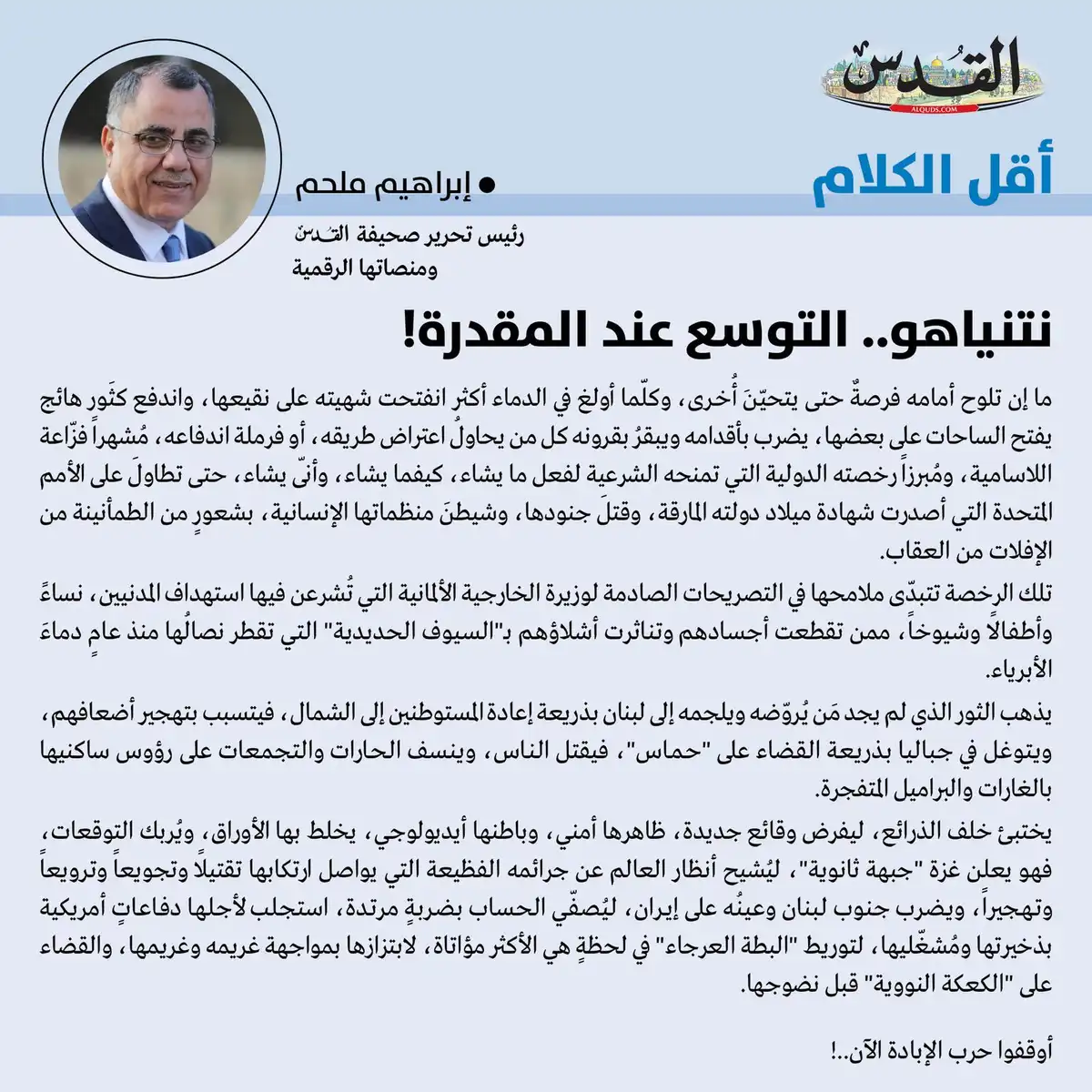
Netanyahu.. Expand when possible!

As soon as an opportunity appears before him, he waits for another, and the more he indulges in blood, the more his appetite for its essence increases, and he rushes forward like a raging bull that opens up the arenas to each other, stamping with his feet and slicing open with his horns anyone who tries to obstruct his path or curb his momentum, brandishing the scarecrow of anti-Semitism, and highlighting his international license that grants him the legitimacy to do whatever he wants, however he wants, and wherever he wants, until he attacks the United Nations, which issued the birth certificate of his rogue state, and he kills its soldiers and demonizes its humanitarian organizations, with a sense of reassurance that he will escape punishment.


This license is evident in the shocking statements of the German Foreign Minister, in which she legitimizes the targeting of civilians, women, children and the elderly, whose bodies have been torn apart and whose limbs have been scattered with “iron swords” whose blades have been dripping with the blood of innocents for a year.


The bull, who found no one to tame and rein him in, goes to Lebanon under the pretext of returning the settlers to the north, causing the displacement of many times their number, and penetrates into Jabalia under the pretext of eliminating Hamas, killing people, and blowing up neighborhoods and communities over the heads of their residents with raids and explosive barrels.

He hides behind pretexts to impose new facts, which appear to be security-related but are ideological in essence, mixing up the cards and confusing expectations. He declares Gaza a “secondary front” to distract the world from his horrific crimes that he continues to commit, including killing, starving, terrorizing and displacing. He strikes southern Lebanon with his eye on Iran, to settle the score with a counterstrike, for which he has brought in American defenses with their ammunition and operators, to implicate the “lame duck” at the most opportune moment, to blackmail it into confronting his rival and its rival, and to eliminate the “nuclear cake” before it is ripe.


Stop the war of extermination now..!

OPINIONS

Thu 17 Oct 2024 8:19 am - Jerusalem Time

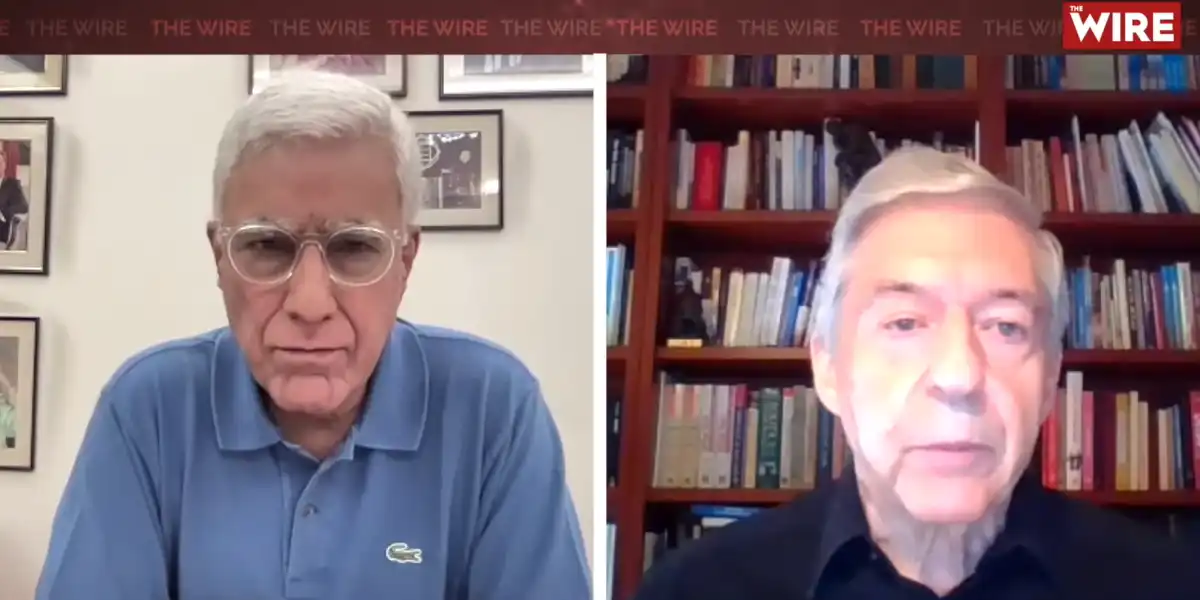
'I'm Very, Very Unhappy, My Heart is Broken' by Devastation of Gaza: Former Israeli Justice Minister

The Wire

The Wire

Opinion Writer

https://youtu.be/Eu44moCsq5EIn an astonishingly honest interview, where he willingly reveals his anguish and pain, Israel’s former Justice Minister has said that he is “very very unhappy and my heart is broken” by the devastation of Gaza which has left nearly 42,000 killed, almost 100,000 injured and practically all of its 2.3 million people displaced.  Clearly suggesting that the retaliation Israel has inflicted on the people of Gaza after 7th October 2023 is exaggerated, disproportionate and unjustified, Mr Beilin said: “Retaliation was needed in a functional way” and its aim should have been limited to the release of hostages and forcing Hamas to leave Gaza.  In a 30-minute interview to Karan Thapar for The Wire, Yossi Beilin also says that he is deeply concerned and worried by the way Israel’s image in the West has nosedived. Once upon a time it was an admired country. Immediately after 7th October 2023 Israel had the compassion of the world. Now that compassion has turned to contempt. On university campuses in the West, Israel is despised if not hated. Mr. Beilin says he is distressed and very worried about this.  Speaking about Israel’s repeated promises to retaliate for the 180 missiles Iran fired into Israel on the 1st of October, Mr. Beilin says: “I’m not sure whether retaliation is the only answer”.  In the interview, Mr. Beilin repeatedly criticizes Prime Minister Benjamin Netanyahu for failing to accept terms for a ceasefire, which in March/April were promising. Mr. Beilin also says that if the present outline of a ceasefire, worked upon by Gershon Baskin, who earlier negotiated the release of Gilad Shalit, are accurately reported, Netanyahu has made a big mistake not accepting them.  Finally, speaking about the solution to the Palestine problem, which lies at the core of the situation between Israel, Hamas and Hezbollah, Mr. Beilin spoke of the same concept of confederation that earlier Professor Bartov mentioned in an interview 12 days ago. Mr. Beilin is one of the authors of this concept, along with Hiba Husseini from the Palestinian side.  I will stop there. I am only giving you the main broad points. Mr. Beilin has spoken with incredible honesty, often allowing his anguish and pain to show as well as his doubts, hesitation and concerns. He represents an aspect or a side of Israeli opinion that we are unused to seeing and hearing. I recommend this interview.

OPINIONS

Thu 17 Oct 2024 8:16 am - Jerusalem Time

Is a Full-Scale Middle East War Already Here?

Foreign Affairs

Foreign Affairs

Opinion Writer

Iran and Israel Face Limitations That Make Massive Escalation Unlikely

By Kenneth M. Pollack


Many analysts watching the conflict in the Middle East have warned that the present fighting could escalate further. At the moment, such fears are concentrated on the prospect of a war between Iran and Israel.

Of course, that war is already underway. Iran has launched two direct attacks on Israel, while Israel has carried out one strike in response and is almost certainly preparing a second. A half dozen Iranian allies and proxies have attacked Israel, including in terrorist assaults; Israel has assassinated a passel of key Iranian leaders; and both sides have carried out cyber strikes.

So the real question is not what a war between Iran and Israel would look like but what an expanded conflict between them might entail. The answer, in essence, is this: more of what is happening right now, just with increased intensity. That is because both sides face significant material and strategic obstacles that make an imagined all-out war between them unlikely.

Iran trails Israel in almost all offensive and defensive capabilities, so it simply cannot inflict devastating damage. Israel, meanwhile, has a tremendous capacity for targeted strikes, but it does not have the variety of resources that a war of conquest or devastation against Iran would require. Both states are physically too far apart and lack the capacity to launch invasions by ground or sea. These obstacles mean that unconstrained warfare is doubtful, and even to the extent that there is an escalating exchange of blows, Armageddon is unlikely.

THE TYRANNY OF DISTANCE

The most important factor constraining a war between Iran and Israel is distance. The two countries do not share a border. At their closest points, they are 750 miles apart. Central Israel is almost 1,000 miles away from Tehran.

Moreover, between them lie Turkey, Syria, Iraq, Jordan, Saudi Arabia, and Kuwait. Some of those countries are more aligned with Israel, some are more aligned with Iran, and some are hostile to both. The two potential antagonists can count on help from some—in terms of allowing their forces to pass and impeding those of the enemy—but cannot assume much more.

Jordan’s King Abdullah II, for instance, is a key, if tacit, ally of Israel, but he rules over a majority Palestinian population that mostly hates the Jewish state, limiting how much he can support Israel. His country helped Israel shoot down the Iranian drones and cruise missiles that crossed its territory during Iran’s first missile attack on Israel on April 13. But Amman was careful to insist that it was merely defending its airspace and would do so against all foreign intruders. Likewise, Syria is heavily dependent on Iran. But Syrian President Bashar al-Assad was taught by his father never to fight Israel, a lesson the Assads learned after repeated defeats in 1967, 1973, and 1982. As a result, although Iran can move forces through and base them in Syria, Damascus has so far prevented Tehran from mounting major attacks directly against Israel from Syrian territory for fear that Israel would expand its attacks there.

These realities make any kind of land invasion impossible in either direction. To invade Iran, Israeli ground forces would have to drive through Iraq and Jordan or Iraq and Syria, which would be logistically challenging and strategically foolish. Iran is 80 times as large as Israel, and even if Israel could find a way to get half of its dozen or so ground divisions there, they would be swallowed up by the Islamic Republic’s vast geographical expanse and would have little ability to accomplish anything meaningful, nor would Israel ever want to send so much of its citizen army so far away.

The most important factor constraining a war between Iran and Israel is distance.

The Israelis have been able to destroy key enemy facilities with small special forces teams inserted by air, and they very well might stage one or more such operations against important Iranian targets. But the Israeli military could not occupy Iranian territory in this way without a route to resupply and reinforce a first wave of air-dropped units.

The Israeli Defense Forces, of course, also boasts a capable navy, and Iran has a lengthy coastline. The IDF might mount a battalion-sized or even brigade-sized raid against an important Iranian coastal facility using one or more jury-rigged naval transports of some kind. But Israel lacks the amphibious assault and carrier-based air capabilities needed to mount a larger invasion from the sea. Unless Israel could base fighter squadrons in Bahrain or the United Arab Emirates, which is highly unlikely, maintaining a force ashore for more than a few hours in the face of Iranian missiles and airstrikes would be exceptionally difficult. Even if these forces could somehow seize and hold a beachhead, sustaining it would require getting Israeli transport vessels through both the Houthi-menaced Bab el Mandeb Strait and the Iranian-threatened Strait of Hormuz. Consequently, such a small raiding force could realistically destroy only one or a few high-value Iranian facilities near the sea before it had to withdraw out of range of Iranian air and sea forces.

Iran’s navy would face even more formidable obstacles trying to mount an amphibious invasion of Israel against the air, sea, and ground forces of the Jewish state, not to mention the logistical nightmare of trying to move and supply forces there by circumnavigating all of Africa. A ground offensive against Israel would be only slightly more appealing. In theory, Iran has the logistical advantage of free passage through Iraq and Syria. But its ground forces are the weakest and most backward element of its armed forces, and they would not stand a chance against an IDF mobilized to defend its heavily fortified positions on the Golan Heights. Iran knows this: that is why the government has not deployed large Iranian ground forces to the Damascus area. Instead, Iran has reportedly massed as many as 40,000 Afghan, Iraqi, Pakistani, and Syrian militiamen in southwest Syria who could be used to launch a massive assault without jeopardizing the lives of Iranian citizens or, Tehran hopes, triggering an Israeli response against Iran.

Yet that kind of attack would almost certainly result in a catastrophic defeat, with vast numbers of these lightly armed and poorly trained forces slaughtered by Israeli ground and air forces. That Tehran has not already attempted such an assault suggests the Iranians realize its futility. Israel’s invasion of Lebanon has greatly degraded Hezbollah—Iran’s ultimate deterrent against an Israeli attack on Iran. If Tehran thought these militias could save its close partner, it almost certainly would already have thrown them at the Israelis.

THIN AIR

These limits on ground operations mean that the conventional aspects of a wider war between Iran and Israel would fall mostly to their air forces, which are also limited in what they can do. Israel possesses ballistic missiles that could range all of Iran and has cruise missiles and drones that can do so from ships and submarines, and probably from Israel itself. No one knows how many of these Israel has, but it is not a huge number—probably in the high hundreds or low thousands for each. All have relatively small warheads, nothing like the payload that manned aircraft can deliver. That makes them very useful for destroying relatively small, high-value Iranian targets—military equipment and buildings, but not vast bases, let alone cities.

Although Iranian air defenses would complicate the operations of Israel’s manned aircraft, they would act as little more than an annoyance. The real problem for Israel would be the distance. Israel’s F-15s can certainly make those flights, but its cutting-edge F-35s and F-16s, which represent the bulk of its combat air force, have ranges of only about 600 miles. Israel’s long-range, standoff munitions can boost that figure by several hundred more, but it would still be a significant undertaking for those aircraft to hit targets in central Iran without aerial refueling.

Israel has a small number of long-range refueling aircraft, and although its air force has skilled pilots who routinely fly them in ways that no other country would dare, the planes are big and very vulnerable. It would be difficult and dangerous for Israel to employ them routinely in hostile airspace. Although none of Israel’s American-made fighter aircraft were designed to refuel one another in flight (a technique known as “buddy refueling”), the Israelis may have modified them to do so. That, however, would introduce other inefficiencies; half of Israel’s fighters would do nothing but refuel the other half. So unless Jordan or Saudi Arabia opens its airspace to the Israeli air force (as they apparently did on April 13 to combat the Iranian missile and drone attack on Israel), the Israelis would have to pick and choose when to employ manned aircraft to strike Iran.

Neither country is in a position to mount a massive, sustained air campaign against the other.

Iran has two air forces, one belonging to the regular armed forces and the other to the Islamic Revolutionary Guard Corps. But neither can hold a candle to the Israeli air force. Iran has no dedicated refueling aircraft and only a few dozen old French-made fighters that could buddy refuel. Its aircraft are overwhelmingly American models dating from the 1960s and 1970s and French and Soviet planes from the 1970s and 1980s. However many of them could even make the flight to Israel would not stand a chance against Israeli air defenses.

That would put the onus of an Iranian air campaign back on its missile and drone force. Like Israel, the Islamic Republic probably has hundreds (or even a number in the low thousands) of these left with the range to hit Israel. In its strikes on April 13 and October 1, however, Iran launched a combined total of 500 of them and did virtually no damage. There are reports that Russian technicians are trying to help the Iranians improve both the survivability and the lethality of these missiles, but the six months between those two Iranian attacks did not show any significant improvement. It is humiliating for Iran to keep striking and failing in this way. Worse, it invites far more painful Israeli retaliation.

What all of this should make clear is that Israel can inflict a considerable amount of pain on Iran through relatively small, highly precise air, drone, and missile strikes, whereas Iran will have trouble causing Israel much pain at all. And neither country is in a position to mount a massive, sustained air campaign against the other. That is why even an expanded war between them won’t look anything like the German Luftwaffe’s Blitz or the British-American Combined Bomber Offensive against Germany in World War II—or even anything that would look like more recent U.S. air campaigns against Serbia and Iraq, or the kind of air campaign Israel is now waging against Hezbollah.

UNCONVENTIONAL WARFARE

Both sides would likely try to complement (or substitute for) their conventional military operations with further cyber strikes and covert actions. As to the latter, Israel’s advantage appears to be even greater than it would be in an air war. For decades, the Mossad, Israel’s intelligence agency, has demonstrated an extraordinary ability to assassinate VIPs and sabotage critical facilities inside Iran. It is unclear how long it took Israel to set up such operations, how easily it can improvise new ones, or whether it has others already prepared.

By contrast, Iran has come off as impotent in this arena as well. Although it has reportedly tried to kill senior Israeli officials, it has so far failed. Its best effort seems to have been a small terrorist attack on the night of October 1, which was carried out at the same time as its second missile and drone attack and which killed a half dozen people in Tel Aviv. Iranian personnel may have been involved in a number of small-scale terrorist attacks in Israel during the past year, but they all pale in comparison with Israel’s astonishing covert successes.

In the cyber realm, Iran appears to be in a somewhat stronger position but still seems outmatched by the Israelis. Iran has spent almost two decades developing its cyberwar capabilities, and they’ve gotten good enough to wreak havoc on undefended targets. The Iranians have even shown some ability to hit harder targets. But in cyber exchanges, the Israelis have consistently prevailed. For instance, during the summer of 2023, Iranian cyberattacks shut off the power at several Israeli hospitals and health clinics. But the Israelis responded by launching cyber-assaults of their own, shutting down gas stations across Iran. Tehran stopped its attacks.

Of course, the whole point of cyber-operations is that neither side knows what the other can do—because if they knew, they would eliminate their vulnerabilities. It is possible that Iran is holding some truly devastating cyberweapons in reserve. It is equally possible that Israel is, too—and so far, the evidence suggests that the Israelis are both more likely to hurt Iran and better prepared to limit the damage from Iranian attacks.

THE STRATEGIC ENVIRONMENT

Both Iran and Israel face strategic conditions that further limit the potential scope of a conflict between them. Not only does Iran understand that it is fighting at a pronounced disadvantage against Israel in conventional and even unconventional warfare but the Iranians believe that Israel possesses an array of weapons of mass destruction. Although the Iranian regime is often accused of irrational behavior, the reality is that it has shown considerable prudence and would undoubtedly seek to avoid taking any action that could provoke a massive Israeli response.

Similar questions would probably also affect Israeli calculations. The IDF has the capacity to destroy various facilities critical to Iran’s nuclear program. But it has never done so for a crucial but typically overlooked reason: Israel and the United States fear that a large-scale Israeli strike on Iranian nuclear sites would prompt Tehran to withdraw from the Nuclear Nonproliferation Treaty and declare that it had to build a nuclear arsenal as the only way to deter another Israeli attack. Tehran would then begin constructing more facilities deep underground to achieve that goal—like the facilities it already has at the Fordow plant near the city of Qom, which is immune to any of the aerial munitions Israel is known to possess. Thus, attacking the Iranian nuclear program might set it back for a few years, only to guarantee that Iran acquires a nuclear arsenal very soon thereafter. That would be a severe net negative for Israel.

Similarly, neither side is likely to want to interfere with Iranian oil exports. Iran’s regime remains almost completely dependent on oil revenues and would try to steer clear of any actions that might affect them. Israel knows that attacking Iranian oil exports could raise global oil prices, potentially infuriating the United States and many other countries. Given how much Israel still depends on American support, it seems unlikely that the Jewish state would touch that third rail, although it might opt to hit Iranian refineries, oil storage, and other facilities associated with Iranian domestic consumption.

WHAT MIGHT MAKE IT WORSE?

For all these reasons, an expanded war between Iran and Israel is likely to consist of a sporadic series of assaults carried out by aircraft, missiles, drones, and cyberweapons, plus some covert operations and terrorist attacks. In other words, more—possibly much more—of the same. Iran would probably continue to limit its missile and drone attacks to Israeli military facilities for fear that hitting Israeli cities could push Israel to escalate to the kind of attacks that Iran could not match. And even if the Iranian regime decided simply to hurt Israel as much as it could regardless of the consequences for itself, the Islamic Republic is just not strong enough to do much damage. It could launch its entire inventory of several thousand missiles at Israeli cities and perhaps kill several hundred Israelis. And in that case, if the IDF decided to retaliate against Iranian cities with hundreds of missiles and airstrikes, it could probably kill thousands of Iranians—but that’s it. The Iranians would then be a spent force, and although the Israeli air force could sustain small airstrikes against Iran for weeks, unless Israel did something like deliberately bomb an Iranian mass participant event—say, a soccer match—it is unlikely there would be a huge increase in Iranian casualties. Neither country would be devastated by this kind of exchange; indeed, it is exceptionally difficult to imagine scenarios that would even bring them close to it.

It is far more likely that Israeli strikes would focus on Iranian military targets but could include civilian infrastructure—power plants, refineries, government buildings—and elements of the Iranian leadership, such as Islamic Revolutionary Guard Corps and military commanders. Even then, the Israelis would be unlikely to target Iran’s most senior leaders, such as President Masoud Pezeshkian or Supreme Leader Ali Khamenei. Israeli officials recognize that either man could be replaced by a more aggressive, less prudent figure willing to incur a tremendous price in order to inflict harm on Israel or, worse still, willing to commit Iran to building nuclear weapons regardless of the costs.

It’s possible to conjure black swan events—such as an Iranian-backed terrorist attack on Israel that kills hundreds or thousands of Israeli citizens—that could cause one side or the other to try to do more damage to the other in return. But the far more likely prospect is that even a wider conflict would remain constrained by the limitations of distance, diplomacy, and strategy that have shaped the war that is already underway.

OPINIONS

Thu 17 Oct 2024 8:12 am - Jerusalem Time

Israel is a rogue nation. It should be removed from the United Nations

The Guardian

The Guardian

Opinion Writer

Mehdi Hasan


One rogue nation cannot declare war on the UN itself and continue to get away with it

Over the past year, Israel has launched attacks on multiple countries and occupied territories: the Gaza Strip, the West Bank, Lebanon, Syria, Yemen and Iran.

Yet countries and territories aside, Israel has also targeted one specific organization with a series of unprecedented rhetorical and violent attacks.

Yes, the United Nations. We have all witnessed Israel, effectively, declare war on the UN.

Consider the record of recent weeks and months:

  • Israel’s prime minister, while standing on stage at the UN general assembly, denounced the body as “contemptible”, a “house of darkness” and a “swamp of antisemitic bile”.
  • Israel’s outgoing ambassador to the UN shredded a copy of the UN charter with a miniature paper shredder while also standing at the podium of the general assembly, and later said the UN headquarters in New York “should be closed and wiped off the face of the Earth”.
  • Israel’s foreign minister falsely accused the UN secretary general of not having condemned Iran’s attacks on Israel, declared him “persona non grata in Israel” and announced that he had “banned him from entering the country”.
  • The Israeli government actively obstructed a UN-mandated commission of inquiry trying to collect evidence on the 7 October attacks.
  • Israel’s parliament is in the process of designating a longstanding UN agency, Unrwa, as a “terrorist organization”.
  • The Israeli military has bombed UN schools, warehouses and refugee camps in Gaza for 12 consecutive months, and killed a record 228 UN employees in the process. “By far the highest number of our personnel killed in a single conflict or natural disaster since the creation of the United Nations,” to quote the UN secretary general.
  • The Israeli military is now also attacking UN peacekeepers in southern Lebanon. According to the UN, “five UN ‘Blue Helmets’ serving with UNIFIL in Lebanon have been injured as Israeli forces inflicted damage on UN positions close to the ‘Blue Line’.”

How is any of this OK? Acceptable? Legal?

Perhaps the biggest question of all: how is Israel still allowed to remain a member of the UN? Why has it not yet been expelled from an organization that it is relentlessly and shamelessly attacking and undermining? Sure, there are other human rights abusers that remain card-carrying members of the UN – Syria, Russia and North Korea, to name but a few – but none of them have killed UN employees en masse; none of them have sent tanks to invade a UN base; none of them have “refused to comply with more than two dozen UNSC resolutions”. It has been more than 60 years since any country in the world dared make the UN secretary general himself “persona non grata”.

To be clear: it’s not as if there isn’t a mechanism for expelling a UN member state. Article 6 of the UN charter says:

“A Member of the United Nations which has persistently violated the Principles contained in the present Charter may be expelled from the Organization by the General Assembly upon the recommendation of the Security Council.”

Now some might point out that no member state has ever been expelled from the UN under Article 6. Plus, the United States, which has vetoed over 50 UN security council resolutions critical of Israel since the early 1970s, would never allow such a “recommendation of the Security Council” to be made.

It’s a valid objection. History, however, teaches us that there are workarounds to security council vetoes. As the international law professor and former US state department adviser Thomas Grant pointed out in October 2022, while making his own case for expelling Russia from the United Nations in the wake of Vladimir Putin’s illegal invasion of Ukraine, “UN members on two occasions in the past have judged a particular Member delegation no longer fit to sit at the organization’s table. On both occasions, the UN improvised a solution.”

In 1971, socialist and non-aligned nations in the Global South voted in the UN general assembly to recognized the People’s Republic of China as “the only legitimate representative of China to the United Nations” and thereby replaced the representatives from the Republic of China (Taiwan), which had been a founding member of the UN. ROC was out, PRC was in – and it was the general assembly, not the security council, that decided it.

Three years later, relying again not on the UN charter but its own “rules of procedure” as the human rights lawyer and former UN official Saul Takahisi has noted, the UN general assembly “voted to refuse to recognize the credentials of the South African delegation” and “barred South Africa from participation in the Unga” until 1994.

Oh, and the two main reasons cited by the UN general assembly for suspending South Africa’s membership? Its practice of apartheid against the indigenous Black population and its illegal occupation of neighboring Namibia. Sound familiar?

Crucially, as Thomas Grant has written, “the move against South Africa followed no precise procedural pathway in the UN charter or existing UN practice” and the UN showed how “an improvisatory ethos prevails, when the member states judge a matter important enough that they must act.”

So what is more “important” for the UN member states right now than attacks on the UN itself by a single member state? On the UN’s authority, personnel, headquarters and charter? On Saturday, 40 countries issued a joint statement condemning Israel’s brazen and ongoing assault on UN peacekeepers in Lebanon but talk is cheap. UN member states need to act.

The Israeli government may want to pretend that the United Nations, and the general assembly in particular, is irrelevant, impotent and filled with antisemitic bias, yet Israel only exists today because of a UN general assembly resolution. The country’s own 1948 Declaration of Independence makes seven different references to the United Nations, all of them super-positive and ever-so-grateful.

So evicting Israel from the UN, or at least suspending its participation in the general assembly as a first step, would send a powerful message – both to the people of Israel and to the rest of the world.

That the authority of the United Nations still matters. That the lives of UN staff and peacekeepers also matter. And that one rogue nation cannot declare war on the UN itself and continue to get away with it.

ARAB AND WORLD

Wed 16 Oct 2024 10:20 pm - Jerusalem Time

Gulf-European Summit calls for implementation of Resolution 2735 on Gaza


The Gulf-European summit called, in its final statement, for the implementation of UN Resolution 2735, including a ceasefire in Gaza and the release of Israeli detainees.


The final statement said that the Gulf-European summit supports the leaders of the United States, Egypt and Qatar in their efforts to stop the ceasefire in Gaza.


The statement also condemned attacks against civilians and infrastructure, urged all to fulfill their obligations, and stressed the need to provide aid immediately and without conditions by opening all crossings and supporting the work of the United Nations Relief and Works Agency for Palestine Refugees (UNRWA).


The statement referred to the commitment of the Gulf and European leaders to achieving the Palestinian people's right to self-determination through the two-state solution.

ARAB AND WORLD

Wed 16 Oct 2024 10:19 pm - Jerusalem Time

UNIFIL: Israeli tank attacked our position in southern Lebanon


The United Nations Interim Force in Lebanon (UNIFIL) confirmed that it had monitored an Israeli Merkava tank firing at one of its observation towers near the town of Kfar Kila in southern Lebanon, in a new Israeli violation against UNIFIL.


UNIFIL reminded the IDF and all parties of their obligations to ensure the safety and security of UN personnel and to respect UN premises.

ARAB AND WORLD

Wed 16 Oct 2024 10:18 pm - Jerusalem Time

Lebanon: Number of displaced persons exceeds 1.4 million

Lebanese Minister of Agriculture Abbas Hajj Hassan told Al Jazeera that the number of displaced people has exceeded 1.4 million as a result of the Israeli aggression, adding that increased humanitarian support is required, especially with the approach of winter.


He stressed the need to stop the Israeli aggression on Lebanon, noting that this is a demand of the United Nations.

PALESTINE

Wed 16 Oct 2024 10:16 pm - Jerusalem Time

The Prisoners Club holds Israeli occupation responsible for the fate of the detainee Moaz Abayat

The Prisoners Club holds the occupation authorities fully responsible for the life of the detainee Moaz Ebayat (37 years old) from Bethlehem, who was re-arrested at dawn today, three months after his release, in a difficult and shocking health condition as a result of the torture he was subjected to during his administrative detention period, which lasted for 9 months, as he was released at the time from the “Naqab” prison, which was and still is the most prominent prison witnessing torture crimes.

According to the family of the detainee, Abayat, the occupation forces stormed his house at two in the morning, and when he was taken out of the house, he was beaten.

The Prisoners Club added that there are great concerns for the life of the detainee, Abayat, who was severely beaten during his arrest in late October 2023, and later faced a series of severe beatings, in addition to the crime of torture. The way he appeared on July 9 of this year reflected a living testimony to what he was subjected to throughout his previous detention, in addition to the crime of starvation and medical crimes that were central reasons for the martyrdom of detainees after October 7, 2023.

The Prisoners Club confirmed that Abayat is still undergoing treatment since his release, and he needs continuous health follow-up. He is one of thousands of detainees in the occupation prisons who face crimes of unprecedented level. It is worth noting that he is a former detainee who was arrested three times, and he is married and the father of five children. He did not suffer from any health problems before his previous arrest.

The Prisoners Club renewed its call to international human rights institutions to restore their necessary role for which they were created, and to put an end to the ongoing genocide and the horrific crimes to which our people are being subjected, including detainees in the occupation’s prisons and camps, which have been transformed into arenas for the crime of torture since the beginning of the war of extermination, “while reaffirming that everything we are witnessing today are fixed and systematic crimes practiced by the occupation over many decades, but the only variable is the intensity and level of these crimes.”

PALESTINE

Wed 16 Oct 2024 10:10 pm - Jerusalem Time

A girl suffocated and a young man sustained bruises during Israeli forces’ storming of Jalazone camp

A girl suffered from suffocation from toxic gas, and a young man sustained bruises, on Wednesday evening, during the Israeli occupation forces’ storming of the Jalazone camp, north of Ramallah.


Security sources reported that the occupation soldiers stormed the camp and fired tear gas bombs at the citizens, which led to a girl suffering from suffocation. They also assaulted a young man, causing him to suffer bruises, without any arrests being reported.

The same sources added that the occupation forces closed the road leading to the camp, which caused a traffic crisis.


ARAB AND WORLD

Wed 16 Oct 2024 8:07 pm - Jerusalem Time

German Foreign Ministry denies statements on support for killing civilians in Gaza

The German Foreign Minister denied what was reported about her supporting the killing of civilians in the Gaza Strip.

"The claim that the German Foreign Minister supports attacks on civilians is false," she said in a statement carried by the German Information Center.
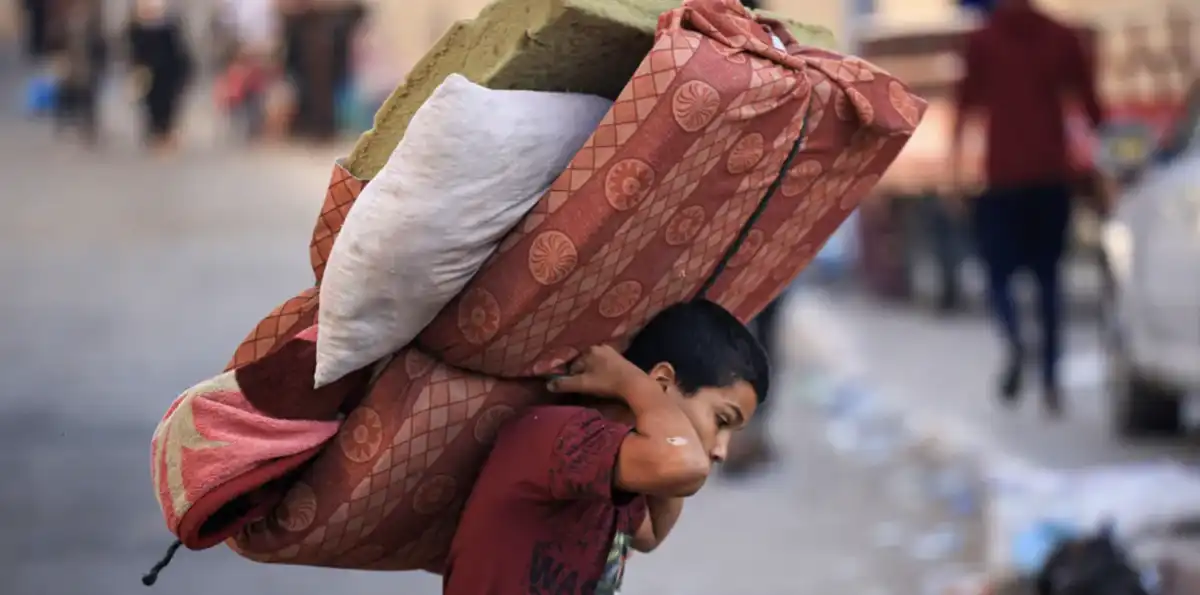
"It is also wrong to claim that Germany is considering assisting in such attacks, and international law is clear that civilian infrastructure is protected," she added.