PALESTINE

Sun 27 Oct 2024 8:41 am - Jerusalem Time

Isaeli forces arrest a number of Palestinians in the West Bank

The Israeli occupation forces arrested a number of citizens in the West Bank at dawn on Sunday.


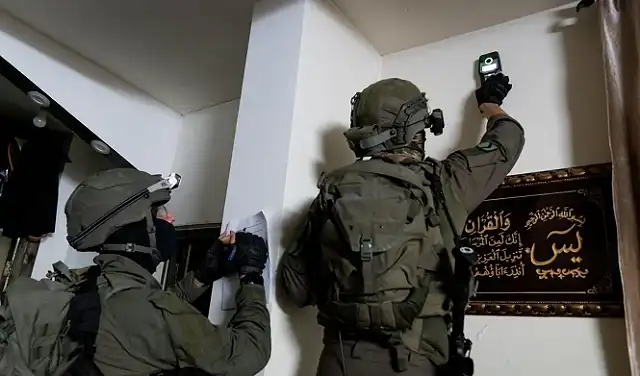
In Ramallah, citizen Taleb Abdul Majeed Hamed (55 years old), who works as a school principal in Ramallah, and his son Abdul Rahman (18 years old), were arrested.


In Hebron, the occupation forces stormed the town of Idhna to the west, and arrested Ismail Abdul Hamid Abu Zalta, Hassan Saud Bashir Salimiya, and Muhammad Faraj Allah, after raiding their homes and tampering with their contents.


It also arrested citizen Munther Mansour from the town of Halhul, north of Hebron, while he was passing through the Container military checkpoint, northeast of Bethlehem.


The occupation forces raided several neighborhoods in the city of Hebron, searched the home of prisoner Dharar Abu Manshar, beat his family, and destroyed the contents of the house.


In Jenin, the occupation forces arrested the young man, Imran Azzam Muhammad al-Halim (25 years old), after raiding his family’s home, searching it, and tampering with its contents in the village of Atara.

ARAB AND WORLD

Sun 27 Oct 2024 8:39 am - Jerusalem Time

Six dead in Israeli bombing of southern Lebanon

Six Lebanese citizens were killed and another was injured tonight, as a result of the occupation's shelling of the town of Jdeidet Marjeyoun, south Lebanon.

The National News Agency reported that 6 Lebanese were killed and another was injured in two raids on the town of Jdeidet Marjeyoun.


Several citizens were also injured when the occupation forces bombed the outskirts of the town of Zrarieh, while the occupation forces launched 7 raids on the southern suburbs of Beirut, and one raid on the outskirts of the city of Hermel.

PALESTINE

Sun 27 Oct 2024 8:37 am - Jerusalem Time

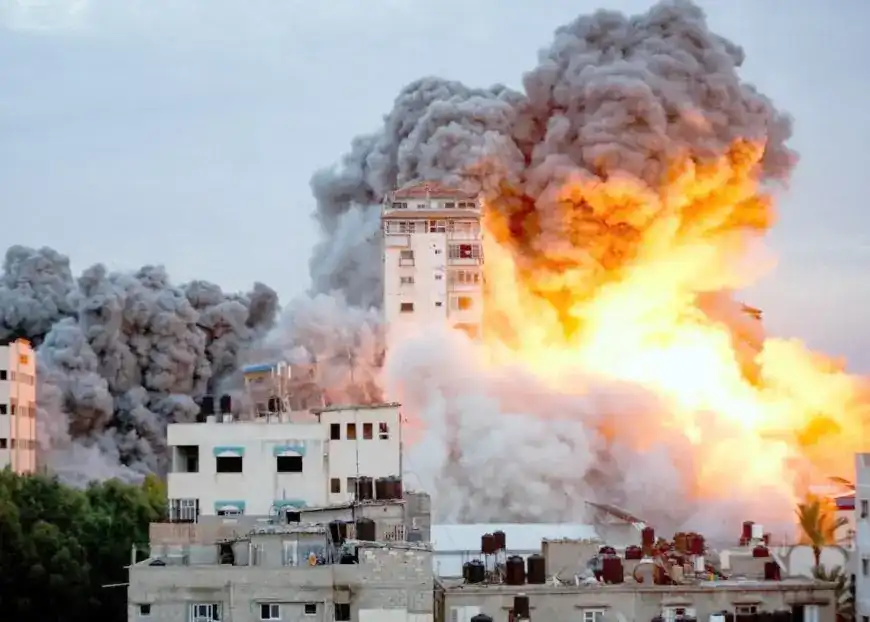
The death toll from Israeli massacre in Beit Lahia rises to 40 dead and more than 80 wounded

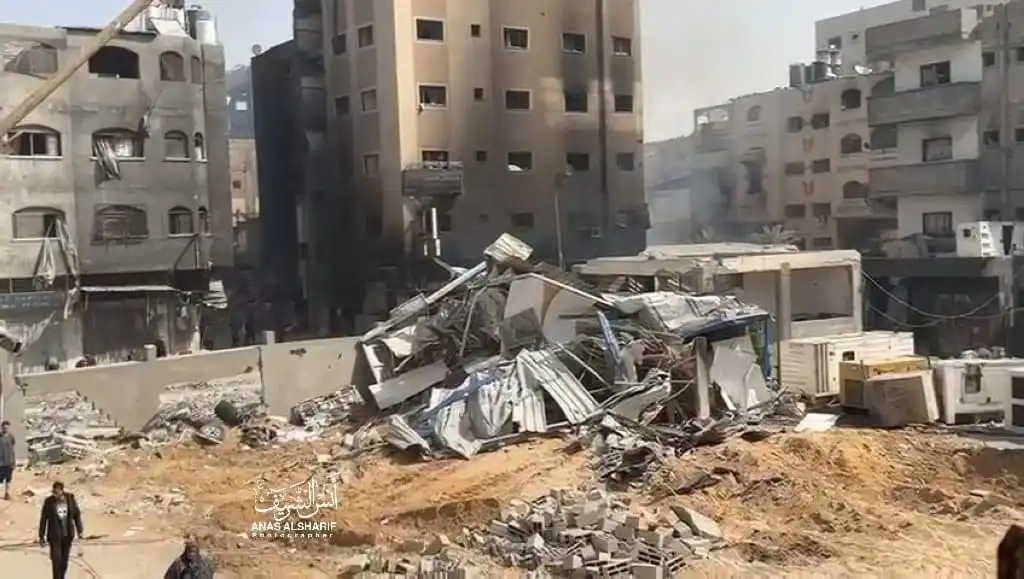
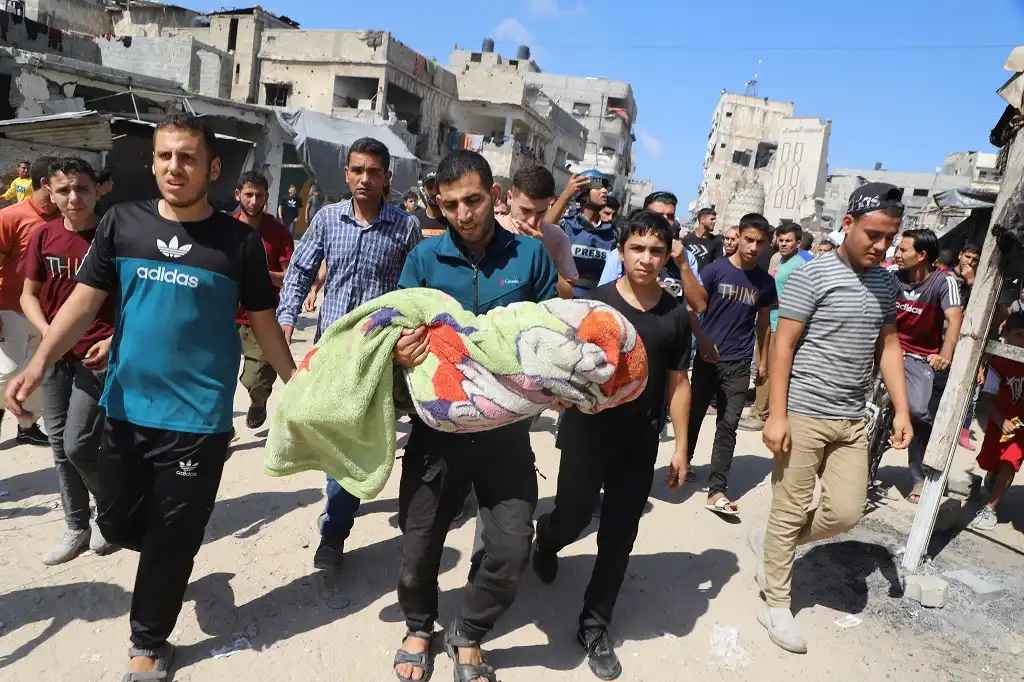
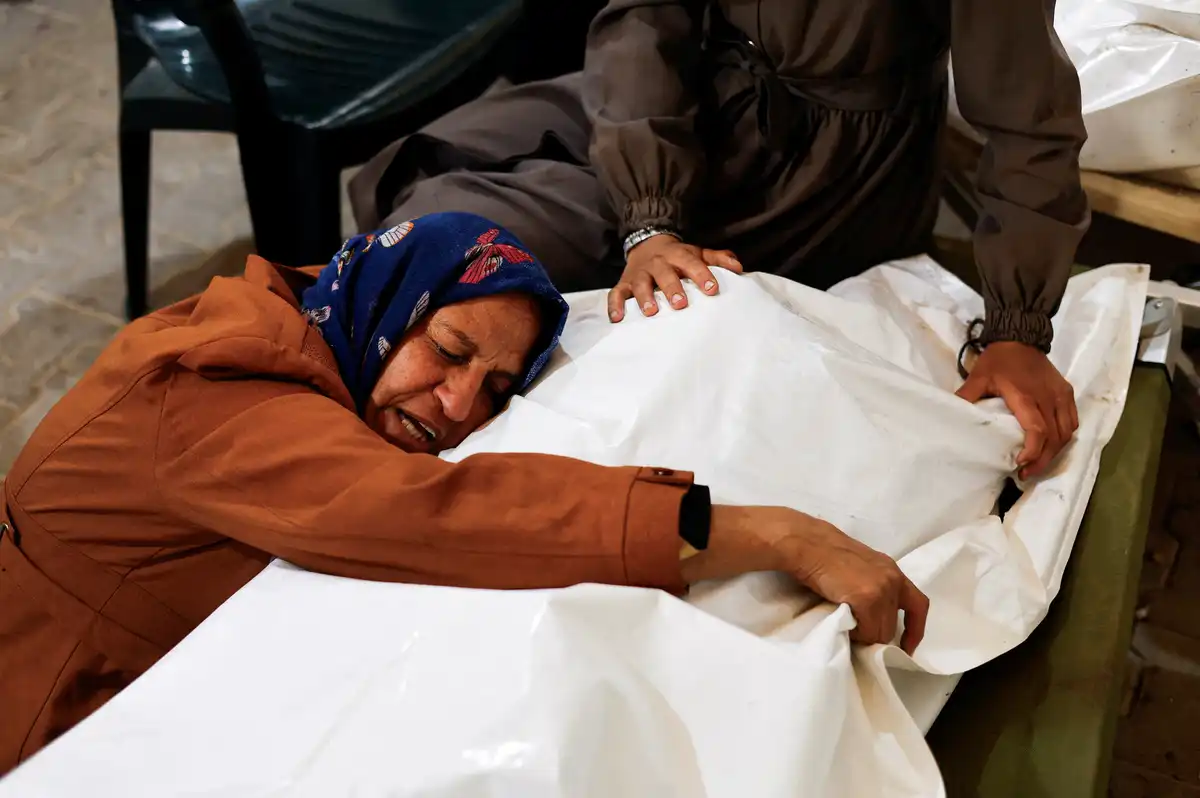
Medical sources reported that the death toll from the massacre committed by the Israeli occupation in bombing a residential area in Beit Lahia, north of the Gaza Strip, last night, has risen to 40 dead, including children and women, and 80 wounded.


The same sources added that the number of dead since the beginning of the occupation's siege on the northern Gaza Strip has risen to about a thousand martyrs, with the health system being put out of action.


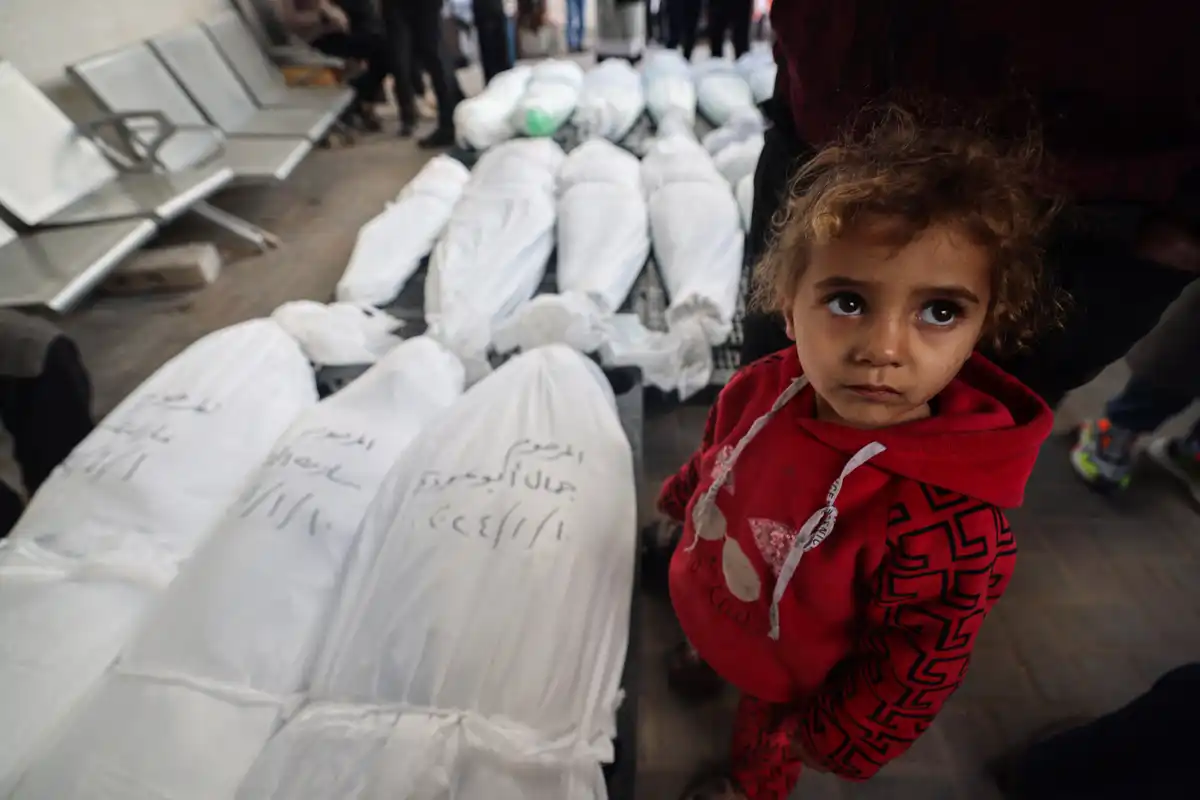
The occupation forces continue their aggression on the Gaza Strip, by land, sea and air, since October 7, 2023, which resulted in the death of 42,924 citizens and the injury of 100,833 others, the majority of whom are children and women, in an incomplete toll, as thousands of people are still missing under the rubble.

ARAB AND WORLD

Sun 27 Oct 2024 8:32 am - Jerusalem Time

The Israeli counterattack.. Will Iran swallow the blow or repeat the attack?

Dr. Ashraf Badr: Israel appears, through its strike on Iran, to be unwilling to escalate the situation into a full-scale war

Yasser Manna: Israel and Iran are currently working to reshape the rules of engagement in the Middle East

Dawoud Kuttab: The Israeli strike reassures that matters will not escalate, and the Iranian options are between a limited response or complete abstention

Muhammad Abu Allan Daraghmeh: Israel cannot bring about a fundamental change in the regional balance of power without American support

Mohammad Hawash: The balance of power between Iran and Israel is not affected by a single strike, and what happened was within the framework of mutual deterrence operations.

Imad Moussa: Things will remain within the limits of the accepted rules of engagement without entering into a comprehensive war in the region

Samir Anabtawi: US pressure on Israel to avoid a broad escalation before the elections is one of the reasons for reducing the strike


After 25 days of anticipation of the Israeli response to the Iranian attack, the Israeli strike came in the context of a struggle between Israel and Iran to strengthen the deterrence strategy, but the strike was reduced, contrary to the expectations promoted by Israel during the past period.


In separate interviews with “I,” writers, political analysts, and specialists in Israeli affairs believe that Israel, despite its keenness to strike Iran, was cautious due to American pressures that fear a strong Iranian response that would get things out of control, especially since the United States is approaching the presidential elections next week.

The writers and specialists point out that Israel's reliance on American support was clear, as this attack would not have happened as easily without coordination with the United States and its logistical support.


They believe that the limited Israeli strike on Iran also came within the framework of international balances governed by common interests with the United States, which avoids escalation with Iran due to the complexities of the regional scene.


They point out that Iran may avoid direct response in the coming period and be satisfied with indirect operations through its allies in the region, as Tehran prefers to use direct and indirect threats to curb the effects of the strike and enhance its regional influence without being drawn into a comprehensive military confrontation, which is consistent with its strategic interest in maintaining the rise of its regional influence.


The writers and experts point out that Iran and Israel seem keen to avoid an open confrontation, while Israel continues to target Iran's allies in the region as part of its strategy to limit Tehran's influence, although matters may slide in the future towards a regional war.


Limited strike reveals Israel's dependence on US support


Dr. Ashraf Badr, writer, political analyst and expert on Israeli affairs, believes that the Israeli strike on Iran comes as a message to restore the deterrence system that was shaken by the recent Iranian attacks at the beginning of this month.


Badr points out that Israel, despite carrying out this strike, seems unwilling to escalate the situation into a full-scale war, as Israeli leaders face significant American pressure, in addition to fear of a strong Iranian response that could lead to a large-scale escalation.


Therefore, Badr believes that Israel chose to lower the ceiling of the strike to be limited to re-establishing deterrence and sending a clear message to Iran that its capabilities reach it without seeking to blow things up.


Badr explains that this strike, for which Israel has explicitly claimed responsibility for the first time, aims to break the barrier of hesitation and confirm its military ability to directly target Iran.


Badr points out that, however, the limited strike reveals the extent of Israel's dependence on US support, which limits its ability to achieve its strategic goals with complete freedom.


International and regional balances


Badr points out that international and regional balances, led by the strategic American ally, restrict Israel's ability to launch a comprehensive strike that could change the balance of power in the region.


Badr believes that Iran was able, through diplomacy and through direct and indirect threats directed at Israel via its allies in the region, to absorb and reduce the effects of the Israeli strike, which prompted Israel to reduce the intensity of the attack, despite the statements made by Israeli Defense Minister Yoav Galant, describing the strike as being “deadly and fatal.”


According to Badr, whether this reduction was due to American pressure or to Israel’s fear of strong Iranian reactions, the result is the same, which is that the strike that was launched was calculated and reduced, which reflects the existence of restrictions imposed on Israel resulting from international balances that prevent a comprehensive strategic change in the region.


The risk of regional escalation remains


Badr believes that the risk of regional escalation still exists, and depends on the nature of the expected Iranian response. If Iran responds in the future and targets Israeli military sites with a limited response, this could lead to the continuation of the cycle of mutual attacks without a comprehensive escalation, while if the Iranian response is strong due to the extent of the damage caused by the Israeli strike, this could lead to a broader escalation.


He points out that the expected Iranian response will come within controlled limits, and that its size will depend on the size of the actual Iranian losses. If they are large, as the Israeli media claims, then the Iranian response is likely to be strong. However, if the damage is minor, as the Iranian media explains, then the response will be limited, indicating the desire of both parties to avoid the outbreak of a comprehensive war in the region.


Israel seeks to demonstrate its continued deterrence capabilities


Writer and expert on Israeli affairs Yasser Manna explains the latest Israeli strategy: Israel seeks to demonstrate its continued ability to deter by targeting any sites it deems necessary, backed by a supportive American position that demonstrates the strength of the alliance between the two parties.


Manaa points out that the declared Israeli targets are not the only ones in the picture, as there remains a hidden aspect that is difficult to predict due to the lack of complete information about the losses or details of the targeted operations so far.


Manna points out that both Israel and Iran are currently working to reformulate the rules of engagement in the Middle East, in a long and ongoing path of confrontation that did not begin with the events of October 7 and will not end with the recent strikes.


According to Manaa, Israel considers that its operations are not limited to a direct confrontation with Iran, but rather include targeting resistance factions in Gaza, Lebanon, Yemen and Syria, as part of a broader strategy to confront Iranian influence, as Israel adopts a gradual approach that is not separate from this path.


US calculations towards Iran remain complex


Manaa stresses that American calculations towards Iran remain complex and subject to international influences from Russia and China, which increases the difficulty of making tough decisions.


He points out that the United States may have adopted this approach to avoid entering into a direct confrontation with Iran, while its joint strategy with Israel focuses on achieving long-term goals, including changing the ruling regime in Gaza as part of the objectives of the ongoing war.


According to Manaa, the distribution of geographical targets in the Israeli strikes reinforces the idea that Israel is keen to avoid escalation to the level of a broad regional war, a strategy in which Iran participates, especially since the Israeli targeting did not include Iranian oil or nuclear facilities.


The Iranian response may be limited or postponed in the near future.


Hence, Manaa expects the Iranian response to be limited or postponed in the near future, as Iran believes that waiting allows it to strengthen its position as a rising power, as it enables it to continue expanding its influence indirectly.


Manaa believes that this current situation enables Iran to strengthen its position in the region through its ability to confront American-Israeli pressure without being drawn into open escalation. With the continuation of this approach, Iran finds itself in a position of strength, which increases its influence in the balance of power in the Middle East and supports its efforts to consolidate its regional presence more broadly.


Internal Israeli message


Writer and political analyst Daoud Kuttab believes that the message that Israel is trying to send by targeting Iran has an internal character more than being an external deterrent strategy.


Writers consider the Israeli strike to be "timid" and without any real impact, revealing a clear gap between harsh Israeli statements and actual actions on the ground.


According to writers, Israel sought through this limited attack to confirm its presence and nothing more, in a message similar to “the mountain labored and brought forth a mouse,” as it seems that Israel wanted to prove its existence without taking effective steps capable of influencing the regional balance of power.


He believes that this strike does not amount to deterrence or strategic change, as it did not carry with it a significant impact on the level of regional security or convince of the strength of the Israeli response. Israel’s statement that it has stopped attacks against Iran may be a calming signal, whether to the Iranian side or to the region as a whole, as it aims to reassure the concerned parties, including Iran, that Israel does not intend to escalate matters in the near future.


As for Iran’s possible response, writers believe that the options remain limited to a limited response or complete abstention, but writers prefer the latter option, stressing that Iran may choose to abstain from responding at the present time, which may actually lead to turning the page on this file, at least in the current and medium term.


Multiple messages that cannot be separated from US support


Israeli affairs expert Muhammad Abu Allan Daraghmeh believes that the recent Israeli strike against Iranian targets carries several messages, but these messages cannot be separated from the approval and support of the United States, which he believes was present in every Israeli step.


Draghmeh points out that the first message that Israel tried to send was that it would not accept any “threat to its territory” or attempt to “breach its sovereignty,” which from its point of view constitutes the basis for any future Israeli response.


The second message, according to Draghmeh, is to demonstrate Israel's ability to reach Iranian strategic facilities, including oil and nuclear facilities, which enhances the image of Israeli deterrence.


But despite these messages, Draghmeh believes that the effectiveness of the strikes remains limited unless they are accompanied by strong American support. This is evident in recent American steps, as the United States put pressure on Israeli Prime Minister Benjamin Netanyahu to make the attack limited, which shows the extent of Washington’s ability to influence the course of events in the region when it wants to.


Draghmeh explains that the coordination between the United States and Israel in this context was clear through continuous contacts between the Israeli Minister of Defense and the US Secretary of Defense, in addition to direct talks between the US President and Netanyahu, and US Secretary of State Blinken was present in the region to enhance this coordination.


Militarily, Draghmeh points out that Israel cannot fundamentally change the regional balance of power without American support. Israel has been waiting for the arrival of the American THAAD defense system to confront any potential Iranian response, and American refueling planes and F-16s have been transferred from Germany to the region.


Thus, Draghmeh describes Israel's military capability as limited in confronting Iran without American support.


Regarding the potential Iranian response, Draghmeh believes that Tehran’s options are focused on using ballistic missiles, after Iranian drones proved their limited effectiveness against Israeli air defenses, regional support, and American bases in the region, as these Iranian drones cover very long distances, and are not like Hezbollah’s drones from close distances.


However, Draghmeh points out that Iran may be moving towards containing the latest Israeli attack, given its weak impact, as the Iranians themselves describe it.


Iran may respond through its allies


Draghmeh expects Iran to respond indirectly through its allies, such as the Houthis or Hezbollah, but it is unlikely that the response will be direct.


As for regional escalation, Draghmeh believes that a state of “indirect regional war” is already underway, as Israel clashes with drones launched from Yemen and Iraq, in addition to the ongoing escalation on the northern border, the war of extermination in the Gaza Strip, and tensions in the West Bank.


Draghmeh points out that these situations may not reach the point of direct war between countries, but the pace of clashes suggests that there is an ongoing escalation between Israel and various factions in the region, making regional escalation an ongoing reality that reflects the complexities of the current geopolitical situation.


carefully thought out response


Writer and political analyst Muhammad Hawash believes that the Israeli strike against Iran comes within the framework of mutual deterrence operations between the two parties, pointing out that this strike came after Israel was exposed to multiple Iranian strikes, as Israel believes it is necessary to respond in a step that could ignite a larger conflict in the region.


But the Israeli response, according to Hawash, was carefully considered and calculated, taking into account American interests in the region, with the aim of confirming Israel's ability to deter Iran without a dangerous escalation that could negatively affect the stability of the region.


Hawash explains that the Israeli attack targeted several Iranian military bases, and Israel considers this step to be sufficient at this stage without going beyond the scope of American reservations.


Hawash points out that this disciplined approach comes in accordance with US calculations, especially before the US presidential elections, as Washington prefers to maintain relative stability in the region and avoid a direct confrontation that might put it in an embarrassing position, especially if it is forced to support Israel in a way that it does not want or is trying to avoid but cannot do so. In this context, the US administration avoids any broad Iranian reactions that might lead to a comprehensive military escalation, and is trying to control events in a way that serves its interests in the short term.


Hawash believes that the balance of power between Iran and Israel is not affected by a single strike, explaining that Iran possesses sufficient deterrence capabilities, while Israel maintains its qualitative military superiority.


Maintaining the rules of engagement


Hawash stresses that the current situation shows the keenness of both parties to maintain the rules of engagement without being drawn into greater escalation, especially with the continued statements confirming that neither side wants to escalate matters or break the current state of balance.


Regarding the Iranian response, Hawash expects that Iran's response will be indirect, as in such cases Iran tends to support its allies in the region without resorting to a direct military confrontation with Israel.


Hawash points out that the nature of the escalation in the region remains largely linked to the results of the upcoming US presidential elections, as whoever wins these elections, whether Kamala Harris or Donald Trump, may determine the future direction towards greater escalation or imposing a settlement in the region.


Strengthening the confidence of the Israeli public opinion


Writer and political analyst Imad Musa believes that the recent Israeli strike on Iran carries multiple messages, primarily aimed at strengthening the confidence of the Israeli public in the ability of the occupation army to reach any target, in order to establish Israel's image as a regional superpower that transcends international norms and laws.


Musa points out that the second message is directed to Iran, the countries of the region, and the axis of resistance, with the aim of casting doubt on Iran’s credibility as an ally and raising doubts about it.


According to Musa, the Israeli media is promoting allegations that the United States informed Iran of the date of the strike in advance, and that Israel sent a message through a third party, which reinforces Israel’s narrative and serves its goal of undermining regional alliances surrounding Iran, with the aim of weakening it in the long term and isolating it politically.


Netanyahu plays on political strings


Musa believes that the Israeli strike on Iran was superficial, as it was not aimed at achieving military gains as much as it came in response to an American demand, in light of the sensitivity of the economic situation of the United States and its Western allies, who want to avoid any escalation that would affect the stability of the region before the American elections.


Mousa points out that Netanyahu, for his part, seems to be playing on political strings to achieve interests that are in line with the aspirations of both candidates in the upcoming US presidential elections, while Washington is also seeking to prepare the ground for a possible confrontation with China. For this reason, it prefers to neutralize Iran if possible, with the aim of avoiding a long war of attrition with the axis of resistance, which finds strong support from Russia and China within the framework of the emerging BRICS bloc.


Iran may resort to a "show" response


As for the Iranian response to Israel, Moussa believes that Iran may resort to a “show” response as it did previously, or push Hezbollah to use smart missiles to harm Israel without a comprehensive escalation, in a move that sends a message of strength from the axis of resistance, while avoiding a comprehensive confrontation.


Musa believes that things will remain within the limits of the known rules of engagement, without entering into a comprehensive war in the region, as Israel needs time to intensify its strikes against the Lebanese villages that support Hezbollah, exploiting the current period to weaken the infrastructure of its popular incubator, which achieves its long-term goal of eroding popular support for the resistance in Lebanon, in addition to continuing to achieve its goals in the Gaza Strip, as it believes.


Reasons for adjusting the rhythm of the strike


Writer and political analyst Samer Anabtawi points out that the Israeli response to the Iranian strike came after about 25 days of anticipation, while Netanyahu and Galant, in addition to the army leadership, promoted a "earth-shattering" strike that would leave Iran in deep shock.


Anbatawi explains that the actual Israeli response to Iran was limited for several reasons, most notably the American pressure that sought to avoid a broad escalation before the upcoming American presidential elections. The United States pushed for a moderate response from Israel that would not require a violent response from Iran, in order to avoid entering into a major confrontation that could affect the stability of the region before the elections on November 5.


Anbatawi believes that the other reason is the strong Iranian threats that reached Israel through mediators, which forced the Israeli government to have a new assessment of the possible consequences, as it found that the Israeli interior might not be able to bear another Iranian response.


Anbatawi points out that this analysis shows that the limited strike left Israel with a new message from the axis of resistance. The indecisive response made Israel carefully calculate any further escalatory steps, and restored the balance between Israel and the axis of resistance, which will have a major impact on the course of regional negotiations.


US seeks to bargain with Iran not to respond


As for Iran's options for response, Anbatawi believes that Iran has acquired the international legal right to respond, and is hinting at this right in the context of a diplomatic threat.


According to Anbatawi, it is likely that the United States is now seeking to bargain with Iran not to respond, while offering a calm in the region that includes the ongoing war in Lebanon and the Gaza Strip, ahead of the elections.


This approach, according to Anabtawi, gives Iran the power to impose some demands in favor of its allies, such as Hezbollah and Hamas, and may push toward increasing American pressure to achieve a diplomatic agreement, even if it is temporary, even if it is an unviable agreement, with the aim of strengthening the Democratic Party’s position in the elections away from widespread regional unrest.


However, Anabtawi believes that the risk of regional escalation is still possible, as Netanyahu, under the pressure of the internal crisis, his personal political problems, and maintaining his government coalition, is trying to push the situation towards a wide regional war as an option to strengthen his faltering government’s position.


In this context, Anbatawi points out that there is a broad trend within the American deep state, especially with the possibility of Donald Trump coming to power again, that sees the importance of achieving a “comprehensive regional war,” but the current internal and international pressures are besieging Netanyahu, but the possibility remains towards escalation in the future, and no one knows how things will turn out.


PALESTINE

Sun 27 Oct 2024 8:29 am - Jerusalem Time

Netanyahu in his proliferating wars.. raises the ceilings of his demands to double his assets

Moeen Al-Taher: America and Israel succeeded in achieving a strategic accomplishment by separating the Lebanese file from the Palestinian one

Hatem Al-Falahi: The Israeli strategy towards Hezbollah has proven its failure, and the command and control system is still cohesive

Dr. Khaled Al-Azzi: Hagari’s talk about the imminent ceasefire reflects an Israeli plan to end the war before the US elections

Dr. Munther Hawarat: Indications that Israel may end its ground operations in southern Lebanon in response to American pressure


Contrary to the facts and data on the battlefield in southern Lebanon, the occupying state is raising the ceiling of its demands for accepting a ceasefire, such that it is no longer limited to removing Hezbollah fighters behind the Litani River, but rather extends to redrawing the political map in Lebanon and electing a new president according to considerations different from those set by the party and the political trend it represents.


Despite the passage of about twenty days, the occupation army has not succeeded in recording ground penetrations into Lebanese territory. On the contrary, it is suffering unprecedented losses in its soldiers, officers and tanks, which is urging the Israeli Prime Minister to achieve political gains, with the support of his American and European allies, that are much greater than the achievements of his army on the battle fronts.


But the question is: Is it possible to reach a ceasefire agreement on the Lebanese front in isolation from the Gaza Strip front? Or is what the martyred Secretary-General of Hezbollah, Hassan Nasrallah, and later his deputy, Naim Qassem, repeatedly said about the two paths being interconnected, and that there will be no halt to the support front except by stopping the aggression on the Gaza Strip, so what about after the confrontation on the Lebanese front has expanded and is no longer just a support front?


Serious negotiations for a ceasefire on the Lebanese front


Researcher at the Arab Center for Research and Policy Studies, Moein Al-Taher, confirmed to “I” that the United States of America and Israel succeeded in achieving a strategic accomplishment by separating the Lebanese file from the Palestinian file, in light of recent developments.


Al-Tahir pointed out that the slogan of linking the ceasefire on the northern front to its cessation on the southern front has begun to fade, as serious negotiations are being conducted to reach a ceasefire agreement.


Al-Taher explained that there is agreement between the United States and Israel that this war should not end merely by weakening Hezbollah's military capabilities, but rather go beyond that to redrawing the political and sectarian map in Lebanon.


He explained that the demands related to the withdrawal of Hezbollah forces behind the Litani River or the Awali River, and the condition that their fighters not return to the south, have no real value from a military standpoint, since most of the fighters are residents of these southern regions, which makes it difficult to achieve such conditions without reformulating the political and sectarian equation in Lebanon.


Al-Tahir stressed that the expected ceasefire may be fragile and temporary, and may only extend until the end of the US elections and the clarity of the future of the next US administration.


A restrained Israeli response to Iran


On the other hand, Al-Taher said that the Israeli response to Iran yesterday morning was controlled according to the American-Israeli agreement, and that Netanyahu had succumbed to American pressure on him to make his response to Iran controlled, so the chances of an Iranian response to this attack may not be high.


He added: Iran has an excuse for this, which is the increasing talk about a ceasefire in Lebanon and Gaza, which the American administration is working hard to achieve at this stage. It is the same excuse that was used when Ismail Haniyeh was martyred in Iran, and it refrained from responding for a long time under the pretext that there are negotiations to achieve a ceasefire in that region and that it does not want to appear as someone who is obstructing such attempts.


Researcher Taher touched on the efforts made to achieve a ceasefire in Gaza, which may extend for two weeks or more, noting that this agreement is driven by a request from the administration of US President Joe Biden, which prefers to calm the situation and stop the escalation during the US election period.


Al-Tahir explained that the US administration believes that the continuation of the battles and the war of extermination may negatively affect its chances of winning the upcoming elections.


He also indicated that Israeli Prime Minister Benjamin Netanyahu may exploit the temporary ceasefire to portray it as an initial victory, especially after the martyrdom of Yahya Sinwar and the pressure on him regarding the recent exchange deal, in addition to what he considered an achievement in the deportation of the residents of Jabalia camp.


Al-Taher explained that Netanyahu may be inclined to agree to a temporary truce, but it remains hostage to developments in the regional situation and the results of the US elections, as well as the extent to which Israeli goals are achieved on the ground, which makes the ceasefire a temporary possibility with the possibility of resuming fighting later.


Hezbollah has begun to restore its combat capabilities.


In turn, military analyst Hatem Karim Al-Falahi said that the Israeli strategy towards Hezbollah has proven its failure to achieve the desired goals, as Israel relied on the collapse of Hezbollah's command and control system after targeting prominent leaders, including the party's secretary-general. However, Hezbollah has begun to regain its combat capabilities.


Al-Falahi explained to “I” that the battle on the Lebanese front is very different from the Gaza front, which may be one of the mistakes in the Israeli military leadership’s assessment of Hezbollah’s strength in Lebanon.


He pointed out that the losses incurred by the Israeli army are increasing, as the army has failed to achieve significant breakthroughs, as it is still swayed in the border strip between the occupied territories and Lebanon.


Al-Falahi stressed that the nature of the mountainous terrain imposes another type of fighting, which the Israeli forces lack, making them unable to advance quickly.


He added: The capabilities of the Israeli military divisions differ significantly, as one division (Division 98) was able to achieve some accomplishments, while the other divisions failed to advance towards Lebanese areas such as Maroun al-Ras and Labbouneh.


Al-Falahi pointed out that Israel has begun to talk about UN Resolution 1701, which calls for the disarmament of Hezbollah, as a means to achieve its goals without completing military operations. Despite Israeli attempts at escalation through the ongoing bombardment of the southern suburbs and the Bekaa, Hezbollah continues to launch its missiles with increasing intensity towards Haifa and Tel Aviv, which increases pressure on the Israeli home front and negatively affects the economy and public support for Prime Minister Netanyahu.


Al-Falahi added: "The Israeli plan that was set to start the military campaign has become unworkable, which prompted the Israeli military leadership to talk about the final stages of the operation.


However, Al-Falahi believes that any cessation of fighting requires political conditions, as Hezbollah will not accept a cessation of fighting as long as Israel controls parts of the border strip, which indicates the need for political consensus between the two parties regarding the next stage.


Restricting the party's capabilities and weakening its influence in Lebanon


For his part, Lebanese political analyst Dr. Khaled Al-Azzi said: The statement of the Israeli army spokesman, Daniel Hagari, about the possibility of a ceasefire within a week or two, reflects a deliberate Israeli plan aimed at ending military operations before the US elections.


Al-Azzi explained that these operations are linked to a target bank that includes striking all of Hezbollah’s military, security, health, and logistical infrastructure, explaining that the goal is to restrict the party’s capabilities and weaken its influence in Lebanon.


Al-Azzi added: “The Israeli strategy also focuses on destroying the tunnels, trenches and infrastructure created by Hezbollah, which strengthens Israel’s control in the border areas and allows it to impose a ‘safe zone’.”


He stressed that the intensive attacks aim to implement Security Council Resolution 1701, which includes the deployment of the Lebanese army and international emergency forces in southern Lebanon and preventing the presence of Hezbollah in those areas.


In this context, Al-Azzi pointed out that Israel seeks to achieve these goals with iron and fire under American pressure and support from European countries.


Al-Azzi pointed out that Israel's military moves, in addition to international pressures, come within the framework of Washington and its allies' desire to arrange the political and security situation in Lebanon, which may be reflected in the economic situation there, especially with Lebanon's failure to respond to international conditions related to financial support, after it was placed on the global gray list.


Secret meetings in Paris


Al-Azzi referred to secret meetings that took place recently in Paris, during which France exerted great pressure on the Lebanese delegation, in order to enhance security and restructure the Lebanese political authority.


Al-Azzi said that Israel expects the new US administration to hand over a file that includes all the details about the military and security challenges with Hezbollah, which will allow the new administration to negotiate appropriately with the concerned parties.


This Israeli endeavor indicates that if military operations stop, the ceasefire will not mean the end of the crisis; rather, it is a prelude to future long-term understandings that target the stability of the border region, and perhaps finding radical solutions to the existing tension.


Al-Azzi explained that Israel's statement about stopping military operations is a "mined" strategic statement that carries multiple intentions, including enabling the Israeli negotiator to open the doors of negotiations and impose Israeli conditions on Lebanon in line with the new military and political reality.


International pressure on Washington to stop the war


As for the Jordanian writer and political analyst, Dr. Munther Hawarat, he told “Y”: There are indications that Israel may end its ground military operations in southern Lebanon in response to American pressure.


Dialogues indicated that this trend came as a result of increasing international pressure on the United States to stop the war in Lebanon, which prompted Israel to partially accept this pressure.


Dialogues made it clear that Israel, apparently, has achieved some of its military goals in Lebanon and has begun to sense signs of disintegration in the alliances supporting Hezbollah, as some former allies, such as Gebran Bassil, have turned against it. Figures affiliated with the party have also begun to demand acceptance of the implementation of UN Resolution 1701.


He added that there are questions about whether the solution in Lebanon will depend on implementing Resolution 1701 alone, noting that Israel's response to American pressure was also evident in the limited strike it launched against Iran, which came after the martyrdom of Yahya Sinwar.


Hawarat stressed that these developments may indicate the beginning of a strategic shift in the course of the Israeli aggression on both Gaza and Lebanon, but he believes that the details of this shift will remain unclear and perhaps kept secret in the coming stage.

ARAB AND WORLD

Sat 26 Oct 2024 11:51 pm - Jerusalem Time

Biden hopes Israeli attacks on Iran will be 'the end'

US President Joe Biden expressed hope on Saturday that Israeli attacks on Iran would be "the end", after the attack killed four Iranian soldiers.


This came in statements to reporters in the US state of Philadelphia.


"It appears that they (the Israelis) only hit military targets. I hope that this is the end" of the tit-for-tat strikes between Tel Aviv and Tehran, Biden said.


He indicated that he had prior knowledge of the Israeli attacks, and that officials in his administration "played no role in the attack, but held close consultations with Israel."


On Saturday morning, the Israeli army announced that it had launched a 4-hour attack on Iran, while Iran confirmed that it had successfully confronted "the Zionist entity's attempts to attack some points in Tehran and the country."


"I can now confirm that we have completed the Israeli response to the Iranian attacks against Israel," Israeli military spokesman Daniel Hagari said in a video clip.


For his part, an Iranian air defense official told the official IRNA news agency that "air defenses confronted the Zionist entity's attempts to attack some points in Tehran and the country."


According to a statement by the Iranian army, the Israeli attack resulted in the death of 4 soldiers.


PALESTINE

Sat 26 Oct 2024 10:19 pm - Jerusalem Time

International Lawyers Team: Replacing a Judge in the ICC Does Not Affect the Course of the Case Against Netanyahu and Galant

Dr. Faisal Khazal, head of the international lawyers team assigned by the Palestinian Bar Association, explained that the International Criminal Court’s replacement, the day before yesterday, of one of the judges who will rule on the request to issue two arrest warrants against Israeli Prime Minister Benjamin Netanyahu and Israeli Defense Minister Yoav Galant, does not mean that the judge was forced to step down because she was about to issue an arrest warrant against Netanyahu and Galant.


“Romanian judge Iulia Motoc requested a replacement for health reasons last Friday, and she was immediately replaced by Slovenian judge Betty Holer. Any attempt by the media loyal to the Israeli occupation to delude the international community that Judge Motoc was forced to step down because she was about to issue arrest warrants against the defendants Netanyahu and Galant is nothing but a rumor spread by the Israeli intelligence services to delude the world with the illusion of Israel’s international power and influence as part of the psychological warfare pursued by the military and intelligence services during the war,” Khazal added in a clarification that reached “I” Dot Com today.


“The ICC system is completely different from the domestic judicial systems in most countries, where the attorney general, the public prosecutor, the judge and even the investigation officer can issue arrest warrants. In the ICC, the arrest warrant is issued by the chamber competent to hear the case, which consists of several judges (not one judge),” he continued.


Khazal pointed out that there are expectations that replacing the international judge will lead to further delays in issuing a decision regarding the issuance of potential arrest warrants in the case that deals with the ongoing war on the Gaza Strip, considering that “it is illogical, because the Slovenian judge Betty Holer did not come from outside the court, but she is one of the most important and respected international judges, and therefore she will not need to study the case from scratch as if she is seeing it for the first time.”

PALESTINE

Sat 26 Oct 2024 9:42 pm - Jerusalem Time

Ben-Gvir: Israeli attack on Iran is a 'preliminary strike'

Israeli National Security Minister Itamar Ben-Gvir said on Saturday that the attack on Iran is a "preliminary strike," calling for the next step to be "targeting strategic assets."


Ben Gvir posted a new tweet on his official Twitter account on Saturday, saying that "targeting Iran's strategic assets should be the next step."


He explained that his statement "targeting Iran's strategic assets is his position and he will continue to announce it in any other forums or circles."


Ben-Gvir added, "Israel has a historic obligation to eliminate the Iranian threat calling for the destruction of Israel."


Iran announced at dawn on Saturday that Israel had targeted some military points in the provinces of Tehran, Khuzestan and Ilam, causing "limited damage."


Iran's Air Defense Organization said in a statement that Israel attacked military points in Tehran, Khuzestan and Ilam provinces, despite warnings from Iranian officials.


She explained that the air defense systems "successfully confronted the attacks, but limited damage occurred at some points, and that the extent of the attacks is being examined."


On Saturday morning, the Israeli army announced the end of the attack against Iran, 4 hours after it began, while Iran confirmed that it had successfully confronted "the Zionist entity's attempts to attack some points in Tehran and the country."


"I can now confirm that we have completed the Israeli response to the Iranian attacks against Israel," Israeli military spokesman Daniel Hagari said in a video clip.


For his part, an Iranian air defense official told the official IRNA news agency that "air defenses confronted the Zionist entity's attempts to attack some points in Tehran and the country."

PALESTINE

Sat 26 Oct 2024 9:15 pm - Jerusalem Time

Dozens of dead and wounded in a massacre committed by Israeli occupation in Beit Lahia

Dozens of citizens were killed and injured, Saturday evening, in a new massacre committed by the Israeli occupation forces by bombing a residential area in the town of Beit Lahia, north of the Gaza Strip.


Local sources reported that more than 30 citizens, including women and children, were killed and others were injured when occupation aircraft bombed a residential area containing at least five houses near the western roundabout in the town of Beit Lahia, belonging to the Abu Shadaq, Al-Masry, and Salman families.


Since October 5, the occupation forces have continued their ground invasion and violent bombardment of various areas in the northern Gaza Strip, while continuing their efforts to empty the area of its residents through forced evacuation and displacement.


Earlier today, the occupation's drones bombed the vicinity of Al-Fakhoura School, north of Gaza City, which led to the martyrdom of two citizens. The occupation's helicopters also fired their heavy machine guns towards the southern areas of the city.


The occupation forces arrested Dr. Muhammad Obaid, head of the Department of Reconstructive Surgery and Orthopedic Surgery at Al-Awda Hospital in Tal al-Zaatar in Jabalia, while he was in the Martyr Kamal Adwan Hospital.


In the southern Gaza Strip, a number of citizens were killed and injured in an occupation bombing that targeted the Al-Shahadah area, north of the town of Abasan Al-Kabira, east of Khan Yunis.


In the middle of the Gaza Strip, the occupation helicopters fired their heavy machine guns towards areas and gatherings of citizens west of the Nuseirat camp.


The occupation forces continue their aggression on the Gaza Strip, by land, sea and air, since October 7, 2023, which resulted in the death of 42,924 citizens and the injury of 100,833 others, the majority of whom are children and women, in an incomplete toll, as thousands of people are still missing under the rubble.

PALESTINE

Sat 26 Oct 2024 8:57 pm - Jerusalem Time

Guterres expresses deep concern over Israel's attack on Iran

UN Secretary-General Antonio Guterres expressed his deep concern over the attack carried out by Israel on Iran.


This came in a press statement issued by Stephane Dujarric, Spokesman for the UN Secretary-General, on Saturday.


Dujarric said Guterres was deeply concerned about the continued escalation in the Middle East, following the Israeli military's overnight attacks on targets in Iran.


He pointed out that "all acts of escalation are condemned and must stop."


According to the statement, Guterres urgently renewed his call to all parties to cease all military actions, including in Gaza and Lebanon, and to make every effort to prevent the outbreak of a comprehensive regional war, and to return to the path of diplomacy.


On Saturday morning, the Israeli army announced the end of the attack against Iran, 4 hours after it began, while Iran confirmed that it had successfully confronted "the Zionist entity's attempts to attack some points in the capital, Tehran, and the country."


Tasnim News Agency, which is close to the Iranian Revolutionary Guard, reported that "the Iranian army reported the killing of two soldiers in the Israeli attack at dawn today."

PALESTINE

Sat 26 Oct 2024 8:13 pm - Jerusalem Time

Occupied Jerusalem: Israeli forces 5 Palestinian families to evacuate their homes in preparation for their demolition

Today, Saturday, 5 Palestinian families evacuated their homes in the Al-Bustan neighborhood in the town of Silwan, in occupied Jerusalem, in preparation for their demolition.


Othman Al-Ruwaidi, the owner of one of the five homes, said that the house was built in 2002, and about two weeks ago an armed Israeli force came and informed them that it would demolish it.


He added in his interview with Al Jazeera Net that the Israeli force stormed the house and inspected its parts to determine what they needed for the demolition process. He continued that the occupation police contacted them to inform them of the need to evacuate the homes in preparation for the demolition process tomorrow, Sunday.


He pointed out that the demolition will disperse 5 families living in adjacent houses with a total area of more than 250 square metres, and the number of their members is 28, most of whom are children.


As for the justification for the demolition, he said it was “settlement and the move to establish biblical gardens and make way for more settlement and emptying Jerusalem of its residents.”


Al-Ruwaidi said that the five families, including his elderly mother, were forced to evacuate their homes and empty their contents.


According to data from the United Nations Office for the Coordination of Humanitarian Affairs, the occupation authorities have demolished 27 facilities in the town of Silwan since the beginning of the year, including 19 inhabited homes.


In all of Jerusalem, 169 Palestinian facilities have been demolished since the beginning of this year, including 190 inhabited homes, resulting in the displacement of 415 Palestinians and damage to about 35,552.


PALESTINE

Sat 26 Oct 2024 7:41 pm - Jerusalem Time

A young Palestinian was killed by Israeli forces south of Qalqilya

A young man was killed, Saturday evening, by Israeli occupation forces' bullets, south of Qalqilya.


The Ministry of Health reported that a young man was killed by the occupation forces' bullets near the town of Azoun Atma, south of Qalqilya.


According to local sources, the young man, Sabri Samer Ahmed (23 years old) from the village of Azoun Atma, was shot while he was near the racist separation and expansion wall, and was transferred to Qalqilya Hospital, where his injury was described as critical, before doctors announced his death from his injuries.


Earlier today, the Ministry of Health announced that it had been informed by the Civil Affairs Authority of the martyrdom of the young man, Islam Jamil Awda (29 years old), by the bullets of the occupation forces, in the Al-Salam neighborhood east of Tulkarm, and the occupation forces detained his body.


With the martyrdom of the two young men, Ahmed and Awda, the number of martyrs in the West Bank, including occupied Jerusalem, since October 7, 2023, has risen to 762 dead, including 166 children, in addition to more than 6,300 injured.

ARAB AND WORLD

Sat 26 Oct 2024 6:49 pm - Jerusalem Time

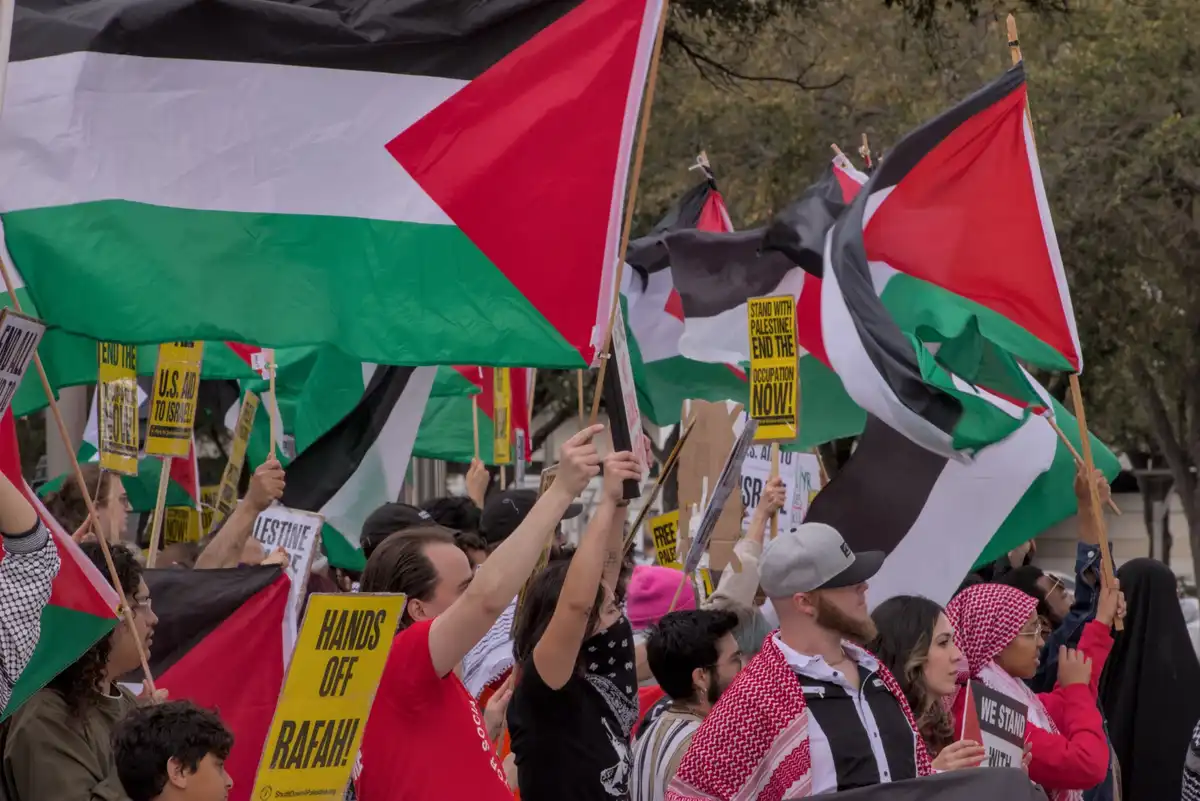
Demonstrations in cities and capitals around the world condemning the aggression on the Gaza Strip

Today, Saturday, many world cities and capitals witnessed mass demonstrations denouncing the Israeli aggression on the Gaza Strip.


Thousands participated in demonstrations organized in the Yemeni capital Sana'a, the French capital Paris, the Ghanaian capital Accra, the British city of Manchester and the capital London, The Hague in the Netherlands, Zurich in Switzerland, Milan and Florence in Italy, Braunsteig in Germany and the capital Berlin, Helsingborg and Eskilstuna in Sweden, the capital Stockholm, Aarhus in Denmark and the capital Copenhagen, California in the United States, and Melbourne in Australia, in support of the Palestinian people, and to demand a ceasefire and the entry of humanitarian aid into the Gaza Strip.


The participants in the demonstrations raised Palestinian flags and banners denouncing the crimes committed by the Israeli occupation against our people.


Participants called for an end to double standards and the need to prosecute the occupation for its massacres against the Palestinian people, especially children, and denounced the genocide in the Gaza Strip.

PALESTINE

Sat 26 Oct 2024 6:04 pm - Jerusalem Time

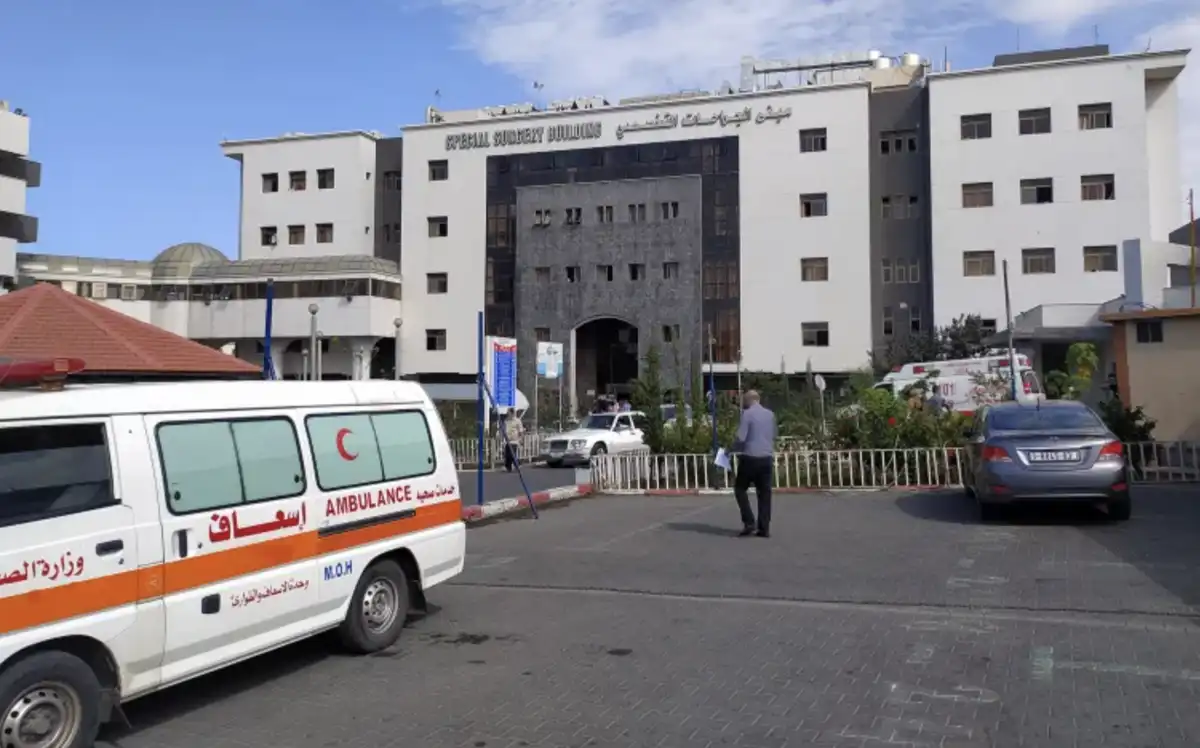
Gaza Health: Hospitals in the northern Gaza Strip have turned into graveyards

The Ministry of Health in the Gaza Strip described hospitals in the northern Gaza Strip as having turned into mass graves, as the brutal Israeli occupation aggression continues for the twenty-second consecutive day.


The ministry said that hospitals in the northern Gaza Strip lack any rooms to treat the wounded and sick.


The Israeli occupation forces arrested Dr. Mohammed Obaid from Al-Awda Hospital, while its artillery targeted the hospital’s surroundings in the Tel al-Zaatar area.


For his part, the director of field hospitals in the Palestinian Ministry of Health in the Gaza Strip, Marwan Al-Hams, said that the occupation had arrested a number of medical crews in the northern Gaza Strip, noting that there was no information regarding the fate of the detainees.


He added that the occupation forces deliberately destroyed medicines in Kamal Adwan Hospital, in a move to prevent the remaining medical staff from providing first aid to the wounded.


Al-Hamas appealed to the World Health Organization to evacuate the wounded from Kamal Adwan Hospital.


PALESTINE

Sat 26 Oct 2024 5:10 pm - Jerusalem Time

Dead and wounded inIsraeli occupation's bombing of Khan Yunis and northern Gaza

This evening, Saturday, citizens were killed and injured in an Israeli bombing north of Khan Yunis, south of the Gaza Strip, and around a school north of Gaza City.


Local sources reported that the occupation bombed the Al-Shahaida area, north of the town of Abasan Al-Kabira, east of Khan Yunis, which led to the death and injury of a number of citizens.


It added that the occupation's drones bombed the vicinity of Al-Fakhoura School, north of Gaza City, which led to the death of two citizens.


The occupation helicopters fired their heavy machine guns towards areas and gatherings of citizens west of the Nuseirat camp in the central Gaza Strip, and the southern areas of Gaza City.


The occupation forces arrested Dr. Muhammad Obaid, head of the Department of Reconstructive Surgery and Orthopedics at Al-Awda Hospital in Tal al-Zaatar in Jabalia, while he was in Kamal Adwan Hospital.


The occupation forces continue their aggression on the Gaza Strip, by land, sea and air, since October 7, 2023, which resulted in the death of 42,924 citizens and the injury of 100,833 others, the majority of whom are children and women, in an incomplete toll, as thousands of people are still missing under the rubble.

PALESTINE

Sat 26 Oct 2024 4:58 pm - Jerusalem Time

Suffocation injuries during storming east of Nablus

Today, Saturday, dozens of citizens were injured by suffocation from toxic gas during the Israeli occupation forces’ storming of the town of Beit Furik, east of Nablus.


According to local sources, the occupation forces stormed Beit Furik more than once during the past hours, amid heavy firing of bullets and toxic tear gas, which led to the outbreak of clashes and the suffocation of dozens of the town’s residents.

PALESTINE

Sat 26 Oct 2024 4:08 pm - Jerusalem Time

Israeli occupation withdraws from Kamal Adwan Hospital in northern Gaza, leaving dead and widespread destruction

The Israeli occupation army withdrew today, Saturday, from Kamal Adwan Hospital in the city of Beit Lahia, north of the Gaza Strip, leaving behind martyrs and widespread destruction inside and outside it after storming it yesterday, Friday, as part of the genocide and ethnic cleansing operation that has been ongoing for 22 days.

Eyewitnesses said that the occupation army destroyed and burned the homes and properties of citizens around Kamal Adwan Hospital before withdrawing from the area. There were patients, wounded and displaced people in the hospital who remained without medicine, food or water for two days during the storming.

They pointed out that the occupation army bulldozed the walls of Kamal Adwan Hospital and the tents of the displaced people inside and around it before storming it, and threw shells in its courtyards, and bombed the main oxygen station inside the hospital and put it out of operation, and destroyed the medicines in the hospital, preventing us from rescuing the wounded.

The occupation army arrested the male medical staff, in addition to the wounded and patients from the hospital, while communications with the medical staff inside were cut off. The World Health Organization also said that it had lost contact with the hospital.

The incursion and shelling of various areas of the North Gaza Governorate continues, coinciding with the army's continued efforts to empty the area of its residents through forced evacuation and displacement.

On October 5, the occupation army began unprecedented bombing operations on the Jabalia camp and town and large areas in the northern Gaza Strip, before invading them the following day.

More than 820 citizens were killed as a result of the occupation's aggression on the northern Gaza Strip, which has been subjected to genocide and ethnic cleansing for 22 days.

PALESTINE

Sat 26 Oct 2024 3:24 pm - Jerusalem Time

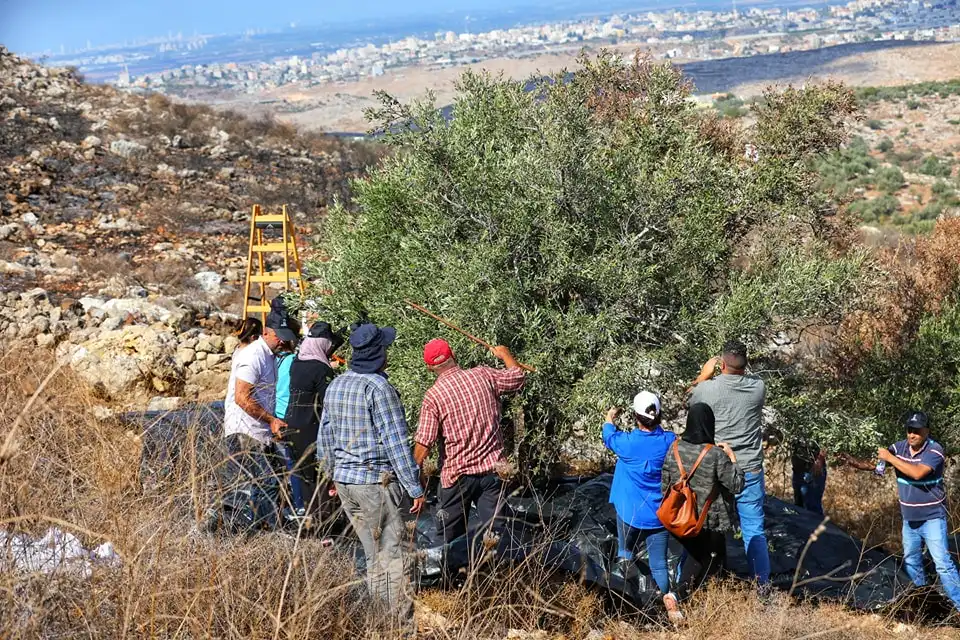
Israeli colonists attack olive pickers, steal fruits and equipment in central Hebron

Today, Saturday, settlers attacked olive pickers in the Tel Rumeida area, in central Hebron.

Local sources reported that a number of settlers assaulted the Aseid family while they were picking olives in Tel Rumeida, and stole the equipment and fruits.

During the annual olive harvest season, Palestinian lands are subjected to repeated attacks by settlers and the occupation army, and farmers constantly face obstacles and arbitrary practices that prevent them from accessing their lands, which leads to huge material losses and increases their daily suffering under the burden of the occupation.

It is expected that farmers will not be able to reach 80,000 dunums of land planted with olives, due to the terror of the settlers under the protection of the occupation army, which will lead to the loss of about 15% of this year’s season’s crop.

PALESTINE

Sat 26 Oct 2024 3:22 pm - Jerusalem Time

The death toll from Israeli aggression on Gaza rises to 42,924 dead and 100,833 wounded

Medical sources announced today, Saturday, that the death toll in the Gaza Strip has risen to 42,924, the majority of whom are children and women, since the beginning of the Israeli occupation aggression on October 7.

The sources added that the number of injuries has risen to 100,833 since the beginning of the aggression, while thousands of victims are still under the rubble.

It pointed out that the occupation forces committed 7 massacres against families in the Gaza Strip, 77 martyrs and 289 injuries arrived at hospitals during the past 48 hours.

It explained that a number of victims are still under the rubble and on the roads, and ambulance and civil defense crews cannot reach them.

ARAB AND WORLD

Sat 26 Oct 2024 1:58 pm - Jerusalem Time

Washington urges Tehran not to respond to Israeli aggression

Washington on Saturday urged Iran not to respond to Israeli strikes overnight on its territory, which came in response to rocket fire on October 1 into Israel.


Meanwhile, Arab and Islamic countries and Hamas condemned the Israeli attack and warned that it contributes to regional instability.


"We urge Iran to cease its attacks on Israel until this cycle of fighting ends without further escalation," National Security Council spokesman Sean Savitt told reporters.


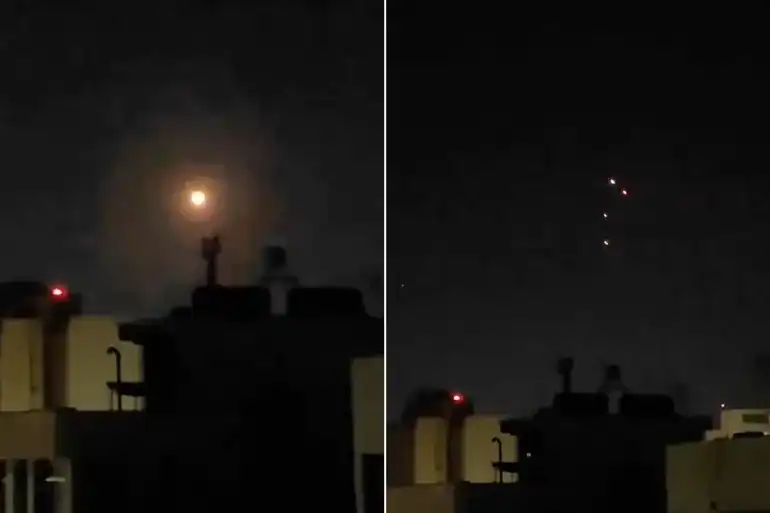
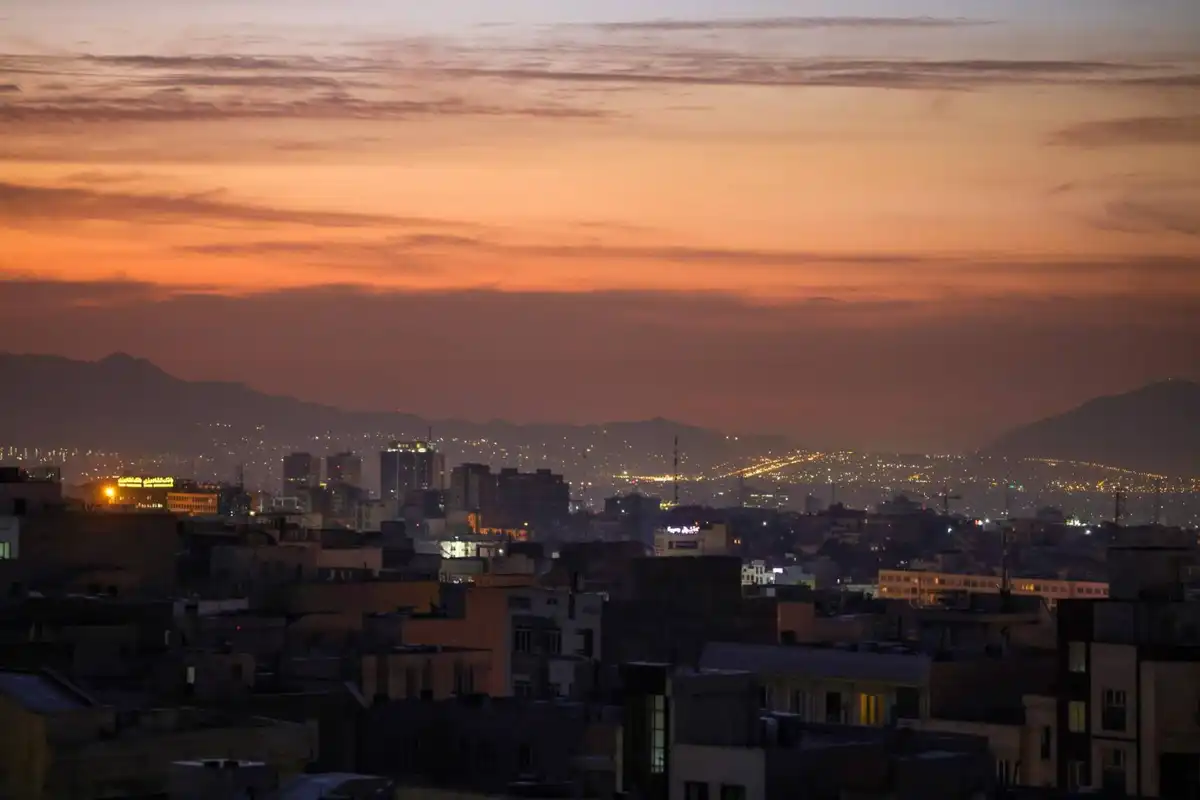
The Israeli military launched airstrikes against Iran early Saturday morning, hitting military bases, missile sites and other systems in several areas.


"Their (Israeli) response was an exercise in self-defense, avoiding populated areas and focusing only on military targets, unlike Iran's attack on Israel, which targeted Israel's most populous city," Savit added.


A senior US administration official said on Friday that Israel had carried out precise airstrikes targeting several military sites in Iran last night, as part of a direct military response. The US was not involved in the operation, he said, stressing that this response should end the direct exchange of fire between the two sides.


The official explained that US President Joe Biden and his national security team had worked with the Israelis over the past weeks to encourage them to respond in a proportionate and precise manner, and that is what was achieved tonight.


He added that President Biden discussed the situation with Israeli Prime Minister Benjamin Netanyahu last week, urging him to take measures to deter attacks on Israel, while avoiding further escalation, a goal shared by both sides.

The official stressed that if Iran responded, the United States was fully prepared to defend Israel, and that Iran would face consequences as a result of any further attack.


The official added that the Israeli response tonight should be the end of the direct exchange of fire between the two sides. He explained that Israel has made it clear that it has completed its response, calling on all influential countries to pressure Iran to stop its attacks on Israel, with the aim of ending the series of mutual attacks.


The official indicated that the United States is ready to lead efforts to end the conflict in Lebanon, through an agreement that allows civilians on both sides of the Blue Line to return safely to their homes.


He also announced Washington's readiness to achieve a ceasefire in Gaza and secure the return of the hostages, stressing that the broad outlines of these arrangements are ready and should be implemented without delay.


The Israeli army announced the end of a precise attack it carried out, at dawn on Saturday, against Iranian military sites in several areas, in response to a series of attacks launched by Iran against Israel in recent months, stressing that all participating aircraft returned safely to their bases.


The airstrikes, which were carried out based on intelligence guidance, included Iranian missile production sites that had been launched toward Israel over the past year, the army said in a statement, adding that these missiles posed a direct threat to the security of Israeli citizens.


For its part, the Iranian Air Defense Public Relations Agency confirmed, in a statement on Saturday, that "the comprehensive air defense system successfully intercepted and confronted the Israeli aggression."


She pointed out that Israel, "in a tense move, attacked military centers in the provinces of Tehran, Khuzestan and Ilam, despite previous warnings from officials of the Islamic Republic to the criminal and illegitimate Zionist entity to avoid taking any adventurous action."


She pointed out that "some points were exposed to limited damage due to the aggression," noting that an investigation is underway into the dimensions of the incident.


The Iranian Foreign Ministry also stressed that "the aggression against Iranian military headquarters is a violation of international law and our sovereignty," and that "Iran has the right to defend itself against any aggression."


She added: "We affirm that we will use all our capabilities to defend our security, interests and commitment to regional security."


Axios quoted three sources familiar with the matter as saying that Israel sent a message to Iran on Friday before its retaliatory airstrikes, warning the Iranians not to respond.


The sources said the Israeli message was an attempt to limit the ongoing exchange of attacks between Israel and Iran and prevent a wider escalation.


Three waves of airstrikes took place on Saturday morning local time, US and Israeli officials told the site.


The first wave focused on Iran's air defense system, and the second and third waves focused on missile and drone bases and weapons production sites.


Iran said it defeated the Israeli attack and that only "damage" was inflicted on military targets across the country.

PALESTINE

Sat 26 Oct 2024 1:57 pm - Jerusalem Time

Four dead, including a girl, and several wounded in shelling in northern and southern Gaza

Four citizens, including a girl, were killed and others were injured, Saturday afternoon, in the bombing of the occupation aircraft in the north and south of the Gaza Strip.

Medical sources reported that three citizens were killed and others were injured when the occupation aircraft bombed the house of the Maqat family in Jabalia al-Balad, north of the Gaza Strip.

The same sources added that a girl was killed and others were injured in the bombing of the Qizan Abu Rashwan area, south of Khan Yunis.

The occupation forces continue their aggression on the Gaza Strip, by land, sea and air, since October 7, 2023, which resulted in the death of 42,874 citizens and the injury of 100,544 others, the majority of whom are children and women, in an incomplete toll, as thousands of people are still missing under the rubble.

PALESTINE

Sat 26 Oct 2024 1:55 pm - Jerusalem Time

Israeli occupation forces arrest 15 Palestinians from the West Bank, including children

Yesterday and today, Saturday, the Israeli occupation forces arrested at least 15 citizens from the West Bank, including children and former prisoners.

The Commission of Prisoners' Affairs and the Prisoners' Club explained in a statement that the arrests were distributed across most of the West Bank governorates, in addition to field investigations of dozens of citizens, specifically in the town of Anata/Jerusalem, accompanied by attacks and threats against the detainees and their families, in addition to widespread acts of vandalism and destruction in citizens' homes.

It is noteworthy that the number of arrests since the beginning of the ongoing war of extermination and comprehensive aggression against our people has reached more than 11,400 citizens from the West Bank, including Jerusalem.

It is worth noting that the occupation army continues to carry out arrest campaigns in northern Gaza, in light of the war of extermination that has been ongoing for more than a year, including women, children, and medical staff, accompanied by horrific crimes and systematic torture.

It is worth noting that the occupation continues to carry out arrest campaigns in the West Bank, which are accompanied by systematic abuse and torture of detainees and their families, in an unprecedented manner. The occupation did not exclude the sick, the wounded, and the elderly during the arrest campaigns.

It is noteworthy that the data related to arrest cases include detainees from the West Bank, excluding Gaza, whose numbers are estimated in the thousands.

PALESTINE

Sat 26 Oct 2024 11:41 am - Jerusalem Time

Israeli occupation forces storm a building in Tulkarm after besieging and bombing it

Local sources reported that the Israeli occupation forces stormed the building they were besieging in the Al-Salam neighborhood in Tulkarm in the occupied West Bank.


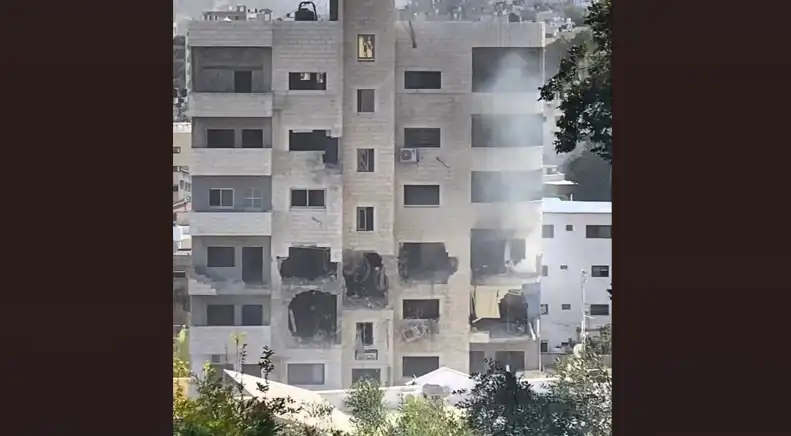
Palestinian media reported that a fire broke out in an apartment inside a residential building in the Al-Salam neighborhood in Tulkarm after it was targeted by the occupation.


It quoted sources in the Palestinian Red Crescent as saying that its medical teams in Tulkarm transferred to the hospital a person injured by live bullets in the feet from the Salam neighborhood in Tulkarm.


PALESTINE

Sat 26 Oct 2024 11:38 am - Jerusalem Time

UNICEF: Medical evacuation from Gaza drops to 22 children per month

The United Nations Children's Fund (UNICEF) said that the rate of evacuating children from the Gaza Strip for medical reasons decreased from 296 to 22 children per month, following Israel's control of the Rafah border gate on May 7.


"The rate of evacuating children from Gaza at the present time is less than one child per day," UN spokesman James Elder said during a press conference held at the UN office in Geneva yesterday.


"If this deadly slow pace continues, it will take more than 7 years to evacuate 2,500 children in need of urgent medical care," he added.


The UN official stressed that children in Gaza are not only dying because of bombs and bullets, but also because they do not receive the necessary medical care.

ARAB AND WORLD

Sat 26 Oct 2024 11:38 am - Jerusalem Time

Axios: Israel informed Iran before the attack and warned it against responding

Israel sent a message to Iran on Friday ahead of its retaliatory airstrikes warning the Iranians not to respond, three people familiar with the matter said, in an attempt to limit the ongoing exchange of attacks between the two countries and prevent a wider escalation, according to the sources.

Three waves of airstrikes took place Saturday morning, US and Israeli officials said, with the first wave focusing on Iran's air defense system, while the second and third waves focused on missile and drone bases and weapons production sites.


Iran said it thwarted the Israeli attack and that limited "damage" was caused to military targets across the country, while Israeli officials said the attack was in response to Iran's massive ballistic missile strike on October 1.


Israel informed Iran in advance of the targets.

The website said that sources told it that the Israeli message was conveyed - behind the scenes - to the Iranians through several third parties. One of the sources said, "The Israelis explained to the Iranians in advance what they would attack in general and what they would not attack."

Two other sources said that Israel warned the Iranians not to respond to the attack, and threatened that it would carry out another, more significant attack if Iran responded, especially if Israeli civilians were killed or wounded. Iran has said that it does not want a full-scale war with Israel, but it will respond if it is attacked.

A US official said the United States was not involved in the Israeli operation, but was prepared to defend Israel if Iran responded. "This should be the end of direct military exchanges between Israel and Iran," the official added. "If Iran attacks Israel again, there will be consequences. We have informed Iran of this directly and indirectly."

Dutch Foreign Minister

One of the sources told the site that one of the channels that conveyed messages to Iran before the Israeli strike was Dutch Foreign Minister Casper Veldkamp, who wrote on the X platform hours before the Israeli attack: “I spoke with the Iranian Foreign Minister about the war and the growing tensions in the region. I urged restraint. All parties must act to prevent further escalation.”


Israel informed Iran in advance of the targets.

The website said that sources told it that the Israeli message was conveyed - behind the scenes - to the Iranians through several third parties. One of the sources said, "The Israelis explained to the Iranians in advance what they would attack in general and what they would not attack."

Two other sources said that Israel warned the Iranians not to respond to the attack, and threatened that it would carry out another, more significant attack if Iran responded, especially if Israeli civilians were killed or wounded. Iran has said that it does not want a full-scale war with Israel, but it will respond if it is attacked.


A US official said the United States was not involved in the Israeli operation, but was prepared to defend Israel if Iran responded. "This should be the end of direct military exchanges between Israel and Iran," the official added. "If Iran attacks Israel again, there will be consequences. We have informed Iran of this directly and indirectly."


Dutch Foreign Minister

One of the sources told the site that one of the channels that conveyed messages to Iran before the Israeli strike was Dutch Foreign Minister Casper Veldkamp, who wrote on the X platform hours before the Israeli attack: “I spoke with the Iranian Foreign Minister about the war and the growing tensions in the region. I urged restraint. All parties must act to prevent further escalation.”


US officials said they expected Iran to respond to the Israeli attack in the coming days but in a limited way that would enable Israel to stop the “tit for tat” cycle. “Our goal is to accelerate diplomacy and de-escalate tensions in the Middle East,” said National Security Council spokesman Sean Savitt. “We urge Iran to cease its attacks on Israel so that this cycle of fighting can end without further escalation.”

Source: Axios


PALESTINE

Sat 26 Oct 2024 11:37 am - Jerusalem Time

Israeli occupation attacks olive pickers in Al-Mughayyir, east of Ramallah

Today, Saturday, the Israeli occupation forces forced olive pickers to leave their lands in the village of Al-Mughayyir, east of Ramallah.

Marzouq Abu Naim, Deputy Head of Al-Mughayyir Village Council, confirmed that the occupation forces used force to force farmers to leave their fields, and fired tear gas canisters at them.


The occupation forces have prevented the owners of the targeted lands from entering them since the beginning of the aggression on the Gaza Strip last October. Over the past months, the village has been subjected to several attacks by occupation soldiers and settlers, the most dangerous of which was about three months ago, when they burned many homes and vehicles.


During the annual olive harvest season, Palestinian lands are subjected to repeated attacks by settlers and the occupation army, and farmers constantly face obstacles and arbitrary practices that prevent them from accessing their lands, which leads to huge material losses and increases their daily suffering under the burden of the occupation.


It is expected that farmers will not be able to reach 80,000 dunums of land planted with olives, due to the terror of the settlers under the protection of the occupation army, which will lead to the loss of about 15% of this year’s season’s crop.

ARAB AND WORLD

Sat 26 Oct 2024 11:36 am - Jerusalem Time

UN rapporteur warns of serious health conditions in Gaza Strip and its repercussions

The United Nations Special Rapporteur on the right to health, Taling Mofokeng, warned of the seriousness of the health conditions in the Gaza Strip, warning of the occurrence of uncontrollable humanitarian disasters if the Israeli crimes against them are not stopped and the continued prevention of the entry of medical and humanitarian aid.

“Israel continues to kill doctors and health workers, and does not respond to international calls to stop these crimes,” Mofokeng said in an interview with the “With the Editor-in-Chief” program, broadcast on Palestine TV. She warned of the emergence of diseases resulting from the Israeli policy of depriving hospitals and health centers of clean water, and other practices that lead to abnormal conditions that contribute to the spread of diseases among citizens.

Mofokeng stressed that for the first time in history, these crimes are being committed against health sector workers and medical facilities in the Gaza Strip and the West Bank, referring to the crime committed by Israel in Al-Shifa Hospital, and her emphasis to leaders and officials on the necessity of responding to this crime, and obligating the Israeli government not to continue its crimes against hospitals and medical staff.

She added: "Israel is clearly violating international humanitarian law and human rights law, and it continues to ignore all international standards, laws of justice, and decisions of the International Court of Justice, and is deliberately committing genocide in Palestine.

She pointed out that the UN officials sent a clear and decisive message in which they stressed the need for all UN member states to mobilize all forces to compel Israel to abide by the decision issued by the International Court of Justice, especially those that provide weapons and military supplies to Israel to continue committing genocide against the Palestinians, noting that Israel feels immune and unaccountable due to the support it receives from the US administration.

Mofokeng stressed the need to continue humanitarian work safely and to stop the destruction of the health sector. She said: “We work through the United Nations Relief and Works Agency for Palestine Refugees (UNRWA) to provide services to the Palestinians, despite the difficulty of doing so as a result of the destruction of the infrastructure and the obstruction of the entry of aid by the Israeli occupation.” She added: “Humanitarian aid must enter the Gaza Strip continuously, and it is necessary to stop the war in order for us to be able to do so.”

She pointed out the inability to bring medical aid into Gaza, or to evacuate the wounded who need treatment abroad, and this comes within the process of genocide committed by Israel against the Palestinians.

She pointed out that mental health in the Gaza Strip is very bad, due to the crimes that the citizens witnessed there, warning that this crisis could become chronic if it is not treated.

Mofokeng warned of the danger of the spread of diseases among citizens in the Gaza Strip, especially polio, skin diseases, vision, and the contagious scabies disease that is widespread in the Strip, noting that the World Health Organization is communicating with relevant organizations regarding this issue, and that no efforts will succeed in limiting the spread of these diseases unless a ceasefire is reached.

She stressed that Israel is ignoring all international appeals directed at it to allow the entry of medical aid into the Gaza Strip, noting that this will be presented to the International Court of Justice when the Israeli officials appear before it. She said: "Israel's refusal to allow the entry of humanitarian and medical aid is considered conclusive evidence before the court," stressing the need to reconsider Israel's membership in the United Nations and not delay this step, in addition to the international community's recognition of the independent Palestinian state.

She said: "The United Nations needs to hold an international conference on the Palestinian issue, provide protection for the Palestinian people, and the importance of discussing the necessary measures at the global level in order to stop what is happening now, and not accept the crimes committed by Israel against the Palestinians, and use pressure and force to implement the decisions through all political, diplomatic and popular means in order to achieve that."

In a related context, she stressed the follow-up of the file of detainees in the occupation prisons, their right to health, the provision of treatment, and the avoidance of health damages, and said: "We are communicating with humanitarian and legal experts to intervene in this context, and to communicate with all relevant parties and with the prisoners."

Regarding the targeting of the United Nations Relief and Works Agency for Palestine Refugees (UNRWA) by the occupation government, she said: “What is happening to colleagues in the agency is unprecedented, and if Israel succeeds in stopping the agency’s work to end the refugee issue, this means the failure of the United Nations system.”

She added: "We need to work, and not just demand the formation of committees and investigations, in order to establish the agency in performing its duties and providing its services."

ARAB AND WORLD

Sat 26 Oct 2024 10:13 am - Jerusalem Time

Israel: We now have a wider margin of maneuver in Iranian airspace

The Israeli military said its air strikes on Iranian air defenses on Saturday gave it greater freedom of movement in Iranian airspace, according to Agence France-Presse.


"Israel now has a wider margin of maneuver in Iran's airspace as well," Israeli military spokesman Daniel Hagari said in a televised briefing.

Israel launched three waves of strikes on Iran, covering twenty sites, while Iranian media reported, citing informed sources, that the Israeli offensive operation carried out with “small flying objects” was successfully thwarted.


The Israeli military said in a statement that it had completed its strikes on Iran, and that its aircraft “returned safely” after “hitting facilities used to produce missiles fired by Iran at Israel.” It added that “an additional Iranian surface-to-air missile system and air capabilities were also hit, which were intended to restrict Israel’s freedom of action in Iran.” Iran did not immediately acknowledge any damage to its military facilities.

ARAB AND WORLD

Sat 26 Oct 2024 10:12 am - Jerusalem Time

Extensive Israeli bombing targets several sites in Syria

The Syrian army's air defenses confronted an Israeli air strike around the Syrian capital, Damascus.


Residents living west of the capital Damascus said, “The Israeli bombardment of the surroundings of the capital Damascus after midnight on Friday/Saturday was the most violent in the past months, as more than 10 explosions were heard, in addition to the sounds of anti-aircraft missiles that shot down a number of Israeli missiles.”

The German News Agency (DPA) quoted eyewitnesses as saying that they “saw a fire breaking out in one of the military sites west of the capital, Damascus.”

For its part, sources close to the Syrian government forces said that the government forces repelled an Israeli attack on sites west of the city of Homs, and also repelled a number of Israeli missiles in the Tartous Governorate on the Syrian coast and a Syrian army site in the countryside of Sweida in southern Syria.

In Daraa Governorate, residents said that they heard the sounds of warplanes flying over areas in southern Syria without carrying out any bombing operations in the governorate.

PALESTINE

Sat 26 Oct 2024 10:10 am - Jerusalem Time

Three dead and wounded in Israeli occupation's bombing of Jabalia Al-Nazla and the massacres in the northern Gaza Strip enter their 22nd day

Three citizens were killed and others were injured in the bombing of Jabalia al-Nazla, north of the Gaza Strip, by the occupation warplanes, which has been subjected to the most heinous massacres, ethnic cleansing and forced displacement for 22 days.

Medical sources announced the martyrdom of three citizens and the injury of others in the occupation's bombing of a number of houses in Jabalia Al-Nazla.

The occupation army continues to commit more massacres in the northern Gaza Strip, specifically in Jabalia, as the war enters its 386th day.

According to the same sources, "the medical staff is still present in Kamal Adwan Hospital, with the wounded, injured and sick, after the occupation forces removed the escorts and some of the displaced women and children, and forced the displaced males to take off their clothes, before arresting some of them, and gathering the medical staff, detaining them in one room, and summoning a number of them."

Since dawn today, the occupation forces have been blowing up residential buildings around the Al-Faluja Cemetery in Jabalia camp, while the gunboats are firing towards the coast of Gaza City.

Due to the continued aerial and artillery bombardment, rescue crews were unable to respond to the calls and pleas of dozens of citizens whose homes were bombed and burned in the towns of Jabalia and Al-Nazla.

Meanwhile, the occupation artillery is shelling heavily the center of the Nuseirat camp, in the middle of the Gaza Strip.