PALESTINE

Mon 28 Oct 2024 3:15 pm - Jerusalem Time

Palestinian PM: The national economy has shrunk by 35% due to the continued aggression of the occupation

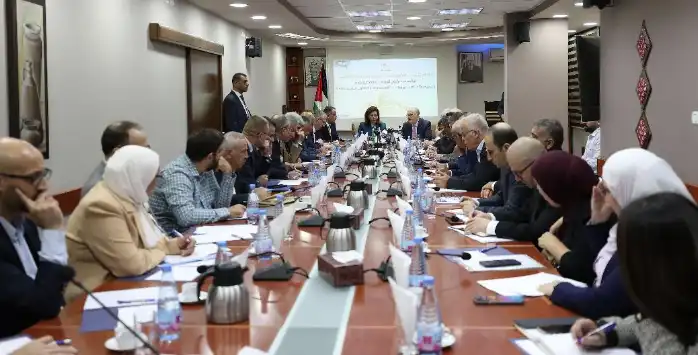
Prime Minister Mohammad Mustafa chaired the 25th meeting of the Advisory Council for Official Statistics, today, Monday, at the headquarters of the Palestinian Central Bureau of Statistics in the city of Ramallah.


The Prime Minister reviewed the government's efforts towards the Gaza Strip, the financial and economic situation, and the national development program.


Mustafa stressed that the Gaza Strip will remain an integral part of the Palestinian state and national project, pointing to the political and diplomatic efforts made by President Mahmoud Abbas and the Palestinian leadership to stop the war of extermination against our people, and the priority of relief efforts in the Gaza Strip from the first day of the aggression, and opening all the crossings of the Strip to bring in more aid to meet emergency needs.


The Prime Minister referred to the efforts being made to prepare for the reconstruction of the Gaza Strip immediately after the aggression stops, as the National Reconstruction Team has been formed, and preparations are underway to establish a reconstruction authority through a local and international alliance.


Mustafa stressed that the financial siege is part of Israel's plan to eliminate the Palestinian national project and destroy the foundations of an independent state, as Israel continues to deduct monthly from Palestinian tax revenues under the pretext of paying the allocations for the Gaza Strip, martyrs and detainees, and that the ongoing Israeli aggression on the Gaza Strip and the West Bank, including Jerusalem, has affected the national economy by shrinking by 35%.


The Prime Minister briefed the members of the Advisory Council on the government’s preparation of a draft of the first phase of the “National Development and Improvement Program”, to be implemented over the next two years. The program includes two main parts: the first part of the program consists of seven development initiatives, including: renewable energy, localizing health services, digital transformation, social protection, developing local government bodies, food security, and education for development. The second part of the program includes four main axes: reviewing the development of financial policies and developing public finance management, strengthening the governance system and the rule of law, improving the legislative and regulatory environment for investment and business, and improving the performance of institutions providing public services, including water, electricity, health, education, and communications.


Mustafa welcomed the new members of the Advisory Council, thanking the Council members whose membership had ended, either through retirement or replacement by new representatives from their institutions.


The Prime Minister expressed his thanks and appreciation to the staff of the Central Bureau of Statistics, its head, Ola Awad, and the members of the Advisory Council, as an effective national institution, and for their distinguished efforts and giving, especially during the ongoing aggression against our people in the Gaza Strip and the West Bank, including Jerusalem, and for providing statistical data and indicators that reflect the demographic, environmental, economic and social reality, and monitoring the impact of the aggression in various sectors.


For her part, Awad reviewed the most important achievements of the apparatus and its work at the local and international levels during the past year in light of the continued aggression of the occupation against our people, as the apparatus established a special platform on the losses resulting from the aggression that includes indicators related to the numbers of martyrs, wounded, detainees, buildings, residential units, and others, and it is updated on a daily basis.


Awad added that the Palestine Data Strategy has been updated to cover the period from 2024-2029, in line with government plans, and a training program on data science has been completed in which 184 trainees representing various sectors participated. The agency, in partnership with the Ministry of Local Government, continues to implement the project to develop establishment databases in major municipalities, and to implement the census in the remaining communities to contribute to updating these databases periodically and continuously.


Awad pointed out that the State of Palestine, represented by the Palestinian Central Bureau of Statistics, has obtained first place in the Middle East and North Africa region, and 48th place globally in the Statistical Performance Index (SPI), within the World Bank’s assessment of national statistical systems.


The Advisory Council discussed many issues, the most important of which were the statistical program during and after the aggression on the Gaza Strip, amending the General Statistics Law No. (4) of 2000, in addition to the Council’s budget for the years 2024 and 2025.

ARAB AND WORLD

Mon 28 Oct 2024 3:12 pm - Jerusalem Time

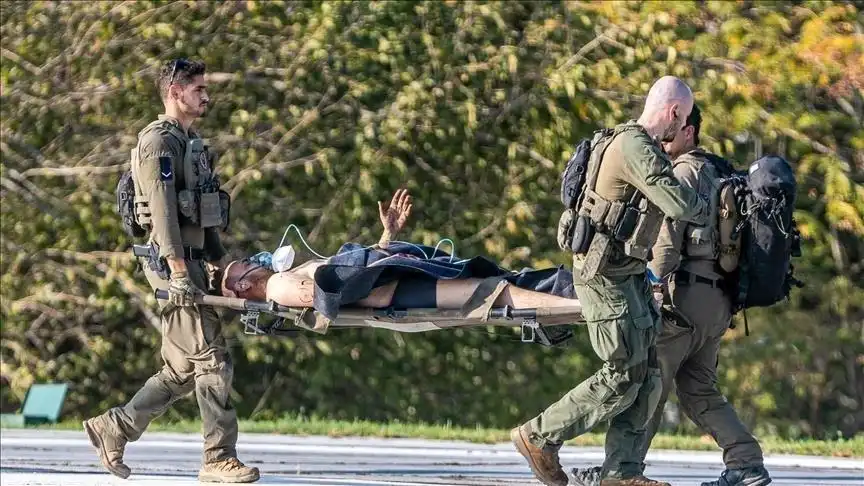
7 Israeli soldiers injured in Lebanon in the past 24 hours

According to Israeli army data, 7 soldiers were injured in Lebanon in the past 24 hours.


According to the Israeli army website, on Monday, the number of soldiers injured in Gaza, Lebanon and the West Bank since the beginning of the war has reached 5,184, up from 5,177 yesterday.


Thus, 7 soldiers were injured within 24 hours.


Data indicate that among the wounded, 2,368 soldiers were wounded in the ground battles in the Gaza Strip, unchanged from yesterday's numbers.


The Israeli army did not specify the location of the injury, but Israeli army statements in the past 24 hours indicated that a soldier was injured in southern Lebanon.


According to Israeli army data, 40 of the injured are still being treated for serious injuries, 219 for moderate injuries, and 37 for minor injuries.


According to Israeli army data, 771 soldiers have been killed since the beginning of the war on October 7 of last year, including 360 in the ground battles in the Gaza Strip that began on October 27.

ARAB AND WORLD

Mon 28 Oct 2024 2:40 pm - Jerusalem Time

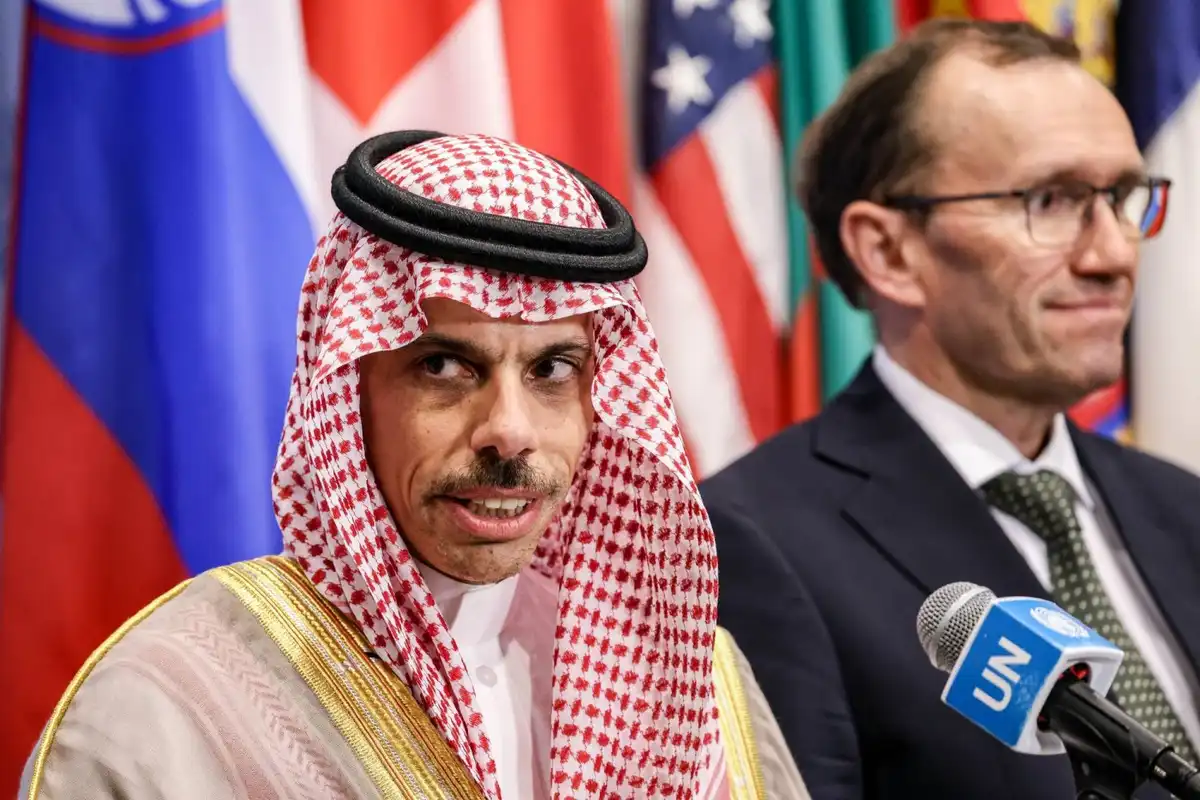
Riyadh hosts high-level meeting of the "Two-State Solution" coalition

The Saudi capital, Riyadh, will host a high-level meeting of the Global Alliance for the Implementation of the “Two-State Solution” next Wednesday and Thursday, which includes diplomats and envoys from several countries and regional and international organizations, to present a specific timetable for building and implementing the Palestinian state and the two-state solution on the path to permanent and comprehensive peace in the Middle East.


Saudi Foreign Minister Prince Faisal bin Farhan will deliver a welcoming speech at the beginning of the meeting, followed by a speech by Philippe Lazzarini, Commissioner-General of the United Nations Relief and Works Agency for Palestine Refugees in the Near East (UNRWA).


Last September, Saudi Arabia announced, on behalf of Arab and Islamic countries and European partners, the launch of the “International Alliance to Implement the Two-State Solution,” during the ministerial meeting on the Palestinian issue and peace efforts, on the sidelines of the high-level week of the United Nations General Assembly.


According to informed sources who spoke to Asharq Al-Awsat, the Riyadh meeting, which is the first high-level “follow-up meeting,” aims to collect practical inputs, present them at a high political level, provide an overview of all proposed components under the umbrella of the global alliance, and begin practical preparation.


Further follow-up meetings, starting in Riyadh, followed by Brussels, Cairo, Amman, Oslo, Ankara and possibly elsewhere, are expected to focus on a number of specific elements of the global coalition’s work to implement the two-state solution.


The Riyadh meeting also aims to achieve tangible results on how to deliver the outcomes of the meetings to the political level and implement them, and to provide a specific timetable for building and implementing the Palestinian state and the two-state solution, in addition to taking measures to preserve the possibility of the two-state solution, including how to ensure accountability with regard to international law, and implement all relevant UN resolutions.


According to the same sources, by hosting the meeting, the Kingdom is working in full partnership with the other initiators of the Global Alliance: the members of the Joint Contact Group between the League of Arab States and the Organization of the Islamic Conference on Gaza (Bahrain, Jordan, Indonesia, Palestine, Qatar, Turkey, Egypt, Nigeria, the League of Arab States, and the Organization of Islamic Cooperation), in addition to the European Union and Norway.


According to Asharq Al-Awsat sources, the Riyadh meeting will also focus on UNRWA’s work as the largest humanitarian actor in Gaza today, and the backbone of the humanitarian response until the two-state solution is implemented.


Saudi Foreign Minister Prince Faisal bin Farhan had stressed during his speech at the United Nations General Assembly meetings last September that the establishment of an independent Palestinian state is an inherent and fundamental right for peace, and not a final outcome negotiated within a far-fetched political process.


He said: “We affirm our appreciation for the countries that have recently recognized Palestine, and we call on all countries to be courageous and take the same decision, and join the international consensus represented by the 149 countries that recognize Palestine. Implementing the two-state solution is the best solution to break the cycle of conflict and suffering, and enforce a new reality in which the entire region, including Israel, enjoys security and coexistence.”


The Minister concluded his speech by announcing the launch of the “International Alliance for the Implementation of the Two-State Solution,” saying: “Today, on behalf of the Arab and Islamic countries and our European partners, we announce the launch of the (International Alliance for the Implementation of the Two-State Solution), and we invite you to join this initiative, stressing that we will do our utmost to achieve a reliable and irreversible path to a just and comprehensive peace. We look forward to hearing what you have to contribute to ending this conflict, in order to preserve international peace and security.”

PALESTINE

Mon 28 Oct 2024 2:09 pm - Jerusalem Time

Israeli occupation notifies the cessation of work in 20 agricultural greenhouses in Jenin

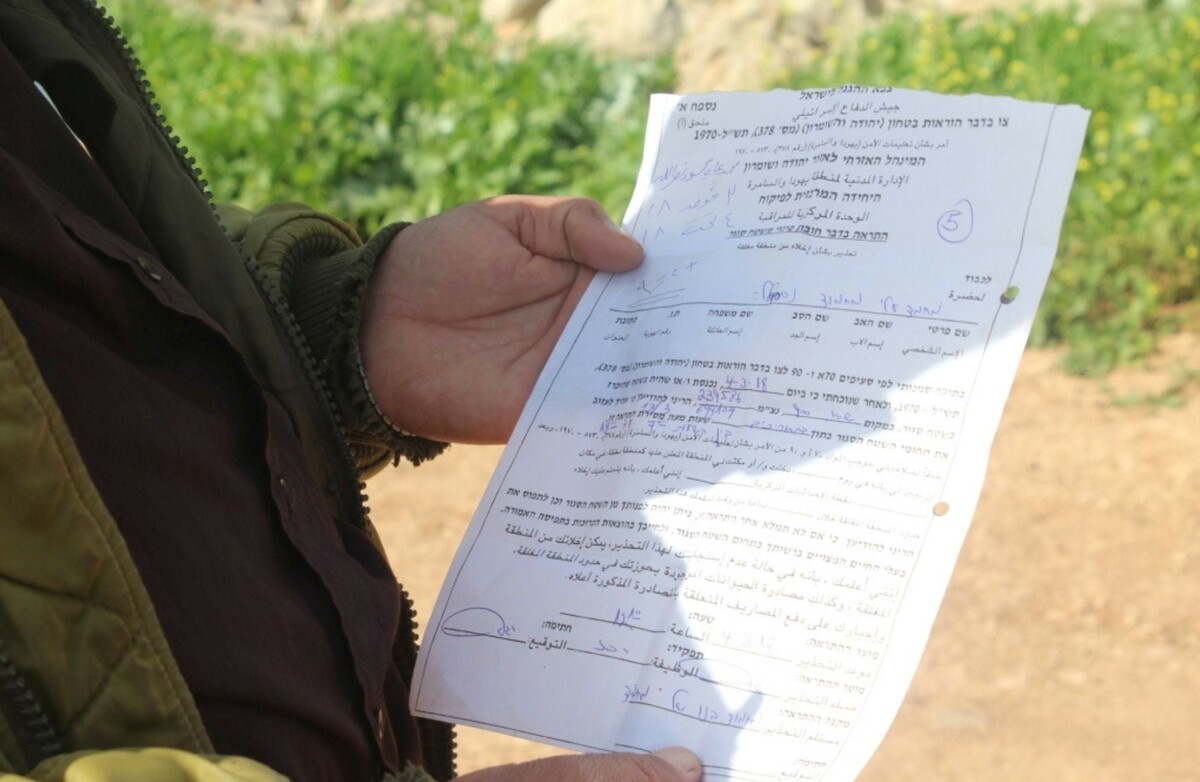
Today, Monday, the Israeli occupation forces delivered 20 notices to stop work in agricultural greenhouses in the village of Al-Jalameh, northeast of Jenin.


According to local sources, the occupation forces stormed the area west of the village and delivered notices to stop work in 20 agricultural greenhouses on an area of 20 dunams, along Nazareth Street west of the village.


She pointed out that these greenhouses have been in place for years and are planted with vegetables, noting that the occupation forces have delivered more than 150 notices to stop work during the past year, and have also demolished three agricultural greenhouses two weeks ago in the village.

ARAB AND WORLD

Mon 28 Oct 2024 1:52 pm - Jerusalem Time

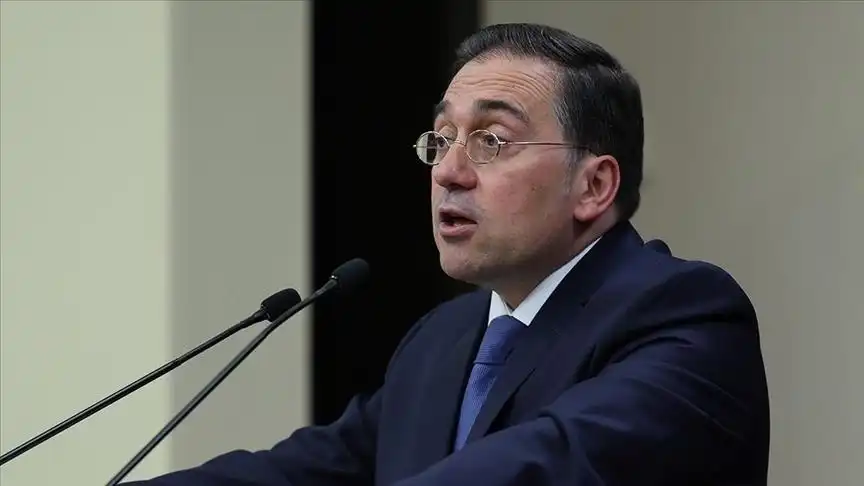
Spain: Gaza, the West Bank and Lebanon have been experiencing a tragedy for a year that threatens the stability of the region

Spanish Foreign Minister Jose Manuel Albares said on Monday that the Gaza Strip, the West Bank and Lebanon have been living for a year a "tragedy that threatens the stability of the Mediterranean region as a result of the Israeli aggression."


This came during his speech, followed by Anadolu Agency, at the opening of the Ninth Regional Forum of Foreign Ministers of the "Union for the Mediterranean" countries, which is being held in the Spanish city of Barcelona.


Albares said: "Gaza, the West Bank and Lebanon have been living a tragedy for about a year that threatens the stability of the Mediterranean region."


He added: "We agree that the Palestinian Authority must work to achieve stability in all Palestinian territory (...) and begin the reconstruction of Gaza urgently in response to the humanitarian disaster there."


Referring to the Israeli attacks on it, Albares spoke about seeking to "strengthen the UNIFIL peacekeeping forces, which are exposed to threats and suffer from the non-implementation of international laws, while the decisions of the International Court of Justice are not implemented or respected."


For his part, the High Representative of the European Union for Foreign Affairs and Security Policy, Josep Borrell, recalled that "the European Union called for an end to the cycles of action and reaction (between Israel on the one hand and Iran and resistance factions in Palestine, Lebanon and Yemen)."


He also stressed the Union's demand to "stop the Israeli war on Lebanon and condemned its army's strikes against UNIFIL forces."


Borrell added: "We express our concern and commitment to exert more pressure to end the dramatic situation in Gaza, where the most serious humanitarian crisis since World War II."


Jordanian Foreign Minister Ayman Safadi, along with Borrell, will co-chair the forum.


The organization includes 43 countries, namely Turkey, Palestine, Israel, Jordan, Bosnia and Herzegovina, North Macedonia, Montenegro, Albania, Monaco, Morocco, Tunisia, Syria, Algeria, Egypt, Lebanon, and Mauritania, in addition to the 27 European Union countries.


PALESTINE

Mon 28 Oct 2024 1:44 pm - Jerusalem Time

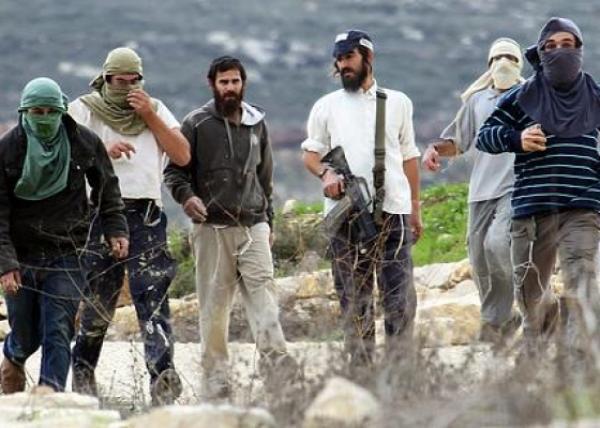
Israeli Settlers attack olive pickers east of Bethlehem

Today, Monday, settlers, under the protection of the Israeli occupation forces, attacked olive pickers in the village of Kisan, east of Bethlehem.


According to local sources, the settlers attacked the olive pickers, threw stones at them in the Wadi Jahar area, and forced them at gunpoint to leave their land.


It is noteworthy that the occupation forces and its settlers have escalated their repeated attacks against olive pickers in the Bethlehem Governorate and other governorates.

PALESTINE

Mon 28 Oct 2024 1:37 pm - Jerusalem Time

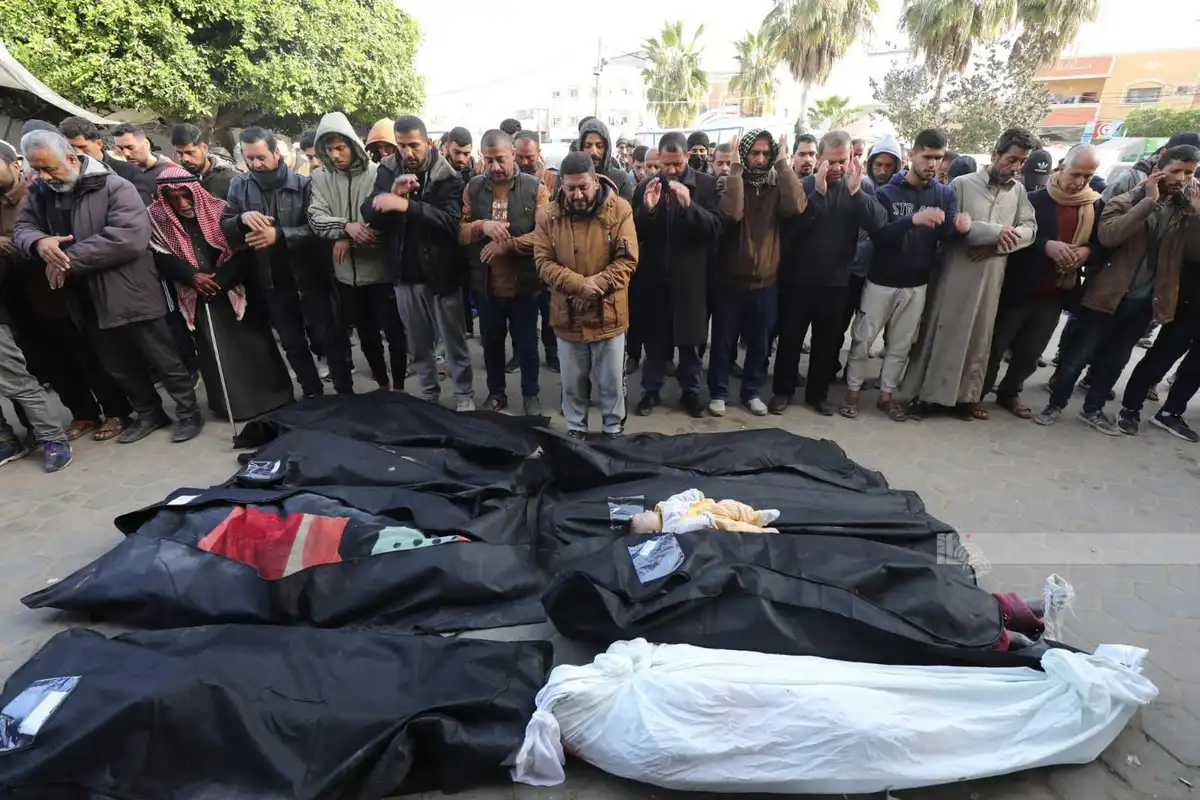
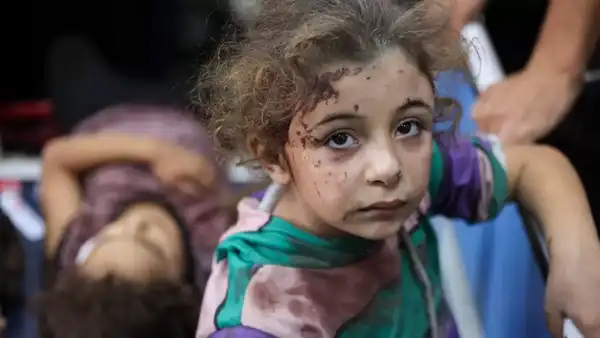
The death toll from Israeli occupation's aggression on Gaza rises to 43,020 martyrs

The Ministry of Health in Gaza announced today, Monday, that the death toll in the Gaza Strip has risen to 43,020, the majority of whom are children and women, since the start of the Israeli occupation aggression on October 7, 2023.


It added that the number of injuries has risen to 101,110 since the start of the aggression, while thousands of victims are still under the rubble.


It pointed out that the occupation forces committed 5 massacres against families in the Gaza Strip, 96 dead and 277 wounded people arrived at hospitals during the past 48 hours.


It explained that a number of victims are still under the rubble and on the roads, and ambulance and civil defense crews cannot reach them.

PALESTINE

Mon 28 Oct 2024 1:28 pm - Jerusalem Time

A young Palestinian was injured by the occupation forces’ bullets north of Tulkarm

Today, Monday, a young man was injured by Israeli occupation forces' bullets north of Tulkarm Governorate.


The Red Crescent Society reported that a young man (26 years old) was injured by the occupation forces’ bullets in the foot, while he was near the racist separation and expansion wall west of the town of Baqa al-Sharqiya, and he was transferred to the Martyr Thabet Thabet Governmental Hospital in the city.

ARAB AND WORLD

Mon 28 Oct 2024 1:00 pm - Jerusalem Time

Israeli prisoners' families press Knesset to conclude exchange deal

Families of Israeli prisoners in the Gaza Strip put pressure on the Israeli government in the Knesset on Monday, hoping to force it to conclude a prisoner exchange agreement with Palestinian factions in the Gaza Strip.


Members of the prisoners' families launched a sharp attack on members of the parliamentary National Security Committee, accusing them of not being serious in dealing with the prisoners' file.


"The legislators cannot claim that military pressure (on Gaza) will bring back the hostages," said Shai Dikman, cousin of Gaza prisoner Carmel Gat, according to the Israeli Broadcasting Corporation.


In another meeting with the Knesset Interior Committee, Einav Zangawker, the mother of soldier Matan, said: “Our loved ones are dying in the tunnels (in Gaza)... While we are fighting for their release, legitimate people continue to go about their daily lives.”


The broadcaster quoted her as saying: "We ask ourselves what is more important than giving up the kidnapped people? It is time to say clearly: There is no issue more important than the return of the hostages."


Gilad Korngold, father of captive Tal Shoham, said: “There are kidnapped people who were buried alive (as a result of random Israeli raids)... This is the only existential threat to Israel.”


For days, the families of Israeli prisoners have been escalating their activities to demand that Prime Minister Benjamin Netanyahu's government reach an agreement.


On Saturday evening, families held a demonstration in Tel Aviv (central), accusing Netanyahu of not being serious about concluding an agreement.


"Netanyahu does not want a deal because he wants to continue to rule," Yehuda Cohen, whose son Nimrod is a prisoner in Gaza, told reporters in Tel Aviv on Saturday evening.


He added: "If Netanyahu wants to remain prime minister in general, and free in particular since he is being tried criminally (on corruption charges), he will continue to insist on continuing the war, and continue to rule on the blood of hostages, civilians and Israeli soldiers."


Cohen continued: "The only way to reach a deal is to force Netanyahu."


Tel Aviv holds more than 9,500 Palestinians in its prisons, and estimates that there are 101 Israeli prisoners in Gaza, while Hamas says that dozens of them were killed in random Israeli raids.

ARAB AND WORLD

Mon 28 Oct 2024 12:58 pm - Jerusalem Time

Iran: We will use everything available to respond to Israel's attack

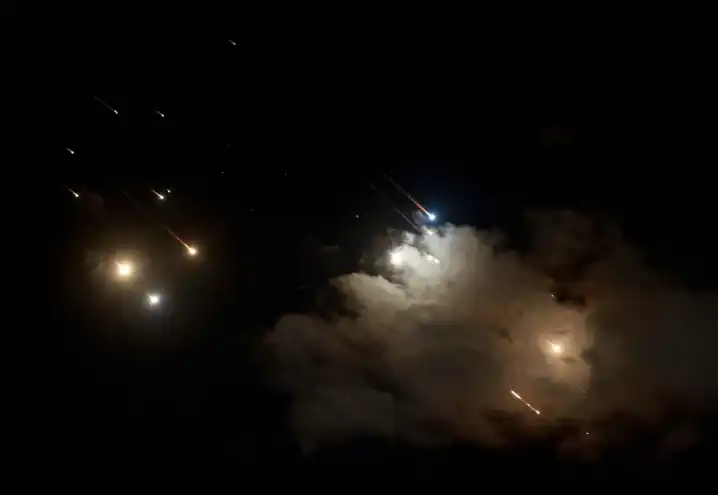
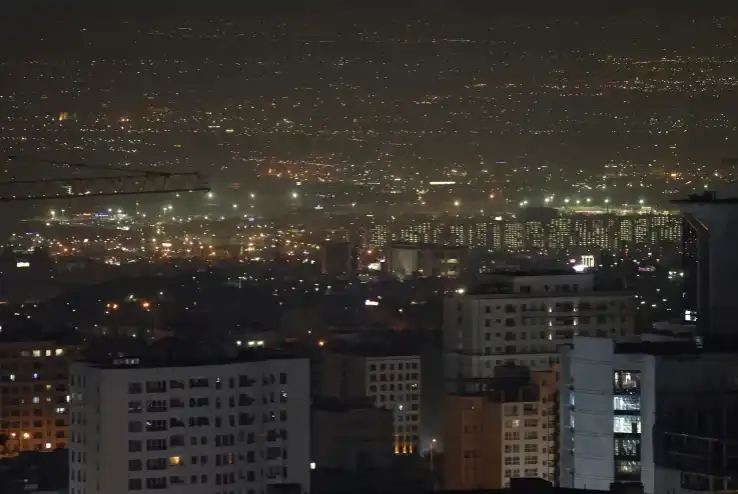
Iran reiterated on Monday its determination to use all available capabilities to respond to the missile attack launched by Israel on October 26.


Iranian Foreign Ministry spokesman Esmail Baghaei said today that Tehran will use all available tools to respond to the attack launched by Israel on it last Saturday, according to Reuters.


On Sunday, Iran informed the United Nations that it reserved the right to respond to the "criminal Israeli aggression," amid ongoing Iranian assurances in this regard.


The Iranian Foreign Ministry explained that Minister Abbas Araghchi informed the UN Secretary-General of this, and called in a letter he addressed to him for an urgent meeting of the UN Security Council.


Earlier, Iranian President Masoud Pezeshkian said, "We will respond appropriately to the Zionist entity's aggression against our lands," amid US warnings to Iran against "the mistake of responding and taking any retaliatory step."


For his part, Iranian Parliament Speaker Mohammad Bagher Qalibaf said, "The Zionist regime's attack on our country has turned into another defeat for this entity," stressing that the response to it "will be inevitable, as our country considers itself to have the right to self-defense according to the United Nations Charter."


Last Saturday morning, the Israeli army announced that it had launched a fighter jet attack on Iran, which in turn said that it had "successfully confronted the Zionist entity's attempts to attack some points in Tehran and the country." The attack resulted in the deaths of 4 soldiers and one civilian, according to official statements.


This came after Iran anticipated the Israeli attack, following its launch of an attack on Israel more than two weeks ago, in response to the assassination of the former head of the political bureau of Hamas, Ismail Haniyeh, in Tehran in late July, and Tel Aviv’s announcement of its assassination of the Secretary-General of the Lebanese Hezbollah, Hassan Nasrallah, in the southern suburbs of Beirut in late September.

PALESTINE

Mon 28 Oct 2024 12:43 pm - Jerusalem Time

Palestinian Presidency warns of dangers of Israeli legislation affecting UNRWA

The Palestinian presidency warned, on Monday, of the dangers of Israeli legislation against the United Nations Relief and Works Agency for Palestine Refugees (UNRWA), noting that this legislation constitutes a violation of international law and a provocation to the entire international community.


The presidency welcomed the positions of the countries that warned of the dangers of this Israeli legislation against UNRWA, including Canada, Australia, France, Germany, Japan, the Republic of Korea and the United Kingdom, which expressed this in a joint statement.


The presidency stressed that UNRWA is a red line, and that the refugee issue is the core of the Palestinian cause, and that there is no solution without a just solution to the refugee issue in accordance with international legitimacy resolutions and international law, noting that UNRWA was established in accordance with a UN resolution on December 18, 1949.


She said that if it were not for the continuous American political, financial and military support for the occupation, it would not have dared to challenge the international community and adopt policies that drowned the region in violence and instability.


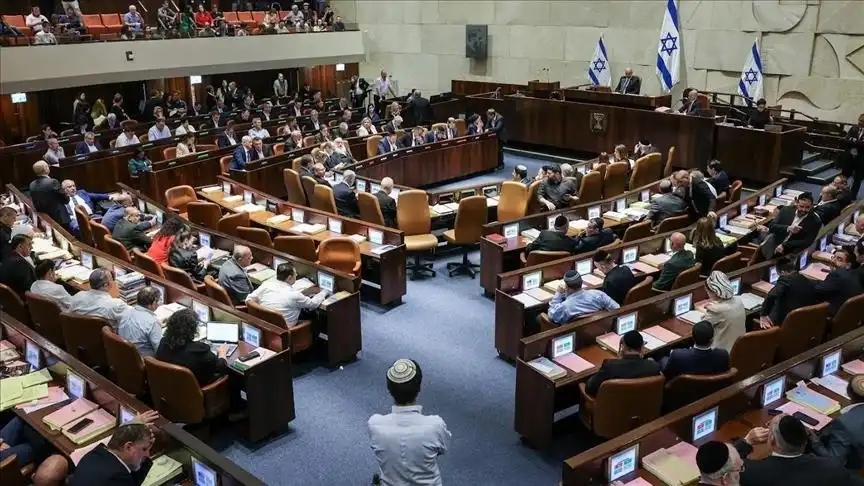
The Israeli Knesset is expected to vote today, in the second and third readings, on two draft laws that threaten the future of the United Nations Relief and Works Agency for Palestine Refugees (UNRWA) in the occupied Palestinian territories.


The first law concerns the ban on UNRWA’s work in occupied Jerusalem, while the second includes the withdrawal of privileges and immunities granted to the UN agency’s employees.

PALESTINE

Mon 28 Oct 2024 12:42 pm - Jerusalem Time

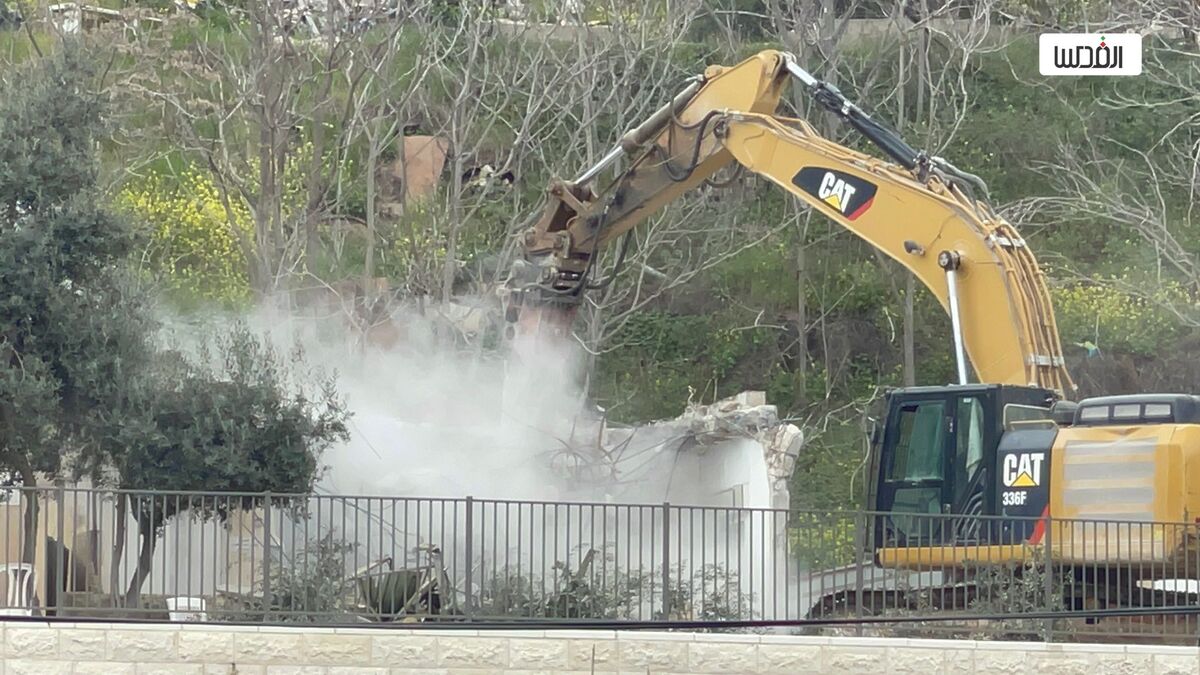
Israeli occupation forces 4 brothers to demolish parts of their homes east of Jerusalem

Today, Monday, the Israeli occupation authorities forced four brothers from the Abu Al-Hawa family, in the town of At-Tur, east of occupied Jerusalem, to demolish parts of their homes.


Local sources reported that an occupation army force stormed the Al-Tur neighborhood and forced the Abu Al-Hawa brothers to demolish parts of their homes under the pretext of not having a permit.

PALESTINE

Mon 28 Oct 2024 12:40 pm - Jerusalem Time

Israeli occupation continues to bulldoze lands east of Qalqilya to build a barbed wire wall

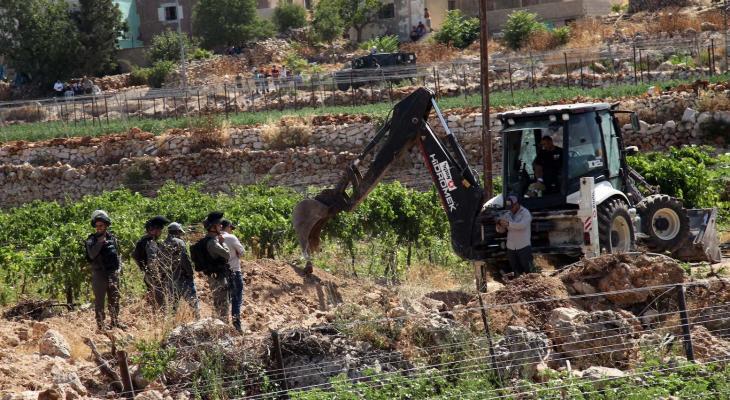
Today, Monday, the Israeli occupation forces continued to bulldoze large areas of citizens' lands in the northern area of the town of Azzun, east of Qalqilya, as part of its steps aimed at erecting a barbed wire wall extending to the intersection of the "Ma'ale Shomron" settlement, which is built on the town's lands.


Local sources reported that today, the occupation forces bulldozed approximately five dunams near the main entrance to the town of Azzun, along the Qalqilya-Nablus road, known as “55 Street.”


The sources stated that the bulldozing operations come within the framework of an Israeli decision issued two months ago to seize about 15 dunams of land for military purposes, and the occupation forces have begun implementing the decision on the ground.


This wall is part of the occupation’s plan for further settlement expansion in the area, threatening to transform agricultural lands and private property into isolated areas or areas subject to military measures, increasing the suffering of citizens, restricting their movement, and limiting their access to their lands and sources of livelihood.

ARAB AND WORLD

Mon 28 Oct 2024 12:02 pm - Jerusalem Time

Multiple polls on US elections may not reflect reality, but they scare Democrats

A new New York Times/Siena College poll released Sunday shows Vice President Kamala Harris and former President Donald Trump tied at 48 percent each in the national popular vote, confirming the trend toward Trump that 538.com identified last week.


That poll and a handful of other new ones have pushed Harris’s margin in its national average down from +1.7 to +1.5, below the margin the site’s model believes Harris needs to win a majority of Electoral College votes this year. Currently, the site’s model gives Trump a 54-in-100 chance of winning the election, and Harris a 45-in-100 chance.


However, the closeness of the race bears repeating (according to 538) what the site has said over the years (since 2008): A close race in the polls does not necessarily mean the outcome will be close. All seven swing states are still within a normal polling error that goes to the candidate who is currently “losing” in each of them. While the polls have projected a close race, the 538 model’s forecasts are based on a combination of polling and campaign “fundamentals,” such as economic conditions and party sentiment in the state.


The proliferation of presidential election polls may make them seem like a game of hyper-personalization, when what they should do is determine the political trends in each electoral district in the United States.


Polls in American politics are relentless, unnerving, and frustratingly contradictory. There are national polls (that is, in every state), polls in the seven swing states, polls from small counties that predict an entire election, and partisan polls designed to frustrate the other side.


But polls may not reflect reality, and sometimes they seek to shape it. And it’s not just what the polls say, or even how they’re compiled, that’s the bigger problem here, experts say, as the obsession with polling has come to define the way Americans view politics.


It is noticeable that the Democrats are suffering from panic because of the opinion polls, as the presidential race is unnervingly close for them, especially since Harris appeared at the end of last July to be rushing with a force that is difficult to stop.


Although polls show Harris and Trump still neck and neck, Democrats are pessimistic and Republicans are confident, eight days before Election Day.


But if you look at the Guardian's 10-day average of polls for Harris, for example, the Democratic nominee remains in position to maintain a one-point advantage over her Republican rival, 47% to 46%.


Polls in the seven swing states are also equally close and offer little clear evidence about who will reach the 270-vote threshold in the Electoral College, the magic number that puts the winner in the White House.


According to polling averages in the seven battleground states, Harris leads by 1 point in Michigan and by less than 1 percentage point in Pennsylvania, Georgia, Wisconsin and Nevada. Trump leads by 2 points in North Carolina and by 1 point in Arizona.


Taken at face value, the numbers are neither catastrophic for Harris nor a victory for Trump. If they match the outcome on November 5, Harris will win a majority of the electoral college votes.


The latest polling data from FiveThirtyEight, a polling organization, also showed that Trump’s recent surge in approval ratings may have peaked. The site’s latest odds for Trump, based on a range of national data, dropped from 53% on October 21 to 51% for Harris’s 49% by the evening of October 24. The Economist’s forecast also showed Trump’s odds dropping from a peak of 56% on Wednesday (10/23/24) to 53% the following day (Thursday, 10/24/24).

OPINIONS

Mon 28 Oct 2024 10:57 am - Jerusalem Time

Defeat in wars and the responsibilities of states

Dr. Ibrahim Nairat

Dr. Ibrahim Nairat

Opinion Writer

The issue of declaring surrender is one of the responsibilities of states in the event of defeat in wars. This comes within the obligations of states under international humanitarian law, as the formal declaration of surrender contributes to the cessation of hostilities and aims to protect the lives of soldiers and civilians and reduce casualties.

Usually, the declaration of surrender comes after formal or informal negotiations between the warring parties, and sometimes includes terms agreed upon by the parties concerned regarding the future of relations and post-war procedures.

The continuation of hostilities after the defeat is clear can lead to significant human losses, which can be avoided if a surrender agreement is reached. Avoiding these losses is one of the most important goals of the declaration of surrender, as it protects soldiers and civilians alike from the horrors of continued fighting, and contributes to preserving infrastructure and avoiding further economic and social damage.

In such cases, the declaration of surrender is seen as a responsible humanitarian decision, aimed at stopping the conflict in a timely manner, reducing suffering, and enhancing efforts to rebuild peace after the end of the conflict.

In the case of war between an occupying state and resistance groups, the declaration of surrender becomes a more complex concept. In this case, the resistance groups are often not affiliated with a formal state and do not represent a traditional government, but rather seek to defend their rights or liberate their land, and therefore are not subject to the same political or legal dynamics that states are bound by.


For the resistance, surrender may be out of the question because it considers itself in a position of legitimate defense against the occupation, and seeks to achieve liberation goals rather than hostile ones. International law also recognizes the right of peoples under occupation to defend themselves and resist the occupation, which gives them a legitimacy that is different from traditional wars between states.


When these wars are prolonged, it becomes important for both parties (the occupier and the resistance) to find peaceful settlements or solutions, because continuing the fighting often leads to great losses, especially among civilians.


The occupying state must abide by international humanitarian law, which imposes a set of obligations on it towards the civilian population in the occupied territories. This includes its duty to protect civilians and avoid any acts of war that may lead to mass human losses, including genocide.

According to the Geneva Conventions and Additional Protocols, the occupying state is prohibited from carrying out acts that would cause widespread or wanton harm to civilians, and it is prohibited from transferring its population into the occupied territories, manipulating the natural resources of the area, or destroying the infrastructure without justification.


Failure of the occupying state to abide by these laws could be considered a war crime, and may lead to its being held accountable before international courts such as the International Court of Justice or the International Criminal Court.


In the case of war in Gaza, it is illogical for Israel to demand the surrender of the resistance there, but it must appreciate that the continuation of hostilities will only lead to genocide.


In the case of war in Gaza, it becomes unrealistic for Israel to demand the surrender of the Palestinian resistance; because this resistance stems from the context of a long-term occupation and the suffering of the Palestinian people, who see resistance as a means to defend their rights and liberate their land. Continuing hostilities in this context usually leads to heavy losses among civilians and severe damage to infrastructure, which approaches the level of genocide. International law requires the occupying power to avoid targeting civilians and destroying vital facilities, which means the need to stop hostilities that cause civilian suffering, and to find peaceful and just solutions that end the causes of the conflict.


Instead of demanding the surrender of the resistance, it is the duty of the international community to call for a comprehensive calm that guarantees the cessation of violence and guarantees the right of the Palestinian people to self-determination and protection from military actions that threaten their existence.


The current situation in Gaza is considered complex and allows the Israeli occupation to continue military operations without supervision or accountability due to the absence of a representative authority that can request a truce or negotiate the terms of surrender, because the Palestinian resistance is not a state with a conventional army, but rather groups defending their rights and existence against the occupation. This political vacuum increases the suffering of civilians and places them in unsafe situations, as there are no clear mechanisms to protect them from continued escalation.


The absence of effective international pressure also puts Israel in a position where it can justify military operations under the pretext of self-defense, despite the fact that these operations lead to heavy losses among Palestinian civilians and destroy vital facilities, which is a flagrant violation of international laws. This situation requires the international community and human rights organizations to play a greater role in demanding a halt to military operations, protecting civilians, and working to find permanent and just solutions that provide protection for the Palestinian people and pave the way for a comprehensive political solution.


The Palestinian Authority may have an important role in leading the political scene and taking the initiative to stop the war through international pressure. This move could provide a diplomatic outlet that contributes to protecting civilians and reducing the escalation, while seeking to put an end to military operations in Gaza.


If the Palestinian Authority employs its international relations, it can increase pressure on Israel to stop military operations, especially if it focuses on humanitarian solutions that are not linked to political considerations between the various Palestinian parties. The Palestinian Authority can also rely on international law to encourage the international community to intervene effectively to protect civilians, and open the door to negotiating humanitarian terms to stop the war.


However, the success of this move will depend on strong internal coordination between the Palestinian factions, even if there is no complete consensus.


The PA’s declaration of surrender, if it happens, will be a very complicated step and may not achieve success or lead to an end to military operations. The main reason is that the PA does not represent all the factions on the ground, especially in Gaza, where Hamas and other resistance factions are in control. This disparity in representation will make the declaration of surrender non-binding for these factions, and thus may not stop the fighting or lead to a comprehensive calm.


In addition, such a declaration will be seen as a concession of the Palestinian people’s rights to resistance and liberation from the occupation, which may create negative internal reactions and weaken the PA’s position among the Palestinian people.


Instead of declaring surrender, it may be more appropriate for the PA to exploit its position to pressure internationally for a ceasefire, focusing on the humanitarian aspect and protecting civilians.


However, if the PA obtains a strong mandate from the international community, this may contribute to the success of its efforts to stop the hostilities. International mandate can strengthen the PA’s position and increase its ability to pressure Israel to reach a truce or an agreement to stop the fighting.

This mandate could include:

1. Strong international support: This could come from the United Nations, major countries, or international organizations that support Palestinian rights. This support could strengthen the position of the Palestinian Authority and give it greater legitimacy in negotiations.

2. Monitoring mechanisms: Establishing international mechanisms to monitor compliance with the ceasefire could be an important factor in building confidence between the parties involved.

3. Emphasis on peaceful solutions: Emphasis on the need to return to peaceful negotiations to resolve the conflict permanently, which could achieve long-term stability.

4. Coordination with other factions: Communicating and coordinating with other factions in Gaza to ensure their support for the efforts made by the Palestinian Authority.

If these matters are managed effectively, the international mandate could succeed in enabling the Palestinian Authority to play a central role in ending the escalation and achieving the interests of the Palestinian people.

PALESTINE

Mon 28 Oct 2024 10:30 am - Jerusalem Time

Israeli settlers attack Palestinian homes and vehicles of citizens east of Tulkarm

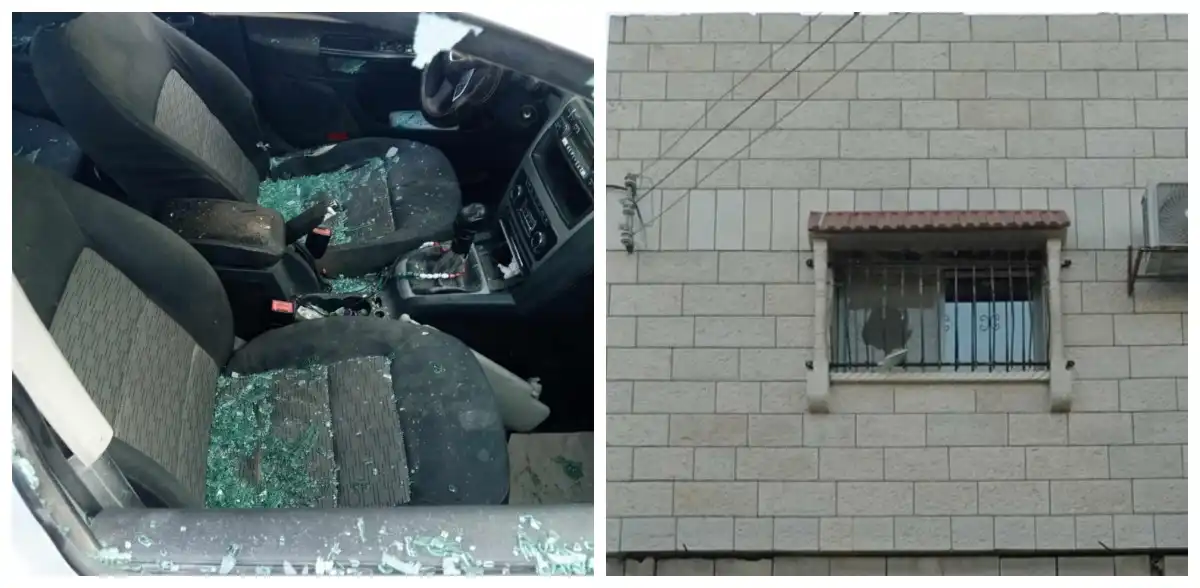
Settlers attacked, at dawn on Monday, the homes and vehicles of citizens in the town of Ramin, east of Tulkarm.


According to local sources, the family of citizen Shawqi Hamad woke up to the sounds of breaking the windows of the house at the entrance to the town, and saw a group of settlers throwing large stones at the house, which caused damage to the windows, without causing any injuries.


She added that the destruction included his vehicle parked in front of the house, after they smashed its front, side and rear windows, in addition to uttering insults at the citizens in the area in loud voices, before they withdrew in the vehicle in which they came to the place.


Recently, the town of Ramin has been witnessing continuous attacks by settler groups, specifically farmers while they are picking olives in the Ramin plain, which consist of attacking them, assaulting them by beating them, and forcing them to leave their lands at gunpoint.

PALESTINE

Mon 28 Oct 2024 10:28 am - Jerusalem Time

South Africa Strengthens Genocide Case Against Israel at ICJ

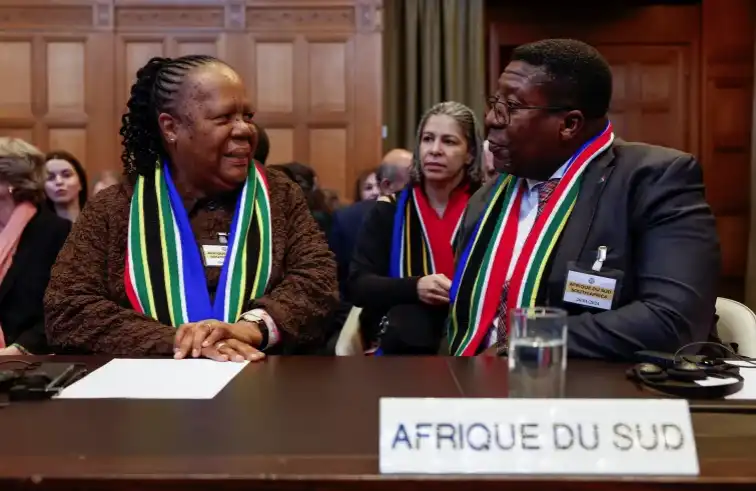
South African Foreign Minister Naledi Pandor said her country will submit its memorandum accusing Israel of genocide to the International Court of Justice, as part of previous rounds related to Israel's war on the Gaza Strip, which has been ongoing for 388 days.


Pandor explained that the memorandum includes more evidence and details to show that what is happening in Gaza is "genocide indeed," following demands from her country for the court in The Hague to take new measures under the Genocide Convention, ordering Israel to stop the war in the Gaza Strip and withdraw its army from the Strip and from the Rafah crossing.


Last September, the South African presidency said it would submit a memorandum to the International Court of Justice documented with facts and evidence proving that Israel committed the crime of genocide in Palestine.


In mid-May, South African Foreign Minister Naledi Pandor said that what is happening in Palestine is apartheid, stressing that her country wants to apply the Genocide Convention to Israel regarding its behavior against the Palestinians.


The Minister reiterated her emphasis on moving forward with the case filed against Israel before the International Court of Justice, because the massacres committed by Israeli forces are a reality before the entire world, she said.


The court had set the 28th of this month as the deadline for South Africa to submit its opinion in the case, in addition to setting the deadline for Israel to submit its opposing view on July 28, 2025.


On December 29, South Africa submitted a request to the court to impose restrictive measures on Israel due to the ongoing war in the Gaza Strip. The sessions began on January 11 and 12 of this year with pleadings from both parties.


South Africa filed its complaint accusing Israel of violating the 1948 UN Genocide Convention in its attack on the Gaza Strip, and was later joined by several countries, including Colombia, Libya and Turkey.


Earlier, Axios reported that Israel had pressured members of the US Congress to pressure South Africa to drop its legal action at the International Court of Justice over the war in the Gaza Strip.


This comes as Israel continues its war on the Gaza Strip since October 7, 2023, leaving more than 143,500 martyrs and wounded, most of them children and women, and more than 10,000 missing, amid massive destruction and worsening famine looming over the besieged Strip.


ARAB AND WORLD

Mon 28 Oct 2024 9:41 am - Jerusalem Time

Iran between options to respond to the Israeli attack and the risks of escalation

The Middle East is witnessing increasing tension with the recent Israeli air attack on Iran, which has put the Iranian leadership before two fateful choices: either a military response or waiting, which will determine whether the region will slide into a comprehensive war or remain at the current level of destructive and destabilizing violence.


According to Sanam Vakil, director of the Middle East and North Africa programme at Chatham House, Iran may avoid military escalation because of the military and economic restrictions imposed on it, as well as the uncertainty surrounding the upcoming US elections and their impact on US policy. Vakil said that the Iranian leadership may be “confined” by these restrictions, especially since such a response could expose its weaknesses. The Iranian military stressed in a statement the importance of the ceasefire in the Gaza Strip and Lebanon, which some saw as a sign that Tehran intends not to escalate for the time being.


Iran's Supreme Leader Ali Khamenei was reserved in his first statement after the attack, stressing the need for balance and not rushing into taking any action. The Israeli attacks last Saturday targeted Iranian air defense batteries and missile production facilities, according to the Israeli military.


Satellite images, according to the Associated Press, indicate that the strikes caused damage to the Parchin military base southeast of Tehran, known for its links to Iran's former nuclear program, and to another base related to the ballistic missile program. Advertisement Despite this, the head of the International Atomic Energy Agency, Rafael Mariano Grossi, confirmed via the "X" platform that Iran's nuclear sites are still intact.


Yoel Guzansky, a researcher at the Institute for National Security Studies in Tel Aviv, said Israel's choice of targets partly reflects its capabilities, as it is unlikely to be able to destroy Iran's nuclear facilities on its own without U.S. help. Avoiding escalation Thomas Juneau, a professor of Iranian affairs at the University of Ottawa, suggested that Iran might avoid escalation and that its response would be limited.


He explained that the Iranian media initially downplayed the attacks, indicating that Tehran did not want to rush into further escalation. According to Junod, Iran faces a difficult dilemma: either respond, which could increase its losses, or not respond, which would make it appear weak in front of its people and allies.


“Any Iranian attempt to respond will have to deal with the fact that Hezbollah, its most important ally against Israel, has been significantly weakened and its conventional weapons systems have been largely repelled twice,” predicted Ali Vaez, director of the Iran Project at the International Crisis Group.


Both sides carefully measured the steps of escalation, Fayez added, but they are now in a completely new area, where newly drawn borders have become blurred and previous red lines have largely faded. Vakil agrees that Iran’s response will be limited, and that the Israeli strikes were designed to minimize the chances of escalation. “Israel has once again shown that its precision and military capabilities are superior to Iran’s.” Since last September, Israel has embarked on a qualitative escalation against Hezbollah elements and infrastructure, starting with pager and radio bombings, to the assassination of some of Hezbollah’s first-line leaders, then the assassination of Hezbollah Secretary-General Hassan Nasrallah himself, through the targeting of the southern suburbs with shelling and destruction, and finally the ongoing ground invasion attempts.

PALESTINE

Mon 28 Oct 2024 9:28 am - Jerusalem Time

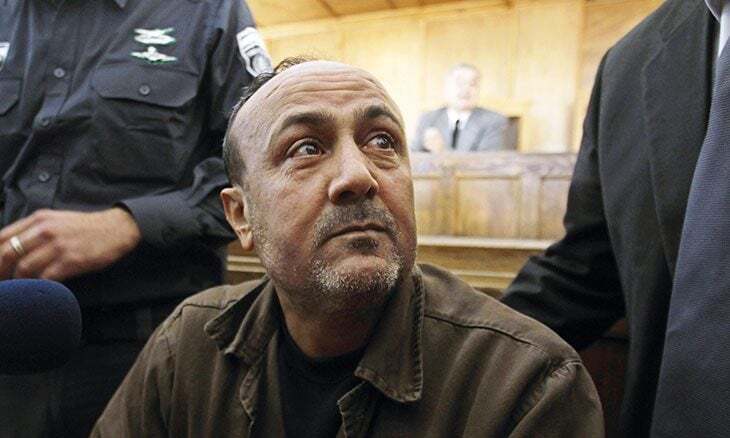
Israeli occupation commits a new crime against prisoner Barghouti and his companions in Megiddo prison

The Commission of Prisoners' Affairs and the Prisoners' Club said that the repression units of the occupation prison administration carried out a new crime against the prisoner leader Marwan Barghouti, a member of the Central Committee of the Fatah movement, and a group of his isolated comrades in the cells of Megiddo Prison. The crime was to subject him to a serious, brutal assault on September 9, 2024, which caused him several injuries to his body, specifically to the upper part of his body, where the beating was concentrated.


According to the information that the lawyer was able to convey - under difficult and complicated circumstances and after numerous attempts to visit him over the past period - the beating focused on the head, ears, ribs, and limbs, which led to bleeding in the right ear, a wound in his right arm, and severe pain throughout his body, especially the ribs, chest, and back. The wound later worsened with pus coming out of it, and he suffered from severe ear infections and difficulty moving, as a result of the prison administration deliberately leaving him without treatment.


The Commission and the Club considered that the brutal suppression operations that targeted all prisoners since the beginning of the war of extermination, including symbols and leaders of the prisoner movement, have only one explanation, which is that the occupation has taken a clear decision to attempt to assassinate them, especially with the continued recurrence of attacks against them. Among them was prisoner Barghouti, who was subjected to two previous attacks.


The Commission and the Club pointed out that the occupation prison administration is isolating dozens of prisoner leaders in difficult and tragic conditions, and they are subjected to repeated brutal attacks inside their cells. The Commission and the Club documented, through visits by legal teams, dozens of acts of repression in various prisons, which are included in addition to a series of crimes of torture, starvation, and medical crimes that have reached their peak since the beginning of the war of extermination.


In this context, the Prisoners’ Authority and the Prisoners’ Club confirmed that what is happening to prisoners and detainees inside the occupation’s prisons and camps represents another aspect of the crime of genocide. Over the course of a year of war, dozens of prisoners and detainees have been killed in the occupation’s prisons, the identities of 41 of whom have been announced, while dozens of martyrs detained from Gaza are still subject to enforced disappearance, making this number of martyrs of the prisoner movement the highest in history since 1967.


It is noteworthy that prisoner Barghouti has been detained since 2002, and he has been sentenced to five life sentences and 40 years. Since the beginning of the war, Barghouti has been subjected to several repeated transfers and isolation. Since December 2023, the prison administration transferred him from Ofer Prison to Ayalon-Ramla Prison isolation, then to Ahlikdar isolation, and transferred him again to Ramla isolation, then he was transferred to Megiddo Prison isolation, where he is currently held. It is worth noting that these isolation operations are not the first that leader Barghouti has been subjected to in his prison career.


The Commission and the Club indicated that prisoner Barghouti was subjected to a systematic incitement process, in the context of the ongoing incitement operations by the settler government to kill prisoners, which took an unprecedented approach represented by the competition and boasting in publishing video clips of the torture of prisoners in conditions that degrade human dignity.


The Commission and the Club renewed their demand for the international human rights system to stop the terrifying state of helplessness that surrounds its role in the face of the war crimes of genocide and the crimes committed against prisoners and detainees in the prisons of the Israeli occupation, and to end the state of exceptional immunity that the old colonial states granted to the occupying state of Israel, considering it above accountability, accountability and punishment.

OPINIONS

Mon 28 Oct 2024 9:19 am - Jerusalem Time

The erasure of Palestinian suffering

Middle East Eye

Middle East Eye

Opinion Writer


What does coverage of Gaza tell us about the West? A recent report into mainstream news coverage found Islamophobic and anti-Arab language was widely used in covering the events after October 7, and Israeli victims were described with emotive language 11 times more than Palestinian victims. It also documented how pro-Palestinian voices were frequently vilified and treated with hostility during interviews. So why is this happening? In our first episode of Season 3 of The Big Picture Podcast, we sit down with sociologist and writer Dr Randa Abdel Fattah, who speaks about her first-hand experience as an outspoken Palestinian academic. She argues in her work that media narratives paint Palestinians and Arabs as ‘unreasonable, unrestrained and uncivilised’ as a way of maintaining a Western colonial order.

OPINIONS

Mon 28 Oct 2024 9:17 am - Jerusalem Time

Israel kills the journalists. Western media kills the truth of genocide in Gaza

Middle East Eye

Middle East Eye

Opinion Writer

Jonathan Cook


Western publics are being subjected to a campaign of psychological warfare, where genocide is classed as ‘self-defence’ and opposition to it ‘terrorism’


Israel knew that, if it could stop foreign correspondents from reporting directly from Gaza, those journalists would end up covering events in ways far more to its liking. 

They would hedge every report of a new Israeli atrocity – if they covered them at all – with a "Hamas claims" or "Gaza family members allege". Everything would be presented in terms of conflicting narratives rather than witnessed facts. Audiences would feel uncertain, hesitant, detached.

Israel could shroud its slaughter in a fog of confusion and disputation. The natural revulsion evoked by a genocide would be tempered and attenuated. 

For a year, the global networks’ most experienced war reporters have stayed put in their hotels in Israel, watching Gaza from afar. Their human-interest stories, always at the heart of war reporting, have focused on the far more limited suffering of Israelis than the vast catastrophe unfolding for Palestinians.

That is why western audiences have been forced to relive a single day of horror for Israel, on 7 October 2023, as intensely as they have a year of daily horrors in Gaza – in what the World Court has judged to be a "plausible" genocide by Israel. 


That is why the media have immersed their audiences in the agonies of the families of some 250 Israelis – civilians taken hostage and soldiers taken captive – as much as they have the agonies of 2.3 million Palestinians bombed and starved to death week after week, month after month.

That is why audiences have been subjected to gaslighting narratives that frame Gaza’s destruction as a "humanitarian crisis" rather than the canvas on which Israel is erasing all the known rules of war. 

While foreign correspondents sit obediently in their hotel rooms, Palestinian journalists have been picked off one by one – in one of the greatest massacres of journalists in history.

Israel is now repeating that process in Lebanon. On Thursday night, it struck a residence in south Lebanon where three journalists were staying. All were killed.

In an indication of how deliberate and cynical Israel’s actions are, it put its military’s crosshairs on six Al Jazeera reporters this week, smearing them as "terrorists" working for Hamas and Islamic Jihad.

They are reportedly the last surviving Palestinian journalists in northern Gaza, which Israel has sealed off while it carries out the so-called "General’s Plan".

Israel wants no one reporting its final push to exterminate northern Gaza by starving out the 400,000 Palestinians still there and executing anyone who remains as a "terrorist". 

These six join a long list of professionals defamed by Israel in the interests of advancing its genocide - from doctors and aid workers to UN peacekeepers. 

Sympathy for Israel

Perhaps the nadir of Israel’s domestication of foreign journalists was reached this week in a report by CNN. Back in February whistleblowing staff there revealed that the network’s executives have been actively obscuring Israeli atrocities to portray Israel in a more sympathetic light.

In a story whose framing should have been unthinkable – but sadly was all too predictable – CNN reported on the psychological trauma some Israeli soldiers are suffering from time spent in Gaza, in some cases leading to suicide. 

Committing a genocide can be bad for your mental health, it seems. Or as CNN explained, its interviews "provide a window into the psychological burden that the war is casting on Israeli society". 

In its lengthy piece, titled "He got out of Gaza, but Gaza did not get out of him", the atrocities the soldiers admit committing are little more than the backdrop, as CNN finds yet another angle on Israeli suffering. Israeli soldiers are the real victims – even as they perpetrate a genocide on the Palestinian people.

One bulldozer driver, Guy Zaken, told CNN he could not sleep and had become vegetarian because of the "very, very difficult things" he had seen and had to do in Gaza. 

What things? Zaken had earlier told a hearing of the Israeli parliament that his unit’s job was to drive over many hundreds of Palestinians, some of them alive. 

CNN reported: "Zaken says he can no longer eat meat, as it reminds him of the gruesome scenes he witnessed from his bulldozer in Gaza." 

Doubtless some Nazi concentration camp guards committed suicide in the 1940s after witnessing the horrors there – because they were responsible for them. Only in some weird parallel news universe would their "psychological burden" be the story. 

After a huge online backlash, CNN amended an editor’s note at the start of the article that originally read: "This story includes details about suicide that some readers may find upsetting."

Readers, it was assumed, would find the suicide of Israeli soldiers upsetting, but apparently not the revelation that those soldiers were routinely driving over Palestinians so that, as Zaken explained, "everything squirts out".

Banned from Gaza

Finally, a year into Israel’s genocidal war, now rapidly spreading into Lebanon, some voices are being raised very belatedly to demand the entry of foreign journalists into Gaza.

This week - in a move presumably designed, as November’s elections loom, to ingratiate themselves with voters angry at the party’s complicity in genocide - dozens of Democratic members of the US Congress wrote to President Joe Biden asking him to pressure Israel to give journalists "unimpeded access" to the enclave.

Western media have done very little themselves to protest their exclusion from Gaza over the past year

Don’t hold your breath.

Western media have done very little themselves to protest their exclusion from Gaza over the past year – for a number of reasons. 

Given the utterly indiscriminate nature of Israel’s bombardment, major outlets have not wanted their journalists getting hit by a 2,000lb bomb for being in the wrong place. 

That may in part be out of concern for their welfare. But there are likely to be more cynical concerns.

Having foreign journalists in Gaza blown up or executed by snipers would drag media organisations into direct confrontation with Israel and its well-oiled lobby machine. 

The response would be entirely predictable, insinuating that the journalists died because they were colluding with "the terrorists" or that they were being used as "human shields" – the excuse Israel has rolled out time and again to justify its targeting of doctors in Gaza and UN peacekeepers in Lebanon. 

But there’s a bigger problem. The establishment media have not wanted to be in a position where their journalists are so close to the "action" that they are in danger of providing a clearer picture of Israel’s war crimes and its genocide. 

The media’s current distance from the crime scene offers them plausible deniability as they both-sides every Israeli atrocity

The media’s current distance from the crime scene offers them plausible deniability as they both-sides every Israeli atrocity. 

In previous conflicts, western reporters have served as witnesses, assisting in the prosecution of foreign leaders for war crimes. That happened in the wars that attended the break-up of Yugoslavia, and will doubtless happen once again if Russian President Valdimir Putin is ever delivered to The Hague. 

But those journalistic testimonies were harnessed to put the West’s enemies behind bars, not its closest ally.

The media do not want their reporters to become chief witnesses for the prosecution in the future trials of Israeli Prime Minister Benjamin Netanyahu and his defence minister, Yoav Gallant, at the International Criminal Court (ICC). Karim Khan, the ICC’s prosecutor, is seeking arrest warrants for them both. 

After all, any such testimony from journalists would not stop at Israel’s door. They would implicate western capitals too, and put establishment media organisations on a collision course with their own governments.

The western media does not see its job as holding power to account when the West is the one committing the crimes. 

Censoring Palestinians

Journalist whistleblowers have gradually been coming forward to explain how establishment news organisations - including the BBC and the supposedly liberal Guardian – are sidelining Palestinian voices and minimising the genocide. 

An investigation by Novara Media recently revealed mounting unhappiness in parts of the Guardian newsroom at its double standards on Israel and Palestine.

Its editors recently censored a commentary by preeminent Palestinian author Susan Abulhawa after she insisted on being allowed to refer to the slaughter in Gaza as "the holocaust of our times". 

During Jeremy Corbyn’s tenure as leader of the Labour Party, senior Guardian columnists such as Jonathan Freedland made much of the insistence that Jews, and Jews alone, had the right to define and name their own oppression. 

That right, however, does not appear to extend to Palestinians. 

As staff who spoke to Novara noted, the Guardian’s Sunday sister paper, the Observer, had no problem opening its pages to British Jewish writer Howard Jacobson to smear as a "blood libel" any reporting of the provable fact that Israel has killed many, many thousands of Palestinian children in Gaza. 

One veteran journalist there said: "Is the Guardian more worried about the reaction to what is said about Israel than Palestine? Absolutely." 

Another staff member admitted it would be inconceivable for the paper to be seen censoring a Jewish writer. But censoring a Palestinian one is fine, it seems.

Other journalists report being under "suffocating control" from senior editors, and say this pressure exists "only if you’re publishing something critical of Israel".

According to staff there, the word "genocide" is all but banned in the paper except in coverage of the International Court of Justice (ICJ), whose judges ruled nine months ago that a "plausible" case had been made that Israel was committing genocide.

Things have got far worse since.

Whistleblowing journalists

Similarly, "Sara", a whistleblower who recently resigned from the BBC newsroom and spoke of her experiences to Al Jazeera’s Listening Post, said Palestinians and their supporters were routinely kept off air or subjected to humiliating and insensitive lines of questioning.

Some producers have reportedly grown increasingly reluctant to bring on air vulnerable Palestinians, some of whom have lost family members in Gaza, because of concerns about the effect on their mental health from the aggressive interrogations they were being subjected to from anchors.

According to Sara, BBC vetting of potential guests overwhelmingly targets Palestinians, as well as those sympathetic to their cause and human rights organisations. Background checks are rarely done on Israeli or Jewish guests. 

She added that a search showing that a guest had used the word "Zionism" – Israel’s state ideology – in a social media post could be enough to get them disqualified from a programme. 

Even officials from one of the biggest rights group in the world, the New York-based Human Rights Watch, became persona non grata at the BBC for their criticisms of Israel, even though the corporation had previously relied on their reports in covering Ukraine and other global conflicts.

Israeli guests, by contrast, "were given free rein to say whatever they wanted with very little pushback", including lies about Hamas burning or beheading babies and committing mass rape.

An email cited by Al Jazeera from more than 20 BBC journalists sent last February to Tim Davie, the BBC’s director general, warned that the corporation’s coverage risked "aiding and abetting genocide through story suppression". 

Upside-down values

These biases have been only too evident in the BBC’s coverage, first of Gaza and now, as media interest wanes in the genocide, of Lebanon. 

Headlines - the mood music of journalism, and the only part of a story many of the audience read – have been uniformly dire.

As ever, Israel has been able to rely on the complicity of its western patrons in crushing dissent at home

For example, Netanyahu’s threats of a Gaza-style genocide against the Lebanese people earlier this month if they did not overthrow their leaders were soft-soaped by the BBC headline: "Netanyahu’s appeal to Lebanese people falls on deaf ears in Beirut."

Reasonable readers would have wrongly inferred both that Netanyahu was trying to do the Lebanese people a favour (by preparing to murder them), and that they were being ungrateful in not taking up his offer.

It has been the same story everywhere in the establishment media. In another extraordinary, revealing moment, Kay Burley of Sky News announced this month the deaths of four Israeli soldiers from a Hezbollah drone strike on a military base inside Israel.

With a solemnity usually reserved for the passing of a member of the British royal family, she slowly named the four soldiers, with a photo of each shown on screen. She stressed twice that all four were only 19 years old.

Sky News seemed not to understand that these were not British soldiers, and that there was no reason for a British audience to be especially disturbed by their deaths. Soldiers are killed in wars all the time – it is an occupational hazard. 

And further, if Israel considered them old enough to fight in Gaza and Lebanon, then they were old enough to die too without their age being treated as particularly noteworthy.

But more significantly still, Israel’s Golani Brigade to which these soldiers belonged has been centrally involved in the slaughter of Palestinians over the past year. Its troops have been responsible for many of the tens of thousands of children killed and maimed in Gaza. 

Each of the four soldiers was far, far less deserving of Burley’s sympathy and concern than the thousands of children who have been slaughtered at the hands of their brigade. Those children are almost never named and their pictures are rarely shown, not least because their injuries are usually too horrifying to be seen.

It was yet more evidence of the upside-down world the establishment media has been trying to normalise for its audiences.

It is why statistics from the United States, where the coverage of Gaza and Lebanon may be even more unhinged, show faith in the media is at rock bottom. Fewer than one in three respondents – 31 percent – said they still had a "great deal or fair amount of trust in mass media". 

Crushing dissent

Israel is the one dictating the coverage of its genocide. First by murdering the Palestinian journalists reporting it on the ground, and then by making sure house-trained foreign correspondents stay well clear of the slaughter, out of harm's way in Tel Aviv and Jerusalem.

And as ever, Israel has been able to rely on the complicity of its western patrons in crushing dissent at home. 

Last week, a British investigative journalist, Asa Winstanley, an outspoken critic of Israel and its lobbyists in the UK, had his home in London raided at dawn by counter-terrorism police.

Though the police have not arrested or charged him – at least not yet – they confiscated his electronic devices. He was warned that he is being investigated for "encouragement of terrorism" in his social media posts. 

Police told MEE that his devices had been seized as part of an investigation into suspected terrorism offences of "support for a proscribed organisation" and "dissemination of terrorist documents".  

The raid on Winstanley’s home and the arrests of others are are intended to intimidate independent journalists into silence

The police can act only because of Britain’s draconian, anti-free speech Terrorism Act. 

Section 12, for example, makes the expression of an opinion that could be interpreted as sympathetic to armed Palestinian resistance to Israel’s illegal occupation – a right enshrined in international law but sweepingly dismissed as "terrorism" in the West – itself a terrorism offence. 

Those journalists who haven’t been house-trained in the establishment media, as well as solidarity activists, must now chart a treacherous path across intentionally ill-defined legal terrain when talking about Israel’s genocide in Gaza. 

Winstanley is not the first journalist to be accused of falling foul of the Terrorism Act. In recent weeks, Richard Medhurst, a freelance journalist, was arrested at Heathrow airport on his return from a trip abroad. Another journalist-activist, Sarah Wilkinson, was briefly arrested after her home was ransacked by police. Their electronic devices were seized too. 

Meanwhile, Richard Barnard, co-founder of Palestine Action, which seeks to disrupt the UK’s supply of weapons to Israel’s genocide, has been charged over speeches he has made in support of Palestinians. 

It now appears that all these actions are part of a specific police campaign targeting journalists and Palestinian solidarity activists: "Operation Incessantness".

The message this clumsy title is presumably supposed to convey is that the British state is coming after anyone who speaks out too loudly against the British government’s continuing arming and complicity in Israel’s genocide.

Notably, the establishment media have failed to cover this latest assault on journalism and the role of a free press – supposedly the very things they are there to protect.

The raid on Winstanley’s home and the arrests are intended to intimidate others, including independent journalists, into silence for fear of the consequences of speaking up. 

This has nothing to do with terrorism. Rather, it is terrorism by the British state.

Once again the world is being turned upside down.

Echoes from history

The West is waging a campaign of psychological warfare on its populations: it is gaslighting and disorientating them, classing genocide as "self-defence" and opposition to it a form of "terrorism".

This is an expansion of the persecution suffered by Julian Assange, the Wikileaks founder who spent years locked up in London’s Belmarsh high-security prison. 

His unprecedented journalism – revealing the darkest secrets of western states – was redefined as espionage. His "offence" was revealing that Britain and the US had committed systematic war crimes in Iraq and Afghanistan. 

Now, on the back of that precedent, the British state is coming after journalists simply for embarrassing it. 

Last week, I attended a meeting in Bristol against the genocide in Gaza at which the main speaker was physically absent after the British state failed to issue him an entry visa. 

The missing guest – he had to join us by Zoom – was Mandla Mandela, the grandson of Nelson Mandela, who was locked up for decades as a terrorist before becoming the first leader of post-apartheid South Africa and a feted, international statesman. 

Mandla Mandela was until recently a member of the South African parliament. A Home Office spokesperson told MEE that the UK only issued visas "to those who we want to welcome to our country". 

Media reports suggest Britain was determined to exclude Mandela because, like his grandfather, he views the Palestinian struggle against Israeli apartheid as intimately linked to the earlier struggle against South Africa’s apartheid.

The echoes from history are apparently entirely lost on officials: the UK is once again associating the Mandela family with terrorism. Before it was to protect South Africa’s apartheid regime. Now it is to protect Israel’s even worse apartheid and genocidal regime.

The world is indeed turned on its head. And the West’s supposedly "free media" is playing a critical role in trying to make our upside-down world seem normal.

That can only be achieved by failing to report the Gaza genocide as a genocide. Instead, western journalists are serving as little more than stenographers. Their job: to take dictation from Israel.

OPINIONS

Mon 28 Oct 2024 9:14 am - Jerusalem Time

The Peak of Pulse check..

op-ed "AlQuds" dot com

op-ed "AlQuds" dot com

Opinion Writer

After the impression prevailed that the exchange deal, even if partial, would see the light of day after the meeting that began last night in Doha, Israel, led by Netanyahu, decided that there would be no wings capable of flying, and thus prevented it from flying to a new horizon, and maintained the state of war and aggression against Gaza.


There are many developments and events behind the scenes, some of which were revealed yesterday through the Hebrew media, and there are many issues that are still kept secret.


The scenario that Israeli Prime Minister Benjamin Netanyahu has been repeating since the beginning of the war does not change. He always declares what he describes as blessing the efforts made to conclude the deal agreement, to gain the favor and sympathy of world public opinion. The last thing he praised was the Egyptian initiative. However, behind the scenes and in closed meetings, he insists on continuing the aggression and giving his army a free hand to carry out more massacres of genocide against our people in the Strip, by opposing all initiatives seeking to reach a ceasefire. The last initiative was the Egyptian one, as Channel 12 reported that the entire security establishment supported the Egyptian initiative for the deal, as did most of the ministers, with the exception of Smotrich and Ben-Gvir, who opposed it. Netanyahu also opposed the proposal because it included a two-day ceasefire period before the release of the prisoners. He explained that his position does not change from the principle of conducting negotiations under fire and pressure. Hence, Defense Minister Yoav Galant was clear in his statement yesterday afternoon when he said that “there is a need to make painful concessions to recover the hostages” held in Gaza, stressing: “All goals cannot be achieved through military operations alone,” criticizing Netanyahu and his decisions, another part of which was also revealed through the official broadcast channel (Kan 11), which said that all members of the Israeli cabinet agreed to the Egyptian initiative that would lead to a temporary halt to the aggression and the return of a number of detainees. However, Netanyahu also insisted on rejecting this approach, and even went further when he refused to hold the summit for negotiations in Cairo, according to the recommendations of the military services, and moved it to Doha, which made the head of the Egyptian intelligence service apologize for attending the summit in which the Qatari prime minister, the head of the American Central Intelligence Agency, and the head of the Mossad participated yesterday.


Among the dilemmas facing the discussion table in the Doha meeting is that the head of the Mossad went alone to the negotiations without taking with him the head of the Shin Bet and the head of the abductees file in the army. Here, Channel 2 indicates that Netanyahu did not give the head of the Mossad full authority to submit approval for the Egyptian initiative or other initiatives. Here, it seems that this summit comes this time to test the pulse of Hamas after the martyrdom of its leader Yahya Sinwar, and to find out its position if there is a change.


Yesterday, Hamas conducted a good tactical maneuver, sending a message to the mediators and stipulating the implementation of a single, comprehensive exchange deal, and before that, stopping the war forever, in response to the Egyptian president’s initiative. Hamas was clear that it did not agree to the fragmentation of its comprehensive deal, which gives Israel more time to continue the aggression. Therefore, it is waiting for the outcome of the Doha meeting and exploring whether it is compatible with its proposed vision for achieving a deal or not.


In confirmation of the movement’s fixed vision, a responsible source said that any exchange deal must only pass through: an immediate ceasefire, an end to the genocide, the occupation’s withdrawal from Gaza, the provision of relief, and reconstruction, as it wants an honorable deal agreed upon by both parties. However, it is clear that Netanyahu decided to cut off all means and discussions capable of reaching the deal, and sent the head of the Mossad without wings, in an attempt to test the pulse of the resistance only.

OPINIONS

Mon 28 Oct 2024 9:09 am - Jerusalem Time

The regional solution, the generals' plan and ending the war

Amjad Al-Ahmad

Amjad Al-Ahmad

Opinion Writer

Three titles, owned by one man, the theorist of the last war on Gaza, Giora Eiland. He is a secular soldier, not a messianic cleric, and he detests Ben Gvir and Smotrich. However, whether he knows it or not, he serves the aspirations of the most extreme right in Israel’s history.


Let us begin the story in the year 2000, when Giora Eiland proposed his plan called “The Regional Solution and Land Exchange,” which stipulated expanding the area of the Gaza Strip by 600 square kilometers from the Egyptian Sinai Desert, displacing the Palestinians from Gaza to this area, and establishing a city for them that could accommodate one million Gazans, in addition to establishing a safe passage to Jordan via Sinai, and compensating Egypt from the Negev with the same area or a little less. This plan was presented to former Egyptian President Hosni Mubarak, but he rejected it on the pretext of not liquidating the Palestinian issue, and this solution would not be at the expense of Egyptian lands and its national security, and he rejected the sum of $12 billion that Dennis Ross offered him in exchange for agreeing to the plan.


When former Egyptian President Mohamed Morsi assumed the presidency of Egypt, the same plan was presented to him and he agreed to it in exchange for Egypt receiving 20 billion dollars. Morsi tried to convince Palestinian President Abu Mazen to agree, but he refused, citing the liquidation of the Palestinian cause. In addition, Sisi, who was then the Minister of Defense, refused to deal with this plan and considered it a threat to Egyptian national security, displacing Palestinians from their lands, and solving their problem at the expense of Egyptian lands.


The second title is the generals’ plan, which was also formulated by Giora Eiland and gained the support of most Israeli military personnel. It calls for emptying northern Gaza of Palestinian citizens, deporting them to southern Gaza, and considering those who remain as fighters who must be eliminated. This is what is happening now, especially in Jabalia, Beit Lahia, and Beit Hanoun, in terms of ethnic cleansing and displacement of Palestinians.


In the latest article published by Giora Eiland in Yedioth Ahronoth, entitled “The Reasons for Ending the War in Gaza,” in which he calls for reaching a deal to return the kidnapped soldiers and withdraw from the Philadelphi Corridor. He was motivated to do so by four convincing reasons, the most important of which are the human losses that Israel has been suffering recently, secondly, the heavy burden placed on the soldiers, thirdly, the economic burden, as the war costs $135 million a day, which negatively affects the economic indicators in Israel, and the biggest indicator of this is the downgrading of the Israeli economy by two notches by the global Moody’s institution, which gave investors, businessmen, and brains a reason to emigrate from Israel, and fourthly, the reduction in global support for Israel, which has become almost isolated globally.


From what has been presented above, it is clear that Israel has a project that it wants to implement regarding the final status of the Gaza Strip, and the one who is responsible for this project is the same Giora Eiland since the year 2000, knowing that this project began to be thought of since the beginning of the seventies of the last century, but the results of the October War in the year 73 thwarted its implementation at that time. However, it did not leave the imagination of the Israeli military, strategists and politicians, and this project remained a dream that haunted all successive Israeli governments. Whoever looks closely at the Trump plan in the year 2020 finds a similarity between it and the Giora Eiland plan, who exploited the events of October 7 to implement it by force and put the Egyptians under a fait accompli, forcing them to accept it.


Is Giora Eiland's call to stop the war and conclude a deal with Hamas at this time considered a step towards implementing the terms of his plan? Will the Egyptian leadership insist on rejecting this plan, even if it costs it a war with Israel, as Sisi threatened? Will the United States support this plan and will it pressure Egypt to accept it, either through financial temptations or by force? The answers to these questions will become clear after the day after the war has begun to emerge.

ARAB AND WORLD

Mon 28 Oct 2024 9:02 am - Jerusalem Time

Security Council to hold open debate on Palestine tomorrow

The UN Security Council will hold an open discussion tomorrow, Tuesday, on the situation in the Middle East, especially the Palestinian issue.


Dozens of UN member states will participate in the open debate, which is held every three months.

OPINIONS

Mon 28 Oct 2024 9:00 am - Jerusalem Time

The Burden of Adults on the Shoulders of Children: What Has the War Done to the Children of Gaza?

Dr. Samah Jabr

Dr. Samah Jabr

Opinion Writer

In the context of the ongoing aggression on Gaza, a new psychological phenomenon is emerging: thousands of children are being deprived of their childhood and are assuming the roles of adults after losing their fathers and mothers. The ongoing aggression on Gaza has left tens of thousands of children who have lost one or both parents, and nearly a million children displaced, forcing them to give up playing and studying and pushing them to engage in responsibilities beyond their age. In this harsh environment, these children are turning into “little breadwinners” in a desperate attempt to fill the void left by the absence of adults. However, the enormous psychological burden these roles carry may leave deep wounds in their souls that will last their entire lives.


Scenes from the painful reality in Gaza


In the streets of Gaza, the features of this daily tragedy are clearly visible; we see a child no older than ten years old working to carry 25 kilogram bags of flour on his small shoulders, in return for earning a few shekels to feed his siblings after his father was martyred and his mother was lost. We see another twelve-year-old carrying his infant brother on his back constantly, taking care of him after his mother was martyred. We also see a ten-year-old girl walking long distances every day to fetch heavy gallons of water, and another carrying her sister who is unable to walk and is closer in age on her shoulder in search of a safe place. Another child comforts his widowed, bereaved and wounded mother who is unable to turn to him, to encourage her and comfort her. These examples are not individual cases; rather, they are daily images that reflect the bleak reality suffered by hundreds of thousands of children in Gaza, who have been deprived of their childhood and their natural dependence on their parents under the weight of the genocide that has left no family without harm and loss.


Psychological dimensions of children's tolerance of their parents' roles


The roles imposed on children in war have complex and difficult-to-recover psychological consequences. The stress these children are exposed to is a severe and persistent type of psychological stress that exceeds the child’s physical and psychological ability to cope. This type of stress affects the healthy development of the brain and the child’s normal emotional connections. Children living under this stress lose the ability to concentrate and learn, and show a tendency to withdraw socially, which impairs their psychological and cognitive development.

Although giving children some responsibilities that are appropriate to their age and abilities may improve their self-confidence and contribute to their development, children performing roles that are beyond their age deprives them of the opportunity to build their psychological and social identity in a healthy way. Instead of exploring themselves through education and play, they find themselves stuck in living responsibilities that are not appropriate for their abilities. These children later suffer from difficulty in defining themselves beyond the roles of breadwinner and caregiver imposed on them by the war.


Another psychological aspect of this suffering is the suppression of emotions and chronic feelings of guilt, as children are forced to suppress their feelings so as not to appear weak in front of their siblings, which increases their sense of responsibility and burdens them psychologically. These children feel guilty whenever they are unable to meet the needs of their families, and this feeling may lead to anxiety disorders and depression in the future.


Children are also subjected to what is known as the “normalization of suffering,” where violence and suffering become a normal part of their daily lives. This normalization renders children unable to recognize a normal childhood, which exacerbates their psychological suffering and increases their exposure to risks disproportionate to their age. For example, we heard a child say (children don’t grow up in Gaza) in response to the question: What will you do when you grow up?


Moreover, children who play the role of caregivers in their families have difficulty building healthy relationships in the future. For them, the concepts of love and care are associated with carrying heavy burdens, which makes them either over-give or avoid engaging in romantic relationships for fear of falling into the trap of responsibility again.


Difficulties of psychological intervention under bombardment


In this dire reality, psychological intervention is an urgent necessity, but its implementation in an environment subject to bombardment and siege is extremely difficult. Psychological support cannot be provided effectively under continuous bombardment, as children are deprived of a safe environment in which to absorb and recover from trauma. In addition, the power and internet blackouts and the massive destruction of infrastructure prevent the provision of assistance effectively from outside the Strip.


Even when psychotherapy sessions are available, therapists struggle to make sustained progress due to the ongoing fear, hunger, displacement and instability. A child cannot recover from the trauma of losing his or her parents while they are under the threat of death or displacement at any moment. While psychotherapy programs are important, they need to be integrated with community and international efforts that provide protection for children and restore the sense of security they have lost.


Ways of intervention and psychosocial support


To alleviate the suffering of these children, comprehensive support must be provided to restore their normal role and psychological and social balance. In addition to psychological treatment, alleviating the burden on children requires providing direct financial assistance to affected families and encouraging community members to take care of these children, to prevent children from being forced to work at an early age. The local community must also be involved in providing care and guardianship for these children. Community members can be trained to provide psychological support to children, in addition to establishing community centers that provide children with sports and artistic activities that help them express themselves. Safe educational environments must also be provided to reintegrate children into schools and compensate for the educational loss resulting from the war. These efforts must be integrated with international campaigns that pressure to end the genocide and ensure humanitarian access to Gaza.


The “strength” shown by Gaza’s children in bearing the burden is not always a source of pride, but rather a cry for help that reflects the depth of the suffering they are experiencing. These children need real support that will restore their stolen childhood and provide them with the opportunity to grow up normally in a safe environment where their basic rights are respected. Restoring their childhood is not a luxury, but an urgent necessity to ensure a healthy future for Palestinian society.


Dr. Samah Jaber - Psychiatrist and mental health counselor, human rights activist, and head of the Mental Health Unit at the Palestinian Ministry of Health.

PALESTINE

Mon 28 Oct 2024 8:57 am - Jerusalem Time

Israeli occupation forces launch arrest campaign in the West Bank

The Israeli occupation forces launched an arrest campaign in the West Bank at dawn and this morning, Monday.


In Nablus, a young man was injured with bruises after falling from a height, and another was arrested during the Israeli occupation forces’ storming of Askar camp.


Meanwhile, the young man, Muhammad Zakaria Al-Asfar, was arrested after raiding his family’s home and tampering with its contents in the camp.


The occupation forces also stormed the villages of Yatma and Qusra, raided a number of homes, searched them, and ransacked their contents. They arrested the two young men, Ahmed Muhammad Hamed and Mahmoud Mahmoud, from Yatma.


In Bethlehem, the occupation forces arrested Thaer Khaled Darawi (18 years old) from the village of Shawawra, and Mujahid Jamal Al-Wahsh (26 years old) from the town of Al-Ubaidiya to the east, after raiding and searching their parents’ homes.


In Hebron, the occupation forces stormed the town of Yatta and arrested the three brothers Omar, Imad, and Anas Al-Ghafi, and the young man Rami Al-Najjar after raiding their homes and tampering with their contents.


Meanwhile, Khallet Al-Sukkar stormed the town and raided three homes, destroyed their contents, and assaulted their owners, causing them to suffer bruises and contusions, after which they were transferred to the Hebron Governmental Hospital.


The young man, Ali Khalil Akhlil (22 years old), was also arrested from the town after being assaulted.

PALESTINE

Mon 28 Oct 2024 8:54 am - Jerusalem Time

Pastoral colonization...the executive tool for Israeli expansion dreams

Moataz Basharat: The entire occupation system, including police, army, and nature authority, works to serve the settlers.

Raed Muqaddasi: Pastoral centers are the right hand of settlement and the basic base for Judaization and Israelization

Suhail Khaliliya: Settlers have seized 300,000 dunams in the last four years

Suhail Suleiman: It is not random, but rather part of a project that has been implemented over many years.


Since Israel occupied the remaining land of historic Palestine in 1967, it has set its sights on seizing the land and emptying it of its Palestinian inhabitants, especially in the Jordan Valley along the eastern border, where there are vast areas of land and natural resources necessary for agricultural development, especially abundant water, high temperatures and wide pastures.


Despite the great effort made by Israel to build and expand settlements in the West Bank, the pace of settlement expansion remained slow and did not meet the desires of the extreme Israeli right, which has growing power in Israeli society, to annex Area C and stifle any chance of establishing a Palestinian state.


In recent years, Israel has found a magic formula that helps it seize larger areas of land in the shortest possible time, and at relatively low costs. This formula is represented in what has become known as “pastoral settlement,” through which it has seized in a few years more areas of land than it seized in the half century since the occupation of the West Bank.


Researchers and specialists in confronting settlements, who met with “Y”, believe that this form of settlement is the most dangerous and fiercest of all, and there must be a practical and clear national plan to confront this form and other forms of settlement before it is too late.


28 population centers displaced due to pastoral settlement


Moataz Basharat, the settlement file official in Tubas Governorate and the northern Jordan Valley, explains that pastoral settlement is what has come to control the land in the Jordan Valley, and because of it, 28 Palestinian population centers have been displaced.


He said that the total area controlled by the occupation since 1968 in the Jordan Valley is 28 thousand dunams, while one settler controlled a similar area within a few days and the lands became under the control of the settlers, including hills, mountains and water springs.


Basharat pointed out that previously the settlement controlled 3-4 thousand dunams, but under the pastoral settlement, one settler controls an area ranging between 12-18 thousand dunams.


As an example, one settler established a pastoral settlement outpost in the Hamma area of the Jordan Valley, which now controls more than 28,000 dunams.


He pointed out that the settlers are adopting a new law: Wherever your cow or pickaxe reaches, it is yours. Therefore, he controls the land and closes it to the Palestinians, and arrests any citizen who enters the area by summoning the occupation police or the police of the settlement council, most of whom are settlers.


He explained that there are 7 new pastoral outposts in the Jordan Valley, the latest of which is in the lands of the Palestinian community of Umm al-Jamal, which the occupation tried by all means to displace but could not due to the legal follow-up to prevent its demolition, but the community was deported a month and a half ago due to the establishment of a settlement outpost within the community and the attacks and rampage of the settlers that accompanied it, which made the residents lose the element of security in their lives, prevented them from grazing and closed the area completely.


Regarding the reality of settlement in the Jordan Valley, Basharat pointed out that the Jordan Valley constitutes 28.5% of the area of the West Bank, and is the richest part in wealth and the food basket of Palestine, while it is the second most important water basin. The occupation has controlled most of these lands under flimsy names.


He explained that there are 6 settlement outposts and 8 army camps that control 186 thousand dunams in the northern Jordan Valley. They control 186 thousand dunams with military orders under the name of "closed military areas" and "army training areas." Citizens are prohibited from entering them, and any vehicle that enters them is confiscated. They have built trenches, destroyed the lands with bulldozers and tanks, and burned the crops.


There are 75 thousand dunams in the Jordan Valley declared as nature reserves and controlled by the Israeli Nature Authority. They are closed to Palestinian farmers, and livestock is confiscated if they enter them, and heavy fines are imposed on their owners.


Basharat confirms that all components of the occupation, from the police, the nature authority, and the army, work within the system of the settlers and their gangs, and there are 5-6 people who give instructions to the police, the army, and the settler gangs in the northern Jordan Valley, and within minutes an army of settler gangs is summoned and attacks the farmers and their property.


He said that the Nature Authority handed over these lands to the settlers, and they are linking these settlements and creating outposts between them to establish a large settlement city.


He stressed that there is no source of water in the hands of the Palestinians after the occupation took control of all the springs in the northern Jordan Valley, and the citizen needs to travel long distances to obtain water at a very high cost.


Basharat calls for the development of a real national program that can be implemented on the ground, in order to enhance the steadfastness of citizens and to establish the necessary mechanisms for that.


A basic rule for Judaization that began 4 years ago


In turn, Raed Muqaddadi, a researcher in land and settlement issues at the Land Research Center, said that pastoral settlement is an idea that began its roots four years ago through a settlement organization financially supported by the Israeli government and right-wing parties. It is a racist movement that aims to control vast areas of Palestinian land, especially the land located between the mountains and population centers, and to take over the pastoral land that was used by shepherds.


Muqaddasi describes the pastoral outposts as the “right hand” of settlement in the West Bank, and the basic base on which the occupation is betting to Judaize the remaining lands of the West Bank.


He explained that these hotbeds are widely spread in the Palestinian countryside, especially in the northern Jordan Valley and the Jordan Valley in general, the Shafaghour areas in the Ramallah desert, the Jerusalem desert, and parts of the Hebron desert.


He pointed out the methods adopted by settlers in pastoral areas, including attacks on farmers and sheep breeders, and fencing off vast areas of land to control the land and displace its inhabitants.


Muqaddasi explained the difference between regular and pastoral settlements, stating that regular settlements are bodies established by the occupation with the aim of seizing land, and they are subject to organized regional councils and to their own regulatory plans and systems, while the outposts surrounding these settlements are considered a means of expanding these settlements and extending their influence.


He explained that the settlements are rings that exist between Palestinian population centers in the countryside and the Jordan Valley, and these outposts are considered a means to connect these rings together to form a single body in the future, such that this body is able to seize what remains of the Palestinian land and displace the remaining Palestinians, as well as extend influence over the lands that the Palestinians cannot access as a result of the settlers’ harassment, which paves the way for the Judaization of these lands and the establishment of a huge settlement bloc on them and the change in the demographic distribution of the population, which will have negative consequences in terms of the Palestinian population presence and control over natural resources and water shares in the West Bank.


Regarding the reality of settlement in the Salfit Governorate, Muqaddadi explained that the danger of settlement there is no less than what is happening in the Jordan Valley. In comparison to 19 Palestinian population centers in Salfit, there are 23 settlements sitting on their lands, in addition to 3 pastoral centers on the lands of the towns of Kafr ad-Dik, Yasuf, and Deir Istiya.


Pastoral centers in Salfit are based on creating a connection to form a single settlement bloc


He said that the pastoral centers in Salfit are based on creating a connection between those settlements to form a single settlement bloc, extending from "Eli Zahav" in the west of the governorate, to the "Tafuh" settlement in the east.


He pointed out that the danger of settlement in Salfit is multi-faceted. On the one hand, the governorate's lands have become scattered and there is no geographical connection between the villages, which is fraught with danger due to the presence of settlements, outposts or settlement roads.


He added that Salfit, which was the first governorate in olive oil production, has now declined, and there are 1,800 dunams whose owners were unable to reach to pick olives this year due to their proximity to the settlements, and even the lands that the occupation claims it has given permits to work on, the farmers were unable to reach due to settler attacks.


Even the natural, archaeological and historical resources in Salfit were stolen by the settlers, transferred to the settlements and rebuilt within the settlements to give a false historical character to the settlements.


In addition, the governorate’s lands are witnessing the construction of roads linking the settlements, and the areas in which the roads are being constructed cannot be reached by the Palestinian farmer under the pretext that they are areas with a security dimension, and therefore he cannot be present in them, farm them or invest in them, and this will expose the agricultural sector to great danger.


He pointed out that the occupation has intensified the demolition operations and notifications in Salfit, in an indication that the occupation is working to prevent any Palestinian presence in Area C, and in return there is a very fierce settlement attack through the creation of settlement outposts, connecting roads and infrastructure that pave the way for the formation of a huge and large settlement bloc on the lands of the governorate.


This comes in implementation of the Herzl Conference to establish an area called “Ariel Fingers”, which is a very large settlement bloc whose area exceeds the area of Palestinian villages and residential communities. In return, this bloc will be linked to Israel and the occupation will seek to apply Israeli law to it after a short period, thus completely Judaizing the lands of the governorate and turning it into a disaster-stricken governorate whose residents lack the most basic necessities of life, such as infrastructure and the right to housing.


Muqaddadi believes that a two-part plan should be developed: the first is to support farmers and agricultural products through a practical, applicable plan, and the second is to focus on the legal dimension and legal follow-up to confront the demolitions and allocate a new budget to the Settlement Confrontation Authority to appoint additional lawyers.


Pastoral settlement is a new method


Suhail Khaliliya, a researcher specializing in settlement affairs, confirmed that pastoral settlement is a new method developed by the settlement project to seize the largest possible area of land.


Khaliliya said that the regular settlements started and grew through Israeli systems and laws that violate international law, and took budgets within the systems and laws, and their growth process was slow, and during the period since 1967 the occupation was only able to build this amount of settlements on an area of 200 thousand dunams, but since the agricultural, religious and tourist outposts began and the latest and most ferocious of them are the pastoral outposts, the settlers have seized an area of more than 300 thousand dunams during the last four years, and there is a possibility of expanding to 400-450 thousand dunams.


He explained that these outposts take the space they want, and enjoy immunity from the Settlements Council, various ministries, and the Civil Administration.


He stressed that the core of the settlement project is to seize the largest possible area of land, in implementation of the directives of the “father of the settlement outposts,” former Israeli Prime Minister Ariel Sharon, when he told the settlers in 1998, “You must go and seize the largest area of land because what we own today will remain with us, and what we cannot own we will have to return to the Palestinians.”


He pointed out that the occupation is exploiting the status of land ownership in the so-called (C) areas because they are still under investigation and most of them are properties in the names of people who died a long time ago.


The Palestinian Authority was unable to complete land registration procedures in (C).


He pointed out that the Palestinian Authority was unable to complete the land registration procedures in Area C, and the occupation is trying to control the largest amount of land in order to determine the form of any negotiations that may take place in the future.


He stressed that the settlers are seizing lands in violation of even Israeli laws, taking advantage of the presence of people like Smotrich, who has taken all the powers of the Civil Administration to bypass the settlement outposts’ law, and he can provide the necessary budgets for these outposts and provide them with all the infrastructure they need, all with the encouragement of the government.


Khaliliya believes that we are living in a new phase today, which is the development of the settlement project. He said: “We are seeing during this period unprecedented settlement, and the land confiscation operations that reached their peak during the current year are unprecedented in 20 years.”


Regarding the impact of this form of settlement on rural development, Khaliliya explained that before the occupation, the Jordan Valley was a vibrant area, with 250,000 people living there. However, now its population does not exceed 70,000 people because the occupation has taken control of water sources and the movement of citizens, thus ending rural agricultural life in that area, and many of its residents have begun to move to nearby areas and city centers.


He added that before 1967, 75% of the Palestinian community depended on agriculture, but now it does not exceed 6% because the occupation has controlled water resources and agricultural lands.


The aim of hitting rural life


He stressed that the aim of striking rural life is to push the largest possible number of generations to migrate from rural areas to urban areas, so that it is easier to seize land.


He said that there is a plan by successive occupation governments to establish a state for settlers in the West Bank, and the foundations for it have been laid for years by forming a network of bypass roads, seizing the largest area of land, seizing natural resources, and separating and dividing the Palestinian territories geographically.


He explained that the occupation is drawing a political and geographical reality that means building a state for settlers in the heart of Palestinian communities. This aims to create a dispute over land ownership to show it as a dispute between Palestinian and Israeli civilians. For this reason, the occupation has established an armed army and separated and isolated the Palestinian areas through crossings and barriers. It has begun to create a new political geography in the West Bank that will have repercussions in the future because it will lead to a war no less hideous than what is happening in the Gaza Strip, because the occupation will give the settlers every opportunity to monopolize Palestinian natural resources, divide the West Bank, and seize lands, thus creating a new geographical reality. For this reason, the rural areas are being emptied in a systematic and organized manner so that they can implement this plan.


He stressed the need to work to protect the Jordan Valley, because it is actually the remaining area for the Palestinians to build on and lay the foundations for the Palestinian state.


Pastoral foci are neither random nor spontaneous.


For his part, Suhail Al-Salman, an activist specializing in settlement issues, refuses to describe the pastoral outposts as random outposts. There is nothing random or spontaneous in the settlement movements, and any bulldozing operation, no matter how simple, means that it is part of a project that may be implemented now or years from now.


Al-Salman said that settlers have recently focused on three types of settlements; the first is establishing settlement fingers by building connected human settlement chains that divide the West Bank into parts, such as the “Ariel Finger” that extends from Kafr Qasim in the interior, then the “Oranit” settlement near Salfit, and ending in the Jordan Valley. This chain separates the north of the West Bank from its south.


The second type is converting lands that were seized as military zones into “state lands.” According to international law, these lands are supposed to return to their owners when the military need ends.


The area of these lands is more than one million dunams, representing 18% of the area of the West Bank. After October 7, 24 thousand dunams were transferred through 7 military orders and transformed from military sites into state lands.


The third type is represented by the trend towards pastoral settlement, for several reasons, the most dangerous of which is the speed and ease of seizing land, which is more effective and does not result in protests, and this is the basic function for which pastoral settlement was created.


He stressed that this settlement is not random, but rather planned, and falls within their project to annex as much land as possible in Area C and parts of Area B and confine the Palestinians to separate population centers.


He considers that pastoral settlement is the fastest way to control the largest area of land, and this is a literal application of the deal of the century.


Despite the bleakness of the scene, Al-Salman believes that we have a lot to do to confront pastoral settlement, but that requires political will to put an end to the division that has weakened the Palestinian position, and not to underestimate the centrality of the Palestinian issue, which emerged after October 7.


He added that our people have thwarted many dangerous projects over the past decades, and the occupation can be confronted by adopting a national plan whose main title is to strengthen steadfastness on the ground.


He said: "There must be a national plan to deliver water to the farmers in the Jordan Valley by any means, with the support of the Authority, even if at the expense of anything else."


He stressed that what is required is to provide the living requirements for the residents of the Jordan Valley, including kindergartens and health centers, adding: "We need a comprehensive plan to transform the Jordan Valley from a repulsive environment to an attractive environment for citizens."

PALESTINE

Mon 28 Oct 2024 8:51 am - Jerusalem Time

Her uneaten meal!

With her blonde hair cascading down her back, in the shape of her beloved “horse’s tail,” as if it had just been created by her mother, ten-year-old Hanan closes her eyes in her final nap in the arms of her father, who is grieving her loss, and who begins to scream and kiss her face covered in blood.


Hanan was on her last trip to get her share of biscuits, which were distributed at the school targeted by an airstrike that killed and wounded dozens, most of them children and women.


The grieving father kept hugging his heart, as if he wanted his embrace to remain her refuge and final resting place.


The daily scenes of loss of loved ones, especially children and women, raise a storm of burning questions about the Holocaust and the raging war of extermination, without the world batting an eyelid to stop it and spare Gaza more bloodshed and ongoing pain.


Since the first weeks of the aggression, the bank of declared targets has been depleted, and the wolf has begun to drink blood from the well of hidden targets, as Netanyahu has not left a stone unturned in the sector, which is filled with death and pain.


The wolf opened a new production line for the massacre, under the banner of the "Generals' Plan", to carry out what he failed to do in the first weeks of the Holocaust, so he began killing and destroying homes over the heads of their inhabitants, amidst a siege that prevented the entry of water, food and medicine, while doctors and the wounded were arrested from the hospitals.


Sixty, seventy, one hundred martyrs, and the same number of wounded and missing, in the daily killing sequence, most of them children and women, while 1,206 families were erased from the civil registry.. This is the daily news that we wake up to every morning in the tragedy that does not appear to have an end in sight.


Stop the killing now

PALESTINE

Mon 28 Oct 2024 8:42 am - Jerusalem Time

Bombing hospitals and killing women and children...an attempt to eradicate the race through merciless extermination!

Dr. Omar Rahhal: Targeting hospitals in northern Gaza to force citizens to emigrate and to establish a buffer zone that could turn into settlements

Hani Abu Al-Sabaa: The occupation resorts to killing children as part of the theory of deterrence and shock and efforts to establish military rule in the region

Adnan Al-Sabah: Evacuating hospitals aims to force the residents of northern Gaza to flee by eliminating any necessities of life

Firas Yaghi: Israel's killing of children is a systematic policy aimed at affecting the demographic balance in the future

Dr. Raed Abu Badawiya: Regional and international circumstances encouraged the occupation government to implement the plan to control northern Gaza

Dr. Ahmed Rafiq Awad: Targeting hospitals in northern Gaza reflects an Israeli policy of destroying cities as in ancient times

Nizar Nazzal: Bombing hospitals and killing children is part of a clear strategy to eliminate life in northern Gaza


Israel did not stop at bombing homes and schools in the Gaza Strip, especially in the north of the Strip, but it also bombed and targeted hospitals and killed children, as part of a policy of displacement and destruction of the infrastructure and necessities of life for future generations.


According to a number of writers, political analysts, academics and specialists who spoke to “I”, what Israel is doing is part of a plan that seeks to empty northern Gaza of its residents with the aim of creating a buffer zone, where Israel is targeting hospitals and health facilities to push civilians towards migration. These operations are considered part of a broader plan to establish a depopulated area that may later turn into Israeli settlements.


They point out that targeting hospitals with bombing and destruction creates a tragic situation through which Israel seeks to push citizens to make the decision to emigrate to protect their children and escape death, noting at the same time that children are being targeted for killing as part of a strategy targeting future generations, calling for international action to protect hospitals, as their protection is a duty under international humanitarian law and the Geneva Conventions.


New plan includes establishing a buffer zone in northern Gaza


Dr. Omar Rahhal, writer, political analyst and director of the Shams Center for Human Rights, believes that Israeli Prime Minister Benjamin Netanyahu, from the first moment of the aggression on Gaza, has failed miserably in implementing the planned displacement plan. In light of the failure to achieve the declared goals of the war, Netanyahu is currently seeking to implement a new plan that includes establishing a buffer zone in northern Gaza, which reflects the orientations of the Israeli “generals’ plan” aimed at making this area empty of residents.


Rahhal explains that there are conferences currently being held to discuss settlement in northern Gaza, and that all of these developments indicate the idea of increasing displacement.


Rahhal believes that targeting hospitals, including shelling, storming and besieging, is a clear step towards achieving this displacement, which puts pressure on civilians who seek refuge in these facilities in search of safety.


Rahhal believes that there is a close connection between targeting hospitals and forced displacement, as the original plan aimed to displace Palestinians outside the Strip, and when these attempts failed, the occupation resorted to the strategy of displacing Palestinians and evacuating the northern region of its residents to create a buffer zone that may turn into settlements in the future.


Demand for international protection for hospitals


Rahhal calls on the High Contracting States to the Geneva Conventions to take immediate action to protect Palestinian hospitals from the attacks of the Israeli occupation army, considering their protection a duty under international humanitarian law, based on the Hague Convention on the Laws and Customs of War on Land of 1907, especially Article No. (27), and also the First Geneva Convention of 1949, especially Article No. (19) and Article No. (24), and also the Fourth Geneva Convention of 1949, especially Article No. (18), and also the Rome Statute establishing the International Criminal Court of 1998, especially Article No. (8), and the United Nations General Assembly Resolution No. (2675) of 1970.


Rahhal calls on the World Health Organization, the International Red Cross, the doctors' unions in Arab and Islamic countries, and the Palestinian Doctors' Union to take immediate action to protect hospitals in the northern Gaza Strip from targeting.

Rahhal calls on the Palestinian Authority to move towards the UN Security Council to pressure to prevent attacks on health facilities, holding the international and Arab community responsible for protecting civilians in light of the ongoing military escalation.


Killing children as part of a racist ideology based on annihilation


In a related context, Rahhal points out that targeting and killing children falls within an extremist religious belief with a racist character, where instructions are given to kill and expel the population, including children, the elderly, and women.


Rahhal explains that there is a demographic vision that dominates Israeli policy towards Gaza, based on the logic of annihilation, which makes killing children part of a deliberate strategy.


Rahhal points out that Netanyahu and his supporters in the War Council believe that the deportation of the citizens of the northern Gaza Strip may provide security for the settlers in the Gaza envelope. Netanyahu also shows through these measures that he has achieved the war’s goals related to the displacement and uprooting of the Palestinians from their lands, which is intended to close any discussion about future political settlements related to the borders so that the controlled lands are within the framework of annexation to the Israeli occupation state.


Rahhal explains that these measures constitute forced annexation, as the Israeli government seeks to consider these areas as “no-man’s land” that is not subject to negotiation, paving the way for their annexation in a devious manner.


These events, according to Rahhal, are part of a comprehensive strategy that seeks to strengthen Israeli control over the Palestinian territories, amid an unprecedented escalation against civilians.


The occupation seeks to establish a military rule


The writer, political analyst and specialist in Israeli affairs, Hani Abu Al-Sabaa, explains that the Israeli occupation army is currently carrying out evacuation operations from hospitals in the northern Gaza Strip, in a serious attempt to eliminate the signs of steadfastness and break the morale of the residents in order to force them to voluntarily leave.


Abu Al-Sabaa believes that these measures come within the framework of the occupation's efforts to impose its plans to establish military rule in the region after what it calls "cleansing the region of militants."


Abu Al-Sabaa points out that the Israeli army commits crimes against medical crews, whether they are inside hospitals or working within ambulance and rescue teams.


Despite the appeals and calls to spare hospitals from bombing, and to allow the entry of medical supplies and fuel, Abu Al-Sabaa confirms that the occupation insists on implementing its plans to empty hospitals of patients and workers under the pretext of the presence of armed men in their corridors.


Abu Al-Sabaa believes that storming hospitals has become a habit that the occupation has adopted during the war, pointing to the events at Al-Shifa Hospital as a clear example of this.


On the other hand, Abu Al-Sabaa believes that the occupation resorts to killing children in all ways as part of the theory of deterrence and shock, which establishes a state of terror and fear in the consciousness of citizens, with the aim of breaking the popular incubator and preventing them from thinking about repeating the events of October 7.


In a related context, Abu Al-Saba’ refers to the occupation’s attempts to forcibly displace the population, as long lines of civilians deprived of rights appear, in a scene reminiscent of the events of the Nakba and the Naksa.


Calls for a new mass migration of the Palestinian people


Abu Al-Sabaa points out that there are calls to implement a new mass migration against the Palestinian people, as Israel seeks to transfer the residents of northern Gaza to the center and south, while returning to settlement in the Strip.


Abu Al-Sabaa quotes Ben-Gurion, one of the founders of Israel, who said: “Israel must strike its enemies with excessive force, to shock them for generations to come and force them to accept its terms.”


Meanwhile, Abu Al-Sabaa calls on the Palestinian Authority to knock on all doors to stop these plans.


Abu Al-Sabaa stresses the importance of exploiting the current opportunity, in light of talk about political solutions and international conferences to stop the war.


He points out that there is now a greater opportunity than ever to stop the aggression, especially after Israel's response to the Iranian bombing and the proximity of the US elections.


Abu Al-Sabaa stresses the urgent need for international action to stop these massacres and protect civilians in light of the escalating events.


Systematic tactic of targeting civilians, especially children


Writer and political analyst Adnan Al-Sabah believes that the Israeli occupation seeks to carry out a complete evacuation of the residents of the northern Gaza Strip, and this is clearly evident through its targeting of hospitals, which represent one of the most prominent tools of life and vital symbols in those areas.


Evacuating hospitals, according to Al-Sabah, carries strong implications aimed at forcing residents towards forced displacement and eliminating any elements of life in the northern Gaza Strip, in an attempt to tighten the noose on the people of Gaza and push them to emigrate.


Al-Sabah points out that the occupation adopts a systematic tactic in targeting civilians, especially children, with the aim of raising the anxiety of families and pushing them to make automatic humanitarian decisions because of their children, so that the emotions of fatherhood and motherhood are exploited as a tool of pressure on the population.


Al-Sabah believes that the ongoing attacks on children and hospitals are part of a broader strategy to break morale and create a state of terror and panic among the residents, such that displacement becomes the only option for them to protect their children, which is one of the occupation’s tools to push them away from their homes and lands.


Pressure on the southern Gaza Strip and increase its economic and living burdens


Al-Sabah points out that Israel's undeclared goal may be to put pressure on the southern Gaza Strip, as the movement of the northern population to the south will increase the economic and living burdens in those areas, which may affect the ability of the Palestinian resistance and weaken its cohesion through unprecedented pressure on its popular base.


This scenario, according to Al-Sabah, may later push Israel to move towards requesting the evacuation of the residents of the south as well, which would make the displacement process a continuous tool to pressure the resistance and break it and break the will of the people.


Israel may designate those remaining in the north as "resistance targets"


On the other hand, Al-Sabah sees another scenario, which is that Israel may place those remaining in northern Gaza within the category of “resistance targets,” which means that they will face direct persecution and targeting by the occupation on the grounds that they are resistance fighters, even if they had no connection.


Al-Sabah does not rule out that these steps may be related to broader Israeli plans that seek to reshape the demographic map of Gaza, and perhaps prepare for settlement projects or expand the scope of control in those areas.


Formation of a government of national accord


Under these circumstances, Al-Sabah stresses that the only way to confront these plans is Palestinian national unity, through the formation of a national consensus government that includes all Palestinian political factions, and is based on a unified political program through which real pressure can be exerted on the occupation through comprehensive international action.


Al-Sabah believes that this national unity is the best way to stop the Israeli plans, confront the occupation’s expansionist and settlement policies, and confront what he describes as the “ongoing killing” of the Palestinian people.


Preparing the atmosphere to expel the people of the north and control it


Writer and political analyst Firas Yaghi believes that the Israeli occupation’s evacuation of hospitals and health facilities in the northern Gaza Strip reflects a clear Israeli intention to transform this area into an uninhabitable area, thus preparing the ground for the expulsion of its residents and complete control over it.


Yaghi points out that the presence of hospitals means the presence of residents and the continuity of life, which are things that Israel does not want to see in the northern Gaza Strip, which justifies its policy of targeting and destroying medical facilities and public services in those areas.


Regarding Israel’s targeting of Palestinian children, Yaghi believes that this reflects its fears of Palestinian demographic growth, and that targeting children is not merely an incidental product of war, but rather a systematic policy that aims to affect the demographic balance in the future by killing an entire generation of Palestinians.


Yaghi believes that killing children weakens Palestinian society in the long run and hinders its reproduction and growth, which confirms the deliberate policy of targeting women and children, as women represent the main pillar of fertility and population growth in Palestinian society.


As for the forced displacement policies, Yaghi explains that they are in line with the occupation’s efforts to impose control over the northern Gaza Strip, pointing out that the steadfastness of the Palestinian people in Jabalia and their refusal to be displaced prompted Israel to intensify the use of military force and systematic pressure through air and ground bombardment.


But Yaghi points out that the current displacement operations aim to move the population to nearby areas within the Strip, with a clear Israeli intention to expel them completely from northern Gaza, including Gaza City itself, as Israel sees this as the only way to achieve complete success for its strategy of control and settlement there.


Yaghi stressed the need for the international and Arab community to intervene urgently, calling on the Arab League and the Palestine Liberation Organization to take a more firm stance by pressing for an immediate meeting of the UN Security Council and General Assembly to discuss the crimes being committed in northern Gaza.


Yaghi points out the importance of keeping the issue of the northern Gaza Strip present in the media and at the level of international relations, while stressing the need for the official Arab regime to move immediately to stop the "massacre" and confront the attempts at "ethnic cleansing" being practiced there.


Preparing for new settlement policies in the Gaza Strip


Yaghi explains that Israel wants to impose its control by force, as he points out that US Secretary of State Anthony Blinken asked Israeli Prime Minister Benjamin Netanyahu about implementing the generals’ plan in northern Gaza, but Netanyahu denied the matter and refused to announce it, which indicates an Israeli evasion that it is actually doing.


Yaghi points out that Netanyahu’s statements and the plans of the ruling Israeli right are based on the idea of future settlement in the northern Gaza Strip, pointing to a recent conference on settlement in Gaza attended by a number of Likud party members, including extremist figures such as Netanyahu’s government ministers Itamar Ben-Gvir and Bezalel Smotrich, which reinforces fears that the displacement of Palestinians may be a prelude to new settlement policies in the Strip.


Creating a repulsive environment that forces citizens to cross Egyptian territory


Dr. Raed Abu Badawiya, Professor of International Law and International Relations at the Arab American University, explains that the recent Israeli escalation in the Gaza Strip is due to a plan that Israel has been developing since October 7 of last year, where some Israeli politicians called for the displacement of Gaza residents by pressuring the residents in the north to push them towards the south, and then creating a repellent environment that would force them to cross into Egyptian territory.


Abu Badawiya points out that this plan faced opposition from some regional powers, most notably Egypt and Jordan, in addition to widespread American and European rejection of this approach, which was considered a forced displacement of Palestinians from the Strip.


Abu Badawiya points out that this plan has now turned into a phased plan implemented by Israel in an initial phase that aims to evacuate northern Gaza, specifically near the Netzarim axis, by escalating the bombing operations and calling on the population to move south. Recent weeks have witnessed a sharp escalation in targeting civilians, as Israel has resorted to carrying out massacres that targeted children, schools, displacement sites and hospitals, creating a state of panic similar to the method of displacement it followed in the Nakba in 1948, thus forcing people to leave.


Imposing military and security control in the north


Abu Badawiya explains that the occupation seeks, through these operations, to impose military and security control in the northern Gaza Strip, with a political intention to settle the area in the future, and although talk of settlement is still early, it is possible.


Abu Badawiya believes that regional and international circumstances have encouraged Israel to implement these plans, especially in light of the international inability to stop the massacres against the Palestinians, in addition to the undeclared support from some Western and American countries, whether through military or intelligence support.


Abu Badawiya points out that there are also some Arab countries that have been satisfied with political statements without taking practical steps, and some of them have even expressed implicit agreement with the Israeli aggression, especially with regard to their position on the Hamas movement and its rule in Gaza and its elimination.


According to Abu Badawiya, these factors combined are reasons for strengthening Israel's ability to continue its displacement and expansion project in the northern Gaza Strip, and even extend it to the West Bank.


The necessity of ending the internal division as soon as possible


Regarding how the Palestinians can confront this aggression, Abu Badawiya stresses the need to end the internal division as soon as possible, in order to unify the Palestinian ranks and present a strong position against the Israeli plans.


Abu Badawiya stresses that the continuation of the division weakens the Palestinian internal front, and that unity has become necessary to prevent the occupation from imposing a fait accompli, whether in Gaza or the West Bank.


Abu Badawiya stresses the importance of Palestinian action on the regional and international levels, pointing to the possibility of benefiting from friendly countries in the region such as Turkey and Iran, in addition to pressure in international, diplomatic and judicial institutions to stop Israeli plans against civilians in Gaza.


Abu Badawiya points to the need for a Palestinian political program that is in line with developments on the ground, especially after the end of the aggression, as any attempts to impose political settlements that take into account the facts imposed by the occupation must be rejected.


But Abu Badawiya wonders about the Palestinians’ readiness to deal with possible occupation scenarios, explaining that the current situation requires a strong and comprehensive response to confront the dangers that threaten the future of the Palestinian cause, especially the Gaza Strip and the West Bank.


A double crime that affects the foundations of civil life


Writer and political analyst Dr. Ahmed Rafiq Awad explains that targeting hospitals in the Gaza Strip, especially in the north, is a double crime whose direct damage extends to one of the foundations of civil society as a whole.


Awad points out that basic institutions such as hospitals, schools, places of worship, and police stations are key landmarks in building urban and civil society, and that attacking these institutions reflects a systematic Israeli policy that aims to destroy cities as in ancient times and turn them into uninhabitable places, by demolishing the social structure and spreading chaos.


Awad believes that bombing hospitals and expelling patients and citizens from them is not only intended to cause direct harm, but also seeks to deepen the suffering of the population by spreading disease and death, and to show Israel as a brutal force that transcends all humanitarian and moral lines.


Awad points out that targeting Kamal Adwan Hospital for the fourteenth time reflects Israel's clear desire to eliminate everything related to civilian life in the northern Gaza Strip, empty the city of its civilized components, and weaken its infrastructure, making the continuation of life there almost impossible.


Awad believes that this targeting is not random, but rather part of a comprehensive Israeli policy aimed at forcibly displacing the population and turning the northern Gaza Strip into a buffer zone, an investment zone, or even a crossroads that serves Israeli settlement interests.


Awad asserts that the evacuation of hospitals, schools, and civil institutions is in reality an “attack on the idea of the city” itself, and on the foundations of civil life, in an attempt to dismantle population centers and make them areas devoid of any urban components.


Killing children is part of a deliberate policy of genocide.


On the other hand, Awad stresses that the killing of children, which Israel practices on a daily basis, represents part of a deliberate policy of genocide.


Awad explains that children here play a central role in this scheme, as killing them is seen as a way to reduce the number of Palestinians and ensure that a new generation that can resist the occupation does not emerge.


Awad cites a statement by Israeli Defense Minister Yoav Galant, who indicated that the attack on Gaza would affect several Palestinian generations.


Awad explains that this attack on children comes in the context of genocide and the reduction of the Palestinian presence, through killing children and preventing their numbers from increasing.


Awad stresses that these Israeli policies, which also aim to prevent the establishment of a Palestinian state, have regional and international dimensions that cannot be ignored, as they constitute a direct threat to Arab national security.


Awad stresses that the response to these violations should not be limited to the Palestinians alone, but should include serious and real Arab action.


Awad explains that the collapse of the idea of a Palestinian state will not only affect the Palestinians, but will threaten the stability of the entire region, which requires an Arab response to protect common national security.


International institutions have proven their weakness.


Awad believes that the international community needs a more effective role, as international institutions have proven their weakness in confronting the ongoing Israeli violations. He expressed his concern about the position of the United States and the European Union in support of Israel, warning that this bias poses a threat to the stability of the region and fuels the state of tension.


Awad explains that the continuation of this support may be paid for by the West itself, especially with the presence of Arab and Islamic communities in the United States and Europe that may be affected by the violations occurring in the Gaza Strip.


Awad stresses that confronting these policies requires comprehensive Palestinian unity at the popular and official levels, in addition to broad Arab and international support, to stop these massacres and protect the Palestinian presence in the Gaza Strip.


Medical institutions at the heart of the fierce confrontation


Nizar Nazzal, a researcher specializing in Israeli affairs and conflict issues, believes that targeting hospitals in the Gaza Strip, especially in the north, represents an unprecedented escalation that places medical institutions at the heart of the fierce confrontation against the Palestinian people.


Nazzal explains that this targeting of hospitals and killing of children is not just an accident, but rather comes within a clear strategy aimed at eliminating and burying life in this specific geographical area, in order to force citizens to leave and empty northern Gaza of its residents.


Nazzal points out that Israel seeks to destroy all aspects of life in northern Gaza, in order to make the area uninhabitable and push citizens to consider forced migration, which would make it easier for Israel to annex the lands and establish settlement plans there.


Nazzal asserts that "targeting hospitals is part of a system that aims to weaken the Palestinians' ability to withstand," stressing that "Israel is continuing with its project that leaves no room for Palestinian citizens to endure."


Nazzal explains that this Israeli policy towards the Gaza Strip is not limited to hospitals alone, but also includes schools, streets, and basic infrastructure, which means comprehensive attempts to eradicate the necessities of life.


Although hospitals are special due to their direct connection to the daily lives of Palestinians and their urgent health needs, Nazzal believes that the Israeli plan is moving forward to erase everything that might contribute to strengthening the steadfastness of the Palestinians.


"prolonged social conflict"


Nazzal explains that these harsh criminal practices fall within the concept of “extended social conflict,” a theory in conflict science developed by a Lebanese thinker that refers to an approach that aims to completely destroy the other society and eliminate its existence completely in order to resolve the conflict once and for all. Nazzal considers this type of conflict to be one of the most bloody and fierce in the world.


Nazzal points out that Israel does not hesitate to target children, women and the elderly, in scenes that show field executions, in addition to separating families in squares based on religious and ideological pretexts.


Old Israeli project renewed in the midst of war


Nazzal describes these deliberate attacks as attempts to deepen the suffering of the Palestinians and inflict as much pain as possible, pointing out that the ultimate Israeli goal is to push the population to emigrate from the area, as part of the policy of forced displacement, which Nazzal explains is an extension of an old Israeli project that is being renewed today in the midst of this war.


Nazzal believes that the forced displacement that Israel seeks to achieve through its control over the northern Gaza Strip aims to create the appropriate conditions for future Israeli settlement.


Nazzal links these policies to the “generals’ plan” that Israel cannot implement without getting rid of the Palestinian population, noting that there is talk circulating about building five large settlements in the northern Gaza Strip.


Nazzal explains that targeting northern Gaza is not in vain, as he believes that this area represents, from an Israeli perspective, a starting point for Palestinian resistance fighters, which makes it a retaliatory target for evacuating residents in preparation for future settlement plans.


Despite this plan, Nazzal points out that there are factors that hinder Israel from implementing its forced displacement policy in Gaza, stressing that Palestinian steadfastness represents a major obstacle to these plans, saying: “The legendary steadfastness of the Palestinians has become part of history,” stressing that this strength of steadfastness may prevent Israel from expanding beyond the Netzarim axis towards the south.


Nazzal believes that Israel is exploiting the ongoing war since October 7 as an opportunity to implement this long-term plan.

Nazzal says: “Israeli displacement policies are not new, but today they find fertile ground to restore and implement them under the cover of the current conflict,” considering that what is happening today in Gaza is reproducing old scenarios that aim to empty the land of its people in favor of settlement.


Regarding the means that must be followed to confront these Israeli policies, Nazzal calls for the formation of a unified Palestinian leadership that brings together all Palestinian factions and components, stressing the importance of presenting a clear vision to the world and to international allies and friends, to uncover and expose these Israeli projects that are being implemented openly in the twenty-first century.


Nazzal stresses the importance of forming international alliances to confront these massacres, especially in light of the rise of new global powers that could change the balance of power, which requires effective international action from the Palestinians to pressure Israel and stop these massacres against the Palestinians in the Gaza Strip.


Nazzal believes that international action in the face of this tragic situation for the Palestinians has become an absolute necessity, pointing out that the Palestinian leadership must move through international institutions, including the United Nations, to support the Palestinians’ right, even if it is a small part of their historical rights.


PALESTINE

Mon 28 Oct 2024 8:38 am - Jerusalem Time

Al-Quds' exclusive coverage of Sinwar's wills...wide echoes in major international newspapers

The report, which was exclusively published by the newspaper "I" last Friday, and which included the directives of the head of the political bureau of the Hamas movement, the martyr Yahya Sinwar, to his fighters to exercise the utmost care in guarding and securing the lives of the Israeli prisoners, received wide attention in the international and Israeli press.


International newspapers, such as the British Telegraph, the American New York Post, the British Daily Mail, and others, discussed what the newspaper “I” published of three documents in Sinwar’s handwriting, which included directives to the movement’s fighters to secure the Israeli prisoners, the names of eleven prisoners, and scattered numbers about their numbers, genders, and ages.


The Telegraph newspaper titled its report “Secret Hamas documents reveal Sinwar’s final orders.” The report stated: “Three handwritten notes published by Al-Quds newspaper show Sinwar’s instructions on how to deal with enemy prisoners.”


She added: "The documents included the names, ages and genders of the prisoners, as well as whether they were soldiers or civilians, young or old, and statistics showing that Sinwar was counting how many prisoners they had left in each location."


The American newspaper "New York Post" reported what was reported by "Y" under the title "Secret Documents" showing Sinwar's latest handwritten directives.


"Secret documents believed to be the final directives of Hamas leader Yahya Sinwar were revealed Friday, a week after the mastermind of the October 7 attacks was killed by Israeli forces in a clash by accident," the New York Post reported.


As for the British newspaper, the Daily Mail, it published a report under the title: “Yahya Sinwar’s last orders have been revealed.”


She added: "Sinwar's will and final instructions, written in his own handwriting regarding dealing with Israeli detainees, appeared after the Israeli army killed him."


The newspapers published a copy of the text of the news item that was published by “I” on its front page, accompanied by pictures of the three documents.

It appears from the way the news was worded in the three newspapers that there is some certainty that these three documents or papers included the last directives of the martyr Sinwar, although there is no indication that they were the last.


The Daily Mail went further, linking the emergence of these documents to the killing of Sinwar by an Israeli army force, knowing that the Israeli soldiers did not find them in his possession after he was killed in a routine clash with a group of Hamas fighters, one of whom was later revealed to be the late Hamas leader Yahya Sinwar. Therefore, the source of these documents was not the Israeli army, but other sources.

The report, which was exclusively published by the newspaper "I" on Friday, received great attention from the Israeli media, most notably the Hebrew website "Walla", the newspaper "Maariv", the newspaper "Israel Hayom" and others.
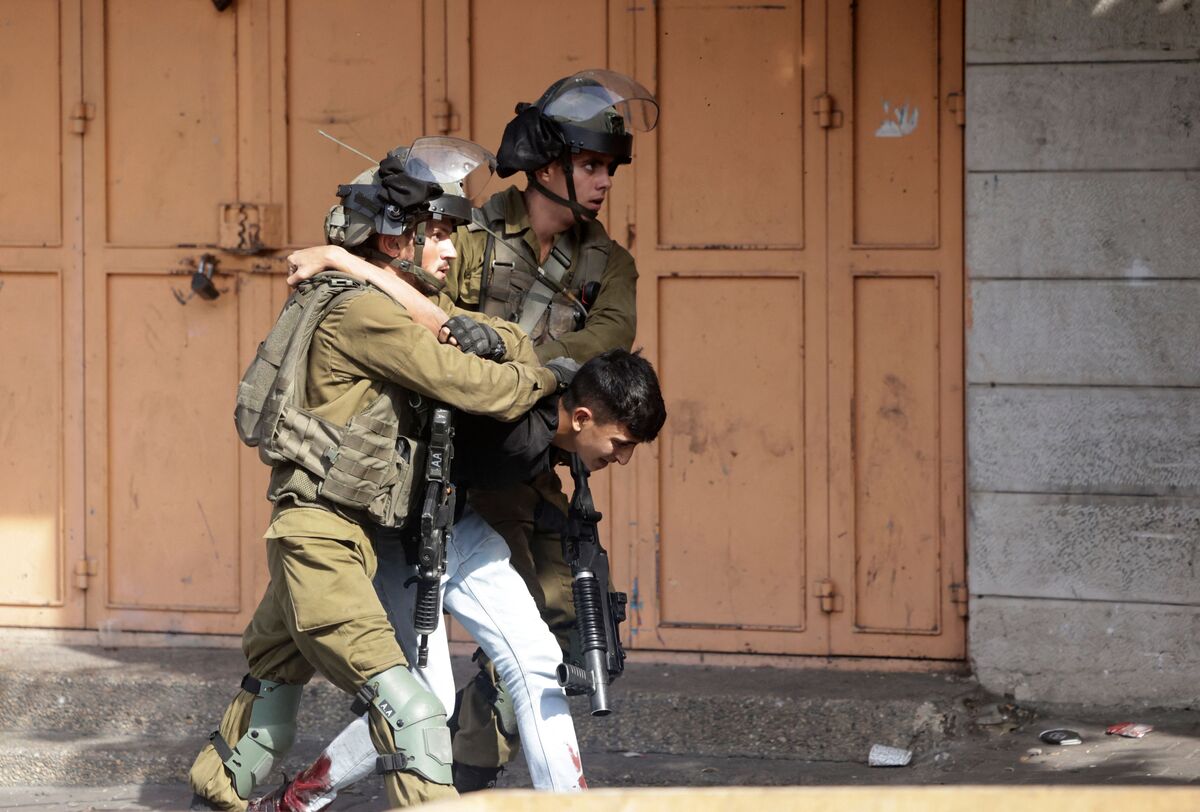

"Disclosure of documents written by Sinwar that include instructions for guarding the kidnapped," under this title, the Hebrew website "Walla" published what was reported by "Y" on Friday.


The details came: During the war, the Hamas leader wrote three documents in which he issued instructions to the fighters to preserve the lives of the kidnapped, and specified their ages and genders, but did not specify in which area they were being held, according to the newspaper "I".


The Walla website added: "The Palestinian newspaper "Ha" published documents written by Hamas leader Yahya Sinwar during the war, about a week after his assassination by the Israeli army. The first document details the instructions given to the fighters to preserve the lives of the kidnapped. This is because it was described as an important paper for the release of Palestinian prisoners."


He continued: “As for the second document, it mentioned the age and gender of the kidnapped without specifying the area in which they were being held. They included men and women, and the age distribution – over sixty or under sixty. The document also mentioned the presence of soldiers and Arab and Bedouin kidnapped people. According to the document, there are 72 kidnapped people on the list, and it seems that many of them were released in the first deals.”


The Walla report also stated: “The third document included the names of 11 kidnapped women who were released at the beginning of the war, their ages, and whether they held foreign citizenship. Among them were Raymond Kersht, Tammy Metzger, and Nili Margalit, who was noted to be a nurse by profession.”


It is clear from what the Walla website reported that it has more information than what was included in the documents, as it indicated that many of those included in the numbers and statistics in the second document were released in the first deals, as well as the names of the eleven female prisoners whose names were included in the third document.


Sinwar began his directives in this first document with verse 4 of Surah Muhammad and a hadith that spoke about prisoners and the necessity of caring for them and releasing them, whether for a price or without a price. Sinwar urged the Hamas fighters concerned with these directives to “take care of the lives of the enemy’s prisoners and secure them, considering them a pressure card in our hands to liberate our prisoners from the occupation’s prisons.”


He added: "The duty of releasing our prisoners can only be accomplished by guarding the enemy's prisoners, and the reward for liberating the prisoners is recorded for the benefit of the mujahideen."