PALESTINE

Tue 29 Oct 2024 4:45 pm - Jerusalem Time

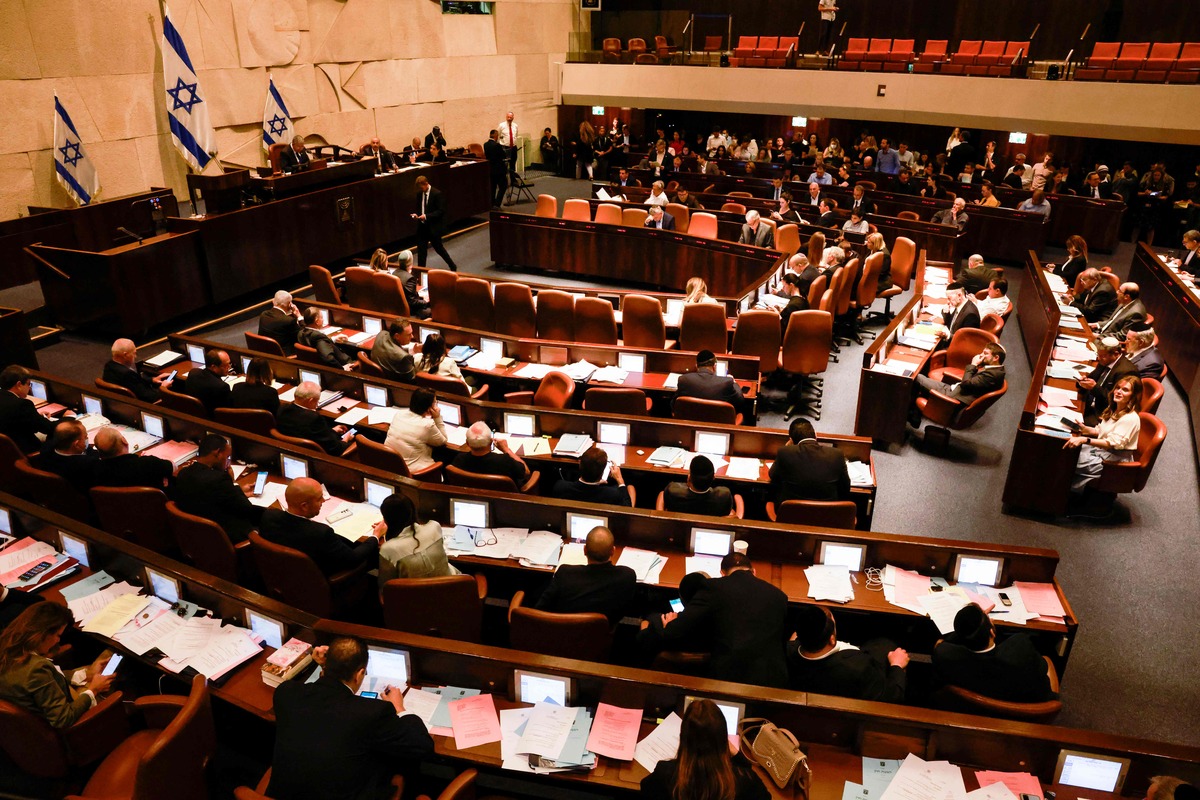
Israeli Knesset Committee Approves Law to Deport Family Members of "Perpetrators"

The Israeli Knesset Committee approved the law to deport family members of "operation perpetrators" and referred it to the General Assembly in preparation for voting on it in the second and third readings.


According to the bill, the so-called Israeli Minister of the Interior can order the expulsion of a family member of the perpetrator of an operation if he had prior knowledge of his plan to carry out this operation, or expressed identification with the operation, or published praise for him, or admiration or encouragement for this action.


The bill stipulates that deportation outside Israel and the Palestinian territories occupied in 1967 will be for a period of seven years if the perpetrator of the operation is a citizen of Israel, and for ten years if he is a resident of the territories occupied in 1967.

OPINIONS

Tue 29 Oct 2024 4:22 pm - Jerusalem Time

The heated presidential race to the White House 2024

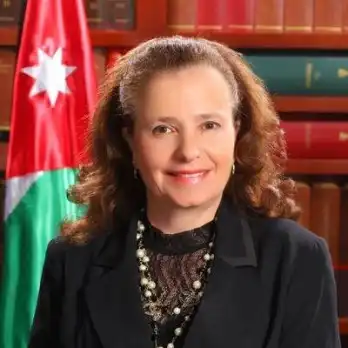
Christine Hanna Nasr

Christine Hanna Nasr

Opinion Writer


I do not want to recount the history of the parties in the United States of America, but I would like to clarify and analyze what the presidential election race has reached recently, that is, what is related to the events of the last week before the elections are held and the final results are announced between the Democrats and Republicans and in the final stages of the competition between them.


About two years ago, former President Donald Trump announced his intention to run for the 2024 presidential election. This comparison in terms of time is matched by the announcement of candidate Kamala Harris of her candidacy a while later to run in the election rally. Two years ago, Trump worked with a focus on his election campaign, specifically in the Arab-American community and in its entirety, especially since Muslims and Christians among them supported the Democratic Party in the previous presidential elections. This campaign is supported by businessman Massad Boulos; the father of Michael Massad Boulos, the husband of his daughter Tiffany, who is of Lebanese origin. It is known that his cousin Michael is the heir to the Nigerian Boulos Enterprises group, which is valued at billions of dollars and works in distributing bicycles. Therefore, Michael's father is the one leading the important file in Trump's campaign. Trump made it clear that his cousin Michael's father succeeded brilliantly in that electoral file, especially in the state of Michigan, specifically the Islamic community, which now supports Trump.


According to American public opinion polls, the scales are tipped in Trump's favor in the swing states. The question is, how did Trump succeed in winning these swing states? The first reason is the social problem in America, especially candidate Harris' support for the issue of changing gender for those under 18 years old in schools without taking permission or opinion from parents, and working to give hormones to help in this process, followed by changing the gender and then the names of these transsexuals, and this is rumored to have happened with Elon Musk's son in California, who turned into a female, without his father's knowledge, which prompted his father, Elon Musk, to move from California to another state that does not adopt the gender transition law in schools, and thus joined the campaign to support Trump, and most importantly, the Arab community in America also rejects this law and practice and thus supports and stands with Trump against candidate Harris, who lost the entire Arab community with all its spectra and ethnicities, and on the other hand, Trump promised the Arab community, especially the Lebanese, that he would make efforts to bring peace and security and stop the war raging today in the Middle East, which apparently will escalate and expand into a regional war if candidate Harris wins the electoral race, according to Trump's speeches.


In his speeches and election tours, Trump praises the Arab community, especially the Lebanese, in America, noting that they are distinguished and economically successful in their businesses and investments in America, promising them to resolve the ongoing conflict and work to establish peace, especially since the peoples and societies there in our region are suffering from the long war. Trump added in his speeches that he will make America great again, America strong and better, and most importantly, stop the flow of immigrants from Latin American countries to America, accusing Harris and the Democrats of having contributed to the entry and flow of immigrants to America, including about 21 million Venezuelan terrorist prisoners who entered the American borders in favor of voting for candidate Harris, which worsened the security situation and spread chaos in some states, such as the state of Louisiana, which suffers from chaos due to the increase in illegal immigration. These immigrants break into homes and enter citizens’ homes, exposing their owners to danger and their homes to destruction and setting them on fire, which resulted in clashes between American security and these immigrants in some states such as the suburbs of New York.


Trump wants to settle the issue of illegal immigrants, especially terrorists, and other files in American domestic affairs include the issue of health and food. Trump wants to impose restrictions and prevent the use of processed foods and food additives in food-producing states, announcing his desire in the future to hand over the food and health file to former candidate Kennedy if Trump wins the presidency, based on an alliance that took place between them. Other problems and files include the issue of inflation and improving the economic situation, as Trump promised that he would succeed in this file, especially since he succeeded in that during his term when he was a former president, and he will try to reduce the price of oil, which will lead to a decrease in prices for the American people and globally.


The most prominent and important issue today is the raging conflict in the Middle East in Gaza and Lebanon, as well as the conflict with Iran, which is currently raging and tense. Regarding the issue and file of Iran, he stated that his position will be clear and known, but he cannot express it now since he is not the president currently. However, he announced that he has strong ideas, and when he was asked before the Israeli strike on Iran, what would you do if you were President of the United States? He stated without hesitation that he would strike the Iranian nuclear reactor. Previously, when he was President of the United States, he stopped negotiations with Iran on the nuclear file, and also withheld funds related to this file, while the Democrats, specifically during the Biden presidency, worked to lift the freeze on Iranian funds and negotiations were held about them. Trump also stated that he will eliminate the bad guys in the region, and that he wants peace to prevail in the Middle East, and he also wants to work on conducting negotiations between all the conflicting parties. On the other hand, he has a strong relationship with Netanyahu and the Jewish community in America, which supports his election campaign financially.


I expect that he will have a fair position for everyone, considering that his goal is peace in the Middle East, and most importantly, that the new Middle East will be based on peace and economic recovery, even after these wars that have lasted for decades in the region, especially the Arab region, which is witnessing an economic decline. However, Trump’s project, which he proposed with Kushner, did not succeed previously, and he did not win the previous presidency either, as the situation deteriorated and the Gaza war broke out, and matters worsened later, and with the situation we are currently living in, with fears of the situation worsening into a regional war.


I believe that if Trump wins and reaches the White House after these raging wars, he will play a role in stopping the war and seeking to resolve the crisis. His victory will contribute to solving the economic problems in America, which will be reflected on the whole world, given that his goal is to reduce global oil prices, which will lead to lower prices for citizens. I hope that he achieves his goals, the most important of which is spreading peace in the Middle East, especially the Palestinian conflict with Israel, which if this file is not resolved, there will be no peace in the Middle East. It is clear based on the results of the polls that Trump has won so far, with 47% of the votes of the participants compared to 45% of the votes of the participants for Harris, but the result remains incomplete and there may be other changes as long as the electoral race is still ongoing.

PALESTINE

Tue 29 Oct 2024 4:06 pm - Jerusalem Time

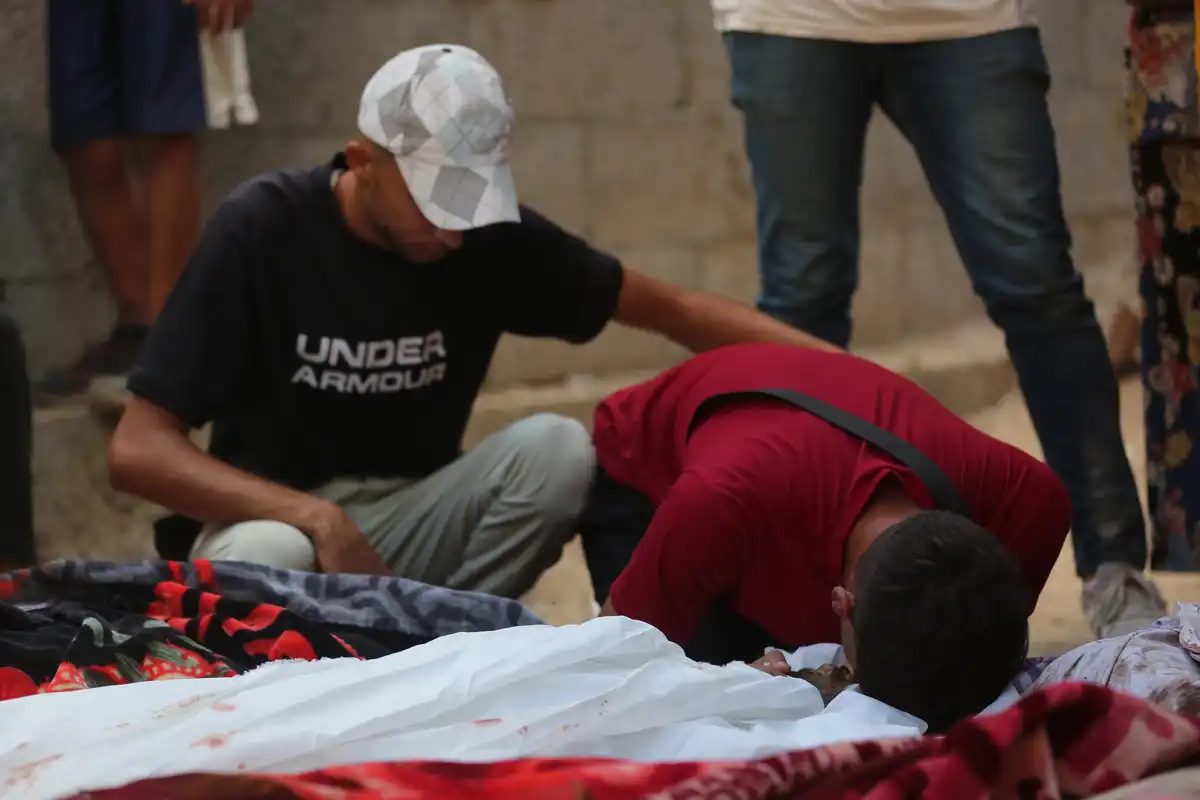
Five dead and dozens of injuries in Israeli bombing of Gaza City

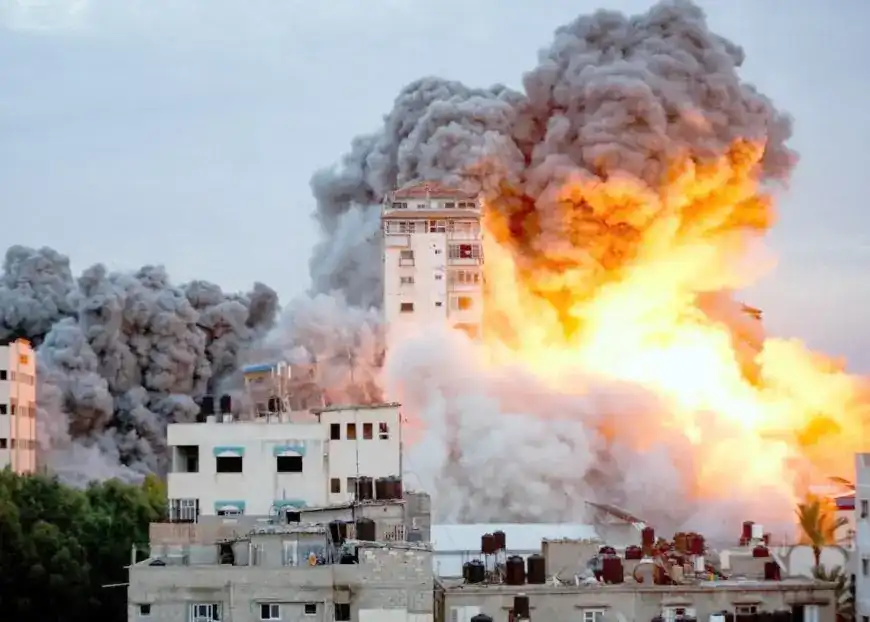
At least five citizens were killed and more than 20 others were injured in an Israeli bombardment of Gaza City on Tuesday evening.


Local sources confirmed that the Israeli occupation forces' warplanes launched two raids on the Al-Sahaba market in the Al-Daraj neighborhood east of Gaza City, which is crowded with vendors and shoppers, leading to the deaths of at least five citizens and the injury of more than twenty, all of whom were transferred to hospitals.


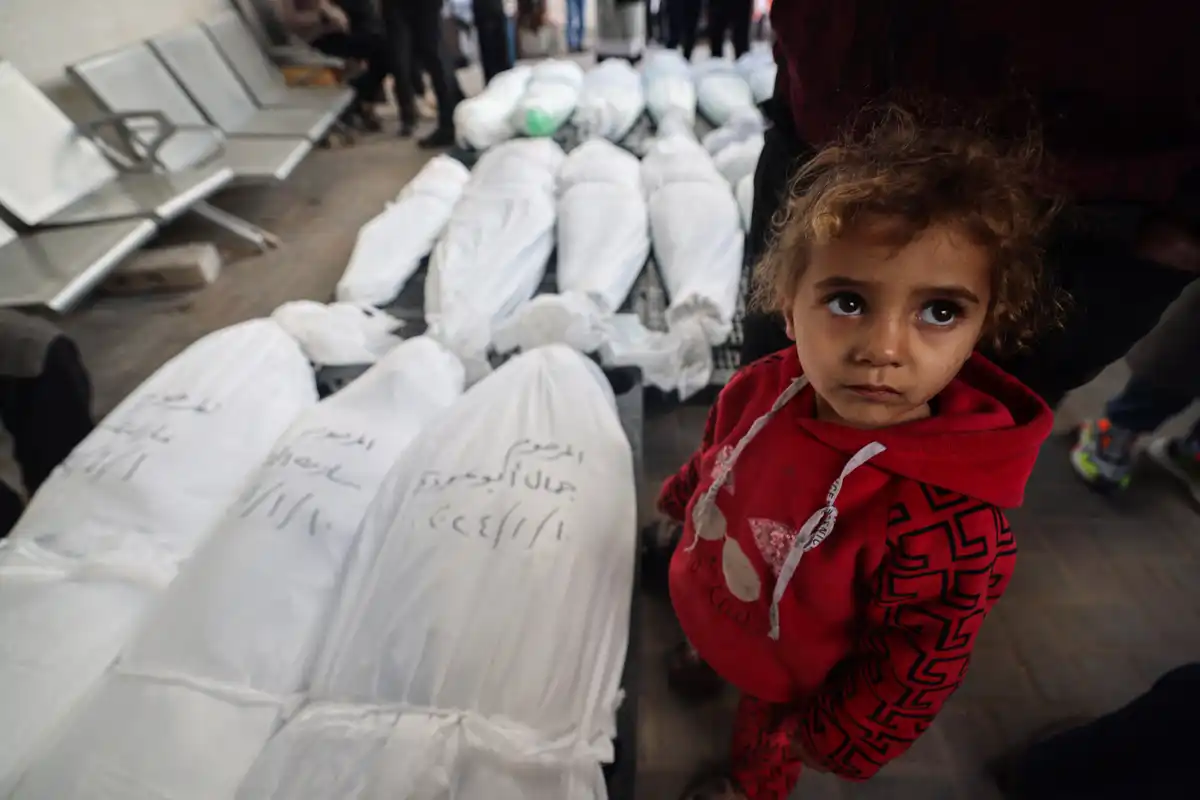
According to the latest statistics, the death toll in the Gaza Strip has risen to 43,061 dead, most of them children and women, since the start of the Israeli aggression on October 7, 2023, while the number of injuries has risen to 101,223, in addition to thousands of victims under the rubble, amid the deterioration of the humanitarian situation in the besieged Strip.


PALESTINE

Tue 29 Oct 2024 4:00 pm - Jerusalem Time

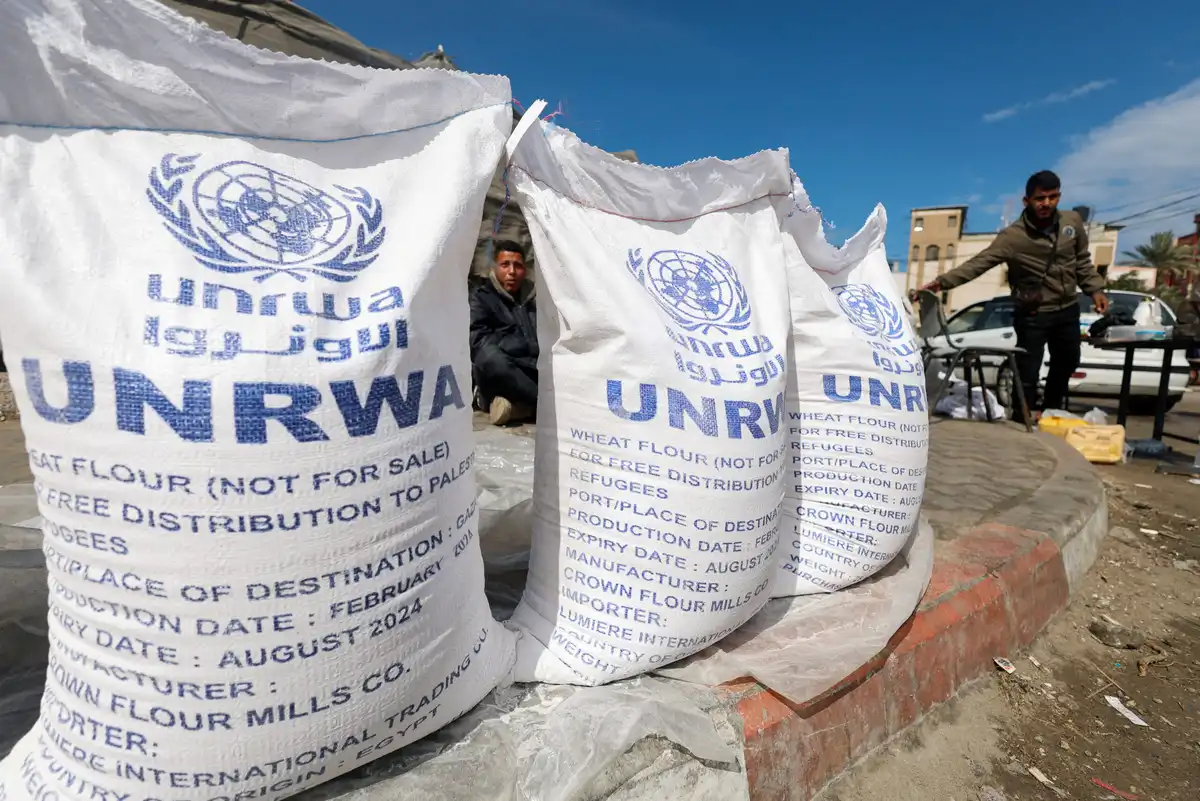
UNRWA: We work under a UN mandate and will continue humanitarian work without interruption

Adnan Abu Hasna, spokesman for the United Nations Relief and Works Agency for Palestine Refugees (UNRWA), confirmed that “the agency operates under a mandate from the United Nations that is renewed every 3 years, and will not receive a mandate from Israel because it is not affiliated with it and does not operate under its orders, so the agency will continue its work and will not stop.”


According to the official website of UNRWA, Abu Hasna said in a statement published on the official website of the agency on Tuesday that one of the reasons that prompted Israel to suspend the agency’s work in East Jerusalem is that “it believes that by liquidating the agency, the Palestinian refugee issue will be liquidated, as well as the political solution and the two-state solution, which is what its officials have stated,” noting that UNRWA is a lifeline for Palestinian refugees, and the Israeli decision will have disastrous consequences for the Palestinians in the West Bank and Gaza.


He explained that Israel has a long history of contradictions and hidden hostility with the agency, but today the issue has become more serious and dangerous and has become involved in a legislative issue for the first time since the agency was established. The Israeli government has also tried in recent months to replace UNRWA with some small organizations, while the agency has more than 30,000 employees in the Middle East, including 13,000 in Gaza.


He pointed out that UNRWA is an element of security and stability in the region and operates in 5 countries, and the system will be affected in the event of its absence because there is no alternative to it, stressing that in the concept of regional security and stability linked to humanitarian operations, the absence of the agency will have a serious impact.


It is noteworthy that the Israeli Knesset had approved a law yesterday evening, Monday, preventing the United Nations Relief and Works Agency for Palestine Refugees (UNRWA) from operating inside Israel.

PALESTINE

Tue 29 Oct 2024 3:29 pm - Jerusalem Time

Israeli army: Officer and 3 soldiers killed in Gaza Strip battles

The Israeli army revealed the killing of 4 soldiers, including an officer, in Jabalia, north of the Gaza Strip, which has been subjected to a campaign of genocide and ethnic cleansing for about a month.


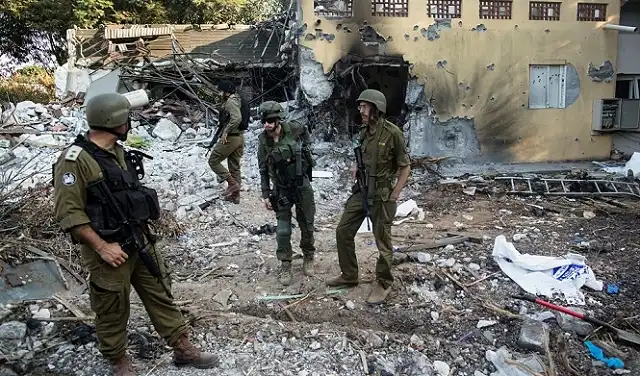
The Israeli military said that Officer Yehonatan Johnny Keren, 22, and Sergeants Nissim Meital, 20, Aviv Gilboa, 21, and Naor Haimov, 22, all from Unit 888, were killed in a battle in the northern Gaza Strip.


The Israeli army said in a statement that an officer from the same unit was also seriously injured in the same battle.


Israeli media quoted the army as confirming that the four soldiers were killed as a result of an explosive device exploding inside a building in Jabalia, in the northern Gaza Strip.


All of the dead and wounded belonged to a commando unit, known as the "Multi-Dimensional Unit", or the "Ghost Unit", an elite unit in the Israeli army that operates in difficult environments and on all battlefronts.


According to Israeli army data, the number of soldiers killed since the beginning of the war on October 7, 2023 has risen to 776, including 365 in the ground battles that began on the 27th of the same month.

PALESTINE

Tue 29 Oct 2024 3:24 pm - Jerusalem Time

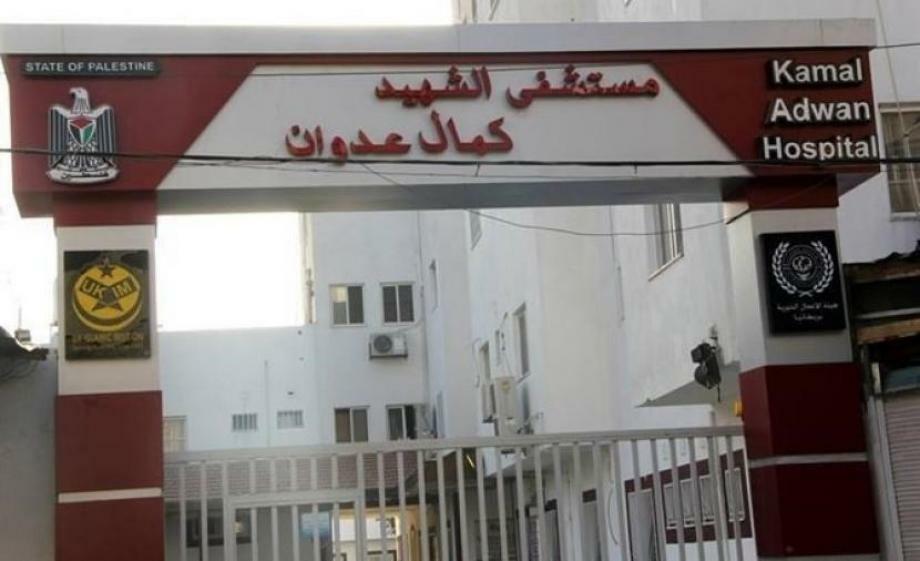
Director of Kamal Adwan Hospital in Gaza: The health system is collapsing and the wounded are dying

Director of Kamal Adwan Hospital in the northern Gaza Strip, Hussam Abu Safiya, announced on Tuesday that the health system in the region has completely collapsed, and that those who arrive at the hospital from the wounded from the Israeli raids die due to the lack of capabilities.


Abu Safiya told the Anadolu Agency correspondent: There are international delegations present in the southern Gaza Strip or abroad. We want the entire world to put pressure on Israel urgently to get these delegations and medical teams, especially surgical ones, to northern Gaza with medical supplies before it is too late.


He added that the health system has completely collapsed in northern Gaza, and that any wounded person who reaches the hospital dies, in light of the difficult reality that the health sector is going through.


He called for the necessity of bringing in ambulances and fuel, after the Israeli army destroyed several vehicles and put them out of service, noting that there are no ambulances in the northern Gaza Strip.


He continued: There is no means of transporting the injured. The injured who reach us either come themselves or are transported by citizens. During this journey, their blood runs out and they die.


Kamal Adwan Hospital Director stressed that Israel is waging a war of cleansing and extermination in northern Gaza against the residents and the health system.


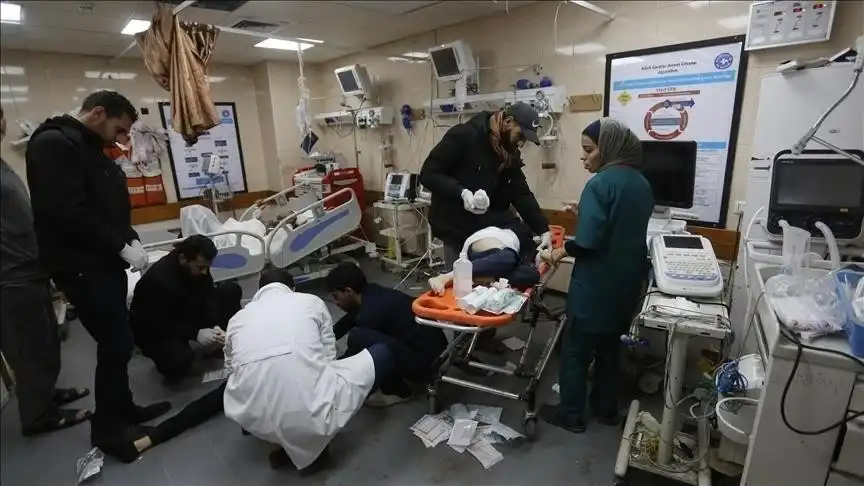
He pointed out that there is only one doctor left in Kamal Adwan Hospital, and he cannot provide any surgical services to the injured.


He added: We have a case of a child who needs an abdominal exploration to stop the bleeding, and this requires a surgeon who is not available. There are children whose bones have come out of their bodies and they need orthopedic surgery, and there are brain injuries that need neurologists.


Abu Safiya described the situation as catastrophic in every sense of the word, with the wounded dying in the streets because they were not transported to hospitals and because of the lack of supplies and medical staff.


He pointed out that there are more than 150 wounded people in Kamal Adwan Hospital and we cannot provide them with anything except first aid, warning that one wounded person will be lost every hour due to the lack of doctors and medical staff.


Earlier on Tuesday, Israeli aircraft targeted a multi-storey house belonging to the Abu Nasr family in the Beit Lahia project area, which was home to 200 people.


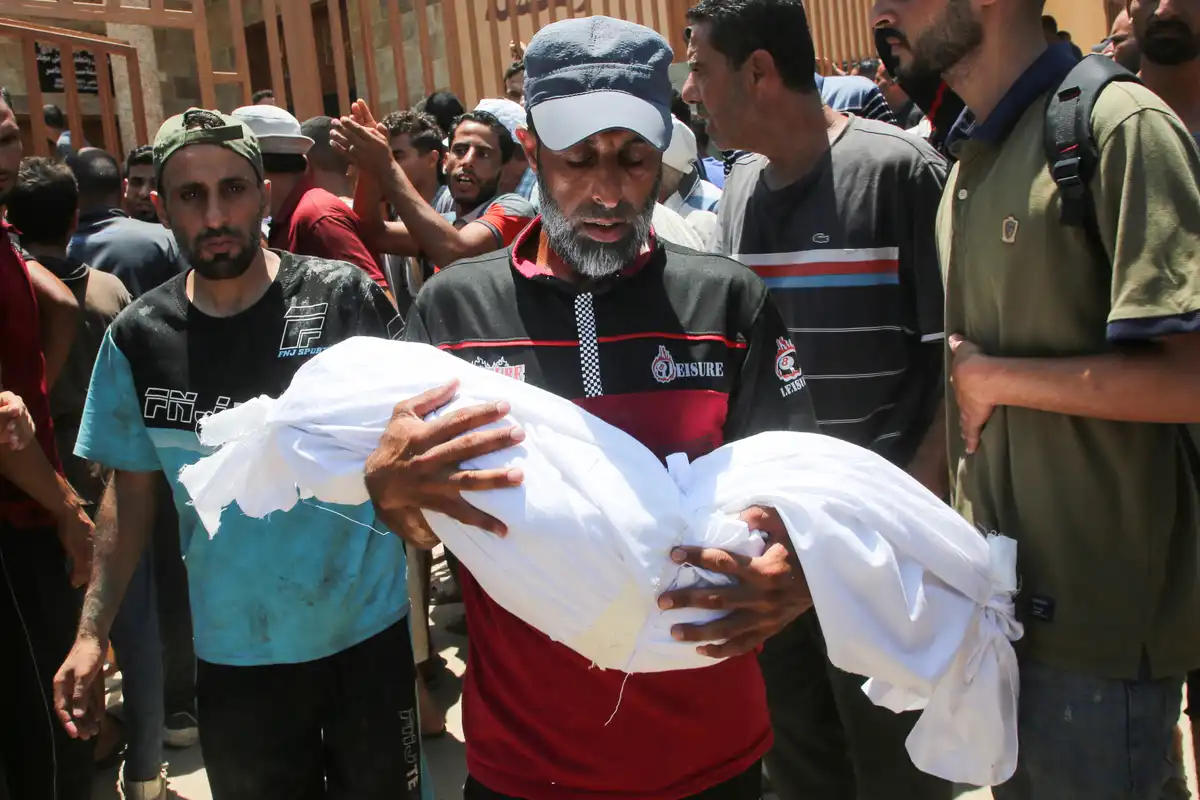
The government media office in Gaza said in a statement that the occupation army is committing a terrible massacre by bombing a residential building in Beit Lahia, in which more than 200 civilians were killed, 93 of whom were killed, more than 40 are missing, and dozens of others were injured.


The office added that the occupation army knew that the residential building contained dozens of displaced civilians, and that the majority of them were children and women who had been displaced from their civilian residential neighborhoods.

PALESTINE

Tue 29 Oct 2024 2:07 pm - Jerusalem Time

War on gaza: The death toll surges to 43,061

The Ministry of Health in Gaza announced today, Tuesday, that the death toll in the Gaza Strip has risen to 43,061, the majority of whom are children and women, since the start of the Israeli occupation aggression on October 7, 2023.


It added that the number of injuries has risen to 101,223 since the beginning of the aggression, while thousands of victims are still under the rubble.


It pointed out that 115 dead were killed in raids on the Gaza Strip since dawn today, 109 of them in the northern Gaza Strip.


94 dead were killed in the Beit Lahia massacre this morning, in addition to dozens of wounded and missing people.


It explained that a number of victims are still under the rubble and on the roads, and ambulance and civil defense crews cannot reach them.

PALESTINE

Tue 29 Oct 2024 1:10 pm - Jerusalem Time

26 thousand patients and injured people are in urgent need of treatment outside the Gaza Strip

The head of the NGO Network in the Gaza Strip, Amjad Al-Shawa, said that the number of relief aid trucks that have entered the Gaza Strip since the beginning of this month does not exceed 800 trucks, amid the occupation’s tight siege on the Strip.


In an interview with Voice of Palestine Radio, Al-Shawa warned of the widespread famine and malnutrition in light of the large increase in the number of wounded people receiving treatment in tents and shelters amid a shortage of medicine and medical supplies.


Al-Shawa added that there are more than 26,000 patients and injured people in urgent need of treatment outside the Gaza Strip due to the lack of the necessary medical capabilities to treat them in Gaza.

PALESTINE

Tue 29 Oct 2024 12:54 pm - Jerusalem Time

Gaza ceasefire talks resume in Qatar but progress 'unexpected'

Officials from the United States, Israel, Egypt and Qatar resumed talks on a Gaza ceasefire in Doha on Monday, but no progress toward a solution is expected before the U.S. presidential election on Oct. 5.


Israeli Prime Minister Benjamin Netanyahu is waiting to see who will succeed US President Joe Biden before making any diplomatic commitments, sources told The New York Times. He has also made clear that he has no intention of ending the genocidal war on Gaza, repeatedly saying he would only agree to a temporary truce that would allow Israel to resume military operations.


Hamas's position was that any agreement must include a permanent ceasefire and a withdrawal of Israeli forces from Gaza. But Netanyahu's insistence on keeping troops in Gaza, and his demand to maintain control of the Philadelphi Corridor on the Gaza-Egypt border sabotaged the latest round of negotiations.


"The discussion about the post-Sinwar conflict in Gaza" and whether there is now a horizon for a ceasefire and prisoner exchange deal, US State Department spokesman Matthew Miller said on Monday: "I think it's too early to say, to be completely honest."


“I think Hamas has a process to go through to choose a new leadership,” he added. “It appears to be going through that process now. Obviously, we don’t have a lot of insight into Hamas’s internal decision-making process, but based on our conversations in the region, our understanding is that Hamas is now run by a body. At some point, it will go through a process to choose a new leader. I think the results over the next few weeks will determine whether there is a change in their position.”


“What we do know is that the roadblock we faced before his death was that Sinwar ruled out further negotiations on any issue,” Miller explained. “The proposal he made in July was his final offer, and he was not willing to negotiate any further, and he had the ability to make that decision. He was the clear leader of Hamas.”


Earlier this month, Haaretz reported that the Israeli government was not interested in new ceasefire talks and was instead focused on pursuing annexation of territory in Gaza. Since then, Israeli forces have killed Hamas leader Yahya Sinwar, prompting the United States to call for new truce talks.


While Israel has agreed to new talks, its military operations in Gaza have been relentless. Israeli forces are imposing a blockade on northern Gaza as part of an ethnic cleansing campaign known as the “General’s Plan,” which calls for the forced expulsion of Palestinian civilians from the north and the extermination of anyone who remains.


While the United States has called on Israel to re-engage in ceasefire talks, it has not put any real pressure on Israel to agree to a deal because it continues to provide military aid, which Israel relies on to support operations in Gaza.

PALESTINE

Tue 29 Oct 2024 12:17 pm - Jerusalem Time

Updated: Settlers continue their attacks on Palestinians and their properties in the West Bank

Today, Tuesday, settlers continue their attacks against citizens and their property in the West Bank.


In Bethlehem, settlers began plowing agricultural lands belonging to citizens from the Abu Kamil family in the Khalayel Al-Loz area, under the protection of the Israeli occupation forces.


According to local sources, a group of settlers used an agricultural tractor to plow land planted with olive trees in the housing area located between Khallet al-Nahla and Khalayel al-Loz.


He added: When the landowners tried to confront the settlers and stop the plowing, the occupation forces intervened, fired bullets into the air, and detained citizens Ahmed Kamel Abu Kamel and his two sons Tariq and Muhammad, along with Firas Yousef Abu Kamel and Mahmoud Khalil Abu Kamel, before releasing them later.


In Salfit, settlers broke olive trees and stole their fruits in the village of Yasuf.


Meanwhile, dozens of settlers stormed the same area yesterday and damaged olive trees there, but the citizens have not yet been able to reach their lands and assess the damage.


In Hebron, an armed settler blocked the road with his vehicle near the Abu Al-Arqan area, south of Hebron, preventing them from passing, and brandished his gun at them, threatening to kill them.


Eyewitnesses added that the aforementioned settler has been moving for hours on that road searching for citizens’ vehicles, and is trying to approach them brandishing his weapon, warning citizens who wish to move in that area to take the utmost caution and care.


In the northern Jordan Valley, settlers brought a bulldozer this morning and began digging dozens of holes in agricultural lands south of the village of Ein al-Baida, in preparation for planting trees and seizing them.


These lands are owned by the Tabu of citizens of the village of Ein al-Baida, and their owners use them for agriculture. He pointed out that the area that the occupation seeks to seize exceeds 30 dunams, near the junction of the "Mikhola" settlement, which is located on citizens' lands.


PALESTINE

Tue 29 Oct 2024 12:14 pm - Jerusalem Time

UN official warns of polio outbreak in Gaza as vaccinations fail to be completed

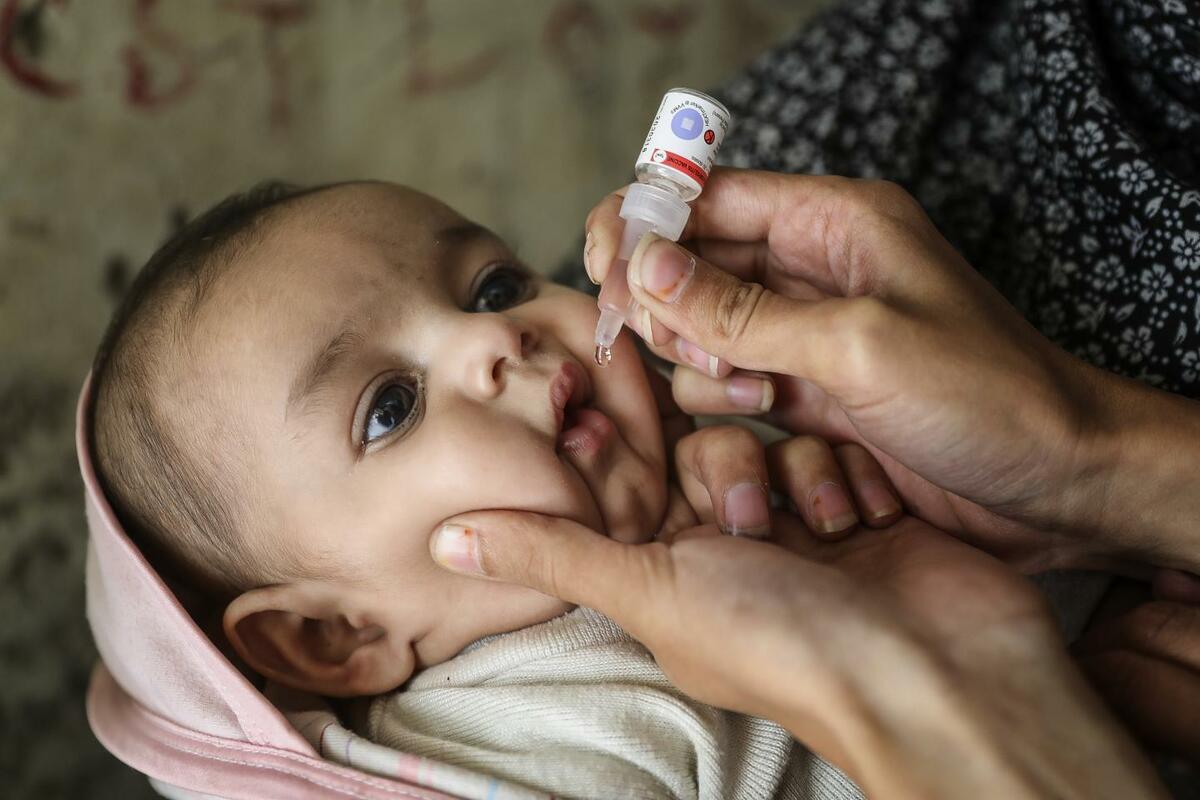
UNICEF spokeswoman in Gaza Rosalia Paulin warned of the consequences of more than 119,000 children in the northern Gaza Strip not receiving the second dose of the polio vaccine before mid-November.


"If we miss this deadline, the immunity of children who received the first dose will decline rapidly," Pauline told UN News.


She pointed out that the three UN agencies participating in the vaccination campaign, namely the World Health Organization, the United Nations Relief and Works Agency for Palestine Refugees (UNRWA) and UNICEF, along with the Palestinian Ministry of Health, were forced to delay the start of the third and final phase of the second round of the polio vaccination campaign in the north.


She said that in a vaccination campaign, we need several things. We need safety for health care workers, for social motivators, for families who come to vaccinate their children. We need people to be stable for the campaign to be successful.


“Because of the ongoing escalation of the bombing, health workers are exhausted. Hundreds of people have been killed over the past weeks. Many more have been injured. Hospitals have been bombed and besieged. So the conditions are not right to start this second phase of the vaccination campaign in Gaza,” she added.


The first round of vaccinations, which ran from 1 to 12 September, successfully vaccinated 559,161 children, or an estimated 95 percent of the children targeted by the campaign. The second round began in central and southern Gaza on 14 October, but failed to reach children in the north of the Strip.


She warned that some 120,000 children in Gaza are at "grave risk." She also said that this poses a risk not only to those children aged 10 and under, "but also to children in the wider region."


For 25 days now, the occupation army has continued its genocide in the northern Gaza Strip, specifically Jabalia and Beit Lahia, in one of the worst humanitarian disasters in the world, as it continues to bomb civilians, blow up their homes, and prevent the entry of aid, food, water, medicine, and fuel, resulting in the deaths of more than a thousand martyrs, thousands of wounded, and dozens of missing persons.


The occupation forces continue their aggression on the Gaza Strip, by land, sea and air, since October 7, 2023, which resulted in the martyrdom of 43,020 citizens and the injury of 101,110 others, the majority of whom are children and women, in an incomplete toll, as thousands of missing people are still under the rubble.

ARAB AND WORLD

Tue 29 Oct 2024 12:12 pm - Jerusalem Time

Eleven dead in Israeli bombing of the northern Bekaa in Lebanon

11 Lebanese citizens were killed today, Tuesday, in the Israeli occupation air force's bombing of the town of Al-Ram in the northern Bekaa.


The National News Agency reported that 11 citizens were martyred as a result of the massacre committed by the occupation in the town of Al-Ram in the northern Bekaa against the Noon family. The body of a dead was found after being blown away by the airstrikes by dozens of meters, in addition to the remains of another martyr being recovered from the targeted location.

ARAB AND WORLD

Tue 29 Oct 2024 10:36 am - Jerusalem Time

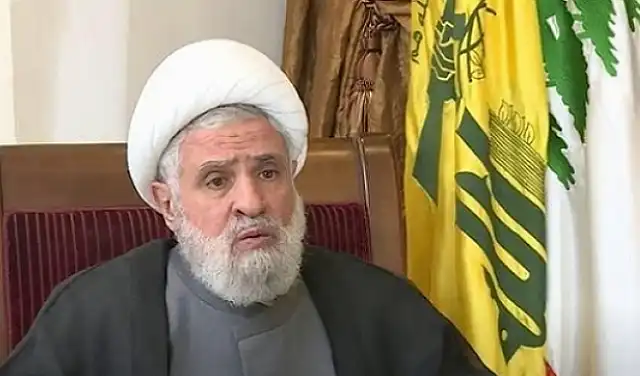
Hezbollah announces the election of Naim Qassem as Secretary-General, succeeding Nasrallah

The Lebanese Hezbollah party officially announced today, Tuesday, the election of Naim Qassem as the party’s secretary-general, succeeding Hassan Nasrallah, who was assassinated in the southern suburbs of Beirut.


Hezbollah said in a statement issued today, "Based on faith in God Almighty, commitment to authentic Muhammadan Islam, adherence to Hezbollah's principles and goals, and in accordance with the approved mechanism for electing the Secretary-General, Hezbollah's Shura Council agreed to elect His Eminence Sheikh Naim Qassem as Secretary-General of Hezbollah, carrying the blessed banner in this journey, asking God Almighty to guide him in this noble mission in leading Hezbollah and its Islamic resistance."


The same statement added: “We pledge to God Almighty and to the spirit of our highest and most precious martyr, His Eminence Sayyed Hassan Nasrallah (may God be pleased with him), and to the martyrs, the mujahideen of the Islamic Resistance, and our steadfast, patient and loyal people, to work together to achieve the principles of Hezbollah and the goals of its path, and to keep the flame of resistance shining and its banner raised until victory is achieved, and God is victorious over His affair, God is strong and mighty.”


Qassem had stressed in his third speech since the assassination of Hassan Nasrallah in Beirut on the 15th of this month that Israel is “an occupying, usurping entity that poses a real threat to the region and the world,” stressing that it considers Lebanon part of the “expansion project” that it seeks to achieve, and that its Prime Minister, Benjamin Netanyahu, “wants a new Middle East.”


Qassem stated that Hezbollah has moved to the "stage of causing pain to the enemy" and that it has "the right to target any point in Israel."


He said, "Israel is betting on criminality that terrifies others and absolute adoption by America."


He added, "The Palestinians have the right to take action that expels the occupation, shakes its presence, and prevents it from continuing."


He stated that "the Al-Aqsa flood came after 75 years of occupation, and this is a legitimate right," noting that "in Lebanon, we cannot separate Lebanon from Palestine, nor the region from Palestine."

OPINIONS

Tue 29 Oct 2024 9:41 am - Jerusalem Time

Delegitimizing UNRWA's role is a dangerous precedent

op-ed "AlQuds" dot com

op-ed "AlQuds" dot com

Opinion Writer

The Knesset decision, which was taken yesterday in the second and third readings, to ban the role of the United Nations Relief and Works Agency for Palestine Refugees in the Near East, in Jerusalem and inside, is a dangerous precedent that violates the United Nations charters under international law, which Israel disregards.


This unjust decision, in addition to depriving tens of thousands of Palestinians of their rights that they obtain from the activities and services of the UN agency, aims to distort the role and reputation of the agency and is another attempt to delegitimize it, and to limit its humanitarian role in providing development services to Palestinian refugees. It is one of the most dangerous measures that extend to include all aspects of life, after Israel destroyed all the components in the Gaza Strip, and destroyed the camps of the West Bank as well.


At a time when extremist and rebellious Israel is taking a decision against this institution, it is aiming to liquidate the refugee issue once and for all in another episode added to the chain of episodes of displacement and forced displacement of refugees. In addition, this decision is considered against the world and the United Nations, which formed this institution to carry out its humanitarian and developmental duty, and it has no relation to the events of October 7, as Israel claims.


The Commissioner-General of the Agency condemned this dangerous decision, as did the Palestinian presidency, the Fatah movement, the Department of Refugee Affairs in the PLO, and the Jordanian Ministry of Foreign Affairs, amid warnings against the continuation of the campaign of malicious allegations against UNRWA, with the aim of assassinating its services and obstructing its efforts in light of the catastrophic conditions caused by Israel since October 7, 2023, and which are used as a justification for further punitive policies.


The entire world must act immediately, urgently and urgently against Israel, as a racist state that does not enjoy international legitimacy, and deprive it of this legitimacy, towards complete political isolation. The United States, which supports this resolution, is the one that provides Israel with all the means to continue its defiance of the international community, its stubbornness and its violation of all charters and norms. Its policies of domination over the peoples of the Middle East and its leniency towards Israel must be confronted.


This decision has disastrous consequences, targeting Palestinian refugees and liquidating their cause, as Israeli laws prohibit dealing with UNRWA as an international organization and make it a target for the occupation.


It is clear that the Israeli government is continuing its policies, violations and programmed war against the UN agency, in attempts to strip the Palestinians of their inherent right to return, stressing that the right of refugees can never be waived and is a right guaranteed by international law and international legitimacy resolutions.


Free people of the world are required to come forward and raise their voices in order to pressure Israel to abolish its racist laws, and international courts must take the necessary decisions against Israel to prevent the implementation of this decision on the ground.

OPINIONS

Tue 29 Oct 2024 9:39 am - Jerusalem Time

Has the countdown to aggression begun?

Hani Al Masry

Hani Al Masry

Opinion Writer

The Israeli aggression against Iran was neither earth-shattering nor unprecedented, as Israeli Prime Minister Benjamin Netanyahu threatened, nor creative, as you do not know what happened to it, as Yoav Galant, the Israeli Minister of Security, warned. Rather, it was much less than threats, and more of a symbolic response. This is what came in the warning of Iranian Leader Ali Khamenei "against exaggerating the response or downplaying it." With this strong Israeli response, but under the roof of allegations, the Netanyahu government missed a great opportunity to achieve the great goals that Netanyahu spoke about, which included destroying the Iranian nuclear program, changing the Middle East, undermining the axis of resistance, and providing a different security environment in the region that will last for decades at least. This is due to the following:


First: Either because Tel Aviv is unable to fight Iran alone, and this is a correct assessment, and this explains why it has not struck the Iranian nuclear reactor throughout the past years despite Tehran’s approach to obtaining a nuclear bomb and fortifying itself, especially since Israel has begun to feel exhausted after more than a year of war on several fronts, and needs a break and a period to catch its breath.


Second: Or because the war has exhausted itself, as there are no longer any targets to strike except “destruction for the sake of destruction” and “death for the sake of death”, and there is a growing need to stop the war, even in the form of declaring “Israeli victory”, and to seek to complete the achievement of the goals through the economy, politics, negotiations, and investment in the Palestinian-Palestinian, Lebanese-Lebanese, and Arab-Arab disputes. This is evidenced by the return of the disputes within the Israeli government, to the point that Netanyahu promised the religious to dismiss Galant immediately after the end of the current round of conflict with Iran, in addition to the disputes between the government, the occupation army, and the security services regarding the Israeli goals of the war, and whether most of them have been achieved or not, as the Minister of Security and the circles of the army and the security services see it, and this appeared in the support for the Egyptian initiative and the demand to make concessions, because as Galant said, military achievements alone are not enough, but rather the goals of the war need to be updated, because the war is changing its face and the threats against Israel are renewed, and painful concessions must be made so that we can release the prisoners. While Netanyahu, Ben-Gvir and Smotrich believe that the goals set by the government have not been achieved, and that their goals are much greater than the declared goals, they are also seeking the surrender of the resistance and not reaching a political solution with it.


Third: Or the far-right government has submitted to the desire and will of the American administration, and this is absolutely true, as Washington does not want a strong aggression against Iran that would open the doors to a regional war on the eve of the American elections, and with the continuation of the Ukrainian war, and in light of the presence of strong cards in Tehran’s hands, which make it capable of causing a global economic crisis if it closes the international straits, and targets American military bases and oil facilities in the region.


There is also a fear that China will exploit the war to its advantage, or enter it by force, if its interests are threatened by the inability to import oil, or to sell Chinese goods, given that China has become the world’s undisputed merchant, especially since the Netanyahu government realizes in its heart, and far from the claims, that there are limits to power, and that Israel cannot wage a war with Iran alone and win it without full American participation.


Fourth: Israel fears a stronger Iranian response than the honest promise 1 and 2, if the aggression is strong as Tehran has threatened, to the point that there is a possibility that if Israel strikes the Iranian nuclear reactor, Iran will decide to obtain a nuclear bomb, and this only needs one week, as stated by William Burns, Director of the US Central Intelligence Agency. If Iran’s response is stronger than previous responses, this is something that the Israeli home front cannot bear, which has been exhausted after the fall of about 2,000 dead and many times that number wounded according to official sources, and greater than this number according to unofficial Israeli sources, especially after Hezbollah regained the initiative, as evidenced by the volume and regularity of the launching of missiles and drones and the valiant resistance in the south, to the point of more than 73 Israeli dead and many times that number wounded during the current month of October, and this is the largest number of dead and wounded in one month since the Al-Aqsa Flood if we exclude October 2023.


In addition, despite the Israeli military achievements that caused euphoria among the Israeli political and military leadership, which imagined that they had removed Hezbollah from the battle, it proved that it was still strong and reorganized its ranks, which prevented the occupation forces from achieving significant progress. Rather, Galant and Chief of Staff Herzi Halevi began talking about stopping the ground war without linking that to achieving the declared goals.


Fifth: Or there is a need to choose an appropriate timing, and make more preparations and install defensive systems so that all or most of the Iranian missiles and drones do not hit their targets, as we noticed in the installation of the American THAAD defense missiles, so that if Iran responds, the response can be absorbed with minimal losses, provided that the response to the next Iranian response is earth-shattering.

Perhaps, and most likely, Israel has taken into account all four possibilities, as the Netanyahu government will not miss an opportunity to destroy Iran’s capabilities, especially its weapons, oil, and nuclear capabilities, if it can do so without paying a high price that it cannot bear.


The answer to the article’s question “Has the countdown to aggression begun?” refers us to three issues:


The first issue: The field, before anything else, will decide whether the Israeli aggression will stop or not. What happens on the field is reflected on the negotiating table, and what you did not achieve on the field you will not achieve through negotiations.


Based on the above, if the rate of Israeli human losses continues as it was in October, and increases, the Netanyahu government will not be able to continue the aggression for a long time. Therefore, the coming month is crucial to determine where things are heading towards continuing the war or stopping it. If the Israeli human hemorrhage continues, the differences within the Israeli government and between it and the army and security services will worsen, and Israeli public opinion, which suffered from “intoxication” after the assassinations and the pager and wireless operations and supported his government to a very large extent, will rise up, but “the intoxication went away and the idea came.”


The second issue: It is related to the proximity or remoteness of the regional war. The more likely it is to break out, the more American pressure on Netanyahu's government increases. This is due to the reasons mentioned above in this article. In addition, the deep state in the United States believes that the policy of siege, sanctions, fueling internal unrest, and the carrot and stick policy can lead to a change in the Iranian regime's policy, or to its downfall if it does not change its policy. There is another reason, which is the American need to continue to threaten the Iranian threat to ensure that the Arab regimes, especially the Gulf ones, operate within the orbit of American policy, although the impact of this reason diminished when Saudi Arabia needed American support after being bombed by the Houthis, whether during the era of Barack Obama or Donald Trump, and its need was not met. No one will protect the Arabs except the Arabs.


The third issue: The outcome of the US presidential elections. If Donald Trump wins, he will return to the deal of the century that aims to liquidate the Palestinian cause, and he will support Netanyahu to do as he pleases, as was leaked from a phone call between them, and as he stated publicly, where he went so far as to say that the area of Israel is small and must be expanded. Here, the issue of annexing the northern Gaza Strip and displacing its residents becomes more likely if he wins, as well as establishing buffer and safe zones along the border and on the Egyptian-Palestinian front.


Sources reported that Trump promised Miriam Adelson, in exchange for $100 million in campaign support - as her husband promised before winning the election to move the US embassy to Jerusalem and fulfilled - that he would agree to annex Area C, especially the settlements, to Israel.


Yes, Kamala Harris will support Israel, and will defend its alleged right to defend itself, but she prefers the less extreme and racist currents and parties in Israel, while Trump will support the more extreme, and without betting on either of them, but the differences between them must be seen, and politics is the art of the best of the possible, and requires seeing the differences no matter how small or large, and without that there is no politics.


The field and what will happen on the field remains the decisive matter, and if there is no steadfastness and resistance that causes human losses, there is no limit to what the Israeli forces can reach. Didn’t David Ben-Gurion, the first and most important prime minister in Israel, say that the borders of Israel are determined by the place where the Israeli soldiers stand?

OPINIONS

Tue 29 Oct 2024 9:38 am - Jerusalem Time

Israel, not just Netanyahu... from one impasse to another

Hamdy Farag

Hamdy Farag

Opinion Writer

Israel, and not just Netanyahu, is going from one predicament to another, regardless of who accepts this view and who rejects it, despite all the “achievements” it has achieved and celebrated, including distributing sweets in the streets following the assassinations of senior resistance leaders, headed by Nasrallah and Sinwar.


The first dilemma related to Hezbollah: It may have discovered that Hezbollah has recovered its health at a record speed, through the heavy losses it inflicts on its soldiers daily on the southern edge, and through the bombing of its major cities from Haifa to Acre to Safed to Tiberias to Nahariya to Tel Aviv, which forces millions of these cities to hide in shelters, rushing like herds, the strong does not care about the weak or the big or the small, the important thing is to reach the shelter first. This scene, which cameras are forbidden to capture, is enough, when we imagine it, to see it as more of a dilemma than a shelter, so what about when it is repeated more than once a day. There is another dilemma, not only the failure of the displaced who fled to their homes in the north to return, but the expansion of their number to more than double, when the party recently announced placing dozens of other villages on the targeting map and "in the line of fire".


The second dilemma concerns Gaza. The Chief of Staff of the Army, Herzi Halevi, recently announced that the Jabalia area had fallen, after about a month of siege, bombardment, destruction, and “liberation” for the third time in 13 months. This is a clear admission that it had never fallen before, and what applies to it applies to Khan Yunis and Rafah as governorates, cities, villages, and camps. Jabalia is nothing more than a camp, occupied since 1967. Sharon announced its fall in the early 1970s, when he went to suppress its resistance led by Muhammad al-Aswad, “the Guevara of Gaza.” He demolished its homes and widened its streets so that his tanks could enter it quickly and easily. Halevi will of course find those who will congratulate him and bless him for the fall of Jabalia, and those who will distribute sweets in the streets. Halevi’s announcement of the fall of Jabalia means that it will never, ever fall. Another dilemma related to Gaza is that your prisoners are still in the resistance tunnels for the second year, but their harsh conditions have become more difficult and harsh, and each one of them has understood after all this time that they are no more than a feather on the scales of their government and people. What awaits them at the beginning of the second year is not only the cold winter, but also the terrible death.


The third dilemma is related to Iran. This is not Gaza or southern Lebanon. This is a semi-superpower regional state in terms of its area, population, wealth, and most importantly, its ideology and weapons. An “armed ideology.” This is not an Arab state that fears, terrifies, deters, and resents. And here you are, dragging it into a direct confrontation. Or did you think you could eliminate its allies in Gaza and Lebanon without it intervening?


There are dilemmas that come to you from where you do not expect, the latest of which was embodied by Ibn Qalansawe in the triangle near the Mossad military air base in Tel Aviv, which resulted in dozens of deaths and injuries. This qualitative operation was not the first of its kind, as it was preceded by operations in the Negev and Afula, and the rope, it seems, is still on the tractor.


OPINIONS

Tue 29 Oct 2024 9:37 am - Jerusalem Time

Gaza and the US elections

Majdi Al-Shomali

Majdi Al-Shomali

Opinion Writer

The US presidential election is approaching, and the war on Gaza and Lebanon is not over.


Will Gaza affect the election results?


American election experts divide the electorate along several lines, including age, culture, ethnicity, economic level, and urban area.


I will review these views in relation to Gaza.


In terms of age, there has been a significant development among the youth in terms of their interest in global political situations. They mostly vote for the Democratic Party, but in a poll conducted by the Pew Research Center last February, it was stated that 33% of American adults under the age of 30 sympathize more with the Palestinians. Accordingly, and in light of the positions taken by the Arab communities (especially the Palestinians) regarding the elections, a large portion of the youth will not vote for the Democrats. This is a setback for Kamala Harris. In addition, 65% of university students supported the demonstrations that took place against the war on Gaza and they certainly resent the Democratic government because of its continued support for Israel.


In terms of culture, intellectuals and artists are also considered part of the Democratic Party. If we observe the positions of intellectuals in the last year of the war on Gaza, we notice that they are pro-Palestinians, for example: Democratic Senator Bernie Sanders, youth activist Jackson Henkel, third presidential candidate Jill Stein, Democratic Senator Chris Murphy, Senator Peter Welch, writer Naomi Klein, philosopher Noam Chomsky, and a number of other thinkers, writers and representatives in Congress such as Rashida Tlaib, Ilhan Omar, Dalida Ramirez, Jerry Nadler and a large number of artists and journalists such as singer Macklemore, all of whom voted for Biden 4 years ago and will not be on Harris' side this week because of the Democratic Party's position on the war on Gaza.


In terms of ethnic origins, Democrats usually attract Americans of Arab and Muslim origins, who number about 6 and a half million, in addition to voters from third world countries and of Latin origin. A very large portion of these will not vote for Harris, even though they elected Biden 4 years ago.


As for the economic and urban level, these are Republican Party supporters and will remain so.


If we remember that Biden defeated Trump by a small number of votes (about 7 million votes), we will know the impact of the great shift that will occur this year. Kamala Harris is expected to fail due to the boycott of intellectuals, youth, students, Arabs and Muslims, who will boycott the elections or give their votes to candidate Jill Stein in order to strengthen the idea of the third pole in the upcoming elections.

ARAB AND WORLD

Tue 29 Oct 2024 9:21 am - Jerusalem Time

Dozens of dead in Baalbek and the Bekaa, and Hezbollah continues to clash in the south

The Israeli aggression on Lebanon entered its 35th day on Tuesday, as the Israeli army expanded its air strikes on various areas in Lebanon, while Hezbollah continues to engage and confront attempts by Israeli forces to penetrate the towns of southern Lebanon, target bases and deployment sites of the Israeli army, and bombard Israeli towns with rocket barrages and explosive drones.


Hezbollah announced that it had carried out an air attack with a squadron of suicide drones on a gathering of Israeli forces in the Kfar Giladi quarry, Zar'it and Al-Manara, noting that the attacks hit the targets accurately, stressing that it had carried out 30 military operations against Israeli army sites, bases and deployments during the past 24 hours.


Hezbollah carried out drone attacks, with sirens sounding several times in Nahariya and its suburbs and several towns and sites in the Western Galilee, for fear of explosive drones infiltrating, with shrapnel from a drone reported falling at the Nahariya train station.


The Israeli air force renewed its raids on various areas in Lebanon. The raids targeted the town of Jbaa in the Iqlim al-Tuffah region, and the vicinity of Tal al-Hamames, south of the town of Khiyam in southern Lebanon, amid Israeli helicopters flying behind the front lines in the eastern sector.


The Israeli Air Force launched more than 40 raids during the past 24 hours, and the raids focused on the governorates of Baalbek-Hermel and Bekaa, and resulted in more than 63 dead, while 110 others were injured with varying degrees of severity.

PALESTINE

Tue 29 Oct 2024 9:04 am - Jerusalem Time

Israeli occupation arrests citizens and prevents others from picking olives in the West Bank

The Israeli occupation forces arrested citizens at dawn and this morning, Tuesday, and prevented others from picking olives in the West Bank.


In Nablus, the occupation forces arrested Jaafar Fadl, after surrounding his house in the camp, and the young man Hamza Al-Khalili from Street 15 in the city.


In the same context, the occupation forces forced olive pickers in the town of Qasra to leave their lands, seized their vehicles, and prevented them from completing their work.


The occupation soldiers also stormed the Khalayel area in Barqa, prevented farmers from completing the olive harvest, and forced them to leave their lands.


In Tubas, the young man Qais Salah Ayoub Basharat (20 years old) was arrested after raiding his family’s home in the town of Tamoun.


In Bethlehem, the occupation forces arrested Hamza Qasim Musa (26 years old), and Riyad Khaled Ghanem (31 years old) from the town of Al-Khader in the south, and Khalil Muhammad Dar Younis (34 years old), Hamza Jamal Al-Zaghari, and Muhammad Fuad Ubaidallah from the Deheishe refugee camp, both of whom are 18 years old, after raiding and searching their families’ homes.


These forces also arrested three young men from the city of Bethlehem: Ibrahim Hashem Soman (34 years old) from the Al-Fawaghra neighborhood in the center of Bethlehem, Qatada Nasser Shosha (19 years old), and Izz Al-Din Zaoul (34 years old), after raiding and searching their homes.


In Qalqilya, the occupation forces stormed the city from its southern entrance, raided a number of homes, and arrested: Adi Hourani, Omar Khaduj, and Anas Maskawi, after raiding and searching their homes.

ARAB AND WORLD

Tue 29 Oct 2024 8:58 am - Jerusalem Time

Israel, Iran and the sequence of responses.. The American "maestro", the rhythmic controller, curbs the expansion of the conflict

Dr. Jamal Al-Shalabi: Iran will not respond to the Israeli strike and will maintain a long-term strategy of attrition, and things are heading towards a real calm

Hani Al-Jamal: The timing of the Israeli strike on Iran reflects precise American calculations in light of the approaching elections and to avoid any widespread repercussions

Aziz Al-Assa: The scene in the Middle East does not tolerate any expansion of the military conflict, and Iran’s statements carry a prior justification for not responding directly

Nevin Abu Rahmon: The level of the Israeli strike was limited and the situation remains within the equation of controlled escalation and not expanding the scope of the war regionally

Johnny Mansour: US restraints deterred Israel from expanding its strike, and there are indications of indirect negotiation channels between Tehran and Washington

Dr. Riad Al-Aila: The mutual strikes between Iran and Israel and the reactions that accompany them are coordinated in advance with the US administration to avoid escalation

Dr. Muhammad Khalifa Siddiq: Iran’s response may be limited and it may resort to intensifying its media responses to save face as well as its nuclear project

Mehmet Celik: Iran may respond to the strike in a controlled manner, and the US is working to keep the conflict under control until the elections are over


After a torrent of Israeli threats to strike Iran with a painful blow and target its nuclear sites and oil facilities, Israel launched its strike at dawn on Saturday, October 26, targeting military sites and targets west of Tehran and in the provinces of Ilam and Khuzestan. However, according to many observers and analysts, it did not rise to the level of the extremely harsh Israeli statements, while the Iranian authorities downplayed the extent of the strike and its damage.


Writers and analysts who spoke to “Y” believe that this limited strike and the reactions to it indicate that there were interventions that took place in the last hours to control the pace of the strike and prevent the expansion of the escalation so that the region is not dragged into a wide regional war, especially since the United States is working to avoid expanding the military escalation as its presidential elections approach.


They point out that the Iranian statements that downplayed the Israeli strike may be a prior justification for Tehran not responding directly, and that instead it may resort to media responses to save face, as well as to protect its nuclear project, especially since the United States is following a policy of enticement and intimidation in the region, and that it will defend its ally Israel in the event of any potential attack. They believe that in light of these facts, the chances of a regional war have become less, while a number of them pointed out that there are indications of the existence of indirect negotiation channels between Iran and the United States, and that things are heading towards calm.


Escalation between Iran and Israel will not expand at the present time


Dr. Jamal Al-Shalabi, Professor of Political Science at Hashemite University of Jordan, said that the escalation between Iran and Israel will not expand at the present time, expecting that the game is over and that things are heading towards a real calm.


Regarding whether Iran will respond to the latest Israeli strike, Al-Shalabi believes that “no one wants to expand the scope of the war at this moment, especially with the approach of the presidential elections in the United States,” which will witness decisive changes in American policy.


He pointed out that the US administration, regardless of who wins the upcoming elections, whether it is Kamala Harris from the Democratic Party or former President Donald Trump from the Republican Party, will not be interested in launching a new war in the Middle East.


He added that the major economic challenges and the three-year war between Russia and Ukraine reinforce the need for a policy of restraint and avoiding costly conflicts.


He believes that Iran was able to send a strong message to Israel through its military capabilities that it demonstrated in previous operations, which made it, in Israel's view, a "confrontation state."


American "maestro" sets the pace of conflicts


Al-Shalabi also pointed out that the American role is currently playing the role of a "maestro" to control the rhythm of the conflicts, especially in light of Iran's desire for the Democrats to remain in the White House, given the possibility of easing economic sanctions and opening a positive dialogue regarding the nuclear file.


Regarding his expectations about the nature of the Iranian response, the political science professor explained that Iran will avoid direct escalation, and instead will seek to strengthen its support for its regional allies, such as Hezbollah in Lebanon, the Popular Mobilization Forces in Iraq, and the Houthi group in Yemen.


He said that this strategy will focus on draining the Israeli economy in the long term, noting that Israel cannot bear economic, security and diplomatic pressures for a period exceeding a year, which will enable Iran to achieve its goals in the end without the need for direct intervention.


Al-Shalabi completely ruled out any direct reaction from Iran against Israel during this period, explaining that the Iranian strategy will remain within the framework of calm and gradual attrition of the opponent, to achieve long-term gains.


Sending a strong message of pressure to Iran


In turn, Egyptian political analyst Hani Al-Gamal spoke to “I” about the details and dimensions of the recent Israeli air strike that targeted Iranian military facilities used in the production of solid missile fuel, explaining that the strike was organized and targeted vital sites, which disrupted Iran’s capabilities in manufacturing missiles and affected its military production; it also hit important defense facilities, including the advanced air defense system “S300.”


Al-Jamal pointed out that the strike was carried out in clear coordination between Israel and America, as Washington agreed to implement it in a specific manner to avoid any widespread repercussions that might threaten the stability of the region.


He explained that the main goal was to send a strong message of pressure to Iran, without reaching the point of a major military escalation that could destabilize the security of the Middle East.


Regarding the regional atmosphere, Al-Jamal pointed out that Israel used Iraqi airspace to carry out its strikes on Iranian facilities, which confirms the existence of regional security coordination at the highest levels.


Al-Jamal considered that choosing this timing for the strike reflects the United States' careful calculations in light of the approaching presidential elections, as the Biden administration prefers to strongly support Israel, but without causing an uncalculated escalation that could harm its interests in the region, especially in light of the sensitivity of the global energy market.


Al-Jamal also indicated that Iran sought to reduce the impact of the strike through official statements, in an attempt to present a calm and stable image internally.


He stressed that the Dutch mediation played an indirect role in leaking some information to Iran about the targeted locations, which greatly reduced the impact of the strike.


However, Al-Jamal pointed out that Iran has the capabilities to respond through Iraq, but it chose a calm approach to avoid any escalation that might require a broader American military intervention.


He explained that Tehran may go to the Security Council and the United Nations to file a complaint about the strike, as part of its efforts to enhance its political and diplomatic gains, while preserving its strategic security and nuclear program away from the risk of direct escalation with Israel.


In this context, Al-Jamal confirms that the Israeli strike is considered a step within a well-thought-out Israeli-American strategy, which aims to tighten the noose on Iran and weaken its military capabilities, without reaching the point of no return, which places the region in a period of relative calm while the latent tension continues.


America follows the strategy of carrot and stick


Commenting on the recent Israeli strike that targeted Iranian military sites in several governorates on the night of October 25-26, 2024, Jerusalemite writer and researcher Aziz Al-Assa pointed out that Iran’s statements describing the strike as “weak and of limited effect” may contain a prior justification for not responding directly to Israel.


Al-Assa said: What confirms this is that the map of targets that Israel intended to strike had been leaked to Iran, in one way or another, and that Israel, after striking Iran, warned that the Iranian response would be met with a more painful and effective Israeli response.


Al-Assa explained that “the general scene in the Middle East, in light of the hourglass accelerating towards the US presidential elections, can no longer tolerate any future expansion of the military conflict, especially since America is following a strategy of enticement and intimidation and had previously announced that it was ready to intervene in defense of Israel on the one hand, and now it is stirring up the stagnant waters of the negotiations for a truce and/or a ceasefire on the Palestinian and Lebanese fronts.”


Al-Assa also pointed out that Israel announced its intention to stop its ground attacks in Lebanon within the next two weeks, coinciding with the doubling of the number of its dead officers and soldiers on the Lebanese and Palestinian fronts, which could be understood as an imminent ceasefire on the Lebanese front, separate from the Gaza front, which Israel has “drowned” in trying to fragment and cut off its north for the benefit of different goals, which prolongs the war on this front and exposes Israel to more losses in the ranks of its army.


On the other hand, Al-Assa pointed out that this Israeli announcement and the negotiations taking place in Doha, with the participation of the Mossad, contradict Netanyahu and his government’s strategy based on achieving Israeli deterrence and subjecting the region – on all fronts – to Israeli dictates, which makes us read a state of Israeli weakness and retreat, if not just a tactical media trick to confuse the calculations of Israel’s enemies in the region.


Israel's inability to expand the escalation


Nevin Abu Rahmon, an expert on Israeli affairs, said that in the Israeli aggression on Iran, Netanyahu wanted to look for the image, but he did not actually succeed in exporting an image of the nature and form of this aggression, and thus this element was not achieved, because the level of aggression was limited and did not reflect the Israeli statements and threats on the eve of it.


She considered that Netanyahu was keen to mobilize the Israeli public and raise the ceiling of expectations, and what actually happened seems weak.


Abu Rahmoun pointed out that in terms of the actual impact on the confrontation scene in terms of the nature and type of targeting, nuclear and economic sites were neutralized, and also military sites that have an offensive nature in launching missiles were not targeted, and defensive sites may have actually been targeted, according to what is being circulated, considering that "this is a great indication of Israel's inability to expand the escalation."


Iranian political movement contributed to controlling the strike and its form


In contrast, Abu Rahmon saw that “the political and diplomatic movement that Iran has recently played in the region in its efforts to control the aggression against it has contributed greatly to controlling it and its form, so that the situation remains in the equation of controlled escalation and not expanding the scope of the war regionally.”


She stressed that this also applies to America's desire for this in terms of the level of confrontation, noting that the American administration is still adhering to the limited path of confrontation due to the local elections and due to what is happening on the ground at the regional level.


Abu Rahmon expressed her belief that now, with all this information, the chances of a regional war have become less, but the opportunity remains to deal with the expected Iranian response and do its damage, which will determine the course of the confrontation again.


Tensions between desired goals and field reality


In turn, historian and Middle East researcher Johnny Mansour explained that tensions between Iran and Israel range between desired goals and field reality, pointing out that Israeli ambitions, especially those of Prime Minister Benjamin Netanyahu, have been directed since 1996 towards destroying Iranian nuclear facilities, as well as oil facilities and military and civilian facilities. However, American restraints have deterred Netanyahu from achieving these goals for fear that this would cause a regional expansion of the conflict, which could open the way for greater Russian and Chinese influence in the region.


Mansour added: There are indications of the existence of indirect negotiation channels between Iran and the United States, which aim primarily to separate Iran from the regional resistance axis, which includes Hezbollah, Hamas, the Houthis and other allies, in an effort by Washington to achieve more Western hegemony in the region, as Israel is considered an agent for these forces.


Mansour addressed what was recently circulated in the media about the impact of the Israeli strike on Iran, which was described as "light." He pointed out that this information is not proven, noting that Israeli F-35 aircraft have already launched strikes described as "painful" against Iranian sites and facilities.


Mansour believed that Iran tried to mitigate the impact of the strike in the media to save face domestically and regionally.


In the context of the possibility of an Iranian response, Mansour ruled out that Tehran would make an immediate response unless the response was agreed upon and pre-programmed with the US administration, as happened recently.


Washington seeks to avoid escalation


For his part, Dr. Riyad Al-Aila, Professor of Political Science at Al-Azhar University in Gaza, confirmed that the mutual strikes between Iran and Israel, and the reactions that accompany them, are taking place within prior coordination with the American administration.


He pointed out that Iran, despite the Israeli strikes, will not respond to them, considering that they did not affect its sensitive sites, while contributing to strengthening the image and arrogance of Israeli Prime Minister Benjamin Netanyahu.


Al-Aila stated that these strikes, including Iranian drone attacks, are being carried out in accordance with arrangements with Washington to ensure that the conflict does not expand, indicating that any Iranian response will be conditional on the extent of Israel’s commitment to coordination with the United States.


Al-Aila warned of the possibility of the conflict getting out of control if Israel continues its strikes without American coordination, which is what Washington seeks to avoid, in order to ensure stability in the region.


Iranian fears of expanding the war


Dr. Mohamed Khalifa Siddiq, Professor of Political Science at the International University of Africa in Khartoum, pointed out that the Iranian response to the recent Israeli strike may be limited, and that Tehran may resort to intensifying its media responses instead of a direct military response, in order to save face.


Khalifa explained that Iranian concerns are focused on avoiding the expansion of the regional war and preserving its nuclear project, citing Iraq's experience with the Osirak nuclear reactor, which was destroyed by Israel in the 1980s.


He explained that Tehran's room for maneuver has become narrow, especially after the success of the recent air strikes that targeted Iranian sites, despite Iran's attempts to reduce their impact.


Khalifa added: An examination of previous Iranian reactions indicates that Tehran may not take an escalatory or unexpected military stance, but will seek to maintain the current balances, while avoiding engaging in a broad confrontation that may threaten its strategic gains in the region.


No major reaction is expected.


Mehmet Celik, editor-in-chief of the Turkish newspaper Daily Sabah, said that Iran may respond in a controlled manner to the recent Israeli strike, and that any major reaction is not expected, noting that the United States is working to keep the conflict under control until the end of the American elections.


Celik explained that the Israeli strike did not target sensitive facilities, such as oil or nuclear sites, suggesting that the goal was a show of force rather than inflicting significant damage.


He stressed that Israel wanted to send a message showing its ability to reach these facilities if it decided to escalate the attack.


Celik added that the current situation reflects a policy of "showing strength" from both sides, as each side seeks to demonstrate its ability to harm the other if things escalate into a full-scale war.

PALESTINE

Tue 29 Oct 2024 8:43 am - Jerusalem Time

Israel challenges the universe...the assassination of the seal bearer

Adnan Abu Hasna: A severe blow to UNRWA’s presence in the Palestinian territories as part of a broader campaign to turn the page on the refugee issue

Nasser Shrai'a: Ending UNRWA's work means a sharp reduction in its basic services that refugees depend on in their daily lives

Dr. Muhammad Al-Aboushi: Confronting the Israeli decision requires unifying the Palestinian ranks and coordinating efforts between the official and popular levels

Issam Bakr: The Israeli decision is a blatant violation of international norms and conventions and will expose the camps to a real disaster, reaching all Palestinians

Akram Atallah: What is required is to intensify diplomatic efforts to mobilize a firm international stance that besieges Israel and prevents it from striking UNRWA and its role.

Sari Samour: The decision comes within the framework of Israel's efforts to liquidate the refugee issue, and Israeli measures will accelerate to undermine the work of UNRWA

In an unprecedented historical targeting of international institutions operating in the Palestinian territories, the Israeli parliament (Knesset) approved, last night, a law that finally bans the activities of the United Nations Relief and Works Agency for Palestine Refugees (UNRWA) in Israel, stipulating that “UNRWA shall not operate any representative office, shall not provide any service, and shall not carry out any activity, directly or indirectly.”


Officials, writers and political analysts confirmed, in separate interviews with “I”, that the Israeli law passed by the Knesset contradicts legal and international agreements signed since 1967, which guaranteed UNRWA extensive facilities, including freedom of movement and travel in the West Bank, including Jerusalem, and in the Gaza Strip, and the protection of its immunity and tax exemptions. The decision is likely to deepen the crisis and hinder the provision of basic services to refugees, which may lead to humanitarian crises that double their suffering.


They consider this decision to be part of a broader strategy aimed at closing the refugee file and undermining the basis of the two-state solution, stressing the importance of confronting the new Israeli law by unifying the efforts of official, popular, factional Palestinian institutions and civil society, with a focus on international action to stop the attacks on the UN agency, and strengthening international alliances to ensure that UNRWA remains an international symbol of Palestinian rights, foremost among which is the right of return for refugees.

Undermining legal and international understandings

Adnan Abu Hasna, media advisor to the United Nations Relief and Works Agency for Palestine Refugees (UNRWA), believes that the recent decision voted on by the Israeli Knesset threatens to undermine all legal and international understandings that have allowed UNRWA to exist for decades, as the decision includes fundamental restrictions that contradict the document signed between UNRWA and Israel in 1967.


Abu Hasna points out that this document included an Israeli commitment to facilitate the agency’s work and ensure its immunity and tax exemptions, in addition to its freedom of movement and travel in the West Bank, including East Jerusalem, and the Gaza Strip.


Abu Hasna points out that the Knesset’s approval of the ban on UNRWA’s work in East Jerusalem will have profound repercussions that go beyond the agency’s direct scope of work, explaining that implementing this will mean restricting the agency’s operations and hindering the provision of basic services to refugees, which will severely impact the political and legal situation in the region.


Abu Hasna describes the Israeli decision as a "severe blow" to UNRWA's presence in the Palestinian territories, both in the West Bank, including East Jerusalem, and the Gaza Strip, where large numbers of refugees depend on the agency's services in the areas of education and health.

Widespread international criticism

On the international level, Abu Hasna points out that the decision has been widely criticized, as the foreign ministers of Canada, Australia, France, Germany, Japan, South Korea and the United Kingdom expressed their “deep concern” about the Israeli legislation in a joint statement, and even the US administration sent messages urging the Israeli government not to proceed with implementing the decision due to its negative repercussions on stability in the region.


Abu Hasna expects that the implementation of the Israeli decision will lead to broad international and UN moves, with the possibility of presenting the file to the UN Security Council, as this step constitutes a dangerous precedent at the level of the United Nations, as no member has ever banned the work of an international organization in this regard.


Abu Hasna believes that this targeting of UNRWA comes within a broader campaign aimed at turning the page on the refugee issue and ending talk of the right of return, in addition to eliminating the basis of the two-state solution as a political framework.


Abu Hasna points out that Israel has forgotten that international resolutions related to refugee rights, including the right of return and compensation, were issued since 1948, i.e. before the establishment of UNRWA itself in 1949, which means that these rights go beyond the agency itself.


Abu Hasna expects collective action within the UN General Assembly, in addition to actions at the level of the International Court of Justice, in an effort to enhance the legal protection of UN agencies, stressing that the decision approved by the Knesset represents a flagrant violation of international humanitarian law and human rights.

An unprecedented existential threat to the UN agency

Nasser Shraya, director of the Executive Office for Palestinian Refugees in the West Bank of the Palestine Liberation Organization, confirms that the United Nations Relief and Works Agency for Palestine Refugees in the Near East (UNRWA) is facing an unprecedented existential threat, especially after the recent escalation in the Palestinian territories following October 7.


Shara'a points out that the Israeli occupation authorities are taking escalatory steps against the agency, in conjunction with the continuation of the war of genocide against the Palestinians in the Gaza Strip and the West Bank.


Shara'a points out that despite the supportive positions issued by international organizations and decisions issued by the International Criminal Court and the International Court of Justice, the international community has not yet succeeded in stopping this systematic attack, which is publicly supported by the United States and other Western countries, which reinforces the occupation's insistence on escalation.


Shara'a expressed his concern about the recent Israeli decision targeting UNRWA's presence, especially in the West Bank, including Jerusalem, noting that this decision represents a serious threat to the agency's existence in light of what he described as international and Arab silence, and the absence of institutions defending refugees and service institutions that provide their support through UNRWA.

UNRWA's financial drain is a clear violation of Resolution 302

Shara'a points out that the Israeli decision, which was recently approved by the Knesset, aims to classify UNRWA as a "terrorist organization" and attempt to end its work, which means preventing it from operating in the West Bank and Gaza, and criminalizing its activities and employees. The law also includes demanding that UNRWA pay huge sums of money under the pretext of using its headquarters in Sheikh Jarrah from its founding until today. This is a measure that aims, according to Shara'a, to drain the agency financially, in clear violation of Resolution 302, which established UNRWA and guaranteed it privileges and immunities that allow it to provide its services in its five areas of operation, according to the agreement signed between the United Nations and Israel in 1967.


He stressed that this decision has major repercussions on the lives of Palestinian refugees, pointing out that nearly 800,000 refugees in the West Bank and 1.3 million refugees in the Gaza Strip depend on UNRWA services on a daily basis. These services include education for 550,000 students in 750 schools, health care through 140 health centers and hospitals, in addition to social support programs and the provision of job opportunities.


Shrai'a stressed that ending UNRWA's work in the West Bank and Gaza means a sharp reduction in these basic services that refugees depend on in their daily lives.

Weak international reactions

Shara'a expressed his disappointment at the weak international reactions to the Israeli decision, explaining that several countries have cut their funding to UNRWA based on Israeli allegations, which makes it unlikely that these countries will take firm positions against the recent Israeli decision.


Shara'a cites Israel's long-standing hostile stance towards UNRWA, with Israel beginning its incitement against the agency in retaliation for the UN Secretary-General's positions, which were used as a basis for pursuing Israel internationally on charges of committing genocide.


Shara'a believes that the Israeli incitement against UNRWA aims to cover up the occupation's crimes against the Palestinians, especially after targeting UNRWA schools and clinics where the displaced sought refuge to escape the occupation's bombing.

The importance of confronting the Israeli decision

Regarding the future of UNRWA, Shara'a stresses the importance of Palestinians confronting the Israeli decision, especially in refugee camps that depend on the agency's services.


Shara'a stresses the need for the Palestinian leadership and the PLO to pressure donor countries to stop the Israeli targeting of UNRWA, in addition to mobilizing refugees to exert public pressure against this decision, especially in Jerusalem, where 140,000 refugees receive their services from UNRWA in the Shuafat and Qalandia camps and schools and clinics inside the Old City of Jerusalem.


Shara'a stresses that UNRWA is an international institution established by a UN resolution, and that its existence will continue until it achieves its goal of returning Palestinian refugees to their lands.

Gradually end the role of UNRWA

The head of the Palestinian NGO Network, Dr. Mohammed Al-Aboushi, believes that the Israeli Knesset’s decision to oppose UNRWA constitutes a blatant challenge to international legitimacy, as it is a withdrawal of legitimacy from the United Nations and a clear attempt to control its institutions and resources, in complete disregard for its decisions related to the rights of Palestinian refugees and their human rights.


Al-Aboushi believes that this decision seeks to gradually end the role of UNRWA, a step that comes after the Israeli occupation authorities took control of the agency’s headquarters in the Sheikh Jarrah neighborhood in Jerusalem, in the context of broader Israeli efforts to disrupt its services and cancel its actual role, which was to support Palestinian refugees over decades.


Regarding confronting this decision, Al-Aboushi calls for intensifying efforts at the international level, stressing that the United Nations’ responsibility towards Palestinian refugees has not ended, as the Palestinian people are still in dire need of the services provided by UNRWA, which represent the least human rights that this people who were forcibly displaced from their land deserve.


Al-Aboushi points out the need to emphasize this international responsibility that the United Nations must assume as part of its international obligations.


In the context of the role of the NGO Network, Al-Aboushi stresses the importance of coordination between the various Palestinian parties, especially the Palestinian Ministry of Foreign Affairs, in addition to working to activate the issue with the network’s allies from the relevant international institutions.


He believes that confronting the Israeli decision requires unifying the Palestinian ranks by coordinating efforts between the official and popular levels, and the participation of factions and civil society, in a way that reflects a comprehensive and strong Palestinian position.

Building a regional and international alliance

Al-Aboushi considers the UNRWA issue to be of great importance, as it relates to the Palestinian people’s right to return and obtain basic services, and it is a responsibility that falls on the shoulders of the international community, which must not abandon it.


Al-Aboushi calls for building a regional and international alliance that includes Arab and Islamic countries, in addition to friendly countries that support the Palestinian cause, in order to create a strong position that confronts this unjust decision that targets Palestinian refugees and threatens their historical and human rights.

The agency's targeting extends back many years.

Issam Bakr, a member of the Coordination Committee of National and Islamic Forces in Palestine and a member of the National Committee for the Defense of the Right of Return, confirms that “targeting UNRWA with all its symbolism as a witness to the Nakba and the crime that befell our people in 1948 extends back many years, and one of the most important milestones in it was the announcement of the so-called (Deal of the Century), which aims, among other things, to liquidate the national cause of the Palestinian people in its entirety.”


Bakr believes that there is a connection between UNRWA’s continued work in providing its services to the refugee population in its five areas of operation and the fact that it represents a temporary framework until the right of return is achieved, and the right is achieved according to UN Resolution 194.


According to Bakr, the legislation to ban UNRWA represents the most extreme actual measure on the ground to stop its services, after the financial crisis worsened due to the occupation’s efforts to dry up its sources of funding, and then comes the decision that will have serious repercussions on the refugee community in the occupied Palestinian territories or its areas of operation abroad.


On the other hand, Bakr believes that despite the international policy of double standards, the growth of international public opinion condemning the occupation policies, and the availability of an international climate supporting the Palestinian cause, is now ready to work at a different and distinct pace in terms of protecting the international institution and restoring consideration to its role, including preserving international security and peace, which is exposed to a continuous and blatant threat at all levels by the occupying power.

Imposing direct sanctions on the occupying power

Bakr calls for taking concrete steps to reject the Israeli decision, which represents a blatant challenge to international will, and then taking clear measures related to freezing the membership of the occupying state in the United Nations in light of the war crimes it is committing and the measures it is taking against the agency, seizing its headquarters, closing, pursuing, and targeting its workers, and attempts to remove it from the law and describe it as a "terrorist" organization, despite the fact that international law confirms that occupation is the highest level of terrorism.


Bakr stresses the need to work with international will to impose direct sanctions on the occupying power, including boycotting the Israeli Knesset, and to address the world in a clear and obvious manner to not comply with the occupation’s narrative and its falsification of the facts, and to side with the right to correct historical injustice by implementing international resolutions, including Resolution 194, which stipulates the right of return and compensation for refugees for the losses they have suffered over the past years, and to support Palestinian rights by recognizing the State of Palestine and the sovereignty of the Palestinian people over their land.


Bakr stresses that the Israeli decision is a blatant violation of all international norms and conventions on the basis of which UNRWA was established after the catastrophe that befell the Palestinian people and their forced displacement from their land in one of the most heinous ethnic cleansing operations in contemporary history.


Bakr believes that the decision and the danger it entails carry the risk of eliminating the agency and ending its work completely, as part of attempts to erase the camp from the rich and vivid memory of the Palestinian people, considering it a temporary stop on the road to return, by depriving the camp of the basic services necessary for life.


Bakr confirms that if the decision is implemented, the camps will be seriously affected, threatening a real disaster that will extend beyond the refugee population, but will include the entire Palestinian people.


Meanwhile, Bakr stresses that the Palestinian people cannot accept or deal with any ideas or proposals of this kind, as their political, national and popular rejection is the basic foundation for harmony and integration that must include the popular committees in the camps, the Department of Refugee Affairs in the PLO, and the unions, institutions and political forces, of course.


Bakr holds the occupation government fully responsible for the repercussions that this decision could have, because the refugee has only one face, which is return and rejection of settlement projects. This goal is ingrained in the minds and hearts of generations, generation after generation, until this right is achieved, which is not negotiable or negotiable and is guaranteed by all international resolutions.

Besieging Israel and preventing it from striking UNRWA

Writer and political analyst Akram Atallah believes that the Israeli Knesset’s approval of the anti-UNRWA law in the West Bank and Gaza Strip comes at a critical historical moment since the events of October 7, as Israel is exploiting this timing to implement an old project that is renewed with every opportunity.


Atallah points out that in 2020, Israeli Prime Minister Benjamin Netanyahu called for the abolition of UNRWA, and at the time led a pressure campaign on former US President Donald Trump that led to the cutting of US funding for it, which was considered at the time the beginning of a strategic attack on the international institution.


Atallah believes that this Israeli move carries deep political implications, as Israel is targeting one of the pillars of international support for Palestinian refugees. The agency, which was originally established to provide relief and employment services to refugees, has today become a symbol of international support for their cause.


In the event of the loss of UNRWA, Atallah warns of an unprecedented deterioration in the conditions of Palestinian refugees, which will lead to a lack of social and political security for them as a result of their loss of a major support that gives an international character to their cause.

Gradual shift in global attitudes

Regarding international reactions, Atallah highlights a gradual shift in global positions, explaining that international support for Israel was strong after October 7, as the world witnessed a broad wave of sympathy with Israel, including unhesitating decisions in support of it. However, some European countries have recently begun to withdraw this support, as seven European countries announced their rejection of the cancellation of UNRWA.


Atallah believes that this rejection may be an indication of the possibility of a shift in international positions, but he points out that there is a fear that these positions will remain within the framework of statements without taking tangible practical steps to pressure Israel.


Atallah points out that Israel is exploiting allegations that UNRWA employees have connections to Hamas as an excuse to bolster Israel’s long-standing efforts to disrupt the agency’s work. Israel repeatedly uses these allegations at every opportunity, seeking to convince the international community of the need to abolish UNRWA in order to achieve its strategic goals.


Regarding the Palestinian reaction, Atallah describes the Palestinians’ ability to confront the decision as having become weaker, given the field and political challenges they face.


However, Atallah stresses that the Palestinians still have an opportunity to resort to international institutions, such as the United Nations and the Security Council, to request clear international support to confront the Israeli attack on UNRWA.


Atallah believes that the only option left for the Palestinians is to intensify diplomatic and international efforts to mobilize a firm position from the international community that besieges Israel and prevents it from continuing this deliberate policy of undermining UNRWA and its role.

A step towards the effective elimination of the agency's role

Writer and political analyst Sari Samour believes that the Israeli Knesset’s decision to oppose UNRWA constitutes a step towards the effective elimination of the agency’s role in the Palestinian territories, as Israel has relied on legal tools within its legislative system to legislate its restrictions on UNRWA’s activities, which threatens the future of the agency’s work and greatly complicates it, especially in areas such as Jerusalem, which increases the risks of criminalizing its employees and prosecuting them legally.


Samour points out that this decision is not the first in a series of restrictions; UNRWA has been subjected to successive harassment, which began years ago and included restricting its activities and exposing its headquarters to bombing in the Gaza Strip, and today, legal steps were taken with the aim of ending its existence completely.


According to Samour, this decision is expected to complicate UNRWA's operations more broadly in the West Bank, including Jerusalem, as there will not be physical targeting such as bombing, but rather it will be targeted with extremely complex legal and administrative procedures that will prevent it from providing its services as it used to.

The international community may express limited condemnation.

As for international reactions, Samour believes that the international community may express limited condemnation, but he does not expect any effective measures against Israel to stop the decision, recalling that former US President Donald Trump stood by Israel in its position on UNRWA, as he supported stopping its funding at the time, which contributed to greatly reducing its role.


Samour expects that if Trump returns to power, Israeli measures to undermine UNRWA’s work will accelerate by enacting additional laws that limit its role, while the arrival of a Democratic administration, even if Kamala Harris is elected, will not lead to real pressure on Israel to back down from this decision, which came in anticipation of the results of the US presidential elections.


Samour believes that the decision comes within the framework of Israel's efforts to gradually liquidate the Palestinian refugee issue by eliminating UNRWA, which is an international symbol of the refugee issue and their right to return.


Samour believes that this Israeli approach is being carried out with great boldness, especially in light of the absence of strict international reactions, noting that the UN agency has put increasing pressure on its employees, preventing them from engaging in any political role and imposing sanctions on those who are arrested by the occupation. However, the agency has not been spared from being targeted by Israel, which is working hard to gradually reduce the influence of UNRWA until it ends its role.


Samour attributes part of this deterioration in UNRWA’s position to its heavy reliance on American funding, noting that this reliance has made it vulnerable to increasing American and Israeli pressure, while its funding should have been provided by more balanced international contributions to avoid these pressures.


Regarding the Palestinians’ ability to confront this decision, Samour believes that the tools available to them are very limited, expecting that their options will be limited to submitting complaints to the United Nations, a step he considers weak and ineffective.


Samour expects that Israel will pass this decision without obstacles, and that it will have clear repercussions in many areas, including the closure of the UNRWA headquarters in the Sheikh Jarrah neighborhood of Jerusalem, noting that the Palestinians may try to look for alternatives, but in the end they will be forced to adapt to the current situation due to the absence of sufficient pressure tools and the absence of countries that support them with real effectiveness.


PALESTINE

Tue 29 Oct 2024 8:28 am - Jerusalem Time

Updated: The death toll from the Israeli massacre in Beit Lahia rises to more than 62 martyrs

More than 62 citizens, including children and women, were killed and dozens were injured, most of them seriously, at dawn on Tuesday, in a new massacre committed by the occupation in the Beit Lahia project in the northern Gaza Strip, and the number is expected to rise.


Medical sources reported that more than 62 citizens were killed and dozens were missing when the occupation bombed a five-story residential building housing about 150 displaced people, belonging to the Abu Nasr family in Beit Lahia.


She pointed out that dozens of citizens are still under the rubble, while appeals continue for help in searching for survivors, or retrieving the bodies of dead from under the rubble, in light of the inability of the Civil Defense and ambulance to reach them.


According to local sources, there are more than 20 serious injuries that have arrived at Kamal Adwan Hospital, which has been subjected to continuous artillery shelling since dawn today.


The northern Gaza Strip, specifically Jabalia and Beit Lahia, has been subjected to a war of extermination, siege, destruction, the threat of famine and forced displacement for 25 days, during which the entry of food, water, fuel and medicine has been prevented, resulting in the death of more than a thousand dead, thousands of wounded and dozens missing.

PALESTINE

Mon 28 Oct 2024 10:46 pm - Jerusalem Time

UNRWA condemns 'shameful' Israeli parliament decision to ban its activities


The United Nations Relief and Works Agency for Palestine Refugees (UNRWA) on Monday condemned the Israeli parliament's approval of a bill banning its activities in Israel and occupied East Jerusalem, describing the move as "shameful."


"It is outrageous that a UN member state is dismantling a UN agency that is also the largest responder to the humanitarian operation in Gaza," UNRWA spokeswoman Juliette Touma told AFP.


"If implemented, this decision would be disastrous, including the potential impact on the humanitarian operation in Gaza and in several parts of the West Bank," she added, noting that the agency is the main provider of "shelter, food and primary health care" in Gaza.

PALESTINE

Mon 28 Oct 2024 10:43 pm - Jerusalem Time

Knesset passes bill banning UNRWA activities

The Israeli Knesset approved a bill on Monday that bans the United Nations Relief and Works Agency for Palestine Refugees (UNRWA) from operating in Israel, despite objections from the United States and the United Nations.
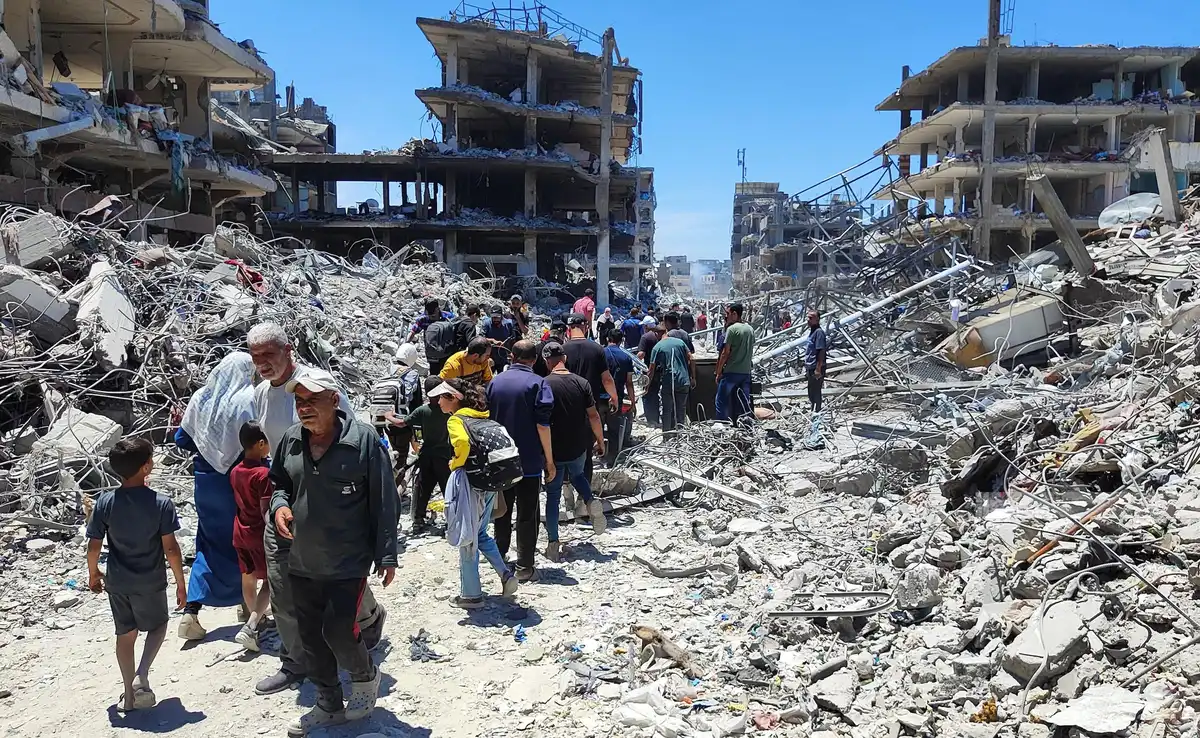
The bill was approved by a majority of 92 votes to 10, after years of harsh Israeli criticism of UNRWA, which has increased since the start of the war in Gaza following the Al-Aqsa flood on October 7 of last year.
In this context, Israeli Prime Minister Benjamin Netanyahu said that UNRWA employees must be held accountable for what he described as “terrorist activities” against Israel.


In a post on the X platform, Netanyahu also said that sustainable humanitarian aid must remain available in Gaza “now and in the future.”

For its part, UNRWA condemned the decision, describing the move as "shameful."

"It is outrageous that a UN member state is dismantling a UN agency that is also the largest responder to the humanitarian operation in Gaza," UNRWA spokeswoman Juliette Touma told AFP.


The United States, for its part, expressed "deep concern" on Monday about the bill to ban UNRWA, with State Department spokesman Matthew Miller telling reporters, "We have made clear to the government of Israel that we are deeply concerned about this proposed legislation," stressing the agency's "critical" role in distributing humanitarian aid in the Gaza Strip.

PALESTINE

Mon 28 Oct 2024 9:27 pm - Jerusalem Time

USAID Provides $45.5 Million to East Jerusalem Hospital Network

The United States government, through USAID, announced an additional $45.5 million in assistance to the East Jerusalem Hospital Network, which continues to provide essential, life-saving care to tens of thousands of Palestinians.

“The East Jerusalem Hospital Network plays a critical role in providing quality health care to thousands of Palestinian patients from across the West Bank and Gaza. This additional funding underscores our commitment to ensuring the physical and mental health of the Palestinian people,” said Amy Tohill-Stoll, USAID Mission Director for the West Bank and Gaza. “By addressing the financial, technical, and operational challenges facing the East Jerusalem Hospital Network, we are strengthening the health care infrastructure that is essential to the communities we serve.”

This funding fulfills a $100 million commitment to the East Jerusalem Hospital Network announced by President Joe Biden during his visit to the region in July 2022. The funding will ensure continued access to critical care by providing $27 million in direct debt relief to hospitals and $18.5 million to enhance the long-term sustainability of member hospitals through the rehabilitation and renovation of health care facilities, capital investments, equipment purchases, specialized training, and technical assistance.

Amid ongoing challenges in the region, USAID remains committed to partnering with local institutions to promote stability and development. Through this assistance, USAID is strengthening the East Jerusalem Hospital Network’s ability to sustainably deliver essential services, maintain operations during challenging times, and ensure families receive the care they need. This assistance builds on USAID’s historic support to the East Jerusalem Hospital Network, totaling more than $202 million since 2014, and will help hospitals achieve financial independence by increasing revenue streams, expanding their client base, and adopting more efficient practices.

PALESTINE

Mon 28 Oct 2024 8:31 pm - Jerusalem Time

Nineteen dead in Gaza and Israeli occupation cuts off the paths of 100 thousand Palestinians in the north

At least 19 Palestinians were killed in the Israeli occupation army's attacks on the Gaza Strip on Monday, 13 of them in the northern part of the Strip, where the occupation tanks penetrated to cut off the path of about 100 thousand Palestinians there, in conjunction with its continued aggression on hospitals in northern Gaza.

The Gaza Health Ministry said at least 19 people were killed in Israeli air strikes and shelling today, 13 of them in the north of the devastated coastal enclave.

In an updated census of the number of victims of the Israeli aggression, the ministry said today that the ongoing Israeli attacks since October 7, 2023 have resulted in the martyrdom of more than 43,020 Palestinians and the injury of 101,110, with the destruction of most of the densely populated Strip.

For its part, the Palestinian Civil Defense reported that about 100,000 people were stranded in Jabalia, Beit Lahia and Beit Hanoun, and were left without medical or food supplies, adding that its operations had stopped due to the renewed Israeli attack on northern Gaza three weeks ago.

For its part, the Israeli occupation army claimed that "the operations aim to eliminate militants from the Islamic Resistance Movement (Hamas) who are reorganizing their ranks."


The occupation army added - in a statement today - that its soldiers "arrested about 100 suspected Hamas members during a raid on Kamal Adwan Hospital in Jabalia camp, including dozens who tried to flee the hospital when the forces entered. Combat equipment, money allocated to finance terrorist activities, and intelligence documents were found."

But Hamas and medics denied Israeli allegations that there were any militants in the hospital.

Running out of medicine and fuel

Meanwhile, the three hospitals in northern Gaza, whose officials refused to comply with Israeli military orders to evacuate them, said they were “almost non-functional.” At least two of them had been damaged by Israeli shelling, and stocks of medicine, food and fuel had run out.

Only one pediatrician remained at Kamal Adwan Hospital, which has a staff of about 70, after Israel "arrested and deported them," the health ministry in Gaza said Monday.

Last week, at least one doctor, one nurse and two sick children died in these hospitals due to lack of treatment.


Source: Al Jazeera

ARAB AND WORLD

Mon 28 Oct 2024 8:24 pm - Jerusalem Time

Saudi Arabia to host first high-level meeting of 'Two-State Solution Coalition' next Wednesday

The Kingdom of Saudi Arabia announced today, Monday, that it will host the first high-level meeting of the "Global Alliance for the Two-State Solution" in the capital, Riyadh, next Wednesday.

This came according to what was stated by Saudi Deputy Foreign Minister Walid Al-Khuraiji, at the Ninth Regional Forum of the Union for the Mediterranean, held in the Spanish city of Barcelona, according to a statement by the Saudi Ministry of Foreign Affairs.

Al-Khuraiji stressed, "The importance of enhancing the efforts made by the Union for the Mediterranean to enhance regional security, especially at this time when the region needs to take practical and decisive steps to stop the ongoing escalation, violence and destruction."

He added: "The Israeli aggression in Gaza and Lebanon has brought the region to a critical crossroads, putting the international community before two fateful choices: either to act effectively to support international law and promote the two-state solution, or to risk further escalation and deepening suffering, which will undermine the credibility of international efforts to maintain peace and security in the region."

He said that the humanitarian crisis in Palestine and Lebanon has reached an unbearable level, and the situation in the region cannot be allowed to deteriorate further, as innocent civilians continue to be systematically targeted, forcibly displaced and deliberately destroyed as a result of Israel's clear violations of international humanitarian law without accountability or punishment.

The Saudi Deputy Foreign Minister also reiterated the Kingdom's strong condemnation of the Israeli attacks on civilians and workers in the United Nations and its agencies, including UNRWA and UNIFIL, stressing the Kingdom's rejection of the expansion of illegal settlements in the West Bank and measures that affect the legal and historical status of Jerusalem, calling for an end to these measures in order to avoid prolonging the cycle of violence and destruction.

He added, "Rhetorical condemnations are no longer sufficient to deter violence, which requires bold and decisive decisions. In this context, we look forward to hosting the first high-level meeting of the Global Alliance for the Two-State Solution in Riyadh on October 30."

He pointed out that implementing the two-state solution is a collective international responsibility, and the only way to achieve lasting peace and recognize the right of the Palestinian people to self-determination and the establishment of their independent state, which is the basic condition for ensuring stability in the region. He also stressed the Kingdom's commitment to cooperating with partners to transform the two-state solution from a distant hope into a tangible and imminent reality.

On September 27, Saudi Foreign Minister Prince Faisal bin Farhan announced the launch of an international coalition to establish a Palestinian state and implement the two-state solution, during a ministerial meeting on the Palestinian issue and peace efforts, held on the sidelines of the 79th session of the United Nations General Assembly in New York City, USA.

The ministerial meeting (on the situation in Gaza and the implementation of the two-state solution as a path to just peace) was organized by the Ministerial Contact Group of the League of Arab States, the Organization of Islamic Cooperation, the European Union, and Norway.

PALESTINE

Mon 28 Oct 2024 7:07 pm - Jerusalem Time

Israeli occupation forces storm several villages and towns in Ramallah

This evening, Monday, the Israeli occupation forces stormed several villages and towns in the Ramallah and Al-Bireh Governorate.


Security sources reported that an occupation army force stormed the town of Birzeit, north of Ramallah, and took up positions in the old town, while other forces stormed the towns of Abu Qash and Abu Shkheidam and the village of Barham near Birzeit, without any arrests or clashes being reported.


The same sources added that the occupation forces stormed the town of Kobar, northwest of Ramallah, without any arrests or clashes being reported.

ARAB AND WORLD

Mon 28 Oct 2024 6:22 pm - Jerusalem Time

Netanyahu: We want Iran to pay the price and prevent it from becoming a nuclear power

Israeli Prime Minister Benjamin Netanyahu said that Iran is seeking to develop nuclear bombs aimed at destroying Israel and possesses intercontinental missiles, and that their goal is to make it pay the price while preventing it from becoming a nuclear state.

Netanyahu's remarks came during a ceremony to lay the foundation stone for a memorial to Israelis killed in Operation Protective Edge, in parliament during the opening of its winter session in Jerusalem, today.

The following are the most important points in Netanyahu's statements:

  • We are facing a different challenge that threatens us, the Middle East and the whole world.
  • Iran seeks to develop nuclear bombs aimed at destroying us and possesses long-range intercontinental missiles.
  • Iran is supplying its proxies with deadly weapons and we are standing in their way and foiling their evil plans.
  • We struck major factories in Iran and I thank our allies, especially the United States, for their continued cooperation.
  • We struck Iranian defense systems and the missiles that Iran was directing at us.
  • We want Iran to pay the price and prevent it from becoming a nuclear state.
  • We attacked Iran extensively and its arms in the region lost a great deal of ability to defend it.
  • Our long-term strategy, which I hope to achieve as soon as possible, is to destroy the axis of evil and cut off its arms in the north and south.
  • If Israel falls, the whole world will fall, but we will not lose and we will be victorious for all of humanity.
  • We have stood on our feet and directed a relentless war against our enemies that is changing the face of the Middle East.
  • We have not returned all the hostages, but we will return the living and the dead.
  • We eliminated those responsible for attacking us on October 7 and destroyed Hamas's infrastructure.
  • The next day, Hamas will not rule Gaza and Hezbollah will not be deployed on our northern border.
  • The Arabs used to want to destroy us, but we made peace with Egypt, Jordan, and recently with 4 Arab countries.
  • I am working to continue concluding peace agreements with additional Arab countries within the framework of the Abraham Accords.

ARAB AND WORLD

Mon 28 Oct 2024 5:13 pm - Jerusalem Time

Israeli raids on the Lebanese city of Tyre


The Lebanese National News Agency reported on Monday that the Israeli army launched a series of raids on the coastal city of Tyre in southern Lebanon, after issuing evacuation orders to residents of several neighborhoods there.


The agency reported, "The enemy aircraft launched its first raid after the Israeli threat on the city of Tyre, targeting a residential apartment on Afran Bahr Street," adding later that it "launched a series of raids."


For its part, the Civil Defense in the city confirmed that it could not enter the targeted neighborhoods due to the intensity of the raids.