ARAB AND WORLD

Thu 07 Nov 2024 10:58 am - Jerusalem Time

Israeli occupation targets a car on Al-Jumhur Road and raids on the south and the suburb in Lebanon

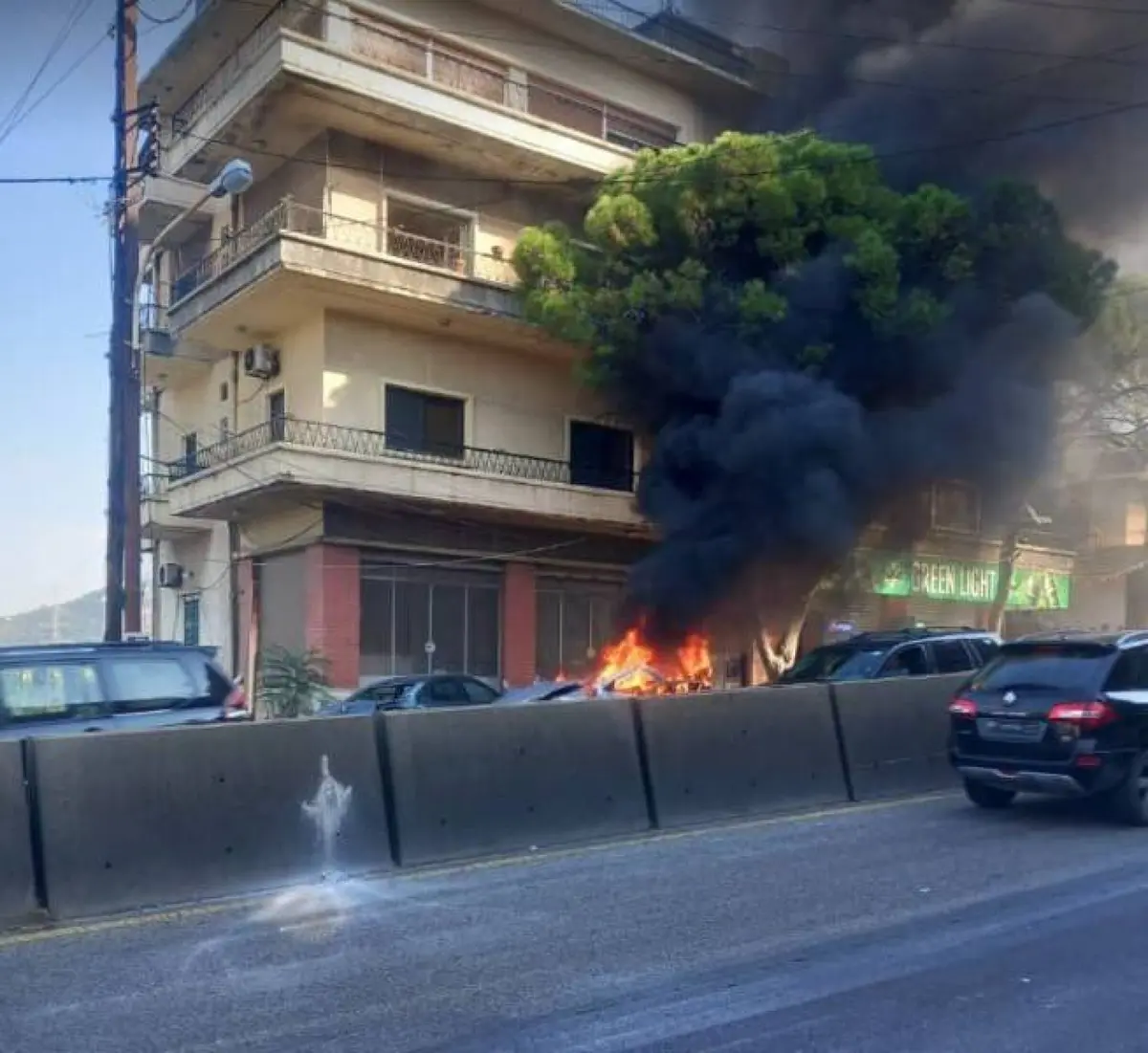
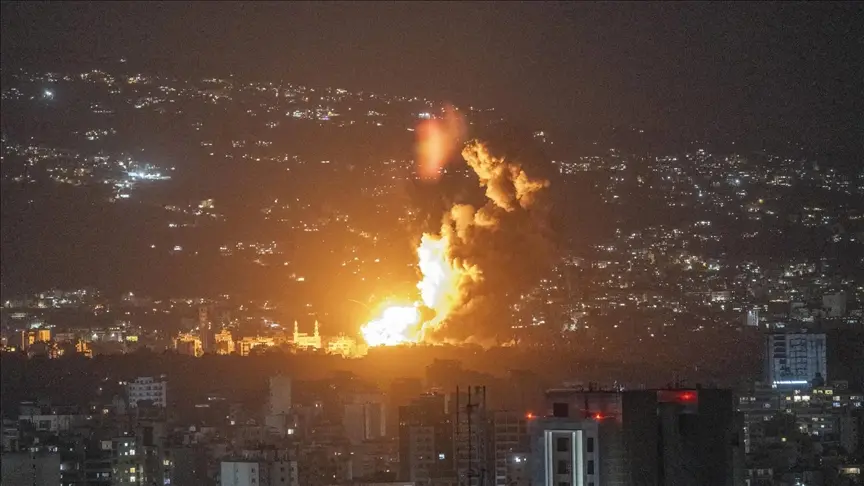
Lebanese media reported that an Israeli airstrike targeted a car on the Araya-Al-Jamhour road, opposite the Church of Our Lady in Mount Lebanon, today (Thursday), which is a main road leading to Beirut.


The Traffic Control Room announced that traffic was cut off on the international road, in the Araya area, towards the public, due to a major security incident.


According to Lebanese media, the Israeli drone fired two missiles; the first did not hit the target, so the second was dropped on the car.


Last night (Wednesday) and this morning, the Israeli warplanes launched a series of raids targeting a number of areas in southern Lebanon and the southern suburbs of Beirut. The Israeli artillery also bombed a number of southern towns.


This morning, Israeli warplanes raided the center of the town of Yahmar al-Shaqif in southern Lebanon, its outskirts, and its eastern side. Israeli artillery shelled the outskirts of the town and its surroundings with internationally banned cluster bombs.


At night, the Israeli warplanes launched a series of violent raids on the southern suburbs of Beirut, targeting the Ouzai area with 3 raids, Harat Hreik, Harat Baajour, and Tahwitat al-Ghadeer, according to what was announced by the official Lebanese National News Agency.


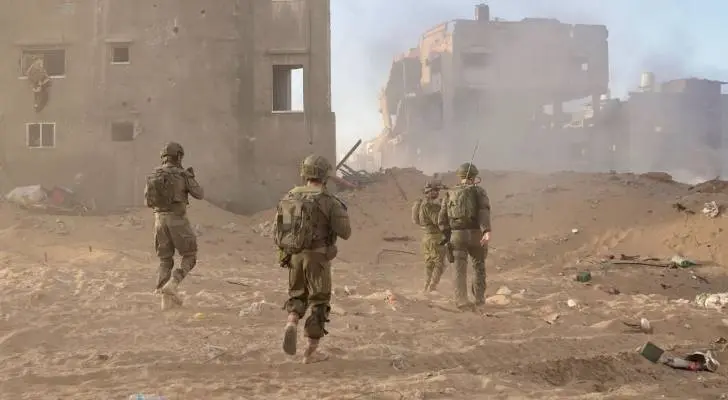
The outskirts of the towns of Rmeish and Yaroun in southern Lebanon have witnessed violent clashes since midnight between Hezbollah elements and Israeli soldiers. Clashes with machine guns were also recorded between the two parties on the outskirts of the southern town of Aita al-Shaab when Israeli forces attempted to infiltrate Lebanese territory, according to the National News Agency.


At night, Israeli warplanes raided a house in the southern town of Al-Bazouriyeh, killing 4 people and wounding 3. They also raided the towns of Sultaniyeh, Deir Antar, Al-Jumaijmeh, Al-Barghliyeh, Burj Al-Haw, Al-Qasimiyeh, Tariq Al-Abbasiyah, Shaqra, Hadatha and Majdal Salm in southern Lebanon. The towns of Hadatha and Majdal Salm and the outskirts of the town of Kounine were subjected to intermittent artillery shelling that continued until dawn.


It is noteworthy that since September 23, Israeli warplanes have begun launching a wide series of raids that are still ongoing, targeting a number of areas in southern Lebanon, the Bekaa Valley in eastern Lebanon, the capital Beirut, the southern suburbs of Beirut, Mount Lebanon and its north. On October 1, the Israeli army began a concentrated ground operation in southern Lebanon.

PALESTINE

Thu 07 Nov 2024 10:01 am - Jerusalem Time

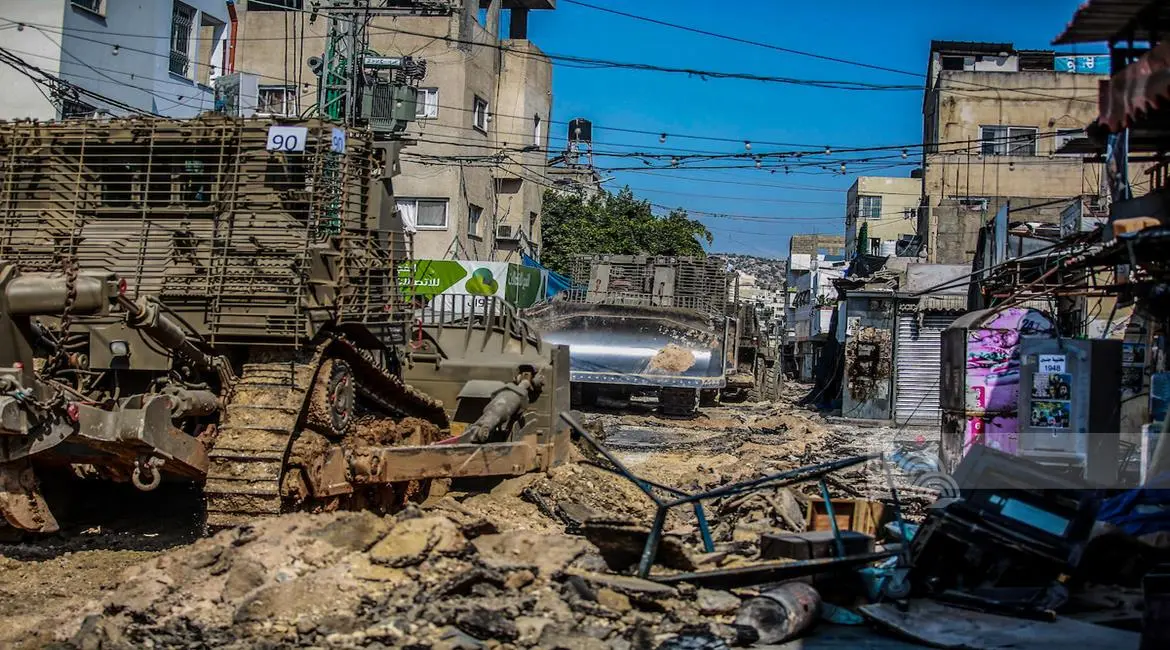
A Palestinian shot by Israeli forces in Tulkarm camp

The Ministry of Health announced, this Thursday morning, the death of a young man by Israeli occupation bullets in Tulkarm camp.


The ministry confirmed in a brief statement that the martyr arrived at Tulkarm Governmental Hospital from Tulkarm camp.


The Red Crescent Society reported that its crews were able to transfer the martyr Harith Muhammad Awfi, (22 years old) from inside the camp to the Martyr Thabet Thabet Governmental Hospital in the city.


According to local sources, the martyr Aoufi was shot in the heart by a sniper stationed in one of the camp's courtyards while he was there.


It added that he was transferred by ambulance volunteers outside the camp and handed over to a Red Crescent ambulance, because the occupation prevented it from entering the camp.


This morning, an occupation drone bombed sites in the camp twice, resulting in five citizens being injured by shrapnel, one of whom was a woman and her disabled son.

PALESTINE

Thu 07 Nov 2024 9:50 am - Jerusalem Time

Israeli colonial settlers seize land in the northern Jordan Valley

Israeli settlers seized a plot of land in Al-Farisiya in the northern Jordan Valley and planted it with olive trees.


According to local sources, the settlers seized a plot of land estimated at five dunams, belonging to citizens from Tubas, and planted it with dozens of olive trees.


She added that the seized land is planted annually by citizens with rainfed crops.


About two weeks ago, settlers seized a plot of land in the same area and planted it with olive trees.

OPINIONS

Thu 07 Nov 2024 9:11 am - Jerusalem Time

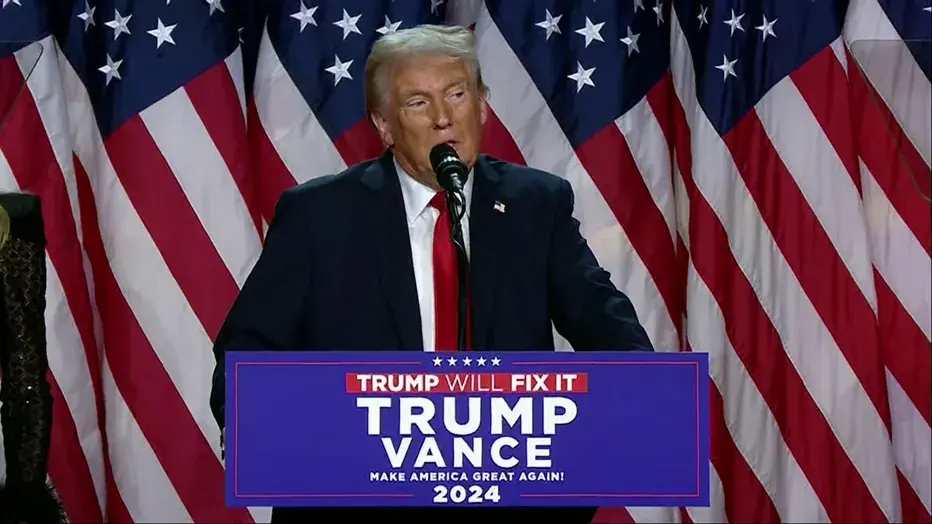
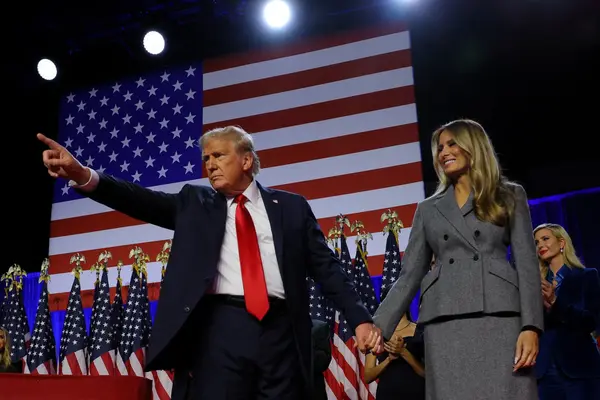
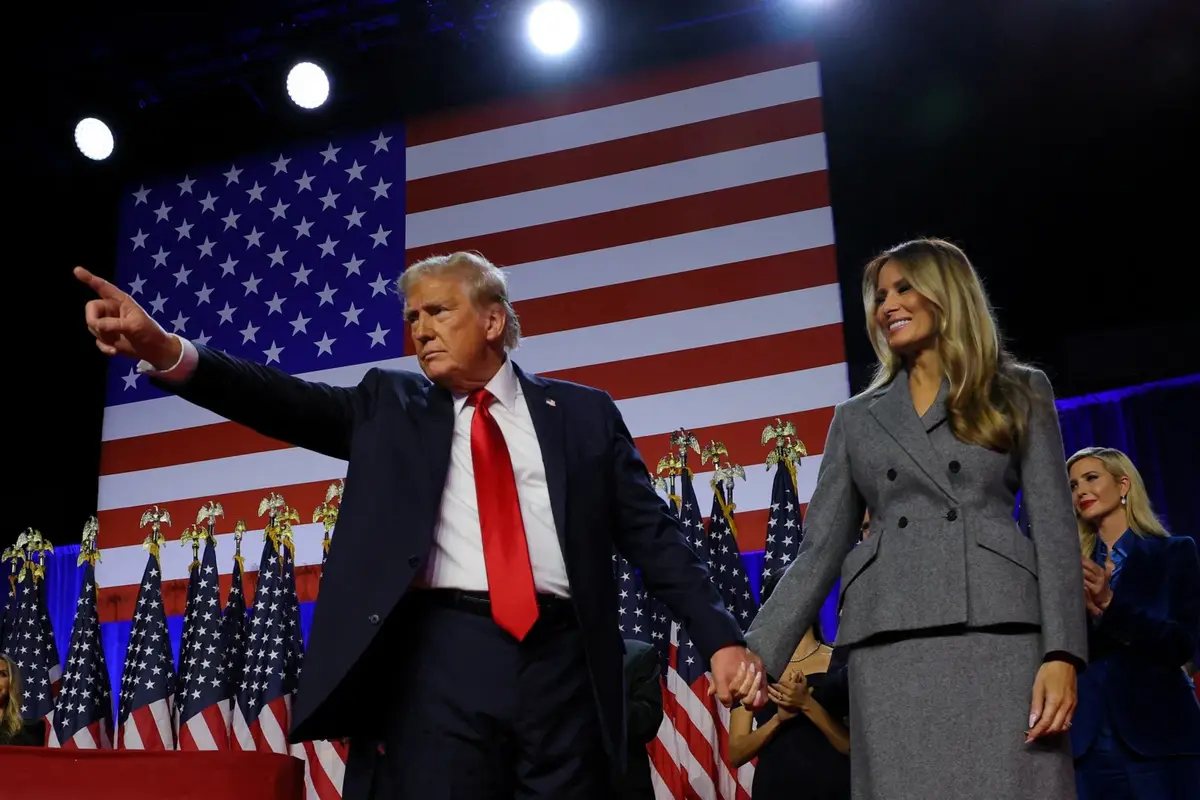
Why did Israel celebrate Trump's victory?

op-ed "AlQuds" dot com

op-ed "AlQuds" dot com

Opinion Writer

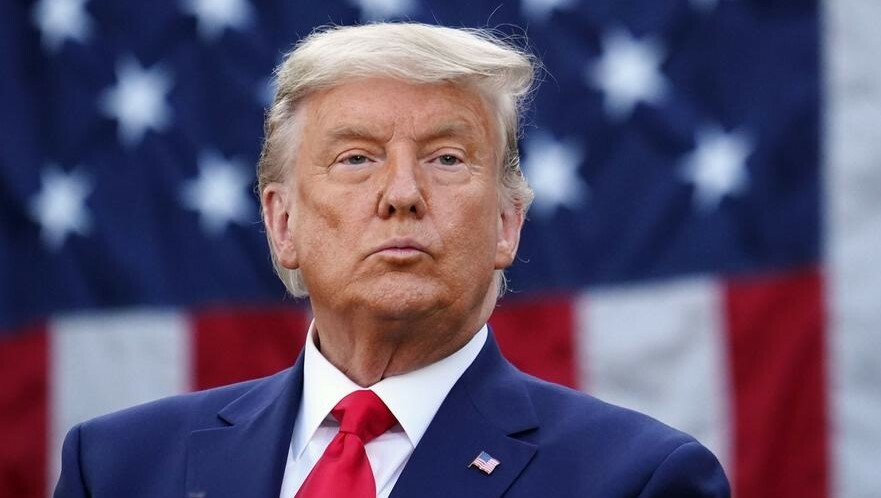
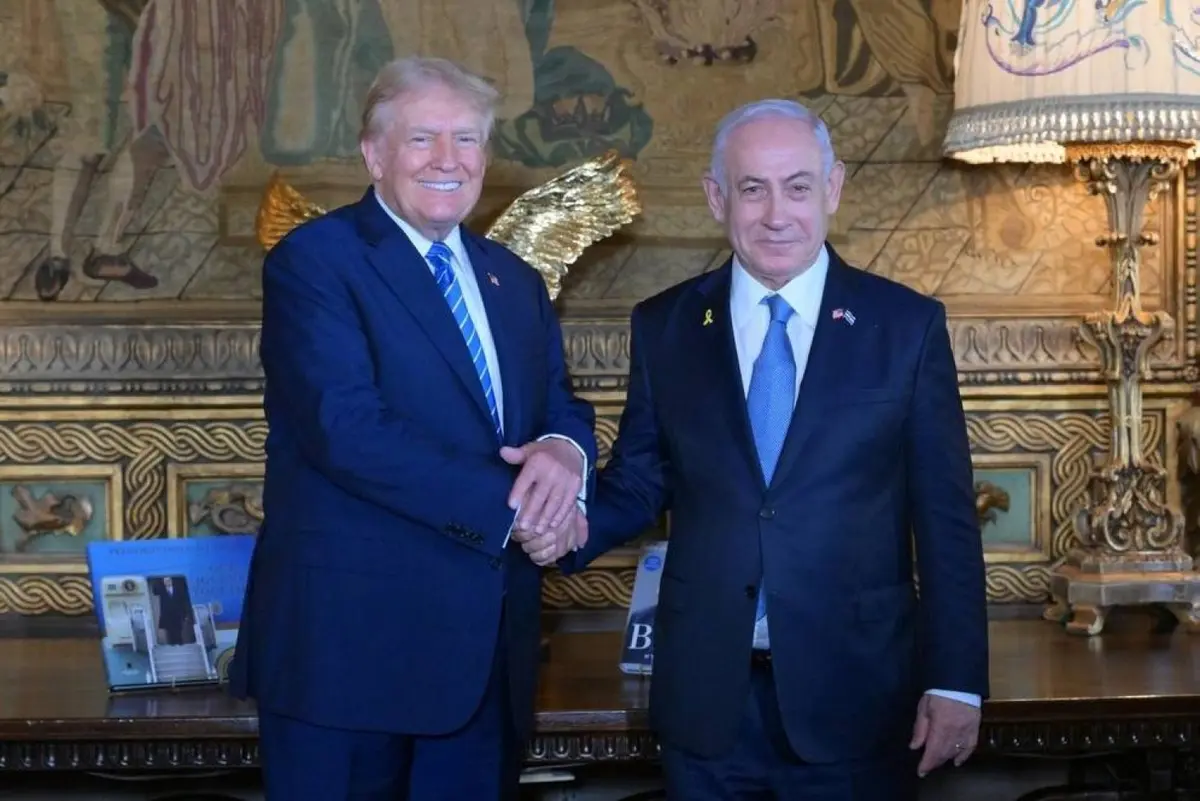
Israel rejoiced greatly at Donald Trump’s victory in the US presidential elections, to the point that Israeli Prime Minister Benjamin Netanyahu went so far as to describe Trump’s victory as the greatest comeback in history. Ben-Gvir and Smotrich said: “God save America... God save Israel, and good luck to Trump.” Netanyahu rushed to call Trump on the morning of November 6, New York time, to congratulate him in a 20-minute call.


There are many reasons behind this Israeli feeling of victory, and even if Kamala Harris had been the winner, American policy towards the Middle East would not have changed, because it is based on strategic principles, at the forefront of which is the issue of preserving Israel’s security, and strengthening the bonds of friendship and cooperation with it, as it is the United States’ largest partner and ally in the region. The first of these reasons is that Trump is characterized by impulsiveness and direct attacks, which gives Netanyahu and his ruling clique more time to continue the aggression on the Gaza Strip, and even intensify it, especially before Trump’s inauguration next January. This is a sufficient period for the Israeli Prime Minister to restructure the war from a new angle that may be long, especially since Israeli estimates indicate that the (obsessed) Trump will not pay attention to the issue of humanitarian aid, which pertains to the Gaza Strip, and thus will allow Israel to continue its aggression until the end.


Although Israeli analysts claim that Trump will quickly close the file of the Lebanese war, this issue does not go beyond the scope of estimates based on analyses that may most likely be inaccurate. Therefore, the war on Lebanon may also continue for a longer period, given the tactical step taken by Netanyahu to dismiss his Minister of Defense, Yoav Galant, and hand over the task of commanding the army to Yisrael Katz, whose personality appears to be very extremist. He is inclined to expel the residents of Gaza and displace them from the Strip, and his ideas are in line with the extremists within the right-wing government who demand the elimination of Hamas and Hezbollah as agents of Iran in the region.


The most dangerous thing about Trump’s solutions to the American leadership is his constant quest to create a new Middle East according to his own standards and criteria that will put the Palestinian cause before dangerous turns and challenges through his support only for an independent Palestinian entity far from the two-state solution, according to the deal of the century that Trump will try to reactivate, which the Palestinians rejected and will reject again, because it means eliminating the cause of an entire people, in addition to the possibility of giving Israel the green light to impose its sovereignty over the West Bank, which is what the extremists in the Israeli government are seeking.


As for Iran, there is a golden opportunity for Netanyahu to receive full support from Trump in an attempt to liquidate Iran’s nuclear programs. The United States may intervene directly if Trump acts rashly, which is an adventure that may be a trap set by Netanyahu to trap the new American president, especially since Trump will try with all his might to use the military option to end this file, because the option of peaceful negotiations does not appeal to Netanyahu and his government.


All the time available until Trump’s inauguration is time in Israel’s favor, as we mentioned, to continue its rampage in the Middle East and its blatant aggression against the Gaza Strip and Lebanon. When Trump officially appears from the White House window, many questions will be raised about the future of the Middle East and the Palestinian cause. The answer seems to have been read from the title, which indicates that the Israelis’ joy was not spontaneous, but rather there are many fundamental reasons behind it that confirm that Trump will be more Israeli than the Israelis themselves, and will give them more time to continue their satanic role in the region. However, if some wonder about the possibility of Netanyahu ending the war in Gaza early in Trump’s term, this will be considered a gift to grant the new president a quick diplomatic victory, but on condition that joint coordination channels are maintained for many other conspiracies against the Palestinian cause in particular, and the future of the Middle East in general.

OPINIONS

Thu 07 Nov 2024 9:01 am - Jerusalem Time

Harris got most US Jewish votes, lagged behind in Arab-American heartland

New Arab

New Arab

Opinion Writer

Trump’s efforts focused on discouraging both Muslim and Jewish voter turnout, a strategy that may have paid off.


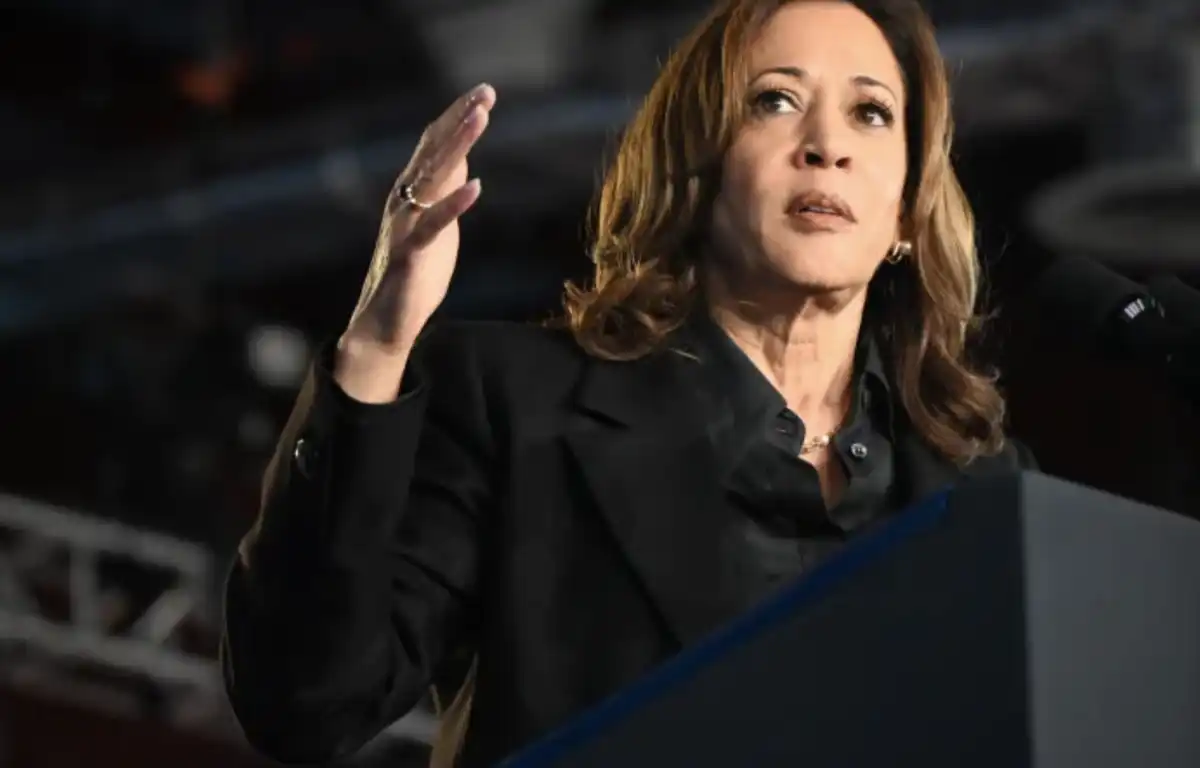
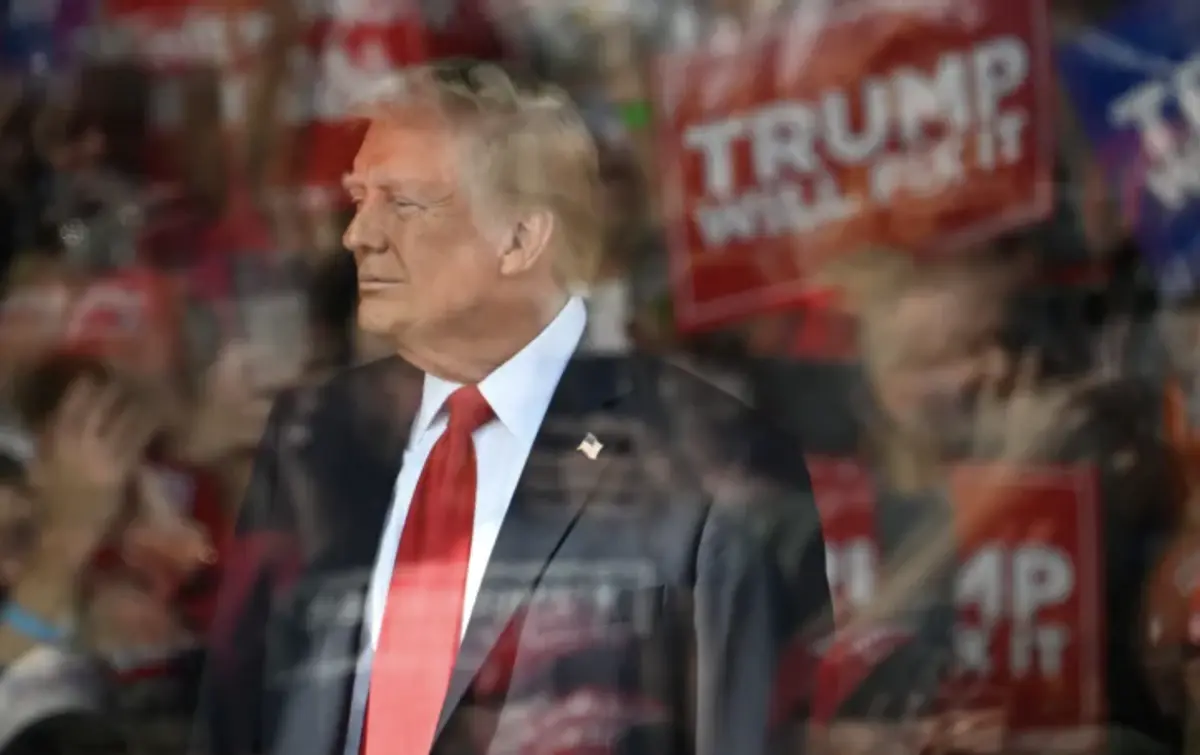
Democratic presidential candidate Kamala Harris won a greater share of the Jewish American vote than the Muslim American vote, according to an AP exit poll following Republican candidate Donald Trump’s election victory. 

Exit polls showed that Harris secured 67% of the Jewish vote, compared to Trump’s 31%.

Among Muslim Americans, Harris received 61% of the votes, with Trump close behind at 30%. 

In 2020, Joe Biden garnered 69% of the Jewish American vote, while Trump received 31%. Biden also held 63% of the Muslim American vote, compared to 25% for Trump. 

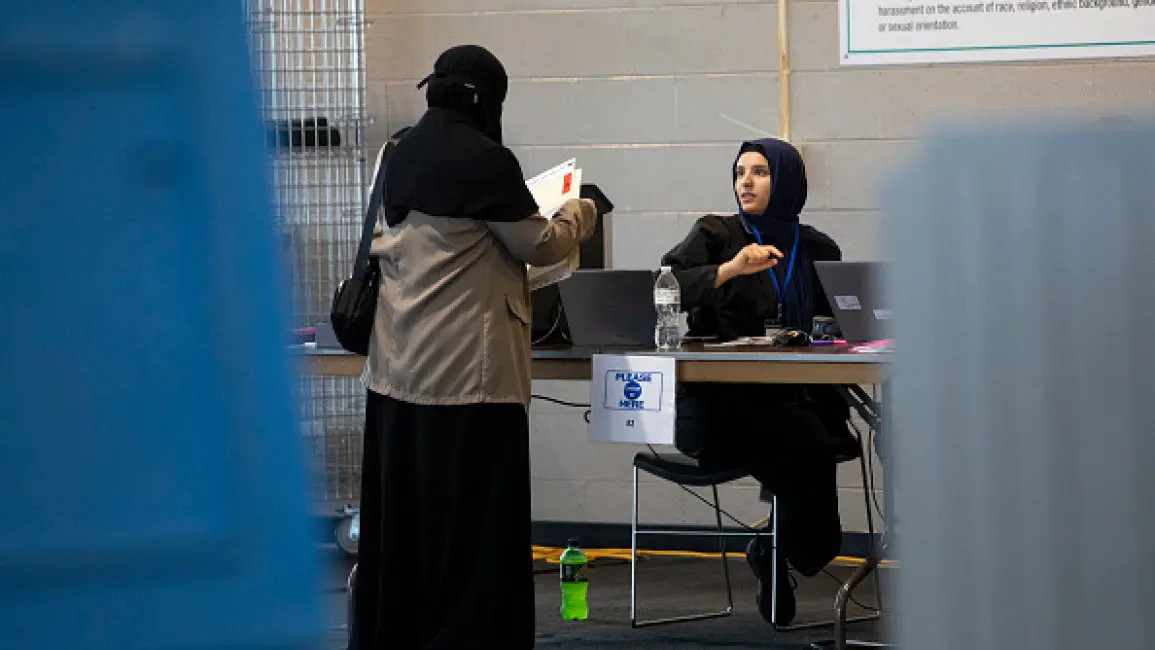
In Dearborn, Michigan—home to one of the largest Arab populations in the US and a crucial swing city in a key battleground state—Trump won 45% of the vote, though the final count is pending. 

 Additionally, Green Party leader Jill Stein attracted 15% of former Harris supporters. 

The Biden administration’s near-unqualified support for Israel's brutal war on Gaza influenced the presidential race outcome. 

 Among voters opposed to continued US support for Israel, 55% backed Harris, while 40% sided with Trump.  

This election marks a sharp shift in Dearborn, where Democrats won 88% of the vote for Biden in 2020. 

Maysa Hamdan, a 52-year-old Palestinian-American resident of Dearborn who voted for Jill Stein, told The New Arab that Kamala Harris's failure to distance herself from President Joe Biden's pro-Israel policies had led to her defeat.

“It was Kamala’s administration that failed. She could’ve done better, she could’ve distanced herself from Biden and said she would do things differently, but she didn’t. And Jill Stein did. Even Trump did, even though he lied. In one rally he’d say I’m for the Israelis and in another he’d say I’m for the Arabs.” 

Historically, Arab-American voters in Michigan have favoured Democratic candidates in recent elections, but the Democrats' support for Israel as it waged brutal wars on Gaza and Lebanon may have weakened that support. 

The shift among Michigan’s Arab-Americans and other voters critical of Harris’s Middle East stance may have been pivotal. 

Earlier this year, around 100,000 Michigan Democrats voted “uncommitted” in the presidential primary as a protest against the Gaza conflict, rather than supporting Biden. 

Harris, although appearing to show more sensitivity toward Palestinian and Lebanese civilians than Biden, has remained aligned with his strong support for Israel, promising to continue military aid.  

This led to significant defections to Green party candidate Jill Stein or even Trump. 

The Abandon Harris campaign, which organised protests against the Democratic candidate, officially endorsed Stein, highlighting the anger and dissatisfaction many Arab and Muslim voters felt with both major US parties over their pro-Israel policies. 

Stein gained traction among Arab and Muslim communities amid the Gaza and Lebanon wars, as previous polls indicated. 

Meanwhile, in the final days of the campaign, Trump actively sought to attract Arab and Muslim voters despite his history of anti-Arab and Islamophobic rhetoric. 

Despite pledges to reinstate the controversial 'travel ban' on Muslim-majority countries and claims that Harris "wants to deposit thousands of jihadist sympathisers in Minnesota" while asserting Democrats aim to “turn the Midwest into the Middle East,” some Arab and Muslim voters have overlooked Trump’s remarks.  

They argue that Muslim communities thrived during his presidential term despite his bigoted comments and policies.

A Yemeni American woman told The New Arab that, while Trump "has his cons," he offered a preferable choice over Harris due to economic policies , noting that she and her family had supported Trump since 2020. 

Early on Wednesday, Trump surpassed the 270 electoral votes required and was declared the election winner by major US media organisations.  

Trump secured critical battleground states, including Georgia, North Carolina, Pennsylvania, and Wisconsin—three of which voted Democratic in the previous election—giving him 276 electoral college votes.  

Harris stands at 219 electoral college votes. 

ARAB AND WORLD

Thu 07 Nov 2024 8:54 am - Jerusalem Time

Features of Trump's expected foreign policy in his next presidential term

Experts believe that former US President Donald Trump’s election victory marks the beginning of another rollercoaster ride in US foreign policy. The president-elect is poised to bring back the hallmarks of his first term: a trade war with China, a deep skepticism—even hostility—to multilateralism, a penchant for strongmen, and a transgressive, transactional diplomacy. Those close to him have leaked that President Trump will pursue a “peace through strength” approach.


But this second term will bring new challenges—not least the wars in the Middle East and Ukraine, in which the United States is deeply involved. Trump has promised to end the war in Ukraine before he takes office, but he has yet to offer a detailed plan; his plans for Middle East peace are equally vague.


While Trump’s plans may be unclear, Foreign Policy delved into his track record, as well as his statements and those of his advisers, to provide clues about what the future of American foreign policy holds. As Trump’s first term showed, his own whims often clashed with his advisers’ agendas; this time around, he may have a tighter grip on the steering wheel as a second-term president, having supposedly learned a lot since taking office on January 20, 2017, particularly in selecting his foreign policy and national security staff.


Unless Israel’s wars in Gaza and Lebanon are fully ended before Trump is inaugurated — which seems unlikely — one of the most pressing foreign policy issues on his desk will be the rising tensions in the Middle East, experts say. Trump has spoken of the need to end the war in Gaza, claiming last August that he told Israeli Prime Minister Benjamin Netanyahu to “win” because “the killing has to stop.”


It is unclear what role, if any, the next administration will play in trying to end the war. Trump has criticized the Biden team’s call for a ceasefire, describing it as an attempt to “tie Israel’s hands behind its back” and saying a ceasefire would only give Hamas time to regroup.


During his first term, Trump verbally supported a two-state solution to the Israeli-Palestinian conflict while keeping his thumb on the scale, and gave Israel a series of long-sought diplomatic prizes such as moving the U.S. embassy to Jerusalem, recognizing occupied Jerusalem as Israel’s capital, cutting funding to the United Nations Relief and Works Agency for Palestine Refugees, UNRWA, and upending decades of U.S. policy by recognizing Israeli sovereignty over the Golan Heights and declaring that Israeli settlements in the West Bank do not violate international law.


Trump has previously said he has “fought more for Israel than any president before,” and his administration’s role in brokering the Abraham Accords — a series of diplomatic agreements between Israel and a number of Arab states — was seen as one of his major foreign policy victories. The Biden administration has continued these efforts, working tirelessly to achieve normalization between Saudi Arabia and Israel, which stalled or was frozen after October 7, 2023.


While Netanyahu and Trump had warm relations during his first term, things soured after the Israeli leader congratulated Biden on his 2020 election victory a day after the race was called, angering Trump. His tone toward Israel in recent months has been sometimes harsh, with Trump warning in April that Israel was “losing the PR war” over the devastation it is wreaking on Gaza.


Trump will also push forward with his so-called “deal of the century” plan, adopted at the White House in January 2020, which gives Israel more than 30% of the occupied West Bank, while calling on his allies like former (and possibly incoming) Secretary of State Mike Pompeo, his former ambassador to Israel, David Friedman, and others to allow Israel to annex the occupied West Bank.


Trump heads into a second term at a time when the wider Middle East has been engulfed in wars, with clashes between Israel and Iranian allies in Lebanon, Yemen and beyond. This year has seen Israel and Iran directly exchange missile and drone fire for the first time. While the Biden administration has sought to calm tensions, urging Israel not to strike Iranian nuclear and energy facilities in a recent wave of retaliatory strikes, Trump is likely to be less cautious, saying in October that Israel should “hit the nukes first and worry about the rest later.”


It is noteworthy that the first Trump administration had taken a tough stance towards Iran, withdrawing from the nuclear agreement, continuing the policy of “maximum pressure” on the regime, and assassinating the commander of the “Quds Force” of the Islamic Revolutionary Guard Corps, Qassem Soleimani, in an air strike on December 3, 2020.


Speaking to reporters in September, Trump said he would be open to making a new deal with Iran to prevent the country from developing a nuclear weapon. “We have to make a deal, because the consequences are impossible. We have to make a deal,” he said, without offering further details about what such negotiations might entail.


While Trump has sought to scale back U.S. military involvement in Iraq and Afghanistan, he is not entirely averse to using U.S. military force to achieve clear goals, Robert Greenway, who served as senior director for the Middle East on Trump’s National Security Council, told Foreign Policy. That could include preventing Iran from joining the short list of countries with nuclear weapons. “The military option may be the only viable option left to prevent Iran from developing a nuclear weapon,” Greenway said.


Policy towards China


On China policy, to some extent, President Joe Biden will pass the baton to Trump. The current Biden administration has inherited (and adopted) much of Trump’s more hawkish approach to China, and a second Trump term is likely to continue to define China as the United States’ foremost national security challenge. But on specific issues—and certainly the overall tone—a second Trump term will bring significant changes.


As in his first term, Trump has made trade his top priority. “Tariffs” is “the most beautiful word in the dictionary,” Trump told the Wall Street Journal in an October interview, and his most obvious priority when it comes to China is to restart the trade war he started in 2018.


Trump’s campaign website calls for reducing U.S. dependence on China for all essential goods. But that’s just the beginning. Biden has maintained Trump’s original tariffs and added a few more; Trump is clearly prepared to go much further. By promising to impose tariffs of at least 60% on all imports from China, Trump will come close to the complete decoupling of the world’s two largest economies that some of his closest advisers have embraced.


Such a move, experts say, would further strain already tense bilateral relations and cost American families thousands of dollars a year and U.S. exporters one of their largest markets. But the effects of an aggressive trade policy toward China would also alienate other potential U.S. friends and allies.


Experts point out that China still relies heavily on exports to drive its growth, and measures designed to weaken that key growth driver, such as Trump’s tariffs, would also dampen Chinese demand for manufacturing requirements, including energy and metals. That would be bad news for U.S. neighbors like Peru, Chile and Mexico (all major copper exporters to China), U.S. ally Australia (a major iron ore and coal exporter), and U.S. ally Saudi Arabia, which is closely aligned with China and a major source of Chinese crude oil.


Beyond trade, Trump’s biggest starting point for a Biden administration could be Taiwan. During his campaign, Trump repeatedly cast doubt on the extent of future U.S. support, applying the same transactional approach he has taken with many (European) countries to the Taiwanese island. “Taiwan should pay us for defense,” he said in a July interview with Bloomberg Businessweek. “You know, we’re no different than an insurance company… Taiwan doesn’t give us anything.”


Such statements have led some China experts to believe that Trump will seek some kind of deal with Taiwan in exchange for more U.S. defense support.


Trump has shown admiration for Chinese President Xi Jinping, and likes to personalize relationships. “I have a lot of respect for President Xi,” he told Businessweek. “I’ve gotten to know him very well. I like him a lot. He’s a strong man, but I like him a lot.” Trump’s first term has shown him willing to buck his administration’s policies in favor of his own approach to Xi; that could happen again in his pursuit of a second trade deal.


Russia, Ukraine and NATO


Trump has criticized U.S. funding for Ukraine’s war effort and called on Europe to shoulder more of the burden of supporting Kiev. He called Ukrainian President Volodymyr Zelensky “the greatest salesman on earth” for the amount of money he was able to extract for Ukraine from the Biden administration, though he added: “That doesn’t mean I don’t want to help [Zelensky], because I feel very sorry for those people.” However, he has expressed doubts about Ukraine’s ability to defeat Russia.


Trump has claimed that it would take him just 24 hours to negotiate an end to the war between Russia and Ukraine and that he would do so before his inauguration on January 20, 2024. But details on how he intends to end the war are scarce. In a July 2023 interview with Fox News, Trump suggested that he would force Zelensky and Russian President Vladimir Putin to the negotiating table by telling the Ukrainian leader that Kyiv would not get any more U.S. aid and telling the Russian leader that Washington would significantly increase its aid to Kyiv if no deal was reached.


Trump has said little about what a negotiated settlement might look like, except that he wants to “see a fair deal.”


Vice President-elect J.D. Vance has offered some details on what such a deal might look like. Although he said Trump would leave it to the two warring nations as well as Europe to hammer out the details of a peace agreement, Vance suggested it would likely entail establishing a demilitarized zone along current battle lines, allowing Ukraine to retain its sovereignty while forcing it to give up some of its territory currently in Moscow’s hands, as well as ensuring that Ukraine remains neutral—meaning it would not join NATO or other “allied institutions.”


Analysts have noted that this closely resembles Putin’s terms for a ceasefire, which Ukraine and many of its allies — including the United States, Italy and Germany — have rejected.


Experts say Trump is far from being NATO’s biggest supporter, as is outgoing President Joe Biden, and the alliance is no fan of him either. Trump has criticized NATO members who don’t meet the bloc’s minimum defense spending target, and even encouraged Russia to “do whatever they want” to countries that don’t meet the 2% defense spending target. Eight of the 32 countries in the bloc don’t meet that requirement.


Before the election, NATO tried to make the alliance immune to Trump. Fearing that a second Trump term would slow or halt aid to Ukraine, the alliance ramped up production of major weapons and equipment and worked to strengthen its authority over training and supplies to Europe. At this year’s NATO summit in Washington, the alliance affirmed that “Ukraine’s future is in NATO” but declined to invite Kyiv to join or set a timetable for membership.


From Russia’s perspective, experts say, a second Trump presidency could pave the way for friendlier relations between Washington and Moscow, where the Kremlin has long favored the Republican leader over his Democratic rivals. Yet even the Russians are hesitant about Trump’s promises to end the conflict immediately.


Kremlin spokesman Dmitry Peskov said in September that such thinking was “in the realm of fantasy.” Since leaving office, Trump has reportedly spoken to Putin seven times. Trump has not confirmed the conversations, saying only that if he had had such conversations.


It is noteworthy that the Russian President did not congratulate Trump on his victory in the US presidency until the end of Wednesday, more than 24 hours after his victory.

ARAB AND WORLD

Thu 07 Nov 2024 8:51 am - Jerusalem Time

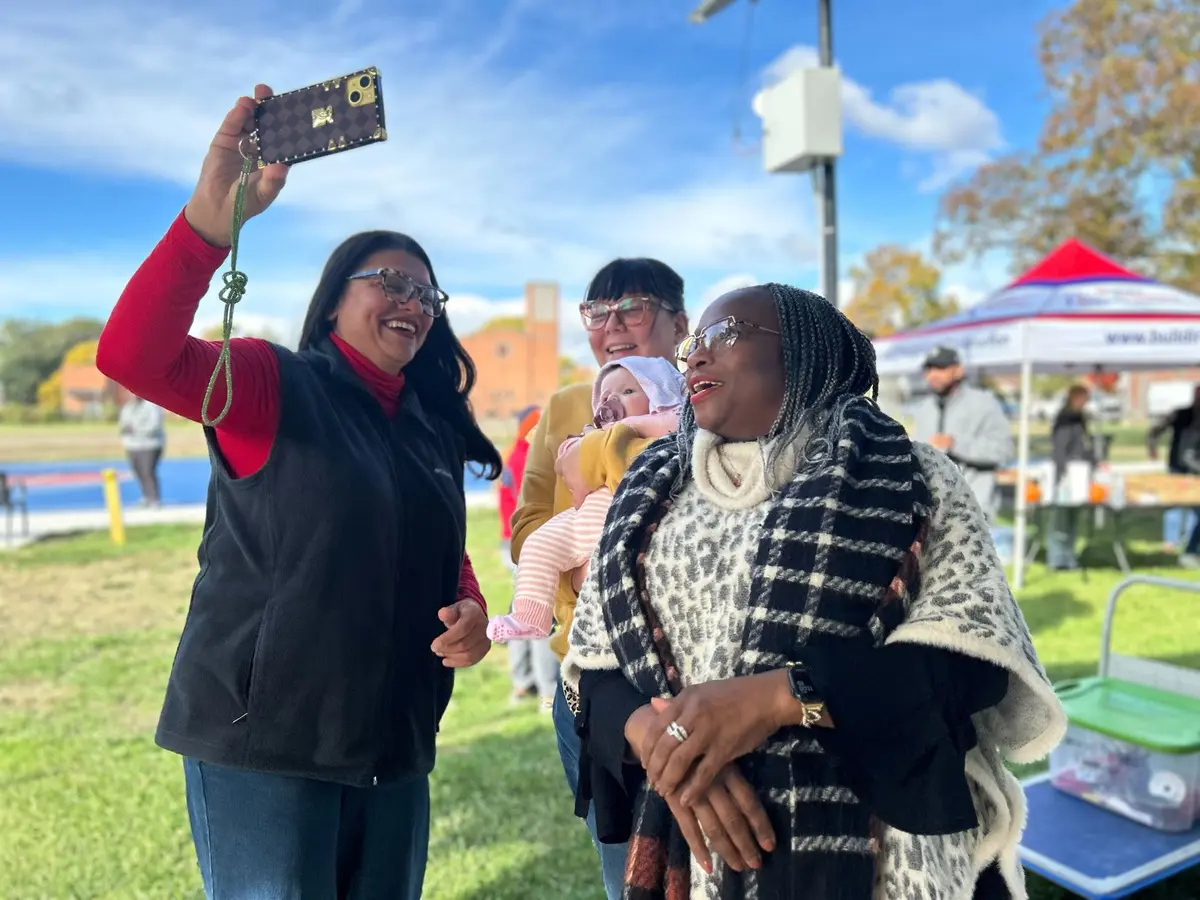
Rashida Tlaib declines to endorse Harris, wins fourth Michigan seat

Democratic Congresswoman Rashida Tlaib defeated her Republican challenger in Michigan's 12th congressional district election on Tuesday, securing a fourth term as the only Palestinian-American woman in the U.S. Congress.


The Associated Press called the race with just 18 percent of the votes counted.


Tlaib received 77 percent of the vote, beating Republican James Hooper, who received just 19 percent of the vote.


Her victory comes against the backdrop of Israel's war on Gaza, which has killed more than 43,000 Palestinians so far, and which the Biden-Harris administration has supported diplomatically and militarily for more than a year.


Tlaib has been an outspoken critic of the war, calling on the United States to withhold arms from Israel. Her opposition to the war in Gaza and support for pro-Palestinian protests on campus have drawn sharp criticism from Republicans and Democrats alike.


In the days leading up to the November 5 election, Tlaib declined to endorse Vice President and Democratic presidential candidate Kamala Harris, but urged Americans to go to the polls and vote.


Kamala Harris lost Michigan to Donald Trump, who won the state.


Last June, Michigan Attorney General Dana Nessel accused Tlaib of anti-Semitism, alleging that the Palestinian-American congresswoman said Nessel was targeting pro-Palestinian protesters at the University of Michigan because she was Jewish. Tlaib never made such comments, which have since been fact-checked and debunked by numerous media outlets and sources.


After being first elected to the House of Representatives in 2018, Tlaib quickly rose to national prominence, becoming one of the first two Muslim women in Congress.


She was an outspoken critic of President Donald Trump during his term and became the target of repeated right-wing attacks, including from the president himself.


Since the start of Israel's war on Gaza in October 2023, Tlaib has criticized American support for the war, angering her colleagues on both sides.


In November 2023, the House voted to rebuke Tlaib, passing a measure accusing her of "promoting false narratives regarding Hamas' October 7, 2023, attack on Israel and calling for the destruction of the State of Israel."


One of the comments she was condemned for was explaining the chant “from the river to the sea,” which she described as “an ambitious call for freedom, human rights and peaceful coexistence, not death, destruction or hatred.”


Israel supporters say the phrase promotes the destruction of Israel, while Tlaib responded by saying, “No government is above criticism, and the idea that criticizing the government of Israel is anti-Semitic sets an extremely dangerous precedent and has been used to silence diverse voices speaking out for human rights across our nation.”

OPINIONS

Thu 07 Nov 2024 8:44 am - Jerusalem Time

“Without UNRWA and the right of return, there is no more Palestine”

Translation for "Alquds" dot com

Translation for "Alquds" dot com

Opinion Writer

Rami Abou Jamous writes his diary for Orient XXI. This founder of GazaPress, an office that provided assistance and translation to Western journalists, had to leave his apartment in Gaza City in October 2023 with his wife Sabah, her children, and their two-and-a-half-year-old son Walid, under pressure from the Israeli army. Having since taken refuge in Rafah, Rami and his family had to return to their internal exile, stuck like so many families in this miserable and overcrowded enclave. For this diary, he received two awards at the Bayeux Prize for war correspondents, in the written press category and the Ouest-France prize. This space has been dedicated to him since February 28, 2024.


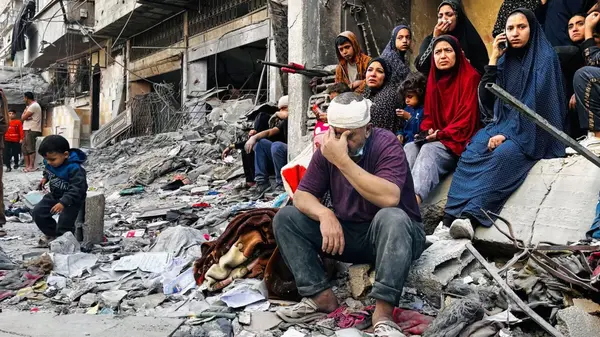
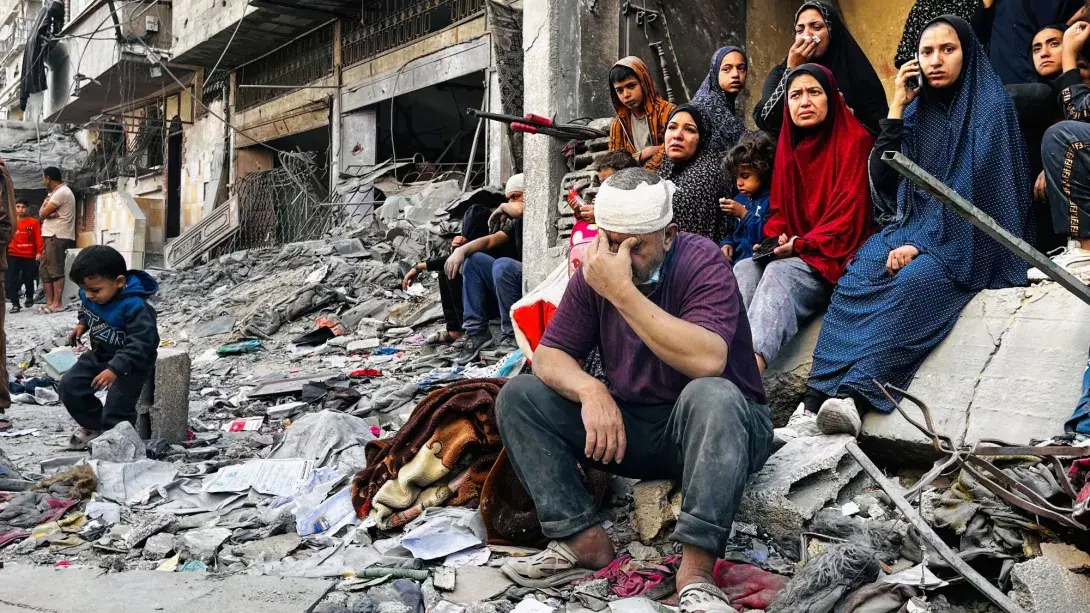
The image shows a group of people sitting on rubble in a conflict zone. In the foreground, a man with a bandaged head expresses great sadness or despair, while nearby, several women in dark clothes look towards the camera, some with a concerned expression. A small boy sits a little further away, seemingly lost in thought. The environment is chaotic, with ruins and debris around, suggesting significant damage caused by recent events. The general atmosphere is heavy, reflecting the pain and resilience of those present.

The Knesset passed a law that bans UNRWA from working in Gaza in particular, and in Palestine in general. I can say that this vote marks the transition from humanitarian genocide to political genocide. The goal is to finish off the Palestinian as a human being.


The Israelis are massacring Palestinians with the aim of turning them all into refugees. The second Nakba is underway. Today, they want to erase us politically and legally. UNRWA is the right of return, it is the recognition by the United Nations of the injustice suffered by the Palestinians in 1948, when they were massacred and expelled from their hometowns—in Haifa, in Jaffa, in northern Palestine—to Lebanon, Jordan, Syria, the West Bank, and also to Gaza.


UNRWA is the only UN agency created specifically for the Palestinians, and for them alone. The Israelis are waging war on this institution because they know very well what it means politically. This is the political aspect of the genocide. They want to erase all traces of the crime and the injustice, to minimize the Palestinian question to make it a purely humanitarian problem. They are talking about replacing UNRWA with another agency, which would be more accommodating.


UNRWA embodies the political recognition of the right of return. Before the war, it was helping 1.7 million people in Gaza, refugees and their descendants, who make up 75% of the population of Gaza. Today, it is helping all Gazans. We are all refugees. UNRWA is education, schools, health services, clinics, employment services. It employs about 13,000 people in Gaza. UNRWA is water, it is food, infrastructure, cleanliness, cleaning, it is everything. It is life for Palestinians, especially those who have refugee status.


They have been waging war on the law for a long time

The Israelis are not only committing massacres, they are also destroying the history of the Palestinians in Gaza. They have bombed and razed with explosives museums, archaeological sites, universities. Even the ancient hammam, which is over a thousand years old. They no longer want any historical trace of the connection between this land and the Palestinians. Now they want to erase their political existence. UNRWA is the symbol of the political presence of the Palestinians, and the affirmation that the occupier is stealing everything, not only the land, but our heritage, our history, our culture, and even our art of embroidery and our gastronomy, by presenting falafel or hummus as “Israeli dishes”.

But not only that. They are preparing another law to ban diplomatic representations set up in Jerusalem. We know well that these delegations, officially called “consulates,” have been acting as embassies to the Palestinians since 1948, even for countries that do not officially recognize the State of Palestine. If I want to obtain a visa for France, I have to go through the consulate in Jerusalem, not the embassy in Tel Aviv. The embassies in Israel are all in Tel Aviv, because Jerusalem is not recognized by the international community as the capital of the State of Israel. With the notable exception of the United States, Trump having moved its embassy to Jerusalem.

Netanyahu and his far-right government know very well what the law means, and they have been waging war on it for a long time. Several times, they have tried to end UNRWA, in vain so far. This time, they passed a law, almost unanimously.

But the Israelis have begun to undermine these delegations, and diplomatic ties with Palestine in general. The Spanish consulate has been banned from providing any services to the Palestinians since Madrid recognized the Palestinian state. Norway having done the same, and not having a consulate in Jerusalem, Israel has withdrawn the diplomatic status of the eight diplomats in its Tel Aviv embassy responsible for relations with the Palestinians. And now, it will no longer be possible to create a new consulate in Jerusalem, a law adopted on October 30, 2024 by the Knesset.

THIS FEELING OF NOT BEING HUMAN

Always the weapon of collective punishment. UNRWA is being punished because it is alleged that 12 of its employees participated in October 7, accusations that Israel has not proven. Twelve people out of thirteen thousand employees. They are looking for any pretext to eliminate even the word "right." To implement the political genocide of the Palestinians. The humanitarian genocide is still ongoing. Everyone sees it, everyone sees these massacres, these “Israelisms”, these butcheries. And no one reacts. We don’t even dare to use the word “genocide”. While in the former Yugoslavia and Burma, the UN has recognized genocides. But in Palestine, we don’t talk about genocide because the perpetrators are the Israelis. Why would the international community move, when it doesn’t say a word in front of the images of children decapitated, torn to pieces, buried under the ruins of their homes hit by two-ton bombs? What is happening today in Jabaliya, in the north of the Gaza Strip, is the equivalent of the siege of Massada for the Jews. This blockade imposed on the Jews by the Romans is exactly what the Israelis are doing in the North. Jabaliya is the Palestinians’ Massada. A hermetic siege. No more food, not even a glass of water. No care, no first aiders. Nothing at all.

It’s non-life. Entire families are massacred in the bombing of their building. Twenty people, thirty people. Those who don’t die under the bombs die of hunger. I can’t stand this oppression, this humiliation. We are exterminated by a merciless war machine. And this feeling that everyone is watching us, and that no one is moving… This feeling of not being human. Why do we suffer all this under the eyes of this world that claims to represent democracy, freedom, human rights? This world that only has these words on its lips: human rights, women’s rights, children’s rights and even animal rights.

This feeling that we are not worth much, that we are cheap, as the English say. That we only deserve to die under the eyes of the world. Yet the world has become very small. With social networks, where everything that happens is shared 24 hours a day, seven days a week, nothing can be hidden. Everyone can see a little boy saying goodbye to his father. A father carrying his child without a head, or in a bag, because he only found scattered remains. That is why I believe that the Israelis will succeed in this political genocide at the same time as the humanitarian genocide. Banning the only international organization that embodies the right of return, no one is fooled: that means the extinction of the right of return. Thus there will be no more relationship between the Palestinians and their territory, no more relationship between the Palestinians and Palestine. There will be nothing called Palestine.


But the Israelis have begun to undermine these delegations, and diplomatic ties with Palestine in general. The Spanish consulate has been banned from providing any services to the Palestinians since Madrid recognized the Palestinian state. Norway having done the same, and not having a consulate in Jerusalem, Israel has withdrawn the diplomatic status of the eight diplomats in its Tel Aviv embassy responsible for relations with the Palestinians. And now, it will no longer be possible to create a new consulate in Jerusalem, a law adopted on October 30, 2024 by the Knesset.

THIS FEELING OF NOT BEING HUMAN

Always the weapon of collective punishment. UNRWA is being punished because it is alleged that 12 of its employees participated in October 7, accusations that Israel has not proven. Twelve people out of thirteen thousand employees. They are looking for any pretext to eliminate even the word "right." To implement the political genocide of the Palestinians. The humanitarian genocide is still ongoing. Everyone sees it, everyone sees these massacres, these “Israelisms”, these butcheries. And no one reacts. We don’t even dare to use the word “genocide”. While in the former Yugoslavia and Burma, the UN has recognized genocides. But in Palestine, we don’t talk about genocide because the perpetrators are the Israelis. Why would the international community move, when it doesn’t say a word in front of the images of children decapitated, torn to pieces, buried under the ruins of their homes hit by two-ton bombs? What is happening today in Jabaliya, in the north of the Gaza Strip, is the equivalent of the siege of Massada for the Jews. This blockade imposed on the Jews by the Romans is exactly what the Israelis are doing in the North. Jabaliya is the Palestinians’ Massada. A hermetic siege. No more food, not even a glass of water. No care, no first aiders. Nothing at all.

It’s non-life. Entire families are massacred in the bombing of their building. Twenty people, thirty people. Those who don’t die under the bombs die of hunger. I can’t stand this oppression, this humiliation. We are exterminated by a merciless war machine. And this feeling that everyone is watching us, and that no one is moving… This feeling of not being human. Why do we suffer all this under the eyes of this world that claims to represent democracy, freedom, human rights? This world that only has these words on its lips: human rights, women’s rights, children’s rights and even animal rights.

This feeling that we are not worth much, that we are cheap, as the English say. That we only deserve to die under the eyes of the world. Yet the world has become very small. With social networks, where everything that happens is shared 24 hours a day, seven days a week, nothing can be hidden. Everyone can see a little boy saying goodbye to his father. A father carrying his child without a head, or in a bag, because he only found scattered remains. That is why I believe that the Israelis will succeed in this political genocide at the same time as the humanitarian genocide. Banning the only international organization that embodies the right of return, no one is fooled: that means the extinction of the right of return. Thus there will be no more relationship between the Palestinians and their territory, no more relationship between the Palestinians and Palestine. There will be nothing called Palestine.

SOURCE: ORIENT XXI

PALESTINE

Thu 07 Nov 2024 8:43 am - Jerusalem Time

For the 398th day... Israel continues its war on the Gaza Strip

The Israeli occupation continues its war on the Gaza Strip, for the 398th consecutive day, leaving dozens of martyrs, wounded and missing.


According to local sources, 38 people were killed in raids on areas in the Gaza Strip during the past 24 hours.


The occupation artillery bombed areas in the center and east of Rafah city in the southern Gaza Strip, while another bombardment targeted the southeast of Khan Yunis city.

OPINIONS

Thu 07 Nov 2024 8:34 am - Jerusalem Time

Israeli Back Channel Negotiator Gershon Baskin on Gaza War, Hamas Talks, and Path to Peace

Jurist News

Jurist News

Opinion Writer

Gershon Baskin, a prominent Israeli peace negotiator who is currently conducting back-channel negotiations between Hamas and Israel to bring an end to the current offensive in Gaza, spoke to JURIST Senior Editor for Long Form Content Pitasanna Shanmugathas about the complex obstacles preventing a ceasefire amid the conflict’s expansion into Lebanon and Iran, his unique correspondence with “the Palestinian Nelson Mandela” Marwan Barghouti, and how the period between Trump’s presidential re-election win and January 20th could be crucial for President Biden’s legacy in ending the war.

Pitasanna Shanmugathas: Mr. Baskin, you are a back-channel negotiator between Israeli and Palestinian officials and you were doing this prior to October 7th, and you have continued doing it since then. Could you talk about how you first became involved in back-channel negotiations between Israelis and Palestinians?

Gershon Baskin: Between Israelis and Palestinians, I’ve been doing this for 46 years. I believe that if Israel aims to be the democratic nation-state of the Jewish people, it cannot continue ruling over Palestinians while denying them freedom and self-determination.

At 22, I lived in a Palestinian village in Israel for two years, doing volunteer work and immersing myself in the community. Eighteen years ago, after Hamas abducted an Israeli soldier [Gilad Shalit], I began efforts to establish dialogue between Hamas and Israelis. Though initial efforts were vetoed by Hamas leadership, I built connections that later allowed communication channels to open.

Since then, starting in July 2006, I’ve engaged with Hamas leadership, negotiating ceasefires and hostage releases, working to ease the Gaza siege, and striving to prevent further violence. Prior to October 7, I had negotiated to secure an Israeli soldier’s release after five years in captivity and sought a long-term ceasefire — negotiations that ceased when Israel assassinated Hamas leader Ahmed Jabari.

Shanmugathas: Since October 7th, you’ve conducted multiple rounds of back-channel negotiations between Israel and Hamas. Could you talk about the issues at the center of these negotiations and why, to date, they have not been successful?

Gershon Baskin: Bottom line is that Israeli Prime Minister [Benjamin] Netanyahu, whose been more or less in office since 2009, had a strategy that he was implementing to prevent the Palestinians from having freedom and liberation in a state of their own. Netanyahu’s decision spelled itself out in a way that kept Hamas in power in Gaza and kept an illegitimate or delegitimized Palestinian Authority in the West Bank. This way, Netanyahu was able to say to the Israeli people in the world, we want peace, but we have no one to negotiate with. Hamas wants to destroy us, and the Palestinian Authority leader doesn’t speak for all the Palestinians. That strategy worked until, more or less, October 7th, when it blew up in our faces last year. It turns out that you can’t occupy another people for 56 years or confine 2.3 million people to a territory like Gaza, with severe poverty, and expect to have quiet negotiations with Hamas.

I think that peace needs to happen between the Israeli and Palestinian people, but it has to be done by Hamas, by the leadership of the Palestinian people in the Palestine Liberation Organization (PLO).

The situation is now truly horrendous. Over the last year, with over 1,000 people killed by Hamas inside Israel on October 7th and 250 people taken hostage into Gaza, there remain 101 Israelis and foreign workers being held hostage inside Gaza. We don’t know how many of them are alive and how many are dead. And the negotiations are on trying to release them, but under the understanding that there is no release of those hostages from Hamas without ending the war, without Israel withdrawing from Gaza, without Israel agreeing to release Palestinian prisoners from Israeli prisons. There’s a package deal that needs to be done.

Where it stands right now is that unless Hamas declares that they’re also willing to give up control of Gaza after the war, then this war will just go on. More people will be killed in Gaza, more Israeli hostages will be killed, and there is no end in sight.

My understanding is what I’ve been told by Hamas leaders, that they are willing to give up governance in Gaza and transfer it to a civilian, professional, technocratic government that they won’t be part of. That needs to be materialized by Hamas into direct statements that they tell the official mediators, which are the government of Qatar and the government of Egypt. And that needs to be conveyed to the Israelis and of course to the White House, so that President Biden, after election day on November 6th, until January 20th, he remains in office as a free agent. He will be able to use [his] power or the presidency to try and influence the Israeli prime minister to agree to a deal.

Shanmugathas: I think many people suspect that Israel’s ultimate aim in Gaza is to simply ethnically cleanse the land of Palestinians. And reports have emerged that Israel is planning to annex Northern Gaza. So how realistic is it, given this pretext, that a genuine ceasefire can be achieved?

Baskin: In Israel, Prime Minister Netanyahu is ultimately the primary decision-maker, even within a democratic framework. While he has opposed extreme right-wing voices in his government who seek to annex Gaza, build new settlements, or expel Palestinians, he has also created obstacles for mediators trying to negotiate a ceasefire. Netanyahu’s political interests may be at play in prolonging the conflict, as ending the war could lead to increased scrutiny. Once the conflict is over, calls for a national inquiry, focus on his corruption trial, and pressure for new elections would likely intensify.

To reach a resolution, several steps are needed. First, Hamas must clearly communicate to Qatari and Egyptian mediators its readiness for a ceasefire with Israel, commit to releasing 101 hostages, and agree to transfer governance, security, and control over weapons. Next, the United States needs to press Israel to accept a deal, allowing safe passage for any departing Hamas leaders and integrating those who remain into a new Palestinian security force. This force, established by a Palestinian civilian government, would work to restore order and stability.

International peacekeepers, including Arab and other forces, could help enforce the peace and prevent future conflicts, supporting the new Palestinian government in maintaining security. To rebuild Gaza, billions in international aid will be necessary, but funding won’t materialize if Hamas stays in power. Hamas is aware of this, recognizing that for Gaza to receive aid, they must step back from governance. This complex plan would require strong international cooperation and commitment, with the aim of creating a foundation for sustainable peace and stability in Gaza and beyond.

Shanmugathas: Do you think US President Joe Biden has a red line regarding what Israel cannot do, which if crossed, would result in the US cutting off the aid that has been so essential towards Israel’s offensive in Gaza?

Baskin: This past week, Biden stated that if Israel doesn’t allow a significant amount of humanitarian aid into Gaza, the United States will cut off certain forms of support for Israel. This is the first time Biden has made such a statement. After November 5th, election day, regardless of the outcome, Biden will be a free agent until January 20th. During this time, he will need to consider his legacy. History will not remember Biden primarily for the infrastructure bill; he will be remembered either as the “Gaza war president” or as the president who ended the war in Gaza and freed the hostages. His legacy will be determined during this short period from election day until he leaves office on January 20th.

Shanmugathas: As a Jewish person who lives in Israel, can you talk about the enormous support that the Israeli domestic population has voiced for Israel’s offensive in Gaza?

Baskin: The Israeli public is still traumatized by the events of October 7th last year, the worst day in Jewish history since the Holocaust. People are still strongly affected by a sense of needing revenge and by the pain they are suffering. Many in Israel are reliving October 7th every day, unable to move beyond it. Similarly, Palestinians have experienced what they consider the greatest tragedy since 1948, and some even say that what has happened over the past year is worse than the events of 1948.

Thus, we have two traumatized populations, each responding to reality through the lens of their trauma. Israeli soldiers are being killed daily in Lebanon and Gaza, fueling a pervasive sense of threat, particularly from Hezbollah in Lebanon, which is perceived as seeking Israel’s destruction. This intense environment means people are not necessarily responding rationally, coherently, or logically — they are reacting very emotionally to their circumstances

Shanmugathas: Arguably, the most popular living Palestinian is Marwan Barghouti, often called the “Palestinian Nelson Mandela.” Polls conducted both before October 7th and most recently in March 2024 show that if a presidential election were held in Palestine, Barghouti would win by a double-digit margin over Mahmoud Abbas, the Palestinian Authority president, and Hamas leader Yahya Sinwar, now deceased. For the readers of JURIST who may be unaware, could you explain who Marwan Barghouti is and why he is held in such high regard by Palestinians?

Baskin: Marwan Barghouti is seen as a symbol of the Palestinian struggle by the Palestinian people. He was an elected parliamentarian, the number one person in the Fatah party in the Palestinian parliament. The last time they held elections when Marwan was elected was a very long time ago.

Marwan was arrested in 2002 for being one of the leaders of the Second Intifada. And he was accused by Israel of being responsible for the deaths of many Israelis. He was convicted and is serving five consecutive life sentences plus 40 years.

As such, Marwan being in prison all these years is seen as this symbolic figure. He came from the Fatah movement. He was one of the young people who led it, and he remains that symbol. His campaign for his release has been strong both inside of Palestine and around the world. And as you said, he beats every potential Palestinian leader in any elections that might be held. I’ll just remind you that Palestine hasn’t held elections since 2006.

And Mahmoud Abbas, the current president, who’s 89 years old, is in the 18th year of a four-year term and enjoys little legitimacy, if any. So, anyone can beat Mahmoud Abbas, but Marwan Barghouti is the chosen favorite of every Palestinian. He is kind of a black box, though. We really don’t know what’s inside of that box because he has been silent most of these years. He hasn’t spoken out and people don’t really know what he stands for. The reality of Marwan might be very good. On the other hand, it might not be very good.

And Marwan Barghouti, he will probably be released in a deal with Hamas when that deal is made. Whether he’ll be allowed to stay in Palestine, we don’t know. The Israelis may demand that he be deported abroad. And I think that if Marwan is given the choice of staying in prison or going and living in the United Arab Emirates, he will choose to go and live in the United Arab Emirates. But we will see. He has a role to play in the future of Palestine. And he is the most symbolic leader of the Palestinian people.

Shanmugathas: And you had a personal relationship with Marwan Barghouti, and I believe that continued even during his incarceration, is that right?

Baskin: Yeah, I’ve been corresponding with him over the last years. Our correspondence continued until the beginning of the war on October 7th of last year, when Marwan, to the best of my knowledge, has been transferred five different times to different prisons in Israel. He has been held in solitary confinement for long periods of time.

I understand that he has been physically tortured in prison. His condition is unknown. He is not allowed, like other security prisoners, he is not allowed family visits. His lawyer, I think since the beginning of the war, more than a year ago, has only seen him three times. So, we really don’t know what his situation is.

Shanmugathas: And could you talk about what kind of correspondence you had with Marwan Barghouti, what kind of insight you gained from that correspondence?

Baskin: Yes. This began more intensively about two years ago, and I wanted to understand Marwan’s views on various issues. We corresponded back and forth, though I can’t disclose the content as I didn’t have permission to do so. Our correspondence was confidential, but what I gathered from him is, firstly, that he still strongly supports a two-state solution, which surprised me.

He believes a solution to the Palestinian issue must be found within a regional framework, where both Israelis and Palestinians can achieve stability, security, economic growth, and hope for a real resolution. While he reserves the right of the Palestinian people to armed struggle, if necessary, it is not his preferred option. He emphasized that Palestinians have a right to resist occupation by any means, including armed struggle, but reiterated that his choice is diplomacy, political engagement, and negotiation. He is a man of principle — that’s what I understand from him. However, since these discussions aren’t public, I would feel more confident in these being his official positions if he could make these statements publicly.

Shanmugathas: It has been reported in numerous news outlets that Hamas’ top demand in any prisoner exchange with Israel is the release of Marwan Barghouti. Firstly, why does Hamas want Barghouti released, even though he does not share the same views as Hamas? You mentioned that you believe it’s likely Israel will agree to release him in a prisoner exchange. I’m personally doubtful about that, given Barghouti’s strong legitimacy and how Barghouti cannot be corrupted by the Israelis, compared to someone like Abbas. Could you elaborate on this?

Baskin: Sure. Before October 7th, there were 559 Palestinian prisoners serving life sentences or more than one life sentence, and Barghouti is among them. The prisoners that Hamas is most interested in freeing are these 559 individuals; they will be at the top of Hamas’s list, and there will likely be resistance from Israel regarding their release. Israel has demanded the veto of 60 to 65 names in negotiations, and I assume that Israel would want to veto the release of Marwan Barghouti.

I think Hamas is very interested in showcasing their victory by securing the release of prisoners serving the longest sentences, which would be a significant achievement for them. They will likely be very demanding in negotiations. Barghouti is just one of about 20 prisoners who could be seen as symbols of Palestinian resistance — or, from the Israeli perspective, as terrorists responsible for the deaths of many Israelis. This will lead to significant arguments between Israel, Hamas, and the mediators over who should be freed and the terms of their release.

Marwan is not the number one person on Hamas’ list, but he is among the top individuals they want to secure as a victory for the Palestinian people. They understand that freeing prisoners like Marwan Barghouti will be viewed very positively by Palestinians, regardless of their political affiliations.

Shanmugathas: It has been reported that Mahmoud Abbas, the Palestinian Authority leader, has advised Israel to reject any offers from Hamas that would result in the release of Marwan Barghouti. Is this true to your knowledge?

Baskin: I don’t know. I haven’t seen that reported anywhere. I don’t know if that’s true. That sounds like some kind of political spin of people who are against Mahmoud Abbas.

Shanmugathas: Israel’s offensive in Gaza has now extended to Lebanon as part of its conflict with Hezbollah. Recently, Israel killed Hezbollah leader Hassan Nasrallah. In your view, what is Israel’s goal in Lebanon? And do you think Israel will achieve that goal?

Baskin: Right. First, I want to clarify what you said: Hezbollah attacked Israel on October 8th, the day after Israel was attacked by Hamas. Thus, the conflict between Israel and Hezbollah began with Hezbollah expressing support for the people of Gaza and Hamas in their attack on Israel.

For most of the past year, it has been a war of attrition, with Hezbollah sending rockets and drones into Israel and Israel responding with rockets and drones targeting Lebanon. The situation has escalated out of control, especially after Israel assassinated the Hezbollah leader, Hassan Nasrallah.

Israel has targeted the top command of Hezbollah’s military leadership and many political leaders, including the individual originally appointed as the second-in-command after Hassan Nasrallah. This conflict has escalated to the point where northern Israel has seen significant destruction, leaving about 100,000 Israelis homeless, while southern Lebanon has also suffered, with thousands of homes and villages being destroyed by Israel.

Israel discovered an extensive underground infrastructure in southern Lebanon, including homes, which Hezbollah planned to use for a cross-border attack against Israel, attempting to replicate what Hamas did in southern Israel on October 7th. Israel is focused on destroying that infrastructure while also targeting Hezbollah sites around Beirut, particularly in Dahiya and other neighborhoods, to mitigate the threat posed by Hamas.

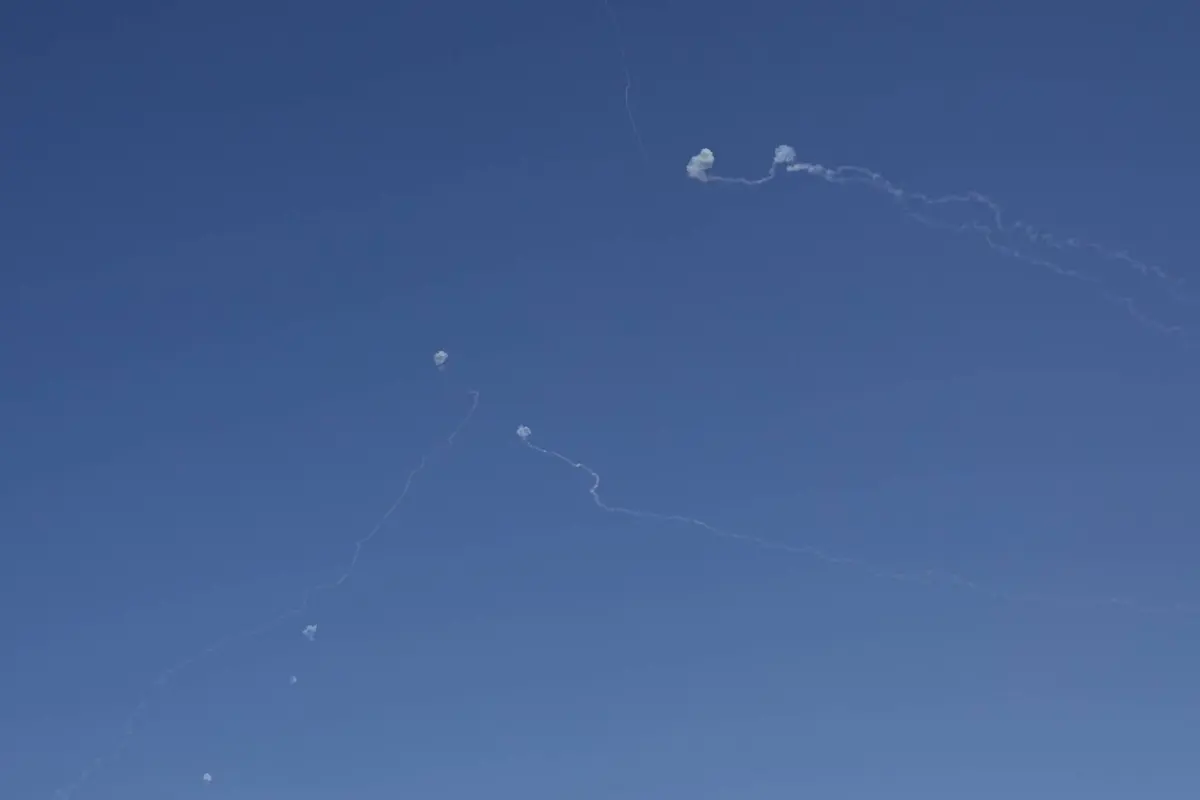
This conflict has spilled over into Yemen and [Iran], leading to ballistic missile attacks by Iran against Israel, which Israel has managed to deflect with the help of its neighbors.

However, the situation remains very dangerous and has the potential to escalate further.

Shanmugathas: So, it sounds like you support Israel’s so-called “counterterrorism” operations in Lebanon?

Baskin: No, I’m not [implying] that at all. I believe these issues need to be addressed diplomatically. There are no military solutions to the Israeli-Palestinian conflict or to the conflict between Israel and Lebanon. In fact, Israel and Lebanon don’t have a real conflict; there is a border issue that can be easily resolved.

Shanmugathas: While he was alive, it was reported that Nasrallah, the leader of Hezbollah in Lebanon, rejected offers for a ceasefire with Israel unless Israel ended its offensive in Gaza. Do you believe that to be true? Even after Nasrallah’s assassination, do you think Hezbollah will continue to refuse any ceasefire with Israel unless it is tied to Israel ending its offensive in Gaza?

Baskin: I think before the killing of Nasrallah, it was definitely true. We saw that last November when there was a week-long ceasefire, that Hezbollah kept a ceasefire in the north without it being negotiated. When the war in Gaza stopped, the conflict between Hezbollah and Israel also ceased. I’m not sure that’s the case today. If the war in Gaza ends, would Hezbollah stop its military actions against Israel? I hope it would.

I know that the United States, France, and others are trying to negotiate between Israel and Hezbollah for the reinstatement of UN Security Council Resolution 1701. For the time being, Lebanon has rejected Israel’s demands, which are essentially twofold: first, Israel’s right to re-enter Lebanon if it discovers the rebuilding of infrastructure aimed at attacking Israel from the south, and second, Israel’s right to continue its flyovers over Lebanon, which violate Lebanese sovereignty. The Lebanese side rejects both of these demands.

These negotiations will continue, and hopefully, they will lead to a solution that guarantees Israel won’t violate Lebanon’s sovereignty. Lebanon needs to become an independent sovereign nation, not controlled by the militia of Hezbollah, but governed by the people of Lebanon, who deserve the opportunity to rebuild their country free from the constraints that Hezbollah has imposed for so many years. I hope for a reinstatement of peace and calm in the north and a movement toward resolving the Israeli-Palestinian conflict.

Shanmugathas: Tensions between Israel and Iran have escalated significantly over the past several months and weeks. Analysts have speculated that Israel’s aim is to draw the United States into a broader war with Iran. What are your thoughts on that?

Baskin: Well, obviously, the United States is not taking the bait and is not being drawn into a wider war with Iran. The Americans have assured Israel that they have its back if attacked by Iran. They have sent anti-rocket systems to support Israel’s air defenses. Additionally, the alliance between the United States and other Arab countries — Egypt, Jordan, the Emirates, and the Saudis — has contributed to defending Israel when it has been attacked by Iranian ballistic missiles.

The Iranian-Israeli conflict is not really about anything substantive other than the fact that the regime in Iran, led by the Ayatollahs, is committed to the destruction of Israel, and obviously, Israel will not allow that to happen. There is also the issue of whether Iran will develop a nuclear weapon, which they have been working on for over 30 years. Israel is doing everything it can to prevent this, along with the rest of the world, which does not want to see another nuclear nation, particularly in the Middle East.

The conflict between Israel and Iran also needs to be resolved. I believe the Iranian people, in general, would like a regime change. Someday they will be empowered to achieve that, as we saw almost happen in 2009, and it will likely happen in the future as well. The Iranian people deserve to be free from the regime that has them in such a dire situation. The Iranian economy is in ruins due to sanctions imposed by the international community because of their nuclear program. Overall, Iran is not in good shape, and I think the Iranian people would prefer a regime free from the Ayatollahs.

Shanmugathas: In terms of accountability for war crimes, once there is an end to the offensive in Gaza and a level of stability is achieved, questions about accountability will arise. The international Criminal Court (ICC) chief prosecutor has sought war crimes charges against Netanyahu and Defense Minister Yoav Gallant. What are your thoughts on what accountability will look like in the post-conflict period?

Baskin: If we look back in history, there has been very little accountability in Israel, and it will continue to have impunity in the face of the international community unless there is a significant change in the current situation. The chief prosecutor of the ICC has requested warrants for the arrest of both Netanyahu and Defense Minister Yoav Gallant, while also requesting warrants for the arrest of Ismail Haniyeh and Yahya Sinwar, both of whom are no longer alive.

I know there are talks behind the scenes about the possibility of dropping the request for warrants if Netanyahu agrees to end the war in Gaza and withdraw Israeli troops from the region. Usually, Israel addresses these claims of war crimes by having an independent judiciary that conducts its own investigations, which, according to the Rome Statute, enables Israel to avoid facing justice in international courts. However, we know that Netanyahu and his government have been working to undermine the independence of the Israeli judiciary, which could put Israel at risk of facing consequences in the ICC.

Shanmugathas: The international consensus for a durable solution to the Israel-Palestine conflict has been for two states along the pre-June 1967 lines, with minor mutual land swaps, East Jerusalem as the capital of Palestine, and West Jerusalem as the capital of Israel. Do you believe that such a solution is still viable? Especially given what has happened post October 7th?

Baskin: Yeah, I think there is still no other solution to the Israeli-Palestinian conflict. Those who dream of a one-state solution are not living in reality, particularly after October 7th. Palestinians need freedom, independence, dignity, and self-determination.

They have previously agreed to live in a Palestinian state in the territories occupied by Israel in 1967, with adjustments to accommodate the realities that have developed over the last 56 years. That solution is still on the table and needs to be brought to fruition by the international community. All 193 member states of the United Nations recognize the state of Palestine, with about 151 or 152 of them already doing so.

While this doesn’t end the occupation, we need to remove the veto on Palestinian statehood from Israel. Additionally, we need to replace the current leaders; neither Netanyahu, Abbas, nor any Hamas leaders are capable or willing to negotiate this kind of solution. The Israeli and Palestinian people must confront the reality that if we don’t want this war to become just another in a long cycle of conflicts lasting 100 years, we need new leaders who can envision a different future.

We won’t forget the past; each side will remember the horrific actions of the other. However, we also need to recognize that even after this war, there will be 7 million Palestinian Arabs and 7 million Israeli Jews between the Jordan River and the Mediterranean Sea. They aren’t going anywhere, and they will have to figure out how to share this land in a way that enables both sides to have dignity, freedom, liberation, self-determination, and security.

Shanmugathas: What I found interesting is that if you speak with Palestinians on the ground, many of them feel they’ve had the two-state solution shoved down their throats to the point that they have lost faith in the notion of two states. However, the overwhelming majority of Palestinians support Marwan Barghouti, who is a vocal advocate of a two-state solution. I’ve always found that dichotomy quite intriguing.

Baskin: You’re right. I don’t think that Palestinians categorically reject the solution of two states. They want freedom and independence; they want equality, opportunity, and agency. What they do reject is the Oslo peace process, which was a 30-year endeavor that failed to achieve its goals and never had a clear, explicit endgame. They reject the idea of returning to a kind of open-ended negotiation that goes on forever without results.

However, I think if you ask people whether they would prefer to have freedom and independence in a Palestinian state next to Israel in five years or to continue the conflict, the overwhelming majority would choose the first option.

Shanmugathas: With respect to a just proposal for a two-state solution, what are your thoughts on the Clinton Parameters and the Geneva Initiative? Do you believe a two-state solution would eventually come along those lines?

Baskin: Yeah, those are more or less the lines that are going to happen. I can bring you up to date. Former Prime Minister Ehud Olmert was brought together with a Palestinian colleague, Samer Sinjlawi, and Nasser al-Qudwa, who was the PLO representative at the United Nations for 17 years. He served as the Palestinian Authority’s foreign minister, is the nephew of Yasser Arafat, and was the chairman of the Yasser Arafat Foundation. In 2021, when elections were supposed to take place in May, Nasser al-Qudwa headed a political party supported by Marwan Barghouti.

In fact, Nasser al-Qudwa was number one on the list, and Marwan’s wife, Fatwa Barghouti, was number two. Nasser al-Qudwa and Ehud Olmert collaborated to draw up a plan aimed at ending the war in Gaza. This plan includes an Israeli withdrawal from Gaza, replacing Hamas governance with a legitimate Palestinian authority that is organically linked to the Palestinian Authority but independent of Mahmoud Abbas. It proposes a two-state solution along the 1967 borders with mutually agreed-upon territorial swaps and a resolution for Jerusalem, where East Jerusalem would be the capital of Palestine and West Jerusalem would be the capital of Israel.

In the Old City of Jerusalem, which is less than one square kilometer and home to all the holy sites, there would be no exclusive sovereignty for either Israel or Palestine. Instead, a five-nation committee or governor would oversee the Old City, including the states of Israel and Palestine, along with three other nations, to ensure that all people can enjoy freedom of worship and respect for the holy places.

So, there is a solution on the table. It’s not a detailed plan, but they have outlined a vision during this period of war to demonstrate that there is a way out and a path forward. This provides a beacon of light and hope for all the people in this region that we can move beyond this conflict.

Shanmugathas: What are your thoughts on Donald Trump’s re-election win as President of the United States? 

Baskin: Disaster for the United States and the world. We can hardly imagine what Trump [will] do. Regardless of the election results, Joe Biden still has 75 days to end the war in Gaza. Will Biden’s legacy be the President of the War in Gaza or the President who ended the War in Gaza? The election of Trump and the appointment of [Israel] Katz as Israeli Minister of Defense does not change the reality that to get all of the hostages home, the war in Gaza must end, Israel must withdraw from all of Gaza, Israel will have to release Palestinian prisoners, and Hamas will have to confirm that they are going to transfer the government in Gaza to a civilian, professional, technocratic council that Hamas is not part of.

Shanmugathas: With Trump’s presidential re-election win, how will this impact your negotiations with Hamas and Israel? Will Israel feel emboldened and now less inclined to seriously come to the table to end this war?

Baskin: Yes.

Shanmugathas: There have been numerous human rights reports that have concluded that Israel’s occupation of Palestinian territories constitutes apartheid. Interestingly, Noam Chomsky, the famous linguist and academic, has asserted that what Israel is doing in the occupied territories is actually “worse than apartheid.” Chomsky asserts that in the case of apartheid South Africa, the white minority needed the black labor force as a cheap source of labor for foreign corporations. South Africa created Bantustans, tried to get international recognition of them, tried to make the conditions somewhat livable; they needed the black population. In the case of Israel, however, Israel doesn’t want the Palestinian population. They would preferably like to expel them. So, in that sense, Chomsky argues what Israel is doing is much worse than apartheid.

Baskin: I think you’re exaggerating. There are indeed parties and leaders in Israel who want to expel the Palestinians and conquer all the territory. However, the reality is that until October 7th, there were about 200,000 Palestinians from the West Bank who were working in Israel. Israel began a process a couple of years ago to allow Palestinians from Gaza to work in Israel, and there are about 17,000 of them crossing into Israel every day.

The West Bank economy is largely dependent on Israel. Of course, the occupation limits the growth of the Palestinian economy, and Palestinians do not have freedom; their land is taken from them, and illegal Israeli settlements are built there. There is no sense of justice whatsoever. In my view, comparing which form of apartheid is worse is a foolish argument. We need to eliminate any form of apartheid and discrimination and seek equality, peace, and justice. Therefore, raising the question of which apartheid is worse is not productive.

Shanmugathas: Chomsky is not arguing which apartheid is worse. What Chomsky is saying is that Israel’s occupation of the Palestinian Territories is much worse than apartheid as the term “apartheid” is defined under the Apartheid Convention.

Baskin: Yeah. Okay. He is entitled to his opinion. I think it’s a senseless argument and I think what we need to do is get rid of any form of apartheid and we need to seek justice and peace.

Shanmugathas: Are you able to talk about what you’re currently doing now in terms of back-channel negotiations?

Baskin: I’m trying to encourage the sides to reach an agreement that will enable us to end the war, bring back the hostages, change the governance in Gaza so that the people in Gaza have a chance of rebuilding with the support of the Arab world and the international community, and getting the Israelis to agree.

And, of course, what we want to ultimately see is a replacement of our government in Israel and a change of leadership in Palestine. And those are all issues that I’m working on together with colleagues and friends and partners both in Israel and in Palestine and around the world.

Shanmugathas: Thank you so much, Mr. Baskin, for speaking with JURIST.

Baskin: You’re very welcome.



PALESTINE

Thu 07 Nov 2024 8:26 am - Jerusalem Time

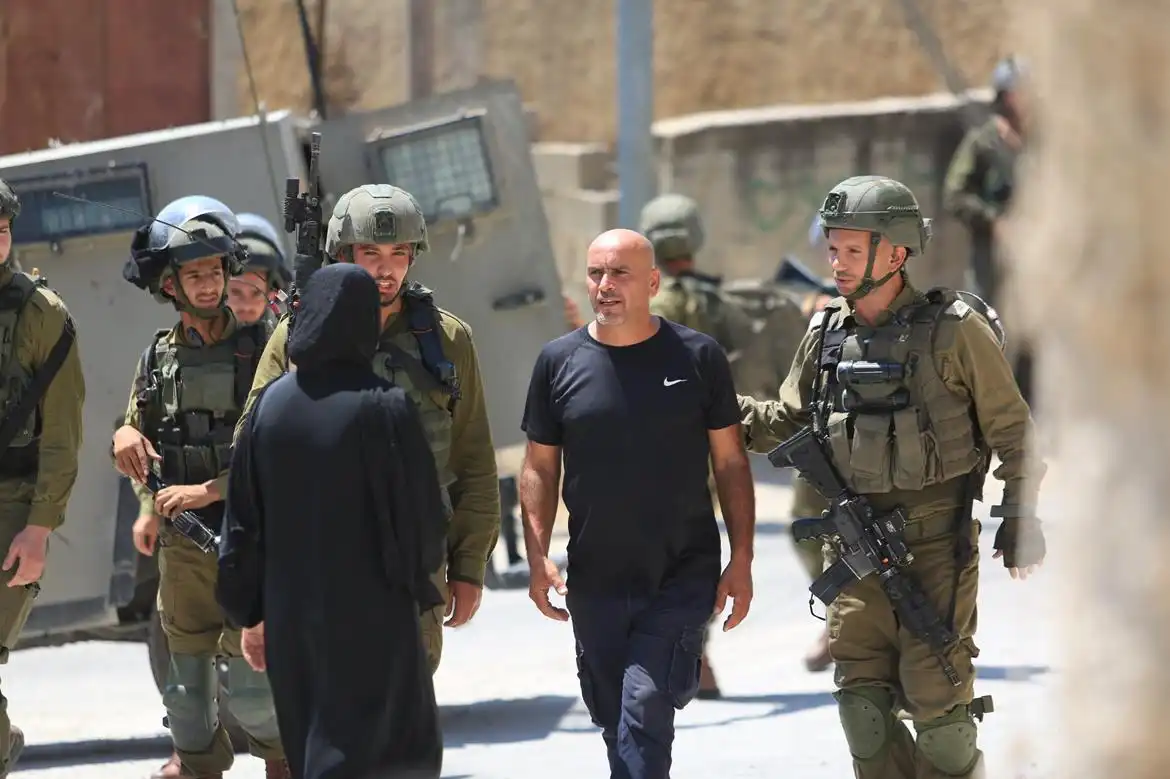
Injuries and arrests during a Israeli raids in the West Bank and Jerusalem

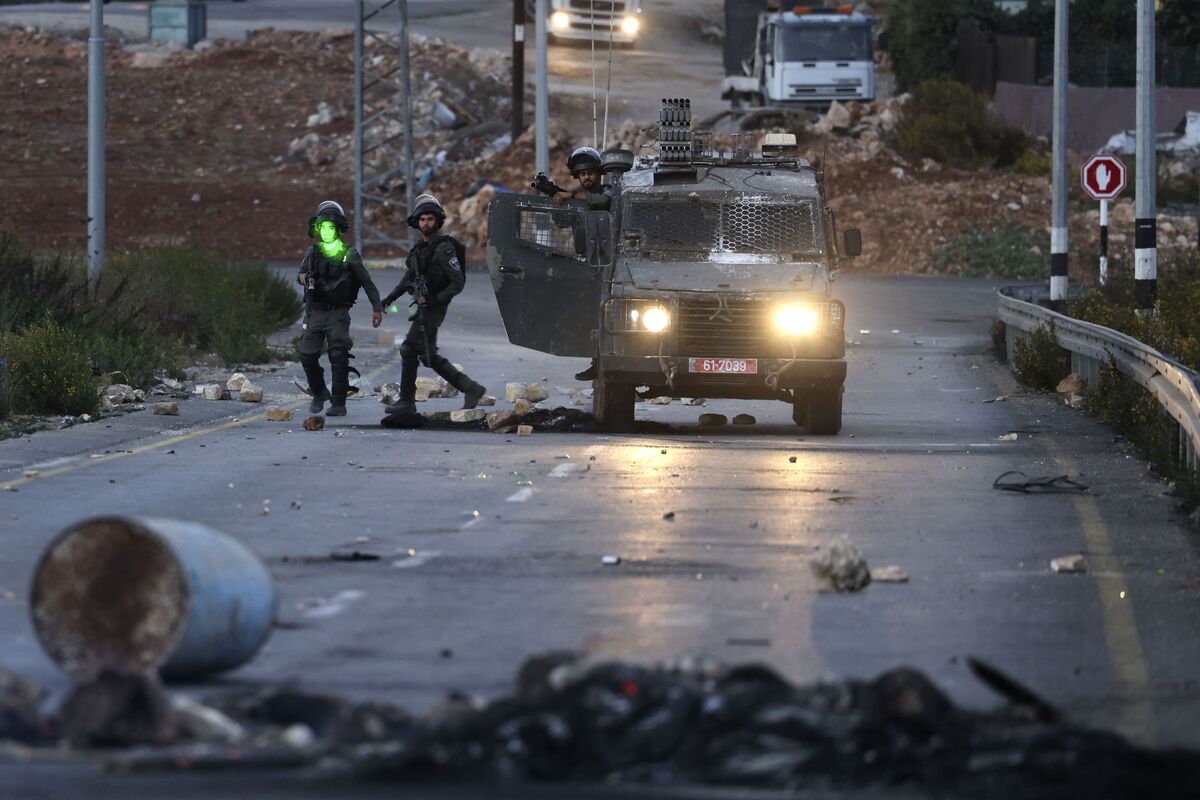
Citizens were injured and arrested, at dawn and this morning, Thursday, during a campaign of raids launched by the Israeli occupation forces in the West Bank and occupied Jerusalem.


In Tulkarm, a woman was injured by shrapnel from the Israeli occupation's shelling of Tulkarm camp.


In Ramallah, the Palestinian Red Crescent reported that two young men were injured by live bullets in the lower limbs and were taken to the hospital.


The occupation also arrested the two young men, Munther Sheikh Qassem, 33 years old, from the city of Al-Bireh, and Ahmed Jasser Abu Shusha, 31 years old, in the Umm Al-Sharait neighborhood, after raiding and searching their homes, while the occupation raided several homes in the town of Ni'lin and the villages of Budrus and Kharbatha Al-Misbah, west of Ramallah.


In Jenin, a citizen was injured by Israeli occupation forces’ bullets during the storming of the town of Yamoun. His injury was described as moderate, and he was subsequently transferred to a hospital in the city of Jenin.


In Qalqilya, the occupation forces arrested the citizen Murad Jamal Sweidan and his son "Wadih", the citizen Ismail Radwan, the father of the martyr "Walid", the young man Nihad Radwan, the young man Mahmoud Hassan Salama, and the young man Muhammad Bilal Radwan, after storming their home in the town of Azzun and searching it.


The occupation forces also stormed the town from its main northern entrance, raided about 15 houses, and destroyed the contents of some of the houses, including the house of citizen "Aref Salim", and stole gold jewelry from the house of citizen "Alaa Radwan", while they withdrew from the town after a raid that lasted for three continuous hours.


In the context, local sources reported that military vehicles stormed the village of Nabi Elias, east of Qalqilya, and roamed its streets and raided several homes, among which was a home belonging to the "Hanoun" family, where they destroyed the contents of the house before withdrawing from it.


In occupied Jerusalem, a young man was shot by Israeli occupation soldiers in the town of Anata, where they opened fire on him while he was riding a motorcycle. He was left bleeding for several hours, and Palestinian Red Crescent crews were prevented from reaching him, while the nature of his injury is not yet known.


Local sources reported that the occupation forces transferred him to an unknown location.


ARAB AND WORLD

Thu 07 Nov 2024 8:25 am - Jerusalem Time

Rashida Tlaib Wins US Congress for Fourth Time

Palestinian-American candidate Rashida Tlaib won re-election to the US Congress in Michigan's 12th district for the fourth consecutive time.


Democratic candidate Tlaib won 69.7% of the vote, compared to 25.4% for her Republican competitor, James Hooper, after 99% of the votes were counted in Michigan's 12th District.


In the same context, the Republican Party was able to obtain a majority in the House of Representatives with 206 seats compared to 191 seats for the Democrats, and they also obtained a majority in the Senate with 52 seats compared to 44 seats for the Democratic Party.

ARAB AND WORLD

Thu 07 Nov 2024 8:20 am - Jerusalem Time

Earthquake in Washington.. The return of the owner of the deal!

Dr. Muhammad Abu Koush: Trump will not provide any positive direction for the Palestinian cause, but will increase pressure towards normalization with Israel

Dr. Khader Al-Marshadi: Expect a series of transformations in global politics, such as escalating tensions with China and Iran and raising the ceiling of tensions

Osama Al-Sharif: Trump's victory in this way gave him almost complete control over the joints of government and thus the implementation of his agenda without major opposition

Aziz Al-Assa: Trump often tends towards financial solutions rather than military ones, as happened in Afghanistan, so we may witness strategic changes.

Dr. Muhammad Bou Taleb: Democrats and Republicans apply fixed policies when it comes to the Arab world and its pivotal issues

Rassem Obeidat: Trump will support Netanyahu to enable him to achieve maximum political gains and implement annexation with minimal concessions


The election of Donald Trump opened the door wide to expectations and possible scenarios for the return of an "unpredictable" man to the White House, in light of many hot foreign files that attract the attention of the United States, most notably the war of extermination waged by Israel on the Gaza Strip and transferred to the West Bank and Lebanon, as well as the Ukrainian war that has been raging for nearly three years.


However, President Trump’s previous experience and the “reckless” decisions he made do not bode well for the Palestinians. At the time, he rushed to move the US embassy from Tel Aviv to Jerusalem, a step that all US presidents have refrained from implementing, despite the decision having been taken for many years. He followed this up with the recognition of Israeli sovereignty over the occupied Syrian Golan Heights, and finally the announcement of the “Deal of the Century,” in which he presented the features of a possible settlement to the Palestinian-Israeli conflict, while making the Palestinians bear the full and exorbitant bill for this deal.


Writers, analysts and experts who spoke to “I” believe that Donald Trump’s return to the presidency of the United States will return the world to the situation it was in during his first term, stressing that his return will have broad effects on global politics, especially Middle Eastern issues, most notably the Palestinian issue.


Returning the world to what it was in his first term


Dr. Muhammad Abu Koush, former director of the Institute of Global Studies at Al-Quds University, said: Donald Trump’s return to the presidency of the United States will return the world to the situation it was in during his first term.


He explained that Trump's main disagreement in foreign policy will be with China, but it is primarily an economic disagreement, not a military one.


He pointed out that Trump may stop major military support for both Ukraine and Israel, which would affect the course of conflicts in those regions.


He touched on the Palestinian issue, explaining that the Biden administration had repeatedly indicated the need to make changes in the Palestinian leadership, but these calls may recede with Trump's return.


Abu Koush also pointed out that Trump will not provide any positive direction for the Palestinian cause, but will increase pressure towards normalization with Israel, as Arab leaders who are currently hesitant to establish public relations with Israel will be encouraged to move forward with normalization, amid declining interest in the Arab Peace Initiative.


Priority for Israel


“Trump’s priority will be Israel, with a return to his previous plans that strengthen its position, without a vision for a two-state solution,” Abu Koush added, expressing his doubts about helping Netanyahu annex the West Bank, as Trump does not aim to abolish the Palestinian Authority, but rather prefers its survival in a limited form.


Regarding the war in Gaza, Lebanon and Ukraine, Abu Koush explained that Trump may seek to stop them, as the era of open wars is not among his priorities.


He stressed that the reason for the American voter's support for Trump is primarily due to economic issues, as Trump has a strong record in this regard, despite his hardline positions on immigration issues, which are popular with Republican Party supporters.


Abu Koush pointed out that Trump adopts socially conservative positions, especially with regard to social rights, as he strongly opposes trends supporting gay rights and gender equality, stressing Trump's traditional positions in this regard.


Broad implications for global politics


In turn, Dr. Khadir Al-Marshadi, President of the Global Institute for Arab Renewal - Iraq, said: The return of Donald Trump to the presidency of the United States will have broad effects on global politics, especially Middle Eastern issues, most notably the Palestinian issue.


“Based on Trump’s policies during his first term, we can conclude a number of transformations in global politics, such as the escalation of tensions with China and Iran, which may raise the ceiling of tensions. Such escalation may lead to the drawing of new global alliances, which may reflect negatively or positively on Middle East issues, the most important of which is the increased rapprochement with Israel, as Trump’s previous policies were strongly supportive of it, when he recognized Jerusalem as the capital of the occupation and moved the US embassy to it,” he added.


Al-Marshadi stressed that if he continues on this approach, he may support further steps that strengthen the Israeli position, which may reduce the chances of a two-state solution, and put more pressure on the Palestinian Authority if it does not agree to proposals in line with Trump’s vision for peace in the Middle East based on implementing the so-called deal of the century.


Expanding the Abraham Accords


Regarding the future of the Arab-Israeli conflict, Al-Marshadi explained that Trump will try to expand the so-called “Abraham Accords” to include other Arab countries, with a focus on forming a regional alliance that goes beyond the Palestinian issue, which may weaken the position of the Palestinians in any negotiations that may take place regarding the future of Palestine.


He added: "This position will push many Western countries allied with the United States of America to be affected by Trump's tough stance, which may be reflected in the balance of power in the Security Council and the United Nations."


Al-Marshadi concluded by saying: “Trump’s victory may lead to imposing more pressures and challenges on the Palestinians, and strengthen Israel’s position in American policy. He does not see any positive change in favor of the Palestinian cause, except for the possibility of a ceasefire that may be carried out according to Israeli conditions.”


Radical changes at the internal and external levels


For his part, Jordanian journalist and analyst Osama Al-Sharif said: Donald Trump's victory in the US elections came in an unprecedented manner, as the support of voters in swing states returned him to the White House, giving him almost complete control over the joints of government in the United States, including the two houses of Congress and the Supreme Court, which is controlled by Republican judges appointed by Trump.


Al-Sharif believes that this unique control may give Trump the opportunity to implement his agenda without significant opposition, which may lead to radical changes at the domestic and foreign levels.


Al-Sharif pointed out that Trump may initiate radical changes, such as changing some ministries, interfering in the personal lives of Americans, as well as attacking the media and forming alliances with far-right forces, which may raise internal tensions.


Regarding the Middle East, Al-Sharif said that there are three main issues that could be affected by Trump’s victory: First, the Gaza war, where Al-Sharif believes that Trump, who considers the war a heavy legacy of the Biden administration, may pressure Israeli Prime Minister Benjamin Netanyahu to end the war before he officially takes office on January 20.


"Secondly: The deal of the century, which may not be among the top priorities in Trump's foreign policy, especially in light of the presence of other files, such as the war in Ukraine and the repercussions of the crisis in Lebanon," Al-Sharif added.


Al-Sharif explained that Netanyahu's political future is in jeopardy, as he is expected to fall after the end of the war, for reasons related to his faltering performance.


The file of normalization with Arab countries


Al-Sharif also touched on developments in the normalization file with Saudi Arabia, expecting that several Arab countries, including Saudi Arabia, may hesitate to approach Netanyahu, who has become "radioactively contaminated" in the eyes of many due to his failed policies.


Al-Sharif pointed to the results of the state of Michigan, which surprised everyone with Trump's superiority, given the Arab American voters' distance from Harris.


He considered that this result reflects the importance of the Arab and Muslim voice in America, and may be a prelude to more influence on domestic and foreign policies in the future.


Regarding Iran and its nuclear file, Al-Sharif said: Trump may take a tougher stance than the Biden administration, especially since he had previously canceled the nuclear agreement with Tehran during his previous presidency, and pledged not to allow it to possess nuclear weapons.


Al-Sharif believes that the new Trump administration may face a complex challenge in how to contain Iran amid escalating tensions with Israel, and ongoing conflicts in Lebanon, the Gaza Strip, and Yemen, making the Iranian file one of the most prominent issues that may receive priority on Trump’s next agenda.


"I will end wars, not start them."


For his part, the Jerusalemite writer and researcher Aziz Al-Assa stressed the need to be patient in evaluating the next four years of American policies, especially in light of the slogan raised by presidential candidate Donald Trump, “I will end wars... not start them.”


Al-Assa explained that Trump, as a businessman, often tends to favor financial solutions rather than military ones, as was evident in his decision to end the US presence in Afghanistan at the end of his previous presidential term. Therefore, we may witness strategic changes focused on world peace, including sensitive issues such as the conflict in Ukraine and relations with Iran.


As for the Palestinian issue, Al-Assa believes that the prospects for peace seem worrying, as Trump is the author of the “Deal of the Century,” which seeks to subject the entire region to the will of the Israeli right and expand the scope of the “Abrahamic religion,” which was promoted to the region with the aim of making the Arab peoples understand the existence of Israel as a neighboring state that must be dealt with.


Al-Assa pointed to Trump's previous statements about "expanding the borders of the State of Israel," which could mean increasing American pressure on the Gaza Strip and southern Lebanon, and bringing these areas within the scope of Israeli control, whether directly or indirectly.


Al-Assa added: "There are fears of the possibility of annexing the West Bank to full Israeli sovereignty, in continuation of Trump's previous steps, such as moving the US embassy to Jerusalem."


However, the stick does not rule out other scenarios, in which Trump may seriously embrace the “two-state solution,” which could lead to changes in the current Israeli leadership toward a more moderate approach.


Al-Assa concluded by saying: "Until then, we must be vigilant and not rush to judgment."


There is no fundamental difference between Trump and the Democrats.


Tunisian writer and political sociologist Dr. Mohamed Najib Boutaleb believes that the potential scenario of former President Donald Trump returning to the White House does not bear a fundamental difference from any Democratic president assuming the presidency. Experience has proven, in his opinion, that Democrats and Republicans implement consistent policies when it comes to the Arab world and its pivotal issues. These policies, in essence, according to Boutaleb, express a “hardline system” based on political and economic foundations that primarily serve American interests, far from considerations of justice.


In the context of the US elections, Bou Taleb described the competition between the Republican and Democratic parties as a “formal play” that aims to monopolize the dual system that refuses to introduce new or different political alternatives, stressing that this political scene is extremely conservative and largely aggressive.


Bou Taleb clearly criticized the bets of some Arab countries on the possibility of a change in US policies towards Arab issues, considering this a bet on a mirage, and calling for freeing Arab action from complete dependence on Washington’s decisions.


Bou Taleb called on Arabs and Palestinians to focus on building their own capabilities, unifying their ranks, and arranging their priorities by rebuilding the Palestine Liberation Organization and activating the role of the Arab League, despite the existing challenges.


He also criticized the state of "surrender" shown by some Arab regimes by giving the United States and Israel the reins of decision-making, and saw this trend as a threat to independence and sovereignty, as it serves the "New Middle East" project that seeks to fragment and divide the region and control its resources.


The Palestinian people have changed the Israeli equation.


Bou Taleb pointed out that the Palestinian people have brought about a radical change in the Israeli equation, especially since October 7, 2023, as the confrontation proved that the Israeli occupation no longer has the same ability to impose its will as it did in the past, and that the Palestinians have begun to change this reality with their blood, which gave Israel for the first time a sense of a real threat to its existence.


Bou Taleb pointed out several main conclusions from this scene, including: that the occupation only understands the language of force, explaining that the use of force by the Palestinians provided an opportunity to reshape the scene, proving that peaceful means have not succeeded so far.


He added: The American ally of the occupation, as America, as a major ally of Israel, continues to exert pressure on Arab countries to support the occupation, which prompts those countries to rethink their regional and international options and alliances.


He stressed the importance of resistance and its tools, as achieving freedom and sovereignty requires adopting resistance tools. He also called on the Palestinians to reconsider their plans and alliances.


Bou Taleb expected that the effects of the Palestinian resistance would extend over the coming generations, as the younger generations witness the tragedies that the Palestinian people are exposed to, which increases the possibility of their involvement in future resistance movements.


He said: "The Jewish generations preparing to immigrate to Israel will face demographic problems that could hinder the stability of the country."


Bou Taleb believes that the entire world is in dire need of changing the prevailing values and systems, pointing out that the West itself, which has always raised the slogan of democracy, is now suffering from the fragility of the values it promotes.


Characters who may have roles in the Trump era


In turn, Jerusalemite writer Rasem Obeidat confirmed that US President-elect Donald Trump will provide unlimited support to Israeli Prime Minister Benjamin Netanyahu, with the aim of enabling him to achieve maximum political gains with the least amount of concessions.


Obaidat explained that there are a number of figures that Israel hopes will hold prominent positions in the Trump government, most notably Mike Pompeo, who led a project to weaken Lebanon from within through a five-year plan that includes imposing an economic and financial blockade, and creating a political and security vacuum, with the aim of igniting sectarian strife that paves the way for civil war, disarming Hezbollah and the resistance, and reducing its presence in the Lebanese state, institutions, and society.


Obaidat also noted that David Friedman, who was the US ambassador to Israel and has previously called for Israeli sovereignty over settlements in the West Bank, may have a key role in supporting religious Zionism's plans to annex the West Bank.


Obeidat stressed the importance of reminding Friedman of his previous actions, where he participated alongside Israeli ministers in the opening of a tunnel extending from Ein Silwan to Al-Aqsa Mosque, in a symbolic move that sparked controversy, using a sledgehammer.

ARAB AND WORLD

Thu 07 Nov 2024 8:17 am - Jerusalem Time

Trump's return to the White House...the elephant in the pottery shop!

Oraib Al-Rantawi: Trump's return to power may pave the way for the "Deal of the Century 2", which threatens any chance of establishing an independent Palestinian state or even a Palestinian entity

Dr. Hussein Al-Deek: Trump is working on more alliances in the Middle East to strengthen the "Abraham Accords" and may re-adopt unlimited support for the occupation government

Dr. Raed Abu Badawi: Trump is expected to reduce military support for Ukraine to ease the burden on the US economy and focus more on domestic affairs

Daoud Kuttab: Trump's victory spared America from an expected division and he may seek to stop any regional conflict despite his absolute support for Israel

Dr. Jamal Harfoush: Trump adopts a populist discourse that stirs divisions, and his return may pose a grave threat to the Palestinian cause and ignite a regional confrontation


Donald Trump's return to the US presidency raises fears that his term may bring radical changes, indicating a reshaping of the features of international alliances according to Trump's old vision, in a way that reflects the interests of the United States, and its withdrawal from many files, which creates the possibility of the rise of great powers in those files to fill the American absence from them.


In separate interviews with “I”, writers, political analysts and university professors believe that Donald Trump’s return may open a new phase that provides an opportunity to dismantle some regional and international issues, including the Middle East and Ukraine files, while strengthening the “Abraham Accords” that he started in his first term, and including more Arab countries in these agreements, which enhances normalization between Israel and some Arab countries.


They warn that Trump's continued unfettered support for Israel will marginalize Palestinian rights, undermine the chances of a real political settlement, and perhaps even create nightmare scenarios regarding the annexation of the West Bank.


Reshaping the international landscape


Director of the Jerusalem Center for Political Studies, Oraib Al-Rantawi, believes that Donald Trump’s return to the US presidency will reshape the international scene through his old-new policies, and increase pressure on the Palestinians as a result of his strong relationship with the Israeli fascist right. He pointed out that with Trump’s return, it seems that the features of the international system will witness major changes, which will be clearly reflected in regional and global alliances and interests.


Al-Rantawi explains that Donald Trump's sudden return to the American political arena may pose new challenges on both the global and regional levels. In the next four years, Trump is expected to rush to implement policies that are consistent with his vision, which is known for its focus on American interests, which raises questions about the potential repercussions of his return on several major issues in the world.


Rantawi stresses that on the Palestinian level, the strong relations between Trump and the Israeli far right appear to be an indicator of a critical stage that may increase the difficulties facing the Palestinians.


Rantawi describes Trump's return as potentially paving the way for the "Deal of the Century 2," which threatens any chance of establishing an independent Palestinian state or even a Palestinian entity.


These concerns of Rantawi are based on Trump’s previous statements in which he expressed his support for expanding Israel because its territory is small, which could lead to imposing a new reality that includes annexing lands and pushing the Palestinians towards forced displacement. It seems that this approach meets the ambitions of some Israeli movements to achieve what is known as the “final solution.”


In addition, Rantawi explains that Trump may take a firm stance on the situations in Gaza and Lebanon, where he is likely to seek to contain the wars there, but in return provide unlimited support to Israel to consolidate its control over the West Bank.


In another context, Rantawi expects that Trump's return will strengthen his well-known hostility towards Iran, as he is likely to resume a policy of pressure to limit its nuclear program and the influence of its allies in the region.


As for the relationship with Turkey, Rantawi believes that Ankara may be one of the beneficiaries of Trump’s return, as the latter shows little interest in the Kurdish file and does not deal seriously with the Syrian file, which is in line with Turkey’s interests.


In contrast, Rantawi points out that Jordan and Egypt may witness clear marginalization within American policy in favor of strengthening the Saudi role, while Cairo is expected to maintain Trump's interest in supporting its position on the Renaissance Dam issue.


On the international scene, Rantawi believes that Ukraine will be the biggest loser from Trump’s return due to the possibility of him moving towards strengthening relations with Russia.


As for China, Rantawi points out that it, in turn, is concerned about Trump’s return to the White House, as he sees fighting the Chinese economy as a priority.


A broad political shift in the American scene


The writer, political analyst and specialist in American affairs, Dr. Hussein Al-Deek, believes that Donald Trump’s return to the presidency of the United States of America indicates a broad political shift in the American scene, especially after the Republican Party achieved a broad victory. The issue is no longer just the return of a political figure, but rather falls within the framework of the Republican Party regaining its dominance over the US Senate and House of Representatives, in addition to its control over state governments and legislative councils.


Al-Deek describes this change as a “red flood” as a symbol of the color designated for Republicans, which reflects the Republicans’ control over the United States and is due to several reasons, including: organizational cohesion within the Republican Party, versus the deep internal divisions that the Democratic Party is going through, as happened when Kamala Harris became the party’s candidate without a primary election, but rather by a decision from the traditional party leadership after President Joe Biden stepped down.


Al-Deek believes that this major shift in Congress and the White House places the United States and the world in a new political phase that may be characterized by the unraveling of some regional and international knots, including the Middle East and Ukraine files.

Through the rooster’s vision, Trump’s return will lead to more alliances in the Middle East, where he has a political project that he sought to strengthen after establishing it during his first presidential term, which was represented by the “Abraham Accords.” Trump is likely to seek to complete this path by including other Arab countries in these agreements, which will enhance the normalization of relations between Israel and some Arab countries.


Al-Deek asserts that Israeli-American relations will be further strengthened during Trump’s term, as the Republican Party relies in its support for Israel on ideological visions and personal interests shared between Trump and the Israeli right, especially with the support of Benjamin Netanyahu and his partners in government, who were among the first to congratulate Trump on his electoral victory.


Two possible scenarios for dealing with the Palestinian issue


Regarding the Palestinian issue, Al-Deek believes that there are two possible scenarios. The first scenario is that Trump will re-adopt the policy of unlimited support for the Israeli occupation government, which means continued settlement expansion and perhaps taking other steps such as recognizing Israeli sovereignty over additional areas, such as Area C, the Jordan Valley, and southern Hebron, steps that aim to formally integrate these areas into the “State of Israel.” It is possible that Trump and his government will recognize Israeli sovereignty over these areas as a kind of “free gift” that Trump may offer Netanyahu.


The second scenario, according to Al-Deek, relates to the possibility of launching a new political path under the slogan of the “two-state solution,” but from a different perspective, aiming to strengthen diplomatic relations between Israel and the Arab countries, in the context of completing the “Abraham Accords.”


Al-Deek believes that this path will not ultimately lead to an actual solution to the Palestinian issue, as the Israeli political elites, with their various party affiliations, lack the political will necessary to achieve a settlement based on the two-state solution, which makes this scenario merely a formal framework for promoting normalization and not for reaching a real peace.


Al-Deek believes that Trump’s return may open the way for resolving some of the complex issues in the Middle East, especially with regard to the Palestinian-Israeli conflict and the Lebanese file, as Trump may seek to calm the situation in Gaza by reaching a humanitarian truce without offering radical political solutions. This truce includes stopping the targeting of civilians and easing restrictions on the entry of humanitarian aid into Gaza, in addition to reducing military escalation in the West Bank and southern Lebanon.


Al-Deek points out that such truces aim to achieve relative stability, but they do not rise to the level of permanent political solutions.


Regarding US policy towards Iran, Al-Deek believes that Trump’s return will witness an escalation in sanctions on Tehran, in addition to increasing pressure on its regional allies.


Al-Deek expects Trump to resort to using “soft power” by supporting his regional allies or “hard power” by directly targeting some figures or leaders linked to Iran.


Although these trends may vary depending on the nature of the file, Al-Deek indicates that the partnership between the Trump administration and the Netanyahu government will contribute to intensifying pressure on Iran, including military or economic targeting.


Al-Deek stresses that the return of "Trumpism" means a radical shift in American foreign policy, as the focus will return to narrow interests and avoiding complex interventions, while committing to supporting the existing alliances between Washington and Israel and some regional powers. However, it is not expected that the two-state solution will advance a step towards actual implementation, and rather the Palestinian issue will remain in the circle of futile negotiations.


Radical changes in the international system


Dr. Raed Abu Badawiyeh, Professor of International Law and International Relations at the Arab American University, believes that Donald Trump’s return to the US presidency will bring about radical changes in the international system, based on the policies he pursued during his first presidency, as he tends towards an isolationist policy that reduces US interventions in global conflicts. This trend may return strongly after his victory, which raises questions about its repercussions on global issues and strategic axes, starting with the Russian-Ukrainian war and extending to the Chinese file and the Middle East.


According to Abu Badawiya, Trump’s isolationist policy in the international system may open the way for the emergence of a multipolar system, where Russia and China play increasing roles in forming international alliances, and the major powers are freed from the influence of the United States. Trump’s isolationist policies may push towards deepening the global division, and make the United States a less interfering player in international affairs, which will leave gaps that other powers will exploit.


Abu Badawiya expects Trump to reduce military support for Ukraine, in a move aimed at easing the burden on the American economy and focusing more on internal affairs, and to take a less committed approach towards Taiwan, which may encourage China to strengthen its influence in the region.


On NATO, Abu Badawiya believes that Trump, during his previous presidency, showed little interest in Western military alliances, threatening to reduce American support if member states did not increase their military contributions. With his return, Trump is likely to adopt a similar approach.


These transformations, according to Abu Badawiya, may reformulate NATO’s role globally, and may give greater scope for the rise of other military powers, such as Russia and China, and deepen alliances between other global powers.


Alliance with Israel for interests and ideology


As for the Middle East, Trump's upcoming policies seem closely linked to the alliance with Israel for interests and ideological considerations, which was clearly evident during his first presidency through his absolute support for it.


Abu Badawiya believes that Trump’s policy towards the Middle East will be based on three main axes: the first is to strengthen hostility towards Iran without dealing it a major blow, the second is Israeli-Arab normalization, which Trump seeks to consolidate, but which will at the same time lead to the marginalization of Palestinian rights to a large extent, which may pave the way for implementing annexation plans in the West Bank and restricting any comprehensive political settlement of the Palestinian issue.


The third axis, according to Abu Badawiya, includes the future of Gaza and Lebanon, as Trump is not expected to push for an Israeli withdrawal from the Gaza Strip. On the contrary, he may support Israeli security control there, and these policies may include new arrangements for the Strip, but without allowing the emergence of an independent Palestinian political system.


Regarding Lebanon, Abu Badawi believes that Trump will likely allow limited Israeli military operations there if necessary, but he will not support major Israeli ambitions to penetrate and control Lebanon.


Abu Badawiya points out that Trump's position on the Palestinian issue, especially the Gaza Strip, will remain biased in support of Israeli security control, noting that the "Deal of the Century" proposed Palestinian civil administrations in the West Bank, with a clear disregard for the establishment of a real, independent Palestinian state.


He explains that Trump's previous statements, which hinted at investment projects such as tourist resorts on the coast of Gaza, reveal his tendencies towards maintaining Israeli control and his lack of interest in its exit from the Strip.


Abu Badawiya points out that the Israelis view Trump as a suitable opportunity to implement their settlement, security and economic plans in the West Bank and Gaza Strip.


Ambiguity about Trump's commitment to his election promises


Writer and political analyst Daoud Kuttab believes that Donald Trump's return to power in the United States, after winning the presidential elections, has reduced the risk of internal unrest and spared the United States the division that would have been expected if he had lost.


However, writers express concern about the medium- and long-term implications of this, as Trump's return is shrouded in uncertainty about his commitment to his election promises, including deporting 12 million illegal immigrants from the United States.


Writers point out that this trend, along with Trump’s threat to restrict freedom of expression, take revenge on his political opponents, and impose customs taxes on imports, puts America on the verge of a potential economic collision, especially with the expected negative reactions from Europe and China, which could harm the American economy rather than support it.


Global concern about the stability of the international security system


Internationally, writers point to Trump’s promises to end the war in Ukraine, but questions are being raised about the price he might pay to achieve this, especially if it includes making concessions to Russia, such as allowing it to control parts of Ukraine or asserting its influence over its neighbors such as Georgia and Poland.


Writers point out that this scenario could lead to the weakening of NATO, raising global concerns about the stability of the international security system.


In the Middle East, writers consider Trump to be a close ally of Saudi Arabia, the UAE and Israel, which could accelerate normalization efforts with Israel.


Writers believe that Trump, despite his absolute support for Israel, may seek to stop any regional conflict in the Middle East, including the current war in Gaza and Lebanon.


However, writers wonder how Trump will pursue peace, and will this include absolute support for Israeli Prime Minister Benjamin Netanyahu, or will he pressure the Palestinian and Lebanese sides to reach a solution that is in line with the balance of power, or will it be a fair solution?


Amid this ambiguity, writers point out that Trump, during his previous presidential term, sometimes expressed his annoyance with Netanyahu, despite his great support for him.


Writers note that Trump has strong support from Israeli-American Miriam Adelson, the widow of American billionaire Sheldon Adelson, who donated $100 million to support Trump's campaign.


Writers expect that Trump will not take a tough stance on illegal settlements, and will not exert real pressure on Israel to reach a two-state solution, indicating that Trump will seek to maintain the status quo at any cost, and may only support a negotiated solution between the Palestinians and the Israelis.


Writers believe that Trump may try to calm tensions in Gaza, Lebanon and Iran, but he will follow an indirect and limited approach, trying to reduce American intervention in the region as much as possible, within the framework of his policy based on reducing foreign commitments.


Deepening social and political divisions


Professor Dr. Jamal Harfoush, Professor of Scientific Research Methods and Political Studies at the University of the Academic Research Center in Brazil, confirms that Donald Trump’s return to the US presidency could lead to sharp changes in US policies, both domestically and abroad.


Internally, Harfoush expects Trump’s return to deepen social and political divisions within American society, noting that Trump is adopting a populist and provocative discourse that incites divisions and increases polarization, which threatens to escalate internal tension to unprecedented levels.


Harfoush warns that Trump will continue to adopt nationalist, self-interested policies that will reshape relations between America and the world in ways that could be decisive.


On the international level, Harfoush believes that Trump’s return may pose a threat to the global order based on multilateral cooperation, as Trump’s political approach relies on individual policies that serve only direct American interests and push for a re-evaluation of Washington’s commitments in international institutions. This isolationist trend.


According to Harfoush, Trump may weaken the influence of international organizations such as the United Nations, and open the way for other global powers, such as China and Russia, to exploit the gaps resulting from the decline of the American role to enhance their influence.


Threatening the stability of traditional international alliances


Harfoush warns that this trend will increase tensions in different parts of the world, and will threaten the stability of traditional international alliances that the United States has established for decades.


Harfoush points out that Trump's approach is based primarily on strengthening traditional alliances that are in line with his economic and security interests, which strengthens the relationship with countries such as Israel and some Arab countries that take similar political and security positions.


Harfoush expects this policy to lead to Trump taking a clearer side, relying on personal relationships with the leaders of these countries, which could deepen the differences in the region and marginalize the countries that adopt more balanced diplomatic positions and seek comprehensive solutions.


Harfoush warns that a policy of clear bias could make the United States a non-neutral player in sensitive regional issues, which could exacerbate divisions and encourage some parties in the Middle East to seek new allies outside the framework of American influence, thus reshaping the political map of the region.


Clear support for Israeli policies in the West Bank, including Jerusalem


Harfoush believes that Trump's return could pose a grave threat to the Palestinian cause, pointing to his clear support for Israeli policies in the West Bank, including Jerusalem, during his first presidential term.


Harfoush expresses his concern that Trump's return will encourage the Israeli government to take bolder steps in settlement expansion and impose a reality on the ground, which will further marginalize the two-state solution.


He points out that this approach would undermine any hope for a just peace settlement, as the Palestinians would be exposed to greater pressures that would hinder their aspirations for establishing their independent state.


Harfoush expects that this policy will push the Palestinians to face complex challenges that may lead to an escalation of frustration and increased tension, in light of the failure of the international community and its institutions to take effective action.


Regarding US-Iranian relations, Harfouche expects Trump to restore the “maximum pressure” policy that aims to strangle the Iranian economy and reduce Tehran’s regional influence.


Harfoush points out that this strict approach may increase the possibility of military escalation between the two countries, as economic pressures may push Iran to take escalatory steps, either by developing its nuclear program or by supporting its regional allies.


Harfoush warns that this trend could spark a regional confrontation, which could have dire consequences for international peace and security, especially with Israel strengthening its hostile positions towards Tehran and its allies in the region.


In the context of the Gaza and Lebanon file, Harfoush expects that the United States, under Trump’s leadership, will continue to provide unlimited political and military support to Israel, especially in the event of an escalation of the military situation.


He believes that this absolute American support may lead to the exacerbation of the humanitarian crises in Gaza, and may also make Lebanon an open arena for armed conflicts, as this situation may encourage Israel to escalate its operations in Lebanon under the pretext of protecting its national security, in light of international silence and full American support.


Harfoush warns that disrespecting Lebanese sovereignty could lead to an explosion of the situation and ignite new confrontations, the consequences of which would be dire.


Harfoush calls on the peoples of the world to take action and stand against what he described as “international silence” towards the Palestinian cause, considering that ignoring the suffering of the Palestinians is an implicit complicity with the escalating Israeli aggression.


Harfoush points out that with Trump's return to power, unconditional support for Israel is renewed, which may encourage it to further expand and aggression at the expense of Palestinian rights.


Harfoush calls on the international community to stop what he described as the "brutal war" that threatens the Palestinian existence, and to stress the need to protect the rights of the Palestinian people to live in dignity.

OPINIONS

Thu 07 Nov 2024 7:07 am - Jerusalem Time

How Trump Will Change the World

Foreign Affairs

Foreign Affairs

Opinion Writer

By Peter D. Feaver


Agray rhino—a predictable and long-foreseen disruption that is still shocking when it occurs—has crashed into American foreign policy: Donald Trump has won a second term as president of the United States. Despite polls predicting a nail-biter, the final results were fairly decisive, and although we do not know the precise composition of the new order, we know Trump will be at the top of it.

Trump’s win in 2016 was far more of a surprise, and much of the debate in the weeks after Election Day revolved around the questions of how he would govern and how dramatically he might seek to alter the United States’ role in the world. Owing to Trump’s unpredictability, erratic style, and less-than-coherent thinking, some of those same questions remain open today. But we have far more information now after four years of watching him lead, four more years of analyzing his time in office, and a year of witnessing his third campaign for the White House. With that data, it’s possible make some predictions about what Trump will try to do in his second term. The known unknown is how the rest of the world will react and what the ultimate outcome will be.

Two main things are clear. First, as in Trump’s first term (and as in all presidential administrations), personnel will shape policy, and various factions will jockey for influence—some with radical ideas about transforming the administrative state and American foreign policy, others with more conventional views. This time around, however, the more extreme factions will have the upper hand, and they will press their advantage to ice out more moderate voices, hollow out the ranks of civilian and military professionals they see as “the deep state,” and perhaps use the levers of government to go after Trump’s opponents and critics.

Second, the essence of Trump’s approach to foreign policy—naked transactionalism—remains unchanged. But the context in which he will try to carry out his idiosyncratic form of dealmaking has changed dramatically: the world today is a far more dangerous place than it was during his first term. Trump’s campaign rhetoric painted the world in apocalyptic terms, portraying himself and his team as hard-nosed realists who understood the danger. But what they offered was less realism than magical realism: a set of fanciful boasts and shallow nostrums that reflected no genuine understanding of the threats the United States faces. Whether Trump can in fact protect American interests in this complex environment may depend on how quickly he and his team jettison the campaign caricature that persuaded a little more than half the electorate and instead confront the world as it really is.

THE PERSONNEL IS POLITICAL

The first task Trump faces will be the formal transition. Even under the best of circumstances, this is a difficult bureaucratic maneuver to execute, and it is doubtful it will go smoothly this time. Trump has already registered his disdain for the process and, to avoid being subject to stringent ethical constraints, has refused so far to cooperate with the General Services Administration, which provides the infrastructure that allows a government in waiting to garner the information it needs to be ready on day one. The absence of a traditional transition may not slow the incoming administration down all that much, however, since it already outsourced most of the work to the Heritage Foundation’s infamous Project 2025 and the less well-known transition project of the America First Institute. The work done by MAGA true believers on those projects is far more consequential and more indicative of what an incoming Trump administration will do than anything developed by the nominal transition effort co-chaired by former Congresswoman Tulsi Gabbard and Robert F. Kennedy, Jr.

The transition will be even less consequential if the Trump team follows through on its plans to forgo FBI background checks and instead have the president grant security clearances solely on the basis of internal campaign vetting, allowing Trump to prevent his preferred personnel choices from being blocked by any skeletons in their closets. Such a radical step would probably be legal, but only after Trump is inaugurated. In the meantime, the outgoing Biden administration would be limited in its ability to coordinate with the incoming Trump team in the traditional way because Trump’s staffers would not have clearances.

This will matter even more if Trump decides to put into senior positions some of the fringe characters who now dominate his inner circle. Even if Trump does not carry out the wildest notions he floated during the campaign—the retired football star and failed 2022 Senate candidate Herschel Walker will not be in charge of missile defense, for instance—he might bring in to national security posts individuals such as the retired general Michael Flynn or Steve Bannon, whose brushes with the law would normally block them from service in the national security state. Either way, he will arrive with a team determined to carry out many of the same schemes that less radical figures managed to talk Trump out of pursuing in his first term. For instance, after losing the 2020 election, Trump wanted to impose a hasty withdrawal from Afghanistan in his waning weeks as commander in chief: the same kind of disastrous retreat that President Joe Biden authorized a half year later. But when some on his remaining national security team pointed out the risks of this maneuver, Trump relented. 

In Trump’s second term, the more extreme factions of his administration will have the upper hand.

During his first term, Trump’s national security political appointees could be placed in one of three categories. The first and perhaps largest one consisted of people with genuine expertise who might have gotten positions in a normal Republican administration, albeit probably a couple of levels below the ones they came to occupy in Trumpworld. They tried to implement the president’s agenda as best they could amid the chaos, and most of the good things that happened can be credited to them: for example, the effort to turn former President Barack Obama’s rhetorical “pivot to Asia” into a reality with meaningful strategic partnerships in the Indo-Pacific region mostly happened below Trump’s radar and continued along similar tracks in the Biden administration, advanced by like-minded strategists.

A smaller but vastly more influential group was made up of veteran senior officials who had fixed ideas about where national security policy should go and believed they could engineer those outcomes despite Trump’s hypertransactionalism by emphasizing how the alternative policy would signal weakness. Examples include H. R. McMaster and John Bolton, who served as Trump’s second and third national security advisers, respectively. In their memoirs, they point to what they considered to be genuine policy achievements: McMaster got Trump to agree to a surge of U.S. troops into Afghanistan in 2017 and Bolton got Trump to withdraw from the Iran nuclear deal in 2018. But McMaster, Bolton, and every other senior figure who took that approach wound up leaving the administration after recognizing that Trump would always find a way to slip loose from the harness and bolt, undercutting whatever policy good they otherwise thought they might achieve. Even some of those who made it to Biden’s inauguration in 2021 without quitting have offered me remarkably candid assessments in private that confirm the picture of Trump as reckless and anything but a national security mastermind, regardless of what they have said publicly.

The third category was a small but influential group of MAGA true believers and chaos agents who sought to carry out Trump’s whims without any clarification or regard for the consequences. They had a cramped view of loyalty, believing that the boss should get what he appeared to ask for and not hear about the unintended consequences of those moves lest he change his mind when fully apprised of the facts. For instance, the risky attempts to retreat from Afghanistan and other NATO commitments in the waning days of the first term were engineered by junior staffers who were left in charge after more senior leaders had cleared out and who sought to prevent Trump from being fully advised on what his directives would actually yield.

In the coming Trump administration, there will still be the conventional Republicans seeking a once-in-a-lifetime career opportunity and willing to risk the self-immolation that might befall them if they somehow run afoul of Trump. No one should denigrate their service, since without them, Trump will not be the best president he can be. There will still be the ideologues who think they know the right strategy to follow and believe they can channel Trump into doing what they consider to be the right thing—for example, abandoning Ukraine to the predations of Russian President Vladimir Putin while stiffening U.S. deterrence of China, an approach that might seem clever in an academic seminar or a newspaper op-ed but likely will not work in real life. And thanks to the Heritage Foundation and the America First Institute, there will be plenty of chaos agents for whom destroying the existing system of national security policymaking, which has preserved American interests for 80 years, will be a feature of Trump 2.0, not a bug. The difference is that this time, the third group will be larger and more influential than last time.

The essence of Trump’s approach to foreign policy—naked transactionalism—remains unchanged.

This poses a serious challenge to the custodians of the existing system of national security policymaking: the uniformed military and the civil service that make up the vast majority of people tasked with overseeing any president’s agenda. Trump and his team have made it clear that they prioritize loyalty above all. And they may have the simplest of loyalty tests: ask any individual in a position of authority whether the election of 2020 was stolen or whether the January 6 assault on the U.S. Capitol was an act of insurrection. As Trump’s running mate JD Vance has demonstrated, there is only one way to answer those questions that Trump will accept.

A litmus test like that could allow Trump to politicize the senior ranks of the military and the intelligence services by promoting only individuals he believes are “on the team.” Members of the civil service would enjoy more job security and insulation from political pressure, unless the Trump team pursues its plan to reclassify thousands of professional civil servants as political appointees who serve at the pleasure of the president, thus making them relatively easy to remove for political reasons.

The military and the civil service are unlikely to take any provocative action that would trigger, let alone justify, such a purge. They understand that they are not the “loyal opposition”—a role reserved for the minority party in Congress and watchdogs in the media and the policy commentariat. In accordance with their oaths of service and their professional ethic, professionals in the national security state will be preparing themselves to help Trump as best they can.

But Trump may decide he can get the cooperation or capitulation he seeks simply by leaving the threat of a purge hanging in the air—and he would be right. At a minimum, he is likely to fire some senior figures, in an echo of Voltaire’s advice to eliminate some French generals to strike fear into the hearts of others. The question is whether high-level career officials will follow the best practices of civil-military relations and give their candid advice to Trump and his senior political appointees even when that advice is unwanted. If they do, they can help him be the best commander in chief he is capable of being. If they do not, it may not matter whether they are purged or kept in place, since they will not be effective either way.

ALLIES AND ADVERSARIES

American voters made their choice, and the machine of government in Washington will now accommodate itself to Trump one way or another. But what about the rest of the world? Most U.S. allies viewed a Trump victory with dread, believing that it would be a decisive nail in the coffin of America’s traditional global leadership. There is plenty to criticize about American foreign policy since World War II, and U.S. allies never tired of airing their complaints. But they also understood that the postwar era was vastly better for them than the era that preceded it, during which Washington shirked its responsibilities—and millions paid the ultimate price as a result.

When the American electorate chose Trump the first time, U.S. allies reacted with a variety of hedging strategies. This time around, they are in a much weaker position owing to their own internal challenges and to the threats posed by Putin and Chinese leader Xi Jinping. U.S. allies will attempt to flatter and appease Trump and, to the extent that their laws allow them, offer him the blandishments and emoluments that proved the best way to get favorable terms during Trump 1.0. Trump’s transactional, short-term approach will likely produce a mirror image among the allies, who will seek to get what they can and avoid giving anything in return—a form of diplomacy that at best produces faux cooperation and at worst lets problems fester.

By contrast, among U.S. adversaries, Trump’s return will present abundant opportunities. Trump has promised to try to force Ukraine into conceding territory to Russia, solidifying Putin’s gains from the invasion. Unlike many campaign promises, this one is believable, because Trump has surrounded himself with anti-Ukraine and pro-Putin advisers. His plan for Ukraine is also likely to be implemented since it falls entirely within the range of presidential prerogative. The only question is whether Putin will accept a partial surrender with the understanding that he can always grab the rest of Ukraine’s territory once Trump has successfully imposed “neutrality” on Kyiv or whether Putin will call Trump’s bluff and demand full capitulation immediately.

The benefits for China are less obvious, since several of Trump’s key advisers indulge in the magical realism of thinking that the United States can sacrifice its interests in Europe while somehow also shoring up deterrence against Chinese predations in East Asia. The initial steps the new Trump administration takes in Asia might look hawkish at first glance. For instance, if Trump can put in place the massive tariffs he has proposed levying on Chinese goods, China’s economy might experience some pain, although the pain to U.S. consumers would be greater and more immediate. And Trump would likely look for a way to flex U.S. military might in Asia to signal a break with what he has depicted as Biden’s weakness.

Among U.S. adversaries, Trump’s return will present abundant opportunities.

But it is doubtful the tariffs would meaningfully change China’s policies or that performative hawkishness would translate into a sustained military buildup in Asia. For one thing, Trump has imposed certain conditions on defending Taiwan, demanding that Taipei quadruple its defense spending to qualify for stronger American support. This fanciful strategy could well collapse from its own contradictions, and it is possible that the Chinese-Russian partnership would find itself with the prospects of American retreat in both major theaters.

During the campaign, Trump and Vance cast themselves as men of peace while deriding their opponent, Vice President Kamala Harris, and her allies as warmongers. Stephen Miller, one of Trump’s most loyal advisers, provided a vivid picture of the alleged choice. “This isn’t complicated,” he posted on the social media platform X. “If you vote for Kamala, Liz Cheney becomes defense secretary. We invade a dozen countries. Boys in Michigan are drafted to fight boys in the Middle East. Millions die. We invade Russia. We invade nations in Asia. World War III. Nuclear winter.”

This implied portrait of Trump as a cautious dove should be jarring to anyone who remembers his first-term threats to unleash “fire and fury” on North Korea or his risky assassination of a top Iranian general. The undiluted isolationism of his campaign messaging could prove to be a straitjacket that paralyzes the Trump administration’s foreign policy at a critical time. But Trump famously wriggles free from such fetters and resists being hemmed in. As McMaster describes in his memoir, Trump’s savvier aides would use this to their advantage, casting whatever they wanted him to do as the very thing that his enemies said he could not do. That gambit would work in limited ways for a little while, but at some point, Trump would inevitably move in a completely different direction. This time around, that impulsivity might wind up thwarting, rather than empowering, the more extreme factions on his team.

Trump has won the chance to determine U.S. national security policy and will wield the impressive power embodied in the men and women now waiting to work for him. The Trump team has more than enough confidence. The world will soon learn whether it also has enough wisdom.

OPINIONS

Thu 07 Nov 2024 6:35 am - Jerusalem Time

He’s back: Thirteen columnists on what worries them most about Trump’s return

Washington Post

Washington Post

Opinion Writer

David Ignatius: Going to war with the generals

Of the many ways President-elect Donald Trump could damage our country, the most dangerous is that he could undermine the military, the FBI and the intelligence agencies — the “deep state” that he and his supporters have long ranted about.


Candidate Trump talked as if the generals, FBI agents and spy chiefs were tools of a conspiracy against him and the country’s real patriots. It’s a laughably false portrait: Military and intelligence officers are the opposite of rogue elephants. They swear an oath to the Constitution, and they’re sticklers for the rules. If they stray from appropriate behavior, they face potentially career-ending internal discipline, as with one very talented four-star general who’s now under investigation for allegedly shoving an airman.

Trump has made wild threats against Gen. Mark A. Milley, former chairman of the Joint Chiefs of Staff, claiming that he is a “woke” general. Anyone who knows Milley realizes that is a ludicrous accusation. His crime was that he spoke up to defend the Constitution when Trump put it at risk. Thus my worry: In the four years that lie ahead, Trump might try to force military and intelligence officers to choose between that sacred oath to the Constitution and personal loyalty to him.

If Trump tries to play politics with the chiefs again — questioning Gen. Charles Q. Brown Jr.’s status as chairman, for example — he will begin pulling on the threads that hold our military together. If he tries to appoint a flamboyant supporter as CIA or FBI director, he will run the same risk. These institutions are precious: They keep all of us safe. But they’re also fragile. Trump has a chance to be a decent president. He’s right that the world is too dangerous and unstable, with too many wars. It’s a moment of opportunity for “the art of the deal.” But if he wastes his time on reckless attacks on military and intelligence leaders, shame on him.

Ruth Marcus: We all live in Trump country


I’m most worried that this country is not what I thought it was, but someplace much more cruel and nasty and selfish, both in its attitude toward our fellow Americans and in its conception of America’s place in the world.

Perhaps these results can be explained by a rebellion against the price of groceries, or by resentment about being dictated to and looked down on by cultural elites. Change vs. more of the same is always a motivating force. And yet I fear something more is at work. We thought women, outraged by having a constitutional right yanked from them, would turn the gender gap into a chasm; that didn’t happen. We thought voters would be repelled by Trump’s authoritarian pronouncements; that didn’t happen, either. We thought the country was — maybe, just maybe — ready to elect a woman of color to the presidency. Silly us.


Where to find optimism in this bleak landscape? My optimism is that the Constitution endures; that, though it will be a long and terrifying four years, democracy will be bruised but survive; that we will hold a free and fair election four years from now; and that a majority of Americans — in the popular vote and the electoral college — will recognize, albeit belatedly, that we chose the wrong path.


Perry Bacon Jr.: The specter of mass deportations


The overwhelming majority of undocumented immigrants living in the United States are just seeking a better life for themselves and their families. They just happen not to have been born into a country as wealthy as ours. I’m morally opposed to removing hundreds of thousands or even millions of people from the country. I also have a hard time seeing how that policy could be carried out in a way that isn’t violent and perhaps deadly, even for the people with legal status.

Trump might also use the Justice Department to launch criminal investigations against anyone he doesn’t like or who criticizes him. I’m extremely concerned about potential firings of nonpartisan federal employees who perform vital tasks and have deep expertise but might care about following the law instead of doing whatever Trump’s lackeys want. I’m anxious about Trump sending in the National Guard to stop protests he doesn’t agree with, thereby squelching mass dissent.

What makes me somewhat optimistic is that I am not sure the country is as conservative in a policy sense as Trump’s fairly resounding victory suggests. According to the exit polls (take them with a grain of salt, of course), most Americans support abortion rights and oppose mass deportations. Ballot initiatives in favor of abortion rights, paid leave and raising the minimum wage passed in lots of states, including some conservative ones. Meanwhile, school voucher initiatives failed in Nebraska and Kentucky.


Ramesh Ponnuru: A breach of trust


When it comes to domestic policy, we are in an era of stasis. Joe Biden’s presidency has been lauded by progressives and deplored by conservatives for its transformative effects. Yet it did not even succeed in raising the minimum wage, something every Democratic administration from FDR onward had done.

Trump, even fresh off an amazing comeback, will not be able to make drastic and lasting changes in government policy (to the extent he even plans to). He is likely to have a narrow majority, at best, in the House. Republicans have no partywide consensus on how to use their new power. The filibuster is likely to survive. The courts have already implemented tighter controls on how much the executive branch can change policy on its own. Even more than most new presidents, Trump will face opposition and scrutiny every day.

What ought to concern us most is the continued decay and derangement of our political culture and institutions. We are awash in conspiracy theories. Trump is responsible for spreading a lot of them. But Democrats are wrong to consider themselves immune to this kind of disordered thinking. Febrile coverage of “collusion with Putin” led a great majority of them to believe that Russia had tampered with vote totals to help Trump in 2016.

Our willingness to believe the worst of our opponents is rising, while our standards for accuracy and honesty in public discourse are falling. Our loss of trust in one another is often lamented. What’s worse, and less discussed, is that those with responsibility for important institutions — from the press to the courts to the public health world — have been too heedless of the need to act in trustworthy ways. An important early test of whether we do better this time will be how many Democrats object to certifying Trump’s undoubted victory.


Matt Bai: The end of the American idea


What am I not worried about? I certainly fear for our governing institutions and the rule of law, but I guess I’m most worried about the rise of a new kind of nationalism that defines people as less American based on where they’re from or what they wear or whom they love. I worry that voters have legitimized the message, as JD Vance put it during the campaign, that America is a place rather than an idea — a country that belongs more to White, male, straight Christians than to everyone else. That leads nowhere good.

And yet, I woke up this morning hoping that the American left might now have a debate about what Americanism means to them — beyond policing pronouns and categorizing grievances. It ought to be clear that voters (and not only White voters) are tired of being lectured about societal inequities as their finances grow more precarious and the border less secure. (Kamala Harris wisely avoided all that, but she couldn’t outrun her party’s focus on trans rights and fighting other forms of oppression.) Maybe Democrats can find a way to their own kind of nationalism — one that champions the American idea rather than ceaselessly harping on its failures.


Megan McArdle: The good news about non-White voters


Trump has no respect for institutional guardrails, and he will try to tear them down wherever he can. I believe in America so deeply that I think our institutions will ultimately hold, as they did during his last term. But I think they might be badly damaged in the process.

Yet I do see some reasons for optimism. Trump looks to be on track to win the popular vote as well as the electoral college, which obviously hurts if you voted against him but is better for the country than a corrosive split in which half the country views him as the “president select” rather than the president-elect.

I’m also heartened to see him improving his standing among non-White voters. Minority groups tend to vote as a collective when they face discrimination, making their identity the most salient fact of their life. When people are voting on the economy or the border, that means they don’t feel that their racial identity is the most important determinant of their future. That should make us happy, even if the vote count doesn’t.


Eugene Robinson: A world on fire


I’m most worried about what Trump will do on the world stage, the area in which presidents have largely unfettered authority. I worry he will damage our most vital alliances, weaken our ties with Europe and our Asian allies — and throw Ukraine and Taiwan to the wolves. I worry he will seek to reverse the global transition to clean energy. I worry about his failure to appreciate how we should forge closer economic and strategic ties with our neighbors, Canada and Mexico, rather than wall them off. I worry his approach to diplomacy will be entirely transactional and that the United States will no longer stand tall for freedom and democracy.

I’m optimistic that Trump’s presidency will galvanize a broad opposition that blocks his most ill-advised domestic initiatives, whatever they might be, and that formulates an effective anti-Trumpist message that resonates with his voters. After Trump will come JD Vance, with his weirdness and his ethno-nationalism, and I have to hope and believe that by then, we’ll have an antidote to this poison.


E.J. Dionne Jr.: The resistance collapses on itself


Like many of my colleagues, I am deeply concerned that Trump will keep his promises to order mass roundups of immigrants, take criminal action against his political opponents, restrict freedoms of the press and expression, and concentrate power in his own hands.

But I am just as worried that those of us trying to defend constitutional liberties will spend less of our time countering the danger we confront and more of it on recriminations — factional arguments aimed at advancing positions held long before a single vote was counted.

The point of analyzing this failure should be to find arguments, organizing tactics, legal strategies and political approaches that can mobilize a different majority, the 54 percent who told exit pollsters that Donald Trump’s views are too extreme.

I am hopeful by nature, especially about my country. But I find it very hard to be optimistic after so many of my fellow citizens made a decision I see as antithetical to values I revere. The hope I maintain is that many of them cast ballots out of anger and frustration, and had no intention of endorsing the authoritarian retribution to which Trump pledged himself.

Thus, my other hope: The nation needs a movement that includes these Americans who are dedicated to standing up to democratic erosion. I have to trust that the urgency of this task will take priority over futile blame games.


Jim Geraghty: A Trumpier Trump


We should all be bracing ourselves for a rerun of the first Trump term, with all his old flaws turned up to 11, as they said in “This Is Spinal Tap.” Approaching octogenarian status, Trump will be angrier, crankier, and even more erratic, vengeful and aggrieved, ranting and raving on social media and in front of any microphone. The lesson Trump will surely take from Election Day 2024 will be that he’s right about everything, his critics never had a valid point, and he needs to be less easygoing, conciliatory and humble than last time.

It will be enough to make us miss the youth and coherent speaking of President Joe Biden.

Policy will move in my preferred direction on a few fronts: extending the Trump tax cuts, more defense spending and increasing our defense industrial base, and more border fencing and immigration enforcement. Supreme Court Justices Clarence Thomas and Samuel A. Alito Jr. can retire if they wish in the next two years.

And though the recriminations among Democrats will be delicious for conservatives, no party stays down for long. Someday — perhaps as soon as 2026 — the Democrats will come back, having learned some intensely painful lessons. They’ll probably be smarter, more centrist, less insular, more attuned to the concerns of both rural, blue-collar voters and suburbanites. Maybe we won’t get a full-scale revival of the Democratic Leadership Council, but we’ll see Democratic candidates who are genuinely tougher on illegal immigration and crime, and less convinced that taxpayer-funded abortion at any point during pregnancy is a surefire winner.


Theodore R. Johnson: A multiracial nativism


Trump successfully builds political capital by turning us against one other; he has cited the “enemy from within” — fellow Americans — as more of a threat to the country than foreign adversaries such as Russia. My biggest concern for a second Trump administration is that MAGA’s nativism and rank nationalism will grow legs and find multiracial appeal.

But worry is not reason enough to be hopeless. In the face of threats and fears and disinformation, democracy held. The election was safe and fairly adjudicated in the states. The winner of the electoral college also won the popular vote. For all the concerns about our fraying democracy, the system channeled the people’s voice, and the nation has abided by the result. This was neither accidental nor inevitable; liberal democracy holds because of our faith in it.

That faith is also what fuels the country’s checks and balances. It’s what energizes protest, often led by people who are marginalized or disenfranchised. I am mostly optimistic about the American experiment after the election because we are a people who don’t stand idly by in the face of oppression or infringements of our rights. There will be hard days ahead — perhaps even terribly ugly and destructive ones, as in eras past — but there will be people at every turn to face them and overcome them. And to bend the arc toward justice once more.


Dana Milbank: Authoritarianism everywhere


Russian President Vladimir Putin’s government is openly celebrating Trump’s win. “Kamala Harris was right when she quoted Psalm 30:5: ‘Weeping may remain the night, but joy comes in the morning,’” Russian Foreign Ministry spokeswoman Maria Zakharova posted on Telegram. “Hallelujah, I would add for myself.” She also expressed delight that Trump’s win will “spur increased internal tensions” in the United States — something Russia was clearly hoping for with its interference in the election.

Trump’s second term will almost certainly mean victory for Russia in Ukraine as the incoming administration abandons that American ally. Former Russian president Dmitry Medvedev, now a senior security official, praised Trump’s “useful quality” for Russia: “He mortally dislikes spending money on various hangers-on,” a reference to Ukraine. Trump has already said he would let Russia “do whatever the hell they want” to certain NATO countries.

Russia can congratulate itself for the role it played in our election, including bomb threats on polling locations in several states Tuesday, coming from Russian email domains, as the FBI reported. They targeted Democratic-leaning and largely Black areas in Atlanta, and similar threats hit Arizona (where polling locations in Native American communities were affected), Michigan and Wisconsin.

Nationalist governments and strongmen elsewhere in the world celebrated what they anticipate will be an American retreat from global leadership. Hungary’s repressive leader, Viktor Orban, hailed Trump’s “enormous win” as “a much needed victory for the World!” Turkey’s Recep Tayyip Erdogan, who has dismantled democracy in that country, embraced the return of his “friend” Trump.

In Israel, the ultranationalist minister Itamar Ben Gvir celebrated Trump’s victory by commenting “Yesssss” above an earlier post saying “God Bless Trump.” Israeli Prime Minister Benjamin Netanyahu celebrated Trump’s win as “history’s greatest comeback!” and “a huge victory!”

Most of America’s European allies and NATO partners have issued diplomatic statements about Trump’s win. But I took some comfort in a statement issued by French President Emmanuel Macron, who, after talking with German Chancellor Olaf Scholz, said the two countries had agreed to work toward a “more sovereign Europe in this new context.”

That is at least some small cause for optimism: Our democratic allies will carry on the struggle against authoritarianism until America one day rejoins them.


León Krauze: American Latinos found their ‘caudillo’


Trump made punitive immigration policies a centerpiece of his campaign. In his speeches, he regularly threatened to deport millions of people. By invoking the 18th-century Alien Enemies Act, he could target both documented and undocumented immigrants.

This cruelty appears to reflect the will of the U.S. electorate, including, regrettably, millions of Latino men. What explains it?

Lulu Garcia-Navarro of the New York Times conducted a rapid analysis on X of the Latino male vote, which favored Trump by a historic margin. Garcia-Navarro suggests the lurch to the right might be because of a mix of economic concerns, anti-immigrant sentiment within the Hispanic community (an unfortunately common form of nativism) and the growing influence of the evangelical Christian movement.

Trump correctly tapped into the desire among this generation of Latinos for assimilation, with many preferring to see themselves as “American Latinos” rather than simply Latinos, proposed Julio Ricardo Varela of MSNBC. Some voices in academia have recently pointed to a backlash against identitarian terms such as “Latinx” and their association with progressive politics.

This whole interpretation appears reasonable. But I believe there is another painful factor that, though difficult to measure in polls, might help explain Trump’s appeal with Latino men: the allure of the “caudillo.”

Trump represents a familiar archetype in Latin American history: the charismatic leader, the strongman. The United States had never encountered a figure quite like Trump: the providential man, the messianic leader, deeply ingrained in Latino culture. The extent of his populist draw is now evident.

I would like to say I am optimistic that the United States can avoid the fate of other nations that have fallen under the shadow of the caudillo. But I’m not sure I can.


Karen Tumulty: Keeping faith in the future


What is most dispiriting is to learn that we live in a country that cares so little about decency, about mutual respect, about regard for law and norms, about truth itself. Slightly more than half of us would prefer Trump’s gale-force bluster to sober democratic processes.

There will be people who blame the outcome of the election on sexism and racism. They will say this is a country that simply wouldn’t accept a woman of color as its chief executive and commander in chief.

Others will say that most Americans are just stupid.


But I think the main thing that happened Tuesday was an expression of frustration and impatience with a political system so wrapped up in itself that it no longer hears the concerns of ordinary Americans, much less addresses them.

For too long, Democrats have been in thrall to their educated, affluent elite. They denied that there was chaos at the border, until the impact began to be felt in blue cities. They told less fortunate people that they were imagining the economic stresses in their lives; the statistics, after all, said otherwise. They kept businesses and schools under lockdown during the pandemic, taking a toll on the working class and their children that will not be overcome for years, maybe decades. They refused to see past group identity — race, gender, sexual orientation — to individual circumstance.


My hunch is that this will begin an overdue period of soul-searching by Democrats, which I hope leads to a realization they need to do more listening and less lecturing.


And in the meantime: Will Trump do some of the things he has proposed? No doubt he will. But having witnessed the sheer incompetence that was the hallmark of his first stint in the White House, I’m skeptical that the more radical of his proposals — mass roundups of migrants, raining retribution on his opponents, punitive tariffs — will actually come to pass. There are still guardrails in our democratic system and in the public’s tolerance for chaos and fanaticism.

The other thing we have seen, again and again through our history, is that the American experiment has been imbued with a remarkable set of self-corrective powers. We’ve lived through so many dark times and have come out of every one of them stronger.

The people have spoken. But the great thing about our form of democracy is that one election is never the last word.

PALESTINE

Wed 06 Nov 2024 10:40 pm - Jerusalem Time

A Palestinian killed and a house under siege during the ongoing occupation aggression on Jenin

A citizen was killed by Israeli occupation forces' bullets, on Wednesday evening, during their ongoing aggression on the city of Jenin and its camp.


The Palestinian Red Crescent Society reported that a citizen was shot with three bullets in the Saada Forest in Jenin, and his injury was described as critical, and he was transferred to the hospital. Meanwhile, Ibn Sina Hospital reported that a person seriously injured by the occupation's bullets in the thigh arrived at the hospital.


Later, Ibn Sina Hospital announced the death of citizen Majed Al-Saadi, who succumbed to his critical injuries.

The occupation forces surrounded a house in Harsh al-Saada. Local sources told WAFA that the occupation forces surrounded the house of the family of the martyr Amjad al-Qanari in Harsh al-Saada, and asked Ibrahim's brother via loudspeakers to surrender himself, and fired bullets directly at the house, while a drone was flying over the house.


Civil defense crews rushed to Jenin camp to extinguish a fire that broke out in a house during the occupation's ongoing storming of the camp and the city since this morning.


Local sources reported to WAFA that the occupation forces arrested two young men from Jenin camp while they were in the German neighborhood of the city.

ARAB AND WORLD

Wed 06 Nov 2024 10:24 pm - Jerusalem Time

Thousands of Israelis demonstrate outside the Knesset to protest Galant's dismissal

Thousands of Israelis demonstrated in front of the Knesset (parliament) building in West Jerusalem on Wednesday evening, then headed to the home of Prime Minister Benjamin Netanyahu, rejecting the dismissal of former Defense Minister Yoav Galant.


On Tuesday evening, Netanyahu dismissed Galant and appointed Yisrael Katz in his place. The decision also included appointing the head of the National Right party, Gideon Sa'ar, as foreign minister instead of Katz.


Netanyahu's decision sparked anger in Israel amid domestic accusations that he sacrificed an experienced defense minister in order to preserve his government coalition.


The Hebrew newspaper Yedioth Ahronoth said: "A day after the dramatic dismissal of Defense Minister Yoav Galant from his position, thousands of Israelis organized a demonstration this evening (Wednesday) in Agranat Square near the Knesset building in Jerusalem, and then headed to Netanyahu's home."


According to the Hebrew newspaper Haaretz, thousands of Israelis headed to Netanyahu's home in Jerusalem on Wednesday evening to protest Galant's dismissal.


The protesters chanted slogans against Galant's dismissal, and demanded an immediate deal with Hamas to return the Israeli prisoners held in Gaza, form an official investigation committee into the movement's attack on Israeli military bases and settlements on October 7, 2023, and bring forward the date of the elections, according to the same source.


The newspaper quoted former Israeli Defense Minister Moshe Ya'alon as saying during the demonstration in front of the Knesset: "Who would have believed that a prime minister would replace an experienced defense minister with an inexperienced minister during the war (the genocide in Gaza) in order to preserve the coalition?"


He also asked: "Who would have believed that in order to preserve the coalition, a prime minister would prevent the conscription of Haredi Jews, while the army is short of 20,000 combat soldiers?"


"Who would have believed that a prime minister would sabotage the chances of reaching deals to release the abductees?" said Ya'alon, who served as defense minister between 2013 and 2016.


In his first appearance after his dismissal, Galant said in a televised speech on Tuesday evening that Netanyahu dismissed him as a result of a disagreement over three issues: his refusal to approve the passage of a law exempting the Haredim from conscription, his insistence on returning the prisoners in Gaza alive, and forming an official investigation committee into the events of October 7, 2023.


Shortly after Netanyahu announced the dismissal of his defense minister, social media began to be abuzz with calls for demonstrations in a number of locations across Israel.


The largest protests were in Tel Aviv, where tens of thousands of Israelis demonstrated, closed the main Ayalon Highway in both directions for about 4 hours, and chanted slogans denouncing Netanyahu.


The dismissal came at a time when Israel, with full American support, has been committing genocide in the Gaza Strip for more than a year, leaving about 146,000 Palestinians dead and wounded, most of them children and women, and more than 10,000 missing, amid massive destruction and famine that has killed dozens of children and elderly people, in one of the worst humanitarian disasters in the world.

ARAB AND WORLD

Wed 06 Nov 2024 9:59 pm - Jerusalem Time

Macron, Scholz urge Europe to unite to face challenges of Trump victory

French President Emmanuel Macron and German Chancellor Olaf Scholz called on European countries to unite and coordinate their positions in the face of Republican candidate Donald Trump's victory in the elections and his return to the White House, while the defense ministers of the two countries held a quickly arranged meeting on this matter today, Wednesday, in Paris.


Macron and Scholz congratulated Trump on his election victory on Tuesday, but were also quick to stress the challenges posed by his protectionist trade policy, his "America First" slogan, and his isolationist rhetoric.


"The EU must stick together and act in a united way," Scholz told reporters, adding that he and Macron were coordinating closely with other EU heads of state and government.


Macron said in a television interview that Berlin and Paris would work for a united and stronger Europe within the "new context."


But achieving European unity will be difficult, especially since differences have grown between Paris and Berlin in recent years on issues ranging from how to finance increased defense spending to trade, especially tariffs on Chinese electric cars.


The French and German leaders also face delicate political situations at home. Macron has lost much of his influence after election defeats earlier this year, and Scholz is struggling to hold his coalition together.
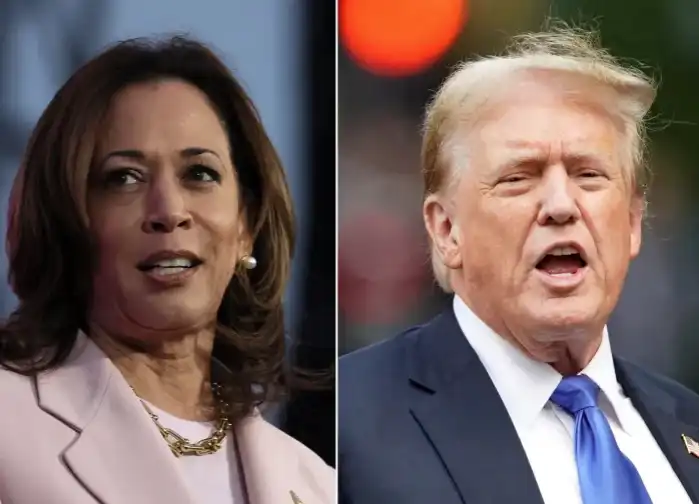

“Contrary to claims, Europe is not prepared for the economic impact of higher tariffs and is likely to completely change its stance on Ukraine and the threat of defence spending,” analysts at Euro Intelligence said. “We expect the EU to split along similar lines to the US itself.”


Trade wars

Many European officials said before the US presidential election that they were concerned about a Trump victory, given the strained transatlantic relations of his first term, his strong criticism of NATO, his ambivalent view of the Ukraine war and his stance on climate change.


Trade is a major concern for Europe. Trump said last month that the EU would have to “pay a big price” for not buying enough U.S. exports if he wins the election.


European Commission President Ursula von der Leyen congratulated Trump on his victory, but also said avoiding trade wars would be in the interests of the United States as well as Europe.


“Millions of jobs and billions in trade and investment across the Atlantic depend on the dynamism and stability of our economic relationship,” she added.


Trump, who takes office in January, has said he will impose a 10 percent tariff on imports from all countries and a 60 percent tariff on imports from China. Economists warn that this could disrupt supply chains around the world, potentially driving up costs and sending China redirecting its exports to Europe.


Ukraine

Europe also fears a shift in US foreign policy, particularly towards the war in Ukraine. Trump has criticized the level of US support for the war effort, and before the election he promised to end the conflict even before taking office, without explaining how.


Hungarian nationalist Prime Minister Viktor Orban said Europe would now have to reconsider its support for Ukraine, and Orban, unlike other EU leaders, has endorsed Trump’s candidacy.


He posted rousing messages on the X platform after his victory. The Hungarian leader has long angered Brussels with his close ties to Russia and opposition to aid to Ukraine.


NATO Secretary General Mark Rutte was among many in Europe who congratulated Trump and expressed hope for closer cooperation with him, while a number of ministers and leaders said his return to the White House would require Europe to take greater responsibility for its own security.


"We now have to think about the bigger picture and make major investments in our European security," German Foreign Minister Annalena Baerbock told reporters in Berlin.


The French and German defense ministers are due to hold a hastily arranged meeting later Wednesday in Paris, ahead of long-planned meetings of dozens of European leaders in Budapest on Thursday for the European Political Community summit and a meeting of EU leaders, also in Budapest, after that.


The EU summit will allow for an initial exchange of views but is unlikely to produce a full response to Trump's victory, a European diplomat said.

ARAB AND WORLD

Wed 06 Nov 2024 9:50 pm - Jerusalem Time

Harris calls Trump, concedes defeat, congratulates him on historic win

Vice President Kamala Harris, the Democratic nominee for president on Oct. 5, called President-elect Donald Trump on Wednesday to concede defeat in the election and congratulate him on his victory, a senior adviser to the vice president told The Associated Press. Harris spoke about the need for a peaceful transition of power, the aide said.


Harris, once seen as a potential savior for the Democratic Party after Joe Biden's re-election campaign faltered, faces deep rejection from American voters in this year's presidential election.


Harris was defeated in each of the seven battleground states by Donald Trump, a man she has described as an existential threat to the country’s founding institutions. Trump appeared on track to win the popular vote for the first time in his three campaigns for the White House — even after two impeachment trials, criminal convictions and an attempt to overturn his previous election loss.


Harris's office said she plans to give a concession speech on Wednesday at 4 p.m. She will speak at Howard University, her alma mater in Washington, where her supporters have been watching the results unfold.


On a bitter note for Harris, as vice president she is expected to oversee the ceremonial certification of the election by Congress.


It’s the same role Mike Pence played four years ago when Trump led his supporters to march on the U.S. Capitol. And while critics said the violent insurrection crystallized Trump’s threat to American democracy, it didn’t stop voters from ultimately electing him again, overwhelmingly and clearly.


Harris became the Democratic nominee after Biden, who was already struggling to convince voters he could serve as president until he was 86, stumbled badly in his June 27 debate with Trump.


Biden dropped out of the race on July 21 and endorsed his vice president, who quickly united the Democratic Party around her nomination.


It was a remarkable turn of events for Harris. Four years earlier, her presidential campaign had been ablaze and exposed the political limitations of someone once called “the female Barack Obama.” Although Biden chose Harris as his running mate, she had stagnated in the role after becoming the first black or South Asian woman to hold the office.


And, as experts have noted, some Democrats have begun to dismiss her as they ponder the party’s future after Biden. But Harris found a new calling after the U.S. Supreme Court overturned Roe v. Wade in 2022, and she has become the White House’s leading advocate for abortion rights.


Harris also made a more concerted effort to reach out to local politicians, business leaders, and cultural figures, building relationships that could serve her in the future.


The moment came before she expected it, and she was thrust into the presidential race with Biden's withdrawal just a month before the Democratic National Convention.


Harris immediately reset the contest with Trump. She was 18 years younger and a former courtroom prosecutor facing the first major presidential nominee to be convicted of a crime. Her nomination galvanized Democrats who feared they were doomed to defeat with Biden at the top of the ticket.


But she also faced severe difficulties from the start. She inherited Biden’s political operation just 107 days before Election Day (5/11/2024), and faced an anxious electorate eager for change.


Although Harris offered a “new way forward,” she struggled to meaningfully differentiate herself from the unpopular incumbent president. In addition, she had limited time to introduce herself to skeptical voters who did not cast ballots for her in the presidential primary.


Democrats now face the prospect of catching their breath and pulling themselves together during a second Trump presidency, and it is unclear what role Harris will play in her party's future.


Republican Donald Trump was elected the 47th president of the United States on Wednesday, an extraordinary comeback for a former president who refused to accept defeat four years ago, fomented a violent insurrection at the U.S. Capitol, was convicted on criminal charges and survived two assassination attempts. With his win in Wisconsin, Trump secured the 270 electoral votes needed to win the presidency.


Republicans also regained control of the Senate, picking up seats in West Virginia and Ohio. House races are in focus in New York and California, where Democrats are trying to reclaim some of the dozen or so seats that Republicans have made surprise gains in recent years.

PALESTINE

Wed 06 Nov 2024 9:11 pm - Jerusalem Time

Israeli army announces the withdrawal of the 252nd Division from the Gaza Strip

The Israeli occupation army announced the withdrawal of the 252nd Division from the Gaza Strip, on Wednesday, after concluding its activity in the central Gaza Strip.


The occupation army said in a statement: "The 252nd Division has completed its mission in the central Gaza Strip after several months of fighting in the area, where it was able to eliminate Hamas elements and the movement's infrastructure in the area. The 99th Division forces were assigned responsibility for fighting in the area."


The statement claimed to have eliminated hundreds of Palestinian resistance fighters and destroyed more than 10 kilometers of main underground roads (tunnels), in addition to dozens of hideouts.

ARAB AND WORLD

Wed 06 Nov 2024 8:39 pm - Jerusalem Time

Israeli raid bombs historic building near Baalbek Castle, eastern Lebanon

An Israeli airstrike on Wednesday destroyed an ancient building near the historic Baalbek Citadel in eastern Lebanon.


Baalbek-Hermel Governor Bashir Khodr said that an Israeli raid led to the destruction of the historic Manshiyeh building.


He added, "This building is located in a neighborhood classified as an archaeological site and dates back to the Ottoman era."


In turn, an official in the Lebanese Ministry of Culture (who preferred to remain anonymous) told Anadolu Agency, "One of the Israeli raids led to the destruction of the historic Al-Manshiya building, according to the ministry's classifications, which dates back to the Ottoman era (in the Levant 1516-1918) and is located adjacent to the site of the historic Baalbek Citadel."


According to Khader, this raid is considered the closest to Baalbek Castle, and the castle will be inspected later to determine whether any damage occurred inside it.


In recent weeks, Israeli air strikes have targeted Baalbek, the city nicknamed the "City of the Sun", known for its archaeological sites, many of which date back to the Roman era.

ARAB AND WORLD

Wed 06 Nov 2024 7:09 pm - Jerusalem Time

Netanyahu discusses 'Iranian threat' in phone call with Trump


Israeli Prime Minister Benjamin Netanyahu spoke by phone with Donald Trump after his victory in the US presidential election, and they discussed the "Iranian threat" to Israel's security, the Prime Minister's Office said.


"The conversation was warm and friendly. The prime minister congratulated Trump on his election victory, and they agreed to work together for Israel's security. The two sides also discussed the Iranian threat," the statement said.

ARAB AND WORLD

Wed 06 Nov 2024 7:03 pm - Jerusalem Time

How Trump Won and How Harris Lost


The US presidential election, which was held on Tuesday, November 5, ended with former President Donald Trump winning a clear and overwhelming victory over his rival, Democratic candidate Kamala Harris, in an amazing way.


While Trump and his supporters celebrate the euphoria of victory, and the Democrats lick their wounds after losing the White House, the Senate and the House of Representatives, and wander the earth as if an earthquake threw them into the abyss, and before they start pointing fingers at each other for the reasons for this dizzying loss, it is necessary to point out a set of facts.


First, former President Trump pulled off an extraordinary comeback early Wednesday morning, becoming the first president to win two nonconsecutive terms since the 1888 election, when the 22nd president, Grover Cleveland, won the election after losing in 1884, also becoming the 24th president in an unprecedented battle for the White House. As observers await final results from Michigan, Nevada and Arizona (which Trump won), he has so far received 277 electoral votes, putting him in the White House, compared to Harris’s 224. By the end of Wednesday, he is projected to have 314 electoral votes, giving him a landslide victory.


Second, the 45th president’s political career appeared to be over after he sought to overturn his 2020 election defeat and galvanized his supporters to march on the Capitol on January 6, 2021, an event that led to riots, the evacuation of Congress, and his impeachment. Since that event, Trump has become the first president ever to be impeached twice; has been charged in four separate criminal cases; has been found liable for sexual assault in a civil case; and has been convicted in a criminal court of 34 felony counts of falsifying business records.


Third, Trump was backed by a fiercely loyal base of support — most of whom believed his narrative that he was the unfair victim of a corrupt political, legal, and media establishment.


"We overcame obstacles that no one thought were possible," Trump told supporters during his victory speech in West Palm Beach, Florida, in the early hours of Wednesday morning, calling his win "a tremendous victory for the American people."


Fourth, Trump capitalized on public dissatisfaction with President Biden’s record. Things went wrong early for Harris. The writing was on the wall early in the evening for Harris. The first warning sign was a very early call that Trump would win Florida. The result itself wasn’t a shock — but the fact that Trump won by nearly double the 6-point margin the polling average had predicted was ominous for the Democratic nominee.


The pro-Trump pattern continued for most of the night, with supposedly safe Democratic states like Virginia and even New Jersey hanging in the balance for uncomfortable lengths of time for Harris's team, while Trump jumped to an early lead in every swing state.


Fifth, the big demographic surprise that worked in Trump’s favor was the huge swing among Latino men to Trump. Much of the media coverage before Election Day focused on whether Trump would make gains among black voters, especially black men, or among younger voters. In fact, the changes within these demographic groups were modest—at least according to current polls, which may change somewhat as new data is added. But there was a real shock. Latino men swung toward Trump by a staggering margin, according to CNN exit polls. Especially since in 2020, polls showed that Latino men voted for Biden over Trump by a 23-point margin, 59% to 36%.


Trump did not lose sight of the support of these diverse ethnic groups, including Arab and Muslim voters who voted for him, saying: “They came from all over: union and non-union, African Americans, Hispanics, Asian Americans, Arab Americans, Muslim Americans. We had everyone and it was beautiful. It was a historic realignment that united citizens of all backgrounds around a common core of common sense.”


Sixth, there is no doubt that Trump benefited from the factor of increased sympathy for him after the first assassination attempt he was subjected to, on July 13, 2024, in the state of Pennsylvania, which almost killed him, which gave his campaign additional momentum, which was strengthened after the second (alleged) attempt on September 29.


How Harris Lost:


First, the fact is that Harris inherited a campaign from Joe Biden on July 21 that seemed to be on the wane, given the president’s unpopularity and inability to deliver a compelling message to Americans (on top of his disastrous debate performance on June 27). After Democrats forcibly removed Biden from the race and chose Harris, she quickly bolstered her moribund party, mobilizing women, electrifying TikTok and Instagram creators with supportive memes, and raising staggering sums from donors. But Momentum consultants insisted that the momentum she built had not materialized. She had not been able to adequately bury Biden’s ghost, severely hampering her ability to convince voters that her candidacy was the one to turn the page.


Second, experts say, it happened simply because Harris refused to break completely with the past four years when voters indicated that was what they wanted. Worse, she hesitated to create any distinction between herself and her boss on Biden’s biggest weakness—his handling of the economy—or to specify any specific way her presidency would differ from his other than appointing a Republican to her Cabinet.


In fact, there was no clear reason Harris should bear the brunt of the blame, with aides pointing to how she had swung the battleground numbers in her favor and maintained her advantage over Trump, and the widespread sense that Biden and the broader anti-incumbent sentiment had put her in a difficult, if impossible, position. “We ran the best campaign we could have, given that Joe Biden was president,” one Harris aide complained to Politico. “Joe Biden is the only reason Kamala Harris and the Democrats lost tonight.” Another Harris aide told Politico that it was clear Biden should have come out earlier than July 21, allowing Democrats to hold a primary they believed Harris would have won.


Republican candidate Donald Trump has undoubtedly pulled off the greatest political comeback in modern U.S. history in Tuesday’s election, winning enough electoral votes to defeat Democratic candidate Kamala Harris and return to the White House for a second term. Trump declared victory in a speech from Florida, saying he was the mastermind behind “the greatest political movement ever” and pledging to help the country heal, after campaigning on a promise of “revenge” on his political enemies.


Trump’s victory in the U.S. presidential election, experts say, would mark the end of a period of trouble for the Republican candidate, who refused to concede defeat four years ago. That was followed by a violent attack on the Capitol by a mob of his supporters, four criminal indictments, a felony conviction on 91 counts, a $354 million judgment in a civil case against him and his businesses, another jury finding him liable for sexual assault and defamation, and the legal cases pending against him likely to be (effectively) over or severely disrupted.


On this issue, we must return to what Trump said after the verdicts against him were issued: “The real verdict will come on November 5th, by the people.” Indeed, the verdict was in his favor. “We have overcome obstacles that no one thought possible,” Trump told a crowd of supporters gathered at the convention center near his Mar-a-Lago resort. After thanking the voters, he said that he would not rest until he achieved a “golden age” for America.


Finally, his campaign strategy has mostly avoided the mainstream press, focusing instead on appealing to young and disaffected minority voters through high-profile appearances on popular podcasts, backed by influencers who have supplanted traditional media among these voters. As the night wore on Tuesday, it became clear that the high-stakes strategy was paying off. Trump outperformed his 2020 results all over the map, while Harris underperformed Biden in key states and among key voting blocs, including Latinos and white men.

PALESTINE

Wed 06 Nov 2024 6:52 pm - Jerusalem Time

A young Palestinian dies of his wounds from the occupation forces' bullets near Ramallah

The Ministry of Health announced, on Wednesday evening, the death of a young man from Deir al-Ghusun, who succumbed to his wounds after being shot by the Israeli occupation forces on the Nablus-Ramallah road.


The Ministry of Health said that it was informed by the General Authority of Civil Affairs of the martyrdom of the young man Harith Abdullah Jabara from the town of Deir al-Ghusun in Tulkarm Governorate, as a result of his injury by the occupation forces’ bullets near the “Shilo” settlement, which was built on citizens’ lands north of Ramallah.


The occupation forces shot the young man, Jabara, claiming that he attempted to carry out a run-over attack.

PALESTINE

Wed 06 Nov 2024 6:47 pm - Jerusalem Time

Two young Palestinians injured by Israeli occupation bullets in Jenin

Two young men were injured by Israeli occupation forces' bullets, this evening, Wednesday, in the city of Jenin.


Ibn Sina Specialized Hospital said that it received two young men who were shot by the occupation forces, one in the hand and the other in the back with live bullets, describing their conditions as stable.


The occupation continues to storm the city of Jenin and its camp for more than 15 hours, while military reinforcements continue to arrive from the Jalameh military checkpoint to the camp’s surroundings and several neighborhoods in the city.


The occupation forces raided a number of citizens' homes in Jenin camp, while electricity continues to be cut off in neighborhoods in the city and the camp as a result of the raid.

PALESTINE

Wed 06 Nov 2024 6:10 pm - Jerusalem Time

Five Palestinians killed after Israeli occupation bombed a group of citizens in the northern Gaza Strip

  1. Five citizens were killed on Wednesday evening, when the Israeli occupation forces bombed a group of citizens in the Tal al-Zaatar area, north of the Gaza Strip.


Al-Awda Hospital in Jabalia, north of the Gaza Strip, said that 5 martyrs and a number of wounded people arrived at the hospital, as a result of the Israeli occupation bombing of a group of citizens in the Tel al-Zaatar area, north of the Gaza Strip.


Four citizens were killed in an Israeli drone strike on a group of citizens in Gaza City on Wednesday afternoon.


Paramedics from the Palestinian Red Crescent Society said that they transferred 4 martyrs and a number of wounded people after an Israeli drone bombed a group of citizens in front of the ambulance and emergency headquarters in the Al-Rimal neighborhood, west of Gaza City, to the Baptist Hospital in the city.

ARAB AND WORLD

Wed 06 Nov 2024 5:43 pm - Jerusalem Time

Dead and wounded as Israeli occupation continues its aggression on various areas of Lebanon

The Israeli occupation aggression continues today, Wednesday, in various areas in Lebanon.


According to local sources, seven citizens were killed in an airstrike that targeted the town of Ain near the city of Baalbek in the Bekaa, while the governor of Baalbek-Hermel, Bashir Khodr, announced the death of 30 citizens and the injury of 35 as a result of the occupation airstrikes that targeted the area today.


The occupation's raids on the southern suburb of the Lebanese capital, Beirut, were renewed, resulting in widespread destruction of buildings, facilities and infrastructure.


The occupation warplanes targeted the areas of Haret Hreik, the airport road, and the American neighborhood in the southern suburb of Beirut.


The occupation aircraft and artillery also bombed the cities of Baalbek and Nabatieh, and the towns of Hermel, Deir Siryan, Bouday, Ansar, Taria, Tamnin al-Tahta, al-Ram, Qarha, Mishmash, Kfar Dan, Mayfadoun, Zawtar, Alman, al-Qusayr, Kfar Rumman, Shaqra, Amshki, Kfar Shuba, Mahrouna, Bint Jbeil, Anqoun, Ain Qana, Joya, al-Babiliya, Jibshit, Deir al-Qanun al-Nahr, al-Tayri, al-Abbasiya, Siddiqin, al-Khiam, Dab’al, al-Ain, Aitat, al-Bisariyah, Kfar Sir, Ain Ba’al, Ainatha, Kounin, Hanin, and the Mari plain in southern Lebanon and the Bekaa.

ARAB AND WORLD

Wed 06 Nov 2024 5:25 pm - Jerusalem Time

European newspapers: This is how Trump’s victory changes the rules of the game for America’s allies

“A devastating result” and “an existential disaster for the Democrats,” were the headlines in Europe’s main newspapers on Wednesday analyzing the victory of Republican presidential candidate Donald Trump over his Democratic rival Kamala Harris in the race for the White House.


“Trump has a mandate to reform the United States in a radical way. There will be no turning back after the devastating result of the US election,” the Financial Times wrote, estimating that “Trump’s re-election would be an existential disaster for the Democrats” that would “change the rules of the game for America’s allies.”


The newspaper considered that if outgoing President Joe Biden had withdrawn "six months ago, Democrats would have had more time to choose a better candidate than Harris, who showed a performance that could be described - at best - as modest when the discussion turned to the economy, a topic she did her best to avoid."


For its part, the British newspaper The Times considered that “the Democratic Party misjudged the difference in enthusiasm (between supporters of the two competing parties) and overestimated its position on the ground. It seems that this confidence in women’s enthusiasm in favor of Harris was misplaced,” recalling that “a similar situation occurred with Hillary Clinton in 2016.”


Another British newspaper, The Telegraph, opined that “Kamala Harris has led the worst presidential campaign in modern US history,” saying that “the vice president has only herself to blame.” It noted that “the offer she made to the American people was completely empty and based on anyone but Trump.”


In France, Le Monde described Trump in an editorial as “a return to power driven by his political instincts and desire for revenge,” considering that “the Republican billionaire has achieved a historic return to historical issues at the age of 78, despite his legal setbacks and reckless proposals.”


In Spain, the left-wing newspaper El País wrote that Trump's victory was due to "an aggressive, masculine, uncomplicated way of interacting with others, in which crude insults or hurtful nicknames replace arguments," adding that "the winner is the monster inside us all."


The newspaper believed that Trump "succeeded in identifying these basic instincts, representing them in his person, feeding his thirst for revenge, and generating the most powerful machine of false beliefs, information, and feelings in an unprecedented electoral mobilization."


risky bet

The Swiss newspaper Tribune de Genève wrote in an editorial that “lost in the mix of progressivism open to all trends, including the most deeply rooted in minorities or the most sectarian, the Social Democrats, in the broadest sense of the term, have lost what was the source of their strength: popularity.”


The German-language daily Neue Zürcher Zeitung in Switzerland also considered that "the Americans made a risky bet by electing Donald Trump to the White House, which is something that cannot be predicted."


"The checks and balances of the US Constitution certainly apply to Trump, but the Republican is likely to ignore them and cause chaos in Washington and on the international stage," she added.


In Poland, the newspaper Jezerospolita wrote that “the biggest problem, from our point of view, is that Europe is not fully prepared for Trump. There is no leader in Europe at the moment who is capable of taking the initiative in Western society (…) France and Germany are going through a serious political crisis.”


"Europe must do its duty very quickly in terms of leading the West, before someone like (Hungarian Prime Minister) Viktor Orban or (Russian President) Vladimir Putin himself takes over," she added.


In Germany, Der Spiegel newspaper said that "Trump's victory represents a political turning point, not only for the United States, but for the entire world as well."


She wrote that "massive changes in US foreign and security policy are expected, which are likely to have negative consequences, especially for Europeans. Trump sees the world as a jungle where only the law of the strongest applies."


Ukraine war

In Ukraine, the Kyiv Post wrote an opinion piece by Yulia Mendel, in which she saw that with the announcement of the results of the US presidential election, social media was predictably filled with drama, especially regarding the future of Ukraine. Many experts and journalists were convinced that a Donald Trump presidency would be a disaster for Ukraine. However, the reality is much calmer than this social media drama, as neither candidate has presented a clear gain for Ukraine.


The author says that after closely following both candidates’ campaigns, she noted that Trump’s most explicit position on Ukraine was his call to “end the war.” Many interpreted this as a veiled call for surrender, but the truth is more complicated. This message “resonates with a less vocal segment of Ukrainians—those who live under daily bombardment, whose lives have been transformed into a continuous cycle of destruction since Russia’s full-scale invasion.”


Calls for a temporary halt to the war to preserve the nation are often dismissed as naive, especially by those far from the front lines. Critics argue that “Putin will attack again.” Yet this logic seems to require us to justify the massive human losses and possible annihilation of Ukraine on the basis of a hypothetical future threat. In short, she said, it amounts to “dying now to avoid possible death later.”


The author believes that a purely military solution has never been a viable path to victory for Ukraine, even with unlimited financial and military support from the West, “but we must face the painful truth: the cost of this war is gradually draining the foundation on which the Ukrainian nation is built.”


In contrast, the Russian newspaper Izvestia published an article by Russian writer Dmitry Solonikov, a political scientist and director of the Institute for the Development of the Contemporary State, in which he said that it is difficult to predict Donald Trump's next steps, and he saw him as an eccentric person who sometimes has completely contradictory ideas. Based on his election speech, we can conclude that he will pursue an aggressive policy from a position of strength, from the position of the master who controls the world.


Solomonkov adds that Trump will try to stop the conflict between Russia and Ukraine, and will pressure both sides to do so.


For his part, Denis Denisov, director of the Institute of Peacekeeping Initiatives and Conflict Science and an expert at the Russian State Finance University, believes that Trump will focus primarily on employment issues and domestic policy.


“It makes perfect sense that he would be less interested in foreign affairs in the first weeks and months of his term,” he says. “However, he will become more active abroad over time. During the campaign, he made a number of statements, but I don’t think there will be much change in Washington’s policy. Ukraine will continue to receive weapons and funding, and there is no reason to wait for any real negotiating proposals that suit Russia. So I think the conflict will continue.”


ARAB AND WORLD

Wed 06 Nov 2024 4:59 pm - Jerusalem Time

Israeli army: Rocket from Lebanon falls on Avivim, causing injuries

Several people were injured when a rocket fell in the Avivim border settlement area in northern Israel on Wednesday, according to the Hebrew newspaper "The Times of Israel".


The Israeli army said that Hezbollah fired 120 projectiles from Lebanon towards Israel on Wednesday.

The Merom HaGalil Regional Council says several rockets hit Avivim.