ARAB AND WORLD

Fri 08 Nov 2024 1:28 pm - Jerusalem Time

Iranian Revolutionary Guard: Our confrontation with Israel has an international extension and we are using part of our capabilities in it

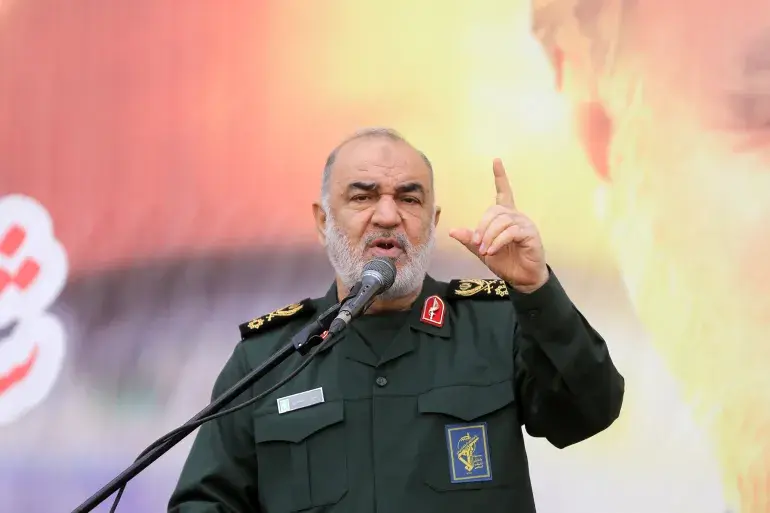
The commander-in-chief of the Iranian Revolutionary Guards, Major General Hossein Salami, said that Israel entered the confrontation with all its capabilities and energies, while Tehran is confronting Israel with "part of its capabilities."


He stressed that the confrontation with Israel is apparently concentrated in the Gaza Strip and Lebanon, but its "political extension is international."


He pointed to the possibility of launching stronger strikes in light of the continued threat of an attack on Israel in response to its recent attack on Iran.


He added that the United States' achievement during the year of the Battle of the Flood of Al-Aqsa is the destruction of its political image globally, according to his description.


The balance of power is changing.

Yesterday, the commander-in-chief of the Iranian Revolutionary Guard, Major General Hossein Salami, stated that the balance of power is changing in favor of the resistance, and that the Lebanese Hezbollah has been able to rebuild its capabilities in a “miraculous” way, as he put it.


Salami pointed out that despite the massacres committed by Israel over the past year, it did not achieve tangible gains on the ground due to the fierce resistance shown by the people of Gaza, who faced the largest military coalition in the world with limited resources.


In his speech before the Assembly of Experts, Salami said that Israel was wrong when it thought that Iran would not respond to its aggression.


The commander of the Revolutionary Guards described the "True Promise" operation as historic, considering that it demonstrated Iran's strong will to confront any attacks, as the operation "thwarted the regional and international alliances that support Israel, and destroyed the illusion of the Zionist entity's immunity forever."


Iran launched its first direct military attack on Israel on April 13, 2024, in an operation it called “True Promise.”


Tehran announced on its state television that it had launched drones and ballistic missiles from its territory towards Israeli targets, in response to an Israeli attack on the Iranian consulate in Damascus on April 1, which killed a number of Iranian military leaders.

PALESTINE

Fri 08 Nov 2024 1:12 pm - Jerusalem Time

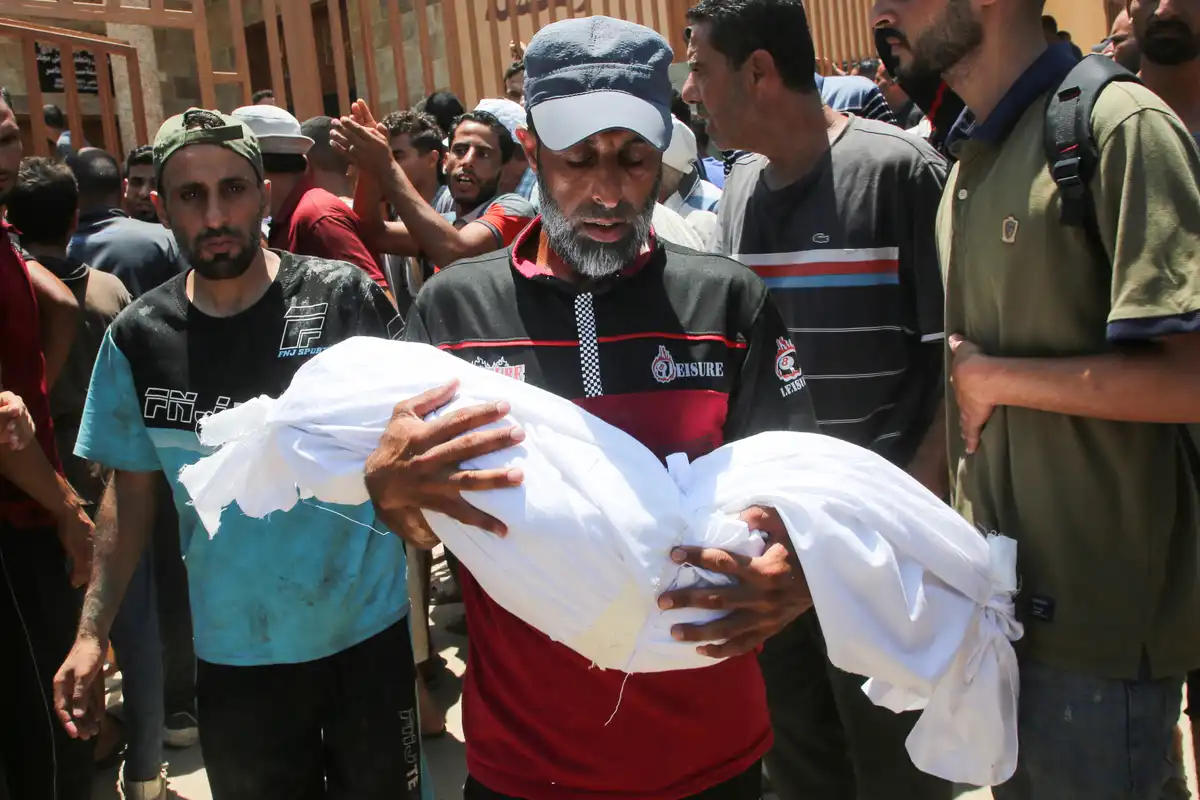
UN: 70% of Gaza aggression victims are children and women

The United Nations High Commissioner for Human Rights said that nearly 70% of the victims of the ongoing Israeli aggression on the Gaza Strip are children and women, indicating a "systematic violation of the basic principles of international humanitarian law, including distinction and proportionality."


This came in a report published by the Commission, today, Friday, on violations during the period between November 2023 and April 2024, and "details in depth the killing of civilians and violations of international law, which may often amount to war crimes."


The report said that "the International Court of Justice, in a series of orders on provisional measures, affirmed Israel's international obligations to prevent, protect against and punish acts of genocide and the prohibited practices associated with it."


In turn, the United Nations High Commissioner for Human Rights, Volker Türk, stressed the need for Israel to fully and immediately comply with these obligations, saying that “this has become even more important and urgent, given the overall conduct described in the report and taking into account the latest developments, including Israel’s operations in northern Gaza and its legislation affecting UNRWA’s activities.”


He stressed that "it is imperative that there be due accountability for allegations of serious violations of international law through credible and impartial judicial bodies, and in the meantime, that all relevant information and evidence be collected and preserved."


The High Commissioner recalled “the duty of States to take action to prevent atrocity crimes, and urged them to support the work of accountability mechanisms, including the International Criminal Court, as well as to exercise universal jurisdiction to investigate and prosecute perpetrators of crimes in national courts under international law and in line with international standards.”


The report referred to "repeated statements by Israeli officials linking the end of the conflict to the complete destruction of Gaza and the departure of the Palestinian people, and it also documents efforts aimed at justifying discrimination, aggressive acts and violence against Palestinians, and even their extermination."


The report highlighted "the brunt of the attacks on civilians," including the complete blockade imposed by the occupation forces on Gaza, in addition to the Israeli government's continued illegal denial of humanitarian aid, the destruction of civilian infrastructure, and repeated mass displacement.


He pointed out that these practices by the occupation forces led to unprecedented levels of killing, death, injury, hunger, disease and epidemics.


The report raised "concerns about forced displacement, attacks on hospitals that appear to be systematic, and on journalists, as well as reports of the use of white phosphorus."


The High Commissioner called on Member States, “in line with their obligations under international law, to assess arms sales or transfers and the provision of military, logistical or financial support, with a view to ending such support if it creates a risk of a violation of international law.”


“Our monitoring indicates that this unprecedented level of civilian killing and injury is a direct result of non-compliance with the basic principles of international humanitarian law,” he said. “Unfortunately, these documented patterns of violations continue unabated, more than a year after the war began,” he added, stressing that “the violence must stop immediately, and focus on the flow of humanitarian aid to Gaza.”

ARAB AND WORLD

Fri 08 Nov 2024 12:20 pm - Jerusalem Time

Poll: 50% of Israelis support preemptive attack on Iran

50% of Israelis believe that Israel should launch a preemptive attack against Iran, while 30% said that “we should wait for an Iranian response and then attack it,” and 20% do not have an answer to such a question, according to a poll published by the Maariv newspaper today, Friday.


59% said they opposed Prime Minister Benjamin Netanyahu's decision to dismiss Defense Minister Yoav Galant from his post, while 29% supported the decision and 14% said they had no opinion on the matter.


If general elections for the Knesset were held now, the Likud party would win 24 seats, the National Union 19, Yesh Atid 15, Yisrael Beiteinu 14, the Democratic Party 13, Shas 10, Otzma Yehudit 8, United Torah Judaism 7, Hadash-Ta'al 5, the Joint List 5, and the Religious Zionism party would not pass the electoral threshold.


These results mean that the strength of the coalition parties, without Religious Zionism and a party headed by Gideon Sa'ar, will be 49 seats, compared to 61 seats for the Zionist parties in the opposition, and 10 seats for the Arab parties.


If a party headed by Naftali Bennett and another party headed by Galant participate in the new elections, the party headed by Bennett will obtain 23 seats, most of them at the expense of the Zionist parties in the opposition: Likud drops to 19 seats, the National Camp 11, Yesh Atid 11, Shas 10, the Democratic Party 9, Yisrael Beiteinu 7, Otzma Yehudit 7, a party headed by Galant 6, the Arab Front for Change 5, the Joint List 5, and Religious Zionism does not exceed the electoral threshold.


These results indicate that the strength of the Zionist parties in the opposition with Bennett and Galant's parties will be 67 seats, compared to 43 seats for the coalition parties, and 10 seats for the Arab parties.

PALESTINE

Fri 08 Nov 2024 12:18 pm - Jerusalem Time

Updated: Israeli attacks on citizens and their property in the West Bank

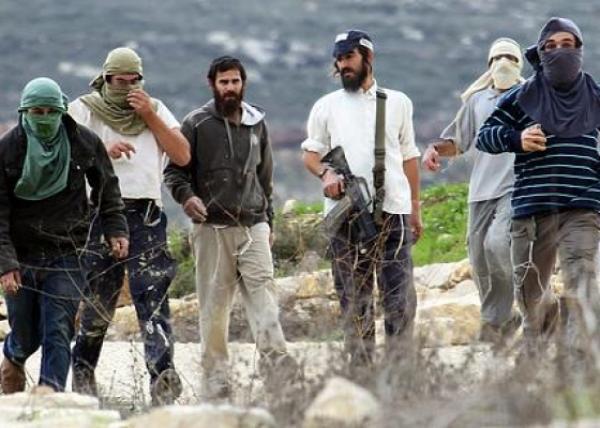
Settlers continue their attacks on citizens and their property in various areas of the West Bank.


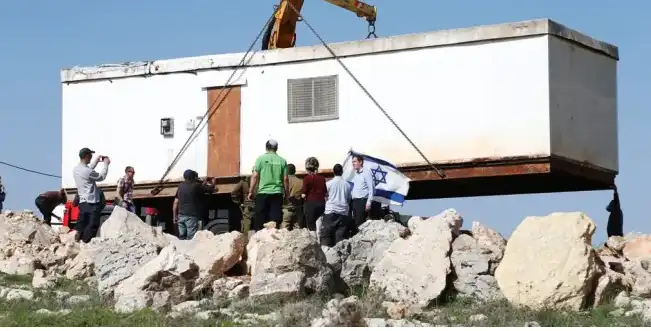
In Nablus, settlers set up a caravan on the lands of Jabal al-Najma in the village of Jalud.


Local sources reported today, Friday, that settlers set up a "caravan" on the mountain, with the aim of seizing the area to establish a new colony and expand the neighboring colonies.


In Ramallah, settlers from the "pastoral" colonial outpost built on citizens' lands in Deir Jarir attacked olive pickers and tried to force them to leave their lands and prevent them from picking the olives.


In Bethlehem, settlers cut down 70 olive, grape and almond trees in the Ein Fares area, west of the town of Nahalin, belonging to citizen Adel Ghayata.


It is noteworthy that the occupation forces and settlers have recently escalated their attacks on the town of Nahalin, which include seizing land and uprooting and cutting down trees.

PALESTINE

Fri 08 Nov 2024 12:07 pm - Jerusalem Time

Two Palestinians injured by Israeli occupation bullets west of Ramallah

Two citizens were injured by Israeli occupation forces' bullets, today, Friday, in the town of Beitunia, west of Ramallah.


The Palestinian Red Crescent Society reported that its crews dealt with two injuries to young men, one with live bullets in the thigh, and the other with live bullets in the shoulder, during the occupation's storming of the town of Beitunia, and they were transferred to the hospital.

PALESTINE

Fri 08 Nov 2024 10:03 am - Jerusalem Time

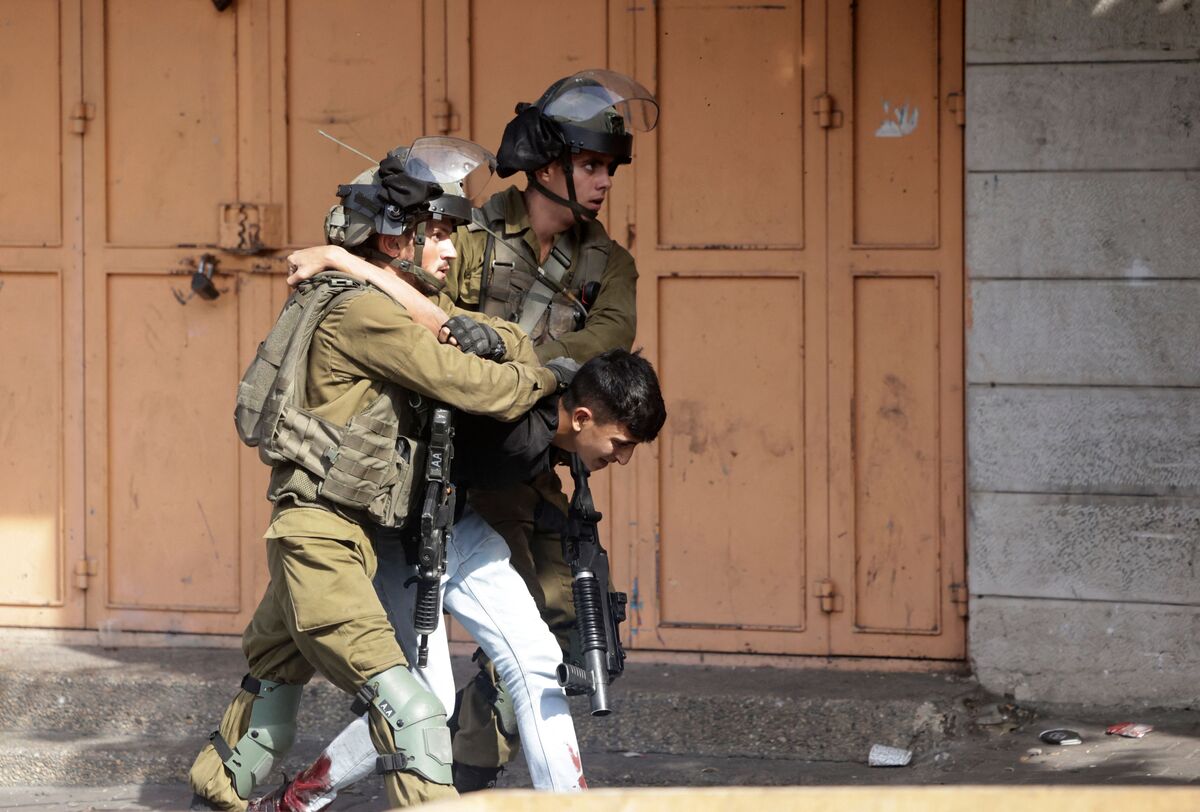
Israeli occupation forces arrest 5 citizens in Hebron

Today, Friday, the Israeli occupation forces arrested five citizens from the Hebron Governorate.


Local sources reported that these forces raided the southern area of the city and arrested Rushdi Al-Fakhouri and Sharaf Al-Fakhouri, and from the town of Yatta they arrested the young man Musab Muhammad Musa Abu Samra and Ahmad Omar Abu Subha.


Meanwhile, the young man, Muhammad Mufid Muhammad Akhlil (24 years old), was arrested during a raid on the Al-Bayada area in Beit Ummar.


The occupation soldiers also stormed the house of the martyr Mufid Akhlil, vandalized its interior walls, smashed furniture and some belongings, and the windows of a vehicle, and severely beat a group of young men who were inside the house, after detaining the family in a room for more than two hours.


The occupation forces continue to close the entrances to the city of Hebron, its towns and camps with iron gates, and have tightened their military measures in the neighborhoods of the Old City and near the Ibrahimi Mosque.

OPINIONS

Fri 08 Nov 2024 9:17 am - Jerusalem Time

Israel continues to enact racist laws... and the pretext is terrorism

op-ed "AlQuds" dot com

op-ed "AlQuds" dot com

Opinion Writer

Israel continues to enact racist laws, which constitute a serious violation of the rights of the Palestinians and a flagrant breach of the constitution and international law, as they are enacted based on racist principles and motives.


The culmination of the Knesset decisions yesterday morning resulted in a bill to deport the families of those who carry out national operations, as Israel considers them terrorists. Accordingly, the authority is granted to the Minister of the Interior to impose a decision to deport a close family member, who was aware of the intentions to carry out an operation and did not take the necessary steps to prevent it, to the Gaza Strip from within Palestine or from Jerusalem for a period ranging between seven and twenty years.


In addition to the law that allows for long prison sentences for children under 14 years of age, and its transformation into an emergency law for a period of five years, meaning that according to Israeli emergency laws it may be extended later, Israel has imposed several laws, most notably a law that obliges the Israeli government to spend a portion of Palestinian tax money monthly equivalent to the damages resulting from Palestinian operations in favor of what Israel calls the victims, and a law to dismiss employees in the education sector without prior notice, which deprives hundreds of employees and teachers of their financial rights and compensation, in addition to destroying their lives, in addition to two laws that prohibit and prevent the work of UNRWA and contact with it in areas that Israel claims are under its sovereignty. These laws, which are added to a previous law considering Jerusalem the capital of the occupied entity, come within the framework of the tense political atmosphere, and the exploitation of Israel and its most extreme right-wing government of the current security situation, in order to impose a policy of racist discourse against Palestinians and Arabs.


These laws, which extremist ministers are rushing to propose and prepare, greatly affect Palestinians and Arabs, target their public freedoms, gag them, and smell of revenge far from real legal justifications, especially the law to deport families in the section related to solidarity with the martyr or wounded, as the Knesset left the door wide open for the military and security services to arrest and punish anyone who offers condolences or expresses admiration or solidarity or publishes a picture or news, which gives the occupation’s interior minister greater leeway to implement unjust punitive campaigns against citizens, based on political and ideological orientations only.


In short, Israel has been resorting to a policy of collective punishment for many years, and now it is intensifying and tightening the measures related to this policy. The argument it always makes is that the Palestinians are terrorists, and they must be suppressed and their activities and movements must be limited, by enacting more racist laws that have no basis in truth.

OPINIONS

Fri 08 Nov 2024 9:15 am - Jerusalem Time

The cost of war on the Israeli economy

Jawad Al-Anani

Jawad Al-Anani

Opinion Writer

Perihan Al-Rifai is a distinguished economist who has written extensively on Middle Eastern economies, cybersecurity, and capacity building. She has worked at the International Monetary Fund, the Qatar Central Bank, the American University in Cairo, George Washington University, the International Food Policy Research Institute, and most recently at the Atlantic Council. I recently read her latest book or report, “The Social and Economic Costs of War in Gaza.”

I know that the distinguished researcher works for an American organization, the Atlantic Council, but I must register my objection to the title, especially the use of the preposition (IN) instead of (ON) Gaza. However, I say that the title is somewhat neutral to the point of favoritism. However, the report itself is useful. I advise anyone who wants to learn about the extent of the social and economic costs on the warring parties, and the regional and international parties affected by the dire consequences of this war, to read the report.


I went back to him looking for neutral opinions and information issued by scientifically reliable sources, in order to estimate the losses incurred by the Israeli economy so far. According to Al-Rifai’s study, Israel lost a fifth of its economy in the third quarter of this year compared to the third quarter of 2023, when the total Israeli GDP for the entire year of 2023 was $576 billion, with a per capita income of $58.3 thousand.


According to the Trading Economics website, based on models for measuring the gross domestic product, Israel’s GDP is expected to fall to $513.5 billion in 2024, or a decline of $62.5 billion, or 10.8%. In 2025, it is estimated to rise to $527.3 billion, and in 2026 to $552.6 billion.


Or that the Israeli economy will return to its 2023 figure around mid-2027. This is assuming the current war ends by the end of this year.


Israeli economist Shir Haver, a strong opponent of Israel's brutal war on Gaza and Lebanon, gives stark examples of Israel's losses. He sees a collapse in all sectors, such as the significant drop in tourism revenues and the impact of the boycott of foreign universities on research and development in Israeli universities. He says that more than 100,000 companies are close to closing or have already closed. Many Israelis are transferring their money outside Israel for fear of losing their savings or their pensions, which are being eroded by the fall in the shekel exchange rate. He also confirms that the global company Intel, which intended to build a huge chips complex worth $25 billion, has canceled that project. More importantly, a large number of Israelis, estimated by some at least half a million people, have left Israel with no intention of returning, and another half a million have left Israel temporarily to Cyprus, Greece, Turkey and other countries.

According to a report by the Bank of Israel (the central bank), the war on Gaza will cost Israel about $400 billion over the years 2023-2032, and that the war will inflict direct losses on Israel estimated at about $57 billion by the end of 2025, while the indirect losses are much greater. Among the losses is the halting of workers from the West Bank to work in Israel and their replacement with thousands of workers from India and Sri Lanka, which entails transportation, housing and other costs that Israel does not incur with Palestinian workers. As a result of these effects, the economies of the West Bank and Gaza, which used to generate income for Israel of no less than ten billion dollars, have now disappeared.

The result of all these effects is that the annual growth rate of Israel’s GDP has fallen to less than 2% in 2024, after it had been 6.5% annually, and it is one of the fastest growing economies in the world. But if the war continues, the national product will fall to less than zero.


But most importantly, Israel has used a lot of its energy and support measures for its war effort during the first year of the war. It has recruited thousands of mercenaries, some of whom are workers to replace Palestinian workers. Israel has also used all its deadly weapons to kill, destroy and demolish the resistance, and the only thing left to threaten is its nuclear weapons. Most importantly, the costly variable in this war is the loss of its two most important assets. The first is the loss of its main sources of income from tourism, defense technology, cyber-advances, and cooperation with advanced Western research centers, and most importantly, its sources of income from the areas it occupies.


The second issue is the loss of the basic component of its survival, which is the human element represented in the economy as a whole and its basic resources. If reverse migration begins from Israel to countries where Israelis hold second citizenship, this means replacing the competent, educated and productive among them with Jews who will be less inclined to emigrate abroad, especially the religious extremists who live on support from the treasury, and on lands and rights due to their settlement in the occupied territories. These are less educated, cultured and productive, and most of them refuse to be conscripted.


It is true that Jewish or Zionist capital in the world is very large. But these people are driven to support Israel so that it can build a space for itself to depend on itself. After it almost felt reassured that it had reached this stage economically and socially, and that its technological superiority had become its main asset, and after tourism flourished, and it achieved an advanced growth rate commensurate with the Arabs’ acceptance of the status quo, the thunderbolt came on October 7, 2023 to remind its leaders, extremists, and reckless government, and they were assured that Arab silence was their main asset, especially the Palestinian position.


Even if the most prominent result of this war is the transformation of the resistance in Gaza, the West Bank and Lebanon into political parties, the fact that does not escape the minds of rational Israelis is that they will never prevail, and the best investment they can make is to improve their relations with the Arabs, stop conspiring against them with the Arab neighbors in Iran, Turkey and Africa, and create religious alliances with the whites in Europe and the United States. Many of these people have come to see the ugly face of Israel, which is of no use to their propaganda campaigns, nor to the protests of many civilized Jews around the world against Israel’s immoral, irreligious and inhumane practices.


There are 149 countries that recognize the State of Palestine. Israel's insistence on keeping the Palestinian land under occupation must end. Israel will not become part of the region on the basis that the Jews are a race that had two states in history, each of which lasted eighty years and ended. Most of these Jews converted to Islam or Christianity. As for the majority of the population of Israel, they are from the land of the Khazars and have no connection to the sons of Jacob, peace be upon him.


Therefore, we see many Israeli historians, professors and thinkers, whether Hebrew or Khazar, religious or religious extremist, or believers in Israel and its role in preserving the security of Jews in the world, or those who reject the idea of establishing a Jewish state, I say that many of the rational people among all of these see that Israel, by committing genocide (or genocide) against the Palestinians, is also committing mass suicide against itself, and therefore they do not see any future for it in this hostile climate that rejects its hegemony.


The last thing Israel needs is Netanyahu and his likes, murderers and butchers who decide their fate when they shed the blood of innocent people, and unjustly and negligently call them “collateral damage” or “unintended victims.”


Israel must seek to remedy its fate, because without acceptance in its surroundings and by its neighbors, its viability will be short and inevitable.

OPINIONS

Fri 08 Nov 2024 9:13 am - Jerusalem Time

Netanyahu may exploit the "transitional period" to strike Iranian nuclear facilities

Suleiman Abu Arshid

Suleiman Abu Arshid

Opinion Writer

It is not surprising that Netanyahu, despite the complex relations between them, would exploit Biden’s need to prove his Zionism to Trump on the one hand, and to leave some legacy that he can be proud of after the shame of the war of extermination that he helped fuel on the other hand.


Netanyahu's bet on Trump's victory was right, but both want Biden himself, during the transitional period, to finish the job and launch a direct strike or with American military support against Iran's nuclear facilities, ending the war and bringing Netanyahu to the "absolute victory" he aspires to, and fulfilling Trump's saying that he "ends wars, does not start them", after leaving him the task of raising the banner of peace.


Bloomberg reported that Trump, in a phone call between them last month, gave Netanyahu the mandate to do what was necessary with "Iran and its extensions," in contradiction to Biden's approach and calls for restraint and increased food aid to the Palestinians in Gaza.


Maariv also quoted a senior source in the security cabinet as saying that the transitional period would provide Israel with an opportunity to act against the Iranian nuclear project, which Netanyahu sees as an existential threat, noting that Israel’s success in striking Hezbollah’s capabilities and destroying part of the Iranian air defense system increased Netanyahu’s optimism, who said in a speech he gave on October 26 that Israel now has greater freedom of movement against its enemies than ever before, while the newspaper quoted one of Netanyahu’s former advisors as saying that Netanyahu knows how to diagnose major events and exploit the right opportunity.

While some warn that Biden will exploit the transition period to punish Israel, as Obama did in 2016 when he refrained from vetoing a Security Council resolution condemning Israel, the prevailing view is that Biden would be more willing to leave behind a legacy to be proud of, rather than enter history as a president who was ousted from the election race and failed to bring his vice president to power.

For our part, we do not rule this out either, especially in light of the unparalleled enthusiasm shown by Biden in supporting Israel to confirm his Zionism, which he expressed verbally on more than one occasion, in addition to his no less enthusiastic desire to mobilize battleships and fleets and fan the flames of wars in the East and West alike, which was manifested in the expansion of the circle of war in Ukraine, and in Palestine and Lebanon, perhaps in an attempt to strip him of the label of the old and weak president, which stuck to him and caused his ouster from the presidential race.

In contrast, Trump, contrary to popular belief, did not witness any significant armed conflicts during his previous presidency. Despite his withdrawal from the Iranian nuclear agreement, he followed the path of economic sanctions that Obama had followed in confronting it. He also chose the path of direct negotiations with North Korea, and his meeting with its leader, Kim Jong-il, at the height of the crisis was an unexpected surprise.

Hence, it is not surprising that Netanyahu, despite the complex relations between them, is exploiting Biden’s need to prove his Zionism to Trump on the one hand, and to leave some legacy that he can be proud of after the shame of the war of extermination that he helped fuel on the other hand. To achieve this, he must convince the outgoing president of this need, just as he must convince the incoming president to leave the difficult work to Biden so that he can take over a clean table on January 20, and focus on “making peace,” as writer Anna Brisky put it in an article published by Maariv.

Regarding the feasibility of Israeli or Israeli-American air strikes, Mark Dudovich, director general of the FDD Institute in Washington, says that Israel has the ability to strike the uranium enrichment facilities in Natanz and Isfahan, but striking the Bordeaux facility seems more complicated because it is located deep underground and is also well fortified. He points out that Israel has demonstrated its ability to penetrate the depth of the Iranian nuclear program, security and intelligence, and it may have unpleasant surprises for Iran, according to him. On the other hand, Sanam Vakil, director of the Middle East and North Africa Department at Chatham House in London, rules out an Israeli strike without direct American support.

ARAB AND WORLD

Fri 08 Nov 2024 9:08 am - Jerusalem Time

Raids on southern Lebanon and rocket barrages on Haifa and Nazareth

The Israeli army continued its extensive military operations in Lebanon for the 45th consecutive day, and warplanes raided Lebanese areas, one of which, at a Lebanese army checkpoint in the south, led to the death of three people and the injury of Lebanese soldiers and members of the United Nations Interim Force in Lebanon (UNIFIL), last Thursday evening.


The Lebanese Ministry of Health reported that the Israeli occupation army raids resulted in 52 martyrs and 161 wounded on Wednesday, and the total number of martyrs and wounded since the beginning of the Israeli aggression on Lebanon until Wednesday reached 3,102 dead and 13,819 wounded.


In return, Hezbollah continued to confront the Israeli forces penetrating areas in southern Lebanon to prevent their advance, and intensified its missile attacks on military sites and Israeli border towns, as well as launching missile barrages and carrying out drone attacks on the Israeli depth, on Friday morning.


On the diplomatic front, the US State Department announced on Thursday that Secretary of State Anthony Blinken intends to continue his work to end the war for the remainder of his term before President-elect Donald Trump takes office.

ARAB AND WORLD

Fri 08 Nov 2024 9:02 am - Jerusalem Time

10 Israelis injured in clashes with Palestinian supporters in Amsterdam

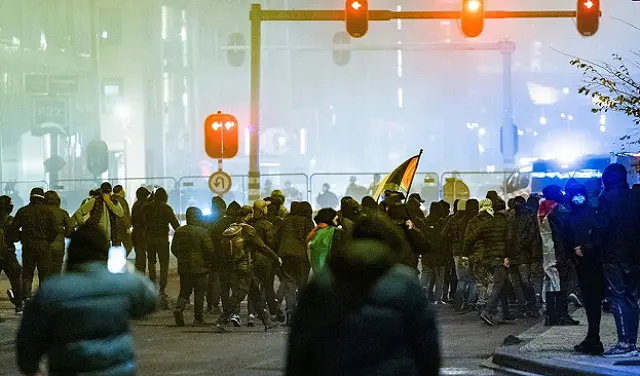
Israeli media reported that 10 Israeli fans were injured and contact with three others was lost in Amsterdam last night, after they had arrived in the Dutch capital to attend the Maccabi Tel Aviv team's match against Ajax Amsterdam in the European League.


Media outlets reported that "clashes broke out with Israeli fans after some of them tore up the Palestinian flag, following the end of the match between Ajax Amsterdam and Maccabi Tel Aviv in the European League, which ended with the former winning 5-0, on Thursday evening."


The media added that Maccabi Tel Aviv fans caused chaos in Amsterdam after the match between their team and Ajax Amsterdam.


Video clips circulating on social media platforms showed a large number of Israeli fans chanting slogans hostile to Arabs and Palestine. As a result, fistfights broke out between the two parties.


Before the start of the match, other video clips showed Israeli fans provoking the Dutch fans in the stands by refusing to stand for a minute of silence in mourning for the victims of the floods in Valencia, Spain, and they lit fireworks during the minute while the rest of the fans remained silent.


Activists considered this behavior a response to Spain's position recognizing the State of Palestine, condemning the ongoing Israeli genocide in Gaza, and refusing to buy and sell weapons with Israel.


Amsterdam police said they had "deployed additional forces in the capital after reports of tensions in several areas."


The Israeli Foreign Ministry said that ten fans were injured and contact was lost with three others.


"Israeli citizens in Amsterdam should avoid moving around on the streets and stay in hotel rooms," the Israeli National Security Council said.


Israeli Prime Minister Benjamin Netanyahu instructed the relevant authorities to send two planes to return the Israelis to their country.


Netanyahu's office held consultations with his military secretary and Foreign Minister Gideon Sa'ar, and called on the Dutch government and local security forces to "act firmly and quickly against the attackers and rioters and ensure the safety of Israeli citizens."


Israeli Prime Minister Benjamin Netanyahu spoke by phone this morning, Friday, with Dutch Prime Minister Dick Skov.


Netanyahu called on the Netherlands to "guarantee the protection of Israelis" on its territory.


He said, "I view with great seriousness the planned anti-Semitic attack against the citizens of Israel," and called for "strengthening protection for the Jewish community in the Netherlands."


The Israeli army announced that "following the difficult and serious violence against Israeli citizens in Amsterdam, and upon instructions from the political echelon and after assessing the situation, the IDF is preparing immediately to send a rescue mission in coordination with the Dutch government."


He added, "The mission will depart on cargo planes and will include medical and rescue teams. The Home Front Command is leading the rescue operation in cooperation with the various branches and branches of the IDF and the security forces."

PALESTINE

Fri 08 Nov 2024 8:58 am - Jerusalem Time

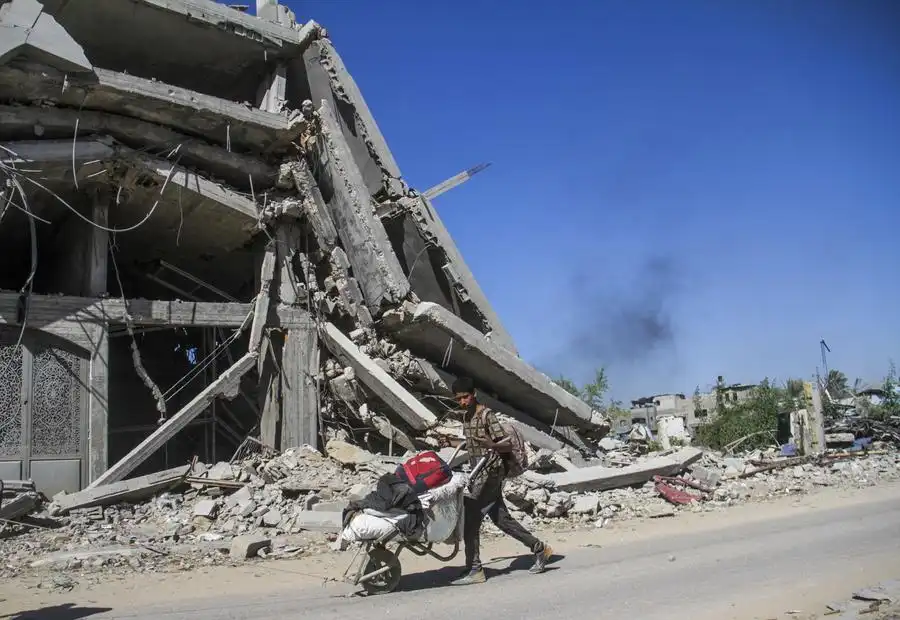
Deaths and wounded as a result of the occupation's bombing of several areas in the Gaza Strip

  1. A number of citizens were killed and others were injured, Friday morning, in Israeli occupation bombing of several areas in the Gaza Strip.


Here are the latest developments: Four citizens were killed and others were injured in an occupation raid that targeted a house near the Al-Mashtal Hotel northwest of Gaza City, while two citizens were killed west of the Al-Nuseirat camp.


A number of citizens were injured when the occupation bombed Halima Al-Sadia School in Jabalia, north of the Gaza Strip.


In Rafah, a citizen was killed and three others were injured when the occupation boats targeted a group of fishermen on the beach of Rafah city.


In Gaza City, eight citizens were killed and others were injured and missing, after the occupation aircraft targeted a house in the vicinity of Al-Daraj Clinic in the center of the governorate, while four citizens were killed and others were injured when the occupation targeted a house in Al-Manshiya neighborhood in the town of Beit Lahia, north of the Strip.


In Khan Yunis, in the southern Gaza Strip, two citizens were killed and others were injured in an occupation bombing that targeted a tent for displaced people in the Tahlia area.


The occupation forces have continued their aggression by land, sea and air on the Gaza Strip since October 7, 2023, which has resulted in the death of 43,469 citizens and the injury of 102,561 others, while thousands of victims are still under the rubble and on the roads, and ambulance and civil defense crews cannot reach them.

ARAB AND WORLD

Fri 08 Nov 2024 8:55 am - Jerusalem Time

Trump's dramatic return.. What are the options of Palestinian Authority in the face of the rushing "roller"?

Dr. Sabri Saidam: We look forward to different positions from Trump that are capable of responding to the changes in the Palestinian and regional realities

Dr. Hassan Ayoub: There is no positive change in Washington’s dealings with the Palestinian issue, and the leadership must take proactive steps

Dr. Dalal Erekat: The Authority must adopt a pragmatic approach with the Trump administration and deal with any new political decisions with caution and awareness

Sari Samour: Trump's new era may be different from the previous one, and what is required is not to give Netanyahu the opportunity to monopolize it

Dr. Saad Nimr: The authority has one choice: to adhere to the path of resistance, strengthen unity, and not return to its policies before October 7

Muhannad Abdul Hamid: Trump's policies revealed the harsh face of American standards, and it is not in our interest to sever relations with any administration

Donald Trump's return to the White House raises many questions about the impact of this return on the Palestinian issue and the future of relations with the United States, after his previous presidency witnessed major shifts in American policy towards the Palestinian-Israeli conflict, which raises concerns about Trump's future policies.


Leaders, writers, political analysts, university professors and specialists, in separate interviews with “I”, hope that Trump’s promises to stop the war on Palestine, especially in the Gaza Strip, will turn into actual steps, and that Trump will move towards ending policies that deepen the Palestinian crisis, such as annexing the West Bank.


They stress that President Mahmoud Abbas's congratulations to Trump are a diplomatic, protocol step, but could be an opportunity to strengthen relations if the future US administration's policies towards the Palestinian issue change, amidst emphasis on the importance of opening channels of communication with the US administration to ensure the protection of Palestinian interests and enhance the status of the Palestinians as an active party in the region, while being cautious of any new policy that the Trump administration might present, especially if it tries to revive the "Deal of the Century."

Talk of pledges to annex Palestinian lands deepens the crisis

Dr. Sabri Saidam, Deputy Secretary of the Central Committee of the Fatah Movement, explains the vision of the Palestinian people and leadership regarding the return of President Donald Trump to the White House, and said: We hope that we will see together a different version of the Trump we have experienced, capable of responding to the changes in the Palestinian and regional reality.


Saedam expressed his desire that this time Trump would be interested in addressing the roots of the Palestinian-Israeli conflict and its ongoing dimensions, and its effects on the stability of the entire region, and not return to previous policies that were based on normalization with Arab countries and ignoring the rights of the Palestinians.


Saidam points out that Trump's current promises to some Arab and Palestinian voters, which include the need to stop the war on Palestine, must be transformed into actual steps.


Saedam stresses the importance of Trump moving towards a radical and comprehensive solution to the conflict, instead of returning to futile plans, or implementing the idea of annexing the West Bank to Israel.


In this context, Saidam believes that talk of pledges to annex Palestinian lands deepens the crisis and leads to more destruction and devastation, which makes it urgent to have a different approach that focuses on Palestinian rights in accordance with international legitimacy.


Speaking about what is required of the Trump administration, Saidam stresses the need to take tangible political and sovereign steps to support the Palestinian people and the Palestinian National Authority, and to break away from the traditional way of dealing with the conflict, which has entrenched the injustice of the Palestinians.


Saidam believes that among the important pivotal steps is stopping Israel’s attempts to assassinate the Palestinian identity through the weapons of displacement and oppression, stopping Israel’s steps towards the United Nations Relief and Works Agency for Palestine Refugees (UNRWA), putting an end to withholding funds from the Authority, opening the Palestine Liberation Organization office in the American capital, Washington, which was closed during Trump’s first term, as well as reopening the American consulate in East Jerusalem. These demands restore the balance of relations and confirm America’s respect for its international commitments.


Regarding President Mahmoud Abbas’s contact with President-elect Donald Trump, Saidam explains that these contacts fall within diplomatic and protocol norms, stressing that the Palestinian leadership has always affirmed its commitment to respecting democracy and the results of the American elections, and looks forward to dealing with any new administration that is elected.


However, Saidam sees in these contacts an opportunity to consolidate new relations based on changes in the elected US administration's policies towards Palestine.


Saidam stresses that the Palestinian leadership wants to see a new American position based on a deeper understanding of Palestinian rights.

Abu Mazen's congratulations to Trump are a traditional diplomatic move

Dr. Hassan Ayoub, Professor of Political Science at An-Najah National University and a specialist in American affairs, confirms that the features of the policy of US President-elect Donald Trump are characterized by a deep desire for personal revenge and achieving political victories for Israel at the expense of Palestinian rights.


Ayoub points out that President Mahmoud Abbas’s congratulations to Trump after his election were a traditional diplomatic move that did not result in any tangible improvement in the tense relationship with Republican American administrations, a relationship that has historically been described as bad, especially with the Trump administration’s commitment to its election promises that deepened unlimited support for Israel.


Ayoub explains that President Mahmoud Abbas and the Palestinian Authority often waited for American policies rather than formulating proactive plans, relying on a methodology of comparing the bad with the worst in American administrations.


However, according to Ayoub, this approach only weakens the Palestinian position, stressing the need for a clear and specific plan on how to deal with any American administration.


Ayoub points out that the Trump administration in his first term was full of influential Zionist figures, which directly affected the adoption of decisions that strengthened Israel’s position in the region and gave it the freedom to implement expansionist plans in Gaza and the West Bank, and their return means proceeding to deepen those policies.


"We should not expect any positive change in Washington's dealings with the Palestinian issue," Ayoub says. "But we must prepare for a phase that may be more bloody and more brutal."


Ayoub asserts that American policy towards the Palestinians is unlikely to witness any improvement, but may rather head towards further deterioration and excessive support for Israel.


Ayoub believes that the Palestine Liberation Organization must take proactive steps instead of waiting for the new US administration to implement its policies, calling for unifying the Palestinian ranks, strengthening the position in international forums, and continuing to strive to implement UN resolutions that support Palestinian rights.


Ayoub issued a stern warning about the next stage, saying: “We as Palestinians are facing a real challenge to our existence on our land,” stressing that the factions and the PLO face a historical responsibility that requires them to unify efforts and put their internal affairs in order to confront the challenges.


Ayoub stresses that the Palestinians have no choice but to strengthen their unity and work collectively to confront the US-backed Israeli policies, stressing that this stage requires effective strategies to adhere to Palestinian rights and continue political resistance on the international scene.


Ayoub stresses the importance of adhering to international resolutions that support the Palestinian cause, calling for not hesitating to deepen cooperation with international institutions, and to take advantage of any opportunity to strengthen the Palestinian position against the unlimited support provided by the United States of America to Israel, with the aim of thwarting any attempts to undermine Palestinian rights to land and homeland.

Palestinian work to build international alliances

Dr. Dalal Erekat, Professor of Diplomacy and Conflict Resolution at the Arab American University, believes that the Palestinian Authority must adopt a pragmatic approach in dealing with the Donald Trump administration after his election victory, in a way that ensures the protection of Palestinian interests and enhances the status of the Palestinians as an active and influential party in the region. Instead of creating opposites, the Palestinians must work to build international alliances.


Erekat confirms that among the options available to the Authority after Trump’s return: President Mahmoud Abbas should form a Palestinian team specializing in diplomacy and foreign policy to deal thoughtfully, nationally, and pragmatically with the new administration, as well as strengthening national unity by ending the internal division and unifying the Palestinian ranks by forming a national consensus government to confront common challenges.


Among the available options, also, is activating international diplomacy by working with the international community to reaffirm Palestinian rights in accordance with international resolutions, and also adopting pragmatism in dealing with Washington by maintaining communication with the US administration and Trump’s team in a way that serves Palestinian interests, enhances the chances of ending the war, and ensures preserving Gaza as part of the Palestinian state.


Regarding President Abbas's congratulations to Trump, Erekat stressed that it is an important and mandatory diplomatic step that confirms the desire to open constructive channels of communication.


Erekat stresses that it is not in the interest of the Palestinians to create opposites; rather, it is necessary to adopt pragmatism and build alliances to achieve Palestinian goals, as well as open bridges of communication with the US administration because this contributes to enhancing the chances of ending the war and enhances the chances of stability in the region.


Erekat believes that there is always an opportunity to change policies, and it is necessary to prepare a specialized Palestinian team to deal pragmatically with the new Republican administration, especially if international pressure is activated and work is done with allies.


Erekat stresses that lessons must be learned from the previous experience with the Trump administration, which adopted the Abraham Accords policy that excluded the Palestinian side, and that lessons must be learned by strengthening the importance of involving the Palestinians as a primary party.


Erekat stresses that the presence of the Palestinians ensures respect for international law and international legitimacy, and enhances the parties’ commitment to solutions that are consistent with the resolutions of the United Nations and international courts, which contributes to achieving a real peace that takes into account the interests of all parties on a win-win basis.


On the other hand, Erekat confirms that the Palestinian Authority previously rejected the "Deal of the Century" because it did not include the Palestinians as a major player, in addition to its departure from international legitimacy. However, pragmatism requires dealing with any new political decisions with caution and awareness.


Erekat believes that if the new US administration led by Trump tries to revive the “Deal of the Century,” it must include the Palestinian side to ensure sustainable and realistic solutions, with a focus on ending the war and ensuring that Gaza is part of the Palestinian state.


Erekat stresses that recognition of the state is not the goal in itself; rather, the goal is achieved through a fully sovereign Palestinian state that guarantees the end of the occupation and clearly defines the borders of the State of Israel in accordance with international legitimacy resolutions.


Erekat stresses that the most important lesson to be learned from the Trump administration’s experience and the Abraham Accords is that excluding the Palestinians will not contribute to achieving real peace.


Erekat believes that, based on this, it is necessary to adopt pragmatism in politics, and to remain an influential party and a key partner to ensure a future that preserves the rights of the Palestinians and achieves stability in the region, in accordance with the principles of international law and solutions that guarantee the interests of all parties, as the Palestinians have no choice but to transform realistic challenges into opportunities.

It is too early to talk about a strategic change in the American position.

Writer and political analyst Sari Samour asserts that it is too early to determine the options of the Palestinian Authority or any other party regarding Donald Trump’s victory in the US presidency, as matters are still unclear.


Despite the state of anticipation, Samour points out that previous experiences confirm that any American administration, whether Democratic or Republican, places Israel's interests above all else.


Samour stresses that there has not been an American administration, so far, that has seriously stood by the rights of the Palestinian people, even if it has issued satisfactory statements at times. On the ground, no real support for the Palestinian cause has been translated, which calls for caution in anticipating expectations and talking about the possibilities of change.


On the other hand, Samour explains that President Mahmoud Abbas's call to Trump to congratulate him on the victory is a routine protocol procedure that does not carry major political dimensions.


In the context of his discussion of the criticism directed at such contact, Samour points out that these contacts do not shape general policies, but are rather part of the diplomatic norms to which the Palestinian Authority adheres.

However, he points to some advice the authority is receiving from Arab activists in the United States, who stress the need not to allow Israeli Prime Minister Benjamin Netanyahu to single out Trump.


According to Samour, these activists believe that maintaining relations with the US administration and not completely severing them may give the Palestinians opportunities to adjust the balance, especially if Washington shows signs of discontent with Israel’s actions.


Samour points to the reality of the volatile American policy, explaining that the United States changes its directions based on its interests and the balance of power.


Samour asserts that the Al-Aqsa Flood event on October 7 of last year created a new reality that the Palestinian Authority can build on, especially with the Trump administration known for its financial scarcity.


Samour touches on Trump's position on the large financial aid that Israel receives, indicating that he was not impressed with the provision of aid amounting to $30 billion, and expressed reservations about the continuation of this generous support, which may open the way to reconsidering the military and economic support provided to Israel.


Despite these signs, Samour explains that it is too early to talk about a strategic change in the American position towards the Palestinian issue.


However, Samour believes that the new Trump era may be different from the previous one, with the possibility that he will take a new approach to the Middle East.


Samour points out that Trump, in light of the bloodshed in Gaza, may avoid seeking to conclude the “Abraham 2” agreements or pushing Arab states towards new normalization with Israel, without offering anything tangible to the Palestinians, but the American commitment to Israel’s security remains within a fixed strategy that does not change with the change of administrations.


Samour talks about the tense relations between Trump and Netanyahu, highlighting that Trump may not give Netanyahu the same political gifts he received during his first term.

October 7th has become the basis for changes that cannot be ignored.

Dr. Saad Nimr, Professor of Political Science at Birzeit University, believes that October 7 was a turning point that changed many facts on the Palestinian scene, as well as on the regional and international levels, as this date is considered a global turning point in the course of events, and has become the basis for many changes that cannot be ignored.


Nimr explains that the Palestinian Authority has one strategic choice: to commit to the path of resistance, strengthen national unity, and not return to the patterns of thinking and policies that prevailed before October 7.


Nimr points out that thinking with a mentality that preceded this historic milestone is not in anyone’s interest, stressing that the new data forces the Palestinian Authority to re-evaluate its policies and plans.


According to Nimr, the current situation requires the Palestinian leadership to work immediately to unify the national ranks and invest in the results of October 7.


These results, according to Nimr, revealed the fragility of the Israeli narrative before the world and pushed the Palestinian issue to the forefront once again, which calls for building on these political and diplomatic gains instead of looking back to the past.


Regarding the Palestinian Authority’s relationship with the United States of America after Donald Trump’s return to the presidency, Nimr confirms that President Mahmoud Abbas’ congratulations to Trump will not actually affect the nature of bilateral relations, because they are essentially diplomatic and protocol-based.


Nimr comments that what really matters is how the Palestinian Authority deals with the Trump administration’s policies, explaining that the Authority needs to prepare to face the challenges that the new US administration may impose based on its policies in the region.


The key question, Nimr explains, is whether the Trump administration will support a just solution to the Palestinian issue, or continue to support Israeli Prime Minister Benjamin Netanyahu’s policies that aim to eliminate any possibility of an independent Palestinian state.


Nimr stresses that dealing with the United States must be based on the nature of actual American decisions and actions, especially if they relate to reviving the “Deal of the Century,” which he describes as originally rejected by the Palestinians.


Even if Trump comes back and presents a modified version of the Deal of the Century, Nimr believes that it may be harsher than what was previously proposed, given Netanyahu’s absolute rejection of any form of Palestinian state in the West Bank.


Nimr asserts that the chances of changing US policy towards Palestine are very slim, because the relationship between the United States and Israel is strategic and governed by the interests of the deep state in Washington, not by a change in administrations or governments.


This relationship, as Nimr explains, continues regardless of political figures, whether they are Republican or Democratic American presidents, or even Israeli prime ministers from the left, right, or the most extreme right. Disagreements may arise between a particular American administration and a particular Israeli government, but that does not affect the solid foundation of the strategic relationship.


As for the Palestinian Authority’s position, Nimr describes it as having become marginal in light of the accelerating events. Therefore, Nimr reiterates his call for the Authority to adhere more closely to its people and focus on strengthening national unity as a basic condition for confronting any future plans that may be proposed by the Trump administration or others.

Finding a political solution to the Palestinian issue has become necessary.

Journalist Muhannad Abdul Hamid explains that the Palestinian Authority and the Palestine Liberation Organization have suffered a bitter experience with successive American administrations, especially during the rule of the previous administration of President Donald Trump.

According to Abdel Hamid, Trump's policies have revealed the harsh face of American standards followed by both party institutions, Democratic and Republican, which are based primarily on promoting American interests only, with little regard for Palestinian rights.


Abdul Hamid points out that Palestine, in the eyes of American policy, was not and will not be an area for achieving strategic gains, unless these interests are directly threatened.


Abdul Hamid points out that the policies of the axis of resistance and defiance in the region, and what the United States, Israel and other Western countries considered a threat to their security, caused major negative repercussions on the Palestinian cause. These policies were included in the category of “terrorism” that must be eradicated, which gave international cover to the practices of the Israeli occupation and its agendas.


Abdul Hamid asserts that the Palestinian Authority has no choice but to focus on the hypothesis that finding a political solution to the Palestinian issue has become necessary to ensure regional and international stability. This solution strategically serves important countries, such as Egypt, Jordan, Saudi Arabia, and the Gulf States, which see the solution to the Palestinian issue as a means to avoid chaos and successive explosions. It may also prevent Iran from exploiting the Palestinian issue as a tool to enhance its influence in the region.


In light of the ongoing Israeli aggression and war of extermination against the Palestinian people, Abdul Hamid believes that an international solution to the conflict has become more urgent and necessary. The International Court of Justice has issued a recommendation to end the occupation within a year, and there is an increasing number of European countries that recognize the Palestinian state as part of their efforts to activate this solution on the ground, in addition to the great support provided by countries such as Russia and China, and the support of the majority of the United Nations General Assembly for the right of the Palestinian people to self-determination.


But this international support, according to Abdel Hamid, is in sharp contrast to the positions of Netanyahu's far-right nationalist government, and also clashes with the Biden administration's policy, which further complicates the situation.


Abdul Hamid stresses that the challenge is now doubled with the victory of Trump, the author of the “Deal of the Century” plan, which blatantly contradicts any fair international solution to the Palestinian issue. This new situation will make the task of the Authority and the PLO more difficult, and presents them with a single option: intensive work to stop any further deterioration, fortify the foundations of steadfastness, and build strong alliances that prevent the implementation of policies to annex the Jordan Valley and other parts of the West Bank.


Abdul Hamid stresses that at this critical stage, it is not in the Palestinians’ interest to sever relations with any US administration, although it is unrealistic to expect major changes in the new Trump administration’s policies without significant international pressure.


The impact on American and international policy lies primarily, according to Abdul Hamid, in rebuilding the internal Palestinian situation and developing its administrative and political structure to enhance the people’s steadfastness and energies, while opening effective channels of communication with global allies, especially within the United States. American youth circles, especially in universities and influential social movements, have shown a tangible change in their positions supporting Palestinian rights, and even some progressive Jewish organizations and members of Congress are showing serious support for the cause.


Abdul Hamid stresses that the Palestinians must benefit from every positive position and the accumulation of elements of international support that can be transformed into policies that serve their rights.


Abdul Hamid points out that what is primarily important to the Trump administration is achieving diplomatic accomplishments in the region, such as signing normalization agreements between Saudi Arabia and Israel, while activating the Abraham Accords, which are now suffering from a state of stagnation. However, it is certain that any disregard for the Palestinian cause, or the use of these agreements as a cover to liquidate the rights of the Palestinians, will be met with a solid wall of popular Arab and Islamic support for the cause, which will reproduce the equation of false peace with the regimes and hostility with the people.


Abdul Hamid believes that Saudi Arabia seems to have learned this lesson, as it has linked the signing of any normalization agreement to a just solution to the Palestinian issue and the establishment of an independent Palestinian state. Today, Saudi Arabia, along with the European Union and prominent Arab and Islamic countries, is leading an initiative calling for the implementation of the two-state solution, based on the recognition of the State of Palestine by 149 countries.


Abdul Hamid wonders whether the Trump administration will be able to ignore this initiative and empty it of its content. If it succeeds in doing so, it will reproduce the “Deal of the Century” and the Abraham Accords in the face of the Arab peoples, which will further fuel the conflict.


PALESTINE

Fri 08 Nov 2024 8:38 am - Jerusalem Time

..And the coming back is stupid!

The wise Arabs said: A fool is known by six characteristics: anger for no reason, giving without right, speaking without benefit, revealing secrets, speaking whatever comes to mind without deliberation, and imagining that he is the most intelligent of people.


Perhaps the well-known qualities of the man returning to his second and final term reinforce the meanings and implications contained in the sayings of the wise, and these are the qualities that the Americans, before anyone else, tested and experienced during the first term of the man who is outside the script.
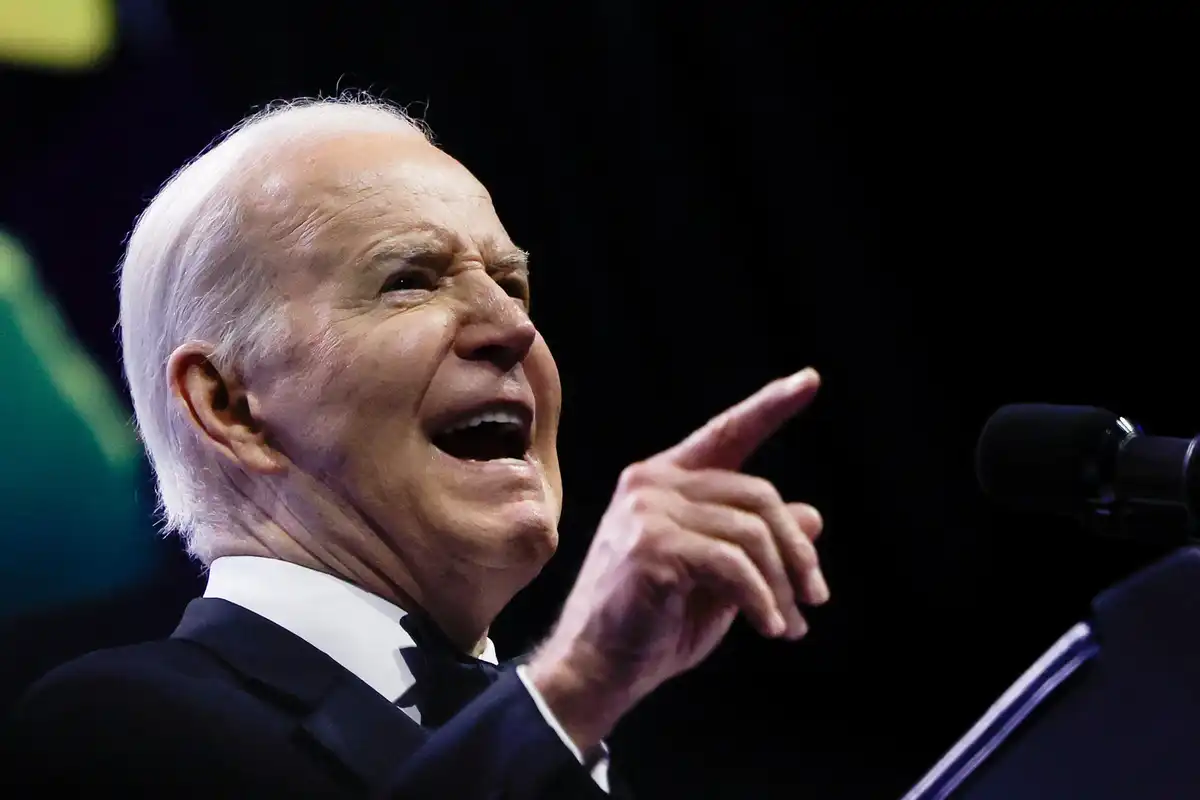

Like a boulder that has been toppled by a torrent from above, or like a train that slides without brakes, the man whose actions no coffee cup reader can predict returns. He issues his decisions as he pleases, and runs the great state with a tweet, dismissing and appointing his ministers without their knowledge, and overthrowing his opponents, and turning against his friends with the push of a button, without batting an eyelid.
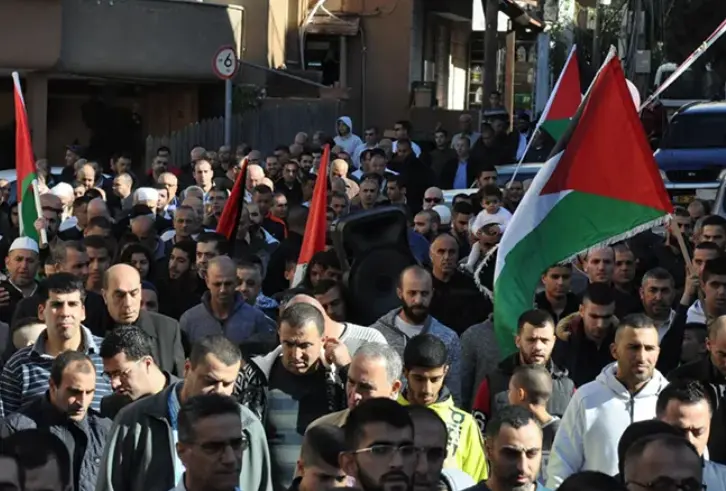

In the biography and career of the man whose heart and vision are fickle, there is nothing that indicates that the new version of him is revised from the old, nor sterilized from sins and transgressions, except for the electoral promises he made in a moment of emotional begging, to attract angry voices about the absence of moral conscience in Gaza from the administration of his predecessor to pour into his mill.


In short, and to put it mildly, what happened in the war of donkeys against elephants in the “Big Tuesday” battle is identical to what happened to the “Fatah” movement against “Hamas” in the 2006 elections, as the former was punished even by its own members for failure and mismanagement of the state, as the ruling party, and the latter was rewarded, not out of love for it, but rather as a “rub on the ear” for its political rival, before those who rode the bus with it realized that it was taking them down a steep slope with no brakes.

Stop the war of extermination now..!

PALESTINE

Thu 07 Nov 2024 9:16 pm - Jerusalem Time

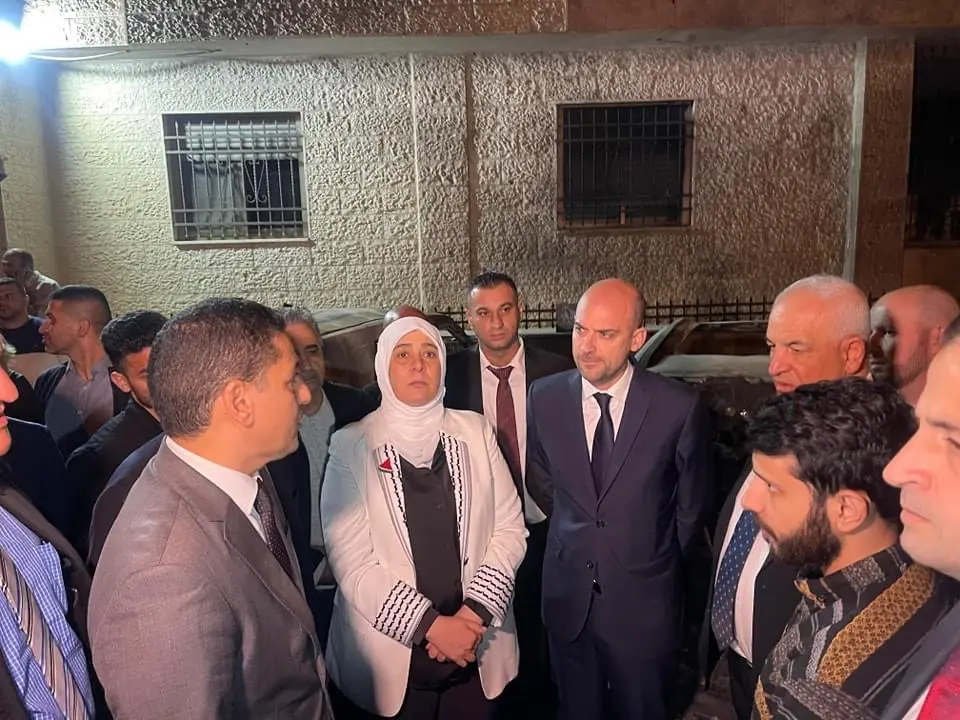
French Foreign Minister inspects the effects of the settlers' attack on the city of Al-Bireh

French Foreign Minister Jean-Noel Barrot visited the site of the settlers' attack in the city of Al-Bireh on Thursday evening.

Minister Baro was received by the Governor of Ramallah and Al-Bireh, Laila Ghanem, the Minister of Interior, Major General Ziad Hab Al-Rih, the Director General of Civil Defense, Major General Al-Abed Ibrahim Khalil, and a delegation of residents of the area.

Last Monday morning, a number of settlers stormed the industrial area in the city of Al-Bireh and burned about 20 vehicles, which led to smoke spreading in a number of residential buildings.

Ghanem expressed her appreciation for the visit of the French Foreign Minister and France's position rejecting terrorist practices against the defenceless Palestinian people.

She stressed the seriousness of the incident and other similar attacks that have recently been escalating, especially during the olive harvest season, especially since they are carried out under the protection of the Israeli occupation army, whose soldiers open fire when citizens attempt to defend themselves.

Ghanem told the French Foreign Minister: “We appreciate your presence here today as a message of rejection of these practices, and we hope that France and the international community will stand by the Palestinian people so that they are not repeated, and until the greater Palestinian goal of ending the occupation is achieved.”

The Governor of Ramallah and Al-Bireh stressed that the international community must stand up for the rights of the Palestinian people and stop the genocide they are being subjected to in all locations. She added: “France is a strong country and can have an opinion in the international community, and its supportive and opposing stance against the terrorism of the colonists and the occupation army is a source of gratitude.”

A number of residents of the area provided an explanation to the French Foreign Minister, including how they were surprised by a number of settlers storming the area at dawn last Monday, and their attack, which included burning vehicles, attacking buildings, and opening fire.

They reported that a number of residents of one of the buildings around which the attack was concentrated were transferred to hospitals as a result of suffocation from the smoke rising from the burning vehicles. Among them were a heart patient and a pregnant woman, in addition to the state of panic that affected the children.

They pointed out that several families were forced to leave their homes after they became uninhabitable and in need of renovation, as they were overwhelmed by smoke and emissions from vehicles burned by the settlers, in addition to their fear of a repeat of the attack.

PALESTINE

Thu 07 Nov 2024 9:15 pm - Jerusalem Time

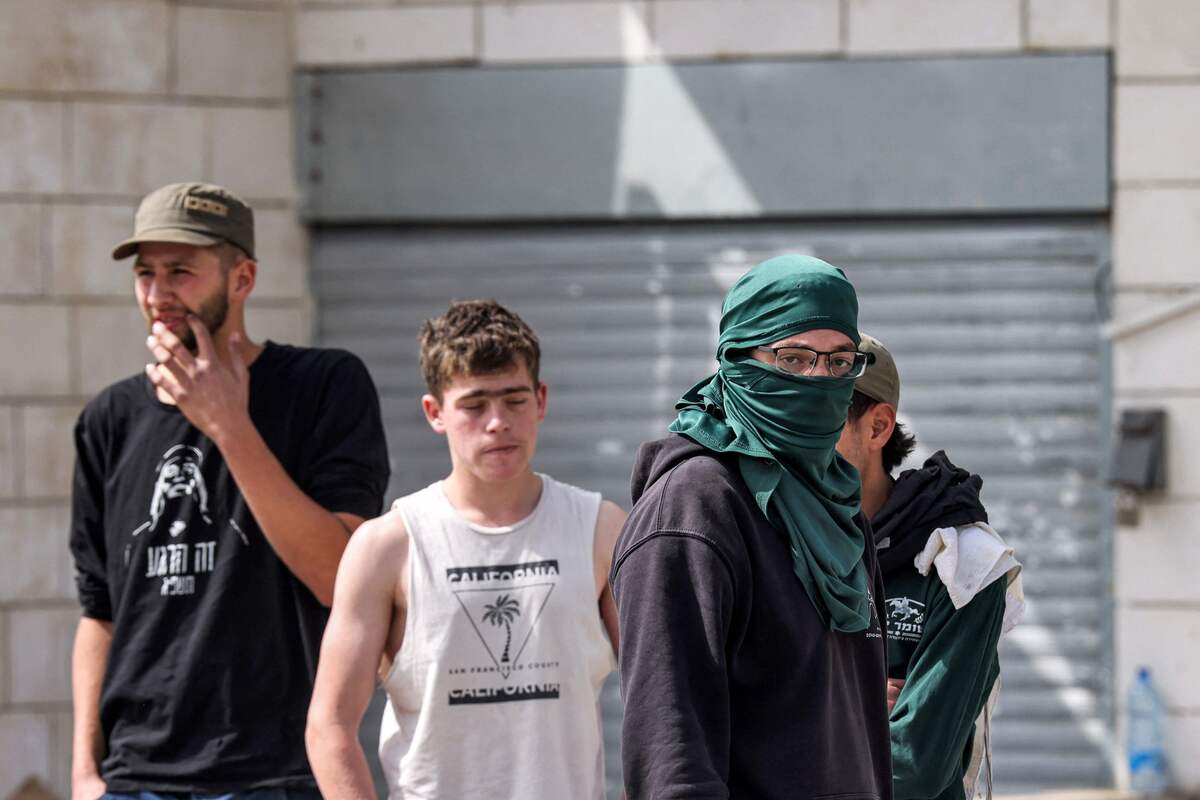
Settlers attack a house and burn a vehicle in Jaba', south of Jenin

Today, Thursday, settlers from the "Homesh" settlement attacked a house in the town of Jaba', south of Jenin, and burned a vehicle.


Eyewitnesses said that a group of settlers attacked the home of citizen Ayser Saleh Khaliliya, assaulted his family, and then burned a vehicle belonging to his brother, Montaser Khaliliya.

ARAB AND WORLD

Thu 07 Nov 2024 7:44 pm - Jerusalem Time

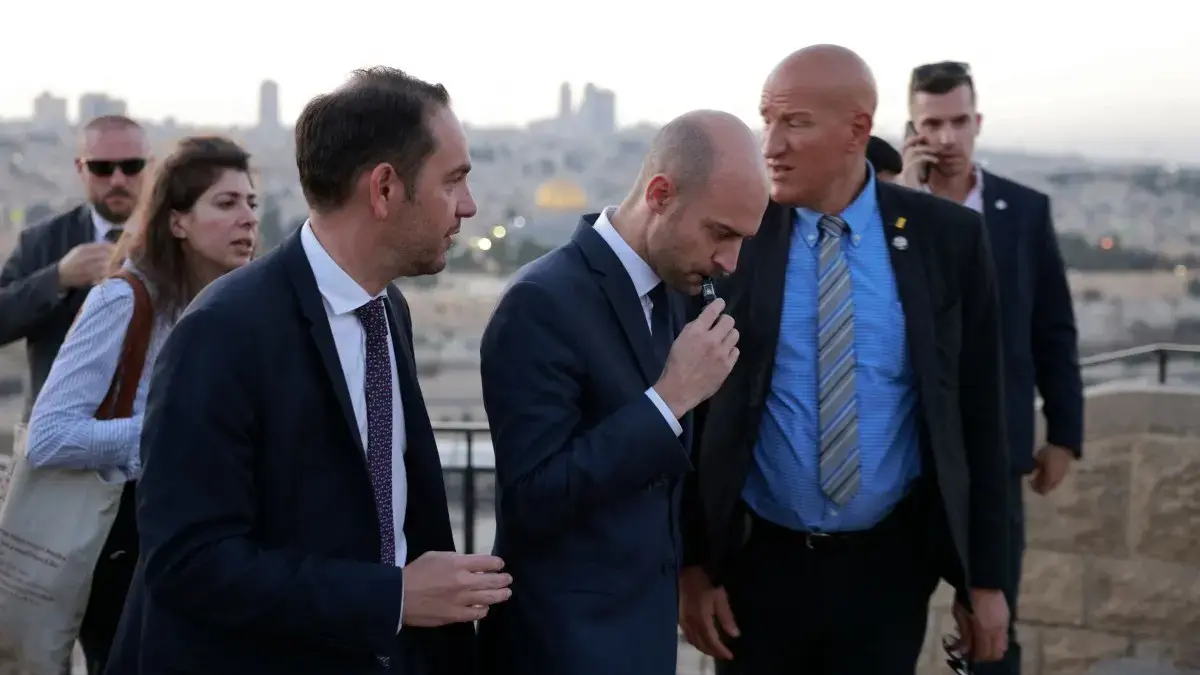
"Diplomatic problem" between France and Israel in Jerusalem.. What happened?

French police arrested two members of the French gendarme on Thursday at a French-run church in Jerusalem, AFP reported.


The arrest came during a visit by French Foreign Minister Jean-Noël Barrot to Jerusalem, causing a diplomatic crisis between Paris and Tel Aviv, after armed Israeli police entered a site housing a French-run church without permission.


The French Foreign Minister described the Israeli move as an "unacceptable situation" and refused to enter the site of the Church of the Holy Sepulchre on the Mount of Olives because the police had arrested two French gendarmes.


The French Foreign Ministry also stated: "The behaviour of the Israeli police is unacceptable... and the Israeli ambassador to Paris will be summoned in the coming days."

ARAB AND WORLD

Thu 07 Nov 2024 7:07 pm - Jerusalem Time

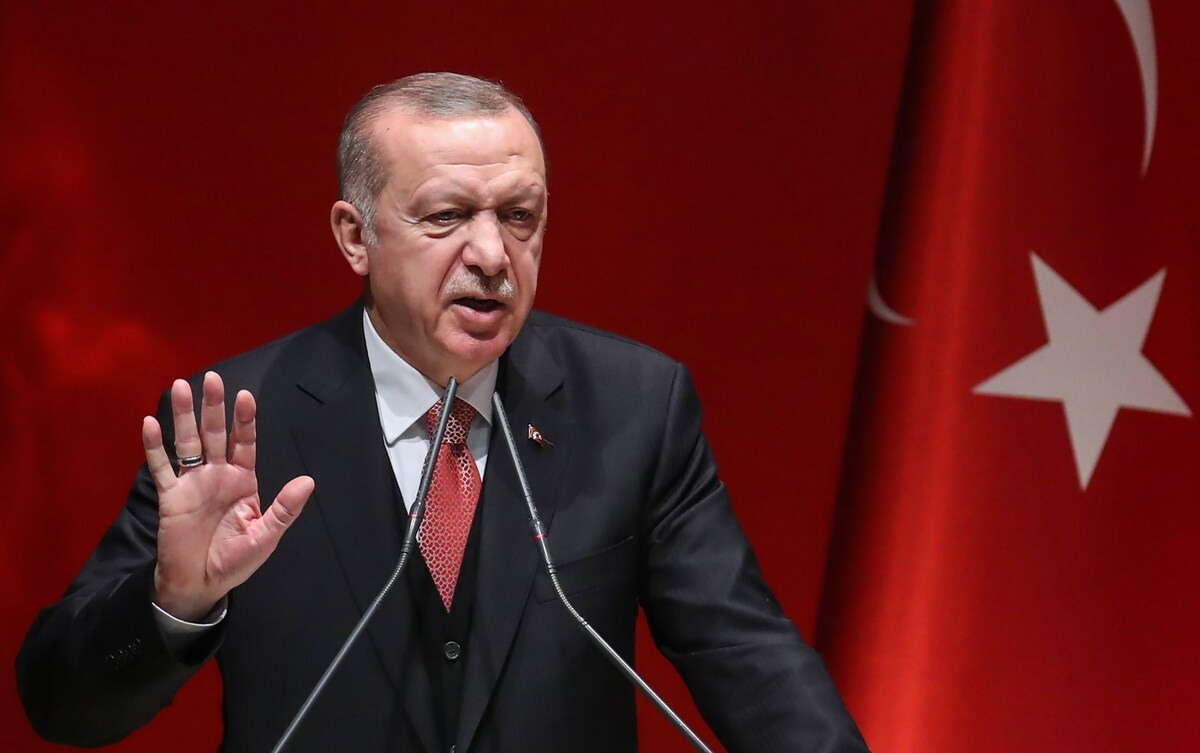
Erdogan: Ongoing genocide in Gaza is a disgrace to humanity

Turkish President Recep Tayyip Erdogan said, "The ongoing genocide in Gaza for a year is a common disgrace to humanity, while the immoral and illegal attacks on the West Bank and Lebanon have been added to it."


This came in a speech he delivered on Thursday during the opening session of the European Political Group Summit held in the Hungarian capital, Budapest.


Erdogan stressed the need for "supporters of the Israeli aggression to realise unconditionally that they have become partners in the crimes committed."

PALESTINE

Thu 07 Nov 2024 7:05 pm - Jerusalem Time

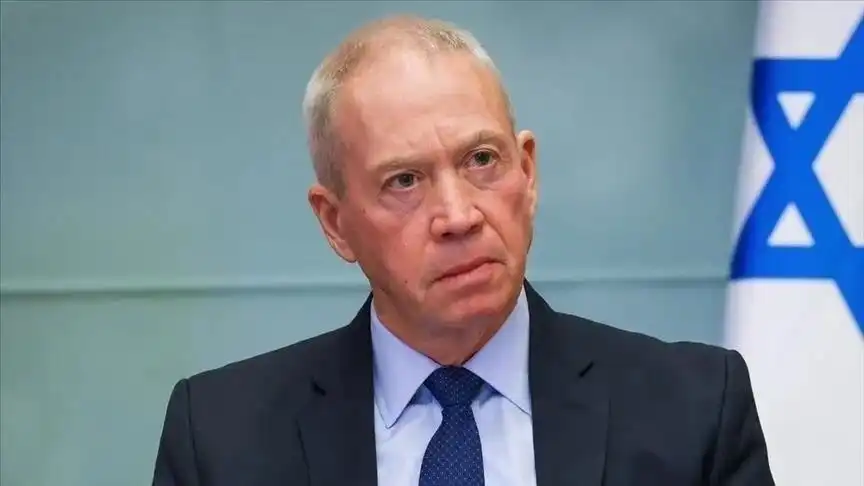
Galant: No point in staying in Philadelphia axis

Israel's Channel 12 quoted ousted Defense Minister Yoav Galant as saying, "The Chief of Staff and I said that there is no security consideration for remaining in the Philadelphi corridor."

"Netanyahu says there is political importance to staying in the Philadelphi corridor, and I say: there is no political importance in that," he added.

"We have nothing left to do in Gaza, and we have achieved all the major accomplishments," he said.

"I fear that we stayed in Gaza because there is a desire to stay there," he added.

ARAB AND WORLD

Thu 07 Nov 2024 6:12 pm - Jerusalem Time

More than 100 Lebanese MPs appeal to UNESCO to protect historical sites

More than 100 Lebanese MPs on Thursday made an urgent appeal to the United Nations Educational, Scientific and Cultural Organization (UNESCO) to protect historical sites from Israeli raids, especially in the south and east of the country.


The MPs stated in a letter signed by the majority of the blocs in parliament and addressed to UNESCO Director-General Audrey Azoulay, “We appeal to you and draw your attention to an urgent need: to protect historical sites in Lebanon, especially in Baalbek, Tyre, Sidon and other precious landmarks that face great danger as a result of the escalation of atrocities,” with Israel targeting the vicinity of historical sites, most notably the Baalbek Castle (east).

PALESTINE

Thu 07 Nov 2024 4:47 pm - Jerusalem Time

Gaza Health: 78 dead in the past hours

Medical sources announced today, Thursday, that the death toll from the aggression on the Gaza Strip has risen to 43,469 dead and the number of wounded has risen to 102,561, since the start of the Israeli occupation aggression on October 7, 2023.


They explained that a number of victims are still under the rubble and on the streets, and ambulance and rescue crews cannot reach them.


The ministry said in a statement that it had counted 78 dead who were transferred to hospitals during the past 48 hours, noting that the total number of wounded had risen to 102,561 since the start of the war on October 7, 2023.


ARAB AND WORLD

Thu 07 Nov 2024 4:43 pm - Jerusalem Time

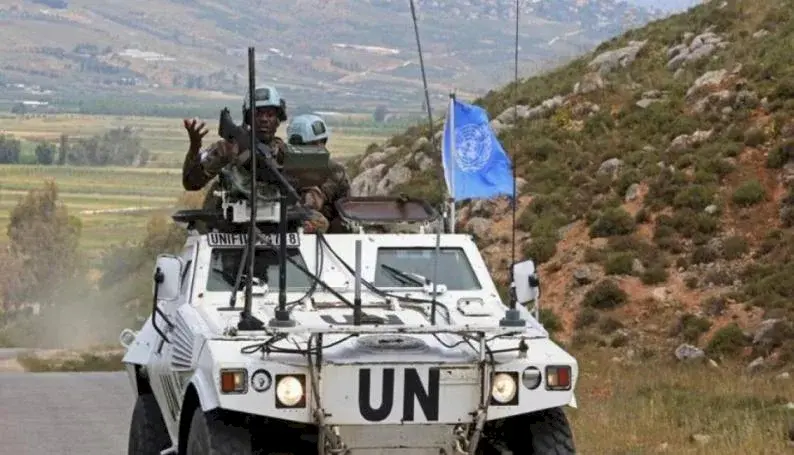
Lebanese Army: 3 soldiers and 4 UNIFIL soldiers injured in raid on Sidon

The Lebanese army announced on Thursday that the Israeli raid that targeted a car as it passed one of its checkpoints in the city of Sidon, resulting in three dead, led to the injury of three of its soldiers and four members of the United Nations Interim Force in Lebanon.


The army said in a statement, "The Israeli enemy targeted a car while it was passing through the Awali-Sidon checkpoint, which led to the martyrdom of three citizens who were inside it, in addition to the injury of three soldiers from the checkpoint personnel and four members of the Malaysian unit working within the UNIFIL force, while vehicles belonging to the unit were passing through the aforementioned checkpoint."

PALESTINE

Thu 07 Nov 2024 3:43 pm - Jerusalem Time

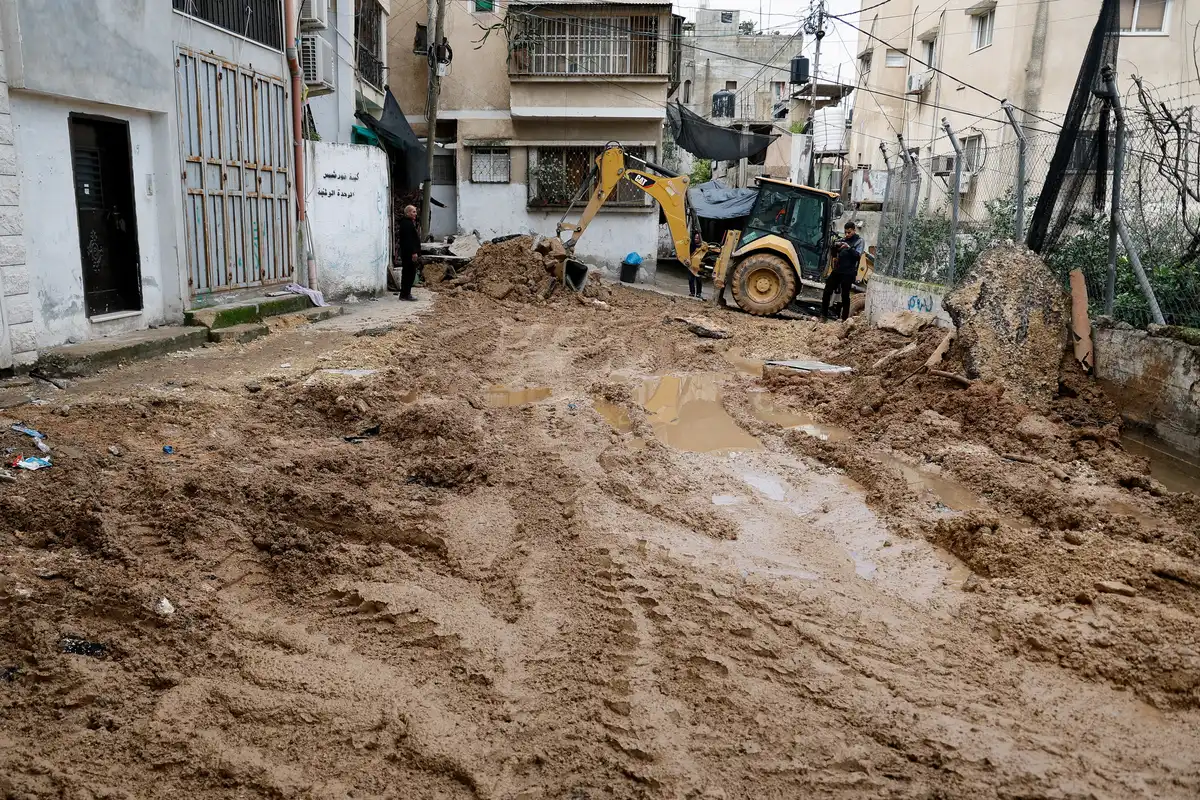
Israeli occupation continues its aggression on Tulkarm camp amidst destruction of the infrastructure

A young man was injured a short while ago by the occupation forces' bullets in the eastern neighborhood adjacent to Tulkarm camp, bringing the number of injuries to 6 since dawn today.


Local sources reported that the young man was shot in the thigh while riding his motorcycle in the area. He was transferred to the hospital by a Red Crescent ambulance, and his condition was described as moderate.


The same sources added that the occupation forces arrested the young man, Ayham Al-Sarouji, after besieging his house in the eastern neighborhood.


In the latest developments, the occupation forces surrounded a house on Al-Muqata'a Street adjacent to the camp, which is the eastern part of the city, and called on young men via loudspeakers to surrender themselves.


Local sources reported that the occupation forces are sending more of their military vehicles from the western axis of the city towards the camp from time to time, along with a fuel tanker, and have imposed a tight siege on it, and have intensified their vehicles at its entrances, specifically the northern one.


She added that the occupation forces deployed their mobile foot patrols in the neighborhoods of Abu al-Foul, al-Akasha, al-Murabba'a, al-Khidmat, Sheikh Ali, and al-Hamam, amidst the sounds of clashes and explosions in the camp.


The occupation bulldozers caused great damage to the infrastructure in the Tulkarm and Nour Shams camps, from which they had withdrawn earlier, in addition to destroying and vandalizing public and private property, including the walls of homes and shops.


The ongoing aggression on Tulkarm camp since the early hours of the morning resulted in the martyrdom of the young man, Harith Muhammad Awfi (22 years old), by the bullets of an occupation sniper in the middle of the camp, while five citizens were injured, including a woman and her disabled son, by shrapnel from a missile fired by an occupation drone at a site in the services neighborhood.


The occupation forces continue to prevent Red Crescent vehicles and ambulance crews from entering the camp, and are pursuing them, which has prevented the transfer of injuries from inside the camp to the hospital.


Meanwhile, the occupation forces patrolled the streets of Tulkarm city, specifically the area around Khadouri roundabout in the western neighborhood, Jamal Abdel Nasser Square, the vegetable market in the city center, and Al-Muqata'a Street.

PALESTINE

Thu 07 Nov 2024 3:41 pm - Jerusalem Time

War on Gaza: Twelve dead and dozens injured in the occupation's bombing of a school sheltering displaced people in Al-Shati camp

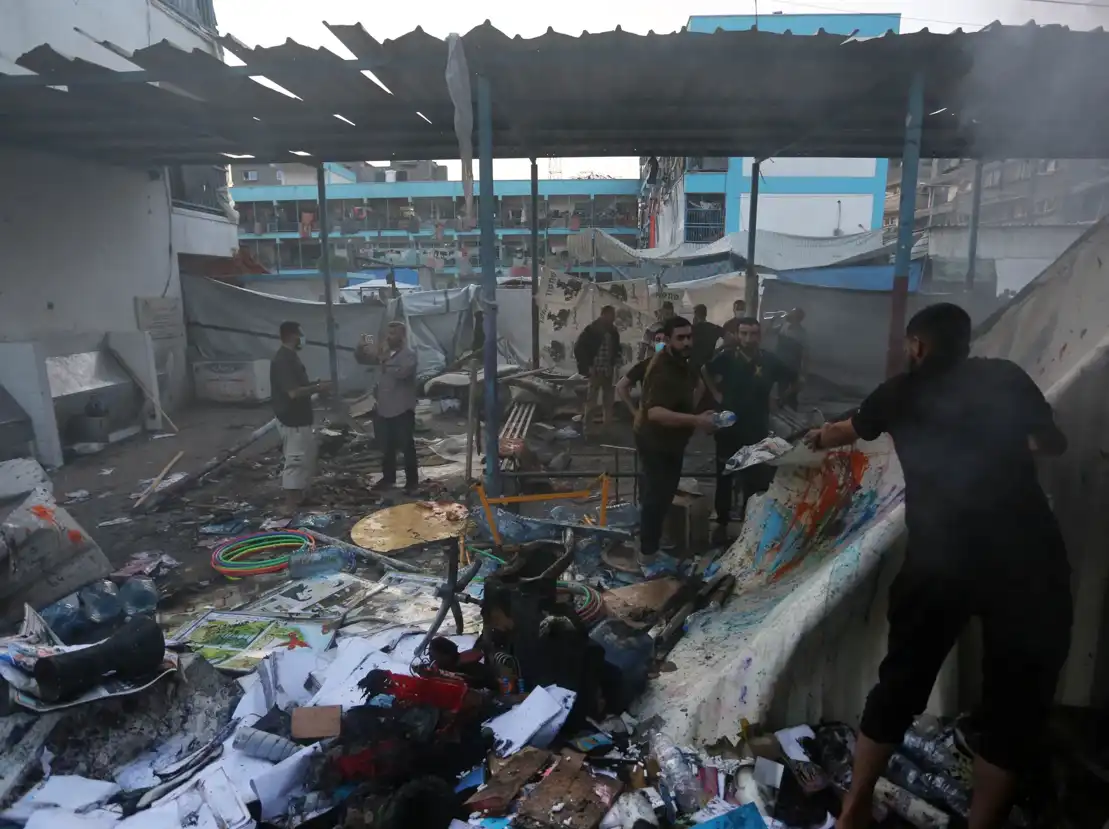
12 citizens, including children and women, were killed and others were injured, Thursday afternoon, when the occupation warplanes bombed a school housing displaced people in the Al-Shati camp, west of Gaza City.


Medical sources reported that 12 citizens were killed and 30 others were injured in the bombing of the Al-Shati Elementary School for Boys (C), which is affiliated with the United Nations Relief and Works Agency for Palestine Refugees (UNRWA), and houses displaced persons.

ARAB AND WORLD

Thu 07 Nov 2024 3:16 pm - Jerusalem Time

Raids on the southern suburbs and Bekaa, and the killing of an Israeli soldier in the battles of southern Lebanon

On Thursday, the Israeli army expanded its large-scale aggression on Lebanon, which entered its 44th consecutive day, as the Israeli army spokesman issued bombing warnings to all residents in the southern suburb area, specifically in buildings in Ouzai, Haret Hreik, Tahwitat al-Ghadir, and Hadath Beirut.


The Ouzai area in Beirut witnessed a massive displacement movement after the Israeli threats that were followed by violent raids and attacks, as the Israeli air force bombed the Ouzai area, near Beirut International Airport, and the southern suburb of Beirut was exposed to a series of Israeli raids.


The Lebanese Ministry of Health reported that the raids on the Bekaa and Baalbek resulted in the deaths of 40 martyrs and 53 wounded. The Lebanese Ministry of Health had previously reported that the number of martyrs had risen to 3,050 and the number of wounded to 13,658 since the beginning of the Israeli aggression on Lebanon.

In addition, Hezbollah continues to confront the Israeli forces penetrating areas in southern Lebanon and prevent their advance. It has also intensified its missile attacks on Israeli military sites and border towns, as well as launching missile barrages and carrying out drone attacks on Israeli territory.

The Israeli army announced targeting 20 Hezbollah sites in Baalbek and north of the Litani River, killing about 60 Hezbollah members in the past 24 hours. It also announced in a statement the death of a soldier in its ranks during the battles on the southern Lebanese border.

PALESTINE

Thu 07 Nov 2024 2:25 pm - Jerusalem Time

Colonial Settlers steal olives east of Salfit

Today, Thursday, settlers stole olives from the lands of Yasuf village, east of Salfit.


According to local sources, a group of settlers from "Tafuh", which is built on citizens' lands, stole olives from lands owned by citizens of the village.


Recently, settlers' attacks on farmers and their lands have escalated, especially in areas adjacent to the settlements, during the olive harvest season.


According to the Wall and Settlement Resistance Commission, the occupation forces and settlers have carried out more than 253 attacks since the beginning of the olive harvest season, including 184 attacks in the northern West Bank, and 113 concentrated in the Nablus Governorate.

PALESTINE

Thu 07 Nov 2024 2:20 pm - Jerusalem Time

Mustafa calls on the United Nations to play a more effective role in stopping the genocide crimes in the Gaza Strip

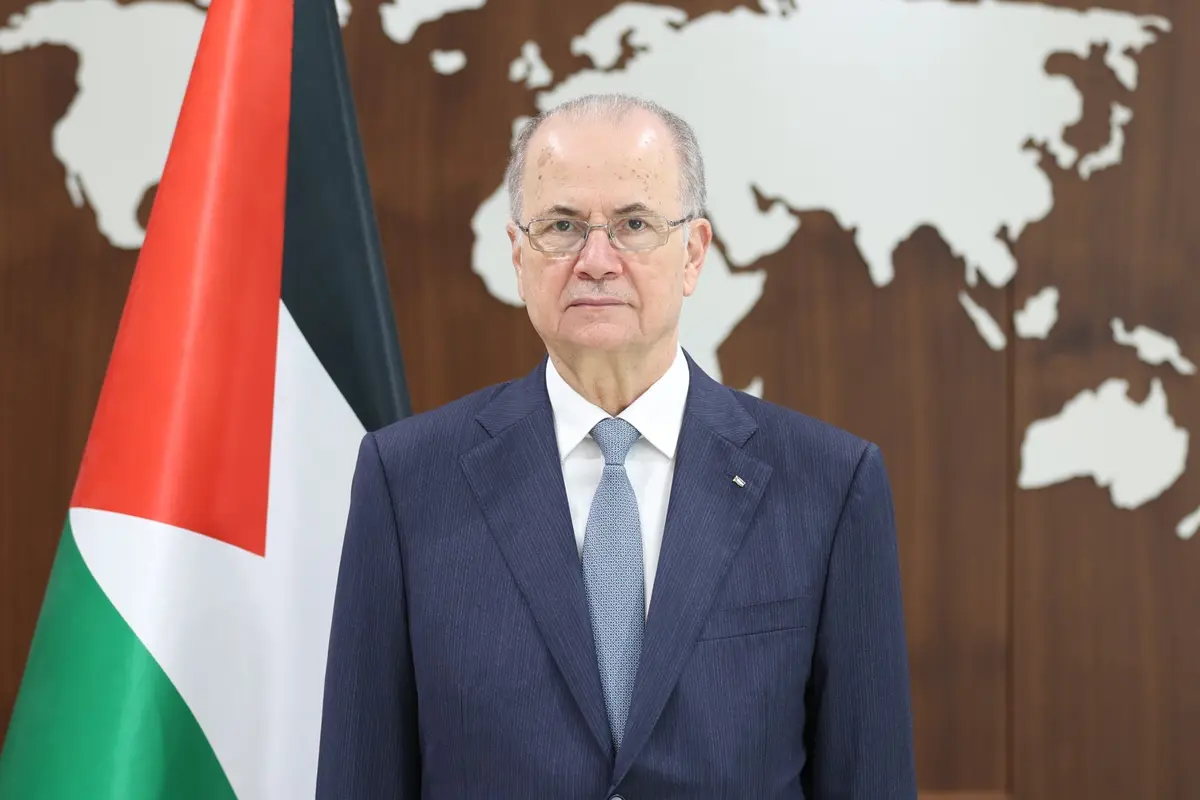
Prime Minister Mohammed Mustafa called on the United Nations to play a more effective role in stopping the occupation's crimes in the Gaza Strip, especially in light of the widening wave of famine, and the crime of collective punishment of two million Palestinians, by preventing the entry of aid and medicine convoys, and the severe shortage of all basic necessities of life for our people in the Strip.


During his meeting with the Senior Coordinator for Humanitarian Affairs and Reconstruction in Gaza, Sigrid Kaag, today, Thursday, in his office in Ramallah, in the presence of Minister of State for Relief Affairs Basel Nasser, Mustafa called for more international pressure to hold Israel accountable for its crimes.


He stressed the dissatisfaction of our people with the international inability to stop the Israeli war machine, and that statements and condemnations are not enough to confront the genocide and ethnic cleansing crimes in the Gaza Strip.


He also stressed that the escalation of the occupation and its settlers' attacks on the cities, villages, towns and camps of the West Bank, including Jerusalem, must be confronted with a decisive international stance and movement to save the two-state solution and thwart the occupation's plans for Judaization, annexation and displacement.

ARAB AND WORLD

Thu 07 Nov 2024 1:44 pm - Jerusalem Time

Biden Addresses Nation in Preparation for Transition with Trump

Joe Biden will address the nation on Thursday as he prepares for a transition that will last until Jan. 20 with his bitterest political enemy, President-elect Donald Trump, who defeated Kamala Harris in the race for the White House.


In an arrangement he may not have expected, the outgoing president, who left office in July to his vice president to represent the Democrats, will deliver a speech at 11:00 a.m. (16:00 GMT) from the White House.


According to the US presidency, he is scheduled to "talk about the election results and the transition" with the next Republican administration, according to Agence France-Presse.


Trump received congratulations from Joe Biden, who defeated him in November 2020, from Barack Obama (2009-2017), who succeeded him, and from Kamala Harris, who conceded defeat on Wednesday.


Biden invited the president-elect to the White House at an unspecified date.


It is well known that the two men hate each other and appeared together on June 27 in their only debate, which was disastrous for the Democrat and hastened his withdrawal from the presidential race, according to Agence France-Presse.

"Looking forward to meeting"


Trump, who did not acknowledge his defeat in 2020, is “looking forward to this meeting that is supposed to take place soon,” and he greatly appreciated Biden’s call.


For her part, Kamala Harris pledged to “assist him in the transition, and we will participate in a peaceful transfer of power,” and called on her supporters in Washington to “accept the results of this historic election.”


The 78-year-old Republican billionaire, who faced two assassination attempts, four indictments and a criminal conviction during the election campaign, called for "country unity."


“President Trump thanked Vice President Harris for her determination, professionalism and perseverance throughout the campaign, and they agreed on the importance of uniting the country,” Trump campaign spokesman Stephen Chung said in a statement.


For his part, Biden praised Harris's "integrity" and said in a statement that "what America saw today was the Kamala Harris I know and respect deeply. She has been a wonderful partner and public servant of integrity, courage and character."


shock wave

Donald Trump's landslide victory sent shockwaves through the United States and around the world.


Millions of Americans rejoiced. But millions more are concerned about the shift toward far-right rhetoric that a new Trump presidency could see.


While he left amid chaos in January 2021, Trump has made a remarkable comeback by convincing a majority that he understands the social, economic and security concerns of everyday life.


The president-elect received congratulations from a number of presidents and leaders, some of whom did not wait until his victory was officially announced before congratulating him.


Turkish President Recep Tayyip Erdogan spoke by phone with Trump to discuss future "cooperation" between them, the Turkish presidency reported.


Trump spoke with French President Emmanuel Macron, Israeli Prime Minister Benjamin Netanyahu, and Ukrainian President Volodymyr Zelensky.


Ukrainians fear that Trump will halt US military aid provided by the Biden administration to Kiev to confront Russian forces.


Trump has repeatedly suggested he would end the war “in 24 hours” by pressuring Kiev to make territorial concessions to Russian President Vladimir Putin.


Trump, who is very close to Israel, also confirmed that he would end the war in the Middle East quickly as well.


For its part, Iran said on Thursday that Donald Trump's victory was an opportunity for the United States to "review previous incorrect approaches."


On the economy, he promised tax cuts, tariffs on foreign companies and attracting “jobs from other countries.”


Beijing warned on Thursday that "there will be no winner in a trade war" after the re-election of Donald Trump, who has vowed to impose huge new tariffs on Chinese imports.


For its part, the US Federal Reserve will announce a new reduction in interest rates on Thursday. These are steps it began in September in order to reduce inflation, and they are expected to continue after the election of the Republican president.


Trump, who is skeptical of climate change efforts, has also threatened to withdraw from the Paris Climate Agreement again.


He pledged to carry out the "largest operation" ever to deport millions of immigrants who entered the United States illegally from the border with Mexico.


Donald Trump, whom Democrats and his critics fear will rule like a “tyrant,” remains vague on abortion rights, which the Supreme Court undermined in 2022.


He will be able to count on the Senate, which Republicans have regained control of from Democrats, and his party is also on track to retain the majority in the House of Representatives.


This will give him full powers.

PALESTINE

Thu 07 Nov 2024 1:34 pm - Jerusalem Time

Israeli Knesset approves law allowing deportation of families of Palestinians from inside Israel

The Israeli Knesset approved a bill that grants the Minister of the Interior powers to deport relatives of Palestinian resistance fighters from within Israel. It also approved a proposal that allows the Israeli judiciary to issue prison sentences against Palestinian children under the age of 14.


Under the law, the Israeli interior minister can deport relatives of those who commit acts that Israel considers "terrorism" for up to 20 years.


According to the Israeli newspaper Haaretz, 61 members of the Knesset voted in favor of the controversial bill, while 41 voted against it.


The law stipulates that deportation will be to the Gaza Strip “or another destination determined according to the circumstances” if it is found that the relative of the perpetrator of the operation against Israel “had prior knowledge of the terrorist’s plan and did not take the necessary measures to prevent it.”


The new law also gives the Israeli interior minister the authority to deport any relative who “expressed support or sympathy for the terrorist act, or published praise, admiration or encouragement” for the perpetrator.


Haaretz said that deportation decisions will be made after a hearing, according to the new law, and that the law allows Arab Israeli citizens to be deported for a period ranging from 7 to 15 years, while non-Palestinians who do not hold Israeli citizenship may face deportation for a period ranging from 10 to 20 years.


In a related context, Haaretz reported that the Knesset approved a temporary order for a period of 5 years allowing Israeli courts to issue prison sentences against children under the age of 14.


Haaretz said the decision, which was supported by 55 Knesset members and voted against by 33, allows children to be imprisoned on charges related to killings motivated by "terrorism" or "on behalf of a terrorist organization," a euphemism for Palestinian resistance operations against the Israeli occupation, which it considers terrorism.

PALESTINE

Thu 07 Nov 2024 12:35 pm - Jerusalem Time

Israeli forces settlers attack farmers and prevent them from picking olives east of Tulkarm

This morning, Thursday, settlers attacked farmers while they were picking olives on their lands in the village of Shufa, southeast of Tulkarm.


According to local sources, a group of settlers accompanied by police dogs came from the Avnei Hefetz settlement, built on the town’s lands, and attacked them while they were picking olives, seized the olives, expelled them from their lands, and threatened them not to return to them at gunpoint.


Meanwhile, the occupation soldiers expelled a number of farmers and their families from the town of Kafr al-Labad, east of Tulkarm, while they were on their lands to pick olives located in the “Ard al-Sawame’” area, west of the “Anab” settlement.


The occupation soldiers stormed the area, forced the residents to leave their lands, prevented them from picking the olives, and assaulted the farmer Ahmed Muhannad Fuqaha, causing him bruises and contusions. He was transferred to the clinic in the town.


The sources added that they were surprised to find more than 100 old, perennial olive trees that had been cut down and belonged to him and to farmers Mohamed Abdullah Ragab, Abdel Fattah Mohamed Mahfouz, and Muhannad Yassin Fuqaha.


The sources explained that the residents went to their lands in the mentioned area after a year of not being able to reach them, to pick olives due to the occupation's measures in the area, and its establishment of a military tower near it, but the occupation forces attacked them today and expelled them from their lands.


According to the Wall and Settlement Resistance Commission, the occupation forces and settlers have carried out more than 253 attacks since the beginning of the olive harvest season, including 184 attacks in the northern West Bank, and 113 concentrated in the Nablus Governorate.