OPINIONS

Sun 10 Nov 2024 9:08 am - Jerusalem Time

Arafat was a model...and they killed him! The model of resistance in the face of the discourse of crisis and normalization

Taha

Taha

Opinion Writer

  1. What distinguishes the official Arab discourse is that it tends to adapt and coexist with various defeats, occupations and massacres. It is a discourse of breadth, flexibility and deceit that can turn facts upside down and distort events, which leads to saying that the adaptive discourse is usually a lying, deceptive and suspicious discourse that does not read reality on the one hand, nor interpret or analyze it on the other hand. Therefore, the adaptive discourse is usually fabricated and conciliatory in a way that provokes pity, laughter, tears or all of these things combined. Fabrication appears in this discourse through the presentation of models with multiple references and contradictory ideologies, to the point that this discourse tolerates everything at the same time. It is strange that such models are presented to the masses without a sense of guilt, error or remorse, and it is also strange that they are presented by the man of thought, religion, media and politics, to form a political and cultural regulatory space that gains legitimacy due to the power of official levers and pumps, and those who volunteer with them, seducing and enticing them and desiring to integrate and gain. If fabrication is a characteristic of discourse, it applies to everything else. Education ranges between indoctrination and imitation and claims of creativity and research. City planning fluctuates between randomness and planning, and even the relationship with the masses, where the final vision for dealing with the public is absent. Democracy is a dazzling claim used according to standards and criteria that perpetuate oppression, or is reproduced in a very deceptive and fraudulent way, such that democracy - as a Western concept with a long history and traditions - turns into a deceptive political behavior through which the same centers of power are established. Thus, the concept of democracy turns into a sword that slaughters its bearer. Democracy itself is the effective recipe for fragmentation and dismantling instead of being a concept and a tool for political and social stability, because fabricating the concept leads to fabricating the application and thus fabricating the results.


Documentation appears in our official discourse when it equates mistakes, and practices a real process of deception so that the differences between actions, men, and ideas are eliminated, and when settlements are made on a vague general basis, and when accountability and disclosure are absent, and when problems are solved in a tribal manner in which right and wrong are equal to the point that blood is equal to a cup of coffee, which is something that is repeated in politics, where homelands are transformed into real estate and not a symbol of dignity and pride.


The conciliatory discourse is a ridiculous and miserable discourse at the same time, because it does not seek persuasion as much as it desires safety and compromises that are not valid. This discourse does not seek legitimacy as much as it seeks artificial consensus, no matter the cost.


The discourse that coexists and adapts to defeat and massacres, relying on composition and fabrication, is a discourse of crisis par excellence. It is a crisis of dealing with reality, a crisis of questioning and challenge, a crisis of identity, a crisis of legitimacy, and a crisis of development. It is a discourse of crisis because it is a discourse of coexistence with defeat. It is a discourse of coexistence with defeat because it is a discourse of crisis. All of this cannot be overcome except by overcoming the crisis by rejecting defeat. Creating victory, preparing for it, getting ready for its causes, and maturing its conditions and terms is a long, arduous, and exhausting process. Because it is so, it is capable of separating the bad from the good, the real from the fake. The process of victory itself is a process that cleanses, purifies, and restores. The process of victory is neither a process of fabrication nor compromise. Victory is a real bias toward the place of original power and sources of energy that are usually absent or distorted in the discourse of crisis. The discourse of victory is clear and simple. Even its slogans are simple, clear, and modest. They do not jump over reality, but dream of changing it. They do not distort reality, but demand a coup against it. Even the language of victory is precise because it knows the weight of the price paid for victory, and it is humble because it knows the meaning of unity and the difficulty of the work that has been accomplished. Unlike the language of fabrication and reconciliation, which contains all the pretense in it, the language of victory is brief, goes straight to its goals, and calls things by their names.


We say all this in order to say that our official discourse, which coexists and adapts to defeat, completely excludes the option of liberating Jerusalem. Isn’t that strange?! Isn’t not talking about liberation coexistence with defeat, adaptation to it, and acceptance of it?! When we speak in a language we don’t believe in or trust, this language turns into flexible but thick and long threads, enough to compose plots that lack honesty, frankness, and boldness. When we don’t talk about liberating Jerusalem, which is the essence of our faith, we are betraying something or something that tastes like betrayal. When we beautify defeat or coexist with it, we are even betraying our language. We must admit that we are defeated, and this admission does not call for self-flagellation as much as it calls for self-revival, nor does it call for frustration as much as it calls for opening our eyes wide to read reality as it is, not as we want or as we dream.


Admitting defeat is the first step towards acknowledging reality. Our situation is not good, our societies are not good, our governments are not good, and our wealth is not good. The problem here is that this talk is almost repeated and hackneyed, and is known to everyone. We all know that Palestine is occupied and being destroyed, without the world blinking an eye! And many other Arab lands are suffering from a hideous and destructive occupation, and some of these occupations are almost turning into a reality that cannot even be discussed, and this is what hurts on a personal level to the utmost degree. The Gaza Strip is being wiped out, and Jerusalem is being Judaized at a rapid pace to the point that the situation may turn into the situation experienced by Ceuta or Iskenderun. We do not want another lost paradise, and we do not want a new Andalusia. We do not want to be the nation that gets used to slaps, because habit and habit are normalization of another kind. We do not want to be the nation that nations laugh at its ignorance. I say this out of religious and national pride, and I say this because we have a message that we carried and spread and that was good for all of humanity. Apart from a historical review of our Arab world from the beginning of the last century until today, the reasons for our various defeats in war, thought, development, and building healthy societies did not exceed two reasons: that our enemy is strong, prepared, greedy, and has long experience, and that we were not up to the challenge. Our defeat was not the defeat of a class, thought, person, entity, party, or faction; it was the defeat of an entire nation. By the way, our days are witnessing occupations, sieges, attacks, bombardment, an open holocaust, and the desecration of more than one Arab capital, and we are not talking here about Jerusalem only. By the way, our Arab world is witnessing its worst periods of defeats these days, as the defeat has reached the point of robbing even the will to protest, denounce, or break away from this situation! I say the worst period of his defeats because some of us started fighting each other for the sake of our common enemy, that is, we reached a situation where we started financing our enemy’s wars. This is truly amazing.


To overcome the crisis discourse, there must be a living example or model that can fill in the gaps and provide theoretical and practical content for the idea. All ideas are great without application, and all ideas are subject to criticism when applied. Because of the crisis and the disappointments and stumbles it brings, we had three models, each of which presented an attempt to overcome the crisis. The first model was Gamal Abdel Nasser, who was afforded circumstances that no Arab leader in the modern era had. Abdel Nasser turned into a legendary symbol, and hopes and dreams were pinned on him. Benefiting from the international circumstances and the popular mood in the Third World at least, Abdel Nasser tried to be the incubator for the revolutions of the Arab world and its neighbors, reaching a unified entity in some way. Regardless of our debate with Nasserism, its mistakes and achievements, this experience was struck, then besieged, and finally dried up. Here, we do not want to evaluate the experiences and models that we present, because our goal is the fate of those models and attempts. The second model was Saddam Hussein, who wanted to create development with iron and fire, and wanted to present a living embodiment of the theory of the just tyrant, who wanted to present himself to the public as if he were Saladin and Bismarck at the same time, but this experience or this model was used, besieged, struck and then eliminated. The third model is the martyr Yasser Arafat, who was able to establish a revolution that swept the Arab world over decades! Yasser Arafat, who wanted to be a symbol of revolutionaries and the renaissance of peoples, and who wanted to be the conscience of the world with the suffering of his people, was also not tolerated by the West despite everything, so it besieged him and then killed him. These are three models that were struck by force by the West or its tools. This means that these three models, regardless of our dialogue with them or our argument about them, are models that wanted to go beyond their reality, ceilings and conditions. Was it too adventurous? Was it too dreamy? Was it too deceived? Whatever the answer, the West could not tolerate these models, even if they compromised, entered into settlements, or even colluded in some way.


By induction only, we expect the fourth model to be different from Saddam’s iron-fistedness, Nasser’s compromise, and Arafat’s flexibility. We expect this model to face more difficulties, because the West will be more alert and vigilant, and this model will face non-governmental organizations that are not subject to the state, a normalization discourse that accepts defeat and exploits it, governments that betray their people, and many direct occupations, more than the current ones.


Our fourth model is the “resistance” that will not coexist with defeat because living with defeat is certain and shameful death, and because the adaptation called normalization is worse than surrender, because surrender does not assume acceptance of the occupier, while normalization or adaptation is acceptance of the occupier in terms of existence, narrative, interests, and illusions.


Our fourth explosive model that has swept the world will reject the language of ambiguity, flexibility, and false eloquence, because it uses a simple and crystal clear language, in which it says that the occupation must end and that coexistence with it or adaptation to it is only an extension of its life and a participation in its survival.


It may take a long time for this model to be achieved or to reach its goals, because the West is no longer content with managing affairs from overseas. The West has begun to come here with its warships and is present among us. It no longer asks for secret agents, but has become so impudent as to ask for public agents who collect their wages in front of all the people and in front of the camera lenses. Therefore, it may take a long time for the fourth different model to triumph.


We say normalization, this is an inaccurate term for accepting surrender, normalization is adapting to the occupation, to the interests of the occupation, and to the dream of the multiple and different occupation with many names. When we say normalization, we are practically saying satisfaction, submission, and life under the roof of the occupying power.


Normalization is a demand of the strong, not the weak. That is why the weak are usually cornered into defending themselves and explaining motives and reasons, and in this way the weak turns into a victim that no one believes or respects. The discourse of the weak victim is a discourse of a real crisis, as he cannot even convince himself. That is why normalization is a demand of the strong, because this demand includes, among other things, accepting the condition and demands of the strong. Normalization here is accepting the other’s narrative, as it has been said, because the other’s narrative about himself is too lofty to be a demand of the strong here for the weak. Rather, simply put, the normalization required is not to revolt, not to protest, and to accept becoming a mere living creature, whose only virtue is that it keeps quiet in the face of massacres, consumes food, and excretes it.


The crisis discourse accepts and rejects normalization, because the crisis discourse places everything next to everything else, and this is one of the most severe and worst diseases. The occupier who follows, studies and researches knows that we are in moments of real badness, and for this reason, he has reached the point of impudence, arrogance and haughtiness that he imposes a humiliating equation that says normalization in exchange for nothing. This is where we arrive, that the occupier collects the price in advance in order to promise something that may not happen for any reason. Normalization is worse than surrender, in a sense, in order to stop an illegal and illegitimate act. This is where the crisis discourse brings us. This is where the absence of models brings us.
OPINIONS

Sun 10 Nov 2024 9:07 am - Jerusalem Time

Where did the Arab and Muslim votes go in the US presidential elections?

Ramzi Awda

Ramzi Awda

Opinion Writer

The votes in the US presidential election held on November 5 have not yet been officially counted, but it is possible to roughly predict the voting trends of the Arab and Muslim community in this major election, based on opinion polls and some interviews with a significant and influential number of members of this community.


In general, Trump's sweep of all 50 US states, both in the Electoral College and in the general vote, indicates that Trump has been largely successful in obtaining the votes of communities and minorities in the United States, which was the preserve of Democrats in previous elections. For example, in the previous presidential elections, 75% of Jews, Arabs and Muslims gave their votes to Biden, and in some cities such as Dearborn, Michigan, Biden won 90% of the Arab and Muslim votes against Trump.


In general, the voting system in the United States (the electoral college points system) does not give significant weight to the votes of ethnic and religious minorities, including Arabs and Jews. However, in some states with a demographic weight, such as New York, which is home to more than two million Jews, or Michigan, which is home to about 300,000 Arabs and Muslims, these minorities can have an influential voice, especially if the voting percentages between the Democratic and Republican candidates are close. This is almost what happened in the previous presidential elections, as Trump won Michigan by about ten thousand votes in 2016 when he defeated Hillary Clinton, and then Trump lost the state by about one hundred thousand votes to Biden in 2020.


In fact, it seems that the golden rule that the Democrats relied on in the American presidential elections, considering that the votes of minorities, including Arab and Muslim ones, would inevitably go to the Democrats, has begun to crack, and there are several factors that have led to the reversal of this rule, the most important of which are:


First: The poor economic conditions that Americans went through during the Biden administration, as tax rates and inflation rose very significantly, leading to the spread of poverty and unemployment. In return, Trump promised voters to reduce taxes, reduce inflation, and increase jobs, which is something they witnessed during the first Trump administration.


Second: The continuation of the Israeli aggression on the Gaza Strip, and the expansion of the war in the Middle East region under the weak Biden administration, which was unable to stop the killing of civilians in Gaza, but on the contrary, provided Israel with the largest strategic military arsenal that Israel had not obtained in any previous presidential term. In contrast, President Trump, who appeared strong and confident, promised to end the war and achieve stability. In this context, a campaign was launched in Arab and Islamic circles a year ago under the slogan "Abandon Biden", because he was held responsible for the Gaza war and did not stop it.


This campaign, led by several Arab imams and activists, quickly morphed into the “Ditch Harris” campaign.


Third: A significant percentage of Arab and Muslim votes went to Green Party candidate Jill Stein despite the impossibility of her winning, as a punishment for the Biden administration and Trump’s bad history in dealing with the Palestinian issue. This was absolutely in Trump’s favor due to the nature of the vote counting system. In this context, NBC News forecasts show that thanks to the anger of the Arab and Muslim community over the Biden-Harris administration’s handling of Israel’s aggression on Gaza, Trump was able to win a majority of the votes in Dearborn – 47% compared to 28% for Vice President Kamala Harris, who only beat Green Party candidate Jill Stein by six percentage points.


Fourth: A large percentage of the Arab and Muslim community refrained from giving their votes to Kamala Harris for fear that she would win and pass a law allowing freedom to change gender under the age of 18. This is a very sensitive issue for Arab and Muslim conservatives. On the other hand, this issue is absolutely rejected by conservative Republicans.


Fifth: Trump's interest in minorities has increased significantly, in contrast to his behavior in his first term. He has organized more than 15 campaign meetings among Arabs and Muslims, and allowed them to participate and speak at these festivals. One of the most prominent examples of this is Trump's personal attendance to receive direct support from the Yemeni mayor of Hamtramck. Trump's campaign leaders have also personally contacted many cadres of the Arab and Islamic communities, some of whom were fortunate enough to meet Trump in person. On the other hand, Trump's Arab son-in-law, Massad Boulos, is effectively coordinating Trump's electoral activity in communicating with Arab and Muslim Americans. This effective effort contributed to the formation of the "Arab Americans for Trump" movement, a small Arab lobby that emerged in Michigan in favor of Trump's nomination and victory.

In fact, our previous analysis shows that Arabs and Muslims bet on Trump’s victory because they felt he was able to end the hot and important files in their public affairs, such as the Israeli aggression and others. However, the important question remains whether this bet will succeed in influencing Trump to change his policy that is completely biased towards Israel and of course his policy of liquidating the Palestinian cause, which was tried during his first term in office. The answer to this big question will be determined over the next four years, although initial indications point to the exact opposite, especially after the Trump campaign invited the Settlements Council to attend the president’s inauguration ceremony.

OPINIONS

Sun 10 Nov 2024 9:05 am - Jerusalem Time

How does the Palestinian leadership deal with the Trump administration?

Dalal Saeb Erekat

Dalal Saeb Erekat

Opinion Writer

He treated the Palestinians as a minority that does not have the right to self-determination, recognized Jerusalem as the capital of Israel. He imposed the facts of settlement and annexation of land, and closed the US consulate in Jerusalem that had been there since 1844. He closed the PLO office in Washington, and attacked UNRWA in preparation for its closure to get rid of the refugee issue and remove the file from Israel's responsibility, in addition to his recognition of the Golan Heights under Israeli sovereignty, and removed the status of occupied territories from the West Bank. In contrast, the Joe Biden administration and the Democrats did not back down from any of Donald Trump's decisions, which are considered to be a reversal of facts and the stripping of rights. The international reaction came in rejection by holding an emergency session of the United Nations Security Council, where 14 out of 15 members rejected Trump's decision to determine the fate of Jerusalem. The emergency session was more like an international rebuke session against Trump, after representatives from (China, France, Britain, Russia, Italy, Uruguay, Ukraine, Bolivia, Egypt, Japan, Senegal, Sweden, Ethiopia and Jordan) spoke, rejecting Trump’s decision to consider Jerusalem the capital of Israel for several reasons, the legal violations of the decision and its inevitable negative effects. First: A unilateral act that is in clear violation of the agreements signed between the two parties (specifically Article 7 of the Interim Agreement of 1995 “No party shall take steps that would preempt the outcome of the final status negotiations, which determined Jerusalem, borders, settlements, refugees, security and water.” Second: Trump’s decision is in clear violation of the United Nations resolutions preserving the right of the Palestinian people to East Jerusalem and all the territories occupied in 1967, including (Resolution 242 of 1967, Resolution 253 of 1968, Resolution 267 of 1969, Resolution 298 of 1971, Resolution 476 of 1980, Resolution 478 of 1980, and the latest Resolution 2334 of 2016), all of which declared the measures taken by Israel to change the status of Jerusalem invalid. All of these resolutions and others view East Jerusalem as an occupied city, and affirm the right of the Palestinians to the 1967 lands, and that determining its fate comes through negotiations between the Israelis. And the Palestinians, and any unilateral action that would change the legal and administrative status of Jerusalem is considered null and void. On top of all that, he came up with what he called the “Deal of the Century,” a strategic mistake, as the businessman believed that money deals could bring security and stability to the region by neutralizing the Palestinian side of the equation.


Now that Donald Trump is back in power and the genocide supported by Democrats continues, the question is how will the Palestinian leadership deal with the Trump administration? It is imperative to learn from the lessons of the past; the boycott adopted by the PLO did not serve Palestinian interests. After Donald Trump’s victory in the presidency, the PLO must adopt a pragmatic approach that focuses on national interests and established rights, and strengthens its position as an active player in the region. President Abbas’s congratulations to Trump are an important traditional diplomatic move to open channels of communication and show goodwill in accordance with the basic rule of diplomacy, which is to build international alliances rather than create hostilities in foreign policy.


Internally, this requires preparation at the national level, starting with the necessity of forming a team specialized in diplomacy and foreign policy that is able to deal consciously and nationally without concessions with the new American administration, a team that is fluent in Trump’s language, and here we do not mean only English, but the language of the Harvard School of Negotiation in making deals and mapping innovative solutions based on a purely profit base, which opens constructive channels of communication that serve the interests of the Palestinians. The Palestinians will not be able to deal seriously with this administration without strengthening national unity by forming a national consensus government that rises to the political challenges with a national spirit, which strengthens the Palestinian position internally, regionally, and internationally. Under the new American administration, pragmatic communication with Washington is essential, with a focus on continuing efforts to end the war and ensuring that Gaza remains part of the Palestinian state without any transitional or partial solutions that are specific to the Gaza Strip as a separate entity. Any change in US policy towards Palestine requires careful preparation by a specialized Palestinian team that rises to the level of the Palestinians’ previous experience with the Trump administration, which focused on security dealings, which led us to the Abraham Accords of normalization that ignored the Palestinian side as a key player in maintaining stability in the region.


The Palestinian leadership is required to benefit from the previous experience with the Trump administration, which proved that dealing with security or economic issues in isolation from political and legal issues and excluding Palestinians does not contribute to real peace. Everyone realizes that the Trump administration and its history are a major challenge, and from previous experience, the Palestinians must transform these challenges into opportunities. This requires review, evaluation, and preparation to confront the pragmatic commercial scenario adopted by Trump through deals that will often return in a regional form based on interests, far from values, international law, or rights. This requires a Palestinian team that masters soft power, speaks in a national diplomatic language, and the power of logic, and does not accept submission to a commercial or security solution path far from a political path that guarantees Palestinian rights. In the event that Trump revives the "regional deal of the century", taking into account the international coalition led by the Kingdom of Saudi Arabia. We must deal with caution to ensure the achievement of realistic solutions, as the goal of the Palestinian people in the right to self-determination is not merely recognition of the state, but rather achieving full sovereignty that guarantees the end of the occupation, defining the borders of the state, freedom, and independence.

OPINIONS

Sun 10 Nov 2024 9:04 am - Jerusalem Time

Dutch Motives for Solidarity with Palestine

Hamada Faraana

Hamada Faraana

Opinion Writer

Translated for me by my friend Barhoum Jaraisi, from Nazareth. Written by Yitzik Crombie on Twitter, he is a religious Jew, commenting on the events in Amsterdam. He says:


“In the last year I have traveled around Europe, always with a Jewish skullcap on my head, and I have never been subjected to anything by anyone, I have never felt any fear, I have never faced any assault, and I have certainly never been subjected to any violence.”


He addresses the Israelis and says: “Do not act in Europe as if you are fans of the Israeli team Beitar against the Arab team Sakhnin, incited and supervised by Ben Gvir. If you do that, you will cry because you received blows. Just learn like Israelis in Europe. If you walk in the streets, do not lower the flags (meaning the Palestinian flags) and do not sing (against the Arabs). If you do not do that, then no one cares who you are or where you are from.”


This is not only a linguistic translation, from Hebrew to Arabic, but it is a translation by an Israeli Jewish person, of what Israeli "thugs" did in the streets of Amsterdam by taking down the Palestinian flag and tearing it up, which led to Dutch reactions, primarily towards the fans of the Israeli football team, and in response to their chants against Arabs and Palestinians.

Europe seemed divided, first, between the traditionalists who control the positions of their governments and still support the Israeli narrative, sympathizing with them because of the massacres they were subjected to by the German Nazis, the Italian Fascists, and the Russian Tsarists, and a sector of them is happy to get rid of the Jews and their departure from Europe to Palestine, and all of them belong to the old colonial heritage, and second, between the progressive democratic forces and trends that do not harbor hostility towards the Jews or Semites, but reject their expansionist colonial program in Palestine at the expense of its people, and the heinous, blatant, racist, fascist crimes they commit against the Palestinian Arab people, which they did previously in 1948, and they seek through their criminal actions once again to achieve the motives of what they did previously, which is the deportation, expulsion and displacement of the remaining Palestinians, especially from the Gaza camps and the West Bank camps, and thus achieve two goals: 1- Getting rid of the manifestations of the 1948 Nakba, from the refugees, UNRWA and the right of return, 2- Getting rid of the factor The Palestinian demographics are designed to keep the smallest possible number of Palestinians on their homeland, in order to achieve the goal of an Israeli majority.


No Palestinian, Arab, Muslim or Christian hates Jews, because they are Jews. They are part of our heritage, values and nationality, and they are followers of a heavenly religion. However, we all hate colonialism, injustice and oppression, regardless of who does it: Muslim, Christian, Jewish, non-religious, Arab or non-Arab. We do not accept the oppression of Kurds, Amazighs or blacks in our Arab countries. Now, Jews are living with us as Arabs in Bahrain, Yemen and Morocco, and none of them are subjected to any shameful act. However, we struggle against some Arab governments because they are not democratic or authoritarian, even though their leaders are Arabs and Muslims.


An Arab-Islamic summit is being held, and the Palestinian people and the Arab and Islamic peoples are counting on it for the importance of holding this summit, so that it may constitute a real, serious lever supporting and backing them, and perhaps sending a message to the rulers of the world so that they pay attention to their inhumane positions and suspicious silence, which encourages the leaders of the colony to continue their heinous crimes against the Palestinian people and against the Lebanese people.

PALESTINE

Sun 10 Nov 2024 8:57 am - Jerusalem Time

Israeli forces arrest 6 citizens in Bethlehem and Jerusalem

Today, Sunday, the Israeli occupation forces arrested 6 citizens in Bethlehem and occupied Jerusalem.


In Bethlehem, the two brothers, Yazan Abdul Jamil Shakarna (260 years old) and Khattab (22 years old), were arrested after raiding and searching their parents’ home in the town of Nahalin.


In occupied Jerusalem, the occupation forces arrested the brothers Qais and Yazid Alian, Jaber Hamdan, and Muhammad Al-Saray’a, after raiding and searching their homes.

PALESTINE

Sun 10 Nov 2024 8:47 am - Jerusalem Time

Night of Rage in Amsterdam.. A message from free peoples to advocates of racism and genocide

Dr. Ashraf Badr: Israeli fans tried to send a racist message that reflects the colonial mentality and confirms their superiority over others

Firas Yaghi: Racism is a fundamental issue rooted in Israeli society, and there are attempts to export it to Europe, but they have failed.

Suleiman Basharat: The Amsterdam incident is an indication that Israel’s policies in the Palestinian territories are producing increasing effects in the arenas of the world

Dr. Abdul Majeed Suwailem: The Amsterdam incident reflects the shaky psychological state that Israeli society is experiencing in light of the repercussions of October 7

Adnan Al-Sabah: The world's silence on Israel's crimes and the support of America and its allies have contributed to the consolidation of its racial superiority mentality

Samir Anabtawi: Israeli society is now trying to forcefully re-impose its narrative after it collapsed due to the ongoing war of extermination on Gaza


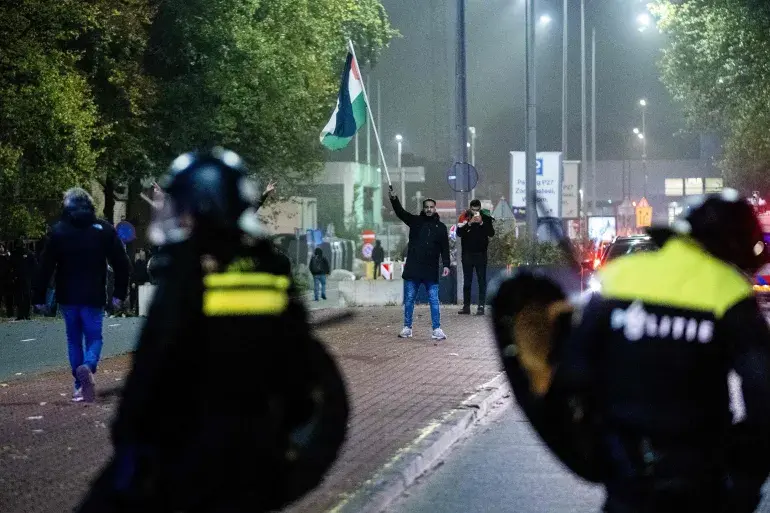
The recent Amsterdam incident, which involved violence and provocation by Maccabi Tel Aviv fans, highlights the effects of Israeli racism and criminality, which appear to be spreading to Europe.


In exclusive interviews with “I”, writers and political analysts confirm that the racist practices carried out by the Israeli fans reflect an ingrained colonial mentality, as their actions, including raising anti-Arab slogans and removing the Palestinian flag, are part of a hate speech rooted in Israeli society, based on a vision that presents Israelis as the vanguard of Europe in the face of “Eastern backwardness”, a message that is in line with the political discourse of Prime Minister Benjamin Netanyahu, who exploits this narrative to bolster European support.


The writers and analysts assert that the Israeli strategy based on violence and discrimination no longer convinces international communities, and that the world has begun to reject the contradiction between Israel’s declared values and its practices on the ground, as demonstrated by the masses supporting the Palestinians by confronting those Israelis in Amsterdam. They also pointed out that Israeli racism, which is clearly evident at home and exported abroad, is facing major challenges today, with a gradual shift in international positions and increasing popular pressure to hold Israel accountable for its practices.

Behaviors rooted in the culture of Israeli society

Dr. Ashraf Badr, a writer, political analyst and specialist in Israeli affairs, believes that any colonial movement carries racist ideas at its core, and that the behavior of the Maccabi Tel Aviv fans during their mission to Amsterdam reflects this colonial mentality.


Badr points out that the actions of these fans, which included bragging about the violence and crimes against Palestinians in Gaza and chanting anti-Arab slogans, are rooted in the culture of Israeli settler society.


This culture, according to Bader, is not new, but rather predates the current war, as it has always included racist chants, such as “death to Arabs,” as part of the hate speech that characterizes Israeli society.


Badr confirms that the message that the Maccabi Tel Aviv fans tried to send through their racist chants and removing the Palestinian flag from a building in Amsterdam, carries self-importance and superiority over others, as the Israelis view themselves as the vanguard of the “European nation” in their battle against what they consider “Eastern obscurantism.”


Badr points out that this trend is not far from the speech of Israeli Prime Minister Benjamin Netanyahu, which is based on a narrative that begs for European support by presenting Israel as a bulwark against the supposed “barbarism” in the Middle East, against the obscurantism and backwardness of the East.


These supremacist concepts, according to Bader, are embodied in the behavior of individuals within the Israeli settler society and show the depth of the colonial mentality.

Official European systems under the influence of Zionist lobbies

Regarding the European position, Badr confirms that the official systems in Europe are still under the strong influence of the Zionist lobbies, which enjoy wide influence that varies in intensity from one country to another.


However, Bader believes that there is a gradual change in European public opinion, as the increasing demonstrations in European capitals indicate a shift in popular attitudes towards the Palestinian-Israeli conflict.


However, Badr points out that this change has not yet been reflected in radical government policies, while Badr believes that steps such as some countries recognizing the State of Palestine may occur in the future if popular pressure and public opinion in those countries continue.


As for the Arab and Islamic communities in Europe, Badr points out that they still face constant accusations from official political systems, as a result of the influence of the Zionist lobby.


However, Badr stresses that these communities were not effective enough in the past, due to their lack of institutional organization similar to that of the Zionist lobbies.


But Badr expresses his hope that these communities will be able to strengthen their collective action, which may allow them to confront the fierce Zionist attack more effectively in the future.

A racist view that finds its depth in the extreme Israeli right

Writer and political analyst Firas Yaghi believes that racism is a fundamental issue rooted in Israeli society, which raises its generations as “the most superior of human beings,” reinforcing the idea that non-Jews are viewed as inferior and of lesser value.


Yaghi explains that this view finds its depth in the prevailing mentality of the extreme Israeli right, especially in the current government with its strict religious tendencies. This government believes that it has the right to act with absolute freedom, thereby ignoring international and humanitarian laws.


He confirms that this racist mentality was clearly evident recently in demonstrations held in Amsterdam, where slogans were chanted that exceeded all limits of humanity and morality. In these demonstrations, some spoke openly about the absence of schools in Gaza due to the deliberate killing of children, a statement that expresses shocking intellectual cruelty.


Yaghi explains that these movements are not merely a reflection of a certain policy, but rather show a widespread pattern within Israel, reflecting the superior view of Israeli society towards others, especially the Palestinians.


Despite these Israeli efforts to export racism to Europe, Yaghi points out that these attempts have failed, citing the Amsterdam demonstrations that faced strong opposition from Arab and Islamic communities there.


Yaghi asserts that the European street in general shows increasing sympathy for the Palestinian cause, despite the European governments’ support for Israel. This contradiction between the positions of governments and public opinion becomes more apparent with the continuation of the occupation’s crimes in Gaza and Lebanon, which reinforces popular hostility towards Israel.


Yaghi stresses that the Israeli racists and anarchists, who seek to impose their hegemony and vision, face dire consequences on the international scene, referring to the statements of the Amsterdam Police Director, who described the clashes between Israeli demonstrators and their opponents from Arab and Islamic communities as “dangerous” and ringing the alarm bell.

Yaghi explains that Europeans are very sensitive to the concepts of racism and human rights, and are very sensitive to any violations in this area, which poses a major challenge to the Israelis who seek to export their extremist ideology.


Yaghi asserts that the Israeli political system, which is dominated by the Zionist movement, is aware of the danger of these moves. However, Israel continues to try to exploit the historical racism against Jews in Europe to push Western political systems to support it, realizing that the Europeans fear the return of historical waves of hostility against Jews to their countries.


But this governmental support, according to Yaghi, clashes with the fact that European public opinion, especially in countries such as Spain, Norway, Ireland and Belgium, has begun to change in favour of the Palestinians.

New European positions characterized by criticism of Israel

Yaghi believes that there are new European positions characterised by more severe criticism of Israel, which contributes to the escalation of its international isolation.


Yaghi points out that one of the most prominent examples of international transformations is the Boycott, Divestment and Sanctions (BDS) movement, which is achieving great successes in Europe and America, and that Israeli governments and their allies in the West are trying to confront this movement by all means, including passing laws to criminalize BDS activities.


Yaghi explains that Israel is aware of the danger of changing European public opinion and is trying to contain it by imposing strict restrictions, stressing that racist Israeli campaigns find clear expression inside Israel, through groups such as “La Familia,” a racist organization composed of fans of the soccer team “Beitar Jerusalem.”


This group, according to Yagi, practices violence against Palestinians in Jerusalem and is allied with other racist groups in the West Bank.


Yaghi stresses that these organizations pose a major threat to the Palestinians, and work to promote chaos and violence against them.


Yaghi highlights the importance of the Palestinian role in confronting these movements, pointing out that the Palestinian movement in Europe is currently taking place thanks to the efforts of the Arab and Islamic communities without sufficient support from the official Palestinian political system.

Call on the PLO to rebuild its relations with Arab and Islamic communities

Yaghi calls on the Palestine Liberation Organization to rebuild its relations with these communities and to strengthen communication with European parties and movements that oppose Zionism and criticize Western and American policies.


Yaghi believes that the PLO should return to its previous approach before the Oslo Accords in 1993, so that it would be more independent in its international movements.


Yaghi praises some of the Palestinian embassies that play an active role, such as the embassy in London, led by Ambassador Hussam Zomlot, who works in close coordination with British popular efforts to confront Israeli racism.


But Yaghi stresses that this effort must be part of a comprehensive plan that is circulated to all Palestinian embassies around the world.


This plan, according to Yaghi, must reconnect with Arab and Islamic communities, strengthen the Palestinian presence in the international arena to confront Zionist propaganda, and defend the rights of the Palestinian people in the face of Israeli racism.

The Israeli narrative is beginning to face challenges on the global level

Writer and political analyst Suleiman Basharat believes that the events witnessed in the Dutch capital, Amsterdam, are an indication that Israel’s policies in the Palestinian territories are producing increasing effects in the arenas of the world, which people can no longer tolerate. The Amsterdam incident came as a response to the racism that the fans of the “Maccabi Tel Aviv” team tried to transmit there.


Basharat explains that since the Nakba in 1948, Israel has relied on a strategy of violence, killing and destruction, along with a methodology of denial of the other, racism and the ongoing persecution of the Palestinians, promoting its actions as legitimate self-defense. This Israeli narrative, which sought to portray the Palestinians as if they did not deserve life, was accompanied by claims of Jewish racial superiority, in contrast to calls to deprive Arabs and Palestinians of their basic rights.


Basharat points out that the Israeli narrative has begun to face challenges at the global level, as international communities no longer easily accept Israeli explanations, but have begun to clearly see the gap between the values and principles that Israel claims, and its practices on the ground.


He stresses that these contradictions have contributed to the accumulation of a state of anger and resentment among peoples and societies around the world, and that it is no longer possible to ignore Israel's violations, especially in light of the increasing calls from human rights and international organizations to hold war criminals accountable.


However, Basharat points out that Israel has not actually been held accountable, which has sparked global popular outrage not only over the Palestinian issue, but also over US and Israeli policies that have led to decades of international oppression and persecution.

Gaza War: A Critical Turning Point in Changing the World's View of Israel

Basharat believes that the current war on Gaza represents a decisive turning point in the world’s view of Israel as an entity that transcends human rights principles. At the beginning of this war, the UN Secretary-General declared that international humanitarian law is being put to a real test.


Therefore, Basharat believes that the war will produce global societal segments that oppose Israeli and American policies, and these groups will not wait for justice in its traditional form, but will begin to express their positions through various means, including protests and marches, the use of the media, and even direct confrontation if the opportunity arises.


Basharat highlights the incident of the Maccabi Tel Aviv sports team, where its fans tried to humiliate the Palestinian flag, which has gone beyond being a mere symbol of the Palestinians to become a symbol of global liberation. These provocative attempts led to widespread reactions, and these reactions are expected to double as the horrific facts regarding the destruction and genocide practiced by the Israeli occupation in Gaza are revealed.


He points out that Israel may find itself constrained in the future, due to the growing international resentment against its practices.

Basharat highlights Israel's rapid efforts to shift attention from objections to its policies after the Amsterdam incident to accusations of anti-Semitism. In an attempt to distort the global movement rejecting it, it resorted to accusing groups, individuals and the Hamas movement, with the aim of diverting attention from the real criticism.


This shift, according to Basharat, reveals the extent of the embarrassment that Israel is facing as a result of the increasing popular solidarity with the Palestinians, while Basharat explains that these shifts will not be short-term, but will leave an impact in the medium and long term.


Basharat says: It is true that European political systems still support Israel, but they will find themselves in confrontation with their societies that reject colonial policies and racial discrimination.


These popular pressures, in Basharat's opinion, will force regimes to take more balanced positions, or at least push them to make gradual changes.


Basharat compares the current situation with the former apartheid regime in South Africa, which collapsed under pressure from popular and international movements.


Basharat believes that the historical model of South Africa may be repeated in the context of the Palestinian issue, when global communities impose a new balance of justice that confronts Israeli and American policies towards human rights.

Israeli society is now displaying behaviors characterized by organized fascism.

Writer and political analyst, Dr. Abdul Majeed Suwailem, describes the Amsterdam incident as reflecting the shaky psychological state that Israeli society is experiencing in light of the repercussions of October 7.


Suwailem explains that this society, which is plagued by megalomania, arrogance and racism, has begun to display behaviours characterised by organised fascism, with groups turning into gangs that practice violence against any party they consider an enemy.


Suwailem believes that the Israelis are suffering from a great shock after October 7, which they have not been able to overcome until now, especially with the continued attacks on them, which makes them feel helpless and defeated.


Suwailem describes the Israelis’ feelings of complete inability to achieve the victory they had previously boasted about, noting that this moral defeat stimulates aggressive behavior directed against others, even in simple sporting events.


Israeli society, according to Suwailem, reflects a state of psychological chaos and instability, and is always looking for justifications for its behavior, including the claim that the world is hostile to them due to anti-Semitism, without asking themselves why the people’s reactions are escalating against them and against Zionist fascism.


Suwailem points out that the Israelis are reinforcing their sense of superiority at the expense of others, ignoring the real question: why is the world mobilizing peoples against Zionism?


In a comparison with European fascism, Suwailem says that Israeli society has shown clear copies of the behavior of German and Italian fascism, where violence becomes a normal pattern, stressing that this behavior expresses a state of moral decadence.


He points to Israel's attempts to justify its aggressive behavior and distort the facts, as happened in Amsterdam, when the Israelis tried to portray things as if they were the victims, even though they were the aggressors.


Suwailem attributes these lies to the confusion of Israeli society, which lives in constant anxiety about threats and always thinks that the world should respect its privacy, even if that leads to accusing those who criticize it of anti-Semitism.


Suwailem asserts that Europeans no longer see Zionism and Israel as a threat to the Palestinians only, but also to world peace, and this global understanding is increasing despite the systematic support of official European regimes for Israel, which Suwailem described as being subject to the Zionist movement and the United States, and content with slogans of human rights without real action to change this support.

Careful organization of Arab and Islamic communities in Europe

On the other hand, Suwailem praises the role of the Arab, Islamic and Palestinian communities in Europe, pointing to their precise organization and their ability to support the Palestinian cause in a brilliant and great way.


Suwailem confirms that these communities have provided a lot of support to the Palestinian people in Gaza, the West Bank, and Lebanon, noting that their role was greater than many expected.


Suwailem believes that it is not necessary to demand more support from these communities, but it is enough for them to continue their firm positions against the increasing racism and fascism in Europe.


Suwailem asserts that the European regimes will remain allies of Israel, whatever the consequences. These regimes only offer honeyed statements about peace and human rights, but they do everything possible to keep the Middle East region in a state of instability, as long as it serves Israel.


Suwailem believes that official European support for Israel maintains global tension and hinders any real opportunity to achieve peace.

Israeli Hegemonic Messages to the World

Writer and political analyst Adnan Al-Sabah believes that in the context of the controversial international stance towards Israeli crimes against the Palestinians and the Lebanese, the global silence and the continued support from the United States and its allies have contributed to the consolidation of the mentality of racial superiority among the Israelis, which demonstrated the attempts at this superiority in the Amsterdam incident.


Al-Sabah points out that Israel considers itself the supreme race, and holds the belief that it possesses a divine mandate that places it above the rest of humanity, where all those outside the circle of this superiority are viewed as having been created only to serve its interests, regardless of their religious or ethnic backgrounds.


Al-Sabah points out that the unlimited international support, which includes military, political and diplomatic support, reinforces this Israeli sense of superiority. Instead of confronting its practices with firm decisions or raising a “red card” to stop the violations, the international community continues to remain silent, which encourages Israel to continue its aggressive policies.


Al-Sabah highlights that what is happening in Palestine and Lebanon is a direct result of this global collusion, which makes the Israelis believe that they have the right to carry out their actions without accountability or oversight. This belief is not limited to the Palestinian people, but extends to include all peoples, as if the Israelis are the masters of the earth.


Al-Sabah cites what happened in the Netherlands as an example of the messages of dominance that Israel sends to the world, as in the scenes of protests in Europe, the Israeli message is clear: We are your masters, and you must submit to our will and stop objecting. They do not tolerate any dissenting voice, and they view objection to their policies as objection to divine will.


Al-Sabah believes that these Israeli convictions cannot be curbed by silence or by providing support, but rather require a real and frank confrontation from the international community, as the world’s silence on what is happening in the Gaza Strip and Lebanon has pushed Israel to feel superior to everyone.


Al-Sabah discusses the impact of this racist mentality on international relations, stressing that the United States and Europe will continue to support Israel, because the world is now governed by the logic of economic and political interests, not human values and principles.

An alliance between money, knowledge and weapons

Al-Sabah stresses that in an era known as the “era of the knowledge economy,” international laws and ethics no longer have any real value, as interests dominate global decisions, and knowledge, which is considered the new weapon, has become a tool in the hands of the powers that control money and weapons, making this era the most dangerous period in history.


Al-Sabah believes that this alliance between money, knowledge and weapons heralds a global catastrophe that threatens all human values.


Al-Sabah asserts that control over knowledge has transformed the world into a scene where imperialism and modern technologies intersect, undermining borders and nation-states, and even threatening the existence of religions.


Al-Sabah believes that these powers see religion as a tool for achieving hegemony, and that the real religion for them is the religion of power and money represented by the United States and global Zionism.


Al-Sabah also criticizes the Arab position, pointing out that some Arab elites have become subject to the politics of interests. Instead of defending the issues of freedom and democracy, loyalty has become to money and gains, which has contributed to the decline of the national and moral sense among some Arab leaders.


He stresses that this dangerous equation threatens the Arab entity, and makes it necessary to confront this global challenge before it is too late.

Declining European public support for traditional Israeli narrative

Writer and political analyst Samer Anabtawi confirms that in light of the escalation of events, the intensification of the war of extermination on the Gaza Strip, and the ongoing Israeli crimes, Israeli society has become clearly aware of the change in Israel’s image and the decline in popular support in many European countries for the traditional Israeli narrative.


He points out that European societies have begun to adopt the Palestinian narrative more broadly, after realizing that Israel, which had portrayed itself as a democratic state facing threats from “terrorist groups,” is in fact carrying out systematic and widespread genocide against Palestinian civilians, including killing children, targeting women, and striking vital facilities such as hospitals.


This shift in the European peoples’ view that Israel is practicing genocide has made Israelis feel angry and frustrated, as Anbatawi asserts that Israeli society is now trying to forcefully reimpose its narrative after it fell following the war of genocide on the Gaza Strip, through violent and biased protest actions, such as removing Palestinian flags and promoting violence.


These actions, according to Anabtawi, reflect a state of descent into chaos and violence, in a desperate attempt by the Israelis to impose their vision, but they face clear resistance from European societies that stand in solidarity with the Palestinian people.


Anbatawi points out that the Israeli government and the Israeli Mossad may be behind these extremist movements by Israelis in Europe, with the aim of showing life there as difficult and unsafe for Israelis, which may contribute to reducing the phenomenon of reverse migration sought by hundreds of thousands of Israelis who aspire to move to Europe to escape the deteriorating conditions in Israel.


However, Anbatawi points out that these actions may extend to affect the internal European situation, as waves of tension and rioting may spread to other European cities, which may force European countries to take strict measures related to licensing demonstrations and restricting them for security reasons.


He points out that the confrontation between Maccabi Tel Aviv fans in the Netherlands showed a dangerous side of this conflict. In his opinion, the Dutch police made a mistake when they allowed pro-Israel marches to be held while at the same time preventing counter-pro-Palestinian marches, which sparked further anger among supporters of the Palestinian cause and led to violent confrontations.


These confrontations, according to Anabtawi, have angered the European authorities, who are now seeking to stop these disturbances amid fears that they will spread to other places. They may take measures by restricting the freedom to demonstrate and implementing strict security measures.


In a related context, Anabtawi sheds light on the role of Arab and Islamic communities in Europe, which have come to play an important role in influencing public opinion, including election results, as happened in the United States. These communities, which have realized the falsehood of the Israeli narrative, are currently seeking to organize their ranks and unify their efforts to confront racist Israeli movements and refute Israeli propaganda.


It is believed that the war of extermination on the Gaza Strip, with all its brutality and destruction, has helped unite the Islamic and Arab communities in Europe and made them more resilient in confronting attempts to distort the facts, especially amid fears of expanding the Israeli attack in the region and perhaps Europe.


Anbatawi asserts that Israel, despite all its attempts supported by the Zionist movement and the United States, is finding it increasingly difficult to improve its image before the world. The crimes committed in Gaza and other occupied territories have become clear and cannot be hidden, which has led to the collapse of the Israeli narrative that it has promoted for decades as the “victim.”


Anbatawi also believes that this shift may not be temporary, but rather represents a long-term change in the world’s view of Israel, with the conviction deepening that it is a state based on policies of genocide and racism.

PALESTINE

Sun 10 Nov 2024 8:42 am - Jerusalem Time

Israel commits a massacre in Jabalia, killing 33 Palestinians

33 citizens, including 13 children, were killed today, Sunday, while a number of others are still missing, in a new massacre committed by the Israeli occupation army in the town of Jabalia, north of the Gaza Strip.


Local sources reported that the occupation warplanes bombed a house crowded with residents and displaced persons belonging to the "Alloush" family in the Jabalia al-Balad area.


She added that the bombing led to the complete destruction of the house, and 33 martyrs were recovered, including 13 children, in addition to a large number of injured people, who were transferred to the Baptist Hospital, while a number of missing persons are still under the rubble of the destroyed house.


In an unofficial tally, the number of martyrs since the beginning of the aggression on the Gaza Strip on October 7, 2023 has risen to about 43,552 dead and 102,765 wounded, the majority of whom are women and children, while thousands of victims are still under the rubble and on the roads, where they cannot be reached.

PALESTINE

Sun 10 Nov 2024 8:40 am - Jerusalem Time

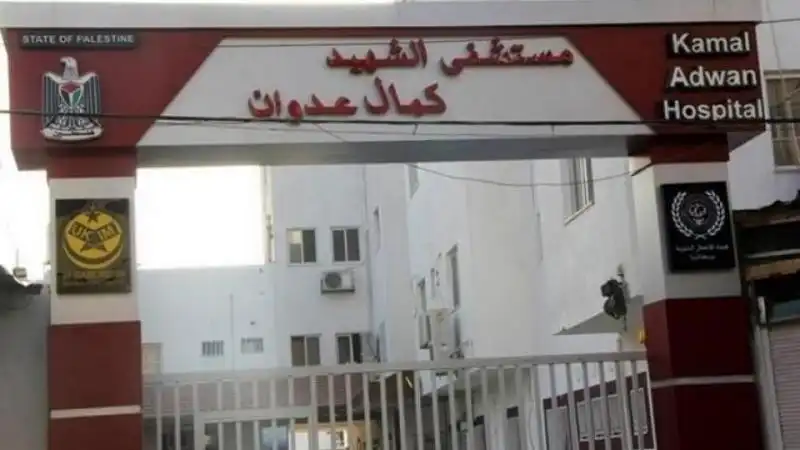
Medical sources at Kamal Adwan Hospital: We are losing lives every day due to lack of care and resources

Medical sources at Kamal Adwan Hospital urgently called for the provision of basic supplies and ambulance services, in addition to lifting the siege on northern Gaza.


She explained, "Cases of malnutrition and famine have begun to appear in the region, and northern Gaza is being subjected to a war of extermination, and we are suffering as a result of the deliberate silence on the crimes committed against us."


She pointed out that the health system and the rights of our people are under severe threat, and we are in dire need of medical support. The crisis continues in northern Gaza, which is characterized by a systematic attack on our health system, where we lose lives every day, due to the lack of specialized care and resources.


She expressed her regret at the inability to help those trapped under the rubble, saying: “Just yesterday, we received reports of children and women trapped in difficult conditions, and today we mourn their loss as martyrs. This reality is unbearable.”


She noted that medical teams are witnessing alarming cases of malnutrition among children and adults, and we are struggling to provide even one meal a day for hospital workers, amid a severe shortage of food and medical supplies.


She called on the international community to urgently help at this difficult time.

ARAB AND WORLD

Sat 09 Nov 2024 10:25 pm - Jerusalem Time

US and British raids target Sanaa

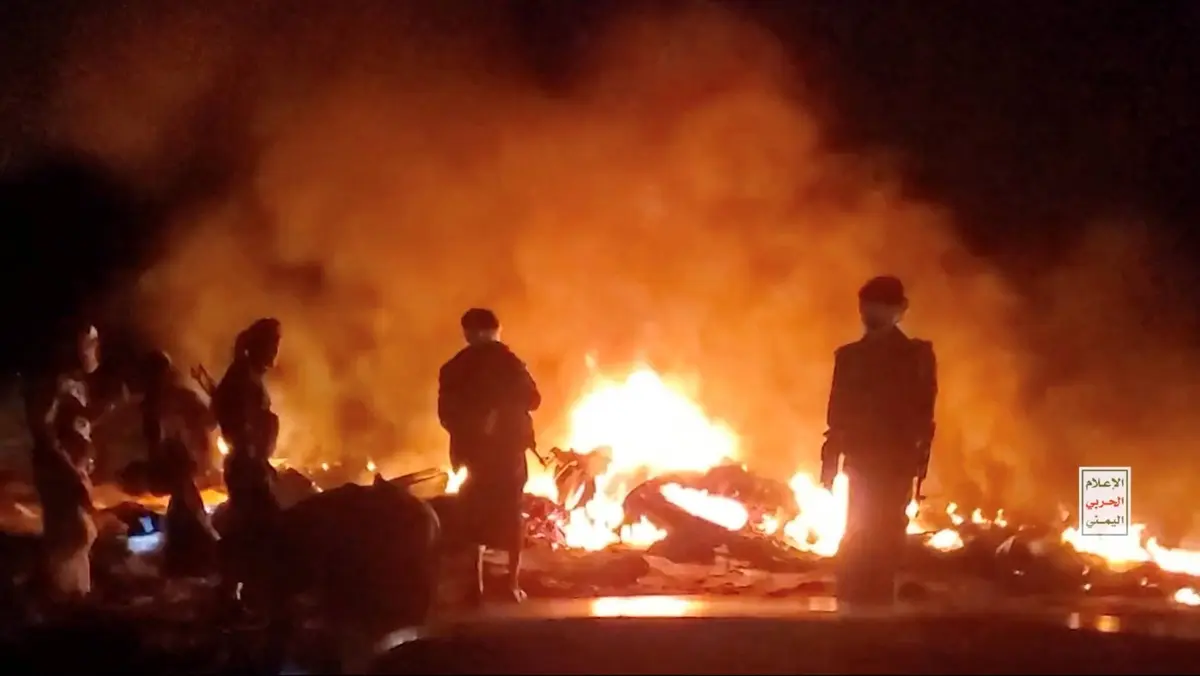
Houthi media reported airstrikes targeting Sanaa on Saturday evening, saying it was an “American-British” attack.


Al-Hadath channel quoted its correspondent as saying that Houthi sites in Al-Hafa camp and Al-Nahdain area were targeted, and reported that there was intensive flying of reconnaissance aircraft in the skies of Sana'a.


This comes a day after the Iran-backed group announced that it had carried out an attack targeting an Israeli base in the Negev region on Friday, and claimed to have shot down an American MQ-9 drone, coinciding with its admission that it had received two Western airstrikes targeting a site in the southern coastal province of Hodeidah.


For more than a year, the group has been attacking ships linked to Israel, the United States and Britain in the Red and Arabian Seas, and has been launching missiles and drones towards Israel under the pretext of supporting the Palestinians in Gaza, and finally supporting the Lebanese Hezbollah.


The group's media outlets acknowledged receiving two airstrikes on a site in the south of Al Hudaydah Governorate (west of the country) on Friday.


According to Al Masirah TV, the group’s media arm, the two raids, which it described as “American-British,” targeted the At Tuhayat district, located in the south of Al Hudaydah governorate, which the group uses as a main base for launching naval attacks against ships.

PALESTINE

Sat 09 Nov 2024 8:44 pm - Jerusalem Time

"Gaza Media" publishes horrific statistics of the war of extermination

The Government Media Office in Gaza published a new update that reflects the extent of the tragedy that the Strip is going through in light of the genocidal war that the Israeli occupation has been waging on the Strip for 400 days.


The data showed that the occupation army committed 3,798 massacres since the beginning of the war, which led to a heavy toll of dead and missing persons amounting to 53,552 people, including 10,000 missing persons.


According to the office, the number of martyrs who were transferred to hospitals reached 43,552, including 17,385 children. These figures included the martyrdom of 209 infants who were born during the war and were killed in it, in addition to 825 other children who were less than one year old.


Statistics also indicated that 1,367 Palestinian families were completely wiped out from the civil registry. 38 people died as a result of famine, while the number of female dead reached 11,891. Among the medical staff, 1,054 people were killed, in addition to 85 members of the civil defense and 184 journalists.


In a shocking development, the occupation established 7 mass graves inside hospitals, from which 520 dead were recovered. The number of wounded and injured reached 102,765 people, including 398 journalists and media professionals.


Statistics show that 70% of the victims are children and women.


The occupation also targeted 202 shelters, resulting in 35,055 children living without one or both parents, while 3,500 children face the risk of death due to malnutrition and food shortages.


These figures embody the worsening humanitarian tragedy in the Gaza Strip, which calls for urgent intervention by the international community to end the aggression and provide humanitarian support to the affected population.

ARAB AND WORLD

Sat 09 Nov 2024 8:26 pm - Jerusalem Time

Biden plans final push for Middle East peace with less leverage

The Biden administration will make last-ditch efforts to strike elusive deals to end the wars in Gaza and Lebanon, but the election of Donald Trump could leave Washington without enough leverage to bend Israel and other regional players to its will before he becomes president, an informed source told Al-Quds on Friday.


“Senior US officials who have spent months shuttling across the Middle East for peace negotiations are likely to face counterparts who are reluctant to take big steps, preferring instead to wait until President-elect Donald Trump is inaugurated in January,” the source, who asked not to be named, believes.


State Department spokesman Matthew Miller said Thursday in his first post-election press conference that the administration's priorities on the pressing issues in the "Gaza war" are "getting humanitarian aid into northern Gaza, all of Gaza, continuing efforts to stop the war and release the hostages, and we have a duty to pursue these policies until noon on January 20th."


Trump has promised to bring peace to the Middle East but has not said how. However, if his first term is any indication, he is likely to adopt a strongly pro-Israel approach, going beyond even the strong support that President Joe Biden has extended to Washington’s top regional ally.


But with Biden now a lame duck in American political parlance, neither Israeli Prime Minister Benjamin Netanyahu, a close Trump ally, nor Arab leaders are likely to do much to accommodate the outgoing Democratic president and may take their cues from his Republican successor, whose erratic foreign policy in his first term has kept the region on edge.


“They have much less leverage,” Brian Finucane, senior adviser for the United States program at the International Crisis Group, told Reuters on Friday. “People may still be answering their phone calls, but everyone is looking to a new administration, which will have different policies and priorities.”


Since Trump's election victory on Tuesday against Vice President Kamala Harris, Arab and Israeli officials have begun to act with caution and balance toward the outgoing administration and the incoming one.


In the first step that indicates the upcoming political scene, Agence France-Presse quoted a diplomatic source as saying on Saturday that Qatar had withdrawn from its role as the main mediator in reaching an agreement to cease fire in Gaza and release the hostages, and informed Hamas that its office in Doha "no longer serves its purpose."


“The Qataris informed the Israelis and Hamas that as long as there is a refusal to negotiate an agreement in good faith, they will not be able to continue mediation. As a result, Hamas’s political bureau no longer serves its purpose,” the source, who requested anonymity, told the agency.


Reuters reported on Saturday that Qatar will withdraw from mediation efforts to broker a ceasefire in Gaza until "Hamas and Israel show a sincere willingness to return to the negotiating table."


The official added that Qatar also concluded that Hamas's political bureau in Doha "no longer serves its purpose," in a blow to the Palestinian movement after the assassination and killing of a number of its top leaders by Israel.


"The Qataris have been saying since the beginning of the conflict that they can only mediate when both sides show a genuine interest in finding a solution," the official said, adding that Qatar has notified Hamas, Israel and the US administration of its decision.


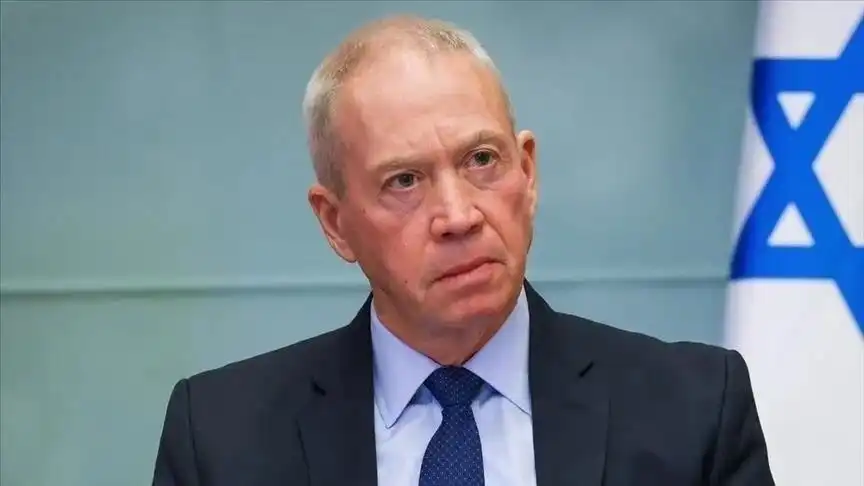
As the world watched the US election on Tuesday, Netanyahu — who left no doubt about his preference for Trump and hailed his win as “historic” — fired his defense minister, Yoav Gallant, depriving the Biden administration of one of its favorite Israeli partners.


The Palestinian Hamas movement, which has been fighting Israel for more than a year in Gaza against the brutal, American-backed Israeli war, and the Lebanese militant group Hezbollah, which is waging a parallel conflict with the Israeli occupation army, also appeared to be looking beyond Biden to the incoming Trump administration.


Hamas called on Trump to "learn from Biden's mistakes," and Hezbollah said it did not hold out much hope for a shift in U.S. policy away from support for Israel.


But Palestinian Authority officials say they expect to work with Biden aides until Trump takes office.


Washington says it sought to start ceasefire talks in Gaza after Israel killed Hamas leader Yahya Sinwar on October 16, but the efforts have gone nowhere. In Lebanon, US officials say they have made progress but no final agreement has yet been reached.


Asked about the view that the Biden administration’s influence has eroded after the election, a White House National Security Council spokesman said: “I’m not going to speculate.”


Netanyahu and his allies celebrated the election of Trump, a staunch ally of Israel, hoping that the Republican president, who in his first term achieved major victories for the Israeli leader, would support Israel unconditionally.


Trump strongly supported Netanyahu's goal of destroying Hamas but called on Israel to finish the job quickly.


In his victory speech, Trump said, “I will not start a war. I will stop wars.” But he did not elaborate.


Biden's support for Israel has divided his Democratic Party and cost Harris the votes of many Arab Americans and liberals.


The Democratic president strongly supported Israel while pressing Netanyahu to do more to protect civilians and allow more humanitarian aid into Gaza.


But Biden has been unable to end the war, with some critics saying he should have done more to restrict the billions of dollars in military aid the United States sends to Israel each year.


Netanyahu is expected to make a limited effort to meet Biden's demands for some aid to enter Gaza, but he will also be aware of what he must do to appease Trump.


In a letter dated October 13, US Secretary of State Antony Blinken and Secretary of Defense Lloyd Austin called on Israel to take specific measures to improve aid to Gaza within 30 days, or face potential consequences in US military support.

PALESTINE

Sat 09 Nov 2024 7:59 pm - Jerusalem Time

Suffocation injuries during the occupation's storming of southern Bethlehem

Citizens suffocated on Saturday evening, during the Israeli occupation forces' storming of the town of Al-Khader, south of Bethlehem.


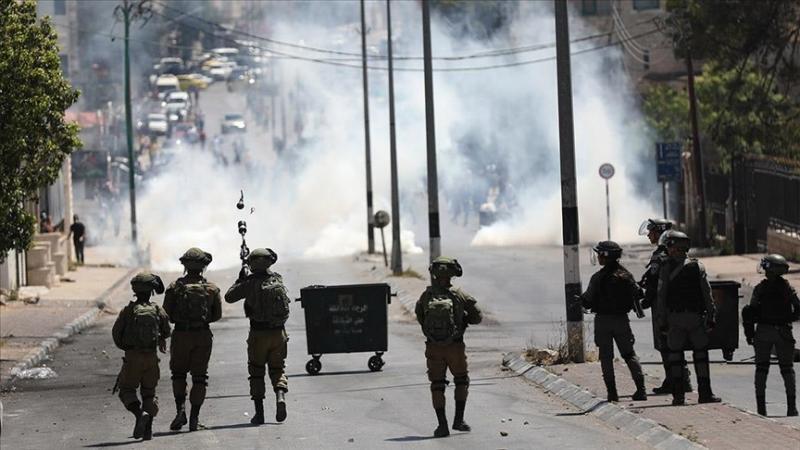
According to local sources, the occupation forces stormed Al-Khader and took up positions in the “Al-Balou” area, and set up a military checkpoint, where they stopped vehicles, searched them, and checked the identities of the passengers. The occupation soldiers also fired sound bombs and toxic gas at a number of shops, which led to a number of citizens suffering from suffocation, and they were treated in the field.

ARAB AND WORLD

Sat 09 Nov 2024 7:42 pm - Jerusalem Time

US media: Trump involved Elon Musk in one of his foreign contacts

US media reported that President-elect Donald Trump involved billionaire Elon Musk in a phone call between him and Ukrainian President Volodymyr Zelensky, who called to congratulate Trump on his victory in the US presidential elections last Tuesday.


CNN quoted a source as saying that Musk was with Trump at his private resort, Mar-a-Lago, in Florida, when Zelensky called to congratulate the president-elect in a "positive and friendly" conversation.


The source added that Trump turned on the speakerphone to include Musk in the call, and the Ukrainian president thanked the billionaire - who heads a number of the largest technology companies - for his help in providing communications services to Ukraine via the Starlink system during the ongoing war with Russia.


The source said that the call lasted about 7 minutes and did not address political issues.


CNN reported that Musk's participation in the call, which he supported with millions of dollars in Trump's campaign, raises questions about the limits of his expected influence in the next US administration.


The network also noted that Trump, during his election campaign, raised doubts about continued US support for Ukraine if he won the presidency and made statements indicating the possibility of pushing Kiev to reach a truce with Russia.


In turn, the Associated Press quoted a Ukrainian official familiar with the call as saying that Zelensky and Musk spoke during the call that took place last Wednesday, but he said that Musk may not have been on the line during the entire call, apparently.


The agency said Musk's involvement in the conversation shows his influence in the president's inner circle. It noted that Trump had talked about the possibility of assigning Musk to an official role in the next administration concerned with government efficiency, which raises questions about a conflict of interest in light of the large government contracts that Musk leads SpaceX.

ARAB AND WORLD

Sat 09 Nov 2024 7:22 pm - Jerusalem Time

Israeli media: Galant told prisoners' families after his dismissal, "Netanyahu does not want a deal"

Israeli media reported part of what was included in the meeting of the dismissed Israeli Defense Minister, Yoav Galant, with the families of the Israeli prisoners held in the Gaza Strip, where he confirmed to them that Prime Minister Benjamin Netanyahu does not want to complete a deal to return them.


According to a number of these outlets, Galant referred to Netanyahu's role as the final decision-maker in the prisoners' file, blaming him for obstructing the reaching of an exchange agreement with the Islamic Resistance Movement (Hamas).


Channel 13's social affairs correspondent Maya Eden reported that Galant embraced the families and assured them that they had done everything they could, but that the matter was still in Netanyahu's hands alone, adding that Netanyahu was the only one who could be addressed as a decision-maker, while the others in the government were considered "marginal officials."


Galant pointed out that Israel was able to complete the "Netanyahu-Biden" deal last July after exhausting the military objectives in Gaza, but Netanyahu obstructed that and then presented a proposal that he knew would not meet Hamas's conditions, and this matter hindered the deal.


For her part, Channel 12 health affairs correspondent Yolan Cohen confirmed that Galant had been meeting weekly with the families of the prisoners for more than a year, and he always told them that losing these prisoners would be a disgrace to Israel.


advertisement

Or Heller, Channel 13's military affairs correspondent, warned of the danger of prisoners dying in the tunnels due to their difficult conditions of lack of food and air, and stressed that Galant may be remembered as the only defense minister in the government who seriously sought to support a deal to return the prisoners after the government's "serious failures."


Gallant is not optimistic.

Sharon Sharabi, the brother of two prisoners - one of whom was killed - in Gaza, pointed out that Galant had always insisted that the time had come to return the prisoners, but despite that, the expected return did not happen, in light of the failure of attempts to achieve the desired goal.


While Aviv Bushinsky, Netanyahu's former media adviser, confirmed that Galant directly told the families that Netanyahu does not want a deal, and that he is not optimistic about the return of the prisoners.


Oded Ben-Ami, a political presenter on Channel 12, said the current situation was a shock to families who did not expect their sons to remain detained for so long in Gaza, noting that they faced pressure and abuse from the authorities in their quest to recover their sons.


Opposition leader in the Knesset, Yair Lapid, added in a statement to Channel 12 that it is necessary not to turn the families into enemies of the ruling coalition, and stressed the importance of reminding Israelis of the importance of the return of prisoners as part of the recovery of society.


In another context, Yedioth Ahronoth analyst Avi Issacharoff stressed the "danger of Hamas's strategy, which is based on exhausting Israel through guerrilla warfare," noting that it will continue fighting even after the army withdraws from some areas in the northern Gaza Strip.


While Dr. Einat Wilf, a former member of the Knesset, stressed the political and military failure in managing the prisoners’ file, pointing out that Hamas has continued its demands since the events of October 8 without change, and has not achieved any progress in this file.

ARAB AND WORLD

Sat 09 Nov 2024 6:46 pm - Jerusalem Time

70 rockets target Israel from Lebanon, Hezbollah shoots down drone

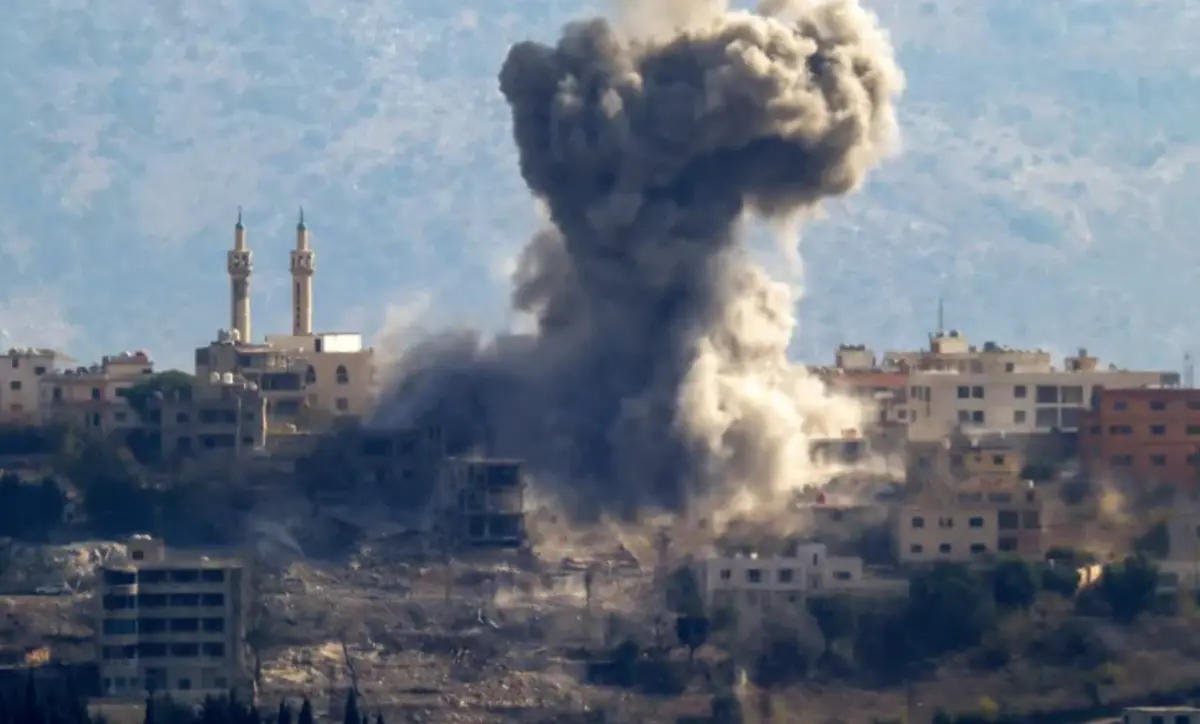
Sirens sounded in various areas of central Israel, and reports indicated that about 70 rockets were launched from Lebanon. While Hezbollah confirmed targeting military sites and shooting down a drone, Israeli raids on Lebanon continued, claiming more lives and injuries.


The Israeli army confirmed that air raid sirens were activated in areas of central Israel after a drone infiltrated, and the Yedioth Ahronoth newspaper said that warplanes were pursuing a drone in the skies of Tel Aviv.


On the other hand, Israeli Channel 13 reported that about 70 rockets were launched from Lebanon since this morning, targeting areas in northern Israel, including Acre, the Krayot, and the Galilee. The army confirmed that some of the rockets were intercepted, while others fell in open areas.


The mayor of Kiryat Bialik, near Haifa, confirmed that a rocket fell in the city.


Hezbollah operations

For its part, Hezbollah announced carrying out a missile attack targeting the Zevulon military industries base north of Haifa, and settlements in the Galilee and northern Israel.


The party confirmed that the settlement of "Maalot-Tarshiha" was targeted with rocket barrages twice in a row since this morning, in addition to the areas of "Kiryat Shmona", the Kiryat, Nahariya and Baram in northern Israel.


The party also announced that its fighters targeted gatherings of soldiers in the Manara settlement and the Abbad site with rockets.

He confirmed that an Israeli "Hermes 450" drone was shot down in the town of Deir Siryan in southern Lebanon, noting that Israeli warplanes raided the drone after it was shot down.


For its part, the Lebanese Ministry of Health announced the killing of 7 people, including two girls, and the injury of about 50 in the Israeli raids yesterday on the coastal city of Tyre.


The ministry said the victims were killed in strikes that occurred late Friday evening, and that rescue teams were still pulling bodies from under the rubble, as search operations continued.


The Israeli aggression on Lebanon resulted in 3,117 deaths and 13,888 injuries, including a large number of children and women, in addition to about 1,400,000 displaced persons.

ARAB AND WORLD

Sat 09 Nov 2024 6:22 pm - Jerusalem Time

Demonstrations in cities and capitals around the world condemning the aggression on the Gaza Strip

Today, Saturday, many world cities and capitals witnessed mass demonstrations denouncing the Israeli aggression on the Gaza Strip.


Thousands participated in demonstrations organized in the French capital, Paris, the Danish capital, Copenhagen, the Italian city of Milan, Istanbul, Turkey, Dublin and Cork in Ireland, Wolfsburg in Germany, Manchester in Britain, Utrecht in the Netherlands, Helsingborg in Sweden and the capital, Stockholm, Aarhus in Denmark and the capital, Copenhagen, in support of the Palestinian people, and to demand a ceasefire and the entry of humanitarian aid into the Gaza Strip.


The participants in the demonstrations raised Palestinian flags and banners denouncing the crimes committed by the Israeli occupation against our people.


Participants called for an end to double standards and the need to prosecute the occupation for its massacres against the Palestinian people, especially children, and denounced the genocide in the Gaza Strip.

PALESTINE

Sat 09 Nov 2024 5:46 pm - Jerusalem Time

Qatar withdraws from Gaza negotiations

Reuters quoted an informed official as saying that Qatar will withdraw from mediation efforts to stop the ceasefire in Gaza until "Hamas and Israel show a sincere willingness to return to the negotiating table."


The official added that Qatar also concluded that the political bureau of the Islamic Resistance Movement (Hamas) in Doha "no longer serves its purpose."


"The Qataris have been saying since the beginning of the conflict that they can only mediate when both sides show a genuine interest in finding a solution," the official said, adding that Qatar has notified Hamas, Israel and the US administration of its decision.


In contrast, Agence France-Presse quoted a Hamas leader as confirming that the movement had not received any request to leave Qatar and close its office in Doha.


Since the beginning of the aggression on Gaza on October 7, 2023, Qatar has been leading mediation efforts alongside Egypt and the United States. After reaching a temporary truce agreement in November 2023, during which prisoners and detainees were exchanged between Hamas and Israel, other rounds of mediation failed to reach an agreement to end the war that claimed more than 40,000 Palestinian martyrs and caused widespread destruction and an unprecedented humanitarian disaster.

PALESTINE

Sat 09 Nov 2024 5:13 pm - Jerusalem Time

13 Palestinians killed in two strikes on Gaza as first aid shipment arrives

Two separate Israeli strikes killed at least 13 people, including women and children, in Gaza on Saturday, Palestinian health officials said, as Israel announced the first aid shipment to the blockaded northern Gaza Strip in weeks.


One of the attacks targeted a school that had been turned into a shelter in the Tuffah neighborhood in eastern Gaza City, killing at least six people, according to the Gaza Health Ministry. The ministry said the dead included two local journalists, a pregnant woman and a child.


The Israeli occupation army said that the attack targeted a member of the Palestinian Islamic Jihad movement, without providing evidence or further details.


The other attack killed seven people when an Israeli airstrike targeted a tent in the southern city of Khan Younis, where displaced people were taking shelter. Nasser Hospital said two women and a child were among the dead.


The Israeli military did not immediately respond to a request for comment on the incident.

ARAB AND WORLD

Sat 09 Nov 2024 4:46 pm - Jerusalem Time

Bin Zayed and Blinken discuss efforts to reach a ceasefire in Gaza and Lebanon

On Saturday, UAE Deputy Prime Minister and Minister of Foreign Affairs Sheikh Abdullah bin Zayed Al Nahyan and US Secretary of State Anthony Blinken discussed "the importance of intensifying efforts to reach a ceasefire in the Gaza Strip and Lebanon."


This came during a phone call between the two sides, "discussing current developments in the Middle East, especially the situation in the Gaza Strip and its repercussions, especially the humanitarian ones," according to a statement by the UAE Ministry of Foreign Affairs on Saturday.


He also discussed "the importance of intensifying efforts to reach a ceasefire, provide protection for all civilians, and discuss developments in Lebanon."


During the phone call, the developments in the situation in Sudan and their humanitarian repercussions were discussed.


In a related context, Blinken discussed with Saudi Foreign Minister Prince Faisal bin Farhan, during a phone call, "regional developments, their security and humanitarian repercussions, and the efforts made in this regard," according to a statement by the Saudi Foreign Ministry on Friday evening.


The US State Department said in a statement on Friday evening that Blinken renewed the United States' continued commitment to ending the conflict in Gaza, Lebanon and Sudan, during two separate calls with his Saudi counterpart Faisal bin Farhan and Emirati counterpart Abdullah bin Zayed, according to what was reported by the American "Al-Hurra" channel.


In his call with Abdullah bin Zayed, Blinken stressed his country's continued commitment to ending the war in Gaza as soon as possible, and the two sides discussed efforts to secure the release of Israeli prisoners, increase aid, and provide a path that will enable Palestinians in Gaza to rebuild their lives, strengthen governance, security, and reconstruction, according to the statement.


Blinken also spoke with bin Farhan and affirmed his country's continued commitment to ending the conflicts in Gaza and Lebanon, expressing his appreciation for Saudi Arabia's efforts in providing aid to the Palestinians.


Since the outbreak of the war on October 7, 2023, Israel has closed the crossings with the Strip and prevented the entry of basic goods and commodities. It also imposes restrictions on the entry of humanitarian and relief aid and sometimes prevents it from reaching the Strip, causing a major living crisis.


With American support, Israel has been committing genocide in Gaza since October 7, 2023, leaving more than 146,000 Palestinian martyrs and wounded, most of them children and women, and more than 10,000 missing, amid massive destruction and famine that killed dozens of children and the elderly, in one of the worst humanitarian disasters in the world.


After clashes with factions in Lebanon, including Hezbollah, which began the day after Israel launched a war of genocide on the Gaza Strip, Tel Aviv expanded the scope of the genocide since September 23 to include most areas of Lebanon, including the capital Beirut, through air strikes, and also began a ground invasion in the south.


The aggression on Lebanon resulted in a total of 3,117 martyrs and 13,888 wounded, including a large number of children and women, in addition to about 1,400,000 displaced persons. Most of the victims and displaced persons were recorded after September 23, according to Anadolu Agency’s monitoring of the latest official Lebanese data announced until Friday evening.

ARAB AND WORLD

Sat 09 Nov 2024 4:20 pm - Jerusalem Time

Netanyahu's office faces 5 cases, some of which are under investigation

An Israeli newspaper revealed on Saturday that the office of Israeli Prime Minister Benjamin Netanyahu is facing a new case related to his request to stop the army’s recording of the “War Council” meetings (before its dissolution), in a change to the protocols adopted during secret meetings and consultations.


Yedioth Ahronoth newspaper said that the office of Israeli Prime Minister Benjamin Netanyahu is facing a growing storm, surrounding a series of cases, some of which are under investigation.


She added that the suspicion now revolves around Netanyahu changing protocol in a sensitive and secret discussion, which dealt with preparing for international legal action against Israel in The Hague.


The newspaper explained that with the beginning of the war on the Gaza Strip on October 7, 2023, the meetings of the War Council (later dissolved) were held at the headquarters of the Ministry of Defense in Tel Aviv, and the security establishment was responsible for recording the meetings.


At the time, the Israeli army said that recording sessions during the war was "necessary," but that explanation was not accepted by Netanyahu's office, which "directed the army to stop recording," according to Yedioth Ahronoth.


Thus, the Israeli Prime Minister's Office has changed the protocols for secret security meetings and consultations, according to the newspaper.


Netanyahu formed the "War Council" after the events of October 7, which included - in addition to him - the then-Defense Minister Yoav Galant, the former Defense Minister and head of the "State Camp" party, Benny Gantz, his party colleague, the former Chief of Staff Gadi Eisenkot, and the Minister of Strategic Affairs Ron Dermer.


On June 17, 2023, Netanyahu announced the dissolution of the council, a week after Gantz and Eisenkot resigned from it.


4 serious issues

Yesterday, the Israeli Broadcasting Authority said that Prime Minister Benjamin Netanyahu's office was involved in four serious cases, one of which related to an attempt to change documents regarding early warnings before October 7 of last year.


The most serious of these issues are:


The case of leaking secret documents, which resulted in the arrest of 5 people, including an advisor in his office and a senior officer. The case relates to stealing information from the army and leaking it to foreign media outlets, with the aim of influencing public opinion regarding the prisoner exchange deal.


The second issue concerns attempts to change protocols on the war on Gaza, to influence any official investigation into the failures of October 7.


The third case concerns the efforts of officials in Netanyahu's office to blackmail a senior officer with a shameful video that fell into their hands, in exchange for additional secret information.


The fourth case concerns a videotape of former Defense Minister Yoav Galant, documenting his being prevented by guards from entering Netanyahu's office days after the war broke out.


Channel 12 reported that one of the cases in Netanyahu's office concerns an attempt to alter documents regarding early warnings. The channel also reported, citing a political official, that Netanyahu's men spared no effort to distance the prime minister from suspicion and remove everything that stands in the way.


This comes as Maariv newspaper reported that the Israeli government's legal advisor approved opening an investigation into Netanyahu over the leaks in his office.

The newspaper reported that after this approval, the advisors can open an investigation against Netanyahu himself.


The matter concerns two cases in Netanyahu's office, the first concerns suspicions of leaking secret documents, and the second concerns suspicions of attempts to change protocols since the beginning of the war. Maariv indicated that the attorney general, the Shin Bet and the police refused to address the matter officially.

PALESTINE

Sat 09 Nov 2024 4:03 pm - Jerusalem Time

Deaths in Israeli occupation bombing of a house in the northern Gaza Strip

Five citizens were killed and others were injured today, Saturday, in the occupation's bombing of a house in Jabalia camp, north of the Gaza Strip.


According to local sources, the occupation warplanes bombed the house of the Abu Omar family near the Al-Tawbah Mosque in Jabalia camp, which led to the martyrdom of five citizens and the injury of others.


For the 35th consecutive day, the Israeli occupation forces continue their extensive aggression on the northern Gaza Strip, coinciding with the destruction of the necessities of life for citizens who refuse to be displaced and leave their lands and homes.


Medical sources stated that 25 citizens were killed in the occupation's raids on various areas of the Gaza Strip since dawn on Saturday, 16 of them in the northern Gaza Strip.


In a non-final tally, the number of martyrs since the beginning of the aggression on the Gaza Strip on October 7th has risen to about 43,552 dead and 102,765 wounded, the majority of whom are women and children, and thousands of victims who are still under the rubble and on the roads, where they cannot be reached.

PALESTINE

Sat 09 Nov 2024 3:14 pm - Jerusalem Time

Panic in Tel Aviv and rockets falling in Haifa and the Galilee

Hundreds of thousands of Israelis were thrown into panic after sirens sounded in large areas of greater Tel Aviv.


Minutes later, it became clear that these sirens were the result of a misdiagnosis, as announced by the Israeli occupation army.


The occupation army announced that it had detected a large number of rockets since this morning, 25 of which were directed towards Haifa, the Krayot and surrounding areas, without any injuries or damage.


He claimed that his air systems had intercepted a large number of missiles since this morning, while others fell in open areas.

PALESTINE

Sat 09 Nov 2024 3:10 pm - Jerusalem Time

UN report: The possibility of famine in Gaza is imminent

A report prepared with the support of the United Nations warned today (Saturday) that the specter of famine looms over the northern Gaza Strip, amid escalating shelling and fighting and the near halt of food aid.


The Famine Review Committee warned in its assessment that “the possibility of famine is imminent and significant, due to the rapid deterioration of the situation in the Gaza Strip.”


"Famine thresholds may have already been crossed or will be soon," the report said.


On October 17, the committee predicted that the number of people in Gaza facing “catastrophic” food insecurity would reach 345,000, or 16 percent of the population, between November and April 2025.


The Integrated Food Security Phase Classification report classified it as Phase 5 of the classification - a situation in which "famine, death, destitution and very critical levels of acute malnutrition are clearly evident".


The committee reported that since that report, conditions in northern Gaza have worsened, with food systems collapsing, humanitarian assistance declining, and water, sanitation and hygiene conditions critical.


“Therefore, we can assume that famine, malnutrition, excess deaths due to malnutrition and disease are increasing rapidly in these areas,” she added.


Since October 6, the Israeli army has been carrying out an air and ground offensive in northern Gaza, particularly in the areas of Jabalia, Beit Lahia and Beit Hanoun, to prevent Hamas fighters from regrouping.


According to the report, aid shipments allowed into the Gaza Strip are now lower than at any time since October 2023.


Access to food continues to deteriorate, with prices of basic commodities rising on the black market.


Cooking gas rose by 2,612 percent, diesel by 1,315 percent and wood by 250 percent, the report said.


The alert noted that “as prices of basic commodities have risen dramatically and increasingly, there has been a complete collapse of livelihoods such that food and other basic needs cannot be purchased or bartered.”


The committee also expressed concern about Israel's decision last month to cut ties with UNRWA, warning of "very serious consequences for humanitarian operations."

ARAB AND WORLD

Sat 09 Nov 2024 3:01 pm - Jerusalem Time

Iranian MP claims: We launched an intercontinental missile

After social media was abuzz with videos claiming that “Iran launched an intercontinental missile from the city of Shahroud,” parliament member Ahmad Naderi made provocative statements.


He confirmed the matter in a tweet on his account on the “X” platform, writing: “They claim that Iran launched an intercontinental missile from the city of Shahroud.. Yes, of course, this is not a new matter, as our military path in developing deterrent missiles is permanent and continuous.”


But he considered that what Tehran must do quickly is "conduct a nuclear test and announce it officially, in order to achieve maximum deterrence," he said.


Message to the Supreme National Security Council

It is noteworthy that last October, 39 representatives sent a letter to the Supreme National Security Council, calling for “changing the Iranian military doctrine regarding the manufacture of nuclear weapons to achieve deterrence.”


They also demanded the provision of the necessary capabilities to manufacture nuclear weapons.

Totally fine

These demands came at a time when Tehran continues to affirm in its official discourse that it is committed to not producing nuclear weapons in implementation of the fatwa of the Supreme Leader Ali Khamenei, stressing that its nuclear program is completely sound.


Meanwhile, the International Atomic Energy Agency has lost all ability to monitor Iran's nuclear activities, as Tehran has denied it access to surveillance cameras and prevented most inspectors from working.


While it has enriched uranium to 60%, exceeding the need for peaceful nuclear activities.


It also came amidst regional tensions, against the backdrop of the war in both the Gaza Strip and Lebanon, and after mutual military strikes between Israel and Iran.


ARAB AND WORLD

Sat 09 Nov 2024 1:19 pm - Jerusalem Time

What is Israel's strategy in targeting Hezbollah's civilian network?

  1. When Israel announced last month that it would target a Lebanese charity linked to Hezbollah that provides small loans, it sparked an intense search for a list of the organization’s branches.


People across the country tried to figure out whether they needed to flee their homes if they were close to a branch, before Israel began bombing.


Al-Qard Al-Hassan, a charity that provides small, interest-free loans, has gained popularity over the past decade amid US sanctions and the collapse of Lebanon's banking sector.


Hassan lives with his family in Beirut, 200 meters away from a branch of the Al-Qard Al-Hassan Association.


“We heard about it from this guy Avichai,” Hassan says, referring to Avichai Adraee, the Arabic-language spokesman for the Israeli military who announces evacuation orders on social media.


"Then the bombing started in the southern suburbs of Beirut, and we heard the sounds of explosions, and children were jumping with every sound," he added.

With nowhere else to go, Hassan took his family to the beach, where they spent a sleepless night crammed together in the car.


The Israeli Air Force attacked about 30 branches of the Al-Qard Al-Hassan Association that night, but the branch next to Hassan's house was not bombed and returned the next morning.


Israel has struck some civilian organizations linked to Hezbollah, as part of its campaign in Lebanon.


Aside from the Qard al-Hassan Association, Israel struck the Hezbollah-funded Islamic Health Organization, which runs hospitals and health centers across the country, and its search and rescue teams, killing dozens of rescue workers.


Israel says Hezbollah is "using the Islamic Health Organization as a cover for terrorist activities" and that those killed were performing military roles, a claim the organization denies.


Israel also struck buildings housing people displaced by bombing and evacuation orders.


Such attacks have raised widespread suspicions here in Lebanon that Israel is targeting the civilian population that supports Hezbollah, or what is known here as Hezbollah's "environment," that is, the party's social base.


Hezbollah's relationship with this social base, which is concentrated in the Shiite-majority areas of the south, the eastern Bekaa Valley, and the southern suburbs of Beirut, has long been a source of strength for the party, but it has also put it in the line of fire of its enemies.


Israel says the Al-Qard Al-Hassan Association funds Hezbollah's military activities, a claim denied by the association, which says it plays no role beyond providing small, interest-free loans to ordinary Lebanese, in line with Islamic law's prohibition on charging interest.


Following Israel's strikes on Al-Qard Al-Hassan branches in Lebanon last month, the then Israeli defense minister said on the X website that Israel was "destroying the terrorist organization's ability to purchase and launch missiles."


From an international humanitarian law perspective, experts say the Al-Qard Al-Hassan Association is not a lawful military target, regardless of Israel's allegations that it plays a role in financing Hezbollah.


According to Ben Saul, the UN Special Rapporteur on human rights and counter-terrorism, “international humanitarian law does not permit attacks on an adversary’s economic or financial infrastructure, even if they indirectly support its military activities.”


The bombing "erases the distinction between civilian and military targets" and "opens the door to an all-out war against the civilian population," Sol said.


So what can Israel hope to achieve by bombing civilian organizations linked to Hezbollah?


Amal Saad, a lecturer in politics and international relations at Cardiff University and a leading expert on Hezbollah, believes the attacks are aimed at dismantling what is also known as Hezbollah’s “community of resistance.”

“Hezbollah is probably the second largest employer after the state, and its civil institutions affect hundreds of thousands of Lebanese, especially Shiites, and the attacks are a way to further strangle the community,” Saad says.

This would not be the first time that Hezbollah’s social base has come under attack. During the last war between Israel and Hezbollah in 2006, Israel razed neighborhoods in the suburbs to the ground, and two years later, it unveiled a military strategy derived from that experience, which became known as the Dahiyeh Doctrine.


First articulated by Major General Gadi Eisenkot in 2008 when he was head of the IDF's Northern Command, the doctrine, as it came to be known, called for the application of "disproportionate force" against civilian areas from which Israel believed they were being attacked, with the aim of pressuring the Lebanese people to turn them against Hezbollah and undermine support for it.

“From our point of view, these are military bases,” Eisenkot said at the time, “and harming the population is the only way to rein in Hassan Nasrallah,” referring to the then-Hezbollah leader, who was killed in an airstrike in the suburbs in September 2024.

Now, Israel is striking at residents in areas far from the fighting, such as Wardaniyeh, northeast of Sidon, in addition to striking at Hezbollah's network of civilian organizations.

In response to the BBC, the Israeli military said it "operates only against the Hezbollah terrorist organization, not against the Lebanese population or medical facilities, and therefore takes many measures to mitigate harm to civilians."

"The IDF operations were planned on the basis of extensive intelligence gathering and in full accordance with international law," he added.


The Al-Qard Al-Hassan Association is just one of many organizations linked to Hezbollah that provide hundreds of thousands of Lebanese with various types of livelihood support, especially those who constitute the party’s base.

The story of the association is intertwined with the story of the financial and economic collapse in Lebanon.

The association was founded in the early 1980s, and provided loans to families and newlyweds, to help them meet their various personal needs. More recently, the association also began providing loans for things like agricultural projects and solar panels.

In 2007, the United States imposed sanctions on the association, saying it was used by Hezbollah "as a cover to conduct its financial activities."


It was again highlighted in August 2019, when the US Treasury Department imposed sanctions on Jammal Trust Bank, alleging, among other things, that it “knowingly facilitates the banking activities of US-designated entities publicly associated with Hizballah,” including the Al-Qard al-Hassan Association. The bank was forced to close less than three weeks later.

But U.S. sanctions, and then the collapse of Lebanon’s banking sector in October 2019, caused the association to grow like never before. As a result of sanctions on individuals and entities the United States said were linked to Hezbollah, Lebanese banks closed the accounts of people they suspected of causing them problems with the U.S. Treasury, many of whom transferred their money to the al-Qard al-Hassan Association.

Then, more people deposited money into the association due to the collapse of confidence in the banking system, after Lebanese banks withheld people’s savings, following the financial and economic collapse in 2019.

Al-Qard Al-Hassan ended up being a supporter of many Lebanese who were excluded from the financial system due to US sanctions, and then of more who had nowhere to deposit their savings in the wake of the collapse.

Now, many of them are among the million or so displaced people scattered across Lebanon today, mostly from the south, the Bekaa and the southern suburbs of Beirut.

Many of them are crammed together in government-run shelters and empty buildings, watching helplessly as many of their villages and towns are destroyed by Israeli forces.

Those whose homes are still standing live in anticipation of the next wave of bombing, while those with deposits with the Al-Qard Al-Hassan Association now fear that their savings have run out, at the hour when they need them most.

The displaced themselves have been bombed, in areas far from the fighting, such as the Christian-majority village of Ayto in the north, where 23 people were killed in an airstrike last month, and their host communities across the country are increasingly anxious; no one knows when or where Israel might strike.

Meanwhile, Hezbollah and the Israeli army have been clashing directly in the south for more than a month, after Israel launched a ground operation in southern Lebanon in early October.

Whatever direction the fighting takes on the ground, Israel is putting pressure on Lebanese society as a whole, through its strikes on civilian institutions such as the Al-Qard Al-Hassan Association.

Some believe that such attacks may be part of a strategy aimed at tearing apart the social fabric of Lebanon, and turning the country into an environment hostile to Hezbollah and the “resistance society.”


ARAB AND WORLD

Sat 09 Nov 2024 12:41 pm - Jerusalem Time

Robert Kennedy: Trump intends to withdraw US forces from Syria

As soon as Donald Trump was announced as the winner of the US elections, reports, predictions and speculations about his future plans began to emerge.


The US military presence in Syria was one of those issues, with reports indicating that Trump intends to withdraw US forces from northern Syria, according to Robert F. Kennedy Jr., who announced his support for Trump’s election campaign and is expected to play a major role in his government.


Kennedy said President-elect Donald Trump wants to withdraw US troops from northern Syria rather than leave them as “cannon fodder if fighting breaks out between Türkiye and Kurdish militants.”


Kennedy added that Trump expressed his intentions regarding northern Syria and expressed his concern about the long-term US military presence in Syria.


Sohail Khan, a Republican political advisor, told Alhurra that Trump was clear in his campaign when he said he wanted a strong US military that would protect US interests and territory.


He said Trump played an important role in his first term in achieving this goal when he asked Congress to approve more funding for the US military.

Khan added that Trump is cautious and does not want to expose American forces to danger as happened previously in Iraq, Vietnam and Afghanistan, and that the current circumstances do not require the American army to remain in the region.


Khan said that Trump ultimately wants to withdraw troops from the Middle East, but not as hastily as happened in Afghanistan. Rather, he will set a timetable and be cautious in doing so, while emphasizing the protection of local communities in the countries of the region.

Calvin Dark, a member of the Democratic Party, ruled out in an interview with Alhurra TV that Trump would withdraw US forces from Syria, referring to Trump’s previous experiences when he spoke about many things, but they were just “talk” and were not translated into decisions, according to his expression.

Dark explained that Kennedy's statements cannot be taken as a final decision by Trump, explaining that the file of withdrawing American forces is complex and requires coordination with US allies such as Türkiye.

Calvin Dark pointed out that US President-elect Donald Trump "now has no real military strategy."

The United States has about 2,500 troops in Iraq and about 900 in neighboring Syria, as part of a coalition it formed in 2014 to fight ISIS.

In a report published last January, the United Nations said it estimated that the extremist group still had "between 3,000 and 5,000 fighters" in Iraq and Syria.

The US Department of Defense Coordinator for the Global Coalition to Defeat ISIS, Alan Matney, revealed that the coalition is adopting new strategies and plans to confront the organization’s threats around the world.

Matni said, according to a report published by the Pentagon website, that ISIS no longer "rules territory," but the ideology that the organization boasts of still exists, and there is a need for an international coalition to confront these threats.

Observers believe that the strategy of disengagement and regional stability includes Trump's approach to Syria, which is summarized in reducing the American military presence despite the strategic importance of those forces in the fight against ISIS, warning of the potential risks that this withdrawal may entail to stability and the possibility of the re-emergence of extremist groups.

PALESTINE

Sat 09 Nov 2024 12:36 pm - Jerusalem Time

Hamas sources deny expulsion from Qatar to Al-Quds

Leading sources in the Hamas movement denied what was reported by Israeli media about receiving a request from the Qatari leadership to expel it from the country.


The sources told Al-Quds: This news is completely false.


The sources declined to go into further details.


Israeli and American media reported that Qatar confirmed that it would expel the Hamas leadership from its territory after the failure to reach a deal following the martyrdom of the movement's leader, Yahya Sinwar.


Members of the US Congress signed a document demanding the expulsion of the Hamas leadership from Qatar, considering it a partner country of the United States.

PALESTINE

Sat 09 Nov 2024 12:30 pm - Jerusalem Time

44 dead in 4 massacres in Gaza in the last 24 hours

The Israeli occupation forces committed 4 massacres against Palestinian families in the Gaza Strip during the last 24 hours.


According to the Ministry of Health in Gaza, 44 dead and 81 injuries arrived at hospitals as a result of these massacres.


The death toll from the Israeli aggression has risen to 43,552 dead and 102,765 injuries since October 7, 2023.

PALESTINE

Sat 09 Nov 2024 11:45 am - Jerusalem Time

Two young Palestinians from Ramallah arrested and farmers attacked in Salfit

Today, Saturday, the Israeli occupation forces arrested two young men at the Ein Siniya military checkpoint, which is built on citizens’ lands north of Ramallah.


Local sources reported that the occupation forces arrested the two young men, Amr Mu'ayyad and Abdullah Hawtri, from the city of Qalqilya, while they were passing through the Ein Siniya checkpoint.


In another context, the occupation forces prevented farmers from picking olives in the town of Deir Istiya, west of Salfit.


Local sources reported that the occupation forces forced farmers to leave their lands in the Al-Qa'dah area, north of the town, under the pretext that the area is a closed military area.


In this context, the guard of the "Rafafa" settlement fired live bullets at farmers who were picking olives in the Ma'aridh area.


It is worth noting that the occupation and its settlers attacked farmers yesterday in the same areas, tried to assault them, forced them to leave the place, and threatened them not to return.

ARAB AND WORLD

Sat 09 Nov 2024 11:43 am - Jerusalem Time

Kushner will not be part of the Trump administration, but will advise on the region

Jared Kushner, the son-in-law of US President-elect Donald Trump, will not return to the White House as part of the new administration, the Financial Times reported on Friday. The British newspaper, citing people familiar with the matter, said Kushner could offer advice on Middle East policy. Kushner, who is married to Ivanka Trump, has previously said he has no plans to change his life to refocus on politics, even if his father-in-law wins the White House race.


In March, Trump’s son-in-law suggested in a lecture he gave at Harvard University that Israel should do its utmost to move the people of Gaza to the Negev Desert or Egypt, and then enter these areas. He said that he would just “bulldozed something in the Negev” and get as many civilians out as possible by “opening something in the Negev, creating a safe zone there, moving the civilians out, and then entering and finishing the job would be the right move,” as he put it.


He added that Israel had “done more than other countries” to avoid civilian casualties, and that with “the right diplomacy” it might be possible to get Palestinians into Egypt. Asked about concerns that Palestinians who fled violence and hunger would not be allowed back into the territory, Kushner said: “There’s not much Gaza left anyway.”


Trump is preparing to assume a second presidential term after defeating Democratic candidate Kamala Harris in the presidential race, and four years after losing the 2020 US presidential election to his rival Joe Biden, with him winning a number of key swing states in the country, most notably Pennsylvania, Michigan, Wisconsin, and North Carolina.


Trump entered the 2024 US presidential election with a completely different strategy than he had in 2016. In the previous election, Trump’s reliance on his family and stars from outside and inside politics was his way to the White House. In 2024, it seems that Trump has become convinced that “some order” does no harm, and he has decided to return to real professionals and traditional faces specialized in leading election campaigns and making candidates successful. They ran a disciplined campaign that ultimately secured his return to the White House.


Trump entered this election amidst great tensions in the world, starting with the Ukraine war, passing through the Gaza war, and ending with the Israeli aggression on Lebanon. These are tensions that Biden was unable to reduce or mitigate, as Trump had previously called for, but he is able to stop them once he assumes the presidency.