PALESTINE

Sun 08 Dec 2024 1:15 pm - Jerusalem Time

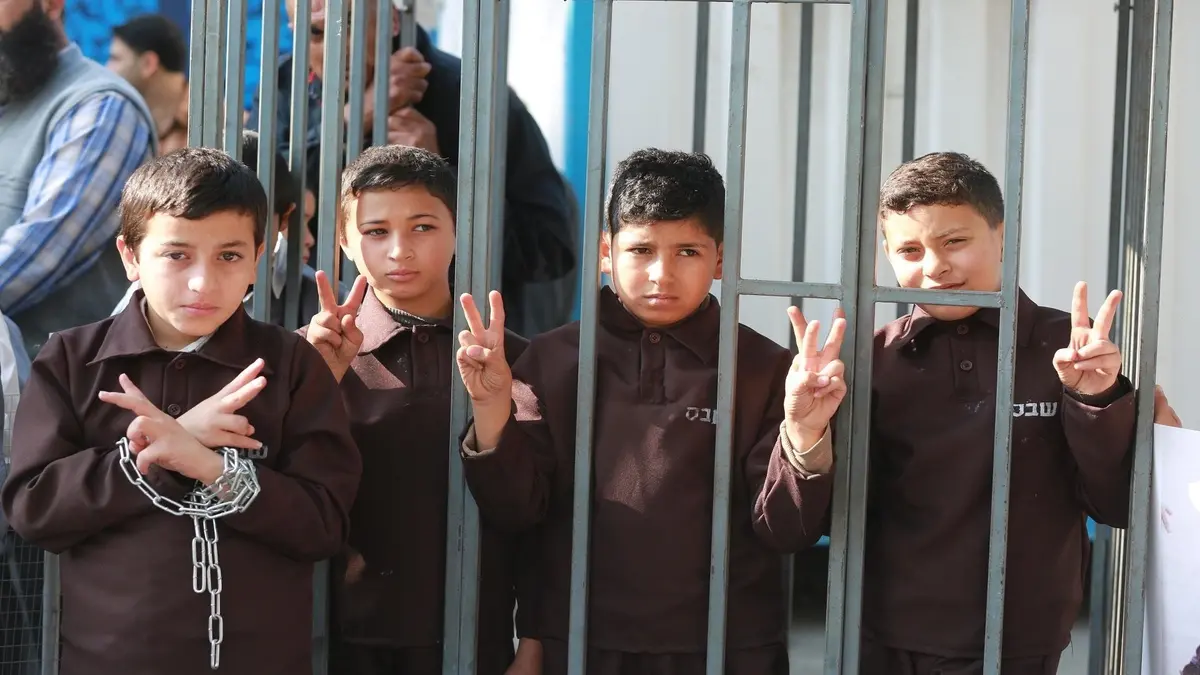
Prisoners Authority: Minor prisoners in Megiddo are prey to the hatred of the jailers

The Commission of Prisoners' Affairs and Liberated Prisoners reported this morning, Sunday, that the young prisoners in Megiddo Prison are prey to the hatred, racism and criminality of the Israeli prison guards, who treat these children in a brutal manner.


The Commission stated that the Megiddo Prison administration exploits the young age of these minors (children) and their weak physical build, and deliberately frightens and terrorizes them by storming their rooms, beating them and cursing them, as the ill-treatment is politicized and is intended to affect their psychological conditions and internal content.


The Authority’s lawyer quoted a minor prisoner who was recently transferred from Megiddo Prison to Damon Prison as saying that the living, health and sanitation conditions of child prisoners in Megiddo Prison are catastrophic, and that there are special repression units permanently present in front of the section where minors are detained, where they practice crimes and are skilled at torturing these children, noting that the total number of minor prisoners in Israeli prisons and detention centers is approximately 280 minors.

PALESTINE

Sun 08 Dec 2024 1:02 pm - Jerusalem Time

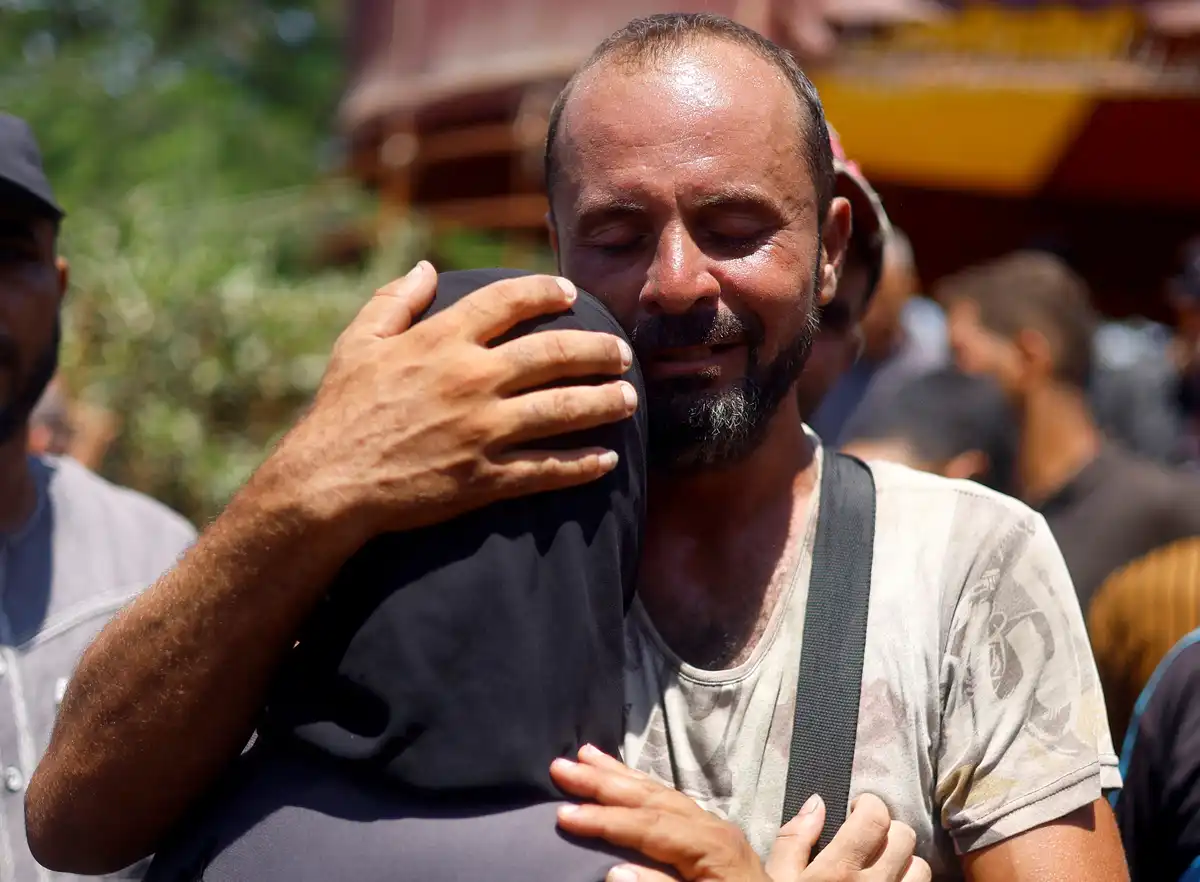
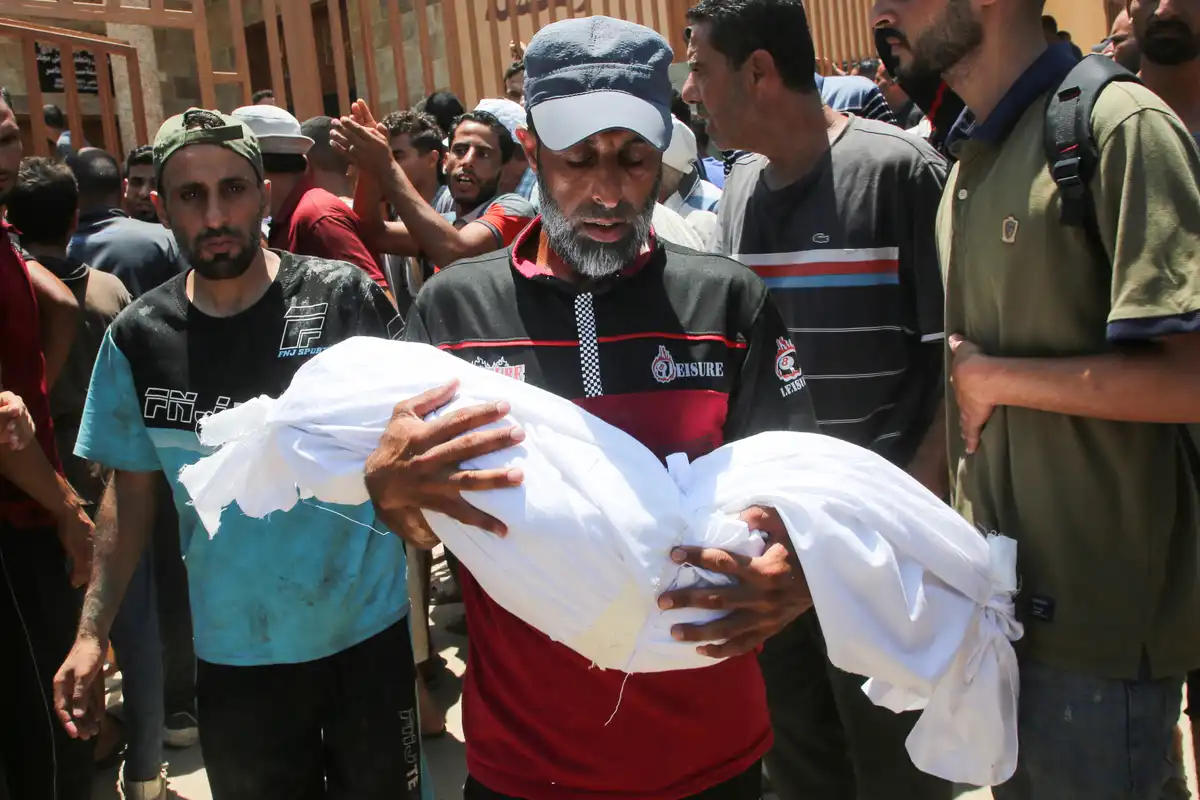
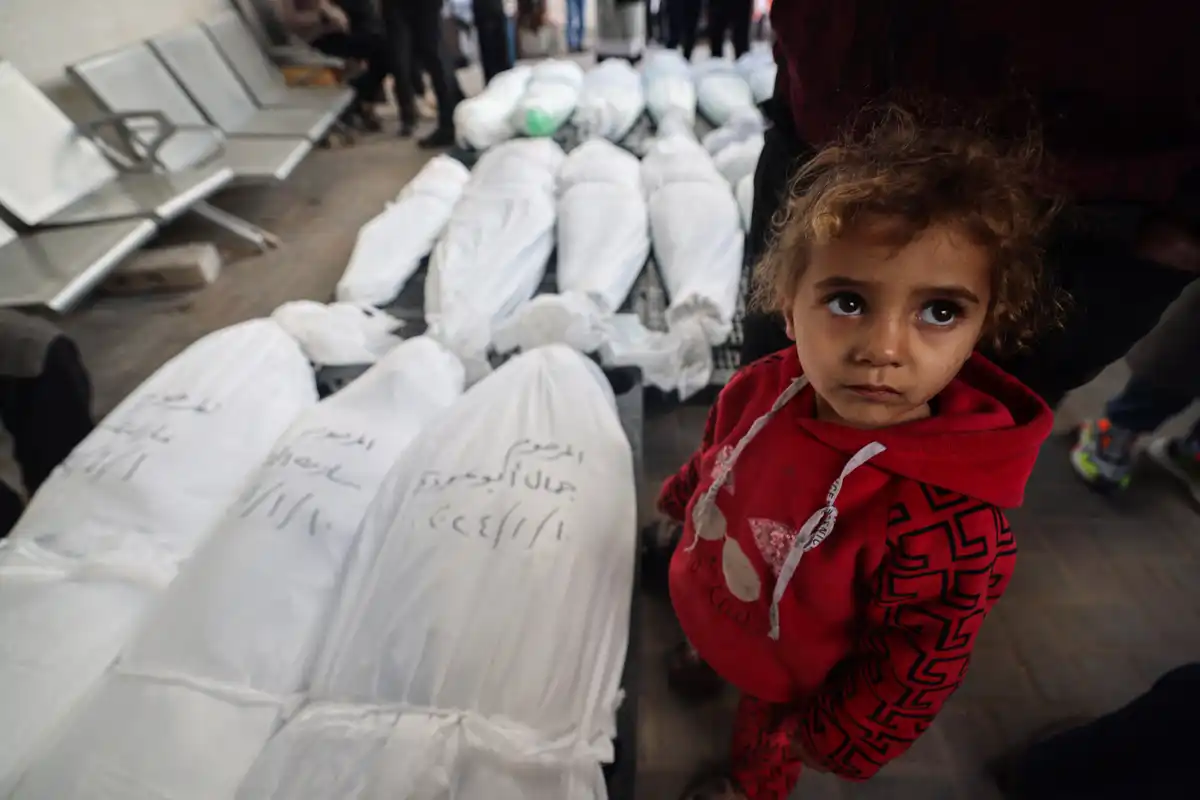
War on Gaza: 44 dead in 24 hours, the death toll from the aggression rises to 44,708

The Israeli occupation committed 4 massacres against families in the Gaza Strip, resulting in 44 dead and 74 injuries arriving at hospitals during the past 24 hours.


The ministry confirmed in a brief statement that there are still a number of victims under the rubble and on the roads, and ambulance and civil defense crews cannot reach them.


It pointed out that the death toll from the Israeli aggression has risen to 44,708 dead and 106,050 injuries since October 7, 2023.


PALESTINE

Sun 08 Dec 2024 12:48 pm - Jerusalem Time

Prisoners Authority: Escalation of hostile and retaliatory policies against Palestinian female detainees in Al-Damon

The Commission of Prisoners' Affairs and Freed Prisoners warned, on Sunday, of the escalation of hostile and retaliatory policies adopted by the administration of Al-Damon prison in dealing with Palestinian female detainees, and the immoral and inhumane treatment followed by the prison guards, who are trying to inflict all forms of physical and psychological harm on them.


The Commission explained, in a statement, that the visits carried out recently by its legal team to Al-Damon prison documented the seriousness of the crime committed by the prison administration, as there is a great focus on psychological torture of female detainees, represented by the constant threat of rape, strip searches, insults, cursing, beatings, starvation, and the continued deprivation of blankets, clothes, cleaning materials, disinfectants, and women's needs, and ignoring their health and medical conditions, and using excessive moodiness in providing medications and treatment.


It pointed out that collective punishment of female detainees is being carried out continuously, including being deprived of showering from time to time, closing the rooms, preventing them from going out to the recreation area, and any discussion or inquiry from any female detainee with the prison administration police could cost the entire prison a raid, abuse, torture, and humiliation.


The Commission called on women's institutions, associations, and local, regional, and international unions to cooperate truly to expose the ongoing violations against female detainees, and to work in an organized and integrated manner to form a pressing female public opinion, which may have real effects in ending the isolation of them and breaking the occupation's policies of taking revenge on Palestinian women.

PALESTINE

Sun 08 Dec 2024 12:16 pm - Jerusalem Time

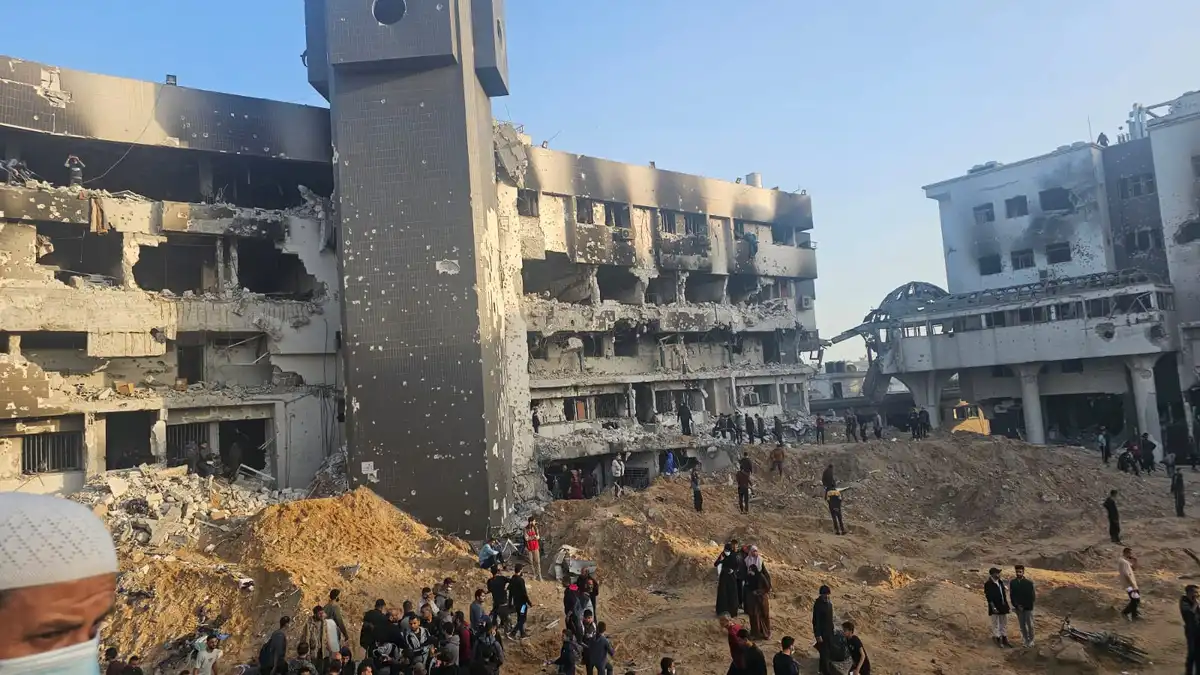
North Gaza: Israel destroys hospitals to complete forced displacement

The Euro-Mediterranean Human Rights Monitor said that Israel is systematically working to force hospitals in the northern Gaza Strip out of service, through direct and repeated military targeting, imposing a stifling siege, and killing, injuring and arresting patients, the wounded and medical staff, as part of its efforts to destroy the last remaining elements of life necessary for survival, while continuing its crime of forced displacement against all Palestinian residents of the northern Gaza Strip.


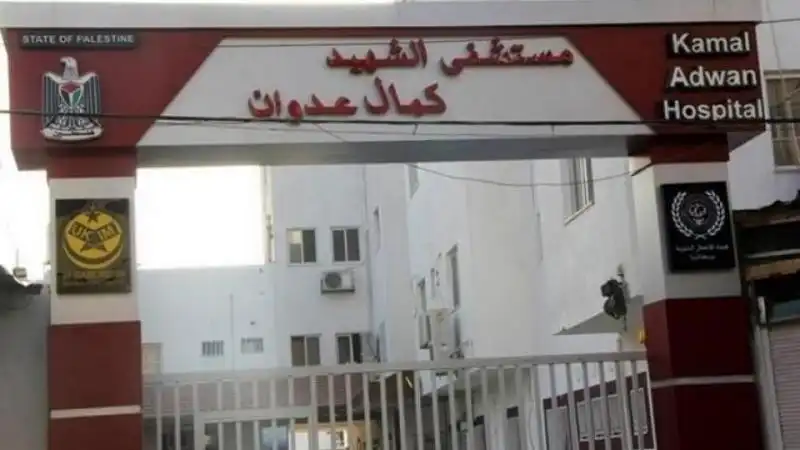
The Euro-Mediterranean Human Rights Monitor reported in a report that the Israeli occupation forces continued their military attacks against civilians in the Beit Lahia project in the northern Gaza Strip, launching violent raids targeting homes and streets before besieging Kamal Adwan Hospital, which is still partially operating, along with two other hospitals in the northern Gaza Strip.


Euro-Mediterranean Human Rights Monitor added that its field team documented the Israeli occupation forces using Palestinian detainees as human shields and sending them under threat to the hospital to inform its administration that all displaced persons and patients’ companions must leave the hospital to the hospital yard and head towards an area where Israeli forces are stationed. Upon their arrival, these forces arrested a number of them and forced the rest to flee towards the Civil Administration checkpoint and from there to Gaza City.


It added that the Israeli army also forced the Indonesian medical delegation volunteering at Kamal Adwan Hospital to leave without the vehicles they had come in.


The Israeli military attack around Kamal Adwan Hospital continued for several hours before withdrawing from the area, revealing that between 30 and 50 people were killed in the streets and houses near the hospital. Witnesses confirmed that the search for dead and wounded around the hospital is still ongoing, raising expectations of an increase in the number of victims in the area.


Kamal Adwan Hospital Director, Dr. Hussam Abu Safiya, reported that the situation inside and around the hospital is catastrophic, and that there are a large number of dead and wounded, including 4 dead medical staff in the hospital, which has no surgeons left.


He explained that the Indonesian medical delegation was the only medical team performing the operations, but it was forced to leave by the army to the checkpoint.


He warned that medical supplies were running out, and that hundreds of victims were in dire need of urgent medical care.


He also pointed out that the Israeli army targeted oxygen generators at night, and currently there are only two inexperienced surgeons available to operate on patients. They were forced to start operations despite their lack of experience, as there were 20 wounded who needed urgent care.


According to Euro-Med documentation, the Israeli attack on Kamal Adwan Hospital came less than 24 hours after Israeli quadcopters dropped bombs on the hospital, killing 16-year-old Mahmoud Abu al-Aish, who was targeted in a wheelchair while on his way to the hospital’s emergency department seeking medical care. The attack also injured 12 Palestinian patients, companions and medical staff.


The hospital was also subjected to more than 10 direct attacks last week, resulting in the injury of more than 22 Palestinians, including a number of medical staff.


Euro-Mediterranean confirmed that the Israeli forces also bombed the Indonesian Hospital in Jabalia, north of the Gaza Strip, targeting water tanks and injuring three patients’ companions. This was preceded by targeting Al-Awda Hospital in Jabalia and bombing its upper floors.


The Euro-Mediterranean Human Rights Monitor stressed that targeting hospitals in northern Gaza, which are partially operational and provide limited services due to the ban on medicines and medical equipment, and are staffed by medical and administrative staff exhausted by the length of service and the large number of incoming patients and injured, amidst a state of starvation for more than two months, highlights Israel's ongoing efforts to put these hospitals out of service completely in order to eliminate the chances of survival for Palestinians there.


It pointed out that the Israeli occupation army continues to forcibly displace the residents of northern Gaza, and yesterday attacked several shelters in Beit Lahia and forced thousands of displaced people to flee towards Gaza City.


It also confirmed that the Israeli occupation army continues its operations of destruction, demolition and bombing of homes over the heads of their residents in the neighborhoods of northern Gaza, in order to kill and displace the remaining residents and completely destroy the governorate so that it is no longer suitable for living, either now or in the future.


Euro-Mediterranean Human Rights Monitor called on the International Committee of the Red Cross and the World Health Organization to take all necessary measures to reach hospitals in northern Gaza, secure medicines, medical supplies, food and medical staff, and assume their responsibilities to ensure the protection of patients, the wounded and medical staff, and provide them with humanitarian aid.

ARAB AND WORLD

Sun 08 Dec 2024 11:55 am - Jerusalem Time

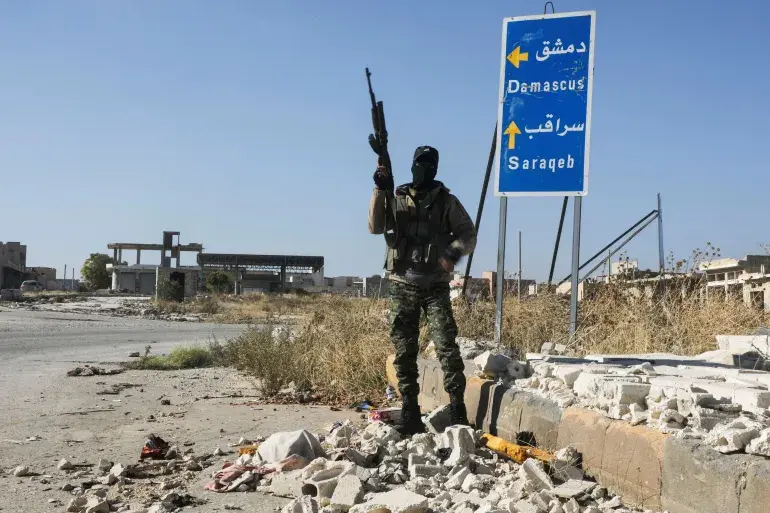
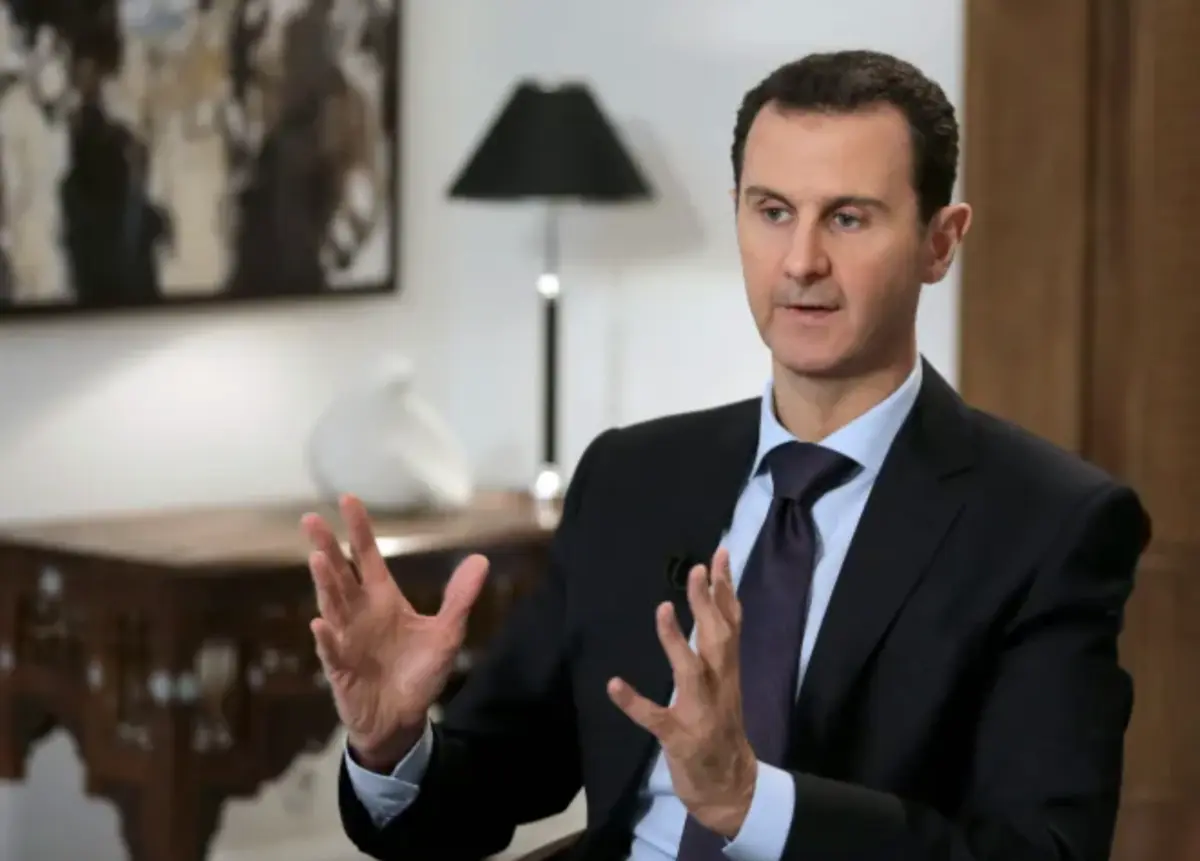
Trump: Assad fled Syria after losing Russian support

US President-elect Donald Trump said on Sunday that Syrian President Bashar al-Assad "fleeed his country" after losing the support of his ally Russia.


"Assad is gone," he said on his social media platform Truth Social, adding, "His protector, Russia, Russia, Russia headed by Vladimir Putin, no longer cares about protecting him."


“There was no reason for Russia to be there in the first place,” Trump added. “They lost all interest in Syria because of Ukraine, where nearly 600,000 Russian troops have been wounded or killed in a war that should never have started and could go on forever.”


Trump stressed that Russia and Iran are now weak, due to Ukraine and the bad economy, according to Trump. Trump also saw the other, Iran, as weak because of Israel and its success in combat.


“Similarly, Zelensky and Ukraine want to make a deal. They have ridiculously lost 400,000 soldiers, and many civilians. There must be an immediate ceasefire and negotiations must begin. Too many lives are being wasted needlessly, too many families are being destroyed. If this continues, it could turn into something much bigger and much worse. I know Vladimir well. This is his time to act. China can help. The world is waiting!”


Hours before the fall of the Assad regime, Trump said the United States should not be involved in the Syrian conflict.


Trump wrote on his Truth Social account: "Syria is a mess, but it is not our friend, and the United States should have nothing to do with it. This is not our conflict. Let things work their way. Don't get involved!"


The White House announced that US President Joe Biden is closely following the "exceptional events" taking place in Syria, after opposition factions announced their control over the capital, Damascus, and President Bashar al-Assad fled.


“President Biden and his team are closely monitoring the extraordinary events in Syria and are in constant contact with our regional partners,” National Security Council spokesman Sean Savitt said in a statement on social media.

OPINIONS

Sun 08 Dec 2024 9:33 am - Jerusalem Time

Division establishes demarcation

op-ed - Al-Quds dot com

op-ed - Al-Quds dot com

Opinion Writer

The map of change in Syria began to appear very quickly, after the opposition forces continued to control major cities. After Aleppo, Hama, Idlib, and Quneitra, Daraa, and Sweida in the south, the ambition of Hay’at Tahrir al-Sham, one of the main arms influencing the opposition’s approach, became to reach Damascus, where most of the Syrian regular army forces are entrenched. However, a large number of officers, soldiers, and their families fled to Iraq after they laid down their weapons, which will help the opposition in a possible rapid control of the capital, and thus the collapse of Bashar al-Assad’s regime after 24 years in power.


The initial signs and features of the collapse appear through the absence of an effective Russian role due to preoccupation with the Ukrainian war, in addition to the exit of Hezbollah and Iran from the Lebanese and Syrian arenas, which establishes new facts led by the process of dividing Syria, in light of the absence of any political horizon at this stage to put an end to this overwhelming chaos, while emphasizing that the United States, despite the statements of its President-elect Trump that the conflict in Syria is an internal affair, is one of the most concerned with preserving its role in Syria, and raising its pace to the point of dominance, and this is what the leader of the Hay'at Tahrir al-Sham indicated when he said that there is no need for the presence of foreign forces in Syria, unless it serves the supreme interests of the country, and the question that arises here is: When was the presence of American forces in Syria for the sake of supreme interests?


The United States and Israel are seeking a complete demarcation plan for the Middle East, and they have always planned for this. After the Israeli war on Lebanon stopped, the spark of the Syrian opposition, which is partially directed by the United States, Israel and Turkey, came to start armed military conflicts, in order to eliminate the Syrian regime, and start a process of division supervised by politicians, to ultimately serve the interests of the new Middle East that targets all the goals of the region, as Israeli media outlets clearly say that the collapse of the Assad regime will create dramatic changes in the Middle East.


It seems that the calculations in the threshing floor are not like the calculations in the field for Israel, because the presence of more than one force in the Syrian conflict forced Israel to move and define its main red lines, foremost of which is not crossing the ceasefire line signed in 1974 by the opposition forces and preventing the arrival of Iranian militias to Syria. Israel threatened that if one or more of them were crossed, it can be estimated that it will act offensively in this arena and not just defensively, according to the Israeli threats.


Following the rapid developments, Israel was forced to send large forces to the occupied Syrian Golan Heights. It seems that it is very concerned about the possibility of opposition forces and revolutionaries penetrating the Golan, as it decided to monitor their movements in order to prevent the Syrian army’s ammunition stockpiles from reaching the opposition, with the aim of preventing them from being used against it in the future. In addition, Iran has threatened to prevent the Syrian regime from being armed, and it seeks to support the Kurds and its allies, and to ensure the stability of Jordan, which Israel claims is a top priority for it.


In light of these goals, it can be said that the Israeli role will not be limited to what it describes as defense, but will go beyond that to attack, as Israel is accustomed to stirring up problems, anxiety and tensions in the region. There is no doubt that Syria today is the target and the biggest victim under the scissors of the Israeli censor, which seeks to divide, supported by the United States and Turkey, in a conspiracy against the Arab identity of Syria, by pushing a destructive project implemented by the opposition forces. If Damascus falls, other Arab and Islamic capitals may fall into Israel’s trap, plans and conspiracies, all for the sake of demarcating a new Middle East that is consistent with the Israeli policy that the United States strongly supports.


ARAB AND WORLD

Sun 08 Dec 2024 9:09 am - Jerusalem Time

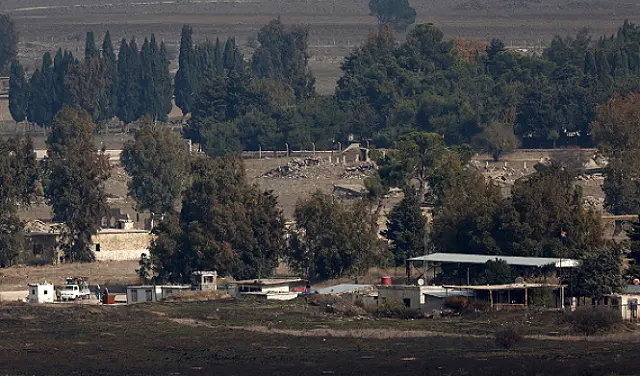
Israeli army carries out operations in buffer zone near Quneitra, allegedly to strengthen border defenses

The Israeli Army Radio reported this morning, Sunday, that the army has raised the readiness of its forces in the occupied Syrian Golan, and that it is following developments in Syria, and that the army and the Northern Front Command will carry out offensive operations in the buffer zone near Quneitra, under the pretext of strengthening the border defenses.


The radio added that following an assessment of the situation in the Northern Command and the Home Front Command in the Israeli army, it was decided to suspend studies in the four Arab towns in the Golan, while continuing the work of kindergartens as usual. It explained that the suspension of school hours does not apply to the settlements in the Golan.


She said the army had set up checkpoints throughout the Golan Heights and would impose travel restrictions based on situational assessments and as necessary.


"In light of the events in Syria and based on an assessment of the situation and the possibility of armed men entering the buffer zone, the army deployed forces in the buffer zone and at several necessary defensive points, in order to ensure the security of the residents of the Golan Heights towns and the citizens of the State of Israel," the statement said.


The military spokesman stressed in the statement that "the Israeli army does not interfere in the events taking place in Syria. The army will continue to act as necessary to maintain the buffer zone and protect the State of Israel and its citizens."


The Israeli army declared all agricultural lands adjacent to the border with Syria a closed military zone, imposing restrictions on farmers' entry to their lands.


This comes at a time when the Chief of Staff of the Israeli Army, Herzi Halevi, conducted an assessment of the situation and approved offensive and defensive plans in the 210th Division, in light of the developments and battles taking place in Syria.


He pointed to the army's high readiness for attack and defence, strengthening forces on the border and continuing to monitor developments.


"The army does not interfere in events inside Syria, but it works to thwart and prevent threats in the region, and is preparing plans to confront various scenarios," Halevy said.


"We need to assess the situation every few hours as events accelerate. Every event here sets a benchmark and future changes. So we are closely monitoring what is happening with all our monitoring capabilities," he continued.


The Israeli army has reinforced its forces and systems on the border, including systems

PALESTINE

Sun 08 Dec 2024 8:56 am - Jerusalem Time

Gaza Health: The occupation has completely destroyed the health system and prevents the disabled from traveling

The Director General of the Ministry of Health in the Gaza Strip, Dr. Mohammed Abu Salmiya, said, “The Israeli occupation has completely destroyed the health system in the Gaza Strip, including hospitals that provide care for people with disabilities in the Strip.”


He added during a conference organized by the Ministry of Health today, Saturday, on the occasion of the International Day of Persons with Disabilities, "The occupation is still preventing the disabled from traveling to complete their treatment abroad."


Abu Salima pointed out that more than 4,000 of the war casualties lost their limbs during the war of extermination on the Gaza Strip, in addition to about 2,000 others who became bedridden due to their severe injuries to the nerves and spinal cord.


He called for an immediate cessation of aggression and the opening of crossings to complete treatment for patients, the wounded and the disabled.


Abu Salmiya noted that about 14,000 injured and sick people are waiting on the list for medical transfers abroad, noting that since the closure of the Rafah crossing, the occupation has only allowed 300 patients to travel.


He also called for the introduction of medical supplies for the disabled, noting that they now lack the most basic supplies such as wheelchairs and crutches.


PALESTINE

Sun 08 Dec 2024 8:51 am - Jerusalem Time

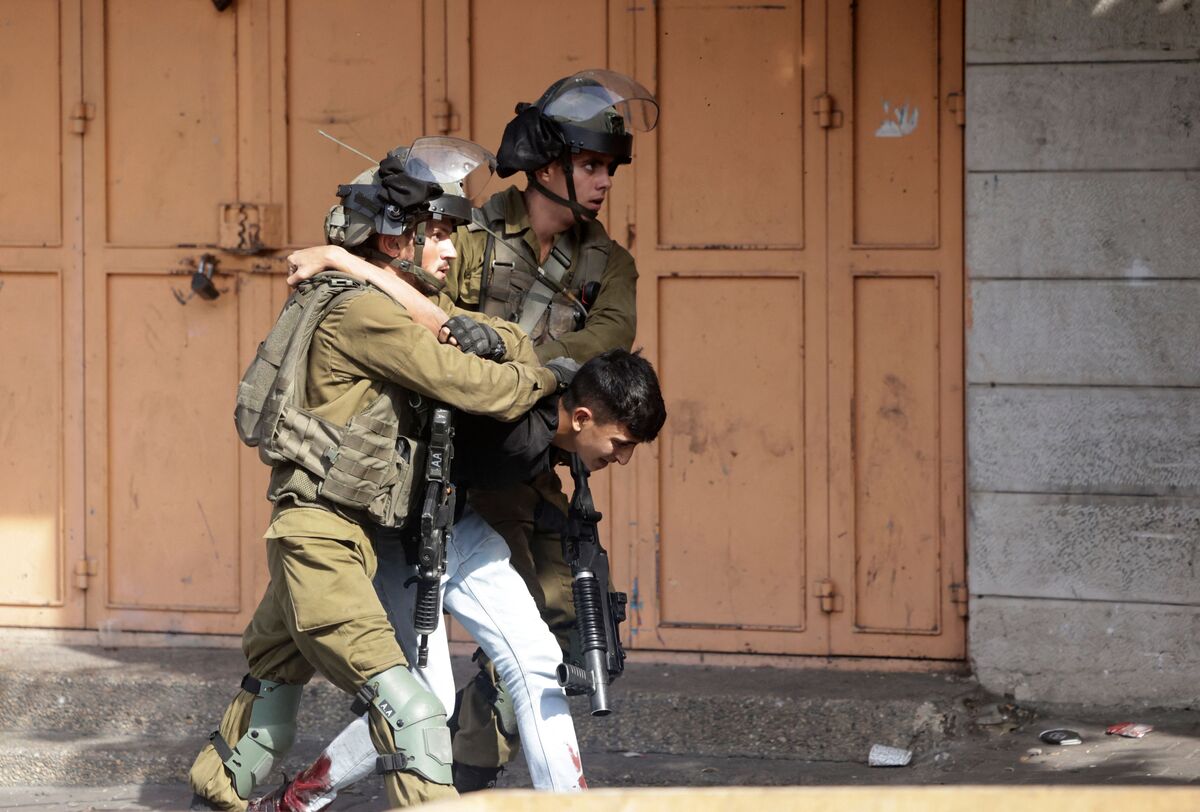
The occupation arrests citizens in the West Bank

This morning, Sunday, the Israeli occupation forces arrested a number of citizens, while settlers burned a tent in the West Bank.


In Tulkarm, the occupation forces arrested the young man Majd Asaad Faqha (20 years old), after raiding his house in the town of Anabta.


In Ramallah, the two young men, Mahdi Al-Jazzar from Al-Nubani Farms, and Mahmoud Fakhri Anqawi from Beit Sira village, were arrested after raiding and searching their parents’ homes.


In another context, settlers burned a tent this morning and assaulted a citizen and his family members in Al-Minya, southeast of Bethlehem.


According to local sources, a group of settlers set fire to a tent containing fodder for raising livestock in the Wadi Al-Abyad area in the Minya desert, belonging to the citizen Ahmed Kamal Al-Tarwa, indicating that this burning comes one day after the burning of a residential tent belonging to the same citizen.


She added that the settlers attacked the citizen Al-Tarwa and his family members, causing panic and fear, and forcing them to leave their land.

PALESTINE

Sun 08 Dec 2024 8:48 am - Jerusalem Time

Dead and wounded in Israeli raids on the Gaza Strip

A number of citizens were killed and injured last night, as a result of the continued Israeli raids on the Gaza Strip.


Medical sources reported that at least two citizens were killed and others were injured after the occupation bombed a tent housing displaced people in the Austrian neighborhood in Khan Yunis, south of the Gaza Strip.


The occupation warplanes also bombed Al-Bureij camp in the middle of the Gaza Strip.


Three citizens were killed and others were injured on Saturday evening, after the occupation aircraft bombed a house near Al-Shawa Square in Al-Tuffah neighborhood, east of Gaza Governorate.


The occupation aircraft also bombed a residential area in the Al-Sahwa area, near Kamal Adwan Hospital, north of the Gaza Strip.


In another context, the director of Kamal Adwan Hospital, Hussam Abu Safiya, said that the hospital was exposed this evening to more than 100 shells, including missiles and drone bombs.


He continued: "The condition on the western side of the hospital building was horrific, with all departments affected - surgery rooms, roofs, courtyards, and windows in the neonatal intensive care units."


Abu Safiya explained that there were three injuries inside the hospital, and the reason for this aggression is still unclear, which is very worrying, noting that water tanks, oxygen generators, and water pumps were destroyed, and fuel tanks were targeted, which led to a fire breaking out in one of them.


He called for an immediate halt to this devastating attack on Kamal Adwan Hospital.


The Israeli occupation forces have continued their aggression on the Gaza Strip, by land, sea and air, since October 7, 2023, which has resulted in the death of 44,664 citizens, the majority of whom are women and children, and the injury of 105,976 others, in an incomplete toll, as thousands of victims are still under the rubble and on the roads, and ambulance and rescue crews cannot reach them.

ARAB AND WORLD

Sun 08 Dec 2024 8:45 am - Jerusalem Time

The accelerating collapse of Syrian forces.. Analysts answer the question: What is happening?

Amir Makhoul: Israel has been working on the idea of dividing Syria for a long time, and Turkey is seeking to achieve major regional ambitions

Nevin Abu Rahmon: What is happening in Syria has a direct impact on liquidating the Palestinian cause and weakening the Arab environment that supports it

Dr. Hassan Marhej: Talking about the disintegration of the Syrian state is unrealistic and the arrival of the Syrian opposition to Damascus cannot happen

Dr. Munther Hawarat: The Syrian government’s ability to defend what remains of its territory and influence has become highly questionable

Dr. Muhammad Khalifa Siddiq: The rapid developments on the ground indicate that the Syrian opposition is advancing at an unexpected pace


The rapid developments in Syria following the attack initiated by the Syrian opposition factions, starting from the city of Aleppo in the far north, reaching Hama, and other cities and towns, open the door to speculation about the future of the Syrian state wide open, amidst frenzied media campaigns by Arab and foreign media outlets seeking to spread a state of terror among the Syrian people, especially those who support the regime of President Bashar al-Assad.


In parallel with what is happening on the ground, there has been an intensive diplomatic movement by international parties supporting the Syrian state, such as Russia, Iraq and Iran, which have taken the initiative to make contacts and hold meetings between themselves and regional parties that are likely to be behind the Syrian opposition in its sudden and sweeping attack, especially Turkey and Qatar, the latest of which was the meeting held in Qatar in the presence of Turkey, Russia and Iran, and the information leaked about an agreement between the three parties so that Turkey would do what it must to stop the military attack until the political dialogue between the legitimate opposition and the Syrian government begins.


The opinions of writers and analysts I met varied between those who believed that the fall of Damascus into the hands of the opposition would never happen, and others who saw the rapid collapse of Syrian army units in Aleppo, Hama and elsewhere as a strong indication of the possible collapse of President Bashar al-Assad’s regime.


The partition of Syria is still far from being achieved


Political analyst Amir Makhoul said that the United States, along with Israel, deals with countries, peoples and organizations based on their interests only, far from any values or principles.


He added: "When the United States wants to practice terrorism, it does so, and when it wants to whitewash the image of terrorist organizations, it does so as well. It also deals with some terrorist organizations when they serve its interests."


Makhoul pointed out that the United States considers itself above all standards, as it believes that it has the ability to determine the rules of the world according to its own vision.


Regarding the division of Syria, Makhoul stressed that the matter is still far from being achieved and is not as easy as expected.


He added: "The division depends on field developments, and it is not possible to predict what will happen on the ground in the end.


The question is: Will the Syrian army continue to defend major cities and population centers, or will it retreat? If it retreats, the partition of Syria will become a reality.”


Makhoul added that Israel has long been working on the idea of dividing Syria and is seeking to establish a "region complementary to the Golan" that extends towards Jabal al-Arab, to be a state or mini-state loyal to it. He also pointed out that Israel aims to separate Lebanon geographically from Syria by creating a buffer strip.


In the same context, Makhoul explained that Türkiye seeks to achieve major regional ambitions, such as controlling the Aleppo region and regional expansion, noting that this leads to changes in the regional balance of power.


Israel is the biggest beneficiary


Makhoul said that what is happening in Syria reflects a broader pattern in the region, where countries such as Libya, Sudan, Iraq, and Afghanistan are exposed to the same scheme.


He stressed that the entire region is now subject to continuous attempts at division, and that Israel is the biggest beneficiary of this reality.


He said: "These plans are not random, but have been prepared over a long period of time, and the mistakes of the Syrian regime in dealing with its people were exploited to achieve these goals."


Makhoul stressed that the situation in Syria could ignite the entire region, placing the responsibility on the shoulders of the Arab countries.


He added: "The official Arab position is the decisive factor. Either the Arabs take a unified position defending the Arab state, or the Arab states will remain vulnerable to the active forces in regional and international alliances."


He stressed that the future of Syria and the region is still open, with no final decision yet, stressing that "Gaza and Palestine are paying the price."


Geopolitical change in the region begins in Syria


For her part, political analyst Nevin Abu Rahmon confirmed that geopolitical change in the region begins in Syria.

She said: "The events in Syria cannot be viewed within the equation of internal affairs," noting that targeting Syria comes within the framework of reorganizing the region.


She added: "This move, which is being led by the Israelis, the Americans, and the Turks at their head, will have major consequences on the shape and features of the region, and consequently on the shape of the Israeli-Palestinian conflict and the status of the resistance."


Abu Rahmon stressed that the Turkish role has become clear in what is happening in northern Syria under the pretext of the "security threat", and this is likely to drag the region into new, endless bloody wars.


Abu Rahmon pointed out that the Justice and Development Party government does not tire of working in coordination with Israel.


She pointed out that the Turkish flag in Aleppo and the boasting about the invasion by pro-AKP writers do not change the fact that Turkey, along with the United States and Israel, is engaged in an effort to dismantle a neighboring country.


The struggle for influence in Syria has reached a decisive stage


Abu Rahmon warned that what is happening in Syria has a direct impact on liquidating the Palestinian cause and weakening the Arab environment that supports it.


She said: There are Israeli and American efforts, and it has become clear that the matter is determining the path of a new Middle East, far from resistance and from dealing with the Palestinian issue.


Regarding the situation on the ground, Abu Rahmon indicated that the struggle for influence in Syria has reached a critical stage, as it appears that the United States has given the green light to armed groups that serve its interests in the region.


“We see attempts to polish the image of Abu Muhammad al-Julani, the leader of Hay’at Tahrir al-Sham, by conducting interviews with him and marketing him internationally,” she said.


Abu Rahmoun concluded by saying: “With the insistence on resolving the battle in Syria, these groups appear to be on their way to reaching the capital.”


Damascus is a red line that cannot be crossed at all


In turn, Dr. Hassan Marhej, an expert in Middle Eastern affairs, confirmed that talk about the disintegration of the Syrian state is unrealistic and does not conform to the general Syrian society, because Syrians lived and were raised in an institutional state, and by nature Syrians love the institutional system.


He said: It is true that there are crises and suffering on the part of the Syrians, but it is also true that these crises are the result of a long war and siege, and therefore talk about the disintegration of the Syrian state is unrealistic, and the arrival of the Syrian opposition to Damascus cannot happen, because Damascus means a political decision, and the political decision in Damascus differs in essence and content from everything that happened in the other provinces, and from Damascus will be the beginning anew.


Marhej pointed out that the developments that began in Aleppo and continued and continued until they reached the outskirts of Homs city have many reasons, but the Syrian leadership, according to informed sources, considers Damascus a red line that cannot be crossed at all, adding: “All the media hype by the armed factions aims to break the morale of Damascus, and this will not happen.”


He pointed out that the Syrian leadership has put in place military plans around Damascus, and there is a decision by the Syrian state's allies to prevent approaching Damascus, and to prevent the opposition from reaching it except within a consensual political decision. He stressed that the Syrian state cannot disintegrate, and the opposition cannot reach Damascus, the capital, and this is a political and sovereign decision.


Damascus within the Russia-Iran axis


Regarding the current alliances and alignments, Marhej said: “Since the beginning of the war on Syria, new alignments have emerged regionally and have carried various titles. It is noted that with the beginning of the war on Syria, Damascus remained within the axis of Russia and Iran, and the majority of regional and international countries were against Damascus and its alliances. Many times, they tried to politically entice Damascus to break its alliance with Russia and Iran, but Damascus’ position on that was clear.”


He continued, saying: “Today, with what Syria is being subjected to, Damascus has been able to attract more forces to it, meaning that when Damascus was fighting American and Turkish-backed terrorism on its land, it was in defense of everyone, but today there are new alignments that have emerged through Arab, Gulf, and even Western solidarity with what it is being subjected to in terms of a terrorist attack supported by Turkey and with a clear American mandate.”


He added: "Damascus has proven the validity of its alliances, and today the nature and essence of the current alignments are becoming clear, and everyone is looking for ways out of the reality that terrorism is trying to impose from Syria to all the countries of the region, and therefore the new alliances and alignments are in Damascus's interest."


Al-Julani's promotion of the Syrian people as a docile lamb


In his explanation of America’s permission for factions on the terrorist lists to occupy lands and conduct interviews with CNN, Dr. Marhej said that this is the norm of American policy in presenting terrorism as a docile lamb, and more importantly, the United States itself and all countries classify al-Julani as a terrorist who runs a terrorist organization, and thus Washington, as a result of its involvement in establishing and supporting terrorist organizations, works in parallel to produce them politically, meaning to show them as politicians who have taken off the cloak of terrorism, and are capable of integrating with civilians.


He pointed out that the fact that al-Julani appeared on an American channel is like the appearance of many terrorists in interviews on American channels, and this is a message, specifically in Syria with the recent developments. They want to market al-Julani as a political man who has moved away from the terrorist al-Qaeda ideology, and they tell the Syrians that reality has changed and they are trying to program the Syrians that al-Julani carries the banner of peace and love, after he used to carry swords and cut off the heads of Syrians.


Marhej described this as clear American and Turkish hypocrisy, from the appearance of al-Jolani in Aleppo to his appearance on an American channel. In both cases, there is a message to say that al-Jolani has changed and there is no harm in leading the next stage in Syria, but this will never happen, because the Syrians will reject al-Jolani and his gang, who are basically functional tools whose validity will expire when a political solution is approved in Syria.


The opposition is advancing at an unprecedented pace.


For his part, Jordanian political analyst Dr. Munther Hawarat confirmed that the Syrian army is witnessing a major and comprehensive collapse at the current stage, and that what is happening on the ground exceeds even the expectations of the most optimistic about the opposition’s progress.


He added: "What we are seeing now is much faster than any previous agreement, whether between Türkiye, America, Russia, or even Iran."


Dialogues explained that the idea of a comprehensive collapse dominates the current situation, which mixes up the political and military cards in Syria.


He pointed out that the Syrian government's ability to defend what remains of its territory and influence has become highly questionable, in light of the rapid collapse of the Syrian forces.


Dialogues believes that the opposition factions today are stronger than ever, as they possess drones, mechanized armies, and rapid warfare tactics. In contrast, the Syrian army and its allies are facing a state of exhaustion and disintegration that hinders their ability to stand up effectively as they did in 2016.


He added: "Talking about the 'useful Syria' scenario has become more difficult," noting that the opposition may not be satisfied with controlling the outskirts, but may head towards Homs and Damascus.


America and post-Assad scenarios


Dialogues indicated that the American position indicates a growing conviction that the Syrian regime is heading towards collapse, which prompted Washington to open channels of communication with the opposition.


He added: "There are reports that Arab countries, even those that were seeking to normalise relations with the regime, have begun communicating with Syrian opposition factions."


He explained that America may have agreed to move the Syrian file within limits that guarantee the survival of the regime, but its plan did not seem to succeed, which prompted it to think about post-Assad scenarios.


He continued: "The signs of planning began to appear in statements by American officials, including the meeting of the leader of Hay'at Tahrir al-Sham, Abu Muhammad al-Julani, with CNN, where he spoke about preparing for the post-Assad era."


“There are negotiations taking place between the armed factions and the Supreme Alawite Council, which is supposed to determine the behavior of the Alawite sect,” Hawarat added. “These negotiations aim to neutralize areas such as Latakia, Jableh, and Qardaha from the conflict, by providing guarantees to their residents that they are part of Syria and not merely affiliated with the regime, which could accelerate the political transition in the country.”


Dialogues pointed to reports that America may seek to re-present the leader of Hay’at Tahrir al-Sham, Abu Muhammad al-Julani, in a new image that paves the way for a radical change in its position towards him, especially if the opposition succeeds in achieving gains on the ground.


Successive collapses may pave the way for reaching Damascus


In turn, Dr. Mohamed Khalifa Siddiq, a professor at the International University of Africa in Khartoum, said that the rapid developments on the ground indicate that the Syrian opposition is advancing at an unexpected pace, as it has taken control of several cities without any significant resistance, in an advance that may reach Damascus.


Khalifa pointed out that the control of the border with Jordan and the joining of soldiers from the regime forces in Daraa to the opposition, and even their return to their homes, are all indications of the decline of the regime’s power.


He explained that these successive collapses may pave the way for the opposition to reach Damascus, adding: "Even the opposition itself did not expect this rapid progress."


He also pointed out that Russia's call for its citizens to leave Syria reflects a change in Moscow's position, which may indicate its unwillingness to intervene in favor of the regime at this critical stage.


He added: "Russia may take an initiative that leads to President Bashar al-Assad stepping down or leaving the country to an exile that he accepts, and this may be followed by the formation of a joint military committee between the regime and the opposition to manage the transitional phase."


Regarding the American position, Khalifa said: “Washington seems surprised by what is happening on the ground and is monitoring the situation to see which direction events will take.”


He confirmed that a senior American official told Reuters that the coming hours may witness the collapse of Assad's rule.


Khalifa pointed out that the opposition leadership has begun to take positive steps towards citizens aimed at gaining the support of Syrian public opinion, including its pledge to release all detainees in Hama Central Prison and return them to their families.


He added: "This step carries indications of the opposition's intention to improve its image before the Syrians, and may lead to a dramatic shift in public opinion in its favour."

PALESTINE

Sun 08 Dec 2024 8:39 am - Jerusalem Time

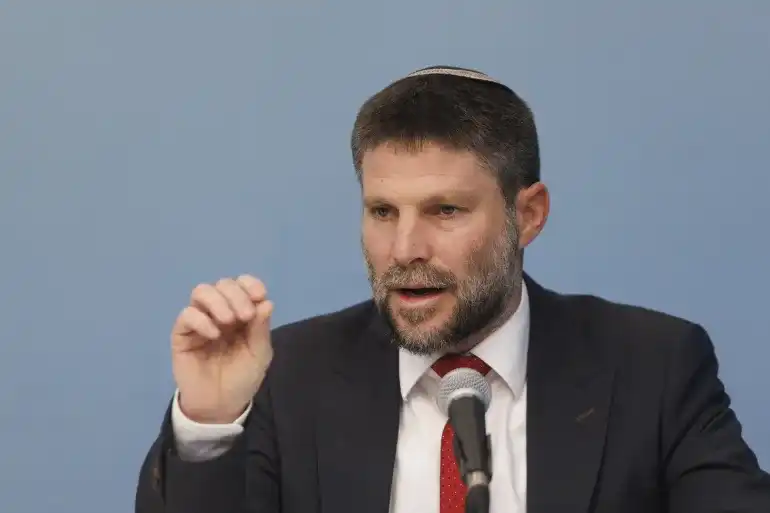
Smotrich's Declaration: Annexation Before Sovereignty

Abdullah Abu Rahma: Smotrich's announcement is not for new confiscation, but rather a celebration of the confiscation achievements that have taken place since last February to create geographical continuity between the settlements

Imad Moussa: Israel is pushing towards ending any outcomes of the Oslo Accords by depriving the Palestinians of the possibility of establishing a geographically or politically connected state

Yasser Manna: Smotrich's announcement is not random or spur of the moment, but rather part of plans prepared by Israeli research centers to strengthen the government's settlement orientation

Nizar Nazzal: The Israeli plan aims to impose a new reality that makes it impossible to implement the two-state solution or establish an independent Palestinian political entity

Abdul Hadi Hantash: Smotrich's announcement comes within policies aimed at confining Palestinians to isolated communities in the midst of settlement blocs and preventing the establishment of a Palestinian state

Adnan Al-Sabah: The international silence towards the occupation’s practices and crimes reflects an implicit complicity that allows Israel to impose new facts on the ground


The recent announcement by Israeli Finance Minister Bezalel Smotrich to confiscate 24,000 dunams of Palestinian land, followed by his announcement to abolish the “Civil Administration” of the occupation army, was nothing more than a link in the expansionist settlement policies in the West Bank pursued by the current Israeli government led by the extreme right, which aim to accelerate the imposition of Israeli sovereignty and undermine any chance of establishing a Palestinian state.


In separate interviews with “Y,” writers, political analysts, specialists, experts, and officials explain that Smotrich’s statements and announcement reveal intensive efforts to transform the confiscated lands into interconnected settlement areas, which leads to the isolation of Palestinian villages and their transformation into disconnected “cantons.”


They stress that these measures are not a recent development, but rather the culmination of decades-long settlement policies aimed at tightening Israeli control over Palestinian lands and liquidating the Palestinian cause.


24,144 dunums confiscated since February 2024


Abdullah Abu Rahma, Director of the Popular Action Department at the Wall and Settlement Resistance Commission, explains that what Israeli Finance Minister Bezalel Smotrich announced about the confiscation of 24,000 dunams of West Bank land is not new, but rather a celebration of the confiscation achievements that have taken place since the beginning of this year.


According to Abu Rahma, since February 2024, six separate announcements have been issued about the seizure of these lands, bringing the total to 24,144 dunams.


Abu Rahma points out that these lands, which Smotrich announced the crowning of control over, extend over areas southeast of Jerusalem, the Jordan Valley, Bethlehem, southern Nablus, and western Ramallah, and are among the largest confiscation operations witnessed by the Palestinians in three decades.


Abu Rahma asserts that the declarations of “state lands” represent the final stage of confiscation, as they are the closest step to transforming lands into settlement expansion areas, such that what is confiscated is given to the benefit of settlement councils, to be later transformed into structural plans, which is a preliminary step for building new settlements or expanding existing settlements.


According to Abu Rahma, these operations aim to create geographical continuity between the settlements, which isolates the Palestinian villages and prevents their geographical continuity, so that they become like “cantons” surrounded by settlements and settlement road networks.


Abu Rahma points out that Smotrich, who founded the settlement organization Regavim, has worked for years to obstruct Palestinian expansion and encourage settlement. The organization monitored buildings in Bedouin communities and reported them to the Civil Administration of the occupation army, which led to their demolition. Today, as Minister of Finance and one of the people directly responsible for the Civil Administration, Smotrich is strengthening his plans by approving extensive settlement projects.

According to Abu Rahma, this year, the number of approved settlement master plans exceeded 250 plans, and the number of proposed settlement units exceeded 20,000 units.


Abu Rahma confirms that this settlement expansion comes within a cumulative policy that aims to control Palestinian lands, especially Bedouin communities, and achieve continuous settlement continuity from the Jordan Valley to the southern West Bank.


Abu Rahma explains that the most prominent manifestations of this policy are the displacement of Bedouin communities and the evacuation of small Palestinian villages, especially those close to settlements, as Israel seeks to empty these areas of Palestinian residents to enable settlement expansion.


It indicates a clear escalation in settlement practices after October 7, 2023, as we witness an increase in attacks carried out by settlers supported by groups affiliated with National Security Minister Itamar Ben-Gvir, which have been armed to attack Palestinians. The aim of these attacks is to pressure the Palestinians to force them to leave their lands, a policy that falls within the plan of forced displacement.


Abu Rahma stresses that the continuation of these practices without international pressure will lead to a worsening of the situation, especially with an Israeli government that considers further land confiscation and displacement as strategic goals, even though they contradict international laws and constitute war crimes.


Abu Rahma explains that the Israeli occupation government's only goal is to displace Palestinians in the areas extending from the northern Jordan Valley and the eastern slopes of the West Bank mountains and the central Jordan Valley all the way to Masafer Yatta and Adh Dhahiriya in the south, and to create a continuous settlement continuity at the expense of the Palestinian population.


Abu Rahma believes that the Palestinians face difficult challenges in the coming period, as daily practices of house demolitions, land confiscation, and settler attacks aim to undermine the steadfastness of the Palestinians and force them to leave.


Abu Rahma stresses that despite these pressures, the Palestinian people are still clinging to their land, but this requires an effective Palestinian strategy to confront these challenges, in parallel with working to find international action to stop Israeli crimes.


Israel exploits international focus on Gaza, Syria to accelerate West Bank policies


Writer and political analyst Imad Musa points out that the dramatic transformations witnessed in Gaza in light of the ongoing Israeli aggression have turned the Strip into ghost towns, amid systematic genocide, and Israel is exploiting this tragic scene to create a state of international distraction from its crimes, by drawing attention to other regional files, such as what is happening in Syria, where armed organizations have contributed to the destruction of the country, and Israel and its allies have tightened the noose on Iran through Iraq.


In this context, Musa explains that the Israeli right-wing government is exploiting the international focus on Gaza and Syria to accelerate its expansionist policies in the West Bank.


Musa points out that this right-wing Israeli government may resort to carrying out ethnic cleansing operations in various areas, including land confiscation, forced displacement of residents, and even “small genocides” that force the remaining Palestinians to emigrate outside the West Bank.


Musa asserts that these practices come within a broader plan to liquidate the Palestinian cause, considering that the current stage is witnessing successive steps that will fire the "mercy bullet" at the Oslo Accords.


Musa attributes this to Israel’s move towards imposing a new reality based on dismantling the Palestinians’ connection to their lands and transferring the administration of their affairs to cities isolated from each other, which establishes a policy of dismemberment and separate administrations.


Mousa believes that Israel is pushing towards ending any outcomes of the Oslo Accords, by stripping the Palestinians of the possibility of establishing a geographically or politically connected state, and imposing a new reality in which Palestinian cities are managed as separate entities, under strict control, so that they do not pose any threat to the Zionist project.


Musa points out that there is a dangerous scenario in which the Palestinians submit credentials to administer these cities as a temporary solution, before this option is imposed by force, whether through genocide or forced displacement, which puts the Palestinians before difficult choices, as accepting this scenario is considered surrender to the will of the occupation and a real liquidation of the Palestinian cause.


Musa stresses that the current stage requires a comprehensive Palestinian mobilization to confront the Israeli policies that aim to completely liquidate the Palestinian cause, which confirms the importance of building a unified national strategy that enhances the steadfastness of the Palestinians in Gaza and the West Bank, and rejects the imposed solutions that perpetuate the occupation and destroy national rights.


Strengthening the settlement project of the occupation government


The writer specializing in Israeli affairs, Yasser Manna, confirms that the announcement by Israeli Finance Minister Bezalel Smotrich to confiscate 24,000 dunams of West Bank land and to abolish the Civil Administration of the occupation army is an escalatory step that reflects the Israeli government’s orientations towards strengthening its settlement project and expanding in the Palestinian territories.


Manaa explains that this announcement comes within a series of systematic steps aimed at consolidating Israeli control over the West Bank, far from any official announcement of annexation, within the framework of settlement policies that weaken the chances of achieving a future political settlement and create a new reality that threatens the Palestinian existence.


He points out that the confiscation of lands in the West Bank is part of an integrated plan aimed at strengthening the settlement project, and the main goal of these policies is to reduce the areas available to Palestinians, which leads to their forced displacement and the imposition of a settlement fait accompli.


According to Manna, Smotrich's announcement is an additional step towards the actual annexation of Palestinian lands, without the need for official political decisions to announce this to the international community.


Manaa stresses that these policies show an Israeli determination to undermine the possibility of establishing a geographically connected Palestinian entity, which is a flagrant violation of international law and international legitimacy resolutions.


Manna points out that the confiscation of lands aims to destroy the social and economic fabric of the Palestinians, which weakens their ability to withstand Israeli plans.


According to Manna, these confiscations perpetuate the apartheid system that turns Palestinians into isolated enclaves surrounded by sprawling settlements. At the same time, these policies inflame Palestinian anger, leading to a field escalation that could develop into unprecedented levels of confrontation.


In addition, Manna points out that these steps reinforce the economic and social isolation of the Palestinians, as the confiscation of lands leads to the destruction of the Palestinian social structure and weakens the ability of the Palestinians to strengthen their presence on the land.


Manna stresses the need to adopt a comprehensive and effective strategy to confront these Israeli policies, such that this strategy begins by focusing Palestinian efforts on developing and cultivating the lands threatened with confiscation, in a way that demonstrates Palestinian adherence to the land.


Manaa stresses the importance of intensifying diplomatic efforts through international institutions, such as the United Nations and the International Criminal Court, to expose Israeli violations as documented war crimes, including forced displacement and illegal confiscations.


Manaa points out the importance of strengthening Palestinian national unity and ending the internal division to unify ranks in the face of Israeli plans that target all Palestinians without exception.


Manna recommends supporting Palestinians in areas threatened with land confiscation, through small economic and agricultural projects that contribute to their stability on their land.


Manna explains that what is happening and Smotrich’s announcement is not random or a product of the moment, but rather part of plans prepared by Israeli settlement research centers, such as the Shiloh Forum, which works to develop studies and recommendations aimed at expanding the scope of Israeli control in line with the Zionist vision of emptying the land of its indigenous inhabitants.


Mana' points out that talk of abolishing the Civil Administration has more symbolic dimensions than a substantive process. The Civil Administration is essentially an alternative to Israeli military rule, and it is not expected to be completely abolished. Instead, some powers will be transferred to the relevant Israeli ministries, such as the Ministry of Education, which has become responsible for managing education in the settlements and some areas of the West Bank.


Mana explains that Smotrich, despite his role as a minister, is merely a facade for a complex security system subject to Israeli and international political and security considerations, as any substantive steps related to the West Bank cannot be implemented without the approval of the United States, which is a key partner in supporting Israel.


First step in a comprehensive plan to annex large parts of the West Bank


Nizar Nazzal, a researcher specializing in Israeli affairs and conflict issues, believes that the announcement by Israeli Finance Minister Bezalel Smotrich about the confiscation of 24,000 dunams in the West Bank constitutes the first step in a comprehensive plan to annex large parts of the West Bank and impose Israeli sovereignty over them.


This step, according to Nazzal, is not random or individual, but rather comes within the context of an integrated plan being implemented in coordination with the United States.


Nazzal explains that the Israeli plan extends to ending the role of the civil administration of the occupation army in the West Bank, and transferring the responsibility of managing these areas to the Israeli ministries, which reflects a gradual transition towards imposing full sovereignty over the West Bank.


Nazzal points out that this confiscation is only the beginning, as it is expected to be followed by other steps aimed at expanding the settlements and significantly increasing the number of settlers in the West Bank, which will strengthen Israeli dominance over the land and weaken the Palestinian presence there.


Nizar highlights the strategic risks of this move, as Israel seeks to dismember the West Bank by establishing separate Palestinian “cantons,” reducing the space available to Palestinians, and thus destroying the possibility of establishing an independent Palestinian state in the future.


Nazzal believes that these policies aim to reduce the role of the Palestinian Authority in managing the affairs of the West Bank, which would deprive the Palestinians of any unified political address that represents them on the ground.


Nazzal stresses that the Israeli plan aims to impose a new reality that makes it impossible to implement the two-state solution or establish an independent Palestinian political entity.


He points out that this reality perpetuates the occupation's dominance and turns the Palestinians into dispersed groups within isolated areas, while destroying the foundations of the Palestinian economy and pushing the Palestinians into poverty and despair of reality and trying to pressure them to displace them.


Nazzal believes that confronting these Israeli policies requires a comprehensive Palestinian strategy based on several axes.


The most prominent of these steps: activating Security Council Resolution (2334), which calls on Israel to halt all settlement activities and prevents changing the demographic reality in the West Bank and Gaza Strip.


Nazzal points to an important step, which is to start a broad diplomatic movement that includes intensive Palestinian international movement to address the international community, including the United Nations and the International Court of Justice and the International Criminal Court, with the aim of shedding light on Israeli violations and holding the occupation accountable.


Nazzal confirms that there is an important step towards confrontation, which is to put the Palestinian internal house in order through the importance of achieving Palestinian national unity as a basic condition for confronting the dangers, and forming a unified strategy under the umbrella of the Palestine Liberation Organization.


Nazzal stresses the importance of strengthening popular and international mobilization to confront the occupation’s measures by working with international allies to form a global public opinion against Israeli policies, especially before the United States and the current US administration.


Nazzal believes that confronting these Israeli policies requires rebuilding the Palestinian national project on strong and cohesive foundations.


Nazzal believes that national unity is not just an option, but an urgent necessity to confront the increasing challenges and ensure the continuation of the Palestinian struggle to preserve what remains of its rights and lands in light of the Israeli plans that aim to completely erase the Palestinian presence.


Expanding settlements and imposing new facts in favor of the annexation project


Abdul Hadi Hantash, a specialist in land and settlement affairs, warns of the danger of Smotrich’s announcement regarding the confiscation of 24,000 dunams of West Bank land, as part of an integrated plan aimed at expanding Israeli settlements and imposing new facts on the ground in favor of the Israeli annexation project.


Hantash explains that the Israeli occupation authorities seized vast areas of Palestinian land over the past years, prevented their owners from entering them, and then declared them “state property.”


Hantash points out that the Israeli occupation authorities have prepared structural plans for all settlements in the West Bank, which include large areas of these lands as a settlement reserve with the aim of enhancing settlement expansion and building thousands of housing units in them. This comes within a comprehensive plan to transform small settlement outposts into large settlements, and create geographical continuity between them, what the occupation calls the “corridor,” which prevents Palestinians from accessing their lands.


Hantash stresses that the announcement of the confiscation of lands is only the first step to expanding settlements, building new settlements, and bringing more settlers from within the areas occupied in 1948 to the West Bank.


Hantash points out that this expansion is accompanied by the construction of a network of bypass roads that connect the settlements to each other, which leads to the dismemberment of Palestinian cities and villages and the transformation of the West Bank into isolated "cantons."


Hantash points out that Israel seeks to Judaize as much of the West Bank as possible, as part of old plans aimed at imposing Israeli law on it.


Hantash points out that the occupation authorities divided the West Bank into three main regions starting from the city of Jerusalem, which include: northern Jerusalem, which includes the Jordan Valley and the northern West Bank, the central region, the city of Jerusalem and its surroundings, and the southern region extending to the southern West Bank. These divisions are being implemented in parallel with the establishment of a network of bypass roads that reinforce the isolation of Palestinian areas from each other.


Hantash explains that Smotrich's announcement comes within policies aimed at preventing the establishment of an independent Palestinian state, as the Palestinian territories will become nothing more than small isolated communities in the midst of large settlement blocs.


Hantash warns that declaring the complete annexation of the West Bank will lead to the obliteration of the Palestinian national identity, the complete abolition of the Palestinian Authority, and the imposition of Israeli sovereignty over the West Bank as if it were part of the occupying state.


Hantash stresses that Israeli statements about annexing the West Bank may sometimes seem contradictory, but they reflect an Israeli political consensus on the need for complete control over the Palestinian territories.


He points out that Israel may differ in its means, but it is united in its strategic goal of annexation and displacement of the Palestinians.


Hantash stresses that the Israeli settlements are built according to a circular plan to besiege the Palestinians, which deepens the suffering of the citizens and limits their movement, stressing that these practices aim to impose a fait accompli that is difficult to change in the future.


Hantash stresses that responding to the occupation’s practices with condemnation and denunciation is useless, but confronting these Israeli policies requires the Palestinians to have a serious national strategy and practical steps on the ground.


"The Palestinian Authority and Palestinian society must rise to the challenge, because the occupation is determined to move forward with its plans," Hantash said.


Despite these risks, Hantash stresses that the Palestinians continue to stand firm in the face of the occupation, stressing the importance of strengthening national unity to confront these policies that threaten their rights and future on their land.


A new episode in the series of confiscations that have been ongoing for decades


Writer and political analyst Adnan Al-Sabah believes that Smotrich’s announcement of the confiscation of 24,000 dunams of West Bank land is nothing but a new episode in the series of Israeli confiscations that have been ongoing for decades.


He explains that this confiscation comes as a continuation of a long-term policy that has targeted millions of dunams of Palestinian land over decades, on which settlements have been built to devour Palestinian lands.


Al-Sabah likens what is happening now to the third occupation of Palestinian land, after the 1948 Nakba and the 1967 setback, where the Palestinians lost millions of dunams to settlements.


Al-Sabah points out that the number of settlers in the West Bank has doubled to hundreds of thousands, which makes talk of confiscating 24,000 dunams now ignoring a larger picture of a policy aimed at permanently eliminating the Palestinians’ dream of establishing their independent state.


Al-Sabah stresses that the international silence regarding the occupation’s practices, including land confiscation and settlement construction, reflects an implicit complicity that allows Israel to impose new facts on the ground.


Al-Sabah warns that the repercussions of this silence will be dire for the Palestinians in the coming period, as these policies threaten to dispel the Palestinians’ dreams of freedom, independence, and the establishment of their state, and turn them into illusions that fade away in the face of the realities of the occupation.


He believes that the biggest challenge lies not only in confronting Smotrich's recent announcement, but in confronting the internal Palestinian reality, asking: "Where is our strategy, our programs, and our unity?"


Al-Sabah stresses that the continuation of the Palestinian division and the absence of a clear vision to confront Israeli policies will lead to the loss of the homeland and the cause.


It calls for adopting a comprehensive strategy that strengthens Palestinian national unity, and stresses the need to take bold steps to boycott the occupation completely, whether economically or politically.


Al-Sabah stressed that boycotting Israel in all possible forms is a national duty, not an option, stressing that strengthening national and international efforts to combat the occupation, through pressuring the international community and taking actual measures on the ground, is the only way to try to preserve what remains of the Palestinians’ rights and land.


PALESTINE

Sun 08 Dec 2024 8:32 am - Jerusalem Time

If you don't change, you will chenge!

In private life, as in public administration, and in sports fields, as in the arenas of politics, if you do not change your plans and policies, your methods of work and your management styles, then you will change, whether due to internal pressure factors or the accumulation of external erosion factors, and you may find yourself struggling with the symptoms of a “popular stroke.”


During the years of what was called the “Arab Spring,” we lived through breathtaking moments; it began with chants of freedom before multinational four-wheel drive vehicles and transcontinental ideologies pounced on it, leaping over the national wills of peoples demanding liberation from tyranny, to find themselves as if they were seeking refuge from the frying pan into the fire.


It is true that there are external and internal forces that have supranational agendas and ambitions to overthrow the nation-state and undermine its security and stability, and this is their known role. However, all these accusations should not obscure the vision of the regimes’ own share of responsibility for the situation reaching the point of suffocation, through policies that provide pretexts for invaders... It was said in the past: tyrants bring invaders.


Stop the genocide now..!

OPINIONS

Sun 08 Dec 2024 7:25 am - Jerusalem Time

Gershon Baskin: Netanyahu is waging a war of revenge

Translation for "Al-Quds" dot com

Translation for "Al-Quds" dot com

Opinion Writer

Khalil Al-Hayya is running the negotiations, Netanyahu is waging a war of revenge, Barghouthi is one of the names being proposed, and everyone should advise Palestinian President Mahmoud Abbas to assign Al-Qudwa to lead a technocrat government.*


*Media figure Khaled Joudeh conducted an interview with Gershon, who played the role of mediator in the deal that Hamas called Wafa Al-Ahrar, where prisoner Givad Shalit was exchanged for a thousand Palestinian prisoners, and Hamas leader Yahya Sinwar, the leader of the October 7 attack. An important interview that exposes the viewer to the secrets of what is happening, and what is hidden is greater.*


1. Mr. Gershon, since you are following the file of negotiations to release prisoners from both sides, Israel and Hamas, how and where have the negotiations reached?


Gershon - The negotiations have been renewed, but it is difficult to imagine that there will be real progress because Hamas is still demanding an end to the war and the withdrawal of Israeli forces from Gaza, and Netanyahu is not prepared to end the war or withdraw from Gaza, and he still believes in the idea of complete victory.


Question


2. Why didn't we see any real progress in the negotiations and why in the first months of the war there were simple exchanges and temporary ceasefires and a year after the last operation during this crazy war it stopped. What are the variables from your point of view?


Gershon - The first ceasefire and prisoner exchange that took place in November 2023 was like "low hanging fruit." Hamas was not prepared to take care of a large group of women and children hostages. I think they did not plan to kidnap women and children and when that happened they were ready to make a deal to exchange them. There were only 39 female prisoners in Israel at the time and 190 teenage prisoners. None of them were from Gaza, and none of them killed Israelis - so it was easy to make a deal.


Question


3. In your opinion, is Hamas the reason for the delay in the deal? The Palestinian street displaced in tents ⛺️ and the world's followers are asking?


Gershon - The main reason for not reaching an agreement is Netanyahu's refusal to end the war. The second reason is that Hamas wants to release all Palestinian prisoners serving life sentences for killing Israelis, and Israel does not want to release these prisoners. Since before October 7, there were 559 Palestinian prisoners serving life sentences.


Question


4. If Netanyahu is the one who obstructed the deal and the prisoners held by Hamas are being killed by random artillery rockets and Israeli aircraft, why is Netanyahu not being tried inside Israel and his defense minister on charges of killing prisoners, in light of the consensus of the leaders of the war team, such as Gantz and Galant, on this specific matter?


Gershon - Netanyahu and Galant are not being tried or investigated in Israel because Netanyahu refuses to take responsibility for anything and refuses to establish a government investigation committee headed by a Supreme Court judge who has the right to investigate and sentence anyone. Netanyahu enjoys a large majority in the Knesset and cannot be forced to do anything he does not want to do.


Question


5. Mr. Gershon was one of those who contributed to the conclusion of the Givad Shalit deal, through which Israel released a thousand prisoners in exchange for one soldier. In your opinion, what is the ceiling of the number that Israel is now willing to release in comparison to the number of soldiers, civilians and foreigners held by Hamas? How is the exchange process carried out mathematically and in terms of the type of prisoners?


Gershon - I do not have an answer to the question about the number of Palestinian prisoners who should be released in the deal to free the prisoners. It should be the number agreed upon by the two parties. I understand that there are agreements regarding the categories of hostages and prisoners - women, children, the elderly and soldiers - so that the soldiers get the largest number of prisoners and the highest level of "quality" of prisoners.


Question


6. Are there names of old prisoners held by Israel that could be released in this deal, such as Marwan Barghouti and Ahmed Saadat? And frankly, was Marwan Barghouti mentioned by the Hamas negotiating delegation?


Gershon - My understanding is that the first names on Hamas's list are the big names - the most famous and the prisoners who killed the largest number of Israelis - including Marwan Barghouti, Abdullah Barghouti, Abbas al-Sayed, Ahmed Saadat and others.


Question


8. We hear in the media about the imminent conclusion of a deal, and then hours later we hear about its failure and non-implementation. Why are there no great powers that guarantee the implementation of a swap deal?


Gershon - I believe that Israel is waging a war of revenge in the first place, and that the Israeli public in general views all the residents of Gaza as supporters of Hamas and supporters of October 7, and therefore the Israelis do not sympathize much with the suffering of the residents of Gaza. Also, the Israelis do not see all the suffering - what you see on television is not what the Israelis see.


Question


10. Gershon's name has become associated with an international movement supporting peace, and I have personally seen you in several countries alongside the former Palestinian Foreign Minister Dr. Nasser al-Qudwa and Ehud Olmert: What is happening behind the scenes? Can we see in the near future an international change and a decisive approach to the way the two men support ending the war and reaching a political solution that ends the suffering of the Palestinian people and allows them to obtain a Palestinian state within the 1967 borders, as stated in the al-Qudwa-Olmert proposal?


Gershon - Ehud Olmert and Nasser al-Kidwa have no position in Israeli or Palestinian politics. I know that Dr. al-Kidwa is prepared to lead a new interim government in Gaza, which will be professional and technocratic, and will remain there for 24 to 36 months until elections are held. Nasser is a good man, not corrupt, he is honest, and he wants to help his people. But Abbas must appoint Nasser, and then he will be independent of the Palestinian Authority. Nasser al-Kidwa is an opponent of Mahmoud Abbas - so the big question now is how to convince Abbas to appoint Dr. al-Kidwa. As for Ehud Olmert, I believe that he will run in the next Israeli elections. He will not be the next prime minister, but I believe that he may get enough votes to be a member of the next government, and he should be the minister responsible for making peace with the Palestinians. That is my hope and my dream. Question


11. A segment within the Palestinian people, especially with the continuation of the genocide, sees Ehud Olmert as distant from the scene and ineffective, while another segment sees him as able to influence if Netanyahu's camp falls. What do you think and how do you see the chances of overthrowing the war camp led by Netanyahu? In short, is it possible that we will witness a real change soon in the Israeli street?


12. How does the Arab Republic of Egypt host rounds of negotiations? How do you view and follow up on this matter? What is Gershon's advice to all parties if we want to reach a deal that ends the war for Hamas and Israel? What role can the Israeli street play to pressure Netanyahu?


Gershon - No one can force Israel or Hamas to make a deal, and no one will even try. Rather, both parties must make the decision. Israel must agree to end the war, and Hamas must agree not to rule Gaza anymore. When that happens, an agreement will be concluded.


Gershon - I do not think that the Egyptian proposal to form a Palestinian unity government will succeed. Hamas does not want Fatah, and Fatah does not want Hamas. The two sides have agreed seven times in the past, including in Mecca and swearing on the Quran - and it did not work - so why is it working now?


Question


13. Do you see Hamas after the absence of its leaders such as Ismail Haniyeh and Sinwar, have you noticed a change in Hamas's positions or the way it deals with this issue?


After Sinwar's death, we no longer have the slightest idea who controls Gaza. We do not know whether the Hamas leadership abroad is capable of reaching an agreement that Hamas will implement inside Gaza. For this reason, when an agreement is reached, some kind of test must be conducted to determine Hamas's capabilities in Gaza and the political will necessary to implement it.


Gershon - The negotiations are headed by Khalil al-Hayya, and I do not know the rest of the members of their team other than Ghazi Hamad, but there are others I do not know who they are.


Gershon - No one can force Israel or Hamas to make a deal, and no one will even try. Rather, the two sides must make the decision. Israel must agree to end the war, and Hamas must agree not to rule Gaza anymore. When that happens, an agreement will be made.


PALESTINE

Sun 08 Dec 2024 7:22 am - Jerusalem Time

Why is the world silent about Israel imprisoning its youngest Palestinian child yet?


Ayham’s case is not an isolated transgression imposed by Israel; it is a reflection of a deeply rooted system of apartheid and oppression.


On Sunday, 14-year-old Ayham Al-Salaymeh began serving a one-year prison sentence in Israel, becoming the youngest Palestinian ever imprisoned under Israel’s military law.

Before being forced to surrender himself at Al-Moskobiya prison in Jerusalem, Ayham’s father, Nawaf, took him on a final walk through the streets of their hometown, Jerusalem. In a moment captured on video, Nawaf told his son how to survive in prison: “Every prisoner inside is your brother. They were imprisoned because of the love they have for their country.”

Ayham’s case is not an isolated transgression imposed by Israel; it is a reflection of a deeply rooted system of apartheid and oppression. In this system, Palestinian children are criminalised, stripped of their childhoods and imprisoned under conditions that would spark global outrage if they were happening anywhere else. Yet the world remains silent, even as Ayham’s story highlights the brutal machinery of Israel’s military occupation and its impact on the most vulnerable.

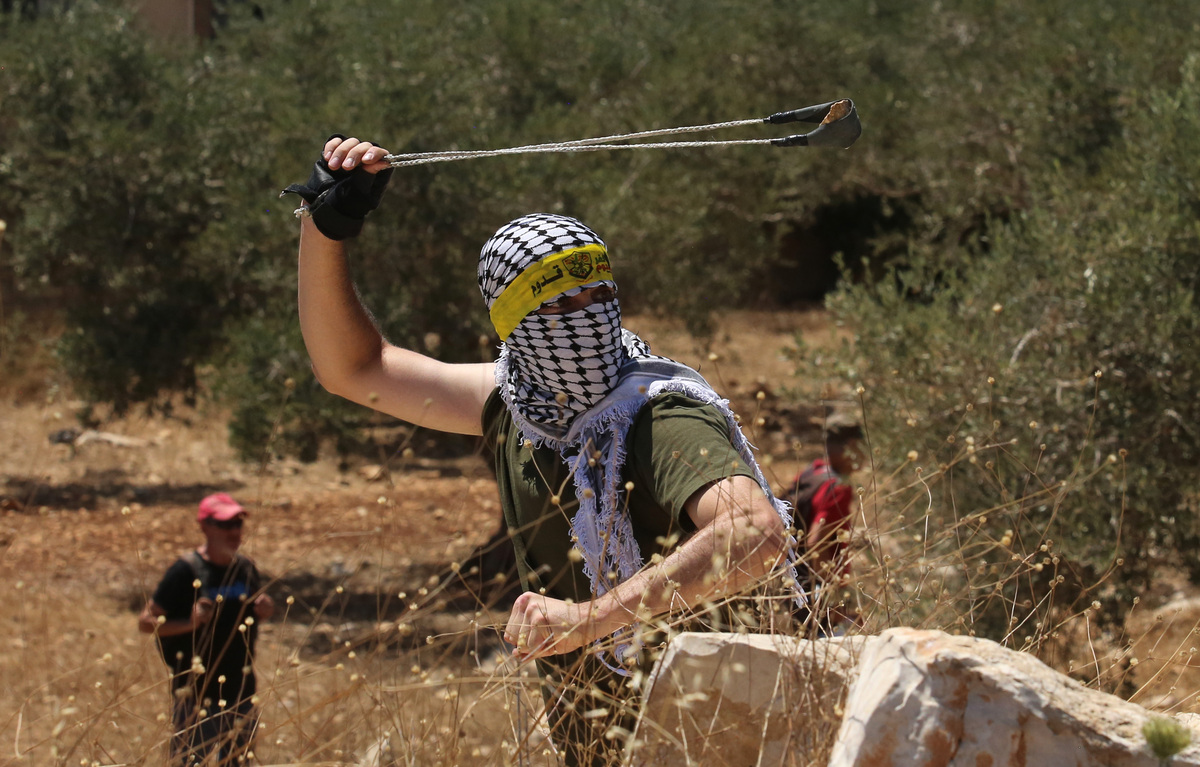
Ayham was first arrested in January 2022, at the age of 12, along with four other boys. Accused of throwing stones at Israeli settlers, they were detained by Israeli occupation forces and subjected to humiliating treatment and physical violence during their interrogation, according to the Israeli human rights group B’Tselem. After posting bail, Ayham was placed under house arrest, confining him to his home and stripping away his ability to live as a child.

His incarceration comes after the Israeli government passed a law last month permitting the imprisonment of children as young as 12 for offences categorised as “terrorism”. This controversial measure has become a weapon against Palestinian minors, who are treated as security threats rather than as children deserving of protection.

Ayham’s case is part of a much larger crisis. As of now, 270 Palestinian children are held in Israeli-run prisons, including notorious facilities like Ofer, Megiddo and Damon. These prisons are known for severe human rights abuses, including overcrowding, physical and psychological torture and medical neglect.

Save the Children has documented an alarming escalation of abuses since October 2023. Palestinian children detained in Israeli prisons report hunger, overcrowding and exposure to diseases like scabies due to unsanitary conditions. Many have suffered severe physical abuse, strip searches and even sexual violence. Testimonies from recently released minors paint a harrowing picture.

One Palestinian boy, Qusay, described seeing a child so brutally beaten by Israeli guards that he fainted whenever he tried to stand. “The younger children were really scared and kept crying,” he said. When Qusay asked to comfort them, he was violently beaten by guards. Another child, Firas, spoke of using a lighter to burn ticks that infested the bedding, while guards mocked prisoners who pleaded for medical care.

Conditions have worsened since the start of Israel’s war in Gaza. Reports indicate mass detentions have led to intolerable overcrowding, with detainees denied access to basic hygiene, medical treatment, or adequate food. One Israeli guard ordered prisoners to “Call me back when he’s dead,” after they requested help for a child with a severe rash.

These testimonies reveal a blatant disregard for international law, which prohibits the torture or cruel treatment of children under any circumstances.

The root of this crisis lies in Israel’s discriminatory dual legal system in the occupied territories, recognised by many as apartheid, systematically targeting Palestinians while shielding settlers. Palestinian children in the occupied West Bank and East Jerusalem are subjected to military law, which denies them basic rights and treats them as adults in almost every way. Israeli settlers in the same areas, however, enjoy the protections of civilian law.


Earlier this year, the International Court of Justice (ICJ) declared Israel’s occupation of Palestinian territories unlawful, reinforcing the illegitimacy of policies like military detention. Despite this, Israel remains the only country in the world to automatically prosecute children in military courts.

The plight of Palestinian children like Ayham is well documented. Human rights organisations, including B’Tselem, Save the Children and UNICEF, have repeatedly called for an end to these illegal practices. Yet, the world’s response has been tepid. Western governments and media, often quick to condemn abuses elsewhere, have largely ignored the systematic targeting of Palestinian children.

This silence perpetuates the suffering. Ayham’s father’s words – “We handed him over while our hearts were burning” – capture the helplessness of families forced to comply with Israel’s  unjust system. For the global community to remain silent in the face of such blatant violations is to condone them.

Meanwhile, for Palestinian children who are released, the trauma doesn’t end. Psychologists working with Save the Children describe a deep psychological toll on former detainees, who often suffer from post-traumatic stress, guilt and a pervasive fear of re-arrest.

One psychologist noted: “They can’t make decisions, they say, ‘Why would I think of tomorrow if they will re-arrest me?’ Their families describe them as ‘frozen’.”

If human rights are to mean anything, the global community must act.

Governments must demand accountability from Israel, pressuring it to end the detention and mistreatment of children. Media outlets must break their silence, amplifying these stories and ensuring they reach audiences worldwide.

Ayham is just 14 years old. The question isn’t whether we know what’s happening. We do. The question is whether we will act – or continue to look away.

ARAB AND WORLD

Sun 08 Dec 2024 7:06 am - Jerusalem Time

The opposition overthrew the regime of Bashar al-Assad

The Syrian Observatory for Human Rights announced on Sunday that President Bashar al-Assad "left the country to an unknown destination."


The Observatory's announcement is consistent with what two senior Syrian army officers told Reuters on Sunday, that Assad had left the country on a plane.


Syrian Observatory for Human Rights Rami Abdul Rahman told the Associated Press that Assad boarded a plane from Damascus early Sunday morning.


Abdul Rahman's comments came after armed factions announced their entry into Damascus, after making significant progress across the country.


This was the first time the factions had reached Damascus since 2018, when Syrian forces recaptured areas on the outskirts of the capital after years of siege.


Local media reported that Damascus airport was evacuated and all flights were stopped.

ARAB AND WORLD

Sat 07 Dec 2024 10:52 pm - Jerusalem Time

Guardian: Trump's government includes wealthy people with a fortune exceeding $340 billion

The British newspaper The Guardian said that the next administration of Donald Trump will include a number of billionaires whose total wealth reaches $340 billion, making it the richest government in the history of the United States, while other names are expected to join the government, which will raise that number significantly.


The newspaper reported that these appointments - which include figures such as Elon Musk and Vivek Ramaswamy - raise questions about the impact of huge fortunes on government policies, especially with regard to spending and the rights of lower-income groups.


She highlighted that Trump has gathered a large number of billionaires and millionaires to take up senior positions in his next administration, which contradicts his presidential campaign that targeted working-class voters.


The writer pointed out that there are at least 11 people who were chosen to fill strategic positions in the next Trump administration, who are billionaires, married to billionaires, or close to entering the billionaires club.


Billions billions!

The net result, the writer explained, would be that this administration would become the richest in US history, with a total value of $340 billion at the beginning of this week, before Trump boosted its financial value by trying to appoint at least 3 more billionaires.


He stated that the wealth of this collective government exceeds the wealth of Trump's first government, which was formed after his victory in the 2016 elections.


He said that the total wealth of the members of Joe Biden's current government is only $118 million.


According to the newspaper, Donald Trump's nominations include Linda McMahon - the candidate for the position of Secretary of Education and a former senior executive in the World Wrestling Entertainment organization - and her husband Vince McMahon, whose fortune is estimated at about 3 billion dollars.


Also in the mix are North Dakota Governor and former businessman Doug Burgum, who is nominated for Secretary of the Interior; Howard Lutnick, chairman and CEO of Cantor Fitzgerald, who is nominated for Secretary of Commerce; and Scott Bessent, a former partner at Soros Investment Management, who is nominated for Secretary of the Treasury.


Important names

Others up for Senate confirmation include Charles Kushner, a real estate mogul and father of Trump's son-in-law Jared Kushner, who is nominated to be U.S. ambassador to Paris, and Warren Stephens, an investment banker who has been tapped to be U.S. ambassador to London.


In addition to Jared Isaacman, a businessman who is a candidate to head the National Aeronautics and Space Administration (NASA), and Kayleigh Loeffler, a former Republican senator and chair of Trump's joint inaugural committee, who was chosen to head the Small Business Administration.


The writer pointed out that all of these names fall under the category of billionaires, either individually or through marital or family ties, according to Forbes magazine.


The president-elect has reportedly offered the position of deputy defense secretary to another billionaire, Stephen Feinberg, a private equity investor and co-chairman of Cerberus Capital Management.


Feinberg's personal wealth was estimated at $4.8 billion in July of this year, and it is not known whether Feinberg agreed or not.

PALESTINE

Sat 07 Dec 2024 10:25 pm - Jerusalem Time

Dead and a number of injuries as a result of Israeli bombing a house east of Gaza

Three citizens were killed and others were injured on Saturday evening, after the occupation aircraft bombed a house near Al-Shawa Square in Al-Tuffah neighborhood, east of Gaza Governorate.


The occupation aircraft also bombed a residential area in the Al-Sahwa area, near Kamal Adwan Hospital, north of the Gaza Strip.


In another context, the director of Kamal Adwan Hospital, Hussam Abu Safiya, said that the hospital was exposed this evening to more than 100 shells, including missiles and drone bombs.


He continued: "The condition on the western side of the hospital building was horrific, with all departments affected - surgery rooms, roofs, courtyards, and windows in the neonatal intensive care units."


Abu Safiya explained that there were three injuries inside the hospital, and the reason for this aggression is still unclear, which is very worrying, noting that water tanks, oxygen generators, and water pumps were destroyed, and fuel tanks were targeted, which led to a fire breaking out in one of them.


He called for an immediate halt to this devastating attack on Kamal Adwan Hospital.

ARAB AND WORLD

Sat 07 Dec 2024 10:04 pm - Jerusalem Time

Bloomberg: Assad is considering a deal to secure rule or a safe exit

Bloomberg quoted informed sources as saying that Syrian President Bashar al-Assad is ready for an agreement that allows him to hold on to the remaining areas under his control or guarantee his safe exit.


The sources said that Assad is trying to make his "last attempt to stay in power" through indirect initiatives with Washington and President-elect Donald Trump.


Informed sources were also quoted as saying that Assad proposes enacting a new constitution and holding talks with the political opposition.


Bloomberg website suggested that the Syrian president is in Tehran, according to what it quoted from a source it described as informed.


Sergei Markov, a political adviser close to the Kremlin, was also quoted as saying that Assad is in great danger.


Markov added that some of the Iraqi militias supported by Tehran returned to their country after the regime gave up Deir Ezzor.


The Syrian armed opposition announced that it had begun implementing the final phase of encircling Damascus, saying that only a few kilometers separated it from the capital.


It also said that it had taken control of towns and cities in the western and southern countryside of Damascus, including Quneitra, and that it was now less than 20 kilometers from the southern gate of the capital, Damascus.


ARAB AND WORLD

Sat 07 Dec 2024 9:47 pm - Jerusalem Time

"Gaza Truce": Egypt intensifies efforts to reach an agreement

Egypt is making "intensive" efforts to conclude a truce agreement in the Gaza Strip, amidst talks about upcoming negotiations in Cairo that indicate the imminent completion of the hostage deal, coinciding with Qatar's official announcement of its return to mediation after about a month of suspension due to the lack of seriousness on the part of the parties.


This movement, which coincided with Doha’s talk of “non-essential differences” between Hamas and Israel, is seen by experts who spoke with Asharq Al-Awsat as “a closer approach to reaching an agreement in light of the ongoing Egyptian and American movement during the recent period regarding concluding a truce and Israeli expectations that there are opportunities to achieve this matter.” They expected that negotiations would soon return to reaching a ceasefire agreement before the inauguration of US President-elect Donald Trump on January 20, as he recently requested.


Egyptian President Abdel Fattah el-Sisi stressed, on Saturday, in a press conference in Copenhagen, that there are "intensive Egyptian efforts to immediately stop the war in the Gaza Strip," pointing out the importance of concerted efforts to prevent the region from slipping into a large-scale regional confrontation.


An informed Egyptian source told Asharq Al-Awsat in a brief statement that “Egypt is accelerating its efforts to reach an agreement at a time when the conditions for its conclusion appear ripe.”


In the opinion of the academic specializing in Israeli affairs, Dr. Ahmed Fouad Anwar, the role played by Egypt in the understanding between the Fatah and Hamas movements regarding the administration of Gaza after the war confirms the possibility of reaching a deal. The progress achieved between the two movements under the auspices of Cairo carries an indication of acceptance of the Egyptian proposals for a ceasefire in Gaza. Also, the visit that an Egyptian delegation made to Israel recently indicates that a positive step has been taken to conclude the deal. These visits often involve discussion of details, and come when preliminaries appear that open the door to progress.


Cairo sponsored a third round of talks last week between the Fatah and Hamas movements, after two other rounds in October and November, regarding the formation of an “administrative body” for the Gaza Strip, called the “Community Committee to Support the People of the Gaza Strip.”


Hamas announced, according to a press release issued by the movement on Thursday, “approval of the Egyptian proposal to form a community support committee through comprehensive national mechanisms (which it did not mention).” At the same time, Israeli Foreign Minister Gideon Sa’ar indicated that “there is now an opportunity for a hostage deal,” adding: “Israel is serious about reaching a hostage deal, and I hope that we will be able to do this, and do it as soon as possible.”


According to Anwar, “The intensive and tireless Egyptian effort, especially with the agreement to manage the Strip, says that we are closer than ever to seeing a truce agreement,” adding: “The positivity of these efforts is confirmed by American media talks about the possibility of Israel sending a security delegation to Cairo to further discuss the details, in light of the fact that Hamas today is more prepared to make a deal, and perhaps make concessions in the part of an immediate cessation of the war.”


All this Egyptian activity and Israeli hints may lead to a “close truce” before Trump comes to power, according to the assessment of Palestinian political analyst Dr. Ayman Al-Raqab, noting that the matter depends on an explicit Israeli approval that may appear on Monday or Tuesday, to sit at the negotiating table after reviewing the current proposal for a truce, which is a calm that may last between 45 and 60 days, and includes the release of elderly and child hostages, some Palestinian prisoners, increasing relief aid, and opening the Rafah crossing.


After about a month of suspending its mediation and confirming that it would resume it when Israel and Hamas showed “willingness and seriousness,” Doha announced on Saturday the return of its mediation activity, according to what the Prime Minister and Minister of Foreign Affairs of Qatar, Sheikh Mohammed Abdulrahman Al Thani, stated during a session at the “Doha International Forum.”


According to the Qatari official, “the differences regarding the agreement between Hamas and Israel are not fundamental,” adding: “We have returned to our role in the negotiations regarding Gaza, after we saw new momentum following Trump’s election, and we are cooperating with his administration regarding the negotiations,” according to what was reported by the Qatari Al Jazeera channel.


The Qatari Prime Minister had stated, in media statements on Wednesday, that officials in his country aim to reach a ceasefire in Gaza before Trump officially assumes his duties.


Al-Raqab believes that Doha had previously announced, about a month ago, the suspension of its role in mediation, due to the lack of seriousness from the parties in reaching a ceasefire agreement in the Strip, and its official announcement of the return means that there are new and serious developments from the parties.


In Al-Raqab’s opinion, the momentum that Doha is referring to may be due to the great efforts exerted by Cairo, which led to Hamas’s agreement to form a committee to “manage the Strip” in an independent formation that does not exist in it, amid Israel’s repeated talk about the existence of an opportunity to complete an agreement.


Anwar believes that what also enhances the chances of this truce this time is Qatar’s official return to its activities, in addition to the rapid regional developments, especially in Syria, which may negatively affect interest in Gaza, and give Israel more space to implement its agenda while shedding light on Syria, adding: “Therefore, pushing for a deal in Gaza is a necessary matter now, before international interest in the Palestinian cause declines.”


“The coming days will reveal Israel’s intentions, after Hamas showed political flexibility, with fears that Netanyahu will return to inventing obstacles and conditions the more talk about the deal increases and the mediation approaches a settlement; this may increase the problems surrounding it, as happened in all previous rounds,” he added, “However, what reduces this is Trump’s emphasis on the importance of concluding a deal before he actually comes to power on January 20.”

ARAB AND WORLD

Sat 07 Dec 2024 8:53 pm - Jerusalem Time

Four Lebanese killed in Israeli shelling in southern Lebanon

Four Lebanese were killed and two others were injured on Saturday evening when Israeli warplanes bombed a house in southern Lebanon.


The Lebanese National News Agency reported that the occupation raid that targeted a house in the town of Beit Lif in southern Lebanon this evening led to the death of four citizens and the injury of six others with varying injuries.


The occupation continues to violate the truce agreement with Lebanon, which was announced more than a week ago, by launching a series of raids on Lebanese regions, which led to the death of a number of citizens, and the continued flying of drones over towns and regions in the south, the Bekaa, the southern suburb of Beirut, and the capital Beirut.

PALESTINE

Sat 07 Dec 2024 8:39 pm - Jerusalem Time

Qatari PM confirms return of momentum to negotiations to end Gaza war

Qatari Prime Minister and Foreign Minister Sheikh Mohammed bin Abdulrahman bin Jassim Al Thani confirmed that momentum has returned to negotiations aimed at reaching a truce and prisoner exchange between the Islamic Resistance Movement "Hamas" and Israel after the end of the US elections.


The Qatari prime minister said during a session at the Doha Forum titled “Resolving Conflicts in a New Era” that there is a lot of encouragement from the incoming US administration to reach an agreement, even before President-elect Donald Trump takes office on January 20.


The Qatari official added that the past weeks have witnessed activity in the negotiations, expressing his hope that this activity will lead to reaching an agreement between the two sides.


He explained that there are some differences in the approach of both the administration of President Joe Biden and the administration of President Trump to some issues and matters. “Whether we like it or not, this approach of course affects the decisions taken and what happens on the ground, but we have not noticed any differences or rejection by the new administration regarding the main goal, which is to end the war in Gaza.”


The Qatari Prime Minister and Foreign Minister pointed out that the gaps and points of difference between Hamas and Israel are not large and not of a size that would affect the negotiations. He said, "The question is simple: Is there a will to end the war? Yes or no? And is there a will to reach an exchange deal? Yes or no? Two simple questions and two simple answers."


advertisement

Syrian crisis

Regarding the developments in Syria, Sheikh Mohammed bin Abdul Rahman expressed his belief that “there are two main factors related to what is happening today in Syria. The first is a factor that was expected given the current events in Gaza,” noting that the State of Qatar has warned everyone of the expansion of the conflict and the consequences of the war in Gaza on the entire region.


He added that the world "was surprised by the events we witnessed in the past few days, but we were not surprised as much as we were surprised by the speed of progress achieved by the opposition in Syria, and this situation may develop and become more dangerous," expressing concern about the escalation of the seriousness of the situation and the return of internal violence and civil war that threatens the territorial integrity of the Syrian state.


He called on everyone to show responsibility and address the issue from a political perspective, saying, "There is no doubt that this situation could destroy what remains of Syria unless we all show a sense of responsibility and quickly try to establish the framework required to address this issue from a political perspective and reach a sustainable solution."


He said that the role of the State of Qatar is to ensure the stability of the region and to ensure its stability as a state, and in order to ensure this stability we must interact with all parties and work to resolve the conflict peacefully.


He stressed that none of the conflicts that occurred in the region during the past 30 to 40 years were resolved on the battlefield, and all that happened was de-escalation by opening lines of communication.


He stressed that the State of Qatar is a platform for bringing together different parties, and is keen to communicate, participate, interact and invite all parties to the table for dialogue, "but we cannot be expected to impose solutions on these parties."


The Prime Minister and Minister of Foreign Affairs of Qatar concluded by stressing the importance of applying international law equally to all conflicts.


He pointed out that the peoples of the region see that many countries that are considered pioneers in international law, human rights and legal laws are turning a blind eye to what is happening in the region and are focusing only on what is happening in Ukraine, for example.

PALESTINE

Sat 07 Dec 2024 8:01 pm - Jerusalem Time

Israeli occupation closes the entrances to the city of Hebron and a number of its towns

This evening, Saturday, the Israeli occupation forces closed the entrances to the city of Hebron, its towns, villages, and camps with earth mounds, iron gates, military barriers, and cement blocks.


According to local sources, the occupation forces closed the main roads of the city of Hebron with iron gates and military checkpoints, including Farsh al-Hawa, al-Fahs, Ras al-Joura, Halhul and Beit Kahil bridges, Bani Naim, Idhna, Beit Einun, Sa’ir, Tarqumiya, Beit Awwa, Deir Samit, Dura, Yatta, al-Samou, al-Dhahiriya, and the camps of al-Fawar and al-Arroub.


The occupation authorities claimed that a number of its soldiers were run over at the entrance to Al-Fawar camp, south of Hebron, which resulted in a number of them sustaining various injuries.


The occupation forces prevented citizens from walking through the entrance to Al-Fawar camp and fired live bullets and tear gas canisters at the citizens, causing a number of citizens to suffer from suffocation.


OPINIONS

Sat 07 Dec 2024 7:26 pm - Jerusalem Time

Occupation and Palestinian Identity: Systematic Violations of Cultural Heritage

Dr. Sarah Mohammed Al-Shammas

Dr. Sarah Mohammed Al-Shammas

Opinion Writer

Palestinian cultural heritage is one of the most violated heritages in the world, as it is subjected to continuous attempts by the Israeli occupation to change and distort it, and even attribute it to them in an attempt to spread historical claims regarding Israel’s right to Palestine. These violations have included several aspects, whether in an attempt to erase the Palestinian identity, or destroy historical and religious sites belonging to the Palestinian people.


Erasing the Palestinian identity

Since the beginning of the twentieth century, the Zionist movement has been associated with continuous attempts to target and uproot the Palestinians from their land and history. The Israeli occupation has attempted to eliminate the Palestinians’ connection to Palestine through a broad policy aimed at isolating them from their heritage and historical past. Palestinian heritage - whether tangible or intangible - is one of the most prominent victims of this policy.


Stealing and destroying heritage

The Israeli occupation’s attempts to change the Palestinian character have included the theft of Palestinian cultural and historical property and its removal to other locations. We have witnessed large collections of Palestinian heritage disappearing from their original locations, and even attempting to destroy them as part of a campaign to erase history. Places of worship and history, such as the Ibrahimi Mosque and Al-Aqsa Mosque, have been a prime target of these attacks, with Israel excavating beneath Al-Aqsa Mosque and attempting to obliterate its features, while attacks on historical sites that are an integral part of Palestinian identity continue.


Judaization of Palestinian heritage

Another policy pursued by the Israeli occupation is the “Judaization of Palestinian heritage,” that is, attempts to manipulate Palestinian heritage and use it as a tool to create an alleged Israeli identity. One of the most prominent manifestations of these policies is changing the names of Palestinian places to ancient biblical names, thus trying to give the impression that these places have a historical connection to Israel. In addition, the occupation has falsified history by fabricating stories and folk tales, and inventing myths that fit the Zionist narrative.

Violations of intangible heritage

The violations were not limited to the tangible heritage only, but also included the intangible heritage of the Palestinian people, such as: folk tales, traditional dances, and songs, which are an essential part of the Palestinian identity. This culture is being obliterated by banning or falsifying it, and claiming that it is part of the Israeli heritage.

The impact of the separation wall on Palestinian heritage


Among the most painful violations was the construction of the Annexation Wall, which cut off large parts of Palestinian land. This wall not only affected the Palestinians socially and politically, but also extended to its destructive impact on Palestinian archaeological sites. Many Palestinian archaeological sites were destroyed along the path of the wall, and Palestinian residents were displaced from their historical and cultural areas.


Violations in the cultural and scientific field


The Israeli occupation also tried to control scientific research related to Palestinian antiquities and impose a historical narrative that serves its interests. In this context, some archaeological discoveries were falsified to support the Zionist narrative, as Israeli archaeologists inserted inscriptions and tools bearing Israeli names into ancient Palestinian archaeological sites. Israel also sought to register some Palestinian cities on the World Heritage List under alleged Israeli names.

Israeli violations against Palestinian heritage have been numerous and varied over the decades. These violations have included the destruction of archaeological sites, the obliteration of intangible heritage, and the distortion of Palestinian history through forgery and the dissemination of lies.

These policies seek to eliminate the historical presence of the Palestinian people on their land, and replace it with a false narrative that aims to establish the occupation’s right to the land and heritage. In light of these violations, Palestinian heritage remains steadfast as a symbol of the Palestinian people’s identity, and forms the basis for the ongoing struggle to defend Palestinian history and future.

ARAB AND WORLD

Sat 07 Dec 2024 7:08 pm - Jerusalem Time

Norwegian Foreign Minister: We want a complete Palestinian state that includes the West Bank and Gaza

"We want a complete Palestinian state that includes the West Bank and the Gaza Strip," Norwegian Foreign Minister Espen Barth Eide said on Saturday.


This came in statements made by Barth Eide during a dialogue session on conflict resolution at the opening of the Doha Forum 2024.


The Norwegian Foreign Minister added: "Ensuring that Israel lives in peace with its neighbors will only be achieved by establishing a Palestinian state."


Barth Eide reiterated the "necessity of implementing the two-state solution principle."


The Norwegian minister believes that "reaching a major peace agreement in the Middle East is possible, but it must be done in coordination with Palestine."


He said: "It is not one conflict, but there is a fundamental conflict linked to all these conflicts, which is the absence of a solution to the Palestinian issue."


Earlier on Saturday, the Emir of Qatar, Sheikh Tamim bin Hamad Al Thani, inaugurated the 22nd edition of the Doha Forum 2024, under the slogan “The Inevitability of Innovation,” at the Sheraton Doha Hotel this morning.


The Doha Forum 2024 will continue for two days under the slogan “The Inevitability of Innovation” at the Sheraton Doha Hotel, with the participation of a number of heads of state, heads of government, and regional and international organizations.


This year’s edition, which examines current challenges and global transformations in politics, economics, security and technology, will see the participation of more than 4,500 participants from more than 150 countries, and more than 300 speakers, including 7 heads of state, 7 heads of government, and 15 foreign ministers, according to official information.


With American support, Israel has been committing genocide in Gaza since October 7, 2023, leaving more than 150,000 Palestinians dead and wounded, most of them children and women, and more than 11,000 missing, amid massive destruction and famine that killed dozens of children and the elderly, in one of the worst humanitarian disasters in the world.
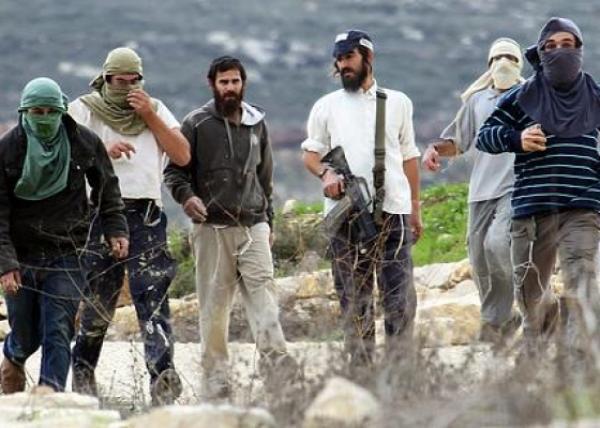

Israel continues its massacres, ignoring the UN Security Council resolution to end them immediately, and the International Court of Justice’s orders to take measures to prevent acts of genocide and improve the catastrophic humanitarian situation in Gaza.


On Tuesday, the United Nations General Assembly adopted a resolution calling for an end to Israel's occupation of Palestinian territories and the establishment of an independent Palestinian state.


Anadolu Agency correspondent reported that Senegal submitted the draft resolution on the two-state solution and the peace process in the Middle East, with the participation of countries including Turkey, for a vote in the United Nations General Assembly, which includes 193 countries.


The draft resolution was adopted with the support of 157 countries, while 8 countries objected, most notably the United States, Israel and Argentina, and 7 countries abstained from voting.

ARAB AND WORLD

Sat 07 Dec 2024 6:58 pm - Jerusalem Time

Demonstrations in cities and capitals around the world condemning the aggression on the Gaza Strip

Today, Saturday, many world cities and capitals witnessed mass demonstrations denouncing the Israeli aggression on the Gaza Strip.


Thousands participated in demonstrations held in the German capital Berlin, the Swedish capital Stockholm, the British city of Manchester, the Danish capital Aarhus, the capital Copenhagen, Maastricht and The Hague in the Netherlands, in support of the Palestinian people, and to demand a ceasefire and the entry of humanitarian aid into the Gaza Strip.


The participants in the demonstrations raised Palestinian flags and banners denouncing the crimes committed by the Israeli occupation against our people.


Participants called for an end to double standards and the need to prosecute the occupation for its massacres against the Palestinian people, especially children, and denounced the genocide in the Gaza Strip.


The Israeli occupation forces have continued their aggression on the Gaza Strip, by land, sea and air, since October 7, 2023, which has resulted in the martyrdom of 44,664 citizens, the majority of whom are women and children, and the injury of 105,976 others, in an incomplete toll, as thousands of victims are still under the rubble and on the roads, and ambulance and rescue crews cannot reach them.

PALESTINE

Sat 07 Dec 2024 6:21 pm - Jerusalem Time

Al-Ansari: There is realistic language on the Gaza negotiating table, and reaching an agreement remains

Qatar's Foreign Ministry spokesman Majed Al-Ansari said that Qatar's resumption of its role as a mediator in the ceasefire negotiations in the Gaza Strip came after a period of continuous contacts with various parties despite previous challenges.


He explained in an interview with Al Jazeera that there is a new atmosphere that reflects a shift in the approach with the emergence of realistic language at the negotiating table that expresses the parties’ point of view, while maintaining cautious optimism about reaching an agreement.


The Qatari Foreign Ministry spokesman pointed out that the decision to freeze negotiations in the past was a result of the lack of seriousness on the part of the concerned parties, but the contacts did not stop, indicating that the current stage is witnessing new viewpoints and ideas under discussion.


Regarding the nature of the current stage, Al-Ansari said that the title that was set from the beginning was “cautious optimism,” as optimism pushes towards doing everything necessary to end the crisis, while being cautious about the field obstacles that hinder reaching an agreement.


He pointed out that Qatar will not close its door to any ideas that are put forward, but they will not be used to market a specific political position.


Not essential

Commenting on the statements of the Prime Minister and Minister of Foreign Affairs of Qatar, Sheikh Mohammed bin Abdulrahman Al Thani, during the Doha Forum regarding the differences between the Islamic Resistance Movement (Hamas) and Israel, Al Ansari stressed that the differences are not fundamental, but what is stopping reaching an agreement is the prioritization of narrow political interests over humanitarian issues.


He criticised linking the entry of aid or stopping the killing machine to narrow political positions, noting at the same time that there has been a realistic language prevailing in the negotiations for some time, and reaching an agreement remains the main challenge.


Regarding the proposals currently being put forward, Al Ansari explained that it is still too early to discuss specific details, but he stressed that communication channels remain open, and that discussions are ongoing with all concerned parties to develop a common vision that serves to achieve stability.


Regarding the impact of the transitional phase in the US administration on the negotiations, Al Ansari said that Qatar has long experience in dealing with successive US administrations, and is aware of the nature of the democratic system and periods of political transition in the United States.


He pointed out that his country continues to work with the current administration until the last moment, while maintaining communication channels with the transitional team of the next administration, to ensure the continuation of dialogue on ending the crisis.


missed opportunity

Regarding the Syrian file, Al-Ansari stressed that the Syrian regime did not take advantage of the historic opportunity to reconcile with its people, which led to the accumulation of crises and the escalation of security tensions in the country.


He explained that Qatar continues to call on the regime to respond to the Geneva initiatives and international legitimacy resolutions, and is working to reduce escalation in cooperation with regional and international parties, to ensure the aspirations of the Syrian people are achieved as soon as possible.


Al-Ansari also pointed out that Qatar has been involved from the beginning in supporting the Syrian people and alleviating their suffering, stressing that the meetings held on the sidelines of the Doha Forum represent an opportunity to come up with unified Arab and international positions that contribute to ending the escalation and removing the specter of war from Syria.


Commenting on regional developments, Al Ansari warned that the continuation of crises in Gaza and Syria could lead to a comprehensive regional collapse, calling on the international community to take urgent action to stop the war machine and ensure that crises are addressed gradually to achieve peace and stability in the region.

PALESTINE

Sat 07 Dec 2024 4:33 pm - Jerusalem Time

Two Palestinians injured after settlers attacked them in Taybeh, east of Ramallah

Two citizens were injured, Saturday evening, after being attacked by settlers in the town of Taybeh, east of Ramallah.


The Red Crescent Society reported that it dealt with the injury of two young men after they were attacked by settlers in the town of Taybeh, and they were transferred to the hospital.


A citizen was injured and his vehicle was damaged during an attack by settlers in the town of Turmus Ayya, east of Ramallah, this afternoon.

PALESTINE

Sat 07 Dec 2024 4:22 pm - Jerusalem Time

At least 10 dead in the ongoing bombing of the Gaza Strip

At least 10 citizens were killed in the ongoing Israeli occupation bombing of various areas in the Gaza Strip.


Our correspondent reported that two citizens were martyred as a result of the occupation bombing a motorcycle near the Abu Halawa intersection east of Rafah in the southern Gaza Strip. Three other citizens were also killed when the occupation air force targeted a group of citizens east of the city, and another young man was killed by the occupation fire in the Mawasi area of Rafah.


A citizen was also killed when the occupation forces bombed a civilian vehicle in the city of Deir al-Balah in the central Gaza Strip, and another citizen was killed when a residential apartment was bombed in the west of the city.


In Gaza City, a young man was killed and others were injured when the occupation forces targeted a group of residents in the Sheikh Radwan neighborhood, northwest of Gaza City. Meanwhile, a girl died as a result of critical injuries she sustained when the occupation forces bombed a group of citizens a few days ago near the Al-Shifa Tower, west of Gaza City.


As for the situation around Kamal Adwan Hospital in the town of Beit Lahia in the northern Gaza Strip, our correspondent indicated that the occupation tanks retreated a little and were positioned 500 meters away from the hospital, but snipers are on top of some buildings and anyone who moves exposes himself to death. In addition, there are dead and wounded in the area that no one can reach. There is also shelling of the Al-Mabhouh family home, amid reports of martyrs and wounded.


The Israeli occupation forces have continued their aggression on the Gaza Strip, by land, sea and air, since October 7, 2023, which has resulted in the death of 44,664 citizens, the majority of whom are women and children, and the injury of 105,976 others, in an incomplete toll, as thousands of victims are still under the rubble and on the roads, and ambulance and rescue crews cannot reach them.


PALESTINE

Sat 07 Dec 2024 3:50 pm - Jerusalem Time

Israeli occupation forces arrest an injured person and assault the medical staff in Silwad

Today, Saturday, the Israeli occupation forces stormed a medical center in the town of Silwad, east of Ramallah, and arrested an injured person.

The official news agency, Wafa, reported that the occupation forces stormed the town's medical center and arrested the young man, Musa Faraj, who is in his twenties, after removing his breathing apparatus while he was suffering from suffocation. They also assaulted the medical staff in the center by beating him.

It pointed out that clashes had erupted in the town, during which the occupation forces fired sound bombs and toxic gas, which led to a number of citizens suffering from suffocation.

In turn, the Ministry of Health condemned the occupation forces’ storming of the Silwad Emergency Center and tampering with its contents.

It pointed out that this attack is a violation of all international laws and conventions that stipulate the protection of treatment centers, staff and patients.

The Ministry renewed its urgent appeals to international institutions and the International Committee of the Red Cross to intervene immediately to stop the occupation's attacks on treatment centers and cadres, demanding immediate protection for the health system and all its components.

Last Wednesday, Israeli special forces "Musta'ribeen" kidnapped an injured person from inside the Arab Specialized Hospital in the city of Nablus, after they infiltrated one of the intensive care rooms, who had been injured as a result of a drone bombing of a vehicle near Tubas.

This is not the first time that the occupation forces have attacked hospitals and medical personnel. In every attack on Palestinian cities, the occupation forces besiege hospitals, obstruct the work of medical personnel, and prevent them from doing their duty.

At the end of January 2024, a special Israeli force, "Musta'ribeen", infiltrated Ibn Sina Hospital in the city of Jenin and assassinated three young men: the brothers Muhammad and Basil Ayman al-Ghazzawi, and Muhammad Walid Jalmana, noting that the martyr Basil was injured and receiving treatment in the hospital.

According to the Ministry of Health, the World Health Organization has reported more than 600 attacks on health care facilities and workers in the West Bank, including health, since October 7, 2023.