PALESTINE

Mon 09 Dec 2024 10:18 pm - Jerusalem Time

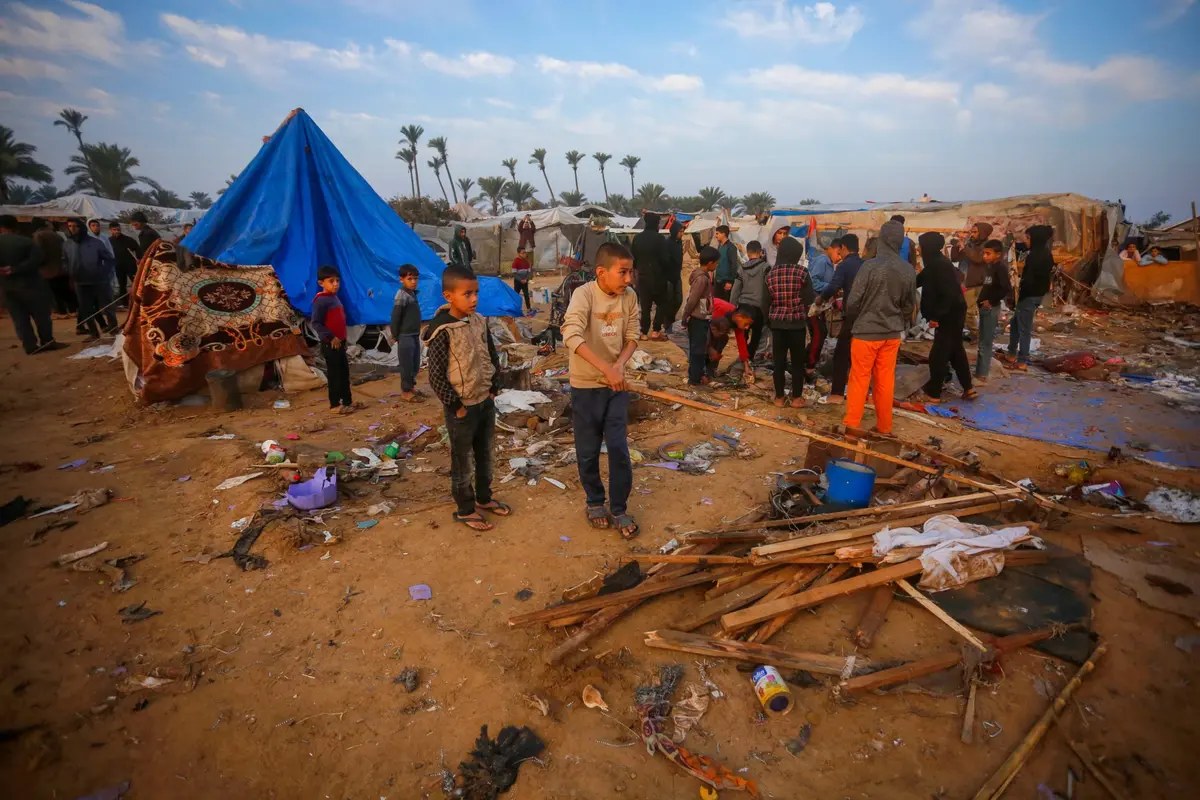
UNRWA: One million displaced people in the Gaza Strip are at risk of death due to the winter cold

The United Nations Relief and Works Agency for Palestine Refugees (UNRWA) said on Monday that “one million displaced people in the Gaza Strip are at risk of death due to the winter cold, in light of the ongoing war of genocide.”


The agency added in a tweet on its account on the “X” platform, that “the displaced people in Gaza need protection from rain and cold, and only about 23 percent of their needs have been met.”


It explained that "945,000 Palestinians are at risk of severe cold in the Strip this winter."


The agency stressed that "there is an urgent need for aid to meet the enormous needs as the crisis worsens."


The Israeli occupation army, supported by the United States and Europe, continues its aggression on the Gaza Strip for the 430th consecutive day, as its aircraft bomb the vicinity of hospitals, buildings, towers, and homes of Palestinian civilians, destroying them over the heads of their inhabitants, and preventing the entry of water, food, medicine, and fuel.


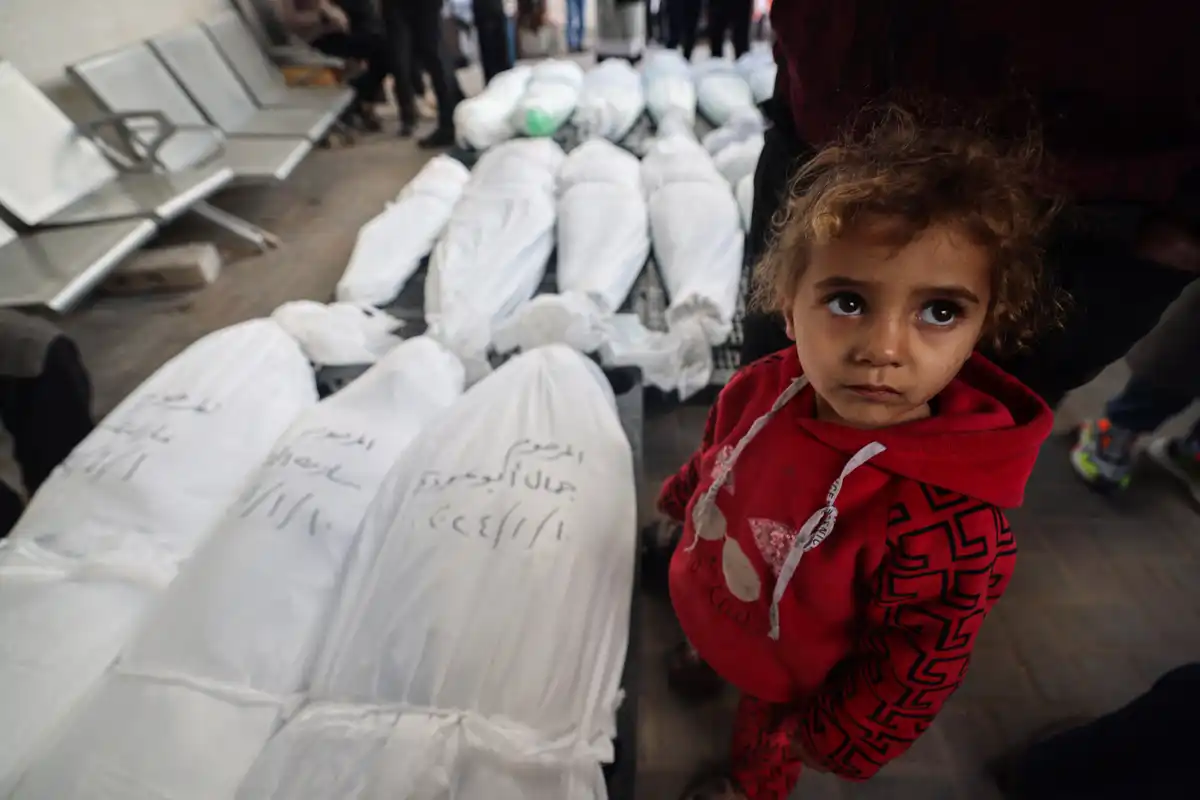
The aggression left more than 151,000 Palestinian martyrs and wounded, most of them children and women, and more than 10,000 missing, amidst massive destruction and famine that killed dozens of children and elderly people, in one of the worst humanitarian disasters in the world.


PALESTINE

Mon 09 Dec 2024 9:40 pm - Jerusalem Time

Dead and wounded in a new massacre committed by Israel in the northern Gaza Strip

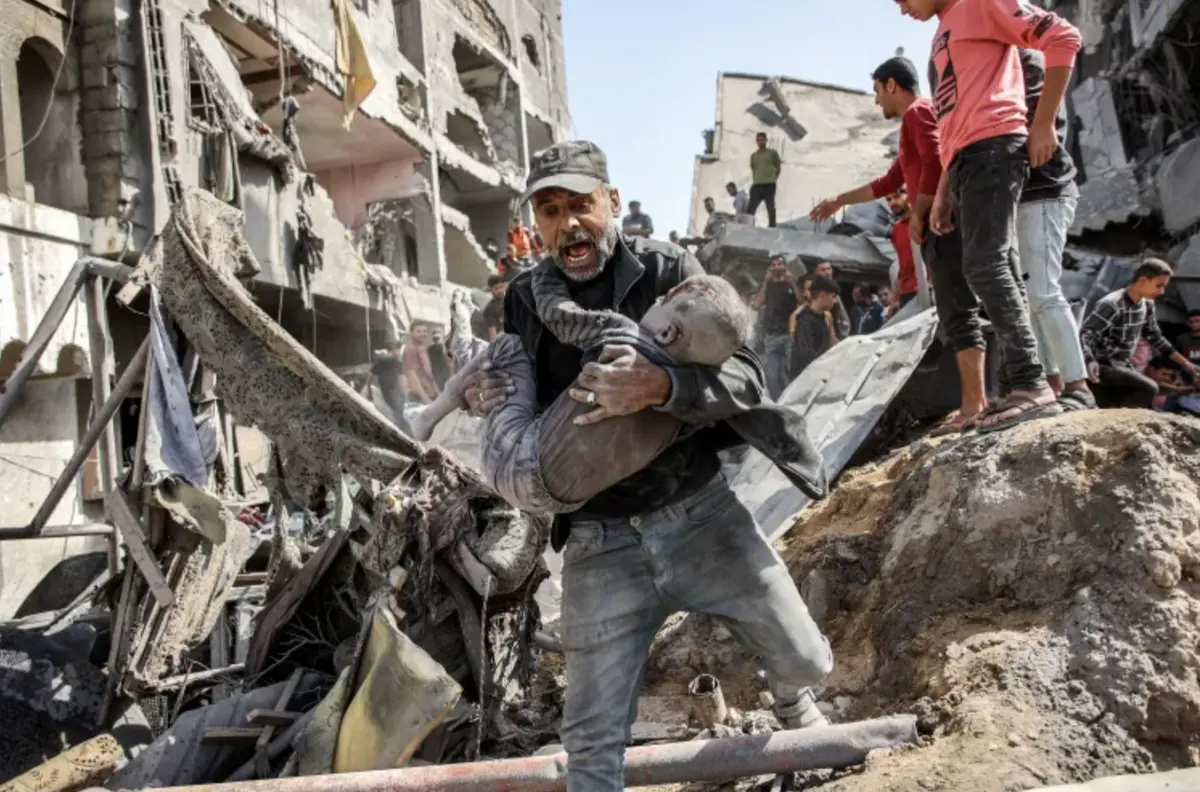
The Israeli occupation committed a new massacre in the Gaza Strip on Monday evening, after its warplanes launched a series of raids on citizens' homes in Beit Hanoun, north of the Strip, resulting in a number of martyrs and wounded.


Local sources reported that the occupation raids resulted in the martyrdom of at least 20 citizens and the injury of others, noting that the area is besieged by the occupation and ambulance and rescue crews are unable to reach it.


The occupation aircraft launched several raids on the Al-Maghazi and Al-Nuseirat camps, and the occupation forces blew up houses north of Al-Nuseirat, in the middle of the Strip.


Earlier, medical sources announced the martyrdom of 6 citizens and the injury of others in an occupation bombing that targeted a group of citizens in the town of Beit Lahia, north of the Gaza Strip, coinciding with the occupation forces’ detonation of a number of homes and facilities in the town.


A citizen was killed by an occupation drone east of Khan Yunis in the southern Gaza Strip. At least two children were killed and others were injured in the Israeli occupation's bombing of Al-Maghazi camp in the central Gaza Strip.


A number of citizens were also killed and others were injured when the occupation bombed a school housing displaced people in Jabalia camp, in addition to the killing of a number of citizens and the injury of others after the occupation aircraft bombed a residential area near Al-Maqadma Mosque in the vicinity of Kamal Adwan Hospital in the northern Gaza Strip.


The Israeli occupation forces have continued their aggression on the Gaza Strip, by land, sea and air, since October 7, 2023, resulting in the death of 44,758 citizens, the majority of whom are women and children, and the injury of 106,134 others, in an incomplete toll, as thousands of victims are still under the rubble and on the roads, and ambulance and rescue crews cannot reach them.

ARAB AND WORLD

Mon 09 Dec 2024 7:12 pm - Jerusalem Time

Maariv: Netanyahu to be tried in underground courtroom reserved for major criminals

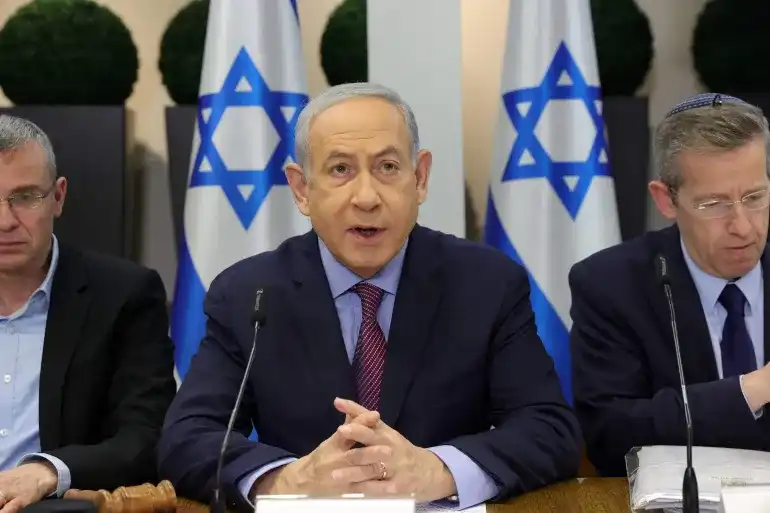
The Maariv newspaper reported that the trial of Israeli Prime Minister Benjamin Netanyahu on corruption charges will be held in a hall where the heads of major criminal organizations in Israel were tried.


This came in a report by the newspaper's police and municipal affairs correspondent, Alon Hakmon, who said that Netanyahu will appear before the court on Tuesdays, Wednesdays and Thursdays of each week for 4 hours each day, and that Hall 512 in Tel Aviv has been chosen for the trial.


He said that this hall, which was built in 2016, is intended to receive testimonies from the heads of the largest criminal organizations in Israel, including Yitzhak Abergil, Moti Hussein, Avi Rohan and others, due to fears that they will flee justice and provoke their followers or attempt to intimidate lawyers.


He added that in addition to the court's special architectural design, it provides all the requirements for a secure security system that cuts off contact between the accused and the outside environment, which is what prompted the General Security Service (Shabak) to choose it to try Netanyahu.


The trial venue is located on the second floor of the court parking lot, and is made entirely of reinforced concrete and without windows, in order to thwart and prevent any threat or security risk from reaching the Prime Minister.


The entire hall is surrounded by surveillance cameras and bulletproof glass, with complete separation between the secure elevators and the hall entrances, which are accessed through sterile corridors created specifically for judges and state witnesses, in order to isolate them from the public.


The reporter said that the aim of choosing the hall was to create an area of isolation between Netanyahu and the public, especially in light of the estimate that thousands will come to the court to protest, between those who want to convict him and those who refuse to put him on trial.


For this purpose, there will be more security guards in special security circles, strict inspections will be carried out at the entrance to the court using advanced technologies, and undercover Shin Bet forces will be deployed to prevent any possible surprise.


Israeli Attorney General Avichai Mandelblit announced in late November 2019 his decision to file a formal indictment against Netanyahu and try him on three corruption charges in three separate cases. Netanyahu has repeatedly sought to delay the proceedings, citing the ongoing war on the Gaza Strip and security concerns, but the judges ordered the trial to resume on Tuesday and move the proceedings to an underground chamber in the Tel Aviv courthouse, as a security precaution.

ARAB AND WORLD

Mon 09 Dec 2024 6:43 pm - Jerusalem Time

Israel Considers Launching a Large-Scale Attack on Yemen

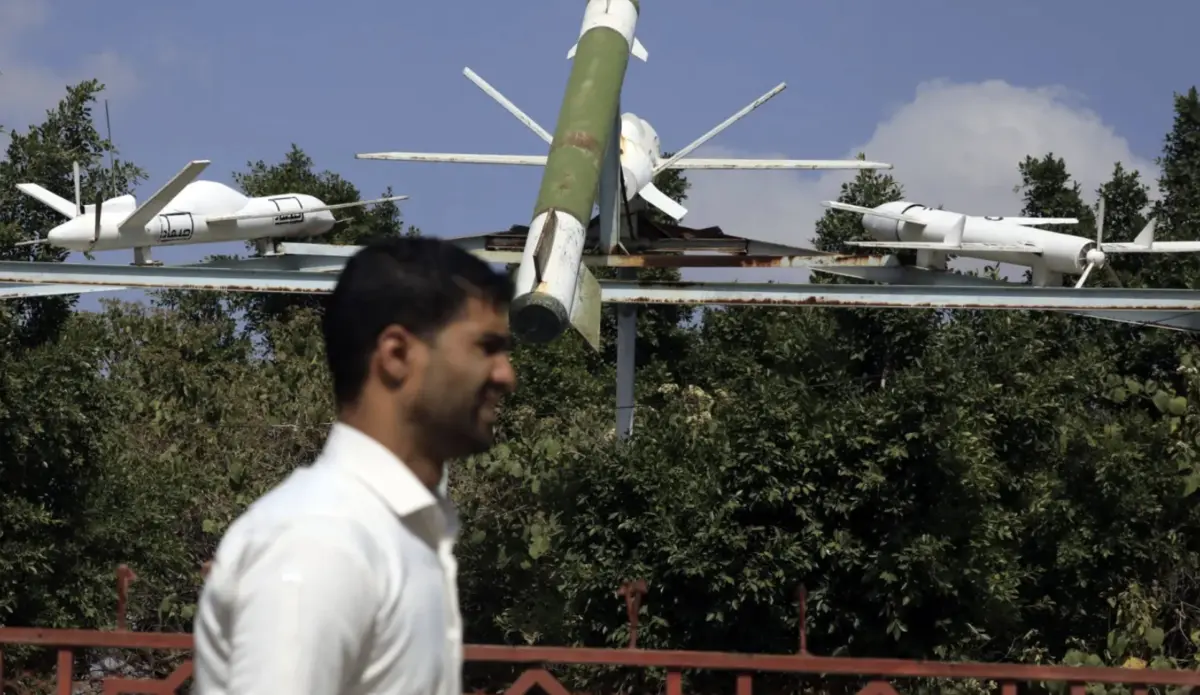
Following the repeated and continued launching of missiles and drones by the Houthis towards Israeli towns, political sources in Tel Aviv revealed that Benjamin Netanyahu’s government is considering the possibility of responding by launching a large-scale attack in Yemen, very soon.


The official Israeli Broadcasting Corporation (Kan 11) quoted a senior Israeli official on Monday as saying that the army “is considering launching a major attack in Yemen, after two ballistic missiles were fired towards the country in the past two days, and a drone on Monday.” He added that the Israeli security establishment “realizes that it is necessary to send a more painful message” to the Houthis, who continue to launch missiles and drones towards Israel, unlike the factions in Iraq, which have reduced their targeting of Israel in the past two weeks.


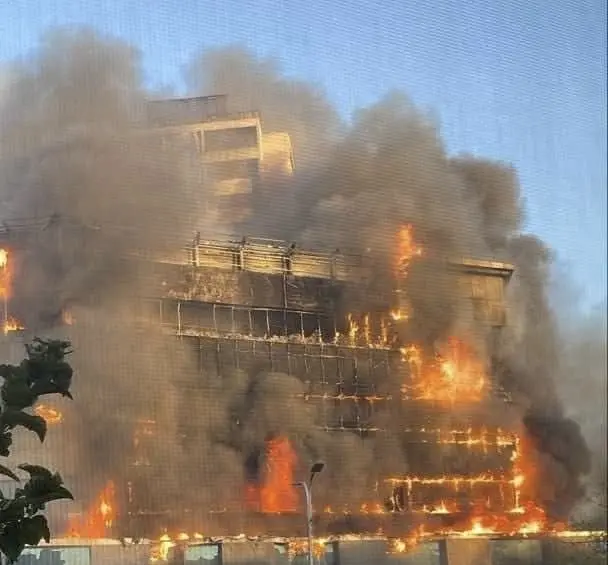
The Houthis claimed responsibility for launching a drone at the southern Israeli city of Yavneh earlier Monday, causing a major fire in a high-rise building. They described the strike as “a victory for the oppressed Palestinian people and their mujahideen, and a response to the Israeli enemy’s massacres against our brothers in the Gaza Strip.”


Houthi military spokesman Yahya Saree said, "The Yemeni armed forces' drone air force carried out a qualitative military operation targeting a sensitive Israeli enemy target in the Yafna area in Ashdod, south of the Jaffa region in occupied Palestine, with a drone that successfully hit its target." He pointed out that "this operation comes within the fifth phase of supporting the Palestinian resistance." Saree stressed that "the Yemeni armed forces confirm that they will confront any Israeli aggression on our country with more qualitative military operations, and that their support operations for the Palestinian people will not stop until the aggression stops and the siege on the Gaza Strip is lifted."


The Israeli army announced on Sunday morning that it had intercepted a missile launched from Yemen, noting that it had been intercepted before it penetrated Israeli airspace, without there being any need to activate the sirens.


Last week, the Houthis in Yemen (Ansar Allah) announced that they had carried out three military operations with drones against targets in northern and southern Israel, in conjunction with Hezbollah in Iraq. According to Israeli military data, more than 200 cruise missiles and drones have been launched from Yemen since the start of the war on Gaza on October 7, 2023. One of them killed an Israeli citizen in Tel Aviv last July.


Last September, dozens of Israeli fighter jets attacked large-scale targets in Yemen, which it said belonged to the Houthis, in an operation that Israel said was more extensive than all the Western attacks on the Houthis. The Kan report noted the death of an Israeli who had been killed in July in Tel Aviv when a drone launched from Yemen was shot down. The drone’s path at the time extended along the Mediterranean Sea and penetrated Tel Aviv from the sea.

PALESTINE

Mon 09 Dec 2024 6:34 pm - Jerusalem Time

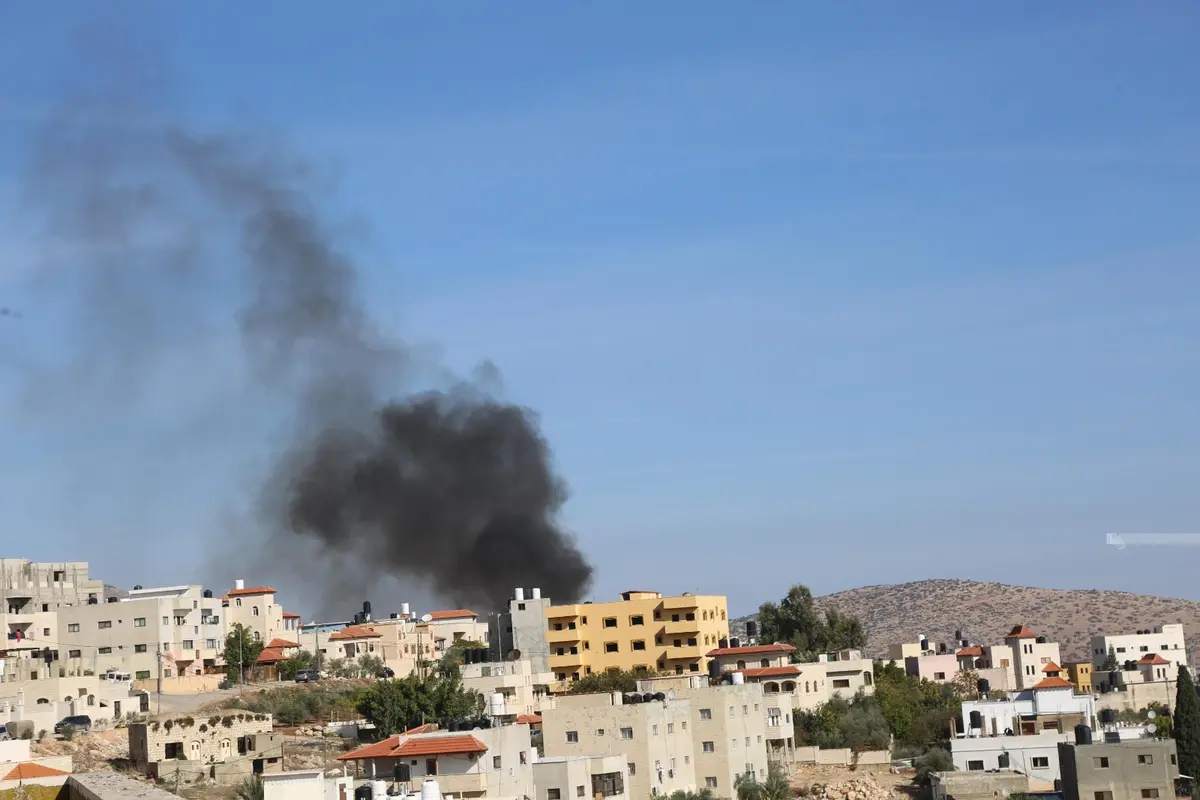
Israeli occupation forces storm Madama, south of Nablus

This evening, Monday, the Israeli occupation forces stormed the village of Madama, south of Nablus.


According to local sources, the occupation forces stormed the village, raided a number of homes, searched them and tampered with their contents.


The town has been subjected to repeated raids by the occupation forces, house searches, and confrontations recently.

ARAB AND WORLD

Mon 09 Dec 2024 5:49 pm - Jerusalem Time

Sullivan welcomes statements by armed opposition in Syria

US National Security Adviser Jake Sullivan said on Monday that his country will deal with all groups in Syria, and welcomed the statements of the armed opposition that overthrew the regime of ousted President Bashar al-Assad.


Sullivan said in an interview with CBS that the statements issued by what he described as rebel groups in Syria, including those classified as terrorists, are good.


He was referring to Hayat Tahrir al-Sham, led by Ahmad al-Sharaa (al-Jolani), which led the “Deterrence of Aggression” operation and led to the overthrow of the regime in just 12 days.


The leaders of the Syrian opposition's military operations department, led by Al-Shara, pledged to guarantee the security and rights of all components of the Syrian people.


The US National Security Advisor said that his country did not directly participate in the attack that brought the armed opposition to power in Syria, nor did it support it or take part in it.


But he made clear that Washington was part of a broad regional and international effort to weaken Assad's backers.


Better than a lion

Sullivan said anything in Syria was better than what he called a "brutal regime" that had destroyed its people for 50 years.


He considered that there is an opportunity to build something much better in the future in this country.


The US official continued that the question now is what will the Syrian factions do to achieve a better future for their country? He spoke about the risks of the possible return of extremism and terrorism in Syria, saying that Washington is dealing with these risks immediately, as in the air strikes ordered by President Joe Biden against the Islamic State.


For his part, US National Security Council Communications Coordinator John Kirby said that Washington will work to explore ways to communicate with the groups that took control of Damascus.


"We are now in a period of uncertainty and actions will determine our confidence in the leader of Hay'at Tahrir al-Sham," Kirby added in statements to CNN.


A senior American official said yesterday that his country (Washington) intends to deal with Hay'at Tahrir al-Sham, taking its interests into consideration.


On the same day, outgoing US President Joe Biden said the United States would work with "all Syrian groups" within the framework of the United Nations to ensure a political transition after the fall of Bashar al-Assad's regime.


ARAB AND WORLD

Mon 09 Dec 2024 5:42 pm - Jerusalem Time

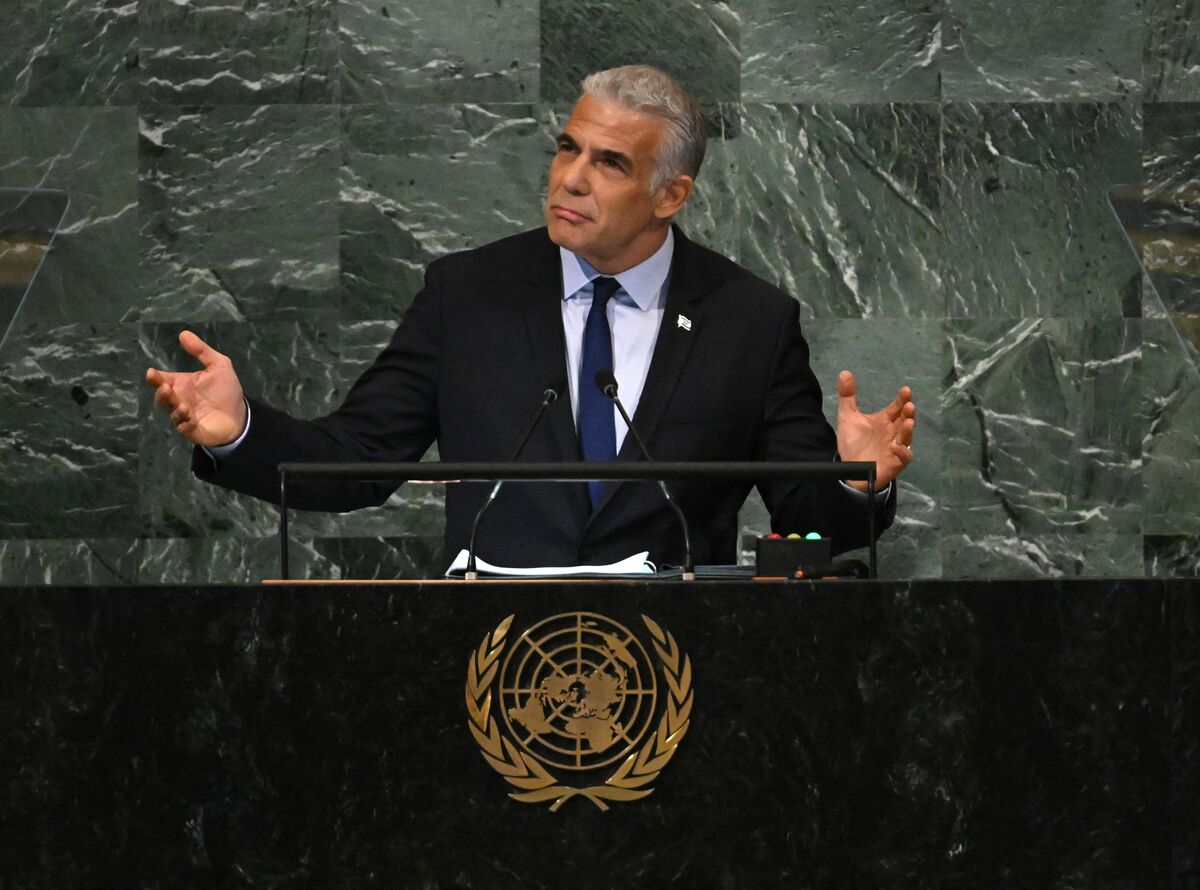
Lapid: Netanyahu's claims about the role of Israeli operations in the fall of the Assad regime are unrealistic

Israeli opposition leader Yair Lapid said Monday that Prime Minister Benjamin Netanyahu's claims that Israeli military operations against Hezbollah and Iran led to the fall of Syrian President Bashar al-Assad "have no relation to reality."


"The world knows that Netanyahu's statement has nothing to do with reality. The prime minister's behavior was irresponsible, dangerous and devoid of any political logic," Lapid said in a post on the X platform.


Netanyahu claimed on Sunday that Israeli attacks on Hezbollah and Iran led to the fall of the Assad regime.


On the other hand, former Israeli Defense Minister and leader of the right-wing opposition party "Israel Beitenu" Avigdor Lieberman criticized the failure of Israeli intelligence agencies to anticipate events in Syria.


"I hope we will not be surprised anymore," he said in a speech to the Knesset, which he posted on his account on the "X" platform.


He added: "Israeli intelligence did not expect, nor did it warn."


"All intelligence agencies must monitor the impact of the event on us," Lieberman continued.


Israeli media, including Army Radio, indicated on Sunday that Tel Aviv was surprised by the developments in Syria.


Since 2011, Israel has been launching occasional raids on Syria, saying it is targeting Iranian-backed groups and Syrian regime military positions.


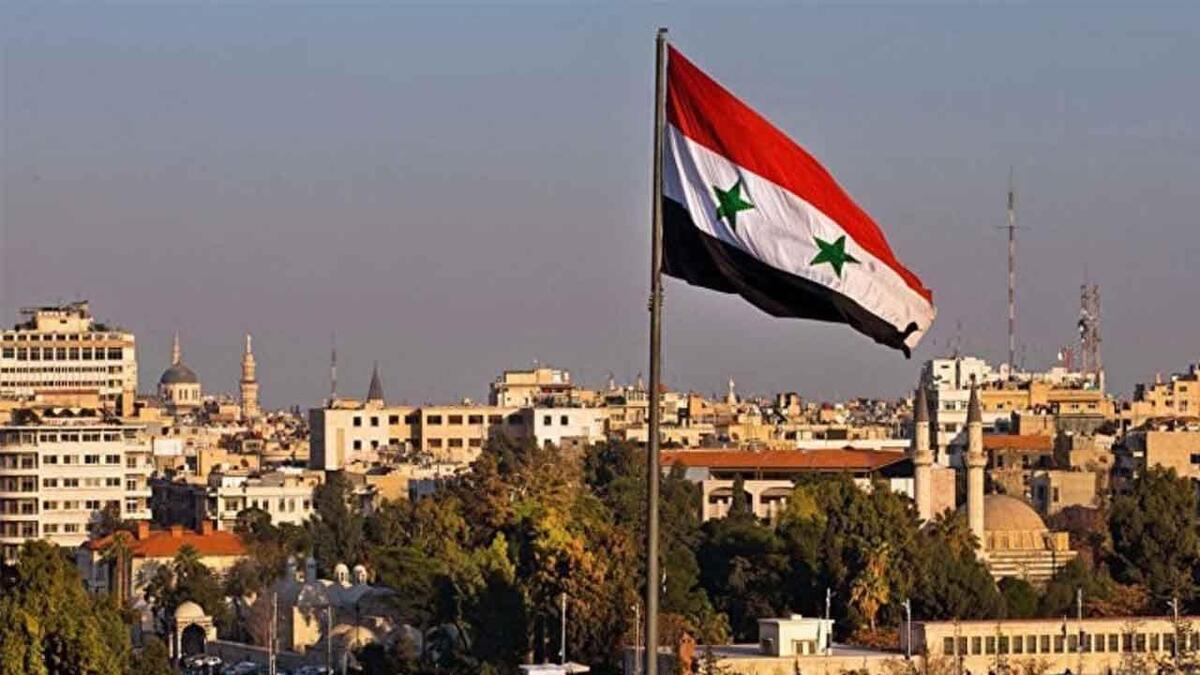
On Sunday morning, the Syrian opposition factions took control of the capital, Damascus, with the withdrawal of regime forces from public institutions and streets, thus ending a 61-year era of the bloody Baath Party regime and 53 years of rule by the Assad family.


Bashar al-Assad ruled Syria for 24 years since July 2000, succeeding his father Hafez al-Assad (1970-2000). He and his family secretly left the country to his ally Russia, which announced that it would grant them asylum for what it considered "humanitarian reasons."

PALESTINE

Mon 09 Dec 2024 5:36 pm - Jerusalem Time

Israeli historian produces massive database of Israeli war crimes in Gaza

An internationally recognized Israeli historian has concluded that his country is committing genocide in Gaza after compiling a massive systematic report documenting a long list of war crimes committed since Israel began its invasion last year following Hamas-led attacks on October 7, 2023.


Historian Lee Mordechai, an associate professor at the Hebrew University of Jerusalem who also holds a fellowship at Princeton University in the United States, has published a report titled “Witnessing the Israel-Gaza War,” which in its English translation is 124 pages long and contains more than 1,400 footnotes.


Using eyewitness reports, videos, articles, photos, eyewitness evidence, and more than a dozen investigative materials, much of it recorded by Israeli soldiers, the historian has produced what Haaretz called "the most systematic and detailed documentation in Hebrew (there is also an English translation) of Israel's war crimes in Gaza."


Some of the most shocking incidents Mordechai documented include a Palestinian woman holding a baby while waving a white flag, starving girls being crushed to death while standing in line for bread, a handcuffed 62-year-old Palestinian man being run over by an Israeli tank, and an airstrike targeting people trying to help a wounded boy.


The database includes thousands of videos, photos, testimonies, reports and investigations documenting the atrocities committed by Israeli forces in Gaza, where more than 44,500 Palestinians were killed during the war, most of them women and children.


Mordechai also includes a section on “Media, Propaganda and War,” noting that the current war “has been enabled and facilitated by massive media efforts to shape the discourse in Israel as well as in the West – in countries such as the United States, Canada, the United Kingdom and Germany.”


Corpses, murder and sunsets


The Israeli newspaper Haaretz published in its report on the Mordechai document, drawing attention to footnote No. 379, which refers to a video clip showing a large dog eating the body of a Palestinian.


“Woah, wow, the terrorist is gone, the terrorist is gone – literally gone,” says the Israeli soldier filming the dog eating the corpse. A few seconds later, the soldier steps away from the corpse to the scene around him. “But what a wonderful view, a wonderful sunset. A red sun setting over the Gaza Strip,” he says.


Mordechai's summary details the killing of children by Israeli soldiers, the murder of entire families, the starvation and shooting of civilians, the running over of prisoners and corpses by tanks, and much more.


Footnote 354 of the document shows footage of Palestinians being shot by Israeli forces as they waved a white flag. The video footage, first published by Middle East Eye, shows several people waving white flags as they appear to be evacuating their homes. “A woman with a young child is shot dead by an Israeli sniper, while the child manages to escape.


The historian first published the document in January, and has been publishing updated versions of it since then.


“I felt that I couldn’t continue living in my own bubble, that it was a matter of life and death, that what was happening was too big and contradicted the values I was raised on here,” he told Haaretz.


In his report, Mordechai confirms the accuracy of the death toll figures published by the Gaza Health Ministry. According to the historian, claims that these figures are exaggerated are unfounded, and even the Israeli government treats the Health Ministry’s data as accurate.


Among the tens of thousands of people killed in the war, Mordechai listed in the document the deaths of four premature babies after Israeli forces decided to evacuate the hospital they were in. A nurse caring for five babies was forced to choose the strongest, who was allowed to survive.


Other footage collected by the historian—often filmed by the Israeli military itself—shows a soldier forcing bound and blindfolded prisoners to send his regards to their families and say they want to be his slaves. Israeli soldiers are shown carrying piles of money looted from Palestinian homes in Gaza, and an Israeli army bulldozer is seen destroying a large pile of food parcels from a humanitarian aid agency. In another clip, an Israeli soldier sings, “Next year we’ll burn the school,” as a Gaza school blazes in the background. Several videos documented by Mordechai show Israeli soldiers displaying looted women’s underwear.


genocide


The links included in “Witnessing the Israel-Gaza War” also lead to shocking footage of bodies strewn across the streets of the populated Palestinian enclave, people crushed under rubble and pools of blood everywhere.


In some footage we hear the screams of people who lost their entire families in one moment. There is also documentary evidence of the killing of disabled people, sexual assault and humiliation, burning of homes, indiscriminate shooting, forced starvation, looting and more.


Mordechai shows that Israel's war reached its most brutal peak during the second incursion into Al-Shifa Hospital in March 2024, when the medical complex in Gaza City became the site of mass killings.


The Israeli military claimed that Hamas was using the hospital as a base, but did not provide sufficient evidence to support this claim.


Another brutal climax was the complete Israeli blockade and assault on northern Gaza since early October, which has been widely described as ethnic cleansing.


In an appendix to his report, Mordechai explains why he believes Israel's actions in Gaza constitute genocide.


“We need to separate the way we think about genocide as Israelis—the gas chambers, the death camps, World War II—from the model that emerges in the 1948 Convention on the Prevention and Punishment of the Crime of Genocide,” he wrote.


“It is not necessary for there to be death camps for it to be considered genocide. It is all about the acts and the intent, and both must be proven.”


“In terms of committing acts, it is about killing, but not only – [there is] also wounding people, kidnapping children, and even just attempts to prevent births among a certain group of people. What all these acts have in common is the deliberate destruction of a group of people.”

PALESTINE

Mon 09 Dec 2024 4:14 pm - Jerusalem Time

Haaretz: Netanyahu is lying about the prisoner deal

The Israeli newspaper Haaretz said in its editorial that Israeli Prime Minister Benjamin Netanyahu admitted for the first time since Operation Flood of Al-Aqsa in October 2023 that the release of Israeli prisoners can only be achieved through a deal, but there is no hope to be hoped for from his statement.


Netanyahu assured the prisoners' relatives of his readiness for a ceasefire in Gaza. He added, in reference to the ceasefire agreement between the Israeli army and the Lebanese Hezbollah, "What succeeded in the north will succeed in the south," according to the editorial.


But the newspaper stressed that it is wrong to be optimistic about Netanyahu's statements, as he is "addicted to lying", and experiences show that in order to know the truth of his intentions and actions, one must ignore everything he says and focus on the pressures he is under.


Haaretz pointed out that the main factor influencing the fate of the prisoners and Netanyahu's decisions is the opinions of the "extreme" right-wing members of his coalition. Every time there is any progress in the negotiations, this group objects, claiming that there is a security need for the continuation of the war.


The editorial explained that the Israeli security establishment, unlike the political leadership, prefers to move forward with the prisoner deal, especially after the army achieved major military objectives, such as the assassination of the head of the Islamic Resistance Movement (Hamas) Yahya Sinwar and the third secretary-general of Hezbollah, Hassan Nasrallah, which led to a halt to the escalation in the north.


The newspaper added, "It has become impossible to cover up the fact that the desire to continue the war in Gaza stems from political, not security, motives."


Haaretz concluded its editorial by warning that continued attacks on Hamas leadership could make it difficult to find a unified party to negotiate with.


PALESTINE

Mon 09 Dec 2024 3:42 pm - Jerusalem Time

Two Palestinians killed in Israeli bombing of Tubas

Two citizens were killed, Monday afternoon, in the Israeli occupation's bombing of the city of Tubas.


Security sources confirmed the death of two young men and the kidnapping of their bodies by the occupation forces, after the bombing.


Local sources reported that the occupation's drone targeted two citizens in the Al-Safah area, north of Tubas city, which led to their death.


The occupation forces prevented ambulance crews from reaching the bombing area.


The occupation forces stormed the city this morning, after special forces "undercover" infiltrated the city and were present near one of the shops on the main street, while the soldiers fired smoke bombs in the area, before sending military reinforcements from the Tayasir military checkpoint towards the city.

An occupation patrol was also stationed in the main street area, as the occupation obstructed the movement of citizens, in addition to its deployment and snipers in several areas of the city, amidst the flying of reconnaissance drones at low altitude.

ARAB AND WORLD

Mon 09 Dec 2024 2:42 pm - Jerusalem Time

50 people were killed in 3 massacres committed by the occupation within 24 hours

Medical sources announced today, Monday, that the death toll in the Gaza Strip has risen to 44,758, the majority of whom are children and women, since the start of the Israeli occupation aggression on October 7, 2023.


The same sources added that the number of injuries has risen to 106,134, while thousands of victims are still under the rubble and on the roads, and ambulance crews cannot reach them.


It pointed out that the occupation forces committed 3 massacres against families in the Gaza Strip during the past 24 hours, of which 50 dead and 84 injuries arrived at hospitals, noting that today's statistics exclude hospitals in northern Gaza due to the difficulty of communication and obtaining accurate information.

ARAB AND WORLD

Mon 09 Dec 2024 2:33 pm - Jerusalem Time

Syrian opposition assigns Mohammed al-Bashir to form transitional government

Al Jazeera reported that Engineer Mohammed al-Bashir, head of the Syrian Salvation Government, which has been running Idlib for years, will be tasked with forming a new Syrian government to manage the transitional phase.


This came after a meeting to determine arrangements for the transfer of power and to avoid Syria entering a state of chaos, which took place between the commander of the armed opposition operations department, Ahmed al-Sharaa, al-Bashir, and the Prime Minister of the former regime’s government, Mohammed al-Jalali, who was tasked with running the government’s affairs.


Who is Mohammed Al Bashir?


The Syrian Prime Minister, who is expected to be announced soon, was born in Idlib Governorate in 1983. He holds a degree in Electrical and Electronic Engineering from the Department of Communications at the University of Aleppo (2007), and a degree in Sharia and Law from Idlib University (2021). He held the position of Director of Association Affairs, then worked as Minister of Development and Humanitarian Affairs in the Salvation Government affiliated with the revolution in Idlib in 2022.


Meetings with diplomatic missions


Meanwhile, intensive meetings are being held between the opposition's political affairs department and foreign diplomatic missions to discuss the security and political situation in Syria following the fall of the Assad regime.


The Department of Political Affairs in Damascus said it would work to create conditions and ensure a safe environment for receiving returning Syrians, and called on Syrians who were forced to leave the country to return and contribute to building Syria.


The Department of Political Affairs in Damascus added that it will open a new page in the history of Syria, entitled construction, development, and working to address the effects of the past through transparent mechanisms aimed at achieving lasting peace.


She stressed that she will seek to play a constructive role in the region and the world in order to achieve security and stability, and build a state of law that guarantees dignity, justice, and institutions that meet the aspirations of the Syrian people.


The Department of Political Affairs in Damascus indicated that the next stage requires comprehensive societal reconciliation based on justice and equality and strengthening Syria's relationship with all countries on the basis of respect.

Source: Al Jazeera


PALESTINE

Mon 09 Dec 2024 2:01 pm - Jerusalem Time

Prisoners Authority: "Etzion" detainees were poisoned as a result of spoiled meals provided to them

The Prisoners and Freed Prisoners Affairs Authority said on Monday that it had monitored a large number of detainees in Etzion Prison who had been poisoned as a result of spoiled meals provided to them by the prison administration.


The Commission added, according to its lawyer, after difficult attempts to visit the detainee, which he was able to do yesterday, that the detainees, after the meals that were provided to them, felt severe abdominal pain, diarrhea, vomiting, weakness, emaciation, and yellowing of the face, and they lost a lot of fluids in their bodies and became unable to stand, and many of them fainted.


The Authority added that since the beginning of the aggression on the Gaza Strip, the prison administration has been deliberately practicing the most heinous punishments against detainees, including keeping them hungry for long periods, and only providing them with poor quality and quantity of meals.


She pointed out that the prison administration meets anyone who objects to this with severe beatings and isolation.


She appealed to all relevant international bodies to intervene quickly to end their suffering, and demanded immediate and urgent intervention to protect detainees inside the occupation prisons.


It is noteworthy that the "Etzion Detention Center" is located in the southern West Bank, and is built on lands north of the Hebron Governorate, within the "Gush Etzion" settlement bloc, and is listed among the worst detention centers in the world.

PALESTINE

Mon 09 Dec 2024 12:27 pm - Jerusalem Time

Source to Al-Sharq Channel: Hamas Delivered Cairo a Preliminary List of “Living Israeli Prisoners”

A source close to the Hamas delegation participating in the "Gaza negotiations" revealed to Al-Sharq TV on Monday that the delegation, headed by Khalil Al-Hayya, delivered an initial list of names of "living Israeli detainees" to Egyptian Intelligence Minister Major General Hassan Rashad during the Cairo meeting on Sunday.


The source familiar with the negotiations said that a number of the detainees hold American citizenship, noting that the list includes "4 or 5 detainees who most likely hold dual American citizenship."


He stated that this step would be met with the release of Palestinian prisoners, including no less than 100 prisoners with high sentences (without giving details about the number of prisoners on both sides), explaining that this step, if implemented by Israel, "would constitute the first stage of a prisoner exchange agreement, which is part of a more comprehensive agreement for a gradual ceasefire that includes a gradual Israeli withdrawal from the Gaza Strip."


Ceasefire Agreement Details

The source confirmed that if Israel agrees, the ceasefire agreement will begin under the supervision of mediators, for a period of 6 to 8 weeks, and the exchange process will begin immediately, and the entry of aid trucks, which will be gradually increased to reach 400 trucks, and the withdrawal of the Israeli army from within the cities and camps of the Strip.


The Israeli army will remain in the Philadelphi and Netzarim axes and 6 border points in the northern Gaza Strip, then gradually withdraw, with the gradual return of the displaced according to each area from which the army withdraws.


The source said that the army will withdraw from the Rafah crossing area to allow for its gradual re-operation, starting with the transfer of the injured and sick for treatment abroad, and the entry of the field hospital from Egypt, including fuel to operate the hospitals, civil defense, and bakeries, indicating that the mediators, along with the American administration, are guarantors of the implementation of the agreement and reconstruction.


He pointed out that according to these understandings, the mediators guarantee not returning to war during the negotiation period and implementation of the agreement, leading to a comprehensive, permanent ceasefire agreement.


The Hamas delegation, headed by Khalil Al-Hayya, arrived in Cairo on Sunday at the invitation of Egypt, and met with the Egyptian Minister of Intelligence in a visit that lasted several hours before the Hamas delegation returned to Doha.


Hamas sources told Asharq earlier that they had asked the Palestinian factions holding Israeli detainees in the Gaza Strip to prepare files on the status of living prisoners and bodies, in preparation for any exchange deal that might see the light this time.


PALESTINE

Mon 09 Dec 2024 12:03 pm - Jerusalem Time

Israeli occupation forces arrest at least 16 Palestinians from the West Bank

The Israeli occupation forces arrested, since yesterday evening until Monday morning (16) at least citizens from the West Bank.

Among the detainees was a woman and former detainees. In addition, the occupation carried out field investigations of dozens of citizens in the towns of Dura and Surif in the Hebron Governorate, Ya'bad in the Jenin Governorate, and Silwad in the Ramallah Governorate.

The Prisoners Authority and the Palestinian Prisoners Club said in a joint statement that the number of arrests in the West Bank since the beginning of the ongoing war of extermination has reached more than (12) thousand arrests, and included all segments of Palestinian society, in addition to the arrest of dozens of Palestinian workers, and thousands from Gaza, and until now their numbers and identities have not been accurately identified, as the occupation continues to carry out the crime of enforced disappearance against them.

The statement pointed out that the ongoing and escalating arrest campaigns for 430 days were accompanied by field executions, direct shooting before arrest, or threats of such, in addition to severe beatings, field investigations that affected hundreds, the use of police dogs, and the use of citizens as human shields and hostages, in addition to the widespread acts of vandalism that affected homes, and the seizure of belongings, cars, money, gold jewelry and electronic devices, in addition to the demolition of homes belonging to detainees in the occupation prisons.

OPINIONS

Mon 09 Dec 2024 9:34 am - Jerusalem Time

The fall of the Syrian regime is a pivotal moment. Does the specter of chaos threaten the country's future?

op-ed "AlQuds" dot com

op-ed "AlQuds" dot com

Opinion Writer

The fall of the Syrian regime led by President Bashar al-Assad is a historic turning point that will leave a major impact and will likely bring with it radical changes at various levels of the state, locally, in addition to the regional and international arenas. At a time when the Assad era has ended after 53 years of rule, 29 years for the former president Hafez, and 24 years for his son Bashar, many important questions are being raised, most notably the future of Syria after this coup.

There is no doubt that the scene will be foggy, and no one can be certain of how the situation will turn out. Chaotic scenarios may strongly rear their heads due to the multiplicity of opposition factions, parties and movements, some of which are extremist, such as ISIS and Al-Nusra, which seek to threaten neighboring countries, primarily Iraq and Lebanon, and some of which may not accept peaceful solutions and a rapid transfer of power in light of the partisan and religious factionalism and the diversity of armed factions, and waiting for their positions and pledges to judge how to draw the scene for Syria’s future, and whether it will be dragged into a civil war and internal fighting as happened in Iraq, or will the spirit of tolerance and patriotism that unites the components of the Syrian people be the basic guarantee for stability?

This important question will be answered quickly through what the facts on the ground impose amidst differences in the interpretations of analysts. While some experts tend to believe that involving all segments of the Syrian people and their components in shaping the country’s future will enhance the chances of agreement and consensus and will spare Syria the risk of conflicts, ideological differences, the diversity of factions, and the absence of organizational unity may herald various conflicts, especially from extremist groups that demand continuing the fighting until the establishment of the Islamic Caliphate.

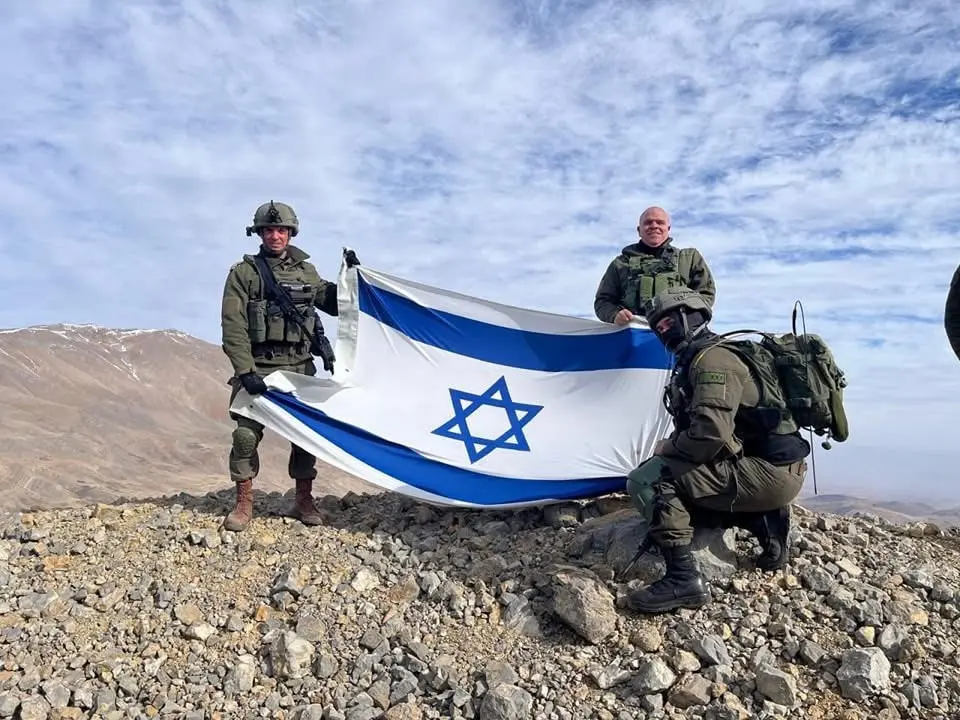
On the regional and international scene, there are serious warnings about the ambitions of some countries, most notably Israel, whose army advanced yesterday 14 kilometers into Syrian territory, occupied the remaining part of Mount Hermon, took control of Quneitra, and reached the armistice line of the 1974 separation of forces agreement, declaring the collapse of this agreement, and the clear announcement of attacking strategic weapons centers and sites so that they do not fall into the hands of the opposition forces, in addition to Turkey, which seeks to play a serious role in light of the current developments and control of some areas of northern Syria, while the United States will re-evaluate its military presence and will try to play a greater diplomatic role, especially since the Russian and Iranian role was weak and did not affect stopping the advance of the opposition forces. Accordingly, Russia may focus on the Syrian coast to maintain its presence, while Iran was the most targeted party, as the fall of the Assad regime means the decline of its role and influence in Syria.

These hypotheses lead us to talk about the Arab role, which is one of the important roles. With a careful reading of the current scene, the Arabs’ goal at this stage is supposed to be directed towards supporting the Syrian people and unifying the opposition forces, fearing foreign ambitions and influence, and exerting pressure to preserve the unity of Syrian lands, and respecting the will and choices of the brotherly Syrian people, in a way that guarantees their security and stability and preserves their achievements, as stated in the profound and influential statement of the Palestinian presidency, which also calls for all political parties to give priority to the interests of the Syrian people, in a way that guarantees the restoration of Syria’s important role in the region and the world, which ultimately serves the interests of the Palestinian people and their just cause towards freedom and independence.

In conclusion, with all due respect and appreciation for the choices and will of the Syrian people, if there is no agreement on all the pivotal and central issues for the future of Syria, foreign ambitions will be present in force and will seek to exploit any state of slackness or disagreement, in order to divide Syria into conflicting cantons. This seems to be a Western and foreign goal led by Israel and the United States, planning behind it for Syria to be the third victim after Palestine and Lebanon, within the framework of fighting the Iranian role in the region in order to establish a new demarcation for the Middle East, which raises more questions about the identity of the next state that the colonial countries seek to devour?

The next few days will reveal the intentions and orientations of all local, regional and international parties, and tomorrow is near.

OPINIONS

Mon 09 Dec 2024 9:33 am - Jerusalem Time

New Syria.. History, Role and Destiny

Dr. Ahmed Rafiq Awad

Dr. Ahmed Rafiq Awad

Opinion Writer

The character of Jawhar in the series Al-Kharbah reflected with great precision and professionalism the crisis of the regime and the former ruling party in Syria. The character, played by Muhammad Khair Al-Jarrah in a brilliant and wonderful way, was characterized by a lot of superficiality, cunning, a desire to appear, and a sense of empty importance. The character believed that his mere marginal participation in the inauguration ceremonies would guarantee him a position or importance in the village and in the party as well, but he discovered too late that events were bypassing him and not paying attention to him, and that no one cared about the inauguration ceremonies at all. That is why Jawhar's wife was more practical than her husband, and more rational than him when she was begging him to go to the field to work in it. The writer of the work, Dr. Hamada Mamdouh, was creative in sculpting the character of Jawhar to express the crisis of the regime and the party in Syria, I mean the crisis of separation from reality, changing priorities, wasting time and effort, neglecting and ignoring daily and life challenges, worshipping the slogan at the expense of the content, coexisting with all contradictions, the possibility of jumping ropes, and a sense of false importance and status. It is no coincidence that Jawhar wears traditional Syrian trousers and a foreign tie at the same time in a strange, harmonious and contradictory combination. However, advice that was previously sold in sentences is now sold in eggs because there is no need for it. The fall of the Assad regime in Syria means, among other things, the fall of the Baath idea in its Iraqi and Syrian nature. This does not mean the fall of the idea of Arabism and its necessity and importance, but it means the fall of the political translation and practical application of Arab nationalist thought for many reasons, including the nature of the deteriorating relationship between the ruling military elites and the forces of the people, the poor inter-relations and the failure to achieve unity, and the power of the imperialist enemy and its multiple conspiracies. The fall of the Assad regime constitutes a real end to the thought that has prevailed in the Arab world since the fifties.

Since 2010 until now, the Arab world has not yet settled on a final form of the regulatory and stable relationship between its political, social and ethnic components and pillars. There is an ongoing search for a constitutional relationship between the regimes and their peoples, acceptable and preserving the political, civil and social rights of all parties. The fall of the Assad regime will increase the power of raising these questions and will increase the intensity of the search for that regulatory and acceptable relationship to establish a strong civil system of government. It is not necessary for militarism or the controlling cliques or a single party to rule, and it is not necessary for division or Balkanization to be chosen as final solutions for the peoples of the Arab nation - despite the ambiguity of the term now - for us, the Palestinian people who are facing killing, escalation, division, annexation and the elimination of the idea of an independent state, we stand by the Syrian people with all their sects and factions, and we are with the unity of the Syrian territory and with the political choice of the Syrian people. We are fine as long as Syria is fine, and we are with a free and democratic Syria that is strong and capable of giving us a new model for governance, administration and the social and civilizational contract, and it will be broken. Our back if Syria is divided or disintegrated, and interest in our cause will decline if Syria enters another phase of fighting, God forbid. What we hope is that our people in Syria will be treated with the chivalry, generosity and hospitality that we know from the authentic and generous Syrian people. Syria or its people cannot deny their role and ability in helping the Palestinian people, not because of geography, not because of strategic interests, not because of national security, but because of those deep ties of brotherhood, religion and humanity. There are countries and there are peoples who are not only motivated by interests, but also by morals and principles, and Syria has always played this role, and when we read what medieval historians wrote, we will be surprised that Damascus was the source, support and champion of Arabism and Islam, and God would grant it victory in the end. The fall of the Syrian regime does not mean at all that Syria will deny its history, role and ability, but rather it is now restoring them.

PALESTINE

Mon 09 Dec 2024 9:28 am - Jerusalem Time

The 37th Anniversary of the Intifada of the Stones... Sacrifices that Knocked on the Doors of Freedom

Salwa Hadeeb: Palestinian women were at the heart of the daily organizational process and fought the struggle from the beginning, armed with a spirit of steadfastness and giving.

Issa Qaraqe: The Intifada of the Stones turned into a global event, and the prisoners released in the 1985 exchange deal contributed to forming its unified leadership

Hani Al-Masry: The Intifada of the Stones was a pivotal historical event that shaped the features of the national identity and almost paved the way for the establishment of an independent Palestinian state.

Qadura Fares: The circumstances of the outbreak of the Intifada of the Stones are still present.. and restoring its founding principles may form the basis for building a modern strategy

Zahra Kamal: With schools and universities closed, women opened their homes as well as some international institutions’ facilities to serve as alternative classrooms.

Dr. Al-Mutawakel Taha: The Intifada of the Stones forged a national identity based on cultural and political resistance in the face of an occupation that stifles all forms of creativity and expression


Writers, officials, prisoners and leaders of the Intifada of the Stones, whose 37th anniversary is today, agreed in interviews with “I” that the Intifada of the Stones in 1987 was a pivotal and deeply influential moment in the Palestinian national conscience. During it, different segments of society, women, men, prisoners and intellectuals, united, and the role of Palestinian women emerged clearly, especially in Jerusalem, when women opened their homes as alternative educational centers and established health and social committees to confront closures and repression. The prison school also produced generations of liberated prisoners who contributed to formulating a national awareness and consolidating an organizational commitment that contributed to crystallizing a unified leadership for the Intifada. They stressed, through several examples, that the Intifada was not a passing event, but rather represented a turning point in shaping a solid cultural and collective identity, based on popular resistance and a shared sense of injustice and occupation.

They saw that the most important lessons from the uprising lie in the belief in unity of ranks, adherence to the central national goal, and reliance on peaceful popular action as a decisive lever in the equation, in addition to the role of the intellectual and creative in supporting the popular movement, noting that these collective experiences, organizational expertise and cultural structures, which were refined by the Intifada of the Stones, constitute today a model that can be inspired to enhance the steadfastness of the Palestinians and revive the spirit of struggle in confronting the occupation and its policies, and reminding the world that the Palestinian cause cannot be ignored or circumvented.


Palestinian women...the heart and organization of the popular movement


Speaking to “Y”, Salwa Hadeeb, a member of the Revolutionary Council of the Fatah Movement, said that Palestinian women, especially those from Jerusalem, have engaged in all forms of struggle since the beginning, armed with a spirit of steadfastness and giving. In the context of the 1987 Intifada, this phase strengthened their role to unprecedented levels, as their efforts included the sectors of education, health and social work.

Hadib explained that women were at the heart of the daily organizing process, saying: “We opened our homes and the headquarters of several international institutions as alternative headquarters for classrooms after schools and universities were closed, and in this way, we ensured that children would not lose their right to education. Our main concern was to preserve the child’s ability to read and write in light of the closure and repression.”

This role was not limited to education, but extended to the health aspect, as Hadeeb pointed out that women organized medical services and first aid committees, and participated in establishing popular committees to protect neighborhoods from settler attacks and soldiers’ raids. She added: “Women distributed information, supported persecuted youth, provided all necessary medicines and food for needy families, and contributed to securing shelter for those whose homes were demolished.”

On the level of national unity, Hadeeb stressed that the uprising brought together the factions of the PLO in a joint national effort, which created a state of integration between the components of the national movement. She pointed out that women played a pivotal role in this context, as she explained that “the uprising brought us together under one national banner, and we, women, were responsible for printing statements and organizing programs, and we took on the role of temporary leadership when prominent leaders were arrested, which contributed to the continuation of the movement and the consolidation of the approach of popular resistance.”

However, Hadeeb acknowledges that Palestinian women did not receive their due share of political representation and decision-making after the advent of the Palestinian National Authority and the political developments that followed. She added: “Women were not given the role they deserved based on their sacrifices during the Intifada. We demanded a quota that would guarantee their participation in organizational and party frameworks, and we set a quota of at least 30%, but implementation remained limited.”

Hadib believes that the Algerian experience was a harsh lesson, as women there were sent back to the kitchen after independence, something that Palestinian women sought to avoid. Despite the challenges, women did not give up and continued to struggle to seize their place. Hadib also stressed the importance of continuing to work until the principle of equality in rights and duties is entrenched in accordance with what is stipulated in national laws and documents.

In conclusion, Hadeeb stressed the need to unite ranks, maintain civil peace and a unified national position, and work to liberate Palestine from the yoke of occupation. She concluded her speech with cautious optimism: “No matter how long it takes, the occupation will end, and we hope to see a free, democratic, and equal Palestine in rights and duties for all.”


Prisoners... A leadership school that shaped national awareness


Throughout the experience of the 1987 Intifada, the pivotal role played by Palestinian prisoners, especially those released in the 1985 exchange deal, in shaping national awareness and strategic planning emerged. On the one hand, Issa Qaraqe, head of the National Library, believes that these released prisoners, with the deep organizational experience they gained in the occupation prisons, contributed to forming the unified leadership of the Intifada, which provided Palestinian society with a cohesive intellectual and organizational system.

Qaraqe' stressed: "The organizational school inside the prisons was a basic lever for educating thousands of prisoners, and upon their return to society, they conveyed an experience of national and cultural awareness that helped fuel the uprising."

On another level, Qaraqe stressed that the Intifada of the Stones turned into a global event, as its details entered every home on the international scene, which enabled the internationalization of the Palestinian cause and the protection of the independent national identity, explaining that international sympathy, in addition to the remarkable media presence, contributed to highlighting the issue of the detainees as an international and humanitarian issue.

He added: "The world began to learn about the reality of the prisoners, conferences were held, and there was greater understanding of their suffering in light of the occupation's violation of international law."

Moreover, Qaraqe believes that the first Intifada, by forming a unified Palestinian entity, restored consideration to a comprehensive national program. It broke the equations that the occupation tried to impose, and transformed prisons into educational spaces of resistance, producing effective leaders who contributed to the continuity of the popular movement, despite the challenges and ongoing repression. With this logic, Qaraqe asserts that the prison experience gave rise to democratic and revolutionary values that strengthened discipline and commitment within national frameworks.

In light of the current political and field transformations, Qaraqe draws attention to the fact that the current circumstances, with all the tragedies and escalating Israeli crimes, may pave the way for the launch of a new, more intense uprising, especially in the wake of the ongoing massacres and systematic attempts at genocide, noting that “we are in dire need of drawing inspiration from the lessons of the first uprising, which focused on unity, organization, and belief in the justice of the cause,” saying: “Just as the first uprising erupted in response to attempts at hegemony, the next uprising may be more furious, and we will never forget or forgive.”


A living example of collective willpower


While Qaraqe acknowledges that arming the people with national unity and a unified leadership is the basic condition for reviving the spirit of the first intifada, he does not overlook the necessity of restoring the Palestinian ranks to confront settlement plans and annexation policies.

Through this reminder of the need for unity of speech, Qaraqe’ reinforces the conviction that the first intifada was not just a historical event, but rather a living example of the power of collective will that charted the course of the struggle and became a reference from which the present and future generations draw inspiration for the principles of steadfastness and insistence on legitimate rights.


A national organizing goal...the key to unity and influence


Speaking about the Intifada of the Stones, Hani Al-Masri, Director General of the Palestinian Center for Policy Research and Strategic Studies (Masarat), described that era to “Y” as a “historical turning point” that shaped the Palestinian national identity. He considered that the Intifada of 1987 almost paved the way for the establishment of an independent Palestinian state, had it not been for a number of external factors, most notably the Iraqi invasion of Kuwait, the collapse of the Soviet Union, and the confusion and haste of the Palestinian leadership in reaping the fruits of the Intifada.

Through this historic event, Al-Masry explains how it seemed to the world that the Palestinian issue could not be ignored or marginalized, and he said: “The Intifada was a very strong message to the entire world, including the Israelis, that the Palestinians are committed to their vision and rights no matter how long it takes.”

By reviewing the lessons learned from that experience, Al-Masry points out the importance of defining a clear and achievable national goal, similar to what the Palestinians did when they agreed on national independence as a regulating goal. This agreement, which was accompanied by national unity and the presence of a unified leadership, opened the way for different groups, movements and generations to engage in the popular movement.

Al-Masry also pointed out that peaceful struggle and popular resistance, despite their apparent simplicity, have proven to be no less effective than armed action, saying: “Popular resistance in its various forms allows every Palestinian to participate, which strengthens popular support and gives the struggle a broader horizon.”

Likewise, Al-Masry does not ignore the regional and international dimension, as the Palestinian issue has a humanitarian, Arab and Islamic character, which makes it capable of mutual influence with the region and the world, pointing out the necessity of not ignoring this fact, saying: “The regional and international dimensions are very important, and cannot be overlooked or ignored.”

At the same time, Al-Masry recalls the role of the media and intellectual research in preparing the atmosphere for the uprising, as popular media contributed to exposing the occupation’s practices and raising awareness of violations, which helped mobilize society and enhance international solidarity. With technological progress, there are now more powerful tools, such as social media, which have enabled Palestinians to “achieve superiority” over the official Zionist discourse, and encourage the emergence of solidarity movements in Europe, the United States, and within universities that have adopted the Palestinian narrative to increasing degrees, as Al-Masry asserts: “It is not just human sympathy, but a real condemnation of Zionism and Israeli policies.”

Based on this legacy, Al-Masry calls for reviving the spirit of unity and organization, and not underestimating the power of the Palestinian message, stressing that building on the experience of the first Intifada requires a unified national leadership, clear goals, and the ability to address the world in a humane and legal language, which paves the way for envisioning more just and effective political paths.


Unity of ranks and popular participation.. Lessons from the past for the future


In his speech, the head of the Commission of Prisoners' Affairs and Liberated Prisoners, Qadura Fares, considered that the circumstances that led to the outbreak of the Intifada of the Stones 37 years ago are still present today with greater force, and perhaps even more dangerous than they were at that time. He pointed out that "the principle of the existence of Israel justifies every struggle carried out by the Palestinian people," stressing that the annexation and settlement projects and the ongoing attacks on the land and holy sites continue to fuel the motives of popular resistance.

In the context of his analysis of the nature of popular participation during the Intifada, Fares believes that it came as a result of a mature popular awareness that had accumulated over the years. This awareness is what made “all segments of society, with all its classes, all its sects, all its age groups” engage in the battle for liberation, transforming “every citizen into a soldier.” At that time, a picture of a unique national consensus emerged, which produced a popular force capable of challenging the occupation.

As for the lessons learned, Fares reaffirms the priority of national unity, stressing that “a broad and influential popular movement cannot take place without comprehensive unity.” Thus, narrow alignments must be avoided, and focus must be on what unites the people of one nation rather than getting involved in what divides them. He adds that peaceful popular struggle, in all its forms, is not a secondary option, but rather “the highest level of struggle,” as it allows every Palestinian space to participate in steadfastness and resistance, far from the restrictions that some forms of armed struggle may impose.

Regarding the current circumstances, Fares believes that restoring the founding principles of the Intifada can form a solid foundation for building a modern Palestinian strategy, noting that “the majority can be part of a popular movement.” He calls here for adopting creative resistance methodologies and making room for new generations to come up with innovative ideas, declaring his confidence that “we have new generations that will surprise us with other new forms of struggle.”

In conclusion, Fares stresses that the challenge is not only in evoking the spirit of the uprising, but in translating this spirit today into a political and societal action capable of confronting the occupation and establishing a unified national methodology that gives the people a real opportunity to exercise their right to freedom and independence.


Women of the First Intifada: From Resistance Homes to an Invincible National Identity


Throughout the Intifada, Zahira Kamal, Secretary General of the Fida Party, saw how that phase embodied a pivotal moment centered around clarity of vision and deep awareness of the existence of a direct occupation that must be resisted. According to what she explained, “the Palestinian public was united and engaged in a national struggle against an occupation present everywhere,” such that this was reflected in the nature of daily work and the means of resistance available.

Amid Israeli closures of schools and universities, Palestinian women have emerged as a key support element. Kamal noted that women “opened their homes and some international institutions’ facilities to serve as alternative classrooms,” preserving children’s right to education and helping life continue despite the blockade.

She also spoke about the existence of health committees, agricultural committees, and committees to secure basic needs, all of which were spaces that allowed women to participate widely and effectively. She said: “Women were present in every action, from providing health care and food, to participating in alternative educational activities, which gave them the opportunity to play a pivotal role in the resilience of society.”

Participation was not limited to a specific group or segment, but extended to all sectors of society, which deepened the unity of the Palestinian ranks. Kamal highlights this idea by saying, “The Intifada produced a cohesive society, practicing a form of integrated resistance, where men, women and children work together, and each individual is able to find a way to contribute to the popular resistance.”

Despite the subsequent political transformations, the Oslo Accords and the complications that resulted from them, the First Intifada remained present in the collective memory as a distinctive milestone. Kamal considered that the steadfastness of Palestinian society during that period formed the basis of a legacy of struggle that cannot be ignored, because it was a “comprehensive popular struggle” that allowed for the drawing of the features of a national identity rooted in the idea of liberation and resistance to the occupier, in addition to providing a practical model for mobilizing the energies of women and men together in the face of policies of repression and closure.

Thus, the first intifada appears in Zahra Kamal’s talk as an exceptional moment: a moment that relied on a solid national awareness, a unified popular will, and a fundamental role for Palestinian women who supported the popular movement from within their homes and in alternative institutions, ultimately creating an image of a vigilant, cohesive, and unbreakable society.


Culture in the time of occupation... a weapon against oppression


From the perspective of writer and poet Dr. Al-Mutawakel Taha, the Intifada of the Stones represented a pivotal moment that unleashed latent meanings in the Palestinian conscience and forged a national identity based on comprehensive resistance, cultural and political, in the face of an occupation that stifles all forms of creativity and expression. Since the beginning of the occupation, the creative person has lived in a narrow and dependent margin, as writing for him - as Taha confirms - was "a work that prevents madness", as it constituted an outlet in a reality stifled by the lack of press platforms, the absence of institutions, and the decline in popular interest in culture, under the pressure of transforming Palestinian society into a fragile working-class society.

Accordingly, writers were forced to adopt a direct and frank language, without embellishment or embellishment, because they were under the deliberate control of the occupier. Taha points out that “the occupation was on the lookout, alert to everything that incites, illuminates and exposes its ugliness,” as it pursued intellectuals, academics and journalists. In a barren and oppressive atmosphere, a group of creative people emerged who made their way through the rubble of oppression, writing texts “similar to a secret pamphlet” to say everything quickly and clearly, and raise the banner of defiance, despite the lack of rewards and encouragement.

Then, with the outbreak of the Intifada at the end of 1987, culture underwent a profound transformation. Culture, in Taha’s understanding, is not just texts, but a system of values and standards for confronting the unforeseen and the strange. In their Intifada, the Palestinians encountered their culture, which grants them “patterns of power” inherent in martyrdom, sacrifice, commitment, and belonging, thus creating a deep-rooted cultural identity. Taha believes that, in this equation, the Palestinians are “forced to learn as a form of resistance,” and to benefit from the capabilities of their culture, which allows for steadfast steadfastness and conscious defiance.

During that period, a real confrontation emerged between two cultural worlds: on the one hand, the open Arab-Islamic culture, and on the other, the culture of the occupier with its one-sided vision. Thus, the Palestinian cultural identity was fused within the framework of resistance to an occupation that only recognizes the other through exploitation. From here emerged a solid Palestinian identity, guided by the spirit and values of the Intifada, and relying on culture to confront dreams of assimilation and uprooting.

Taha believes that the intellectual during the Intifada was not neutral, as he did not have “the luxury of choosing at the crucial moment of confrontation.” Supporting the people was self-evident, and the intellectual who was inactive or justified the occupation lost his true creative quality. Creativity, during the Intifada, was synonymous with freedom and alignment with the people, and the intellectual continued to “dig into the heart of the fire, to move its hands,” testing his intellectual and human courage to the utmost extent.

Inside the detention cells, poetry has become a “weapon” to confront oppression, and a free space that goes beyond the bars and creates another world. Thus, literature has acquired the utmost importance, and has become “necessary” to parallel the confinement and the political position, igniting the collective spirit, and granting hope and continuity.

Today, decades after the Intifada, Taha calls for drawing inspiration from its most important lesson: transforming its spirit into a permanent action, practicing it as the basis of national identity, and establishing its values at the heart of the future Palestinian constitution. The Intifada must not be reduced to a passing political achievement, but rather, as Taha says, it must remain “a permanent action and an obsession that does not sproute,” and its winds must spread to all aspects of Palestinian life, so that the temporary achievement does not turn into an illusion, and so that the revolutionary action moves from a specific time to an ongoing action that confronts challenges and formulates a society that is more vibrant and clear in its goals.

PALESTINE

Mon 09 Dec 2024 9:24 am - Jerusalem Time

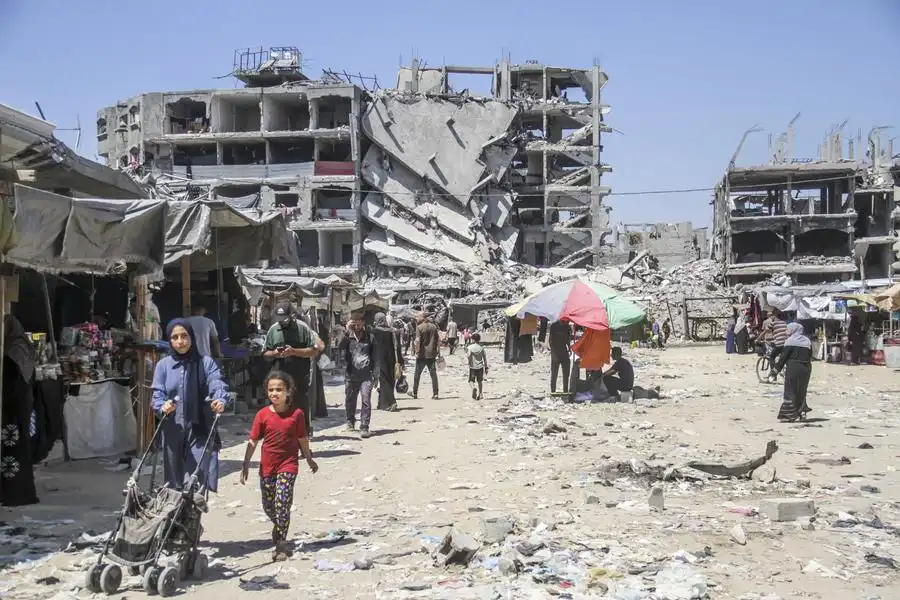
Gaza: Intensive Israeli air and artillery bombardment, expanding area of buildings destroyed


On Monday, the Israeli occupation army intensified its raids and artillery shelling in various parts of the Gaza Strip, while continuing to blow up residential buildings and burn shelters, especially in the northern governorate.


The occupation bombed several areas in the northern Gaza Strip, concentrated in the towns of Beit Lahia and Jabalia.


The occupation also set fire to the "Zaid bin Haritha" school in Beit Lahia, which was sheltering displaced people, before storming it and forcing the displaced to leave.


With American support, Israel has been committing genocide in Gaza since October 7, 2023, leaving more than 150,000 Palestinian dead and wounded, most of them children and women, and more than 11,000 missing, amid massive destruction and famine that killed dozens of children and the elderly, in one of the worst humanitarian disasters in the world.

ARAB AND WORLD

Mon 09 Dec 2024 9:17 am - Jerusalem Time

Israeli move to prevent arms smuggling to Lebanon via Syria

Israeli Defense Minister Yisrael Katz said Monday that he had instructed the army to act to prevent and thwart any arms smuggling from Iran to Lebanon via Syria.


Katz added that he instructed the army to continue working to destroy heavy strategic weapons and infrastructure that threaten Israel.


Katz announced earlier today that the army had seized additional points in the buffer zone with Syria.

PALESTINE

Mon 09 Dec 2024 9:12 am - Jerusalem Time

Free fall!

The "lion cub" left faster than imagined, after five decades of "camelok" rule that was minted by a "parliament of the willing", when it unanimously drafted a constitution tailored to the ambitious heir who was eager to succeed his father, under the cover of promises of a matrix of political reforms that would end totalitarian rule and put the country on the path of democratic change, which would depart from the approach taken by the father who was stubborn in ruling the country and its people, according to the nature of injustice and tyranny.


The Syrian people have the right to rejoice and celebrate their exit from the "shell" into the space of freedom. Perhaps the scenes of women and children exiting the terrifying "shell of Saydnaya" confirm that the night, no matter how long and drawn out, will end, and that the chains, no matter how tight, will be broken.


Lessons from the free fall in cities not far from Damascus dictate caution regarding what the “day after” the fall of tyrants holds, amid fears of the emergence of new versions of the nature of tyranny, hidden behind slogans raised by militias with multiple loyalties and agendas, which may make the fall of the regime just one chapter in the chapters of suffering.


PALESTINE

Mon 09 Dec 2024 9:02 am - Jerusalem Time

The fall of the regime... Analysts read the palm of the present and the future

Dr. Jamal Harfoush: There are opportunities to build a new political system that reflects the aspirations of the Syrian people and establishes a democratic system

Firas Yaghi: The Syrian opposition must seize the historic opportunity to build a new political system based on pluralism and democracy

Dr. Abdul Majeed Suwailem: The goal is to divide Syria into small states based on ethnic or sectarian foundations in line with the American and Israeli visions

Dr. Qusay Hamed: Russia and Iran gradually abandoned the Assad regime after it lost its strategic value as an ally in the Middle East

Nabhan Khreisha: The fall of Bashar al-Assad's regime opens the door to scenarios, including Israel's attempts to promote the division of Syria

Samer Anabtawi: The fall of the Assad regime will lead to increasing pressure on the Palestinian resistance to accept agreements with Israel


With the fall of Bashar al-Assad's regime, after fifty years of Baath Party rule, the Syrian Republic, which witnessed an unprecedented historical event, is entering a new phase whose features are still unclear until now, but its repercussions will be great for the region.

In separate interviews with “I”, writers, political analysts and university professors believe that this historic transformation was caused by multiple local and international factors, which resulted in the collapse of a regime suffering from a decline in its military and political capabilities, and the erosion of the support base of its main allies (Russia and Iran), in light of economic pressures and internal crises. With the erosion of the regime’s ability to control, new challenges have emerged for Syria, which is facing a period of political and security vacuum.

They believe that the next phase may witness potential conflicts between different factions, with the risk of slipping into chaos, which requires concerted efforts from the Syrian opposition and the international community to manage the transition peacefully, and avoid violence and chaos. At the same time, there is a need to rebuild institutions and organize governance, with the necessity of ensuring that the country does not disintegrate into conflicting entities.

Despite the surrounding risks, the writer, analysts and university professors confirm that there are opportunities to build a new political system that reflects the aspirations of the Syrian people, based on pluralism and democracy, and that the success of this endeavor may open new horizons for the country and return it to the global scene, provided that the priority remains the interests of the homeland and the citizen.


International and regional transformations have had a profound impact on the situation of the Assad regime.


Professor Dr. Jamal Harfoush, Professor of Scientific Research Methods and Political Studies at the University of the Academic Research Center in Brazil, confirms that the fall of Bashar al-Assad’s regime so quickly is due to the overlap of several internal and external factors, explaining that these factors included the internal exhaustion of the regime, the loss of popular support, and regional and international transformations.

Harfoush points out that more than a decade of ongoing war has drained the Syrian army and weakened its human and financial resources.

He explains that the Assad regime's reliance on loyalist militias instead of the regular army played a major role in eroding its defensive capabilities.

Harfoush points out that the Assad regime's repressive policies, coupled with rampant corruption, have increased popular anger, leading to a decline in loyalty even among its traditional supporters. These conditions have been exacerbated by economic and living crises that have made it difficult for the regime to maintain its internal stability.

Harfoush explains that international and regional transformations have severely affected the situation of the Assad regime, pointing to the noticeable decline in support from traditional allies such as Russia and Iran.

Harfoush attributes this decline to the economic and diplomatic pressures imposed on Russia due to its intervention in Ukraine and international sanctions against it, which prompted it to reduce its military and economic commitments in Syria.

Harfoush points out that Iran, which is suffering from a stifling economic crisis as a result of US sanctions and the deterioration of its domestic economy, has focused its security and political priorities on Iraq and Yemen, which has led to a reduction in its direct support for the Syrian regime.

Harfoush confirms that coordination between the armed opposition factions was a decisive factor in the fall of the Assad regime.

He explains that the ability of these factions to control strategic locations, such as Homs and Damascus, hastened the collapse of the regime and its loss of control over the ground.

Regarding the repercussions of the fall of the Assad regime, Harfoush explains that the Syrian interior may face major challenges, most notably the political vacuum, which may lead to conflicts between opposition factions and armed groups, in addition to the difficulties of rebuilding the state and the destroyed infrastructure.

Regionally, Harfoush points to the potential for regional imbalance to be destabilized, with neighboring countries such as Türkiye and Israel intervening to advance their interests.

Internationally, Harfoush stresses that the emergence of a new Syrian government may redraw regional and international alliances, with the possibility of opening channels of communication with the West.

Harfoush believes that the day following the fall of the Assad regime will be full of challenges and opportunities, most notably the security vacuum that may arise as a result of internal conflicts between different factions, the need for massive investments in reconstruction, in addition to the need for comprehensive plans to return refugees and displaced persons and ensure their stability.

Harfoush points out the importance of transitional justice, stressing the need to hold accountable those involved in crimes without resorting to revenge to ensure the unity of society.

In contrast, Harfoush explains that there are opportunities to build a new political system that reflects the aspirations of the Syrian people and establishes a democratic system.

Harfoush points to the possibility of international re-engagement, as the fall of the Assad regime may push the international community to support reconstruction and return Syria to the global scene.

Harfoush believes that Syrian and international civil society must come together to ensure a peaceful and stable transition in Syria, warning of the risk of sliding into chaos or protracted conflicts.

Harfoush stresses that managing the transitional phase wisely can contribute to achieving sustainable regional and international stability.


Withdrawing Russian cover from Bashar al-Assad's regime


Writer and political analyst Firas Yaghi believes that the main reason for the fall of Bashar al-Assad's regime is the withdrawal of cover from him by Russia, as Moscow did not intervene to defend the regime at critical moments.

Yaghi explains that this shift is due to agreements reached between Russia, Turkey, Iran, and the United States of America, especially after the Syrian regime’s intransigence and rejection of all political initiatives, including the participation of the opposition in government.

Yaghi explains that the Assad regime has shown intransigence in dealing with all proposed solutions, especially those calling for the participation of the Syrian opposition in the government. The regime has also rejected proposals related to reconciliation with Turkey and attempts to find solutions to the deteriorating economic and social situation in Syria.

Yaghi also points out that rampant corruption and deteriorating economic conditions have further complicated the Syrian scene, making the continuation of the situation a harbinger of more bloodshed and escalation of violence.

Yaghi points out that Assad's allies, especially Russia and Iran, preferred to lift the cover on him after realizing that his continuation would lead to a new cycle of violence and bloodshed in Syria. This decision came as a result of the allies' unwillingness to get involved in more Syrian blood, especially at this stage, with the Assad regime's intransigence in accepting political solutions.

Regarding the Syrian opposition, Yaghi stresses that it must exploit the historic opportunity that has now been given to it to build a new political system based on pluralism and democracy.

Yaghi stresses the importance of establishing a system that respects the rights of the Syrian citizen regardless of his religion or sect, considering that establishing such a system will have a major impact not only on Syria, but on the Arab region as a whole.

However, Yaghi explains that the Syrian opposition faces major challenges, most notably the lack of homogeneity among its various components and the differences in their ideas and ideologies.

Yaghi points out that changes in the opposition's way of thinking may open the way for establishing a new political system capable of unifying Syria, but this matter still depends on the coming days.

He stresses that Syria needs a new political system based on a constitution that establishes the concept of pluralism.

Yaghi believes that the success of the Syrian opposition in achieving this will lead to the establishment of the first democratic pluralistic Arab regime in the region, which may open the way for positive influences on other Arab regimes.

Yaghi stresses that the situation in Syria is sensitive and complex, emphasizing that the country's future depends largely on the opposition's ability to invest in this historic moment.

Yaghi points out that forming a democratic, pluralistic system that respects the law and includes everyone could turn Syria into an inspiring model for the region.

Yaghi warns that failure to achieve this could lead to the country sliding into chaos and becoming a failed state, which will increase the suffering of the Syrian people and exacerbate existing crises.


Systematic handover of cities by the Syrian army to armed groups


The writer and political analyst Dr. Abdul Majeed Suwailem confirms that what happened in Syria is not a war in the traditional sense, but rather an organized coup agreed upon between the United States, Israel and Turkey, with the approval of the Syrian army, and it is a systematic process of handing over cities by the Syrian army to armed groups that he described as "terrorist."

Suwailem points out that this process comes within a broader framework to reshape the region in a way that serves the interests of the major powers, most notably Israel.

Suwailem points out that the Syrian army, for the first time in its history, is leading a coup not in favor of democratic forces, but in favor of armed groups that have been supported internationally and regionally.

Suwailem explains that the scene looked like an organized withdrawal, with cities and sites being handed over to armed groups with little resistance.

Suwailem believes that there was a prior agreement between America, Israel and Turkey to hand over the cities to the so-called Syrian opposition, explaining that Bashar al-Assad was aware of the details of this plan, but was unable to confront it, and then informed his Iranian and Russian allies of what was happening after it was too late.

Regarding the absence of Russian and Iranian intervention, Suwailem explains that as allies of the Assad regime, they were not in a position to provide support, given that events were being managed in their final form.

Suwailem confirms that Russia and Iran were not informed until after the agreement had ended, which made any attempt to intervene futile, as even Hezbollah was aware that matters had been settled.

Suwailem believes that the main goal of this operation is not only to overthrow the Assad regime, but also to divide Syria into small states based on ethnic or sectarian foundations, in line with the American and Israeli vision.

Suwailem explains that this plan seeks to re-engineer Arab societies to create harmony between the concept of state and nation, so that Israel appears as a natural state in the region, as it is based on the same idea as a Jewish religious state.

Suwailem stresses that this approach is not new, but rather part of the broader American-Israeli project to reshape the Middle East.

Although getting rid of the Assad regime may be seen as an achievement by some Syrians who suffered from the regime’s undemocratic practices, Suwailem believes that the next day will be much more difficult, as division will weaken Syria as a unified state and open the door to internal conflicts that threaten the stability of the entire region.

Suwailem stresses that the success of this plan depends on the ability of the Syrians to confront it. If the United States and Israel fail to divide Syria, this will represent a major setback for the Zionist project.

Suwailem warns that this scenario requires Arab awareness and political will to confront these plans that target the unity and stability of the region.

Suwailem stresses that the next stage requires more efforts to preserve Syria's unity, because the American-Israeli plan is not limited to Syria only, but extends to include other Arab countries, with the aim of enabling Israel to completely dominate the region.


An unprecedented turning point in the modern history of Syria


Professor of Political Science at Al-Quds Open University, Dr. Qusay Hamed, confirms that the fall of Bashar al-Assad’s regime represents an unprecedented turning point in the history of modern Syria, especially after more than fifty years of rule by the Baath Party and the Assad family.

Hamed explains that many factors, accumulating over the past ten years, contributed to this downfall, which came as a result of the Assad regime gradually losing control over large parts of the country.

According to Hamed, the Assad regime began to falter since the outbreak of the Syrian revolution, as the regime was subjected to successive blows, whether from the armed opposition that controlled large parts of the country, or as a result of its main allies being preoccupied with their own issues.

Hamed points out that the last year has witnessed an acceleration in the collapse of the regime due to Russia, Assad's strongest ally, being preoccupied with its war with Ukraine, which has reduced its ability to support him militarily and politically.

According to Hamed, Hezbollah also played a vital role in supporting Assad, but it was preoccupied for more than a year with its war with Israel, which caused great losses to its leadership and military structure, including the assassination of a number of its prominent leaders and its Secretary-General Hassan Nasrallah.

Hamed explains that Hezbollah has become in dire need of human and military cadres to strengthen its efforts against Israel, which has led to a reduction in its support for the Syrian regime.

According to Hamed, Iran, another strategic ally of the Assad regime, has also come under increasing pressure as a result of tensions with Israel, which has repeatedly targeted Iranian sites in Syria, weakening its military structure there.

Hamed confirms that these pressures, in addition to Iran's preoccupation with the Israeli file, have greatly affected Tehran's ability to support the Assad regime.

Hamed explains that the regular Syrian army has been suffering for years from a decline in its military capabilities and weak control over the ground.

Hamed points out that the Assad regime has lost control over vast provinces, while its control is limited to Damascus and its countryside. This military retreat has prompted some Syrian army leaders to abandon the regime and not enter into deadly confrontations with opposition forces, which has contributed to accelerating the collapse of the regime.

Hamed explains that geographical control in Syria has become distributed among multiple parties, including the armed opposition, Turkey, Russia, and Kurdish forces, which has made the regime unable to regain its influence in most parts of the country.

Hamed confirms that Russia and Iran have gradually abandoned the Assad regime, after the regime lost its strategic value as an ally in the Middle East.

Hamed explains that Russia is now focused on protecting its interests in Syria, without committing to supporting the regime, which is no longer able to regain control or achieve stability.

Regarding what could happen in the next phase, Hamed points out that Syria stands at a crossroads, where the greatest danger lies in the possibility of the country entering a state of chaos and internal conflicts.

Hamed stresses that avoiding this scenario requires the Syrian opposition to work on reuniting the country, forming specialized committees to manage the affairs of government, and rebuilding state institutions.

Hamed points out the importance of controlling the security situation inside Syria, with a focus on establishing civilian structures to manage the country's affairs away from military polarization.

Hamed explains that the Syrian opposition, through its control of the ground during the past two weeks, has shown positive signs of its intention to preserve the Syrian institutions and work towards a peaceful transfer of power, and its determination to keep the Syrian Prime Minister temporarily until the institutions of power are handed over, which is a positive thing in controlling the situation.

Hamed believes that there are a number of challenges facing the Syrians, especially with regard to the transition from a revolutionary state to a state state, the features of the transitional phase and the role that the previously influential countries (Turkey-Russia-Iran) will play in this phase? And what will be the nature of the next ruling system? (Secular or with a religious reference, especially Islamic)? And they certainly face challenges related to the nature of the relationship with their surroundings (Iraq, Turkey, Lebanon and undoubtedly Israel) and certainly the reconstruction of Syria.

Hamed describes the current situation in Syria as a watershed moment in the country’s history, noting that a well-organized transition could lead to Syria’s stability and reconstruction, but Hamed warns that failure to do so could lead to escalating chaos and conflict, making Syria’s future even more uncertain.

Hamed stresses that the success of the transitional phase depends on the ability of Syrians to prevent internal fighting and work to achieve political stability.

Hamed stresses the importance of building democratic institutions capable of leading Syria towards a better future, away from chaos and polarization.


The fall of the Assad regime is the cumulative result of deep and multiple reasons.


Journalist Nabhan Khreisha believes that the fall of Bashar al-Assad’s regime was not a spur-of-the-moment event, but rather came as a cumulative result of deep and multiple reasons, ranging from the deteriorating economic conditions, organized crime, and the decline in international and regional support for the regime, all the way to radical shifts in the balance of power on the ground.

Khreisha explains that for years, the Assad regime has been facing a state of continuous deterioration on all levels. The Syrian economy has witnessed an unprecedented collapse, as the value of the Syrian pound has collapsed against the dollar, and chaos has spread in the markets, amid the spread of corruption and organized crime.

Khreisha points out that the Assad regime relied on annual profits estimated at $2.4 billion from illegal activities, but this was not enough to save it from bankruptcy. This economic deterioration was accompanied by the regime losing Iran’s ability to support it as a result of international sanctions and the deterioration of its economic situation.

Khreisha points out that despite Arab attempts to return the regime to its regional environment by restoring its membership in the Arab League in 2023, Assad exploited these efforts to consolidate his power instead of improving the internal situation.

Khreisha explains that the Assad regime rejected any real steps towards reform, which led to the outbreak of new protests calling for its overthrow. This coincided with the armed opposition’s challenge to the Syrian army, which had become weak and disintegrated, with the pro-regime militias becoming stronger than the army itself.

Khreisha points out that Russia was unable to intervene to prevent the collapse of the Assad regime, despite having two important military bases in Syria. The options available to Moscow were limited, especially with its preoccupation with the Ukraine war since 2022, which made it unable to allocate military resources to support Assad without affecting its other fronts.

According to Khreisha, Russia was facing a strategic dilemma: either sacrifice its influence in Syria or retreat in Ukraine, which effectively made it abandon Assad.

Khreisha asserts that Iran faced major obstacles in supporting the Assad regime, most notably the intensive surveillance by American and Israeli satellites, which prevented the effective transfer of weapons. With the sudden and rapid collapse of the Syrian army, Iran found itself unable to provide any effective assistance, which exposed its weakness and that of its allies in the region.

Khreisha believes that the fall of Assad has major repercussions on the balance of power in the Middle East. On the one hand, the collapse of the regime represents a strong blow to the Iranian axis, as the influence of its allies, such as Hezbollah and Hamas, declines under the pressure of Israeli strikes. On the other hand, the United States and Israel strengthen their regional positions, which leads to a shift in the balance of power in their favor.

At the same time, Khreisha points out that the fall of the Assad regime opens the way for complex scenarios, most notably Israel's attempts to exploit the situation to promote the division of Syria.

Khreisha cites statements by Israeli Foreign Minister Gideon Sa'ar, who called for the formation of "minority alliances" and strengthening relations with the Kurds and Druze, reflecting the long-standing Israeli desire to divide the region into sectarian and religious states.

As for the day after the fall of the regime, Khreisha is cautiously optimistic. The Syrian opposition is showing positive intentions to preserve the unity of the country, with ideas being put forward to form a transitional governing body or a military council that includes various parties. This step aims to manage the transitional phase, organize elections to form a civilian government, and write a new constitution.

However, Khreisha points out that the challenges are great, especially in light of the differences between the opposition components and the effects of political and sectarian divisions.

Khreisha stresses that the opposition's success in forming a pluralistic and democratic political system is the key to Syria's stability and future.

Khreisha stresses the importance of establishing a system based on citizenship and law, far from sectarian and religious affiliations. Despite the difficulty of the task, this system, if achieved, could be a model to be emulated in the Arab world, which could lead to fundamental changes in regional political systems.

Khreisha points out that the future of post-Assad Syria depends largely on the opposition’s ability to overcome its differences and build an inclusive political system.

Despite the challenges, Khreisha believes that the fall of the Assad regime gives Syrians a unique opportunity to rebuild their country on new foundations, which may represent a glimmer of hope for a people who have long suffered from the ravages of war and tyranny.


Iran and Russia are the biggest losers from the fall of the Assad regime


Writer and political analyst Samer Anabtawi believes that the biggest losers from the fall of Bashar al-Assad’s regime are Iran and Russia, after they lost control over one of their most important allies in the region, while the main beneficiaries are Israel, Turkey and the United States, who will strengthen their role and influence in the region in light of this new reality.

According to Anbatawi, the reasons that led to the fall of the Assad regime so quickly are complex and linked to several political, economic and security factors, as the Syrian state remained, throughout the period of Assad’s rule and the Baath Party, in direct conflict with American and Israeli policies in the region, which led to it being exposed to severe pressure from both parties in various fields.

Anbatawi explains that Syria chose a policy of self-sufficiency and rejected American policies that might open up areas such as loans and aid, which prompted it to join the axis of resistance and defiance. These policies led to increased pressure on the Assad regime by major powers, especially the United States.

Anbatawi points out that the Syrian crisis worsened with the outbreak of the devastating civil war, which resulted in hundreds of thousands of victims and human and material losses, in addition to the severe economic siege that greatly affected the regime. In addition, there were international reports on violations of human rights, freedoms and social justice in Syria, which contributed to isolating the regime on the international scene.

According to Anbatawi, these factors had a direct impact on the internal instability of the Assad regime, especially in light of the tense regional situation, starting from October 7, 2023, and the region’s involvement in military wars with Israel and its allies.

On the other hand, Anbatawi explains that Iran and Russia, two major allies of the Assad regime, believe that continued support for Assad will require many years of military and political confrontation.

Anbatawi points out that Iran was under great pressure due to its nuclear file and developments in the region, while Russia was preoccupied with the repercussions of the war in Ukraine. These factors led to a decline in the support of these two countries for the Assad regime, which contributed to accelerating its collapse.

Anbatawi believes that the fall of the Assad regime has major repercussions on the regional level. The Syrian regime, which is an essential part of the axis of resistance, will leave a vacuum that Israel may exploit to strengthen its presence deep inside Syria. This situation may be used by the Hebrew state as a pretext to enter deeper into Syria under the pretext of confronting what it considers threats from the Syrian opposition, claiming that it may contribute to the escalation of conflicts between armed factions and push towards the division of the Syrian state.

Anbatawi expects that the collapse of the Assad regime will have clear effects on the Lebanese situation, as it may enhance the state of chaos there, in addition to its repercussions on the Palestinian cause and support for the resistance.

Anbatawi points out that the Assad regime has always been supportive of the Palestinian cause, and its fall will lead to increasing pressure on the Palestinian resistance and its position to accept agreements with Israel. In addition, the effects may include other regions such as Iraq and Yemen, where the axis of resistance is suffering from a decline in positions due to these developments.


ARAB AND WORLD

Sun 08 Dec 2024 10:01 pm - Jerusalem Time

Biden: We will work with all Syrian groups and evaluate their actions

Outgoing US President Joe Biden said the United States will work with "all Syrian groups" within the framework of the United Nations to ensure a political transition after the fall of Bashar al-Assad's regime.

"We will work with all Syrian groups, and assess their words and actions, including the UN-led process, with the goal of establishing a transition away from the Assad regime and toward an independent, sovereign Syria with a new constitution," Biden said in a speech from the White House.

He added that the fall of the Assad regime represents a historic moment and an opportunity for the Syrian people to build peace in their country and for the Middle East region, stressing that his administration will support Syria's neighbors, including Jordan, Iraq, Israel and Lebanon.

Biden pointed out that the Assad regime had brutally killed thousands of innocent civilians and should be held accountable, stressing that it had refrained from engaging in a serious political process and continued to commit crimes against its people.

Biden said that his country "will not give ISIS a chance to build its capabilities, and will not allow Syria to become a safe haven for it. We will work to protect our forces in Syria and continue our mission against ISIS."

The Syrian armed opposition announced the fall of the Assad regime and the entry of its forces into the capital Damascus - at dawn on Sunday - as the culmination of a series of swift victories it achieved in the past few days in Aleppo, Hama, and then Homs.

PALESTINE

Sun 08 Dec 2024 9:16 pm - Jerusalem Time

One dead and 6 injured in Israeli bombing of a tent sheltering displaced people in the central Gaza Strip

A citizen was killed and others were injured, Sunday evening, in an Israeli occupation bombing in the central Gaza Strip.


Local sources reported the death of a female citizen and the injury of 6 others, including children, who were transferred to Al-Aqsa Martyrs Hospital in Deir al-Balah, as a result of the occupation targeting a tent sheltering displaced people in the town of Al-Zawaida, in the central Gaza Strip.


The Israeli occupation forces continue their aggression on the Gaza Strip, by land, sea and air, since October 7, 2023, which resulted in the death of 44,708 citizens, the majority of whom are women and children, and the injury of 106,050 others, in an incomplete toll, as thousands of victims are still under the rubble and on the roads, and ambulance and rescue crews cannot reach them.

ARAB AND WORLD

Sun 08 Dec 2024 8:23 pm - Jerusalem Time

Russian source: Moscow granted Bashar al-Assad and his family asylum "for humanitarian reasons"

An official source in Russia told CNN on Sunday evening that ousted Syrian President Bashar al-Assad and his family arrived in Moscow after being granted asylum in Russia.


"Assad and his family have arrived in Moscow. Russia has granted them asylum on humanitarian grounds," the Russian news agency TASS quoted a Kremlin source as saying.


Earlier on Sunday, the Russian Foreign Ministry issued a statement saying that Assad "decided to leave his presidential post and left the country, giving instructions for a peaceful transfer of power."


A source close to the Syrian opposition told CNN that the ousted president left Damascus under Russian protection, while a separate source said that Bashar al-Assad went to Latakia in northwestern Syria, where Russia has an air base.

PALESTINE

Sun 08 Dec 2024 8:04 pm - Jerusalem Time

Israeli occupation penetrates the Syrian Golan and approves the establishment of a "buffer zone"

The Israeli occupation forces penetrated several kilometers into the Syrian Golan Heights, and took control of the Syrian Mount Hermon military site, in a new escalation that threatens regional security.


Israeli sources reported that "the Israeli army is currently working on establishing a buffer zone aimed at protecting settlements in the occupied Golan." The sources claimed that "the incursion is not to permanently seize Syrian territory, but rather to enhance Israel's security and protect the occupied Golan Heights."


In a related context, the Israeli political-security cabinet unanimously approved last night the decision to occupy the Syrian Mount Hermon in the liberated Golan, while proceeding with the establishment of the buffer zone.

ARAB AND WORLD

Sun 08 Dec 2024 6:33 pm - Jerusalem Time

Israeli raids target security headquarters in Damascus

Fires broke out on Sunday evening in security headquarters buildings in Damascus, according to correspondents from Agence France-Presse and the Syrian Observatory for Human Rights, which explained that they were caused by Israeli shelling.


The agency's photographer saw flames rising from the security square area in Damascus, which includes security headquarters including military intelligence. In another neighborhood, another photographer saw flames erupting from a branch of criminal security. An agency correspondent reported that a fire also broke out at the immigration and passport center in the Abbasid district of the capital. The Observatory said that Israeli raids "targeted the security square in Damascus near the buildings of the former regime's General Staff, intelligence, and customs, which led to fires breaking out there."

PALESTINE

Sun 08 Dec 2024 4:39 pm - Jerusalem Time

Russia: Assad left Syria and this is what he recommended

Russia's foreign ministry said in a statement on Sunday that ousted Syrian President Bashar al-Assad had left the country after resigning from office and issuing orders to hand over power peacefully.

The statement said that "as a result of negotiations between Assad and a number of participants in the armed conflict in the territory of the Syrian Arab Republic, he decided to resign from the presidency and leave the country, giving orders for the peaceful transfer of power."

The ministry did not mention Assad's current location in the statement, and stressed that Russia did not participate in any talks regarding his departure.

The ministry said that Russian military bases in Syria were put on high alert, but there was no serious threat to them at the moment, and that Moscow was in contact with all the armed Syrian opposition and urged all parties to avoid any violence.


Earlier, the Flight Radar website, which tracks aircraft, reported that a Syrian plane suspected of carrying Bashar al-Assad left Damascus airport before the opposition entered the capital Damascus at dawn today. The plane initially flew towards the Syrian coastal region, the stronghold of the Alawite sect to which Assad belongs, but then suddenly changed course and flew in the opposite direction for a few minutes before disappearing from the radar map. The armed Syrian opposition announced the fall of the Assad regime and the entry of its forces into the capital Damascus - at dawn today, Sunday - as a culmination of a series of lightning victories it achieved in recent days, one after the other, in Aleppo, Hama and then Homs.

Source: Reuters

ARAB AND WORLD

Sun 08 Dec 2024 2:19 pm - Jerusalem Time

The day after his execution, the "great exit" of thousands of Syrians from Assad's prisons

Inside a small cell in the notorious Sednaya prison, about 10 women stand in a state of shock, shock and fear, after an armed opposition member opened the cell door and demanded that they come out.


In an attempt to calm them down, the fighter told them, “Don’t be afraid, don’t be afraid, we are the revolutionaries. Go out and go wherever you want.”


This short conversation was part of dozens of scenes that spread on social media platforms about the liberation of several prisons and the release of thousands of detainees from the prisons of the ousted President Bashar al-Assad's regime.


But the most shocking scene in the video was when one of the detained women started to leave the cell door and a small child came out in front of her. According to human rights activists, this child was born in detention and has never seen the world.


Celebrations spread throughout the Syrian cities with the news of the liberation of detainees from the prisons of Aleppo, Hama, Homs and Adra, but the greatest joy came after the liberation of detainees from Sednaya prison in the Damascus countryside, which is one of the most fortified Syrian military prisons, and is called the "human slaughterhouse" due to the torture, deprivation and overcrowding inside it, and was nicknamed the "red prison" due to the bloody events that it witnessed during the year 2008.


A previous statement by the Syrian Network for Human Rights estimated that the number of detainees in Syrian prisons from March 2011 to August 2024 amounted to 136,614 people, including 3,698 children and 8,504 women who are still under arrest or forcibly disappeared.


Another video clip showed the joy of one of the detainees after his release, and he swore repeatedly that they were freed from prison hours before the death sentence was carried out against him and dozens of detainees inside.


Pastel Syria

Commenting on the liberation of the prisons, Syrian journalist and activist Qutaiba Yassin said, “The Bastille of Syria has fallen... historic moments, the release of detainees from Sednaya prison, the takbeers were heard from a kilometer away.”


He added in a series of posts on his account on the X website, “Here in each room they put 10 detainees or more. You may not believe it, but we will prove to you soon that tens of thousands of our sons were martyred here in these slaughterhouses.”


He added, "The information coming from Sednaya prison indicates that not all detainees in the prison have been released yet, because there are underground floors and the fighters of the Aggression Deterrence Forces have not been able to know where their doors are yet," calling on anyone with information to provide assistance.


Legal demands

In turn, the director of the Syrian Network for Human Rights, Fadel Abdul Ghani, said that it is necessary to strike a balance between releasing political detainees who were arbitrarily detained by the Syrian regime and subjected to brutal torture, and the unorganized release of all prisoners, including those who committed crimes.


Abdul Ghani added in an interview with Al Jazeera Net that he fears that the random release of detainees without a thorough review of their files will harm the file of political detainees and weaken the credibility of human rights demands for their rights.


He called for studying the files of detainees carefully, to ensure the distinction between political detainees and criminals involved in acts that threaten community security, suggesting that this be done under independent human rights supervision by assigning independent human rights organizations to supervise the release operations to ensure that justice is achieved.


Abdul Ghani also suggested involving the victims of the detainees or martyrs of the revolution or their representatives in making decisions related to the release of the perpetrators of major crimes against the Syrian people, to ensure respect for their rights.


PALESTINE

Sun 08 Dec 2024 1:52 pm - Jerusalem Time

Jerusalem: Israeli forces arrest a young man and threaten to demolish a house in Jabal al-Mukaber

Today, Sunday, the Israeli occupation forces arrested a young man and notified him of the demolition of a house in the town of Jabal al-Mukaber in occupied Jerusalem.


Local sources said that the occupation forces arrested the young man Qusay Jaabis from the town of Al-Mukaber, and the occupation intelligence raided the house of the freed prisoner Jamal Abu Jamal in the Abu Jamal neighborhood in the town.


She added: The occupation municipality and police handed the Secretary of the Fatah Movement in the Jabal al-Mukaber area, Hashem Shakirat, a ticket and a decision to demolish his house.


The sources indicated that the occupation authorities transferred the prisoner Muhammad Hassan Hammad from Qalandia camp to administrative detention for a period of 6 months. He is the son of the prisoner Hassan Hammad and the brother of the detainee Osama.