ARAB AND WORLD

Thu 12 Dec 2024 5:58 pm - Jerusalem Time

After going missing, American Travis Timmerman found alive in Syrian prisons

Syrians found American citizen Travis Timmerman on Thursday and broadcast a video recording of him, believing that he was the American journalist missing in Syria, Austin Tice.


A video clip has spread on social media in which Syrians say that they found the American journalist, Austin Tice, in the Damascus countryside after his release from Assad’s prisons following the fall of the regime.


However, sources for "Syria TV" explained that the person found in the Damascus countryside is an American citizen from the state of Missouri and his name is Travis.

In turn, the American CBS network confirmed that the American citizen Travis Timmerman, who has been missing for 7 months in Syria, has been found.


For its part, Anadolu Agency indicated that Timerman was missing in Syria and was found after the detainees were released from Sednaya prison near Damascus.


Following the outbreak of the Syrian revolution, a number of Americans disappeared, most notably the freelance journalist and former US Marine, Austin Tice, after preparing press reports in the Syrian opposition areas at the time in the Damascus countryside in 2012, after entering via Lebanon.


Austin Tice


At that time, a video clip was circulated talking about Austin being kidnapped by “unknown armed groups,” while the Syrian opposition said at the time that it was an attempt by Assad’s intelligence to deny that his checkpoints were responsible for his arrest.

Last Tuesday, White House spokesman John Kirby confirmed that American officials are making strenuous efforts to obtain as much information as possible about Austin Tice, who was captured in Syria 12 years ago.

He added that US estimates indicate that he is still alive.

Six months ago, the killing of the Syrian-American doctor, Majd Kamalmaz, was announced after his arrest in Syria since 2017.

PALESTINE

Thu 12 Dec 2024 5:28 pm - Jerusalem Time

Israeli forces demolish two houses and three cement walls east of Bethlehem

Today, Thursday, the Israeli occupation forces demolished two houses and three cement walls in the Malha area of the town of Za'tara, east of Bethlehem.


Za'tara Municipal Council member Abdul Qader Dhuib said that an occupation army force, accompanied by military vehicles, demolished two houses, each with an area of about 100 square meters, in addition to three cement walls surrounding citizens' lands, under the pretext of building in Area C of the West Bank.


He explained that the occupation deliberately oppresses citizens by demolishing their homes, as part of a policy of displacing Palestinians from their land, and that the eastern countryside of Bethlehem is being subjected to a series of measures aimed at seizing lands for the benefit of colonial activity and displacing residents.

PALESTINE

Thu 12 Dec 2024 5:27 pm - Jerusalem Time

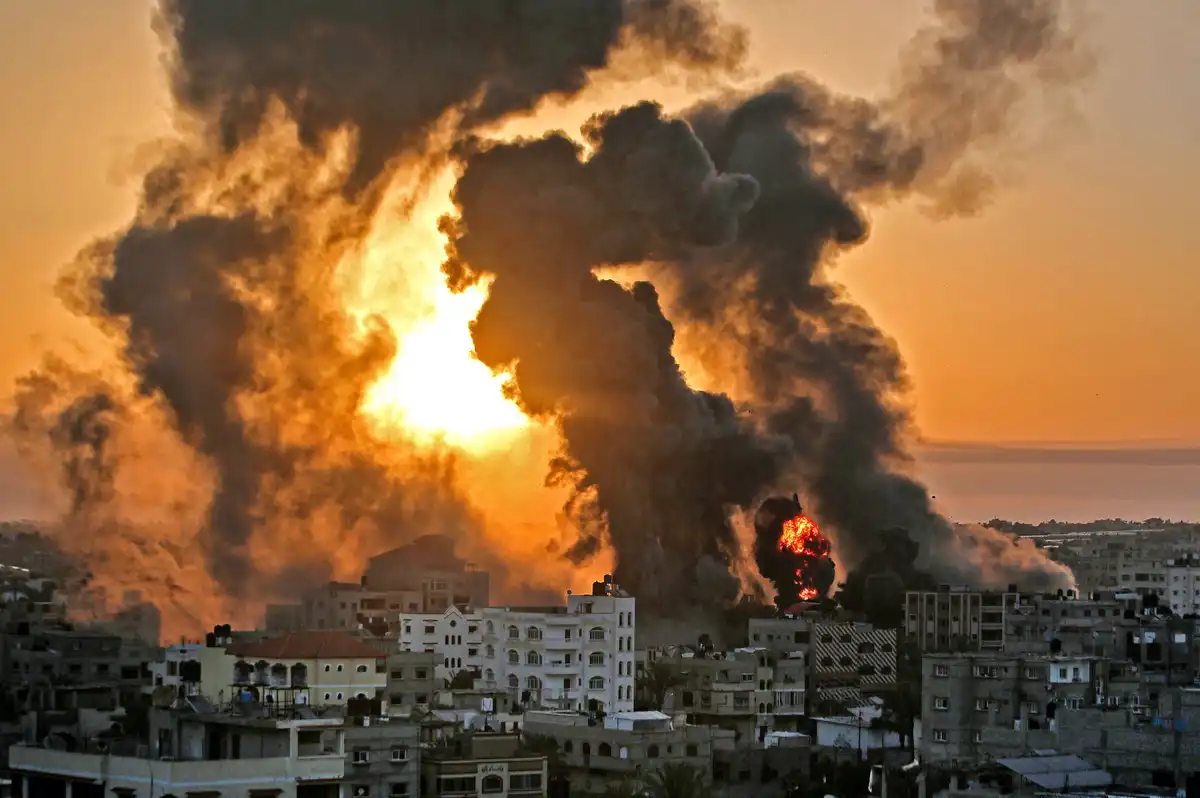
Two dead in Israeli bombing of a house in Jabalia, north of the Gaza Strip

Two citizens were killed, Thursday evening, when the Israeli occupation forces bombed a house in Jabalia Al-Nazla, north of the Gaza Strip.


The official news agency "Wafa" said that the occupation forces bombed a house in the town of Jabalia, which led to the martyrdom of two citizens and the injury of others.


The occupation forces also fired machine guns at citizens' homes in the Sabra neighborhood, south of Gaza City, while the occupation forces' artillery bombarded the vicinity of Abu Sharia's office inside the neighborhood.


Citizens were also injured when an Israeli drone bombed a residential apartment in the Sheikh Radwan neighborhood in Gaza City.


Since dawn on Thursday, 38 citizens have been killed as a result of the occupation's bombing of various areas of the Gaza Strip.

PALESTINE

Thu 12 Dec 2024 1:17 pm - Jerusalem Time

Ben Gvir calls for "permanent checkpoints" on West Bank roads

Israeli National Security Minister Itamar Ben-Gvir called on Thursday for the establishment of "permanent roadblocks" in the West Bank, claiming that "the settlers' right to life takes priority over the freedom of movement of Palestinians."


In a post on the X platform, the leader of the far-right Jewish Power party said, “I reiterate my constant demand to set up permanent checkpoints on the roads of Judea and Samaria - the West Bank - and to provide safe roads for residents of the Palestinian Authority.” He added, “The right to life of Israelis takes precedence over the freedom of movement of residents of the Palestinian Authority.”


Ben Gvir condemned the killing of a settler and the wounding of 3 others in a shooting in the southern West Bank, on Wednesday evening.


In parallel with the genocide in the Gaza Strip, the Israeli occupation army and settlers expanded their attacks in the West Bank, including East Jerusalem, resulting in a total of 809 martyrs and about 6,450 wounded, according to official Palestinian data.

PALESTINE

Thu 12 Dec 2024 1:14 pm - Jerusalem Time

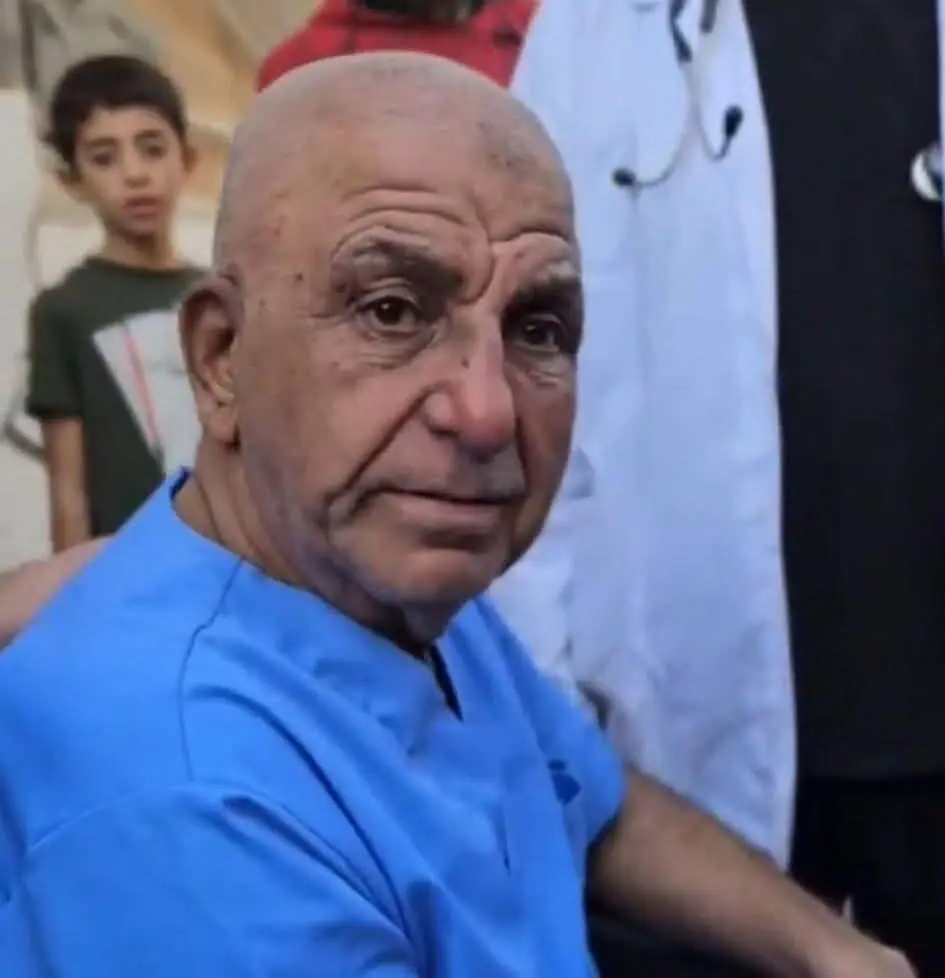
The only orthopedic specialist in the northern Gaza Strip was martyred

A doctor was killed today, Thursday, by Israeli occupation forces’ bullets while he was going to his workplace at Al-Awda Hospital in the northern Gaza Strip.


Local sources reported that Dr. Saeed Joda, the only orthopedic specialist in the northern Gaza Strip, was martyred after being shot in the head by an Israeli army Quadcopter reconnaissance plane.


She pointed out that Joda was heading from Kamal Adwan Hospital to Al-Awda Hospital for a medical mission in Tal al-Zaatar in Jabalia, north of the Strip, noting that he travels to work between the two hospitals due to the shortage of medical staff.


It is noteworthy that his son Majd (24 years old) was martyred a week ago, while trying to rescue his cousins from under the rubble of the house that was bombed by the occupation aircraft in Jabalia camp.


It is noteworthy that the occupation continues its aggression and siege on the northern Gaza Strip for the 70th consecutive day, as about 4,000 citizens were martyred and lost, and there is no water, food or fuel available.


Since the beginning of the occupation's aggression on the Gaza Strip on October 7, 2023, 1,047 health sector personnel have been martyred, while the occupation has arrested more than 310 others, hundreds have been injured, and the occupation has destroyed about 130 ambulances. The deliberate targeting of medical infrastructure has also deprived citizens of the ability to access basic care services.

PALESTINE

Thu 12 Dec 2024 12:56 pm - Jerusalem Time

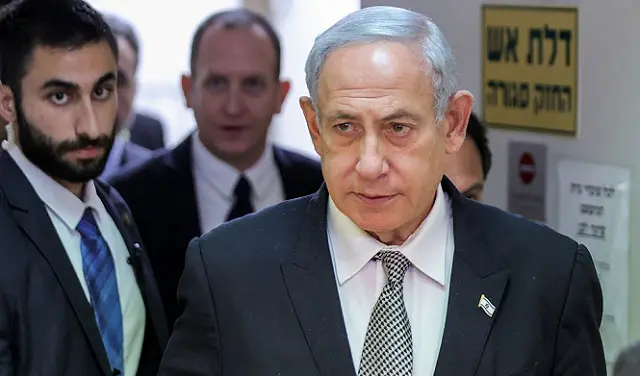
Israeli Channel: Netanyahu is not interested in the remaining prisoners in Gaza and does not know their number

The Israeli media has renewed talk about the intelligence failure that occurred on October 7, 2023, and about Prime Minister Benjamin Netanyahu’s continued intransigence on the prisoner exchange file.


Channel 12 reported on a massive training exercise that it said the Al-Qassam Brigades - the military wing of the Islamic Resistance Movement (Hamas) - conducted months before Operation Flood of Al-Aqsa, to ensure its ability to surprise Israel.


According to the channel, the late Hamas leader Yahya Sinwar and the commander of its military wing, Mohammed Deif, held a meeting of the Supreme Military Council and concluded that the training was successful and that Israeli intelligence agencies did not notice that it might mean launching an attack on Israel.


According to the channel's investigative correspondent, Omri Manev, the training took place in May 2023, during which 2,000 Hamas elite forces were called in to ensure the movement's ability to launch a surprise attack.


Regarding the ongoing stagnation in the prisoner exchange process, the channel's political affairs correspondent Yaron Abraham said that Netanyahu must remember that the Israelis will not resort to Khalil al-Hayya (Deputy Chairman of Hamas), nor Mohammed Sinwar, nor Yahya Sinwar, who no longer exists.


Israel is the obstacle

Abraham expressed his belief that Hamas was not the only obstacle to reaching a deal and that Israel played a role in this matter over a whole year of negotiations that led to nothing.


In this context, Netanyahu's former office director, Brigadier General David Agmon, said that Israel should have stopped everything from the first moment and released 6,000 Palestinian prisoners to restore its captives, and after that it could have considered the way to deal with Hamas.


As for the channel's political affairs analyst, Dafna Liel, she said that Netanyahu "did not provide any answer regarding the extent to which the war's goals were achieved, and that he spoke about the issue of the kidnapped (prisoners) for only a minute and a half," adding that "the declaration of absolute victory came out while 7 of our soldiers had been killed on the same day in Lebanon and Gaza."


Finally, former Labor MK Stav Shapir said that she cannot ignore the fact that Netanyahu is still making mistakes about the real number of prisoners in Gaza, considering this evidence of his lack of concern.


Shabir pointed out that the Prime Minister was talking about the prisoners and did not know whether Hamas had 99 or 100 prisoners, and asked one of his assistants to confirm the number for him, describing the matter as evidence of his disconnection from this issue.

PALESTINE

Thu 12 Dec 2024 12:51 pm - Jerusalem Time

The death toll in the Gaza Strip has risen to 44,835

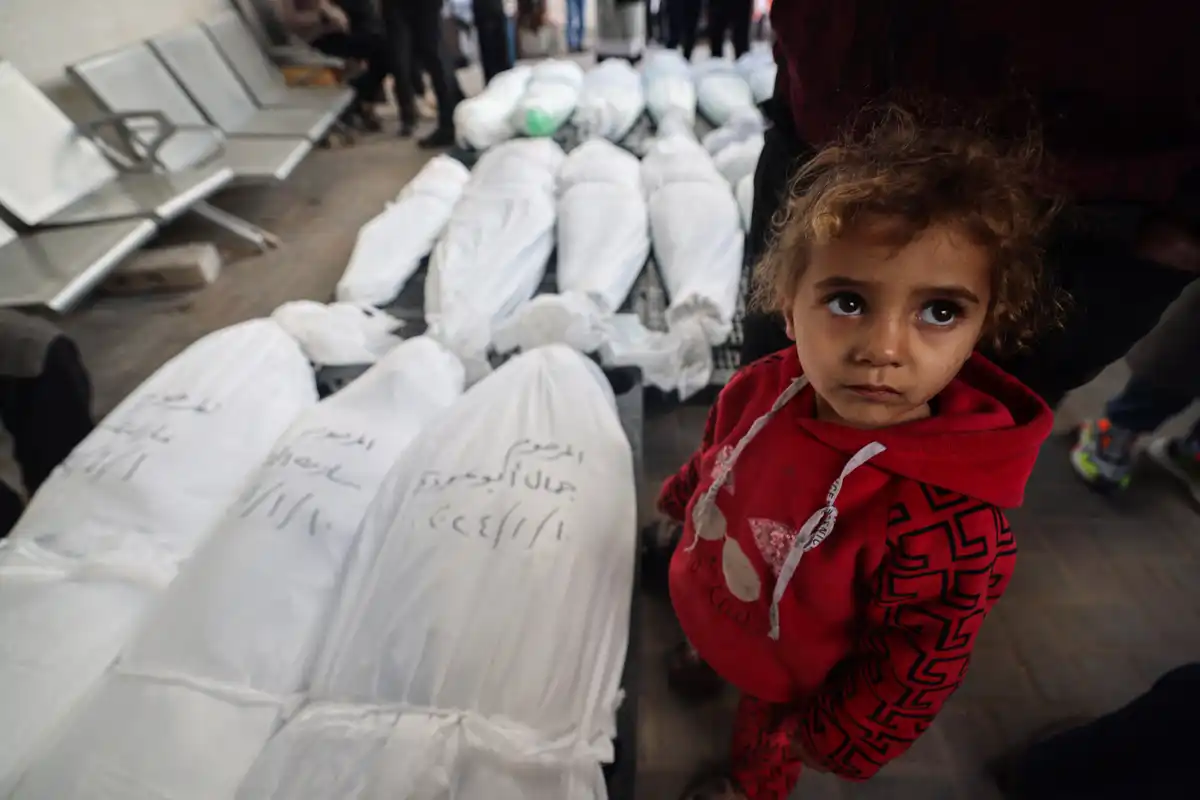
The Ministry of Health in Gaza announced today, Thursday, that the death toll in the Gaza Strip has risen to 44,835, the majority of whom are children and women, since the start of the Israeli occupation aggression on October 7, 2023.


It added that the number of injuries has risen to 106,356 since the beginning of the aggression, while thousands of victims are still under the rubble.


It pointed out that the occupation forces committed 3 massacres, which resulted in the death of 30 citizens and the injury of 99 others.

PALESTINE

Thu 12 Dec 2024 11:10 am - Jerusalem Time

Israeli forces arrest two young Palestinians from occupied Jerusalem

Today, Thursday, the Israeli occupation forces arrested two young men from the occupied city of Jerusalem.


Sources in the Jerusalem Governorate said that the occupation forces arrested two young men, whose identities are not yet known, from the Sheikh Jarrah neighborhood and the town of Issawiya.


The sources added that the occupation forces stormed the Al-Suwana neighborhood in Jerusalem and removed a picture of the Palestinian flag.


In another context, the occupation authorities released the Jerusalemite Nahil Ghaith, on condition of house arrest for 5 days, and expulsion from her home for 30 days.


The occupation forces arrested the Jerusalemite Ghaith and her husband Jamal Ghaith yesterday, Wednesday, after settlers attacked them in their home in the Batn al-Hawa neighborhood in the town of Silwan.

PALESTINE

Thu 12 Dec 2024 10:04 am - Jerusalem Time

UN General Assembly calls for ceasefire in Gaza and support for UNRWA

The United Nations General Assembly overwhelmingly approved resolutions on Wednesday calling for an immediate ceasefire in Gaza and support for the UN agency for Palestinian refugees (UNRWA), which Israel recently moved to ban.


158 countries voted in favor of the resolution to immediately cease fire, 9 voted against it, and 13 countries abstained (out of 193 countries). 159 countries voted in favor of the resolution to support the United Nations Relief and Works Agency (UNRWA), 9 countries voted against the resolution, and 11 countries abstained.


The votes capped two days of speeches that overwhelmingly called for an end to the 14-month war between Israel and the Hamas militant group and demanded access to all of Gaza to address the growing humanitarian catastrophe.


The United States voted, along with Israel, with a small minority speaking and voting against the resolutions: Argentina, Papua New Guinea, Paraguay and Tonga.


It should be noted that Security Council resolutions are legally binding, but General Assembly resolutions are not, although they reflect world opinion. There is no veto power in the General Assembly.


The Palestinians and their supporters went to the General Assembly after the United States vetoed a Security Council resolution on Nov. 20 that demanded an immediate ceasefire in Gaza. It was supported by 14 other council members, but the United States objected that it was not linked to the immediate release of hostages taken by Hamas militants during their Oct. 7, 2023, attack on Israel that sparked the war.


Palestinian Ambassador to the United Nations Riyad Mansour expressed his gratitude for the overwhelming support for both resolutions on Wednesday, saying the vote "reflects the resolve and determination of the international community."


"We will continue to knock on the doors of the Security Council and the General Assembly until we see an immediate and unconditional ceasefire and until we see the widespread distribution of humanitarian aid throughout the Gaza Strip," he said.


The language of the resolution adopted by the Assembly on the ceasefire mirrors that of the Council resolution that Washington vetoed. The resolution calls for “an immediate, unconditional and lasting ceasefire by all parties,” while also emphasizing “the demand for the immediate and unconditional release of all hostages.”


This language is much stronger than General Assembly resolutions adopted on October 27, 2023 – three weeks after the Hamas attack – which called for an immediate and sustained humanitarian truce leading to a cessation of hostilities and on December 12, 2023, which demanded “an immediate humanitarian ceasefire.”


The resolution adopted on Wednesday (11/12/2024) was also the first time that Germany and Italy, which abstained in December 2023, voted in favor of a ceasefire in Gaza. Their support left the United States as the only G7 member still opposed.


On the humanitarian front, the resolution rejects "any effort to starve the Palestinians" and demands immediate access to civilians to provide assistance indispensable to their survival.


The second resolution supports the mandate of UNRWA, which was established by the General Assembly in 1949. It also condemns the laws adopted by the Israeli parliament on 28 October banning UNRWA activities in the Palestinian territories, a measure that is due to come into effect within 90 days. The resolution reiterates UN Secretary-General António Guterres’s statement that UNRWA is the “backbone” of all humanitarian operations in Gaza and that no organization can replace it. The resolution stresses the need for “UNRWA operations to continue without hindrance.”


The resolution calls on the Israeli government to "abide by its international obligations and respect the privileges and immunities of UNRWA" and to uphold its responsibility to facilitate the unimpeded delivery of humanitarian assistance throughout the Gaza Strip.


Israel claims that about a dozen of UNRWA's 13,000 employees in Gaza took part in Hamas attacks on Israel that led to the war. It recently gave the United Nations the names of more than 100 UNRWA employees it accuses of having ties to "militants" without explanation.


US Deputy Ambassador to the United Nations Robert Wood reiterated America's opposition to the ceasefire resolution ahead of Wednesday's vote and criticized the Palestinians for again failing to mention Hamas's October 7, 2023, attack on Israel.


"At a time when Hamas feels isolated by the ceasefire in Lebanon, the draft resolution on a ceasefire in Gaza risks sending a dangerous message to Hamas that there is no need to negotiate or release hostages," he said.


Israel says Hamas's October 7, 2023, attack killed about 1,200 people, including 391 soldiers, and took 250 hostages to Gaza. About 100 of the hostages are believed to still be in Gaza, and a third are believed to be dead.


Ceasefire efforts have stalled.


The brutal war on the besieged Gaza Strip resulted in the killing of 45,000 citizens, the overwhelming majority of whom were women and children, while more than 100,000 citizens were injured, most of whom were also women and children, according to the local Ministry of Health.


Wood said the United States would continue to seek a diplomatic solution to the war and called UNRWA a “critical lifeline for the Palestinian people.” But he said the UNRWA resolution was “seriously flawed” because it failed to create a path to restoring trust between the UN agency and Israel — despite U.S. efforts and the U.S. proposal.


Just before the vote, Israel's UN Ambassador Danny Danon accused the resolution's supporters of collusion with Hamas, which he said had "desperately infiltrated" UNRWA, and denounced their failure to link a ceasefire to the release of the hostages.


Slovenia's UN Ambassador Samuel Zbojar, echoing the views of many speakers, pointed to the tens of thousands killed in Gaza.


"Gaza no longer exists. It is destroyed. Civilians face hunger, despair and death," he told the assembly on Wednesday.

ARAB AND WORLD

Thu 12 Dec 2024 9:51 am - Jerusalem Time

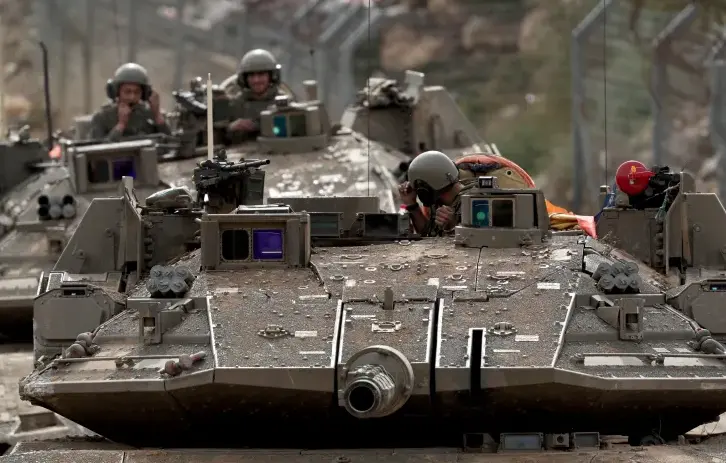
Israeli forces enter Quneitra, obstruct UN forces in Golan

The Israeli occupation forces entered the town of "Al-Hurriya" in the Syrian province of Quneitra in the south of the country, while a UN source spoke about the Israeli occupation forces obstructing the work of peacekeeping forces in the occupied Golan Heights.


The occupation forces also asked the town's residents to evacuate it, with the aim of including it in the buffer zones on the border strip between Israel and Syria.


Local residents said that the occupation forces carried out a forced evacuation of the residents of the village of "Rasm al-Rawadhi" in Quneitra, and confirmed that these forces have now penetrated as deep as 5 kilometers in some areas.


Map Map Mount Hermon Syria Lebanon Golan Heights Quneitra


UN reinforcements

This comes as the American magazine "Newsweek" quoted a UN diplomat as saying that the international organization sent reinforcements to Syria after Israeli forces infiltrated across the ceasefire line that has been in place for five decades.


The source explained that the United Nations Disengagement Observer Force has reinforced a number of its positions in the Golan Heights, adding that the Israeli army has moved forces to the area, which has severely restricted the movement of peacekeeping forces in the Golan Heights and hindered them from carrying out their tasks.


Following the fall of ousted Syrian President Bashar al-Assad, Israeli Prime Minister Benjamin Netanyahu declared the 1974 disengagement agreement between Syria and Israel void and ordered the deployment of Israeli soldiers in the buffer zone in the Golan Heights, which separates the part of the highlands that Israel occupied and annexed from the rest of the Syrian plateau.


In recent days, the Israeli occupation army has launched hundreds of air strikes in Syria, targeting chemical weapons depots, air defense systems, ammunition depots and naval vessels.


A UN expert said about these raids: “This is absolutely illegal, and there is no basis in international law for doing so, but it is a continuation of what Israel has been doing in Syria for a decade.”


In turn, the UN Special Rapporteur on the promotion of a "democratic and just order", George Katrougalos, said: "This is another case of disrespect for the law shown by Israel in the region... unprovoked attacks against a sovereign state."

ARAB AND WORLD

Thu 12 Dec 2024 9:23 am - Jerusalem Time

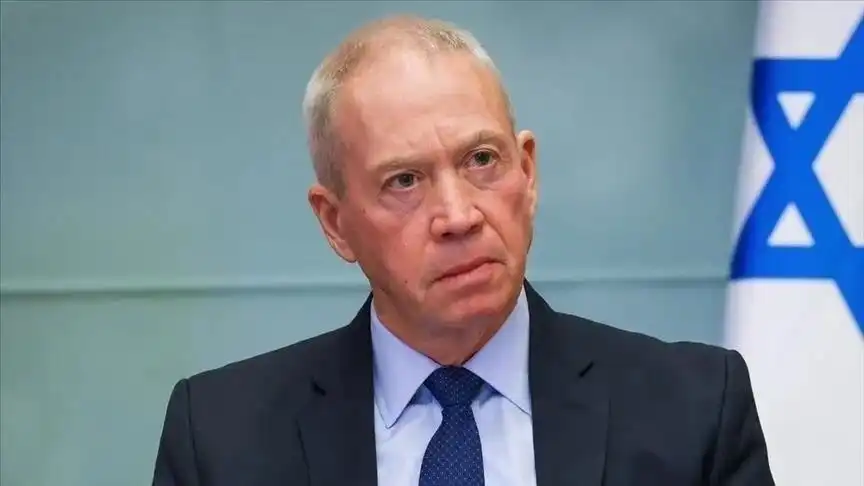
White House welcomes wanted war criminal Galant despite ICC warrant

Wanted war criminal Yoav Galant, Israel's former defense minister, reportedly visited the White House on Tuesday for a meeting with a key official in President Joe Biden's administration — just weeks after the International Criminal Court issued an arrest warrant for him on charges of crimes against humanity.


Galant posted on social media that he met with President Joe Biden’s Middle East envoy, Brett McGurk, on Tuesday to discuss a deal to release Israeli hostages held in Gaza. In the Facebook and X posts, he wrote that there was “a real possibility of a breakthrough” to reach a deal. He attached photos of himself cheerfully shaking hands with McGurk, a right-wing hawk who supports the Israeli occupation and a remnant of the first Trump administration who was instrumental in shaping Biden’s Gaza policy.


He added that the meeting was one of several scheduled in Washington, D.C., including a meeting with the Washington Institute for Near East Policy that was canceled after protesters demonstrated outside the Gallant Hotel in New York City last week.


On November 21, the International Criminal Court issued an arrest warrant for Galant, bringing him to The Hague on charges of crimes against humanity and war crimes for using starvation as a method of warfare and directing a deliberate attack against civilians in Gaza. Galant is no longer a member of the Israeli government. He directed the Israeli military as defense minister during the Israeli genocide until last month, when Prime Minister Benjamin Netanyahu replaced him with someone more loyal to the prime minister.

ARAB AND WORLD

Thu 12 Dec 2024 9:17 am - Jerusalem Time

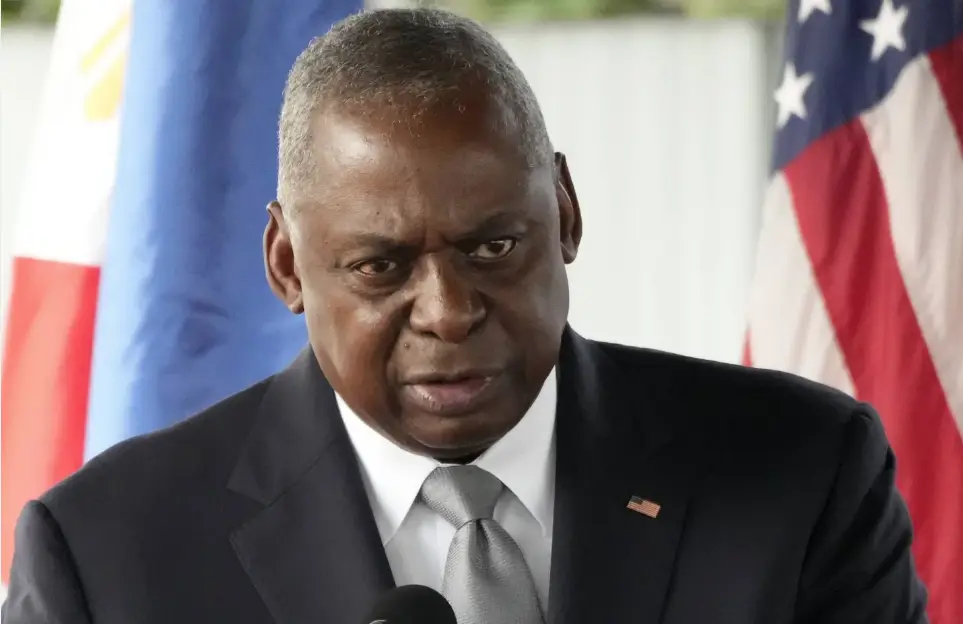
Austin calls for close consultation with Israel on Syria

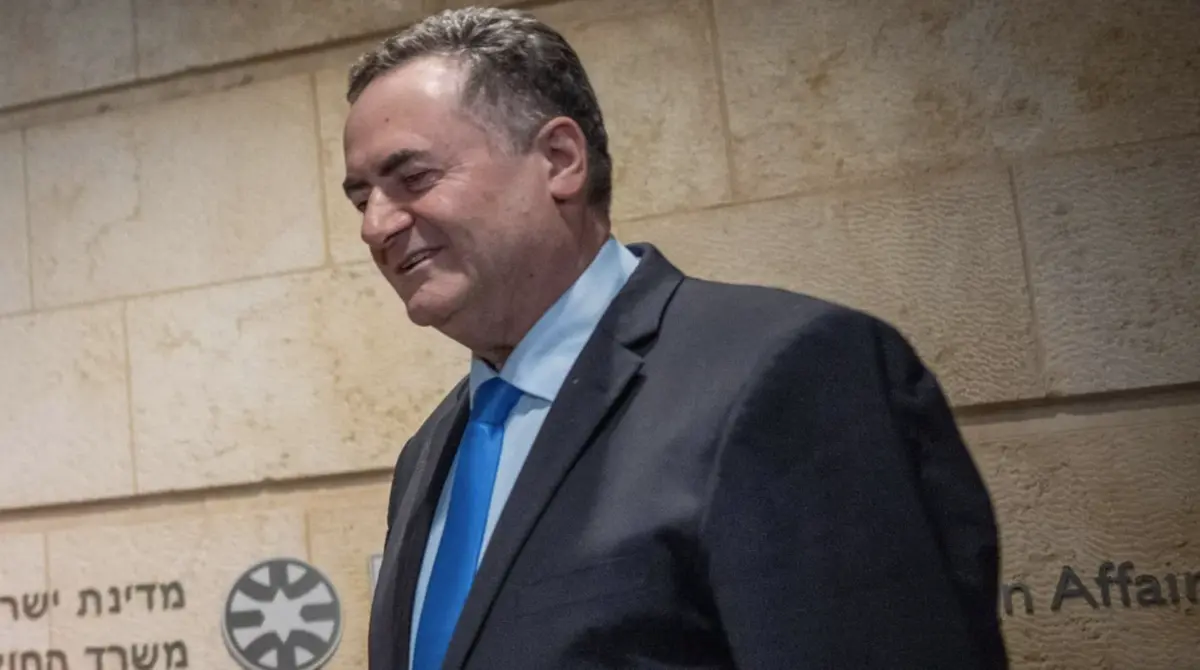
The US Department of Defense said on Wednesday that Secretary of State Lloyd Austin told Israeli Defense Minister Israel Katz during a phone call that it was important for the United States and Israel to be in close consultation on events in Syria.


"Secretary Austin stressed the importance of close consultation between the United States and Israel on the events taking place in Syria," the ministry said in a statement. Austin told Katz that Washington is monitoring developments in Syria and supports a peaceful, inclusive political transition, it added.

OPINIONS

Thu 12 Dec 2024 8:49 am - Jerusalem Time

War of Extermination.. Israel's Language in Gaza

op-ed "AlQuds" dot com

op-ed "AlQuds" dot com

Opinion Writer

Israel continues its daily war of extermination in the Gaza Strip, and speaks only in the language of massacres committed in most areas and parts of the Strip, especially against displaced women and children. Accordingly, the number of martyrs yesterday reached more than 53 martyrs in two massacres committed in cold blood, bringing the number of martyrs since the beginning of the aggression to 44 thousand and more than 800, not to mention the thousands of wounded, injured and disabled. All of these crimes are committed by Israel, knowing full well that it is targeting civilians and displaced people, who wake up at dawn to the roar and buzz of merciless planes that bomb everything, out of the army’s desire to take revenge on the citizens of Gaza.


No area in Gaza is spared from Israeli air strikes or bloody attacks by the army, which cause the continuous departure and displacement of citizens who remain in danger. Therefore, most of the martyrs are displaced people who do not know where to go.


Israel continues to use dangerous and internationally prohibited weapons, which lead to the destruction of surrounding homes and buildings, and the burning and tearing apart of the bodies of martyrs and scattering them over long distances, as part of Israel’s plan to empty the northern Gaza Strip of its citizens.


According to the Hebrew media, the Israeli army has achieved everything required of it militarily in Lebanon and Gaza, and that the matter now rests with the political level. It stated in a report it prepared that the continuation of the war, especially in Gaza, serves the political survival of Netanyahu, who does not want this war to stop. Therefore, Netanyahu’s ambitions are clear in continuing the war of massacres and genocide and remaining in the Strip and occupying most of its parts.


On the ground, Israeli measures continue to cause the tragedy of the people of Gaza due to the war on all levels, especially the humanitarian side, as the people suffer seriously from a severe shortage of medicines and medical supplies and from a scarcity of food, which threatens to cause them to die of starvation.


In this context, the reactions of the Commissioner-General of the United Nations Relief and Works Agency for Palestine Refugees (UNRWA), Philippe Lazzarini, are still ongoing. He confirmed that a famine is likely to occur in northern Gaza, and that hunger has been used as a weapon by Israel, noting that people in Gaza are being deprived of basic necessities, including food to survive. The United Nations also said that humanitarian aid to the northern Gaza Strip has been severely cut off for 66 days.


This has left between 65,000 and 75,000 people without food, water, electricity or health care, according to the international organization.


Despite all the reports, appeals and cries, Israel continues its massacres and has turned the Gaza Strip into a language of permanent genocide. It seems that all the reports about the imminent arrival of a swap deal and a temporary ceasefire are only sedatives for the Israeli street and the families of the detainees. In fact, the war may take longer with an Israeli revenge plan that includes daily raids and shelling that will result in dozens of martyrs, while the world remains silent and submissive, even admiring Israel, which some believe is actually waging a war to defend its security, as it claims, as if the world does not see the size and numbers of martyrs and destruction. So, to whom will Gaza complain about its suffering from now on?

PALESTINE

Thu 12 Dec 2024 8:39 am - Jerusalem Time

Gaza: Life on the brink of collapse

A study on displacement stress and its relationship to psychological and social problems among adults in displaced families


92.20% suffer from security pressures and 90.07% suffer from personal pressures

86.50% suffer from social pressures and 87.86% suffer from economic pressures.

90.80% suffer from service pressures and 83.31% suffer from family pressures

Problems related to anxiety (85.16%), pessimism (82.92%), post-traumatic stress disorder (81.75%), alienation (81.15%), depression (80.41%), anormativity (78.35%), psychosomatic symptoms (78.27%), and social withdrawal (77.39%)


A scientific study entitled “Displacement pressures and their relationship to psychological and social problems among adults in displaced families in the governorates of the Gaza Strip” was prepared by a research team consisting of: (Prof. Dr. Jultan Hijazi, Dr. Tamara Musleh, Dr. Hamouda Abdel Aal)


92.20% suffer from security pressures, which are represented in: the lack of a sense of security in the place of displacement due to unsafe and unstable security conditions (random shelling by planes, tanks and watchtowers - shooting - .....), the prevalence of community violence, the spread of theft, and thus the feeling of a threat to the safety of family members due to unsafe housing conditions, and the lack of food security.


The study, which was conducted on a cluster sample consisting of (238) individuals from a complete cluster of displacement camps in Khan Younis Governorate who were randomly selected, noting that each displacement camp includes different segments of Palestinian society living under the same displacement conditions, which were and continue to be exposed to all forms of Israeli violence, indicated that 90.07% suffer from personal pressures represented in: loss of stability and dispersion, inability to make any decision related to life and destiny, feeling anxious about the future and its ambiguity, fear of losing life, people and resources, loss of property and repeated displacement, working constantly under pressure to accomplish matters related to life’s demands and needs, constant regret for not being able to work within the job or specialty, suffering from insomnia and loss of sleep quality, self-neglect and loss of interest in personal appearance.


The study results also showed that 86.50% suffer from social pressures represented in: difficulty in forming new social relationships in the place of displacement, loss of the ability to adapt to new behaviors in the place of displacement, feeling alienated and separated from society due to the violence prevailing everywhere, loss of support and assistance and feeling let down, feeling nostalgic for home, family, neighbors, friends and relatives who formed the social world before displacement, loss of peace due to noise, screaming, street vendors and generators, and life turning into a jungle that is not governed by the values and customs of Palestinian society.


It showed that 87.86% suffer from economic pressures represented by: low or no income (53% reported that their monthly income is less than 1,000 shekels), the many requirements of life and the exorbitant rise in prices, the difficulty of obtaining job opportunities, and thus the difficulty of securing a suitable source of income, and the inability to provide basic needs such as food, shelter, and health care, especially in light of the starvation policy that Israel used during this war, and the exploitation of aid, injustice in distribution, and monopolization of goods, which led to the inability to provide the family’s requirements of clothing, health services, and education.


She pointed out that 90.80% suffer from service pressures represented in: the unsuitability of the place of residence in displacement and the difficulty of reaching the necessary health service centers, the shortage of medicines and treatment, the lack of appropriate sewage networks, the accumulation of waste, the lack of potable water, the permanent power outages and the lack of alternative energy, the weakness of the Internet and communications networks, the lack of safe and comfortable means of transportation, the cessation of the educational process and the difficulty of its return under the current circumstances, and the lack of educational services and capabilities.


The results of the study revealed that 83.31% suffer from family pressures, which are represented in: tension in relationships between family members, lack of family support, frequent quarrels within the family, lack of emotional communication and physical presence of some family members, prevalence of emotional numbness and lack of emotional stability among family members, and feeling helpless to protect the family.


The results showed a positive correlation between exposure to displacement pressures and psychological and social problems, as the degree of suffering from psychological and social problems was very high according to the criterion adopted in the study. The most important problems suffered by the sample members were:


Anxiety (85.16%), pessimism (82.92%), post-traumatic stress disorder (81.75%), alienation (81.15%), depression (80.41%), anormativism (78.35%), psychosomatic symptoms (78.27%), social withdrawal (77.39%).


Prof. Dr. Goultan Hassan Hijazi, Professor of Psychology and one of the study’s authors, said: “These results constitute indicators of the psychological and social realities of Palestinians in the Gaza Strip as a result of the war that has been going on for fourteen months. We are placing them in the hands of official, unofficial and international institutions, perhaps as a message to sense the danger of the suffering of a defenceless people left to face the horrors of war without protection or any means of life.”


He added: There is no doubt that the circumstances of war, with the political, social and economic reality they impose through oppression, pressure and threats, constitute an assault on human dignity, freedom and values, and become part of the components of the collective mind of peoples, whose tragedies are borne by individuals over a long period of time, and are part of their experiences whose effects are reflected in all aspects of the human personality and the lives of societies.


Hijazi continued: The circumstances of the war waged by the Israeli occupation on the citizens of the Gaza Strip have led to the creation of violent, tense situations and events, and have created a harsh reality that was and will be the effective element in shaping the psychological reality of the Palestinians. The results of this war will constitute a shock that will be added to the series of shocks that the Palestinians have been exposed to during the long years of occupation, which have left personal and collective accumulations that will inevitably return to the memory of the events of the 1948 Nakba, in which the Palestinians lost their land, homes, and hope for a better future.

PALESTINE

Thu 12 Dec 2024 8:35 am - Jerusalem Time

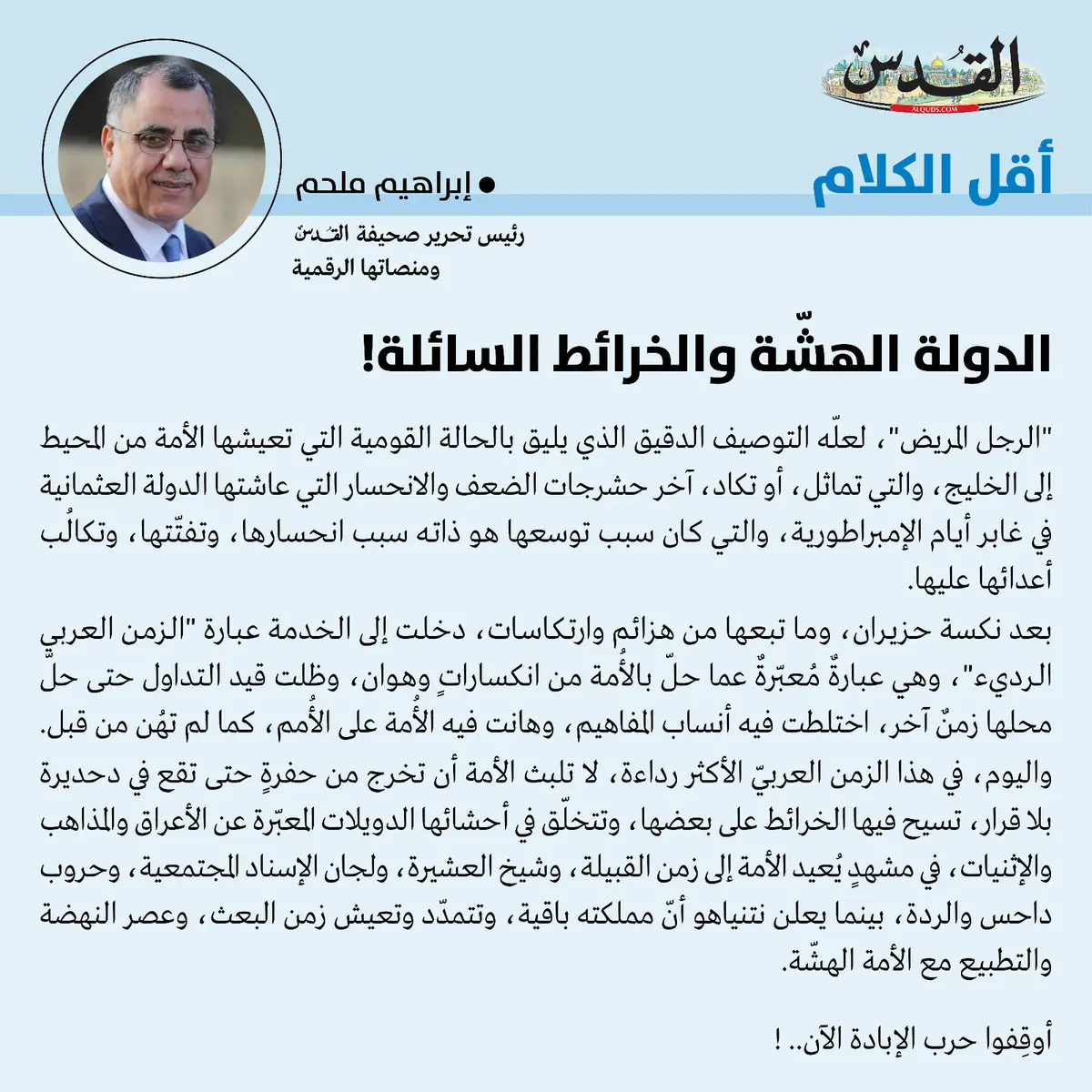
The fragile state and the liquid maps!

"The sick man" is perhaps the accurate description that suits the national condition that the nation is experiencing from the ocean to the Gulf, which is similar, or almost, to the last gasps of weakness and decline that the Ottoman Empire experienced in the past days of the empire, and the reason for its expansion was the same reason for its decline, fragmentation, and the ganging up of its enemies on it.


After the June setback, and the defeats and setbacks that followed, the phrase “the bad Arab era” entered service. It is a phrase expressing the setbacks and humiliation that befell the nation, and it remained in circulation until another era took its place, in which the lineages of concepts were mixed, and the nation was humiliated among other nations, as it had never been humiliated before.


Today, in this most degraded Arab era, the nation is no sooner emerging from a hole than it falls into a bottomless pit, in which maps are melting on top of each other, and in its bowels mini-states are being created that express races, sects, and ethnicities, in a scene that returns the nation to the era of the tribe, the sheikh of the clan, community support committees, and the wars of Dahis and apostasy, while Netanyahu declares that his kingdom will remain, expand, and live in the era of the Baath, the age of the Renaissance, and normalization with the fragile nation.


Stop the war of extermination now..!

PALESTINE

Thu 12 Dec 2024 8:30 am - Jerusalem Time

Israeli forces injure a young Palestinian and arrest others in the West Bank

This morning, Thursday, the Israeli occupation forces injured a young man and arrested others during a raid campaign they launched in the West Bank.


In Qalqilya, the occupation forces fired live bullets at a vehicle while it was passing on the main street in the eastern part of the city, which resulted in a young man being seriously injured, before he was arrested.


The occupation forces also prevented anyone from approaching the injured young man, and raided a number of citizens' homes in the same area.


In Salfit, the occupation forces stormed the town of Kafel Haris with several military vehicles, and arrested: Muhammad Abdul Aziz Al-Asaad, Burhan Abdul Aziz Al-Asaad, Adi Hassan Shaqour, Qusay Hassan Shaqour, Muhammad Raed Qaq, and Ahmad Muhammad Buzieh.


In Bethlehem, the occupation forces completely closed off the Manger Square area and prevented the movement of vehicles.


The occupation forces also examined the recordings of the surveillance cameras installed on the facades of the shops in the areas where they were stationed, and they also climbed onto the roofs of some houses in the Siyaj area and deployed snipers on them.


These forces closed the Ash-Ghurab checkpoint in Beit Sahour and the western entrance to the city of Beit Jala, while tightening their military measures at the Container checkpoint, in terms of searching vehicles and assaulting passengers.

PALESTINE

Thu 12 Dec 2024 8:28 am - Jerusalem Time

Since dawn today.. 35 killed in Israeli raids on the Gaza Strip

Since dawn on Thursday, 35 citizens have been killed as a result of the Israeli occupation forces’ bombing of various areas in the Gaza Strip.


Local sources reported that 7 citizens, including children and women, were killed when the occupation bombed a residential building near the Abd al-Aal intersection on al-Jalaa Street in Gaza Governorate.


It added that 15 martyrs were killed in an Israeli bombing that targeted the Al-Louh family home, which houses displaced people, west of the Nuseirat camp in the central Gaza Strip.


13 citizens were killed and others were injured when the Israeli occupation forces bombed citizens who were providing aid, west of Rafah Governorate, south of the Gaza Strip.

PALESTINE

Thu 12 Dec 2024 8:25 am - Jerusalem Time

Two Palestinians killed and three injured by Israeli forces in Nablus and Qalqilya

Two citizens were killed and three others were injured today, Thursday, during the Israeli occupation forces' storming of Nablus and Qalqilya.


The General Authority of Civil Affairs announced the martyrdom of citizen Muhammad Abdul Karim Khaled Brahma (25 years old) by the occupation forces’ bullets in the city of Qalqilya, and the detention of his body.


Medical sources announced the death of citizen Jihad Abu Salim (27 years old), who succumbed to his wounds from the occupation forces’ bullets in the chest during the storming of Balata camp, east of Nablus.


The occupation forces stormed Balata camp, east of Nablus, amid heavy firing of gas bombs and live bullets, which led to the outbreak of clashes, during which the young man Abu Salim was injured by live bullets, and then his martyrdom was announced.


Palestinian Red Crescent sources reported that another young man was injured by live bullets in the thigh, as well as a man (65 years old) and a woman (60 years old) as a result of being beaten by the occupation forces, and they were transferred to the hospital.


The occupation forces obstructed the work of medical crews and prevented ambulances from reaching the injured.


The occupation forces also arrested the young man, Muhammad Al-Aghbar, during their raid on Balata camp.

OPINIONS

Thu 12 Dec 2024 7:44 am - Jerusalem Time

The Middle East’s Dangerous New Normal: Iran, Israel, and the Delicate Balance of Disorder

Foreign Affairs

Foreign Affairs

Opinion Writer

By Suzanne Maloney

On October 3, 2023, Iranian Supreme Leader Ali Khamenei addressed a large crowd of government officials and international visitors in Tehran. As he approached his conclusion, Khamenei’s remarks turned to Israel—the Islamic Republic’s self-proclaimed nemesis. Invoking a verse from the Koran, Khamenei insisted that the Jewish state would “die of [its] rage.” He reminded the audience that the Iranian theocracy’s founder, Ruhollah Khomeini, had described Israel as a cancer. And he ended his speech with a prediction: “This cancer will definitely be eradicated, God willing, at the hands of the Palestinian people and the resistance forces throughout the region.”

Four days later, sirens sounded as rockets flew out of Gaza and into southern Israel. More than 1,000 Palestinian militants followed, breaching the border barricade on motorcycles and jeeps, swarming from boats on the sea, and paragliding in from the air. In less than 24 hours, the militants killed 1,180 Israelis and captured 251 more. The massacre committed by Hamas and other Palestinian fighters was the deadliest act of anti-Jewish violence since the Holocaust. It precipitated a ferocious Israeli military response that has wiped out Hamas’s leadership and eliminated thousands of the group’s fighters, while also killing tens of thousands of Palestinian civilians and devastating Gaza’s infrastructure.

Although Tehran was not directly involved in the October 7 attack, Iran’s leaders were eager to exploit its aftermath in hopes of fulfilling Khamenei’s prophecy. At first, Iran entered the war by following its well-honed playbook: posturing diplomatically against escalation while rallying its proxy militias to assault Israel. But on April 13, Iranian leaders shifted course, launching a massive barrage of missiles and drones at Israel—the first time that Iran had directly attacked Israeli territory from Iranian territory.

Israel was spectacularly successful in working with the United States and its Arab partners to blunt those strikes. It then retaliated against Iran and its proxies without prompting more attacks, containing escalation. And the fall of Syrian President Bashar al-Assad’s regime only strengthens Israel’s upper hand over Iran. Still, history suggests that the Islamic Republic is unlikely to be chastened. Instead, the normalization of direct military conflict between Iran and Israel is a seismic shift that creates a profoundly unstable equilibrium. By lowering the threshold for direct strikes, the tit for tat has boosted the odds that the two most powerful states in the Middle East will fight a full-scale war—one that could draw in the United States and have a devastating effect on the region and the global economy. Even if such a war does not break out, a weakened Iran may seek to insulate itself by acquiring a nuclear weapon, causing a wider wave of proliferation. Preventing such a future will thus be an essential challenge for U.S. President-elect Donald Trump, who must leverage his penchant for chaos to forge a regional deal.

Top of Form

Bottom of Form

A RISING POWER

Iran and Israel were not always mortal enemies. Under Mohammad Reza Shah Pahlavi, the monarch who ruled Iran for decades until the 1979 revolution, Tehran cultivated a cooperative and mutually beneficial security and economic relationship with the Jewish state. Israeli leaders, in turn, courted Iran to ease their international isolation and counter the hostility of their Arab neighbors.

The Iranian Revolution turned that relationship on its head. Iran’s new rulers—who came from the Shiite clergy—despised Israel. Some, steeped in anti-Semitic conspiracy theories, even viewed Israel as an infidel transgressor. (The ties between the shah and Israel were, in fact, one of the factors that helped galvanize religious opposition to his rule.) Before the revolution, in an infamous 1963 sermon that precipitated his expulsion from Iran, Khomeini inveighed against Israel as the enemy of Islam and the religious class in Iran. He continued to weave similar themes throughout his speeches after the revolution elevated him to head of state.

Under Khomeini’s leadership, the Islamic Republic fused this deep-seated ideological antipathy toward Israel with a determination to upend the regional order and assist oppressed peoples, especially the Palestinians. Tehran began this process by intervening in Lebanon, which was in the throes of its long civil war when Iran became a theocracy. After Israel’s 1982 invasion of the country, Iran offered Lebanese Shiite groups such as Hezbollah military and technical aid, developing a model for terrorizing its adversaries through suicide bombings, assassinations, and hostage taking. Tehran also began championing the Palestinian cause as a way to win the hearts and minds of the Middle East’s many Sunni Muslims, who otherwise had little reason to side with a fundamentalist Shiite regime.

Accustomed to dealing with the shah, Israel initially sought to forge quiet connections with Iran’s revolutionary state, which it viewed as anomalous and impermanent. Israeli officials even maintained a sizable arms pipeline to Tehran after Iraqi President Saddam Hussein’s 1980 invasion of Iran, in hopes of strengthening moderate Iranian leaders and prolonging the conflict against Baghdad. (The Israelis saw Iraq as a more serious threat.) But this gambit ended badly after the involvement of U.S. officials, who sought to use the sales of American weapons to Tehran—including those sold by Israel—to induce Tehran’s help in freeing U.S. hostages in the Middle East and to covertly fund Nicaragua’s contra rebels. The result was an embarrassing scandal for the Reagan administration and a further hardening of Iran’s revolutionary regime. In this way, the Iran-contra debacle helped put to rest any Israeli illusions that revolutionary Iran was ephemeral or nonthreatening.

Iran and Israel were not always mortal enemies.

The end of the Iran-Iraq War in 1988, meanwhile, gave Iran the capacity to more seriously challenge Israel. The Islamic Republic may have emerged from that conflict battered and impoverished, but the fighting helped the clerical regime consolidate its grip on power. It also meant the Iranian military needed a new mission. Even as Israel and the Palestinians took hesitant steps toward conflict resolution and a two-state solution in the 1990s, Tehran expanded its investments in violent opposition to the peace process and to Israel overall. It also accelerated the revival of Iran’s pre-revolutionary nuclear program.

Events in the following decade further bolstered the Iranian regime. The U.S. military interventions in Afghanistan and Iraq dethroned two of Tehran’s most proximate adversaries, the Taliban and Saddam, giving Iran more room to maneuver. Those U.S. operations also intensified paranoia in Tehran that Washington was trying to strangle the Islamic Republic, stoking the regime’s determination to drive U.S. troops out of the region. The result was an Iran both more able and more willing to arm its proxy network, including by funneling weapons to Palestinian militants.

During this same period, the full scope of Iran’s nuclear ambitions began to come into view. In 2002, an Iranian opposition group exposed previously undisclosed nuclear sites intended to produce fuels that could be used for weapons, in violation of Tehran’s obligations under the Nuclear Nonproliferation Treaty. For Israel, Russia, the United States, and other leading powers, these revelations confirmed that the theocracy was developing the infrastructure to acquire nuclear arms and potentially transfer them to its surrogates and partners. Ultimately, the International Atomic Energy Agency referred the issue to the UN Security Council, resulting in an unprecedented suite of multinational economic sanctions on Iran.

Those restrictions hit Tehran’s pocketbook, but they did not disrupt its regional rise, which was further aided by the Arab Spring in 2010–11. At first, the spread of revolutions and civil war across the Middle East challenged the Islamic Republic, especially when the unrest threatened one of Iran’s most valuable partners—Assad. But with help from Hezbollah and Russia, Iran managed to prop up Assad for more than a decade. By improving its position in Syria, Tehran was also able to ensure that Hezbollah remained the dominant force in Lebanon, expanding the group’s arsenal of precision-guided missiles and rockets as well as the means to produce them. And Iran further seized on growing regional chaos, such as the civil war in Yemen, to expand its reach and enhance the capabilities of its partners. By the end of the 2010s, Tehran had developed the ability to project power across the Middle East and coordinate its network of militias.

PLAYING WITH FIRE

Israel watched warily as Iran grew more capable. But for years, and despite many threats, it avoided directly attacking the country. The Obama administration succeeded in dissuading Israeli Prime Minister Benjamin Netanyahu from launching strikes on Iran’s nuclear program in 2012. Tehran, Washington, and five other world powers later inked an agreement to limit Iran’s nuclear program in 2015, despite ferocious lobbying from Israeli leaders.

Instead, Israel contented itself with creative and reasonably effective alternatives to direct military action. Through clandestine operations and cyberattacks, the country sabotaged key Iranian nuclear facilities. It assassinated nuclear scientists and military officers, and it stole archival records that demonstrated the true extent of Iran’s nuclear activities, which the regime had tried to hide. Perhaps most important, Israel built a potent intelligence network that kept the Iranian regime off balance.

Israel also sought to turn up the heat on Iran by directly attacking Tehran’s allies and striking its resources outside the country. What began in 2013 as opportunistic bombings of Hezbollah supply lines within Syria had transformed by 2017 into a systematic military campaign against Iranian assets and proxies across the region. This campaign scored significant successes, including a series of strikes in the summer of 2019 on Iranian weapons depots in Iraq, missile production facilities in Lebanon, and Iranian-backed fighters in Syria. But by remaining below the threshold that would provoke Iranian retaliation, Israel fell short of achieving decisive setbacks against Hezbollah or Iran.

Israel’s escalation in Iran and Syria coincided with Trump’s first term, in which Washington assumed a much harsher stance toward the Islamic Republic. Trump pulled the United States out of the Iran nuclear deal in 2018 and imposed what he called “maximum pressure” economic sanctions on Iran in hopes of extracting far-reaching concessions. Tehran’s response offers a case study in its cagey calculus. For the first year of those sanctions, Iranian leaders exhibited remarkable restraint, only to pivot dramatically and launch a series of counterattacks, including strikes on Persian Gulf shipping and Saudi oil facilities. This was not wanton violence: Iranian leaders hoped that confrontation might change Washington’s cost-benefit analysis and force an end to maximum pressure. They did not succeed—but from Tehran’s point of view, the maneuver did not fail, either. To Tehran, the best defense is often a good offense, and its aggressive actions signaled to the world that the regime was willing to impose real costs on countries that bucked it.

Recent tit-for-tat exchanges between Iran and Israel betray a similar logic, and they have moved the war between the two states into new territory. After Israel bombed an Iranian consulate building in Syria in April, Iran launched its unprecedented direct attack, firing more than 350 ballistic and cruise missiles and drones straight at its enemy. This attack, like past ones, was calculated and clearly designed to send a message. Iran, after all, telegraphed the attack well in advance. And Israel, thanks in no small part to the help of neighboring Arab states, was able to repel Iran’s bombardment. But the coordinated volley of missiles and drones was not simply performative. “This wasn’t a small-scale or a chest-thumping show of force,” noted Major Benjamin Coffey, one of the U.S. Air Force pilots who helped thwart the Iranian barrage. “This was an attack designed to cause significant damage, to kill, to destroy.”

The death of Iranian President Ebrahim Raisi in a May 2024 helicopter accident briefly distracted the theocracy and appeared to disrupt the escalatory spiral. But it was not long before the conflict flared again. In August, Israel assassinated the Hamas political leader Ismail Haniyeh at an official Iranian guesthouse in Tehran, only hours after Haniyeh had met with Khamenei and attended the inauguration of the country’s new president, Masoud Pezeshkian. Less than two months later, Israel escalated in Lebanon, laying waste to decades of Iranian investment in Hezbollah in an abrupt and humiliating fashion. Via remote control, Israel detonated tiny explosives it had secretly implanted in thousands of pagers used by Hezbollah operatives, disrupting the group’s command and control. Israeli forces then killed nearly the entire upper echelon of Hezbollah’s leadership, including its longtime chief, Hassan Nasrallah, and destroyed much of the group’s weaponry.

This onslaught produced not just a much weaker Hezbollah but a much weaker Iran. For more than 40 years, Hezbollah had been Tehran’s ace in the hole: the country’s inaugural franchise and the nucleus in its loose network of partners and proxies. Its arsenal of missiles was intended to be the first line of defense for Iran. Crippling such a key asset, even if only temporarily, severely undercut Iran’s stature and power in the region. The loss of Nasrallah was especially devastating for Iran’s leadership. Nasrallah and Khamenei had known each other since Hezbollah’s earliest days. Nasrallah spoke Persian, had lived for a time in Iran, and was the only major figure in the region who considered Iran’s supreme leader to be his spiritual guide.

It was thus entirely predictable—and perhaps even inevitable—that Tehran would respond to his death with force, as it did with another salvo of missiles on October 1. Yet once again, U.S. and Israeli preparation and coordination prevented casualties and any serious physical damage. After some brief suspense, Israel undertook an elegant and effective set of strikes that significantly weakened Iran’s air defenses and its missile, drone, and nuclear program without provoking retaliation. This strike, together with the subsequent collapse of Assad’s brutal government, has shattered Iran’s existing regional strategy.

APPETITE FOR DESTRUCTION

For now, the direct attacks between Iran and Israel have provided the latter with the upper hand. Iran’s capabilities—defensive and offensive alike—have been degraded. Israel, after the catastrophic failure of October 7, looks stronger than ever. And by galvanizing Arab states to help repel Iran’s April attack, the Israelis have shown that Arab governments are willing to join the Jewish state in deterring Iran, despite the sympathy for the Palestinians among Arab populations.

Yet Iran and Israel—and the region as a whole—are facing a difficult predicament. Israel has achieved a significant victory, but both Iranian and Israeli leaders believe that the threat posed by the other remains existential and unyielding. In their public posture and rhetoric, both governments seek to portray the other as being on the ropes. After Israel’s October strike on Iran, Netanyahu boasted, “Israel has greater freedom of action in Iran today than ever before. We can reach anywhere in Iran as needed.” But for Khamenei, the setbacks of Iran’s proxies are meaningless; in his telling, Hamas and Hezbollah are victorious simply because they survived, and Israel’s destruction is only a matter of time. “The world and the region will see the day when the Zionist regime will be clearly defeated,” he said in early November.

Given Iran’s losses and its newly heightened vulnerability at home, this posture may be bravado. And if Tehran is serious, its leaders may be gravely miscalculating. Still, over the past 45 years, Iran’s leadership has navigated many significant setbacks with surprising agility. Two of the secrets to the regime’s success are its tendency to embrace aggression under pressure and its readiness to play the long game: to retrench or pivot as necessary, to creatively deploy its limited resources and relationships, and to engage in asymmetric attacks to achieve leverage over more powerful adversaries. It could do so again today.

For more than 40 years, Hezbollah had been Tehran’s ace in the hole.

Consider the record. In January 2020, the Trump administration assassinated Qasem Soleimani, the commander of Iran’s Quds Force—the branch of Iran’s Islamic Revolutionary Guard Corps in charge of managing relations with Iran’s allies and proxies. At first, the killing seemed like a symbolic and operational disaster for Tehran, given just how key Soleimani was to its foreign policy. Yet his death ultimately had little enduring effect on the strength, durability, or efficacy of Iran’s axis of resistance. Similarly, in 1992, when Israel killed Abbas al-Musawi, Hezbollah’s leader at the time, it paved the way for the ascension of Nasrallah, who proved to be a far more effective and deadly adversary. A month later, Hezbollah retaliated by orchestrating the deadly bombing of Israel’s embassy in Argentina.

The evisceration of Tehran’s most valuable assets, Hezbollah and the Assad regime, is a catastrophic blow for the Islamic Republic. But a weakened Iran is not necessarily a less dangerous Iran. Iran is “staring you in the eye” and “will fight you to the end,” Hossein Salami, the commander of Iran’s Revolutionary Guards, declared to Israel in November. “We will not allow you to dominate the fate of Muslims. You will receive painful blows—keep awaiting revenge.” This may be garden-variety Iranian bluster, but it would be a mistake and out of step with historical precedent to presume that even a massive strategic reversal will induce Iranian quiescence.

There is another sign that Iran may be upping the ante to counterbalance its new vulnerabilities. For the first time in two decades, important voices within the country are openly calling for Tehran to embrace nuclear weapons. In the past, several senior Iranian officials—including a previous foreign minister and a previous head of the country’s atomic energy agency—had hinted that they had achieved the ability to produce a weapon but had opted not to. In November 2024, however, Iranian Foreign Minister Abbas Araghchi said that influential officials in the regime view that restraint as self-defeating. Hard-liners in Iran’s parliament have publicly asked Khamenei to reconsider his religious decision that forbids the development of nuclear weapons. If the fundamental rules of the game have been transformed since October 7, then Iran’s defense doctrine may undergo a similar evolution. A truculent Trump administration that supports an unleashed Israel could, in particular, accelerate Iran’s nuclear timeline and prompt Tehran to openly embrace weaponization, something the Iranian regime has spent decades dodging.

CHAOS AGENT

Trump’s second administration will take office determined to get tough on Tehran, just as his first one did. His incoming team has promised to ratchet up economic pressure on the Islamic Republic. The president-elect himself warned the Iranians that he would “blow your largest cities and the country itself to smithereens,” if they sought to assassinate him, as multiple news outlets reported.

Meanwhile, the incoming national security adviser, Mike Waltz, has lambasted President Joe Biden for imposing restrictions on Israel as it prosecutes its war in Gaza. Unlike the Biden administration, then, the Trump team may have little regard for the potential blowback from a sustained attempt to erode the capabilities of the Houthis in Yemen and Iraq’s Shiite militias. If so, the region could be headed for more bloodshed. Should Israel or the United States take off their gloves in Iraq and Yemen, they could destabilize Iraq and prompt the Houthis to target U.S. partners in the Middle East: Jordan, Saudi Arabia, and the United Arab Emirates (UAE). That could complicate the planned phase-down of U.S. troops in Iraq and leave a precarious power vacuum in the heart of the Arab world that Tehran and other extremists would seek to exploit. So could uncertainty regarding the future of Lebanon and Syria. Yet Trump’s policy may prove more nuanced than unwavering confrontation. For starters, the new administration will find that the tools at its disposal are less effective than when Trump deployed them during his first term. His maximum pressure sanctions, for example, succeeded in slashing Iran’s oil exports and revenues thanks to cooperation from China, which Beijing may not be willing to repeat. The smuggling networks that enable Iranian oil to reach China have become more elaborate and more difficult to counter through sanctions designations alone. Any significant new economic coercion could also face headwinds from Washington’s crucial Gulf allies, whose leaders now prefer to co-opt rather than confront Tehran.

Then there are Trump’s own views on Iran. The president-elect has suggested there is a method to his madness—and that he desires a deal. During his 2024 campaign, Trump disavowed regime change and declared that he wanted Iran “to be a very successful country.” He has recently suggested that had he won in 2020, he would have concluded an agreement with Tehran “within one week after the election.” And Trump appears to have greenlighted early engagement with Iranian officials this time around, having sent one of his closest confidants, the billionaire Elon Musk, to meet with the country’s UN ambassador in November.

The new administration will surely take a permissive approach to Israeli territorial ambitions. But Trump also says he wants to end the war in Gaza and to expand the Abraham Accords by adding Saudi Arabia. He wants to avoid further U.S. military commitments while lowering energy prices, creating a more docile China, and terminating Iran’s nuclear program. These aims require difficult tradeoffs, and they will necessitate a more sophisticated strategy than merely attacking Iran and its proxies.

If past is prelude, Trump’s resulting approach will likely be highly disruptive—especially since some of his goals are mutually incompatible. That may not seem like the best recipe for stability in the Middle East. Yet this may be just the moment for the unconventional, unpredictable, and unintentional chaos that appears to be on order from a Trump presidency. A dexterous Washington, unencumbered by any fidelity to principles or predictability, might just succeed by brandishing American muscle alongside a transparent infatuation with dealmaking. Trump’s grand ambitions and his transactional approach to foreign policy are surprisingly well suited to today’s Middle East, where regime interests and opportunistic investments are the lingua franca.

To succeed, Trump will have to manage the competing views and priorities of his own administration’s staffers. But an unsentimental assessment of the regional landscape offers some sense of how Trump could proceed. He might start, as he did in his first term, in the Gulf. The Gulf states desperately want an end to the war in Gaza, which would serve their own economic and security interests as well as Israel’s. The UAE has been in discussions with Washington about helping establish a postwar Palestinian government in Gaza and obtaining security and reconstruction funding. Trump could continue these conversations and use them to help end Israel’s war. The Gulf states could also help Trump forge a new deal with Iran. Both Saudi Arabia and the UAE have strong channels of communication with Tehran, which Trump could tap into. The Arab world would certainly welcome an agreement that prevents a full-scale war, which would have catastrophic consequences.

There is no shortage of spoilers in the Middle East.

This confluence of interests is useful but hardly sufficient to achieve the outcomes Trump desires. That is where the president-elect’s volatility and ruthlessness could be an unexpected asset. If Trump reinstates meaningful economic pressure on Iran and gives Israel some additional leeway for military action, he might better demonstrate U.S. capabilities and thus force Iran to reverse its current, uncompromising policy positions. A muscular U.S. approach has paid dividends in the past with an Iranian leadership whose foremost interest is in regime survival. Such an approach would likely be an improvement over that of the Biden administration, which relied almost exclusively on conciliation that Iran saw as weak and desperate. The result of the shift could be a real deal of the century: an abatement of the multipronged conflicts raging in the Middle East, a political horizon and reconstruction for the Palestinians and the Lebanese, and some nominal concessions from Tehran on its nuclear program and regional malfeasance.

Forging this deal will still be extremely difficult to achieve. During his first term, Trump’s unconventional diplomacy with another recalcitrant nuclear power, North Korea, ultimately went nowhere, and overall his administration achieved few notable breakthroughs in dealing with adversarial powers. Even if realized, a deal would not likely endure for very long. Iran’s leadership is steeped in antagonism toward both Israel and the United States, and the regime’s investment in its nuclear program and proxy network has been key to its survival strategy. Netanyahu, for his part, has found that a maximalist military approach yields spectacular strategic dividends along with domestic political benefits. And there is no shortage of other spoilers in this combustible region.

But even an ephemeral set of understandings could reduce the temperature in the Middle East. That would, in turn, enable Washington and the world to turn their attention to more daunting challenges—especially China and Russia. And any deal that stanches some of the bloodshed and reduces some of the risks, if only temporarily, just might earn Trump his much-desired Nobel Peace Prize.


ARAB AND WORLD

Wed 11 Dec 2024 10:48 pm - Jerusalem Time

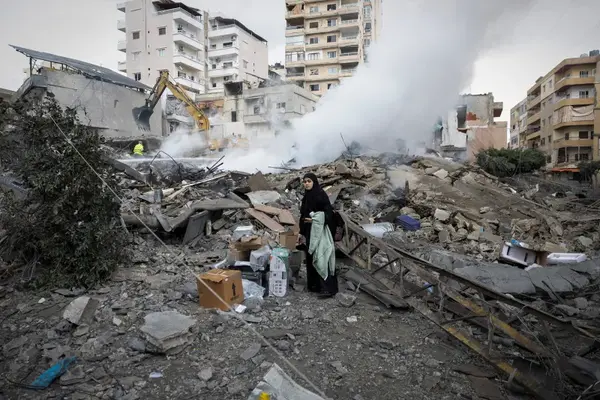
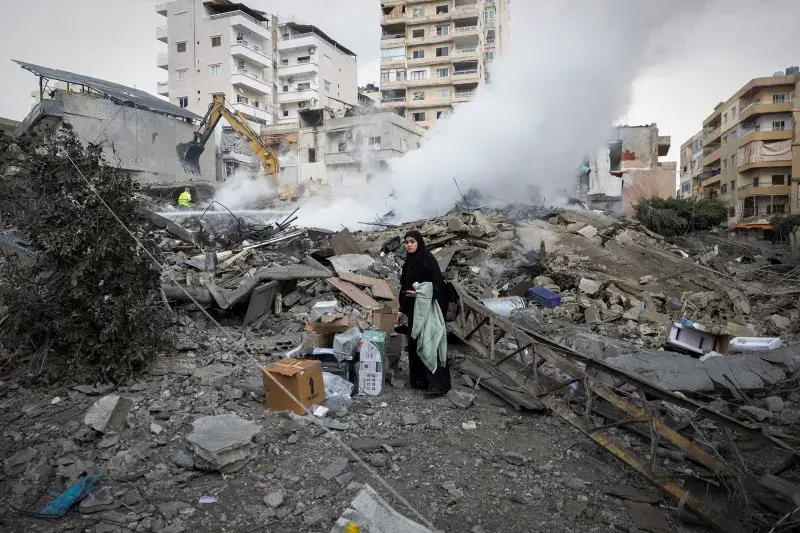
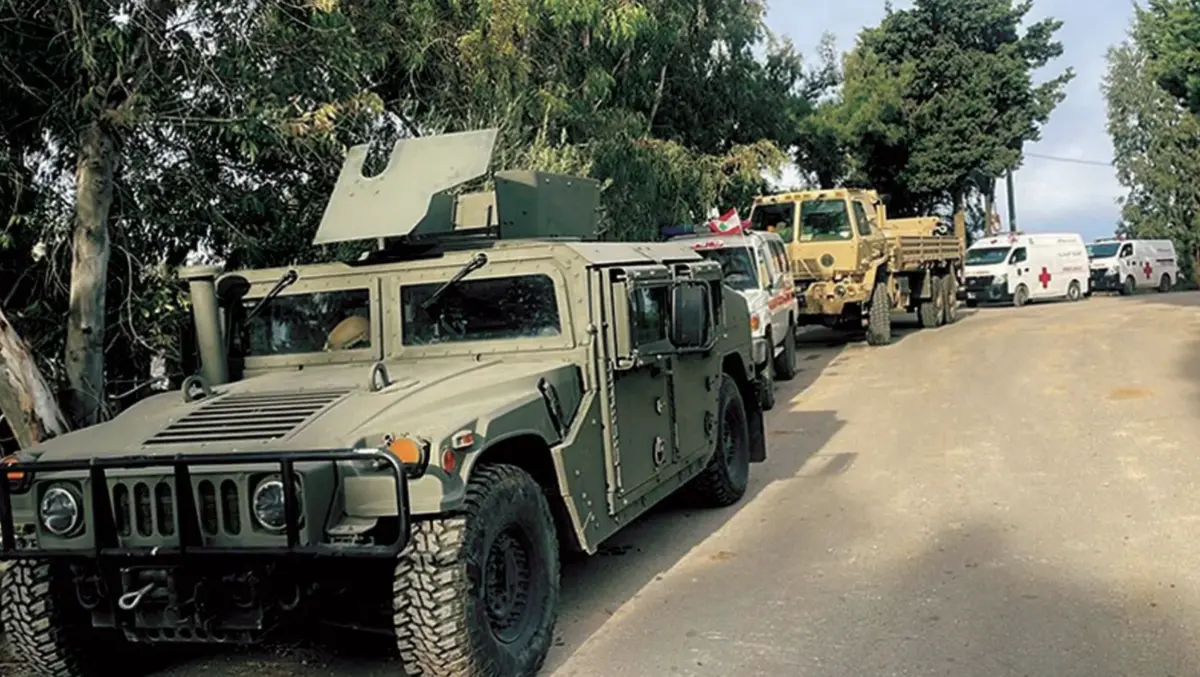
Israeli occupation begins "slow withdrawal" from Lebanon

The Israeli occupation began a slow withdrawal from the areas it occupied in southern Lebanon, as part of the implementation steps of the ceasefire agreement. The Lebanese army deployed in 5 locations around the town of Khiam - Marjayoun in coordination with the United Nations Interim Force in Lebanon, as part of the first phase of deployment in the region.


In parallel, the ambassadors of the "Five-Party Committee" resumed their presidential movement by meeting with Parliament Speaker Nabih Berri and the head of the "Lebanese Forces" party, Samir Geagea.


While US Ambassador Lisa Johnson expressed her optimism after meeting with the Speaker of Parliament about the completion of the presidential elections, Egyptian Ambassador Alaa Moussa stressed the five-member committee’s belief in “the importance of electing a president of the republic as soon as possible,” stressing the importance of electing a president who brings all Lebanese together and also supports the implementation of Resolution 1701 and the implementation of reforms.


This came at a time when the opposition is waiting for the “Shiite duo” (Hezbollah and Amal Movement) to “be humble,” stop being “stubborn,” and review its presidential and political calculations, refusing for “Hezbollah” to remain in control of the state as it was before. This matter was discussed by parliamentary sources in the opposition, who told Asharq Al-Awsat: “The opposition set the specifications for the president before the ceasefire agreement and before the fall of the Syrian regime, while stressing that there is no return to what happened before October 8.”
PALESTINE

Wed 11 Dec 2024 10:25 pm - Jerusalem Time

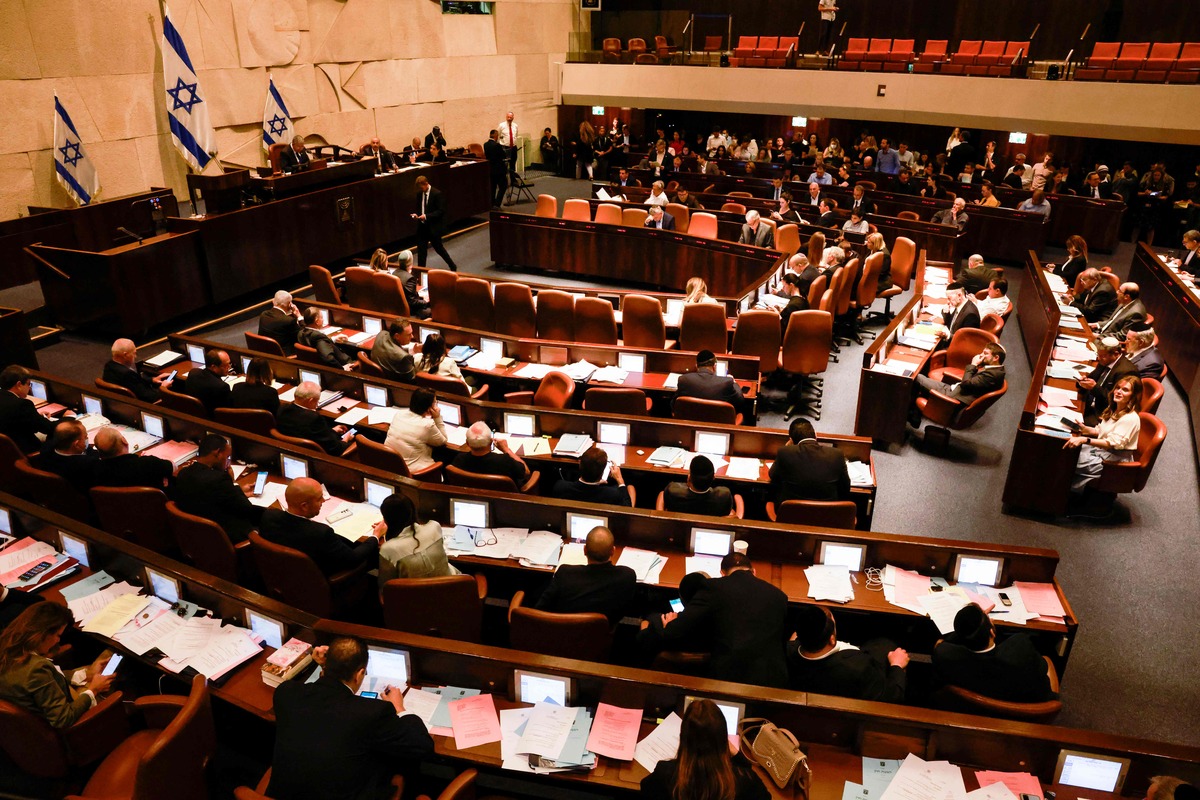
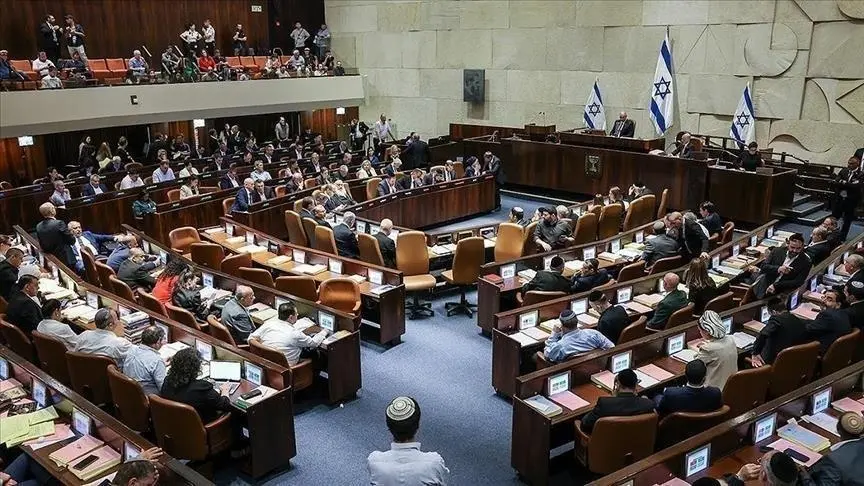
Knesset approves in principle legislation preventing the delivery of bodies of Palestinian dead

The Israeli Knesset approved, on Wednesday evening, in a preliminary reading, a bill that prohibits the return of the bodies of Palestinian dead to their families, and instead buries them in cemeteries inside Israel known as “enemy slain cemeteries” or “numbers cemeteries.”


This comes in the context of a wave of racist and authoritarian legislation passed by the Knesset (parliament) or still pending, targeting in particular Palestinians in the West Bank, Gaza Strip and the 1948 territories, under a government dominated by the extreme right in Israel.

The private Hebrew newspaper Maariv reported that the bill, which was submitted by MK Michal Buskila of the right-wing Likud party, was approved by 40 members out of 120, while 8 members objected.


The newspaper did not clarify the position of the remaining 72 Knesset members, and whether they participated in the voting session or not.


The bill is scheduled to be referred to the Knesset Foreign Affairs and Security Committee for discussion, before being returned to the Knesset plenum for a vote on it in three more readings, to become an effective law if approved.


The bill states that “those who die while committing a terrorist act will be buried in a cemetery designated for enemy dead inside Israel.” The bill also gives the prime minister exceptional authority to return the body to the family of the deceased, in special cases.


The bill's explanation of the need for it stated: "The funerals of terrorists (referring to the perpetrators of operations) are used to express support for terrorism, and many cases have witnessed the raising of banners, chants and speeches inciting further terrorist acts," he claimed.


The "enemy cemeteries" or "number cemeteries" are burial sites owned by the Israeli military, designated for the burial of the bodies of perpetrators of armed operations and soldiers from enemy armies.


These cemeteries contain hundreds of bodies of Palestinians, Egyptians and other Arabs killed by the Israeli army over the decades and refused to hand over to their families for political reasons. The graves bear numbers instead of names, while Israel withholds information about the identities of those buried, according to human rights sources.

ARAB AND WORLD

Wed 11 Dec 2024 8:46 pm - Jerusalem Time

Israeli Parliament "Knesset" approves discussion of dismissal of Attorney General

The Israeli Knesset (parliament) unanimously approved on Wednesday evening a proposal to discuss the dismissal of the government's legal advisor, Gali Baharav-Miara, while the opposition boycotted the vote, according to Hebrew media.


Channel 13, a private Hebrew channel, said that 51 members of the Knesset (out of 120) supported the proposal to have the government discuss the dismissal of Mayara, while the opposition boycotted the vote.


The proposal, submitted by MK Avichai Boron of Prime Minister Benjamin Netanyahu's Likud party, is titled "The Conduct of the Attorney General and Public Harm." The far-right accuses Mayara of inventing baseless legal obstacles and exceeding the limits of her legal mandate, to obstruct government policy.


In response to this, Israeli National Security Minister Itamar Ben-Gvir said in a post on the X platform, "The next step is to present her dismissal to the government for discussion, and the Israeli government must make this decision."


Last week, the Israeli opposition dropped a previous proposal submitted by Boron, in which he called on the government to begin procedures to dismiss Mayara, by mobilizing its members to vote against it in a surprising manner that the government coalition, of which only 40 members out of 64 members in the Knesset were present, did not expect.


On December 3, Israeli Communications Minister Shlomo Karhi published the signatures of 13 out of 33 ministers in the Israeli government, calling for the dismissal of the government’s attorney general.


At the time, Karhi said, according to the Hebrew newspaper Maariv, that “the behavior of the attorney general deliberately obstructs the government’s policy for political reasons, while inventing baseless legal obstacles and exceeding the limits of the legal mandate granted to her.”


Ministers in the right-wing Israeli government accuse the government's attorney general of exercising her authority based on leftist views, which harms the work of the government coalition.


In early February 2023, Mayara published a legal opinion in which she expressed her opposition to the judicial reform plan presented at the time by Justice Minister Yariv Levin in agreement with Netanyahu, which the opposition described as an authoritarian coup.


Contrary to the position of the Israeli government and its president, Mayara has repeatedly demanded the formation of an official committee of inquiry into the failure of October 7, 2023, which angered Netanyahu and his party, who are demanding the formation of a "political" committee with limited powers, in the Hamas movement's attack on settlements adjacent to the Gaza Strip and Israeli military sites.


More than once, the President of Israel, Isaac Herzog, condemned the attacks on Miara by right-wing ministers and members of the Knesset.


Mayara has been the Israeli government's legal advisor since February 7, 2022, and is the first woman to hold the position (for a period of 6 years) by decision of the Minister of Justice, whose decision is presented to the Israeli government for approval.


The Attorney General is a civil servant who heads the law enforcement system in Israel, heads the State Prosecution Service, serves as legal advisor to the executive branch and represents it before the courts.

ARAB AND WORLD

Wed 11 Dec 2024 7:33 pm - Jerusalem Time

US conditions to remove Hay'at Tahrir al-Sham from terrorist lists

US officials told the British newspaper, the Financial Times, that removing Hayat Tahrir al-Sham from the terrorist lists is linked to ensuring the fate of chemical weapons and providing guarantees to combat terrorism.


In turn, the New York Times quoted analysts and former advisers to the US administration as saying that "Hay'at Tahrir al-Sham has recently shown some pragmatism, and that it is a conservative Islamic group that enjoys broad support inside Syria, but it cannot rule the country as a terrorist organization."


The newspaper added - quoting those sources - that "it will be difficult for President-elect Donald Trump to remain a mere observer as the features of Syria are formed after the fall of Bashar al-Assad, and Trump will have to consider the continued presence of about 900 American soldiers in eastern Syria."


For its part, the US State Department said that Secretary of State Anthony Blinken will discuss with the leaders of Turkey and Jordan developments in Syria, Israel, the Gaza Strip, Lebanon and the region.


Comprehensive transition

The ministry added that Blinken will affirm Washington's support for a comprehensive Syrian-led transition to a responsible government that represents all Syrians, and will also discuss the need for the new Syrian government to respect the rights of minorities and prevent terrorism on its territory.


Blinken will also discuss with the leaders of Türkiye and Jordan the need to secure and destroy Syria's chemical weapons stockpile, and will emphasize Washington's support for Syria's neighbors during the transitional period and the need for protection for displaced Syrians.


In this context, the Wall Street Journal quoted an American administration official as saying that Washington exploited the overthrow of Assad to strike the remnants of the Islamic State organization, and also issued a threat that “organizations in Syria will be held accountable if they join the Islamic State organization.”


On November 27, the Syrian armed opposition factions launched their “Deterrence of Aggression” operation, starting from Idlib and Aleppo, then Hama and Homs, arriving in Damascus, which they entered at dawn last Sunday, announcing the fall of the Assad regime.


PALESTINE

Wed 11 Dec 2024 7:18 pm - Jerusalem Time

Israeli Defense Minister: There is a chance to reach an agreement to free the hostages in Gaza

Israeli Defense Minister Yisrael Katz told his US counterpart Lloyd Austin in a phone call on Wednesday that there is now a chance to reach an agreement to release all hostages held in the Gaza Strip, including US citizens, his office said in a statement.


Katz's office added: "Minister Katz updated his American counterpart on the developments in the hostage release negotiations, and said that there is now an opportunity to reach a new agreement that will allow the return of all hostages, including those who hold American citizenship."


US National Security Adviser Jake Sullivan arrives in Israel on Thursday, then visits Egypt and Qatar, in a last-ditch effort to push a ceasefire in the Gaza Strip ahead of President-elect Donald Trump's inauguration in six weeks.


Two sources familiar with the details told the Israeli Walla and American Axios websites that Sullivan will meet with Israeli leaders to discuss a number of issues, including the release of hostages, the ceasefire in Gaza, and the latest developments in Syria, as well as Lebanon and Iran. He will then travel to Cairo and Doha to meet with Egyptian and Qatari leaders to discuss mediation efforts.

PALESTINE

Wed 11 Dec 2024 6:50 pm - Jerusalem Time

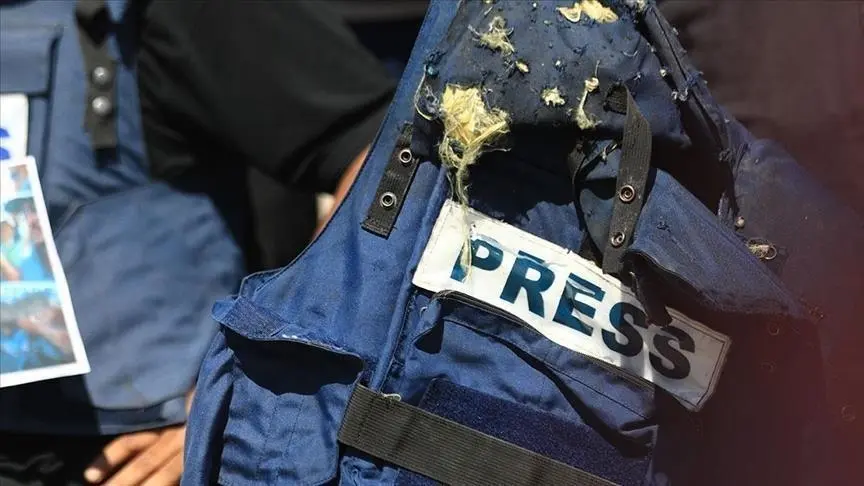
The number of killed journalists due to the Israeli genocide in Gaza rises to 193

The Palestinian Media Forum announced on Wednesday that the number of Palestinian journalist martyrs in Gaza has risen to 193, since Israel began its genocidal war on October 7, 2023.


The Forum (a non-governmental organization) said in a statement: “The number of martyred journalists has risen to 193, after the martyrdom of journalist Iman Al-Shanti, a broadcaster on the Voice of Al-Aqsa Radio (local), during an Israeli bombardment that targeted her family’s home in Gaza City.”


The statement added: "On the path of freedom paved with blood and sacrifices, and in order to support the oppressed Palestinian people and convey their suffering to the world, journalist Iman Hatem Al-Shanti was killed as a result of a treacherous Israeli bombardment."


The forum denounced "the international silence and inability to protect Palestinian journalists and ensure that they are able to perform their professional duty, in accordance with international laws and humanitarian conventions."

ARAB AND WORLD

Wed 11 Dec 2024 6:18 pm - Jerusalem Time

Three Lebaneses killed in an Israeli raid on southern Lebanon

Three people were killed on Wednesday evening in an Israeli drone strike on the city of Bint Jbeil in southern Lebanon, in a new Israeli violation of the ceasefire.


The Lebanese National News Agency reported that an Israeli drone fired a guided missile at the Al-Awini neighborhood in the city of Bint Jbeil, which resulted in the death of three civilians.

PALESTINE

Wed 11 Dec 2024 6:01 pm - Jerusalem Time

A Palestinian citizen was injured by Israeli forces' bullets and others were arrested west of Nablus

A citizen was injured by live bullets and two others were arrested, on Wednesday evening, during the Israeli occupation forces’ storming of the village of Bazariya, northwest of Nablus.


According to local sources, the occupation forces stormed the village with several military vehicles, which led to the outbreak of clashes, during which the occupation soldiers fired live bullets, sound bombs and toxic tear gas, which resulted in a citizen being injured by bullets.


The sources added that the occupation forces arrested two citizens during their raid, whose identities are not yet known.


The Palestinian Red Crescent Society stated that its crews dealt with a citizen who was shot in the abdomen with live ammunition in Bazaria, and he was transferred to the hospital.

PALESTINE

Wed 11 Dec 2024 5:41 pm - Jerusalem Time

Dead and wounded in Israeli bombing of Al-Nuseirat camp and Deir Al-Balah

Five citizens were killed and others were injured, Wednesday evening, in raids launched by Israeli occupation aircraft on the Nuseirat camp and the city of Deir al-Balah in the central Gaza Strip.


According to local sources, the occupation aircraft bombed a house in the Nuseirat camp, which resulted in the death of four citizens and the injury of 16 others.


The Israeli occupation forces continue their aggression on the Gaza Strip by land, sea and air since October 7, 2023, which resulted in the death of 44,805 citizens, the majority of whom are women and children, and the injury of 106,257 others, in an incomplete toll, as thousands of victims are still under the rubble and in the streets, and ambulance and rescue crews cannot reach them.

ARAB AND WORLD

Wed 11 Dec 2024 5:09 pm - Jerusalem Time

Biden seeks to counter growing ties between Russia, China, Iran, North Korea

US officials say President Joe Biden is pressing national security agencies to develop new strategies to counter the dangerous entrenchment of ties between Russia, Iran, North Korea and China ahead of President-elect Donald Trump's inauguration next month.


According to Reuters, Biden concluded - in a "secret" national security memo issued yesterday, Tuesday - that Russia is providing its ally Iran with fighter jets, missile defense systems, and space technology in exchange for its assistance in the war effort in Ukraine.


Russia also supplies North Korea with fuel, money and technology, and recognizes it as a de facto nuclear state, and the US administration has said that Russia conducts joint patrols with China in the Arctic.


Russia, China, Iran and North Korea have previously challenged similar assessments, accusing the United States of destabilizing behavior.


In the new document, Biden orders various arms of the US government to restructure groups currently organized by region, to better focus on issues that connect the four countries, and extend across Europe and Asia.


Republican Trump, who takes office on January 20, may implement the strategies and policies proposed in the document, or reject them entirely.


New options

"When the new team sees the document, I don't think they will see anything in it that will push them toward a particular policy option," said a senior administration official.


Another official said they wanted to present "new options so the new team and Congress can get to work quickly."


The challenges ahead, the officials added, include ensuring that any sanctions or export restrictions imposed on the four countries are implemented in a coordinated manner that doesn’t risk negative reactions from those countries, and enabling the United States to better deal with simultaneous crises involving several of those countries. There are North Korean troops in Russia, for example.


“We are in a world where our adversaries and competitors are learning from each other very quickly,” one official said.


Another official said cooperation between the countries had limits, however, as shown by the failure of Russia and Iran to help their ally, former Syrian President Bashar al-Assad, who was ousted by the opposition over the weekend.


"This change raises questions for China about what kind of future it wants and whether it really wants to be part of this group," he added.

ARAB AND WORLD

Wed 11 Dec 2024 4:48 pm - Jerusalem Time

Russia: Israeli military actions worsen situation in Syria

Russian Foreign Ministry spokeswoman Maria Zakharova said on Wednesday that Israeli military actions in the Golan Heights after the fall of the Baath regime in Syria have exacerbated the situation there.


This came during a press conference in the capital, Moscow.


Zakharova pointed out that Israel intervened in the Syrian situation, and that Tel Aviv does not hide this.


She stressed the importance of adhering to international legal standards and respecting Syria's sovereignty and territorial integrity.


"Syria existed as a sovereign state and must continue to exist as such. Our country has always taken this approach," she added.


Regarding Israel's occupation of the buffer zone in the Golan Heights after the fall of the Baath regime in Syria, Zakharova said: "These practices carried out by the Israeli army violate the terms of the agreements concluded between Syria and Israel in 1974."


She continued: "It is clear that these military actions do not serve the purpose of stabilizing the situation in Syria, but on the contrary, they lead to aggravation of the very difficult situation that has developed in the country in recent days."


She pointed out that the military-political situation in Syria is dangerous, and that the entire international community, especially neighboring countries, must exercise self-restraint, bear responsibility, and avoid measures that would escalate the situation in Syria.


On Monday, the Israeli Army Radio said that the army forces had penetrated the buffer zone with Syria, while continuing to carry out extensive air strikes with heavy bombs on sites in the area.


Taking advantage of the overthrow of Bashar al-Assad's regime on Sunday, Israel intensified its air strikes targeting military sites in various parts of Syria, in a flagrant violation of its sovereignty.


Tel Aviv also announced the collapse of the 1974 Separation of Forces Agreement with Syria, and the deployment of the Israeli army in the demilitarized buffer zone in the Syrian Golan Heights, most of which it has occupied since 1967, in a move condemned by the United Nations and Arab countries.


On the dawn of December 8, the Syrian opposition factions entered the capital, Damascus, and took control of it, with the withdrawal of regime forces from public institutions and streets, thus ending a 61-year era of bloody Baath Party rule and 53 years of Assad family rule.