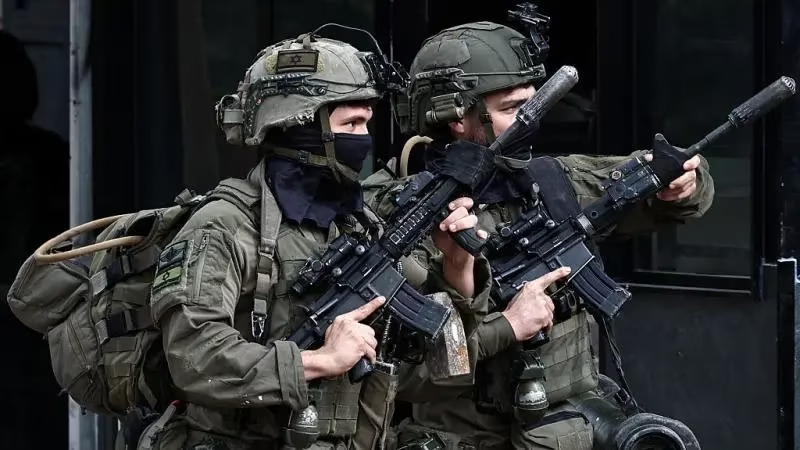
The Israeli soldier, fortified inside his tank, did not ask about the religion of the eighty-year-old woman Ilham Farah before he ran her over in front of the Palestine Stadium in the heart of Gaza as she tried, panting, to cross the road during her displacement from the besieged area in the first months of the war.
The Israeli pilot did not verify the identity of those who took shelter behind the walls of the Pervilius Church when he dropped his bombs on the heads of the Christians inside it, killing more than 18 people at once.
The Israeli sniper did not pause to confirm the religion of the two young men who wandered in the square of the Latin Monastery Church before his bullets felled them dead.
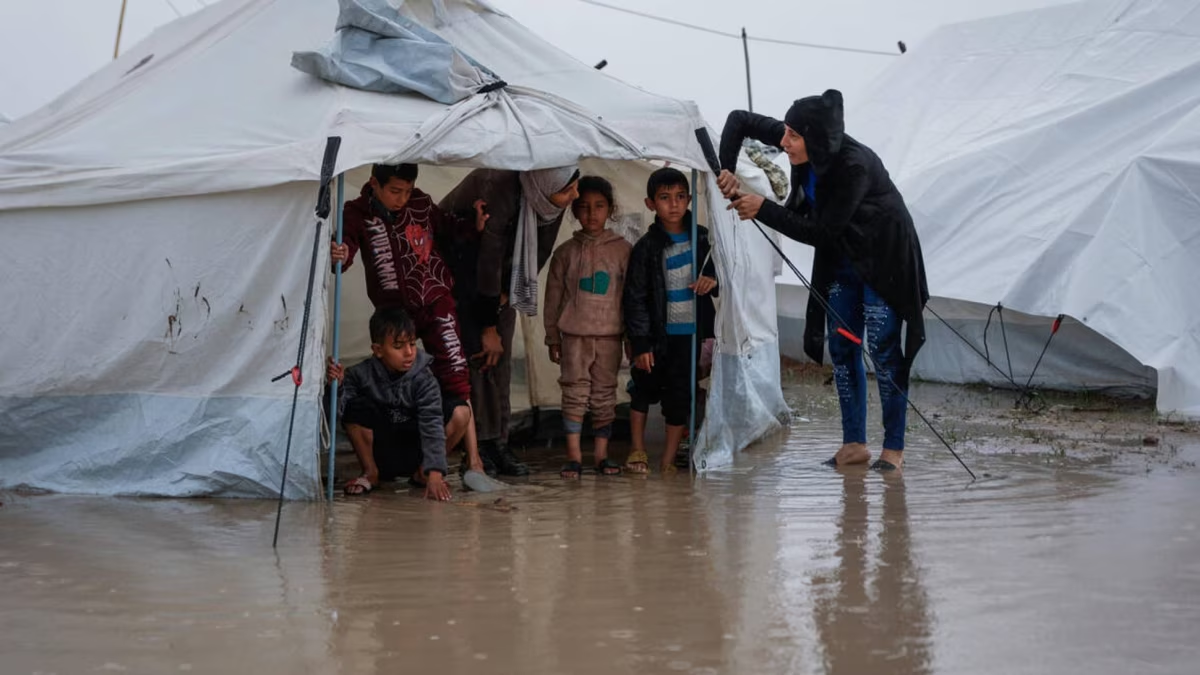
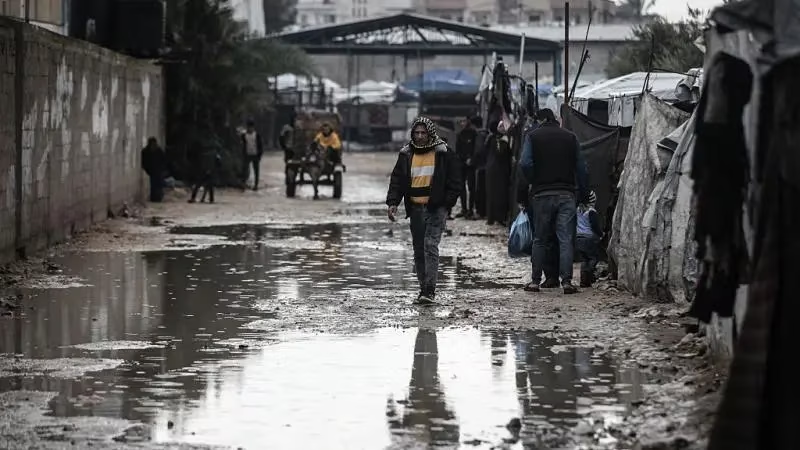
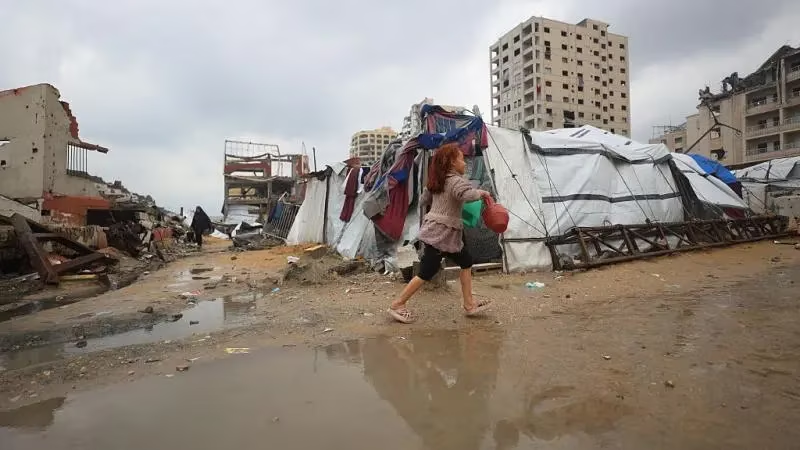
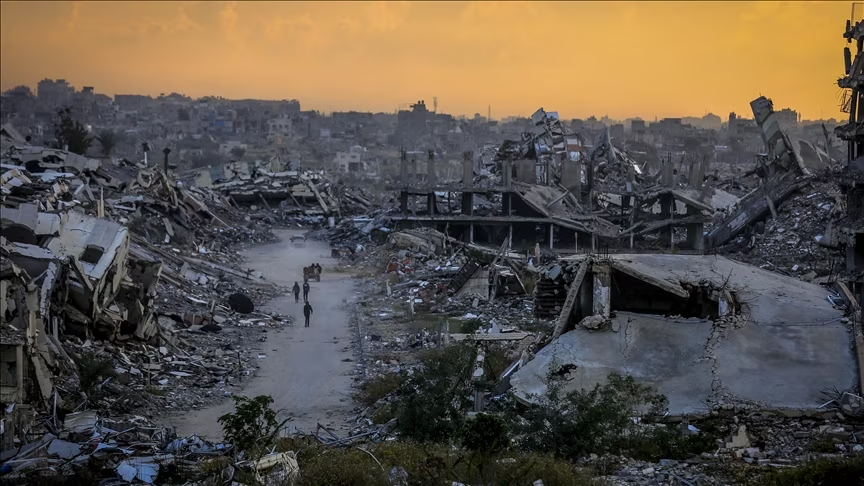
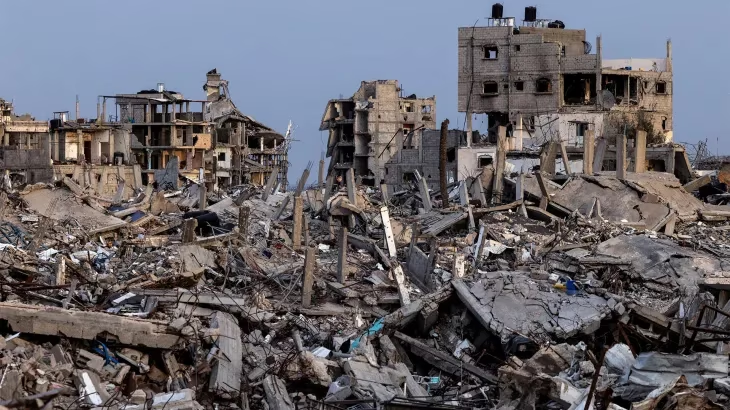
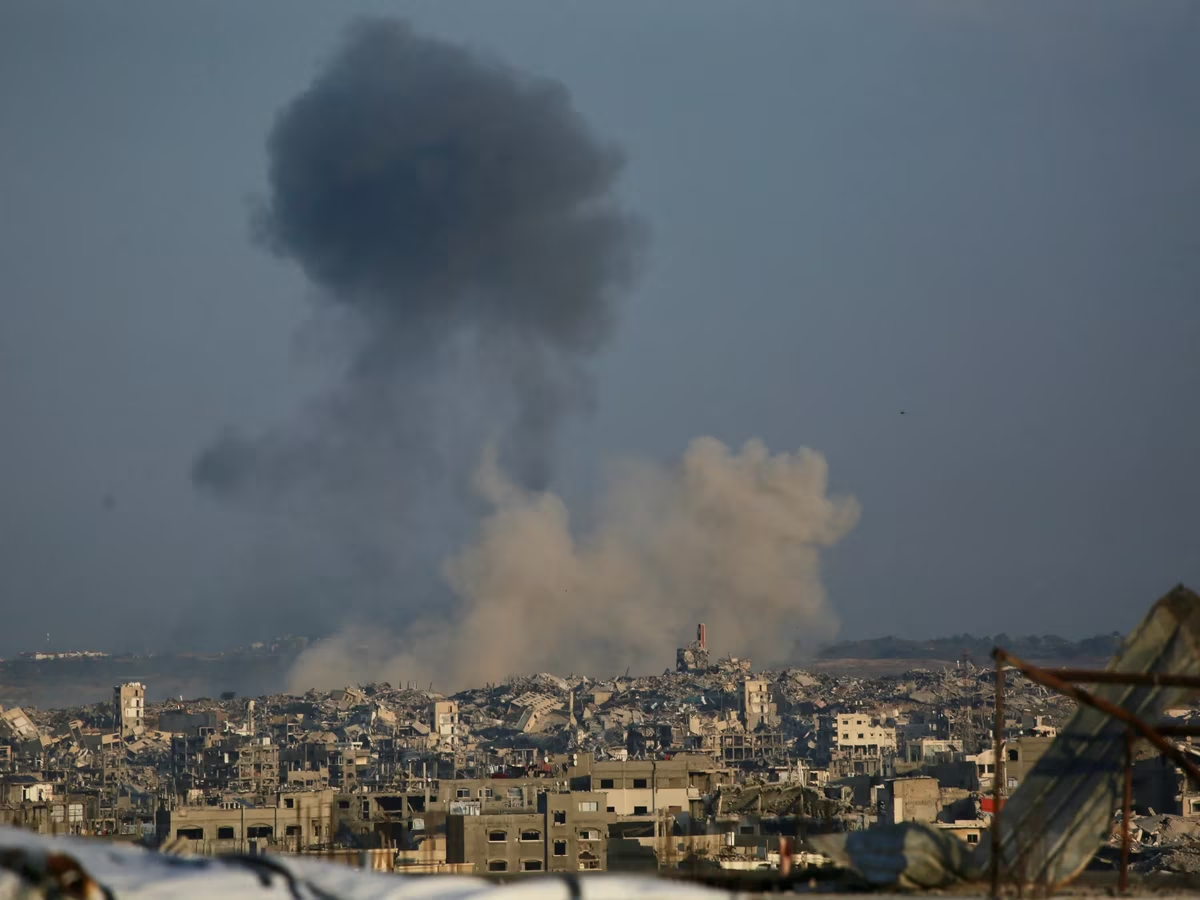
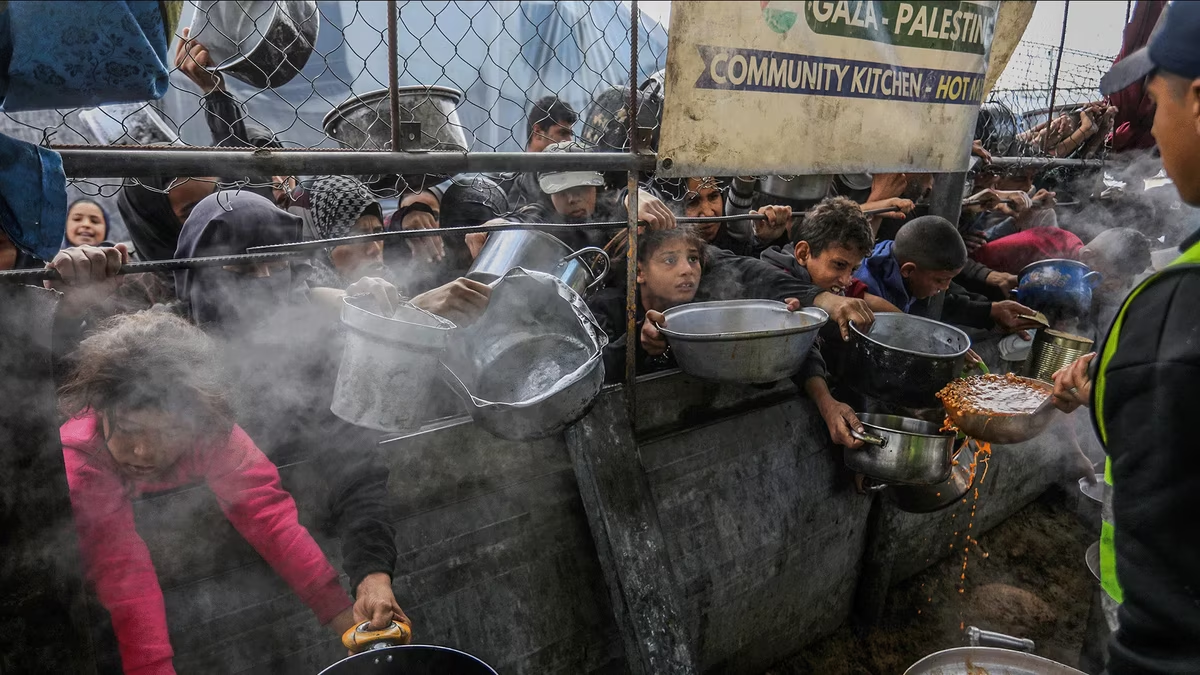
Israel targeted the people of Gaza with its crimes as one entity without distinction, so the entire sector was in the sights of the same annihilation for two full years of war, where the people of Gaza stood as one body facing the same fate, and suffered under the circle of pain, killing, siege, and starvation, and their unspoken words say that survival or death in the Gaza Strip can only be collective.
More than 60 Christians perished in the genocide war, either through direct targeting, or due to the siege and closure where there is no treatment or medicine, just like what happened to thousands of Muslims who remained in the city.
Nevertheless, people shared what was available of life's necessities, where churches opened their doors to displaced Muslims, and everyone shared the bite and the shelter, and the spirit of coexistence and solidarity emerged at the peak of hell, and Christian health and relief institutions continued to provide their services without discrimination.
Amid this heavy pain, Christmas arrived this year for 516 Christians in Gaza, where they held modest celebrations, without decorations or lights, "for the city is still in its ruins and mourning its losses," as they say.
Patriarch of the Holy Land Pierre Battista entered Gaza on the night of December 21st, to announce from its heart through a modest celebratory mass the beginning of the Christian holidays, in a small attempt to snatch a moment of life from the heart of a city whose wounds have not yet healed.
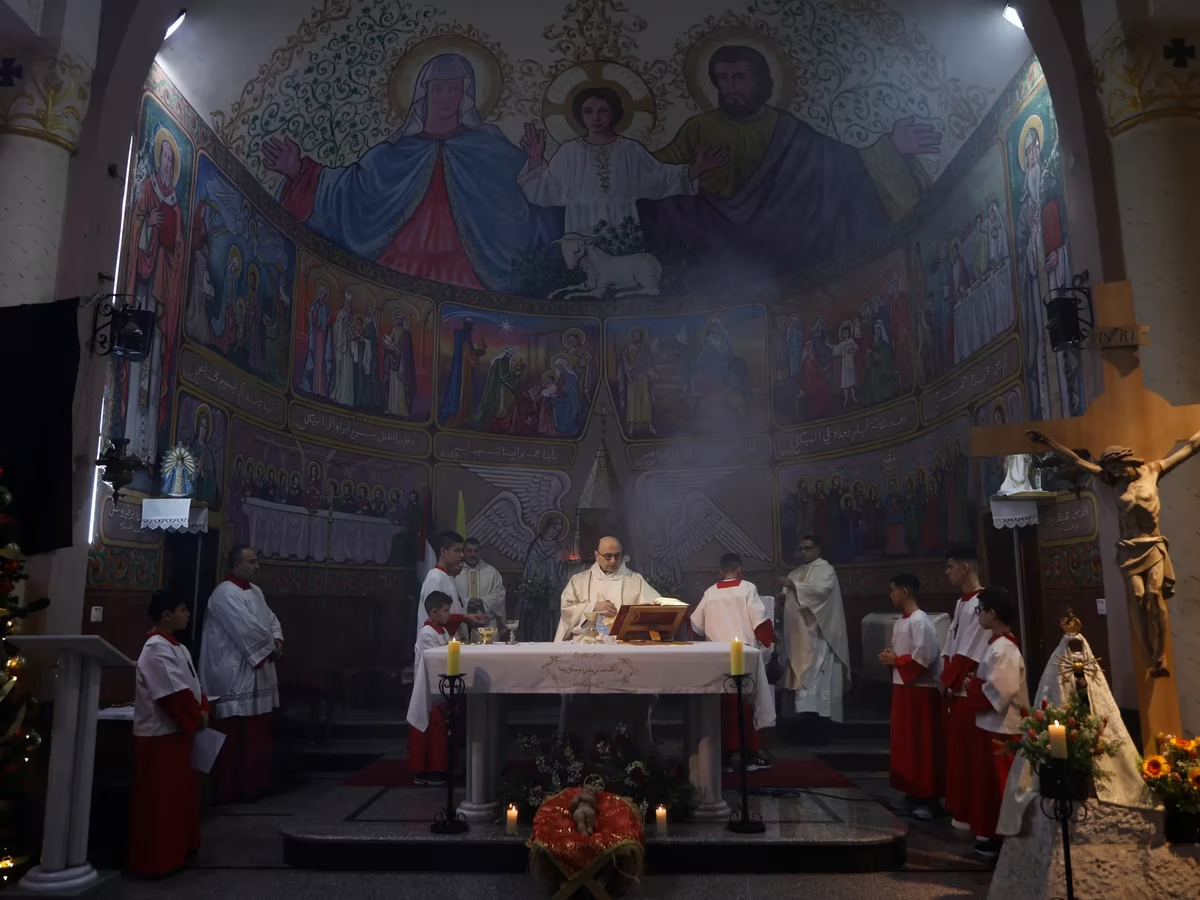
During the first mass prayer according to the Western calendar on the night of December 25th, which was held at the Latin Monastery Church (Holy Family) east of Gaza City, and it is the central church where celebrations of Catholic Christians in the sector are held.
The church seemed burdened with memories of two full years of sorrow, almost without decorations or festive appearances, and the rituals were limited to pure religious rites. Inside, empty seats for martyrs who perished inside and outside this place, as if the worshippers carry the pains of grief and extermination.
The hymns are recited in a faint voice, while modest decorations hang on the sides that do not resemble any features of celebration in peacetime years, and a mass that seemed closer to a collective endurance prayer, and a final attempt to preserve religious rituals.
In the outer square of the church, Dimitri Paul Shard sat distracted, alone on one of the wooden benches, with no joy of the holiday on his face. I approached him and asked why he was sitting alone at the height of this crowding, so he answered "The war left me alone, I lived it alone." He added after a smile filled with sadness "I sent my children out of Gaza out of fear for them and their children, but I refused to leave it."
Although he is dual-nationality and could leave Gaza whenever he wanted as he says, he thwarted all embassy attempts to evacuate him, for Gaza is dear to his heart and he could not bear to leave it in these circumstances, despite losing his multi-story home and a number of his friends.
While the man stares around as if the whole place reflects his feeling of isolation, Najla Saba (67 years old) was on the opposite side of the square trying to break her solitude by making a video call with her family in Bethlehem in the West Bank.
A joy that Najla could not be part of, so she shared with them and embraced them with her eyes through the small window on the phone screen, despite the great lump in her throat for not being able to be with them physically, amid a painful feeling of separation and deprivation.
Najla recalls those days when Christian families in the Gaza Strip used to travel easily to Bethlehem to attend holiday celebrations, and she says as if flipping through an old photo album, not knowing if she can live its details again, "The most beautiful holidays were those we spent in Bethlehem, where mass prayer, lights, processions, decorations, celebrations, and family gatherings."
But this year she is in the Gaza Strip alone without family, where the war separated her from her children and the city's people, and she adds "I feel my heart cracking every day with their distance more, and I try to pretend strength in front of them but I burn with a feeling of alienation from within."
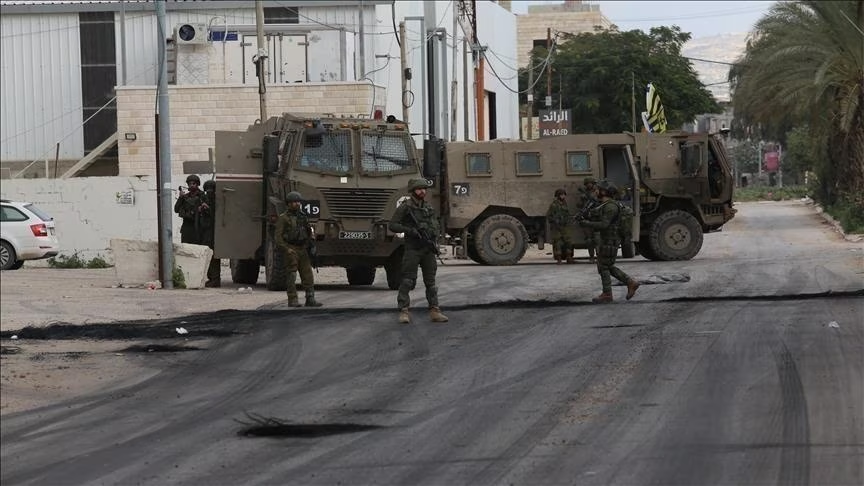
This forced separation and deliberate dispersion by Israel, the people of Gaza see it as preventing them from reuniting, in line with the policy of spoiling and establishing a limit on everyone who decided to stay in the Gaza Strip. Israel has been tightening on Christians even before the war, and refuses without reasons to grant many of them permits to cross to the occupied Palestinian territories.
Nevertheless, Najla insists on staying in the Gaza Strip, saying with a bitter smile "I do not want to leave Gaza, I was born here and taught generations in UNRWA schools, and my family's roots are deep in this land, and Gaza for me is everything, my heart, my soul, and my eye."
What Najla wishes most, amid the ongoing dispersion of her children until today, is that a holiday comes where she can gather them around one table, not from behind the phone screen.
A few steps from the church entrance, the girl Amal Hilal (16 years old) was taking pictures with her friends in front of a lonely Christmas tree lit with a few simple lights.
She comments on that Christmas tree saying that it is simple because it expresses their current state, and adds "We do not decorate the tree as in previous years, not because we do not want to, but because people's feelings are exhausted, and our gathering is the real holiday, for the holiday is in our hearts before it is in the decorations."
At the outer gate of the church sits Amal without participating in the children's play, her eyes fixed on the void left by the absence of her grandfather George, who was killed in a bombing that targeted the church during the war.
While the stories of the young and old intersect, this year's holiday takes its form in faint prayers and faces exhausted by loss and sorrow.
Despite the destruction and the shrapnel of Israeli booby-trapped robots that still reach the church from the eastern borders, as if reminding everyone that the war has not ended yet, Gaza says in its own way "Even from under the ashes, a new birth can begin."