







Gaza has entered a phase that can be described as the 'new normal (realistic) situation,' a characterization that carries no positive dimension as much as it reflects the transition of the conflict from a comprehensive war to a low-intensity but persistent dispute. Despite the cessation of widespread fighting and the partial entry of humanitarian aid since the ceasefire came into effect on October 10, the overall scene does not suggest a genuine path toward peace or reconstruction, but rather toward cementing a state of non-war and non-peace, according to Daniel Byman, a professor at Georgetown University and director of the Program on War, Unconventional Threats, and Terrorism at the Center for Strategic and International Studies, in a lengthy article in 'Foreign Affairs' magazine.
Formally, according to Byman, the ceasefire appears as an achievement: the release of nearly two thousand Palestinian prisoners, the return of all living Israeli captives and most of the bodies of the deceased, the opening of several crossings, and the commitment to admit 600 trucks daily. The Israeli occupation army has also redeployed to what is known as the 'yellow line,' effectively controlling more than half of the sector's area. However, these steps, despite their humanitarian importance, have not translated into a clear political path, but have been accompanied by the continuation of limited clashes and casualties from both sides, mostly Palestinian civilians (400 people according to the Gaza Health Ministry).
The core problem is that the ceasefire was not an entry point for a political solution, but a mechanism for managing the conflict. Relations between Israel and Hamas are now managed according to the logic of mutual containment: limited strikes, messages of strength, and preventing a major explosion without addressing the structural causes of the conflict. In this context, the American plan with its twenty points seems ambitious in theory, but practically frozen, especially in the aspects of disarming Hamas and building an alternative authority in Gaza.
For its part, the United States is trying to play the role of coordinator more than being a pressuring party. Visits by senior American officials and the establishment of a military-civil coordination center are symbolic steps reflecting a desire to maintain the ceasefire, but they do not rise to the level of the political and security investment required to bring about a real transformation. The American administration avoids direct involvement in reconstruction or imposing coercive security arrangements, which opens the door to a long-term political and security vacuum.
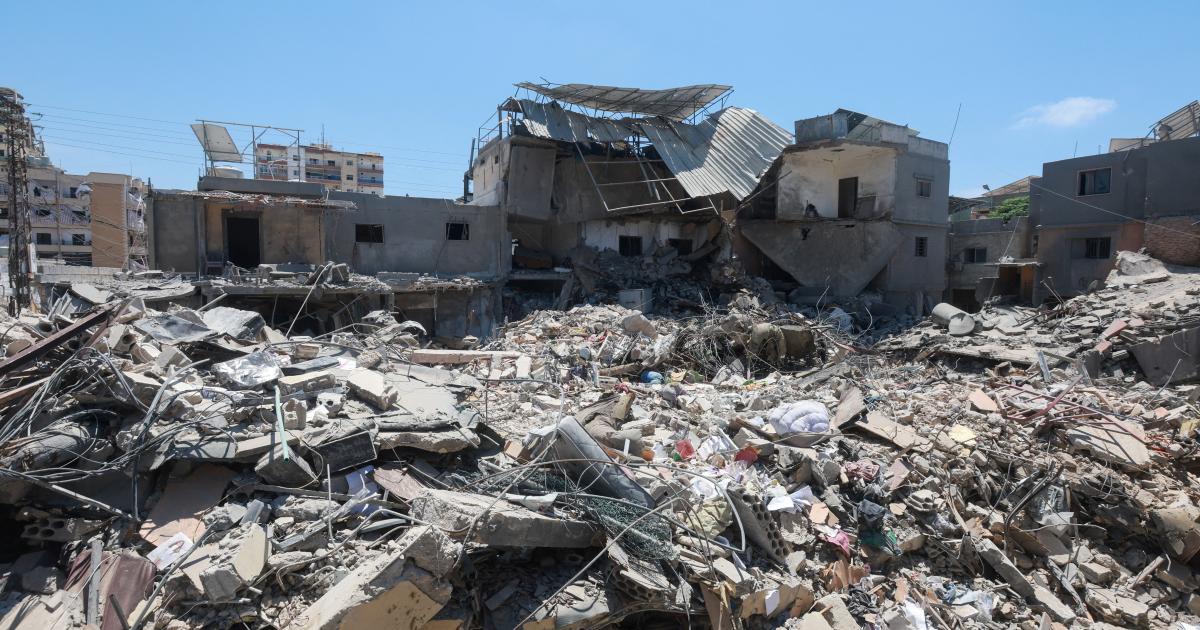
On the ground, Byman points to the continuation of the humanitarian tragedy. About 90 percent of Gaza's population remains displaced, and more than 1.5 million people need emergency shelter. Despite Israeli promises, the average entry of aid has not exceeded 120 trucks per day, according to UN reports, while rains and cold have increased the severity of suffering. This harsh humanitarian reality does not produce sufficient political pressure, but is managed as a chronic crisis that can be contained.
The researcher also affirms that one of the most complex issues is the idea of establishing an international force for stabilization. Israel sees it as necessary to prevent Hamas's return, but conditions its right of veto on its formation. The United States promotes the idea but refuses to participate in it, while Arab and Islamic countries hesitate, fearing it will turn into a tool to suppress Palestinians on behalf of Israel without a clear political horizon for a Palestinian state. As for obtaining UN authorization, it clashes with the Russian-Chinese political veto in the framework of international power struggles.
Byman says: 'Disarming Hamas seems the most realistic file on paper and impossible in implementation. The movement, ideologically and practically, sees the weapon as the source of its legitimacy and survival. Past experiences confirm that Hamas will not voluntarily relinquish its military power, as it is the only guarantor of its internal control and protection from its rivals. Moreover, its behavior after the ceasefire, including targeting influential families opposed to it, aims to re-establish its prestige and send a clear message that it is still the effective authority in Gaza.'
Moreover, reconstructing Gaza does not seem any closer. The estimated cost of about 70 billion dollars, and the American condition that Arab countries bear the financial burden, are met with clear lukewarm response. Investing in a region witnessing intermittent violence and open to sudden escalation is not an attractive option for any donor party.
As for the question 'Who governs Gaza?' it remains unanswered. The talk of a technocratic government or a 'reformed' Palestinian authority hides the reality of the absence of any viable alternative between two bitter choices: the continuation of Hamas rule or the return of direct Israeli military occupation. Any political entity that does not enjoy the acceptance of both sides will be incapable of governing or providing security, which reproduces the cycle of violence.
Israel, for its part, does not want a new comprehensive war, but is not ready to accept Hamas as a permanent neighbor. Internal pressures, declining military gains, and international costs are all factors pushing toward controlling the conflict rather than resolving it. The expected result is periodic Israeli strikes to prevent Hamas's power from growing, without seeking to overthrow it completely.
Hamas, in turn, does not want a comprehensive war, but sees limited violence as a necessary tool to control the interior and prove existence. With any real attempt to undermine its political or military influence, it is likely to resort to escalation, even if the price is additional destruction for Gaza, because that enhances its narrative as a 'resistance movement' facing Israel and 'collaborating authorities.'
Byman warns that over time, with the decline of international interest, the 'yellow line' may turn into semi-permanent borders, and Gaza becomes a forgotten space managed by crises rather than solutions. Without continuous American pressure and long-term political investment, which does not align with the pattern of foreign policy under the Trump administration, what awaits Gaza is not peace, but the sustainability of the conflict with less noisy and more cruel tools.
The ceasefire experience in Gaza reveals how the international community has shifted from seeking to resolve the dispute to managing its repercussions. Instead of addressing the roots of the conflict—occupation, blockade, and the absence of a political horizon—the focus is on temporary security arrangements and conditional humanitarian aid. This approach does not end the violence, but reproduces it periodically, keeping Palestinians captive to a fragile reality where life is measured by its ability to endure rather than evolve.
The paradox is that all parties declare their rejection of the current situation, but practically contribute to its consolidation. Israel prefers containment over risk, Hamas prefers survival over change, and the United States prefers formal achievement over long-term commitment. In the shadow of this negative convergence, Gaza becomes a laboratory for the failure of international policy, where peace is replaced by crisis management, and justice by temporary equations of power.


Share your opinion
Gaza between the Fragile Ceasefire and the Manufacture of 'Non-Peace': A New Reality or a Permanent Impasse?