PALESTINE

Sat 17 Jan 2026 7:40 pm - Jerusalem Time

A humanitarian tragedy in Khan Yunis.. "Bitter cold" claims the life of an infant

Medical and local sources in the Gaza Strip reported on Saturday the death of an infant girl in the city of Khan Yunis, coinciding with security tensions east of the city.

The sources confirmed the death of the infant Aisha Ayash Al-Agha, 27 days old; as a result of being affected by the cold wave and low temperatures.

The sources indicated that the death resulted from a lack of necessary heating means for newborns, in light of the current living conditions.

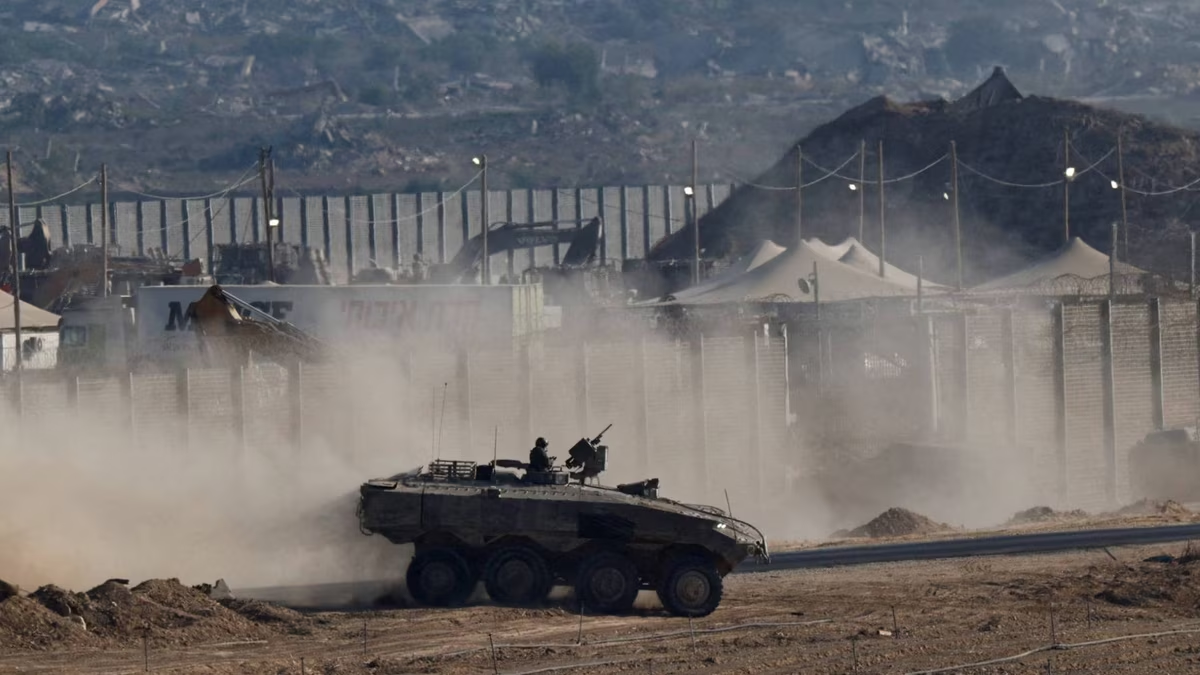
On the security front, eyewitnesses reported that occupation vehicles stationed on the security fence opened fire towards citizens' lands and homes east of Khan Yunis, and no injuries among citizens were reported as a result.

PALESTINE

Sat 17 Jan 2026 5:13 pm - Jerusalem Time

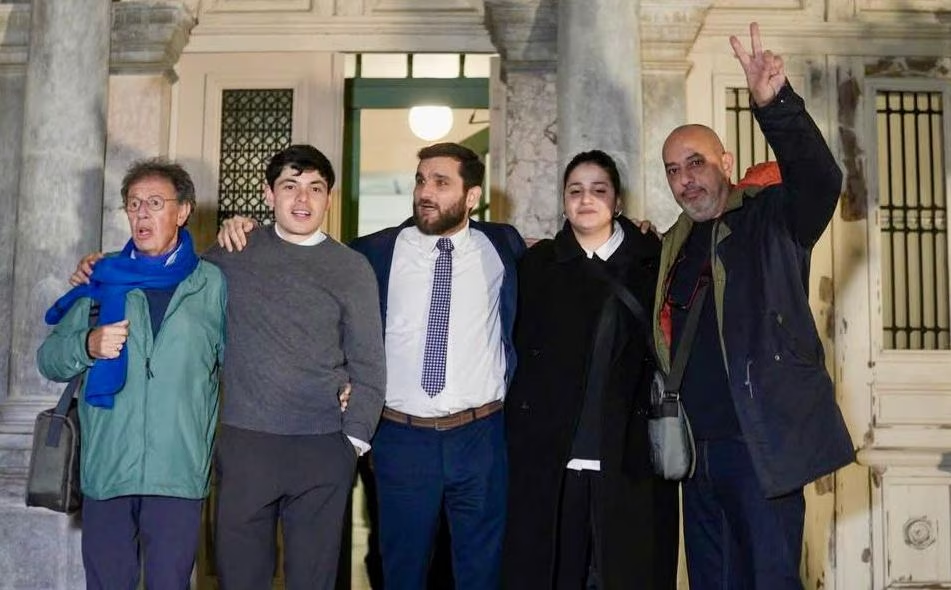
Acquittal of Jerusalemite Ihab Al-Abbasi and 23 humanitarian workers on Lesbos Island after 8 years of prosecution

A Greek court on Lesbos Island acquitted Ihab Abbasi and 23 male and female humanitarian workers of all charges against them, ending a case that lasted eight years and constituted one of the most prominent cases of criminalizing humanitarian work in Europe.


The Palestinian Ihab Al-Abbasi, from the city of Jerusalem – a native of Silwan, was working at the time with Doctors Without Borders as the medical project coordinator for the organization on Lesbos Island (Lesvos) in Greece. He and his colleagues were charged with serious offenses, including human smuggling and belonging to a criminal organization, due to their role in coordinating humanitarian aid and reporting on refugee and migrant boats at risk in the Aegean Sea.

The case dates back to 2018 and has been widely criticized since its inception by human rights organizations and international institutions, which considered it a clear attempt to “criminalize solidarity” and deter humanitarian workers from performing their life-saving duties.

During the long years of trial, Ihab Abbasi and the rest of the defendants lived in a state of legal uncertainty and psychological and professional pressure, despite their continuous affirmation that their actions were purely humanitarian and fell within their professional and ethical duties.

On January 16, 2026, the court issued its final verdict acquitting all defendants, confirming the absence of any evidence of criminal activity, and emphasizing that saving lives and providing humanitarian assistance do not constitute a crime.

This ruling is seen as a legal and moral victory, and a clear message about the necessity of protecting humanitarian workers and respecting their role, rather than prosecuting them.

PALESTINE

Sat 17 Jan 2026 2:40 pm - Jerusalem Time

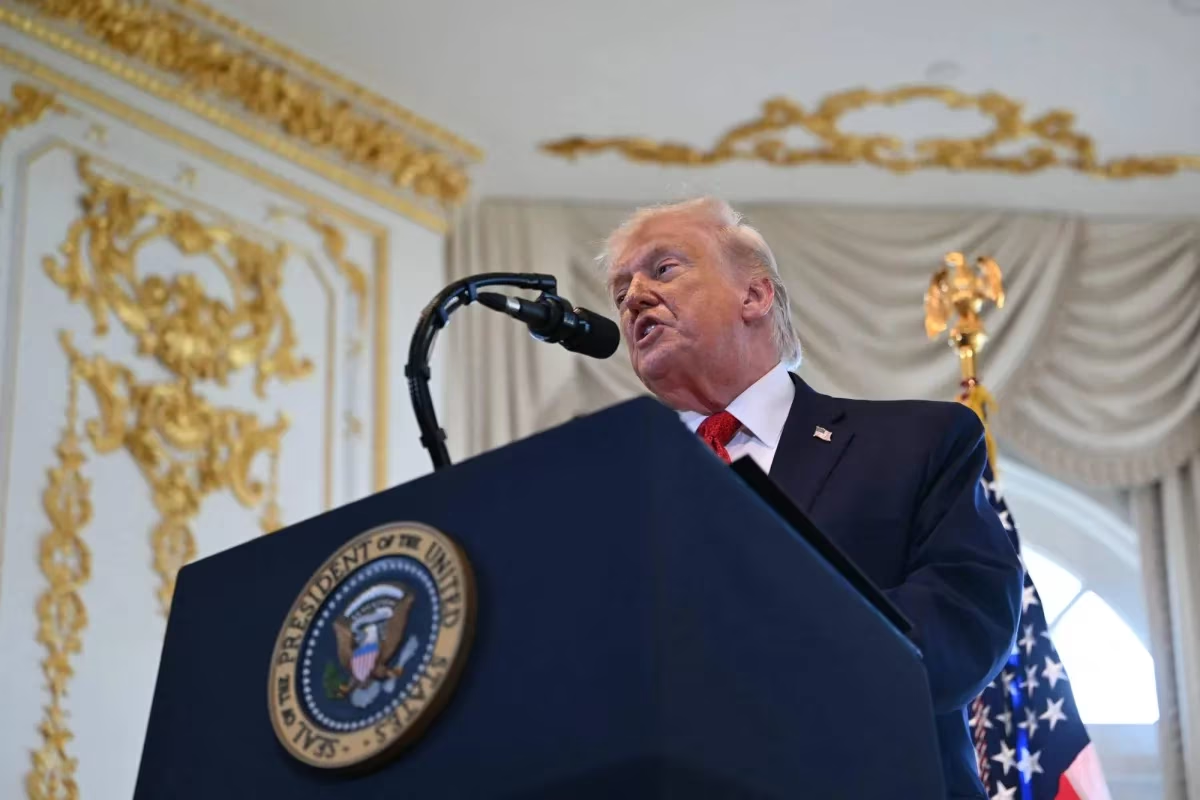
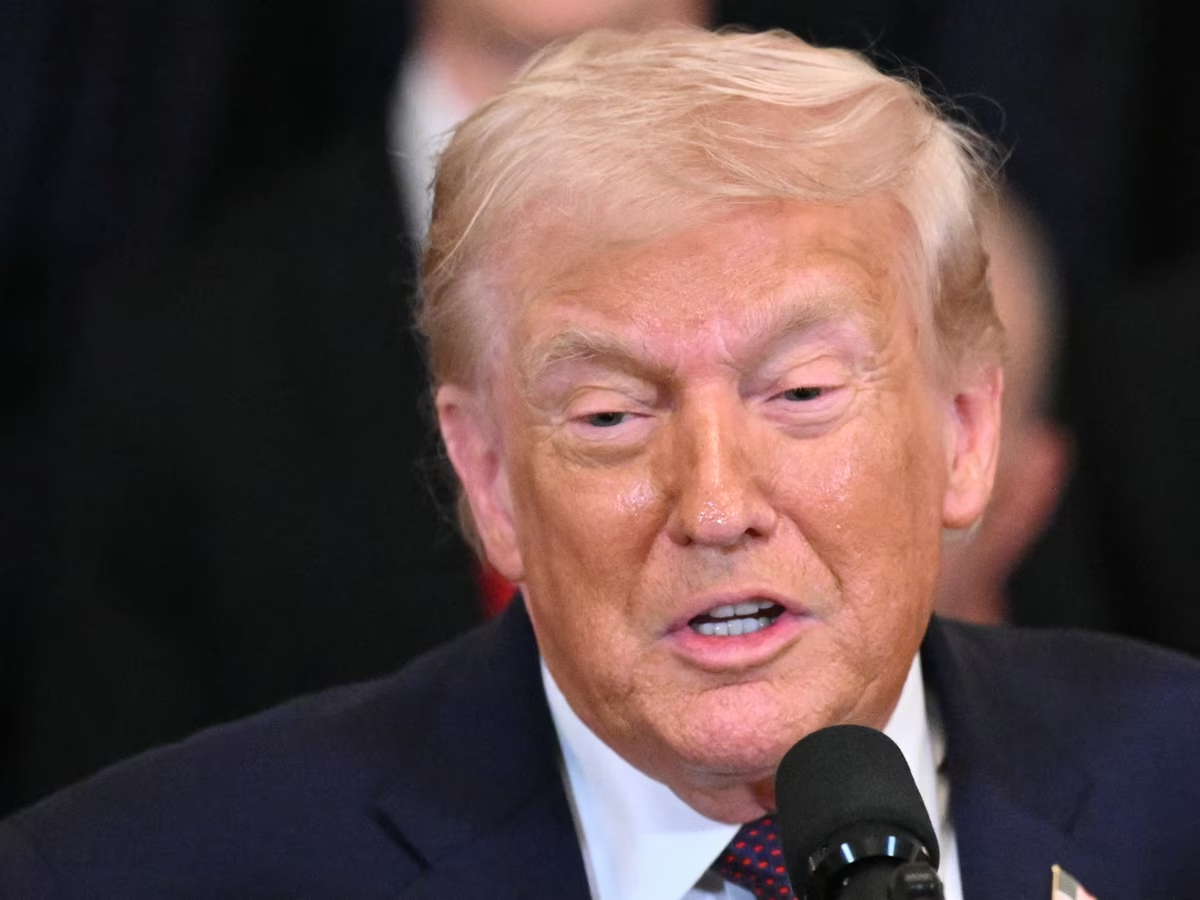
Trump invites Sisi and Erdogan to participate in "Peace Council"

Washington – Said Arikat

Official sources in Ankara and Cairo revealed that US President Donald Trump has extended invitations to both Egypt and Turkey to join what he called the "Peace Council," a new international framework announced by the White House to oversee the transitional phase in the Gaza Strip after the ongoing war.

According to the White House announcement on Friday, the "Peace Council" will be tasked with overseeing a temporary administration for the Gaza Strip, as part of a plan previously announced by Trump to end the Israeli war on the Strip, which international human rights organizations describe as a war of genocide against Palestinians in an area besieged for years. The announcement comes amid increasing international pressure to stop the fighting and growing criticism of US policies biased towards Israel.

In Ankara, the Turkish Presidential Communications Director, Burhanuddin Duran, confirmed via social media that President Recep Tayyip Erdogan received an official message from Trump on Friday, inviting him to be a "founding member" of the new council. The Turkish official did not disclose Ankara's final position on the invitation, merely indicating that the proposal is under consideration in light of regional developments and the sensitivity of the Palestinian issue.

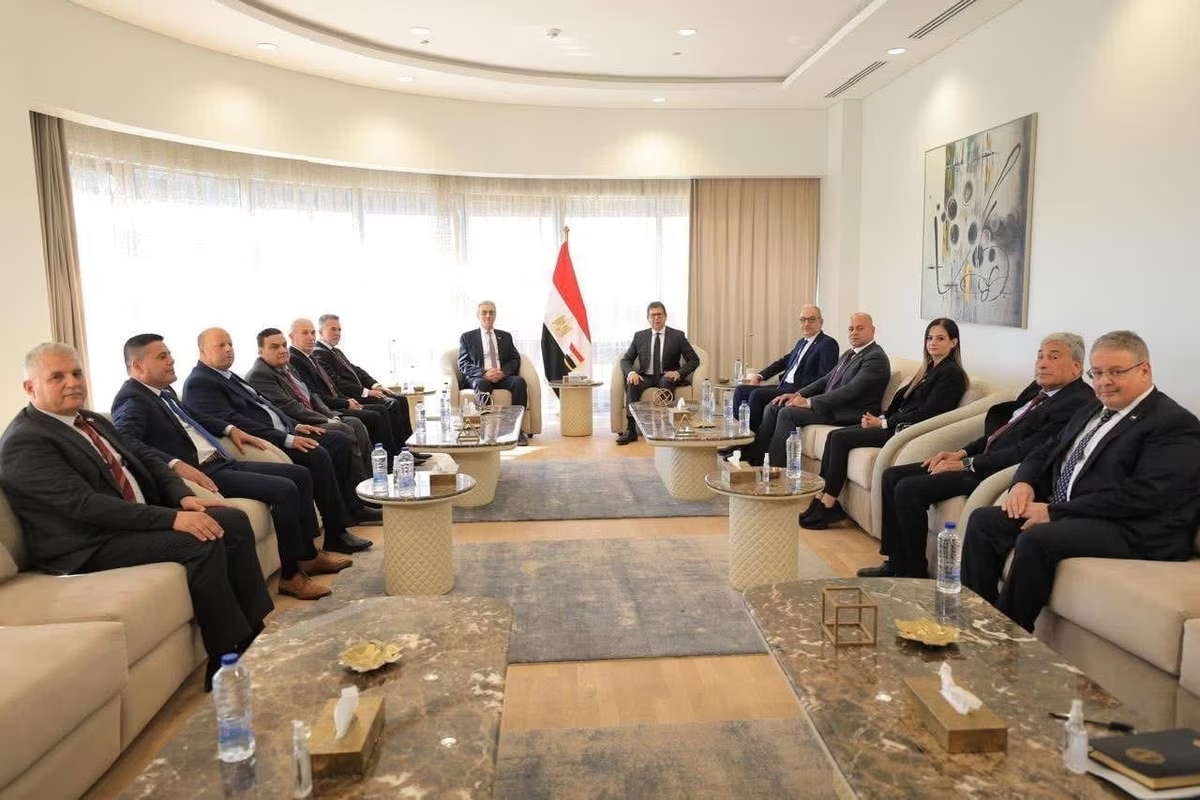
In Cairo, Egyptian Foreign Minister Badr Abdel Atty stated during a press conference on Saturday that his country had received a separate invitation from the US President addressed to President Abdel Fattah el-Sisi to join the council, explaining that Egypt is "carefully studying the invitation" in light of its historical role in the Palestinian issue and its regional responsibilities, particularly concerning the Gaza file, crossings, and political mediation.

The White House had previously announced the names of several members forming what it described as the "Founding Executive Council," led by President Trump himself as chairman of the council, alongside US Secretary of State Marco Rubio, the President's Special Envoy Steve Witkoff, former British Prime Minister Tony Blair, in addition to Jared Kushner, Trump's son-in-law and former advisor, known for his role in drafting the "Deal of the Century."

The establishment of the council dates back to a plan revealed by Trump last October, which stipulated the formation of a Palestinian technocratic body to manage Gaza's affairs during a transitional phase, with this body operating under direct international supervision from the Peace Council. The plan, according to the American narrative, aims to "restore stability" to the Strip and create conditions for a subsequent political settlement, without including clear commitments regarding ending the occupation or guaranteeing Palestinian national rights.

However, the announcement of the council was met with sharp criticism from international law experts and human rights activists, who considered that the supervision of a major head of state over the administration of a foreign territory, without the participation of representatives of its people, reflects a modernized colonial model that ignores the principle of self-determination. The inclusion of Tony Blair's name also sparked a new wave of objections, against the backdrop of his role in the Iraq War and the grave violations associated with it, as well as the British colonial legacy in the region.

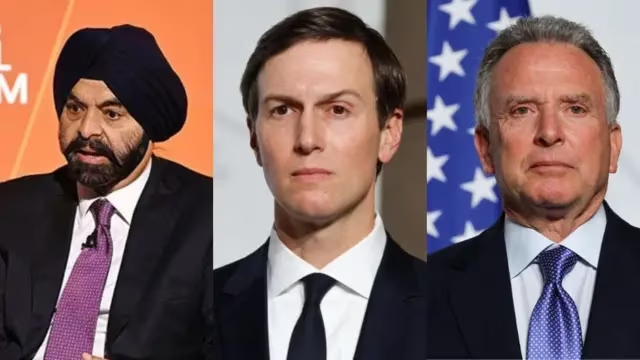
The White House did not provide precise details about the powers of each member of the council or its decision-making mechanisms, merely indicating that additional names would be announced in the coming weeks. It also confirmed that the council would include prominent economic and international figures, including Mark Rowan, CEO in private equity, World Bank President Ajay Banga, in addition to Robert Gabriel, one of Trump's advisors. It clarified that Nikolay Mladenov, the former UN envoy to the Middle East, would serve as the "High Representative for Gaza."

What is striking about the council's composition, according to observers, is the complete absence of any Palestinian representation, whether from the Palestinian Authority, civil society organizations, or political factions, which raises fundamental questions about the council's legitimacy and its ability to manage a highly complex phase in Gaza's history.

The proposed "Peace Council" reflects a traditional American approach to crisis management in the Middle East, based on internationalizing supervision and marginalizing the original stakeholders. Instead of empowering Palestinians to determine their own destiny, Gaza's future is being reshaped behind closed doors, under the guise of stability and reconstruction. This approach does not address the roots of the conflict but postpones them, and may entrench a fragile political reality, prone to explosion at the first field or popular test.

Experts believe that the participation of regional countries like Turkey and Egypt in the council, if it happens, will place them in a difficult equation between maintaining their traditional role in supporting the Palestinian cause and engaging in an international framework led by Washington on its terms. Joining may provide a limited margin of influence, but it could also be interpreted as political cover for a plan that does not guarantee Palestinian rights. Rejection, on the other hand, carries the risks of marginalization from an international path that may be imposed as a fait accompli.

Ultimately, the "Peace Council" remains a controversial initiative, reflecting an American attempt to re-engineer the scene in Gaza after the war, amidst deep skepticism about its intentions and feasibility, and open questions about the future of a strip whose people were not consulted in determining their own destiny.

OPINIONS

Sat 17 Jan 2026 2:14 pm - Jerusalem Time

Why the Iranian Regime Does Not Fall: A Reading of the Pillars of Survival, Hybrid Warfare, and the Limits of Protest

The world held its breath over the past two days, anticipating a decisive American strike against the regime in Iran, amidst unprecedented political and media escalation, and military movements that suggested the moment of truth was approaching. However, this charged anticipation did not succeed in shaking the firm conviction of reputable research centers and strategic decision-makers, who remained in agreement on one conclusion: the Iranian regime is not on the verge of collapse.

Behind the noise generated across social media, most international research centers — including the Council on Foreign Relations, the Brookings Institution, the RAND Corporation, the Center for Strategic and International Studies, the International Crisis Group, Chatham House, the European Policy Centre, the Carnegie Endowment for International Peace, and the Middle East Institute — have confirmed one result: the Iranian regime remains standing and capable of absorbing shocks, and that the overall field and political developments, and the threat of using military force, represent only a new chapter in a long-term conflict whose battles are managed with more complex tools, where a military strike is only a pressure element within a broader system of attrition and hybrid warfare, not a rapid lever for overthrow.

There are multiple reasons that make this conclusion realistic, logical, and more likely.

First: Cohesion of the Power Structure and Deep Ideologization

The role of the solid structure of the regime, primarily the Revolutionary Guard, intelligence agencies, and the judicial system, goes beyond traditional security and judicial functions to form one of the fundamental pillars integrated into the heart of the regime, and its ideological, political, and economic backbone.

The Revolutionary Guard, for example, plays a complex set of security, economic, doctrinal, and political roles. At the security level, it constitutes the first line of defense for the regime against internal and external threats; it is responsible for protecting the political system, managing sensitive internal security files, and confronting protests when they are classified as a “security-systemic” threat, which is the case in the current crisis.

This role is based on a doctrine founded on the sanctity of the principle of “defending the revolution,” and defending the survival of the regime as the survival of the intertwined security institution. This loyalty is nurtured through a cohesive ideological structure, constantly reformulated through cultural and educational institutions, a mobilizing religious-revolutionary discourse, and a narrative of a “besieged state.” Therefore, we are not talking about security personnel, but about ideologized actors who see defending the regime as defending identity, which makes any attempt at defection classified as an “existential betrayal.”

In addition, a network of economic interests protects this ideological loyalty; the Revolutionary Guard plays a pivotal economic role through direct or indirect control over strategic sectors, including energy, telecommunications, construction, and ports, which provides it with a high ability to circumvent sanctions through parallel economic networks. This economic influence makes the survival of the regime a direct interest for military and bureaucratic elites, as collapse means not only loss of power, but also loss of wealth, influence, and legal protection.

Added to this is the political role played by the Revolutionary Guard in Iranian political life, through influencing the selection of elites, drawing red lines for political action, and directing regional and security policies.

The functional roles of the Revolutionary Guard and intelligence agencies are integrated into an intertwined circle: doctrine protects loyalty, economics protects interests, security protects control, and politics protects continuity. This intertwining makes any attempt to separate one of these dimensions from the other almost impossible.

Thanks to this precise equation, a split in the hardline elite becomes extremely difficult, which is a crucial factor in the fall of authoritarian regimes. Most major collapses — from the Soviet Union to the Arab Spring regimes — were preceded by a moment of disintegration or division within the institutions of power.

In the Iranian case, this moment has not materialized; rather, the security agencies have so far shown cohesion and a high capacity for control and loyalty. As long as these agencies remain united in their vision and loyalty, the regime remains capable of resilience, even in the face of suffocating economic and social crises. The cohesion of the regime in the authoritarian Iranian model is not linked to the issue of popular acceptance or Rousseau's model of social contract theory, but rather is based on a Hobbesian approach that prioritizes security over rights and freedoms, where the regime does not need national consensus to continue, but rather the cohesion of the tools of power, which is the condition available until now.

Second: Weak and Disunited Opposition

The geographical and ideological map of the Iranian opposition reveals its fragility and limited capacity to influence; it suffers from organizational fragmentation, political contradiction, and an inability to produce a realistic governing alternative.

The opposition is geographically divided between an internal opposition and an exile opposition. The internal opposition is concentrated in major cities such as Tehran, Isfahan, Shiraz, Tabriz, and Mashhad, in addition to ethnic groups such as Kurds in the west, Baloch in the south, Arabs in Ahwaz, and some Azeri movements. This opposition suffers from decentralization, its focus on human rights issues, and weak leadership and organization, which prompts the regime to adopt a policy of direct repression against it. Despite enjoying social legitimacy, it lacks organized political transformation.

As for the exile opposition, centered in the United States, Canada, and Western Europe, despite its ability to access international media and Western decision-makers, it suffers from weak organizational reach within Iran, which puts it in a real crisis of representation.

Ideologically, the opposition is divided between a fragmented secular liberal current, a declining leftist current, and an ethnic nationalist opposition concentrated in limited areas and unable to agree on unified demands. The problem is not in diversity itself, but in the inability to transform it into a strength factor within a comprehensive political project.

Third: Absence of Strategic Pressure Tools

Symbolic demonstrations rarely overthrow a cohesive authoritarian regime. This requires shifting the conflict from the street to the joints of the state and economy through tools such as prolonged strikes, economic boycotts, and sustained civil disobedience. However, the Iranian experience shows a recurring pattern: escalation, then repression, then decline, due to the regime's ability to cut coordination chains, disrupt the internet, raise the cost of organization, and invest in the discourse of an “external conspiracy” to justify repression.

Fourth: The Parallel Economy as a Tool of Political Control

Iran possesses what research centers describe as an “adaptation economy,” where regime institutions, primarily the Revolutionary Guard, control strategic sectors through parallel economic networks, front companies, and mechanisms to circumvent sanctions. This leads to shifting the cost of economic pressures from the authority to society, while the ruling elite remains protected through monopoly, political protection, and redistribution of privileges.

In light of the above, it is clear that the Iranian regime does not survive by repression alone, nor does it fall by protest alone. The ongoing conflict is not a conflict of a decisive moment, but a long-term war of attrition whose battles are managed with hybrid tools that restrict behavior without overthrowing the regime, and exhaust society without dismantling the power structure. Between the external bet on gradual pressure and the internal bet on institutional resilience, Iran remains stuck in a complex equation: a cohesive regime, a crisis-ridden society, and an opposition unable to transform into an alternative. This equation explains why, despite all the noise, collapse seems far from imminent.





PALESTINE

Sat 17 Jan 2026 2:09 pm - Jerusalem Time

White House Reveals Identity of International Committee Members to Oversee Gaza Administration and Outlines "The Day After"

On Friday, the White House unveiled the international framework through which the United States intends to manage the Gaza Strip in the post-war phase. This move reflects an American shift from conflict management to engineering a complex transitional phase, where politics intertwine with security, diplomacy with economics, and symbolism with actual authority. The announcement was not limited to names but revealed a comprehensive vision for Gaza's governance, based on a broad international council, an executive committee with real influence, a technocratic Palestinian facade, and an international stabilization force whose features are yet to be fully defined.

At the heart of this framework stands the Executive Committee of the Peace Council, which includes a striking mix of regional and international figures. Prominent members include Turkish Foreign Minister Hakan Fidan, Qatari diplomat Ali Al-Thawadi, Egyptian Intelligence Chief Hassan Rashad, UAE Minister of International Cooperation Reem Al Hashimy, in addition to former British Prime Minister Tony Blair. This composition reflects an American attempt to combine countries that have direct communication channels with Palestinian actors, and others capable of providing international political and financial cover.

The inclusion of Turkey and Qatar is likely to provoke resentment in Tel Aviv, but it also reflects President Donald Trump's conviction that these two countries have an indispensable role, especially after his repeated praise for their ability to influence Hamas's decision and contribute to the ceasefire announced on October 10th.

The Executive Committee will directly oversee the National Committee for Gaza Administration, a new Palestinian body composed of technocrats, entrusted with the responsibility of managing the daily affairs of the Strip, providing essential services, and rebuilding civil institutions. This committee operates under the umbrella of the Peace Council, chaired by Trump himself, and is expected to be officially announced within days. Its role – according to the White House's description – is closer to strategic and symbolic oversight, in contrast to the Executive Committee's actual executive authority.

The Executive Committee also includes influential American and international figures, among them US Special Envoy Steve Witkoff, Trump's son-in-law and advisor Jared Kushner, Apollo Global Management CEO Marc Rowan, Israeli-Cypriot businessman Yakir Gabay, as well as former UN Humanitarian Coordinator Sigrid Kaag, and former UN Envoy to the Middle East Nickolay Mladenov.

Mladenov will play a pivotal role as the High Representative of the Peace Council in Gaza, serving as the on-the-ground link between international structures and the local Palestinian administration. The White House clarified that his mission will include overseeing aspects of governance, reconstruction, and development, while ensuring coordination between civil and security tracks.

The Palestinian National Committee held its first meeting with Mladenov in Cairo, with virtual attendance from Kushner and Witkoff. This committee is chaired by Dr. Ali Shaath, former Deputy Minister of Planning in the Palestinian Authority, whom the White House described as a widely respected technocratic leader with experience in public administration and economic development, capable of managing a highly sensitive phase intended to establish long-term sustainable self-governance.

On the security front, the White House announced the appointment of US Major General Jasper Jeffers, commander of special operations in the US Central Command, as commander of the international stabilization force to be deployed in Gaza. This force will be tasked with securing the Strip, facilitating a gradual withdrawal of Israeli forces, and ensuring the delivery of humanitarian aid and reconstruction materials. Jeffers has previous experience in managing ceasefire arrangements, having played a leading role in the truce monitoring mechanism between Israel and Hezbollah in Lebanon in 2024.

However, this force still faces serious obstacles, most notably the difficulty of convincing countries to contribute troops on the ground, given the ambiguity surrounding the fate of Hamas's weapons and the limits of Israeli withdrawal. Azerbaijan, one of the countries promoted by Washington, has announced its non-participation, while American officials assert that sufficient commitments have been gathered, and an official announcement will be made within weeks.

The American plan for Gaza's administration reflects an approach of "transitional administration without sovereignty," where fundamental questions related to political representation and legitimacy are set aside in favor of a technocratic-security model managed by external powers. Despite the soft language about development and stability, the absence of a clear political horizon, especially regarding ending the occupation and defining the future of governance, threatens to transform this framework into a new version of chronic crisis management, rather than a radical solution to the conflict.

The proposed international composition reveals a structural contradiction: it seeks to involve influential regional parties, but at the same time keeps the final decision in Washington's hands, under the umbrella of Trump's own vision. This contradiction may undermine the plan's effectiveness on the ground, especially if Israeli security priorities clash with the requirements of societal stability in Gaza, or with the aspirations of Palestinians for genuine national governance not managed by proxy.

PALESTINE

Sat 17 Jan 2026 2:04 pm - Jerusalem Time

A Silent Earthquake in the Security Relationship Between Washington and Tel Aviv

News Analysis

In a striking analytical article published on the "Substack" platform on Thursday, January 15, 2026, Ilan Goldenberg, a senior fellow and director of the Middle East Security Program at the Center for a New American Security, revealed a fundamental and unprecedented shift in the trajectory of the security relationship between the United States and Israel. He described this shift as a "major earthquake" that went almost unnoticed, despite its profound strategic implications for the future of the alliance between the two countries.

Goldenberg's analysis stems from two simultaneous events that together constituted a remarkable turning point. The first event was a statement made by Israeli Prime Minister Benjamin Netanyahu during an interview with The Economist magazine on Friday, January 9, 2026, in which he explicitly announced Israel's desire to end its reliance on American security assistance within the next decade. The second event was even more surprising, as it was followed by a public statement from Republican Senator Lindsey Graham, chairman of the Senate Appropriations Subcommittee on State, Foreign Operations, and Related Programs, who called for accelerating the termination of foreign military financing for Israel, perhaps at a pace even faster than what Netanyahu himself proposed.

According to Goldenberg, the seriousness of this development lies not only in its content but also in the context in which it occurred. Just a few years ago, merely questioning US military aid to Israel was considered a political taboo in Washington, met with ready accusations of "anti-Israel sentiment." Today, the explicit call to end this aid comes from one of the American politicians closest to Israel and to Donald Trump, and it passes in almost complete silence.

Practically, the author emphasizes that ending foreign military financing does not mean dismantling the security partnership between the two countries. Israel will continue to purchase advanced American weapons, from F-35 and F-15 fighters to smart munitions, and cooperation in missile defense programs, intelligence sharing, and research and development will continue. The fundamental difference, as he explains, is not about the nature of the relationship but about who pays for it: the American taxpayer or the Israeli treasury.

Goldenberg recalls the historical background of the Foreign Military Financing program, which was established in the late 1970s as part of the Camp David Accords, as a guarantee for the stability of the then-fragile peace treaties, especially between Egypt and Israel. However, this context has radically changed. Israel today is a country with an advanced economy, and its per capita GDP is comparable to that of major industrial countries such as Germany, France, and Japan, making its need for four billion dollars annually less urgent than it was in the past.

Indeed, according to the author's analysis, this aid has become a political burden on Israel itself. Being the largest recipient of US military aid in the world has made the relationship subject to constant scrutiny and placed it at the heart of American political polarization. From this perspective, treating Israel as a "naturally wealthy ally" might alleviate tensions rather than increase them.

As for the silence that accompanied Graham's and Netanyahu's statements, Goldenberg directly links it to the political context associated with Donald Trump. Netanyahu, as he conveys, was concerned that a potential Trump administration would not be willing to sign a new memorandum of understanding guaranteeing billions of dollars in long-term aid, so he chose proactive adaptation, abandoning one of the most sensitive elements of the US-Israeli relationship, rather than risking an embarrassing political confrontation.

Despite this shift, the author asserts that the discussion about accountability will not stop. American laws, including the Leahy Law, apply to arms sales as they do to aid. Questions regarding the use of American weapons in Gaza and the West Bank, and about potential violations and obstruction of humanitarian aid, will remain strongly posed, even if the discussion shifts from the framework of "grants" to the framework of "sales."

In conclusion, Goldenberg believes that this development reveals a truth that has long been ignored: American influence over Israel does not primarily stem from financial aid, but from broader political, diplomatic, and military weight, from Washington's position in international forums, and the nature of the relationship between the leaders of the two countries. Netanyahu and Graham indirectly acknowledged that aid was never the decisive factor in issues Israel considers existential.

What Goldenberg presents goes beyond describing a fleeting event, to reveal a gradual collapse of the "sanctity" of military aid to Israel within Washington. When ending financial support becomes an option proposed from within the pro-Israel camp, it means that the relationship has entered a phase of redefinition, where strategic partnership is separated from unconditional support, and reformulated in the language of interests and self-reliance, not in the language of permanent exception.

The political and media silence surrounding this shift exposes the double standards in the American debate about Israel. Accountability, when it comes from Democratic administrations, is met with accusations of betrayal, but when it comes from Republican right-wing allies, it is quietly absorbed. This confirms that the debate about aid is not a purely moral discussion, but a reflection of power struggles within American politics, where "constants" are reformulated according to the identity of those who propose them.


PALESTINE

Sat 17 Jan 2026 1:31 pm - Jerusalem Time

Occupation forces launch widespread raids and arrests in West Bank cities

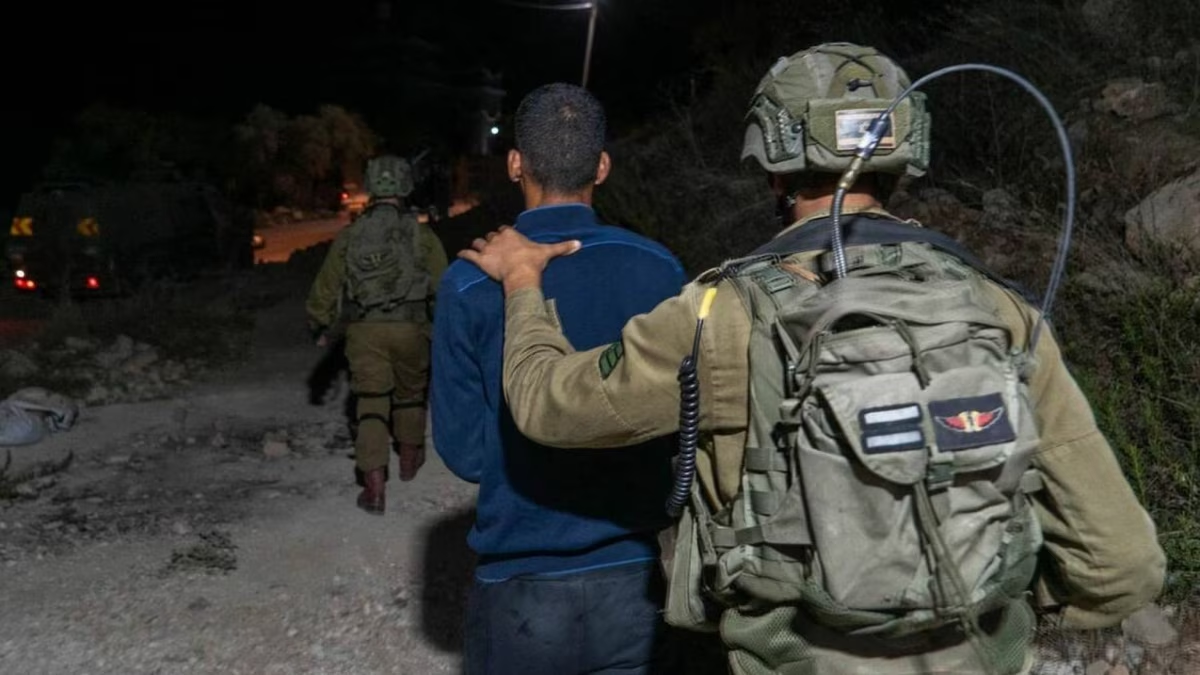
Since the early hours of Saturday morning, Israeli occupation forces have continued a series of incursions and raids in various areas of the West Bank, including arrests of citizens, abuse of residents, and house searches.

The occupation operations were distributed across several governorates, and their outcome, according to field monitoring, was as follows:

Qalqilya: An Israeli occupation army force arrested the young man Moaz Nawfal after storming the Al-Naqqar neighborhood, and also confiscated his private vehicle.

Jenin: The incursions affected the towns of Maythalun and Deir Abu Da'if east of the city, where citizens' homes were raided and a young man was arrested.

Pursuits in Jenin: The Beit Qad project was subjected to an incursion that included searching the homes of relatives of the wanted Faraj Al-Sanouri.

Hebron: The governorate witnessed the establishment of a military checkpoint in front of the central livestock market in Dhahiriya and vehicle inspections, in addition to raiding homes in the Al-Adisa area in the town of Sa'ir.

Hebron detainees: The occupation arrested the young man Ezz Nasser Asafra from Beit Kahil, and the released prisoner Mujahid Muhammad Mutlaq Abu Jheisha from the town of Idhna, noting that only one week had passed since his release from occupation prisons.

Bethlehem: The village of Abu Njeim, the Solomon's Pools area, and the village of Al-Khader were subjected to intensive incursions, during which the forces concentrated in the "Abu Sarra" and "Al-Saifi" neighborhoods.

This campaign comes in the context of the continuous escalation adopted by the occupation forces, which includes direct acts of abuse against Palestinian citizens during night and morning raids, increasing the state of tension throughout the West Bank.

PALESTINE

Sat 17 Jan 2026 9:01 am - Jerusalem Time

Occupation launches raids on its deployment areas east of Gaza in the central sector

Raids on occupation deployment areas east of Gaza and in the central region.. and 12 martyrs in a bloody toll.

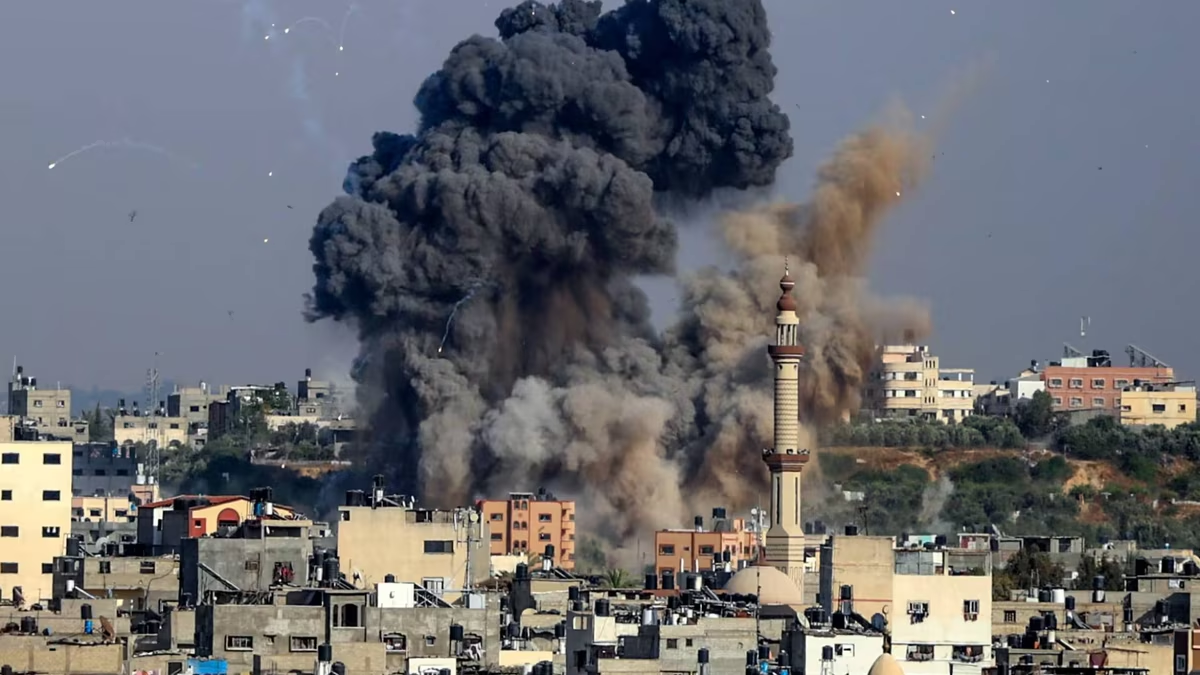
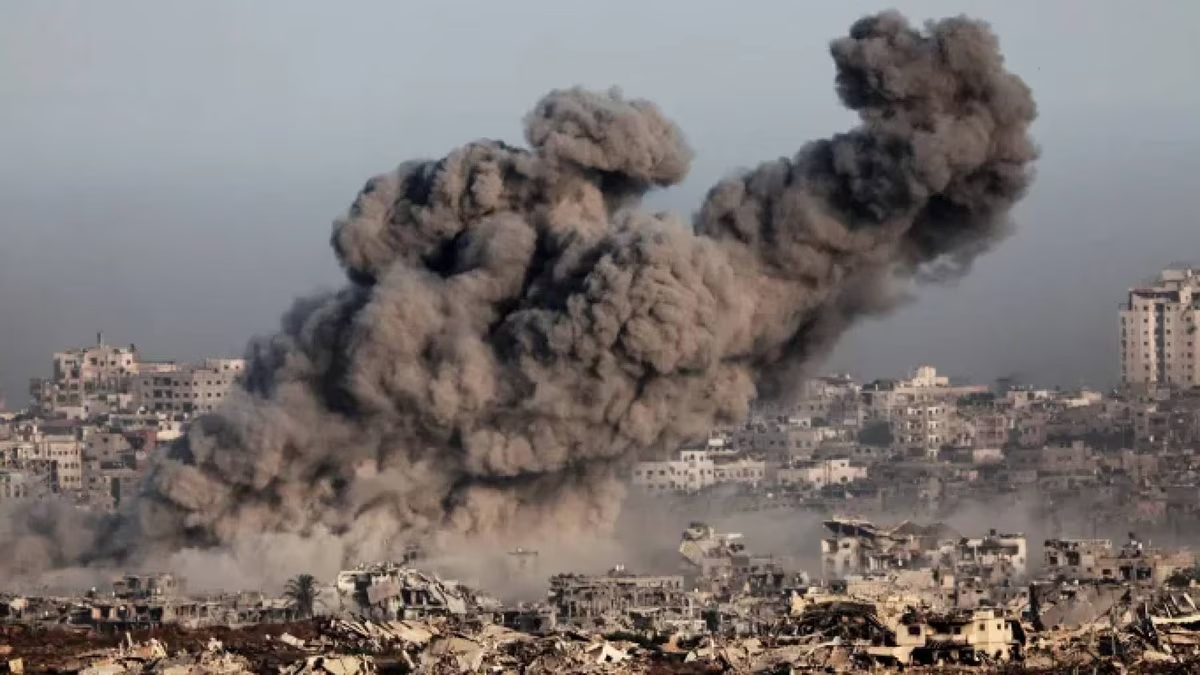
The Gaza Strip witnessed, on Saturday morning, a renewal of Israeli airstrikes, which notably targeted the deployment areas of the occupation forces themselves east of Gaza City, in addition to intensive targeting in Deir al-Balah and al-Bureij refugee camp in the central sector.

A bloody day and family massacres. This bombing comes as an extension of a series of violations and violent raids recorded from Thursday morning until Friday, which resulted - according to Palestinian sources - in the martyrdom of 12 people in various axes of the Strip.

"Central" massacres: Deir al-Balah and Nuseirat. The deadliest strikes were concentrated in the Central Governorate, where the following incidents were recorded:

Al-Hawli family: 4 people were martyred and others injured in a bombing that targeted the family's home west of Deir al-Balah.

Al-Khatib family: In Nuseirat camp, 3 martyrs fell as a result of their home being targeted.

Al-Jarou family: Two martyrs died in a bombing that hit the courtyard of the family's home west of Deir al-Balah.

The other areas were not isolated from the escalation, as sources documented:

Khan Yunis: The elderly Sabah Ahmed Ali Abu Jameh (62 years old) was martyred after being shot west of the city.

Rafah: A martyr fell by occupation fire near the "Alam" roundabout to the west.

Gaza: A martyr and several injuries fell in a targeting of a police point near the "Nabulsi" intersection southwest of the city.

ARAB AND WORLD

Sat 17 Jan 2026 7:37 am - Jerusalem Time

American Writer: Trump Chose Oil Over Democracy in Venezuela

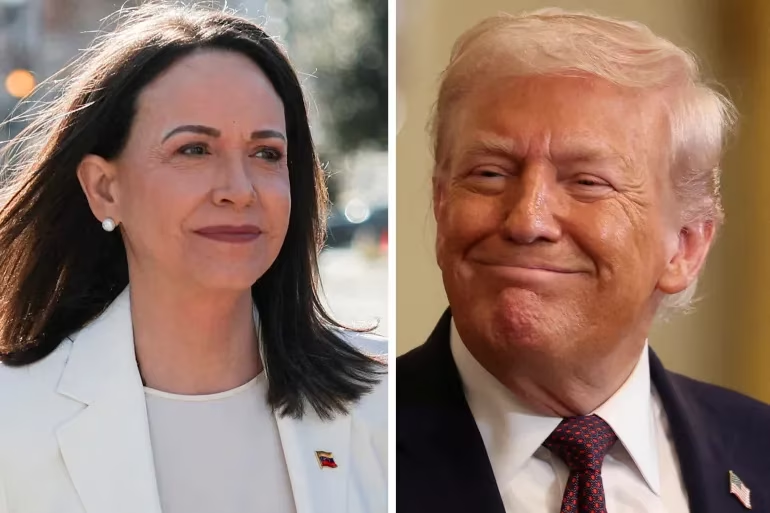
American writer Jack Nicas revealed in an analytical article for the New York Times that it has become clear to everyone that Washington's priority is focused on oil and short-term stability in Venezuela more than supporting a democratic transition led by the opposition. Nicas continued that within two days, US President Donald Trump held two conversations with contrasting implications: the first with Delcy Rodriguez, Venezuela's interim president close to the detained President Nicolas Maduro, who is subject to US sanctions for undermining democracy. The second meeting was directly in Washington with Maria Corina Machado, the Venezuelan opposition leader and Nobel Peace Prize laureate. Despite the symbolic and political difference between the two figures, Trump's stances showed a clear inclination towards Rodriguez, according to Jack Nicas. Choosing Delcy, he continued that Trump publicly praised Rodriguez, describing her as a "wonderful person," affirming that his relationship with her was "very good" after a conversation he said was excellent.
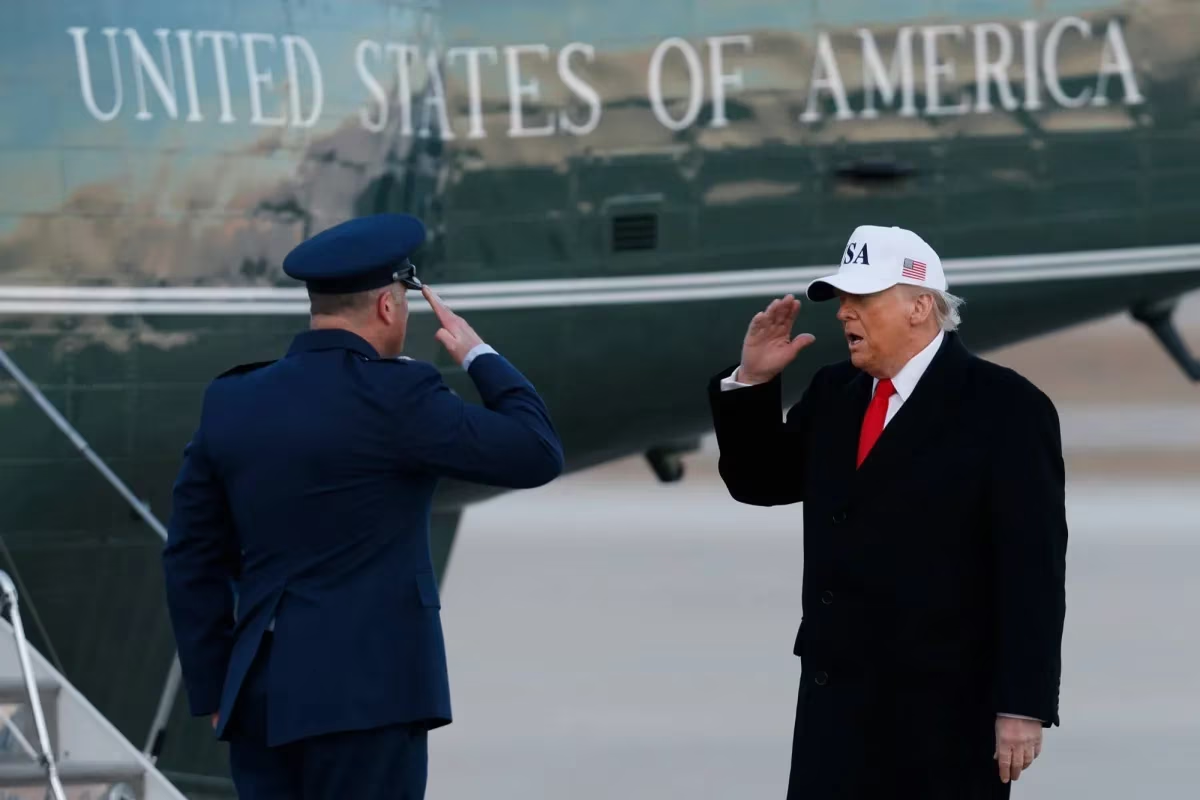
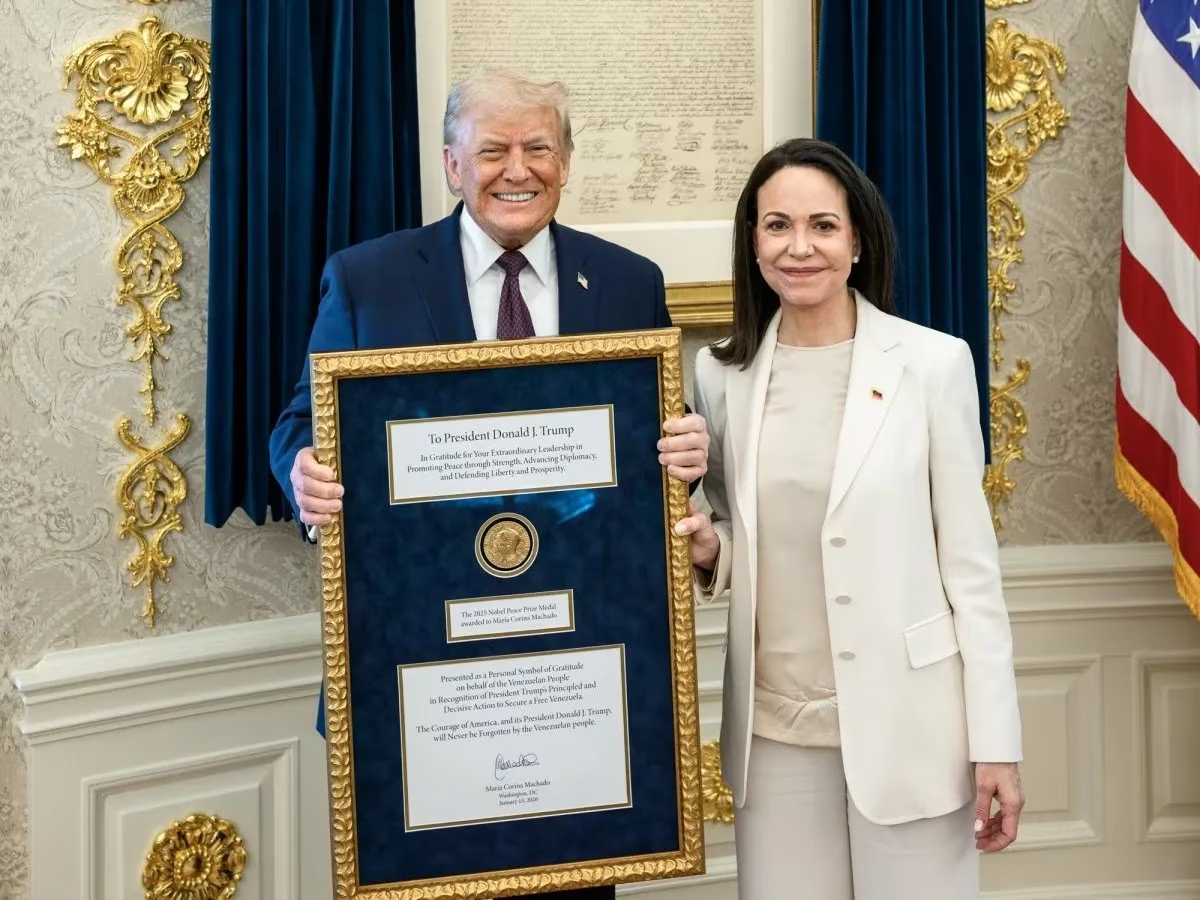
According to the White House, Rodriguez showed great cooperation with the United States, especially regarding opening Venezuela's oil sector to American interests, which made the President "impressed with what he saw" and expects this cooperation to continue, the writer explains. In contrast, Trump met with Maria Corina Machado, but the signals from the White House were not in her favor. White House spokeswoman Karoline Leavitt said that Trump believes, "based on the facts on the ground," that Machado lacks the necessary support and acceptance to lead the country, despite widespread indications of her popularity within Venezuela. Trump had praised yesterday Machado's "wonderful gesture" when she presented him with her Nobel Peace Prize medal during their meeting at the White House. The US President wrote on his Truth Social platform: "Maria presented me with the Nobel Peace Prize she received in recognition of the work she has done. What a wonderful gesture that reflects mutual respect. Thank you, Maria."

The Best Option The writer explains that before Maduro's arrest, some White House officials, as well as a CIA analysis, argued that Machado and her allies would face difficulty consolidating control over Venezuela if they were installed as leaders of the country, and considered Rodriguez to represent the most stable option in the short term. For the writer, this disparity in handling reflects the Trump administration's view of Venezuela as a strategic file related to energy before any other political consideration. He added that Trump's clear endorsement now of the interim president loyal to the detained President Maduro, at the expense of a fighter for democracy, supports the idea that his goal in Venezuela seems primarily to be establishing a stable oil source, and perhaps later exploring a democratic transition narrative.

Elections in Venezuela? Leavitt said that Trump is committed to seeing elections in Venezuela someday, then added, "but I don't have an updated timeline to give you today." Meanwhile, Machado emphasized – Jack Nicas explains – that "the time is now," and continued: "I told him that we are ready to move quickly and effectively towards a democratic transition." For their part, American officials, including Secretary of State Marco Rubio, stressed that "the stability of the country" comes first, followed by securing oil, then addressing the opposition file, even if these stages overlap. The writer Nicas explained that these movements in Venezuela coincided with a sharp speech delivered by Rodriguez, in which she openly attacked the United States, accusing it of crossing the "red line." While her government practically continued practical steps towards rapprochement with Washington, including the release of dozens of political prisoners and discussions about reopening the Venezuelan embassy in the US capital, Nicas explains.

ANALYSIS

Sat 17 Jan 2026 7:36 am - Jerusalem Time

Conflicting Messages.. America Offers Dialogue and Mobilizes Forces Against Iran

The simultaneous American call for diplomatic dialogue with Iran and the escalating military reinforcements in the Middle East represent a paradox that reveals the depth of the crisis between Washington and Tehran. US envoy Steve Witkoff expressed hope for a comprehensive settlement covering Iran's uranium enrichment file, its missile program, and what he described as "Tehran's proxies" in the region, coinciding with reports of defensive and offensive reinforcements being sent in preparation for a possible decision by President Donald Trump to launch a military strike against Iran.

The program "Beyond the News" raised pivotal questions about the seriousness of the American diplomatic offer in light of the military movements, how Tehran interprets these conflicting signals and its readiness to negotiate on the issues raised, the impact of Iranian protests and the resulting tension on the chances of resuming dialogue, as well as the potential role of regional countries in containing the risk of confrontation.

Sources revealed that the US military is mobilizing additional forces in anticipation of any military scenario, while the "Axios" website reported information about the arrival of the head of Israeli Mossad in the United States to discuss the Iranian situation. US officials also confirmed that the military option remains on the table if the repression of protesters continues, according to the American narrative that speaks of the killing of more than 1,200 Iranian civilians.

In contrast, Iranian Foreign Minister Abbas Araqchi clarified that communication channels with Witkoff have been ongoing since before the protests, but he stressed the impossibility of combining diplomatic proposals with military threats. Paul Davis, a professor at the Institute of World Politics, believed that the diplomatic path represents the preferred option, and that military reinforcements constitute only a deterrent factor, explaining that stopping violence against protesters is a prerequisite for any diplomatic progress, noting that Washington will not accept an Iranian nuclear program under any circumstances.

While Dr. Hassan Ahmadian, an academic professor of Middle East studies, rejected American claims of defending protesters, considering that Washington supported military strikes on Iran 6 months ago. He explained that diplomacy effectively stopped after the war, and that American demands aim to strip Iran of all its nuclear, missile, and regional power tools, stressing that Tehran will not accept negotiating about its military capabilities under any circumstances or leadership.

In the same context, Dr. Mahjoob Zweiri, an expert in Middle East policies, pointed out that the current American demands have their roots in Donald Trump's withdrawal from the nuclear agreement in May 2018, where he aimed to achieve "zero enrichment" without announcing it. He indicated that regional transformations, including the change in Syria and the strike on Iran in June 2025 and October 7, pushed Washington to escalate its demands from limited enrichment levels to a complete cancellation of the program. He explained that American intransigence stems from Washington and Tel Aviv's conviction that Iran has lost its cards of power.

Zweiri predicted possible scenarios including Tehran trying to buy time through limited concessions to get through Trump's term, or building a regional alliance including Pakistan and Gulf countries to raise the cost of war, and warned of concerns about the impact of any confrontation on the energy sector and economic stability. While some believe that Washington takes the interests of its allies into account, Davis affirmed that the United States is energy independent but will consult with its allies and Europe.

Contrary to this view, Ahmadian pointed out that since the collapse of the nuclear agreement, Iran has sought to build alliances with neighboring countries and emerging powers, a policy inherited by successive governments, and noted the movements of Saudi Arabia, Qatar, and Oman to prevent military confrontation. Zweiri concluded that the solution lies in the region's countries realizing that Israeli overreach and excessive weakening of Iran will not serve anyone's interests, which necessitates a balanced settlement that prevents escalation.

ARAB AND WORLD

Sat 17 Jan 2026 7:36 am - Jerusalem Time

Trump in a message to Sisi: Ready to resume mediation between Egypt and Ethiopia

US President Donald Trump, in a message he sent on Friday to his Egyptian counterpart Abdel Fattah El-Sisi, said that the United States is ready to resume mediation between Egypt and Ethiopia to help resolve the issue of sharing the Nile River waters.

He wrote, in the message he published on the “Truth Social” platform: “I am ready to resume American mediation between Egypt and Ethiopia to resolve the issue of sharing the Nile waters responsibly and definitively.”

He added: “I would like to help you reach a solution that ensures the water needs of Egypt, Sudan, and Ethiopia are met.”

He believed that a permanent agreement for all Nile Basin countries could be reached through negotiations and American coordination between the parties.

He stressed that “resolving tensions related to the Grand Ethiopian Renaissance Dam is a top priority for me.”

He pointed out that quantities of water could be guaranteed to be released during drought periods in Egypt and Sudan by following a successful approach. Ethiopia could also generate large quantities of electricity and grant or sell part of it to Egypt or Sudan.

He affirmed that “no country should unilaterally control the Nile waters.”

He praised Sisi and his role in managing security and humanitarian challenges in Egypt and the region since October 7, 2023.

ARAB AND WORLD

Sat 17 Jan 2026 7:35 am - Jerusalem Time

White House dismisses European reinforcements in Greenland

US President Donald Trump announced yesterday that he might impose tariffs on countries that do not support his plan to acquire Greenland.

Trump said: “I might impose tariffs on countries that do not support the plan regarding Greenland, because we need Greenland for national security purposes.”

Denmark, a traditional ally of the United States within NATO, announced that it is strengthening its military presence in Greenland, in response to American criticism for not giving it enough importance, while the White House announced that the deployment of European forces in Greenland has no impact on President Trump's plans to control the Arctic island.

White House spokeswoman Caroline Leavitt said at a press conference: “I don't think the deployment of troops in Europe affects the President's decision-making process, nor does it affect his goal of annexing Greenland.”

PALESTINE

Sat 17 Jan 2026 7:34 am - Jerusalem Time

Lawsuit in Scotland challenges decision to ban "Palestine Action"

Former British diplomat Greg Murray said that the lawsuit filed in Scottish courts demands a judicial review of the British government's decision to include the "Palestine Action" movement on the banned list, considering the decision illegal and inappropriate, and leading to the unjustified labeling of people as terrorists.

Murray explained, in statements to sources, that the lawsuit aims to challenge the legality of the ban decision, noting that the British government initially sought to prevent the case from being heard by advancing two main arguments: the first related to his lack of legal standing to file the lawsuit because he is not an official member of the movement, and the second related to the Scottish courts' lack of jurisdiction to hear the case on the grounds that it is pending before courts in England.

Regarding legal standing, Murray pointed out that the judge received a statement from Huda Ammouri, founder of the "Palestine Action" movement, in which she confirmed that he had been involved in the movement's work almost from its beginnings, and that he played the role of a close colleague, collaborator, friend, and trusted advisor, and provided her with advice, support, and assistance.

He added that the judge seemed receptive to this argument, and considered that he was very closely involved in the movement's work, which, according to Murray, suggests that this part of the case has been settled in favor of the prosecution team.

As for the issue of jurisdiction, Murray explained that the British government argued that the case is being heard before courts in England, and therefore there is no justification for the intervention of Scottish courts.

In contrast, he affirmed that his legal team argued that Scottish citizens are being arrested and charged with terrorism-related offenses simply for expressing their support for Palestine or for the "Palestine Action" movement, considering these actions "absolutely disproportionate" and a violation of their human rights.

He added that this reality - if it occurs within Scotland and involves Scottish citizens - necessarily dictates that Scottish courts have jurisdiction to hear it, rather than the matter remaining dependent on what happens in England, noting that the judge also showed sympathy for this argument.
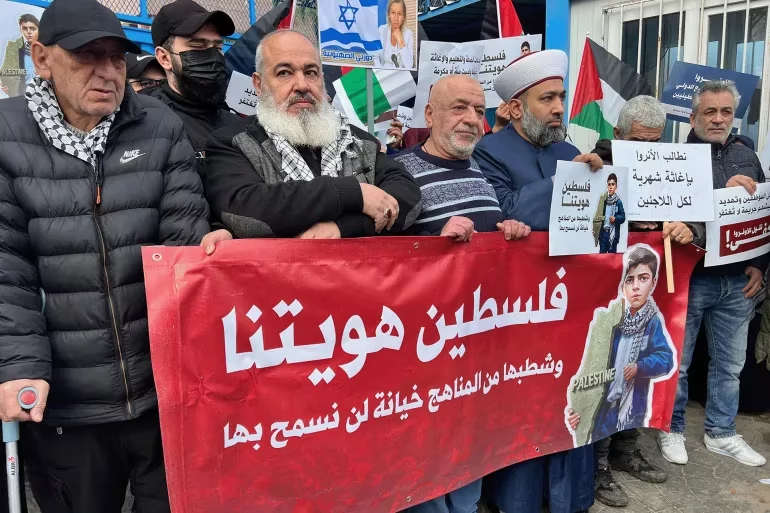
Murray expressed great optimism about the outcome of the case, expecting that a judicial review will be granted in Scotland for the decision to ban the movement.

He noted that the judge indicated his intention to issue a ruling this week, and if not, shortly thereafter, stressing the court's awareness of the urgency associated with the case, and expecting a quick decision followed by an expedited judicial process.

Murray stressed that the case goes beyond being a local legal matter in Edinburgh related to the human rights of Scottish citizens, affirming that it is directly linked to the Palestinian issue, and to what he described as the genocide against the Palestinian people, and to efforts aimed at stopping war crimes, which gives it - in his words - a strong international dimension that transcends the internal British judicial framework.

PALESTINE

Sat 17 Jan 2026 1:01 am - Jerusalem Time

American Media: "Israeli" Forces Manipulate Field Markers and Penetrate Deep into Gaza in Violation of Agreement

This report places international parties, especially "America," before their responsibilities as guarantors of the agreement that is being violated on the ground.

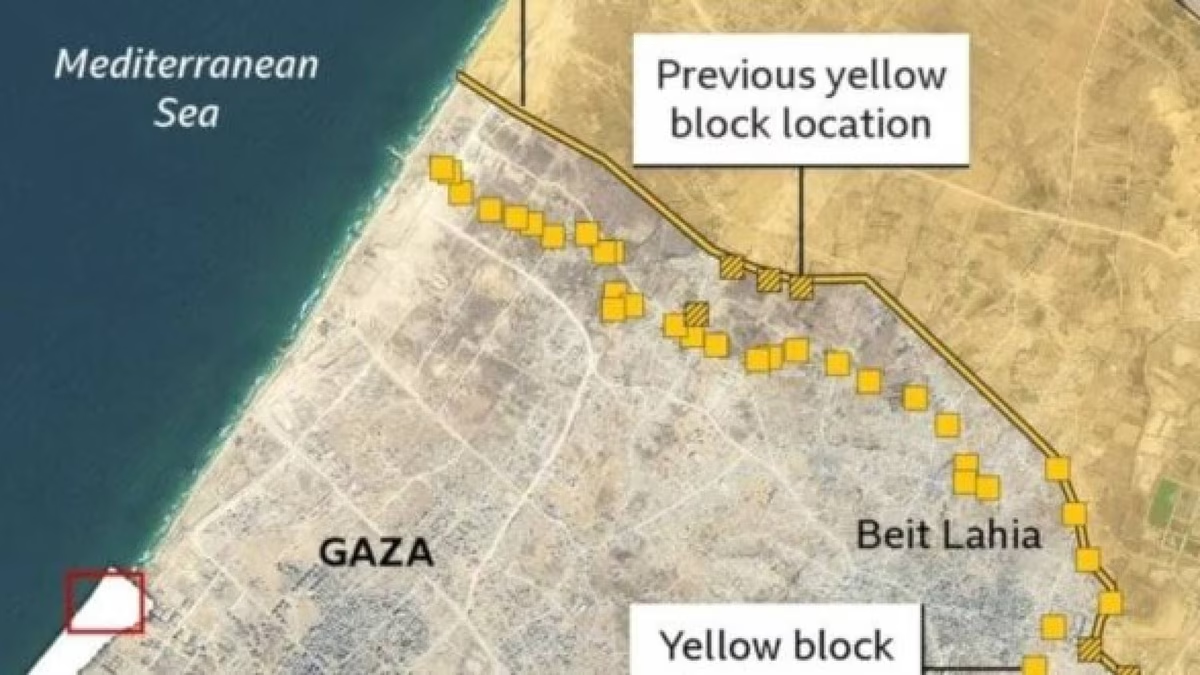
An analysis of satellite images conducted by (BBC Verify) revealed that the occupation forces moved concrete blocks, which define their control lines after the ceasefire, deeper into the Gaza Strip.

Field documents showed that the "occupation" did not adhere to withdrawing its forces beyond the agreed-upon "Yellow Line," but rather moved these markers to seize additional areas of Palestinian land.

The "Yellow Line" represents the boundaries to which the occupation army was supposed to withdraw after the ceasefire between Hamas and the "occupation" began in October.

This agreement, reached under the auspices of mediators including "America," stipulated the gradual withdrawal of forces as the agreement phases progressed. However, the British report confirms that the occupation, despite agreeing to the terms, demarcated this line on the ground using yellow concrete blocks before later moving them inside the Strip.

The number of relocated sites reached 16, including areas of "Beit Lahia," "Jabalia," and "Al-Tuffah neighborhood."

According to data analyzed by (BBC Verify), the most obvious violations were observed in "Al-Tuffah neighborhood" east of Gaza City, where at least seven concrete blocks were moved between November 27 and December 25. The average movement of these markers was about 295 meters inwards, away from the agreed-upon point.

The investigation highlighted shocking technical points, the most important of which are:

Exceeding Maps: It was found that more than half of the 205 field markers observed were placed much deeper inside Gaza compared to the officially designated Yellow Line.

Military Control: This movement led to the imposition of military control over additional areas of land within the Strip.

Human Losses: The report confirmed that the occupation's transgression of this line by hundreds of meters caused the martyrdom of a large number of Palestinian civilians.

This report places international parties, especially "America," before their responsibilities as guarantors of the agreement that is being violated on the ground. The "occupation's" manipulation of concrete markers is not only a geographical crime but also an undermining of any future opportunities for stability.

It is expected that this documented information, supported by images, will spark controversy in diplomatic circles, as these transgressions provide a pretext for renewed confrontations amid a lack of trust in the implementation of the ceasefire provisions on the ground.

PALESTINE

Sat 17 Jan 2026 12:01 am - Jerusalem Time

With national consensus.. "Ali Shaath" announces from Cairo the start of the Gaza Strip management committee's tasks

In a step described as historic, the head of the Palestinian National Committee for the Administration of the Gaza Strip, Ali Shaath, announced the official start of the committee's work from the Egyptian capital, Cairo. This launch comes as a result of a comprehensive mandate from the Palestinian leadership and with broad factional consensus, supported by an international umbrella and direct endorsement from America, establishing a transitional phase aimed at ending decades of division and addressing the effects of aggression resulting from the "occupation's" policies in the Strip.

The formation of this committee is based on solid international legal foundations, as it resulted from UN Security Council Resolution No. 2803.

The committee's objectives intersect with the new regional vision adopted by America within President "Trump's" 20-point peace plan, which seeks to find a radical solution to the humanitarian and political crisis. Historically, this move represents a fundamental turning point in the relationship between Ramallah and Gaza, as the Palestinian leadership relies on the committee to be a "vital link" paving the way towards the embodiment of an independent Palestinian state, and ending the state of singularity or political fragmentation that the "occupation" has long exploited to obstruct the path of liberation.

In an interview with Egyptian media, Ali Shaath revealed that the committee includes 15 Palestinian figures chosen based on criteria of "professionalism and moderation," who have extensive experience in development and relief work. The committee's mandate will extend for two years as a transitional phase, focusing primarily on:

The humanitarian file: compensating the most affected groups, such as women and children, for years of siege and displacement.

Reconstruction: implementing the provisions of the peace plan to alleviate the burden of the living crisis.

Government handover: coordinating with the Hamas movement, which has expressed its readiness to hand over government files to ensure smooth operation.

Shaath stated: "Our top priority is to bring back the smile to the children of Gaza and heal the wounds of a people who have suffered from the shocks of war." He also praised the pivotal role of the Arab Republic of Egypt, thanking the Egyptian President and government for "overcoming obstacles" and hosting this event that will lay the foundation for rebuilding Gaza.

These developments come after Washington announced the start of the second phase of its plan to end the war, which puts the "National Committee" to a real test before the international community. The committee's success in extending its administrative authority and improving living conditions will be the cornerstone of any future political settlement. This step is expected to reduce the "occupation's" arguments for maintaining the siege, and open the door for the flow of investments and international aid into the Strip. The biggest challenge remains the extent of commitment to timelines and the ability to withstand field challenges, but strong support from "America" and the guaranteeing Egyptian role give this initiative opportunities for success that were not available to its predecessors.

PALESTINE

Fri 16 Jan 2026 10:26 pm - Jerusalem Time

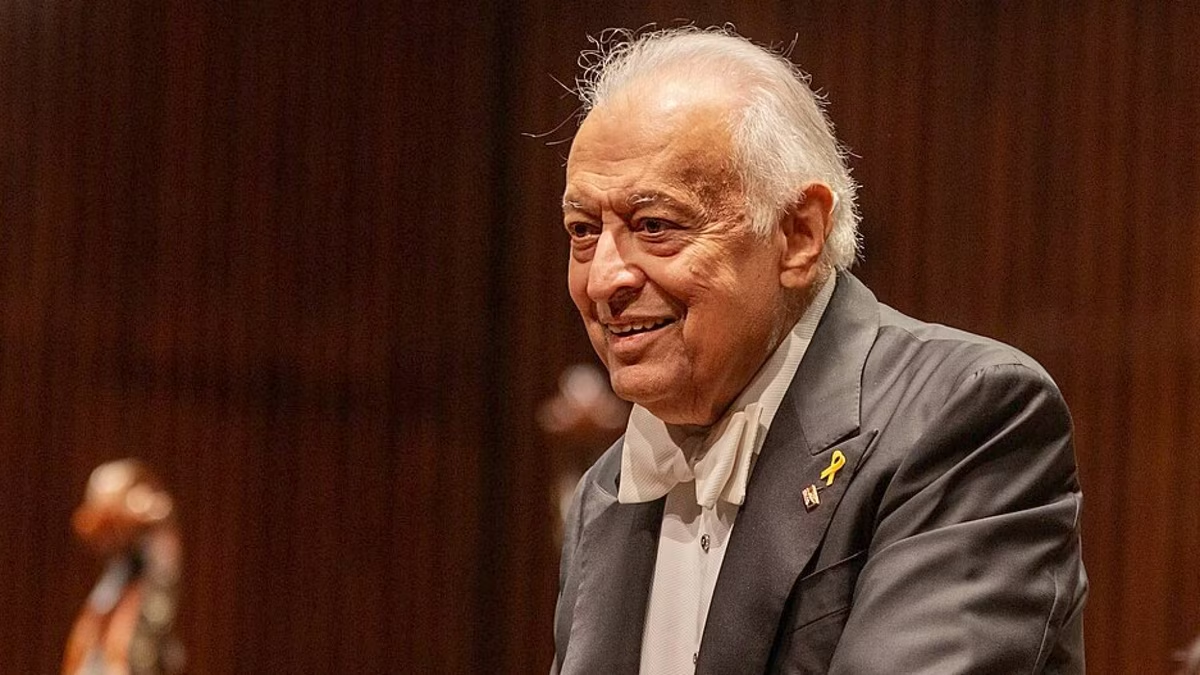
Global Maestro Zubin Mehta Announces Artistic Boycott of "Israel" in Protest of "Genocidal War" in Gaza

The maestro clearly indicated that the widespread destruction and thousands of casualties in the Gaza Strip now compel artists to take a firm stance.

The global orchestra conductor, Zubin Mehta, announced the cancellation of all his artistic projects and commitments with the occupying entity, in a shocking ethical and political stance for international cultural circles.

The decision by the prominent Indian maestro, 89 years old, came as an expression of his categorical rejection of Benjamin Netanyahu's government policies and what he described as oppressive and violent treatment against the Palestinian people, especially in light of the ongoing war crimes and systematic killing of civilians in the Gaza Strip and the West Bank.

Zubin Mehta's career is an integral part of the global music scene in the twentieth century, with his name associated for decades with the most prominent theaters in Vienna, Los Angeles, and New York.

Despite his supervision of the occupying "Philharmonic" orchestra for 55 years, the shift in the official stance of the occupation towards more extremism and violence led him to sever this historical connection, in line with the escalation of international cultural boycott campaigns that view Netanyahu's actions as a blatant violation of international humanitarian law.

There is no separation between music and politics in the face of war crimes.

In a moving interview with India Today, Mehta stated that he cannot separate his art from his political and ethical positions, saying: "I cannot separate music from politics, and I have canceled all my commitments in Israel this year due to my opposition to Netanyahu's handling of the entire Palestinian issue."

The maestro clearly indicated that the widespread destruction and thousands of casualties in the Gaza Strip now compel artists to take a firm stance, considering that "silence is no longer an acceptable option" in light of settlement policies and forced displacement.

Shock in the occupying cultural organization.

Mehta's stance represents a strong blow to the cultural diplomacy of the occupation, given his prestigious position as honorary music director of the occupying Philharmonic Orchestra.

The maestro had repeatedly warned in the past of the international isolation into which "Tel Aviv" was slipping, but his latest announcement directly links this isolation to violent military conduct and ongoing violations against civilians.

This decision reinforces the front of international rejection among cultural elites, who now see Palestinian steadfastness as a global humanitarian issue that cannot be compromised.

Zubin Mehta's step sends a clear message to the international community that soft power is no longer isolated from the tragedies of war, and that true art always aligns with the values of justice and life.

With the continuation of boycott campaigns, it appears that Netanyahu's government is gradually losing its last bridges of communication with the world, as the image of destruction in Gaza now overshadows any sound of classical music, heralding a new phase of cultural retreat for the occupation away from the lights of global stages.

PALESTINE

Fri 16 Jan 2026 9:35 pm - Jerusalem Time

15-member "technocratic" committee to manage Gaza away from political polarization

Dr. Ali Shaath, head of the "Palestinian National Committee for the Administration of the Gaza Strip," announced the effective launch of the committee's work following its first meeting in the Egyptian capital, Cairo, on Friday. This committee, composed of 15 moderate Palestinian professional figures, will be the executive body responsible for managing the affairs of the Strip during a transitional phase scheduled for two years, away from partisan and political polarization.

Dr. Shaath revealed, in a special interview, that the first step in the rehabilitation process will be the immediate supply of 200,000 prefabricated housing units. He explained that these units are not just temporary shelters, but will form integrated residential communities in carefully selected locations, equipped with all vital facilities such as schools, health centers, and security points, to ensure the restoration of dignity for Palestinian citizens who have suffered from harsh weather conditions inside tents.

The legitimacy of this committee is based on unprecedented national and international consensus, resting on: Security Council Resolution 2803: which frames the transitional phase. Trump's peace plan (the 20-point plan): which gained the acceptance of mediators and the White House administration. The Egyptian plan: approved by the Arab League and blessed by the Islamic world and the European Union.

Shaath affirmed that the committee has received initial financial support, with a special fund established in the World Bank for the reconstruction of Gaza, noting that the process will require billions of dollars and close cooperation with Egyptian and Arab contractors and companies to rebuild what the war destroyed, which affected more than 85% of homes in the Strip.

The selection of Dr. Ali Shaath to head the committee sends a message of reassurance to the international community; he is a son of Khan Yunis and a distinguished professor of engineering at British universities, and the former supervisor of the construction of Gaza's airport and port after the Oslo Accords. Shaath stressed that the committee operates with a spirit of responsibility to be a real link between Gaza and the West Bank, in preparation for the embodiment of an independent Palestinian state after the end of the two transitional years.

The head of the committee concluded his statements by extending deep thanks to the Egyptian state led by President Abdel Fattah El-Sisi, and to the administration of President Trump, considering this international alliance to be the primary guarantee for restoring "smiles to the children of Gaza" and overcoming the traumas of war, and building a resilient national economy that protects future generations.

OPINIONS

Fri 16 Jan 2026 5:26 pm - Jerusalem Time

The Palestinian Economy: A Security File, Not a Development Path

The Palestinian economy is no longer merely a field of numbers and indicators, nor a technical file measured by growth rates or aid volumes. Instead, it has transformed into one of the most dangerous arenas of undeclared conflict. It is an economy meticulously managed between the two extremes of prohibited collapse and forbidden advancement, used more as a tool for security control than a natural developmental path. In this narrow space, Palestinians are allowed to live, but without possessing the conditions for a dignified life or the tools of economic power that could become a lever for liberation and independent decision-making.

Israel, as the dominant power, has never treated the Palestinian economy as a natural right of a people under occupation, but rather as a security variable whose rhythm must be controlled. Extreme poverty is a danger because it generates uncontrollable explosions, and real growth is also a danger because it creates a productive society less susceptible to blackmail and more capable of organized resilience. Between these two limits, the standard of living has been adjusted, natural resources, crossings, and the labor market have been controlled, and the Palestinian economy has been linked to a complex system of dependency that ensures its continuation in a state of “functional survival” without transitioning to a state of historical action.

Despite this, the very persistence of the Palestinian economy, in the absence of sovereignty over land, water, energy, and borders, is a striking paradox. An economy operating without sovereign tools, without freedom of movement for individuals and goods, and under suffocating commercial and financial restrictions, should have collapsed. But it did not. Not because it is structurally strong, but because Palestinian society has, over decades, developed an exceptional ability to adapt and endure, enabling it to maintain a minimum level of social stability within a narrow space where it was allowed to move. However, this resilience has largely remained an individual daily effort, not the fruit of a conscious national economic policy, making it an exhausting resilience without cumulative prospects.

In this context, the Palestinian economy has gradually transformed into a fragile consumer economy, based on salaries, clearing, and foreign aid, while productive sectors have declined, dependency on the Israeli economy has deepened, the middle class has eroded, and unemployment rates have risen, especially among youth. Thus, the economy has been stripped of its developmental dimension, turning it into a tool for permanent crisis management, not a national building project. Even reform attempts witnessed in some stages, as in the experience of Dr. Salam Fayyad, confirmed that the problem lies not only in external constraints but in the absence of a vision capable of intelligently engaging with them instead of merely passively adapting to them.

That experience, despite its limitations and political ceiling, revealed that sound economic management is capable, even partially, of disrupting the logic of control, expanding the margin of movement, and transforming resilience from a defensive state into a cumulative path. The paradox is that the subsequent decline of this approach returned the economy to the square of dependency and crisis management, which confirms that the absence of vision is no less impactful than the harshness of the occupation itself.

This reality is most severely manifested in the Gaza Strip, where the economy has turned into a relief economy, where life is managed on the brink of disaster, without allowing for complete collapse or real advancement. As for the West Bank, a model of “fragile stability” prevails, which ensures security calm but does not open up serious developmental prospects. In both cases, the economy is not a free arena, but a security-managed space, where poverty and growth levels are precisely determined.

From here, the real question is not how to maintain a “viable” economy under occupation, but how to transform it into a resistant economy, built to be a tool for long-term peaceful engagement. Engagement here does not mean the illusion of complete economic liberation, nor jumping over reality, but conscious work within it to reduce dependency, enhance local production, and build self-capacity that accumulates power slowly but steadily.

In this framework, neither the authority alone nor the market alone can be relied upon to build this resistant economy. The modern economic battle is a battle of an entire society, starting from consumption choices, investment patterns, the role of municipalities and unions, all the way to universities and the private sector. Supporting local products, building short production chains, and encouraging cooperative initiatives are not technical details, but forms of daily engagement that quietly accumulate their impact. A resistant economy is not born from a sudden political decision, but gradually takes shape from a network of small decisions, when need turns into awareness, and survival into a project.

Transforming the economy from a security file to a resistant developmental path is not an intellectual luxury, nor a political slogan, but one of the forms of the modern liberation battle. Between an economy managed to stay alive without prospects, and an economy built to be a tool for peaceful engagement that disrupts control and expands the margin of decision, the future and meaning of Palestinian resilience are determined. The question is no longer whether Palestinians can survive, as they have proven that, but whether they can transform this survival into an organized force that deprives the occupation of one of its most dangerous tools of control: controlling livelihoods and the horizon of life.


ARAB AND WORLD

Fri 16 Jan 2026 4:38 pm - Jerusalem Time

Washington re-mobilizes its military force in the Middle East in preparation for a war on Iran

Washington – Saeed Erikat

Recent American military movements in the Middle East reveal a gradual escalatory climate, reflecting serious preparation for a potential military confrontation with Iran, despite US President Donald Trump's decision to postpone a direct strike. According to a report published by the New York Times, the US Department of Defense has begun to strengthen its military presence in the region, in a clear effort to fill deterrence gaps revealed by the military assessments themselves.

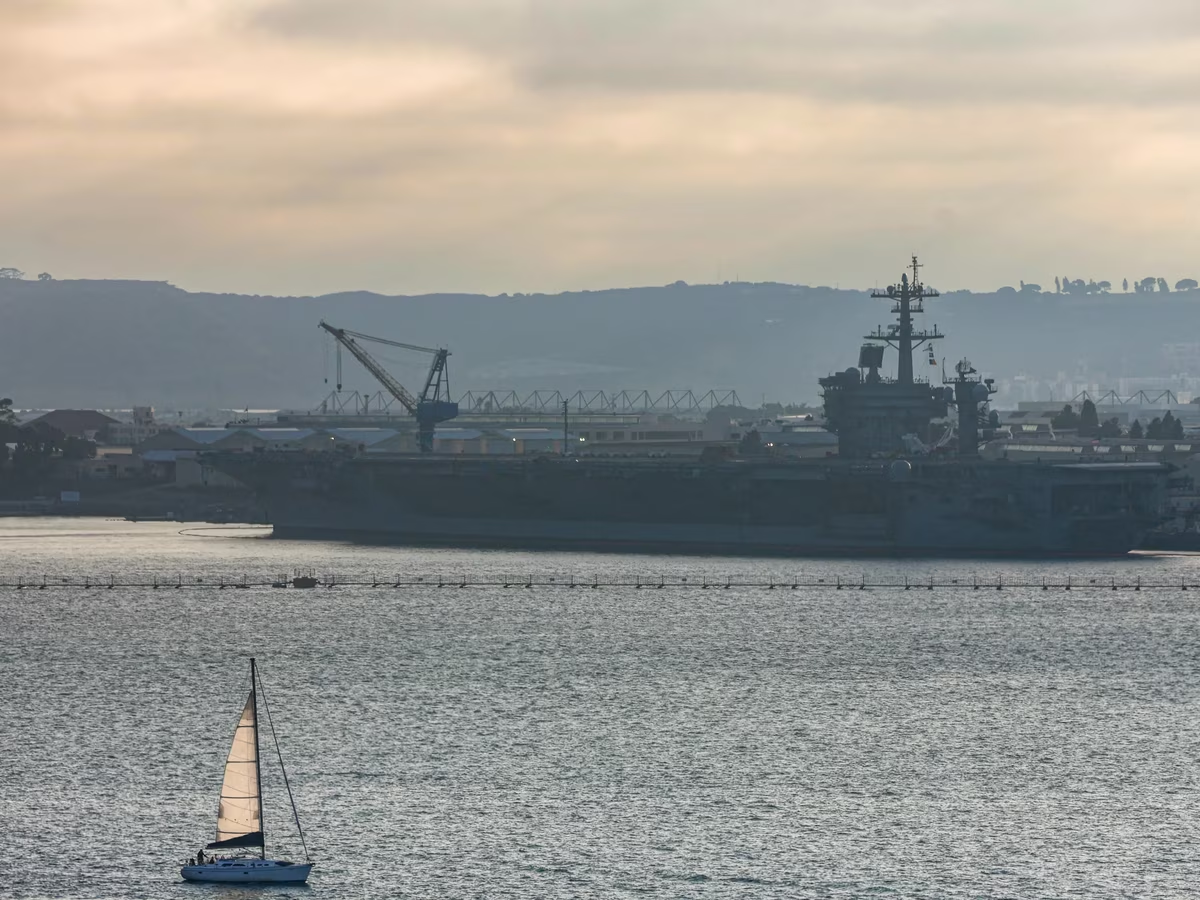
According to American officials, the aircraft carrier "USS Abraham Lincoln" and a number of warships belonging to its strike group (13 naval units) are making their way from the South China Sea towards the Middle East, on a journey that will last about a week. The reinforcements also include sending squadrons of fighter jets, aerial refueling aircraft, in addition to additional air defense systems, in an unmistakable sign of raising the level of combat readiness.

Cross-referenced reports indicate that the American military establishment explicitly informed Trump that the current American deployment is insufficient to contain any potential Iranian response, especially if it targets American bases spread across more than one country in the region. The Pentagon also warned that any limited strikes would not lead to regime change in Tehran, but might draw the United States into a long-term war of attrition, with exorbitant political and military costs.

In the same context, the New York Times report (later confirmed by the Axios platform) stated that Israeli Prime Minister Benjamin Netanyahu asked Trump to postpone any attack on Iran, wishing to gain more time to prepare for a potential Iranian response. This request seems consistent with Israel's increasing reliance on the American military umbrella, especially after the failure of interception systems to prevent a number of Iranian missiles from reaching Israeli territory during the June 2025 war, which accelerated the acceptance of a ceasefire after 12 days.

On the other hand, it cannot be ruled out that these leaks and postponements are part of a strategic deception campaign aimed at keeping Tehran on edge, while actual war preparations are conducted away from the spotlight, as happened before the outbreak of the "Twelve Days" war.

The White House continues to market a moral narrative for the escalation, claiming that Trump's threats prompted Iran to postpone scheduled executions, warning of "consequences" if repression continues. However, internal unrest in Iran appears, in this context, to be merely an additional pretext added to a long record of justifications used to normalize the option of war.

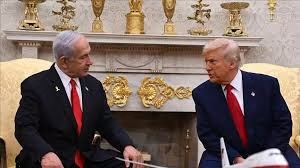
It is worth noting that after the Iranian nuclear program was the central pretext for the June war, Trump expanded the circle of threats to include the conventional missile program, announcing, during his meeting with Netanyahu in Mar-a-Lago at the end of last December, his support for any Israeli attack if Tehran "continued" to develop its missiles. However, ignoring the fact that ballistic missiles represent Iran's only remaining deterrence tool reveals the narrowness of this logic, and its danger at the same time.

Recent American moves reflect a structural contradiction in strategy: a desire for deterrence without bearing the consequences of war. Strengthening military assets does not necessarily mean an immediate intention to attack, but it reveals the fragility of previous assessments that assumed the possibility of "striking Iran" without a widespread response. This logic reproduces the illusions of quick wars, ignoring the nature of the asymmetric conflict and Tehran's ability to expand the scope of confrontation regionally.

Experts believe that the most dangerous aspect of the scene is the transformation of every Iranian file—nuclear, missile, or internal—into a ready justification for war, which eliminates any real diplomatic horizon. The American-Israeli approach does not seek to change Iran's behavior as much as it seeks to strategically subjugate it, a goal that has historically proven to be achievable only through immense human and political costs, often far exceeding the calculations of decision-makers.

PALESTINE

Fri 16 Jan 2026 3:39 pm - Jerusalem Time

Head of Gaza Management Committee: 200,000 urgent housing units to be supplied to Gaza as part of an integrated development plan

In his first official appearance after his appointment, Dr. Ali Shaath, head of the "Palestinian National Committee for the Management of the Gaza Strip," announced the actual launch of the committee's work from the Egyptian capital, Cairo.

Shaath revealed that the top priority is the urgent supply of 200,000 prefabricated housing units, to replace tents, within integrated residential communities that include health, educational, and security facilities.

Shaath explained that the formation of the committee, consisting of 15 moderate professional figures, came as a result of the consensus of Palestinian factions in the recent Cairo meetings, and with direct support from the United States (based on Security Council Resolution 2803 and Trump's peace plan). This committee is considered the "civil bridge" that will take over the immediate administration of the Strip after the undermining of Hamas's field rule.

The launch of the committee coincided with the announcement by US envoy Steve Witkoff of the start of the second phase of the agreement. Shaath praised the pivotal role of President Abdel Fattah El-Sisi and the support of President Trump's administration, stressing that the committee will work on:

Reconstruction and transparent distribution of humanitarian aid.

Providing care for women and children and addressing war traumas.

Paving the way for the unity of the Palestinian political system and an independent state.

The final statement of the factions in Cairo had affirmed full support for this "transitional committee," while calling on mediators to pressure for the complete withdrawal of the occupation and to ensure the return of normal life, thereby ensuring the confrontation of annexation plans in the West Bank and the Judaization of Jerusalem.

PALESTINE

Fri 16 Jan 2026 3:38 pm - Jerusalem Time

Hamas: Dangerous escalation confirms the occupation's continued policy of sabotaging the Gaza ceasefire agreement

Deliberate commission of horrific massacres in recent hours, especially in Nuseirat and Deir al-Balah.

Hamas movement issued a strongly worded statement on Friday, accusing the Israeli occupation of deliberately committing horrific massacres in recent hours, especially in Nuseirat and Deir al-Balah.

The movement considered this escalation to be a "blatant and repeated violation" of ceasefire understandings, and bloody messages aimed at undermining any opportunity to establish stability in the Strip.

The movement linked the intense airstrikes with recent political announcements, noting that this escalation disturbingly coincides with:

President Trump's announcement of the formation of a "Peace Council."

And the beginning of practical steps to form a "technocrat government."

And the agreement entering "Phase Two."

Hamas affirmed that the occupation seeks, through these raids, to impose a new reality on the ground and obstruct international efforts aimed at ending the war completely.

The movement concluded its statement by holding the mediators (Egypt and Qatar) and the guarantor countries legally and morally responsible for pressuring the occupation government.

It stressed that the international community's silence on these violations, which led to the deaths of field commanders and civilians, will lead to the collapse of all understandings, affirming that the resistance will not stand idly by in the face of Israeli "evasion policy."

PALESTINE

Fri 16 Jan 2026 2:14 pm - Jerusalem Time

12 dead in Gaza Strip Due to Occupation Violations Within 24 Hours

Palestinian media sources reported that 12 citizens were killed in various areas of the Gaza Strip due to Israeli occupation violations and airstrikes, from Thursday morning until now.

Bombing of homes in "Deir al-Balah" and "Nuseirat"

Sources added that two martyrs died in an Israeli bombing that targeted the courtyard of the Al-Jarou family's home west of Deir al-Balah city in the central Strip, while the bombing of the Al-Hawli family's home west of Deir al-Balah led to the martyrdom of 4 people and the injury of others.

In the Nuseirat refugee camp in the central Strip, 3 citizens were martyred as a result of targeting a home belonging to the Al-Khatib family.

Targeting in "Rafah" and "Gaza"

In a related context, sources said that one martyr was killed by occupation army fire near the Al-Alam roundabout west of Rafah city in the southern Strip.

It also reported that one martyr and a number of injuries occurred in the targeting of a police point near the Al-Nabulsi intersection southwest of Gaza City.

Crime in "Khan Yunis"

In the southern Strip, the elderly woman Sabah Ahmed Ali Abu Jamea (62 years old) was martyred as a result of gunfire west of Khan Yunis.

PALESTINE

Fri 16 Jan 2026 1:24 pm - Jerusalem Time

Trump announces support for Palestinian technocratic government

In a remarkable political development concerning the future administration of the Gaza Strip, US President Donald Trump announced on Thursday his support for what he described as the "newly formed Palestinian technocratic government," in a move reflecting an American attempt to rearrange the administrative and political landscape in the Strip during a complex transitional phase. Trump affirmed, via the Truth Social platform, that he supports the National Committee for the Administration of Gaza, as a technocratic body operating under the supervision of an international peace council personally chaired by him, aiming to "manage the affairs of the Strip away from factional polarization."

This announcement comes at a time when the National Committee for the Administration of the Gaza Strip held its first meeting in Cairo, with the participation of its fifteen members of Palestinian technocrats. The committee is headed by Ali Shaath, a former deputy minister in the Palestinian Authority, while Nikolay Mladenov, who oversees its work on behalf of the Peace Council, has joined it. This formation is seen as an attempt to combine Palestinian expertise with international oversight, thereby giving the new administration a degree of political legitimacy and external support.

The committee consists of Dr. Ali Shaath, who serves as the head of the committee and handles the energy and transport portfolios, while Dr. Bashir Al-Rayes handles the financial portfolio, Dr. Jabr Al-Daour the education portfolio, and Dr. Ayed Yaghi the health portfolio. Rami Helles is responsible for religious affairs, Dr. Ali Barhoum for water and municipalities, Adnan Abu Wardeh for justice and judiciary, Hana Tarazi for social affairs, Osama Al-Sidawi for land and housing, and Abdul Karim Ashour for agriculture, in addition to Dr. Ali Shaath temporarily overseeing the energy and transport portfolios, Omar Shamali for communications, and Ayed Abu Ramadan for economy, trade, and industry, while Husni Al-Mughni handles tribal affairs, and Major General Sami Nesman handles internal affairs.

Concurrently, Trump officially announced the formation of the Peace Council, noting that the names of the participating world leaders would be announced soon. The Council is supposed to oversee the transitional phase in Gaza and coordinate international efforts aimed at alleviating the humanitarian crisis and rebuilding administrative structures. According to diplomatic data, Mladenov is working with regional and international parties to prepare a package of urgent humanitarian measures, intended to support the committee from its inception and enhance its ability to operate in a highly complex environment.

However, this path faces significant obstacles, most notably the opposing Israeli stance. According to diplomatic estimates, Israel objects to allowing the technocratic committee to use civilian employees from either Hamas or the Palestinian Authority, which creates a real administrative vacuum. This objection also extends to the police force, as Israel rejects any role for elements linked to the Palestinian Authority, placing the committee before an operational dilemma that could undermine its ability to effectively manage the Strip.

This intransigence comes amid a highly tense relationship between Benjamin Netanyahu's government and the Palestinian Authority, where Tel Aviv treats the Authority as a hostile entity not fundamentally different from Hamas, and withholds billions of dollars of its funds under the pretext of incitement. This reality makes any role for the Authority, even if limited or technical, subject to widespread Israeli rejection.

In contrast, American officials acknowledge Israeli opposition even to low-level Palestinian Authority participation in Gaza's administration, but they believe this issue can be addressed in the coming weeks. They emphasize that the Cairo meeting was primarily preparatory, aiming to lay the general foundations for future work, rather than resolving all contentious details.

Washington believes that the available margin of optimism is linked to the possibility of achieving tangible progress in disarming Hamas, as it believes that any such progress could prompt Israel to show greater flexibility regarding the Palestinian Authority's involvement in Gaza's administration. However, American officials simultaneously acknowledge that communications related to this issue are still in their early stages, and they face complex political and security challenges that make their path long and uncertain in outcomes.

The initiative to form a technocratic government in Gaza also reflects an American attempt to produce an administrative solution that transcends the traditional Palestinian division, but it clashes with a highly complex political and security reality. Technocrats, no matter how competent, need a stable operational environment and supportive political will. In light of Israeli rejection and the absence of a comprehensive Palestinian consensus, this government appears threatened with becoming a mere formality unless international promises are translated into clear practical commitments.

On a broader international level, data indicates that the National Committee for the Administration of Gaza may have a wider margin for action after the official announcement of the Peace Council. The United States seeks to reveal its composition next week on the sidelines of the World Economic Forum in Davos. Names of major and regional countries are being put forward to join the Council, with an American tendency to fill some seats with leading figures from international financial institutions, in an attempt to give the Council political and economic weight.

Despite talk of a positive response from a number of invited countries, American efforts to expand the Council's membership have not yet achieved the desired success. Nevertheless, American officials confirm that Trump personally participated in selecting the members, and that the invitation process received an encouraging response, reflecting an American determination to move forward on this path.

The success of any new administration in Gaza remains contingent on its ability to gain the trust of the population before achieving international recognition. Gaza suffers from a long legacy of crises, and changing administrative structures is not enough without addressing the root causes of economic and security problems. If the technocratic committee is not given real powers and sufficient resources, it may turn into another fleeting experiment, added to a series of initiatives that have not touched the essence of the Strip's suffering.

PALESTINE

Fri 16 Jan 2026 1:05 pm - Jerusalem Time

Britain calls for increased international support to maintain Gaza ceasefire

British Foreign Secretary Yvette Cooper called for increased international momentum to maintain the ceasefire in the Gaza Strip and to address the deteriorating humanitarian situation suffered by the population.

Cooper stressed the necessity of implementing transitional measures led by Palestinians, while respecting the sovereignty and the right of the Palestinian people to self-determination.

In the same context, the US envoy to the Middle East, Steve Witkoff, announced on Wednesday the launch of the second phase of the US President's 20-point plan to end the aggression on Gaza, which includes the transition from ceasefire to disarmament, the formation of a transitional Palestinian administration, and reconstruction.

Witkoff explained that the new phase is based on establishing a national committee to manage Gaza that will run the affairs of the Strip, with the implementation of a full disarmament process, and the launch of comprehensive reconstruction projects.

For his part, Egyptian Foreign Minister Badr Abdel Aty announced an agreement on the names of 15 members of the "technocrat committee" that will manage Gaza, pointing to the support of Palestinian factions for this step, and providing the appropriate atmosphere for the committee to assume its duties immediately.

The occupation and the "Hamas" movement had agreed last October to Trump's 20-point plan, which stipulates the administration of Gaza for a transitional period under the supervision of an international "peace council".

It is worth noting that the events since October 7, 2023, have resulted in the killing and injury of about 243,000 Palestinians, most of them women and children, in addition to missing persons, displaced persons, and widespread destruction in the Strip.

ARAB AND WORLD

Fri 16 Jan 2026 11:58 am - Jerusalem Time

The Implications of Israel's Recognition of Somaliland on the Horn of Africa

If there is one positive aspect to Israel's decision to recognize the breakaway region of Somaliland as an independent state, it is the clear exposure of its plans in the region as never before. Perhaps the tweet by Israeli journalist Eddie Cohen on the "X" platform summarized the essence of the Israeli project at this moment in history, as he says: "Whoever thinks that a few firecrackers that fell in Mukalla port before New Year's Eve will end the project of restoring the state of the South, is a fool. The state of the South, the state of Al-Fasher, and the state of Al-Jufra and Sirte will rise, even if noses are rubbed in the dirt. Be sure of this fact." A correct understanding of Israel's decision regarding Somaliland stems from comprehending the nature of its expansionist Zionist project in the region, which believes that Israel's borders are between the Nile and the Euphrates. It also confirms that the Hebrew state is proceeding with the implementation of one of its most dangerous documents, the Kivunim document, which records its vision for dividing and fragmenting the countries of the region. Therefore, the step of recognizing Somaliland must be read within this broad framework that targets Arab countries collectively and individually. It must also be read from the perspective of the seriousness of its repercussions on the security of the Horn of Africa and the Red Sea, and on the countries located in this vital area of the world. This recognition will establish a dangerous precedent in this region, which is plagued by ethnic conflicts and states fragile in their social structure and national cohesion. It will open the door for rebel groups, especially in Sudan, Libya, Yemen, and even Ethiopia and Kenya, to declare their independence, and then find those who recognize them without regard for international laws and respect for the institutions regulating members of the international family.

Somaliland occupies a strategic location in the Red Sea on the Gulf of Aden, with a coastline of 460 miles. It is also located at the entrance to the Bab al-Mandab Strait, which controls 12% of international trade, amounting to $790 billion, and 40% of trade between Asia and Europe, including Gulf oil. The port of Berbera, located in its capital Hargeisa, represents an important economic lung in the region, as it is the largest port on the Gulf of Aden. This strategic importance is what led Britain to occupy this region from 1887 to 1960, when the Republic of Somaliland gained independence, later uniting with Somalia, which was under Italian occupation. However, mismanagement and the authoritarianism of President Siad Barre's regime at the time created a kind of despair towards voluntary unity, which ended with the region unilaterally declaring its independence when the central state collapsed in 1991. Since then, the separatist region of Somaliland has been seeking international recognition to make it an independent state from federal Somalia.

On the other hand, Somaliland has active communities abroad, especially in the United States, which have worked diligently to gain recognition. It was noteworthy that the recognition of the so-called (Republic of Somaliland) was included in the 2025 project prepared by an elite group of conservative Republicans close to President Trump during his election campaign, under the supervision of the Heritage Foundation. Although he disavowed that project at the time, experience currently proves that much of what was included in it is part of President Trump's movements and interests. Academic Karen K. called for the importance of recognizing Somaliland's independence, "because combating (malign) Chinese activity on the continent should include developing strong public diplomatic efforts. And recognizing separatist Somaliland is a hedge against the deterioration of the United States' position in Djibouti." This vision later developed into a draft resolution submitted to Congress by Representative Scott Perry, calling for the recognition of Somaliland, according to the following justifications: the region's stability for three decades, its strategic and security importance, and its commitment to democracy. These justifications presented by the American Congressman are the same ones presented by the Israeli elite as reasons for Israel's recognition of this region. Israeli journalist Nadan Feldman wrote an article in "Haaretz" comparing Israel and Somaliland, stating: "Both are small, weak democracies located in regions teeming with authoritarian regimes and deadly wars. Both also suffer from sovereignty problems in the face of the international community, and both have enemies seeking to destroy them." In January of last year, the former president of Somaliland participated in an academic event at the Heritage Foundation in Washington, after which Republican Representative Jim Risch introduced a project to recognize the region's independence from Somalia, which this time was passed by the Foreign Relations Committee with bipartisan support. So far, it cannot be definitively stated whether the Trump administration will recognize the region or not, given the complexity surrounding the issue, as its recognition will directly affect strong allies of the United States, foremost among them Saudi Arabia and the Arab Republic of Egypt, while Israel works through its influential mechanisms to push the administration to make that decision.

Israel's intentions and motives for taking this decision can be understood from the painful realities that the October 7 war experience revealed for Israel. Houthi missiles posed a significant security concern for the Hebrew state. Although communication between Israel and Somaliland is not a new event, Israel sees the current moment as a great opportunity to take a step forward in its grand project in the region. On the one hand, it is confident that the division within the Arab body has reached a stage that enables it to make the most difficult decisions without fearing reactions. On the other hand, it enjoys unprecedented support from the current American administration. In light of Netanyahu's government's diligent efforts to change the equation in the region by changing the regime in Iran, encircling the Saudi borders with security risks, and sending a message to rebels in Sudan and Libya, it has taken this step driven by security concerns and expansionist dreams. It is clear that Israel will seek to develop an intelligence infrastructure that enables it to monitor and even control the waterways in the region, especially if the military base that Ma'ariv newspaper previously spoke about is completed, which it said would be built with the support of "regional parties." This step certainly posed a direct threat to many countries, foremost among them Saudi Arabia, Turkey, Somalia, Eritrea, Egypt, and China, in addition to Sudan. Only Ethiopia – in this region – can engage in the new arrangements that Israel wants and in which regional parties cooperate. But what Ethiopia overlooks, driven by its urgent desire to access sea outlets, is that, like Sudan, Kenya, and other countries, it suffers from internal divisions, and this step could encourage internal parties within it to demand secession or self-determination. There is the Ogaden region, which historically belongs to the Somali nationality, and its relationship with the Ethiopian state has been in constant turmoil, in addition to the Tigray region, which is simmering after the central government suppressed its uprising by armed force. For Saudi Arabia and the Arab Republic of Egypt, the strategic threat remains related to the security of international corridors and securing their strategic surroundings. The entry of Ethiopia as an influential player will increase the existing tension between it and Egypt regarding the Nile water issue. There are Iran and its Houthi ally, who know with certainty that this step is directly aimed against them. As for China and Turkey, they view the step as a direct threat to their long-term investment in this vital region, as both countries maintain military bases and strong relations in Somalia.

Israel has taken a big step by making this decision, and no matter how confident it is in the reactions, it has, unexpectedly, created a favorable atmosphere for strong alliances that could crystallize in the near future to confront this threat. Even before this step, regional understandings emerged, involving Turkey, Saudi Arabia, and Egypt, on important issues such as Gaza, Sudan, and Yemen. If this alliance is formed and expanded, the equation is expected to change in more than one country, such as Sudan, Yemen, and Libya, especially since more than twenty Arab and Islamic countries have issued a statement rejecting the Israeli step. Therefore, strengthening this alliance will weaken the outcomes of Israel's recognition of Somaliland and empty it of its content, and at the same time could delay any American consideration of taking a similar step. In the face of this crisis, influential Arab countries are called upon to make a great effort to build bridges with the mother country Somalia and assist it. Turkey has a successful experience when it managed to defuse the crisis between Somalia and Ethiopia following Ethiopia's signing of an agreement with Somaliland to use sea ports, a step that has been long overdue from Arab countries, which have been too preoccupied with other matters to focus on Somalia and its people.

ANALYSIS

Fri 16 Jan 2026 11:58 am - Jerusalem Time

Trump's Poisoned Offer to Iranians

On Saturday, January 10, less than two weeks after the outbreak of the protests now sweeping Iran, US President Donald Trump resorted to his favorite social media platform to post a message of support, saying: "Iran is looking for freedom, perhaps as never before. The United States is ready to help!!! President Donald J. Trump." As usual, Trump's use of capital letters and excessive exclamation marks seems more like the style of a teenager than the leader of a global superpower. However, the promise of American "help" raises much deeper and more serious problems.

First and foremost, "help" is not a US specialty, especially under the leadership of a man who bombed Iran last summer, shortly after returning to power on a pledge to keep the United States out of foreign wars. Additionally, Trump is responsible for maintaining a suffocating sanctions regime imposed on the Islamic Republic, which contributed to the high inflation rates that ignited the current protests in the first place. As always in such forms of economic warfare, it is the non-elite segments of Iran that have paid the highest price.

Beyond Trump's latest offer of "help" to Iranians being a departure from the entire "America First" premise, it also represents a shift in presidential rhetoric towards this country that has long been demonized. Previously, Trump's rhetoric primarily focused on Iran's alleged pursuit of nuclear weapons and ballistic missiles equipped with chemical and biological warheads, all of which was marketed as a serious threat not only to the United States but also to America's closest friends and most prominent regional partners in the ongoing genocide, namely the state of Israel. But Trump now appears in a "rescue" posture, having warned this month: "If Iran shoots (as it was reported) and violently kills peaceful protesters, as is its custom, the United States of America will come to their rescue." On Tuesday, Trump assured Iranian protesters that "help is on the way," without clarifying the nature of this help.

Right-wing American media quickly echoed the rhetoric with encouraging headlines such as: "Trump has a historic opportunity to help overthrow the anti-American Iranian regime." For his part, Israeli Prime Minister Benjamin Netanyahu joined this discourse, asserting that Israel supports "the struggle of Iranian protesters for freedom, and strongly condemns the mass killings of innocent civilians" - a striking statement from a person who has overseen the extermination of Palestinians for more than two years.

With Trump's recent promises of "help," it's hard not to wonder if he's borrowing a page from the old policy playbook of former US President George W. Bush, the architect of the "War on Terror," and the face of an administration dedicated to spreading the neoliberal (neoconservative) ideology that Trump has long claimed to vehemently oppose. At its core, neoconservatism aims to create military chaos around the world, using the promotion of democracy and seemingly humanitarian ideas as a pretext for bloody imperial expansion. Although Trump succeeded in winning over many American voters by his alleged pledge to abandon such foreign adventures, and instead focus on self-isolation and "making America great again," the neoconservative tendency, it seems, is hard to shake off.

Certainly, Trump's presidency evokes George W. Bush's presidency in more ways than one. Both men are characterized by comical behavior, not to mention a striking relationship with English grammar and spelling, which would have been entirely amusing were it not for the widespread bloodshed each oversaw during their tenure. Similarly, both showed excessive enthusiasm for relying on God in their destructive endeavors. Despite Trump's declared opposition to regime change policy, and to the Bush-era interventions in Iraq and Afghanistan - as part of what was known as the "War on Terror" which ended with the deaths of millions of people - in his first year after returning to power, he managed to bomb a group of countries, in addition to arresting Venezuelan President Nicolas Maduro.

As for Florida Congressman Randy Fine, who recently introduced a bill allowing Trump to annex Greenland, he resorted to the "X" platform to suggest: "Perhaps we should Maduro Khamenei." In this context, "Khamenei" refers to Iranian Supreme Leader Ali Khamenei, while the word "Maduro" is used here as a new verb meaning to kidnap the leader of a sovereign state.

But while Trump today promises that the United States is "ready to help!!!" Iran, it is worth pausing at previous instances of American "help!!!" in this country - such as what happened in 1953, when the US Central Intelligence Agency (CIA) orchestrated a coup that overthrew democratically elected Prime Minister Mohammad Mosaddegh, a coup that paved the way for decades of rule by the Shah of Iran, known for his widespread torture practices, before he was overthrown by the Iranian Revolution in 1979. Ironically, the son of the late Shah is active today, from his position in luxurious exile outside Washington D.C., calling for American intervention in Iran.

At the same time, Trump may have realized the benefits of "helping" the peoples of other countries as a means of diverting attention from undemocratic realities within the United States itself, including its transformation into a full-fledged police state, where immigration enforcement agents feel free to kill American citizens with impunity. And with Trump continuing to almost directly evoke Bush, the last thing Iranians need today, most likely, is for "the United States to come to their rescue."

ISRAELI AFFAIRS

Fri 16 Jan 2026 11:31 am - Jerusalem Time

Chevron gives green light to expansion of giant Israeli Leviathan field

Chevron, through its arm "Chevron Mediterranean Limited", has made the final investment decision to develop and expand the production capacity of the giant Leviathan natural gas field off the coast of Israel. The Leviathan field's reserves are approximately 600 billion cubic meters. The expansion, costing approximately $2.4 billion, will allow for production and supply within Israel and its neighboring countries until 2064.

Clay Neff, President of Chevron's Exploration and Production sector, said in a statement: "Chevron is a key player in the Eastern Mediterranean energy sector, with our focus on natural gas production and export. Our operations are vital to meeting the growing energy needs in local and regional markets."

Neff added: "Our decision to invest in expanding the production capacity of the Leviathan field reflects our confidence in the future of energy in the region. Pragmatic energy policies in the United States and the region contribute to enhancing energy security in the Eastern Mediterranean, and create a stimulating environment for investment in the Middle East and the world."

The Leviathan expansion project is expected to begin operations by the end of the current decade. The project includes drilling three additional offshore wells, adding new subsea infrastructure, and developing processing facilities on the Leviathan production platform. These steps aim to increase the total amount of gas supplied to Israel and the region to approximately 21 billion cubic meters annually.

For his part, Jack Baker, General Manager for the Eastern Mediterranean region at Chevron, affirmed that "this step embodies our continuous commitment to partnering with the State of Israel to develop natural gas resources, and provide essential energy to millions of people in Israel, Egypt, and Jordan."

The Leviathan platform is located approximately 10 kilometers off the coast of the "Dor" region. The work shares in the field are distributed as follows: "Chevron Mediterranean Limited" (operator) 39.66 percent, "NewMed Energy" 45.34 percent, and "Ratio Energy" 15 percent. In addition to Leviathan, Chevron's assets in the Eastern Mediterranean include the producing Tamar gas field, and the Aphrodite field under development off the coast of Cyprus. The company also operates two exploration blocks in Egypt, in addition to its contribution to a non-operated joint venture in another exploration block in the Egyptian Mediterranean.

ARAB AND WORLD

Fri 16 Jan 2026 11:31 am - Jerusalem Time

Harvard and its peers are declining globally against Chinese universities

Harvard University in the United States has fallen to third place in a global list measuring the volume of academic output, and other American universities have also seen a significant decline in that ranking compared to Chinese universities, which have made remarkable progress in the field of research output.

Until recently, Harvard was the most productive research university in the world, according to a global ranking based on academic publications, but it has declined, similar to other American universities, while Chinese universities have risen in rankings that focus on the volume and quality of research they produce.

Commenting on this, the New York Times said it is the latest evidence of the decline that American academic institutions have been experiencing for several years, and it appears that the administration of President Donald Trump may accelerate it due to its decision to cut research funding provided to American universities that rely heavily on the federal government to fund their scientific projects.

In the early 2000s, 7 American universities were among the top 10 universities, led by Harvard University, in the global university ranking based on scientific output, such as articles published in scientific journals.

At that time, there was only one Chinese university (Zhejiang University) among the top 25 universities, but that university is now at the top of the ranking issued by the Centre for Science and Technology Studies at Leiden University in the Netherlands, and the current list also includes 7 other Chinese universities among the top 10 universities.

The New York Times report clarified that Harvard University currently produces significantly more research than it did 20 years ago, yet it has fallen to third place, but it still holds the first place in Leiden's rankings for the most cited scientific publications.

According to the aforementioned report, the problem of leading American universities is not a decline in research output, but rather a much greater increase in the research output of Chinese universities. Leiden University statistics indicate that 6 prominent American universities, including the Universities of Michigan, California, Johns Hopkins, and Stanford, now produce more research than they did two decades ago, but it remains less than what their Chinese counterparts produce.

Although global university rankings do not receive much attention in the United States, some prominent American academics note the increasing growth in Chinese research output reflected in these rankings, and warn that the United States is falling behind.

The former president of the Massachusetts Institute of Technology, Rafael Reif, admitted in a press statement last year that "the number and quality of research papers from China are truly remarkable and far superior to what we do in the United States."

Academic circles in other countries monitor global rankings and consider them a measure of academic efficiency and the ability to compete with the United States. Zhejiang University prominently displays its rankings on its website, and Chinese state media have celebrated the rise of the country's universities in global rankings.

Leiden Centre began preparing an alternative ranking based on a different academic database called "OpenAlex." Harvard University ranks first in this ranking, but China's progress continues, as among the 13 universities in the alternative list, 12 are Chinese universities.

On the other hand, Harvard University tops the global university ranking in terms of academic performance, which is prepared by the Informatics Institute of the Middle East Technical University in the Turkish capital, Ankara.

In another ranking, the Nature Index, Harvard University ranks first, followed by 10 Chinese universities.

Harvard University and other leading American universities are currently facing a new set of challenges against the backdrop of the Trump administration's decision to cut scientific research grants, as well as travel bans and an anti-immigration campaign that has affected international students and researchers.

As a result, the number of international students arriving in America in August 2025 decreased by 19% compared to the previous year, which negatively affects the status and rankings of American universities, as outstanding students are forced to study and work elsewhere.

In contrast, China is investing billions of dollars in universities and striving to make them attractive to foreign researchers. A few months ago, China began offering a special visa for graduates of prestigious universities in science and technology fields to travel to China for study or business.

Chinese President Xi Jinping defended his country's decision to increase spending on universities by emphasizing that the strength of any country on the global stage depends on its scientific superiority.

In contrast, the Trump administration took the opposite approach, seeking to cut billions of dollars from scientific research grants allocated to American universities. University leaders in the United States warned throughout 2025 that cuts in federal research grants could have devastating effects, and the American Association of University Professors and several legal entities filed a lawsuit to challenge some of these cuts.

A federal judge issued an order for the federal government to resume funding Harvard University, after the Trump administration cut billions of dollars in research funds in the spring, but the administration appears insistent that it will reduce future grants allocated to the university.

ARAB AND WORLD

Fri 16 Jan 2026 11:30 am - Jerusalem Time

Trump opens door to diplomacy with Tehran… and keeps military option open

The United States brought the international debates over the bloody popular protests in Iran to the Security Council chamber, opening the door - even if temporarily - to the intensive diplomatic efforts currently being made by many countries, but while continuing the American military buildup, which provides multiple options for President Donald Trump after he hinted in recent days at striking and imposing additional sanctions against the Iranian regime.

Based on an urgent American request submitted on Wednesday night, the Security Council decided to hold an emergency meeting on Iran on Thursday afternoon. This came after President Trump made a series of vague statements regarding the nature of the measures the United States could take against Iran after he promised the protesters there that “help is on the way” to them, and that his administration “will act” to respond to the bloody crackdown launched by the Iranian authorities, which has led to the death of at least 2615 people in the past few weeks, according to initial estimates by human rights organizations.

Referring to reports of preparations for the execution of a citizen named Irfan Sultani (26 years old), Trump confirmed that one of the Iranian protesters was no longer sentenced to death, saying: “That’s good news. We hope the situation continues this way!” In response to a question about the source of his information, Trump said: “Very important sources on the other side.” While he did not rule out the possibility of military action by the United States, he added: “We will monitor developments,” before indicating that his administration had received a “very good report” from Iran.

A newspaper reported that “Trump’s statements can be interpreted as a retreat from any imminent plans for an attack.” However, it mentioned that prior to the American raids on Iranian nuclear sites last June, Trump issued a statement saying that he would make a decision “within the next two weeks,” knowing that he had actually made up his mind to carry out the attack.

A senior American official quoted that Trump did not rule out the military options presented by his leaders in recent days, adding that whether or not to issue any military orders depends on what the Iranian security services will do later. The highest alert for long-range bombers was announced in the United States in preparation for launching strikes when needed, but “this measure seems to have been temporarily halted as of Wednesday afternoon,” according to another American official.

However, influential Republican Senator Lindsey Graham criticized some headlines in major newspapers that spoke of President Trump backing down from his hardline stance on Iran, describing them as “inaccurate.” He said: “Quite the opposite… Just wait.” He wrote in a post on “X”: “All headlines of this type are examples of absolutely inaccurate news reports. The circumstances surrounding the necessary and decisive actions that must be taken against the evil Iranian regime have nothing to do with President Trump’s will or determination. Nothing could be further from the truth.” Referring to the headline: “Trump backs down on Iran,” Graham wrote: “All headlines written in this style are examples of highly inaccurate reports.”

The US Navy currently has three missile-equipped destroyers in the Middle East, including the aircraft carrier “USS Theodore Roosevelt,” which entered the Red Sea in recent days. The Navy also has at least one missile-equipped submarine in the region, according to officials at the US Department of Defense, which has provided President Trump with a wide range of options, including potential targets within the Iranian nuclear program and ballistic missile sites.

US officials attributed the small number of US warships in the Middle East to the recent widespread deployment in the Caribbean. It was reported that “other options, such as a cyber attack or a strike targeting the Iranian internal security apparatus, which uses lethal force against protesters, seem more likely.” The newspaper published another analytical article that the United States’ allies in the region “do not support any American military action there” for fear that “the repercussions of escalating US-Iranian tensions, or the possibility of state collapse in Iran, would harm their security.” It added that “the reason is also that some Gulf governments have come to view Israel (…) as a hostile state seeking to dominate the Middle East. It is believed that Israel may pose a greater threat to regional stability than Iran.”

Meanwhile, the Group of Seven (G7) major industrialized nations condemned the “brutal repression” practiced by the Iranian authorities against their citizens, affirming their readiness to impose additional sanctions on Iran. Indeed, the United States on Thursday imposed new sanctions that included five Iranian officials accused of being behind the suppression of protests, warning that it was tracking financial transfers by Iranian leaders to banks around the world.

The US Treasury Department said in a statement that it had imposed sanctions on Ali Larijani, Secretary of the Supreme National Security Council, as well as leaders in the “Revolutionary Guard” and law enforcement forces, accusing them of orchestrating the crackdown. Treasury Secretary Scott Pisent said Washington’s message to Iranian leaders was clear: “The US Treasury Department knows that you, like rats on a sinking ship, are frantically transferring stolen money from Iranian families to banks and financial institutions around the world. Rest assured that we will track it and we will track you.” He affirmed that the United States “stands firmly with the Iranian people in their demand for freedom and justice.”

PALESTINE

Fri 16 Jan 2026 11:30 am - Jerusalem Time

Reasons for UNRWA in Lebanon to remove the name Palestine from its curricula

A modification in the geography textbook used in schools of the United Nations Relief and Works Agency for Palestine Refugees (UNRWA) sparked a wide wave of anger in Palestinian camps in Lebanon after the historical name Palestine was changed to "West Bank" and "Gaza Strip" on a map included in an "enrichment material" book designated for sixth-grade students for the academic year 2025-2026. The map quickly became the spark for popular protests yesterday, Wednesday, encompassing most Palestinian camps, where UNRWA schools witnessed a state of unrest, and students refrained from attending their classes, while angry parents and students tore up and burned the book, considering what happened an attempt to erase the Palestinian cause and a direct infringement on the right of return. Students and parents from 61 schools managed by UNRWA in various Lebanese regions participated in these movements, from Tripoli in the north, where the Nahr al-Bared and Beddawi camps are located, to Sidon in the south, where the Ain al-Hilweh camp is located. These schools include about 35,000 Palestinian students and constitute the primary pillar of official education for refugee children in the country.

The new version of the geography textbook also caused confusion within the agency's schools themselves, which are managed by Palestinian educational and administrative "cadres" who found themselves in direct confrontation with parents and students. Teachers confirmed that the book, classified as "enrichment," includes a clear change in the map, where the name Palestine was replaced by two arrows pointing to the West Bank and the Gaza Strip overlooking the Mediterranean Sea. In response to inquiries from sources, UNRWA in Beirut stated that it adopts the curricula of host countries and uses the official textbooks approved therein, and clarified that in Lebanon, it teaches the Lebanese national curriculum, including the geography textbook for the sixth grade, "Lights on the Geography of Lebanon and the Arab World," affirming that it had not made any modifications to the official textbooks. It mentioned that the "enrichment" geography textbook is an additional educational tool it produced to support the basic textbook, aiming to enhance critical thinking skills, map reading, and analysis among students, and indicated that some information was left open to encourage discussion and exploration within the classroom, affirming its deep respect for the national and historical identity of Palestinian refugees and its commitment to protecting their dignity and rights.

However, protesters view what happened as exceeding the educational framework and express accumulated concern about changes affecting the Palestinian national identity within educational curricula. Opponents directed direct accusations at UNRWA management of "conforming to Israeli and American policies," considering that deleting the name Palestine from the map is not a technical detail but a fundamental infringement on the national narrative and rights. For his part, the director of the "Thabet for the Right of Return" organization, Sami Hammoud, said that these protests are part of a series of movements carried out by Palestinians in the camps, through popular movements, activists, and institutions, to send a clear message to the Director-General of UNRWA that its policies "destroy what remains of our people's steadfastness, and undermine the essence of the agency's role." He added to sources that "previous administrations, despite all the cutbacks, did not take similar steps, while the current administration persists in policies that strike the last pillars of steadfastness, the latest of which was the attempt to erase the name Palestine from educational curricula, which practically means obliterating Palestinian consciousness and erasing national memory among generations." For his part, Muhammad Dib, a member of the Committee for the Defense of Refugee Rights, believed that UNRWA had gone beyond the issue of service cutbacks, and the targeting now affects the core of its role and the essence of the national cause and Palestinian identity, affirming to sources that the refugees' protests and sit-ins are an expression of their adherence to their identity and their cause for which they have struggled for long decades, and that the name Palestine cannot be erased or reduced in any educational curriculum.

In turn, sources – a spokesperson for the parents – stated that the movements are not limited to rejecting the policy of cutbacks in education, health, and social affairs, but go beyond that to what she describes as a direct infringement on the Palestinian national identity, and sees in her conversation with sources that targeting national symbols and attempting to erase the name Palestine from curricula constitutes a transgression of all red lines and a direct threat to the consciousness of Palestinian generations. From the Burj al-Shamali camp in southern Lebanon, Rosaline Mansour tells sources that the protests aim to pressure UNRWA management to retract the deletion of the name Palestine from the geography textbook, adding that this step goes beyond the educational framework to affect national identity and the right of return. She clarified that the demands are not limited to curricula but also include improving students' conditions and addressing the legal and educational problems faced by refugees. In turn, Amna Ibrahim questioned the basis that allows the deletion of the name of an entire homeland from students' memory, affirming that the name Palestine must remain present in curricula without deletion or dilution. She stressed to sources that infringing upon it is not a symbolic matter but a matter of existence and dignity, adding that the protesters' demands also include settling the residency status of Palestinian refugees coming from Syria – especially students – and reinstating the aid they were deprived of this year. Participants in the movements affirmed that Palestine will remain present in memory and conscience, no matter how many attempts there are to obliterate or redefine it.