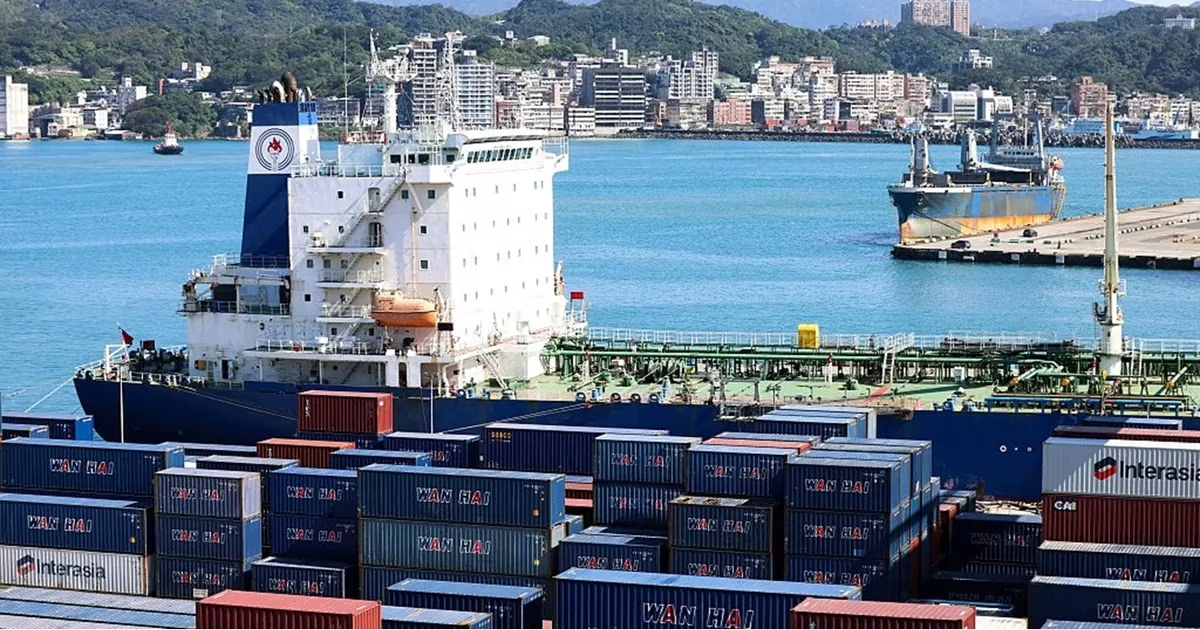







The Israeli-American war on Iran has begun to impose a bitter economic reality on global trade, with its effects extending from the energy sector to impact international supply chains. The fighting has effectively led to the closure of the Strait of Hormuz by an Iranian decision, the most vital shipping lane between Iran and Oman, causing a partial paralysis of ship movement.
Informed sources reported that the closure of the strait has caused more than a hundred commercial vessels to be stranded in Gulf waters, amidst a frantic rise in maritime transport costs. Shipping companies face unprecedented challenges in securing alternative routes, leading to severe congestion in ports on the Indian Ocean, far from the conflict zone.
Italian businessman Emanuele Grimaldi, CEO of the 'Grimaldi' Group, confirmed that shipments of European cars destined for the Gulf could not reach their destination due to shelling and fighting. He explained that these shipments were forced to stop in distant African ports such as Kenya, where they were stored in secure areas awaiting stabilization of the situation.
Economic reports indicated that the war, which shook oil and gas markets over the past two weeks, has begun to permeate other industrial and commercial sectors. Major shipping hubs in Asia are currently suffering from a severe fuel shortage, while dozens of ships remain trapped within the Gulf waters unable to exit or unload their cargo.
Grimaldi mentioned that one of his company's ships is still searching for an alternative port to unload thousands of cars, while another ship remained completely trapped inside the Gulf. The major crisis lies in the fact that most nearby ports have reached their maximum capacity, as unloading a single ship requires vast areas of logistical land.
Major global shipping companies, including 'Maersk' and 'Hapag-Lloyd', announced the suspension of their operations on some key routes leading to the Middle East. This decision was made for maritime safety reasons, which immediately resulted in increased delays in cargo arrivals and higher insurance costs for ships worldwide.
This disruption represents a significant setback for the shipping sector, which was trying to recover from the repercussions of the Red Sea attacks that lasted for two years. With escalating risks in the Strait of Hormuz, companies were forced to rely entirely on the Cape of Good Hope route around Africa, despite the long distance and exorbitant additional costs.
Maritime transport experts are monitoring the situation with great concern, especially with the potential for direct impact on fuel supplies in the Asian continent. Although shipping routes across the Pacific heading to America have not been fully affected yet, the continued closure of the strait threatens the collapse of the global supply system if the conflict prolongs.
Vincent Clerc, CEO of Maersk, said that the closure of the Strait of Hormuz hinders efforts to replenish strategic oil reserves in Asia. He revealed that his company has ten ships stranded inside the Gulf, emphasizing that a return to normal operations would require at least ten days after any ceasefire agreement is reached.
One of Maersk's ships was directly hit by projectile fragments while sailing between Qatar and Oman, leading to a fire on board. The ship is currently stopped off the coast of Dubai to assess the damage, an incident that confirms the high danger faced by commercial vessels in this volatile region.
Alternative ports such as Mumbai in India witnessed unprecedented container congestion, leading to a significant jump in shipping prices from China. According to specialized data, the average cost of transporting a single container increased by 56% since the start of US and Israeli military strikes on Iranian territory.
One Chinese exporter recounted the suffering of his goods destined for Dubai, which were forcibly diverted to Karachi port in Pakistan. These shipments face daily ground fees of up to $200, while shipping companies demand additional amounts under the name of 'war fees' to transport them overland to their final destination.
Some global shipping companies have resorted to activating a rare legal procedure known as 'end of voyage', which allows them to deliver shipments to unagreed ports. This procedure is similar to a 'force majeure' situation, where the carrier disclaims responsibility for delivering goods to the original port due to compelling wartime conditions that prevent navigation.
Analysts confirm that the complete closure of a maritime area to commercial vessels is a historical precedent in the modern era of the shipping sector. Attention is now focused on international efforts to try and open safe passages, amidst warnings that the continuation of the current situation will lead to a new wave of global inflation affecting the prices of all basic commodities.
The closure of the Strait of Hormuz has made it difficult to replenish oil reserves in Asia, and resuming operations could take ten days even in the event of a ceasefire.




Share your opinion
Closure of the Strait of Hormuz Disrupts Global Navigation, Hundreds of Ships Stranded in Alternative Ports