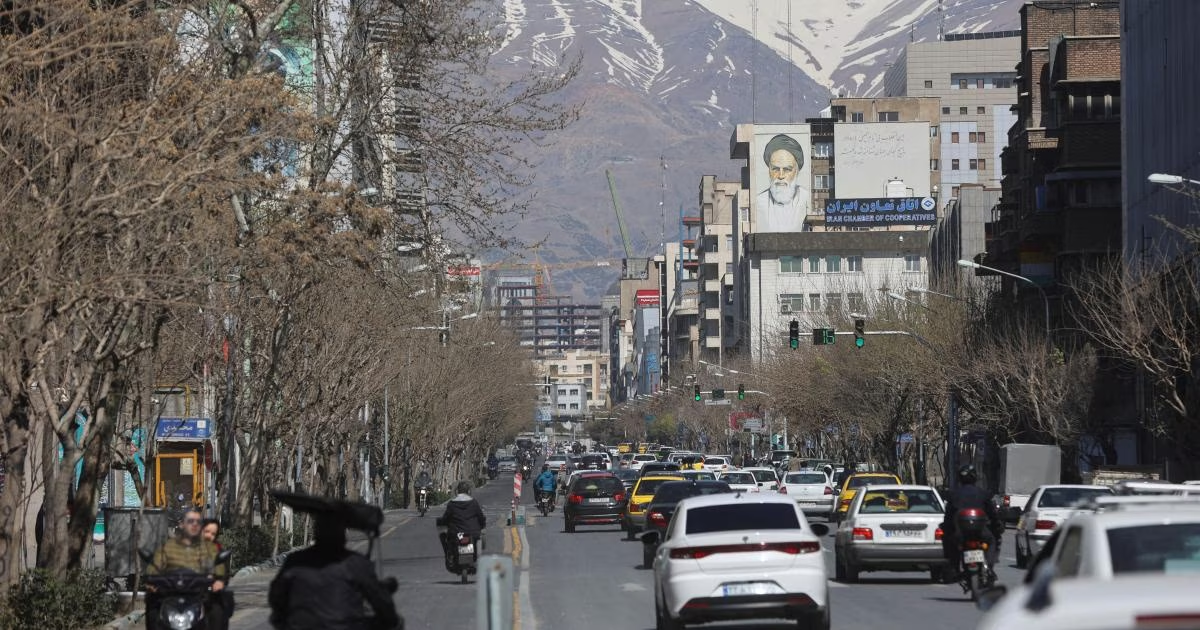







Amidst escalating direct military confrontation, Tehran has begun activating a complex defensive strategy known as 'Mosaic Defense,' a long-term plan aimed at protecting the army's structure from complete collapse. This move comes in the wake of airstrikes targeting the Iranian capital and high-ranking military leaders, which prompted the military establishment to activate a self-governing system for the provinces.
This combat doctrine relies on dividing the country into 31 independent regional units, corresponding to Iran's administrative provincial divisions. Each unit possesses the authority to make tactical and field decisions without referring to central command. This shift towards decentralization aims to grant forces high flexibility and speed in responding to direct field threats, especially in cases of communication breakdown with the center.
Developing this defensive system took approximately two decades, during which Iranian military experts intensively studied American military experiences in Iraq and Afghanistan. These studies concluded that technologically superior major powers face real dilemmas against decentralized resistance that does not rely on a single hierarchical head that can be targeted to completely paralyze movement.
The Mosaic Defense strategy allows Iranian forces to continue carrying out simultaneous offensive and defensive operations, including targeting military bases in the surrounding region. These units also gain the ability to influence vital waterways, most notably the Strait of Hormuz, placing international navigation within Iran's strategic pressure sphere.
Tactically, this approach falls within the framework of 'decentralized guerrilla warfare,' which integrates traditional methods with irregular operations to exhaust the adversary in the long run. This combination aims to execute surprise and precise attacks that prevent enemy forces from achieving field stability, while maintaining the units' ability to reintegrate into larger formations when necessary.
In this context, Iranian Foreign Minister Abbas Araghchi affirmed that strikes targeting command and control centers will not succeed in disrupting the Iranian military machine. He clarified that the adopted strategy allows Tehran to independently determine the timing and method of military response, emphasizing that the flexibility enjoyed by regional units ensures the continuity of operations under the harshest conditions.
Current field developments reflect the effectiveness of this defensive model, which blends flexible tactics with long-range strategic response, representing a qualitative shift in managing regional conflicts. This strategy demonstrates the ability of local units to continue targeting enemy interests despite losing communication with the supreme command, thereby strengthening the military resilience of the internal front.
Air attacks and direct targeting of command centers do not affect Iran's ability to wage war, thanks to the independent regional units.


Share your opinion
Mosaic Defense: How Does Iran Counter Attacks Through Military Decentralization?