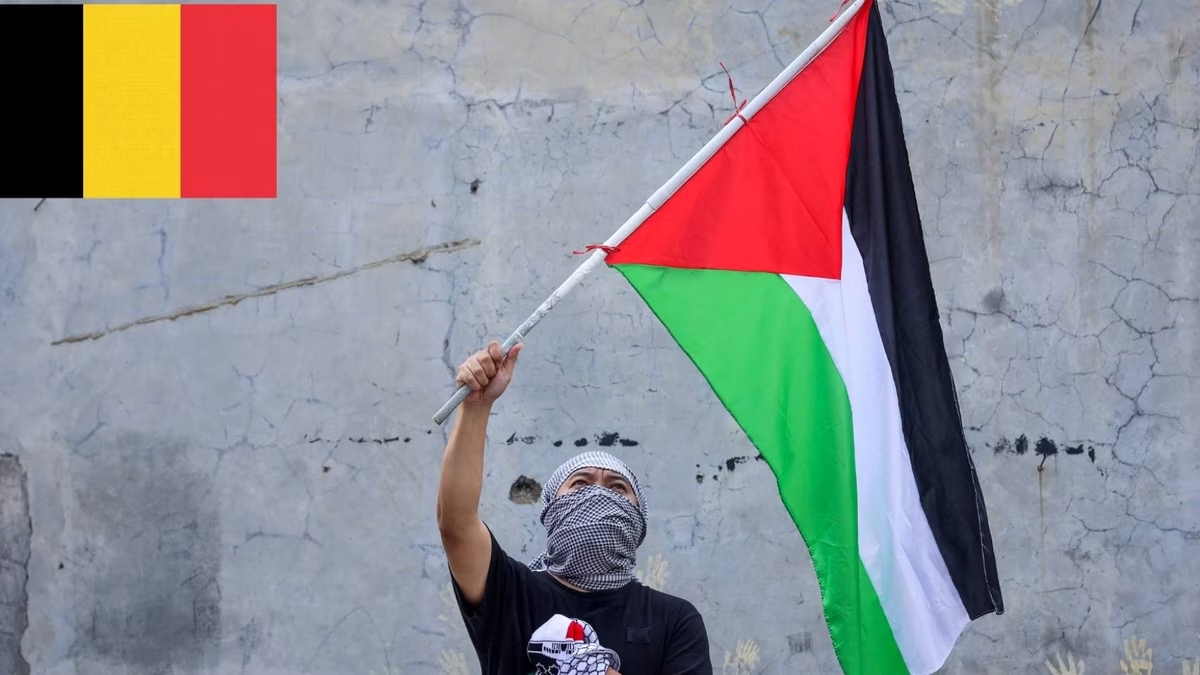







The State of Belgium has filed an official declaration to intervene in the legal case brought by the Republic of South Africa against the occupation before the International Court of Justice in The Hague, related to the application of the "Convention on the Prevention and Punishment of the Crime of Genocide" amid the ongoing war on the Gaza Strip.
The Court stated in a statement that this intervention was based on Article 63 of the Court's Statute, as Belgium is a party to the 1948 Convention, which grants states parties the right to participate when the interpretation of provisions is in legal dispute, and that the interpretation issued by the Court is also binding on them.
The Belgian legal contribution focuses precisely on the interpretation of Article II of the Convention, particularly regarding the "special intent" required to prove the commission of the crime of genocide.
The document submitted by Belgium included a substantive proposal stating that invoking the existence of a "military objective" does not automatically negate, from a legal standpoint, the possibility of inferring the existence of a "special intent" for genocide, thereby setting strict legal parameters for defining the crime and the requirements for proving it.
Following that, the International Court of Justice indicated that it had taken the necessary procedural measures by inviting both South Africa and the occupation to submit their written observations regarding this Belgian declaration.
This development comes to strengthen the international legal momentum of the case and completes a series of interventions from other countries seeking to participate in shaping the final legal interpretation of the Genocide Prevention Convention in this pivotal dispute.
The State of Belgium has filed an official declaration to intervene in the legal case brought by the Republic of South Africa against the occupation before the International Court of Justice in The Hague.




Share your opinion
Belgium Officially Intervenes in the 'Genocide' Case Against the Occupation at the International Court of Justice