






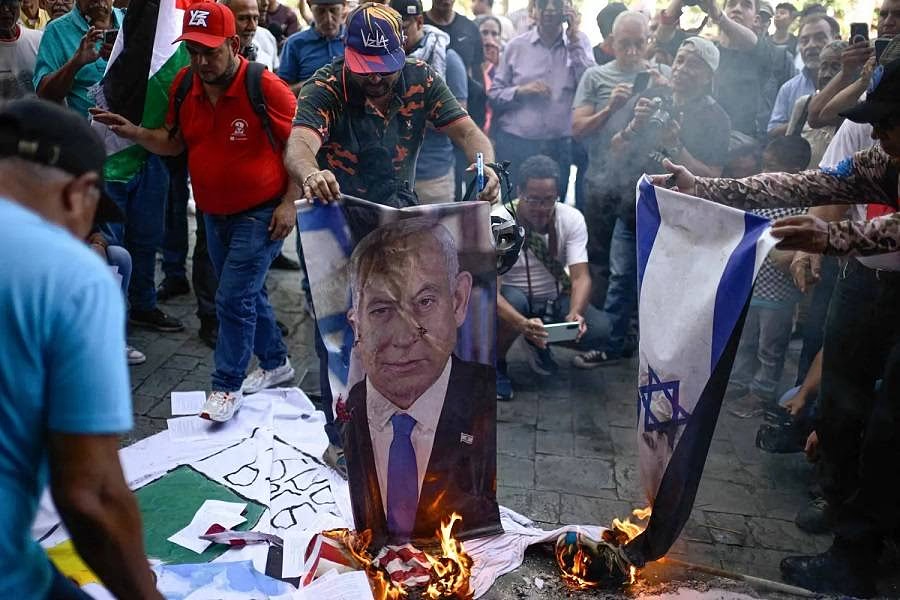
Simon Bolivar Square in the heart of the Venezuelan capital, Caracas, witnessed a wave of angry protests, where about a hundred loyalists of former President Nicolas Maduro gathered to express their rejection of American policies. Protesters burned American and Israeli flags in an escalating move reflecting the extent of field tension, amidst chants condemning what they described as external hegemony over their country's resources.
The protests were not limited to burning flags; participants also trampled on images of US President Donald Trump and Israeli Prime Minister Benjamin Netanyahu. Protesters chanted slogans demanding the departure of American forces, considering the humanitarian aid provided by Washington after last June's earthquakes as merely a cover for a military and political occupation.
In a related context, US President Donald Trump made statements from the White House confirming that Venezuela is not yet ready for a new round of presidential elections at present. Trump indicated that despite not being fully ready, significant progress has been made since the US military arrested Maduro and transferred him to the United States earlier this year.
Trump notably praised the performance of Venezuela's acting president, Delcy Rodriguez, who served as vice president in the previous era and is currently cooperating with the US administration. Trump described Rodriguez's efforts as doing an excellent job in managing the transitional phase, emphasizing continued close coordination between Washington and the interim government in Caracas.
The US President touched upon the economic file, stressing the strategic importance of the Venezuelan oil sector for American markets. He explained that the United States imports huge quantities of Venezuelan crude, claiming that his policies contributed to rebuilding the economy, which was suffering from a state of near-total collapse before the recent US intervention.
For its part, press sources reported that a state of popular anger has prevailed among Maduro's supporters since the military operation carried out by the US army last January. These forces consider the arrest of Maduro and his wife a violation of national sovereignty, which fuels ongoing protests in public squares against the overwhelming American presence in the country.
On the diplomatic front, US Secretary of State Marco Rubio had set preconditions for the electoral process, including the necessity of ensuring freedom of the press and forming a new and independent electoral commission. These demands come amidst a legitimacy crisis that began since the 2024 elections, which did not receive widespread international recognition from Washington and its allies in Europe and Latin America.
Venezuela faces compounded challenges, as the political crisis intertwines with the repercussions of natural disasters that struck the country on June 24th. While the interim government tries to establish its pillars with American support, the opposition loyal to Maduro insists that external interventions are the main reason for the deterioration of living and security conditions in the country.
The American position remains fluctuating between the desire to secure oil flows and hesitation in announcing a specific date for elections, leaving Venezuela in a state of political uncertainty. Regional and international powers are closely monitoring developments on the streets of Caracas, amidst fears of a further escalation of the situation given the ongoing confrontation between supporters of the former regime and the current administration.
Regarding elections in Venezuela, they are not fully ready now, but significant progress has been made.
شارك برأيك
Maduro supporters burn US and Israeli flags in Caracas, Trump rules out early elections