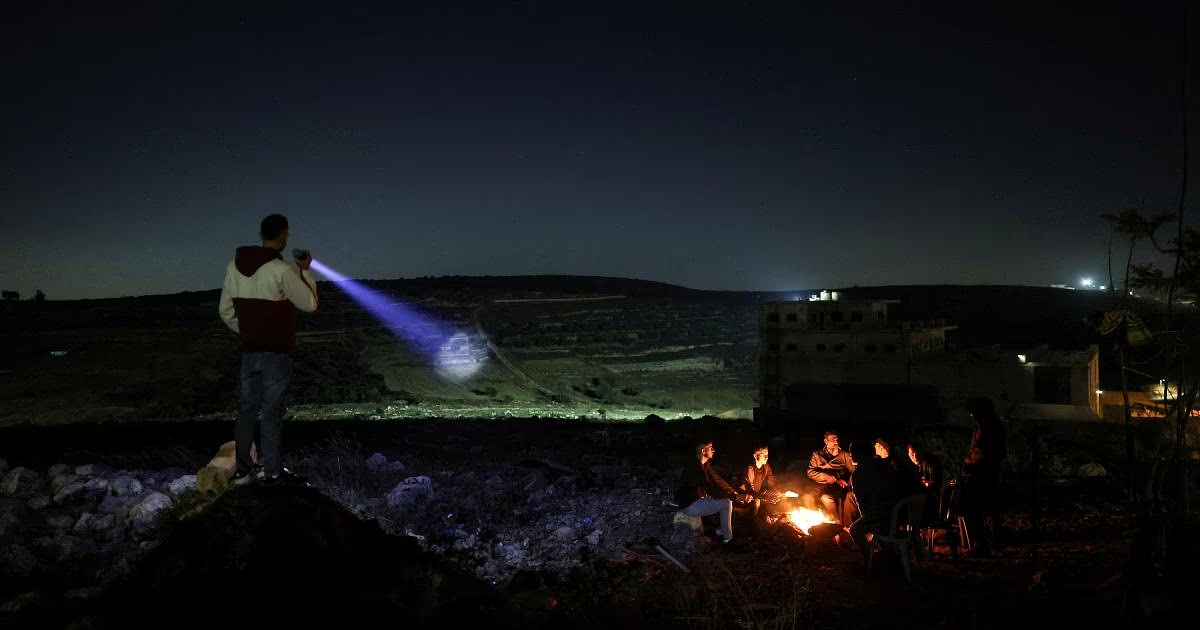







The town of Sinjil, located northeast of Ramallah city in the occupied West Bank, is witnessing a state of permanent popular mobilization to confront the escalating settler attacks. Dozens of volunteers from the town's residents take turns monitoring the hills and rugged roads surrounding their homes, in an attempt to detect any suspicious movements that might signal imminent attacks under the cover of darkness.
Popular protection groups have become an urgent necessity imposed by the harsh field conditions, especially with the repeated targeting of homes and agricultural properties. Sources reported that residents primarily rely on night monitoring and rapid communication through available technologies to repel any threat targeting the security of their families and lands.
These self-initiated efforts come at a time when the occupation government continues to expand settlement activity unprecedentedly across the West Bank. Israeli authorities are working to legitimize new settlement outposts and turn them into launching pads for organized attacks against neighboring Palestinian villages and towns.
In late June, volunteers spread out on the mountainous heights overlooking Sinjil, using powerful searchlights to detect movements near settlement outposts. Youth groups also organize car patrols within the town's neighborhoods to ensure a rapid response in case of any emergency or infiltration attempt.
Residents heavily rely on instant messaging groups via the 'WhatsApp' application to exchange warnings and information about the movements of the occupation army and settlers. This method has contributed to strengthening the local community's ability to confront attacks and reduce human and material losses during late-night hours.
Many farmers in Sinjil have been subjected to direct attacks, including volunteer Fadi Alwan, who was injured while harvesting wheat. These incidents highlight the extent of the risks faced by Palestinians in their attempts to access their lands and secure their daily livelihood amidst continuous threats.
Sinjil town is located in a sensitive geographical position on the main road connecting Ramallah and Nablus, making it a target for settlement projects. Several settlements surround the town from the northern and eastern sides, tightening the noose on its residents and depriving them of natural urban expansion.
Occupation authorities have imposed a bitter geographical reality by erecting a barbed wire fence on the eastern side of the town alongside the vital Road 60. They have also installed iron gates at the main entrances, isolating vast areas of agricultural land and preventing their owners from accessing them freely.
The Wall and Settlement Resistance Commission recently announced that the occupation had seized approximately 464 dunams of Sinjil's land under the designation of 'state land'. This occupational legal measure aims to expand the 'Karmei Oz' settlement outpost, threatening to swallow what remains of the green spaces surrounding the town.
Sinjil Mayor, Moataz Tawafsheh, confirmed that the town has been experiencing a significant escalation in the pace of violence since the outbreak of the war on the Gaza Strip in October 2023. He explained that local institutions were forced to strengthen forms of community protection to deal with the increasing security challenges imposed by settler militias.
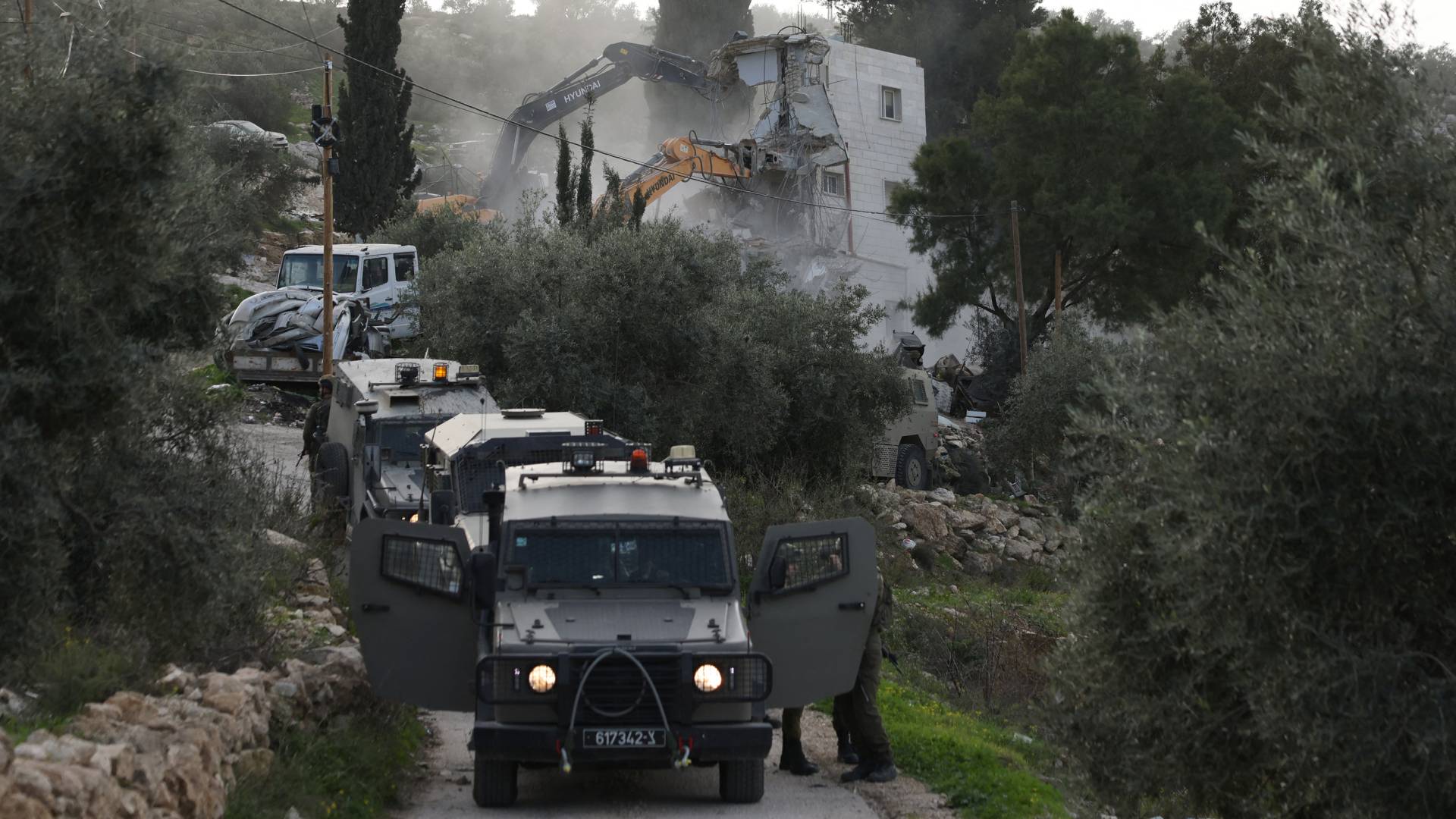
Repeated acts of violence and attacks over the past months have resulted in the martyrdom of two residents from the area and the displacement of dozens of families. These policies have also led to the displacement of more than 100 people from Bedouin communities that lived on the outskirts of the town, due to continuous intimidation.
Many citizens resorted to fortifying their homes with primitive means to protect their children from 'price tag' attacks carried out by settlers. Citizen Abdul Ghani Fuqaha installed iron bars and a high fence around his home after it was attacked with Molotov cocktails that almost claimed the lives of his family members.
Sinjil residents believe that community protection is the first and only line of defense in the absence of international and field protection. Stories of solidarity among young people who rush to the aid of any home under attack stand out as a model of Palestinian steadfastness in the face of forced displacement policies.
Despite modest resources, volunteers insist on continuing their nightly duties to protect their ancestors' legacy and lands from confiscation. Sinjil town remains a living witness to the ongoing conflict in the West Bank between the Palestinian will to survive and settlement expansion supported by force of arms.
The town's residents found themselves compelled to organize their self-efforts to protect the area amidst escalating threats.
شارك برأيك
Sinjil confronts settlement with popular protection: Volunteer committees to monitor hills and secure homes