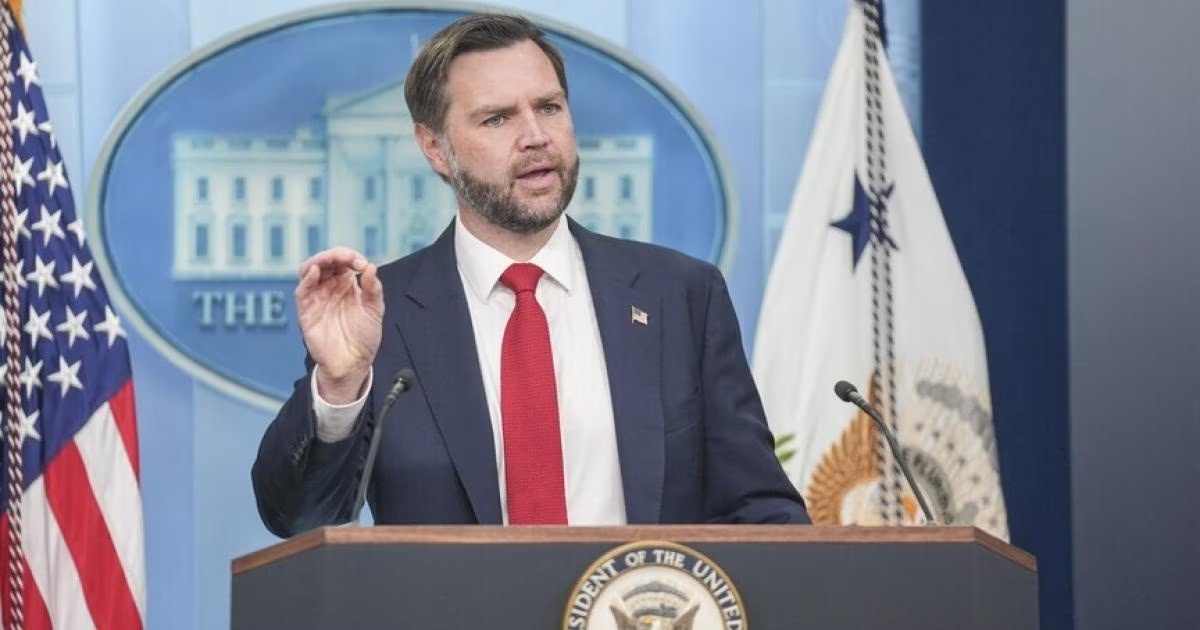







US Vice President JD Vance made striking statements, confirming that Israel, like other countries, is making diligent efforts to influence the course of American policy. Vance explained in a television interview that he acknowledges this reality, emphasizing that this pursuit requires a high degree of caution and vigilance from leaders in Washington.
Vance called on American officials to exercise precise discernment when formulating strategic decisions, to ensure they primarily serve the national interests of the United States. He noted that being drawn behind the interests of external parties without scrutiny could harm the comprehensive American vision for national security.
Regarding the bilateral relationship with Tel Aviv, the Vice President rejected the idea of a constant alignment between Washington's and Israel's interests, affirming the existence of clear differences in strategic visions. He considered recognizing these differences as part of managing a realistic foreign policy based on figures and facts on the ground.
Vance revealed gaps in viewpoints between President Donald Trump and Israeli Prime Minister Benjamin Netanyahu, particularly concerning how to deal with the Iranian issue. He explained that these disagreements became clearer when discussing effective mechanisms to end the ongoing conflict with Tehran and avoid comprehensive escalation.
The Vice President addressed the criticisms directed by Israeli government officials at the recent understandings between Washington and Tehran, considering them a reflection of differing political views. He affirmed that the US administration is moving forward with its diplomatic paths to ensure regional stability and protect vital waterways.
In the context of military support, Vance revealed that two-thirds of the arsenal and weapons used to protect Israel recently are purely American-made. He noted that this equipment was fully funded by American taxpayers' money, placing a significant responsibility on the administration for how this support is managed.
Regarding the agreement with Iran, Vance indicated the presence of currents within Tehran that wish to improve relations with the United States and open a new chapter. He explained that the fundamental goal of the recent diplomatic moves is to secure the opening of the Strait of Hormuz and ensure tangible gains in the Iranian nuclear program file.
Vance stressed that trust is not the primary driver in international relations, affirming that he does not give his absolute trust to any country, including close allies like Israel. He added that the only criterion governing the administration's actions is the extent to which strategic gains for the American state are achieved in international forums.
Regarding the controversy over criticizing Israeli policies, Vance called for distinguishing between political criticism directed at the Netanyahu government and the accusation of anti-Semitism. He affirmed that opposing certain political decisions should not be classified as racism, but rather is part of legitimate democratic and political dialogue.
It is worth noting that Washington and Tehran recently signed the 'Islamabad Memorandum of Understanding,' which includes 14 clauses aimed at halting military operations and addressing crises through negotiation. The agreement, signed by Trump and Pezeshkian, included provisions for de-escalation in Lebanon and lifting the naval blockade on Iran in exchange for security and nuclear guarantees.
I do not trust any country in international relations, including Israel, as foreign policy is built on interests, not absolute trust.
شارك برأيك
Vance: Israel Seeks to Influence Our Policies, Our Interests Don't Always Align