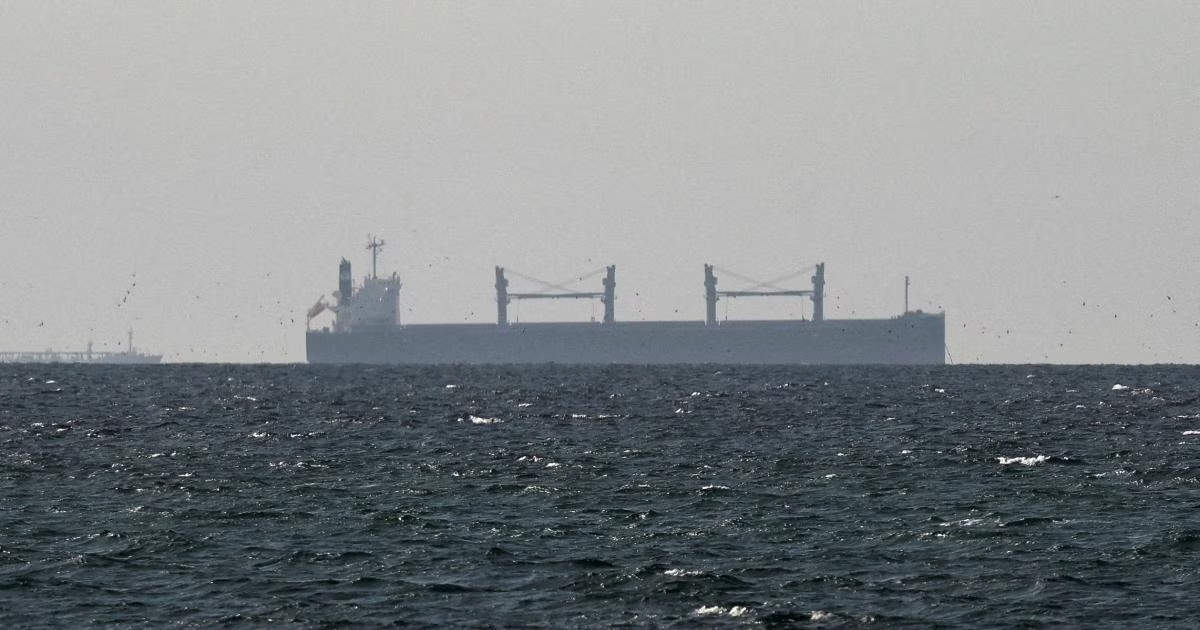







The Élysée Palace is preparing to host a virtual summit next Friday, chaired by French President Emmanuel Macron and British Prime Minister Keir Starmer, with the participation of dozens of countries. This expanded meeting aims to formulate a comprehensive international strategy to secure the Strait of Hormuz and ensure the flow of global trade once combat operations in the region cease.
Reports indicate that Starmer will attend the meeting in Paris in person, while the rest of the delegations will join via video conference, a step reflecting the European desire to lead the navigation security file. Notably, the United States is absent from the list of participants, while invitations have been extended to major powers such as China and India to ensure the broadest possible international consensus.
The emerging European plan seeks to build a broad international coalition that avoids the direct involvement of parties described as 'belligerents,' namely the United States, Israel, and Iran. This approach aims to create a neutral security environment that enjoys regional and international acceptance, thereby facilitating the restoration of confidence among global shipping companies that have been affected by the conflict.
Informed sources reported that the proposed defensive mission will focus in its first phase on three complex logistical and military axes. The first axis involves providing technical and navigational support to hundreds of commercial vessels currently stranded in the waterway, awaiting sufficient security guarantees to resume their voyages safely.
The second axis involves launching a large-scale operation to clear the waters of naval mines laid at the beginning of the conflict, a significant technical challenge requiring specialized expertise. The strategic importance of European countries, which possess a huge fleet of over 150 specialized vessels for detecting and removing naval mines, is highlighted here.
In the third axis, the European force intends to provide permanent military escort by deploying frigates and destroyers that will regularly patrol the strait to deter any potential threats. The operation's planners believe that this military presence will remain necessary for a long period even after ceasefire agreements are concluded, to meet the requirements of international insurance companies.
Diplomatic discussions reveal a divergence of views between Paris and London regarding Washington's role in this ambitious plan. While the French side believes that excluding the United States makes the mission more acceptable to Tehran, British officials express concern that this marginalization could strain relations with President Donald Trump's administration.
Germany is expected to officially join the initiative soon, which will give the plan additional military and financial weight given Berlin's naval capabilities. Germany has a specialized unit in the port of Kiel that includes mine-sweeping vessels and advanced submarines, capable of playing a pivotal role in securing deep waterways.
This initiative draws inspiration from the 'Aspides' operation model previously launched by the European Union to protect navigation in the Red Sea, which proved the effectiveness of independent European coordination. The plan relies on rotating the deployment of naval assets and helicopters belonging to countries such as Italy, Greece, and France to ensure sustainable monitoring and rapid intervention when necessary.
Observers link this plan to the concept of a 'coalition of the willing' previously proposed in other international contexts to enhance stability in conflict zones after peace agreements are reached. The European move ultimately aims to prevent the Strait of Hormuz from becoming a closed sphere of influence, and to ensure that it remains an open international passage for global trade and energy traffic.
The plan is based on establishing an international defensive mission that does not include the belligerent parties, referring to the United States, Israel, and Iran.
شارك برأيك
European move led by France and Britain to secure the Strait of Hormuz independently of Washington