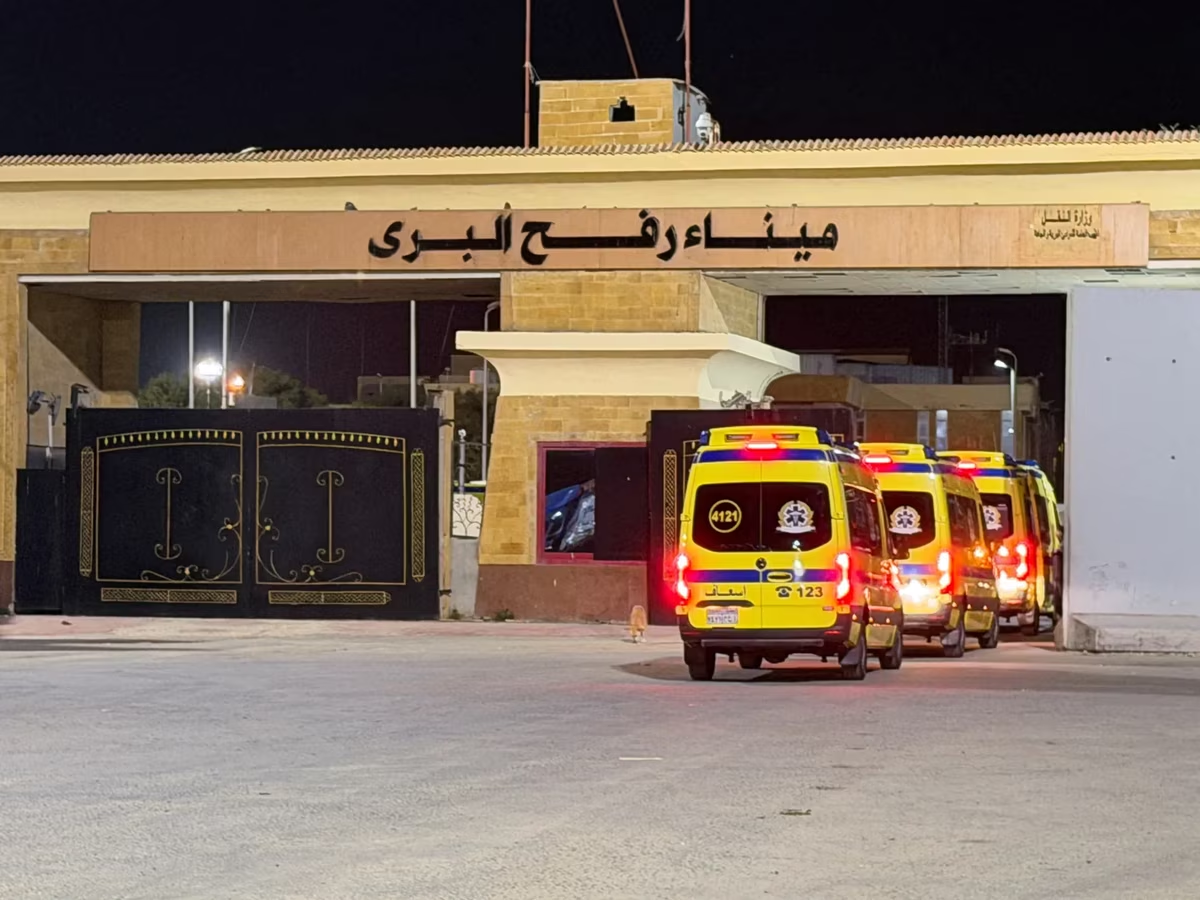







The Rafah land crossing is no longer just a border point connecting the Gaza Strip to the outside world; it has transformed into an intense symbol of the political and security restrictions imposed by the occupation authorities. Despite the announcement of its partial reopening, field realities indicate that the crossing operates within a very narrow margin, making it a tool for reorganizing the siege rather than breaking its imposed restrictions on Palestinians.
Official sources in the Government Media Office reported that the first week of the crossing's operation saw only 397 travelers cross out of 1,600 who were supposed to travel. The sources clarified that these numbers reflect an Israeli compliance rate not exceeding 25%, confirming that the occupation still fully controls the pace of movement and humanitarian supply chains.
Movement through the crossing is currently limited to very specific categories, primarily critical medical cases requiring surgical intervention unavailable within the Strip. However, these categories face complex security procedures, including the requirement for prior approvals and thorough inspections, turning the treatment journey into an arduous path fraught with psychological and physical risks.
Data from the World Health Organization indicates that over 18,500 patients in Gaza are in urgent need of travel to save their lives. Amidst the extremely slow coordination procedures, health authorities have recorded the deaths of over 1,600 Palestinians while on waiting lists, highlighting the exorbitant human cost of restrictions on freedom of movement.
Palestinian sources confirmed that the local role in managing the crossing is limited to technical and organizational aspects and preparing lists, while sovereign and security decisions remain in the hands of other parties. This reality places the Palestinian administration in the position of a 'crisis manager' who lacks real tools to expand the crossing's capacity or ensure the travel of thousands of stranded individuals.
The restrictions imposed by the occupation are numerous, including setting a very low daily ceiling for the number of crossers and subjecting travelers to lengthy interrogations before allowing them to reach the Egyptian side. These measures, according to observers, aim to maintain the state of humanitarian pressure and prevent the full return to normal life in the Gaza Strip.
Local residents and crossers described the new crossing as a 'prison gate,' due to its architectural design dominated by purely security features such as barbed wire and surveillance cameras. These images reflect the prevailing impression among Gazans that the crossing was designed to be a security control point that increases the burden of isolation rather than a window to freedom.
Travel lists still include tens of thousands of names, including university students who have lost their academic places and residents abroad whose residency permits are threatened with cancellation. Ismail Al-Thawabta, head of the Government Media Office, confirms that the absence of a clear timeline for addressing these cases exacerbates the state of anxiety and popular tension in the Strip.
Human rights organizations consider what is happening at the Rafah crossing to be 'forced selection' of humanitarian needs, where officials are forced to choose a very limited number from among thousands of emergency cases. This situation creates daily ethical and humanitarian dilemmas, amidst the continued intransigence of the occupation in increasing the number of security approvals granted to travelers.
Testimonies from crossers reported that some of them were subjected to pressure and blackmail by the occupation's security apparatus during the coordination or crossing process, adding a dangerous security dimension to the travel process. These pressures increase the suffering of patients and their companions, and make obtaining the right to treatment a means of political and security extortion.
On the political front, analysts believe that the opening of the crossing in this limited manner comes within regional understandings aimed at preventing the explosion of humanitarian conditions without offering radical solutions. These arrangements remain 'temporary and subject to cancellation' at any moment, making the stability of crossing movement hostage to fluctuating field and political developments.
The Palestinian Ministry of Health clarified that the limited number of daily travelers makes the travel process a race against time, especially for cancer patients and children with chronic diseases. The ministry affirms that the only solution to end this tragedy lies in opening the crossing permanently and fully, away from Israeli security interventions and restrictions.
Despite limited international welcome for steps to ease the siege, UN organizations emphasize that the crossing is still far from being a natural gateway for individuals and goods. The siege remains in essence, and what has changed are only the management mechanisms that ensure Gaza remains under close control and supervision.
Rafah crossing, under current data, remains a testament to the ongoing suffering of two million Palestinians living in a large prison. With each passing day without a full opening, the list of victims among patients and stranded individuals increases, placing the international community before its legal and moral responsibilities to end this ongoing crime.
The crossing does not operate at its actual capacity, but according to predetermined numbers, often less than the announced ceiling, making the impact of the opening limited on the humanitarian reality.
شارك برأيك
Rafah Crossing.. 'Prison Gate' Manages, Not Breaks, the Siege Amidst Strict Israeli Restrictions