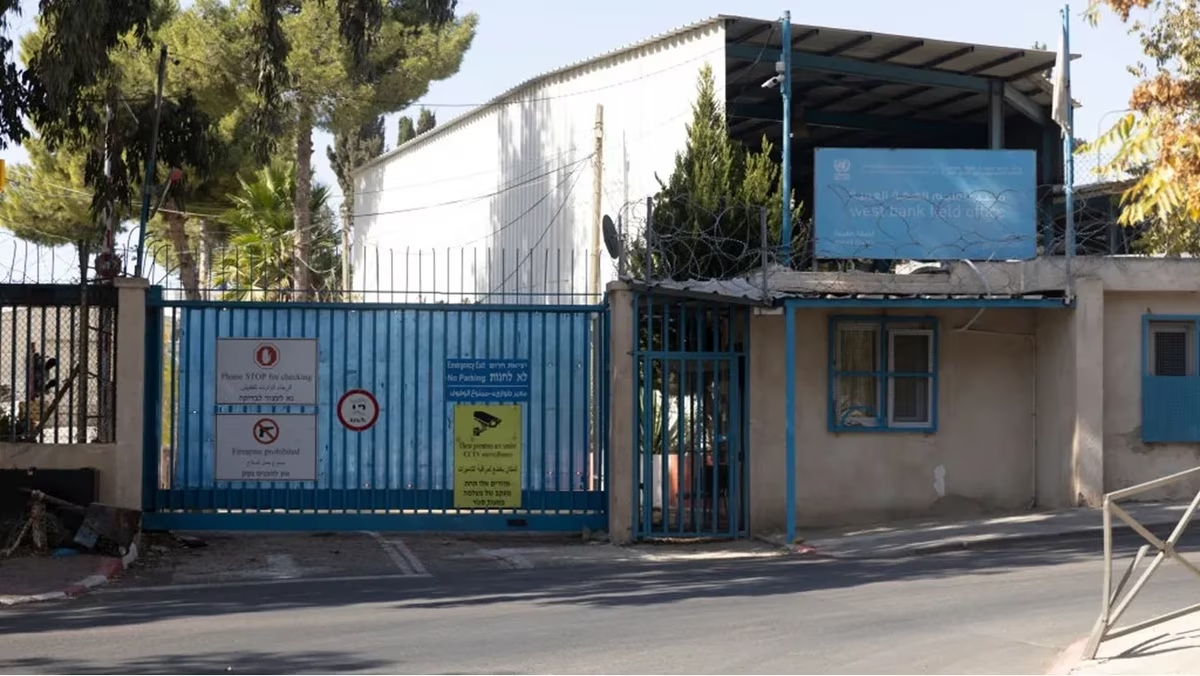







Israeli occupation forces proceeded to remove the United Nations flag and raise the Israeli flag above one of the international organization's headquarters in occupied East Jerusalem, during the raid on the headquarters of the United Nations Relief and Works Agency for Palestine Refugees (UNRWA) in the Sheikh Jarrah neighborhood, on December 8, 2025. The Israeli police, accompanied by employees from the occupation municipality, forcibly entered the compound, confiscated equipment and property belonging to the agency, before removing the UN flag and raising the Israeli flag in its place. The raid was carried out at dawn using motorcycles and lifting trucks, after cutting off communications inside the headquarters, in preparation for starting the confiscation operations.
With this unprecedented scene, fundamental questions arise: What remains of the United Nations' prestige when its flag is forcibly removed? And how can an organization presumed to be a guardian of international peace claim its ability to protect civilians if it is incapable of protecting its symbols and facilities? Then, can this act be understood in isolation from a broader context that witnessed the targeting of UN schools in Gaza, the destruction of refugee camps in the West Bank, and the criminalization of UNRWA's work in Jerusalem? And does the removal of the UN flag represent a merely symbolic step, or a practical declaration that Israel no longer recognizes any authority or jurisdiction of international law on the ground?
The legal framework for the immunity of international headquarters
Theoretically, the presence of the United Nations and its agencies enjoys special legal protection under international law. Since the establishment of the UN organization, the Convention on the Privileges and Immunities of the United Nations of 1946 has been adopted, which stipulates the inviolability of UN headquarters and properties in any country. This means that it is not permissible for the host country's authorities to raid, search, or confiscate them. International agreements also exempt UN headquarters from local taxes and fees, recognizing the non-profit nature of the international organization and its humanitarian function. This legal protection is not merely formal procedures, but its essence is to preserve the neutrality of the United Nations and the safety of its operations, as the United Nations flag raised above its headquarters is considered a symbol of international immunity and protection.
The international judiciary has repeatedly affirmed the obligation to respect this immunity; for example, in October 2023, the International Court of Justice issued an advisory opinion explicitly reminding Israel of its legal duty to facilitate UN relief efforts in Gaza and cooperate with the organization's agencies in the occupied territories. These obligations fall on Israel as a UN member state and signatory to the relevant agreements, making any violation of them a direct breach of international law.
The symbolism of the United Nations and international protection
The presence of the United Nations in conflict zones symbolizes international protection and the neutrality of the international community. For decades, the blue UN flag has been adopted as a sign for internationally protected sites, starting from UN headquarters and refugee camps, even to ambulances and humanitarian convoys affiliated with it. Historically, this symbolism has gained deterrent power; it provides a safe haven for civilians under the UN banner and warns conflict parties against targeting it. But in the Palestinian case, Israel has increasingly targeted this symbolism. Forcibly removing the UN flag from above a UN-affiliated building does not represent a mere protocol incident; rather, it is a message rejecting any guardianship or international protection for Palestinians. It is tantamount to a declaration that the only reference on the ground is the power of the occupation.
UNRWA and the headquarters agreement:
The United Nations Relief and Works Agency for Palestine Refugees (UNRWA) is the most prominent example of UN presence in historic Palestine, and it is the axis of the recent event. The UN established UNRWA in 1949 to provide basic relief to Palestinian refugees after the 1948 Nakba. Since then, the agency has operated in refugee areas including the Gaza Strip and the West Bank (including East Jerusalem) alongside neighboring countries. UNRWA's presence in the occupied territories was regulated by agreements and arrangements with the relevant authorities; after Israel's occupation of the West Bank and Gaza in 1967, the Israeli government requested UNRWA to continue its operations in the areas under its control and pledged to facilitate its mission. This came in an official exchange of letters between the then UNRWA Commissioner-General Laurence Michelmore and the Israeli official Michael Comay (known as the "Comay-Michelmore Agreement"), where the Israeli side confirmed that these temporary arrangements would remain in effect until replaced or canceled by another agreement. Under this understanding, Israel committed to facilitating UNRWA's work as much as possible while considering the security considerations that Israel has always raised.
Over the following decades, despite tensions, UNRWA maintained its presence as a lifeline for millions of Palestinian refugees. It manages schools and clinics, distributes food aid, and provides social services in refugee camps, thus bearing a highly important humanitarian and stabilizing role. Therefore, international agreements, including the aforementioned Convention on the Privileges and Immunities of the United Nations, include UNRWA and its staff and headquarters within the scope of protection. Staff enjoy relative diplomatic immunities, UNRWA facilities are protected from local interventions and taxes and fees, and local authorities (including the occupation authority) are supposed to respect the agency's status and the inviolability of its facilities.
On the ground, Israel has often complained about UNRWA and accused it of taking biased positions or turning a blind eye to "terrorist" activities, accusations that the agency has repeatedly denied. Israeli governments, with the support of some allies, have sought to reduce UNRWA's role or even end it, but they failed to achieve that. The decision to continue the agency remains with the UN General Assembly, which renews UNRWA's mandate periodically with an overwhelming majority, the latest being the extension until 2028.
Israeli behavior from Gaza and the West Bank to Jerusalem:
The recent years have witnessed an escalation in Israel's hostile behavior towards the UN presence in the Palestinian territories, culminating in the flag incident in Jerusalem. This behavior has taken various forms across regions:
In the Gaza Strip: During the recent war on Gaza (starting from October 2023), UN facilities, especially UNRWA schools that were turned into shelter centers, were subjected to repeated bombing. Hundreds of civilians fell during the bombing of UNRWA sites, even dozens of UNRWA staff themselves fell while performing their humanitarian duties. The UN has repeatedly declared that "there is no safe place in Gaza" including its buildings, and considered the ongoing targeting of facilities bearing the UN emblem as a blatant disregard for UN immunity and humanitarian law. Nevertheless, Israeli operations continued fiercely, justifying them by the presence of resistance elements or weapon caches near some facilities, excuses that do not exempt it from legal responsibility for protecting civilians and relief headquarters.
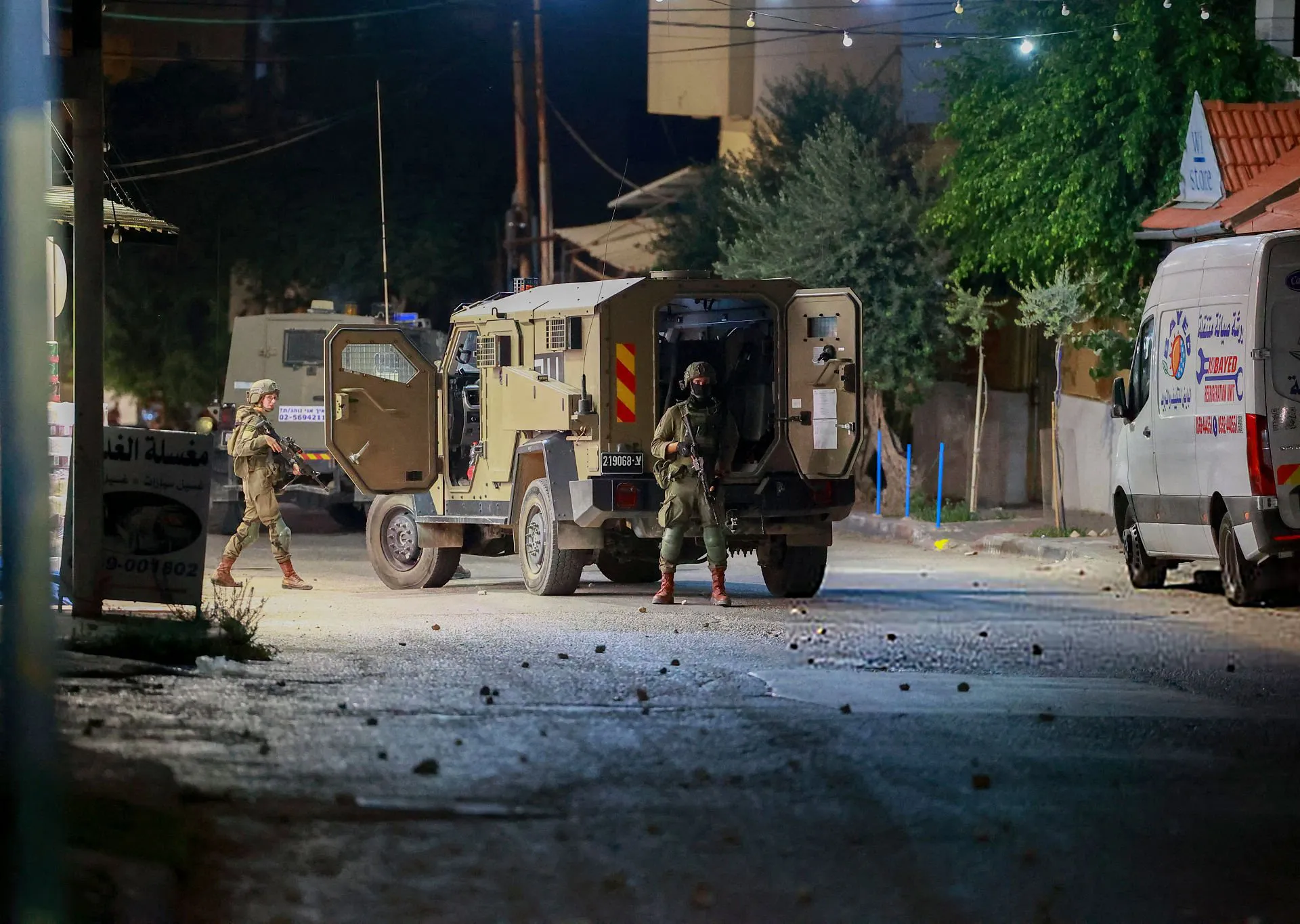
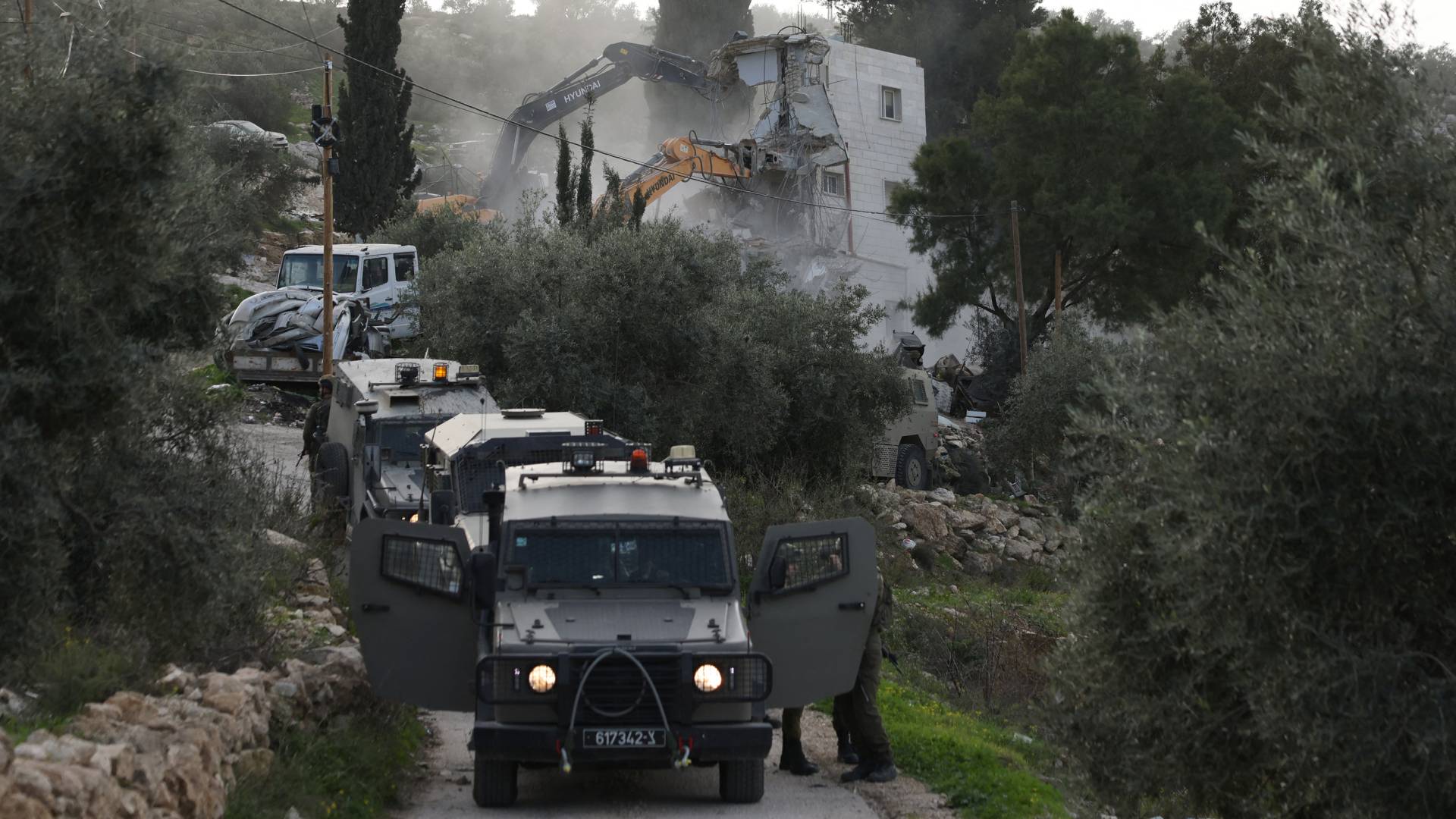
In the West Bank: The situation was no less dire, albeit in a different context; UN agencies, primarily UNRWA and OCHA, faced chronic Israeli restrictions including bureaucratic obstacles, restrictions on the movement of staff and aid, in addition to arrests and injuries affecting international workers, which limited their ability to perform their tasks. Simultaneously, refugee camps in Jenin, Tulkarm, and Nour Shams were subjected to an unprecedented wave of destruction and displacement, including orders to demolish dozens of residential buildings, destroy hundreds of units, and displace thousands of families, until some camps turned into areas almost devoid of civilian life. UN reports have described these developments as the largest displacement wave in the West Bank since 1967, reflecting the transition of Israeli policy from disrupting humanitarian work to demographic engineering targeting the dismantling of camps and depriving their residents of stability and return.
In occupied East Jerusalem: The series of targeting culminated in the most dangerous measure in the occupied city of Jerusalem. Since 2024, Israel has taken escalating steps in Jerusalem, enacting a law banning UNRWA within what it considers its territories, forcing the agency to close its offices at the beginning of 2025. Then came the climax of this campaign in December 2025 with the public raid on the UNRWA headquarters in Sheikh Jarrah, under flimsy pretexts such as municipal tax debts despite the UN being exempt from taxes by law. Indeed, the raid was carried out, the office's contents were confiscated, the UN flag was removed, and the Israeli flag was raised in its place.
This development in Jerusalem carries dangerous implications, as it is the first direct and explicit challenge to the symbolism of the United Nations in this way within the occupied territories and under Israel's full control. The UN has strongly condemned this raid and described the step as a "blatant violation of the inviolability of its headquarters under international law."
The UNRWA Commissioner-General, Philippe Lazzarini, confirmed that the agency's headquarters in Jerusalem remains a UN facility subject to international immunity regardless of any measures or local legislation imposed on it, emphasizing that any Israeli attempt to strip it of its UN status lacks any legal value, because the status of UN headquarters is governed by international agreements that supersede the domestic law of states. His statements came in an official statement published on the morning of December 8, 2025 via the X platform, in response to the occupation forces' raid on the UNRWA headquarters in Sheikh Jarrah, removing the UN flag and raising the Israeli flag in its place, confiscating the agency's property, and cutting off communications inside the compound. Lazzarini warned that resorting to local legislation to criminalize UNRWA's work or confiscate its facilities represents an attempt to abolish international immunity, which is legally impossible, and entails a dangerous precedent that undermines the foundations of the international legal system.
Do states align with these calls and measures?
In the face of these developments, a question arises about the position of the rest of the states: Does any state support Israel's endeavor to "criminalize" international protection and remove the UN from the Palestinian scene? The reality is that the vast majority of the international community has explicitly rejected that. When Israel proposed a bill to ban UNRWA at the end of 2024, several Western allied countries issued statements of concern and warning. For example, the European Union issued a warning of "catastrophic consequences" if UNRWA's work was banned; similarly, other Western countries called on Israel to respect UNRWA's immunity and not obstruct it.
Some countries temporarily suspended their funding for UNRWA following Israeli accusations after October 2023, but they quickly resumed it after UN investigations proved most of those allegations false. Even the United States, which froze part of its funding at the time, did not go so far as to support banning the agency, but focused on ensuring its neutrality.
It is clear that Israel's approach to criminalizing the UN presence and international protection of Palestinian civilians faces broad rejection. The main donor countries - European, Arab, and others - have continued to provide financial support (albeit at declining rates) and political support for UNRWA and the UN in general in the Palestinian territories, considering it a fundamental stability factor. While Israel continues its campaign against UNRWA, it finds itself isolated in this endeavor.
Removing the UN flag and targeting the symbolism of the international organization in Jerusalem does not only express an assault on a UN body, but is also considered a direct targeting of the Palestinian refugees' right itself, as UNRWA is linked in existence and non-existence to UN Resolution 194 stipulating the right of return, making any tampering with it tampering with the legal structure that historically preserves this right. Despite the fact that international reactions showed a politically supportive stance rejecting the undermining of the international legal system, this response remained more symbolic than practical; if any other country had taken a similar step, the reactions would have been stronger and more procedural.
The background of this behavior becomes clear in that Israel seeks to empty the UN organization of its practical and legal content in the occupied territories as a first stage, paving the way for extending this emptying later to include the neighboring countries that host the largest bloc of Palestinian refugees, primarily Jordan, Syria, and Lebanon. From here, this approach cannot be considered an isolated event, but comes within an integrated and continuous policy aimed at redefining the international legal framework for the Palestinian issue, specifically the refugee issue, by neutralizing UNRWA and drying up its ability to perform its historical role.
Today, the question has become far beyond the incident of removing the UN flag; the real dilemma lies in the fact that the international organization has witnessed, in full view of its institutions and bodies, practices more dangerous than merely targeting its symbolism, starting from policies of widespread killing, passing through annexation operations, reaching the inhuman treatment of prisoners and imposing facts on the ground in Jerusalem. And if these fundamental violations were not met with deterrent measures, has there remained any practical status for the UN's purposes and prestige to rely on? The question is no longer related to an incident of raising or lowering a flag, but to the extent of the organization's own ability to uphold the principles it was founded on, and prevent their undermining when violated in this blatant and repeated manner.
What remains of the United Nations' prestige when its flag is forcibly removed? And how can an organization presumed to be a guardian of international peace claim its ability to protect civilians if it is incapable of protecting its symbols and facilities?
شارك برأيك
Occupation forces remove the United Nations flag and raise their own above the UNRWA headquarters in Jerusalem