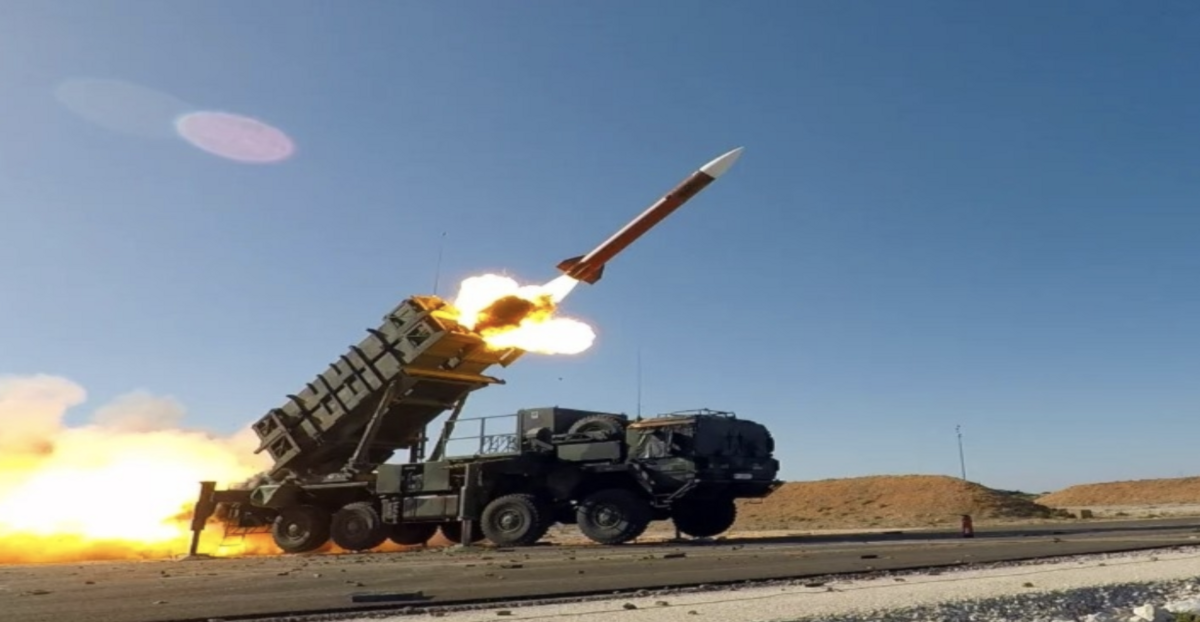







The Wall Street Journal reported on June 18 that a US official told it that the Israeli military's Arrow missile defense system was "running out of interceptor missiles."
According to the newspaper, this issue raises concerns about Israel's ability to intercept Iranian ballistic missiles.
"The United States has been aware of the capability issues for months," the US official said. "Washington has bolstered Israel's defenses with land, sea, and air systems. Since the conflict escalated in June, the Pentagon has sent more missile defense assets to the region, and now there is concern that the US will also deplete its interceptor missiles."
"Neither the US nor the Israelis can continue to intercept missiles all day long," Tom Karako, director of the Missile Defense Project at the Center for Strategic and International Studies, told the Wall Street Journal.
He added, "The Israelis and their friends must move quickly and consciously to do whatever is necessary, because we cannot just wait."
Washington has deployed additional forces and fighter jets to the region and is participating in Israeli efforts to intercept Iranian ballistic missiles, which have been launched at Israel daily since the war began on June 13.
A former US official told a correspondent for Al-Quds newspaper in Washington: "I don't think this is entirely true. Perhaps the goal behind statements like this is to create additional leverage to justify the US's rapid involvement in the war alongside Israel."
"Interceptor missiles are a complex system, and contain very sophisticated technologies, but the United States certainly maintains large stockpiles of them, many of which are stored in so-called early deployment sites (for any confrontation) - even in Israel, and its factories have the capacity to double production if needed," the official, who requested anonymity, added.
According to the Wall Street Journal, "The Pentagon has sent more missile defense assets to the region, and there is now concern that the United States might destroy interceptor missiles as well."
Tel Aviv claims to have achieved complete air superiority over Iran and to have destroyed approximately one-third of Tehran's ballistic missile arsenal, previously estimated at around 2,000 missiles capable of reaching Israel.
Israeli analysts say that more than half of Iran's arsenal remains intact, and that an unknown amount may be hidden in underground facilities.
“Iran has to make very difficult calculations because it has a limited number of missiles and, given their rate of fire, cannot replenish their stocks in real time,” Fabian Hinz, a military analyst at the International Institute for Strategic Studies, told the Washington Post on Tuesday.
As a result, Iranian forces have significantly reduced the number of missiles they have fired daily at Israel over the past two days, compared to what was launched in the first three days of the war.
However, the Washington Post notes that Israel will soon have to begin rationing its interceptor missiles, citing some assessments that the Israeli military cannot maintain its missile defenses for more than 12 days without immediate resupply from the United States.
"They'll need to choose what they want to intercept. The system is already overloaded," an anonymous source familiar with intelligence assessments told the newspaper. While Israel has managed to shoot down several of the rockets fired so far, many have fallen short, causing significant damage and Israeli casualties, and representing a catastrophic failure for Tel Aviv's missile defense system.
Iran has vowed to continue responding to the violent Israeli campaign against it, and has warned of targeting US bases in the region if Washington decides to directly intervene in the war.
شارك برأيك
The United States fears that Israel will run out of interceptor missiles.