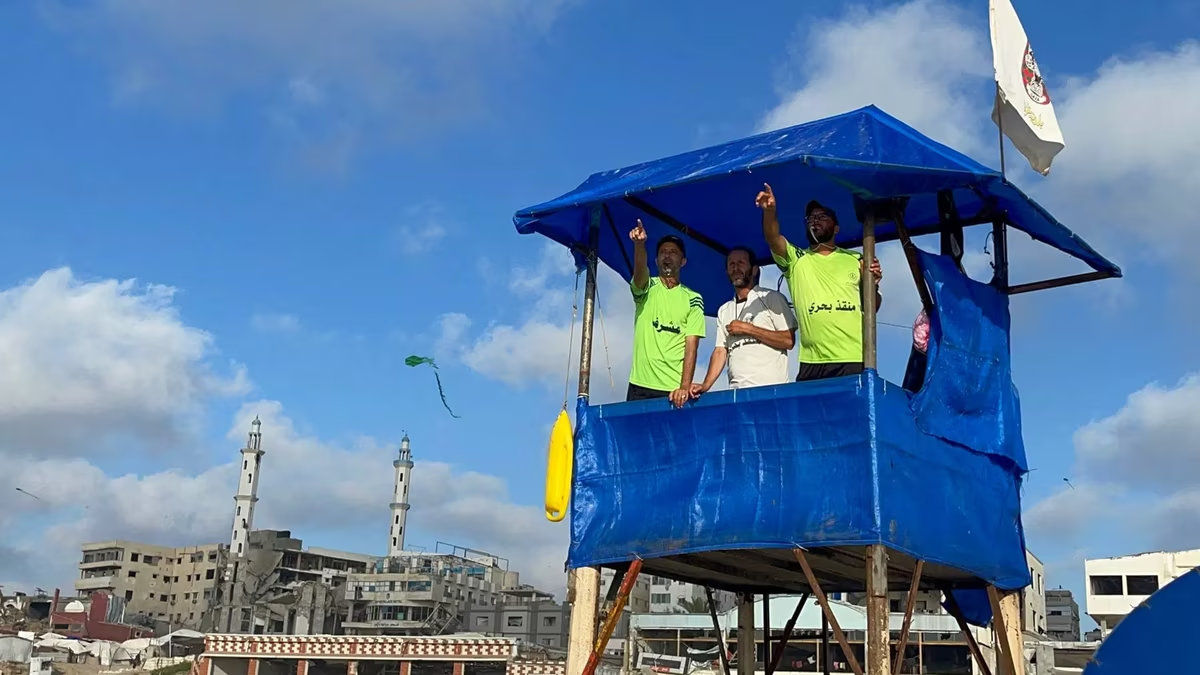







Sea rescuers on the beaches of the Gaza Strip face harsh conditions that exceed their human capabilities, as they are forced to deal with increasing drowning incidents without the slightest safety requirements or necessary equipment. Rescuer Ibrahim Kabaja recounts the details of his rescue of three girls in the Gaza port basin, where he ran hundreds of meters and battled the waves with only his body to bring them to safety.
Kabaja and other rescuers spend about 12 hours daily monitoring the beach, from sunrise to sunset, a mission he describes as the most difficult in his career spanning over two decades. The difficulty lies in the teams' lack of essential rescue tools, which were destroyed by the war machine, making the work entirely dependent on physical effort and personal risk.
Along the coast, primitive and dilapidated watchtowers are scattered, built by rescuers from remnants of furniture and wood left behind by the war, in an attempt to create observation points that enable them to monitor beachgoers. Rescuers use simple whistles and hand signals to guide young people and keep them away from dangerous sea currents, which have increased recently.
Local sources reported that sea rescue teams are currently experiencing their worst historical phase, as most equipment, communication devices, and rapid rescue means have been lost due to ongoing military operations. This severe shortage has made dealing with emergencies extremely complex, placing the lives of both rescuers and beachgoers in constant danger.
Crisis is not limited to equipment but extends to a severe shortage of qualified human resources to cover the entire coastal area, especially in light of the lack of salaries and the suffocating financial crisis. The majority of rescuers suffer from unemployment, as there are no official or international bodies capable of securing permanent employment contracts that ensure their livelihood stability.
The nature of work on the beach has changed dramatically; after the summer season was limited to only four months, the coast has become a permanent shelter for displaced people living in tents. This new reality has necessitated the presence of rescuers year-round, which exceeds the capacity of volunteer teams who work without financial compensation after their short seasonal contracts end.
Workers in this sector warn that the lack of oversight over large areas of the beach will inevitably lead to an increase in drowning incidents, especially with the significant overcrowding on the beaches. Rescuers demand the provision of fixed salaries and essential work supplies to ensure their continued performance of this humanitarian mission that saves citizens' lives.
For his part, rescuer Riyad Al-Habil complains about the absence of loudspeakers, which are a vital tool for guiding those in the sea and warning them of strong currents before disaster strikes. He emphasizes that current capabilities are almost non-existent, at a time when the sea is witnessing unprecedented demand from residents fleeing the heat of tents and the bitter conditions of displacement.
Al-Habil points out that the enormous human pressure on the beach is completely disproportionate to the number of available rescuers, creating a large security gap in maritime safety procedures. Despite the long periods without salaries, these men continue their duties out of humanitarian motivation, calling on international organizations to intervene urgently to enhance the capabilities of rescue teams.
Rescuers' suffering is compounded by some citizens' non-compliance with instructions and guidelines, due to the difficult psychological and living pressures that push them to risk entering the sea in unsafe conditions. Residents seek moments of comfort and psychological release in the sea waters, away from the harsh daily burdens imposed by the war.
In a related context, rescuer Allam Zughra recounts painful stories of complex drowning incidents among rocks, where teams are forced to intervene with very primitive means such as simple plastic floats. Zughra receives a meager amount not exceeding $10 per day for arduous work that lasts half a day, as part of temporary employment projects that do not meet his family's basic needs.
Information obtained by our sources from the Ministry of Local Government in Gaza revealed that only 445 rescuers are currently deployed along 33 kilometers of coastline. The data indicates that this number covers a vast area extending from Beit Lahia in the north to Rafah in the south, which represents an enormous burden on the currently available staff.
Official statistics indicate that the current summer season requires at least 800 rescuers to fully secure the beaches, meaning there is a deficit of nearly 50%. This numerical shortage, coupled with the absence of technical and logistical equipment, makes the task of protecting beachgoers almost impossible under current conditions.
The Gaza sea remains the only outlet for two million people facing siege and war, but this outlet has become fraught with dangers due to the collapse of the rescue system. Appeals continue to international bodies and relief organizations to provide this vital sector with the tools and personnel it needs to ensure that recreational trips do not turn into new tragedies.
We work long hours under difficult conditions and with almost no resources, relying on what remains of primitive watchtowers that do not provide the minimum requirements for work.
שתף את דעתך
Gaza's Rescuers Face Waves Bare-Chested: Staff Shortages and Lack of Equipment