ARAB AND WORLD

Wed 07 Feb 2024 4:56 pm - Jerusalem Time

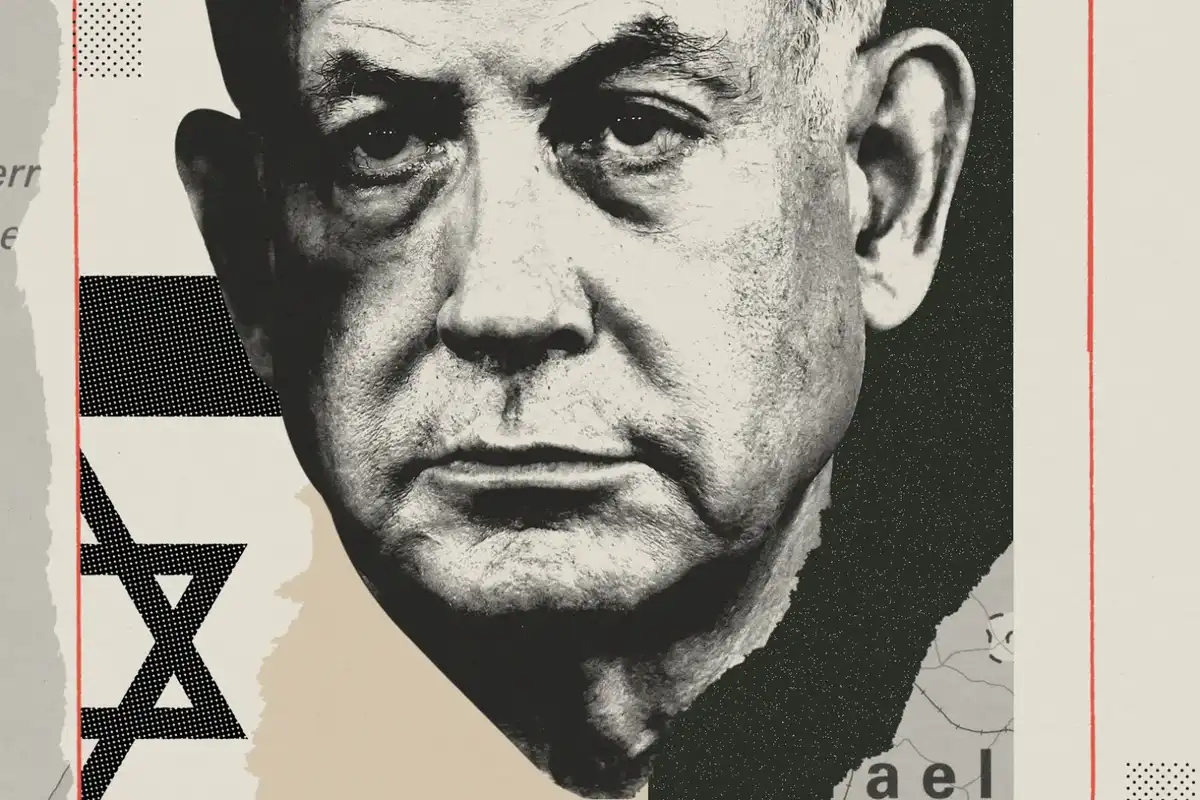
Former Israeli military commander: Netanyahu is lying about eliminating Hamas leaders

Yair Golan, former deputy chief of staff of the Israeli army and current member of the Knesset from the Meretz party, said that when Prime Minister Benjamin Netanyahu tells the Israeli public that he is capable of killing all the leaders of the Islamic Resistance Movement (Hamas) and saving all the Israeli hostages at the same time, he is lying to them.


Golan explained, in an interview at Reichmann University yesterday, Tuesday, that the Israeli government must return the hostages first, and then hope only later to reach Hamas, provided that its primary goal remains to prevent Hamas from returning to control the Gaza Strip.


The retired Major General in the Israeli army considered that Netanyahu's policy was based on weakening the Palestinian Authority and providing a kind of stability to Hamas since 2009, and he said that this was one of the basic factors that led to Israel's failure in the October 7, 2023 operation.


Golan pointed out that the Palestinian Authority, especially in 2009, was working better, and its security coordination with Israel was better, while “Hamas was at its lowest levels after Operation Cast Lead,” he claimed.


He added that Netanyahu, in return, worked to change the balance of power because a “weaker Palestinian authority” would allow the construction of more settlements, according to him.


Regarding the post-war stage, Golan says that Israel cannot hand over Gaza directly to its residents, adding, “I do not believe that we have a partner in Gaza. We will start with very strong international cooperation, and only after that will we find among the residents of Gaza those who can manage their own lives,” suggesting that the Palestinian Authority is responsible for managing the border crossings in the Gaza Strip, at least in the first phase, with its role increasing later.


Regarding the situation in northern Israel, Golan said that if he were in Netanyahu’s place, he would have called on most of the residents of the north to return to their homes already, even without a diplomatic agreement with Hezbollah, adding that some villages very close to the border will need to wait a longer period, and he said that cities like Ras Naqoura, It lies outside the range of anti-tank missiles, and its residents must return because it is no more threatened than Nahariya, which has not been evacuated.


Golan expected that there would not be a large-scale war between Israel and Hezbollah because the United States and Iran do not want it, and Washington will deter Israel, while Tehran will deter Hezbollah, according to his vision.


Source: Israeli press + Aljazeera

OPINIONS

Wed 07 Feb 2024 4:36 pm - Jerusalem Time

Israel’s Self-Destruction- Netanyahu, the Palestinians, and the Price of Neglect

Foreign Affairs

Foreign Affairs

Opinion Writer

By Aluf Benn

One bright day in April 1956, Moshe Dayan, the one-eyed chief of staff of the Israel Defense Forces (IDF), drove south to Nahal Oz, a recently established kibbutz near the border of the Gaza Strip. Dayan came to attend the funeral of 21-year-old Roi Rotberg, who had been murdered the previous morning by Palestinians while he was patrolling the fields on horseback. The killers dragged Rotberg’s body to the other side of the border, where it was found mutilated, its eyes poked out. The result was nationwide shock and agony.

If Dayan had been speaking in modern-day Israel, he would have used his eulogy largely to blast the horrible cruelty of Rotberg’s killers. But as framed in the 1950s, his speech was remarkably sympathetic toward the perpetrators. “Let us not cast blame on the murderers,’’ Dayan said. “For eight years, they have been sitting in the refugee camps in Gaza, and before their eyes we have been transforming the lands and the villages where they and their fathers dwelt into our estate.” Dayan was alluding to the nakba, Arabic for “catastrophe,” when the majority of Palestinian Arabs were driven into exile by Israel’s victory in the 1948 war of independence. Many were forcibly relocated to Gaza, including residents of communities that eventually became Jewish towns and villages along the border.

Dayan was hardly a supporter of the Palestinian cause. In 1950, after the hostilities had ended, he organized the displacement of the remaining Palestinian community in the border town of Al-Majdal, now the Israeli city of Ashkelon. Still, Dayan realized what many Jewish Israelis refuse to accept: Palestinians would never forget the nakba or stop dreaming of returning to their homes. “Let us not be deterred from seeing the loathing that is inflaming and filling the lives of hundreds of thousands of Arabs living around us,’’ Dayan declared in his eulogy. “This is our life’s choice—to be prepared and armed, strong and determined, lest the sword be stricken from our fist and our lives cut down.’’ 

On October 7, 2023, Dayan’s age-old warning materialized in the bloodiest way possible. Following a plan masterminded by Yahya Sinwar, a Hamas leader born to a family forced out of Al-Majdal, Palestinian militants invaded Israel at nearly 30 points along the Gazan border. Achieving total surprise, they overran Israel’s thin defenses and proceeded to attack a music festival, small towns, and more than 20 kibbutzim. They killed around 1,200 civilians and soldiers and kidnapped well over 200 hostages. They raped, looted, burned, and pillaged. The descendants of Dayan’s refugee camp dwellers—fueled by the same hatred and loathing that he described but now better armed, trained, and organized—had come back for revenge. 

October 7 was the worst calamity in Israel’s history. It is a national and personal turning point for anyone living in the country or associated with it. Having failed to stop the Hamas attack, the IDF has responded with overwhelming force, killing thousands of Palestinians and razing entire Gazan neighborhoods. But even as pilots drop bombs and commandos flush out Hamas’s tunnels, the Israeli government has not reckoned with the enmity that produced the attack—or what policies might prevent another. Its silence comes at the behest of Israeli Prime Minister Benjamin Netanyahu, who has refused to lay out a postwar vision or order. Netanyahu has promised to “destroy Hamas,” but beyond military force, he has no strategy for eliminating the group and no clear plan for what would replace it as the de facto government of postwar Gaza. 

His failure to strategize is no accident. Nor is it an act of political expediency designed to keep his right-wing coalition together. To live in peace, Israel will have to finally come to terms with the Palestinians, and that is something Netanyahu has opposed throughout his career. He has devoted his tenure as prime minister, the longest in Israeli history, to undermining and sidelining the Palestinian national movement. He has promised his people that they can prosper without peace. He has sold the country on the idea that it can continue to occupy Palestinian lands forever at little domestic or international cost. And even now, in the wake of October 7, he has not changed this message. The only thing Netanyahu has said Israel will do after the war is maintain a “security perimeter” around Gaza—a thinly veiled euphemism for long-term occupation, including a cordon along the border that will eat up a big chunk of scarce Palestinian land.

But Israel can no longer be so blinkered. The October 7 attacks have proved that Netanyahu’s promise was hollow. Despite a dead peace process and waning interest from other countries, the Palestinians have kept their cause alive. In the body-camera footage taken by Hamas on October 7, the invaders can be heard shouting, “This is our land!” as they cross the border to attack a kibbutz. Sinwar openly framed the operation as an act of resistance and was personally motivated, at least in part, by the nakba. The Hamas leader spent 22 years in Israeli prisons and is said to have continually told his cellmates that Israel had to be defeated so that his family could return to its village.

To live in peace, Israel will have to finally come to terms with the Palestinians.

The trauma of October 7 has forced Israelis, once again, to realize that the conflict with the Palestinians is central to their national identity and a threat to their well-being. It cannot be overlooked or sidestepped, and continuing the occupation, expanding Israeli settlements in the West Bank, laying siege to Gaza, and refusing to make any territorial compromise (or even recognize Palestinian rights) will not bring the country lasting security. Yet recovering from this war and changing course is bound to be extremely difficult, and not just because Netanyahu does not want to resolve the Palestinian conflict. The war has caught Israel at perhaps its most divided moment in history. In the years leading up to the attack, the country was fractured by Netanyahu’s effort to undermine its democratic institutions and turn it into a theocratic, nationalist autocracy. His bills and reforms provoked widespread protests and dissension that threatened to tear the country apart before the war and will haunt it once the conflict ends. In fact, the fight over Netanyahu’s political survival will become even more intense than it was before October 7, making it hard for the country to pursue peace. 

But whatever happens to the prime minister, Israel is unlikely to have a serious conversation about settling with the Palestinians. Israeli public opinion as a whole has shifted to the right. The United States is increasingly preoccupied with a crucial presidential election. There will be little energy or motivation to reignite a meaningful peace process in the near future.

October 7 is still a turning point, but it is up to Israelis to decide what kind of turning point it will be. If they finally heed Dayan’s warning, the country could come together and chart a path to peace and dignified coexistence with the Palestinians. But indications so far are that Israelis will, instead, continue to fight among themselves and maintain the occupation indefinitely. This could make October 7 the beginning of a dark age in Israel’s history—one characterized by more and growing violence. The attack would not be a one-off event, but a portent of what’s to come. 


BROKEN PROMISE

In the 1990s, Netanyahu was a rising star on Israel’s right-wing scene. After making his name as Israel’s ambassador to the UN from 1984 to 1988, he became widely famous by leading the opposition to the Oslo accords, the 1993 blueprint for Israeli-Palestinian reconciliation signed by the Israeli government and the Palestine Liberation Organization. After the assassination of Prime Minister Yitzhak Rabin in November 1995 by a far-right Israeli zealot and a wave of Palestinian terrorist attacks in Israeli cities, Netanyahu managed to defeat Shimon Peres, a key architect of the Oslo peace agreement, by a razor-thin margin in the 1996 prime minister’s race. Once in office, he promised to slow the peace process and reform Israeli society by “replacing the elites,’’ whom he viewed as soft and prone to copying Western liberals, with a corps of religious and social conservatives. 

Netanyahu’s radical ambitions, however, were met with the combined opposition of the old elites and the Clinton administration. Israeli society, then still generally supportive of a peace agreement, also quickly soured on the prime minister’s extreme agenda. Three years later, he was toppled by the liberal Ehud Barak, who pledged to continue the Oslo process and solve the Palestinian issue in its entirety.

But Barak failed, as did his successors. When Israel completed its unilateral withdrawal from southern Lebanon in the spring of 2000, it was subject to cross-border attacks and threatened by a massive Hezbollah buildup. Then the peace process imploded as Palestinians launched the second intifada that fall. Five years later, Israel’s withdrawal from the Gaza Strip paved the way for Hamas to take charge there. The Israeli public, once supportive of peacemaking, lost its appetite for the security risks that came with it. “We offered them the moon and the stars and got suicide bombers and rockets in return,” went a common refrain. (The counterargument—that Israel had offered too little and would never agree to a sustainable Palestinian state—found little resonance.) In 2009, Netanyahu returned to power, feeling vindicated. After all, his warnings against territorial concessions to Israel’s neighbors had come true.

Back in office, Netanyahu offered Israelis a convenient alternative to the now discredited “land for peace” formula. Israel, he argued, could prosper as a Western-style country—and even reach out to the Arab world at large—while pushing aside the Palestinians. The key was to divide and conquer. In the West Bank, Netanyahu maintained security cooperation with the Palestinian Authority, which became Israel’s de facto policing and social services subcontractor, and he encouraged Qatar to fund Gaza’s Hamas government. “Whoever opposes a Palestinian state must support delivery of funds to Gaza because maintaining separation between the PA in the West Bank and Hamas in Gaza will prevent the establishment of a Palestinian state,” Netanyahu told his party’s parliamentary caucus in 2019. It is a statement that has come back to haunt him. 

Netanyahu believed he could keep Hamas’s capabilities in check through a naval and economic blockade, newly deployed rocket and border defense systems, and periodic military raids on the group’s fighters and infrastructure. This last tactic, dubbed “mowing the grass,” became integral to Israeli security doctrine, along with “conflict management” and status quo maintenance. The prevailing order, Netanyahu believed, was durable. In his view, it was also optimal: maintaining a very low-level conflict was less politically risky than a peace deal and less costly than a major war.

For over a decade, Netanyahu’s strategy appeared to work. The Middle East and North Africa sank into the revolutions and civil wars of the Arab Spring, making the Palestinian cause far less salient. Terrorist attacks fell to new lows, and periodic rocket fire from Gaza was usually intercepted. With the exception of a short war against Hamas in 2014, Israelis rarely needed to go head-to-head with Palestinian militants. For most people, most of the time, the conflict was out of sight and out of mind.

Instead of worrying about the Palestinians, Israelis began to focus on living the Western dream of prosperity and tranquility. Between January 2010 and December 2022, real estate prices more than doubled in Israel as Tel Aviv’s skyline filled with high-rise apartments and office complexes. Smaller towns expanded to accommodate the boom. The country’s GDP grew by more than 60 percent as tech entrepreneurs launched successful businesses and energy companies found offshore natural gas deposits in Israeli waters. Open-skies agreements with other governments turned foreign travel, a major facet of the Israeli lifestyle, into a cheap commodity. The future looked bright. The country, it seemed, had moved past the Palestinians, and it had done so without sacrificing anything—territory, resources, funds—toward a peace agreement. Israelis got to have their cake and eat it, too.

Internationally, the country was also thriving. Netanyahu withstood U.S. President Barack Obama’s pressure to revive the two-state solution and freeze Israeli settlements in the West Bank, in part by forging an alliance with Republicans. Although Netanyahu failed to stop Obama from concluding a nuclear deal with Iran, Washington withdrew from the pact after Donald Trump won the presidency. Trump also moved the American embassy in Israel from Tel Aviv to Jerusalem, and his administration recognized Israel’s annexation of the Golan Heights from Syria. Under Trump, the United States helped Israel conclude the Abraham Accords, normalizing its relations with Bahrain, Morocco, Sudan, and the United Arab Emirates—a prospect that once seemed impossible without an Israeli-Palestinian peace agreement. Planeloads of Israeli officials, military chiefs, and tourists began frequenting the swank hotels of Gulf sheikdoms and the souks of Marrakech.


Israel, Netanyahu argued, could prosper as a Western-style country while pushing aside the Palestinians.

As he sidelined the Palestinian issue, Netanyahu also worked to remake Israel’s domestic society. After winning a surprise reelection in 2015, Netanyahu put together a right-wing coalition to revive his old dream of igniting a conservative revolution. Once again, the prime minister began railing against “the elites” and initiated a culture war against the erstwhile establishment, which he viewed as hostile to himself and too liberal for his supporters. In 2018, he won passage of a major, controversial law that defined Israel as “the Nation-State of the Jewish People” and declared that Jews had the “unique” right to “exercise self-determination” in its territory. It gave the country’s Jewish majority precedence and subordinated its non-Jewish people. 

The same year, Netanyahu’s coalition collapsed. Israel then sank into a long political crisis, with the country dragged through five elections between 2019 and 2022—each of them a referendum on Netanyahu’s rule. The intensity of the political battle was heightened by a corruption case against the prime minister, leading to his criminal indictment in 2020 and an ongoing trial. Israel split between the “Bibists” and “Just not Bibists.” (“Bibi” is Netanyahu’s nickname.) In the fourth election, in 2021, Netanyahu’s rivals finally managed to replace him with a “change government” led by the right-wing Naftali Bennett and the centrist Yair Lapid. For the first time, the coalition included an Arab party. 

Even so, Netanyahu’s opposition never challenged the basic premise of his rule: that Israel could thrive without addressing the Palestinian issue. The debate over peace and war, traditionally a crucial political topic for Israel, became back-page news. Bennett, who began his career as Netanyahu’s aide, equated the Palestinian conflict to “shrapnel in the butt” that the country could live with. He and Lapid sought to maintain the status quo vis-à-vis the Palestinians and simply focus on keeping Netanyahu out of office. 

That bargain, of course, proved impossible. The “change government” collapsed in 2022 after it failed to prolong obscure legal provisions that allowed West Bank settlers to enjoy civil rights denied their non- Israeli neighbors. For some of the Arab coalition members, signing on to these apartheid provisions was one compromise too many.


Military and intelligence incompetence cannot shield Netanyahu from culpability for October 7.

For Netanyahu, still facing trial, the government’s collapse was exactly what he had been hoping for. As the country organized yet another election, he fortified his base of right-wingers, ultra-Orthodox Jews, and socially conservative Jews. To win back power, he reached out in particular to West Bank settlers, a demographic that still saw the Israeli-Palestinian conflict as its raison d’être. These religious Zionists remained committed to their dream of Judaizing the occupied territories and making them a formal part of Israel. They hoped that if given the opportunity, they could drive out the territories’ Palestinian population. They had failed to prevent an evacuation of Jewish settlers from Gaza in 2005 when Ariel Sharon was prime minister, but in the years since, they had gradually captured key positions in the Israeli military, civil service, and media as members of the secular establishment shifted their focus to making money in the private sector. 

The extremists had two principal demands of Netanyahu. The first, and most obvious, was to further expand Jewish settlements. The second was to establish a stronger Jewish presence on the Temple Mount, the historic site of both the Jewish Temple and the Muslim mosque of al Aqsa in Jerusalem’s Old City. Since Israel took control of the surrounding area in the Six-Day War in 1967, it has given the Palestinians quasi-autonomy at the site, out of fear that removing it from Arab governance would incite a cataclysmic religious conflict. But the Israeli far right has long sought to change that. When Netanyahu was first elected in 1996, he opened a wall at an archaeological site in an underground tunnel adjacent to al Aqsa to expose relics from the times of the Second Temple, prompting a violent explosion of Arab protests in Jerusalem. The second Palestinian intifada in 2000 was similarly sparked by a visit to the Temple Mount by Sharon, then the opposition leader as the head of Netanyahu’s party, Likud. 

In May 2021, violence erupted again. This time, the main provocateur was Itamar Ben-Gvir, a far-right politician who has publicly celebrated Jewish terrorists. Ben-Gvir had opened a “parliamentary office” in a Palestinian neighborhood in East Jerusalem where Jewish settlers, using old property deeds, have pushed out some residents, and Palestinians held mass protests in response. After hundreds of demonstrators gathered at al Aqsa, Israeli police raided the mosque compound. As a result, fighting erupted between Arabs and Jews and quickly spread to ethnically mixed towns across Israel. Hamas used the raid as an excuse to target Jerusalem with rockets, which brought yet more violence in Israel and another round of Israeli reprisals in Gaza. 

Still, the fighting dissipated when Israel and Hamas reached a new cease-fire in shockingly quick order. Qatar kept up its payments, and Israel gave work permits to some Gazans to improve the strip’s economy and reduce the population’s desire for conflict. Hamas stood by when Israel hit an allied militia, Palestinian Islamic Jihad, in the spring of 2023. The relative quiet along the border allowed the IDF to redeploy its forces and move most combat battalions to the West Bank, where they could protect settlers from terrorist attacks. On October 7, it became clear those redeployments were exactly what Sinwar wanted.


BIBI’S COUP

In Israel’s November 2022 election, Netanyahu won back power. His coalition captured 64 of the Israeli parliament’s 120 seats, a landslide by recent standards. The key figures in the new government were Bezalel Smotrich, the leader of a nationalist religious party representing West Bank settlers, and Ben-Gvir. Working with the ultra-Orthodox parties, Netanyahu, Smotrich, and Ben-Gvir devised a blueprint for an autocratic and theocratic Israel. The new cabinet’s guidelines, for example, declared that “the Jewish people have an exclusive, inalienable right to the entire Land of Israel”—denying outright any Palestinian claim to territory, even in Gaza. Smotrich became minister of finance and was put in charge of the West Bank, where he initiated a massive program to expand Jewish settlements. Ben-Gvir was named national security minister, in control of police and prisons. He used his power to encourage more Jews to visit the Temple Mount (al Aqsa). Between January and October of 2023, about 50,000 Jews toured it—more than in any other equivalent period on record. (In 2022, there were 35,000 Jewish visitors on the Mount.)

Netanyahu’s radical new government stirred outrage among Israeli liberals and centrists. But even though humiliating Palestinians was central to their agenda, these critics continued to ignore the fate of the occupied territories and al Aqsa when denouncing the cabinet. Instead, they focused largely on Netanyahu’s judicial reforms. Announced in January 2023, these proposed laws would curb the independence of Israel’s Supreme Court—the custodian of civil and human rights in a country that lacks a formal constitution—and dismantle the legal advisory system that provides checks and balances on executive power. If they had been enacted, the bills would have made it much easier for Netanyahu and his partners to build an autocracy and might even have spared him from his corruption trial. 

The judicial reform bills were, without doubt, extraordinarily dangerous. They rightfully prompted an enormous wave of protests, with hundreds of thousands of Israelis demonstrating every week. But in confronting this coup, Netanyahu’s opponents again acted as if the occupation were an unrelated issue. Even though the laws were drafted partly to weaken whatever legal protection the Israeli Supreme Court would give Palestinians, demonstrators shied away from mentioning the occupation or the defunct peace process out of fear of being smeared as unpatriotic. In fact, the organizers worked to sideline Israel’s anti-occupation protesters to avoid having images of Palestinian flags appear in the demonstrations. This tactic succeeded, ensuring that the protest movement was not “tainted” by the Palestinian cause: Israeli Arabs, who make up around 20 percent of the country’s population, largely refrained from joining the demonstrations. But this made it harder for the movement to succeed. Given Israel’s demographics, center-left Jews need to partner with the country’s Arabs if they ever want to form a government. By delegitimizing Israeli Arabs’ concerns, the demonstrators played right into Netanyahu’s strategy. 


With the Arabs out, the battle over the judicial reforms proceeded as an intra-Jewish affair. Demonstrators adopted the blue and white Star of David flag, and many of their leaders and speakers were retired senior military officers. Protesters showed off their military credentials, reversing the decline in prestige that had shadowed the IDF since the invasion of Lebanon in 1982. Reservist pilots, who are crucial to the air force’s preparedness and combat power, threatened to withdraw from service if the laws were passed. In a show of institutional opposition, the IDF’s leaders rebuffed Netanyahu when he demanded that they discipline the reservists. 

That the IDF would break with the prime minister was not surprising. Throughout his long career, Netanyahu has frequently clashed with the military, and his strongest rivals have been retired generals who became politicians, such as Sharon, Rabin, and Barak—not to mention Benny Gantz, whom Netanyahu made part of his emergency war cabinet but may eventually challenge and succeed him as prime minister. Netanyahu has long rejected the generals’ vision of an Israel that is strong militarily but flexible diplomatically. He has also scoffed at their characters, which he views as timid, unimaginative, and even subversive. It was therefore no shock when he fired his own defense minister, the retired general Yoav Gallant, after Gallant appeared on live television in March 2023 to warn that Israel’s rifts had left the country vulnerable and that war was imminent. 

Gallant’s firing led to more spontaneous street protests, and Netanyahu reinstated him. (They remain bitter rivals, even as they run the war together.) But Netanyahu ignored Gallant’s warning. He also ignored a more detailed warning delivered in July by Israel’s chief military intelligence analyst that enemies might strike the country. Netanyahu apparently believed that such warnings were politically motivated and reflected a tacit alliance between incumbent military chiefs at the IDF headquarters in Tel Aviv and former commanders who were protesting across the street. 

Netanyahu’s humiliation of the Palestinians helped radicalism thrive.

To be sure, the warnings Netanyahu received mostly focused on Iran’s network of regional allies, not Hamas. Although Hamas’s attack plan was known to Israeli intelligence, and even though the group practiced maneuvers in front of IDF observation posts, senior military and intelligence officials failed to imagine that their Gaza adversary could actually follow through, and they buried suggestions to the contrary. The October 7 attack was, in part, a failure of Israel’s bureaucracy. 

Still, the fact that Netanyahu convened no serious discussions on the intelligence he did receive is indefensible, as was his refusal to seriously compromise with the political opposition and heal the country’s rift. Instead, he decided to move ahead with his judicial coup, regardless of grave warnings and possible blowback. “Israel can do without a couple of Air Force squadrons,” he declared arrogantly, “but not without a government.”

In July 2023, the first judicial law was passed by the Israeli parliament, in another high point for Netanyahu and his far-right coalition. (It was eventually struck down by the Supreme Court, in January 2024.) The prime minister believed he would soon further elevate himself by concluding a peace agreement with Saudi Arabia, the richest, most important Arab state, as part of a triple deal that featured a U.S.-Saudi defense pact. The result would be the ultimate victory of Israeli foreign policy: an American-Arab-Israeli alliance against Iran and its regional proxies. For Netanyahu, it would have been a crowning achievement that endeared him to the mainstream. 

The prime minister was so self-assured that on September 22, he mounted the stage of the UN General Assembly to promote a map of “the new Middle East,” centered on Israel. This was an intentional dig at his late rival Peres, who coined that phrase after signing the Oslo accords. “I believe that we are at the cusp of an even more dramatic breakthrough: an historic peace with Saudi Arabia,” Netanyahu boasted in his speech. The Palestinians, he made clear, had become but an afterthought to both Israel and the broader region. “We must not give the Palestinians a veto over new peace treaties,” he said. “The Palestinians are only two percent of the Arab world.” Two weeks later, Hamas attacked, shattering Netanyahu’s plans.


AFTER THE BANG

Netanyahu and his supporters have tried to shift blame for October 7 away from him. The prime minister, they argue, was misled by security and intelligence chiefs who failed to update him on a last-minute alert that something suspicious was happening in Gaza (although even these red flags were interpreted as indications of a small attack, or simply noise). “Under no circumstances and at no stage was Prime Minister Netanyahu warned of Hamas’ war intentions,” Netanyahu’s office wrote on Twitter several weeks after the attack. “On the contrary, the assessment of the entire security echelon, including the head of military intelligence and the head of Shin Bet, was that Hamas was deterred and was seeking an arrangement.” (He later apologized for the post.)

But military and intelligence incompetence, dismal as it was, cannot shield the prime minister from culpability—and not only because, as head of the government, Netanyahu bears ultimate responsibility for what happens in Israel. His reckless prewar policy of dividing Israelis made the country vulnerable, tempting Iran’s allies to strike at a riven society. Netanyahu’s humiliation of the Palestinians helped radicalism thrive. It is no accident that Hamas named its operation “al Aqsa flood” and portrayed the attacks as a way of protecting al Aqsa from a Jewish takeover. Protecting the holy Muslim site was seen as a reason to attack Israel and face the inevitably dire consequences of an IDF counterattack. 

The Israeli public has not absolved Netanyahu of responsibility for October 7. The prime minister’s party has plummeted in the polls, and his approval rating has tanked as well, although the government maintains a parliamentary majority. The country’s desire for change is expressed in more than just public opinion surveys. Militarism is back across the aisle. The anti-Bibi demonstrators rushed to fulfill their reserve duties despite the protests, as erstwhile anti-Netanyahu organizers supplanted the dysfunctional Israeli government in caring for evacuees from the country’s south and north. Many Israelis have armed themselves with handguns and assault rifles, aided by Ben-Gvir’s campaign to ease the regulation of private small arms. After decades of gradual decline, the defense budget is expected to rise by roughly 50 percent.

Yet these changes, although understandable, are accelerations, not shifts. Israel is still following the same path that Netanyahu has guided it down for years. Its identity is now less liberal and egalitarian, more ethnonationalist and militaristic. The slogan “United for Victory,’’ seen on every street corner, public bus, and television channel in Israel, is aimed at unifying the country’s Jewish society. The state’s Arab minority, which overwhelmingly supported a quick cease-fire and prisoner exchange, has been repeatedly forbidden by the police to carry out public protests. Dozens of Arab citizens have been legally indicted for social media posts expressing solidarity with Palestinians in Gaza, even if the posts did not support or endorse the October 7 attacks. Many liberal Israeli Jews, meanwhile, feel betrayed by Western counterparts who, in their view, have sided with Hamas. They are rethinking their prewar threats to emigrate away from Netanyahu’s religious autocracy, and Israeli real estate companies are anticipating a new wave of Jewish immigrants seeking to escape the rising anti-Semitism they have experienced abroad.

And just as in prewar times, almost no Israeli Jews are thinking about how the Palestinian conflict might be solved peacefully. The Israeli left, traditionally interested in pursuing peace, is now nearly extinct. The centrist parties of Gantz and Lapid, nostalgic for the good old pre-Netanyahu Israel, seem to feel at home in the newly militaristic society and do not want to risk their mainstream popularity by endorsing land-for-peace negotiations. And the right is more hostile to Palestinians than it has ever been. 

Netanyahu has equated the PA with Hamas and, as of this writing, has rejected American proposals to make it the postwar ruler of Gaza, knowing that such a decision would revive the two-state solution. The prime minister’s far-right buddies want to depopulate Gaza and exile its Palestinians to other countries, creating a second nakba that would leave the land open to new Jewish settlements. To fulfill this dream, Ben-Gvir and Smotrich have demanded that Netanyahu reject any discussion of a postwar arrangement in Gaza that leaves the Palestinians in charge and demanded that the government refuse to negotiate for the further release of Israeli hostages. They have also ensured that Israel does nothing to halt fresh attacks by Jewish settlers on Arab residents of the West Bank.

Israel’s wartime unity is already cracking.

If past is precedent, the country is not entirely hopeless. History suggests there is a chance that progressivism might come back and conservatives might lose influence. After prior major attacks, Israeli public opinion initially shifted to the right but then changed course and accepted territorial compromises in exchange for peace. The Yom Kippur War of 1973 eventually led to peace with Egypt; the first intifada, beginning in 1987, led to the Oslo accords and peace with Jordan; and the second intifada, erupting in 2000, ended with the unilateral pullout from Gaza. 

But the chances that this dynamic will recur are dim. There is no Palestinian group or leader accepted by Israel in the way Egypt and its president were after 1973. Hamas is committed to Israel’s destruction, and the PA is weak. Israel, too, is weak: its wartime unity is already cracking, and the odds are high that the country will further tear itself apart if and when the fighting diminishes. The anti-Bibists hope to reach out to disappointed Bibists and force an early election this year. Netanyahu, in turn, will whip up fears and dig in. In January, relatives of hostages broke into a parliamentary meeting to demand that the government try to free their family members, part of a battle between Israelis over whether the country should prioritize defeating Hamas or make a deal to free the remaining captives. Perhaps the only idea on which there is unity is in opposing a land-for-peace agreement. After October 7, most Jewish Israelis agree that any further relinquishment of territory will give militants a launching pad for the next massacre.

Ultimately, then, Israel’s future may look very much like its recent history. With or without Netanyahu, “conflict management” and “mowing the grass” will remain state policy—which means more occupation, settlements, and displacement. This strategy might appear to be the least risky option, at least for an Israeli public scarred by the horrors of October 7 and deaf to new suggestions of peace. But it will only lead to more catastrophe. Israelis cannot expect stability if they continue to ignore the Palestinians and reject their aspirations, their story, and even their presence. 

This is the lesson the country should have learned from Dayan’s age-old warning. Israel must reach out to Palestinians and to each other if they want a livable and respectful coexistence.

ALUF BENN is Editor in Chief of Haaretz

PALESTINE

Wed 07 Feb 2024 3:38 pm - Jerusalem Time

Gaza Strip: 10,000 cancer patients in Gaza are deprived of access to medicines and treatment

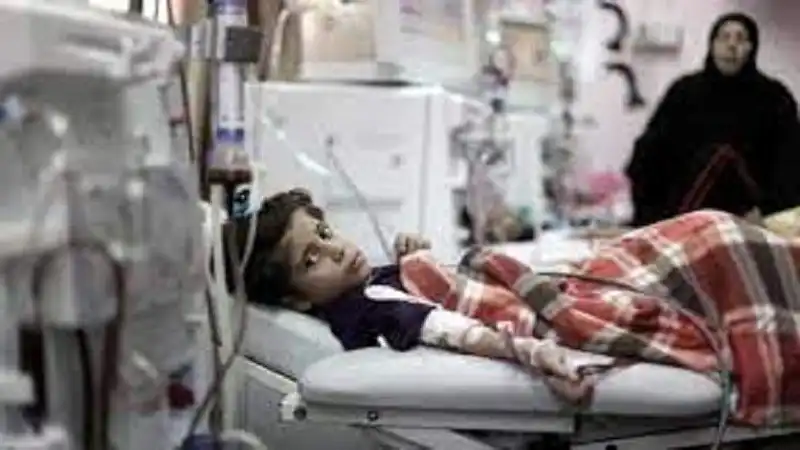
ActionAid International said that 10,000 cancer patients in the Gaza Strip are deprived of access to medicines and treatment, in light of the continuing aggression, the depletion of medical supplies, and the health system reaching the brink of collapse.


The organization indicated in a statement issued today, Wednesday, that the only hospital in Gaza specialized in treating cancer patients, the Turkish-Palestinian Friendship Hospital, has stopped working since November 1 after it ran out of fuel and was exposed to severe damage due to air strikes.


It pointed out that more than half of Gaza's hospitals were forced to close, while the 14 hospitals that are still able to operate partially are currently operating at more than 200% of their capacity, and are suffering from a severe shortage of medical supplies, fuel, water, and food, in addition to a specialized staff. 


The organization confirmed that this reality had significant effects on cancer patients. For example, patient Amna (52 years old) was diagnosed with uterine and ovarian cancer in 2021, and was receiving treatment at the Turkish-Palestinian Friendship Hospital before it closed.


It said in a voice message: “This war on Gaza has destroyed my chance to overcome my illness. The Turkish Friendship Hospital was providing treatment and follow-up to all cancer patients, and despite its modest capabilities, we were able to receive services and treatment, but the hospital building was bombed and destroyed in the war.” 


It continued, that after the Turkish hospital was targeted, the doctors moved to Al-Najjar Hospital, which is a small medical center that suffers from a lack of treatment and equipment, and with this war, things have become worse, and it barely has basic treatment methods, while cancer patients need special care, medicines, and treatments. And special diets.


It added: Despite the urgent need for medical supplies, the amount of humanitarian aid currently allowed into Gaza is shamefully small, and the restrictions imposed by the Israeli occupation authorities on some supplies into the Strip prevent the entry of some medicines and vital equipment such as diagnostic devices.


It pointed out that before the aggression, about 20,000 patients applied for a permit to leave Gaza every year, due to their need for specialized health care, as that care is not available within the Strip, and only a very small number of people were allowed to leave Gaza and obtain life-saving treatment in other places, many patients' requests have been rejected.

PALESTINE

Wed 07 Feb 2024 2:25 pm - Jerusalem Time

War on Gaza: In the last 24 hours, Israeli forces committed 16 massacres in Gaza, claiming the lives of 123 citizens

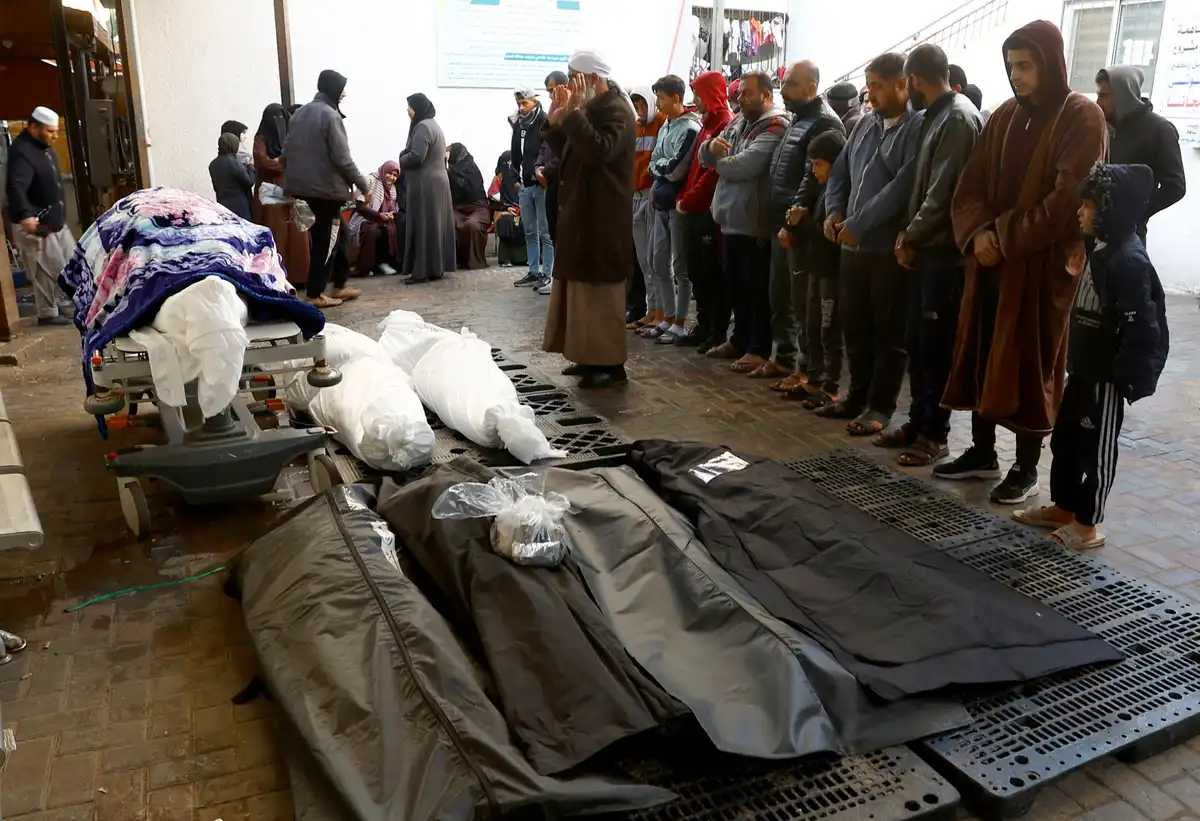
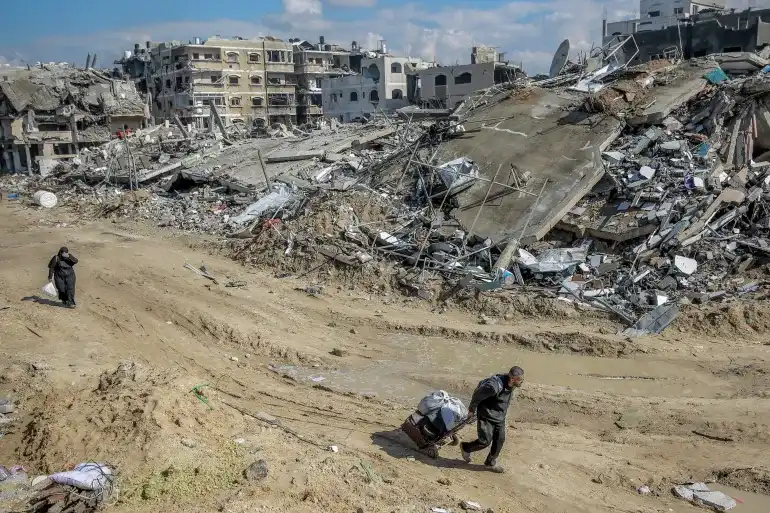
During the past 24 hours, the Israeli army committed 16 massacres against families in the Gaza Strip, leaving 123 dead and 169 injured.


The Ministry of Health in the Gaza Strip indicated that a number of victims are still under rubble and on the roads, as Israel prevents ambulance and civil defense crews from reaching them.


The toll of the Israeli aggression has risen to 27,708 killed and 67,147 injured since the seventh of last October.


In Gaza City, Israeli aircraft targeted a group of citizens while they were bottling drinking water in the Al-Sabra neighborhood of Gaza City, which led to the death of a number of them and the injury of others.

ARAB AND WORLD

Wed 07 Feb 2024 1:40 pm - Jerusalem Time

Hebrew Media: Netanyahu agreed to a ceasefire between the stages of the prisoner exchange deal at request of Qatar

Israeli Prime Minister Benjamin Netanyahu agreed to a ceasefire in the Gaza Strip between the stages of implementing the prisoner exchange deal, based on Qatar’s request for a ceasefire during the transition from one stage to another in the exchange deal and the continuation of negotiations on its stages, according to what Israeli public radio " Kan" reported today, Wednesday.


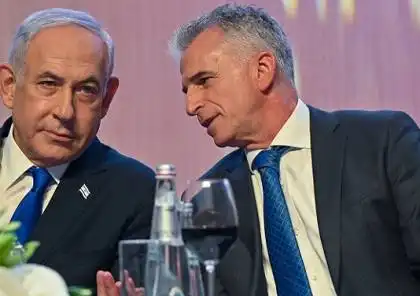
According to Kan, Netanyahu agreed to a ceasefire between the stages of the deal during a conversation with the head of the Mossad, David Barnea, during Barnea’s meeting with the head of the CIA, the head of Egyptian intelligence, and the Prime Minister of Qatar, in Paris.


Kan added that Netanyahu did not consult in advance with the members of the Israeli war cabinet, who learned about this after Netanyahu ratified a ceasefire between the stages of the deal, according to what Israeli officials familiar with the war cabinet’s deliberations said.


Netanyahu's office commented on the Kan report, saying, "The prime minister's instructions to the head of the Mossad are always to inform all members of the war cabinet and obtain their positions."


Israeli officials said, "Hamas conveyed a preliminary list of demands, some of which are acceptable to us and others not subject to discussion. We view Hamas' response as a starting point for negotiations, which will take place intensively in the coming period."

The Ynet website also quoted Israeli officials as saying, "We cannot agree to the demand to stop the war." They added that Hamas's proposal includes "a request to liberate 1,500 Palestinian prisoners, including heavyweight saboteurs."


Today, Netanyahu is holding deliberations in order to crystallize Israel’s position on the Hamas response that it delivered to the mediators.


The Hamas movement, as shown by its response delivered yesterday to the Qatari and Egyptian mediators to the “framework agreement” paper reached in Paris, proposed a three-stage ceasefire plan in the Gaza Strip during which prisoners would be exchanged with Israel.


The plan includes exchanging Israeli prisoners for Palestinian prisoners, reconstructing Gaza, ensuring the complete withdrawal of Israeli forces from Gaza, and exchanging bodies and remains. The movement stated its conditions for the exchange of prisoners in a three-stage process.

PALESTINE

Wed 07 Feb 2024 12:02 pm - Jerusalem Time

OCHA: Israel rejected 22 requests to deliver aid to northern Gaza

The United Nations Office for the Coordination of Humanitarian Affairs (OCHA) revealed on Wednesday that the Israeli authorities rejected 22 requests submitted last month to open the checkpoints set up in the Gaza Valley in order to deliver humanitarian aid to the northern Gaza Strip.


The office said in a statement, “It is necessary to act early due to the severe traffic congestion around the warehouses and the high level of humanitarian needs.” He confirmed that last January he submitted 22 requests to Israel to open checkpoints in order to quickly reach the Gaza Valley, stressing that he did not receive any response regarding those requests.


In its response to the framework agreement reached at an American-Israeli-Egyptian-Qatari meeting in Paris last week, the Hamas movement demanded “intensifying the introduction of the quantities necessary and sufficient for the needs of the population” in the first phase of the agreement.


It stressed that "the volume of aid must not be less than 500 trucks per day of humanitarian aid, fuel, and the like, as well as allowing appropriate quantities of humanitarian aid to reach all areas of the Gaza Strip, especially the northern Gaza Strip."


On Monday, United Nations spokesman Stephane Dujarric said that Israel continues to obstruct the arrival of most aid to the northern Gaza Strip, noting that only 10 aid operations reached the northern Gaza Strip out of 61 operations last January.


After its occupation, the Israeli army divided the Gaza Strip into three sections, and placed checkpoints at the divided points, through which passage, including humanitarian aid, is not permitted without Israeli permission.


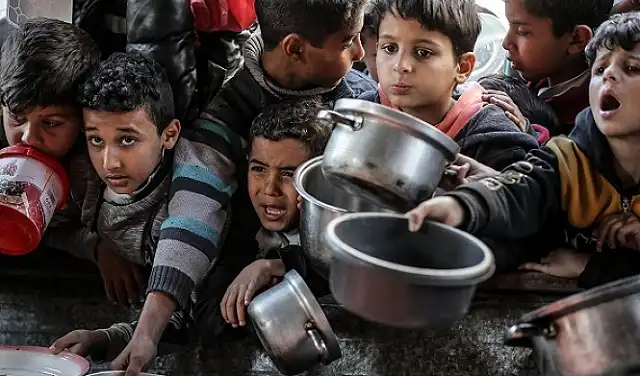
The United Nations previously warned that 2.2 million people were at risk of starvation in the Gaza Strip, which is under intense attack by Israel.


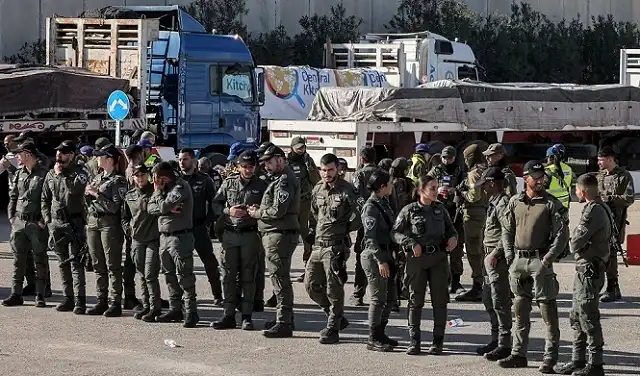
For days, Israeli far-right protesters have closed the Kerem Shalom crossing, to prevent trucks loaded with humanitarian aid from entering the Gaza Strip until the Israeli prisoners held by the Palestinian resistance are released.


Israel imposed a stifling embargo on the Gaza Strip, including preventing the entry of fuel, food and medicine, which exacerbated the humanitarian situation in light of the ongoing Israeli war since October 7.

PALESTINE

Wed 07 Feb 2024 11:53 am - Jerusalem Time

Euro-Med: The Gaza Strip has been the scene of genocide since October 7

The Euro-Mediterranean Human Rights Monitor said that Israel's starvation of the civilian population in the Gaza Strip will have long-term and irreversible effects, in light of international reports and experts confirming that the number of victims of starvation and the diseases associated with it may exceed the number of those killed directly during the ongoing Israeli military attack on the Strip. Since last October.

This came in a policy paper issued by Euro-Med entitled “The Gaza Strip: A scene of genocide since October 7th and a potential famine zone on February 7th,” in which it provided an analysis of the catastrophic food situation in the Gaza Strip and indicators of the beginning of the spread of famine, especially in the northern governorates.

The paper was based primarily on reports issued in this regard by competent international bodies, most notably the global initiative for the “Integrated Phase Classification of Food Security (IPC).


The paper indicated that, in the best case scenario, the rate of humanitarian aid allowed into the Gaza Strip ranges between 70 to 100 trucks, two of which go to the northern governorates, while the number of goods and aid trucks entering the Gaza Strip before October 7, 2023 was 500 trucks daily.


Lima Bastami, Director of the Legal Department at the Euro-Mediterranean Monitor, said: “These statistics are self-evident, and do not need much clarification, that what enters the sector does not meet the minimum level of the population’s needs in light of the severe, continuous, and accumulated deprivation of the basics of food, drinking water, and medicine due to the blockade, and the expansion of their needs due to the inhumane conditions they face, genocide, and the cutting of electricity, water, and fuel supplies.”


Bustami added that the situation is becoming more complicated because the residents of the Gaza Strip are besieged from all sides, which prevents them from being able to produce the local production necessary to survive, or to obtain food from other sources.


The paper referred to the conclusions of the reports issued by the mechanisms of the Integrated Food Security Interim Classification, that the Gaza Strip is witnessing the highest percentage of the population facing high levels of acute food instability in the past twenty years, at the very least, and that by February 7, About 53% of its population will suffer from an extreme acute malnutrition emergency, while 26% of them, or about half a million people, will suffer from famine, and an increase in deaths resulting from hunger, malnutrition, or diseases related to them.


After recognizing the existence of evidence and indicators of the occurrence of a famine in the Gaza Strip, according to the Interim Classification Analysis Team’s report, the Famine Review Committee (FRC) was activated to conduct a comprehensive review of the report and ensure the technical accuracy and impartiality of the analysis before confirming and communicating the results mentioned therein.


The Committee concluded that the findings of the Panel's report were reasonable, that the famine threshold (stage 5) for severe food security had already been crossed, that the estimates contained in the Panel's report were conservative indicators, and that the extent of the famine's prevalence among the overall population was likely to be The sector is higher than the mentioned percentages.


Batsami reported that, in general, the process of declaring a state of famine remains a rare occurrence, as it has only been declared twice in modern history. Once in Somalia in 2011, and the other in South Sudan in 2017, while Yemen, despite the catastrophic food situation and the rapid increase in the number of famine victims, remains outside the framework of the official declaration of famine, until now.


She pointed out that declaring a state of famine officially, or not, does not change the fact that it has already spread in the Gaza Strip, especially in the northern governorates, and that it has become a catastrophe due to which the population is now dying.


Bustami said that declaring famine in Gaza “may find its way before the International Court of Justice, which is now considering the lawsuit filed by South Africa against Israel for violations of its obligations under the Convention on the Prevention and Punishment of the Crime of Genocide, whether when the court evaluates Israel’s compliance with the precautionary measures it imposed on it, Given the suspicion that it has violated its obligations under the agreement, or to request an amendment to those precautionary measures under Article (73) of the court regulations, or as additional evidence that the court will weigh during its examination of the merits of the case and issuing its final ruling therein.”


The paper recommended that the Palestinian government respond early to the famine and respond effectively to it, by devoting all available capabilities to activating executable emergency plans and budgets, monitoring and collecting accurate and updated data and information about the availability, access and use of food, as well as nutritional status and mortality rates, and sharing and communicating about them with the relevant international authorities, including the Food and Agriculture Organization (FAO), the World Food Program, and UNICEF, to ensure that response efforts are complementary, and that joint assessments are conducted on a regular basis.


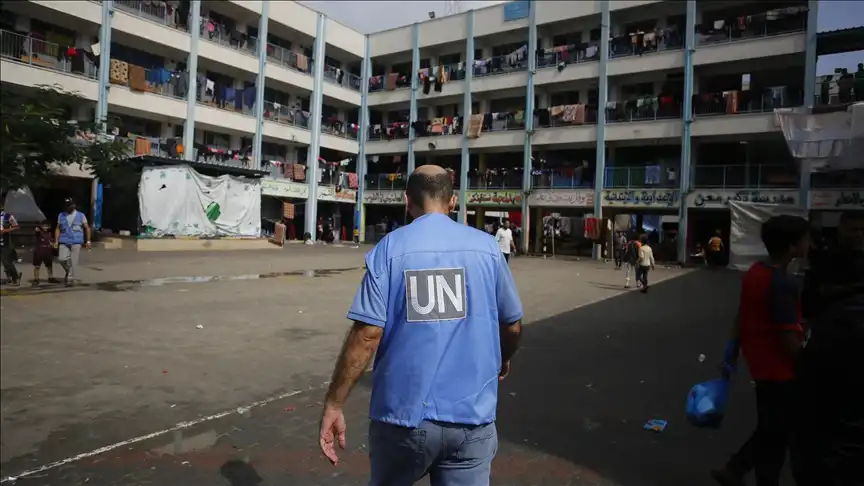
It also called on the international community to refrain from any action that would constitute the crime of participating in or conspiring to commit the crime of starvation, or to take any measures that would deepen this crime and its effects, including breaking the siege on the Gaza Strip and delivering aid to it directly, by land (from Egypt), sea and air, and to immediately resume funding for UNRWA, as it is the main international agency currently responsible for the process of introducing and distributing humanitarian aid in the Gaza Strip.


The paper called on the relevant United Nations institutions and the “Integrated Phase Classification of Food Security” (IPC) mechanisms to work to strengthen the work of monitoring and evaluation mechanisms for the food crisis afflicting the Gaza Strip, including tracking indicators of the acceleration of the deterioration of the food crisis and the spread of famine, documenting data and providing analyzes based on the Interim classification system. Most importantly, the mechanisms for this classification submit their second report as quickly as possible, especially as the estimated period (projection) for their first report approaches the end of February 7.


The paper also called for UN Chief to fulfill his legal responsibility under Security Council Resolution No. (2417) issued in 2018 on the protection of civilians in armed conflict, which mandated him to quickly inform the Security Council when there is a risk of famine resulting from a conflict or a situation of widespread food insecurity in armed contexts. Therefore, in accordance with the resolution, the Security Council gives its full attention to the information provided by the Secretary-General in this context. It is noteworthy that, to date, the Secretary-General has not activated his role under this resolution.

OPINIONS

Wed 07 Feb 2024 9:40 am - Jerusalem Time

What is required of the American Administration

Ali Al-Jarbawi

Ali Al-Jarbawi

Opinion Writer

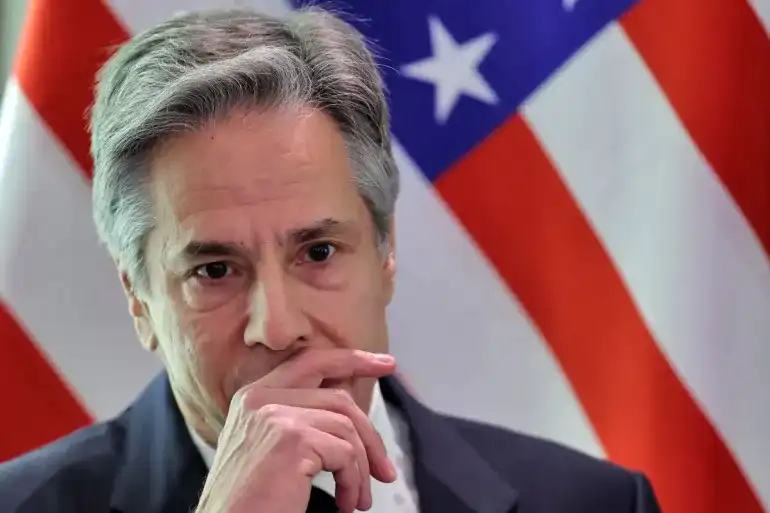
On his fifth shuttle visit to the region since the outbreak of the war on the Gaza Strip, US Secretary of State Anthony Blinken moves from one capital to another, trying to accomplish an arduous task. 

The reason that it is difficult, is that it requires overcoming the contradictions in the interests of all parties concerned, especially the Palestinian and Israeli parties, and linking three elements together, in a connected and integrated package, that enables the American administration to regain its breathing and its ability to influence, inside and outside the United States. 

These three elements, which have become clear that they are interconnected, are: addressing the continuation of the war and the issue of Israeli detainees, determining a serious path to settle the Palestinian-Israeli conflict, and consolidating allied regional cooperation that leads to strengthening the stability of the region.

With the continuation of the war, the escalating rise in its human and material costs in the Gaza Strip, and the human suffering of its people reaching the extreme levels of violation, the American administration is currently suffering from what many influential parties, inside and outside the American arena, consider to be the results of the failure of its haste in adopting its initial position on this war, and its continued adherence with basic elements of it, even after the disastrous results it continues to produce in Gaza became clear. 

When the war broke out, this administration, with President Biden personally at its head, was quick to declare full and unconditional support for Israel, and provided it, and continues to provide it, with all kinds of unlimited assistance and support, military, political, and material, with full diplomatic coverage in international forums. This support expressed, on the one hand, the traditional, established position in support of Israel in the structure of official American policy, and Biden’s personal commitment to Israel and the Zionist movement. On the other hand, it seemed to be appreciated that this support was required to preserve American interests, which continued to face Iranian challenges in the region. In general, the prevailing belief in US administration circles was that this support would gain great support within America, and would enhance the popularity of this administration, which was in dire need of a lever to lift its low status of acceptability among Americans.

What has been overlooked in the American position calculated according to traditional calculations is that the unlimited support for Israel is also unlimited support for Netanyahu, whose tense relationship with Biden has been overlooked since the days of the Obama administration. Instead of the administration being able to control the scene, especially with all the support it provides to Israel, Netanyahu led it to his square, and it began to pant after him, suffering from the conflict between two goals. The first is its acceptance of what the far-right government in Israel was trying to achieve from its war on the Gaza Strip, which is to eliminate the Hamas movement, because for this administration it represents a factor of instability in the region, linked to Iran’s ambitions to become an influential regional power, which jeopardizes American interests. Therefore, the American administration maintained its steadfast stance of rejecting the ceasefire, and obstructed UN resolutions aimed at that. The second is its effort to be able to restrain Netanyahu and his extreme right-wing government from interpreting this support and using it as an implicit approval that allows this government to expand the scope of the war, and to implicate the American administration in a war that it absolutely does not want to get involved in, because it exposes American national interests and the administration’s political goals, to danger.

With difficulty, the US administration tried to reconcile these two goals, especially with the escalation in the number of casualties in Gaza, which led Secretary Blinken to the region on four previous tours, and also brought the Minister of Defense, the National Security Advisor, and the Director of Central Intelligence, on visits to the region. But the task was not easy for two reasons. On the one hand, Netanyahu did not cooperate with the requirements of the American interest and the goals of the Biden administration. Rather, he and the pillars of his extremist coalition continued to try to drag this administration into adopting and justifying the cruelty of the Israeli targeting of the Gaza Strip, and the resulting worsening of the number of casualties among Palestinian civilians, in addition to the accumulation of poor humanitarian conditions in the Strip. On the other hand, Netanyahu did not appreciate the negative, destabilizing effects that the frenzied war machine was waging on Gaza had on the status and stature of the US administration, both externally and internally, as he ignored its continuous demands to legalize its targeting of civilians, in order to reduce the intensity of the embarrassing criticism directed at it.

The American administration fell under the weight of mounting external pressure, demanding that it take an effective stance to curb and stop the war. The continued bombardment of the Gaza Strip, and the sharp deterioration of the humanitarian situation there, has disturbed public opinion in opposition to the continuation of this war at the global level, and hundreds of thousands of demonstrators came out demanding it to stop, in capitals and cities across the world, especially in Western countries allied with America. The governments of these countries, in addition to the Arab and Islamic countries, began to demand that the American administration take actual and effective steps to end the suffering of the people of Gaza and stop the war. As a result of these popular and official positions, the American administration became exposed to a torrent of escalating criticism, which damaged its reputation and endangered American interests, especially in the region. This is what led to the targeting of the American presence in several countries, hindered international navigation in the Bab al-Mandab Strait, and led to American military responses, although they are still localized, but they portend not only the possibility of expanding the scope of the war, but also of dragging the American administration into unwanted involvement. .

Although external pressures on the American administration are important and influential, it can be claimed that America, as a superpower, is accustomed to exerting these pressures on it, to bearing them, and finding ways to deal with them. But what exacerbated the administration's situation was the unexpected pressure exerted on it from within America, which began to shake its position, which the administration believed was an extension of the usual traditional American position towards supporting Israel. This absolute support, which was not expected, according to the prevailing pattern, to be questioned, or criticized, whatever Israel's positions or actions, support is always guaranteed like a "signed blank check." 

This was precisely the mistake of the American administration, which, with its unlimited support for Israel, which has Netanyahu and a coalition of right-wing extremists at the top of its political pyramid, provoked an internal reaction that it had not expected. It relied on the belief that supporting Israel would give it much-needed support from the pro-Israel parties, which have an influence in American domestic politics, as well as in confronting Republicans in the electoral arena. 

But the calculations did not take into account the impact of changes occurring within the political and electoral arenas in the country.

The Biden administration did not take into account in its estimates the importance of three matters that fundamentally affect it, related to the possibility of Biden being re-elected for a second presidential term. 

First, it is possible that the left wing of the Democratic Party, the party traditionally known for its support of Israel, and to which the president belongs, may have a different opinion than the administration’s position on this war. This wing took a position opposing the continuation of this war, and critical of the administration’s position on it. Of course, such a position has an impact on party unity, especially against the Republicans, and specifically in the upcoming presidential elections, in which President Biden faces difficulties in securing his re-election.

Secondly, the administration did not pay attention to the shift taking place in the American electoral map, specifically towards the formation of voter categories and the change in their electoral trends. The young group of voters, especially those who belong to or support the Democratic Party, are no longer guaranteed absolute support for Israel, but rather it has become clear that they treat it according to its positions and actions. Therefore, opinion polls show that this important group of voters does not support Biden and his administration’s position on the war on Gaza, and that they may withhold their electoral votes from him, when he desperately needs them, and losing them may destroy his hopes of winning a second term.

Third, the administration did not pay attention to the important electoral influence of Arab and Muslim Americans, and that their position might lead to Biden losing the upcoming elections. Although the number of Arabs and Muslims as voters is not large, their concentration in swing states electorally between Democrats and Republicans, such as Michigan, Milwaukee, and Arizona, makes them what amounts to being the “preponderant vote” in those states. If Biden loses the support of this important group of voters, which supported him in the previous elections, as a result of his position in support of the war, this may lead to his loss in the upcoming elections. 

So far, the position declared by Arab and Muslim American leaders and activists indicates their intention so far to withhold their electoral support from Biden.

What this means is that the US administration’s position on the war is haunting it electorally, and it only has a narrow window of time, which will extend until early summer, to remedy its situation. Therefore, Minister Blinken comes in this fifth tour to the region, with the burden of not only preventing the war from spreading and expanding into a regional situation in which his administration becomes involved against its will, but also to search for an approach that leads to ending it and to take subsequent steps that have become necessary to modify Biden’s troubling electoral situation.

To achieve this redress, and to appease the regional and international parties, and the US Interior Ministry in particular, it seems inevitable that the administration’s position must be modified in two matters: 

First, effective pressure on Israel to end the war, by reaching an agreement on a long truce that will be accompanied by an exchange of prisoners, and linked to organically, in its successive stages, with a commitment to end military actions. This has become essential for all parties pressuring the administration, both externally and internally, and it is up to them to find the necessary approach to achieve this basic demand, even if it leads to the internal explosion of the Israeli government’s situation. It is not possible for this administration to repair its position, and regain some of its standing and decency, except when it takes a clear decision to confront Netanyahu and his right-wing clique, instead of continuing its attempts to curry favor with him, which is an essential matter that Netanyahu relies on to prolong the life of his expired government.

The second thing that is required is to reach a conviction that settling the Palestinian issue, according to the minimum acceptable to the Palestinian people, is the only way to establish the most important pillar of stability in the region and normalize Israel’s presence in it, and that is by taking the basic practical step required in practice to launch a serious and reliable path to this settlement. 

This practical step is to recognize the State of Palestine as a starting step on this path, and to demarcate its accession as a full member of the United Nations. Then, a time-bound path is followed to materialize the existence of this state and find a just solution to the refugee issue. 

This step has become necessary to restore part of the support lost by electorally important groups for Biden as a result of the administration’s pro-war stance, and to limit external criticism directed at his administration. In exchange for this, Biden will have a “prize” that he can demonstrate in the face of Israel and its American supporters, which is the normalization that Israel seeks in its relations with the Kingdom of Saudi Arabia, which requires heading on an irreversible path to establish a Palestinian state. Israel, even with American help, can no longer take without giving.

If the American administration does these two things, it can regain control of matters in a way that achieves American national interests and its electoral needs. But if it continues to evade and avoid the necessary confrontation with Netanyahu, it may not be there after next November to take care of those interests.

ARAB AND WORLD

Wed 07 Feb 2024 9:36 am - Jerusalem Time

Netanyahu rejects Hamas’ response: We will continue fighting in Gaza until victory is achieved..

Israeli Prime Minister Benjamin Netanyahu said in his first comment after Hamas delivered its response to the truce proposal, “We will continue fighting in Gaza until victory is achieved.”

Netanyahu added in a tweet on the “X” platform: “We are all focused on one main thing: complete victory, and our heroes did not fall in vain,” as he put it.

He added, "We are on the path to complete victory and we will not stop. This position represents the overwhelming majority of the (Israeli) people. There are many commentators who say that this is not possible, but it is important for me that you know that it is within reach."

For its part, the official Israeli Broadcasting Corporation quoted an unnamed Israeli official as saying that Israel “will not accept any conditions for a comprehensive and complete ceasefire.”


For his part, an Israeli official said on Tuesday that Hamas’s response to the proposal of a “prisoner exchange” deal for Qatar between the movement and Israel means rejecting the agreement proposal.

On Tuesday evening, the Israeli Channel 13 quoted an unnamed Israeli official that the Hamas movement’s response to Qatar regarding the broad outlines of a prisoner exchange deal between Tel Aviv and the movement means rejecting the proposal.

The Israeli official said that Hamas’s demand for a complete cessation of the war on the Gaza Strip means a rejection of the proposal, and that the Israeli army will not stop the war.

Earlier today, Tuesday, the Qatari Prime Minister and Foreign Minister, Mohammed bin Abdul Rahman Al Thani, said that his country had received a response from the Hamas movement, to the proposals that were reached at the Paris meeting between representatives of America, Israel, Qatar, and Egypt, regarding a deal to exchange... Prisoners between Israel and the movement.


The Qatari Prime Minister said, during a press conference with his American counterpart, Anthony Blinken, in Doha:

I would like to inform the media that we have received a response from the Hamas movement regarding the general framework of the parties’ agreement regarding hostages. The response includes some comments on the framework, but in its entirety it is a positive response.

He added: “Given the sensitivity of this stage, we cannot go into details, but the response gives us optimism, and it was delivered to the Israeli side.”

The Hamas movement had explained in a statement that it had delivered its response regarding the framework agreement in Paris to Qatar and Egypt, after completing leadership consultations in the movement and with the resistance factions. 

The statement added: “The movement dealt with the proposal in a positive spirit, ensuring a comprehensive and complete ceasefire, ending the aggression against our people, ensuring relief, shelter, and reconstruction, lifting the siege on the Gaza Strip, and completing a prisoner exchange.”

PALESTINE

Wed 07 Feb 2024 9:23 am - Jerusalem Time

The verbatim text of the response delivered by the Hamas Qatari and Egyptian mediators.

The Lebanese newspaper Al-Akhbar published what it said was the verbatim text of the response delivered by the Palestinian resistance movement Hamas, Tuesday, February 6, 2024, to the Qatari and Egyptian mediators to the “framework agreement” that was presented to it after the Paris meeting, and indicated that the American and Israeli sides had received a copy of Hamas' response to the mediators.


On Tuesday evening, the Hamas movement announced that it had delivered the response, which came in 3 pages and included fundamental amendments to the “Paris Framework Agreement.” A source told “Arabi Post” that the movement “confirmed in its response that it looks positively at a proposal that leads to a comprehensive cessation of fire, and to completely lift the siege on the Gaza Strip.”


Hamas's response to the mediators, the details of which were published by the Lebanese newspaper Al-Akhbar, divided the agreement into 3 stages, which also included a special annex of guarantees and demands aimed at stopping the aggression and eliminating its effects. It stated in its introduction that this agreement aims to stop mutual military operations between the parties.


In addition to achieving complete and sustainable calm, exchanging prisoners between the two parties, ending the siege on Gaza, reconstruction, the return of residents and displaced people to their homes, and providing shelter and relief requirements for all residents in all areas of the Gaza Strip.


The first stage lasts 45 days

According to what was stated in Hamas’ response to the mediators, this humanitarian phase aims to release all Israeli detainees, including women and children (under the age of 19, not conscripts), the elderly, and the sick, in exchange for a specific number of Palestinian prisoners.


It also seeks to intensify humanitarian aid, reposition forces outside populated areas, allow the start of reconstruction work on hospitals, homes and facilities in all areas of the Gaza Strip, and allow the United Nations and its agencies to provide humanitarian services and establish shelter camps for the population, according to the following:


- A temporary cessation of military operations, a cessation of aerial reconnaissance, and a repositioning of Israeli forces far outside the populated areas in the entire Gaza Strip, to be along the dividing line, in order to enable the parties to complete the exchange of detainees and prisoners.


- As it was stated in Hamas’ response to the mediators that the two parties are releasing Israeli detainees, women and children (under the age of 19, not conscripts), the elderly and the sick, in exchange for a number of Palestinian prisoners, provided that this is done in a way that ensures the release during this stage of all the listed persons. Their names are on the previously agreed upon lists.

- Intensifying the introduction of quantities necessary and sufficient to meet the needs of the population (to be determined) of humanitarian aid, fuel, and the like, on a daily basis, as well as allowing the arrival of appropriate quantities of humanitarian aid to all areas in the Gaza Strip, including the north of the Strip, and the return of the displaced to their places of residence in all areas. sector.


Hamas’ response to the mediators also stipulated the reconstruction of hospitals in all of the Strip, the introduction of what is necessary to establish population camps/tents to shelter residents, and the resumption of all humanitarian services provided to the population by the United Nations and its agencies.


- Starting (indirect) discussions regarding the requirements necessary to restore complete calm.

While Hamas's response to the mediators indicated that the annex attached to the details of the first phase is an integral part of this agreement, provided that the details of the second and third phases will be agreed upon during the implementation of the first phase.


Details of the attached appendix to “Hamas’ response to the mediators”:

- Complete cessation of military operations on both sides, and cessation of all forms of air activity, including reconnaissance, for the duration of this phase.

Hamas’ response to the mediators also stipulated the repositioning of Israeli forces far outside the populated areas in the entire Gaza Strip, to be along the dividing line to the east and north, in order to enable the parties to complete the exchange of detainees and prisoners.


The two parties will release Israeli detainees, including women and children (under the age of 19, not conscripts), the elderly, and the sick, in exchange for all prisoners in the occupation prisons, including women, children, the elderly (over 50 years of age), and the sick, who have been arrested until the date of signing this agreement, without exception. In addition to 1,500 Palestinian prisoners, Hamas nominates 500 of them with life sentences and high sentences.


- Completing the necessary legal procedures to ensure that Palestinian and Arab prisoners are not re-arrested on the same charge for which they were arrested.


- Mutual and simultaneous release takes place in a way that ensures the release during this stage of all persons whose names are included in the previously agreed upon lists, and names and lists are exchanged before implementation.


– Improving the conditions of prisoners in the occupation prisons and lifting the measures and penalties that were taken after 10/7/2023.


- Stopping the incursions and aggression of Israeli settlers against Al-Aqsa Mosque and returning conditions in Al-Aqsa Mosque to what they were before 2002.


- Intensifying the entry of quantities necessary and sufficient for the needs of the population (not less than 500 trucks) of humanitarian aid, fuel and the like, on a daily basis, as well as allowing the arrival of appropriate quantities of humanitarian aid to all areas of the Gaza Strip, especially the north of the Gaza Strip.


The return of the displaced to their places of residence in all areas of the Gaza Strip, and ensuring the freedom of movement of residents and citizens by all means of transportation and not impeding it in all areas of the Gaza Strip, especially from south to north.

– Ensuring the opening of all crossings with the Gaza Strip, the return of trade, and allowing the free movement of people and goods without obstacles.

- Lifting any Israeli restrictions on the movement of travelers, patients and wounded through the Rafah crossing, and ensuring that all wounded men, women and children can leave for treatment abroad without restrictions.


Egypt and Qatar will lead the efforts with all necessary parties to manage and supervise ensuring, achieving and completing the following issues:


1- Providing and introducing sufficient heavy equipment necessary to remove rubble and debris.

2- Providing civil defense equipment and the requirements of the Ministry of Health.

3- The process of rebuilding hospitals and bakeries in all of the sector and introducing what is necessary to establish population camps/tents to shelter the population.

4- Entering at least 60,000 temporary homes (caravans/containers), so that every week from the entry into force of this phase, 15,000 homes will enter the Gaza Strip, in addition to 200,000 shelter tents, at a rate of 50,000 tents each week to shelter those whose homes the occupation destroyed during the war.

5- Beginning the reconstruction and repair of infrastructure in all areas of the sector, and rehabilitating the electricity, communications and water networks.

6- Approving a plan for the reconstruction of homes, economic establishments, and public facilities that were destroyed due to the aggression, and scheduling the reconstruction process for a period not exceeding 3 years.


Resuming all humanitarian services provided to the population in all areas of the Gaza Strip, by the United Nations and its agencies, especially UNRWA, and all international organizations working to begin their work in all areas of the Gaza Strip as it was before 10/7/2023.


- Re-supplying the Gaza Strip with the necessary fuel to restart the power plant and all sectors. The occupation’s commitment to supply Gaza with its electricity and water needs.


- Initiating (indirect) discussions regarding the necessary requirements for continuing the cessation of mutual military operations in order to return to a state of complete and mutual calm.


The exchange process is closely linked to the extent to which commitment is achieved to enter adequate aid, relief and shelter that were mentioned and agreed upon.


The second stage lasts 45 days

According to what was stated in Hamas’ response to the mediators, during the second phase, the (indirect) discussions must be completed and announced regarding the necessary requirements for the continued cessation of mutual military operations and a return to a state of complete calm, before implementing the second phase.


This phase also aims to release all male detainees (civilians and conscripts), in exchange for specific numbers of Palestinian prisoners, the continuation of the humanitarian measures of the first phase, and the withdrawal of Israeli forces outside the borders of all areas of the Gaza Strip.

It also aims to begin comprehensive reconstruction work for the homes, facilities and infrastructure that were destroyed in all areas of the Gaza Strip, according to specific mechanisms that guarantee the implementation of this, and to end the siege on the Gaza Strip completely, in accordance with what will be agreed upon in the first phase.


The third stage lasts 45 days

This third phase aims to exchange the bodies and remains of the dead with both sides after arriving and identifying them, and to continue the humanitarian measures for the first and second phases, in accordance with what will be agreed upon in the first and second phases, according to what was stated in Hamas’ response to the mediators, the details of which were published by the Lebanese newspaper Al-Akhbar.

PALESTINE

Wed 07 Feb 2024 9:04 am - Jerusalem Time

War on Gaza: Rings of fire in Rafah and fierce clashes west of Gaza and Khan Yunis

With the beginning of the 124th day of the war on Gaza, Israeli aircraft, artillery, and boats launch violent bombardment and fire belts on the city of Rafah, south of the Gaza Strip, while the Palestinian resistance engages in fierce clashes with Israeli forces in the western neighborhoods of the cities of Gaza and Khan Yunis.


In this context, Hamas said that it had submitted its response to the framework agreement, after consulting with the resistance factions.


Qatari Foreign Minister Mohammed bin Abdul Rahman Al Thani described Hamas' response as positive, noting that the movement has some observations.


Meanwhile, US Secretary of State Anthony Blinken said that he would discuss Hamas’ response with the Israeli government on Wednesday.

ARAB AND WORLD

Wed 07 Feb 2024 6:51 am - Jerusalem Time

International newspapers: America's plan to marginalize Hamas will fail, and suspending funding for UNRWA is immoral

The political and humanitarian repercussions resulting from the Israeli war on the Gaza Strip captured the attention of international newspapers, and their articles focused on the suffering experienced by the residents there.


Nabhan Khreishi, a writer for the Israeli newspaper Haaretz, said that America's plan to marginalize the Islamic Resistance Movement (Hamas) after the end of the Gaza war is doomed to failure.


The writer attributed this to three main obstacles, foremost of which is the possible procrastination by Israeli Prime Minister Benjamin Netanyahu to implement it, since it includes the return of the Palestinian Authority to rule Gaza, Israel’s failure to defeat Hamas, and the fate of Palestinian President Mahmoud Abbas, which may prevent him from carrying out his duties.


In turn, the Israeli newspaper "Jerusalem Post", in its editorial, called on Israeli Minister of National Security Itamar Ben Gvir to remain silent, describing him as an incitement force that pushed ministers in the current government to adopt toxic and divisive rhetoric, as it put it.

The newspaper believes that if Netanyahu cares about Israel and its future, he must immediately get rid of all sources of hatred and division in his government.


For his part, Scott Brown, a writer on the American website The Hill, described cutting funding for the United Nations Relief and Works Agency for Palestine Refugees (UNRWA) as immoral, noting that it is more than just a coincidence.


Brown said that the government of Israeli Prime Minister Benjamin Netanyahu is determined to remove the last lifeline for the Palestinians, wondering whether his regime deserves the support of the West, warning that cutting off support for UNRWA could lead to destabilizing Jordan and inflaming tension in an already volatile region.

Human suffering

The American Wall Street Journal wrote about the worsening humanitarian situation in Gaza, saying that about 180 women give birth every day on average without any medical accompaniment and in dirty, crowded shelters, public bathrooms, or cold temporary tents as a result of the Israeli war.


The newspaper pointed out that the Gaza Strip's hospitals suffer from a lack of doctors and adequate care for pregnant women, according to the United Nations and health care workers.


According to an investigation by the British newspaper "Financial Times" from Rafah, the health system in Gaza is in a state of collapse, but those who pay the greatest price are those suffering from chronic diseases, such as cancer, diabetes, heart, and epilepsy.


The newspaper warned of a severe shortage of medicines, especially for those suffering from chronic diseases, pointing to the case of a father who almost lost his mind searching for epilepsy medicine for his four children, but to no avail, according to a pharmacist in Rafah.


Demonstrations and protests

An investigation by the French "Media Part" website from Dublin described the demonstrations in support of Gaza in Ireland as exceptional, adding that the protests have been massive and non-stop since the beginning of the war on Gaza and are led by senior politicians and celebrities of art and culture with great enthusiasm.


The website explained that this exceptional support stems from the colonial past that the Irish suffered, and concluded that Ireland is a unique case in Europe in terms of standing with Gaza.


As for the French newspaper Le Monde, it shed light on the controversy taking place in French political circles following President Emmanuel Macron’s decision to hold a ceremony honoring Israelis with French citizenship who were killed in a Hamas attack on October 7.

The memorial - which will be held tomorrow, Wednesday, in the heart of the capital, Paris - includes many details, but the "Proud France" party protested and demanded that the Palestinian victims of the Israeli bombing of Gaza be honored, as this request aroused the ire of government circles and supporters of Israel in France.


Source: Al Jazeera

ARAB AND WORLD

Wed 07 Feb 2024 6:42 am - Jerusalem Time

Analysts: Hamas has returned the ball of fire to Israel's feet, and Washington is tired of Netanyahu's games

Experts and analysts said that the Islamic Resistance Movement (Hamas) provided an intelligent response to the ceasefire proposal, and that the ball is now in the court of Israeli Prime Minister Benjamin Netanyahu, who was counting on the resistance’s rejection of any agreement so that he could move forward in continuing his war.


During an interview on Al Jazeera, Secretary-General of the Palestinian National Initiative, Mustafa Barghouti, said that Hamas’ response was expected and threw the ball in Israel’s court, which failed to achieve any of its goals.


Barghouti added, "The resistance provided a response that combines an absolute cessation of aggression and taking into account the needs of the residents of the Gaza Strip, that is, it combines the political and the humanitarian."


He said that US Secretary of State Anthony Blinken's speech from Doha confirms the clear bias towards Israel, because he "did not mention a single word about the aggression, occupation, settlement, or Palestinian rights."


Trying to achieve gains for Israel

Barghouti pointed out that Blinken "tried to transform what was going on from a battle between the Palestinians and the occupation into a battle between the United States and the rest of the world and Iran, as if Iran was the problem and not Israel."


Barghouti believes that the US Secretary of State is "determined to ignore the main disease represented by aggression and focus on the symptoms that resulted from it in order to absolve Israel from bearing responsibility for its crimes."


In addition, Blinken has returned to talking about immediate normalization with Israel in exchange for an unspecified time path to establish a Palestinian state without sovereignty, as Al-Barghouti says, who believes that the United States is “trying to impose a new Oslo, and all its focus is on using this path to achieve normalization at the expense of the Palestinians.” .


In the end, Israel failed and was eventually forced to negotiate with the resistance, which it vowed to eliminate, even though there are dangerous trends inside Israel, according to Barghouti.


In turn, political analyst Dr. Muhammad Halsa said, “The resistance returned the ball of fire to the feet of Netanyahu, who was waiting for Hamas’ rejection of the agreement proposal in order to move forward with his war.”


Halasa believes that Netanyahu "will market to the Israeli street that the resistance's positive response, which the State of Qatar said called for optimism, is a rejection and that accepting it means Israel's defeat and surrender."


Halasa believes that Netanyahu “will increase the internal division and disagreement with America, which offers him a major gift by normalizing relations with Saudi Arabia.”


Washington is tired of Netanyahu's games

As for former US State Department official William Lawrence, he said that Netanyahu leans toward the extreme right, but at the same time he believes that Washington is “tired of these games and wants to end the matter.”


Also, in Lawrence's opinion, the Qataris and Egyptians played an important role in recovering the "hostages" (prisoners), which became part of the American strategy, as he put it.


Lawrence believes that the focus on the internal Israeli position is “excessive,” because ending the fighting - in his opinion - depends on America telling Israel that continuing the war is harmful to its interests.


Washington is also talking seriously about a Palestinian state, and this is happening for the first time in decades, which means there may be an interest in establishing this state that the Israelis do not want, according to Lawrence.


For his part, political analyst Iyad Al-Qara said that Hamas had overcome the pressures exerted on it during the last period, and responded intelligently after it thwarted the most important goal of the war, which was to crush the resistance after 4 months of devastating war, adding, “We are in a stage of biting fingers and Hamas has given the mediators a greater opportunity.” "to move."


Source: Al Jazeera

ARAB AND WORLD

Wed 07 Feb 2024 6:38 am - Jerusalem Time

Egypt: Hamas’ response to the proposal regarding the truce in Gaza is “positive” and will lead to a ceasefire

The head of Egypt's State Information Service, Diaa Rashwan, stated that his country received a "positive" response from Hamas to the proposal regarding the truce in Gaza that would ultimately lead to a ceasefire.

Rashwan added during a telephone conversation with Cairo News Channel on Tuesday evening, “These meetings included the heads of the intelligence services in Egypt, Israel, and the United States, in addition to the Qatari Prime Minister.”

He explained that this proposal is “complex and ultimately leads to a ceasefire, not in one stage,” noting that Egypt announced that it has a three-stage proposal that gradually leads to a ceasefire and prisoner exchange.

He stressed that Hamas's response to the proposal can be described as "positive" and will ultimately lead realistically to a ceasefire.


He stated that prisoners and detainees will be exchanged in larger numbers due to the different standards followed due to the different types of those who will be released in the coming period.


On Tuesday evening, the Hamas movement presented its response regarding the framework agreement in Paris to Qatar and Egypt, after completing leadership consultations in the movement and with the resistance factions.


Hamas said in a statement, "The movement dealt with the proposal in a positive spirit, ensuring a comprehensive and complete ceasefire, ending the aggression against our people, ensuring relief, shelter, and reconstruction, lifting the siege on the Gaza Strip, and completing the prisoner exchange process."


Qatari Prime Minister and Foreign Minister Mohammed bin Abdul Rahman Al Thani confirmed that Hamas' response to the framework agreement makes Qatar optimistic, and that the details of the agreement cannot be revealed at this sensitive time.

ARAB AND WORLD

Wed 07 Feb 2024 6:34 am - Jerusalem Time

The US House of Representatives rejects a law to aid Israel alone

Late on Tuesday, the US House of Representatives rejected a bill submitted by Republicans to provide $17.6 billion to Israel, while Democrats said they wanted to vote instead on a more comprehensive bill that would also provide aid to Ukraine and international humanitarian funding efforts and provide new funding for border security. 


Voting is still ongoing, but 179 representatives voted against the bill compared to 249 who supported it, which means that it cannot obtain the two-thirds majority needed for approval.


Last Saturday, legislation was unveiled in the US House of Representatives to provide new military aid to Israel worth $17.6 billion, as part of the genocidal war carried out by the occupation army against Gaza.


House Speaker Mike Johnson, in a letter to members, said the full House may vote this week on the funding bill put forward by the House Appropriations Committee.


The Republican-controlled chamber had previously approved $14.3 billion in new military aid to Israel, but on the condition that it be paid by deducting a large portion of funds that were already allocated to the US Internal Revenue Service.


On the other hand, Republicans in the US House of Representatives failed on Tuesday to refer Immigration Minister Alejandro Mayorkas to trial in preparation for his removal on charges of causing a migration crisis on the border between the United States and Mexico.


During a vote held by the Council, the minister narrowly escaped being referred to trial before the Senate in preparation for his removal, after Democratic representatives defended him, accusing their Republican opponents of using Mayorkas as a scapegoat in the midst of the election campaign.

ARAB AND WORLD

Wed 07 Feb 2024 6:31 am - Jerusalem Time

Saudi Arabia: No relations with “Israel” until it stops its aggression, withdraws from Gaza, and recognizes the Palestinian state

The Saudi Ministry of Foreign Affairs issued a statement regarding the ongoing discussions between the Kingdom and the United States regarding the path to Arab-Israeli peace.


In its statement, the ministry said: “The Ministry of Foreign Affairs stated that with regard to the ongoing discussions between the Kingdom of Saudi Arabia and the United States of America regarding the path of Arab-Israeli peace, and in light of what was stated by the spokesman for the US National Security Council in this regard, the Ministry of Foreign Affairs confirms that the position of the Kingdom of Saudi Arabia has been and remains consistent regarding the Palestinian issue and the need for the brotherly Palestinian people to obtain their legitimate rights.”


The statement added: “The Kingdom also communicated its firm position to the American administration that there will be no diplomatic relations with Israel unless the independent Palestinian state is recognized on the 1967 borders with East Jerusalem as its capital, the Israeli aggression against the Gaza Strip is stopped, and all members of the Israeli occupation forces are withdrawn from the Gaza Strip.” 


He continued: The Kingdom affirms its call to the international community - and in particular - the permanent members of the Security Council that have not yet recognized the Palestinian state, to accelerate the recognition of the Palestinian state on the 1967 borders with East Jerusalem as its capital, so that the Palestinian people can achieve their legitimate rights and achieve a comprehensive and just peace for all. 


Earlier Tuesday night, US Secretary of State Anthony Blinken said that Saudi Arabia still has a “strong interest” in normalizing relations with Israel, but Saudi Crown Prince Mohammed bin Salman made clear that the war in Gaza must end and there must be “A clear, credible and time-bound path to establishing a Palestinian state.”

ARAB AND WORLD

Wed 07 Feb 2024 6:27 am - Jerusalem Time

NBC News: The Biden administration is developing political options to officially recognize the Palestinian state after the war on Gaza

NBC News quoted a senior American official as saying that the administration of US President Joe Biden is working on developing internal political options regarding officially recognizing the Palestinian state after the Israeli war on Gaza.


A senior American official told NBC News that the Biden administration is developing options to activate the two-state solution policy after the current Israeli war in Gaza, a step that could provide political, legal, and symbolic power to the Palestinians, and increase international pressure on Israel to engage in serious negotiations, from For long-term peace."


According to NBC News, “providing this recognition before any final comprehensive agreement between the two parties would represent a clear shift in Washington’s position, at a time when it is dealing with an issue of extraordinary sensitivity at home and abroad.”


Many veteran politicians confirm that as the death toll in Gaza continues to rise, American talk about a two-state solution is meaningless, especially as the United States continues to fund and arm Israel, and defend it in the face of any international criticism due to its military campaign, in which more than 27 thousans Palestinians were killed.


The Secretary-General of the Palestinian National Initiative, Mustafa Barghouti, said in a telephone interview with NBC News: “The American announcement will not mean anything unless it is linked to three things: ending the Israeli occupation, removing settlements in the occupied West Bank, and agreeing on the form in which the borders of the Palestinian state will look like this.” He continued: "But what is happening in reality is that the United States is doing its utmost to encourage Israel in its aggression."


Ahmed Tibi, former advisor to the late Palestinian President Yasser Arafat, agrees with this opinion. He says: “President Biden can and should stop the war, prevent the war, but he is doing something else - he is supplying Israel with weapons in order to continue the war.” Tibi expressed doubts about whether the United States is actually seeking to recognize a Palestinian state. He added: "The Palestinians are watching what the United States is doing in Gaza."


Last Thursday, British Foreign Secretary David Cameron told the Associated Press that his country could officially recognize the Palestinian state after the ceasefire in Gaza, and without waiting for the outcome of the years-long talks between the Israeli occupation and the Palestinians about the two-state solution.


Cameron made these statements during a visit he made Thursday to Lebanon with the aim of calming regional tensions. He said that the State of Palestine cannot be recognized as long as Hamas is present in Gaza, "but recognition can take place while Israel's negotiations with Palestinian leaders continue."


The British Foreign Secretary added that the United Kingdom's recognition of the independent State of Palestine, including at the United Nations, "cannot come at the beginning of the process, but it does not necessarily have to come at the end of the process."


"This may be something we look at when this process - when this progress toward a solution becomes more realistic," Cameron said. "What we need to do is give the Palestinian people a horizon toward a better future, a future in which they have a state of their own." He also stated that this possibility is "absolutely vital to long-term peace and security in the region."


Britain, the United States and other Western countries supported the idea of establishing an independent Palestinian state alongside Israel as a solution to the conflict, but said that "Palestine's independence must take place within the framework of a negotiated settlement." There have been no substantive negotiations since 2009.


ARAB AND WORLD

Wed 07 Feb 2024 6:24 am - Jerusalem Time

Report: Tel Aviv and Washington discussed an agreement to “exile senior Hamas leaders” as part of a broader deal

A Hebrew report stated that Israel and the United States discussed in recent days an agreement to “exile senior Hamas leaders” as part of a broader deal.


The Israeli Channel 13 explained that "the issue was raised during the meetings held by Israeli Minister Ron Dermer with senior officials of the American administration in Washington."


Channel 13 quoted a source familiar with the details as saying, "The possibility of surrender and exile of senior Hamas leaders was raised during talks between Israel and American officials, but the matter is linked to progress toward the deal for the kidnapped."


It was noted that officials close to Israeli Prime Minister Benjamin Netanyahu said that during the last few days, it was discussed in closed conversations that “there is talk about a very good possibility on the part of Israel, and that “denial means the end of Hamas’ leadership.”


On Tuesday evening, Netanyahu said in a comment that came after Hamas delivered its response to the truce proposal that Israel would continue fighting in Gaza “until victory is achieved.”


On Tuesday evening, the Hamas movement delivered its response to the framework agreement in Paris to Qatar and Egypt, after completing consultations with the movement’s leaders and with the resistance factions.


Anthony Blinken indicated that the US administration is reviewing Hamas' response and it will be discussed with the Israeli government on Wednesday.


Blinken added: “We still believe that an agreement is possible and necessary.”


An official source in Hamas said that the national consultations introduced amendments to the Paris proposal with clear timetables related to a ceasefire, reconstruction, the return of the displaced, providing urgent shelter, removing the wounded, and lifting the siege.


In turn, Sheikh Mohammed bin Abdul Rahman Al Thani, Qatari Prime Minister and Minister of Foreign Affairs, said that Hamas’ response to the framework agreement makes Qatar optimistic.

ARAB AND WORLD

Tue 06 Feb 2024 10:29 pm - Jerusalem Time

Israeli army spokesman: 31 Israeli detainees in Gaza are among the dead

The Israeli army announced, this evening, Tuesday, that it had notified the families of 31 Israeli prisoners held by resistance factions in the Gaza Strip that they had been killed in captivity. While he claimed to have found documents clarifying the relationship between the Iranian authorities and the Hamas movement, pointing to extensive operations carried out by Israeli army in the northern Gaza Strip, including in the Beach Camp area.


The disclosure of these data comes in a press conference by the Israeli army spokesman, Daniel Hagari, following a report by the American newspaper The New York Times, which stated that estimates by intelligence circles in Israel indicate that more than a fifth of the Israeli detainees in Gaza were killed during the war waged by the army on the sector.


Hagari claimed that Israeli army “found an official document issued by Hamas and dated 2020, which includes details of the financial amounts that were transferred from Iran between 2014 and 2020 for the benefit of Hamas, and for the personal use of the movement’s leader, Yahya Sinwar. The total amount amounts to $150 million from Iran to Hamas.


Among the information that the Israeli army spokesman reviewed, considering it “indicative of the direct relationship between Iran and Hamas,” what he claimed was a “safe” that the occupation army found “in an underground complex,” and he claimed that it “contained more than 20 million shekels in cash, which was nitended for personal use.


Earlier, the New York Times quoted four Israeli military officials (which it did not name) that a “secret assessment” conducted by the Israeli army indicated that at least 32 of the remaining detainees in Gaza were killed during the war. The officials explained that the Israeli army learned to verify the validity of intelligence information indicating that at least 20 other detainees may have also been killed during the war.


According to the report, this number is higher than any previous number announced by the Israeli authorities regarding dead detainees. The newspaper suggested that this announcement would “exacerbate anger in Israel,” as doubt increases about the government’s ability to manage the file of Israeli detainees, especially with more than 123 days having passed since the war.


On Tuesday evening, the Israeli army announced the killing of a deputy battalion commander in a battle in the northern Gaza Strip, bringing the death toll announced since the beginning of the war on October 7 to 563. The army said, in a statement, that the dead man was an officer with the rank of major, aged 30 years old and from Rehovot.


The statement explained that the dead man held the position of deputy commander of the 601st Battalion of the 401st Brigade in the Combat Engineering Corps, and was killed in a battle in the northern Gaza Strip, thus raising the death toll of the occupation army to 226 officers and soldiers killed since the start of the ground operation in the Gaza Strip on October 27 last.


According to the army’s data, which is updated daily on its website, the toll of those injured in its ranks as of Tuesday reached 2,828 officers and soldiers, including 1,304 since the start of the ground operation. The data shows that 354 soldiers are receiving treatment in hospitals, including 25 in serious condition.

ARAB AND WORLD

Tue 06 Feb 2024 7:52 pm - Jerusalem Time

Argentine President arrives in Israel and announces the transfer of his country's embassy to Jerusalem

Immediately after his arrival in Israel at Ben Gurion Airport in Lod, Argentine President Javier Milley announced the transfer of his country's embassy from Tel Aviv to Jerusalem.


Israeli Prime Minister Benjamin Netanyahu congratulated Milley on his decision to move the embassy and welcomed him, describing him as a “friend of Israel.”


Milley expressed his support for Israel in the war on Gaza, and he stated this immediately upon his arrival at the airport and his meeting with the Israeli Foreign Minister, Israel Katz.


Katz told Milley that you are "a person committed to the truth. Thank you for recognizing Jerusalem as the capital of Israel."


In a video taken on board the plane, Milley said: “I will express my support and solidarity with Israel in the face of the “terrorist attack” launched by “Hamas” and I will affirm Israel’s legitimate right to self-defense.”


It is noteworthy that after his election, Milley announced that one of his early foreign trips would be to Israel, and he repeated this statement last month when he participated in a Holocaust Memorial Day event at the Holocaust Museum in Buenos Aires.


Milley, 53 years old, is an economist who describes himself as an “anarcho-capitalist.” He sparked controversy in his television appearances and entered the political arena two years ago and was elected president of his country at the end of last year. He pledged to get rid of the “parasitic class,” “prunate the hostile state,” and dollarize the economy.

PALESTINE

Tue 06 Feb 2024 7:49 pm - Jerusalem Time

Hamas: We delivered our response regarding the framework agreement to Qatar and Egypt

The Hamas movement announced this evening that it had “delivered its response regarding the framework agreement in Paris to Qatar and Egypt, after completing leadership consultations in the movement and with the resistance factions.”


Hamas said in a statement: “The movement dealt with the proposal in a positive spirit, ensuring a comprehensive and complete ceasefire, ending the aggression against our people, ensuring relief, shelter, and reconstruction, lifting the siege on the Gaza Strip, and completing a prisoner exchange.”


The movement praised the role of Egypt, Qatar and all countries that seek to stop the brutal aggression against our people.


It concluded its statement: We salute our people and their legendary steadfastness and valiant resistance, especially in the Gaza Strip. We affirm that we in the Hamas movement and with all national forces and factions are continuing to defend our people, on the path to ending the occupation, and achieving their legitimate national rights to their land and sanctities.


In this context, Qatari Prime Minister and Foreign Minister Mohammed bin Abdulrahman Al Thani said: “We received a response from Hamas regarding the deal. The response includes observations but is generally positive.”


For his part, Secretary of State Anthony Blinken said: “We are reviewing Hamas’ response to the framework agreement, and I will discuss it with the Israeli government on Wednesday, and a lot of work will have to be done, but America continues to believe that an agreement can be reached.”


He added: "America is committed to using any truce to continue building on the diplomatic path to move forward toward a just and lasting peace."

PALESTINE

Tue 06 Feb 2024 6:57 pm - Jerusalem Time

Dozens of martyrs and wounded in the ongoing Israeli bombing of the Gaza Strip

Dozens of citizens, including children and women, were killed and injured this evening, Tuesday, in various areas of the Gaza Strip, which is witnessing violent bombardment, by air, land and sea, for the 123rd day in a row.


Local sources reported that 6 citizens were killed after the Israeli forces bombed their vehicle inside the Khirbet Al-Adas neighborhood in Rafah, south of the Gaza Strip.


20 citizens were killed and injured when the Israeli forces bombed a house for the Al-Shanti family, east of the Jabalia refugee camp, in the northern Gaza Strip.


Our correspondents reported that 14 citizens were killed and others were injured in the Israeli forces bombing of Al-Hanawi School in the Al-Amal neighborhood, west of Khan Yunis, in the southern Gaza Strip, while two citizens were martyred by fire fired by the Israeli forces towards the Hayat School affiliated with UNRWA, also in Khan Yunis.


In addition, a citizen was killed and others were injured in an Israeli bombing near the Egyptian-Palestinian border in Rafah, south of the Gaza Strip.


On Tuesday afternoon, 6 citizens, including a woman, were killed by Israeli fire in the city of Khan Yunis, south of the Gaza Strip.


Health sources announced that Israel committed 12 massacres in Gaza during the last 24 hours.


In an infinite toll, the number of killed in the Gaza Strip since the start of the aggression on the 7th of last October has risen to more than 27,585 citizens, most of whom are children and women, and 66,978 others have been injured, while more than 8,000 are still missing under the rubble and on the roads, where Israel prevents ambulance crews from reaching them.

ARAB AND WORLD

Tue 06 Feb 2024 6:40 pm - Jerusalem Time

The White House: We are working to reach a longer humanitarian truce in Gaza and release the hostages

The White House announced on Tuesday that the United States of America “is still working to reach a longer humanitarian truce in Gaza and release the Israeli hostages” held by resistance factions in the besieged Strip.


US Secretary of State, Anthony Blinken, met with Egyptian President, Abdel Fattah El-Sisi, today, as part of a 48-hour shuttle diplomacy tour that includes four countries, seeking a truce in the Gaza Strip, which Israel has continued its attack on for 123 days.

PALESTINE

Tue 06 Feb 2024 4:14 pm - Jerusalem Time

Israel’s war on Gaza: List of key events, day 123

Here’s how things stand on Tuesday, February 6, 2024:


Humanitarian crisis in Gaza

  • At least 27,478 people have been killed and 66,835 wounded in Israeli attacks on Gaza since October 7.
  • A convoy of trucks waiting to bring food into the Gaza Strip was hit by Israeli fire on Monday, according to UNRWA director Thomas White. There were no casualties but goods were damaged.
  • The Ahli Arab Hospital in Gaza City received a “surge of injured people” after the “rapid deterioration” of al-Shifa Hospital, according to the World Health Organization (WHO).
  • Some 6,000 people are also waiting to be evacuated from the Strip for crucial medical care, the United Nations Office for the Coordination of Humanitarian Affairs (OCHA) says.
  • Around 8,000 people sheltering in al-Amal Hospital were able to leave after two weeks of siege, according to the Palestinian Red Crescent Society (PRCS).
  • OCHA says 66 percent of planned humanitarian missions to distribute food and water and to provide hospital support were denied by Israeli authorities in January. Meanwhile, Jordanian and Dutch troops jointly airdropped aid supplies into Gaza, as well as medical supplies.

Regional tensions and diplomacy

  • US Secretary of State Antony Blinken is visiting the Middle East to push for a truce between Israel and Hamas as well as the release of captives in Gaza and Palestinian prisoners in Israel.
  • A Barbados-flagged, UK-owned cargo ship was attacked by a drone in the Red Sea, 57km (around 35 miles) west of the Yemeni city of Hodeidah. Yemen’s Houthis have been attacking cargo ships in the Red Sea since November in protest at Israel’s war on Gaza.
  • The UN has appointed an independent panel to investigate its aid agency for Palestinian refugees, UNRWA, following accusations that its staff were involved in Hamas’s October 7 attacks in southern Israel, and the subsequent cut to funding from main donors like the United States and Germany.
  • China and Russia representatives at a UN Security Council meeting said the US is escalating tensions and had impinged on other countries’ sovereignty by carrying out air strikes in Syria and Iraq over the weekend. The strikes were in response to the killing of US troops in Jordan last week but the US has admitted it did not give Iraq prior notice of strikes.
  • Amir Ohana, speaker of the Knesset, met with UN national security adviser Jake Sullivan on Monday and said Israel’s goal in Gaza was the “complete defeat of Hamas”. Ohana also said that “the Iranian-led axis of evil must feel the resolve of the free world in the shape of a diplomatic and military iron curtain”, referring to rising tensions in Yemen, Iraq, Lebanon and Syria.

Occupied West Bank

  • Israel has been accused of withholding the body of a 14-year-old Palestinian boy, killed by Israeli forces in the occupied West Bank on Monday, from his relatives. Defence for Children International, a civil society organisation, said the action violates international law.
  • Israeli forces have arrested a minor from the village of Aqqa and two young brothers from the village of Asfi, both in the hamlet of Masafer Yatta, south of Hebron in the occupied West Bank, the Wafa news agency reports. Raids have been reported in five other areas of the West Bank in the past few days.

SOURCE: AL JAZEERA AND NEWS AGENCIES


ARAB AND WORLD

Tue 06 Feb 2024 4:05 pm - Jerusalem Time

Blinken arrives in Egypt on regional crisis tour pushing Gaza truce deal


Top US diplomat begins yet another Middle East tour seeking to push through truce deal amid Israel’s war on Gaza.

United States Secretary of State Antony Blinken has arrived in Egypt on his fifth regional tour since October last year, aimed at paving the way for an agreement between Israel and Hamas as the war in Gaza rages on.

Blinken was set on Tuesday to meet Egyptian mediators, who, together with other Arab counterparts, have tried to put together a deal to end the vicious war, which has killed more than 27,500 Palestinians, mostly women and children.

Most of the besieged enclave’s 2.3 million population is displaced, facing severe shortages of food, water, medicine, and shelter, with the majority of Gaza now in ruins following nearly four months of Israeli bombardment.

The US, Egypt and Qatar have been working on a deal that would halt the war and enable the exchange of Israeli captives held by Hamas and Palestinian prisoners in Israeli jails. However, it is reported that Israel and Hamas remain far apart in agreeing to the conditions.

US officials said Blinken hopes in Cairo – and then in Doha – to get an update on Hamas’s response to the proposed deal. He will then travel to Israel to brief Prime Minister Benjamin Netanyahu on Wednesday.

However, Blinken’s diplomatic whirl around the region echoes a similar tour just a month ago, which produced few tangible results, if any.

It also comes amid statements from Israel that it plans to expand its ground attacks in Gaza.

Insisting it will not let up on its military push, despite claims that it is failing in its goal of destroying Hamas, Israel says it plans to move on Rafah, despite the majority of the population having been forced to flee to the city sitting on the border with Egypt.

United Nations humanitarian monitors have warned that Israeli evacuation orders now cover two-thirds of Gaza’s territory, driving thousands more people every day towards the border areas.

Egypt has warned that an Israeli deployment along the border would threaten the peace treaty the two countries signed more than four decades ago. Egypt fears an expansion of combat to the Rafah area could push terrified Palestinian civilians across the border, a scenario Egypt has said it is determined to prevent.


Saudi and Qatar also on the itinerary

The US diplomat’s arrival in Cairo comes a day after he met Saudi Crown Prince Mohammed bin Salman (MBS) in Riyadh.

Saudi Arabia has said it remains interested in normalisation with Israel, but only if there is a credible roadmap to creating a Palestinian state.

The Department of State said the pair discussed “regional coordination to achieve an enduring end to the crisis in Gaza”.

Blinken and MBS also talked about humanitarian needs in Gaza and the Houthi attacks on Israel-linked ships and the warships of the US and the United Kingdom that the Iran-aligned Yemeni group has said are aimed at stopping the war and getting more aid to Palestinians.

He will visit Qatar later on Tuesday for further discussion with Emir Sheikh Tamim bin Hamad Al Thani amid the efforts to secure a truce deal.

The meetings come shortly after the US launched dozens of deadly strikes on Iraq and Syria to avenge three US soldiers killed in a drone attack on northern Jordan. China, Russia and Iran condemned Washington for the strikes during an emergency UN Security Council meeting late on Monday.


Challenging Israel visit ahead

Blinken will be in Israel on Wednesday to meet Netanyahu and other top Israeli officials before heading to occupied Palestinian territories in the West Bank.

The Palestinian Ministry of Foreign Affairs and Expatriates said in a statement on Tuesday that Israel is welcoming Blinken “with an escalation of its crimes against Palestinian civilians and depriving them of their basic human rights”.

Blinken is heading to Israel amid US media reports of President Joe Biden’s anger with the Israeli premier over his divergence from Washington on key issues concerning the war and the future of the region.

Netanyahu has said he still wants “total victory” over Hamas and has undermined a two-state solution, while senior Israeli officials are touting plans to take over the Gaza Strip and build illegal settlements there.

Netanyahu’s far-right allies have warned him of political consequences if he strikes a weak deal with Hamas.

Meanwhile, Palestinians in the occupied West Bank continue to be subject to violent and deadly raids by Israeli forces on a daily basis.

Negotiations over an agreement have included putting a stop to the fighting for several weeks, where Hamas and Israel would conduct another exchange of prisoners.


According to the UN, Israel has been significantly hampering the flow of aid to the besieged enclave, where most of the 2.3 million population faces famine and is in dire need of humanitarian assistance.

The UN’s Office for the Coordination of Humanitarian Affairs (OCHA) said on Tuesday that Israel’s “evacuation orders” now cover two-thirds of the Gaza Strip, affecting an area that was home to 77 percent of the population.


Palestinians in the enclave face life-threatening conditions in addition to the falling Israeli bombs, which according to the UN include severe shortages of water, food and medication, along with a rapid spread of diseases.

OCHA said the newly displaced people have been getting only 1.5-2 litres of water per day to drink, cook and wash, and highlighted a significant increase in cases of chronic diarrhea among children.

Palestinians in the Gaza Strip have said they are hoping Blinken’s visit to the region could deliver a respite from the fighting, as the displaced face an imminent by Israel.


SOURCE: AL JAZEERA AND NEWS AGENCIES


OPINIONS

Tue 06 Feb 2024 4:02 pm - Jerusalem Time

We, Jewish students, must not be silent on the genocide in Gaza

Aljazeera

Aljazeera

Opinion Writer

By Lela Tolajian

The suppression of pro-Palestinian voices is not fighting anti-Semitism because there is nothing anti-Semitic about opposing genocide.

On December 5, 2023, I joined fellow Jewish university students outside the United States Congress to protest against a resolution conflating criticism of Israel with anti-Semitism. Our calls to reject the resolution were not heard. Two weeks earlier, a hearing was held where our concerns were yet again ignored; only pro-Israeli witnesses were called to testify.

To us, progressive Jews, it appears elected officials who proudly stood by former President Donald Trump after he refused to condemn neo-Nazis and dined with anti-Semites value our voices only when they can tokenise a select few to fulfil their political goals.

Conflating anti-Semitism with criticism of a modern apartheid state is dangerous historical revisionism. It ignores the fact that since the conception of Zionism, there has always existed strong and diverse Jewish opposition to it. For decades, progressive Jewish movements have held Zionism to be a dangerous form of nationalism, with some Holocaust survivors openly denouncing Zionist policies.

Like countless other Jews, I was brought up to believe in extending solidarity, combating oppression and supremacy, and standing up for the sanctity of human life. The Torah states that all people are made B’tselem Elohim (in the image of God), making each life sacred. The Talmud teaches that saving a single life is to save the whole world, commanding Jews everywhere to fight against the loss of life anywhere. These teachings drive the love I have for my faith and culture … and the heartbreak I feel whenever I see the destruction Zionism has wrought.

The Israeli army has killed more than 27,000 Palestinians since October 7, including more than 11,000 children. Of the tens of thousands of bombs dropped on Gaza – one of the most densely populated areas in the world – nearly half were “unguided”. Israel has killed Palestinians indiscriminately in illegal attacks on hospitals, United Nations-run school shelters, ambulances, and civilian evacuation routes. Entire neighbourhoods in areas such as Gaza City, with a higher population density than New York City, have been flattened.

The Israeli government claims it is fighting to destroy Hamas. Yet, Israeli authorities have long supported strengthening Hamas, facilitating payments to the group and dismissing intelligence reports on a planned attack on southern Israel.

By now, it is more than clear that this is not a fight against Hamas, but rather a genocide in the making. Israel is starving millions of civilians, illegally depriving them of food, water, and medical supplies. It is systematically destroying Gaza’s healthcare system, denying the wounded and the sick even the most basic services in an attempt to make survival impossible for millions of Palestinians.

Israeli officials openly call for Palestinian civilians’ fates to be “more painful than death” and appeal for the complete destruction of Gaza. The Israeli army has even killed its own people taken hostage by Hamas in a clear indication that there are no “rules of engagement” for Israeli soldiers when it comes to civilians.

Israel has sought to obliterate every aspect of the Palestinian nation, including its knowledge and culture. More than 390 educational institutions have been destroyed in Gaza, along with every single university; thousands of students and teachers have been killed.

Had this happened in any other country, our universities would have been instantly up in arms, but they remain completely silent about the destruction of Palestine’s education system and the ongoing genocide. Worse still, many universities across the US continue to invest in industries that bolster Israeli military brutality.

University presidents often claim to have the safety and best interest of Jewish students, while suppressing condemnations of Israeli violence. But attacking free speech and doxing students does not fight anti-Semitism on campus because there is nothing anti-Semitic about opposing genocide. What is more, university administrations have consistently made it clear that they do not care much about the safety of students with pro-Palestinian attitudes, even if they are Jewish.

Just earlier this month, members of the Students for Justice in Palestine (SJP) and Jewish Voice for Peace (JVP) groups were attacked with what is believed to be an Israeli-made chemical-based weapon while they were peacefully rallying for a ceasefire on campus at Columbia University. At least eight students have since been hospitalised.

The university administration chose to blame the victims for what happened, saying their protest was “unsanctioned and violated university policies”. Columbia is one of the many universities fuelling the dangerous, ahistorical conflation of Judaism and Zionism, having banned its chapters of SJP and JVP.

These smears and hypocrisy are nothing new. As a student in Washington, DC, I have watched political pundits slander pro-Palestine marches as “breeding grounds” for campus anti-Semitism while claiming the November 14 March for Israel was an event rejecting anti-Semitism.

Many of my Palestinian and Arab peers – who have always stood in solidarity with the Jewish community – are continually threatened, harassed, and branded “terrorists” for supporting a humanitarian ceasefire and mourning their loved ones. As a Jewish woman, I have felt nothing but kindness and safety at each Palestinian-led protest I have attended. At the March for Israel, I would not have felt the same, alongside chants of “No Ceasefire!” and featured speakers, like Christian Zionist televangelist John Hagee, who believes “God sent Hitler”.

While disagreement will always exist within our community, Zionist nationalism is not the standard, with Jewish Americans now shutting down freeways, occupying offices of elected officials, and chaining themselves to White House gates to demand a ceasefire.

In the face of unspeakable violence, Palestinians continue to show resilience and selflessness, and the world owes them solidarity. Proclaiming that the actions of the Israeli government do not represent us is not enough; the grief and rage we feel at the ongoing violence must motivate us to act.

In 1965, civil rights activist Rabbi Abraham Joshua Heschel wrote about the Selma-to-Montgomery March he attended: “Even without words, our march was worship. I felt my legs were praying.”

Today, almost 60 years later, we must also embrace protest as a form of prayer because struggling against injustice has long been the norm in our community. As Jewish students, we must refuse to allow our identity to be corrupted to justify crimes against humanity. We must refuse to sit silently while our tax dollars and tuition payments fund genocide in our name, knowing that never again means never again for everyone.


OPINIONS

Tue 06 Feb 2024 3:50 pm - Jerusalem Time

Settler colonialism is not an ‘academic fad’

Aljazeera

Aljazeera

Opinion Writer

By Somdeep Sen

It is a real political project that has scarred the past and present of Indigenous communities around the world.


Palestine solidarity activists have claimed their space in mainstream politics and demanded the dismantling of the Israeli settler colonial project. But this has raised a very elementary question: “What is settler colonialism?”

Some commentators were quick to dismiss this charge of settler colonialism against Israel as “just another form of anti-Semitism”. Others insinuated that “settler colonialism” is nothing but a trendy academic theory conjured up by left-wing academics and activists.

But settler colonialism isn’t just an academic fad. It’s a real political project that has scarred the past and present of Indigenous communities around the world.

A central feature of this project is that it seeks to erase the Indigenous population to make way for the establishment of a settler society. Ideologically, this erasure is seen as justified and inevitable because, for the settler, the Indigenous don’t have any distinct peoplehood or any historically rooted claim to the land they inhabit. So, when faced with the civilisational, technological and military superiority of the settler state, it is all but expected that the “barbaric” Indigenous society would simply capitulate and “go away”.

We see this in depictions of clashes between westward settlers and indigenous communities in American folklore. They usually end with the demise of the latter. I saw a similar narrative in the apartheid-era Voortrekker Monument, dedicated to Boer frontierism, outside Pretoria. Exhibits there celebrate the white settler as having brought the “light of civilisation” to the untamed southern African hinterlands.

Israel-Palestine is no different. The ideology of erasure was written into the founding myth of the State of Israel – the myth that Israel was built on “a land without a people for a people without a land”. A popular slogan among Zionists, it helped both perpetuate the assumption that the “Holy Land” was virgin territory and characterise Palestinians as not “a people” with a distinct identity, and therefore lacking any legitimate claim to the land.

The father of political Zionism, Theodor Herzl, outlined his utopian vision for a modern Jewish State in his novel Altneuland (The Old-New-Land), where he wrote, “If I wish to substitute a new building for an old one, I must demolish before I construct”. Here too, the insinuation was that Palestinians and any sign of their existence on and connection to the land would inevitably be erased by the settler state.

When Israeli geographers drew up their own map of Palestine, they also based their work on the understanding that the Palestinians are “not a people”. They were convinced of their incontrovertible right to the “ancestral land” and remapped Palestine in a way that entirely erased all evidence of Indigenous Palestinian presence.

Following Hamas’s attack on October 7, we have heard Israeli politicians call Palestinians “human animals”. They have also demanded that Palestinians “go away” from Gaza and be settled elsewhere. Evidently, the settler-colonial ideology of erasure is alive and well today.

But settler colonialism is not just an ideological force. This ideology of erasure often motivates efforts to materially upend all pillars of Indigenous life and existence.

We are witnessing this in Gaza today – and not just in terms of the catastrophic loss of human life. The urge to erase is self-evident in the way all institutions, including universities and hospitals, are being targeted. Israel’s war on Gaza seems to be an effort to make it impossible for Palestinians to maintain their existence in the Gaza Strip.

The parallels with the Nakba of 1948 are unmistakable. Oral histories and declassified Israeli government documents have revealed, there was a systematic effort to erase all evidence of Palestinian existence. Israeli military leader and politician Moshe Dayan confirmed as much when he said: “Jewish villages were built in the place of Arab villages. You do not even know the names of these Arab villages, and I do not blame you because geography books no longer exist—not only do the books not exist, the Arab villages are not there either.” Of course, such a manner of genocidal violence is commonplace in settler-colonial contexts and accounts for a significant portion of the Indigenous population decline in settler states such as Australia and Canada.

Though, the capitulation of Indigenous communities is also a consequence of a process of cultural genocide. This includes the way the church in settler states played an active role in the erasure of Indigenous cultural identity and heritage through the Christianisation of the native population. It also includes the removal of Indigenous children from their families in Canada and Australia. The ostensible purpose was the “protection” of these children. However, in practice, it was a “civilising” mission meant to annihilate the cultural identity of generations of indigenous children.

Palestinians too face a settler project that aims to annihilate their cultural heritage. This includes the deliberate targeting of archaeological sites in the Gaza Strip. Civil society organisations have argued that this is not an “empty gesture”. Rather it is an attempt to strip Palestinians of the “very substance [ie, culture] that forms the backbone of their right to self-determination”. The wholesale appropriation of Palestinian cuisine as Israeli, similarly erases key evidence of distinct Palestinian cultural heritage. And when Israeli forces destroy or steal olive trees, they are not just attacking an important source of income. They are also stealing an important symbol of Palestinian resilience. Just like the olive tree that bears fruit despite growing in harsh conditions, the Palestinian national struggle also persists despite the harsh conditions of the occupation and siege.

In end, it is important to think about settler colonialism as a tool for better understanding what is happening in Gaza and across Palestine today. In part, it tells that what we are witnessing is structural, in that it is the deeply entrenched structures and institutions of a settler-colonial state that justify and rationalise the assorted forms of erasure we are currently witnessing in Gaza. But equally it helps connect Palestine to a global history of settler colonialism – a history that might explain why Indigenous communities from around the world have stood in solidarity with Palestinians, while settler states like the United States, Canada and Australia seem to perpetually waver in their support for Palestinian rights. 


Somdeep Sen

Associate Professor of International Development Studies at Roskilde University

Somdeep Sen is Associate Professor of International Development Studies at Roskilde University in Denmark. He is the author of Decolonizing Palestine: Hamas between the Anticolonial and the Postcolonial (Cornell University Press, 2020).


ARAB AND WORLD

Tue 06 Feb 2024 3:46 pm - Jerusalem Time

US State Department says film of Israeli soldier standing over handcuffed Palestinian is “disturbing”

The Israeli Defense Forces said the footage was filmed and released “in a manner inconsistent with the IDF’s protocols and values.”


US State Department spokesman Vedant Patel said footage showing an Israeli soldier standing over a wounded and stripped Palestinian in Gaza is “deeply disturbing.”


The short clip was uploaded to Instagram by Yossi Gamzu, who appears to be the soldier in the clip. Gamzu later deleted the post and his Instagram account after pro-Palestinian accounts accused him of torturing the suspect.


Asked about the footage at a press conference, Patel said he had never seen it before.


“I have no knowledge or information regarding the circumstances surrounding this incident,” Patel explained.


He added, "I will leave talking about those specific cases to the IDF, but we made it clear to them that respect for basic human rights, the necessity of respecting humanitarian law, and holding those who violate it accountable."


The Israeli army said in response that it had recently terminated the soldier’s reserve service, and that the footage had been filmed and published “in a manner inconsistent with the protocols and values of the Israeli army.”

The army said that the clip was filmed during the investigation, and that the suspect was not injured.

He added, “After a short interrogation, the detainee was released.”

ARAB AND WORLD

Tue 06 Feb 2024 3:39 pm - Jerusalem Time

The Daily Beast: Israeli report regarding the participation of UNRWA employees in “Al-Aqsa Flood” is incomplete

The British newspaper The Daily Beast said, Tuesday, February 6, 2024, that the Israeli intelligence file that claims that a number of UNRWA employees in Gaza participated in the “Al-Aqsa Flood” operation does not include sufficient evidence to support the validity of these allegations.


According to a copy of the file obtained by the British newspaper, the file on UNRWA employees in Gaza consists of 6 pages, and is a summary of a larger report, which names 12 employees of the United Nations Relief and Works Agency (UNRWA), and describes their alleged ties to Hamas.


The file accuses 9 UNRWA employees in Gaza of crossing the border on October 7, to participate in raids on Israeli settlements, including a man, who works as a counselor in UNRWA schools, who is accused of kidnapping a woman.


The Israeli report accuses dozens of UNRWA employees in Gaza of working for Hamas

The file cites “intelligence information, documents and identity cards seized during the fighting,” alleging that about 190 UNRWA employees work for Hamas or its Palestinian Islamic Jihad affiliate.


The file did not go into further details about the exact nature of the alleged information, documents, or identity cards.


Leaked versions of the dossier began circulating last week, with a few of the first media outlets to publish its contents admitting their lack of intelligence, but there were some exceptions, such as CBS News, which noted that the allegations were made “unsubstantiated.” However, even before the leaks, the accusations threatened the agency's future.


In the days since the United Nations revealed Israeli accusations about UNRWA staff in Gaza, at least 18 donor countries, including the United States, chose to suspend vital aid to the agency, which employs about 13,000 people in Gaza to run schools, operate health care centres, supervising the distribution of food and medical aid. The New York Times reported on Monday, February 5, that UNRWA is expected to lose $65 million by the end of the month, a loss that could lead to disastrous results.


The Director-General of UNRWA, Philippe Lazzarini, said in a statement on Saturday, February 3, that “our humanitarian operation, on which two million people in Gaza depend and which represents a lifeline for them, is collapsing.”


The United States and other countries that suspended aid have also indicated that they will not reverse the decision to suspend aid until the investigation is completed. While UN sources told France 24 that the investigation, especially in the middle of an active war zone, could take up to a year.


Lazzarini asked The Financial Times, which also expressed doubts about the strength of the file’s claims in an article published on Monday, January 5: “What happens if the agency disappears, even after the current crisis ends? Even if UNRWA disappears, the refugee status remains. Politically, these people still maintain their refugee status. This will not disappear because UNRWA will no longer exist.”


Israel did not share its report on UNRWA staff in Gaza with the organization

According to France 24, Israel did not share the larger intelligence report with UNRWA nor the UN Office of Internal Oversight Services, the team that will conduct the investigation.


Lazzarini told The Financial Times that donor countries' announcement of cutting off aid is a "reckless and irrational" step, expressing his belief, according to several conversations with foreign ministers, that some are "looking for ways to re-evaluate the situation and return aid."


On the other hand, in the face of the depletion of aid worth about $440 million, some countries have doubled their commitments to Gaza. The Norwegian government has refused to stop donations, and Foreign Minister Espen Barth Ede told NPR last week that it would amount to collective punishment.


“Cutting funds now comes at the wrong moment, because we are talking about millions of people who are in dire humanitarian distress,” Barth Eddy added.

ARAB AND WORLD

Tue 06 Feb 2024 3:32 pm - Jerusalem Time

Ben Gvir’s son attacks the American president and describes him as “senile”

On Tuesday, Shobal, the son of Israeli National Security Minister Itamar Ben Gvir, attacked US President Joe Biden, accusing him of “dementia,” before withdrawing his tweet on the “X” platform and apologizing, along with his father.


Ben Gvir Jr. retracted his tweet that he posted on the “X” platform, on Monday, and replaced it, on Tuesday, with a tweet in which he wrote, “Mr. President, sorry.”


Ben Gvir Jr. wrote in his tweet, which he deleted: “In these difficult times, it is important to raise awareness of Alzheimer’s disease, which is a degenerative disease that affects the brain and is the most common cause of cognitive decline and dementia in old age, and it is a serious disease that impairs a person’s performance and ability to act.”

He attached his tweet to a picture of US President Biden.


Ben Gvir apologized to the US President for his son’s tweet.


He wrote in a tweet on the “X” platform, on Tuesday: “Shubal, my son, is my favorite ever, but tonight he made a grave mistake in a tweet that I strongly reject.”


He added: “The United States is our great friend and President Biden is a friend of Israel. Even if I disagree with his behavior, there is no room, God forbid, for reprehensible behavior.”


Ben Gvir continued: “Respect for humanity is first and second, this is how I raise my children. “I apologize for my son’s words.”


Ben Gvir has previously criticized the United States and President Biden many times.


On Monday, Ben Gvir said, “The Israelis are disturbed by the restrictions and directives imposed on us by the Biden administration, especially because of the entry of humanitarian aid into Gaza, which we all know goes to Hamas.”


He added, “The Israelis are very disturbed by the introduction of fuel, which in fact gives energy to Hamas (in its ongoing fighting with Israel since last October 7).”

 Ben Gvir called on “the Biden administration to stop pressuring us (Israel) to bring fuel and humanitarian equipment that ultimately goes to Hamas.”

 Israel has prevented the entry of fuel into Gaza since the start of the war on October 7, but later allowed the entry of very scarce quantities that do not meet the minimum needs of the Strip, which is inhabited by about 2.3 million people.

 On Sunday, Ben Gvir said in an interview in the Wall Street Journal that former US President Donald Trump would not have forced Israel to bring humanitarian aid into Gaza, as Biden is doing.

After the interview, opposition leader Yair Lapid and Defense Council Minister Benny Gantz said in separate statements that Ben Gvir is harming Israel's relations with the United States.