PALESTINE

Thu 08 Feb 2024 2:45 pm - Jerusalem Time

West Bank: Israeli forces arrest 6 Palestinians and seizes 5 vehicles in Jenin and Tubas

Today, Thursday, the Israeli forces arrested 6 citizens and seized 5 vehicles from Jenin and Tubas.


According to local sources, the Israeli forces arrested five citizens at a military checkpoint they set up at the Ya`bad-Kafirat intersection, south of Jenin. 


These forces also seized two vehicles, two trucks, and a concrete pump.


In Tubas, the Israeli forces arrested a young woman, a resident of the city of Nablus, while she was passing through the Hamra military checkpoint in the northern Jordan Valley.


PALESTINE

Thu 08 Feb 2024 12:23 pm - Jerusalem Time

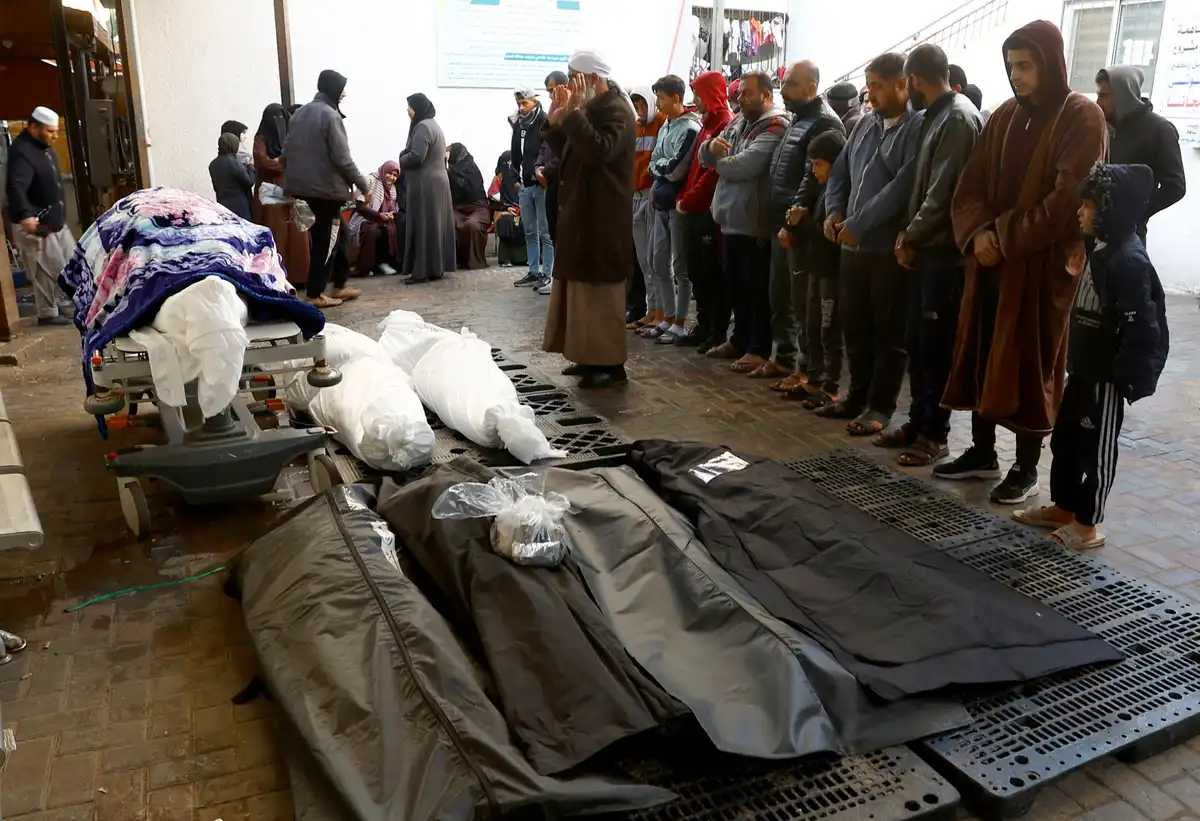
During the past 24 hours, the Israeli forces committed 15 massacres in the Gaza Strip

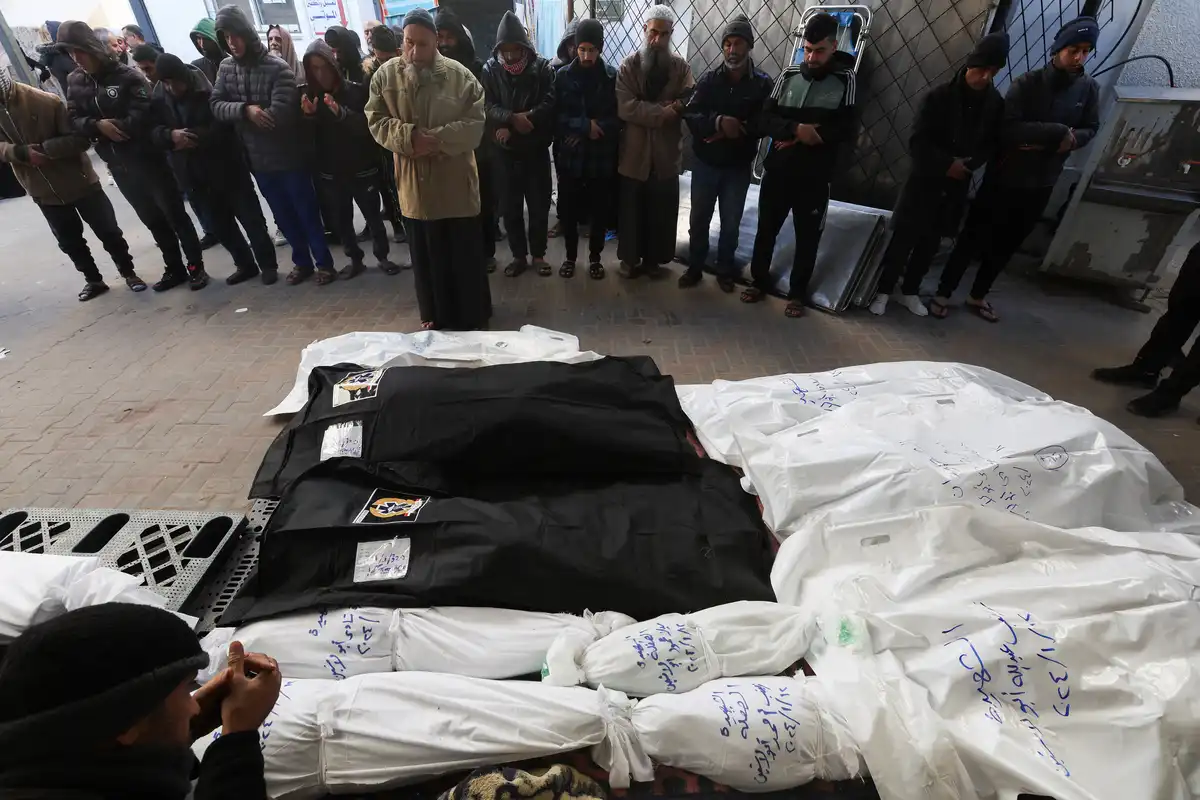
The Israeli forces committed 15 massacres against families in the Gaza Strip, claiming 130 dead and 170 wounded, during the past 24 hours.


According to the Ministry of Health, the number of killed has risen to 27,840 and wounded to 67,317, since the start of the aggression on the Gaza Strip on the seventh of last October.


Thousands of victims remain under rubble and on the roads, as the Israeli army prevents ambulance and civil defense crews from reaching them.


Five citizens were killed, and others were injured, in the Israeli artillery shelling, which targeted the maintenance room in the Shifa Medical Complex.


The Al-Rimal neighborhood also witnessed violent bombardment by land, air, and sea, which led to the death of a number of citizens, and the injury of dozens. Ambulance crews were unable to reach them and take them to the hospital, due to the continued shelling and shooting.


Since this morning, dozens of citizens have been killed, and others sustained various injuries, in the ongoing Israeli aggression against the Gaza Strip, which enters its 125th day.


The Israeli warplanes bombed homes in various neighborhoods of Gaza City, specifically in the neighborhoods of Al-Rimal, Al-Sabra, and Al-Zaytoun, resulting in dozens of Palestinians being killed, and others sustaining various injuries.


The Israeli artillery also fired shells at the Al-Rimal and Al-Sabra neighborhoods in Gaza City.

PALESTINE

Thu 08 Feb 2024 12:02 pm - Jerusalem Time

West Bank: Israeli forces arrest 20 Palestinian citizens

From yesterday evening until Thursday morning, the Israeli forces arrested at least (20) citizens from the West Bank, including a woman, and former prisoners.

The arrest operations were concentrated in the town of Azzun/Qalqilya, while the rest of the arrests were distributed in the governorates of Jenin, Hebron, Ramallah, Tubas, Tulkarm, and Salfit. In addition, the occupation forces continue to carry out widespread harassment operations, severe beatings, and threats against detainees and their families, in addition to operations Extensive vandalism and destruction of citizens' homes, and confiscation of money and vehicles.

Thus, the total number of arrests after October 7 rose to more than (6,920), and this total includes those who were arrested from homes, through military checkpoints, those who were forced to surrender themselves under pressure, and those who were held hostage.

Note that the ongoing and escalating arrest campaigns in an unprecedented manner come within the framework of the comprehensive aggression against Palestinian people and the ongoing genocide in Gaza, after October 7, which targeted all groups of children, women, the elderly, and the sick, in an unprecedented manner.

ARAB AND WORLD

Thu 08 Feb 2024 9:57 am - Jerusalem Time

Hebrew News Paper: “How far we are from strategic victory”

The Israeli newspaper Yedioth Ahronoth said that Israel is still far from strategic victory in Gaza, 4 months after the start of the war, despite achieving tactical gains against the Islamic Resistance Movement (Hamas).


In a report entitled “4 months after the outbreak of the war, the end is approaching in Khan Yunis... achievements and goals awaiting achievement, and strategic disappointment,” the newspaper wrote that the army has achieved many gains, but has not yet succeeded in achieving one of its main goals, which is eliminating senior Hamas leaders.


Senior Hamas leaders and detainees

The newspaper added that the army, upon reaching Khan Yunis, was now facing the western branch of the local Hamas battalion, and estimates indicate that it will be able to achieve its goal within a week and complete the second phase, that is, the invasion of the southern Gaza Strip, then move to the third phase, which will also include Khan Yunis, but two goals. Two essentials that he identified in the city itself were not fulfilled. The senior Hamas leaders were not eliminated, led by Yahya Al-Sinwar and Muhammad Al-Deif, and the place where the prisoners were held was not determined and they were not rescued.


The newspaper says that the Israeli army claims that intense military pressure through ground forces alone is sufficient to push Hamas to complete another deal, but the reality shows that the indications that it is approaching the detainees’ sites - even if they accumulate daily - have not led to them being captured alive.


No strategic victory

The army’s primary goal in the first and second phases - the newspaper recalls - was to eliminate the command and control capabilities possessed by “Hamas” and to destroy its bases above and below the ground, but in addition to the daily tactical achievements - such as reaching and destroying weapons manufacturing workshops - Israel remains completely far from strategic victory. The government refuses to discuss the next day in the Gaza Strip to find out who will rule its two million residents. Hamas has exploited the existing vacuum, and there are signs of the return of its authority in areas where the army had moved.


Yedioth Ahronoth quoted the Israelis as estimating that between 17 and 24 Hamas brigades had been eliminated, and what remained intact was moving in areas that the Israeli army had not entered by a deliberate decision, such as Deir al-Balah and Nuseirat in the center, and south of the explosive Rafah on the Philadelphia smuggling axis. Weapons from Sinai.


Egypt and the invasion of Rafah

According to the newspaper, the plans to enter Rafah and eliminate the Hamas battalion there - where the movement’s leaders are likely holed up after their departure from the north and center, according to Yedioth Ahronoth - have most likely been completed, but their implementation requires one of two conditions: Egypt’s approval, which may force Israel to show flexibility. On the issue of bringing in humanitarian aid, or Israeli approval for a Palestinian body ruling Gaza instead of Hamas, in addition to the evacuation of a million Palestinians who fled from the north and are now in the refugee camps surrounding Rafah.


The newspaper talks about another condition that it considers less important, which is the continued availability of international legitimacy under American auspices, which allows Israel to return to strong military action in Gaza, but renewing this “legitimacy” - which was made available under the shock of last October 7 - may be difficult because American distrust of the buffer zone plan and because of the destruction of thousands of homes, not to mention Israeli Prime Minister Benjamin Netanyahu’s insistence on refusing to discuss the future status of the Strip and handing it over to “moderate” elements from outside “Hamas,” and the right-wing in his government controlling most of the decisions, and this wing’s demand for settlement. Gaza.


Source: Yedioth Ahronoth

PALESTINE

Thu 08 Feb 2024 9:31 am - Jerusalem Time

International Criminal Prosecutor: What is happening in Gaza is disturbing

Yesterday, Wednesday, the Prosecutor of the International Criminal Court, Karim Khan, expressed great concern about the images coming from the Gaza Strip, four months after the Israeli war on the Strip.


Khan said - in an interview with Agence France-Presse - that everyone should feel very concerned about the images coming from Gaza, and be very concerned about the rule of law.


He explained that the court has an “active investigation,” commenting on the progress of investigations conducted by his office regarding war crimes that may have been committed in the Israeli war on Gaza.


Collect evidence

He added, "We are trying to collect evidence," and we will act when the evidence reaches the appropriate level, and this is a matter for the judges of the International Criminal Court to decide.


Khan stated that he made many statements and took many steps regarding the Israeli war on Gaza.

He said, "I was the first public prosecutor to go to Israel, enter Ramallah, and I went to the Rafah crossing."


The International Criminal Court, which was established in 2002, is the only independent court in the world established to investigate the most serious crimes, including genocide, war crimes, and crimes against humanity.


In 2021, the court opened an investigation into Israel, the Islamic Resistance Movement (Hamas), and other armed Palestinian factions on suspicion of possibly committing war crimes.


Khan previously indicated that this investigation “has expanded to include the escalation in hostilities and violence since the attacks that occurred on October 7, 2023.”


But ICC teams were unable to enter Gaza or conduct investigations in Israel, which is not part of the court.


For its part, at the end of last January, the International Court of Justice called on Israel to prevent committing any act that might amount to “genocide” in Gaza, and also called on it to allow humanitarian aid to reach the Strip.


The Palestinian resistance launched Operation Al-Aqsa Flood on October 7 on cities and towns surrounding the Gaza Strip, resulting in the killing of hundreds of Israelis, in response to the occupation’s incursions into Jerusalem and the West Bank.


Since then, the Israeli army has been waging a devastating war with American support on Gaza that, as of Wednesday, left 27,708 killed and 67,147 injured, most of them children and women, according to the Palestinian authorities, and caused massive destruction and an unprecedented humanitarian disaster, according to the United Nations.


PALESTINE

Thu 08 Feb 2024 9:16 am - Jerusalem Time

The war on Gaza: Intense Israeli raids on Rafah leaves dozens of dead and injured

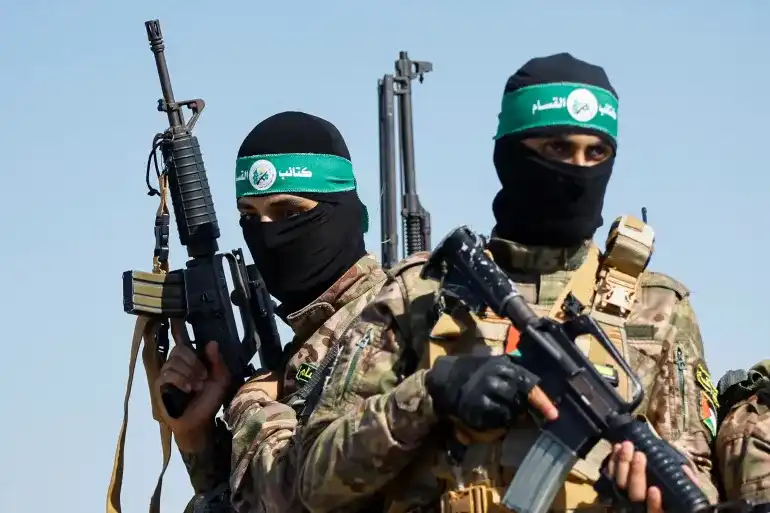
The Palestinian resistance is engaged in fierce clashes with Israeli army forces south and west of Gaza City, north of the Strip, and in the vicinity of Nasser Medical Hospital in the city of Khan Yunis, which is witnessing intense battles in the south.


On Thursday, the Israeli war on Gaza entered its 125th day, as Israeli aircraft continued intense raids on various areas of the Strip, while Israeli artillery renewed its bombardment of residential areas and the vicinity of shelter centers.


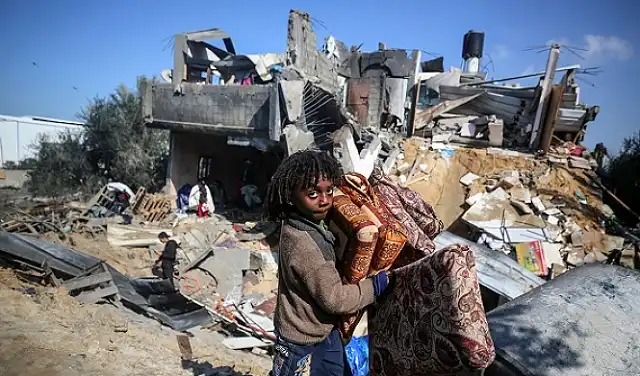
The Israeli raids are particularly focused on Khan Yunis and Rafah governorates, amid the escalation of the humanitarian tragedy and the displacement of the vast majority of the Gaza Strip’s population, coinciding with renewed artillery shelling of populated areas, residential squares, apartments and infrastructure.


This comes as the Palestinian resistance is engaged in fierce clashes with Israeli army forces south and west of Gaza City, north of the Strip, and in the vicinity of Nasser Medical Hospital in the city of Khan Yunis, which is witnessing intense battles in the south.


In addition, Israeli forces continue to commit massacres against Palestinian civilians, which left dozens of dead and hundreds of injuries in the past 24 hours.


The Israeli aggression on the Gaza Strip left 27,708 killed and 67,147 injured, most of them children and women, in addition to massive destruction and an unprecedented humanitarian disaster, according to the Palestinian Ministry of Health.


In the context of Israeli losses, the Israeli army spokesman announced the death of an officer as a result of wounds he sustained in the Gaza battles, bringing the number of his announced deaths to 564 since October 7, 2023.

PALESTINE

Thu 08 Feb 2024 9:08 am - Jerusalem Time

A minefield for Netanyahu... Implications of Hamas’ response to the proposed agreement

By Abdullah Aqrabawi

More than 10 days after receiving the “Paris meeting proposal,” the Islamic Resistance Movement (Hamas) submitted its response to the proposed framework for stopping the aggression and exchanging prisoners, to mediators in Qatar and Egypt.


Hamas' response received a set of initial reactions, initiated by the Qatari Prime Minister and Foreign Minister Sheikh Mohammed bin Abdul Rahman Al Thani, who said that Hamas' response "includes observations, but in general it is positive."


From Cairo, an Egyptian official reported that the response received by the Ministry of General Intelligence in Cairo reflects the positive spirit on the Palestinian side.


As for Washington, US President Joe Biden’s response was that Hamas’ response was “exaggerated,” while the Israeli side contented itself with announcing receipt of Hamas’ response. The Mossad’s comment stated, “Hamas’ response was received by the Qatari mediator, and its details are being studied in depth by all parties participating in the negotiations."


Response details

Al Jazeera had announced that it had obtained details of Hamas' response to the proposed framework for the truce agreement in Gaza, which it presented to the mediators yesterday, Wednesday.


Sources explained to Al Jazeera that the movement agreed to a framework agreement to reach a complete and sustainable ceasefire in 3 stages, each stage lasting 45 days, and including agreement on the exchange of prisoners and the bodies of the dead, ending the siege, and reconstruction.


Hamas demanded that the complete truce talks be completed before the start of the second phase, and that Israeli forces be ensured outside the borders of the Gaza Strip, and that the reconstruction process begin.


Signs and connotations

The first indication that emerged in Hamas' response to the proposed framework paper was the period of time the movement took to mature its response.


The period of more than a week indicates that Hamas did not submit its response under field or political pressure. It also engaged in in-depth and detailed internal and other dialogues with the resistance factions that included all the issues addressed in the framework paper.


The second indication lies in the ability to deal with the political interactions related to the war on Gaza and to confirm its presence as a political party leading the negotiations on the Palestinian side, something that the regional environment prevented during the summer 2014 war that Israel launched for nearly 50 days on the besieged Strip, where he headed the Palestinian delegation. The negotiator at that time was Azzam Al-Ahmad, representing the Palestine Liberation Organization.


At the same time, Hamas’s response to regional and international initiatives aimed at stopping the Israeli aggression on Gaza is determined by the movement - as stated in its response - to the central goal of a “comprehensive ceasefire.”


Hamas' response was expressed by "stopping military operations between the parties and achieving complete and sustainable calm."


Hamas had announced this position since the end of the last phase of the exchange deal sponsored by Doha and Cairo, under which a number of foreign detainees were released in addition to a group of Israeli women and children in exchange for temporary truces and the release of Palestinian women and children from occupation prisons.


Priority

Hamas's response indicates that this demand still occupies the main priority and that there will be no change in its position. In its response, the movement clarified its understanding of the ceasefire demand as a withdrawal of the Israeli army, a cessation of combat operations, and a halt to the flights of all types of aircraft.


Hamas's response also shows that it designed the attached appendix to the framework paper in a way that includes a guarantee that the movement will complete paths that it considers essential in order to accept the start of a qualitative exchange deal.


These paths are "the exchange of prisoners between the two parties, ending the siege on Gaza, reconstruction, the return of residents and displaced people to their homes, and providing shelter and relief requirements for all residents in all areas of the Gaza Strip."


Hamas aims to ensure that any step in the course of negotiations to stop the fire will be reflected in the Palestinians in Gaza, where Israel has placed them in very difficult circumstances.


With regard to the exchange of prisoners, Hamas was keen in its response to guarantee in the first phase the release of a specific number of Palestinian prisoners, including all prisoners in the occupation prisons, including women, children, the elderly (over 50 years of age) and the sick, who were arrested until the date of signing this agreement without exception. In addition to 1,500 Palestinian prisoners, Hamas nominates 500 of them to receive life sentences and high sentences.


Hamas's inclusion of the Al-Aqsa issue was in line with the goals of the "Al-Aqsa Flood" that it launched on October 7, 2023, and to confirm the importance of the issue and the validity of its narrative and intensify a national and Islamic issue that is subject to broad consensus.

Hamas's response also indicates that it was keen to include all issues under discussion by the parties and others related to the Palestinians and their rights. Its response was also detailed in response to the attempt at brevity sought by the “Framework Paper” issued by the Paris meeting.

In this regard, Hamas has taken the initiative to place its “detailed” response under discussion and discussion in what may sometimes be considered an explanation of the framework paper and an alternative to it in another angle.


The effects of Hamas’ response on Netanyahu’s position

It is clear that Hamas is well aware of the extent of the complications surrounding the Prime Minister of the occupying State, Benjamin Netanyahu, who is stuck between his position of rejecting the ceasefire in order to avoid facing investigation committees and corruption courts, and the position of his allies from the National Religious Movement and Religious Zionism, led by Itamar Ben Gvir and Bezalel Smotrich, who do not hide The principle of "blackmail" by which they impose their program on Netanyahu.


On the other hand, the voices of the members of the War Council who have joined the government since October 7, led by Benny Gantz and Gadi Eisenkot, are besieging Netanyahu with their repeated demands that Netanyahu must answer the major questions related to the war.


These positions are summed up in pushing for a deal to exchange detainees at a high price, and the decision on who will control Gaza the day after the war, in addition to formulating a vision for the future Palestinian Authority, and deciding on the northern front, and the return of the residents of the north and south to their homes.


Amid this environment in the government and the war council, opposition leader Yair Lapid is exerting pressure on Netanyahu in a different way with his offers to join the government and providing everything necessary for Netanyahu to conclude an exchange deal, as attention turns to the escalating demonstrations carried out by the families of the prisoners to demand their release.


Demands for de-escalation

Although the American position expressed by the leadership of the administration rejects the ceasefire and replaces it with long truces, the Biden administration is willing, through its movements in the region, to return to reducing escalation and calm in the hands of its preparations for the most important elections in its history at the end of the year.


American fear increases as the month of Ramadan approaches, which usually witnesses an Israeli escalation in Jerusalem and Al-Aqsa Mosque, resulting in a Palestinian reaction, the form and duration of which may differ this year in light of the genocide and massacres committed by Israel in the Gaza Strip.


Hamas developed its response amidst this complex and sensitive environment surrounding Netanyahu, and it realizes that the details of its response, individually and together, constitute detonators and a minefield that makes the situation more difficult for Netanyahu.


In the press conference yesterday, Netanyahu seemed stuck in his position and repeated the same statements about the necessity of eliminating Hamas above all else. This has become the subject of widespread skepticism.


Four months after the aggression on Gaza, the occupation Prime Minister is searching for a way out of his crisis, either by surrendering himself to his extremist allies, to the corruption courts, or to Hamas’ conditions.


Source: Al Jazeera

ARAB AND WORLD

Thu 08 Feb 2024 9:02 am - Jerusalem Time

An opinion poll for Israelis: Restoring the prisoners is more important than eliminating Hamas

An opinion poll published by Reuters showed that 51% of participants believe that the recovery of prisoners in Gaza should be the first goal of the war.


The poll showed that only 36% of participants believe that the goal of the war should be to overthrow the Islamic Resistance Movement (Hamas).

ARAB AND WORLD

Thu 08 Feb 2024 9:00 am - Jerusalem Time

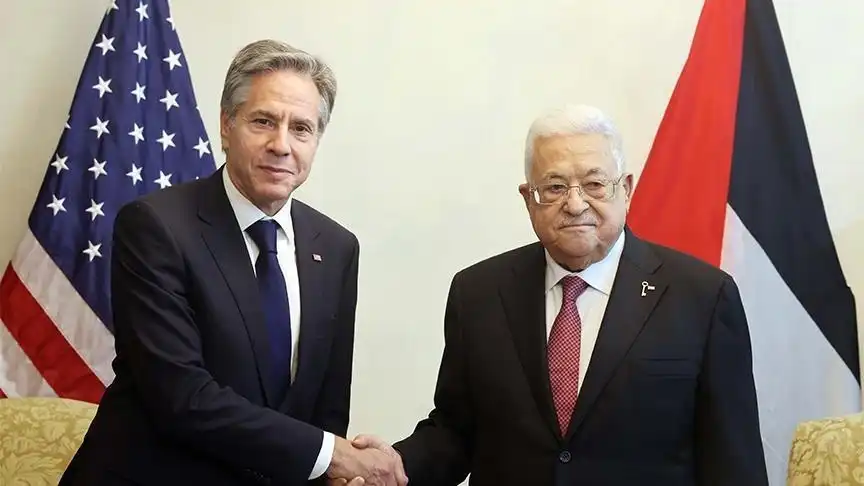
Blinken discusses with Abbas "the benefits of revitalizing the Palestinian Authority"

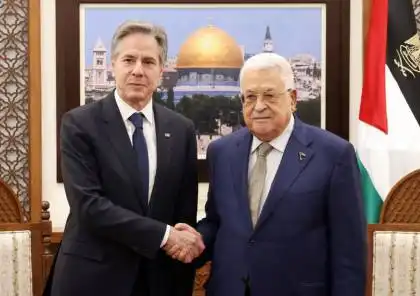
The US State Department announced that Secretary of State Anthony Blinken discussed "the benefits of revitalizing the Palestinian Authority" during his meeting yesterday with Palestinian President Mahmoud Abbas in Ramallah.


The ministry said in a statement published on its website: “Blinken met today (Wednesday) in Ramallah with Abbas, and conveyed the United States’ commitment to increasing the delivery of life-saving humanitarian aid to civilians in Gaza.”


It reported that "Blinken affirmed the United States' support for the establishment of an independent Palestinian state as the best path to achieving lasting peace and security for Palestinians and Israelis alike. He also discussed the benefits of revitalizing the Palestinian Authority."


The minister stressed the United States' rejection of any forced displacement of Palestinians from Gaza.

ARAB AND WORLD

Thu 08 Feb 2024 5:50 am - Jerusalem Time

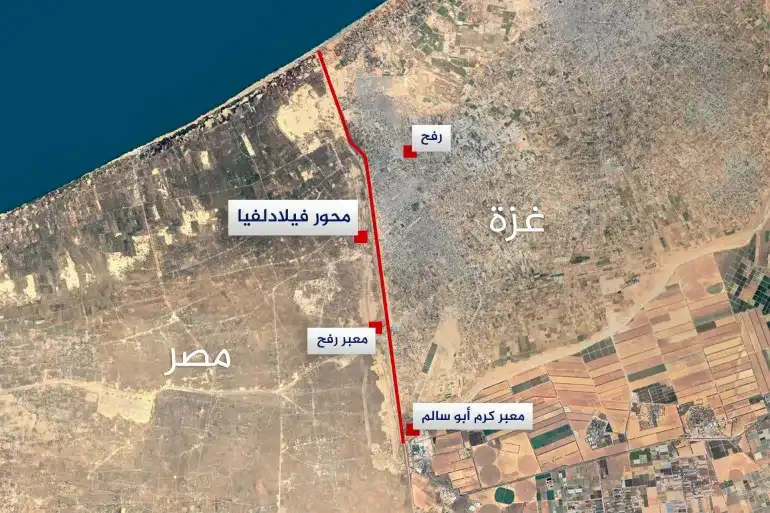
Israel pledged to Blinken not to move on the Philadelphia axis without coordination with Egypt

The official Israeli channel "Kan 11" revealed in its evening news, yesterday, Wednesday, that US Secretary of State Anthony Blinken received assurances during his meetings with the Israeli political leadership that Tel Aviv will not move in Rafah, south of the Gaza Strip, and the Philadelphia border axis (Salah al-Din axis) without  complete coordination with Egypt.


Netanyahu announced in his statements yesterday evening, Wednesday, that he had issued instructions to the Israeli army to move in Rafah.

According to the Israeli channel, Blinken expressed his concern about the upcoming operation in Rafah and whether civilian casualties could be reduced, and the message he heard came: “There will be no operation in Rafah when many people are there, and we are working to find a solution to evacuate the population.” Blinken also asked the Israeli Prime Minister to find a solution to the issue of preventing humanitarian aid from entering Gaza through the Kerem Shalom crossing.


The evening news of Kan 11 reported, “It does not seem that the operation in Rafah will be carried out any time soon. First of all, civilians will have to be evacuated, as Israel will not be able to act at a time when there are 1.2 million Gazans in the area, and the question is - According to the same source, where can the residents of Rafah be evacuated to? “Because returning to the northern Gaza Strip is not something Israel wants. The second matter, which is no less complicated, is coordination with Egypt.”


In recent days, Israel has held discussions with Egypt regarding the issue of the next day after the end of the war on Gaza. From the Israeli side, the talks were led by the head of the Shin Bet, Ronen Bar, and the coordinator of Israeli government activities, Ghassan Alyan.


Israel believes that Egypt is the most important factor the day after the end of the war, because Egypt is the only land entry and exit gateway to Gaza, and it acts as an influential and important factor in the Arab world.


Cairo announced late last month that any Israeli move towards occupying the Philadelphia Axis would lead to a serious and serious threat to Egyptian-Israeli relations. This came in the wake of Israeli Prime Minister Benjamin Netanyahu's talk about the necessity of controlling the axis completely, as he said, "The Philadelphia axis must be under our control. It must be closed. It is clear that any other arrangement will not guarantee the disarmament we seek."


It should be noted that in September 2005, after 18 months of negotiations, Egypt and Israel signed the “Philadelphia Agreement,” which allowed the presence of Egyptian forces with light weapons in the region. The agreement revolved around the two parties assuming responsibility for “combatting hostile activities related to smuggling, infiltration and terrorism from any territory of the two countries."


Source: Al Jazeera + Israeli press

ARAB AND WORLD

Thu 08 Feb 2024 5:44 am - Jerusalem Time

Blinken: There is still “place for an agreement” between Israel and Hamas

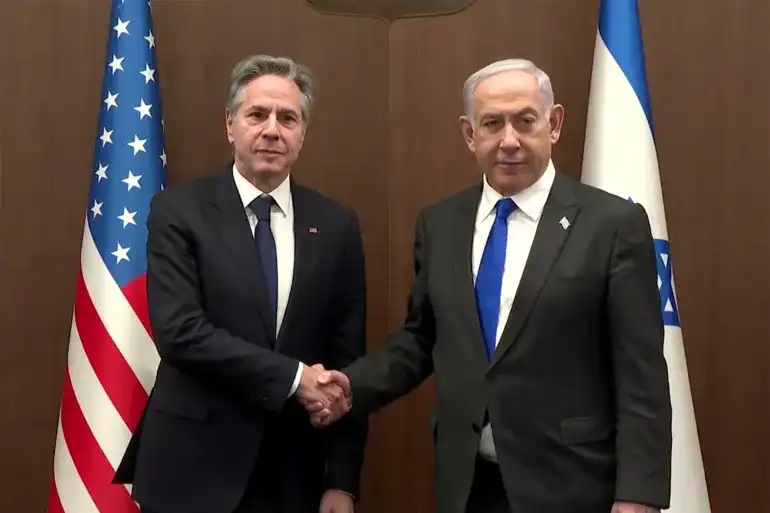
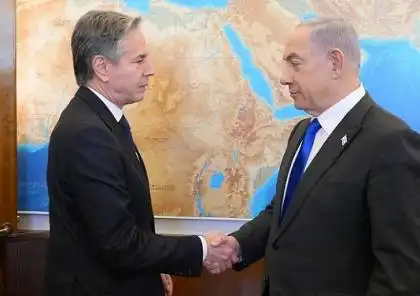
US Secretary of State Anthony Blinken considered on Wednesday that there was still “place for an agreement” between Israel and Hamas, after strongly worded statements made by Israeli Prime Minister Benjamin Netanyahu.


Blinken said, "There are things that are clearly unacceptable in Hamas' response. We believe that this makes room for reaching an agreement, and we are working on that tirelessly until it is reached."


At the same time, Blinken said Wednesday that he warned Israeli Prime Minister Benjamin Netanyahu and his government against actions that inflame tensions.


“In my conversations today with the prime minister and senior officials, I also raised our deep concerns about actions and statements, including from government officials, that are fueling tensions that undermine international support and impose greater restrictions on Israel’s security,” Blinken told reporters.


Israeli Prime Minister Benjamin Netanyahu said that complete victory in Gaza was within reach, and stressed that his government had not committed to any promises regarding the deal proposed by the Islamic Resistance Movement (Hamas) for a ceasefire, pointing out that negotiations were still continuing.


During a press conference held on Wednesday, Netanyahu renewed his pledge to continue the war until Hamas is eliminated, indicating that achieving Israeli goals in this war is a matter of months, and that there is no going back from victory in it.


The US Secretary of State had called earlier Wednesday, after his meeting with Netanyahu and prominent Israeli officials in Tel Aviv, for “a commitment to do everything in our power to deliver the necessary aid to those who most need it, and the steps that are being taken and the additional steps that must be taken.” "It is the focus of my meetings here."


Blinken continued, "I visited Saudi Arabia, Qatar, and Egypt, and I believe that there is a very positive future in which Israel integrates into the region, addresses its security concerns, and achieves the ambitions of the Palestinian people."


Blinken expressed his hope of reaching an agreement to liberate prisoners held by the Islamic Resistance Movement (Hamas) and the rest of the Palestinian factions, but Israeli media said that Netanyahu informed him that Israel would not end the war on Gaza before eliminating Hamas.


Source: Al Jazeera + agencies

ARAB AND WORLD

Thu 08 Feb 2024 5:40 am - Jerusalem Time

Israeli channel: Netanyahu’s government is shocked by Blinken’s talk about the children of Gaza

Today, Wednesday, US Secretary of State, Anthony Blinken, expressed his concern about imminent Israeli military action in the Palestinian city of Rafah, located on the Egyptian border.


On Wednesday evening, Israeli Channel 13 quoted Blinken during his meeting with Prime Minister Benjamin Netanyahu, saying that every day, until the end of his life, he will ask himself daily about the children of Gaza who were killed without fault.


For his part, Netanyahu commented on the statements of the US Secretary of State, which came during his visit to Tel Aviv as part of a shuttle tour that included several countries, including Egypt, that responsibility for the killing of these children belongs to the leadership of the Hamas movement.


For its part, the Israeli channel explained on its website that it was shocked by Anthony Blinken's unprecedented statement regarding the children of Gaza.

Earlier today, Wednesday, Netanyahu’s office rejected US Secretary of State Anthony Blinken’s request to hold a private meeting with the Chief of Staff of the Israeli Army, General Herzi Halevy, as the Israeli newspaper “Israel Hayom” explained that Netanyahu rejected Blinken’s request during his visit to Tel Aviv, It requires holding a private meeting with General Halevy.


The newspaper quoted a prominent Israeli political official - which it did not name - that meeting with a foreign minister of military rank without the presence of a political official is unacceptable in relations between countries. The Israeli official commented on this matter, saying, "Israel is not a banana republic."


In a related context, Israeli media reported, today, Wednesday, that US President Joe Biden expressed his concern about the presence of 1.2 million Palestinians in the city of Rafah alone, as Israeli Channel 12 confirmed that Blinken had conveyed to Benjamin Netanyahu, during their joint meeting, in Earlier today, Biden feared the presence of 1.2 million Palestinians in the city of Rafah alone.


The channel noted on its website that the American President had expressed his annoyance or lack of understanding about how more than 1.2 million Palestinians could be evacuated from the city of Rafah alone, if the Israeli army attacked the city, which is located near the Egyptian border.

PALESTINE

Wed 07 Feb 2024 9:51 pm - Jerusalem Time

Palestinian Prisoner Club: The number of administrative detainees in Israeli prisons reached 3,484

The Palestinian Prisoners' Club said that the number of administrative detainees in Israeli prisons reached 3,484 detainees as of the end of last January, including at least 40 children and 11 women.


The Prisoners' Club pointed out, in a statement issued this evening, Wednesday, to the significant increase in the number of administrative detainees, explaining that this number was not actually recorded even in the years of the first intifada that broke out in 1987.


The Club noted that the crime of administrative detention is the most prominent change in the level of detention operations in the West Bank, indicating that since the beginning of the comprehensive Israeli aggression against our people in the Gaza Strip and the West Bank on the seventh of last October, the Israeli authorities have issued more than 3,400 administrative detention orders (between new and renewal orders), and the month of November recorded the highest rate of issuance of administrative detention orders, amounting to 1,120 arrest orders.


The Club added that the number of administrative detainees as of the end of January reached 3,484 detainees, and the majority of those against whom the occupation issued administrative detention orders were those who were arrested after October 7, through which the occupation targeted all groups, including children, women, activists and journalists. , and representatives, noting that the number of detainees before October 7 reached approximately 1,320 detainees.


The Club explained that the number of children in administrative detention reached at least 40 children, the number of female administrative detainees reached 11, and the number of journalists who were transferred to administrative detention reached 21 journalists, including a female journalist.


The Palestinian Prisoners' Club said that the Israeli authorities use the policy of arbitrary administrative detention as a policy of oppression and control against the Palestinians, as Israel resorts to arresting Palestinians under the name of administrative detention, under the pretext of what it calls the "secret file."


OPINIONS

Wed 07 Feb 2024 9:48 pm - Jerusalem Time

Hebrew News Paper: After the war, we will have to talk about two states for one people in Israel

Ephraim Ganor

Ephraim Ganor

Opinion Writer

In these hours, the State of Israel is struggling to achieve three decisive goals that are shaking it severely and degrading it to a level it has never known before: eliminating Hamas’ rule in the Gaza Strip; Freeing those kidnapped from Hamas captivity; restoring security and calm to the residents of the north.

What is meant is a reality the likes of which the state has not known since its establishment. During the past 76 years of its existence, the State of Israel has witnessed many difficult wars, crises and unrest. But we were fortunate that we had governments at the time, some good, others less good, that knew how to lead the country towards a much better reality.

The problem is that the State of Israel is now governed by a failed government, which lacks the capabilities to lead the state in the current situation. A government that does not enjoy a majority among the people, the majority of whom want to replace it as soon as possible. A government, whose president and his ruling party are caught between the clutches of their extremist partners who are tightening the noose around their necks and directing them according to their extremist doctrine, which would undermine the state due to irresponsible and delusional behavior.

What is painful about this difficult reality is that wherever you look, you do not find a possible way out of it or a solution. Elections during the war, while our soldiers are on the southern and northern fronts, are not on the table. Forming a pragmatic and effective national emergency government with the participation of the “There is a Future” and “Israel Our Home” parties, at the initiative of Prime Minister Benjamin Netanyahu, is a dream far from reality, because it is clear that Netanyahu prefers to put his political future before the future of the state, and he is not ready to separate from his extremist partners who, for him, represent the stake of salvation.

On the other hand, whoever is looking for manifestations of national and civic responsibility and loyalty to the state among Likud Knesset members, it will be difficult for him to find an honest person among them who will say, “Enough, this behavior is offensive to the state.”

Meanwhile, we can see how the feeling of “together we win” [the war slogan] is beginning to dissipate. In the first days of the war, we felt it, and it created the impression that the events of the past year, such as the attempts to advance the judicial coup and the demonstrations against it, were behind us. But it is clear that the polarization within the people remains the same, and has even become more severe. The spread of conspiracies and lies about the Shin Bet’s intention to overthrow Netanyahu, and the talk about the phone call between Shikma Pressler’s husband and Sinwar, on the eve of the war, in addition to the attacks on the Chief of Staff, the Commander of the Central Region and others, prove that unity, calm and tranquility will not prevail here, even after the end of this war and achieving goals.

If we once talked about two states for two peoples as a solution to the Palestinian problem, it seems that after this war, we will be forced to talk seriously about two states for one people, a people divided, polarized and trapped...

Anyone who tries to search for the roots of the phenomenon, and for a solution to the difficult problem into which the state has deteriorated, and which is destroying everything that was built in it with blood, effort and tears over the years, will reach one conclusion, which is that the emerging situation and the trap in which we are stuck was created by one person, Benjamin Netanyahu. He held office for many years, and most of the time, he turned a blind eye, made promises that could not be fulfilled, and criminally neglected many areas. Netanyahu's main concern was to preserve his survival and glorify his name. He never admitted mistakes and shortcomings, and knew how to find those to blame when the situation was difficult and painful.

A prime minister who, in order to maintain his political survival, allied himself with extremist factions of the people who are on the margins of Israeli society, which led to their control over the agenda of the Israeli state. Because of it, Israel turned into an extremist and religious state.

The bulk of Netanyahu's supporters agree with these facts. All those who supported him for years and elected him, and like the entire people of Israel, stand today, in fear, in the face of this terrible collapse.

OPINIONS

Wed 07 Feb 2024 9:35 pm - Jerusalem Time

Regrets, But Not About the Schalit Deal

Gershon Baskin

Gershon Baskin

Opinion Writer

Two days before Gilad Schalit came home I wrote to Prime Minister Netanyahu:

“I want to praise you for the demonstration of courage and leadership that you showed in your decision to support the secret back channel that I ran with Hamas people. In my first conversation with David Meidan he told me that he agreed to take on the job when he heard from you that despite your principled objection to a prisoner exchange, to negotiations with terrorists, and to releasing murderers, you said that there was no other way to bring Gilad home and that the time had come to do so…Mr. Prime Minister, you have proven your leadership…May we never be forced to deal with situations like this in the future. Now we must dedicate all of our efforts to advance real peace with our neighbors.”


Netanyahu did not deserve that praise. In hindsight it is clear that he was acting out of political expediency. I assumed that once there was no longer an Israeli soldier captive in Gaza, there might be a chance to work on changing the reality on the ground in Gaza. I also hoped that with David Meidan, who was then still in the Mossad we might be able to develop a secret direct back channel, this time with President Mahmoud Abbas for the purpose of negotiating peace. I had no illusions that we could negotiate peace with Hamas, but I did think it could be possible to negotiate a long-term ceasefire, or Hudna as they called it.

Days after the release of Schalit, Ghazi Hamad and I began drafting a proposal for a long-term ceasefire. Our negotiations on the Hudna went through four drafts. I presented the drafts to senior UN officials and Egyptian intelligence officers. I also went to Abbas to ask him if an Israeli-Hamas ceasefire was in his interest.  Abbas responded yes, definitely, because he would not be able to negotiate with Israel if Gaza was constantly under attack from Israel.  


On May 1, 2012 I met with Defense Minister Barak and presented him with the draft of the agreement. Barak was skeptical about the possibility of Hamas upholding a ceasefire agreement. Nonetheless Barak created a committee officers from the IDF military intelligence. There were also representatives from the Prime Minister’s office and the Shabak. I was not a member of the committee, but two members of the committee told me about the discussions and the final recommendations.


The committee recommended not enter into any formal arrangements with Hamas.  I thought that this was the wrong decision.  I believed that Israel should test the ability and political will to uphold the long term ceasefire agreement. The committee said Israel should not make agreements with Hamas, this would only strengthen them. Israel needs to do only one thing: build deterrence! Deterrence is a nice concept, but it is not a mathematical equation. How many people do you have to kill? How many homes have to be erased? Since 2008, I have claimed that Hamas which sanctifies death and sees dying a martyr for Palestine and for Al Quds is a fulfillment of life’s purpose, it is, therefore, impossible to create deterrence.


By October 2012 periods between the temporary ceasefires were getting shorter and the intensity of the rocket fire increased. I phoned Ghazi and suggested that we renew our efforts to achieve a long term ceasefire. He agreed. This time Ghazi proposed that he would draft a text and would begin showing it to people in Gaza and the Hamas leadership. As he was making progress I reported to senior officials in the IDF and to the prime minister’s office. I contacted Egyptian General Nader el A’aser and spoke to him about our ceasefire proposals. I was in Cairo from November 8 -12, 2012 and met with Nader several times. I returned to Israel on November 12, 2012 when a rocket from Gaza hit Israel. I immediately spoke with Ghazi and Nader and they sent back messages saying that Hamas was taking care of the situation on the ground so that there would be no escalation. On November 14, Ghazi called me in the morning. He told me that Mashal, Abu Marzouk and other leaders outside and in Gaza had seen the draft ceasefire agreement and approved it.  He told me that he would be seeing Jaabri that morning. He said that he would send me the draft after seeing Jaabri. Later that day Israel assassinated Ahmad Jaabri and with his death, went our attempts to reach a long-term ceasefire.


In parallel I began working on creating a secret direct back channel between Abbas and Netanyahu.  A deal between Netanyahu and the PLO leadership would firmly secure the support of about seventy percent of Israeli society. My hopes that Netanyahu would lead us toward peace were based on my good relationship with David Meidan who would enable me to have a channel to pass messages directly on to the prime minister. Dr. Mahmoud al Habbash, then PA Minister for Religious Affairs organized a meeting for me and himself with Abbas on January 31, 2012. The following is the summary of the meeting that I wrote (in Hebrew) and sent to Netanyahu:

I opened the meeting by thanking the president for agreeing to meet me. I spoke a few words about the secret direct back channel talks with Hamas on Schalit, and I argued that a key component to the success of those talks was their totally secret nature. We were able to conduct a direct secret back channel for six months without any leaks. Abbas agreed without any hesitation that the only way to succeed in negotiations on a permanent settlement is a direct secret back channel. He said that if Prime Minister Netanyahu would agree to a direct secret back channel, Abbas said that within 48 hours he and/or his emissaries would show up for those talks. Our conversation went into the essence of negotiations. We spoke of the need to delineate borders between the two states. Abbas spoke of his deep commitment to true peace and about his daily struggle against terrorism. He said he agrees that the Palestinian state will be demilitarized. He said he understands the needs for Israel’s security. He said that he cannot accept the permanent presence of Israeli soldiers on the eastern border of the Palestinian state, but he does not oppose the idea of an Israeli military presence within a multilateral force. I asked him to relate to the issue of incitement. He said the PA opposes the killing of Jews. Abbas said, “Incitement—yes, we have it. I admit, we are guilty, we are against it but not enough. Under Bush we had agreed to have a trilateral committee with the Americans against incitement. I propose that we now reestablish this committee. Actions against incitement should be taken on both sides.”


In summarizing our conversation, Abbas said “We must not miss the chance for peace. I’m ready and I want to do it with Netanyahu because I know that he will bring all of Israel with him.” I asked him if he would bring the agreement, what would happen with Hamas and Gaza. He said, “This will be our problem,” and he is convinced that the Palestinians in Gaza will not forgo the possibility of enjoying real peace. They will force the agreement on the regime there, and that is how we will bring about real Palestinian unity.


Abbas was open, direct and I felt that he related to me as someone who could be entrusted to deliver messages to Netanyahu and to push forward toward the secret direct back channel of negotiations that I proposed. I was far less confident in my ability to get the message across to Netanyahu and to convince him to accept the Abbas offer.  Netanyahu rejected the initiative and refused to meet with Abbas. I tried to appeal to Netanyahu through his national security advisor, Yaacov Amidror.  I spoke to several ministers in his government but got no traction. Three times I presented to Netanyahu proposals from Abbas after direct meetings with him to conduct negotiations in a secret back channel and three times Netanyahu refused.

Do I have regrets about my role in the Schalit deal. Absolutely no. The Schalit deal should have been the very last time that Israeli and Hamas should have needed to negotiate prisoners and hostages. 


Yehya Sinwar was not the problem then and he is not the problem now.  In the absence of peace and the continuation of the occupation and the economic siege on Gaza, with continuous rounds of violence, there are tens of thousands of potential Yehya Sinwars growing up every day in Palestine. After each round of warfare with Israel, Hamas recruited its new cadets in the Nukhba (Elite) force from bereaved families. They were given the promise of paradise and revenge and none of them were ever afraid of fighting and dying for their cause.


I am often presented in the media as the “architect of the Schalit deal”.  I was not, the deal was placed on the table by the Egyptian Intelligence in December 2006. It took five years before Israel and Hamas were prepared to accept it. Gilad Schalit probably would not have been brought home in October 2011 if not for my secret direct back channel with Ghazi Hamad – a man who is now well known to the public because of his interview on Lebanese television in which he justified October 7. Another month in captivity would have led to Schalit’s death, according to Israeli doctors he was suffering from acute vitamin D deficiency which led to his inability to digest his food. The government of Israel supported the deal in a vote of 26 to 3, including the support of the Prime Minister, the Head of Mossad, the Head of Shabak, the Chief of Police and the Chief of Staff of the Army.  Israel held firm to its ethos of not leaving anyone behind enemy lines and gained the admiration of the entire world. The deal included the release of more than 300 prisoners who had killed Israelis, including four who were responsible for killing my wife’s cousin Sasson Nuriel. Between October 2011 until April 2013, fourteen of them were re-imprisoned by Israel. In 2014, after the murdering of Eyal Yifrach, Gilad Shaer, and Naftali Fraenkel, Israel rearrested an additional 68 of the Hamas prisoners released in phase one of the deal. This point is an important one regarding any future prisoner releases.


My assessment today is that the only way of getting all of the 136 Israeli hostages home is through an agreement with Hamas. From my conversations with Hamas since the war began on October 7, I understand that the only deal acceptable to them is the end of the war, Israeli withdrawal from Gaza and all of the hostages in exchange for all of the prisoners. This is a huge victory for Hamas, but it must be a short-lived victory. The war can wait, the hostages cannot. Israel can take care of Sinwar and the others in the same way it dealt with many of the Hamas leaders over the years (Yassin, Rantisi, Abu Shanab, Jaabri, and more). Prisoners released can be rearrested – Israel has done that also in the past. Hostages who are alive and might be killed before being freed cannot be saved if they are not brought home now. Military pressure might work, I don’t think so, in fact, I believe that the military pressure will result with the killing of more hostages. Hamas has the upper hand and they are not known for making compromises on their demands. This is the reality that we have to face if we are to remain true to our ethos of not leaving anyone behind.


The writer has dedicated his life to peace between Israel and her neighbors. He has negotiated with Hamas for 17 years.  He is now the Middle East Director for ICO - International Communities Organization, a UK based NGO.


OPINIONS

Wed 07 Feb 2024 9:29 pm - Jerusalem Time

Two state solution impossible ‘as long as Netanyahu government is in power’ | Gershon Baskin

Gershon Baskin

Gershon Baskin

Opinion Writer


“If we want to defeat the idea of Hamas and the ideology of Hamas, Palestine needs to become real for the Palestinian people, not just an open ended peace process that goes on forever.” 


There is “no chance of peace” in the region as long as Netanyahu is in power as he has dismissed a Palestinian state, says Gershon Baskin, a negotiator who worked on the release of Israeli soldier Gilad Shalit.

PALESTINE

Wed 07 Feb 2024 9:14 pm - Jerusalem Time

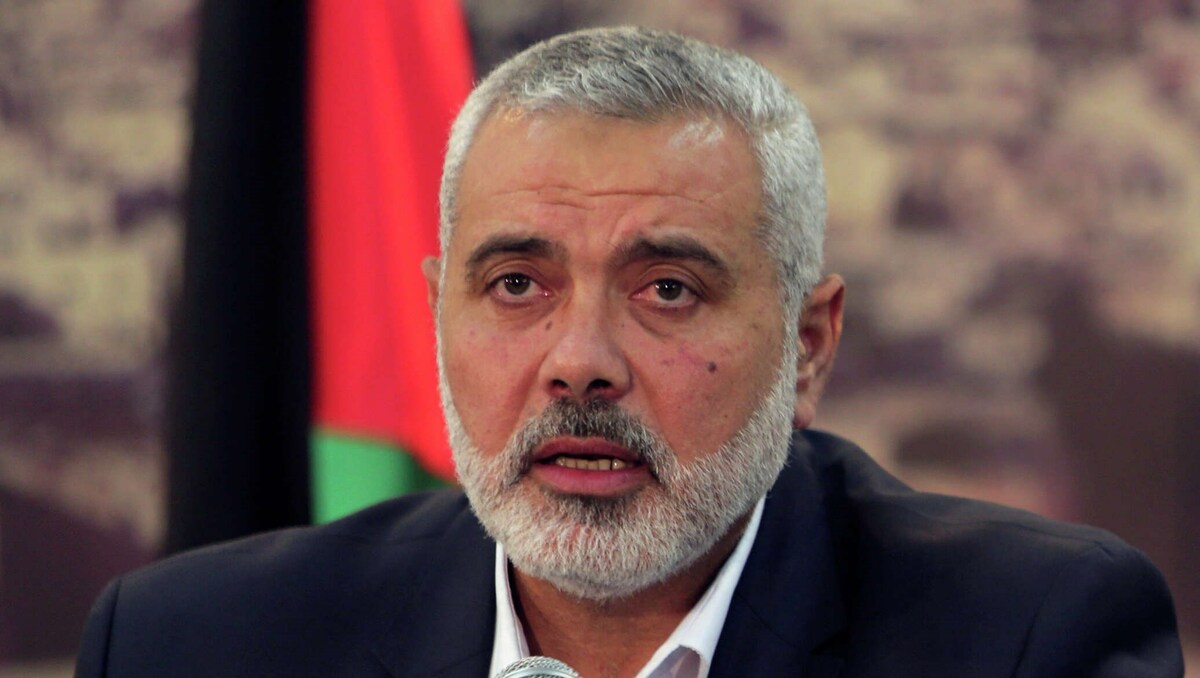
A Hamas delegation headed by Haniyeh visits Cairo: indirect negotiations with Israel

A leadership source in the Palestinian Resistance Movement (Hamas) revealed today, Wednesday, that a delegation from the movement’s leadership will head to the Egyptian capital, Cairo, tomorrow, Thursday, to begin a serious round of indirect negotiations with Israel regarding reaching a deal to exchange prisoners and stop the war on Gaza.


The leadership source said that a leading delegation, headed by the head of the Hamas Political Bureau, Ismail Haniyeh, is expected to arrive in Cairo tomorrow, Thursday, to begin a round of indirect negotiations with the occupation government regarding the Paris ceasefire agreement and the prisoner exchange deal.


The same source added that the Hamas delegation will meet during the several-day visit with the head of the Egyptian General Intelligence Service, Major General Abbas Kamel, to discuss developments in the situation in Gaza.


An Egyptian source confirmed that Egyptian officials will also present to the movement’s delegation their proposals regarding the post-“suspension of war” phase in the Gaza Strip, to exchange visions with various Palestinian factions, as officials seek to unify visions regarding basic issues.


On Tuesday evening, the Hamas movement delivered its response regarding the framework agreement to the mediators in both the countries of Qatar and Egypt, after completing leadership consultations in the movement and with the resistance factions, according to an official statement issued by the movement.


Hamas said in its statement that it "dealt with the proposal in a positive spirit, ensuring a comprehensive and complete ceasefire, ending the aggression against our people, ensuring relief, shelter and reconstruction, lifting the siege on the Gaza Strip, and completing a prisoner exchange."


The Qatari Prime Minister and Foreign Minister, Sheikh Mohammed bin Abdul Rahman Al Thani, confirmed in a press conference with Blinken on Tuesday that Doha had received Hamas’ response to the truce proposal in the Gaza Strip, which was “positive and includes observations.”


Last night, the Israeli Mossad also announced that it had received Hamas’ response regarding the deal from the Qatari mediator, and said: “Hamas’ response was received by the Qatari mediator, and its details are being studied in-depth by all parties participating in the negotiations.”


In this context, US Secretary of State Anthony Blinken met today, Wednesday, with Israeli Prime Minister Benjamin Netanyahu in occupied West Jerusalem, at a time when Israel is examining Hamas’ response to a proposal for calm in the Gaza Strip, as the war in the Strip enters its fifth month.


A draft document of the proposal, seen by Reuters, indicated that Hamas’ proposal includes three stages, each lasting 45 days. The proposal includes the release of the remaining detainees, the start of the reconstruction of Gaza, the complete withdrawal of Israeli forces, and the exchange of bodies and remains.


The proposal crystallized at the end of January in Paris, where Qatari, Egyptian and American mediators met.


PALESTINE

Wed 07 Feb 2024 8:36 pm - Jerusalem Time

West Bank: Two Palestinians were killed by Israeli soldiers in Nour Shams camp in Tulkarm

Two Palestinians were killed by Israeli army gunfire, today, Wednesday, in Nour Shams camp in Tulkarm.


The Ministry of Health announced that the two martyrs were: Ziad Ali Daama (39 years old) and Islam Ibrahim Al Ali (36 years old).

ARAB AND WORLD

Wed 07 Feb 2024 6:50 pm - Jerusalem Time

Guterres warns of the consequences of any Israeli action on Rafah, in Gaza Strip

On Wednesday, United Nations Secretary-General Antonio Guterres warned of the consequences of any Israeli action on the city of Rafah in the Palestinian Gaza Strip.


This came in a speech delivered by Guterres at the United Nations General Assembly, during which he reviewed his priorities in 2024.


Guterres commented on reports that Israel is preparing for a military operation against Rafah, saying: “This will amplify the existing humanitarian nightmare, and will have untold regional consequences.”


He stressed the need to "reach an immediate humanitarian ceasefire in Gaza and release all prisoners unconditionally."


Guterres stated that the current situation in Gaza constitutes "a bleeding wound in our collective conscience that threatens the entire region."


He continued, "Nothing justifies the attacks launched by Hamas against Israel on October 7, and there is no justification for collective punishment of the Palestinian people."


He noted that Israeli military operations had caused destruction and death in Gaza “on an unparalleled scale and speed” since he became Secretary-General of the United Nations.


He stressed the need for the ceasefire and the release of prisoners to lead to irreversible measures towards a two-state solution (Palestinian and Israeli) on the basis of United Nations resolutions and international law.


Guterres explained that peace in the world is threatened by the increase in geopolitical conflicts and divisions.


He pointed out that people need peace, security and a decent life.


He added, "But there is a lot of anger and noise in our world."


Guterres pointed out that the UN Security Council has reached a dead end due to geopolitical rifts.


In this context, he called for the need to "undertake fundamental reforms in the UN Security Council."

ARAB AND WORLD

Wed 07 Feb 2024 6:17 pm - Jerusalem Time

Axios: Blinken informs Netanyahu and Gallant of the Biden administration’s concern about expanding operations in Rafah

The American website Axios reported, citing an official in Tel Aviv, on Wednesday evening, that US Secretary of State Anthony Blinken informed the Prime Minister of the occupation government, Benjamin Netanyahu, and Defense Minister Yoav Galant of the Biden administration’s deep concern about expanding operations in Rafah.


For its part, the US State Department said in a statement that Blinken assured Netanyahu of Washington’s support for Tel Aviv’s right to ensure that the October 7 attacks will not be repeated.


The US State Department added that Blinken stressed to Netanyahu the importance of taking all possible steps to protect civilians in Gaza.


PALESTINE

Wed 07 Feb 2024 5:51 pm - Jerusalem Time

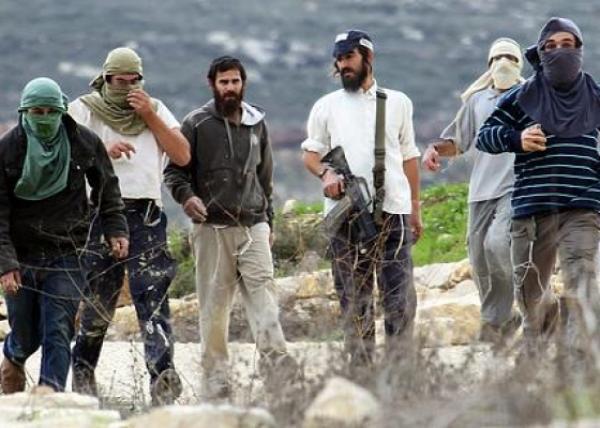
West Bank: Israeli settlers attack Palestinians and destroy agricultural crops south of Hebron

Today, Wednesday, armed settlers attacked citizens and prevented them from reaching pastures south of Hebron.


According to local sources, groups of settlers, protected by Israeli soldiers, chased shepherds in the areas of Wadi Al-Jawaya and Asfi in Musafer Yatta, destroyed approximately 100 dunums of citizens’ agricultural crops, and carried out provocative tours around citizens’ homes, preventing them from leaving them at gunpoint.


Citizen Khaled Al-Qaymari said that a group of settlers from the “Otnael” settlement, protected by Israeli soldiers, stormed the Khallet Al-Farra community, southwest of Yatta, and abused a number of citizens, seized their cell phones, and forced them to sit on the ground for long hours.

PALESTINE

Wed 07 Feb 2024 5:38 pm - Jerusalem Time

Palestinian President Abbas meets with Linken in Ramallah

President Mahmoud Abbas met with US Secretary of State Anthony Blinken on Wednesday in the West Bank city of Ramallah.


According to local sources, Blinken arrived at the Palestinian presidential headquarters in the city of Ramallah to meet Abbas, coming from Israel.


Upon his arrival at the presidential headquarters, Blinken held a meeting with President Abbas.


There was no immediate Palestinian comment on the meeting until 15:20 GMT.


Blinken arrived in Israel earlier Wednesday, where he held a meeting with Israeli Prime Minister Benjamin Netanyahu.


Earlier, US State Department spokesman Matthew Miller said on the “X” platform: “Today, Secretary of State Anthony Blinken is in Israel to meet with Prime Minister Benjamin Netanyahu, President Isaac Herzog, and other government officials.”


Miller added that the meetings would "discuss efforts to secure the release of hostages held by Hamas, and the importance of ensuring peace and security for Israelis and Palestinians alike."


The West Bank is the fifth stop on Blinken’s fifth tour to the region since last October 7, and it also included Saudi Arabia, Qatar, Egypt, and Israel, with him concluding his tour on Thursday.


Yesterday, Tuesday, Hamas announced in a statement that it had delivered its response to Egypt and Qatar regarding the “framework agreement” for the prisoner exchange proposal and a ceasefire in the Gaza Strip.


Tel Aviv estimates that there are about 136 Israeli prisoners in Gaza, while it holds no less than 8,800 Palestinians in its prisons, according to official sources from both parties, but there is no confirmation of the final number by both parties.

PALESTINE

Wed 07 Feb 2024 5:23 pm - Jerusalem Time

Israel’s war on Gaza: List of key events, day 124

Efforts for a truce deal continue amid worsening humanitarian situation in Gaza.


Here’s how things stand on Wednesday, February 7, 2024:

Humanitarian crisis in Gaza

  • At least 107 Palestinians were killed and 143 others were injured between Monday and Tuesday, according to Gaza’s Ministry of Health. This takes the death toll of Palestinians in Gaza to 27,585 as of Tuesday.
  • Local sources reported on Tuesday that six civilians were killed in Israeli shelling that targeted their vehicle in the Khirbat al-Adas neighbourhood in Rafah city, in the southern Gaza Strip, Palestinian news agency Wafa reported.
  • The Palestine Red Crescent Society said on Tuesday that al-Amal Hospital in Khan Younis, which was under Israeli siege for two weeks, was subjected to violent bombardment and continuous gunfire, which led to shrapnel flying into the hospital.
  • The United Nations humanitarian agency OCHA reported that starting January, humanitarian aid missions’ ability to access people in dire need in Gaza worsened. Of the 61 planned missions to the north of Gaza, 10 were facilitated by Israel and 34 were denied access.
  • As of Saturday, UNRWA estimates that about 75 percent of Gaza’s population of 2.3 million, more than half of them children, are displaced.

Regional tensions and diplomacy

  • Saudi Arabia’s Ministry of Foreign Affairs has issued a statement saying it will not have diplomatic relations with Israel unless an independent Palestinian state is recognised on the 1967 borders, with East Jerusalem as its capital.
  • The US Central Command (CENTCOM) posted on X that the Houthis fired six antiship ballistic missiles towards the southern Red Sea and the Gulf of Aden. No one was injured and only minor damage was reported.
  • The US House of Representatives has rejected a Republican-led bill to provide $17.6bn in assistance to Israel as a wider bipartisan bill during a vote on Tuesday.
  • On Tuesday, Qatar’s Prime Minister and Foreign Minister Sheikh Mohammed bin Abdulrahman bin Jassim Al Thani said Hamas has given a “generally positive” response to a proposed truce deal with Israel, as the Palestinian group reiterated its demand for an end to the Israeli assault on Gaza.
  • US President Joe Biden told reporters on Tuesday that Hamas’s response to a proposed Gaza truce framework “seems to be a little over the top” but that negotiations would go on.
  • More than 20 European Parliament members and politicians wrote to the European Broadcasting Union (EBU) on Tuesday, saying Israel’s participation in the Eurovision Song Contest “whitewashes a regime that is carrying out ethnic cleansing in Palestine and committing war crimes and genocide”.
  • US Secretary of State Antony Blinken arrived in Israel to broker what the State Department called, an “enduring end” to the war on Gaza. He earlier visited Saudi Arabia, Qatar and Egypt on his fifth regional tour since October last year.


Occupied West Bank

  • An Israeli convoy of military vehicles and bulldozers stormed the city of Jenin in the occupied West Bank on Tuesday night.
  • The Israeli military also stormed the city of Tulkarem, imposing a siege on the Nur Shams camp while bulldozers have destroyed nearby infrastructure.
  • Israeli forces on Tuesday shot dead 18-year-old Palestinian Mahmoud Soud Titi at the Beit Furik checkpoint, east of Nablus, after he allegedly attempted a stabbing attack, Wafa reported.
  • Israeli authorities on Tuesday demolished a retaining wall in the town of Bani Naim, east of Hebron, Wafa reported.


SOURCE: AL JAZEERA AND NEWS AGENCIES


OPINIONS

Wed 07 Feb 2024 5:17 pm - Jerusalem Time

Facts hidden by Israel's boasts

Antoine Shalhat

Antoine Shalhat

Opinion Writer

Hamas has returned to showing signs of new governance in these areas, not to mention that the issues of Rafah and the Philadelphia border axis with Egypt have not yet been addressed...

As the Israeli war on the Gaza Strip continues, assessments increase in the Israeli media, which is trying to shed light on blatant facts that are overlooked by the boasting that characterizes the official statements and positions of officials in the political and security institutions, and reflects nothing more than interpretations, or reflects an epistemological nihilism that fuels moral nihilism, according to the expressions of limited academic circles. 


Perhaps the most important of these facts are two: The first is the inability of the Israeli army to impose complete control over any of the areas of the Gaza Strip, including the northern region, as it claimed and still is, despite the war entering its fifth month. According to the latest approaches of even the military analyst of the right-wing newspaper Israel Hayom, which promotes Benjamin Netanyahu's policy, the Israeli army is exerting harsh pressure on the Hamas movement in Khan Yunis, but is not succeeding in targeting its senior leaders. The Israeli army has also been working in recent days in the areas of the northern Gaza Strip, but Hamas has returned to showing signs of new governance in these areas, not to mention that the issues of Rafah and the Philadelphia border axis with Egypt have not yet been addressed, which means that completing the war’s goals is still pending. 


The second of these facts is that achieving victory over the Palestinian resistance in the Gaza Strip using the enormous force in Israel’s possession, a force that is not at all doubtful, is considered a kind of fantasy.

One of the latest examples of this ruling is what came from the former head of the Military Intelligence Division (Aman), Major General Reserve Uri Sagi, in the context of an article he published in the Yedioth Ahronoth newspaper on February 4, 2024, entitled “Not by force alone,” in which he concluded that force is Not everything.


Likewise, what was confirmed by the former official in the General Security Service (Shin Bet) and former member of the Knesset from the Likud Party, Ehud Yatom, in an article in the Maariv newspaper on February 5, 2024, in which he stressed the impossibility of achieving victory through military force alone. Naturally, such positions do not come from these two former security officials, like many others, from the standpoint of opposition to war or opposition to the occupation and support for the Palestinian cause...etc., but they express contempt for the frequent statements issued by political and military leaders regarding victory, not to mention that they It reflects the crisis surrounding the Israeli military operations in the Gaza Strip, and the unrealistic relationship between the conduct of those operations and the goals that the Israeli government set for the war and still insists on achieving. It must be added that it involves, in depth, an acknowledgment of the capabilities and capabilities of the resistance.


However, anyone who follows the Israeli issue sees at the core of these assessments an attempt to formulate justifications for this lack of victory that has become apparent on the horizon of the ongoing war, foremost of which is the justification related to the issues of Rafah and the Philadelphia axis. For several days, the Prime Minister's mouthpieces have been promoting that it is not possible to achieve victory over Hamas and recover the prisoners in Gaza without addressing the Philadelphia axis in particular, and they are repeating a claim that not occupying this axis directly at the beginning of the ground maneuver was a grave mistake. It also declares that the benefit of occupying the border axis is known, and the issue has been raised more than once in the media, as through it the weapons that have increased Hamas’ military capabilities flow from Egyptian territory to the Gaza Strip, even if it is said that the majority of the weapons used by the resistance were manufactured inside the Strip. As one of Netanyahu's most prominent mouthpieces, Amnon Lord, chief commentator for the Israel Hayom newspaper, recently wrote, it is clear that Russian anti-armor missiles of various types arrived by underground smuggling from Egyptian territory, through tunnels or by other means via the Philadelphia axis. In his opinion, there is no doubt that in order to stop smuggling operations to Hamas, and prevent its military power from growing again after the Gaza Strip moves to the reconstruction phase, the aforementioned axis must be controlled.

ARAB AND WORLD

Wed 07 Feb 2024 5:10 pm - Jerusalem Time

Israeli broadcast: Netanyahu gave the green light for a ceasefire in Gaza without informing the war council of the decision

The Israeli Broadcasting Corporation said, on Wednesday, February 7, 2024, that Prime Minister Benjamin Netanyahu gave a green light for a ceasefire in Gaza during the transitional periods that separate the stages of the expected deal with the Hamas movement, without informing the war council in advance of his decision.


The authority explained by saying: “It was Qatar that requested a ceasefire during the progress between the (transitional) stages of the deal, so that negotiations between the two parties could continue during the transition from one stage to another.”


Cease-fire

The authority said: “It appears that the transitional period between the stages will last about a week, which means that the ceasefire agreed to by Netanyahu will last for a similar period from one stage to another.”


It added: “The Prime Minister agreed to the Qatari request in a conversation he held with Mossad Chief David Barnea while he was at the intelligence chiefs’ summit in Paris” last month.


The broadcasting authority continued: “According to sources familiar with the details of the discussions, the members of the Military Ministerial Council did not receive an update on this matter until after Netanyahu’s approval.”


It quoted the Prime Minister's Office as saying, "The Prime Minister's directives to the Mossad chief are permanent, and he shared them with all members of the War Cabinet and obtained their comments."


On January 28, a meeting was held in the French capital, Paris, with the participation of Israel, the United States, Egypt, and Qatar, to discuss a prisoner exchange deal and stop the war in Gaza, which will take place in three stages, according to Palestinian and American sources.


Qatar receives a response from Hamas

Yesterday, Tuesday, Hamas announced in a statement that it had delivered its response to Egypt and Qatar regarding the “framework agreement” for the prisoner exchange proposal and a ceasefire in the Gaza Strip.


On Tuesday, Qatari Foreign Minister Mohammed bin Abdul Rahman Al Thani confirmed, in a press conference with his American counterpart, Anthony Blinken, that Doha had received Hamas’ response to the truce proposal in the Gaza Strip, which was “positive and includes observations.”


US National Security Council spokesman John Kirby also told reporters on Tuesday: “We believe that a serious proposal for a prolonged truce has been put forward, and we are still in the process of trying to sign and implement this proposal.”


On December 1, 2023, a temporary truce between Hamas and Israel ended, concluded with Qatari-Egyptian-American mediation, and lasted for 7 days, during which prisoners were exchanged and limited humanitarian aid was brought into the Strip, which is inhabited by about 2.3 million Palestinians.


Tel Aviv estimates that there are about 136 Israeli prisoners in Gaza, while it holds no less than 8,800 Palestinians in its prisons, according to official sources from both parties, but there is no confirmation of the final number from both parties.


Since October 7, 2023, the Israeli army has been waging a devastating war with American support on Gaza, which as of Tuesday left “27,585 killed and 66,978 injured, most of them children and women,” according to the Palestinian authorities, and caused “massive destruction and an unprecedented humanitarian catastrophe.” According to the United Nations.

ARAB AND WORLD

Wed 07 Feb 2024 5:06 pm - Jerusalem Time

War on Gaza: Red Cross warns of 'catastrophic' health situation for chronically ill patients

By Liat Kozma

Senior Red Cross official tells Middle East Eye only two functioning hospitals could remain for 2.3 million people, as all efforts are focused on emergency cases

The International Committee of the Red Cross (ICRC) said there is a "catastrophic" healthcare situation in the Gaza Strip, as it warned there might only be two functioning hospitals left for the whole population in the coming days.

Speaking to Middle East Eye, the organisation's chief protection officer, Christian Cardon de Lichtbuer, said the healthcare infrastructure of the enclave had been left in "survival mode" following months of Israeli bombardment.

"There are still three hospitals functioning, and probably in the coming days, only two hospitals for a population of 2.3 million. These are facts, and this is catastrophic," he explained.

Lichtbuer said that all medical teams in Gaza were focused on dealing with emergency treatment, and that meant people with chronic illnesses and conditions were being neglected.

"Think about where you live and think about how many hospitals are functioning around you.

"Think about how many relatives you have who are currently being treated for a specific disease," he said.

"Anything close to this has simply disappeared in Gaza. The only focus today is on 'saving lives' and emergency response. Nothing more."

Treatment unavailable

The Palestinian death toll in Gaza since the war broke out on 7 October has reached at least 27,708, according to the Palestinian Ministry of Health, with almost 67,000 people wounded over the same period.

In a statement on Wednesday, the ministry warned that an estimated 11,000 patients and wounded people were in urgent need of leaving the Gaza Strip to receive life-saving treatment abroad.

Of nearly 70,000 people wounded in Israeli air strikes in four months of bombardment, only a few dozen people have been allowed to leave the besieged strip via the Rafah crossing with Egypt.

"There are tens of thousands of people who need medical treatment or services not currently available in Gaza, including for cancer, cardiac surgical cases, chronic diseases, etc," explained Lichtbuer.

"What we know from the number of patients in hospitals today is that all those who cannot get to the hospital are probably inside their tents, not treated, under cold and rainy weather… and some might be dying from other diseases."

Around 8,000 displaced people have been evacuated from Al-Amal hospital in Khan Younis, which has been under siege by Israeli forces, according to the Red Cross.

A 77-year-old Palestinian patient reportedly died due to oxygen shortage at the hospital, while health workers said the hospital had been hit by shrapnel amid intense Israeli shelling and gunfire in its vicinity.

Hospitals and health workers had been under fire "since day one" in Gaza, said Lichtbuer, a situation that remains unacceptable, he said.

"We will never stop repeating it, loud and clear: both parties should take all precautions when conducting an attack close to a hospital or medical workers. Hospitals and ambulances should be respected.

ARAB AND WORLD

Wed 07 Feb 2024 4:56 pm - Jerusalem Time

Former Israeli military commander: Netanyahu is lying about eliminating Hamas leaders

Yair Golan, former deputy chief of staff of the Israeli army and current member of the Knesset from the Meretz party, said that when Prime Minister Benjamin Netanyahu tells the Israeli public that he is capable of killing all the leaders of the Islamic Resistance Movement (Hamas) and saving all the Israeli hostages at the same time, he is lying to them.


Golan explained, in an interview at Reichmann University yesterday, Tuesday, that the Israeli government must return the hostages first, and then hope only later to reach Hamas, provided that its primary goal remains to prevent Hamas from returning to control the Gaza Strip.


The retired Major General in the Israeli army considered that Netanyahu's policy was based on weakening the Palestinian Authority and providing a kind of stability to Hamas since 2009, and he said that this was one of the basic factors that led to Israel's failure in the October 7, 2023 operation.


Golan pointed out that the Palestinian Authority, especially in 2009, was working better, and its security coordination with Israel was better, while “Hamas was at its lowest levels after Operation Cast Lead,” he claimed.


He added that Netanyahu, in return, worked to change the balance of power because a “weaker Palestinian authority” would allow the construction of more settlements, according to him.


Regarding the post-war stage, Golan says that Israel cannot hand over Gaza directly to its residents, adding, “I do not believe that we have a partner in Gaza. We will start with very strong international cooperation, and only after that will we find among the residents of Gaza those who can manage their own lives,” suggesting that the Palestinian Authority is responsible for managing the border crossings in the Gaza Strip, at least in the first phase, with its role increasing later.


Regarding the situation in northern Israel, Golan said that if he were in Netanyahu’s place, he would have called on most of the residents of the north to return to their homes already, even without a diplomatic agreement with Hezbollah, adding that some villages very close to the border will need to wait a longer period, and he said that cities like Ras Naqoura, It lies outside the range of anti-tank missiles, and its residents must return because it is no more threatened than Nahariya, which has not been evacuated.


Golan expected that there would not be a large-scale war between Israel and Hezbollah because the United States and Iran do not want it, and Washington will deter Israel, while Tehran will deter Hezbollah, according to his vision.


Source: Israeli press + Aljazeera

OPINIONS

Wed 07 Feb 2024 4:36 pm - Jerusalem Time

Israel’s Self-Destruction- Netanyahu, the Palestinians, and the Price of Neglect

Foreign Affairs

Foreign Affairs

Opinion Writer

By Aluf Benn

One bright day in April 1956, Moshe Dayan, the one-eyed chief of staff of the Israel Defense Forces (IDF), drove south to Nahal Oz, a recently established kibbutz near the border of the Gaza Strip. Dayan came to attend the funeral of 21-year-old Roi Rotberg, who had been murdered the previous morning by Palestinians while he was patrolling the fields on horseback. The killers dragged Rotberg’s body to the other side of the border, where it was found mutilated, its eyes poked out. The result was nationwide shock and agony.

If Dayan had been speaking in modern-day Israel, he would have used his eulogy largely to blast the horrible cruelty of Rotberg’s killers. But as framed in the 1950s, his speech was remarkably sympathetic toward the perpetrators. “Let us not cast blame on the murderers,’’ Dayan said. “For eight years, they have been sitting in the refugee camps in Gaza, and before their eyes we have been transforming the lands and the villages where they and their fathers dwelt into our estate.” Dayan was alluding to the nakba, Arabic for “catastrophe,” when the majority of Palestinian Arabs were driven into exile by Israel’s victory in the 1948 war of independence. Many were forcibly relocated to Gaza, including residents of communities that eventually became Jewish towns and villages along the border.

Dayan was hardly a supporter of the Palestinian cause. In 1950, after the hostilities had ended, he organized the displacement of the remaining Palestinian community in the border town of Al-Majdal, now the Israeli city of Ashkelon. Still, Dayan realized what many Jewish Israelis refuse to accept: Palestinians would never forget the nakba or stop dreaming of returning to their homes. “Let us not be deterred from seeing the loathing that is inflaming and filling the lives of hundreds of thousands of Arabs living around us,’’ Dayan declared in his eulogy. “This is our life’s choice—to be prepared and armed, strong and determined, lest the sword be stricken from our fist and our lives cut down.’’ 

On October 7, 2023, Dayan’s age-old warning materialized in the bloodiest way possible. Following a plan masterminded by Yahya Sinwar, a Hamas leader born to a family forced out of Al-Majdal, Palestinian militants invaded Israel at nearly 30 points along the Gazan border. Achieving total surprise, they overran Israel’s thin defenses and proceeded to attack a music festival, small towns, and more than 20 kibbutzim. They killed around 1,200 civilians and soldiers and kidnapped well over 200 hostages. They raped, looted, burned, and pillaged. The descendants of Dayan’s refugee camp dwellers—fueled by the same hatred and loathing that he described but now better armed, trained, and organized—had come back for revenge. 

October 7 was the worst calamity in Israel’s history. It is a national and personal turning point for anyone living in the country or associated with it. Having failed to stop the Hamas attack, the IDF has responded with overwhelming force, killing thousands of Palestinians and razing entire Gazan neighborhoods. But even as pilots drop bombs and commandos flush out Hamas’s tunnels, the Israeli government has not reckoned with the enmity that produced the attack—or what policies might prevent another. Its silence comes at the behest of Israeli Prime Minister Benjamin Netanyahu, who has refused to lay out a postwar vision or order. Netanyahu has promised to “destroy Hamas,” but beyond military force, he has no strategy for eliminating the group and no clear plan for what would replace it as the de facto government of postwar Gaza. 

His failure to strategize is no accident. Nor is it an act of political expediency designed to keep his right-wing coalition together. To live in peace, Israel will have to finally come to terms with the Palestinians, and that is something Netanyahu has opposed throughout his career. He has devoted his tenure as prime minister, the longest in Israeli history, to undermining and sidelining the Palestinian national movement. He has promised his people that they can prosper without peace. He has sold the country on the idea that it can continue to occupy Palestinian lands forever at little domestic or international cost. And even now, in the wake of October 7, he has not changed this message. The only thing Netanyahu has said Israel will do after the war is maintain a “security perimeter” around Gaza—a thinly veiled euphemism for long-term occupation, including a cordon along the border that will eat up a big chunk of scarce Palestinian land.

But Israel can no longer be so blinkered. The October 7 attacks have proved that Netanyahu’s promise was hollow. Despite a dead peace process and waning interest from other countries, the Palestinians have kept their cause alive. In the body-camera footage taken by Hamas on October 7, the invaders can be heard shouting, “This is our land!” as they cross the border to attack a kibbutz. Sinwar openly framed the operation as an act of resistance and was personally motivated, at least in part, by the nakba. The Hamas leader spent 22 years in Israeli prisons and is said to have continually told his cellmates that Israel had to be defeated so that his family could return to its village.

To live in peace, Israel will have to finally come to terms with the Palestinians.

The trauma of October 7 has forced Israelis, once again, to realize that the conflict with the Palestinians is central to their national identity and a threat to their well-being. It cannot be overlooked or sidestepped, and continuing the occupation, expanding Israeli settlements in the West Bank, laying siege to Gaza, and refusing to make any territorial compromise (or even recognize Palestinian rights) will not bring the country lasting security. Yet recovering from this war and changing course is bound to be extremely difficult, and not just because Netanyahu does not want to resolve the Palestinian conflict. The war has caught Israel at perhaps its most divided moment in history. In the years leading up to the attack, the country was fractured by Netanyahu’s effort to undermine its democratic institutions and turn it into a theocratic, nationalist autocracy. His bills and reforms provoked widespread protests and dissension that threatened to tear the country apart before the war and will haunt it once the conflict ends. In fact, the fight over Netanyahu’s political survival will become even more intense than it was before October 7, making it hard for the country to pursue peace. 

But whatever happens to the prime minister, Israel is unlikely to have a serious conversation about settling with the Palestinians. Israeli public opinion as a whole has shifted to the right. The United States is increasingly preoccupied with a crucial presidential election. There will be little energy or motivation to reignite a meaningful peace process in the near future.

October 7 is still a turning point, but it is up to Israelis to decide what kind of turning point it will be. If they finally heed Dayan’s warning, the country could come together and chart a path to peace and dignified coexistence with the Palestinians. But indications so far are that Israelis will, instead, continue to fight among themselves and maintain the occupation indefinitely. This could make October 7 the beginning of a dark age in Israel’s history—one characterized by more and growing violence. The attack would not be a one-off event, but a portent of what’s to come. 


BROKEN PROMISE

In the 1990s, Netanyahu was a rising star on Israel’s right-wing scene. After making his name as Israel’s ambassador to the UN from 1984 to 1988, he became widely famous by leading the opposition to the Oslo accords, the 1993 blueprint for Israeli-Palestinian reconciliation signed by the Israeli government and the Palestine Liberation Organization. After the assassination of Prime Minister Yitzhak Rabin in November 1995 by a far-right Israeli zealot and a wave of Palestinian terrorist attacks in Israeli cities, Netanyahu managed to defeat Shimon Peres, a key architect of the Oslo peace agreement, by a razor-thin margin in the 1996 prime minister’s race. Once in office, he promised to slow the peace process and reform Israeli society by “replacing the elites,’’ whom he viewed as soft and prone to copying Western liberals, with a corps of religious and social conservatives. 

Netanyahu’s radical ambitions, however, were met with the combined opposition of the old elites and the Clinton administration. Israeli society, then still generally supportive of a peace agreement, also quickly soured on the prime minister’s extreme agenda. Three years later, he was toppled by the liberal Ehud Barak, who pledged to continue the Oslo process and solve the Palestinian issue in its entirety.

But Barak failed, as did his successors. When Israel completed its unilateral withdrawal from southern Lebanon in the spring of 2000, it was subject to cross-border attacks and threatened by a massive Hezbollah buildup. Then the peace process imploded as Palestinians launched the second intifada that fall. Five years later, Israel’s withdrawal from the Gaza Strip paved the way for Hamas to take charge there. The Israeli public, once supportive of peacemaking, lost its appetite for the security risks that came with it. “We offered them the moon and the stars and got suicide bombers and rockets in return,” went a common refrain. (The counterargument—that Israel had offered too little and would never agree to a sustainable Palestinian state—found little resonance.) In 2009, Netanyahu returned to power, feeling vindicated. After all, his warnings against territorial concessions to Israel’s neighbors had come true.

Back in office, Netanyahu offered Israelis a convenient alternative to the now discredited “land for peace” formula. Israel, he argued, could prosper as a Western-style country—and even reach out to the Arab world at large—while pushing aside the Palestinians. The key was to divide and conquer. In the West Bank, Netanyahu maintained security cooperation with the Palestinian Authority, which became Israel’s de facto policing and social services subcontractor, and he encouraged Qatar to fund Gaza’s Hamas government. “Whoever opposes a Palestinian state must support delivery of funds to Gaza because maintaining separation between the PA in the West Bank and Hamas in Gaza will prevent the establishment of a Palestinian state,” Netanyahu told his party’s parliamentary caucus in 2019. It is a statement that has come back to haunt him. 

Netanyahu believed he could keep Hamas’s capabilities in check through a naval and economic blockade, newly deployed rocket and border defense systems, and periodic military raids on the group’s fighters and infrastructure. This last tactic, dubbed “mowing the grass,” became integral to Israeli security doctrine, along with “conflict management” and status quo maintenance. The prevailing order, Netanyahu believed, was durable. In his view, it was also optimal: maintaining a very low-level conflict was less politically risky than a peace deal and less costly than a major war.

For over a decade, Netanyahu’s strategy appeared to work. The Middle East and North Africa sank into the revolutions and civil wars of the Arab Spring, making the Palestinian cause far less salient. Terrorist attacks fell to new lows, and periodic rocket fire from Gaza was usually intercepted. With the exception of a short war against Hamas in 2014, Israelis rarely needed to go head-to-head with Palestinian militants. For most people, most of the time, the conflict was out of sight and out of mind.

Instead of worrying about the Palestinians, Israelis began to focus on living the Western dream of prosperity and tranquility. Between January 2010 and December 2022, real estate prices more than doubled in Israel as Tel Aviv’s skyline filled with high-rise apartments and office complexes. Smaller towns expanded to accommodate the boom. The country’s GDP grew by more than 60 percent as tech entrepreneurs launched successful businesses and energy companies found offshore natural gas deposits in Israeli waters. Open-skies agreements with other governments turned foreign travel, a major facet of the Israeli lifestyle, into a cheap commodity. The future looked bright. The country, it seemed, had moved past the Palestinians, and it had done so without sacrificing anything—territory, resources, funds—toward a peace agreement. Israelis got to have their cake and eat it, too.

Internationally, the country was also thriving. Netanyahu withstood U.S. President Barack Obama’s pressure to revive the two-state solution and freeze Israeli settlements in the West Bank, in part by forging an alliance with Republicans. Although Netanyahu failed to stop Obama from concluding a nuclear deal with Iran, Washington withdrew from the pact after Donald Trump won the presidency. Trump also moved the American embassy in Israel from Tel Aviv to Jerusalem, and his administration recognized Israel’s annexation of the Golan Heights from Syria. Under Trump, the United States helped Israel conclude the Abraham Accords, normalizing its relations with Bahrain, Morocco, Sudan, and the United Arab Emirates—a prospect that once seemed impossible without an Israeli-Palestinian peace agreement. Planeloads of Israeli officials, military chiefs, and tourists began frequenting the swank hotels of Gulf sheikdoms and the souks of Marrakech.


Israel, Netanyahu argued, could prosper as a Western-style country while pushing aside the Palestinians.

As he sidelined the Palestinian issue, Netanyahu also worked to remake Israel’s domestic society. After winning a surprise reelection in 2015, Netanyahu put together a right-wing coalition to revive his old dream of igniting a conservative revolution. Once again, the prime minister began railing against “the elites” and initiated a culture war against the erstwhile establishment, which he viewed as hostile to himself and too liberal for his supporters. In 2018, he won passage of a major, controversial law that defined Israel as “the Nation-State of the Jewish People” and declared that Jews had the “unique” right to “exercise self-determination” in its territory. It gave the country’s Jewish majority precedence and subordinated its non-Jewish people. 

The same year, Netanyahu’s coalition collapsed. Israel then sank into a long political crisis, with the country dragged through five elections between 2019 and 2022—each of them a referendum on Netanyahu’s rule. The intensity of the political battle was heightened by a corruption case against the prime minister, leading to his criminal indictment in 2020 and an ongoing trial. Israel split between the “Bibists” and “Just not Bibists.” (“Bibi” is Netanyahu’s nickname.) In the fourth election, in 2021, Netanyahu’s rivals finally managed to replace him with a “change government” led by the right-wing Naftali Bennett and the centrist Yair Lapid. For the first time, the coalition included an Arab party. 

Even so, Netanyahu’s opposition never challenged the basic premise of his rule: that Israel could thrive without addressing the Palestinian issue. The debate over peace and war, traditionally a crucial political topic for Israel, became back-page news. Bennett, who began his career as Netanyahu’s aide, equated the Palestinian conflict to “shrapnel in the butt” that the country could live with. He and Lapid sought to maintain the status quo vis-à-vis the Palestinians and simply focus on keeping Netanyahu out of office. 

That bargain, of course, proved impossible. The “change government” collapsed in 2022 after it failed to prolong obscure legal provisions that allowed West Bank settlers to enjoy civil rights denied their non- Israeli neighbors. For some of the Arab coalition members, signing on to these apartheid provisions was one compromise too many.


Military and intelligence incompetence cannot shield Netanyahu from culpability for October 7.

For Netanyahu, still facing trial, the government’s collapse was exactly what he had been hoping for. As the country organized yet another election, he fortified his base of right-wingers, ultra-Orthodox Jews, and socially conservative Jews. To win back power, he reached out in particular to West Bank settlers, a demographic that still saw the Israeli-Palestinian conflict as its raison d’être. These religious Zionists remained committed to their dream of Judaizing the occupied territories and making them a formal part of Israel. They hoped that if given the opportunity, they could drive out the territories’ Palestinian population. They had failed to prevent an evacuation of Jewish settlers from Gaza in 2005 when Ariel Sharon was prime minister, but in the years since, they had gradually captured key positions in the Israeli military, civil service, and media as members of the secular establishment shifted their focus to making money in the private sector. 

The extremists had two principal demands of Netanyahu. The first, and most obvious, was to further expand Jewish settlements. The second was to establish a stronger Jewish presence on the Temple Mount, the historic site of both the Jewish Temple and the Muslim mosque of al Aqsa in Jerusalem’s Old City. Since Israel took control of the surrounding area in the Six-Day War in 1967, it has given the Palestinians quasi-autonomy at the site, out of fear that removing it from Arab governance would incite a cataclysmic religious conflict. But the Israeli far right has long sought to change that. When Netanyahu was first elected in 1996, he opened a wall at an archaeological site in an underground tunnel adjacent to al Aqsa to expose relics from the times of the Second Temple, prompting a violent explosion of Arab protests in Jerusalem. The second Palestinian intifada in 2000 was similarly sparked by a visit to the Temple Mount by Sharon, then the opposition leader as the head of Netanyahu’s party, Likud. 

In May 2021, violence erupted again. This time, the main provocateur was Itamar Ben-Gvir, a far-right politician who has publicly celebrated Jewish terrorists. Ben-Gvir had opened a “parliamentary office” in a Palestinian neighborhood in East Jerusalem where Jewish settlers, using old property deeds, have pushed out some residents, and Palestinians held mass protests in response. After hundreds of demonstrators gathered at al Aqsa, Israeli police raided the mosque compound. As a result, fighting erupted between Arabs and Jews and quickly spread to ethnically mixed towns across Israel. Hamas used the raid as an excuse to target Jerusalem with rockets, which brought yet more violence in Israel and another round of Israeli reprisals in Gaza. 

Still, the fighting dissipated when Israel and Hamas reached a new cease-fire in shockingly quick order. Qatar kept up its payments, and Israel gave work permits to some Gazans to improve the strip’s economy and reduce the population’s desire for conflict. Hamas stood by when Israel hit an allied militia, Palestinian Islamic Jihad, in the spring of 2023. The relative quiet along the border allowed the IDF to redeploy its forces and move most combat battalions to the West Bank, where they could protect settlers from terrorist attacks. On October 7, it became clear those redeployments were exactly what Sinwar wanted.


BIBI’S COUP

In Israel’s November 2022 election, Netanyahu won back power. His coalition captured 64 of the Israeli parliament’s 120 seats, a landslide by recent standards. The key figures in the new government were Bezalel Smotrich, the leader of a nationalist religious party representing West Bank settlers, and Ben-Gvir. Working with the ultra-Orthodox parties, Netanyahu, Smotrich, and Ben-Gvir devised a blueprint for an autocratic and theocratic Israel. The new cabinet’s guidelines, for example, declared that “the Jewish people have an exclusive, inalienable right to the entire Land of Israel”—denying outright any Palestinian claim to territory, even in Gaza. Smotrich became minister of finance and was put in charge of the West Bank, where he initiated a massive program to expand Jewish settlements. Ben-Gvir was named national security minister, in control of police and prisons. He used his power to encourage more Jews to visit the Temple Mount (al Aqsa). Between January and October of 2023, about 50,000 Jews toured it—more than in any other equivalent period on record. (In 2022, there were 35,000 Jewish visitors on the Mount.)

Netanyahu’s radical new government stirred outrage among Israeli liberals and centrists. But even though humiliating Palestinians was central to their agenda, these critics continued to ignore the fate of the occupied territories and al Aqsa when denouncing the cabinet. Instead, they focused largely on Netanyahu’s judicial reforms. Announced in January 2023, these proposed laws would curb the independence of Israel’s Supreme Court—the custodian of civil and human rights in a country that lacks a formal constitution—and dismantle the legal advisory system that provides checks and balances on executive power. If they had been enacted, the bills would have made it much easier for Netanyahu and his partners to build an autocracy and might even have spared him from his corruption trial. 

The judicial reform bills were, without doubt, extraordinarily dangerous. They rightfully prompted an enormous wave of protests, with hundreds of thousands of Israelis demonstrating every week. But in confronting this coup, Netanyahu’s opponents again acted as if the occupation were an unrelated issue. Even though the laws were drafted partly to weaken whatever legal protection the Israeli Supreme Court would give Palestinians, demonstrators shied away from mentioning the occupation or the defunct peace process out of fear of being smeared as unpatriotic. In fact, the organizers worked to sideline Israel’s anti-occupation protesters to avoid having images of Palestinian flags appear in the demonstrations. This tactic succeeded, ensuring that the protest movement was not “tainted” by the Palestinian cause: Israeli Arabs, who make up around 20 percent of the country’s population, largely refrained from joining the demonstrations. But this made it harder for the movement to succeed. Given Israel’s demographics, center-left Jews need to partner with the country’s Arabs if they ever want to form a government. By delegitimizing Israeli Arabs’ concerns, the demonstrators played right into Netanyahu’s strategy. 


With the Arabs out, the battle over the judicial reforms proceeded as an intra-Jewish affair. Demonstrators adopted the blue and white Star of David flag, and many of their leaders and speakers were retired senior military officers. Protesters showed off their military credentials, reversing the decline in prestige that had shadowed the IDF since the invasion of Lebanon in 1982. Reservist pilots, who are crucial to the air force’s preparedness and combat power, threatened to withdraw from service if the laws were passed. In a show of institutional opposition, the IDF’s leaders rebuffed Netanyahu when he demanded that they discipline the reservists. 

That the IDF would break with the prime minister was not surprising. Throughout his long career, Netanyahu has frequently clashed with the military, and his strongest rivals have been retired generals who became politicians, such as Sharon, Rabin, and Barak—not to mention Benny Gantz, whom Netanyahu made part of his emergency war cabinet but may eventually challenge and succeed him as prime minister. Netanyahu has long rejected the generals’ vision of an Israel that is strong militarily but flexible diplomatically. He has also scoffed at their characters, which he views as timid, unimaginative, and even subversive. It was therefore no shock when he fired his own defense minister, the retired general Yoav Gallant, after Gallant appeared on live television in March 2023 to warn that Israel’s rifts had left the country vulnerable and that war was imminent. 

Gallant’s firing led to more spontaneous street protests, and Netanyahu reinstated him. (They remain bitter rivals, even as they run the war together.) But Netanyahu ignored Gallant’s warning. He also ignored a more detailed warning delivered in July by Israel’s chief military intelligence analyst that enemies might strike the country. Netanyahu apparently believed that such warnings were politically motivated and reflected a tacit alliance between incumbent military chiefs at the IDF headquarters in Tel Aviv and former commanders who were protesting across the street. 

Netanyahu’s humiliation of the Palestinians helped radicalism thrive.

To be sure, the warnings Netanyahu received mostly focused on Iran’s network of regional allies, not Hamas. Although Hamas’s attack plan was known to Israeli intelligence, and even though the group practiced maneuvers in front of IDF observation posts, senior military and intelligence officials failed to imagine that their Gaza adversary could actually follow through, and they buried suggestions to the contrary. The October 7 attack was, in part, a failure of Israel’s bureaucracy. 

Still, the fact that Netanyahu convened no serious discussions on the intelligence he did receive is indefensible, as was his refusal to seriously compromise with the political opposition and heal the country’s rift. Instead, he decided to move ahead with his judicial coup, regardless of grave warnings and possible blowback. “Israel can do without a couple of Air Force squadrons,” he declared arrogantly, “but not without a government.”

In July 2023, the first judicial law was passed by the Israeli parliament, in another high point for Netanyahu and his far-right coalition. (It was eventually struck down by the Supreme Court, in January 2024.) The prime minister believed he would soon further elevate himself by concluding a peace agreement with Saudi Arabia, the richest, most important Arab state, as part of a triple deal that featured a U.S.-Saudi defense pact. The result would be the ultimate victory of Israeli foreign policy: an American-Arab-Israeli alliance against Iran and its regional proxies. For Netanyahu, it would have been a crowning achievement that endeared him to the mainstream. 

The prime minister was so self-assured that on September 22, he mounted the stage of the UN General Assembly to promote a map of “the new Middle East,” centered on Israel. This was an intentional dig at his late rival Peres, who coined that phrase after signing the Oslo accords. “I believe that we are at the cusp of an even more dramatic breakthrough: an historic peace with Saudi Arabia,” Netanyahu boasted in his speech. The Palestinians, he made clear, had become but an afterthought to both Israel and the broader region. “We must not give the Palestinians a veto over new peace treaties,” he said. “The Palestinians are only two percent of the Arab world.” Two weeks later, Hamas attacked, shattering Netanyahu’s plans.


AFTER THE BANG

Netanyahu and his supporters have tried to shift blame for October 7 away from him. The prime minister, they argue, was misled by security and intelligence chiefs who failed to update him on a last-minute alert that something suspicious was happening in Gaza (although even these red flags were interpreted as indications of a small attack, or simply noise). “Under no circumstances and at no stage was Prime Minister Netanyahu warned of Hamas’ war intentions,” Netanyahu’s office wrote on Twitter several weeks after the attack. “On the contrary, the assessment of the entire security echelon, including the head of military intelligence and the head of Shin Bet, was that Hamas was deterred and was seeking an arrangement.” (He later apologized for the post.)

But military and intelligence incompetence, dismal as it was, cannot shield the prime minister from culpability—and not only because, as head of the government, Netanyahu bears ultimate responsibility for what happens in Israel. His reckless prewar policy of dividing Israelis made the country vulnerable, tempting Iran’s allies to strike at a riven society. Netanyahu’s humiliation of the Palestinians helped radicalism thrive. It is no accident that Hamas named its operation “al Aqsa flood” and portrayed the attacks as a way of protecting al Aqsa from a Jewish takeover. Protecting the holy Muslim site was seen as a reason to attack Israel and face the inevitably dire consequences of an IDF counterattack. 

The Israeli public has not absolved Netanyahu of responsibility for October 7. The prime minister’s party has plummeted in the polls, and his approval rating has tanked as well, although the government maintains a parliamentary majority. The country’s desire for change is expressed in more than just public opinion surveys. Militarism is back across the aisle. The anti-Bibi demonstrators rushed to fulfill their reserve duties despite the protests, as erstwhile anti-Netanyahu organizers supplanted the dysfunctional Israeli government in caring for evacuees from the country’s south and north. Many Israelis have armed themselves with handguns and assault rifles, aided by Ben-Gvir’s campaign to ease the regulation of private small arms. After decades of gradual decline, the defense budget is expected to rise by roughly 50 percent.

Yet these changes, although understandable, are accelerations, not shifts. Israel is still following the same path that Netanyahu has guided it down for years. Its identity is now less liberal and egalitarian, more ethnonationalist and militaristic. The slogan “United for Victory,’’ seen on every street corner, public bus, and television channel in Israel, is aimed at unifying the country’s Jewish society. The state’s Arab minority, which overwhelmingly supported a quick cease-fire and prisoner exchange, has been repeatedly forbidden by the police to carry out public protests. Dozens of Arab citizens have been legally indicted for social media posts expressing solidarity with Palestinians in Gaza, even if the posts did not support or endorse the October 7 attacks. Many liberal Israeli Jews, meanwhile, feel betrayed by Western counterparts who, in their view, have sided with Hamas. They are rethinking their prewar threats to emigrate away from Netanyahu’s religious autocracy, and Israeli real estate companies are anticipating a new wave of Jewish immigrants seeking to escape the rising anti-Semitism they have experienced abroad.

And just as in prewar times, almost no Israeli Jews are thinking about how the Palestinian conflict might be solved peacefully. The Israeli left, traditionally interested in pursuing peace, is now nearly extinct. The centrist parties of Gantz and Lapid, nostalgic for the good old pre-Netanyahu Israel, seem to feel at home in the newly militaristic society and do not want to risk their mainstream popularity by endorsing land-for-peace negotiations. And the right is more hostile to Palestinians than it has ever been. 

Netanyahu has equated the PA with Hamas and, as of this writing, has rejected American proposals to make it the postwar ruler of Gaza, knowing that such a decision would revive the two-state solution. The prime minister’s far-right buddies want to depopulate Gaza and exile its Palestinians to other countries, creating a second nakba that would leave the land open to new Jewish settlements. To fulfill this dream, Ben-Gvir and Smotrich have demanded that Netanyahu reject any discussion of a postwar arrangement in Gaza that leaves the Palestinians in charge and demanded that the government refuse to negotiate for the further release of Israeli hostages. They have also ensured that Israel does nothing to halt fresh attacks by Jewish settlers on Arab residents of the West Bank.

Israel’s wartime unity is already cracking.

If past is precedent, the country is not entirely hopeless. History suggests there is a chance that progressivism might come back and conservatives might lose influence. After prior major attacks, Israeli public opinion initially shifted to the right but then changed course and accepted territorial compromises in exchange for peace. The Yom Kippur War of 1973 eventually led to peace with Egypt; the first intifada, beginning in 1987, led to the Oslo accords and peace with Jordan; and the second intifada, erupting in 2000, ended with the unilateral pullout from Gaza. 

But the chances that this dynamic will recur are dim. There is no Palestinian group or leader accepted by Israel in the way Egypt and its president were after 1973. Hamas is committed to Israel’s destruction, and the PA is weak. Israel, too, is weak: its wartime unity is already cracking, and the odds are high that the country will further tear itself apart if and when the fighting diminishes. The anti-Bibists hope to reach out to disappointed Bibists and force an early election this year. Netanyahu, in turn, will whip up fears and dig in. In January, relatives of hostages broke into a parliamentary meeting to demand that the government try to free their family members, part of a battle between Israelis over whether the country should prioritize defeating Hamas or make a deal to free the remaining captives. Perhaps the only idea on which there is unity is in opposing a land-for-peace agreement. After October 7, most Jewish Israelis agree that any further relinquishment of territory will give militants a launching pad for the next massacre.

Ultimately, then, Israel’s future may look very much like its recent history. With or without Netanyahu, “conflict management” and “mowing the grass” will remain state policy—which means more occupation, settlements, and displacement. This strategy might appear to be the least risky option, at least for an Israeli public scarred by the horrors of October 7 and deaf to new suggestions of peace. But it will only lead to more catastrophe. Israelis cannot expect stability if they continue to ignore the Palestinians and reject their aspirations, their story, and even their presence. 

This is the lesson the country should have learned from Dayan’s age-old warning. Israel must reach out to Palestinians and to each other if they want a livable and respectful coexistence.

ALUF BENN is Editor in Chief of Haaretz

PALESTINE

Wed 07 Feb 2024 3:38 pm - Jerusalem Time

Gaza Strip: 10,000 cancer patients in Gaza are deprived of access to medicines and treatment

ActionAid International said that 10,000 cancer patients in the Gaza Strip are deprived of access to medicines and treatment, in light of the continuing aggression, the depletion of medical supplies, and the health system reaching the brink of collapse.


The organization indicated in a statement issued today, Wednesday, that the only hospital in Gaza specialized in treating cancer patients, the Turkish-Palestinian Friendship Hospital, has stopped working since November 1 after it ran out of fuel and was exposed to severe damage due to air strikes.


It pointed out that more than half of Gaza's hospitals were forced to close, while the 14 hospitals that are still able to operate partially are currently operating at more than 200% of their capacity, and are suffering from a severe shortage of medical supplies, fuel, water, and food, in addition to a specialized staff. 


The organization confirmed that this reality had significant effects on cancer patients. For example, patient Amna (52 years old) was diagnosed with uterine and ovarian cancer in 2021, and was receiving treatment at the Turkish-Palestinian Friendship Hospital before it closed.


It said in a voice message: “This war on Gaza has destroyed my chance to overcome my illness. The Turkish Friendship Hospital was providing treatment and follow-up to all cancer patients, and despite its modest capabilities, we were able to receive services and treatment, but the hospital building was bombed and destroyed in the war.” 


It continued, that after the Turkish hospital was targeted, the doctors moved to Al-Najjar Hospital, which is a small medical center that suffers from a lack of treatment and equipment, and with this war, things have become worse, and it barely has basic treatment methods, while cancer patients need special care, medicines, and treatments. And special diets.


It added: Despite the urgent need for medical supplies, the amount of humanitarian aid currently allowed into Gaza is shamefully small, and the restrictions imposed by the Israeli occupation authorities on some supplies into the Strip prevent the entry of some medicines and vital equipment such as diagnostic devices.


It pointed out that before the aggression, about 20,000 patients applied for a permit to leave Gaza every year, due to their need for specialized health care, as that care is not available within the Strip, and only a very small number of people were allowed to leave Gaza and obtain life-saving treatment in other places, many patients' requests have been rejected.

PALESTINE

Wed 07 Feb 2024 2:25 pm - Jerusalem Time

War on Gaza: In the last 24 hours, Israeli forces committed 16 massacres in Gaza, claiming the lives of 123 citizens

During the past 24 hours, the Israeli army committed 16 massacres against families in the Gaza Strip, leaving 123 dead and 169 injured.


The Ministry of Health in the Gaza Strip indicated that a number of victims are still under rubble and on the roads, as Israel prevents ambulance and civil defense crews from reaching them.


The toll of the Israeli aggression has risen to 27,708 killed and 67,147 injured since the seventh of last October.


In Gaza City, Israeli aircraft targeted a group of citizens while they were bottling drinking water in the Al-Sabra neighborhood of Gaza City, which led to the death of a number of them and the injury of others.